Coastal House Interior: How to Bring the Calm of the Ocean Into Every Room of Your Home
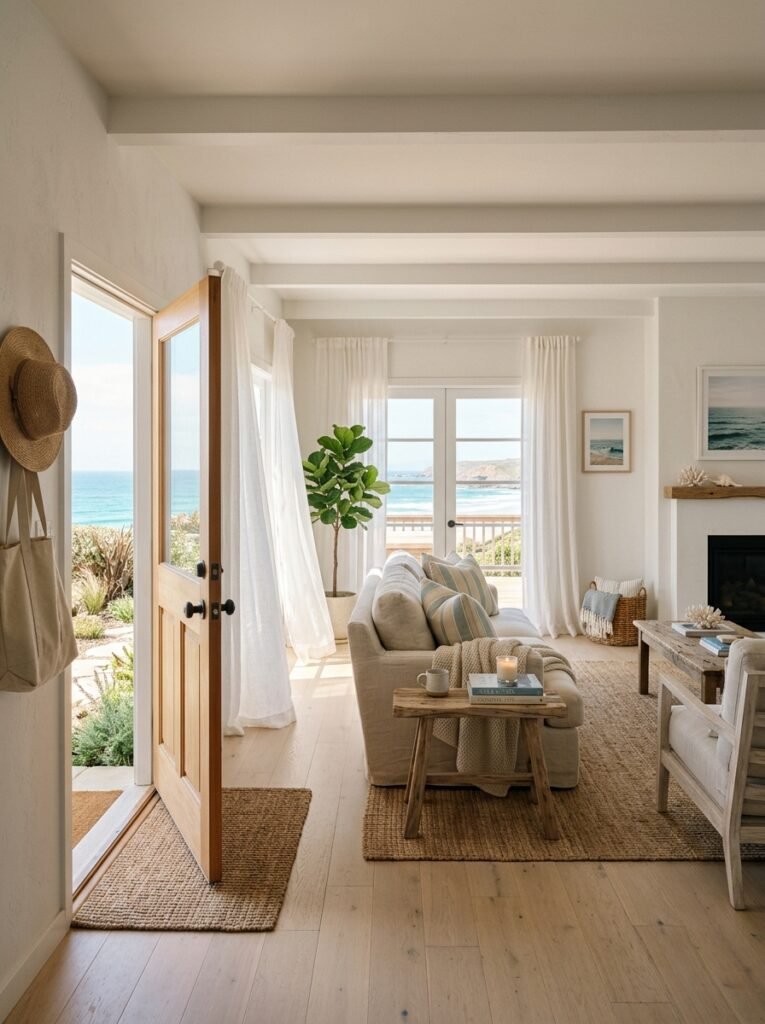
There’s something about the sound of waves — even just the memory of them — that loosens the tension in your shoulders and slows down your breathing. A coastal house interior doesn’t just look beautiful; it feels like an exhale. Whether you live steps from the beach or hours away from the nearest shoreline, this design philosophy can transform your home into a sanctuary that whispers of salt air, soft light, and the unhurried rhythm of the sea.
—
Table Of Content
1. What Exactly Is a Coastal Interior — and Why Does It Feel So Different?
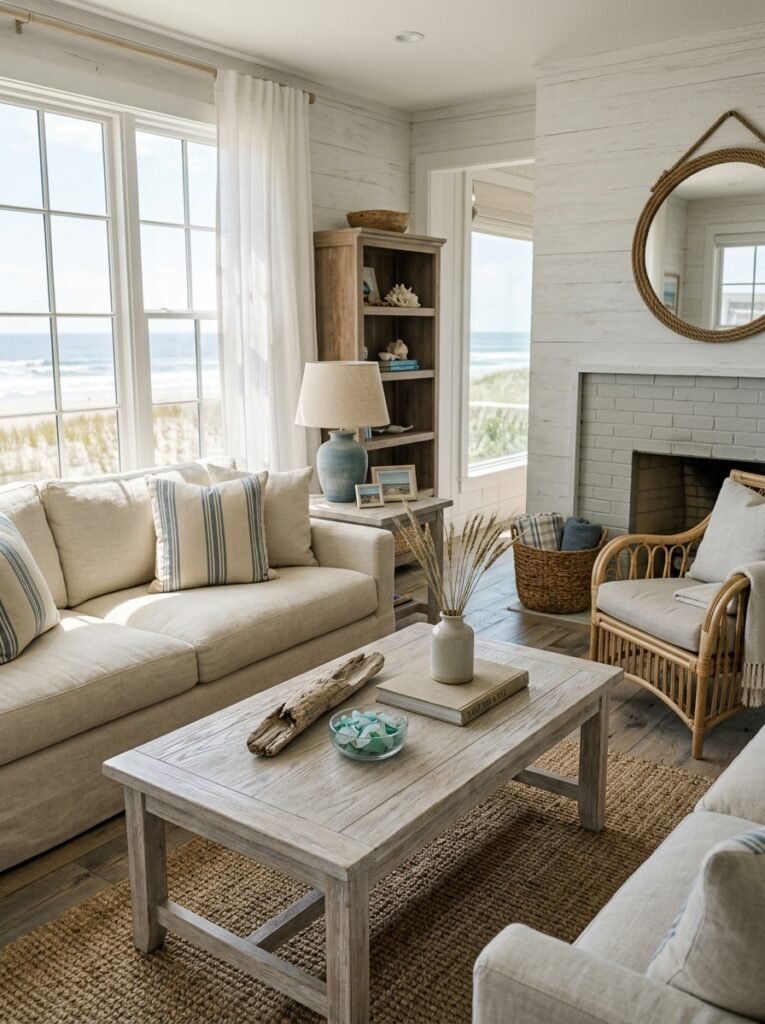
Walk into a well-designed coastal home and something shifts immediately. The air feels lighter. The space feels more open. There’s a quiet confidence to the décor — nothing is trying too hard, yet everything feels intentional. That feeling isn’t accidental. Coastal interior design is built on a foundation of natural light, organic textures, and a restrained color palette that mimics the layered tones you’d find at the edge of the ocean.
But here’s what separates coastal design from every other trending style: it isn’t rooted in aesthetics alone. It’s rooted in feeling. The goal isn’t to recreate a beach house catalog — it’s to create a home that makes you breathe differently the moment you walk through the door. That’s why coastal interiors work so powerfully for so many people, regardless of where they live. They’re not about geography. They’re about emotion.
“Coastal design isn’t about where you live — it’s about how you want to feel when you come home.”
The style draws from two primary influences: the natural landscape of the coast and the weathered, sun-bleached character of homes that have stood near the water for decades. Think driftwood, sea glass, linen, rattan, and whitewashed wood. Think colors that look like they’ve been softened by years of salt and sunshine. There’s a lived-in quality to coastal interiors that makes them feel instantly welcoming — like someone actually lives there and loves it.
2. The Color Palette That Makes Every Room Feel Like a Deep Breath

Color is the first language of any interior design style, and in coastal homes, it does something almost therapeutic. The palette pulls directly from nature — the creamy white of sea foam, the warm beige of sun-warmed sand, the muted blue-green of shallow water, the soft grey of a morning sky before the sun fully rises.
What makes this palette so effective is its restraint. Coastal design doesn’t reach for bright, saturated tones. Instead, it layers soft, desaturated versions of color — dusty teal, weathered navy, sage green, warm ivory — in a way that creates depth without overwhelm. A room painted in the palest blue-grey, layered with natural linen and whitewashed wood furniture, achieves something extraordinary: it feels spacious without being cold, calm without being boring.
The foundational rule is to keep your large surfaces — walls, floors, large upholstered pieces — neutral and light. Save your ocean-inspired blues and greens for accent walls, throw pillows, ceramics, and art. This layering approach mimics how color actually exists in the natural coastal environment: the sky isn’t the same blue as the water, which isn’t the same blue as the shadows on the sand. Variation and subtlety are everything.
3. Natural Light Is Not Optional — It’s the Architecture of the Whole Design
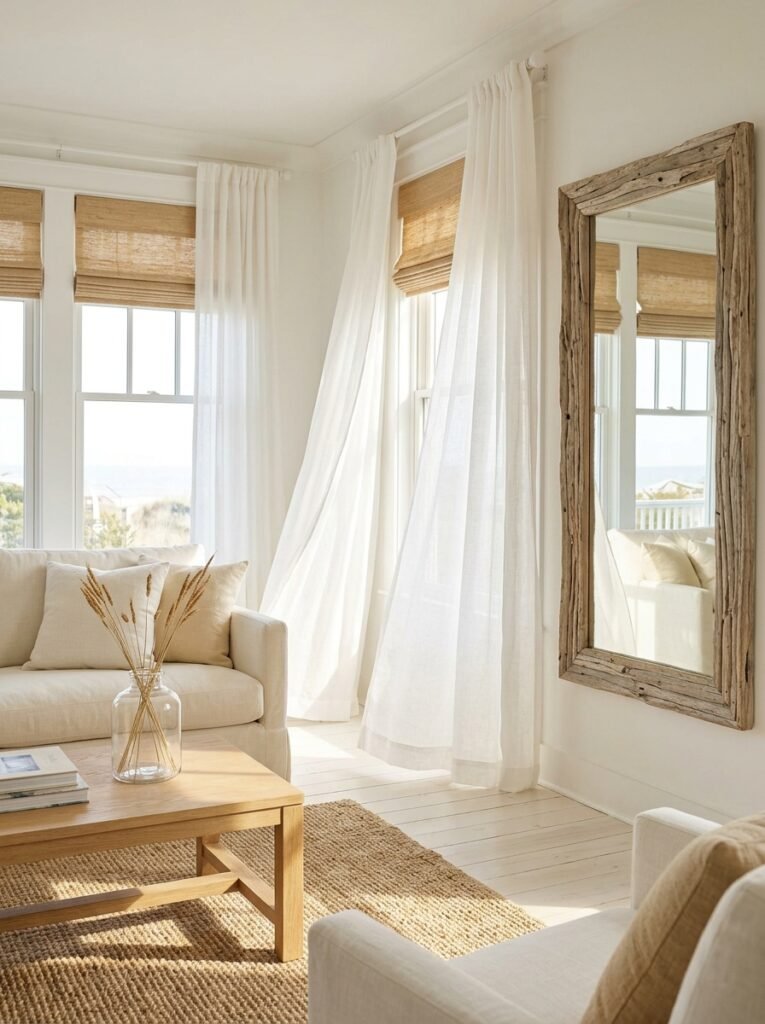
If there’s one non-negotiable principle in coastal interior design, it’s this: light must flow freely. The entire visual language of this style depends on rooms that feel sun-drenched, airy, and connected to the outdoors. Heavy curtains, dark walls, and overcrowded furniture arrangements work directly against everything coastal design is trying to achieve.
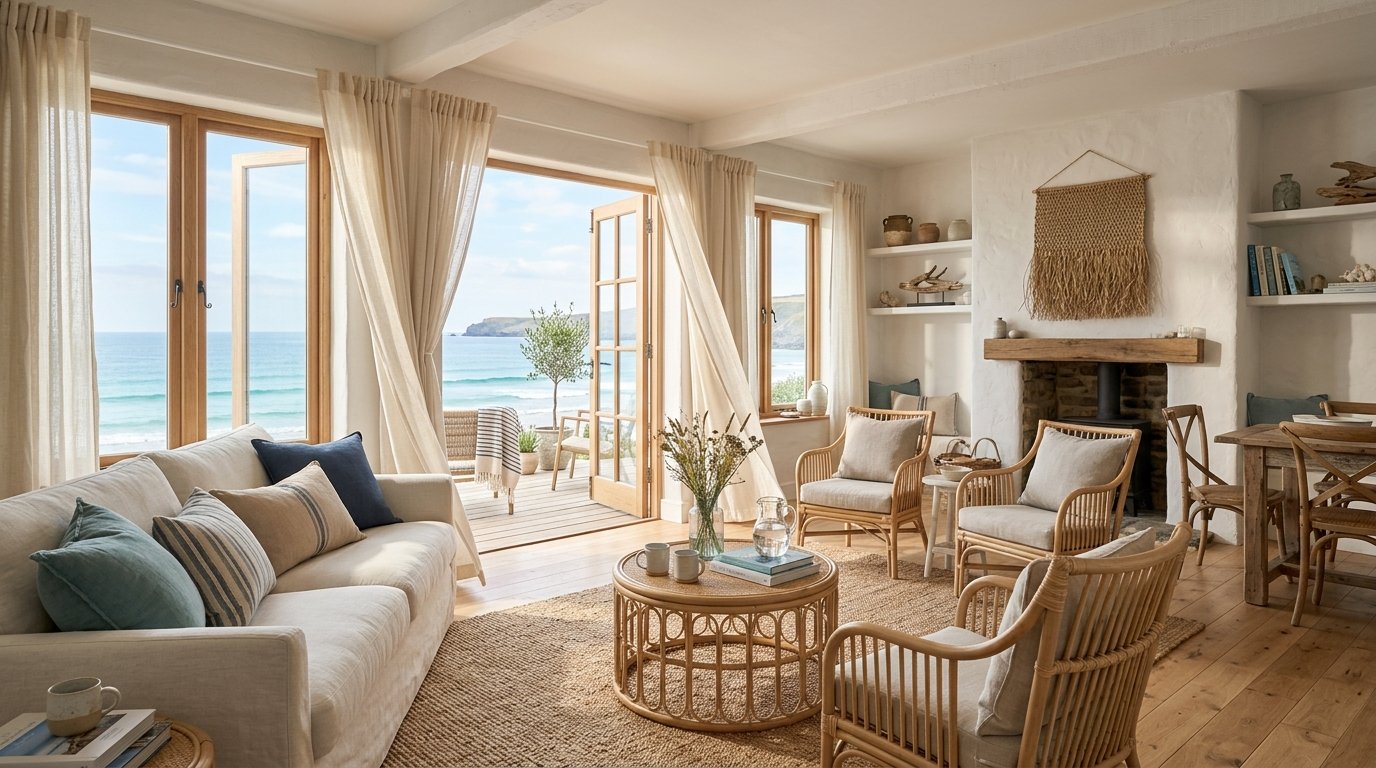
Maximizing natural light starts with your window treatments. Swap thick drapes for sheer linen or cotton panels in soft white or ivory — the kind that billow gently and let the light filter through like it does at the beach on an overcast morning. If privacy isn’t a concern, consider going without window treatments altogether on some windows, or using simple Roman shades in natural materials like jute or bamboo.
Beyond windows, think about how light moves through your space throughout the day. Strategic placement of mirrors — particularly those with weathered driftwood or brass frames — can bounce natural light deep into a room and double the sense of openness. A large, simply framed mirror on the wall opposite a window is one of the most effective and underused tools in any interior designer’s kit.
4. Texture: The Secret Layer That Makes Coastal Rooms Feel Alive
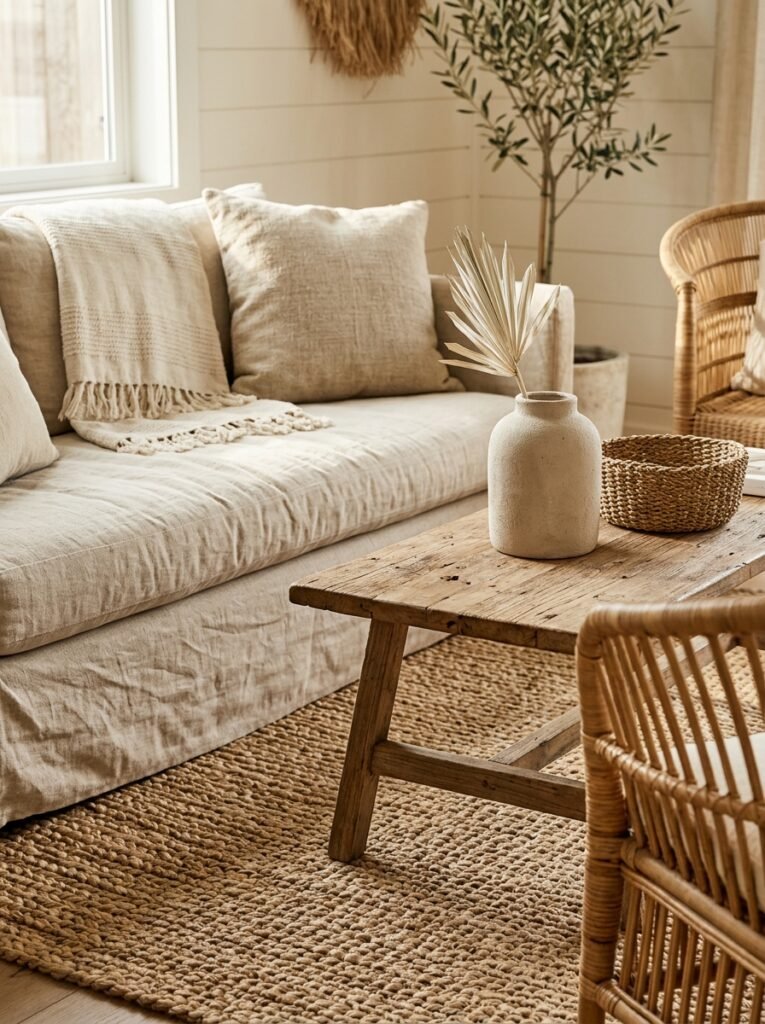
Here’s where so many coastal-inspired spaces fall flat: they get the colors right, they get the light right, but they forget about texture — and the result feels like a showroom rather than a home. Texture is what gives a coastal interior its soul. It’s the difference between a room that looks like the beach and a room that makes you feel like you’re there.
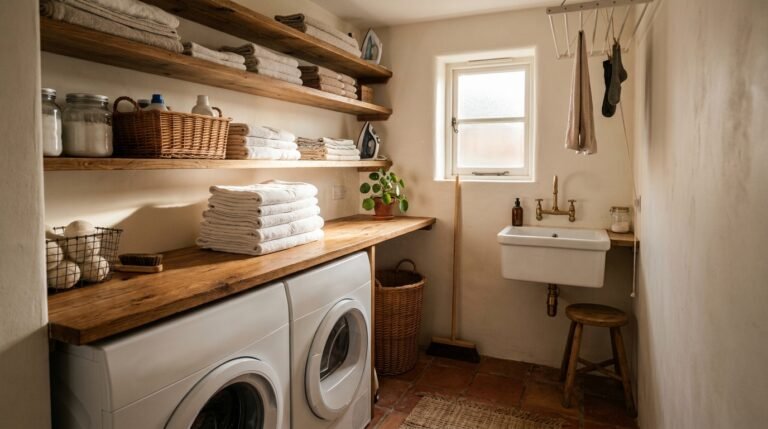
The textures in a coastal home should feel natural, tactile, and slightly imperfect. Chunky jute rugs with a rough weave. Linen sofa covers that wrinkle beautifully. Rattan chairs with their organic, hand-woven patterns. Weathered wood coffee tables with visible grain and knots. Ceramic vases with an unglazed, matte finish. Woven seagrass baskets used for storage. Each of these elements adds a layer of sensory richness that smooth, polished surfaces simply can’t achieve.
“The most beautiful coastal rooms aren’t perfectly styled — they’re perfectly lived in.”
The interplay between smooth and rough is particularly important. A polished concrete floor feels entirely different when layered with a chunky jute rug and a low-slung linen sofa. A crisp white wall gains warmth and character when paired with a raw-edged wooden shelf holding a collection of worn books and beach-found objects. It’s the contrast between elements that creates visual and tactile interest.
5. Furniture That Tells a Story Without Saying a Word
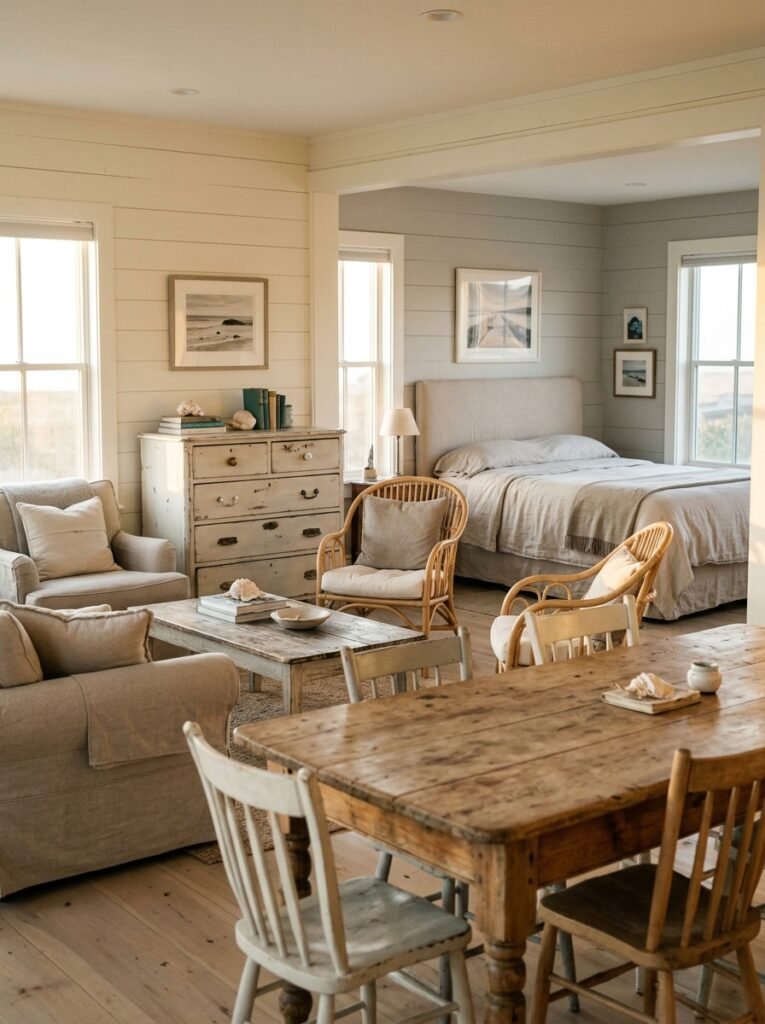
Coastal furniture has a particular personality: relaxed, sturdy, unpretentious, and often showing the marks of time and use. Think of the furniture you’d find in a well-loved beach house that’s been in a family for generations — pieces that have character because they’ve lived through something.
The best coastal furniture tends to favor natural wood in lighter tones — whitewashed oak, bleached pine, or natural ash — over dark mahogany or glossy lacquered finishes. Upholstery in natural fabrics like linen, cotton, and canvas in soft neutral tones creates that effortless, come-as-you-are comfort that’s central to the coastal aesthetic. And the forms tend to be simple and grounded: low sofas, chunky wooden dining tables, rattan accent chairs, beds with simple linen headboards.
One of the most charming aspects of coastal furniture styling is the embrace of imperfection. A table with a slightly uneven surface, a chair with a visible repair, a chest of drawers with mismatched hardware — these aren’t flaws in a coastal home. They’re character. They suggest a life well-lived, which is exactly the story you want your home to tell.
6. The Entryway: Your Home’s First Exhale
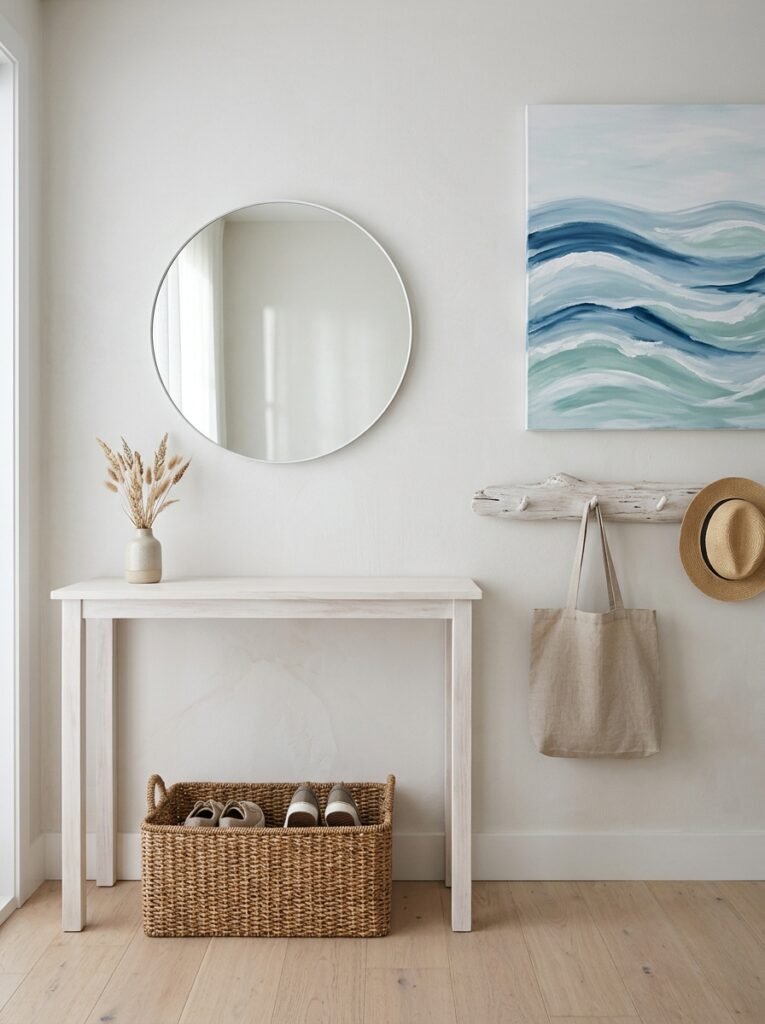
The entryway sets the emotional tone for everything that follows. In a coastal home, this transitional space should feel like the first breath of sea air — immediate, refreshing, and gently disorienting in the best possible way. It’s the moment the outside world starts to recede and something slower and softer takes over.
Keep the entryway light and uncluttered. A whitewashed console table, a simple round mirror, a hook rack made from driftwood or raw brass, a woven basket for shoes — that’s really all you need. Resist the urge to overload the space. The restraint is part of the message. A single large piece of coastal artwork — perhaps an abstract blue and white painting, or a simple line drawing of waves — can do more for the mood of an entryway than a dozen smaller decorative objects.
7. Living Room Design: Where Everyone Finally Slows Down
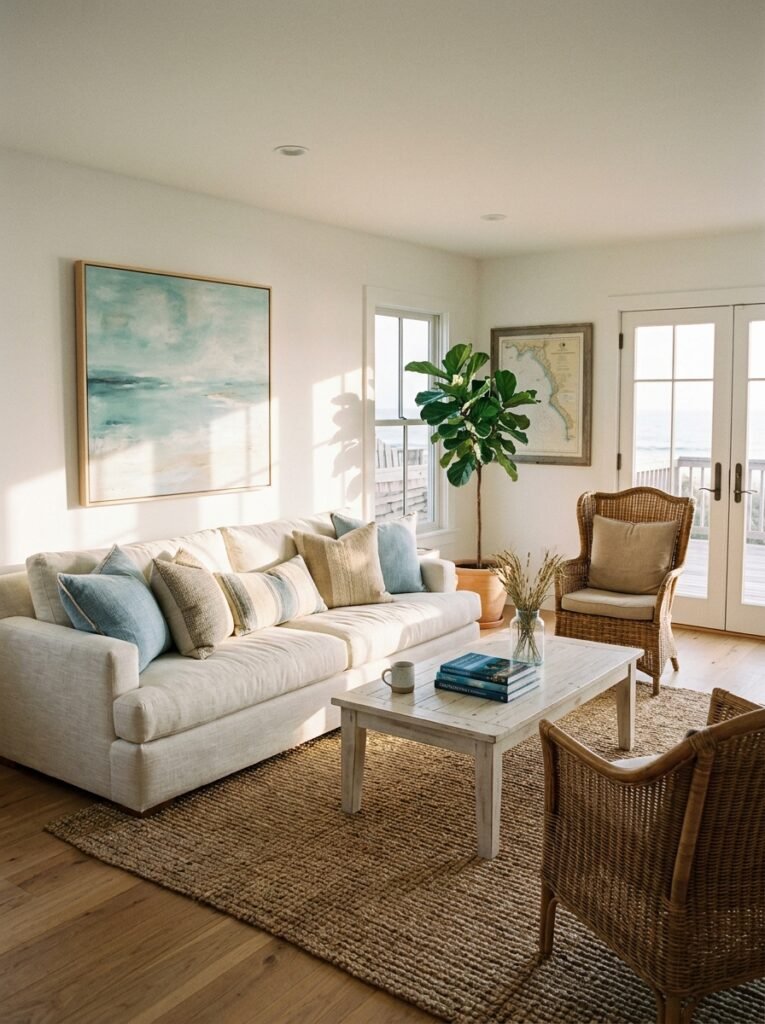
The coastal living room is perhaps the most important room to get right, because it’s where the whole design philosophy has to perform most visibly. This is the space where people gather, exhale, put their feet up, and allow themselves to be unhurried. The furniture arrangement, the color choices, the textiles — everything here should serve that single emotional purpose: rest.
Anchor the room with a large, comfortable sofa in natural linen or cotton — something that looks like it invites long afternoon naps and good conversations. Layer it with cushions in soft blues, sandy beiges, and warm whites. Ground the seating area with a large jute or seagrass rug. Add rattan or wicker accent chairs for visual texture and a sense of effortless, unfussy style.
Artwork in the coastal living room should feel connected to nature without being literally pictorial — you don’t need framed photographs of seashells or anchors. Abstract works with ocean-inspired color palettes, vintage coastal maps, or botanical prints all feel sophisticated and genuinely connected to the coastal spirit. The goal is evocation, not imitation.
8. The Coastal Kitchen: Where Function Meets Barefoot Ease
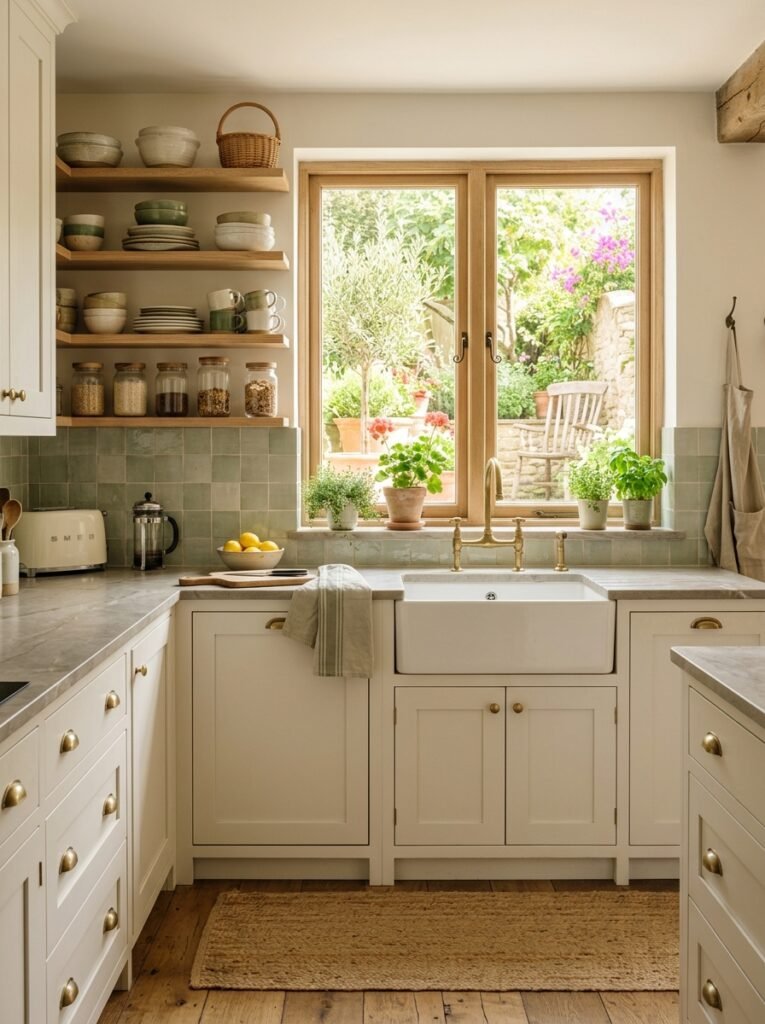
The kitchen in a coastal home should feel like Saturday morning — easy, relaxed, filled with the smell of coffee and the soft sound of wind through an open window. Functionally, it needs to work hard. Aesthetically, it should make you want to cook.
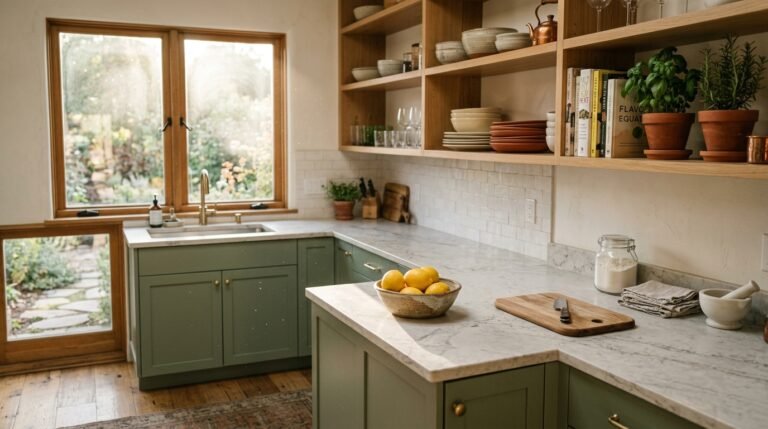
White or off-white cabinetry is the classic coastal kitchen foundation, but what elevates it beyond generic is the hardware, the countertops, and the open shelving. Brushed brass or matte black hardware adds warmth and character. Natural stone countertops in soft whites and warm greys echo the palette of the shoreline. Open shelving in raw wood — displaying mismatched ceramic dishes, hand-thrown mugs, and simple glass jars — creates that authentic, lived-in quality that coastal design depends on.
“A coastal kitchen isn’t designed to impress — it’s designed to make you feel like you never want to leave.”
Let the backsplash be your moment of texture and color. Handmade ceramic tiles in soft blue, sage green, or warm white add artisanal character without overwhelming the space. And always — always — maximize natural light in the kitchen. A window over the sink, looking out onto a garden or even just a simple courtyard, can transform the experience of washing dishes from a chore into a small, quiet pleasure.
9. Bedroom Sanctuary: Sleeping Close to the Sea
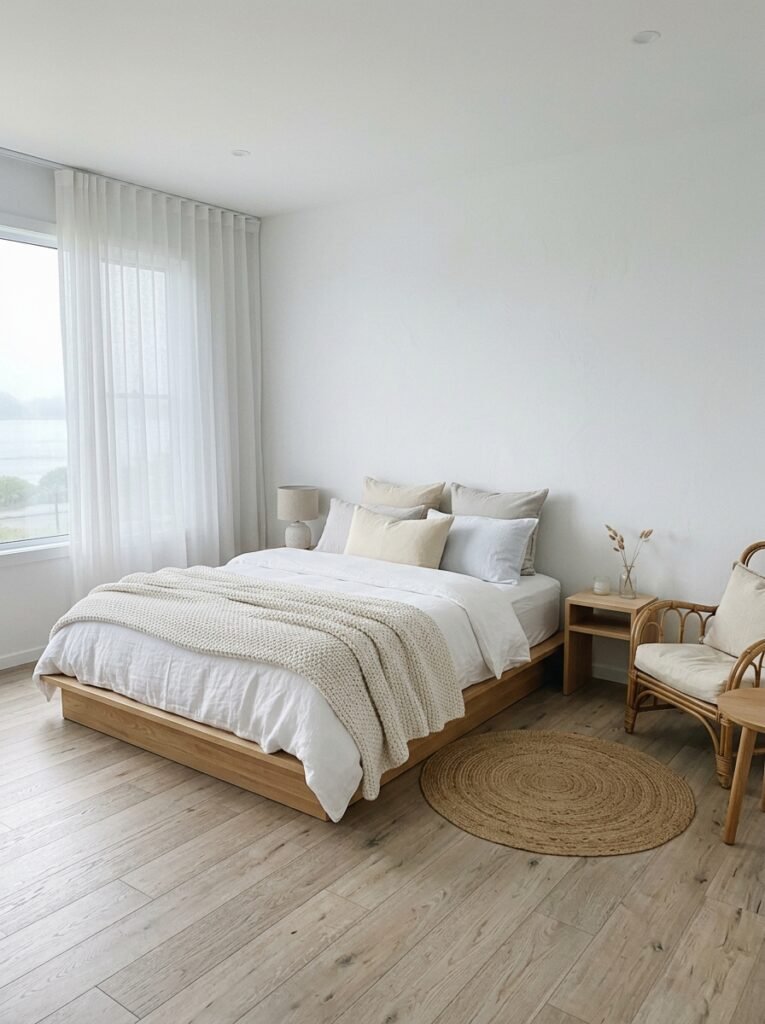
The coastal bedroom should feel like waking up on a cool, bright morning with the sound of water nearby. It’s the room where the design philosophy moves from beautiful to genuinely restorative, and that requires thoughtful layering of everything from bedding to lighting to the amount of furniture you allow in the space.
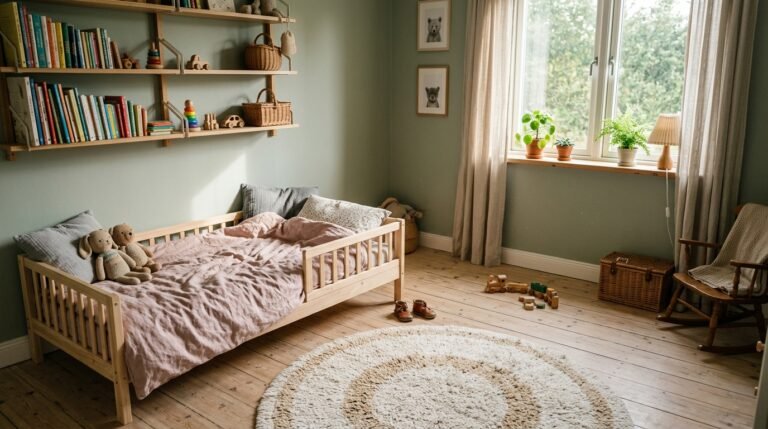
Start with the bed itself. Simple, sturdy, low to the ground — either a platform in natural wood or a simple upholstered linen headboard in soft white or warm grey. Layer the bedding in cool whites and soft neutrals, adding texture through a chunky knit throw, a linen duvet, and pillowcases in slightly different tones of the same neutral family. The layering should feel abundant but effortless, like a bed that someone beautiful and unhurried slept in.
Keep the furniture minimal. A coastal bedroom with too much furniture loses the essential quality of openness that makes it feel restorative. A simple nightstand, a wooden dresser, perhaps a rattan armchair in the corner — that’s enough. Let the walls breathe. Let the light move.
10. Bathroom as Spa: The Coastal Approach to Daily Ritual
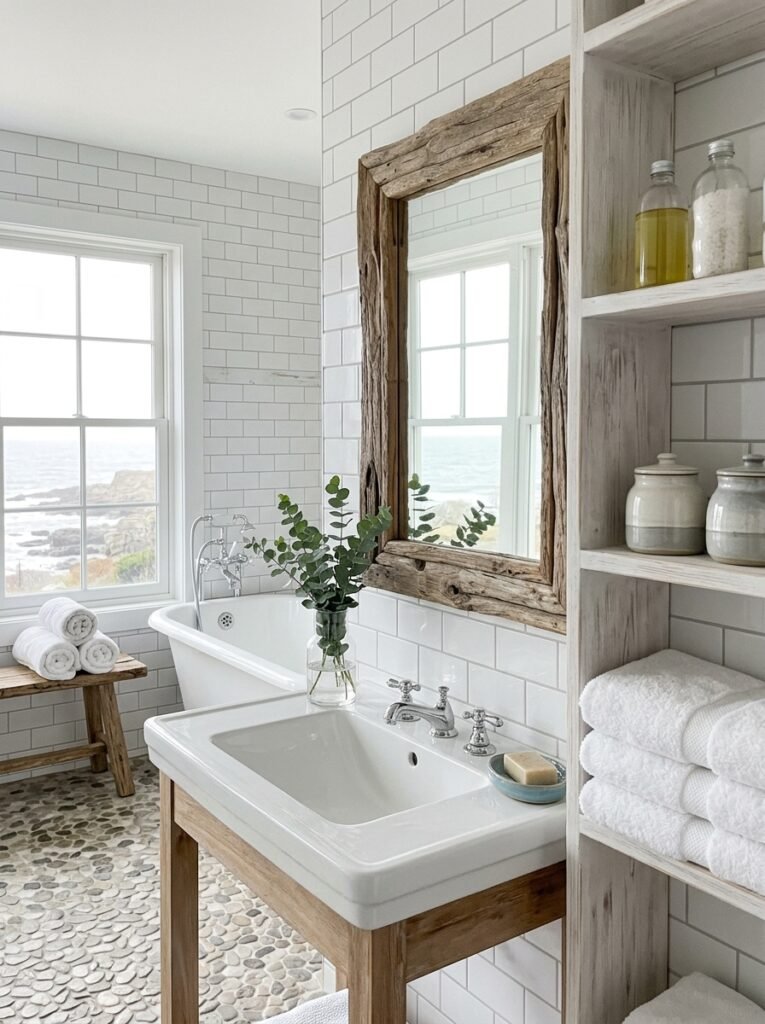
There is something about water that makes the bathroom a natural home for coastal design principles. The best coastal bathrooms feel simultaneously clean and sensory — all white subway tiles, stone surfaces, wooden accents, and the smell of eucalyptus or sea salt.
Stone or pebble floor tiles add tactile interest underfoot while evoking the natural environment. Wooden shelving in raw or whitewashed timber brings warmth to the cool white palette. Simple glass bottles and jars for toiletries replace cluttered plastic packaging and reinforce the clean, curated aesthetic. A large, simple mirror with a driftwood or brass frame reflects the light and expands the space visually.
Keep the color palette crisp and clean here — white, soft grey, warm wood, and perhaps one quiet accent of ocean blue. The bathroom should feel like a small ritual space — somewhere the design is actively participating in helping you start or end your day with a sense of calm.
11. Outdoor Spaces: Where the Interior Meets the Horizon
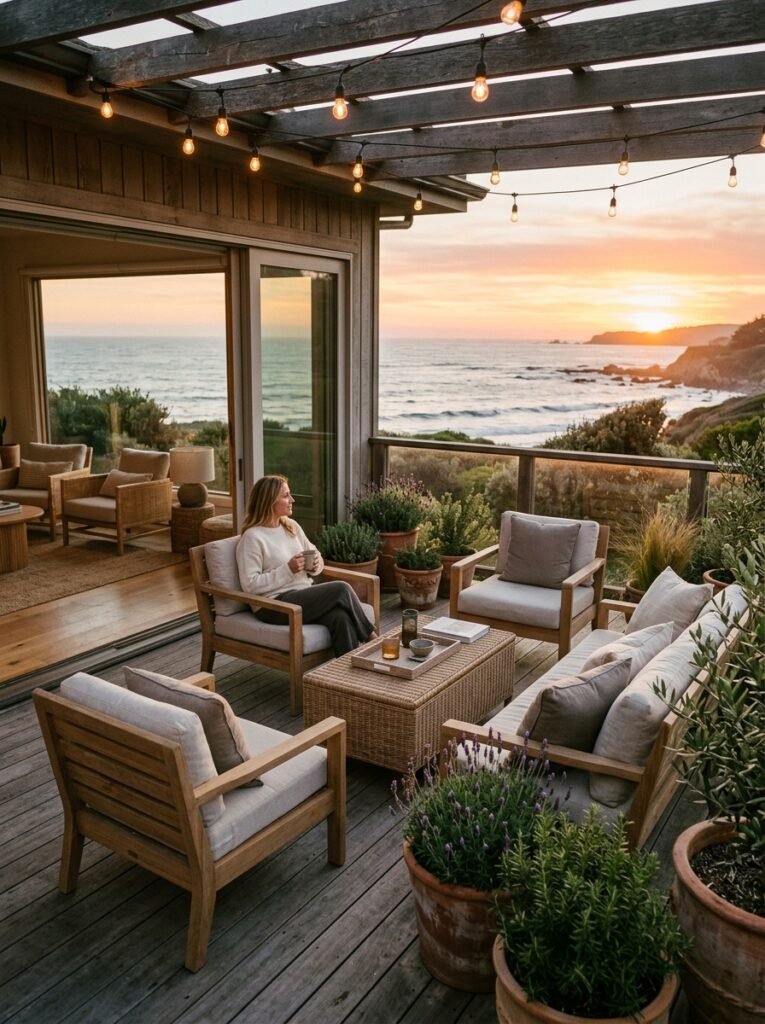
A coastal home that doesn’t acknowledge its relationship to the outdoors is missing half of its potential. Whether you have a large garden, a small terrace, or just a narrow balcony, the outdoor space should feel like a natural extension of the interior — a seamless continuation of the same palette, textures, and unhurried spirit.
Outdoor furniture in natural teak, rattan, or painted wood in soft whites and warm greys continues the design language from inside. Outdoor textiles in weather-resistant versions of the same linen and cotton tones you’ve used indoors blur the boundary between the two spaces. Simple potted plants — particularly coastal and Mediterranean varieties like lavender, rosemary, sea grasses, and succulents — add life and softness without demanding high maintenance.
String lights or simple outdoor lanterns extend the warmth of the space into the evening and create that magical golden-hour atmosphere that coastal living is so associated with. The outdoor space doesn’t need to be elaborate — it needs to feel inviting, natural, and connected to both the home and the larger natural world beyond it.
12. The Small Details That Do the Heaviest Emotional Lifting
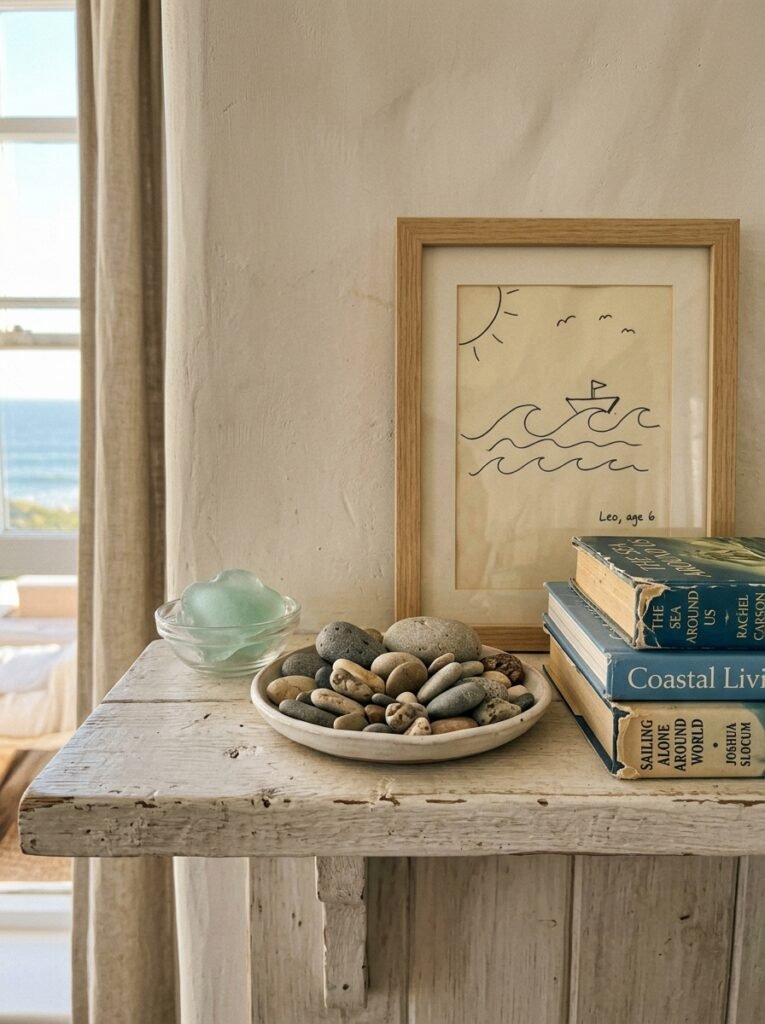
Every truly beautiful coastal interior has a layer of small, personal details that no design guide can fully prescribe — because they come from the life lived in the space. A collection of smooth stones gathered on a family walk along the beach. A piece of sea glass in a simple glass bowl. A stack of dog-eared books about the ocean. A child’s drawing of waves framed simply on a wall.
These small details are the heartbeat of a coastal home. They’re the proof that the design isn’t just a style imposed on a space — it’s an expression of how the people who live there see the world. When these details are present, the space stops feeling like a design project and starts feeling like a home in the deepest, most emotional sense of the word.
The lesson here is to resist the urge to over-style and over-curate. Leave room for the small, imperfect, personal objects that tell your story. Let the space evolve over time, accumulating meaning the way a shoreline accumulates driftwood — slowly, naturally, beautifully.
—
🌿 How to Take Care of Your Coastal Interior
Maintaining a coastal interior is less about constant effort and more about mindful attention — which, conveniently, aligns perfectly with the spirit of the whole design philosophy.
Keep natural materials nourished and protected. Rattan and cane furniture benefits from occasional misting with water to prevent brittleness, and raw wood surfaces should be oiled or waxed every few months to maintain their warmth and prevent cracking. Linen and cotton fabrics are best washed in cool water and air-dried to preserve their natural texture and avoid shrinkage.
Embrace the natural aging of materials rather than fighting it. Whitewashed wood will develop a beautiful patina over time. Brass hardware will warm and darken slightly. Linen will soften and wrinkle more gracefully with each wash. These changes are not wear — they’re the materials becoming more themselves, and more deeply part of your home.
Refresh the space seasonally with small changes rather than complete overhauls. Swap cushion covers and throw blankets for slightly warmer tones in autumn and winter, returning to cooler, lighter versions in spring and summer. Add fresh cut flowers or potted plants regularly — a bunch of white ranunculus or a simple terracotta pot of herbs can do more for the energy of a room than almost any permanent design change.
—
❓ FAQ
Q: Can I create a coastal interior if I don’t live near the beach? A: Absolutely — and in fact, many of the most beautifully executed coastal interiors exist in landlocked cities and suburban homes. Coastal design is about evoking a feeling, not a location. The palette, the textures, the light, and the sense of unhurried ease can be brought into any home regardless of where it sits geographically.
Q: Is coastal interior design the same as nautical design? A: They’re related but meaningfully different. Nautical design tends to lean into literal maritime references — anchor motifs, rope accents, navy and red color schemes, porthole mirrors. Coastal design is more subtle and nature-inspired, drawing from the colors and textures of the natural coastal environment rather than from boats and sailing. Modern coastal interiors rarely include explicitly nautical elements.
Q: How do I keep a coastal interior from looking too generic or catalog-like? A: The key is personal objects and imperfect choices. Incorporate items that have personal meaning — things you’ve collected, inherited, or made — rather than buying a complete set of matching coastal décor. Mix vintage and new. Choose hand-thrown ceramics over factory-made ones. Allow the space to evolve organically over time rather than styling it all at once.
—
💭 Final Thought
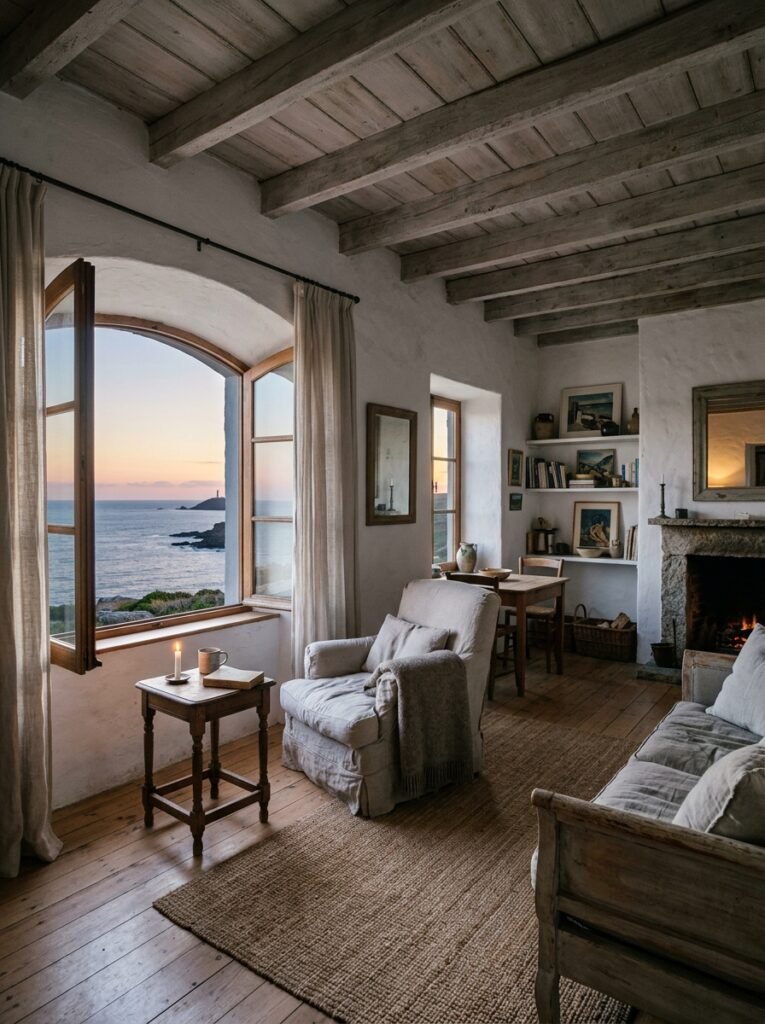
A coastal house interior, at its best, is a daily act of intention — a decision to surround yourself with beauty that is calm, honest, and deeply connected to the natural world. It’s a reminder that home should feel like the best version of rest, not another performance. Every whitewashed surface, every soft linen curtain, every stone and shell and weather-worn piece of wood is quietly saying the same thing: slow down, you’re home now.
What would it feel like to walk into your home and feel the same thing you feel when you first see the ocean — that particular combination of awe, release, and deep, wordless peace?