What a Mansion Interior Really Feels Like — And What It Can Teach Us About Home
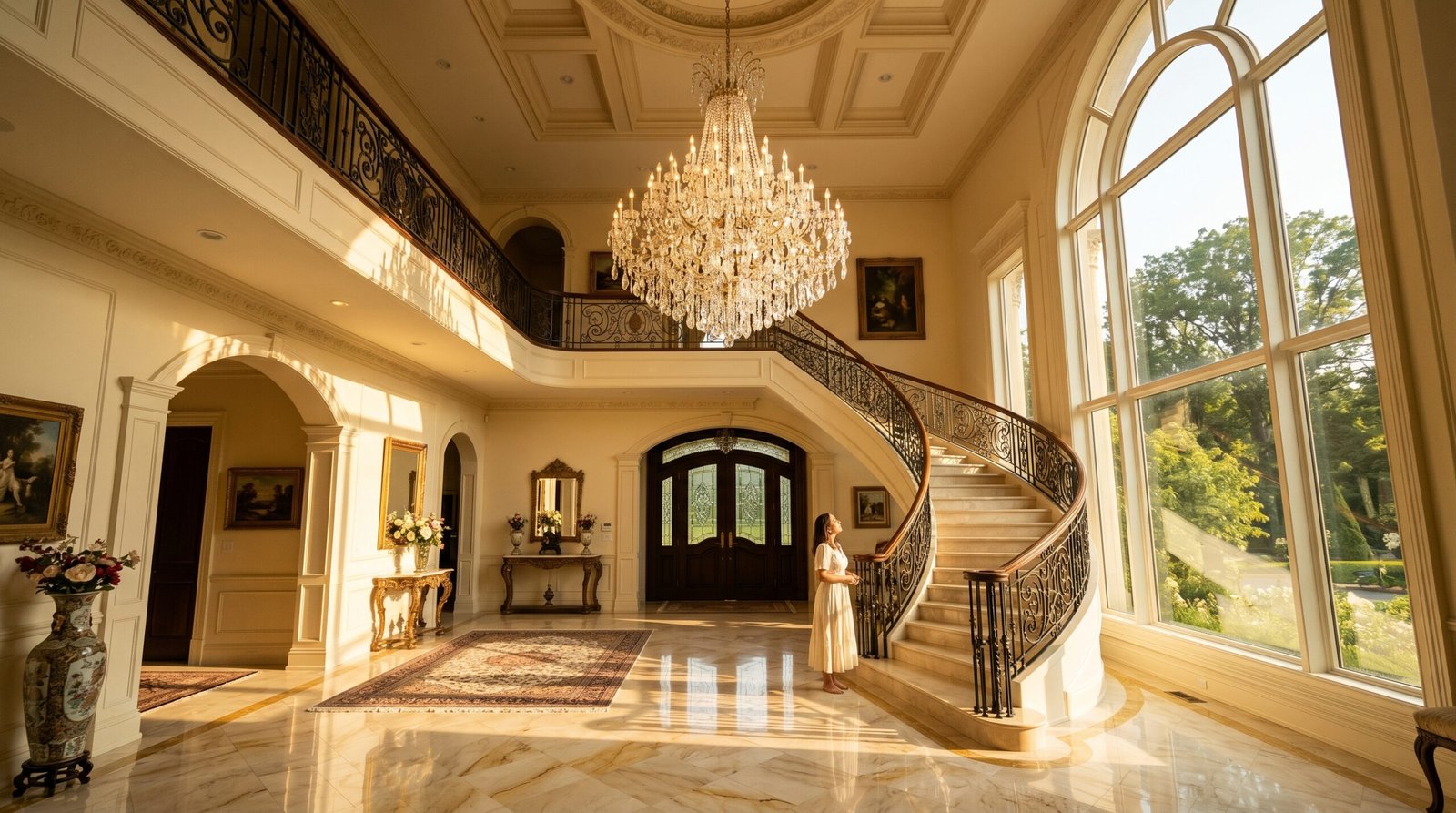
You walk through a grand entrance hall, sunlight pouring through a two-story window, and for a moment, everything inside you goes quiet. There’s something about a beautifully designed mansion interior that does more than impress — it makes you feel something you didn’t expect to feel.
—
Table Of Content
1. The First Step Inside: Why Grand Entryways Do Something to Your Brain
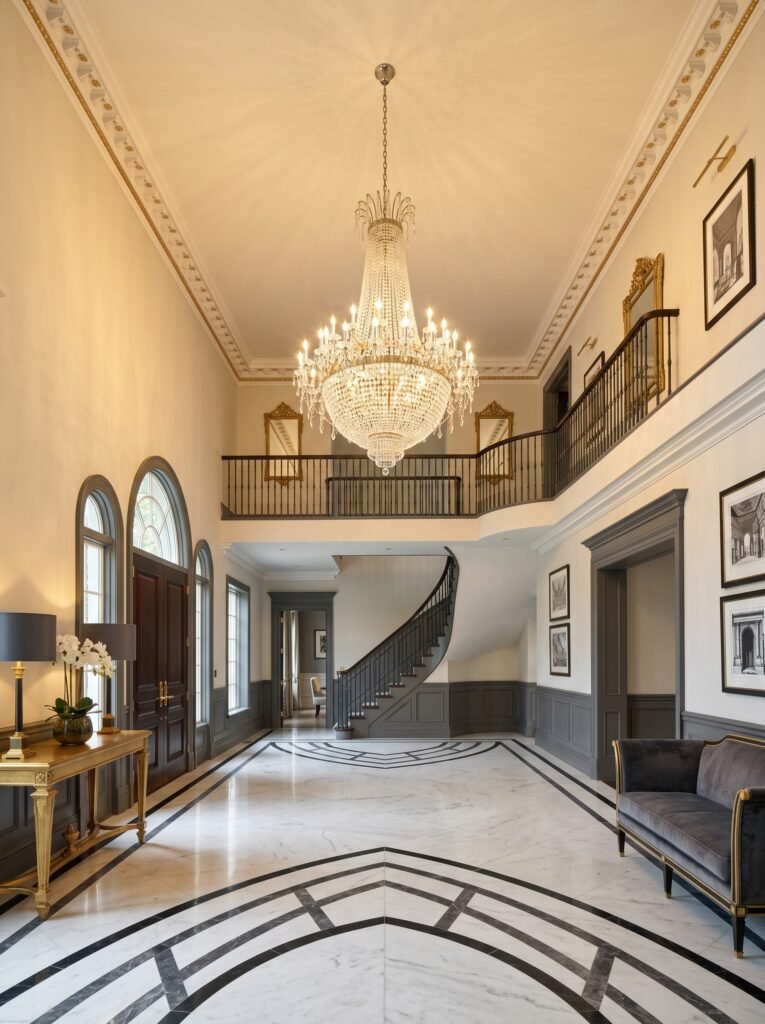
There’s a reason the foyer of a mansion is never an afterthought. Architects and interior designers treat it as the opening note of a symphony — everything that follows must harmonize with what the entryway promises.
In most classic mansion interiors, the foyer features soaring ceilings, often double-height, that create an immediate sense of scale. Marble or stone flooring reflects light in a way that feels almost theatrical. A statement chandelier hangs at the center — not just for illumination, but as a declaration.
What’s fascinating from a psychological standpoint is that spacious, vertical environments activate a mild sense of awe in the human brain. Studies in environmental psychology suggest that high ceilings encourage more abstract, creative thinking. So when you step into a mansion foyer and feel suddenly reflective or inspired, that’s not an accident — it’s design doing exactly what it was meant to do.
“A great entrance doesn’t just welcome you into a home — it changes the way you feel about yourself while you’re inside it.”
—
2. The Living Room as a Statement of Values
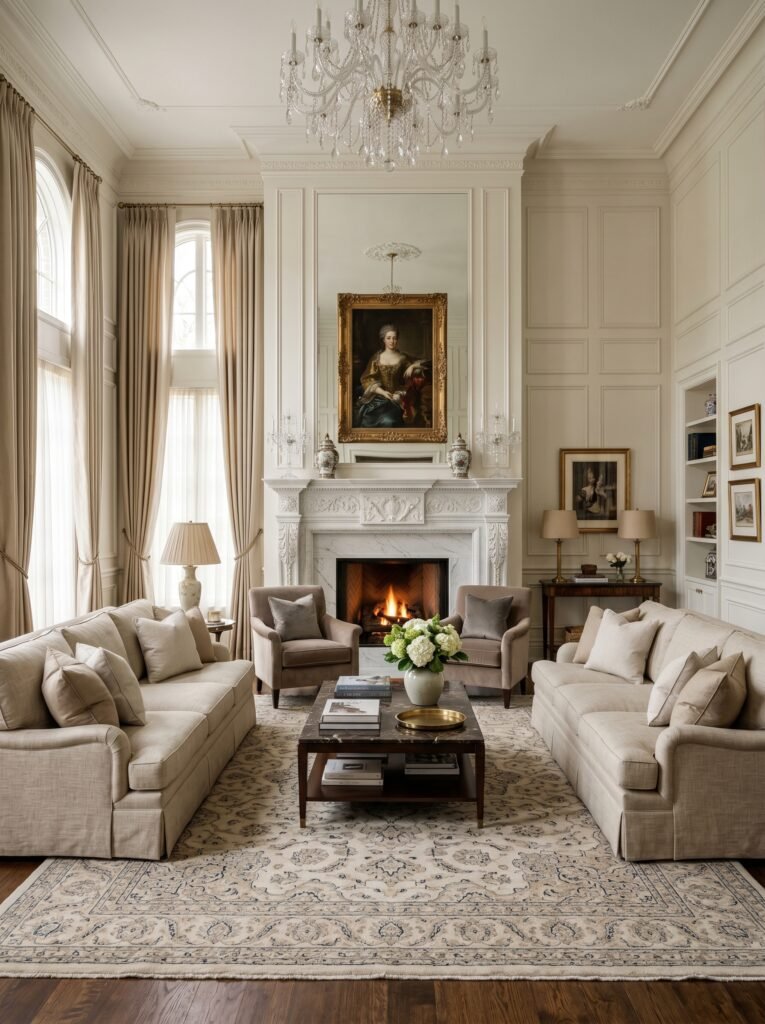
In a mansion, the formal living room is rarely a place where anyone actually watches television. It’s a room designed to communicate something — about taste, about history, about aspiration.
You’ll typically find oversized upholstered furniture arranged in symmetrical groupings, anchored by a substantial area rug that defines the space. Walls might feature wainscoting or raised paneling painted in deep, sophisticated neutrals. Fireplace mantels are almost always present, often carved from marble or limestone, framing a focal point that draws the eye immediately.
What makes these rooms feel genuinely luxurious isn’t just the quality of the materials — it’s the intentionality. Every object has been considered. Nothing is incidental.
—
3. The Surprising Intimacy of Mansion Libraries
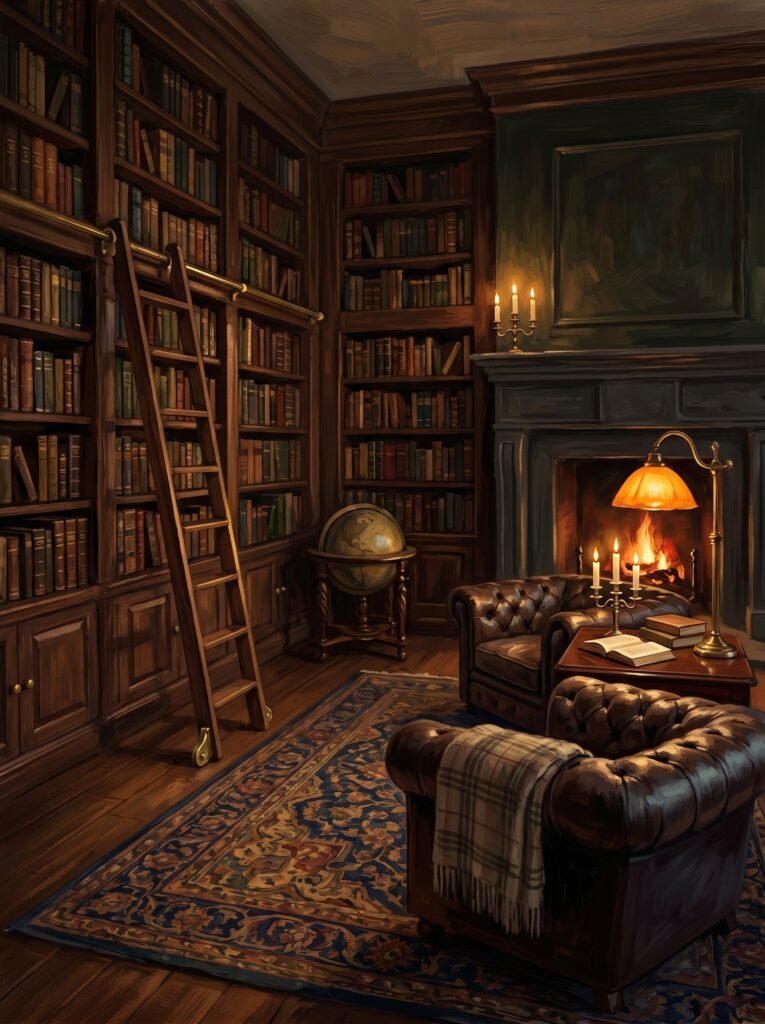
If there is one room in a traditional mansion interior that consistently surprises people, it is the library. After the grandeur of the public-facing rooms, stepping into a well-designed mansion library feels like stepping into a whisper.
Floor-to-ceiling bookshelves in dark walnut or mahogany create walls of knowledge and texture. Rolling library ladders on brass rails speak to a time when a personal collection was considered a form of wealth in itself. Deep leather armchairs, reading lamps with warm amber bulbs, perhaps a globe or a drinks cabinet in a quiet corner — these rooms were designed to be inhabited slowly.
There’s something deeply humanizing about seeing a library inside an otherwise overwhelming space. It’s a reminder that even within environments built to impress, people retreat to places where they can think, read, and simply be.
—
4. Dining Rooms Built for More Than Dinner
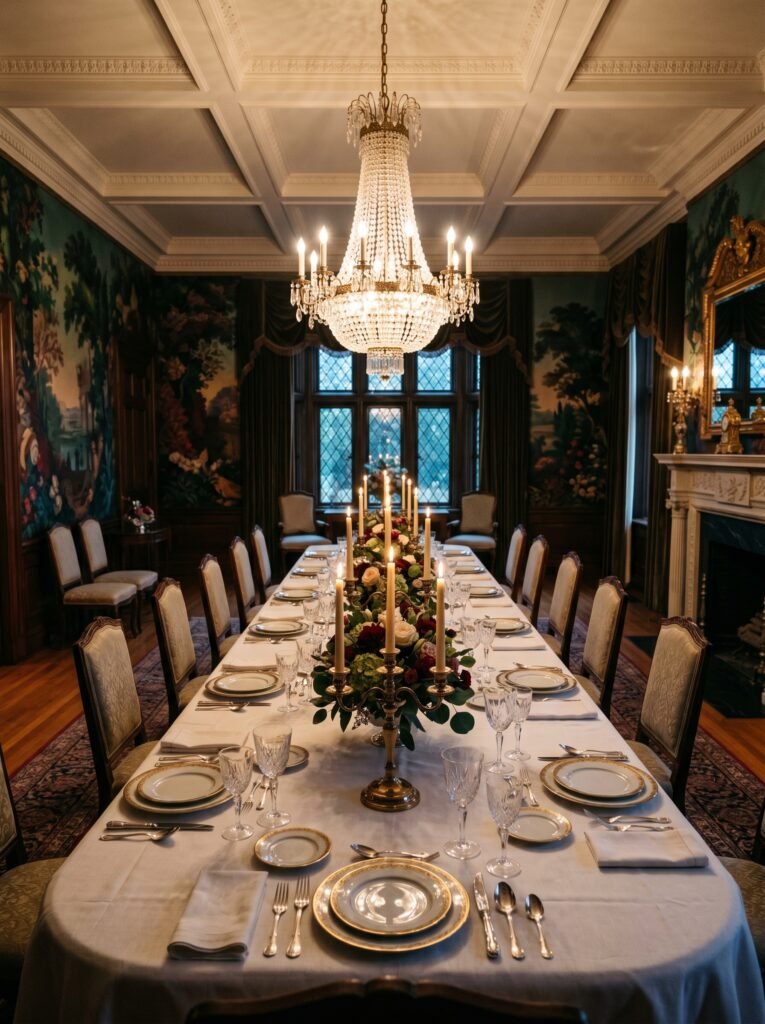
A mansion dining room is rarely just for eating. It is a stage. The long table — often seating twelve, sixteen, or more — sets the expectation that meals here are events, not interruptions.
Formal dining rooms in historic and contemporary mansions alike tend to feature rich wall coverings: silk fabric panels, hand-painted wallpaper murals, or deep lacquered paint in jewel tones. Crystal chandeliers hang low over the table, casting flattering, flickering light. Sideboards and china cabinets display silver and fine porcelain not because it will necessarily be used, but because presentation is its own form of hospitality.
What strikes most visitors is the silence of these rooms between meals. All that formality, waiting. There is something almost melancholy about an empty banquet table — and yet it holds a certain beautiful anticipation.
—
5. The Art of the Grand Staircase
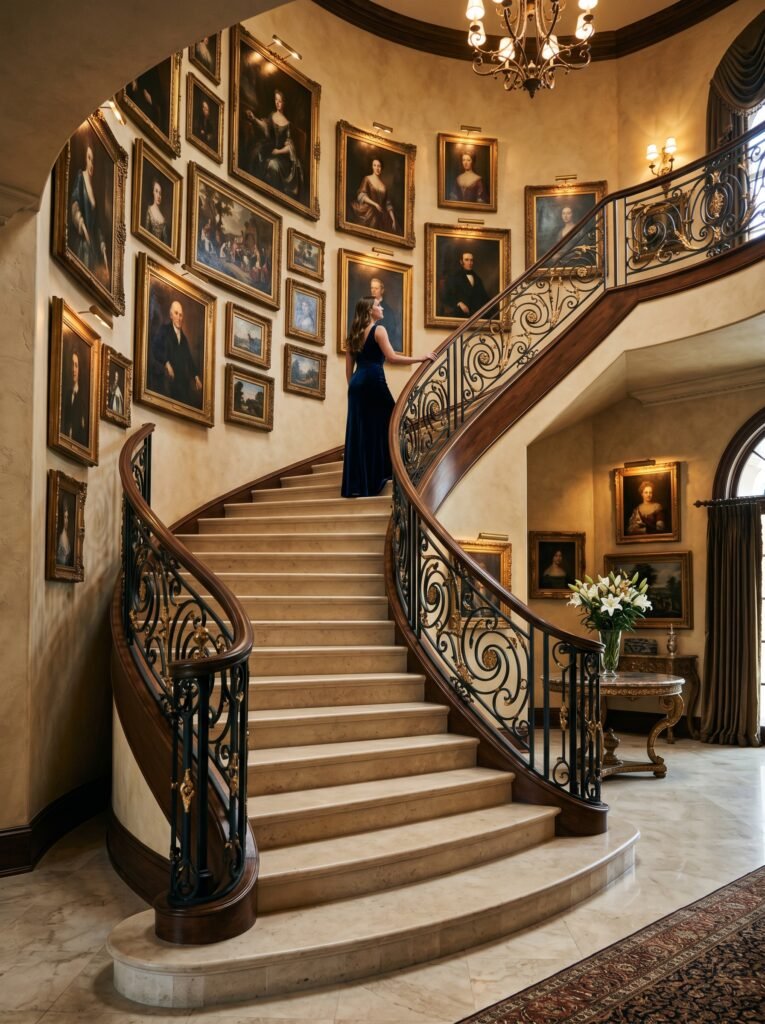
Few architectural features define a mansion interior quite like its staircase. This is one of the few structural elements in a home that is simultaneously functional and purely theatrical.
Classic mansion staircases spiral or sweep upward in wide, generous arcs. Balustrades may be wrought iron, carved wood, or polished brass. The treads are typically stone or hardwood, wide enough to descend without hurrying. Walls alongside the staircase often display a curated gallery of art or family portraits — a visual narrative climbing alongside you.
“A staircase in a mansion isn’t just a way to get upstairs — it’s a moment designed to be seen.”
The staircase represents one of the clearest examples of how mansion interiors blur the line between architecture and performance. Moving through the space is itself a choreographed experience.
—
6. Master Suites That Feel Like Private Retreats
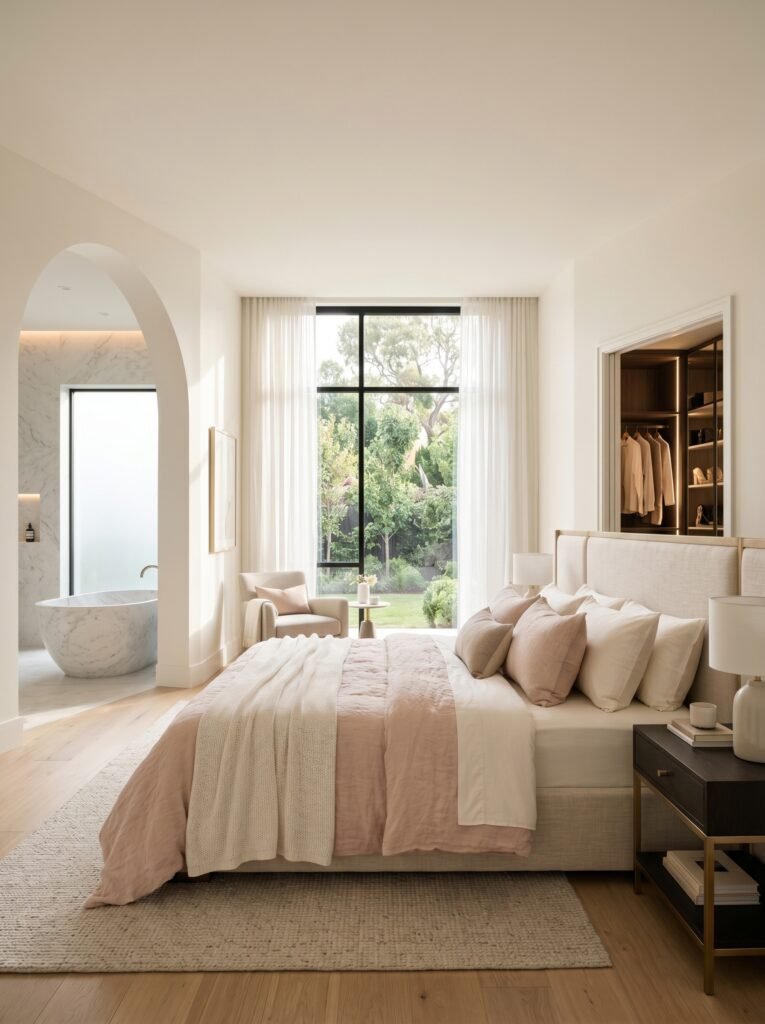
Modern mansion master suites have evolved far beyond a simple bedroom. They are entire private worlds — often spanning several hundred square feet — designed to provide complete withdrawal from the rest of the home.
A typical luxury master suite includes a sleeping area with a custom upholstered headboard and layered bedding in fine linens, often positioned to frame a view. Adjoining dressing rooms with floor-to-ceiling cabinetry, mirrored panels, and integrated lighting allow for a private routine that feels considered and calm. The en-suite bathroom carries its own architectural ambition: freestanding soaking tubs, walk-in rain showers clad in marble, heated floors, double vanities with bespoke cabinetry.
What these spaces communicate, above all, is that rest matters. That the person who inhabits this room deserves not just comfort, but ritual.
—
7. Kitchens That Balance Function With Beauty
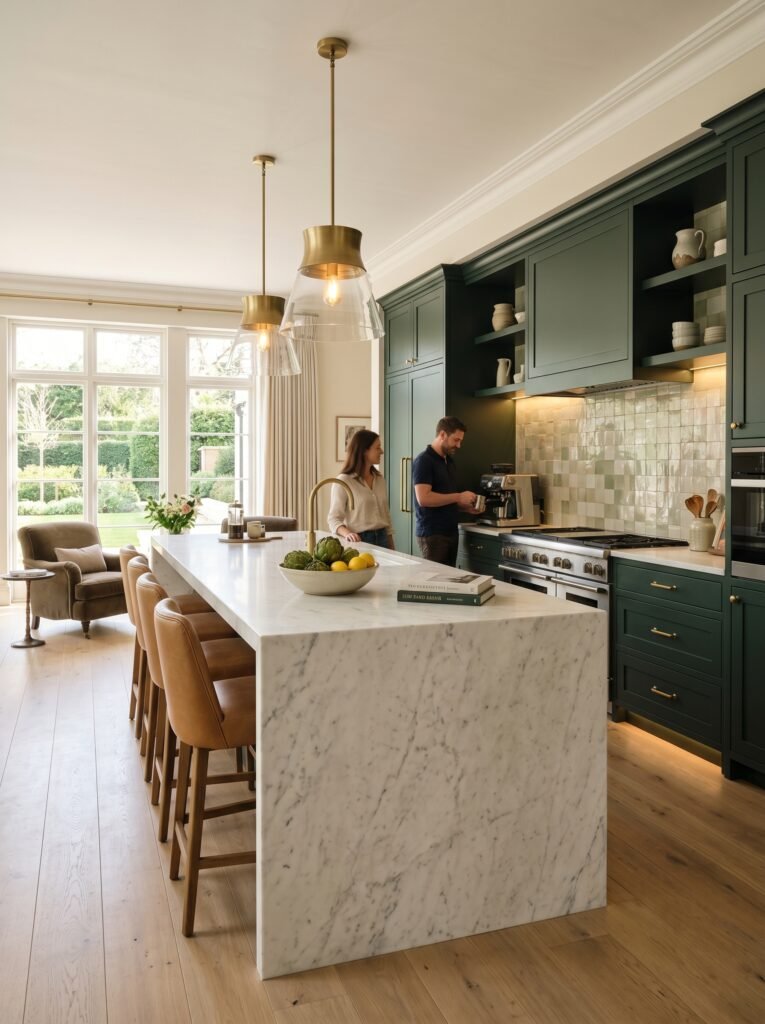
For a long time, mansion kitchens were kept strictly below stairs — service areas invisible to guests. Today, the kitchen has become one of the most important and design-forward rooms in any luxury residence.
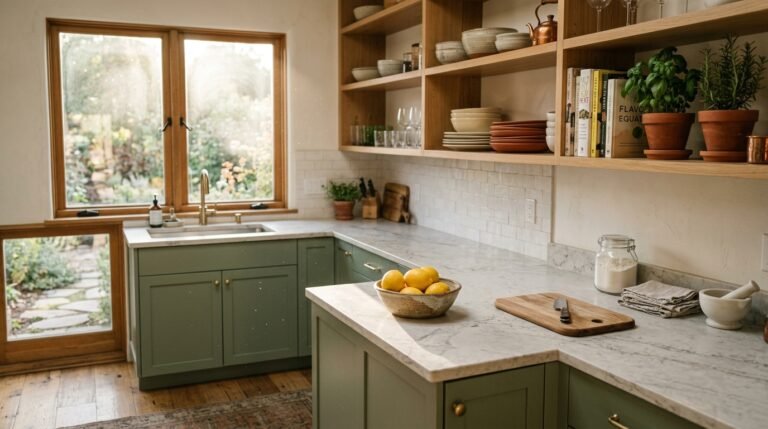
Contemporary mansion kitchens are expansive by necessity. Professional-grade appliances — often restaurant-caliber ranges, built-in refrigerators, and wine cellars — are integrated seamlessly behind cabinetry that looks more like furniture than function. Large kitchen islands serve as social anchors. Marble countertops and hand-crafted tile backsplashes bring artisanal texture to high-performance spaces.
The best mansion kitchens manage to feel simultaneously grand and genuinely warm. They are the rooms that remind you that a house, no matter how large, is ultimately a place where people want to gather.
—
8. The Hidden Rooms That Tell the Truest Stories
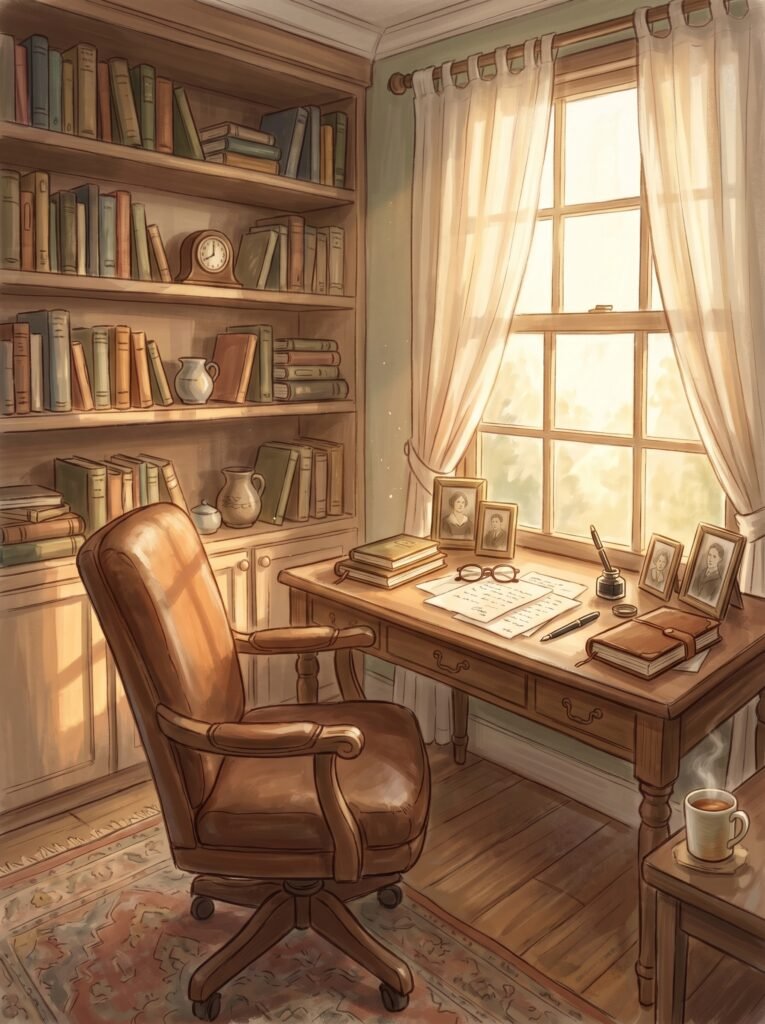
Every great mansion has rooms that guests rarely see — the morning room, the study, the sitting room tucked off a hallway. These are the spaces that tell you the most about how a home is actually lived in.
Morning rooms traditionally face east to catch the early light, furnished lightly and personally, without the formality of the main reception rooms. A private study might feature a well-worn leather desk chair, a collection of personal memorabilia alongside functional files, a room that carries the scent of old paper and quiet decisions. These are the rooms where the human being behind the mansion reveals themselves.
It’s a useful reminder that even the most architecturally ambitious homes are built around ordinary, intimate human needs: a place to think alone, a view you look forward to each morning, a chair that fits you perfectly.
—
9. The Role of Natural Light in Luxury Interiors
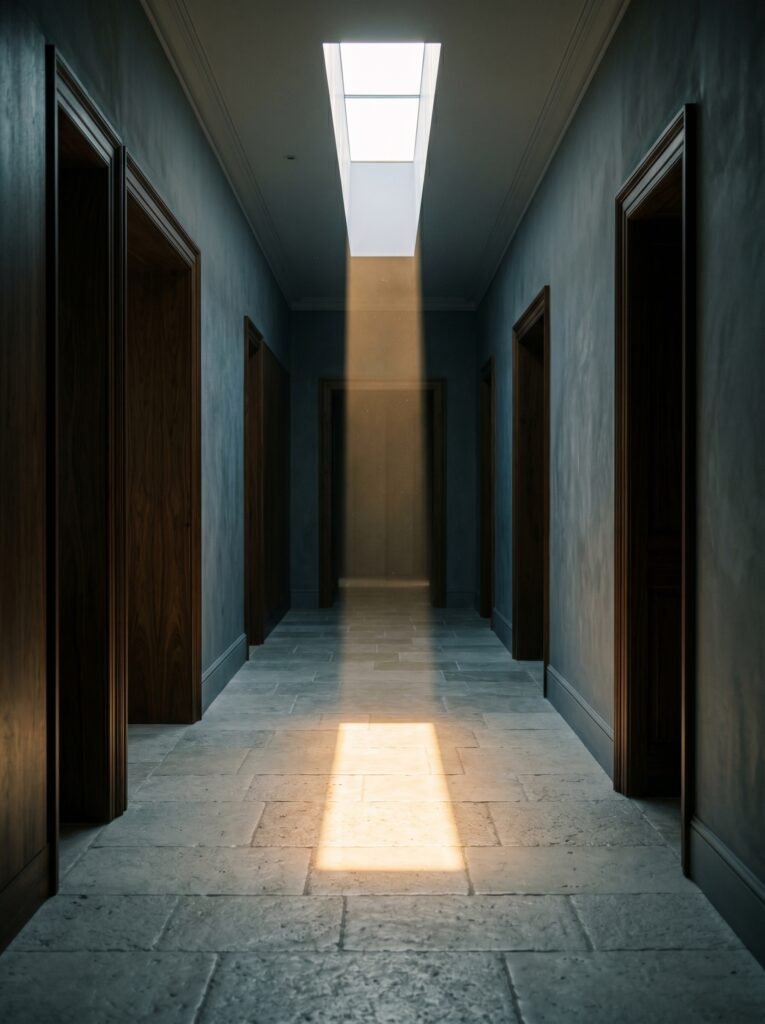
No material, no matter how expensive, can replicate what natural light does to a beautiful interior. In mansion design, the management of natural light is treated as a design discipline in itself.
South-facing rooms are filled with warm, consistent light suited to entertaining and display. North-facing rooms receive cooler, more even light — often preferred for art and libraries. Large windows, often floor-to-ceiling, dissolve the boundary between interior and garden. Skylights in corridors or bathrooms create dramatic vertical shafts of light that move throughout the day.
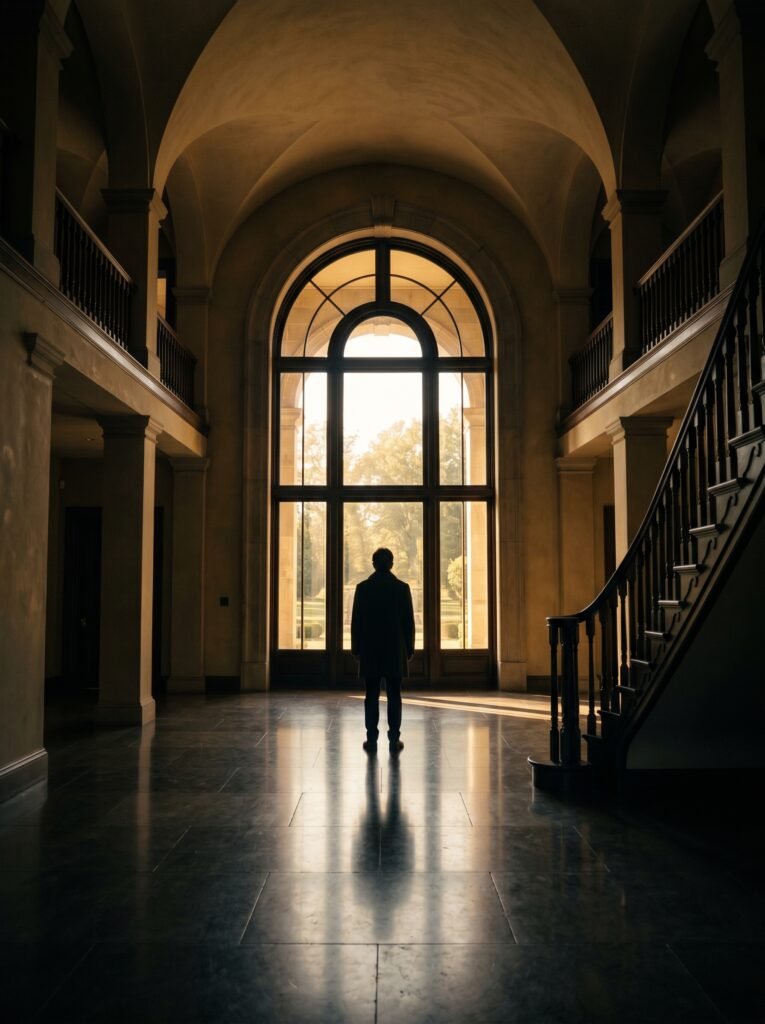
“The most luxurious thing in any mansion isn’t the marble or the chandeliers — it’s the afternoon light falling across the floor.”
Great mansion interiors are calibrated to the sun in ways most of us never think about in our own homes. And yet, when you notice it, it’s the detail that stays with you longest.
—
10. Gardens and Grounds as an Extension of the Interior
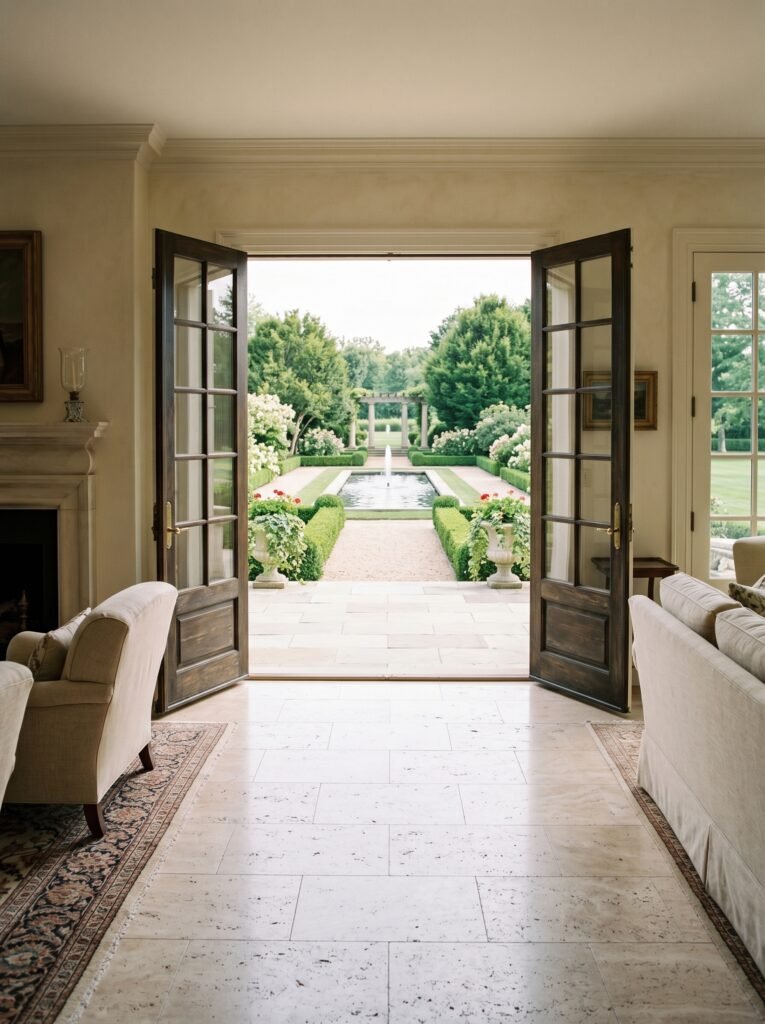
In the best mansion estates, the interior and the exterior exist in continuous conversation. French doors open onto terraces that mirror the proportions of the rooms inside. Stone flooring flows from indoors to outdoors without interruption. The garden is designed to be seen from specific rooms at specific times of day.
This intentional blurring of inside and outside — achieved through sightlines, materials, and scale — creates a sense of abundance that no square footage alone can manufacture. It says: this space continues beyond what you can see.
—
11. Color Palettes That Feel Timeless, Not Trendy

One of the consistent hallmarks of great mansion interior design across different eras is restraint in color. The most enduring mansion interiors tend to work within a palette of deep, sophisticated neutrals anchored by one or two rich accent tones.
Warm whites, aged ivories, deep forest greens, navy blues, dusty blushes, charcoal grays — these are colors that age gracefully. They don’t demand attention; they hold it. The occasional room painted in a bold lacquered tone — a deep burgundy dining room, a cobalt blue library — lands with quiet confidence rather than noise.
The philosophy embedded in these choices is that luxury is not about loudness. It is about permanence.
—
12. What Mansion Interiors Teach Us About Our Own Homes
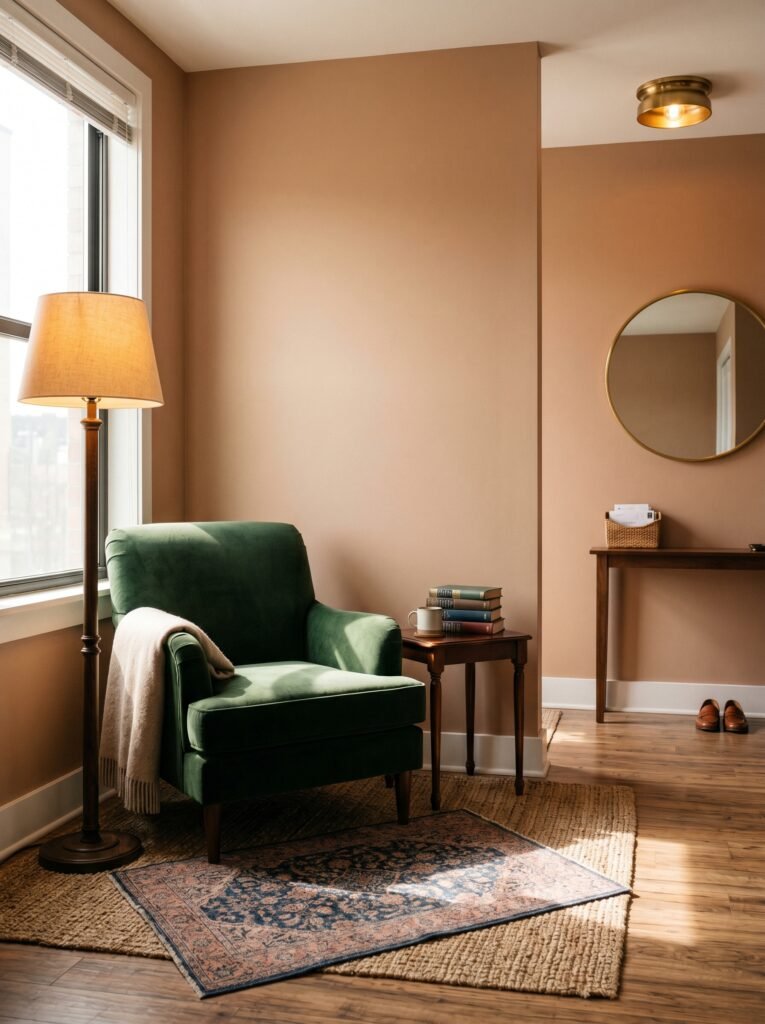
Here is the thought that lingers long after you’ve toured or admired a beautifully designed mansion: you don’t need a ten-thousand-square-foot home to absorb what makes these spaces work.
The principles at play — intentionality, quality over quantity, the consideration of light, the design of transition spaces, the balance of grandeur and intimacy — scale down beautifully. A single thoughtfully chosen piece of furniture, a room arranged to face the morning light, a reading corner that asks nothing of you except that you sit and be still — these things carry the same philosophy.
Mansion interiors, at their finest, are simply homes that have been taken very seriously. And that’s an idea that belongs to everyone.
—
🌿 How to Bring Mansion Interior Design Into Your Own Home
You don’t need a mansion budget to borrow the best ideas from these extraordinary spaces. Here’s how to apply the same thinking on any scale.
Start with your entryway. Even a small foyer benefits enormously from a mirror, a considered light fixture, and a cleared, uncluttered floor. First impressions shape everything that follows. Next, identify the natural light in each room and arrange your furniture to make the most of it rather than working against it. Then invest slowly and selectively in a few quality pieces rather than filling a room quickly — mansion interiors earn their feeling of permanence through restraint, not accumulation. Think in layers: a good rug grounds a room the way nothing else can, and it works at every price point. Finally, don’t underestimate the power of a dedicated reading or quiet corner. Even in a studio apartment, a chair by a window with a good lamp creates the same psychological effect as a mansion library — a place that invites you to slow down.
—
❓ FAQ
Q: What is the most important design feature of a mansion interior? A: Most interior designers and architects point to proportion and scale — how ceiling height, room dimensions, and furniture sizes relate to one another. When these elements are balanced correctly, a space feels luxurious regardless of the specific materials used.
Q: How do mansion interiors differ from regular luxury homes? A: Scale and programmatic variety are the key differences. Mansion interiors typically include rooms dedicated to single purposes — a morning room, a formal library, a billiards room — whereas even very high-end homes of modest size combine functions out of necessity. The specialization of space is what most defines the mansion experience.
Q: Can mansion interior design ideas be applied to smaller homes? A: Absolutely, and they often should be. The core principles — intentional furniture arrangement, quality lighting, restrained color palettes, the thoughtful use of natural light, and creating distinct zones within open spaces — translate directly and effectively to homes of any size.
—
💭 Final Thought
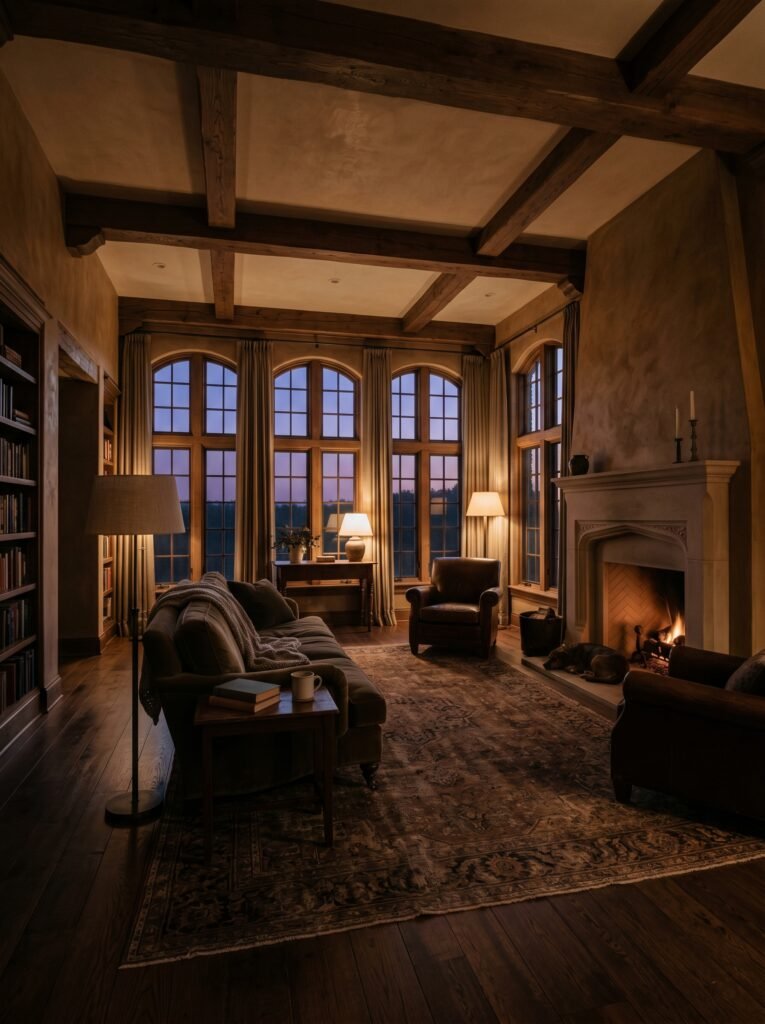
There is something quietly moving about a well-designed mansion interior. It is the work of many people across time — architects, craftspeople, designers, and the families who eventually made those rooms breathe with ordinary life. At their best, these spaces don’t show off. They hold you.
And maybe that’s the truest thing any home, at any scale, can aspire to do.
What does your home make you feel — and is that the feeling you always intended it to give you?