Why Light Grey Interiors Feel Like the Deepest Breath You’ve Ever Taken
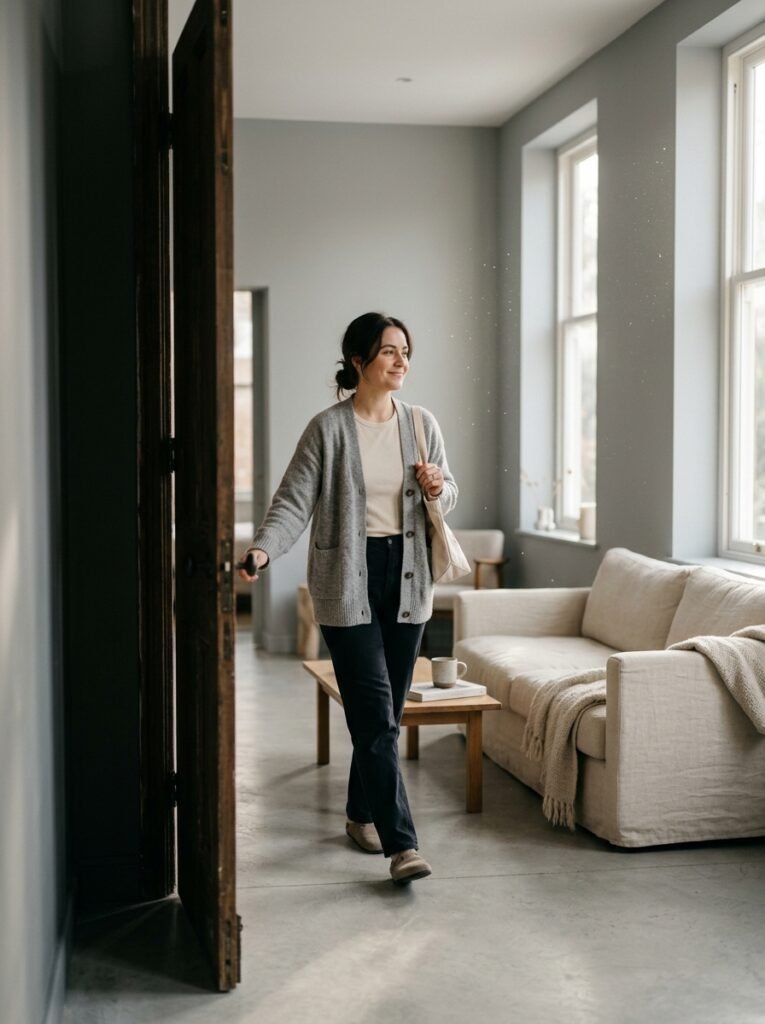
There’s a moment — maybe you’ve felt it — when you step into a room and something in your chest quietly loosens. The light is soft, the walls are the color of a winter sky just before dawn, and everything feels like it’s exactly where it belongs. That’s what a thoughtfully designed light grey interior does. It doesn’t shout. It exhales.
—
Table Of Content
1. The Quiet Power of a Color That Refuses to Be Ordinary
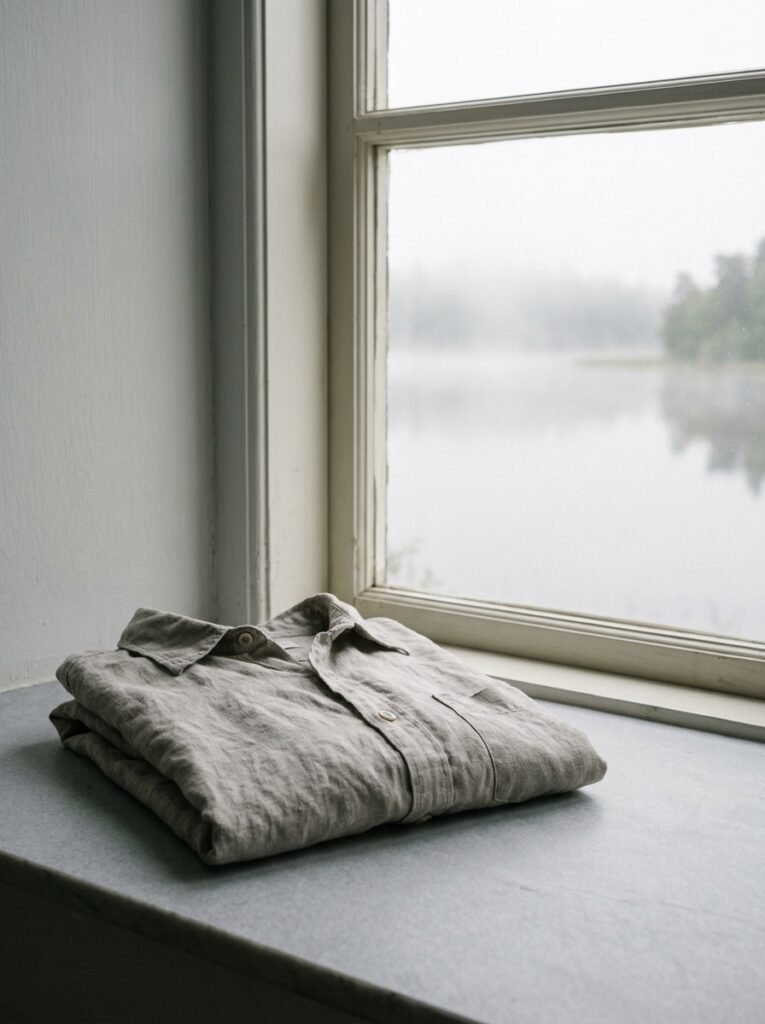
Light grey is one of those colors that people underestimate until they live inside it. It’s often dismissed as “safe” or “neutral,” but that label undersells it completely. Light grey isn’t a compromise — it’s a deliberate choice. It’s the color of polished stone, of morning fog over a lake, of a linen shirt worn so many times it’s become your favorite.
What makes light grey genuinely extraordinary in interior design is its psychological effect. Color psychology research consistently shows that grey tones — particularly lighter values — reduce visual noise and help the brain shift into a calmer, more focused state. In a world that constantly demands your attention, a light grey room offers something quietly radical: stillness.
Interior designers have been returning to light grey for decades precisely because it doesn’t compete. It lets your furniture, your art, your plants, and your people become the focal points. The walls hold space without stealing it.
“Light grey doesn’t disappear into the background — it creates the background that makes everything else glow.”
2. Understanding the Undertones That Change Everything
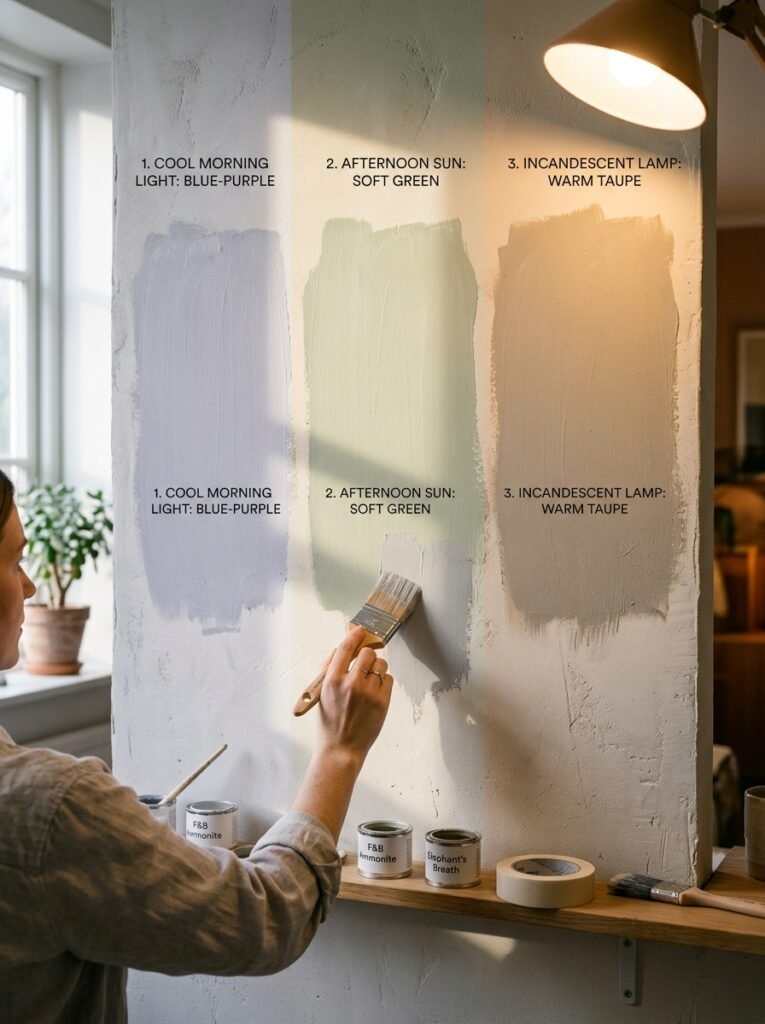
Here’s where a lot of people stumble when choosing light grey for their home: not all greys are created equal. A grey that looks perfect on a paint chip can turn purple, blue, or even greenish once it hits your walls — and that shift can feel jarring rather than beautiful.
Light grey paints almost always carry an undertone, and identifying that undertone before you commit is one of the most important steps in the process. Blue undertones in grey create a crisp, cool, airy feeling — wonderful for bathrooms, modern kitchens, or rooms with south-facing light. Green undertones produce a soft, organic warmth — think of sage and stone naturally occurring together in nature. Purple or pink undertones can feel romantic and delicate, but they require careful pairing to avoid feeling unintentionally cold.
The trick is to always sample paint directly on your wall — not on a white piece of paper — and observe it at different times of day. Morning light, afternoon sun, and evening lamplight will each tell you a slightly different story about your grey. Trust the story your own light tells.
3. The Rooms Where Light Grey Truly Shines
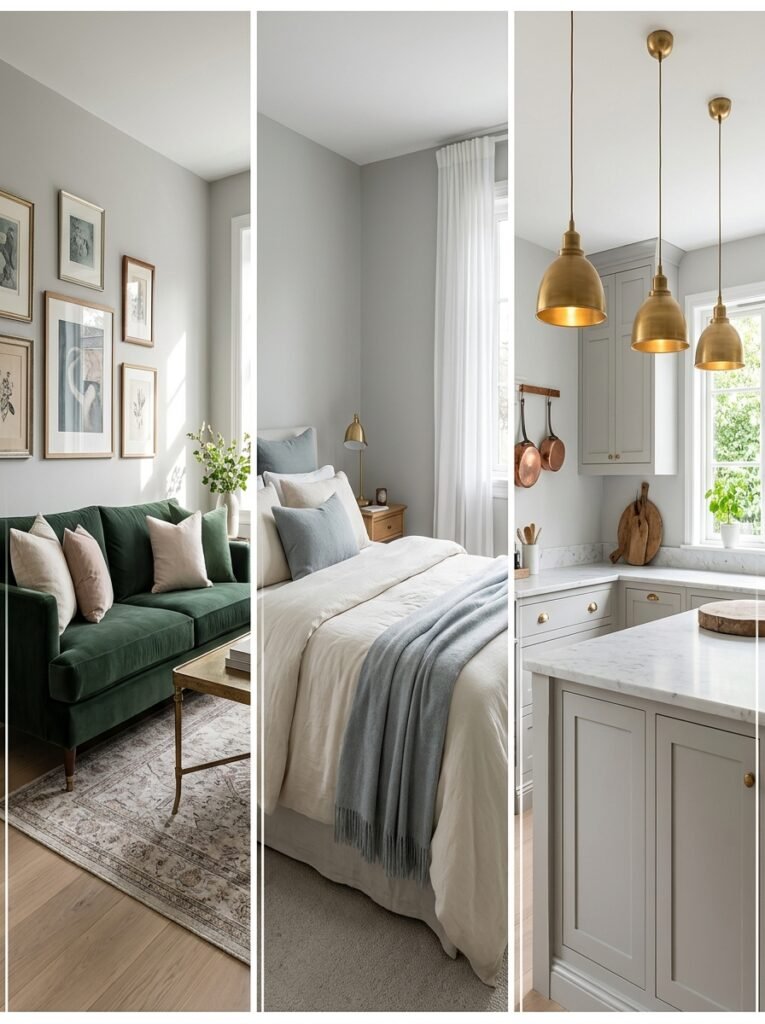
Some colors belong everywhere. Light grey is one of them — but it expresses itself differently depending on the room it inhabits, and understanding those nuances helps you use it with intention rather than accident.
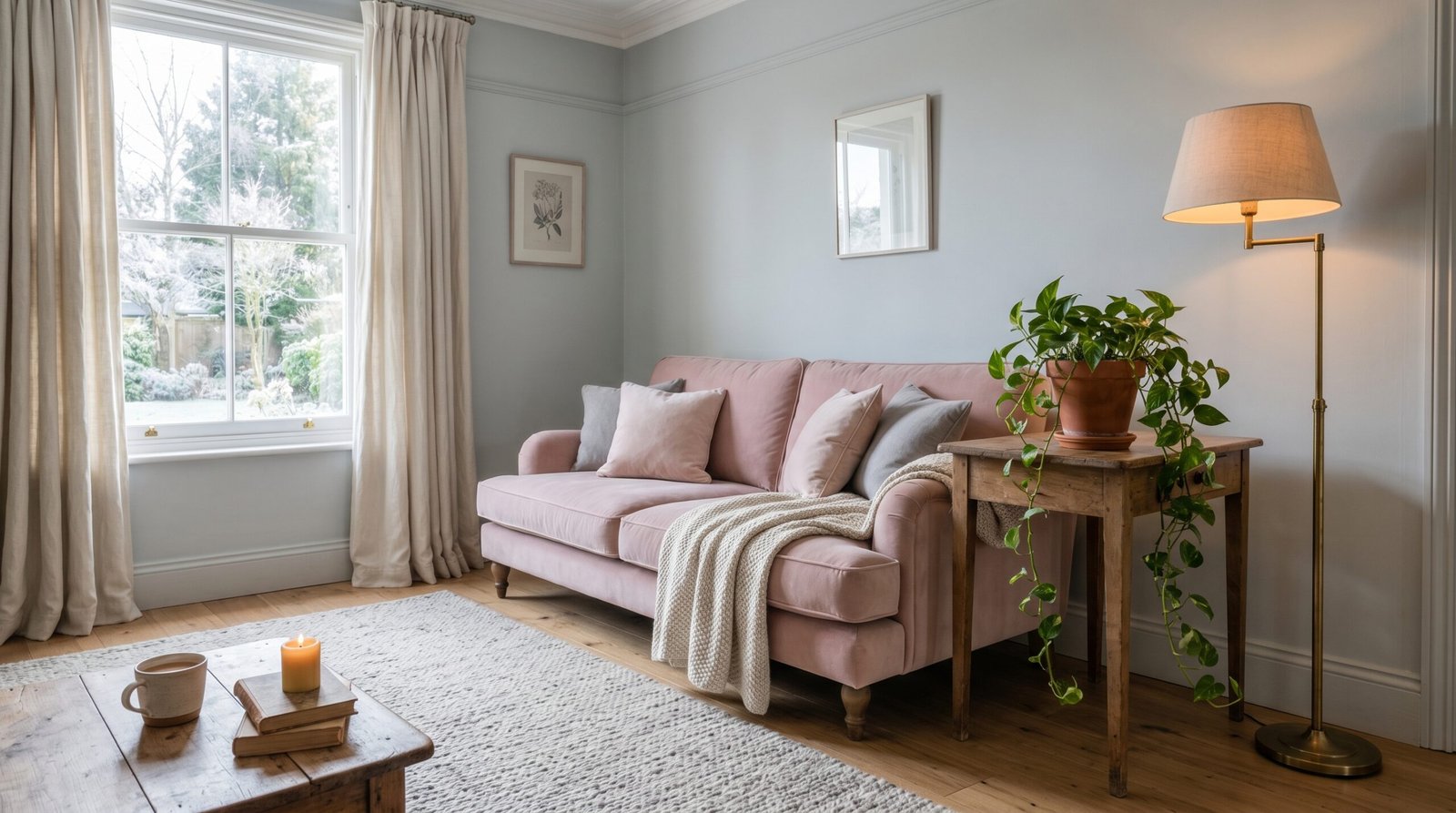
In the living room, light grey walls create a sophisticated gallery-like backdrop. Velvet sofas in blush, dusty blue, or forest green pop against grey in a way that feels curated and deeply livable at the same time. In the bedroom, light grey walls lower visual stimulation, which supports better sleep — the room literally signals to your nervous system that it’s time to wind down. In the kitchen, grey cabinetry paired with warm brass hardware has become one of the most enduring design combinations of the past decade, and for good reason: it feels both timeless and thoroughly modern.
Even in small spaces like powder rooms or entryways, light grey has a remarkable ability to make square footage feel larger — especially when paired with white trim and good mirrors.
4. Light Grey and Natural Light: A Relationship Worth Nurturing
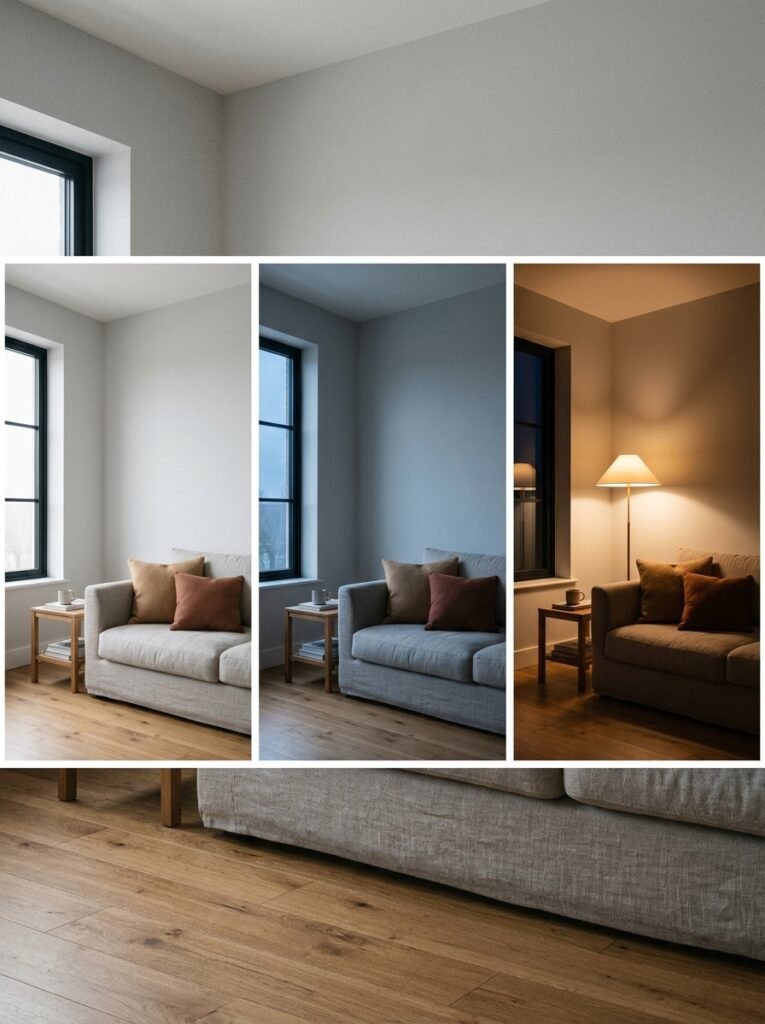
If you want to understand how light grey will actually behave in your home, you need to think about it in relationship with natural light — because the two are deeply connected. Light grey is, in many ways, a color that depends on light to fully reveal itself.
In rooms flooded with natural light, light grey walls can almost appear white at certain hours, then deepen into something more complex and atmospheric as the sun moves. This constant, subtle shift through the day is part of what makes grey rooms feel alive — they’re never exactly the same space twice. In north-facing rooms that receive less direct sunlight, light grey can feel cooler and more formal, which isn’t necessarily a problem but does require warmer companion colors — think camel, terracotta, or warm wood tones — to prevent the space from feeling cold.
Layering lighting thoughtfully matters enormously in grey rooms. Warm-toned bulbs (around 2700K) bring out the softer, creamier qualities of light grey, while cooler bulbs emphasize its crispness. Use both intentionally.
5. Building a Light Grey Color Palette That Feels Complete

Light grey is most beautiful when it isn’t working alone. The color relationships you build around your grey walls are what transform a room from “pleasant” into “breathtaking.” And the good news is that grey is one of the most cooperative colors in the spectrum — it genuinely gets along with almost everything.
One of the most beloved combinations is light grey with soft white trim and natural wood accents. This pairing is warm without being heavy, modern without being sterile. Add a jute rug, some linen cushions, and a ceramic vase, and you’ve built something that looks like it took years to curate — even if it took a weekend.
For those drawn to deeper contrast, pairing light grey walls with charcoal or navy accents — through a bookshelf, a statement chair, or a bold throw — creates a layered, intentional look that feels designed rather than decorated. And if you’re feeling adventurous, light grey provides the perfect neutral canvas for a single saturated accent: a burnt orange luminary, a deep teal throw, a terracotta pot of trailing ivy.
“Grey isn’t the absence of color — it’s the presence of every color, waiting quietly for you to choose.”
6. Furniture and Fabrics That Were Made for Grey Rooms
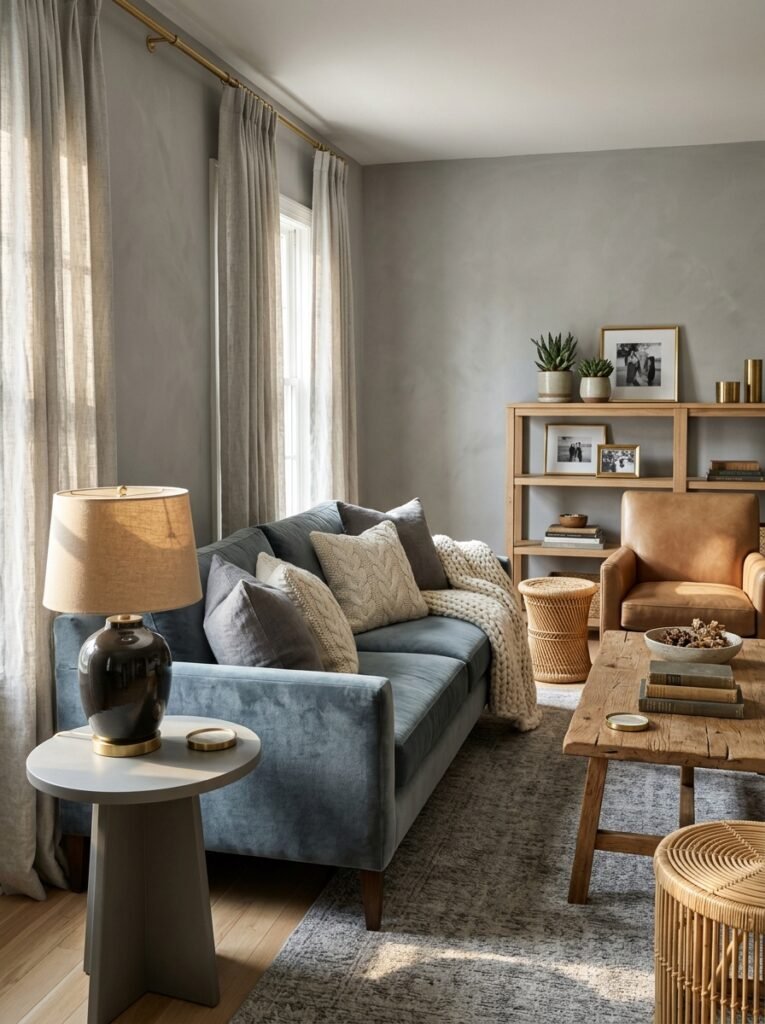
Choosing furniture for a light grey room is one of the more pleasurable design challenges because the options are genuinely vast. But that freedom can also feel overwhelming, so it helps to have a framework.
Texture is your most important tool. In a grey room, textural variety is what prevents the space from feeling flat or monotonous. Think: a velvet sofa beside a rough-hewn wooden coffee table. A glossy ceramic lamp on a matte grey side table. Linen curtains that catch light differently at every hour. A chunky knit throw over a smooth leather armchair. These contrasts keep the eye moving and the room feeling richly layered.
Materials like natural oak, walnut, rattan, and linen all sing alongside light grey — they bring warmth and organic life that grey alone cannot supply. Metals work beautifully too: brass and gold feel luxurious and warm, while brushed nickel or chrome maintain the cool, crisp quality of the grey itself.
7. The Grey Kitchen: Where Function Meets Pure Beauty
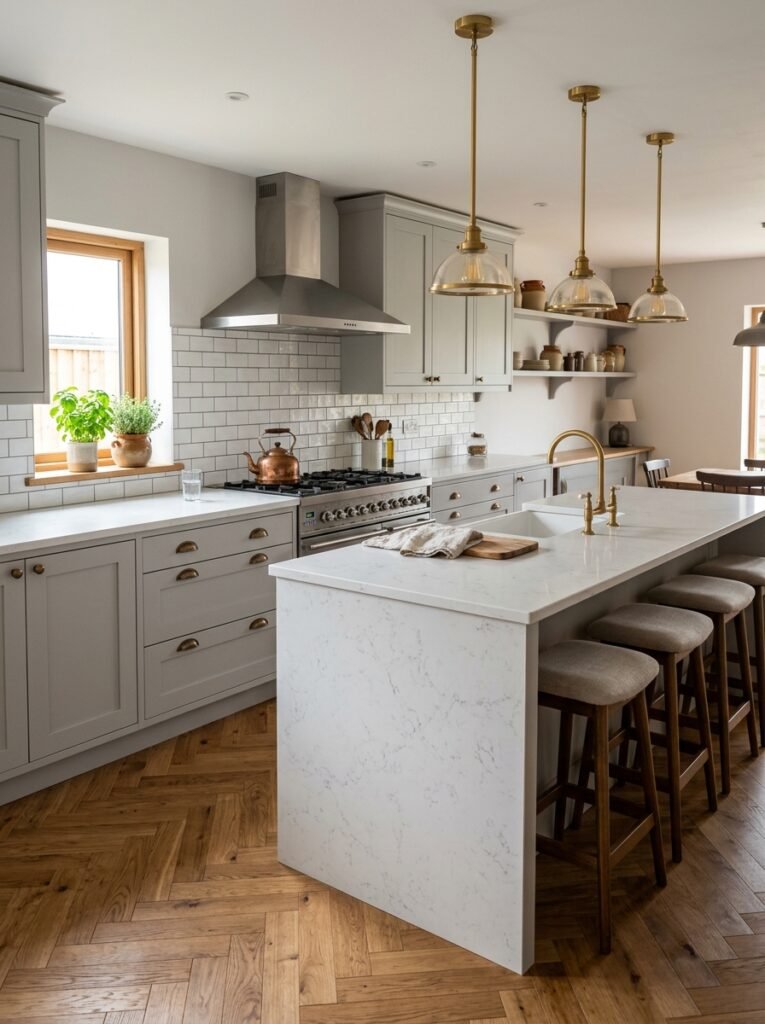
If there’s one space where light grey has genuinely changed modern interior design, it’s the kitchen. The rise of grey cabinetry over the past decade represents a significant cultural shift — a move away from the all-white kitchen toward something with more visual depth, more personality, more soul.
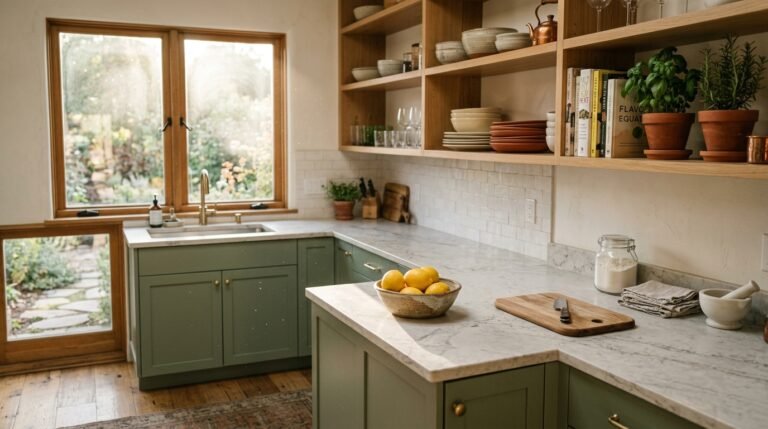
Light grey cabinetry in particular occupies a sweet spot: it’s softer than dark charcoal, more interesting than stark white, and far more forgiving than either when it comes to smudges and daily use. Paired with quartz or marble countertops in white or cream, and lit by pendant lights in warm brass or aged bronze, a light grey kitchen feels like a place where you’d actually want to spend time — not just a room where food gets made.
The details matter deeply here. Cabinet hardware, the color of your tile grout, the warmth of your flooring — these small choices compound in grey kitchens in ways that either elevate or undermine the whole. Take your time with the specifics. They are not small decisions.
8. Grey Bedrooms and the Science of Restful Sleep
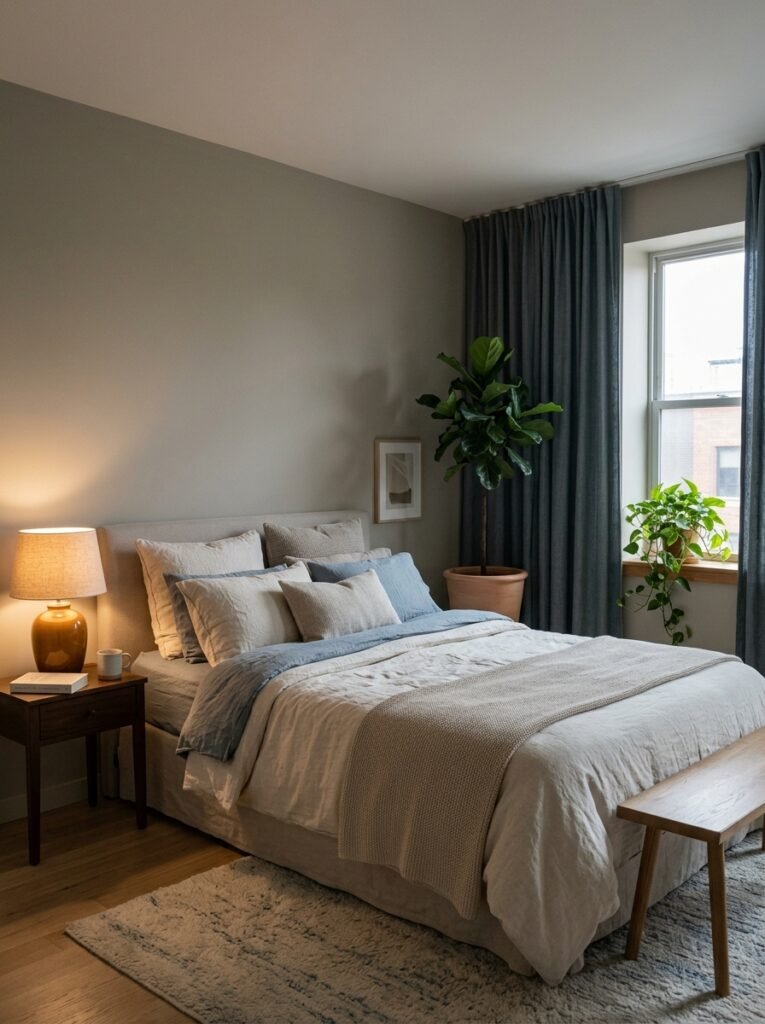
A light grey bedroom isn’t just a design choice — it’s a commitment to rest. And that commitment is supported by more than aesthetics. Sleep researchers and designers have long understood that visual stimulation at the end of the day keeps the brain engaged when it needs to be quieting down. Bright colors, bold patterns, and high contrast all signal alertness. Grey signals something different entirely.
Light grey bedroom walls, especially those with a slight warm or beige undertone — sometimes called “greige” — create an enveloping sense of calm that’s genuinely physiological. Pair that with soft, layered bedding in whites, creams, and soft blues, blackout curtains in a tone slightly deeper than your walls, and warm bedside lighting, and you’ve created a room that does the work of slowing you down before you even close your eyes.
Plants in the bedroom add life to grey without visual chaos — trailing pothos, sculptural fiddle-leaf figs, or a small cluster of succulents on the windowsill. Green and grey in nature are constant companions, and that relationship feels equally right indoors.
9. Small Space Solutions: How Light Grey Makes Rooms Feel Larger
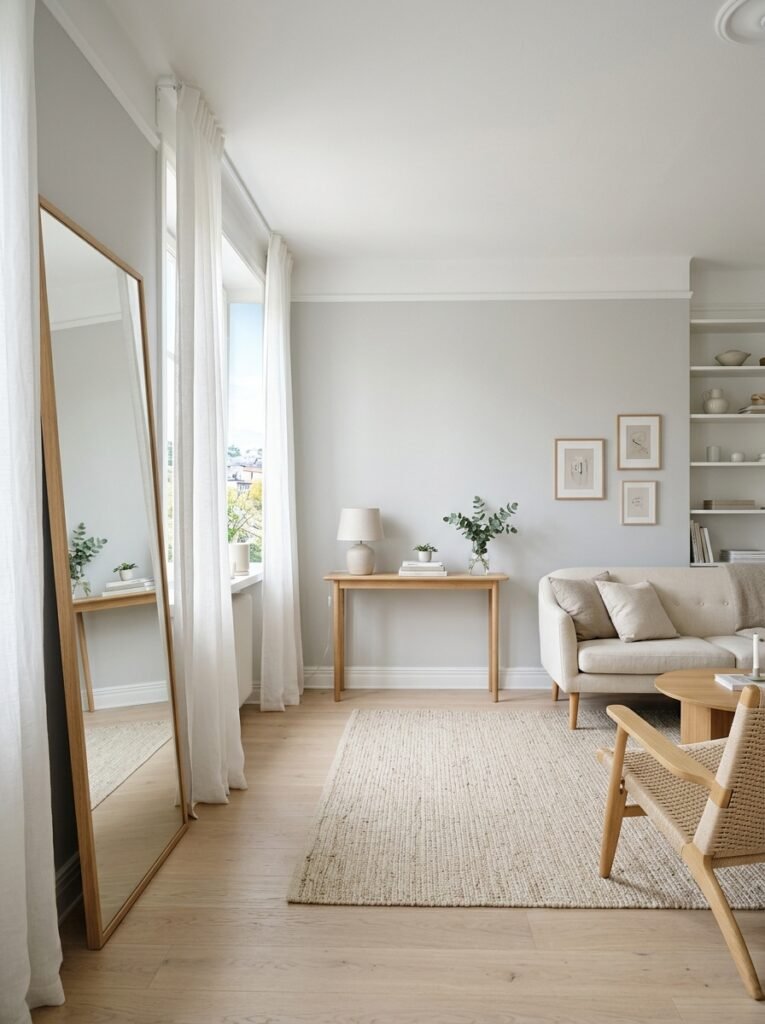
One of the most practical and beloved qualities of light grey is its spatial generosity. In smaller homes, apartments, or compact rooms, light grey walls are a well-established tool for making space feel more expansive — and the science behind this effect is straightforward.
Lighter values reflect more light, which means the room retains more of whatever natural or artificial light it receives. Walls that reflect light appear to recede visually, creating the impression of greater depth. Light grey, more so than pure white (which can feel stark and clinical in small spaces), does this while adding just enough warmth and dimension to feel intentionally designed.
To maximize this effect in small spaces, keep your trim, ceiling, and floor tones all within a close range — this removes the hard visual breaks that make rooms feel chopped into smaller pieces. Use mirrors strategically. Keep window treatments light and sheer. And avoid heavy, dark furniture that will eat the light the grey is working hard to reflect.
“In a small room, light grey doesn’t just decorate the walls — it quietly moves them apart.”
10. Trending Light Grey Styles You Need to Know Right Now
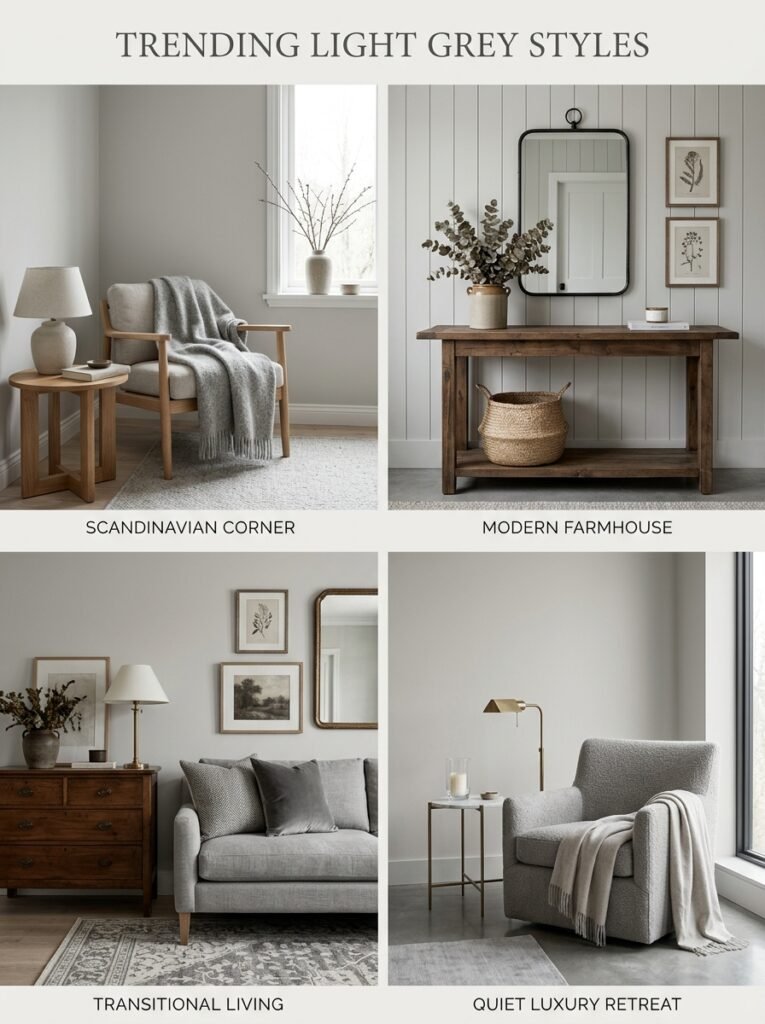
Light grey sits comfortably at the intersection of several of the most enduring interior design movements of our time, which is part of why it continues to trend year after year without ever feeling exhausted.
In Scandinavian-inspired design, light grey is practically foundational — it reflects the Nordic relationship with diffuse, precious light and pairs effortlessly with the clean lines, natural materials, and functional beauty that define the style. In modern farmhouse interiors, grey shiplap walls and grey-painted furniture are fixtures, adding contemporary sophistication to the warmth of a rustic aesthetic. In transitional design — that sweet space between traditional and contemporary — light grey is the universal connector that allows old and new pieces to coexist without tension.
And then there’s the emerging “quiet luxury” trend, which light grey embodies perhaps more than any other color. Quiet luxury is about restraint, quality, and substance over statement — and light grey delivers all three, almost effortlessly.
11. Common Light Grey Decorating Mistakes (And How to Avoid Them)
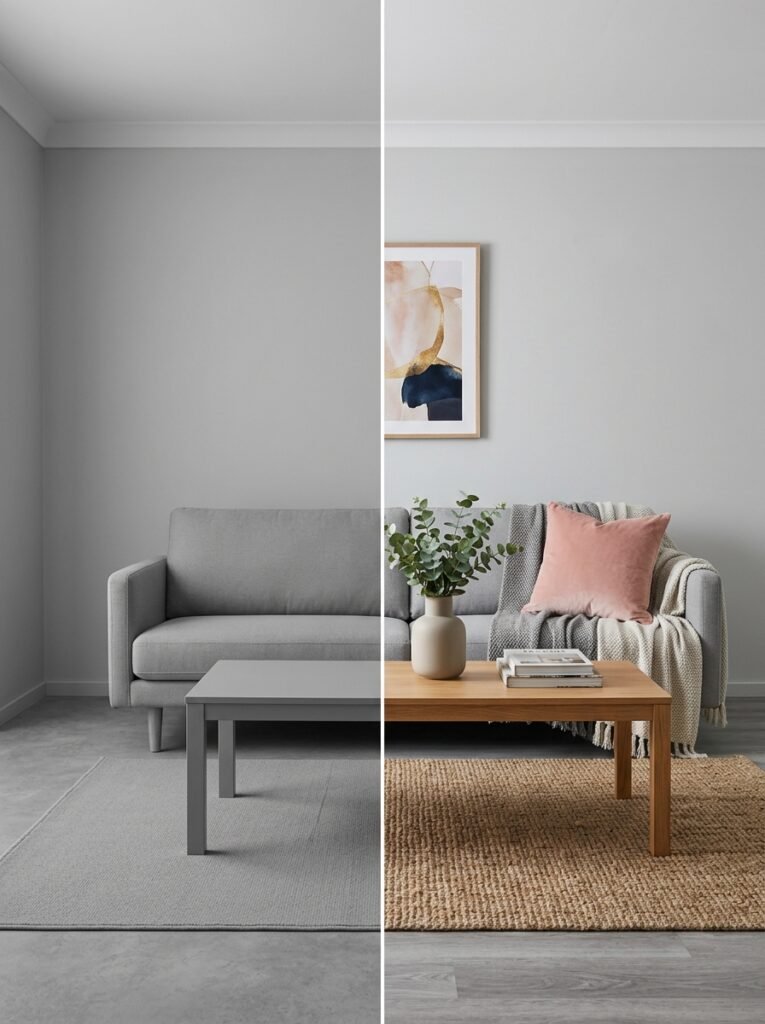
Even a color as cooperative as light grey can go sideways when certain principles are ignored. The most common mistake is choosing grey in isolation — selecting a paint color at the store without considering the specific light, existing furniture, and flooring already present in the room. Grey is too dependent on its environment to be chosen in a vacuum.
Another frequent misstep is over-greying a space — covering walls, ceiling, floor, and furniture all in versions of grey without enough textural or tonal variety. The result feels less like sophisticated restraint and more like visual monotony. Grey needs contrast to live fully.
Finally, many people underestimate the power of accessories and soft furnishings in grey rooms. Because the walls are neutral, there’s a temptation to keep everything else neutral too — but that produces spaces that feel unfinished. Bring in color through cushions, art, books, plants, and ceramics. Even small doses of warmth will make the grey itself look more intentional and beautiful.
12. Making Light Grey Feel Personal, Warm, and Completely Yours
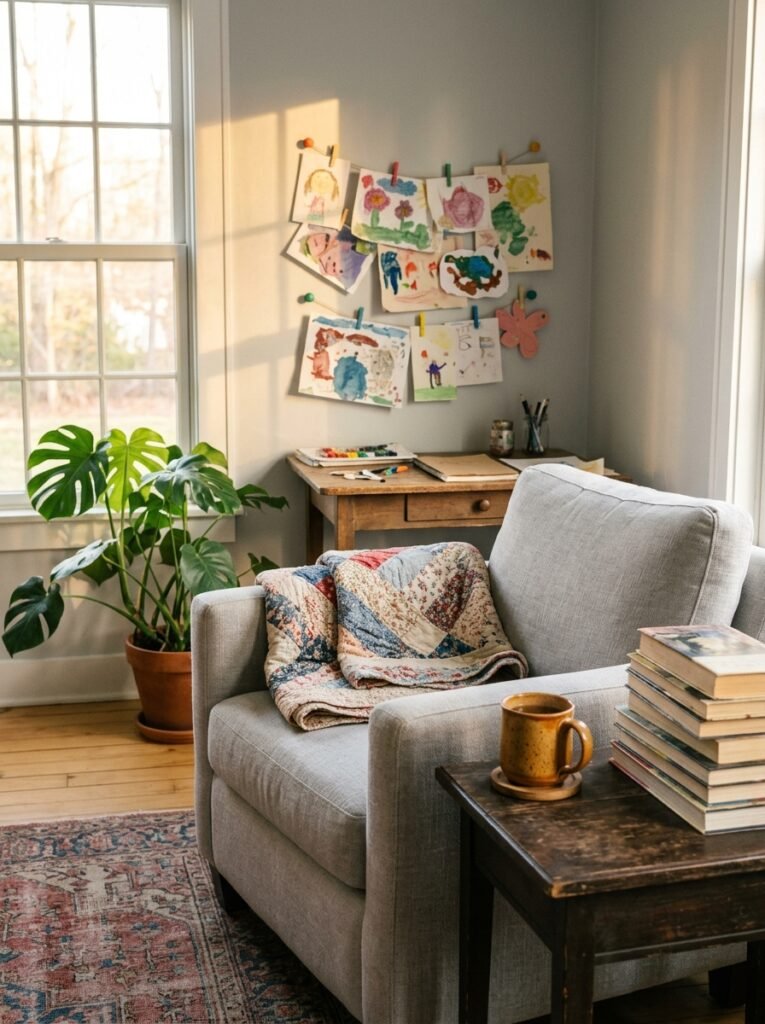
At the end of all the design theory and color psychology, there’s a truth about light grey that matters more than any rule: it only becomes extraordinary when you make it yours. A light grey room that belongs to no one in particular is just a grey room. A light grey room that holds your grandmother’s quilt, your children’s artwork pinned above the desk, the houseplant you’ve kept alive for seven years — that room is alive in an entirely different way.
The color gives you the quietest, most generous canvas. What you do with that canvas is what transforms a house into a home. Light grey says, “here is space for everything you love.” Your only job is to fill it with exactly that.
—
🌿 How to Take Care of Your Light Grey Interior
Maintaining the beauty of a light grey interior is simpler than most people expect, but it does require a little consistency. First, touch up scuffs and marks promptly — grey, particularly in matte or eggshell finishes, can show marks more visibly than deeper colors. Keep a small amount of your original paint stored for quick touch-ups. Second, clean painted grey walls with a lightly damp microfiber cloth rather than harsh cleaners, which can strip sheen and alter the tone. Third, pay attention to how your grey shifts seasonally — in winter months, when natural light decreases, you may want to add warmer lamp bulbs or introduce additional textural warmth through blankets and candles. Fourth, dust your furniture and surfaces regularly in grey rooms; dust reads more visibly against grey tones than against warmer or darker backgrounds. Fifth, and most importantly, revisit your accessories each season — swap out cushions, move plants, add a new piece of art — because grey rooms reward seasonal refreshing more visibly than almost any other palette.
—
❓ FAQ
Q: Is light grey too cold for a cozy, warm home? A: Not at all — the key is in the undertone and the companion colors you choose. Light greys with beige or warm taupe undertones (often called “greige”) feel naturally cozy, especially when paired with wood tones, warm textiles, and soft amber lighting. A grey room can feel just as warm as a cream or beige room when it’s dressed thoughtfully.
Q: What colors go best with light grey walls? A: Light grey is exceptionally versatile, but some of its most beautiful pairings include soft white for crispness, warm brass or gold for warmth, blush or dusty rose for romance, deep navy for sophisticated contrast, and natural wood tones for an organic, grounded feeling. Soft greens and terracotta also work beautifully, bringing a sense of nature indoors.
Q: Will light grey walls make a small room look bigger or smaller? A: Light grey will generally make a room feel larger, particularly when paired with white or near-white trim and good natural or artificial light. It reflects light more effectively than mid or dark tones, and its soft neutrality removes visual clutter from the walls, which helps the eye perceive more space. It’s one of the most trusted tools in small-space design.
—
💭 Final Thought
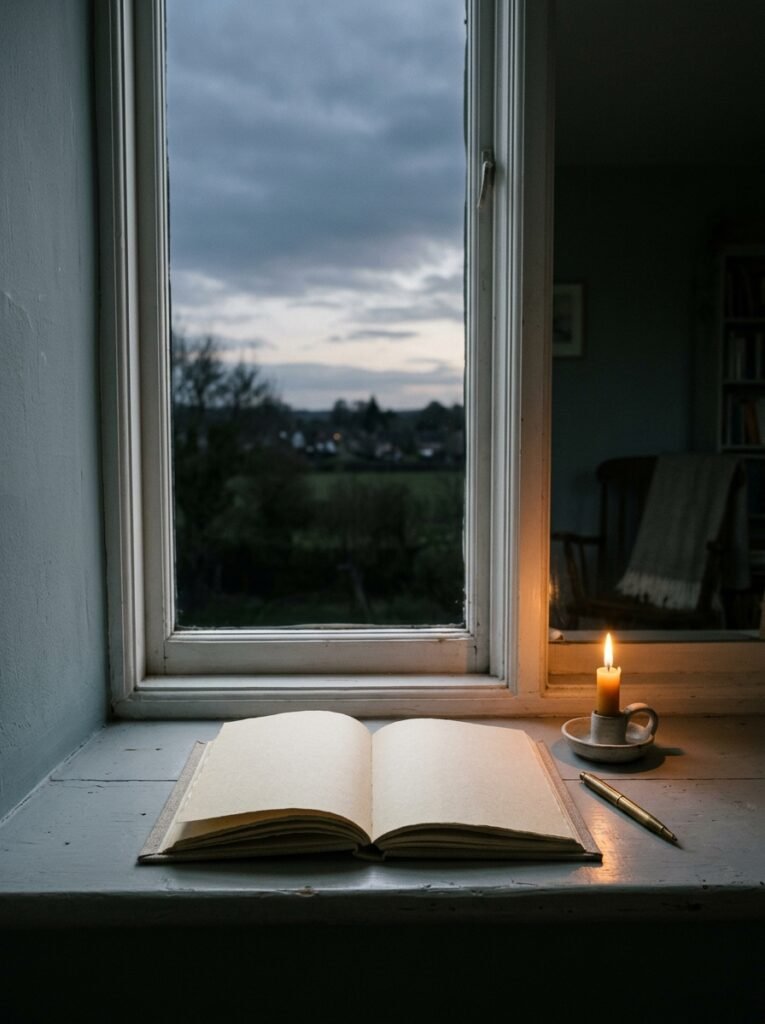
Light grey is one of those rare design choices that seems simple on the surface but quietly contains multitudes. It’s the color of possibility — of a blank linen page, of early morning before the day has made any demands of you. It gives your home a quality that’s genuinely hard to manufacture with busier, louder palettes: genuine, breathing calm.
If you’ve been hovering over a paint chip, wondering whether grey is too ordinary, too safe, too in-between — consider that maybe what your home needs right now isn’t more color. Maybe it needs more quiet. So tell me: when you imagine the most peaceful room you’ve ever been in, what color were its walls?