Small Kitchen, Big Soul: How to Design a Tiny Kitchen That Feels Like the Heart of Your Home
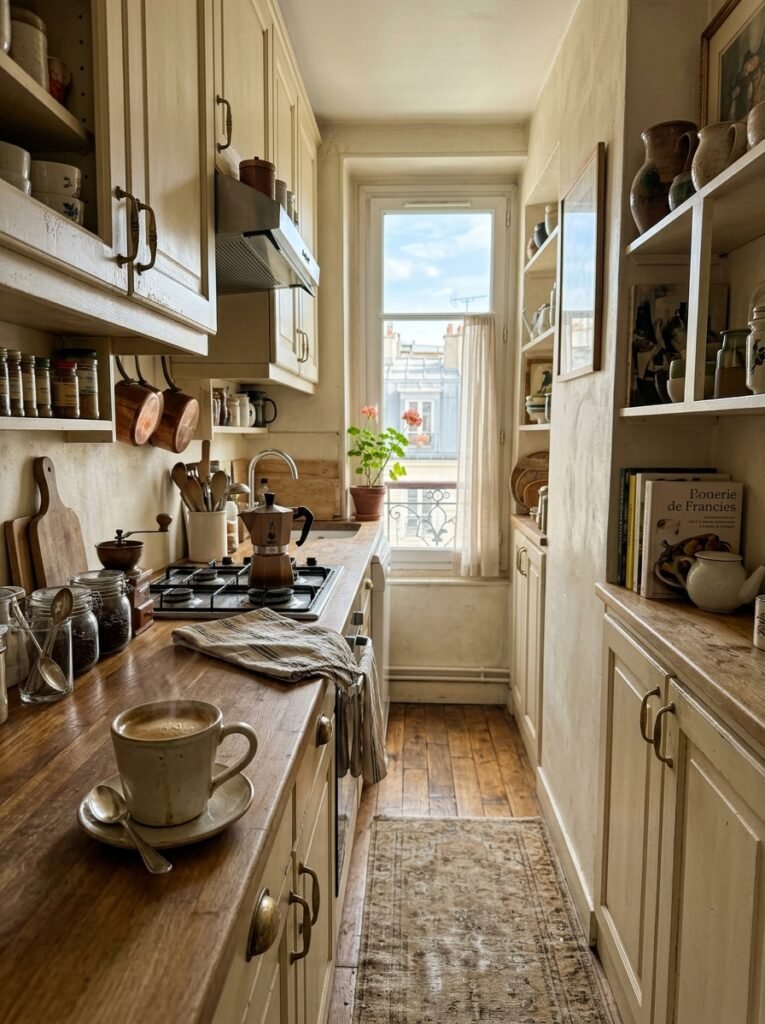
There’s something quietly magical about a small kitchen — the way everything is within arm’s reach, the way warmth fills the room before the coffee even finishes brewing. But if yours feels more cramped than cozy, more chaotic than charming, you’re not alone. This guide is here to change that, one thoughtful design choice at a time.
—
Table Of Content
1. Why Small Kitchens Deserve More Credit Than They Get
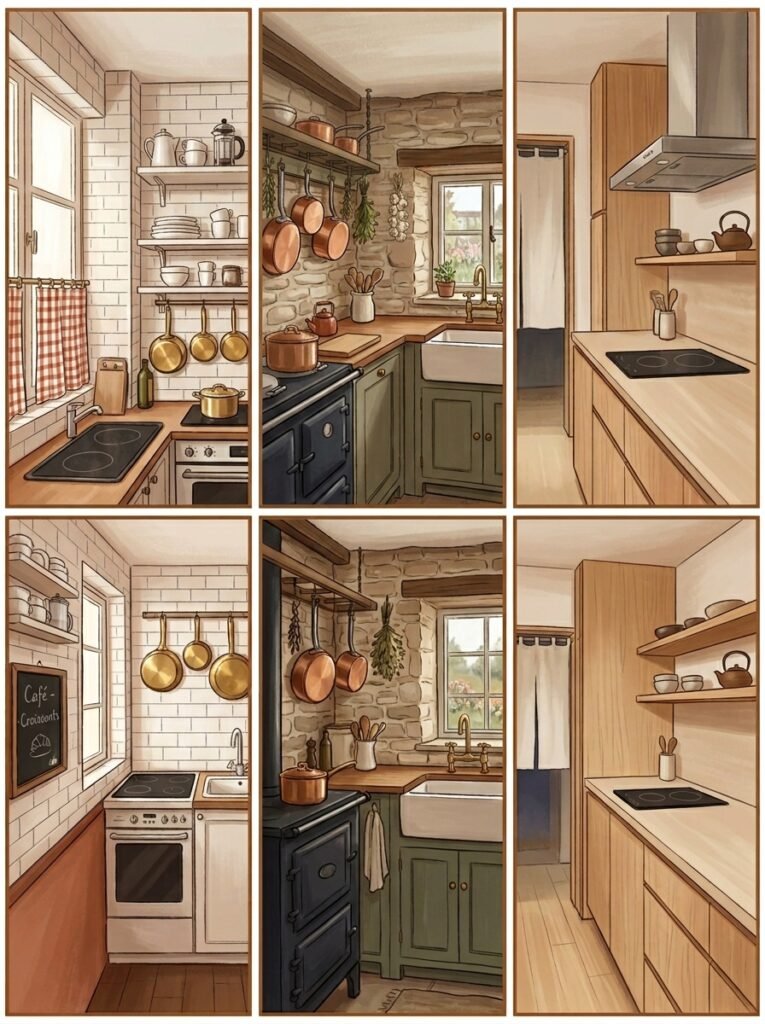
Let’s start with a little truth that most interior design articles skip right past: some of the most beautiful, functional, and soul-nourishing kitchens in the world are tiny. Think of the galley kitchens of Parisian apartments, the compact cottage kitchens of the English countryside, or the impossibly efficient cooking spaces in Japanese homes. Small doesn’t mean lesser. It means intentional.
The problem isn’t the size of your kitchen. The problem is that most of us were never taught how to design for small spaces — we just inherited habits and furniture from a world that assumes everyone has a sprawling open-plan home. When you start seeing your small kitchen as a design challenge worth solving rather than a flaw worth apologizing for, everything shifts.
“A small kitchen isn’t a limitation — it’s an invitation to be more deliberate about every single thing you keep, display, and love.”
The goal of this article isn’t to give you a Pinterest-perfect kitchen that exists only in a photo shoot. It’s to help you build a kitchen that works for your real life — one that’s functional on a Tuesday morning when you’re making lunches and beautiful on a Saturday evening when you’re hosting friends for dinner.
2. The One Design Mistake That Makes Small Kitchens Feel Even Smaller
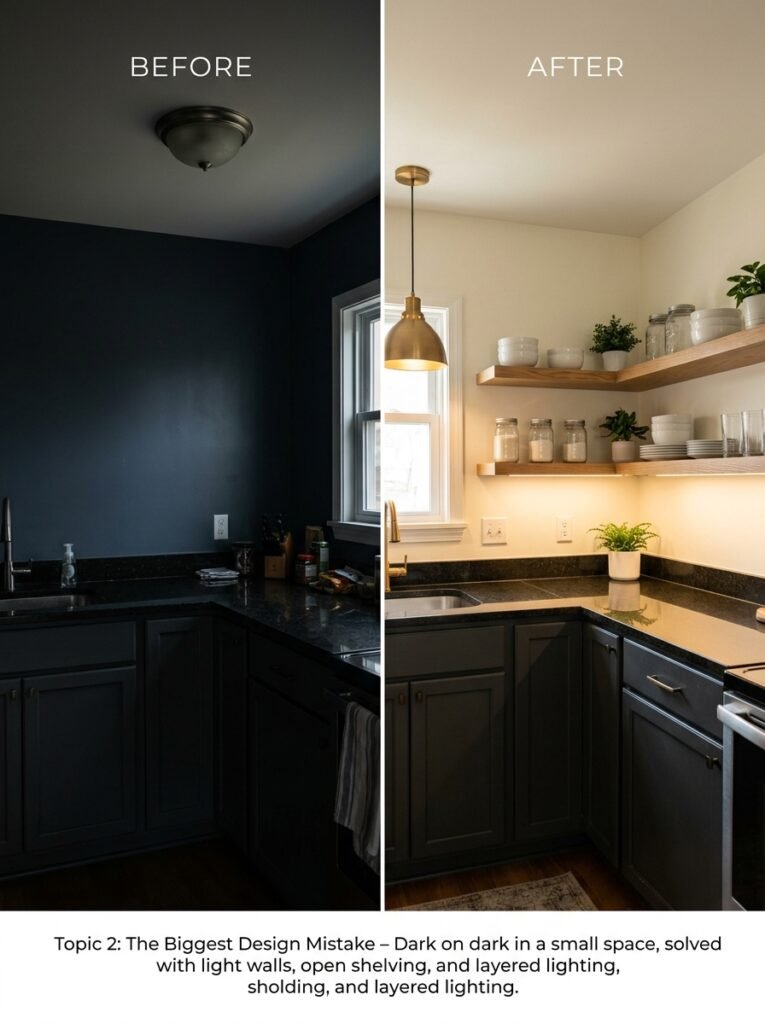
Before we talk about what to do, let’s talk about what’s silently shrinking your kitchen right now. The single biggest design mistake in small kitchens isn’t clutter (though that’s a close second) — it’s going too dark with color, too heavy with furniture, and too closed off with cabinetry.
Dark lower cabinets paired with dark countertops in a low-light kitchen can make the space feel like a cave. Heavy, ornate cabinet hardware can visually weigh down the room. And upper cabinets that reach all the way to the ceiling with no variation in depth or tone create a wall of oppression rather than a sense of openness.
The fix is simpler than you might think: contrast, light, and strategic openness. You don’t need to gut your entire kitchen. Sometimes just swapping out a few cabinet doors for open shelving, painting the walls a warm white, or adding under-cabinet lighting can transform the entire emotional atmosphere of the room. Small changes, enormous impact.
3. The Color Psychology of a Kitchen That Feels Bigger Instantly
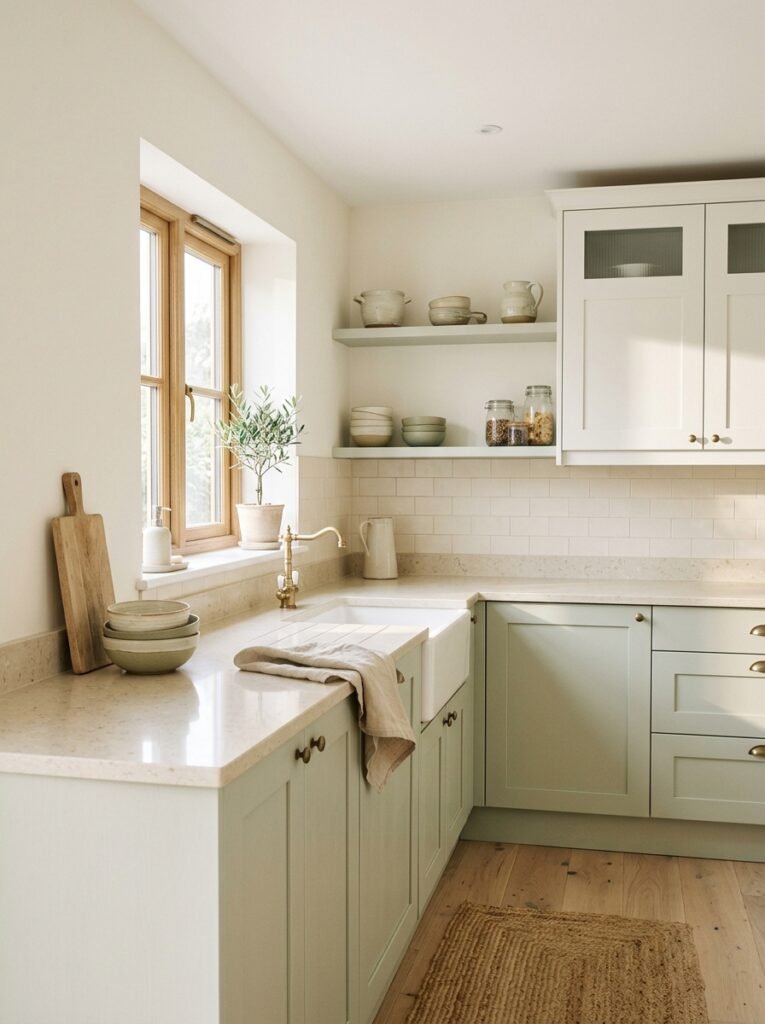
Color is the most powerful — and most underestimated — tool in small kitchen design. And no, “paint everything white” is not the complete answer (though white absolutely has its place). The real principle is about light reflectance and visual continuity.
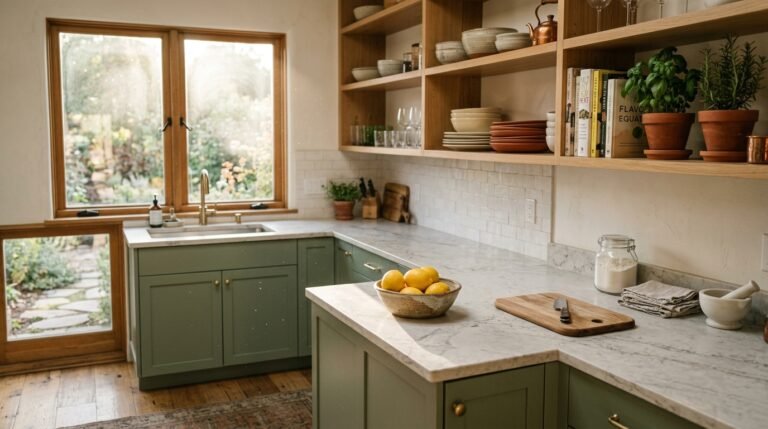
Soft whites like “Chantilly Lace” by Benjamin Moore or “Alabaster” by Sherwin-Williams reflect light without feeling sterile. Warm creams add a sense of lived-in richness that clinical whites lack. Pale sage greens have become a Pinterest favorite for good reason — they feel both fresh and grounding simultaneously, like someone pressed pause on the world just long enough to let you breathe.
The key is to create a tonal palette — meaning your walls, cabinets, and countertops stay in a similar color family, so the eye doesn’t keep stopping and starting as it moves around the room. Visual continuity creates an unconscious sense of spaciousness. It’s the same principle that makes an all-white sailboat look larger on the water than a multi-colored one. Your kitchen is no different.
4. Lighting Secrets That Transform a Cramped Kitchen Into a Luminous Space
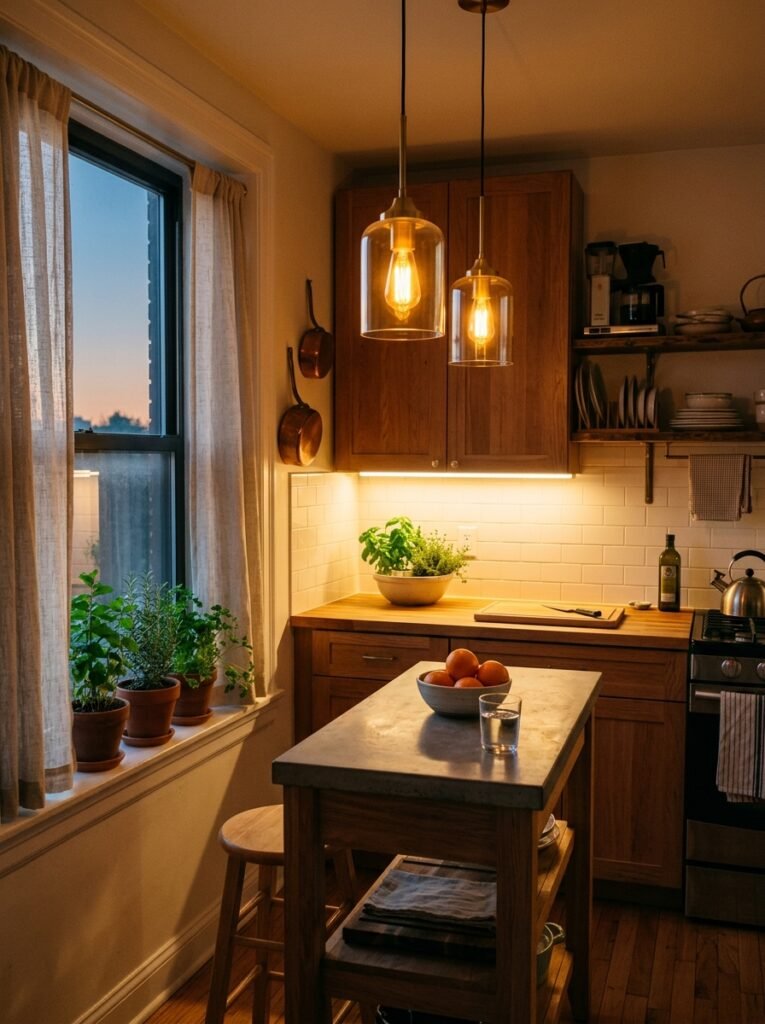
If there’s one investment that pays the highest design dividend in a small kitchen, it’s lighting. Not a single overhead fixture doing all the work — layered lighting that serves different purposes at different times of day.
Start with under-cabinet lighting. This one addition changes everything. It floods your countertops with warm, functional light and makes the space feel like it extends further than it actually does. LED strip lights are affordable, easy to install, and make a dramatic visual difference. Then consider a pendant light or two over a small island or dining nook — pendants draw the eye upward and create a sense of height in a room that might otherwise feel compressed.
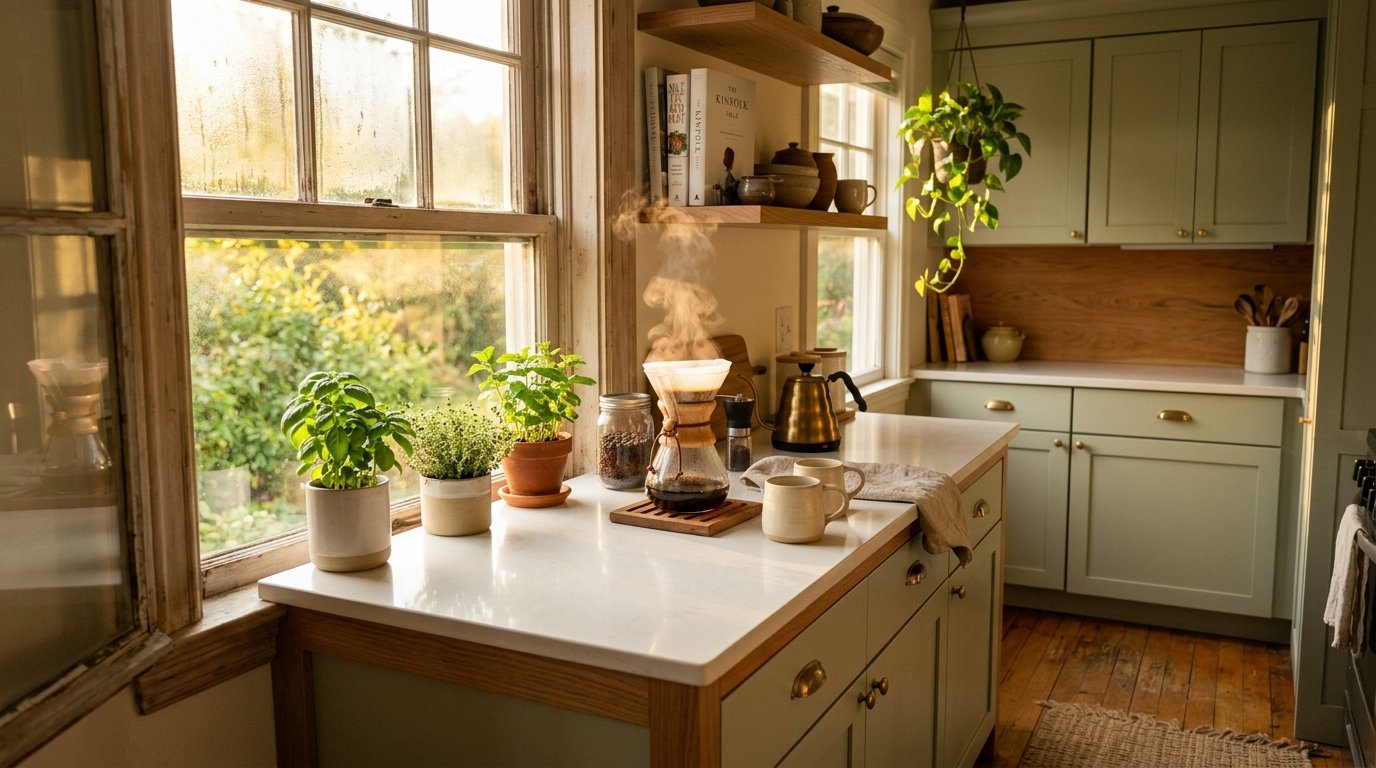
Natural light deserves special mention. If your kitchen has a window, treat it like the jewel it is. Avoid heavy curtains that block even a sliver of sunlight. Instead, opt for sheer linen panels that filter light rather than block it, or go bare entirely and lean into the beauty of an unobstructed window with a small herb garden on the sill. Morning light pouring across a clean countertop might just be one of the most underrated beautiful things in everyday life.
5. The Art of Open Shelving (And Why It Works When Done Right)
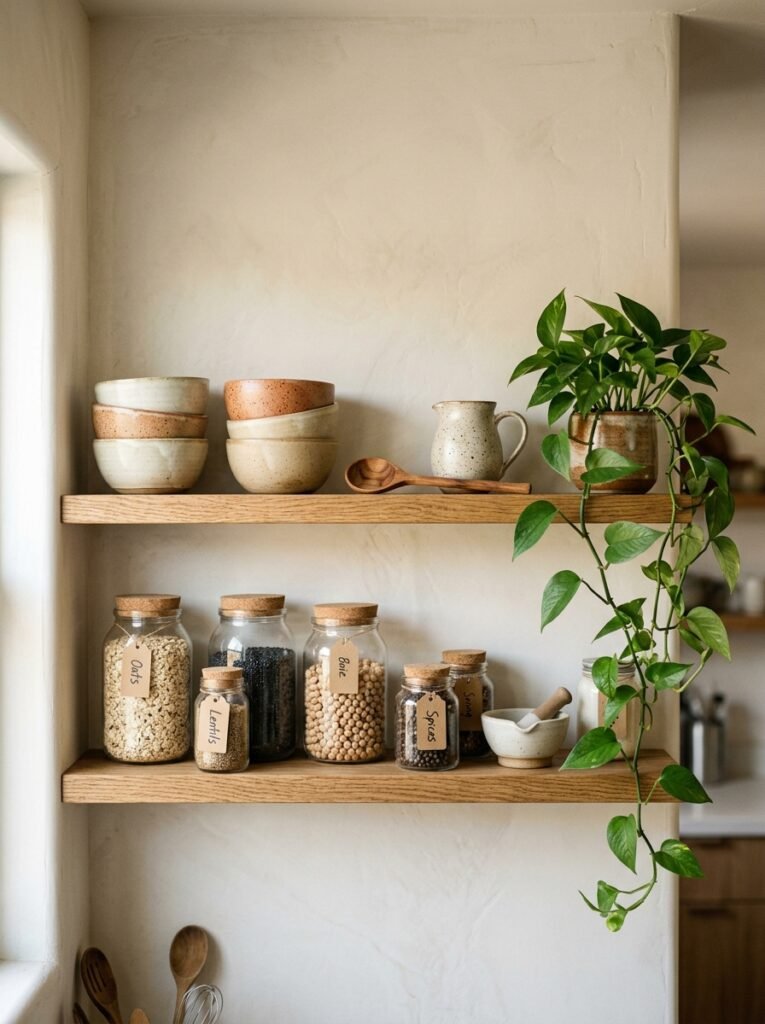
Open shelving gets a complicated reputation in small kitchens. Critics say it looks cluttered. Fans say it’s game-changing. The truth? Both camps are right — depending entirely on how you execute it.
When open shelving works, it creates breathing room where solid cabinet doors would create visual walls. It gives you the chance to display things you genuinely love — a set of handmade ceramic bowls, a row of glass jars filled with grains and spices, a single trailing plant that softens the whole corner. It makes your kitchen feel like a curated, lived-in space rather than a furniture showroom.
“The things you choose to display in your kitchen tell a story about who you are — make sure it’s a story you love.”
When open shelving fails, it’s because it becomes a dumping ground for whatever doesn’t fit in the cabinets below. The secret is ruthless curation and consistent color palette. Stick to two or three tones across your displayed items. Group things by category. Leave intentional empty space — negative space isn’t wasted space, it’s breathing room for the eye.
6. Smart Storage Solutions That Actually Work in Tiny Kitchens
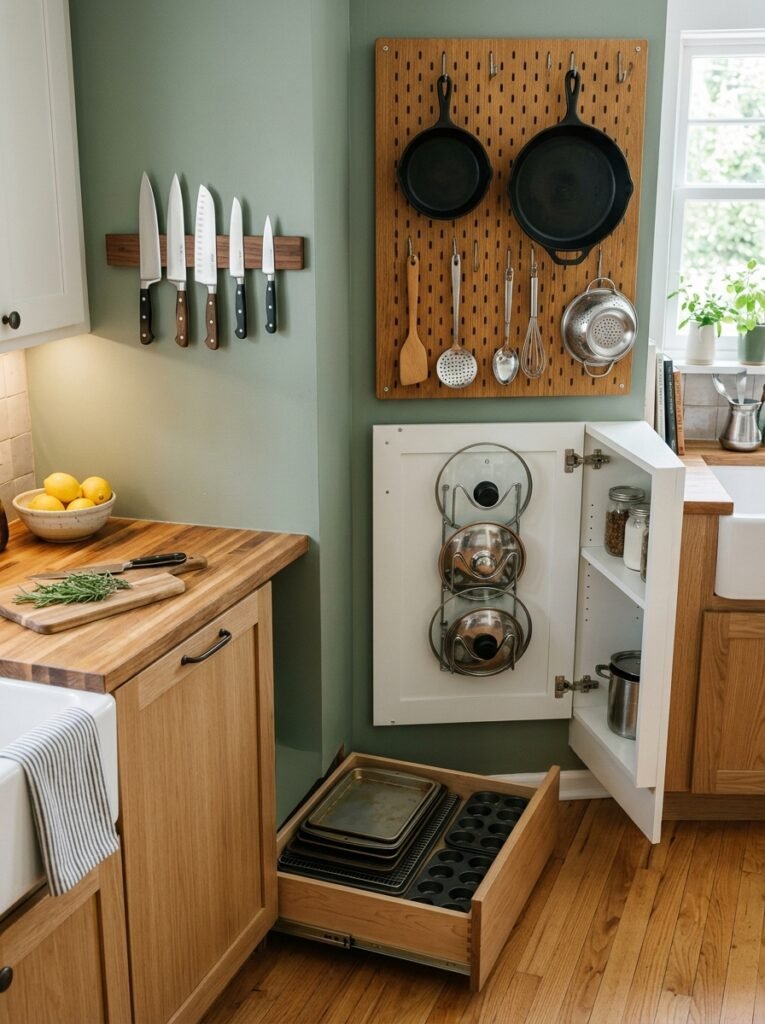
Storage in a small kitchen requires a completely different mindset than storage in a large one. You’re not just trying to find a home for everything — you’re trying to use every single inch of three-dimensional space, including the places most people completely ignore.
The inside of cabinet doors is prime real estate. A few adhesive hooks or a mounted rack can hold pot lids, cutting boards, or cleaning supplies. The space above your refrigerator? Perfect for a basket of rarely used appliances or a row of cookbooks. The toe-kick space at the bottom of your cabinets? With the right pull-out drawers, it becomes storage for flat items like baking sheets and serving platters.
A magnetic knife strip on the wall frees up an entire drawer and looks sharp doing it. A pegboard painted to match your walls becomes functional art that holds pots, pans, utensils, and even small shelves for spices. The key mindset shift is moving from horizontal thinking (countertop and cabinet space) to vertical and three-dimensional thinking — going up, going in, and using every surface and plane that your small kitchen offers you.
7. The Small Kitchen Island Debate — And When It’s Actually Worth It
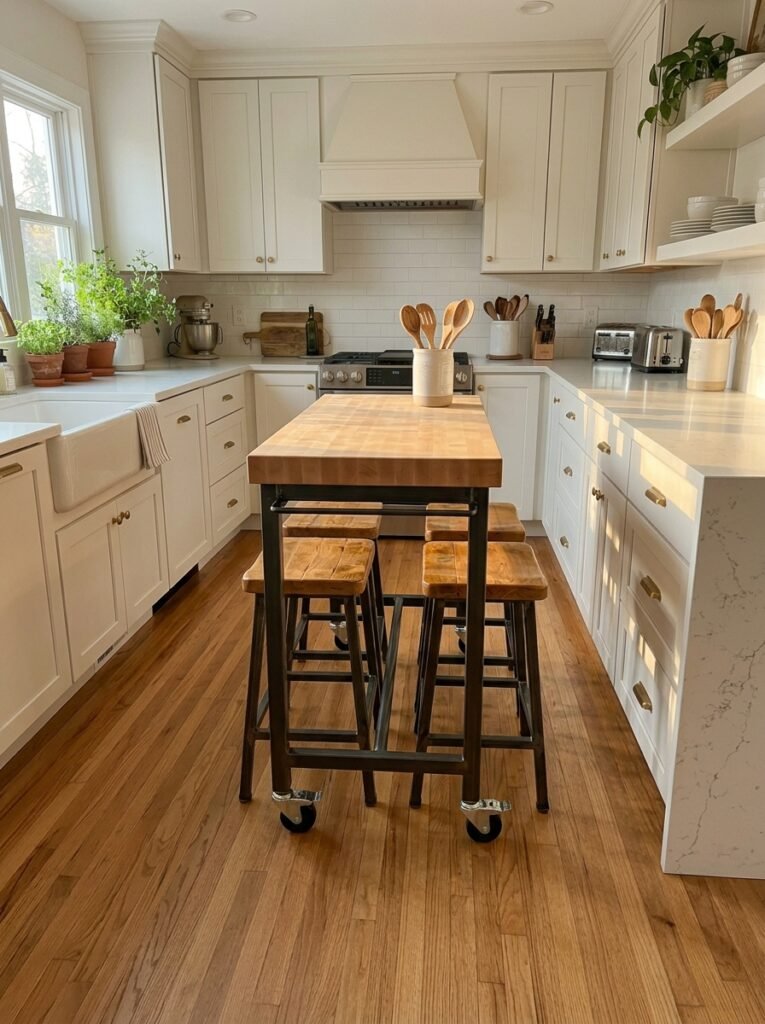
The number one thing Pinterest users search for in small kitchen design is the island — and it’s also the number one thing that gets added to small kitchens when it absolutely shouldn’t be. An island that’s too large for the space doesn’t just waste space, it actively makes the kitchen harder to use and visually suffocating.
But here’s the other side of that conversation: the right island, in the right kitchen, is transformative. A rolling butcher block cart that can be pushed against the wall when not in use gives you prep space, storage, and flexibility. A narrow island with a waterfall countertop and two stools on one side creates a breakfast bar that doubles as a dinner party spot. The rule of thumb most designers follow is this: you need at least 42 inches of clearance on all sides of an island to maintain comfortable traffic flow. If you can’t achieve that, a rolling cart is your best friend.
8. How to Choose Appliances That Work With Your Space, Not Against It
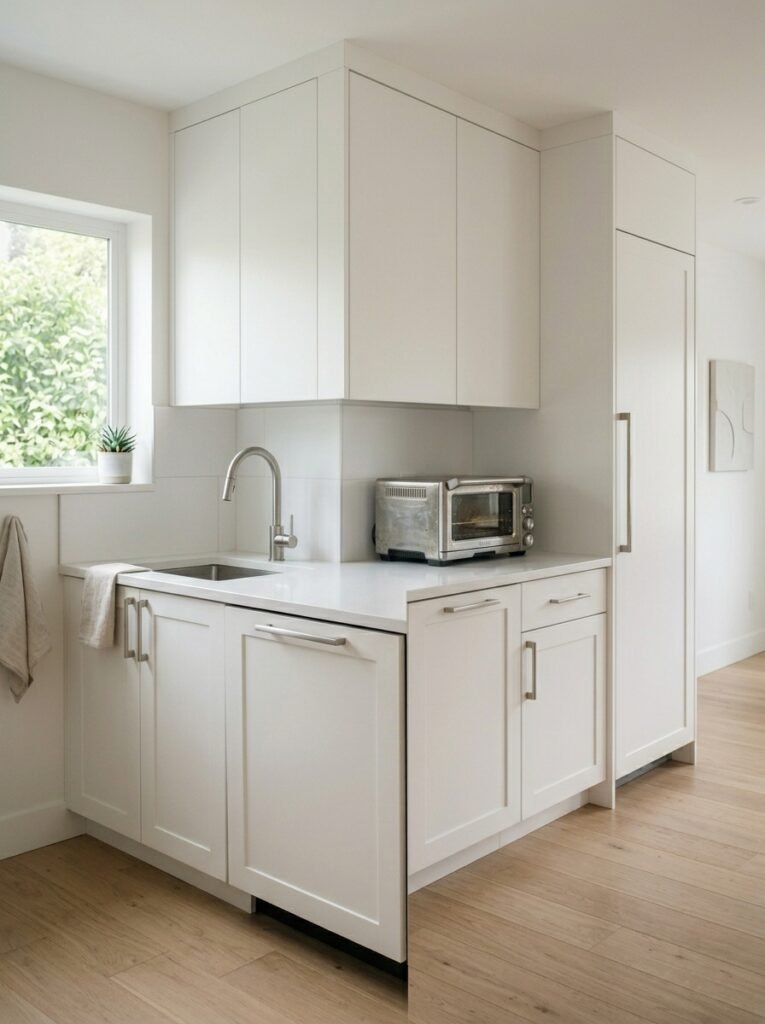
Appliances are the square footage eaters of the kitchen world. In a small kitchen, every appliance needs to earn its place — both in terms of function and in terms of visual weight.
Consider counter-depth refrigerators that don’t protrude past your cabinets, creating a seamless built-in look that saves precious floor space. Integrated appliances — where the fridge and dishwasher are hidden behind cabinet panels — are the gold standard for creating a visually clean small kitchen, and they’re more achievable at a budget level than they used to be.
Think carefully about which countertop appliances you actually use versus which ones are just squatting on your counter out of habit. A toaster oven you use daily earns its place. An air fryer you use twice a year might be better stored in a cabinet — or let go of entirely. The less visual noise on your countertops, the larger and calmer your kitchen will feel.
9. Flooring Choices That Visually Expand a Small Kitchen
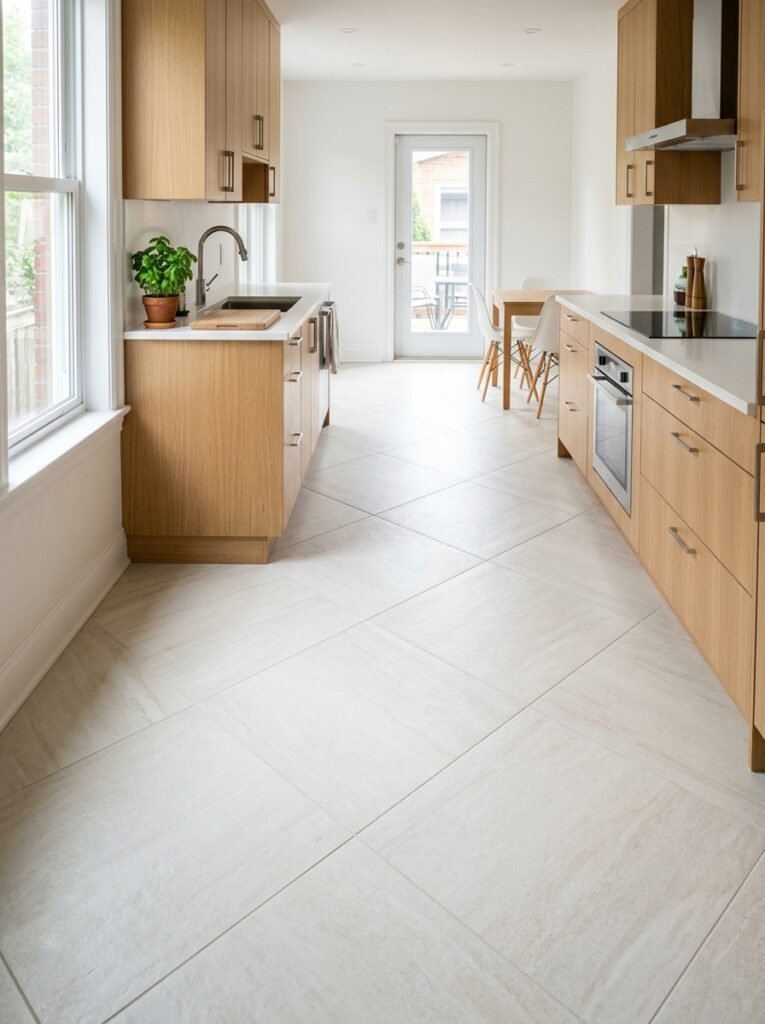
The floor is an often overlooked design element in small kitchens, but it has an outsized impact on how spacious the room feels. The right flooring choice can visually add feet to a room. The wrong one can make an already small space feel even more compressed.
Large-format tiles — think 24×24 inch porcelain — have fewer grout lines, which means less visual interruption across the floor plane. Fewer lines mean fewer places for the eye to stop, which creates a sense of expansiveness. Similarly, running hardwood or luxury vinyl plank flooring diagonally rather than parallel to the walls is a classic designer trick that instantly makes a small kitchen feel larger.
“The floor is the fifth wall of your kitchen — choose it with as much intention as you would the color on the walls.”
Light-toned floors reflect light upward, adding luminosity to the entire space. If you have dark floors currently, a large area rug in a warm, light tone can achieve a similar softening effect while adding texture and personality. Just make sure the rug is washable — kitchen life demands it.
10. The Power of Mirrors and Reflective Surfaces in Kitchen Design
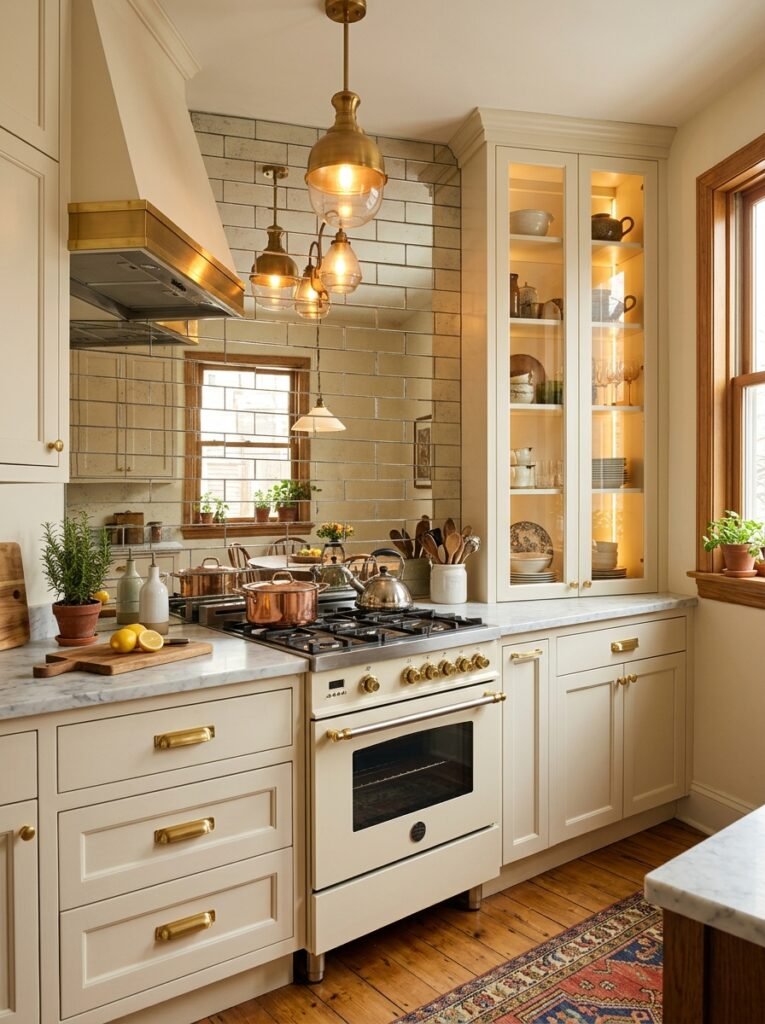
Here’s a small kitchen secret that interior designers have been using for decades: reflective surfaces create depth. A mirrored backsplash, a glossy subway tile, or even metallic cabinet hardware can bounce light around a room in ways that make the walls feel like they’re moving outward rather than closing in.
This doesn’t mean you need a mirror on every surface — that would feel more like a funhouse than a kitchen. But a single mirrored element, used intentionally, can work architectural magic. A mirrored cabinet door on the end of a run of cabinetry. A glass backsplash behind the stove. Even a large glass-fronted display cabinet can create the illusion of looking through a window into more space beyond.
Polished brass and brushed gold hardware are also having a major moment in kitchen design right now, and for small kitchens, the bonus is that warm metallic tones reflect warm light — making the space feel not just brighter, but genuinely more inviting.
11. Plants and Life — The Element That Makes Small Kitchens Feel Like Home
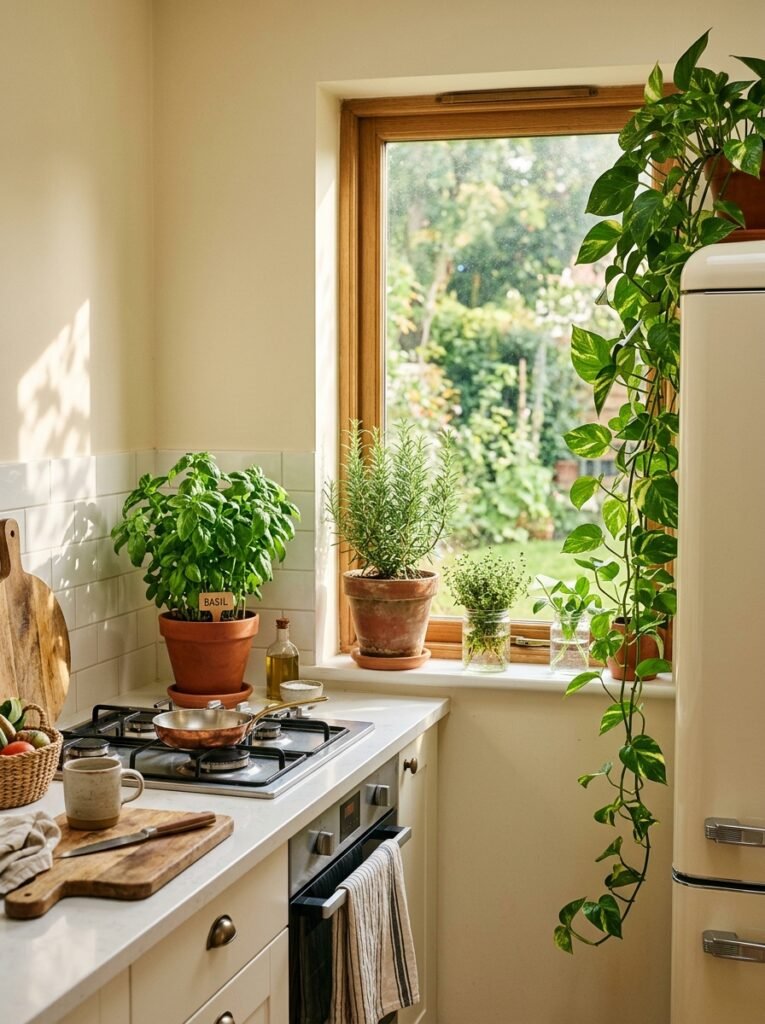
No small kitchen design is complete without the element that makes everything feel alive: plants. This isn’t just aesthetic advice — it’s emotional truth. A kitchen with a thriving herb plant on the windowsill, a trailing pothos on the top of the refrigerator, or a small succulent arrangement on the shelf feels fundamentally different from one without.
Plants add oxygen, color, softness, and a sense of ongoing life to a space that can sometimes feel purely utilitarian. And in a small kitchen, where every element counts, choosing plants that also serve a culinary purpose makes perfect sense. A pot of fresh basil next to the stove, a rosemary plant on the windowsill, a cluster of thyme in a small terracotta pot — these are both beautiful and useful, which is exactly the kind of design decision a small kitchen rewards.
If you struggle to keep plants alive (no judgment — it happens), high-quality faux botanicals have come an extraordinarily long way in recent years. The goal is the visual warmth and softness that green living things provide. However you get there, get there.
12. Creating a Cohesive Aesthetic — How to Make Your Small Kitchen Look Intentional
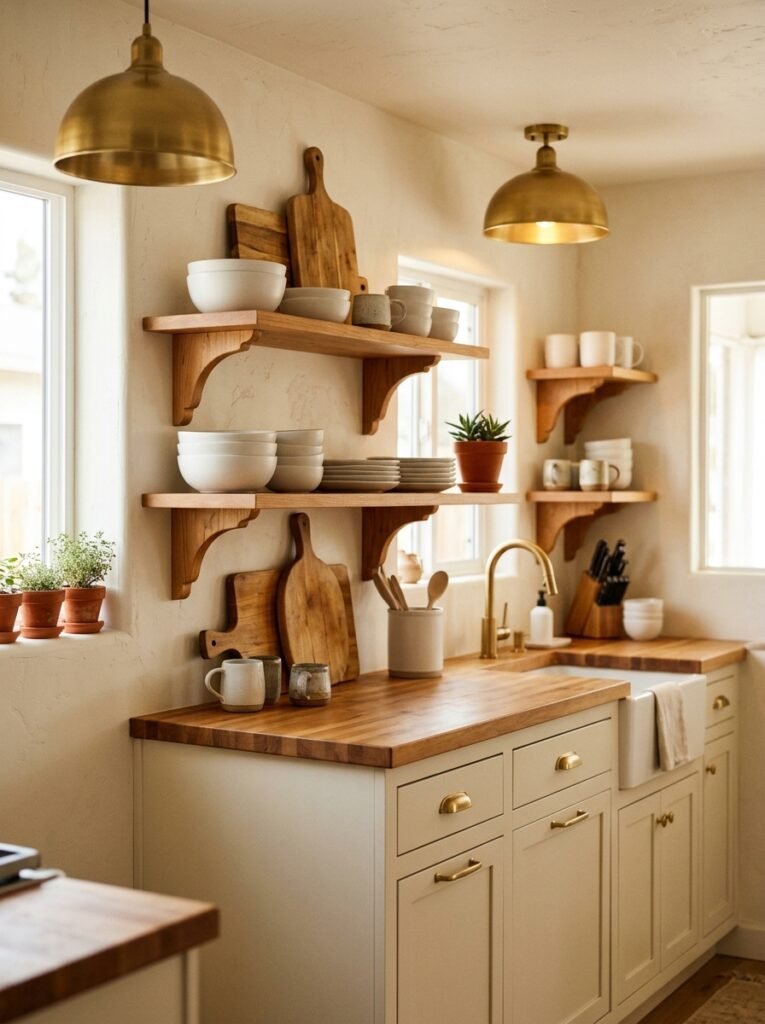
The final piece of the small kitchen puzzle is cohesion. A kitchen where everything matches in an obvious, corporate way can feel sterile. A kitchen where nothing matches can feel chaotic. The sweet spot is a collected aesthetic — things that belong together without being identical.
Choose two or three materials and repeat them: perhaps matte white ceramic, warm wood, and brushed brass. Let those three elements recur across your hardware, your shelving brackets, your cutting board, your light fixture, your plant pots. Repetition creates visual rhythm, and rhythm creates a sense of calm intentionality that makes even the most humble small kitchen feel beautifully designed.
Edit ruthlessly and continuously. A small kitchen rewards an ongoing practice of noticing what isn’t serving you and releasing it. The small kitchen you love isn’t built in a single weekend — it’s cultivated, slowly and thoughtfully, one intentional choice at a time.
—
🌿 How to Take Care of Your Small Kitchen Design
Maintaining a beautiful small kitchen isn’t about perfection — it’s about small, consistent habits that keep the space functioning and feeling good. First, build a five-minute daily reset into your routine: wipe counters, clear surfaces, and return items to their homes before bed. It takes almost no time, but the difference it makes to how your kitchen feels each morning is remarkable. Second, reassess your storage every few months — as your life and cooking habits change, your kitchen storage needs to evolve with them. Third, clean your open shelves every two weeks rather than letting dust accumulate, since displayed items in a small space are always visible. Fourth, replace or refresh at least one small element seasonally — a new dish towel, a different plant, a seasonal bowl of fruit — to keep the space feeling alive and personally yours rather than stagnant. Small spaces thrive on attention and intention.
—
❓ FAQ
Q: What colors make a small kitchen look bigger? A: Soft whites, warm creams, and pale sage greens are the most effective choices for visually expanding a small kitchen. The key principle is tonal continuity — keeping your walls, cabinets, and countertops in a similar color family so the eye moves smoothly through the space without interruption, which creates an unconscious sense of openness.
Q: Is open shelving a good idea in a small kitchen? A: Open shelving can be a wonderful choice in a small kitchen when done with intention and discipline. It removes the visual weight of solid cabinet doors and creates breathing room in the design. The key is curating what you display carefully — stick to items you love and use, keep the color palette of displayed items consistent, and leave some intentional negative space between groups of objects.
Q: How do I add more storage to a small kitchen without a renovation? A: There are many creative ways to add storage without touching a single wall. Magnetic knife strips, pegboards, over-the-door organizers inside cabinet doors, rolling carts, and baskets on top of the refrigerator are all highly effective. The biggest mindset shift is moving from horizontal thinking to vertical thinking — using wall space, door space, and the space above appliances that most people leave completely unused.
—
💭 Final Thought
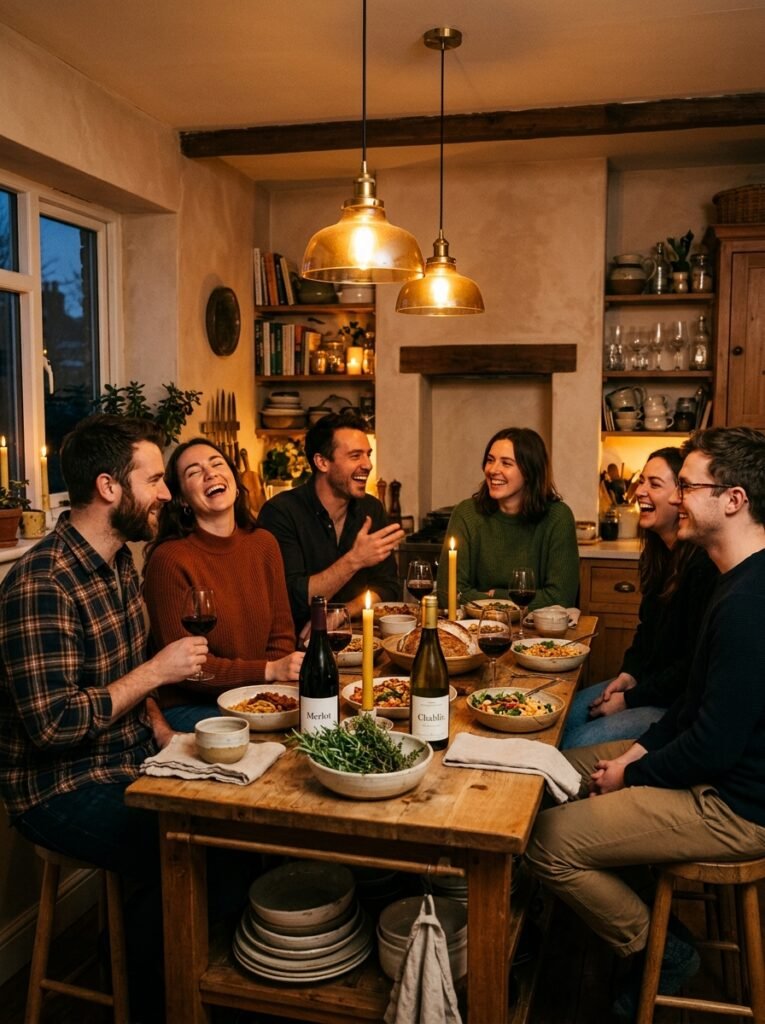
A small kitchen, designed with love and intention, doesn’t just feed people — it gathers them, warms them, and tells them without words that they are home. The size of the room has nothing to do with the size of what happens inside it. So here’s the question worth sitting with: if your small kitchen could feel like anything — what would it feel like, and what’s one small thing you could change this week to start moving toward that feeling?