The Soul of a Barbershop: How to Design an Interior That Feels Like Home and History at the Same Time
There’s something about stepping into a well-designed barbershop that feels like slowing down time — the low hum of clippers, the faint scent of pomade and cedar, the particular quality of light bouncing off a vintage mirror. A great barbershop interior doesn’t just look good. It makes you feel something.

—
Table Of Content
1. Why Barbershop Interiors Have Become One of the Most Pinned Design Niches of the Decade
It’s no accident that barbershop interior design has exploded across Pinterest boards, Instagram feeds, and interior design blogs over the past several years. What was once a purely functional space — a chair, a mirror, a pair of scissors — has become a deeply intentional design statement. People are drawn to these spaces because they represent something rare in modern life: authenticity.
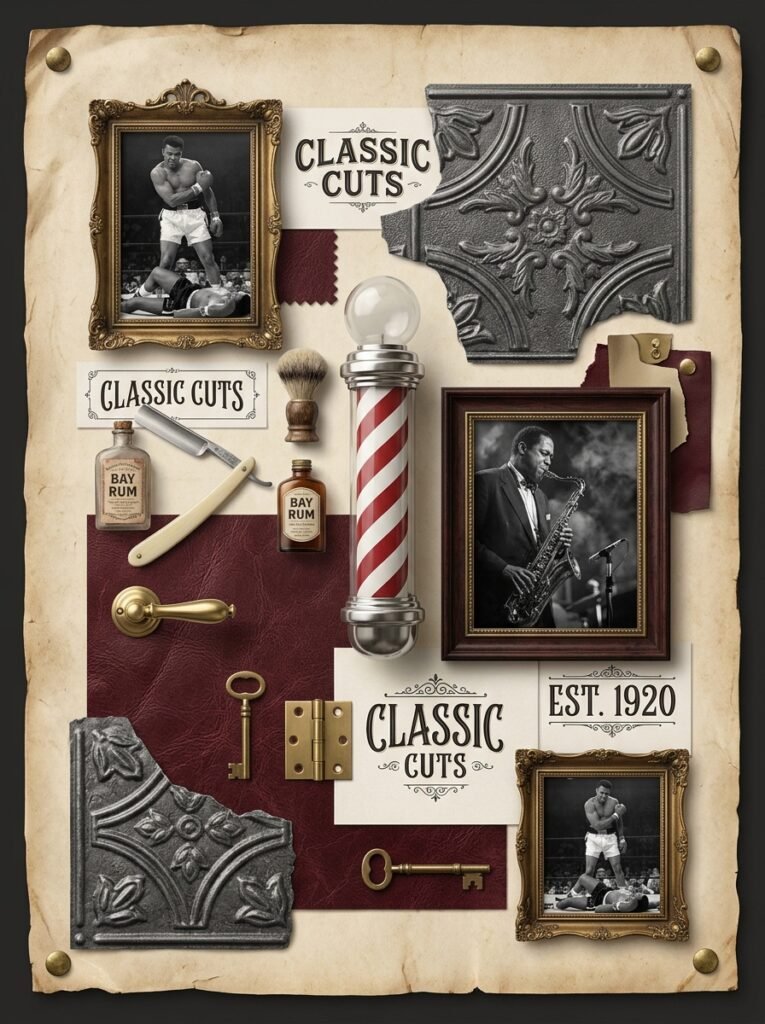
The barbershop aesthetic taps into a cultural memory that runs deep. Think pressed tin ceilings, black-and-white checkered floors, leather barber chairs worn soft with years of use. These aren’t just design choices — they’re visual shorthand for trust, ritual, and belonging. When designers and business owners began to recognize this emotional power, the modern barbershop renaissance was born.
For Pinterest bloggers and interior design enthusiasts, this niche sits at a fascinating intersection of nostalgia, masculinity, craftsmanship, and contemporary cool. It’s a space that tells a story the moment you walk through the door — and that’s exactly what great design is supposed to do.
“A great barbershop doesn’t just cut hair — it holds history, community, and craft within four carefully designed walls.”
—
2. The Foundation: Understanding the Two Major Barbershop Design Styles

Before you start pinning inspiration photos or sketching floor plans, it helps to understand that modern barbershop interiors generally fall into two broad aesthetic categories — and knowing the difference will sharpen your creative vision considerably.
The first is the Classic Heritage Style. This is the one that conjures black-and-white poles, gleaming porcelain, rich mahogany cabinetry, and walls lined with framed photographs of boxing legends and jazz musicians. It draws heavily from American barbershop culture of the 1920s through 1960s — a period when the barbershop was the social hub of the neighborhood. Every material choice in this style speaks to permanence and pride: marble countertops, brass fixtures, leather-bound headrests, beveled mirrors with ornate frames.
The second is the Contemporary Industrial Style — raw, stripped-back, and effortlessly cool. Think exposed brick walls, Edison bulb pendant lighting, matte black fixtures, reclaimed wood shelving, and minimalist barber stations that put the craftsperson’s tools on display rather than hiding them behind cabinet doors. This style borrows heavily from the warehouse loft and Brooklyn café aesthetics that dominated interior design in the 2010s and continues to evolve today.
Both styles share a core design philosophy: intentionality. Every element earns its place.
—
3. The Barber Chair — The Centerpiece That Sets the Entire Tone

If there is one object that defines a barbershop interior above all others, it is the barber chair. This is not a background piece of furniture — it is the architectural and emotional anchor of the entire room. Get this right, and the rest of the design almost builds itself around it.
Classic hydraulic barber chairs from manufacturers like Koken, Belmont, and Takara are treated almost like antiques. Their chrome footrests, adjustable headrests, and heavily cushioned leather seats carry a visual weight that commands the room. Restored vintage chairs in oxblood red or ivory are among the most shared images in barbershop design on Pinterest — and for very good reason. They are objects of genuine beauty.
For contemporary spaces, sleeker chair designs in matte finishes or with minimalist metal frames work beautifully against exposed brick or concrete walls. The contrast between raw industrial backdrop and the precision craftsmanship of a quality barber chair creates a visual tension that feels intentional and sophisticated.
One practical note worth remembering: whatever chair you choose, ergonomics cannot be sacrificed for aesthetics. A barber works on their feet for eight to ten hours a day, and their clients spend extended time in that chair. Comfort and function must be the foundation on which beauty is built.
—
4. Flooring Choices That Ground the Entire Space
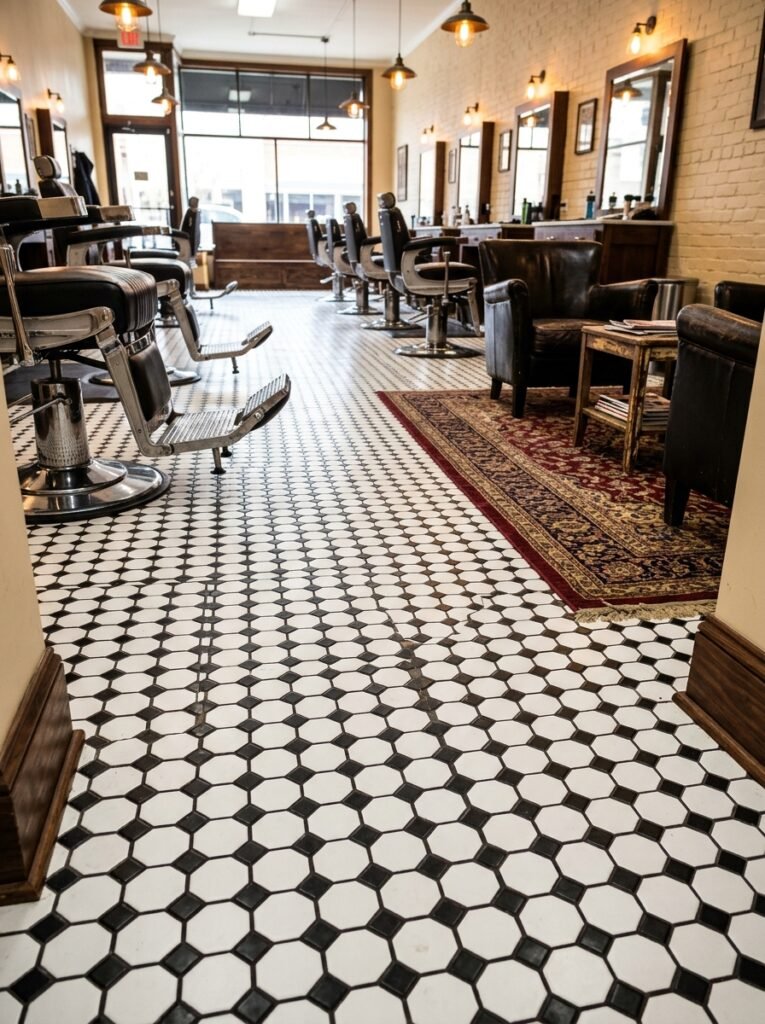
The floor of a barbershop does more design work than most people realize. It is, quite literally, the foundation of the visual experience — and in a space where clients spend most of their time looking either straight ahead or downward, the floor choice resonates deeply.
Black-and-white hexagonal tile is perhaps the most iconic barbershop flooring choice, and it endures for good reason. The pattern creates visual rhythm and energy without overwhelming the space. It reads as both vintage and timeless — a rare combination in design. In smaller shops, the contrast of the pattern can make the space feel larger and more dynamic.
Herringbone hardwood floors, particularly in dark walnut or aged oak tones, bring warmth to heritage-style shops and soften the harder edges of all that chrome and leather. This pairing feels luxurious without being ostentatious — which is exactly the mood most serious barbershop owners are aiming for.
For industrial-style shops, polished concrete floors with their natural imperfections and subtle tonal variation create an authentically raw foundation. A few worn Persian or Moroccan rugs placed strategically near waiting areas can introduce warmth and texture that prevents the space from feeling cold or clinical.
—
5. Mirrors, Lighting, and the Art of Making a Space Feel Expansive
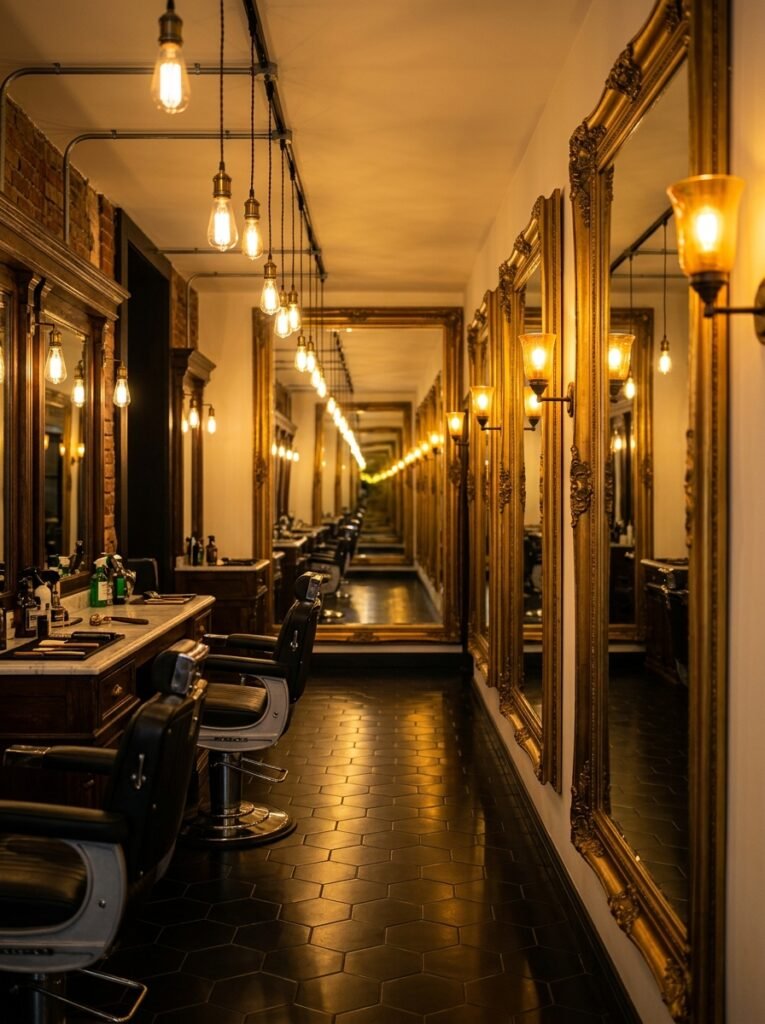
In a barbershop, mirrors are not merely functional tools — they are design elements of the highest order. A row of well-framed mirrors running the length of a wall doubles the visual depth of the room, bounces light, and creates that cinematic quality that makes great barbershop interiors so satisfying to look at.
Ornate gilded frames work beautifully in heritage spaces, lending a sense of grandeur that elevates the entire room. In industrial or contemporary shops, frameless mirrors or those with thin matte black borders keep things clean and uncluttered. The key is consistency — mirror framing should speak the same design language as every other element in the room.
Lighting deserves its own detailed consideration. The best barbershop lighting serves two simultaneous purposes: it must be functional enough for a barber to see precise details during a cut or shave, and it must be atmospheric enough to create a mood that feels warm and inviting rather than clinical and harsh.
Pendant Edison bulbs hung at varying heights over each barber station create pools of warm golden light that feel intimate and craft-focused. Recessed ceiling lighting with dimmer controls allows the ambient atmosphere to shift throughout the day. Wall sconces with warm-toned bulbs flanking mirrors eliminate unflattering shadows on clients’ faces — a practical detail that also happens to look spectacular.
“The right lighting in a barbershop doesn’t just illuminate the room — it illuminates the craft happening inside it.”
—
6. Color Palettes That Balance Masculinity and Warmth
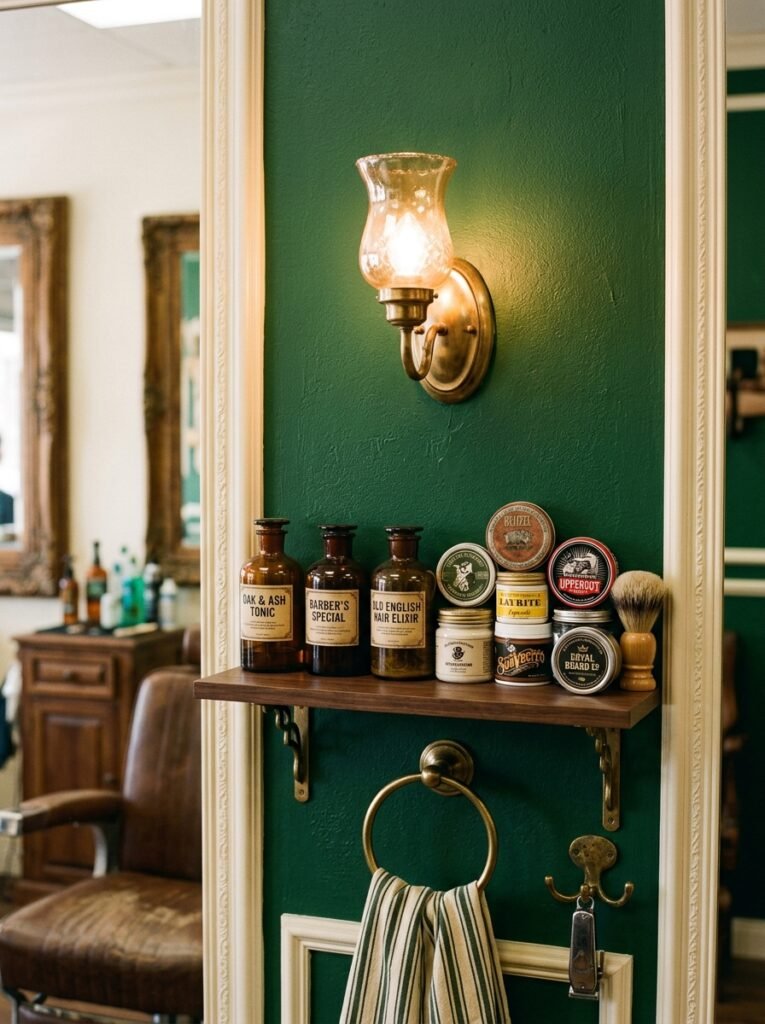
Color theory plays a fascinating role in barbershop interior design. The most successful barbershop palettes manage to feel simultaneously bold and welcoming — a balance that requires thoughtfulness rather than guesswork.
Deep, rich tones dominate the heritage palette: forest green, burgundy, navy, and warm charcoal function as wall colors that make chrome fixtures pop and vintage photographs sing. These are colors that communicate seriousness and craft without feeling cold or uninviting. Pair any of these with warm white trim and aged brass hardware, and you have a combination that photographs beautifully and ages even better.
Contemporary industrial barbershops tend to favor neutral foundations — raw concrete gray, warm off-white, or weathered brick red — with accent colors introduced through branding, signage, or upholstery. A single wall of deep emerald green or matte black against white brick is a combination that consistently performs well on Pinterest, driving saves and shares in remarkable numbers.
One often-overlooked color element is the barbershop pole itself. Whether displayed outside as a traditional rotating fixture or incorporated as a graphic interior element — painted on a wall, printed on tile, featured in signage — the iconic red, white, and blue (or red and white in some cultural traditions) stripe carries enormous symbolic weight.
—
7. Shelving, Stations, and the Beautiful Order of Barbering Tools
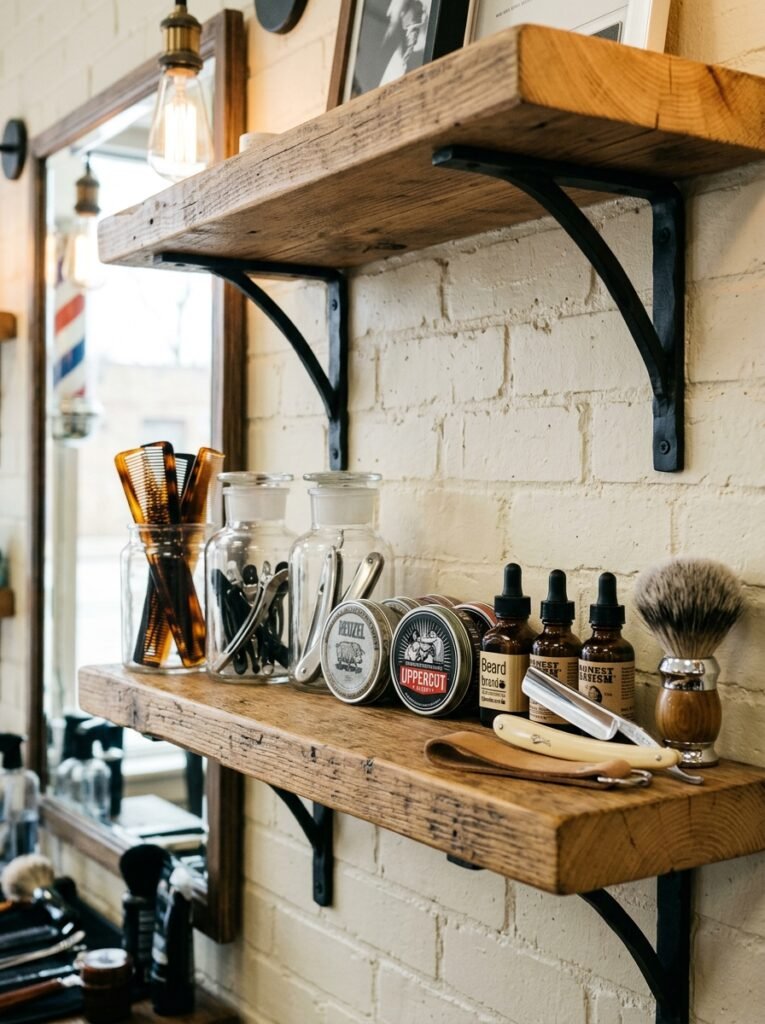
There is something deeply satisfying about a well-organized barber station. The arrangement of combs, clippers, scissors, pomades, and straight razors on a clean shelf is, when done with intention, a form of visual art. It communicates mastery. It says: everything here has a purpose, and the person who works here takes their craft seriously.
Open shelving systems allow tools to become part of the décor rather than hiding them away. Reclaimed wood shelves with wrought iron brackets work beautifully in both heritage and industrial contexts. Glass apothecary jars filled with combs, clips, and blades bring an organized elegance reminiscent of old-world pharmacies and grooming parlors.
Product displays should be curated, not cluttered. A well-chosen selection of quality pomades, beard oils, and tonics lined up with their labels facing forward looks clean, professional, and Pinterest-ready. This kind of visual merchandising — treating products as part of the interior design rather than an afterthought — significantly elevates the perceived quality of the entire space.
—
8. The Waiting Area: Where First Impressions Are Made and Kept
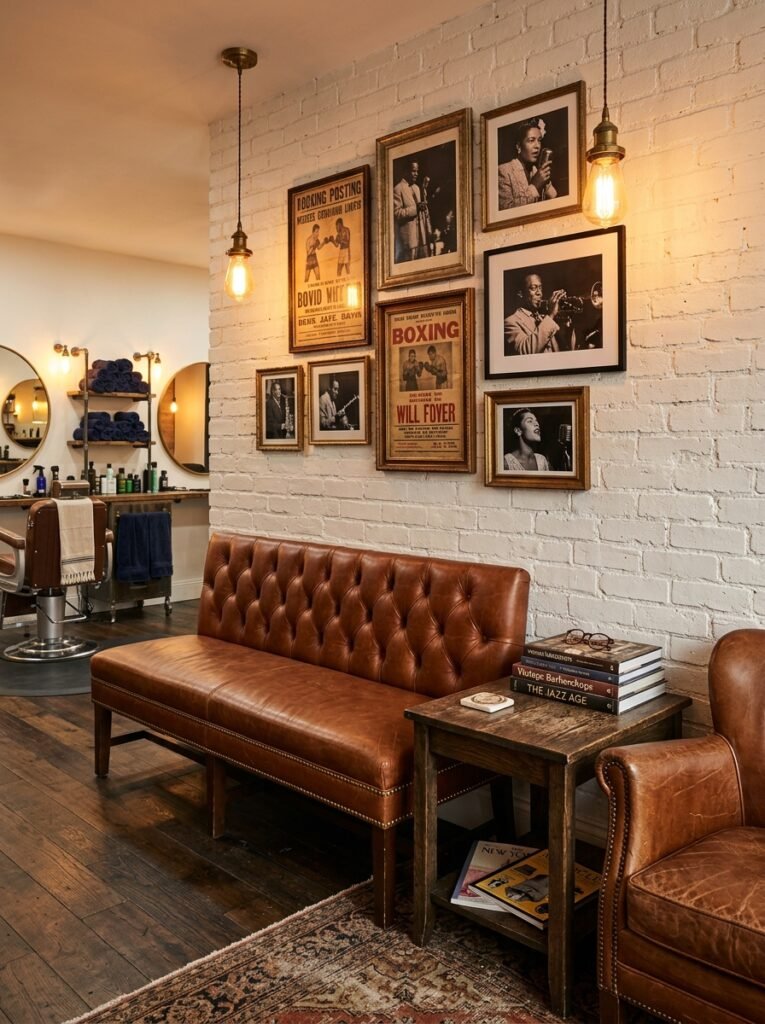
The waiting area is the first thing a client experiences when they walk through the door — and it tells them everything they need to know about the caliber of the shop before they ever sit down in a barber chair. This space deserves the same level of thoughtful design as the cutting floor itself.
Leather bench seating along a wall — the kind with tufted backrests and nail-head trim — is both visually striking and deeply comfortable. In smaller shops where space is tight, a pair of well-chosen leather club chairs creates intimacy and warmth without sacrificing square footage. Add a side table with a curated stack of coffee-table books on photography, design, or sports history, and you’ve created a waiting experience rather than just a waiting area.
The walls of a waiting area offer extraordinary design opportunity. Gallery walls featuring vintage boxing posters, black-and-white photography, custom illustrated portraits of jazz or blues musicians, or framed collections of antique razors and shaving tools create visual interest that gives clients something genuinely engaging to look at. This is also a powerful opportunity for a shop to express its particular cultural identity and community roots.
—
9. Incorporating Brick, Wood, and Metal: The Material Trinity of Great Barbershop Design
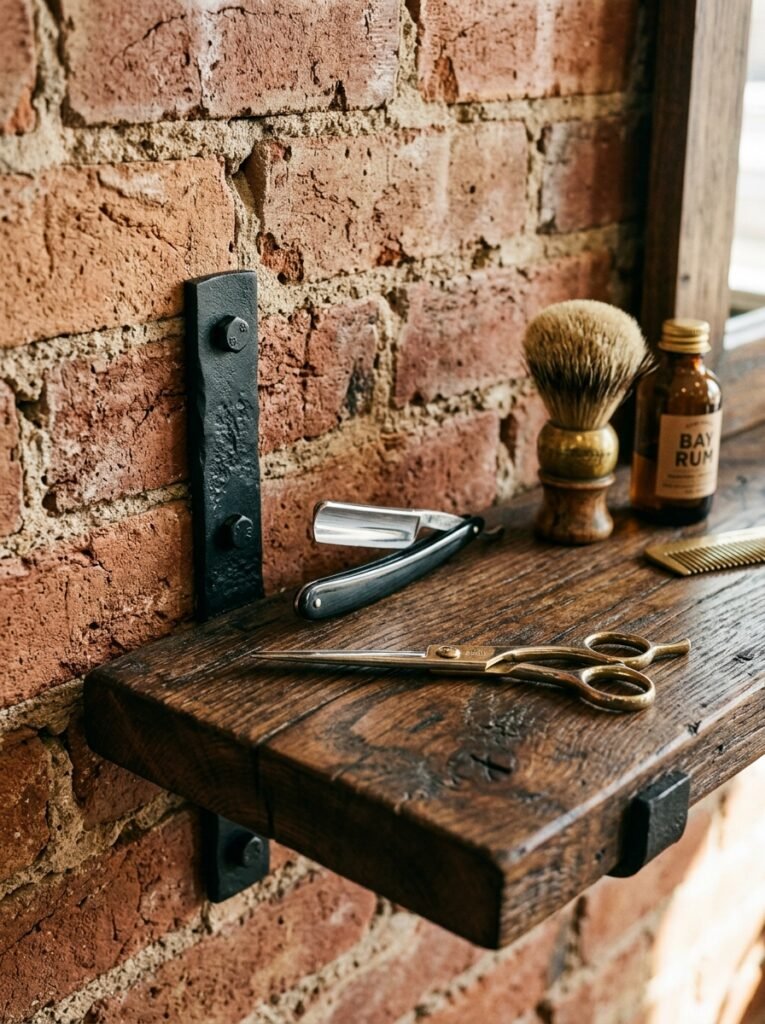
If you study the most beloved and most-pinned barbershop interiors in the world, a consistent pattern emerges in their material choices. The spaces that resonate most deeply — the ones that feel authentic and enduring rather than trendy and temporary — almost always feature some combination of exposed brick, natural wood, and metal.
This material trinity works because each element brings something the others lack. Brick brings texture, warmth, and a sense of permanence — the feeling that this place has been here a while and intends to stay. Wood brings organic softness and warmth, grounding the space in the natural world and preventing it from feeling sterile. Metal — whether in chrome, brass, or matte black finishes — brings precision, modernity, and the visual language of craftsmanship.
When these three materials are layered thoughtfully, the result is an interior that feels genuinely lived in and purposeful, rather than designed to within an inch of its life. The spaces that feel most authentic are often the ones that look like they evolved naturally over time — even when they were meticulously planned from the beginning.
“The barbershops that last for generations are the ones built from real materials with real stories to tell.”
—
10. Signage, Branding, and the Power of Typography in Barbershop Spaces
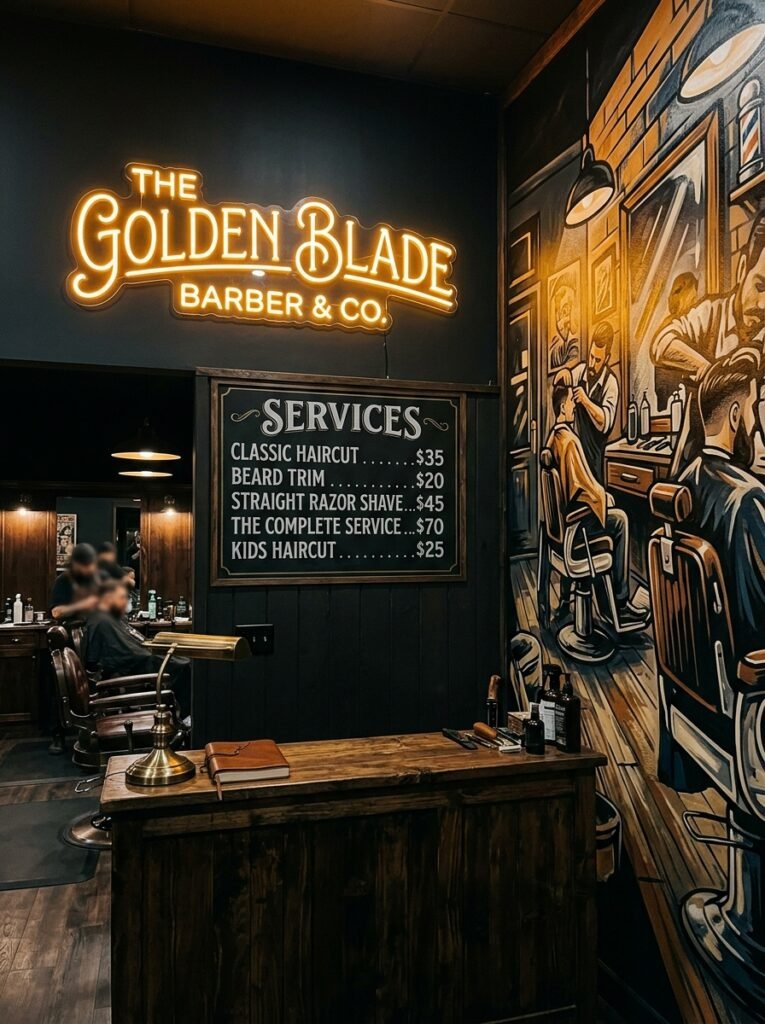
Typography and signage are frequently underestimated design elements in barbershop interiors — and the shops that get this right often become the most recognizable and most photographed in their city. A custom neon sign with the shop’s name glowing in warm amber above the reception desk. Hand-lettered wall art above the mirror quoting something timeless about craftsmanship or character. A vintage-style menu board listing services in elegant serif fonts.
These typographic elements function simultaneously as branding tools and interior design features. They tell a visitor who this shop is and what it values — often before a single word has been spoken. The font choices alone communicate volumes: a bold, geometric sans-serif projects modernity and confidence; a flowing script suggests tradition and care; a slab serif sits comfortably between both worlds, projecting dependability with a touch of creative flair.
Custom floor-to-ceiling murals painted by local artists have become an increasingly popular way for barbershops to differentiate themselves visually while supporting their creative community. These murals become landmarks — the kind of backdrop that clients photograph themselves against and share on social media, extending the shop’s visual identity far beyond its four walls.
—
11. Plants, Scent, and the Sensory Details Most Designers Forget
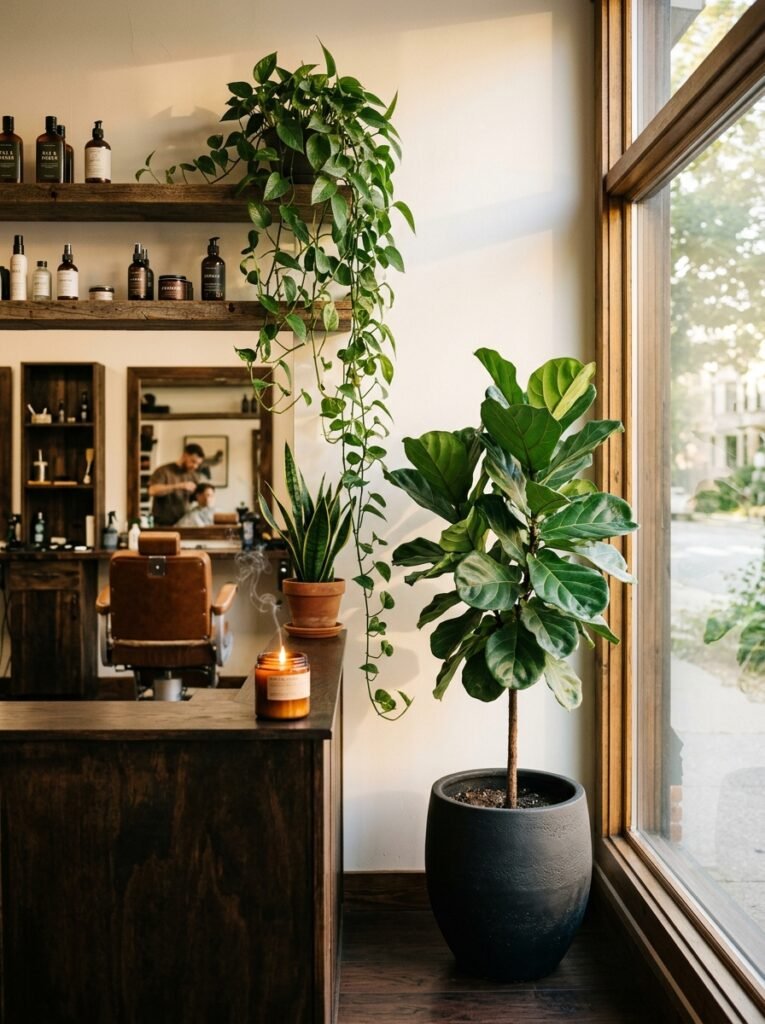
The very best barbershop interiors are designed for all five senses — not just sight. And it’s often the sensory details that most deeply lodge in a client’s memory, determining whether they return and whether they tell their friends.
A few thoughtfully chosen plants — a large fiddle leaf fig in a dark ceramic pot near the window, trailing pothos along a high shelf, a small snake plant on the reception counter — introduce life and organic texture that no amount of vintage furniture can fully replicate. Plants communicate that someone cares for this space daily. They add humidity that benefits both skin and hair. And they photograph beautifully in natural light.
Scent is perhaps the most emotionally powerful and most frequently overlooked design element. The classic barbershop scent — a blend of bay rum, sandalwood, cedar, and the faint mineral note of shaving cream — is, for many people, one of the most comforting and nostalgic aromas in human experience. Intentionally reinforcing this olfactory identity through candles, diffusers, or the careful selection of in-use products creates a sensory signature that becomes part of the shop’s brand in a way no logo ever fully can.
—
12. Small Space Barbershop Design: Maximum Impact in Minimal Square Footage
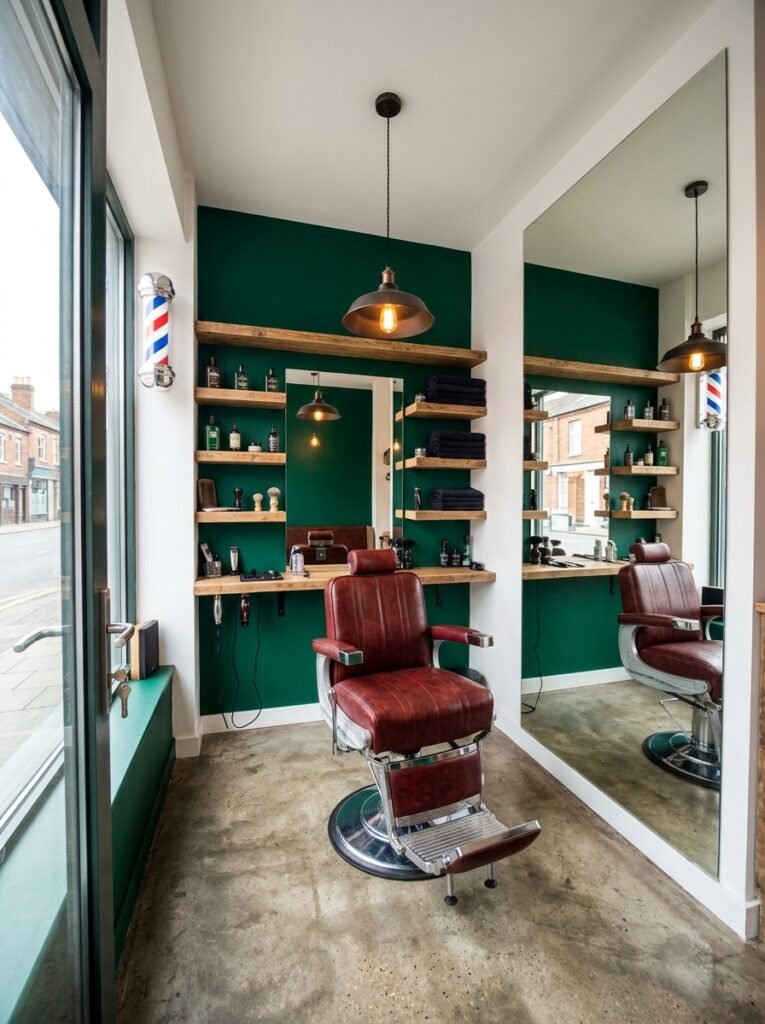
Not every great barbershop has the luxury of a sprawling corner unit with soaring ceilings and abundant natural light. Some of the most celebrated barbershop interiors in the world occupy remarkably compact spaces — and their designers have turned limitation into a creative advantage.
In small barbershop spaces, every design choice must work harder. Floor-to-ceiling mirrors expand the visual depth of the room dramatically. Floating shelving replaces freestanding furniture wherever possible, freeing up precious floor space. A tight, disciplined palette — rarely more than two or three colors — prevents the space from feeling chaotic or cluttered. Lighting placement becomes even more critical when there isn’t the square footage to let in abundant natural light.
The most effective small barbershop designs typically rely on one or two strong focal points rather than trying to do everything at once. A single extraordinary piece of vintage furniture — a beautifully restored barber chair in a rich oxblood leather, positioned against a bold accent wall — can carry an entire design concept with confidence and clarity.
—
🌿 How to Take Care of Your Barbershop Interior
Designing a beautiful barbershop space is only the beginning — maintaining it over time is where many shops fall short, and where the truly great ones distinguish themselves.
Daily cleaning routines should be treated as design rituals rather than chores. Wiping down mirrors after every client, keeping shelves organized and product labels facing forward, sweeping the floor regularly — these habits preserve the visual integrity of the space and communicate ongoing pride in the craft.
Vintage and restored furniture requires specific care. Leather barber chairs benefit enormously from regular conditioning with quality leather care products, which prevents cracking and keeps the upholstery supple and rich-looking for years. Chrome surfaces should be polished with appropriate metal cleaners to prevent water spots and oxidation from dulling their reflective brilliance.
Plants need a dedicated care schedule to remain the lush, vibrant design elements they’re meant to be. Assign care responsibilities to specific team members and make it non-negotiable — a brown, neglected plant does more damage to a carefully designed interior than almost any other single element.
Lighting bulbs should be checked and replaced consistently, because burned-out or flickering lights in a barbershop dramatically undermine the atmosphere and can make the space feel neglected even when everything else is immaculate.
Finally, revisit the design with fresh eyes every year or two. Great barbershop interiors evolve organically over time, incorporating new photography, updated products, seasonal small touches, and occasional larger refreshes that keep the space feeling alive rather than static.
—
❓ FAQ
Q: What is the most important design element in a barbershop interior? A: While every element contributes to the overall experience, the barber chair is arguably the most critical single design choice — it anchors the entire visual identity of the space and sets the tone for everything that surrounds it. A beautifully chosen, well-maintained barber chair communicates quality and craftsmanship the moment a client walks through the door.
Q: How much does it typically cost to design a barbershop interior? A: Barbershop interior design budgets vary enormously depending on location, size, and design ambitions. A basic, functional setup might run between $15,000 and $30,000 for a two-chair shop, while a fully custom heritage or high-end contemporary interior with premium furniture, custom millwork, and professional lighting design can reach $80,000 to $150,000 or beyond. Prioritizing quality on anchor pieces like barber chairs and flooring, then building around them thoughtfully, is a proven strategy for maximizing impact within a realistic budget.
Q: Can a small barbershop feel as impactful as a large one? A: Absolutely — and many of the most celebrated barbershop interiors in the world occupy surprisingly compact spaces. The key is disciplined editing: a clear design vision, a tight palette, one or two strong focal points, strategic mirror placement, and exceptional lighting can make even the smallest shop feel intentional, atmospheric, and genuinely impressive.
—
💭 Final Thought
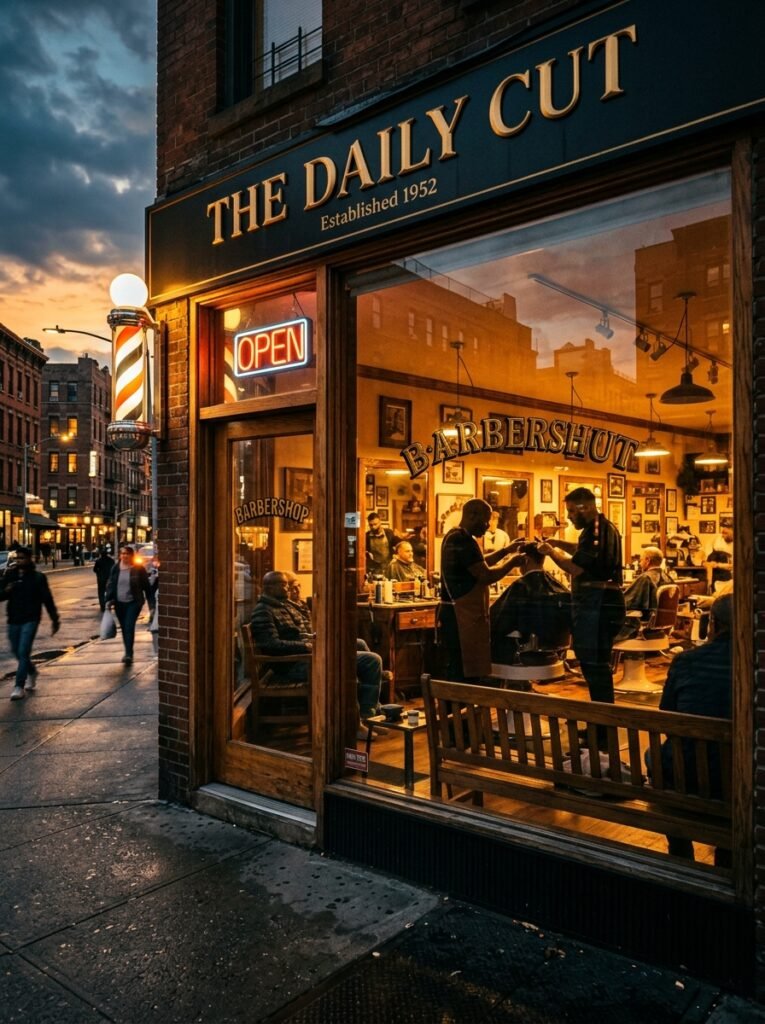
A barbershop, at its finest, is one of the last truly democratic social spaces — a place where people of different backgrounds sit side by side, share stories, and leave feeling a little more like themselves. The interiors that honor that tradition — the ones that feel built with care, furnished with intention, and maintained with pride — don’t just attract clients. They build communities.
The most meaningful barbershop design isn’t the one that follows every current trend — it’s the one that makes a person feel, the moment they walk in, that they’ve come to exactly the right place. So as you think about the space you’re designing or dreaming about: what story do you want your walls to tell?