Modern Luxury Drawing Room Interior: How to Create a Space That Feels Like a Five-Star Dream
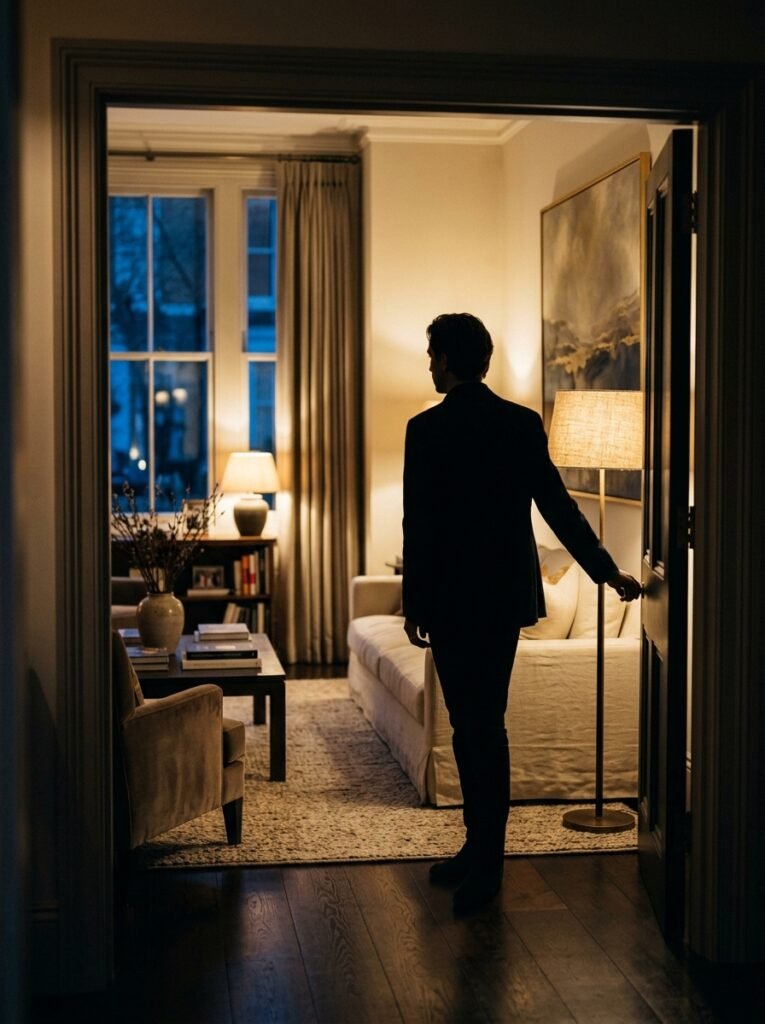
There’s a particular feeling that washes over you when you step into a truly well-designed drawing room — a quiet, elegant hush that whispers you’ve arrived somewhere special. Modern luxury isn’t about spending a fortune on every surface; it’s about intention, harmony, and the kind of design choices that make a room feel both elevated and deeply livable. This article will walk you through every layer of creating a modern luxury drawing room that stops people in their tracks — and makes you never want to leave.
—
Table Of Content
1. What “Modern Luxury” Actually Means in Interior Design Today
Before you start shopping for velvet sofas and marble coffee tables, it’s worth pausing to ask: what does modern luxury actually look like in 2024? The answer has shifted dramatically from what it used to be.
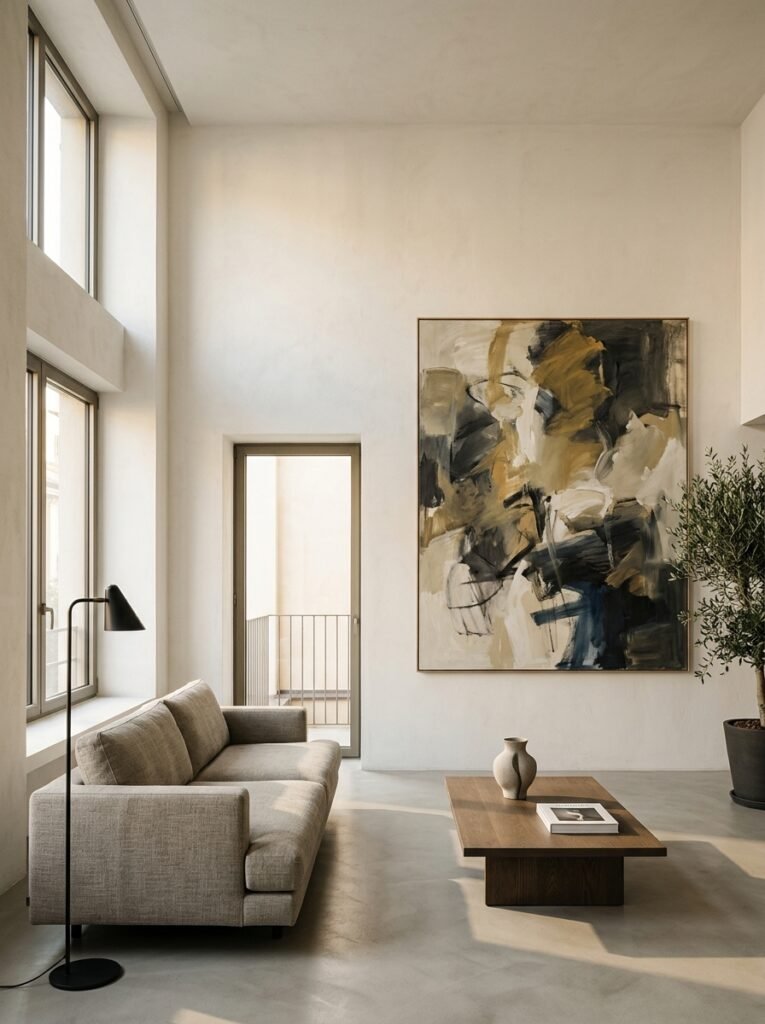
Gone are the days when luxury meant heavy, ornate, gilded furniture crammed into a room to signal wealth. Modern luxury is far more restrained — and far more powerful because of it. It’s the single oversized artwork anchoring an entire wall. It’s the way afternoon light falls across a linen sofa. It’s the pause between furniture pieces that gives a room room to breathe.
Today’s luxury drawing room blends clean architectural lines with warmth, natural materials with contemporary finishes, and simplicity with carefully chosen statements. Think of brands like Restoration Hardware, Kelly Wearstler, or the interiors of boutique hotels in Milan — that effortless confidence where nothing seems accidental, yet nothing feels forced.
The philosophy is this: every single element in the room must earn its place. If it doesn’t add beauty, function, or meaning — it doesn’t belong.
“Luxury is not about filling a room. It’s about choosing so thoughtfully that emptiness becomes its own statement.”
2. The Foundation: Choosing a Color Palette That Feels Rich Without Being Loud
Color is the soul of any interior. In a modern luxury drawing room, the palette does the heavy emotional lifting — and the most effective luxury palettes are almost always quieter than you’d expect.
The classic approach leans into neutrals with depth: warm creams, chalky whites, sand, greige (grey-beige), deep taupe, and soft charcoal. These aren’t boring colors — they’re the backdrop against which everything else sings. Layer them thoughtfully and a “neutral” room becomes deeply sophisticated.
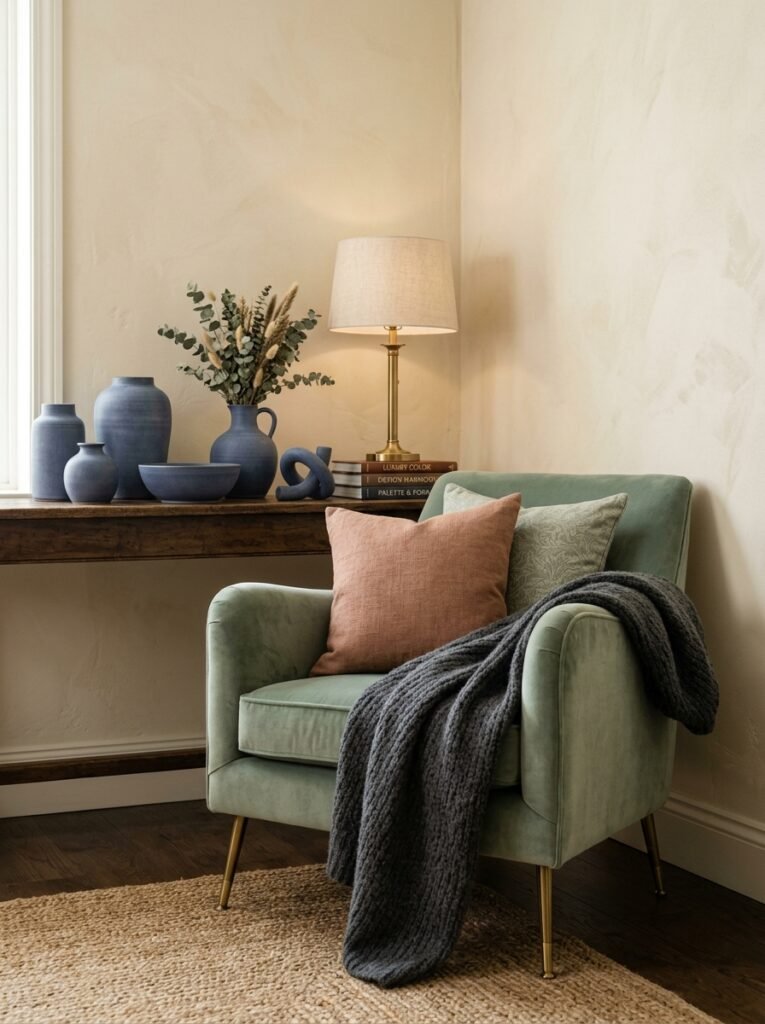
If you want to introduce color, do it with intention. Dusty sage green, muted terracotta, faded indigo, and warm rust are among the most luxurious accent tones in contemporary design right now. They feel organic, warm, and rooted in nature — qualities that translate to comfort and elegance simultaneously.
One rule that professional interior designers swear by: the 60-30-10 rule. Sixty percent of the room uses your dominant color (usually walls and large furniture), thirty percent uses a secondary color (rugs, curtains, accent chairs), and ten percent uses an accent color (cushions, vases, artwork). This ratio creates visual balance that reads as effortlessly polished.
Avoid mixing more than three primary colors unless you are a very confident designer. Restraint is the hallmark of truly luxurious rooms — and the easiest way to make an expensive-looking space look cluttered is to introduce too many competing colors.
3. The Statement Sofa: Your Drawing Room’s Most Important Investment
If there’s one piece of furniture you should invest in above all others in a modern luxury drawing room, it is the sofa. Full stop.
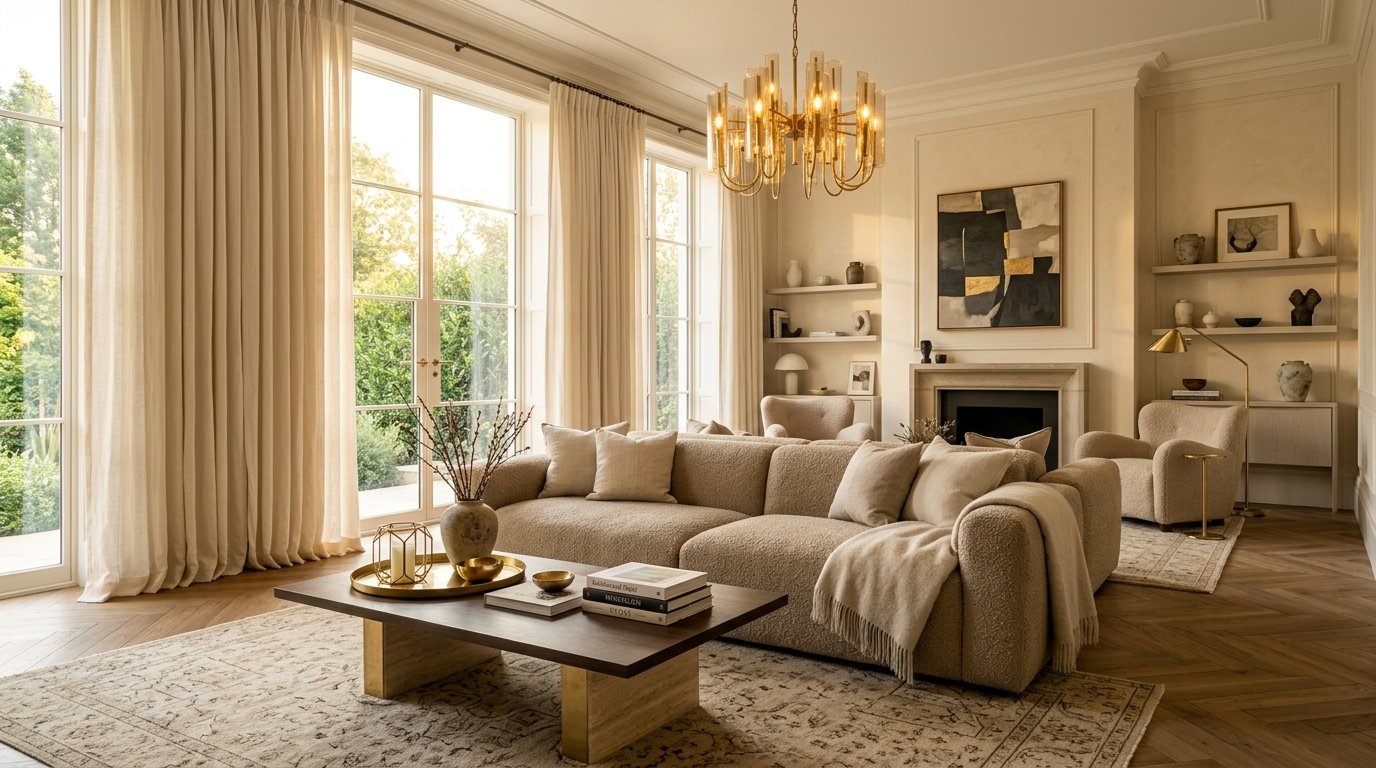
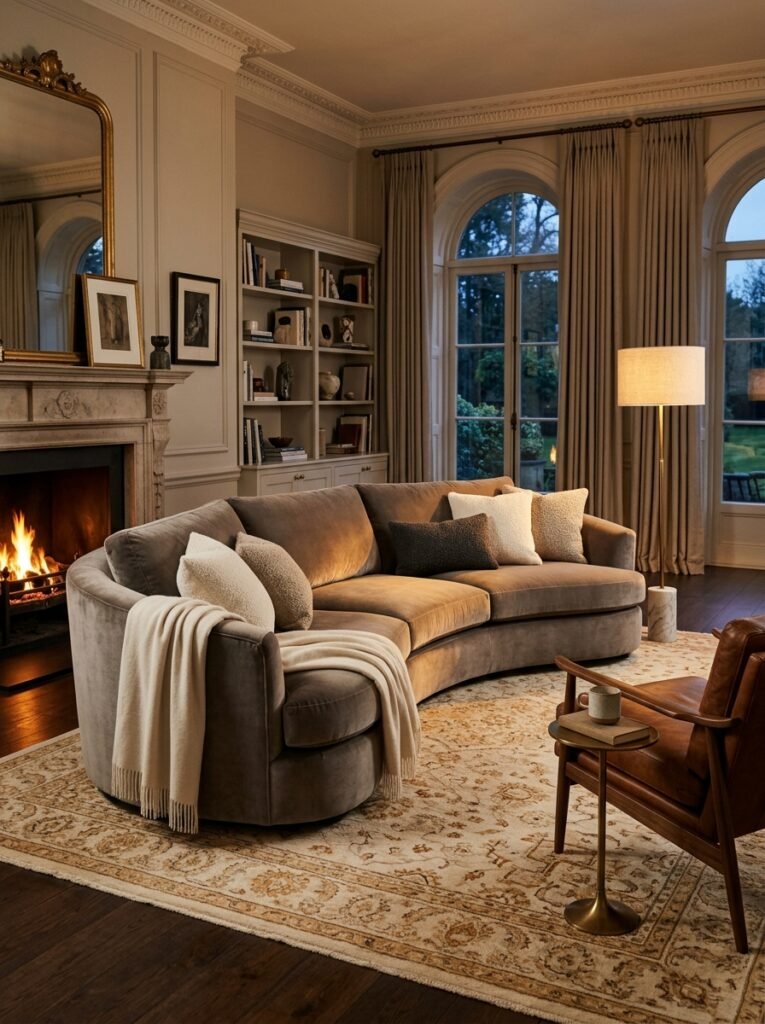
Imagine sinking into a deep, oversized sofa upholstered in performance velvet the color of warm stone — the kind of piece that looks like it belongs in an architectural digest feature. That single sofa can define the entire room’s character. It communicates the aesthetic, sets the comfort level, and anchors the entire seating arrangement.
For a modern luxury look, consider these sofa styles: low-profile silhouettes with clean lines, modular sectionals in neutral or jewel-toned upholstery, curved sofas (which are enormously on-trend and add gorgeous sculptural softness), or classic three-seaters with tufted backs in linen or bouclé.
Fabric matters immensely. The most luxurious-feeling fabrics for drawing room sofas right now include bouclé (that beautiful textured loop fabric that became iconic through Boucle sofas in 2022-2024), performance velvet, heavyweight linen, cashmere-look blended fabrics, and full-grain leather in warm cognac or deep espresso tones.
The size of your sofa should be generous — luxury draws from abundance, not scarcity. A too-small sofa in a large room signals budget compromise. Choose a scale that fills the space confidently, and don’t be afraid of a sofa that makes a visual statement the moment you walk through the door.
4. Flooring That Anchors the Entire Room’s Luxury Story
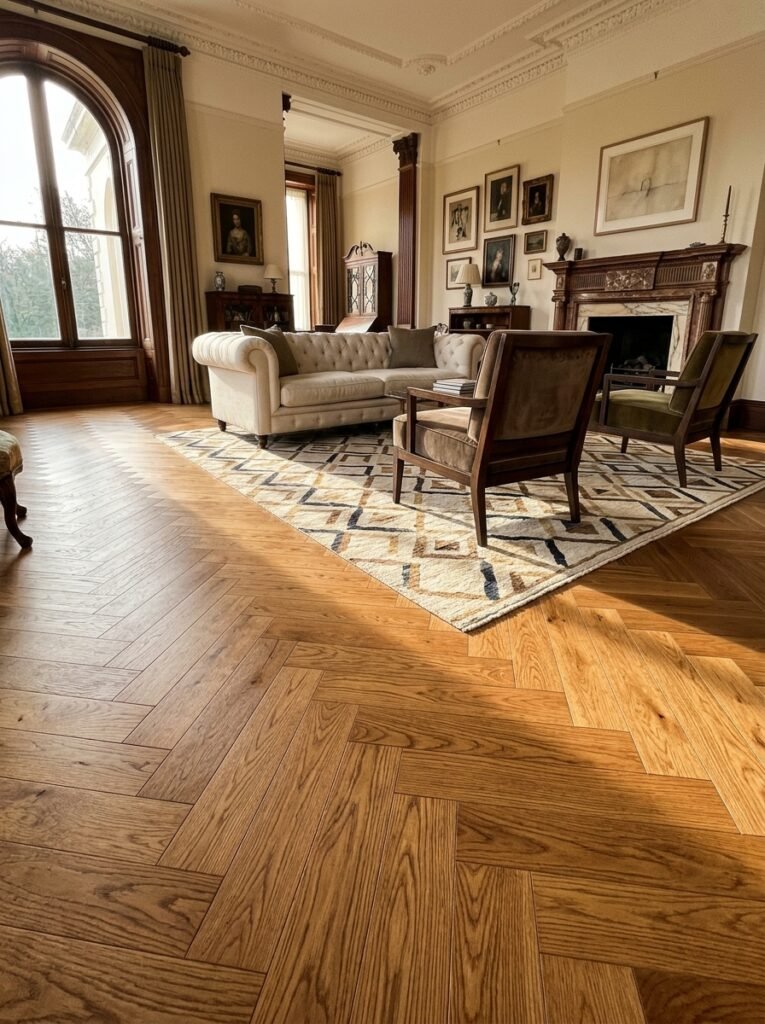
Walk into any truly luxurious drawing room and look down — the flooring will tell you everything. This is not the place to cut corners.
Wide-plank hardwood floors in oak, walnut, or herringbone patterns are among the most universally admired choices for modern luxury interiors. They bring warmth, texture, and a sense of permanence that nothing else replicates. If you’re working with existing flooring, a high-quality area rug can completely transform how a room feels underfoot.
Speaking of rugs — in a modern luxury drawing room, the rug should always be large enough for at least the front legs of all your seating to rest upon it. A rug that’s too small floats awkwardly in a room and immediately undermines the sense of polish you’re trying to create. Go bigger than you think you need to. This is almost universal advice from interior designers and it’s almost universally ignored — until someone sees it done correctly and can’t unsee why it works so well.
For rug styles, consider hand-knotted wool rugs in abstract or geometric patterns, large Moroccan-inspired rugs in faded tones, or simple textured flatweave rugs that let other elements shine. The texture underfoot — that sensory experience of walking across a quality rug — contributes to the feeling of luxury even before a guest sits down.
5. Lighting Architecture: The Invisible Luxury Most Homeowners Overlook
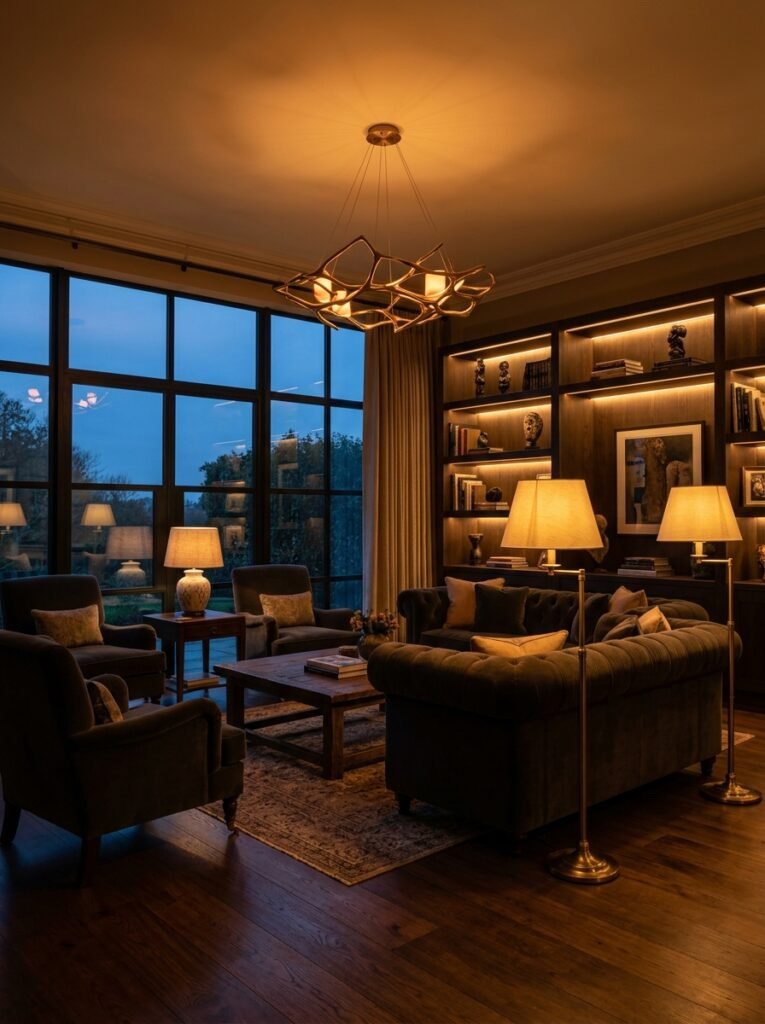
Lighting might be the most underestimated element of interior design in residential spaces. Professional designers often say that you can furnish a room beautifully and then completely destroy the effect with harsh, flat overhead lighting. Conversely, a mediocre room can feel genuinely luxurious with thoughtful, layered lighting.
The concept of layered lighting is simple but transformative. You work with three types of light simultaneously: ambient lighting (your general room lighting — usually ceiling fixtures), task lighting (lamps for reading or working), and accent lighting (lights that highlight artwork, architectural features, or decorative elements).
In a modern luxury drawing room, you want to minimize flat overhead lighting and maximize warm, lower, layered sources. A sculptural statement pendant or chandelier can serve as an ambient anchor while also functioning as a focal point piece of art. Pair this with floor lamps beside the sofa, table lamps on side tables, and perhaps hidden LED strip lighting behind shelving or along architectural coves.
The color temperature of your bulbs matters enormously. Warm white bulbs (2700K-3000K) create that golden, welcoming glow that makes skin look beautiful and rooms feel like refuge. Cool white lighting (4000K and above) creates a clinical, office-like atmosphere that no amount of luxurious furniture can overcome.
“Get the lighting right, and the room practically designs itself. Get it wrong, and no sofa in the world will save you.”
6. The Art of the Focal Wall: Where Luxury Announces Itself
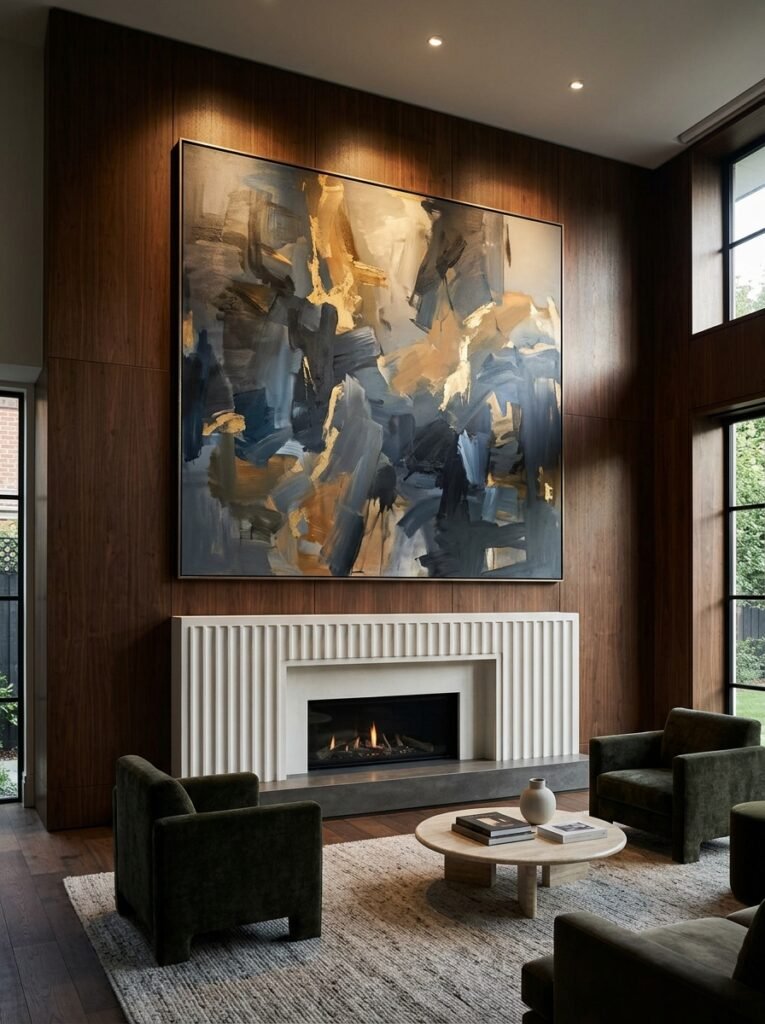
Every luxury drawing room needs a focal point — a visual anchor that the eye travels to naturally and rests upon with pleasure. This is your moment to be bold.
A focal wall in a modern luxury drawing room can take many forms. An oversized piece of original or limited-edition artwork is perhaps the most immediately impactful — one large painting or photograph spanning sixty percent of a wall creates instant drama. Alternatively, consider a full wall of bespoke built-in shelving styled with books, ceramics, and sculptural objects. A dramatic fireplace surround in fluted plaster, marble, or painted stone creates architectural luxury that no furniture can replicate.
What you want to avoid is a wall cluttered with too many small frames in a gallery arrangement that lacks coherence. This can work beautifully when done with intention and a strong through-line (matching frames, consistent color palette, deliberate spacing), but when done haphazardly it reads as busy rather than luxurious.
Whatever your focal wall approach, remember proportion. The piece or installation should be large enough to command the wall without looking lost in it. Hold a piece of cardboard cut to the size of your planned artwork against the wall before committing — this simple trick saves countless expensive regrets.
7. Texture Layering: The Tactile Secret Behind Every Beautiful Room
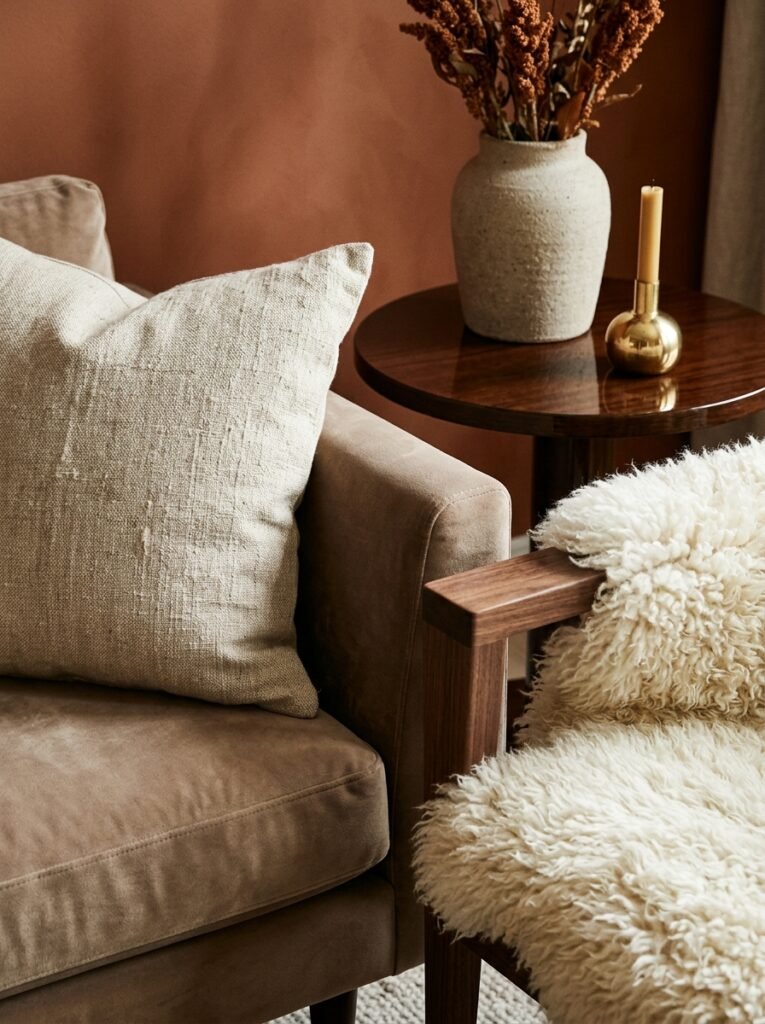
If you’ve ever walked into a room and thought I just want to touch everything in here, you’ve experienced the power of texture layering — and it’s one of the most accessible yet overlooked tools in creating a luxury interior.
Modern luxury design relies heavily on the interplay of different textures to create visual and tactile richness. Think: a rough-woven linen cushion against a smooth velvet sofa back. A matte painted wall behind a gleaming lacquered side table. A shaggy sheepskin throw draped over a clean-lined wooden armchair. A raw stone vase beside a polished brass candleholder.
These contrasts create what designers call visual tension — the pleasant, dynamic feeling that a room is alive and interesting without being chaotic. The key is to vary texture across the same tonal palette so that the room feels rich but cohesive rather than eclectic to the point of confusion.
Soft furnishings are your easiest access point for texture layering: cushions, throws, curtains, and rugs can introduce wool, linen, velvet, cotton, jute, leather, and faux fur into one room without a single renovation. Start here and watch how dramatically a room changes.
8. Furniture Arrangement That Creates Flow, Not Just Function
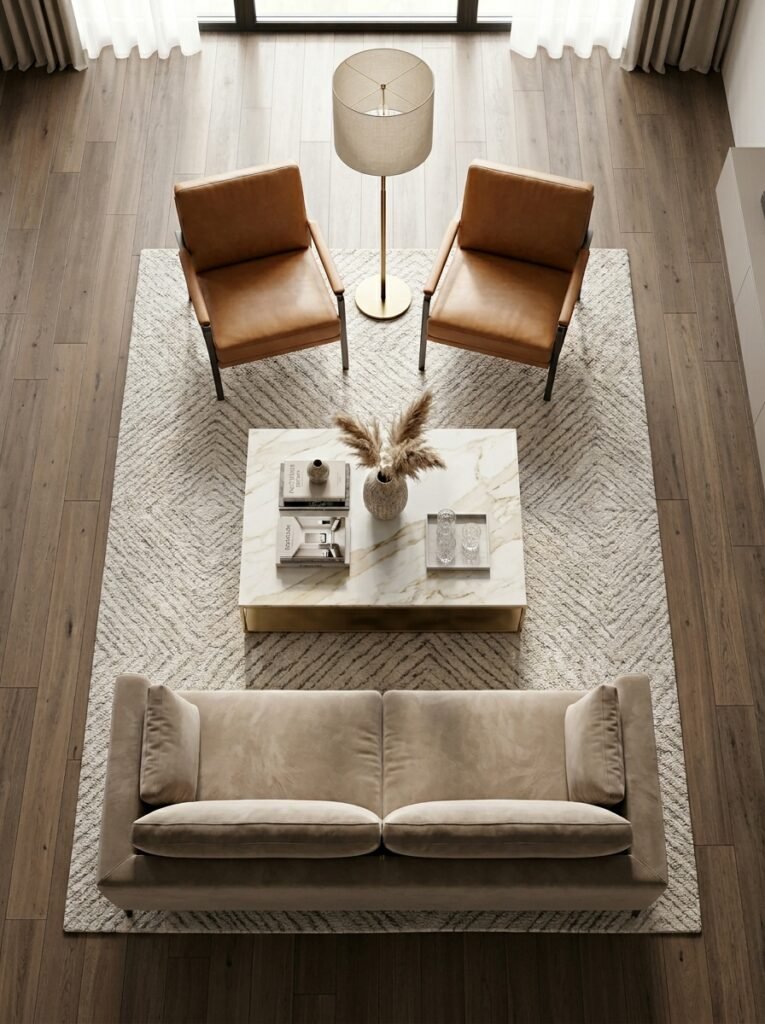
The most beautifully furnished drawing room can feel awkward and unwelcoming if the furniture is poorly arranged. Arrangement is the invisible architecture of a room — it dictates how people move through the space, where they naturally gravitate, and how intimate or expansive the room feels.
In a modern luxury drawing room, the goal is to create a conversation zone — a seating arrangement that encourages people to face each other, that feels contained enough to be intimate and open enough to be welcoming. The typical arrangement involves a sofa as the primary anchor, two accent chairs facing it, and a coffee table at the center creating a natural focal anchor for the group.
Avoid pushing all furniture against the walls — this is an extremely common mistake that makes rooms feel like waiting rooms. Floating furniture even slightly away from walls creates a sense of intentional design and makes the room feel more expansive, not less.
Coffee table height should be level with or slightly lower than your sofa seat height, allowing for comfortable reach. Side tables should sit at armrest height for effortless lamp and drink placement. These proportional relationships, when right, feel invisible — which is exactly the point.
9. The Role of Natural Materials in Luxury Interiors
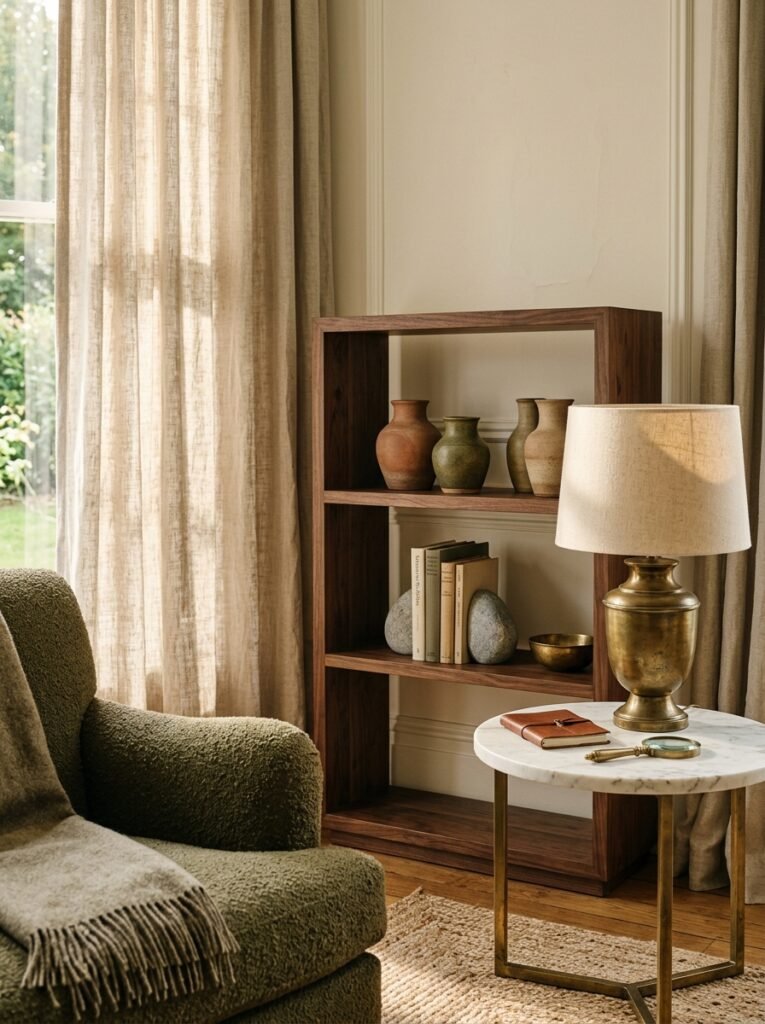
There is something profoundly calming and luxurious about natural materials — and contemporary interior design has leaned into this instinct hard over the past several years, moving away from synthetic everything toward stone, wood, linen, leather, wool, and clay.
In a modern luxury drawing room, natural materials serve two purposes. They add tactile and visual richness, and they communicate care — the message that someone chose something genuine over something imitative. Marble side tables, solid walnut shelving, stone bookends, hand-thrown ceramic vases, raw linen curtains — each of these elements brings a piece of the natural world indoors and grounds the room in something real.
Brass and aged bronze metal finishes bridge the gap beautifully between natural warmth and contemporary luxury. Use them in lamp bases, curtain rod hardware, cabinet handles, and decorative objects. These warm metals catch light and age gracefully, developing a patina that only gets more beautiful over time — much like all the best things.
“Natural materials don’t just look expensive. They feel like the earth remembered you.”
10. Window Treatments That Elevate Everything From Ceiling to Floor
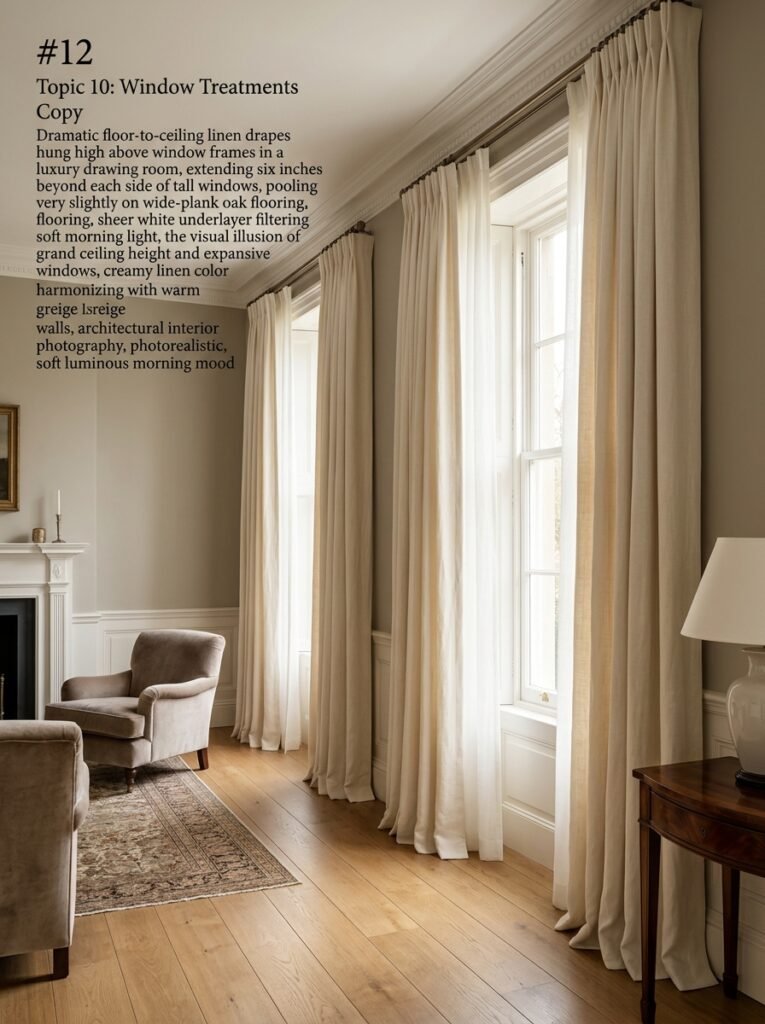
Windows are architectural gifts, and how you dress them can either amplify a room’s luxury or quietly undermine it. The single most transformative thing you can do with curtains in a drawing room is to hang them high and wide — ceiling height if possible, and extending six to twelve inches beyond the window frame on each side.
This trick — endorsed by virtually every interior designer working today — creates the illusion of taller ceilings, larger windows, and a more grandly proportioned room. It costs nothing extra but changes everything about how a space reads.
For fabric, floor-length drapes in linen, silk, velvet, or quality poly-linen blends add drama and softness that blinds alone can never achieve. In a modern luxury drawing room, opt for drapes that just kiss the floor or pool very slightly — not hovering above it awkwardly, and not so long they collect dust. The color should harmonize with your wall color for an expansive, seamless feel, or provide a deliberate, beautiful contrast if you want the windows to function as a design statement.
Layering a sheer curtain beneath a heavier drape gives you light control flexibility and adds that layered, hotel-like quality that instantly elevates the overall look.
11. Styling Surfaces: The Art of the Curated Vignette
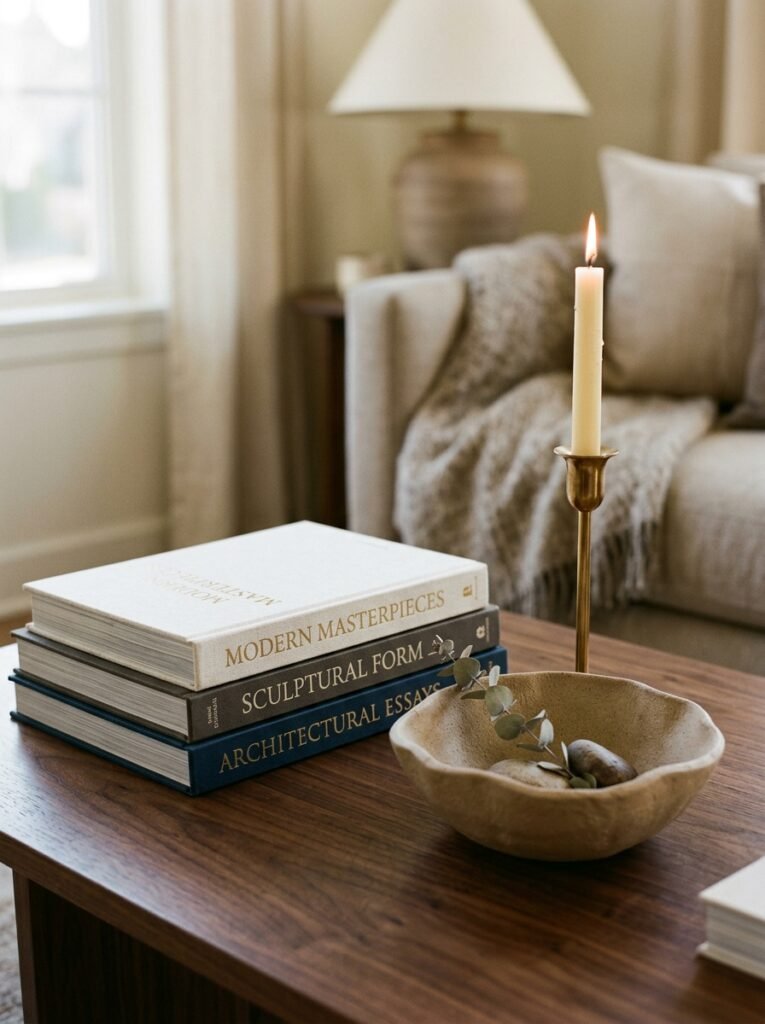
A drawing room only truly becomes luxurious when the styling is right — and styling is an art that takes practice but can be learned. The curated vignette (a small grouping of objects arranged intentionally on a surface like a coffee table, console, or bookshelf) is the primary tool of the surface stylist.
The rule of three applies beautifully here: group objects in odd numbers (3 or 5), vary their heights, and ensure they relate to each other through color, material, or theme. A coffee table vignette might include a large hardcover book stack, a low sculptural bowl, and a single taper candle in a brass holder. Simple, considered, complete.
Edit ruthlessly. The impulse to display every beautiful object you own simultaneously is understandable, but restraint is what separates a styled surface from a cluttered one. Rotate objects seasonally, keeping only what you truly love in view at any given time. What’s stored away is not wasted — it’s waiting for its moment.
12. Plants, Greenery, and the Living Element of Luxury Design
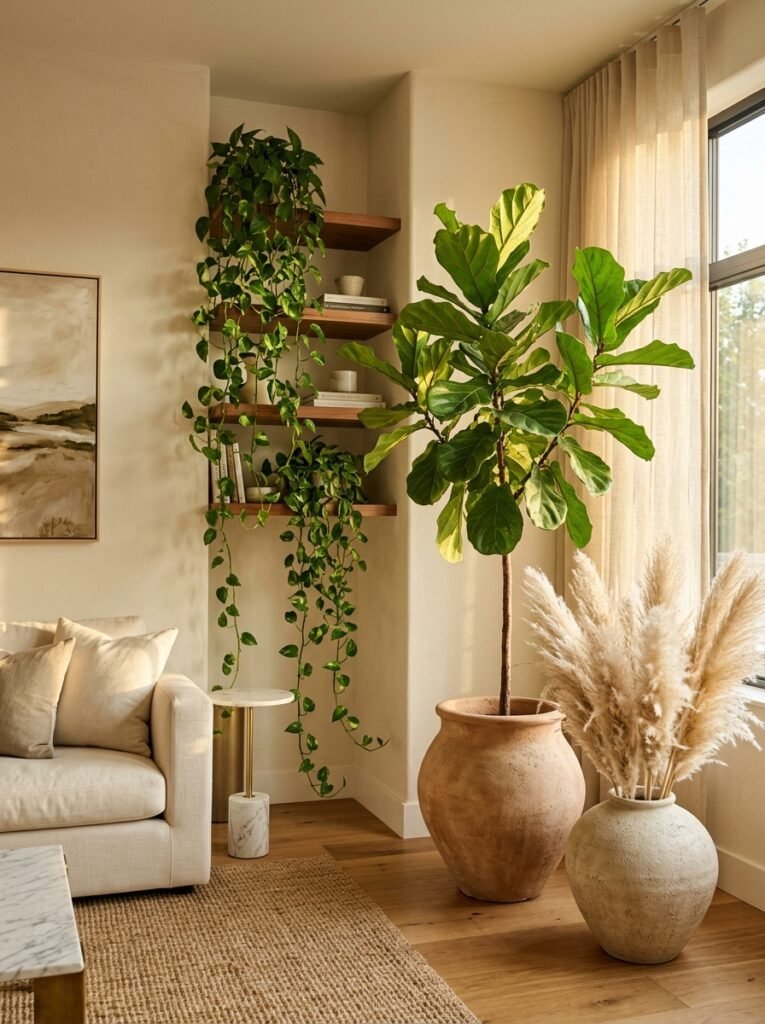
No drawing room — no matter how beautifully furnished or styled — truly comes to life without something living in it. Plants are the single most cost-effective luxury upgrade available to any interior, and they belong in every drawing room without exception.
The key is choosing plants whose scale and architectural quality match the room’s ambitions. A large fiddle leaf fig in a sculptural planter. A cluster of architectural cacti in a terracotta grouping. Trailing pothos styled on high shelving. Dried pampas grass in an oversized vase. Each of these adds life, movement, texture, and a quality of organic warmth that no manufactured object can replicate.
Beyond aesthetics, plants genuinely improve air quality, reduce stress, and make spaces feel more alive — which is exactly what a drawing room is designed to do. Plants remind you, gently, that this room exists to be lived in.
—
🌿 How to Maintain a Modern Luxury Drawing Room
Maintaining the look and feel of a modern luxury drawing room is simpler than it sounds once the design foundation is in place. Think of it less as maintenance and more as a gentle daily ritual. Straighten cushions each morning as you pass through — it takes thirty seconds and makes an enormous difference to how the room reads throughout the day. Dust decorative surfaces weekly using a soft microfiber cloth, paying attention to lamp bases, vases, and shelving where dust accumulates visibly. Rotate your curated vignettes seasonally to keep the space feeling fresh and intentional rather than static. Clean curtains and upholstery according to fabric care instructions — most performance fabrics now make this remarkably easy — and treat leather pieces with a conditioning product twice a year to keep them supple and beautiful. Finally, edit periodically: walk through the room every few months with fresh eyes and remove anything that no longer earns its place. Luxury spaces stay luxurious through ongoing curation, not one-time decoration.
—
❓ FAQ
Q: How do I make my drawing room look luxurious on a limited budget? A: Focus your investment on the pieces that have the most visual impact: a quality area rug, statement lighting, and beautiful curtains hung ceiling-high will transform a room more dramatically than dozens of small purchases. Thrift stores, estate sales, and platforms like Facebook Marketplace also yield genuinely beautiful pieces at a fraction of retail cost — luxury is about curation, not price tags.
Q: What is the difference between a drawing room and a living room in interior design? A: Historically, the drawing room (short for “withdrawing room”) was a formal reception space for receiving guests, while the living room was more casual and family-oriented. In contemporary homes, the distinction is largely aesthetic and intentional — a drawing room is typically styled more formally, with an emphasis on beauty, sophisticated furniture, and a curated atmosphere rather than purely everyday comfort.
Q: Which interior design style is closest to modern luxury? A: Modern luxury interior design draws from several contemporary movements — contemporary minimalism, transitional design, and what’s currently called “quiet luxury” or “elevated neutral” design. It also borrows from Japandi (the Japanese-Scandinavian aesthetic fusion) in its emphasis on natural materials and restrained beauty. If you’re looking for a style label, “contemporary luxury” or “transitional luxury” most accurately captures the mood described throughout this article.
—
💭 Final Thought
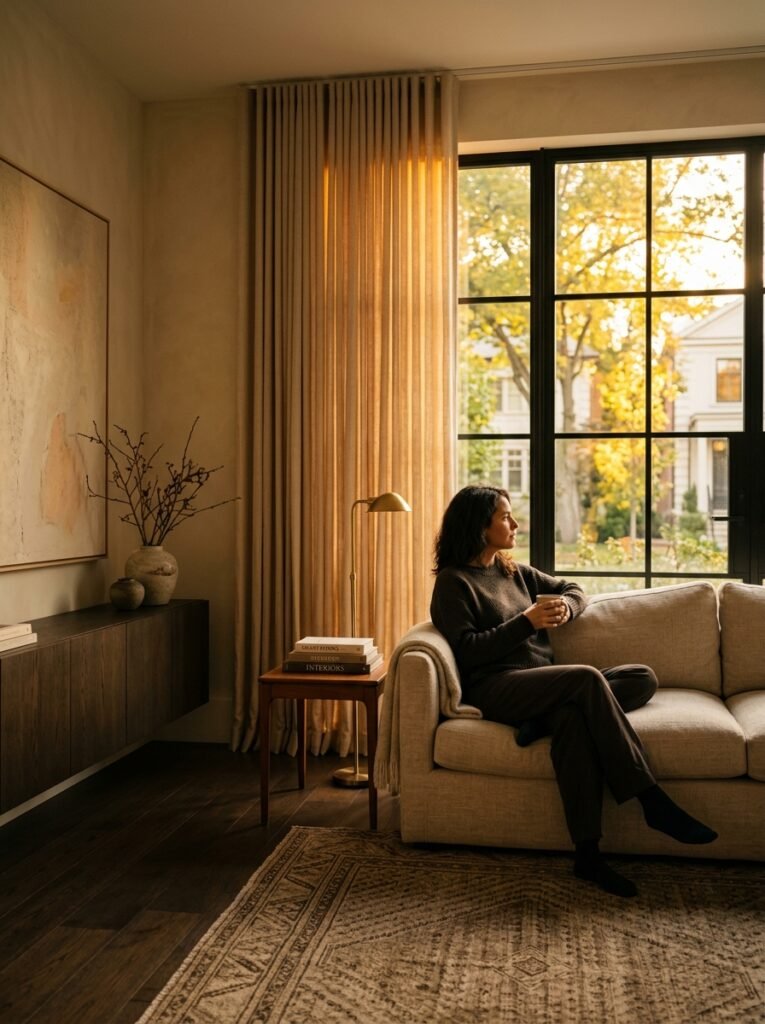
A modern luxury drawing room is not built in a weekend, and it’s not assembled from a single shopping cart. It’s composed slowly — one considered choice at a time — until the room begins to feel like an extension of who you are at your most refined, your most settled, your most at home. The beauty of it is that luxury, truly understood, is accessible to anyone willing to choose with intention rather than impulse. So here’s the question worth sitting with as you look around your own space: if you removed everything from your drawing room and could only bring back the pieces that genuinely moved you — how many of them would make the cut?