Gothic Mansion Interior: 13 Dark, Dramatic Design Secrets That Make Old Houses Feel Alive Again
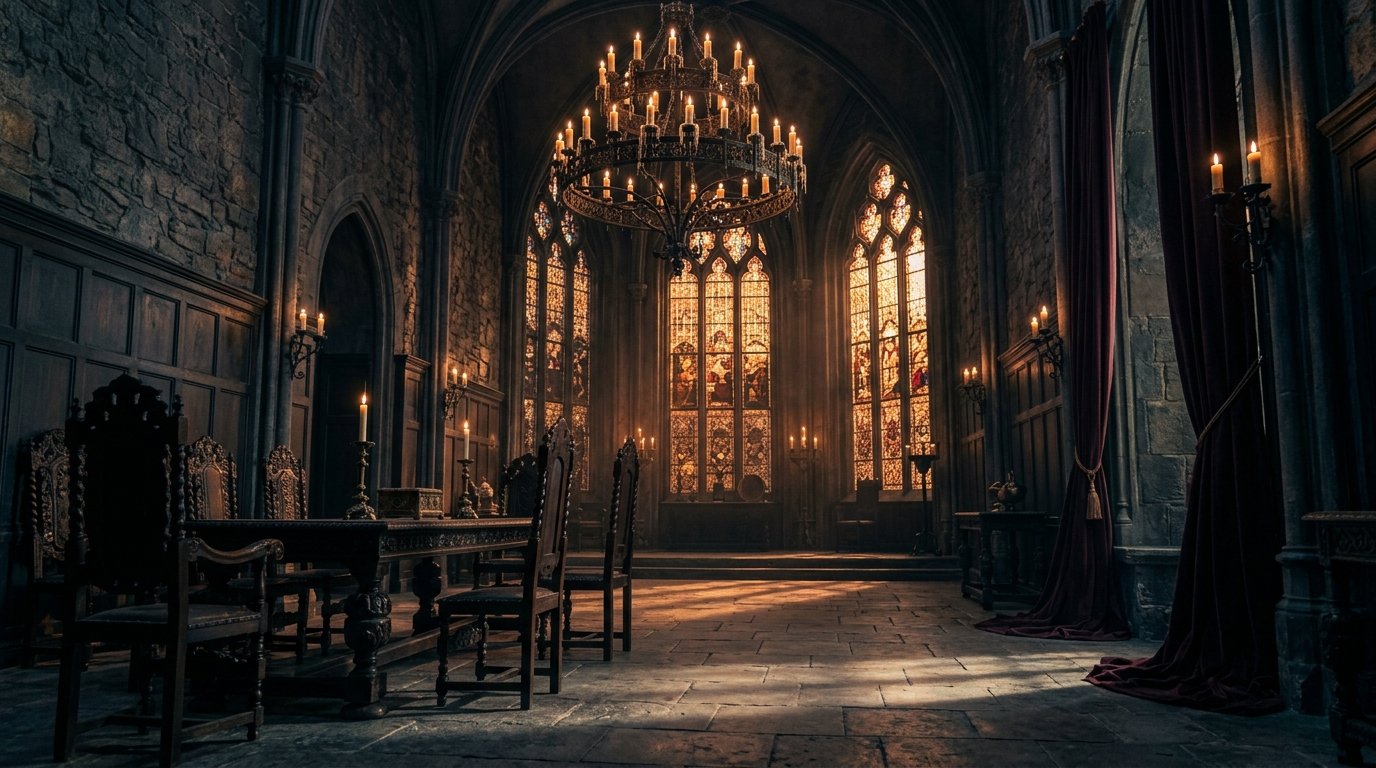
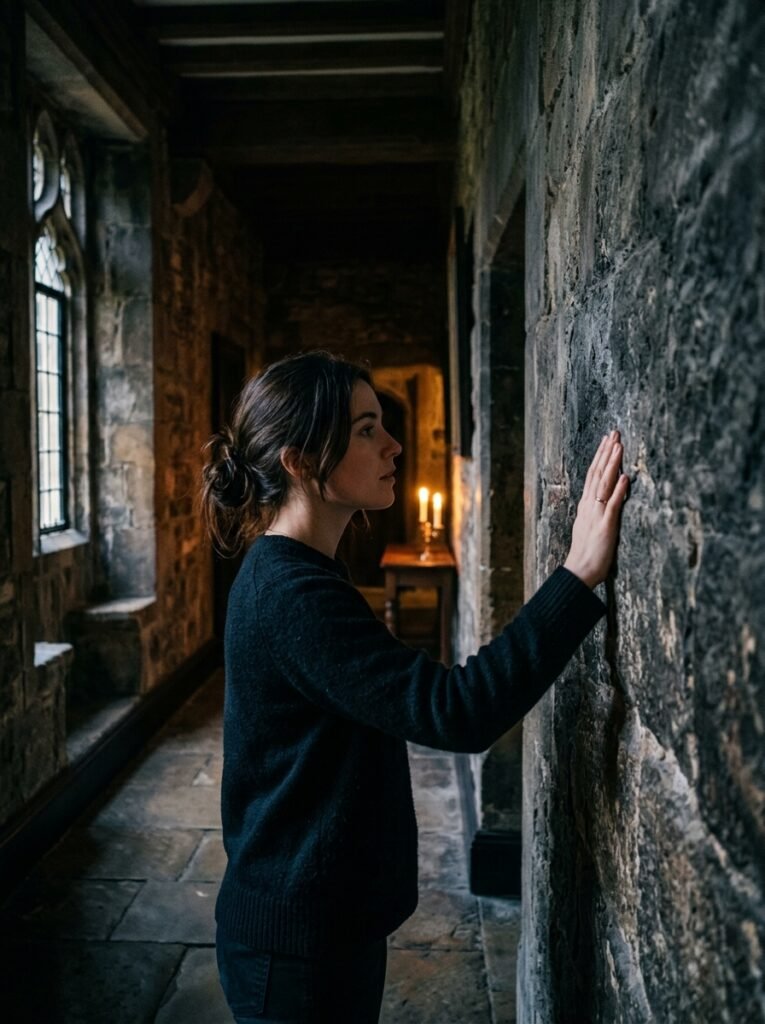
There’s a moment — usually at dusk, when the light turns amber and shadows begin to pool along the baseboards — when a gothic interior stops being just a room and starts feeling like a living thing. If you’ve ever stood inside a centuries-old manor, pressed your hand against cold stone, and felt the hair on your arms rise not from fear but from wonder, then you already understand what this design style is really about.
—
Table Of Content
1. What “Gothic” Actually Means — And Why Most People Get It Wrong
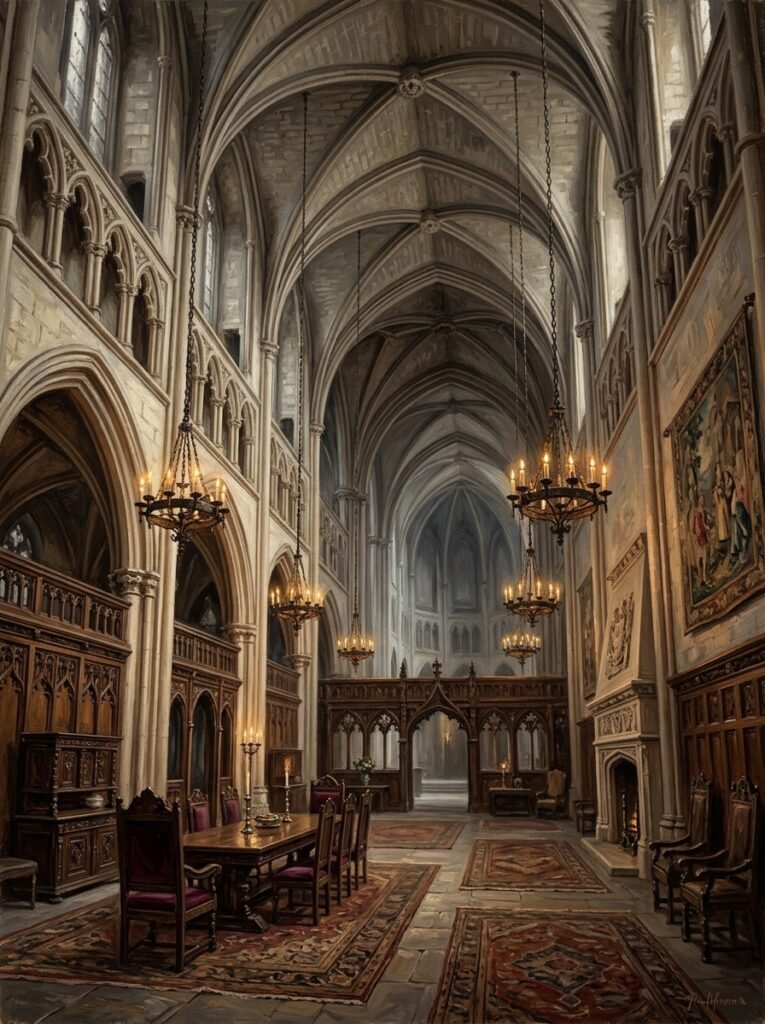
Gothic interior design is one of the most misunderstood aesthetics in the world of home décor. Most people hear “gothic” and immediately picture cobwebs, plastic skulls, and Halloween store props. But the truth is far richer, far more layered — and honestly, far more beautiful than that.
True gothic design draws from the Gothic Revival movement of the 18th and 19th centuries, when architects and aristocrats fell deeply in love with medieval European aesthetics. Think towering stone cathedrals, ornate woodwork, vaulted ceilings that seem to reach toward heaven itself. The style was born from a longing — a desire to reconnect with something ancient, something that felt weighty and meaningful in a world moving too fast.
In a gothic mansion interior, every element carries symbolic intention. The darkness isn’t about gloom; it’s about depth. The grandeur isn’t about excess; it’s about reverence. When you understand that, you start seeing gothic interiors not as intimidating spaces but as deeply intentional ones — rooms designed to make you feel something profound the moment you cross the threshold.
“Gothic design doesn’t decorate a room — it transforms it into an experience.”
2. The Architecture That Makes Gothic Mansions Instantly Recognizable
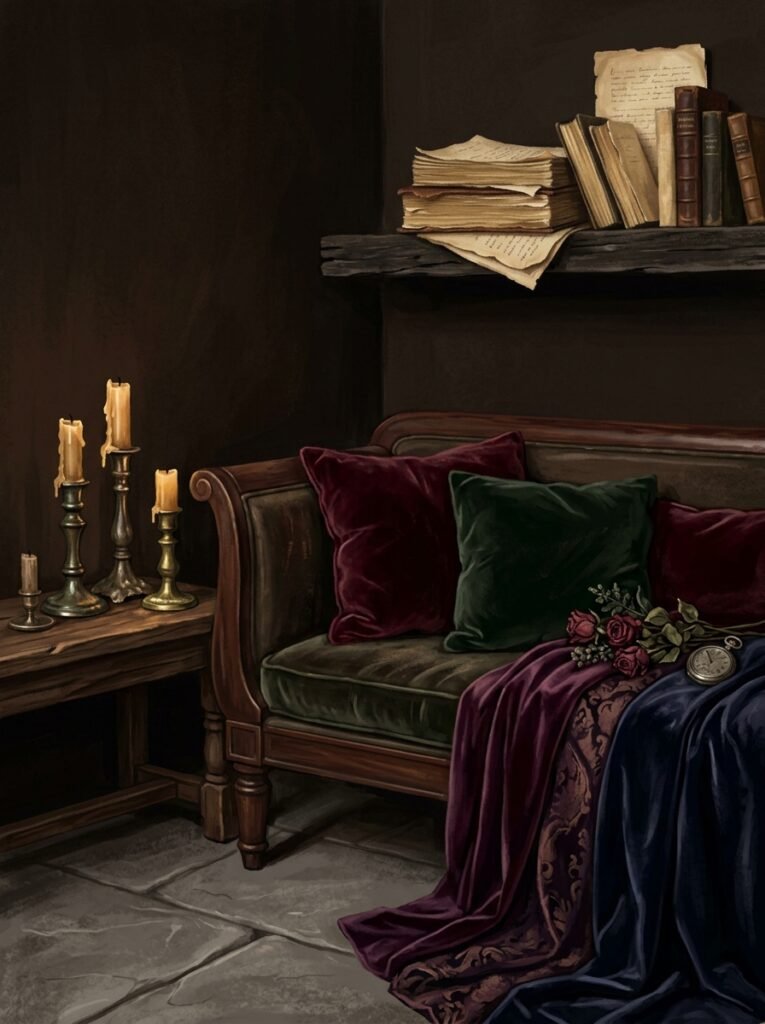
Before a single piece of furniture is chosen or a single candle is lit, the bones of a gothic mansion do most of the emotional heavy lifting. The architecture itself is the first storyteller.
Pointed arches — perhaps the most iconic symbol of gothic architecture — appear in doorways, window frames, and built-in shelving. Unlike the rounded Roman arch, the pointed arch draws the eye upward, creating a sense of aspiration and verticality that feels almost spiritual. When you walk beneath a pointed archway into a gothic library or drawing room, there’s an involuntary shift in your body — you stand a little straighter, breathe a little deeper.
Ribbed vaulting on ceilings, when present, creates a breathtaking skeletal effect — as though you’re standing inside the chest cavity of some magnificent ancient creature. Even in modern gothic-inspired mansions, designers recreate this feeling through exposed dark wood beams, ornate plasterwork, or dramatic coffered ceilings painted in deep charcoal or midnight navy.
Tracery — those intricate geometric patterns cut into stone or wood, most famously seen in cathedral windows — appears in gothic mansions as carved wood screens, decorative room dividers, and the delicate lattice work of stair railings. These details reward slow looking. The more time you spend in a gothic space, the more patterns emerge, the more stories the walls seem willing to tell.
3. The Color Palette That Breathes Life Into Darkness
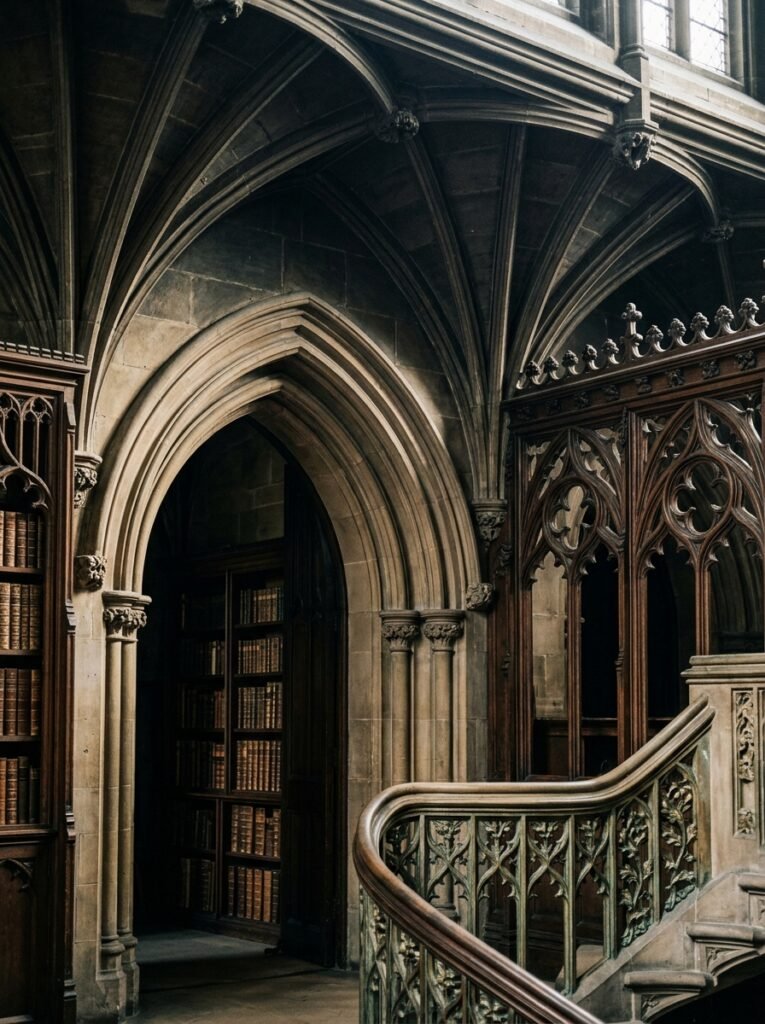
Here is where gothic interior design surprises most newcomers: the colors are not all black. Yes, deep, saturated, shadow-rich tones form the foundation of this palette — but the full spectrum is far more nuanced and, frankly, far more livable than you might expect.
The anchor colors of gothic design include deep burgundy, forest green, midnight navy, plum, charcoal, and warm black. But notice that word: warm. Gothic palettes favor warm blacks over cool ones — tones with brown or red undertones that absorb light rather than repel it, creating depth rather than harshness. Benjamin Moore’s “Wrought Iron” or Farrow & Ball’s “Railings” are beloved examples: blacks that feel like velvet rather than void.
Against these deep anchors, gothic design introduces metallic accents — aged gold, tarnished brass, weathered bronze. These aren’t shiny, flashy metallics. They’re the color of old candlesticks and cathedral fixtures — metals that look like they’ve been touched by a thousand years of human hands. These warm metallics prevent a gothic palette from feeling cold or oppressive, instead giving every room a low, honeyed glow.
Stone gray and aged ivory appear as neutral breathing spaces — the color of exposed castle walls, of old manuscripts, of the pale morning light pushing through heavy drapes. These lighter tones keep the palette from collapsing inward, giving the eye somewhere to rest between moments of drama.
4. Furniture That Feels Like It Belongs to Another Century
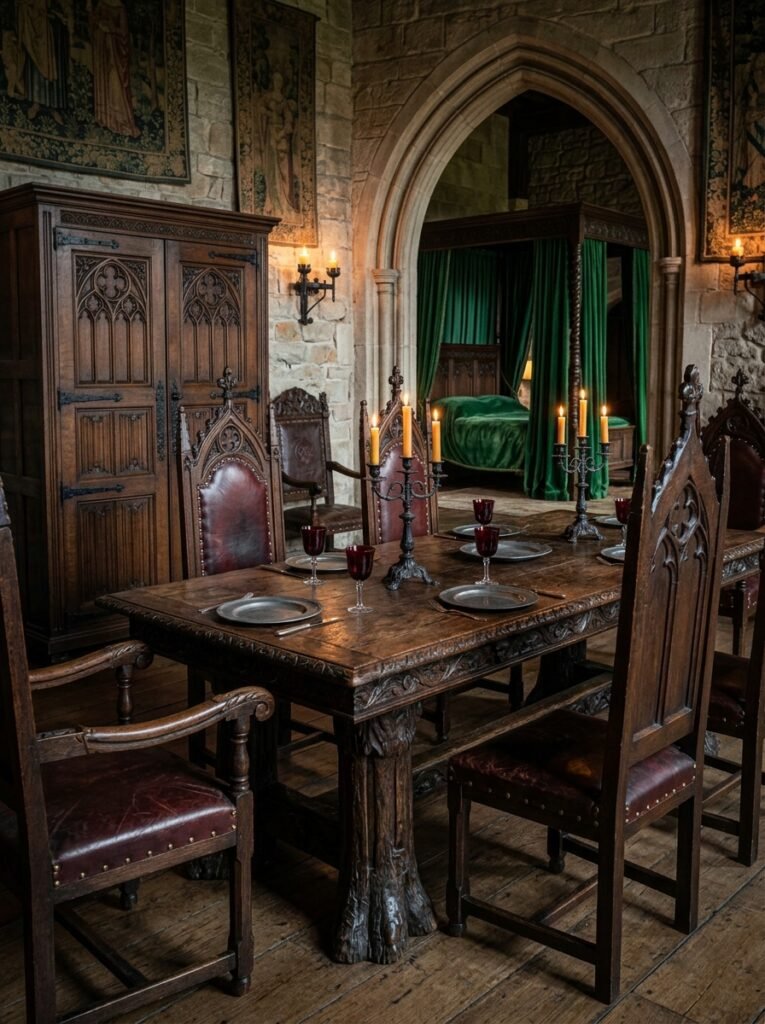
Imagine pulling back a velvet curtain in a gothic mansion and finding a massive carved oak table at the center of the room — its legs thick as tree trunks, its surface worn smooth by centuries of use. That is the spirit of gothic furniture: substantial, handcrafted, built to outlast everything around it.
Gothic mansion furniture is defined by dark woods — ebony, mahogany, walnut, and heavily stained oak dominate. The forms are architectural: tall throne-like chairs with carved backs, canopy beds with four dark posts that rise toward the ceiling like columns, armoires with cathedral-arch door panels, and sideboards with tracery-carved fronts. These are not delicate pieces. They are furniture that takes up space and makes no apology for it.
Upholstery plays an equally powerful role. Velvet is the reigning fabric of gothic interiors — deep jewel-toned velvet in burgundy, emerald, sapphire, and plum. It absorbs light in a way that makes colors appear almost luminous. Leather, particularly aged or distressed leather in dark oxblood or deep brown, adds texture and masculine weight. Embroidered fabrics with damask, brocade, or tapestry patterns bring in intricate storytelling at a smaller scale.
“The best gothic furniture doesn’t just fill a room — it anchors it to something eternal.”
5. Lighting That Turns a Room Into a Cathedral of Feeling
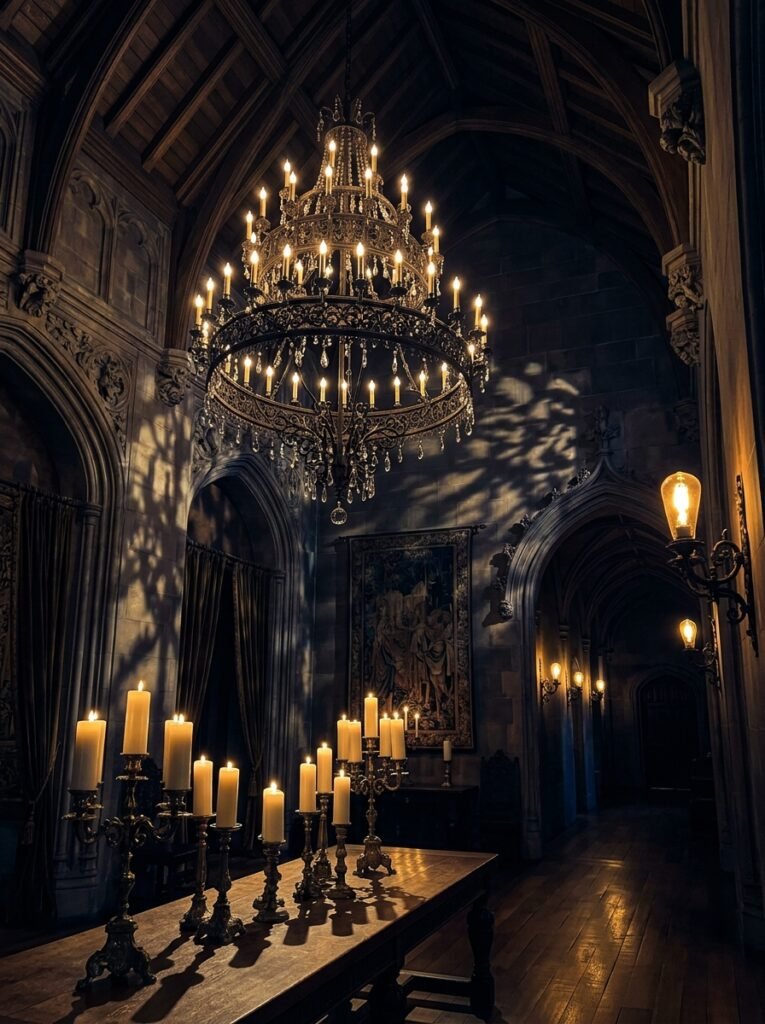
Nothing shapes the emotional atmosphere of a gothic interior more decisively than lighting — and the secret is this: gothic spaces are lit not to illuminate but to dramatize.
Chandeliers are the crown jewel of gothic lighting. But not the bright, modern variety — gothic chandeliers drip with drama: wrought iron frames holding dozens of candle-shaped bulbs, crystal drops that scatter firelight across dark walls, antler chandeliers that bring in the wild grandeur of the natural world. The goal is never even illumination. The goal is pools of light separated by intentional shadow.
Candles — real or flameless — are indispensable in this aesthetic. Pillar candles clustered on iron candelabras, tapers in aged brass holders, votives tucked into lanterns. The flickering quality of candlelight does something that no electric light can replicate: it makes shadows move, and moving shadows make rooms feel alive.
Wall sconces with amber or Edison-style bulbs create warm pockets of light along dark hallways. Gothic mansions use corridor lighting as a kind of theatrical device — lighting the path just enough to beckon you forward, letting darkness pool in doorways and around corners, so that every room you enter feels like a discovery.
6. The Gothic Library — Perhaps the Most Beloved Room in the Mansion
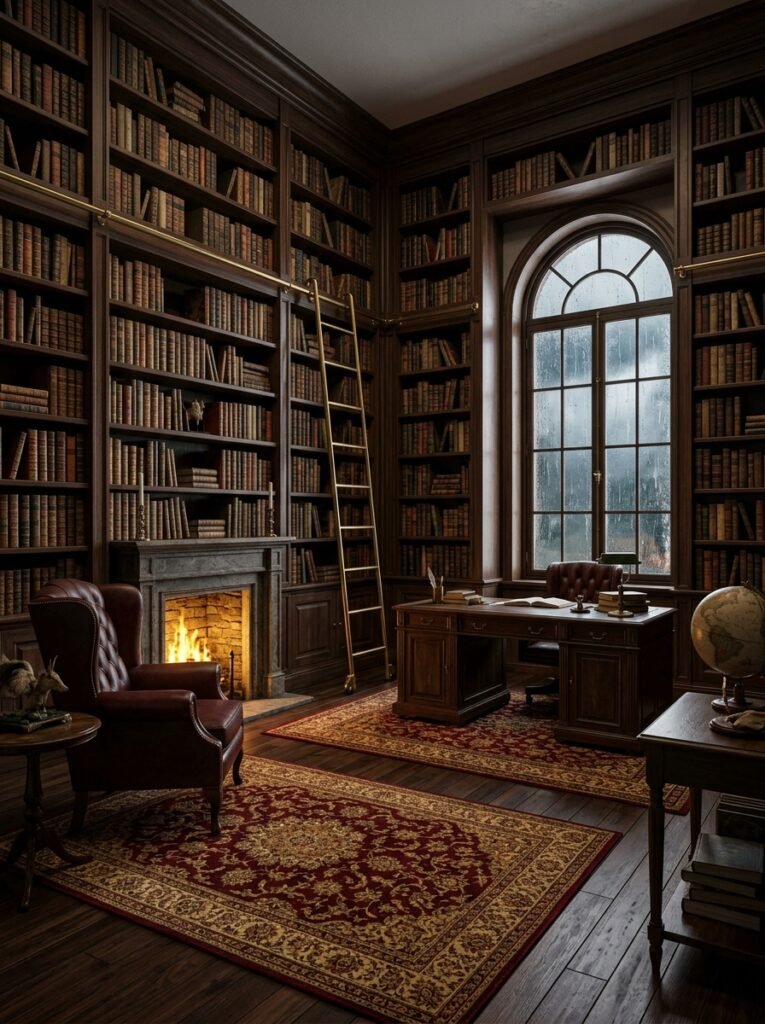
If gothic design has a spiritual heart, it lives in the library. The gothic library is the room that Pinterest users save most consistently, return to most longingly — because it represents something almost mythological in our culture: the idea of a private sanctuary built entirely from knowledge, beauty, and time.
Floor-to-ceiling bookshelves — dark wood, naturally — line every wall. Rolling library ladders on brass rails allow access to the highest shelves, and there’s something ineffably romantic about those ladders: they suggest that the room has more books than any single person could read in one lifetime, and that is exactly the point. A gothic library is built for generations, not seasons.
Deep leather armchairs positioned near a fireplace, a massive antique writing desk beneath a tall window, Persian rugs in deep reds and golds layered over dark hardwood floors — these are the furnishings of a room designed for serious thought, long evenings, and the particular pleasure of rain heard through old glass while you’re warm and absorbed in a book.
Globes, telescopes, microscopes, taxidermy, curiosity cabinets filled with fossils and minerals — these objects populate gothic libraries as symbols of a particular kind of intellectual passion: the collector’s mind, endlessly curious about the world and determined to bring pieces of it home.
7. Fireplaces as Focal Points — and the Entire Story They Tell
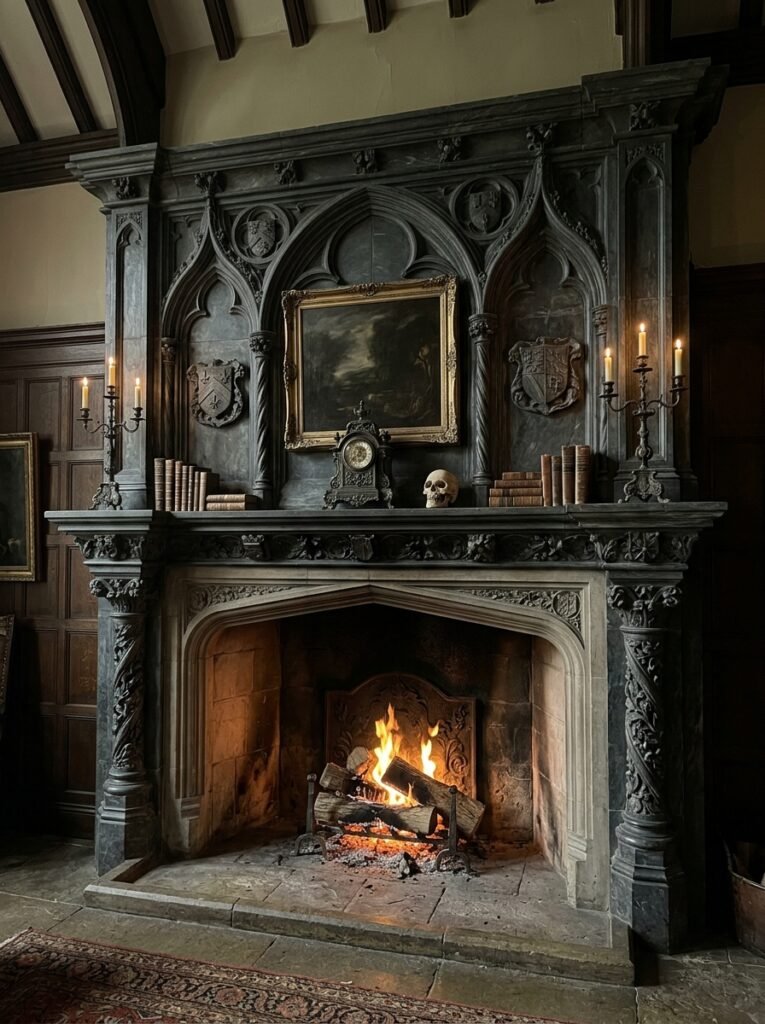
A gothic mansion without a fireplace is almost unthinkable. The fireplace is the beating heart of every principal room — drawing people toward it the way people have gathered around fire for thousands of years, pulled by something older and deeper than conscious thought.
Gothic fireplaces are almost always oversized — the mantelpiece rising well above eye level, often reaching the ceiling in grander rooms. Carved from stone or dark marble, the surround features pointed arches, heraldic motifs, grotesque figures, twisted foliage, and other medieval decorative elements. The hearth itself is wide and deep, built for logs rather than gas jets.
The mantel shelf above is a stage set in miniature: paired candelabras, a large oil painting or gilt-framed mirror, dried flower arrangements in deep tones, stacked antique books, a bronze clock, perhaps a sculpted skull or a globe. Every object is chosen with deliberate care, and the arrangement follows an instinctive gothic principle: symmetry with variation, order with mystery.
“A gothic fireplace doesn’t just warm a room — it becomes the room’s memory.”
8. Textiles and Layers — How Gothic Mansions Achieve That Enveloping Feeling
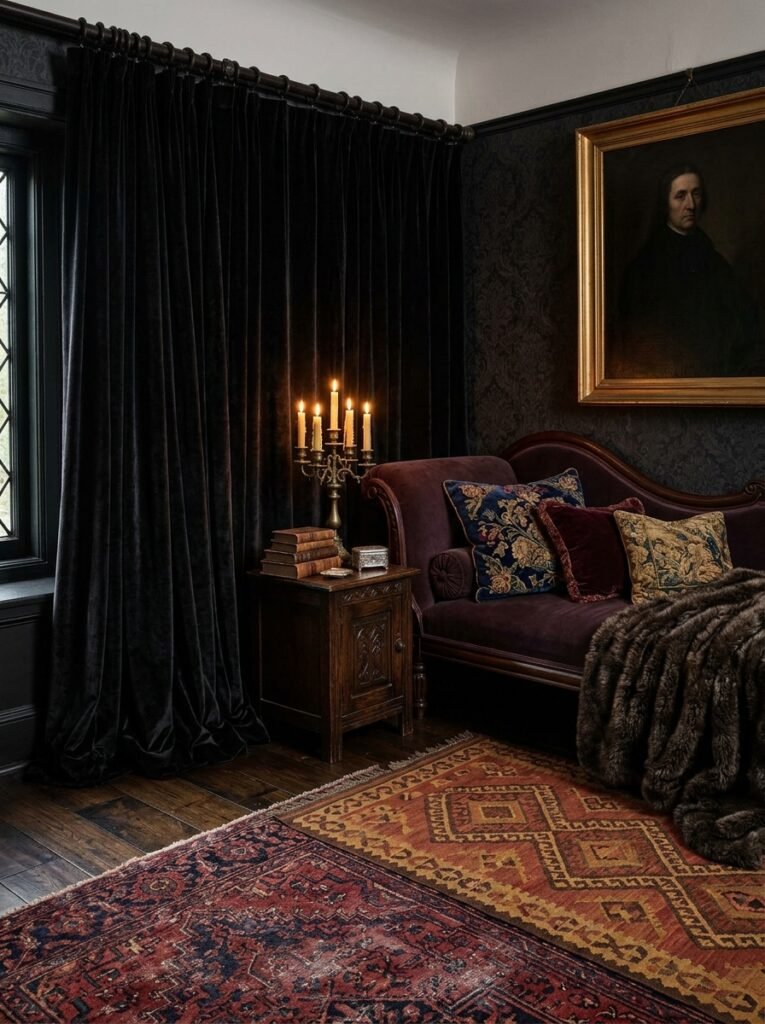
One of the most distinctive sensory qualities of a gothic mansion interior is that it feels enveloping — as though the room itself is wrapping around you. That feeling is almost entirely created by layered textiles, and it’s one of the most learnable skills in this entire design vocabulary.
Heavy velvet drapes falling from ceiling to floor — pooling slightly on the ground, which signals abundance and old-world luxury — are the foundation of gothic window treatments. In deep jewel tones or rich black, these curtains do double duty: they frame the room’s most architectural feature (its windows) while controlling light in the most dramatic way possible, turning daylight from a neutral fact into a theatrical choice.
Layered rugs over dark hardwood floors — Persian patterns, kilims, animal hides — add warmth and visual complexity while defining seating areas within larger rooms. Throw blankets in wool or faux fur draped over chairs and chaises add textural invitation. Embroidered cushions in tapestry patterns cluster on sofas and window seats.
The sum of all this layering is a room that seems to have accumulated over years rather than having been designed in a single afternoon — and that organic quality is central to gothic design’s emotional power. These are rooms that feel lived-in, loved, and inhabited by stories.
9. The Role of Symbolism — Gargoyles, Crosses, and the Language of Objects
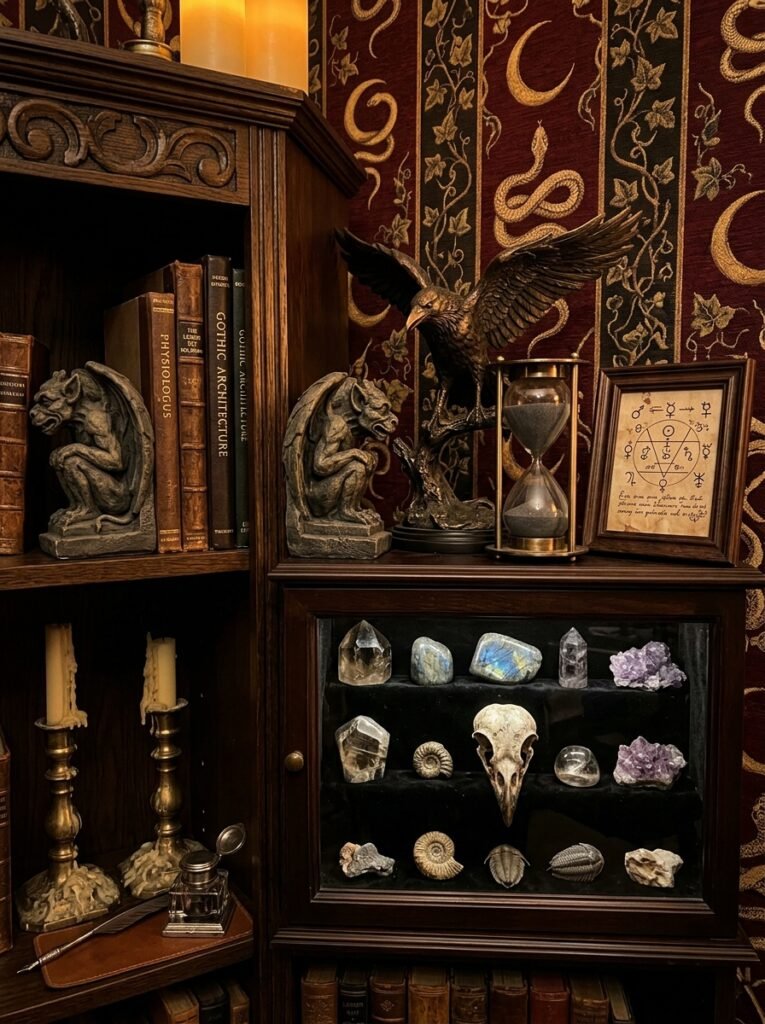
Gothic design has always spoken in symbols, and the objects you choose for a gothic mansion interior are never merely decorative — they are a personal iconography, a visual language that communicates your relationship with history, mortality, beauty, and meaning.
Gargoyles — those extraordinary carved stone creatures that peer down from cathedral eaves — appear in gothic interiors as bookends, garden statuary, and sculptural accents. Far from being frightening, they carry a deeply protective symbolism rooted in medieval folklore. They were placed on churches to ward off evil; in a home, they signal the same watchful guardianship.
Crosses, hourglasses, ravens, owls, stags, serpents, moons, alchemical symbols — these motifs appear across gothic interiors in wallpaper patterns, embroidered textiles, carved woodwork, and decorative objects. Each carries centuries of accumulated meaning. A raven on a bookshelf is not just an ornament; it’s a reference to Edgar Allan Poe, to Nordic mythology, to the Tower of London — a single object that carries an entire library of association.
10. Stone, Brick, and Raw Material — When the Wall Itself Is the Design
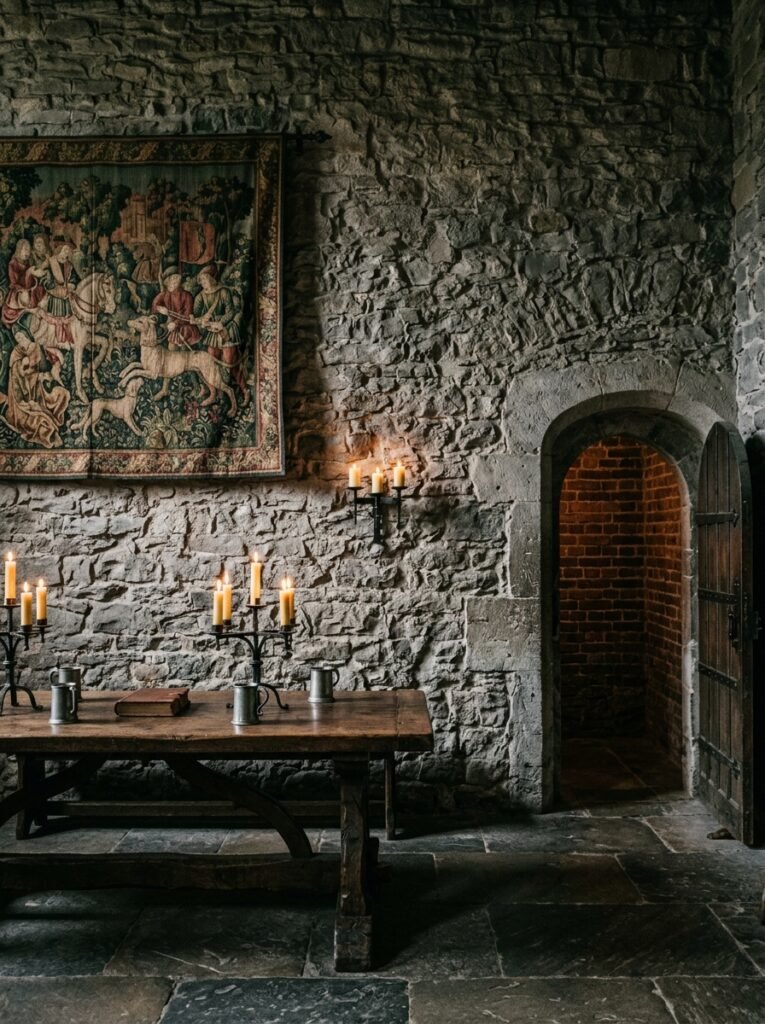
In authentic gothic mansions, and in well-executed gothic-inspired interiors, the materials of the walls are as important as anything placed in front of them. Exposed stone walls are the most powerful single element in the gothic design toolkit — nothing else so immediately transports you to another time.
Natural stone in gray, taupe, and dark brown creates a texture so rich and varied that it needs almost nothing else to be visually compelling. A room with exposed stone walls can be furnished minimally — a rough-hewn table, iron candlesticks, a single tapestry — and feel complete, because the stone itself tells the room’s entire story.
Where original stone isn’t available, skilled designers recreate it through textured plaster finishes, stone veneer panels, or limewash paint techniques. Dark brick — particularly aged red brick with dark mortar — achieves a similar effect in a different register, warmer and more domestic than stone but still rooted in material history and handcraft.
11. Gothic Mansion Kitchens — The Surprising Space Where This Style Thrives
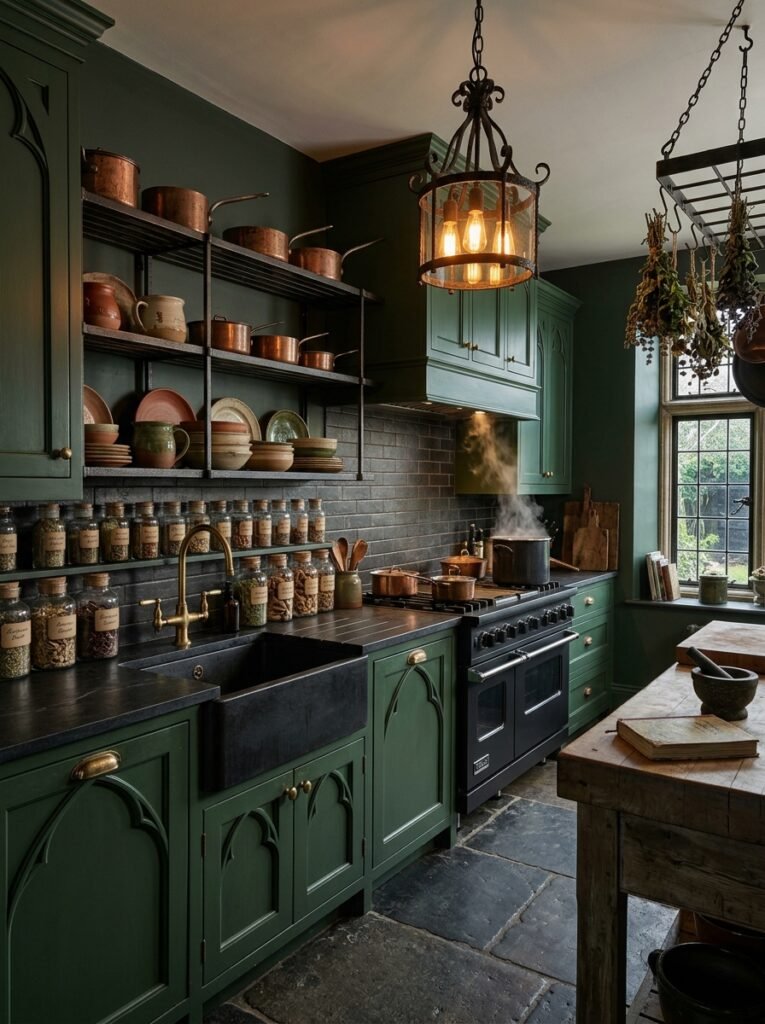
The kitchen might seem like an unlikely home for gothic design, but some of the most breathtaking gothic mansion interiors in recent years have centered on the kitchen — and it makes perfect sense when you think about it. The kitchen is the room most associated with alchemy: the transformation of raw ingredients into nourishment through heat and skill. What is more gothic than that?
Gothic kitchen design features deep-toned cabinetry — black, forest green, or deep navy — often with arched cabinet doors and aged brass hardware. Stone or slate countertops replace the gleaming white surfaces of modern kitchens, and open shelving in dark iron displays collections of vintage copper pots, ceramic crockery in earth tones, and thick glass apothecary jars filled with herbs and spices.
A large farmhouse-style cast iron sink, pendant lights in wrought iron or aged brass over a central island, a Viking-style range in matte black — these are the workhorses of the gothic kitchen, chosen for their combination of beauty and serious culinary function. This is not a kitchen designed for performance; it’s a kitchen designed for real cooking, deep flavors, and long evenings spent over a hot stove.
12. Bringing Gothic Design Into a Modern Home — Without Buying a Castle
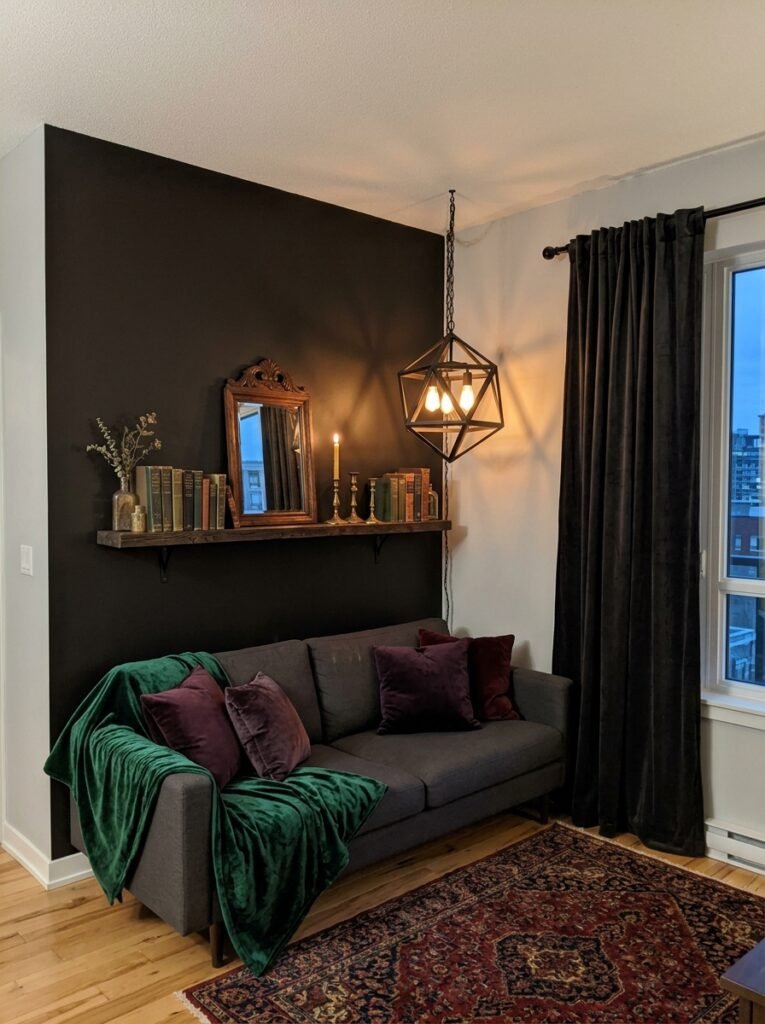
You don’t need to live in a 19th-century manor to create a gothic interior that feels authentic and deeply satisfying. Gothic design is more about atmosphere than architecture — and atmosphere can be created in a city apartment, a suburban house, or a rented cottage with thoughtful, intentional choices.
Start with paint. Painting one wall — or an entire room — in a deep, warm black or saturated jewel tone is the single most transformative thing you can do, and it costs almost nothing relative to the impact it creates. Add a velvet throw and two jewel-toned cushions. Swap out your overhead lighting for a dramatic pendant with warm bulbs and add a floor lamp with a dark shade.
Source secondhand and vintage pieces: an old oak mirror with a carved frame, a stack of antique hardcover books, a pair of brass candlesticks, a small framed oil painting. These pieces carry the weight of real history and cost far less than new pieces designed to mimic that quality.
Layer textiles — a Persian rug over hardwood, heavy curtains on tension rods, a knitted blanket over a chair arm. Add one symbolic object chosen with personal meaning: a crystal, a vintage globe, a carved wooden figure. Then step back, light a candle, and let the room become what it wants to be.
—
🌿 How to Take Care of Your Gothic Interior
A gothic mansion interior, like any deeply considered space, benefits from the same kind of attention you’d give a beloved garden — regular care keeps it from tipping from dramatic into dingy.
Dust regularly, especially carved wood pieces and fabric surfaces, since dark rooms tend to show accumulated dust more obviously than lighter ones. Polish metal fixtures — candelabras, door hardware, picture frames — with appropriate metal cleaners to maintain that beautiful aged patina without letting it tip into neglect. Refresh candles frequently; used-down candles and melted wax that hasn’t been tended becomes an aesthetic problem quickly in an interior where candles are central. Keep velvet upholstery brushed in the direction of the pile to maintain its luminous quality — velvet that has been sat on and ignored loses its sheen and begins to look simply tired. Finally, edit seasonally: gothic interiors can absorb a great deal of visual complexity, but they benefit from occasional editing. Remove one or two objects, rearrange a shelf, swap out a cushion cover. Keeping the space slightly curated prevents it from feeling overwhelming.
—
❓ FAQ
Q: Is gothic interior design family-friendly, or is it too dark for children? A: Gothic design is absolutely family-friendly when executed thoughtfully. The key is ensuring that the space feels dramatic and mysterious rather than frightening — think rich colors, beautiful textures, warm lighting, and meaningful objects, rather than overtly macabre imagery. Many families find that gothic interiors create a wonderful sense of coziness and adventure for children who love stories, history, and imaginative play.
Q: How much does it cost to create a gothic mansion aesthetic in a regular home? A: The cost varies enormously depending on your approach. Secondhand and vintage sourcing — thrift stores, estate sales, antique markets — can make gothic design very affordable, since aged, worn pieces are often found at low prices and carry genuine character. The most impactful changes (paint, lighting, textiles) are also among the most affordable. A fully committed gothic living room makeover can be achieved for a few hundred dollars if you shop intentionally.
Q: What’s the difference between gothic design and Victorian design? A: Gothic design predates Victorian design and focuses specifically on medieval architectural elements — pointed arches, tracery, stone, dark woods, and religious symbolism. Victorian design encompassed many styles, including gothic revival, but also incorporated more decorative excess, pattern-on-pattern layering, and a wider color palette. Gothic design tends to feel more austere and symbolic; Victorian feels more maximalist and eclectic. The two overlap significantly, and many beautiful interiors blend both influences.
—
💭 Final Thought
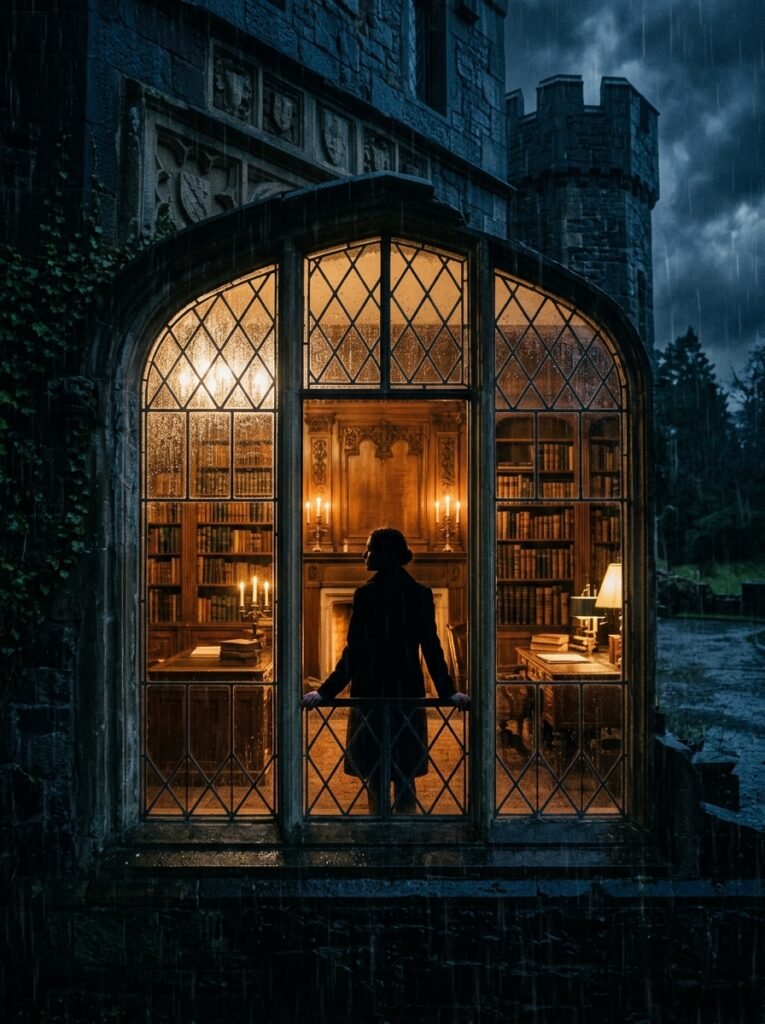
A gothic mansion interior is, at its deepest level, a space designed to honor the full range of human experience — not just the bright, cheerful, Instagram-optimized moments, but the contemplative ones, the mysterious ones, the evenings when you want to feel connected to something older and larger than your own small life. It is a design philosophy that takes beauty seriously, that believes a room should do more than look good — it should make you feel something, remember something, wonder about something.
So here’s the question worth sitting with: if your home could tell a story about who you truly are — not who you perform yourself to be, but who you are at your most honest, most curious, most interior self — what would that story look like?