
Why New Orleans Homes Feel Like Nowhere Else on Earth — And How to Capture That Magic in Your Own Space
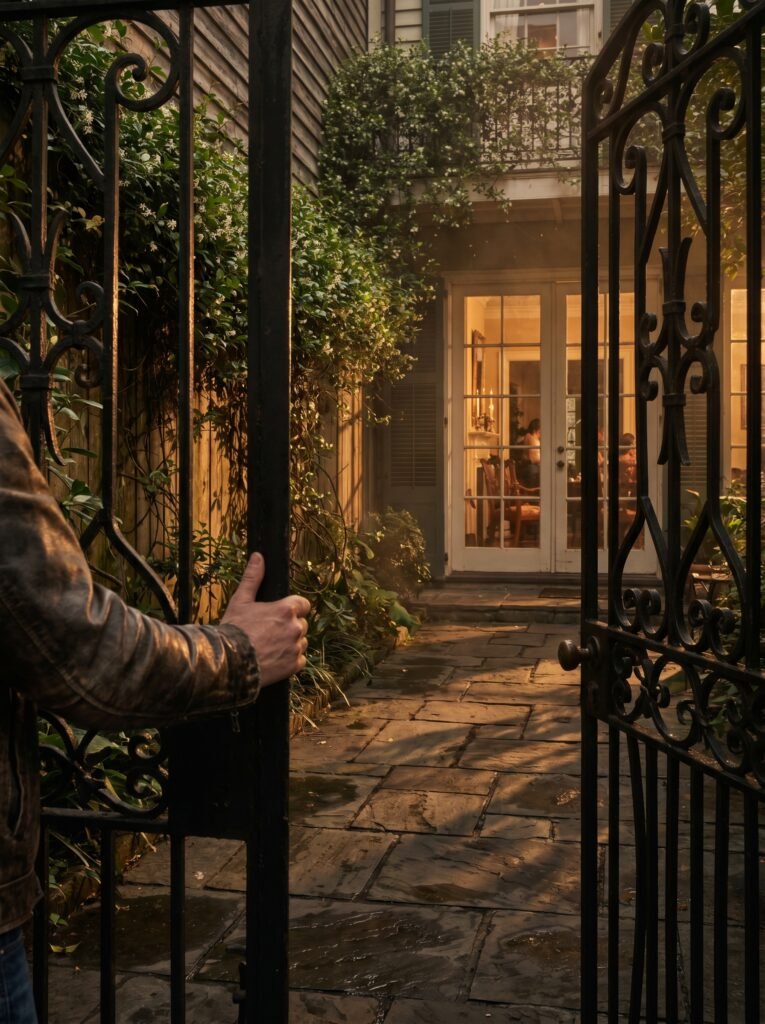
There’s a moment — usually right after you push open a wrought-iron gate and step into a shaded courtyard somewhere in the French Quarter — when you realize that New Orleans homes aren’t just buildings. They’re living, breathing stories. They hold the scent of old cypress wood and night-blooming jasmine, the memory of a hundred dinner parties, and a design philosophy that no interior trend book has ever fully managed to explain. If you’ve ever stood inside one of those beautiful, layered spaces and thought, I want to feel this way in my own home, this article is for you.
—
1. The Soul Behind the Style — What Makes New Orleans Interiors Truly Unique
Before you can bring any element of New Orleans design into your home, you have to understand where it comes from. This city is, at its very core, a place built on cultural collision — French, Spanish, African, Caribbean, and American influences layered so deeply over centuries that they became inseparable. That collision shows up in every interior detail: in the plasterwork, the ironwork, the color choices, the furniture proportions, and the way light is handled inside these homes.
New Orleans interior design is not a single aesthetic. It’s a conversation between eras and traditions that somehow never shouts — it whispers, invites, and draws you in closer.
“New Orleans doesn’t follow design trends. It creates an atmosphere so complete and so personal that trends become irrelevant the moment you step inside.”
The oldest homes in the city, particularly the Creole cottages and French Quarter townhouses, were designed specifically for the subtropical climate. Rooms flow into one another through wide doorways. Ceilings soar — often twelve to fourteen feet — so that hot air rises and the living spaces below stay cooler. Every architectural choice had a practical origin, and yet everything became beautiful in the process. That marriage of function and beauty is the first and most essential truth of New Orleans design.
2. The Architecture That Sets the Stage — Creole Cottages, Shotgun Houses, and Garden District Grandeur

Walk ten blocks in any direction in New Orleans and you’ll pass through what feels like several different centuries of residential architecture, all of them still occupied, still loved, still being repainted and repaired and filled with life. Understanding these architectural types gives you a vocabulary for the interior design choices that come after.
The Creole cottage is one of the oldest residential forms in the city — a modest, single-story structure built flush to the sidewalk, with rooms arranged side by side and a long rear yard. Inside, these cottages often surprise visitors with their generous proportions and the quality of their woodwork, including hand-carved mantels, wide-plank pine floors, and transom windows above interior doors that allow air circulation throughout the house.
The shotgun house — named for the folk belief that a bullet fired through the front door would pass straight through every room and exit the back without hitting a wall — is another defining New Orleans form. These narrow, single-file homes are architectural puzzles that their owners have learned to make feel remarkably livable. Interior designers working with shotgun houses use long rugs to draw the eye forward, mirrors to expand perceived width, and carefully chosen furniture to keep each small room feeling intentional rather than cramped.
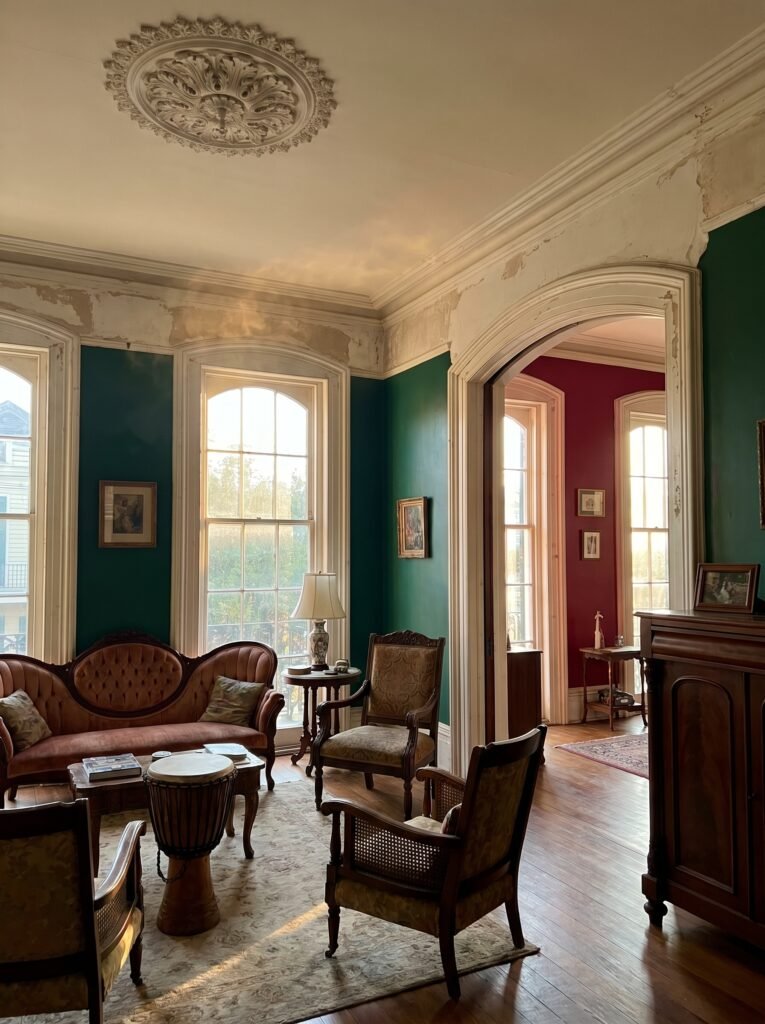
The Garden District mansion, by contrast, is Greek Revival opulence — wide front porches (called galleries here), double-hung windows of impressive scale, ceiling medallions, marble mantels, and formal parlors designed for exactly the kind of entertaining that this city has always taken seriously.
3. Color as Emotional Language — The New Orleans Palette Explained
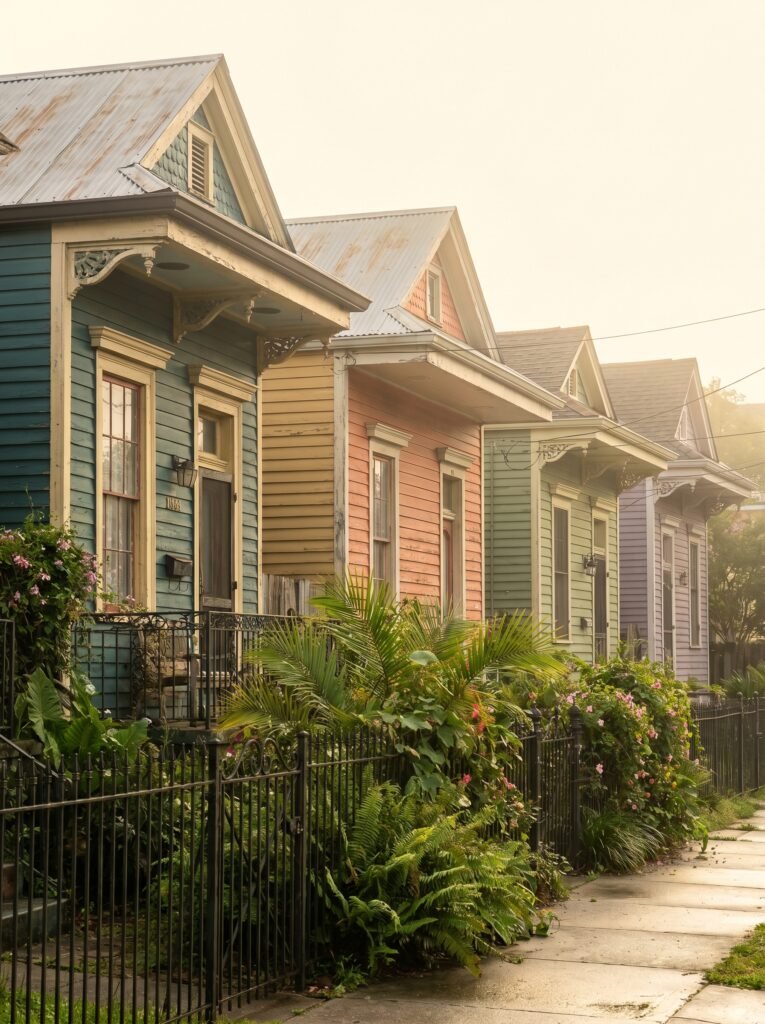
If you’ve scrolled through images of New Orleans interiors on Pinterest, you’ve noticed the colors. They are bold without being brash. Saturated without being overwhelming. The exterior facades of homes in the Marigny, Bywater, and Tremé neighborhoods run the full spectrum — deep teal, soft mustard yellow, faded coral, sage green, dusty lavender — and these colors don’t clash because they’re all softened by the same subtropical sun, the same humidity, the same quality of Southern light.
Inside the homes, the color story continues but shifts in character. Deep jewel tones — forest green, burgundy, sapphire blue, warm terracotta — appear on walls and in upholstery. These aren’t the colors of a neutral, safe, Instagram-beige interior. They’re the colors of a home that has an opinion about itself and isn’t apologizing for it.
What makes it work is the balance. A room with a deep olive-green wall will have white plaster trim. A space with burgundy velvet seating will have wide-plank floors in natural pine. The boldness is always anchored by something raw, pale, or historical. That’s the secret to replicating this palette in your own home — commit to one deep, rich tone per space and let the architecture, the trim, and the natural materials do the balancing work around it.
4. The Role of Natural Light — High Ceilings, Shutters, and the Soft Southern Glow
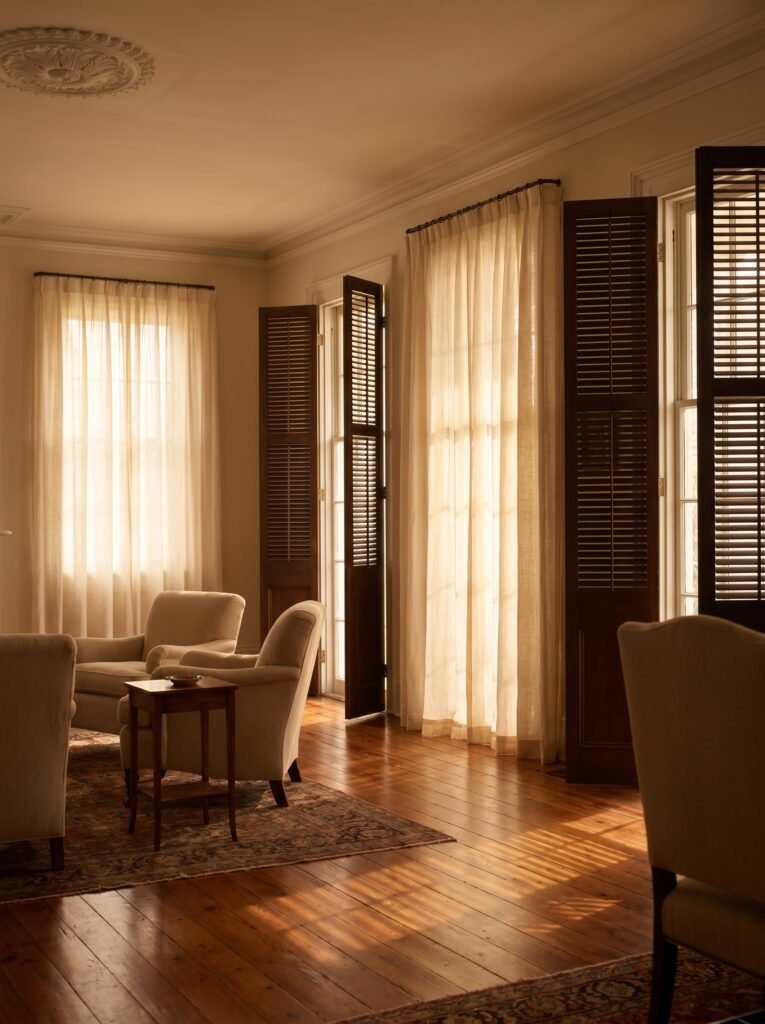
Light in New Orleans is different from light in most American cities, and it plays a starring role in how these interiors feel. The subtropical atmosphere softens the sun’s harshness and creates a warm, slightly diffused quality of natural light that is genuinely flattering to interior spaces. Rooms in old New Orleans homes were designed to work with this light, not fight it.
Floor-to-ceiling shuttered windows, known as jalousies or bousillage shutters, allow residents to control light and airflow with remarkable precision. In the morning, a room flooded with filtered Southern light through partially open cypress shutters has a quality that no lighting designer can replicate artificially. It’s golden, warm, and gentle — the kind of light that makes everything inside look its very best.
To bring this quality into your own home, consider layered window treatments: wooden shutters or woven blinds closest to the glass, with lightweight linen curtains that can be drawn softly. This layering allows you to filter and adjust light throughout the day without ever losing that warm, enveloping quality that makes these spaces feel so restful.
5. Antiques, Heirlooms, and the Art of Thoughtful Collecting
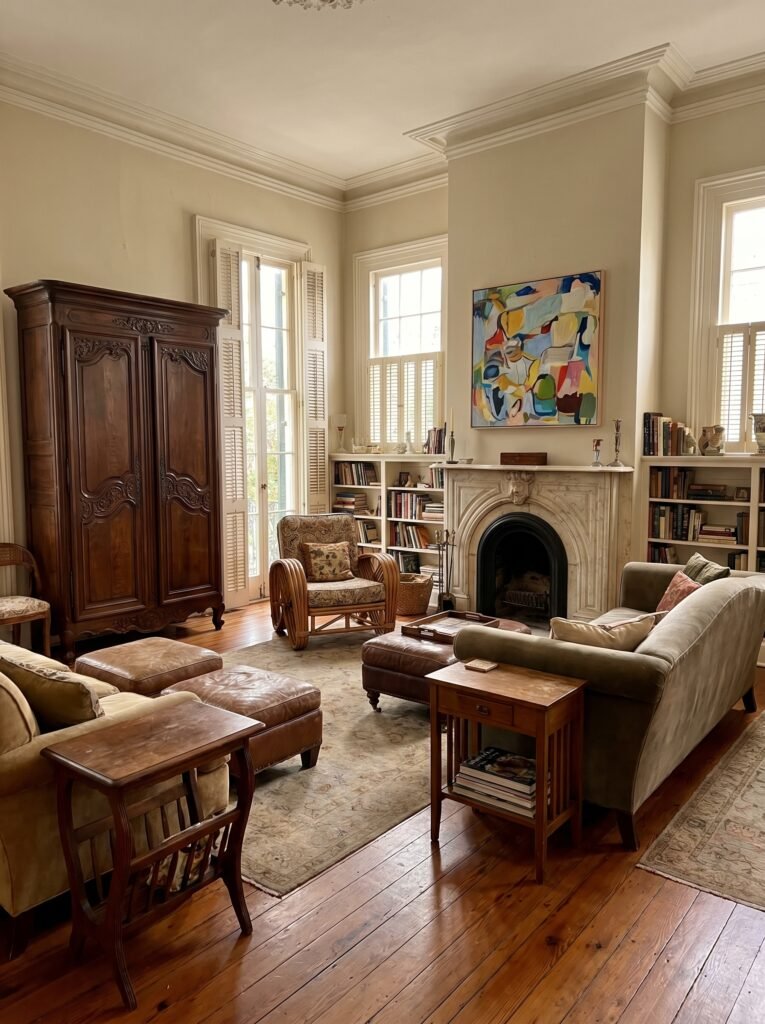
Walk through any significant New Orleans home and you’ll notice something that sets it apart from almost every modern interior you’ve seen: the furniture was not purchased as a set. Each piece has a different provenance, a different era, a different story — and yet the room feels harmonious. That’s because New Orleans residents have, for generations, been exceptional collectors and curators of the objects that fill their lives.
The city’s antique markets — Magazine Street, the French Market, the estates of old Uptown families — feed a culture of collecting that treats objects as companions rather than commodities. A nineteenth-century armoire from an estate sale sits beside a 1940s rattan chair recovered from a Tremé shotgun house. A contemporary local painting hangs above a Victorian marble mantel. None of it matches in the catalog sense of the word. All of it belongs together.
“The most beautiful rooms aren’t decorated — they’re accumulated, slowly and thoughtfully, by someone who buys things they genuinely love and trusts that love is enough to hold it all together.”
You don’t need access to New Orleans estate sales to apply this philosophy. You need patience, a genuine point of view, and the willingness to stop buying things that are merely fine and wait for things that actually speak to you.
6. Courtyards and Outdoor Living — The Secret Heart of Every New Orleans Home
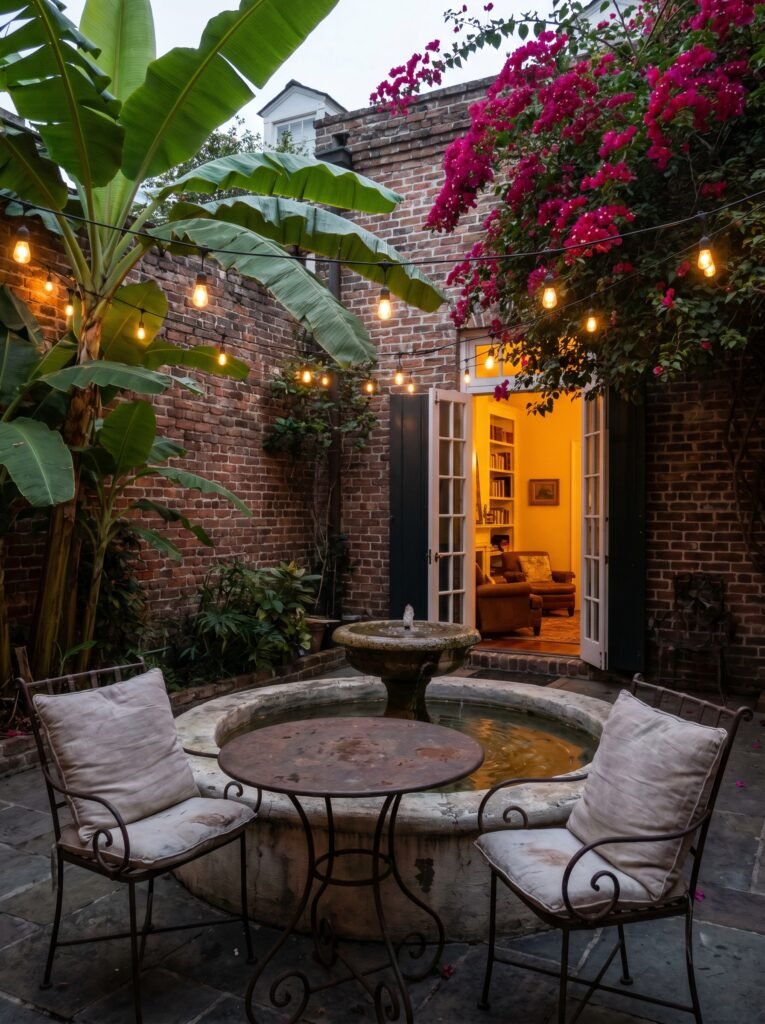
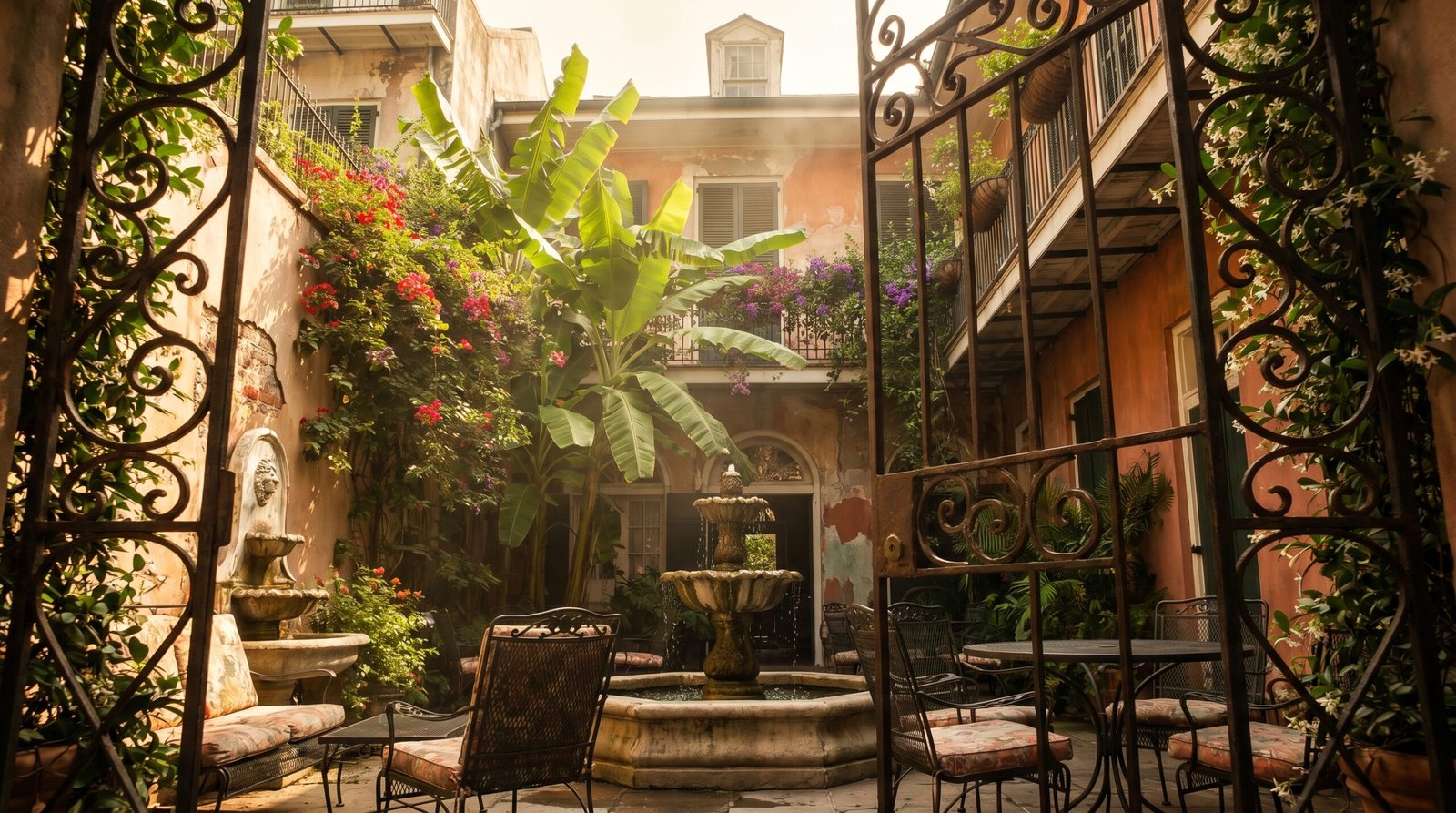
One of the most stunning and frequently misunderstood features of New Orleans residential design is the courtyard. Hidden behind wrought-iron gates and thick walls, these private outdoor rooms are the true heart of the home — shaded by banana trees and bougainvillea, cooled by fountains, furnished with wrought-iron furniture softened by cushions in faded fabrics.
The courtyard is where the real living happens in New Orleans. Dinner parties that begin inside almost always migrate outside. Morning coffee is taken in the courtyard. The sound of a neighbor’s jazz drifts over the wall and becomes part of the ambient soundtrack. This deeply outdoor-oriented lifestyle shapes interior design choices as well — rooms are designed to flow easily to outdoor spaces, with French doors and low thresholds that blur the boundary between inside and out.
Even without a courtyard, you can apply this philosophy. A balcony, a covered porch, a small urban terrace — any outdoor space, thoughtfully furnished and planted, becomes an extension of your interior and makes the whole home feel significantly larger and more layered.
7. Plasterwork, Millwork, and the Details That Do the Heavy Lifting
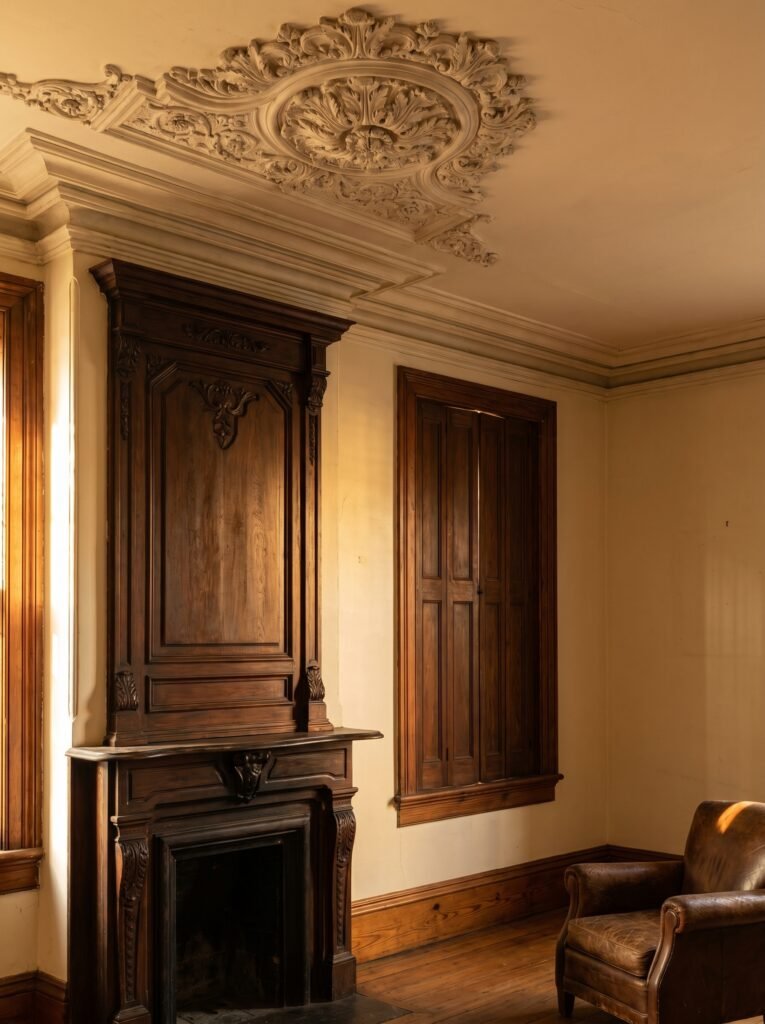
The architectural details inside New Orleans homes are not decorative afterthoughts. They are structural expressions of craft, and they carry an enormous amount of the design weight in these interiors. The plaster ceiling medallions, the carved wooden mantels, the paneled interior shutters, the cypress baseboards, the transoms — these elements are so beautifully made that a room needs surprisingly little furniture or decoration to feel complete.
This is an important lesson for anyone trying to capture the spirit of New Orleans design outside of the city. Before you add anything, look at what’s already there. Architectural detail, when it’s good, does more for a room than any amount of styling can.
If your home lacks original character, consider adding it thoughtfully: a salvaged mantel, a ceiling medallion installed around a simple light fixture, board-and-batten paneling in a hallway. These investments in architectural detail create the permanent backdrop against which everything else in your life can be arranged.
8. Wallpaper, Pattern, and the Fearless Layering of Prints
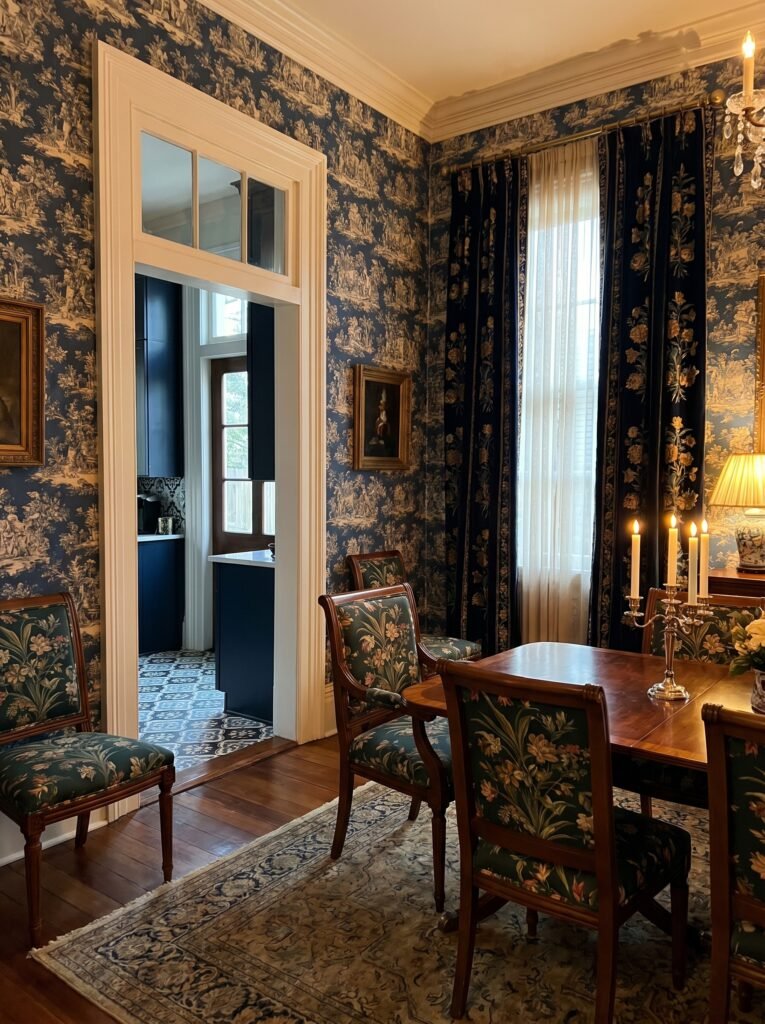
New Orleans interiors are not afraid of pattern. In fact, they embrace it with a confidence that can feel startling to eyes trained on the minimalist aesthetic that has dominated interior design conversation for the past decade. Toile wallpaper in a deep blue and cream. Botanical prints on upholstery. Patterned tile floors in the kitchen. Embroidered curtains in the dining room.
What prevents this layering of patterns from becoming chaotic is the consistent application of a unified color family. When every pattern in a room — the wallpaper, the rug, the upholstery — shares two or three colors, the room reads as rich and layered rather than busy and confusing. The eye finds its resting points, and the overall effect is one of abundance and warmth rather than visual noise.
9. The Kitchen as Gathering Place — Cooking and Community in New Orleans Homes
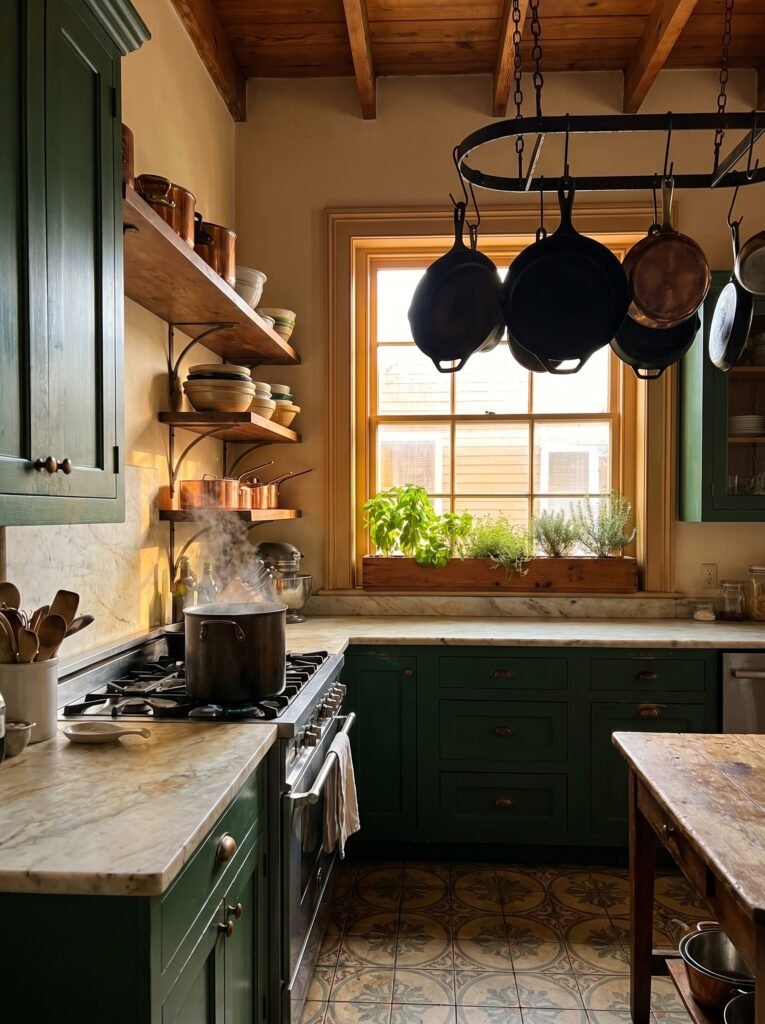
In New Orleans, the kitchen is never just a functional room. It is the gravitational center of the home, the place where the most important conversations happen, where the culture of the city is most viscerally expressed. The cooking traditions of New Orleans — roux-based stews, red beans simmered all Monday, king cake in carnival season — are not recipes. They’re rituals, and the kitchen is where those rituals live.
“In New Orleans, you don’t just cook dinner. You make a memory, stir in a story, and send it to the table with love.”
Traditional New Orleans kitchens tend toward deep, saturated cabinet colors — forest green, navy, warm black — paired with marble or butcher-block countertops and open shelving that displays beautiful and useful objects simultaneously. Cast-iron cookware hangs within reach. Herbs grow in a window box above the sink. The kitchen smells like it has cooked a thousand meals and is ready to cook a thousand more.
If you want to bring this energy into your kitchen, start with one meaningful change: commit to a real kitchen color, display your most beautiful cookware, and make space for the ritual of cooking rather than just the function of it.
10. Furniture Scale and Arrangement — Why New Orleans Rooms Feel Simultaneously Grand and Intimate
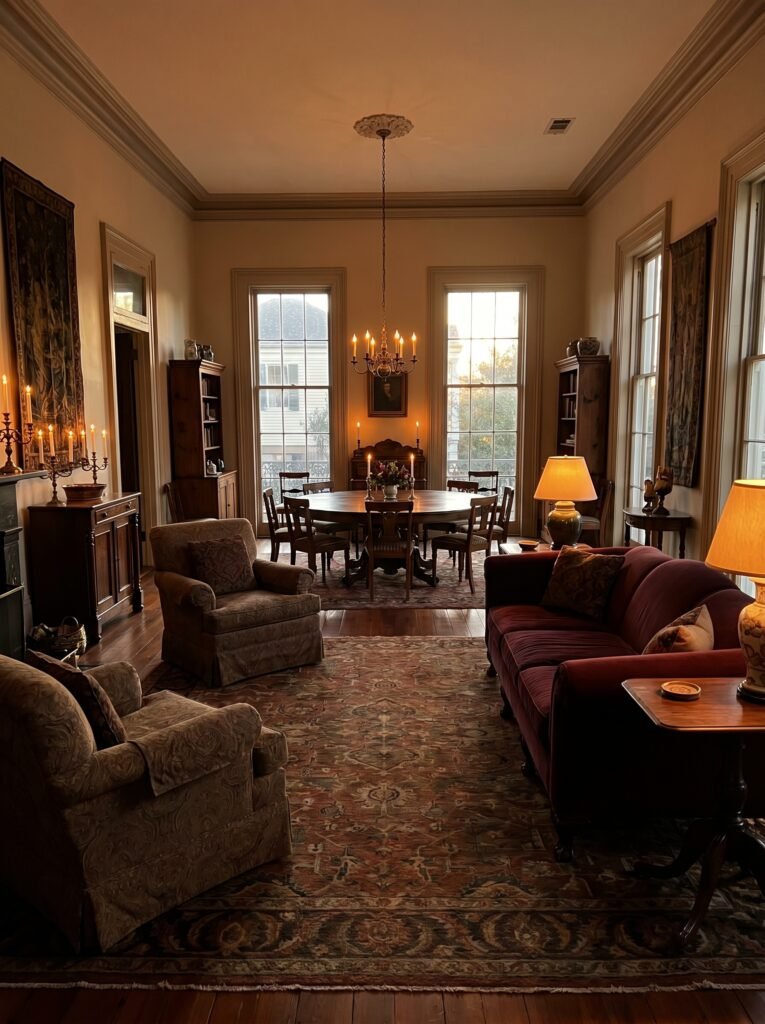
One of the most puzzling things about New Orleans interiors is how they manage to feel grand and intimate at the same time. A room with fourteen-foot ceilings should feel cold and cavernous, and yet in these houses, it feels embracing. The answer lies in furniture scale and arrangement.
New Orleans furniture tends toward generosity of scale — substantial sofas, wide armchairs, round dining tables that encourage conversation rather than presiding. These larger pieces fill the vertical space implied by high ceilings without overwhelming it. Rugs are sized correctly — large enough to ground the seating arrangement and unite the room, not small decorative mats placed apologetically in the center of a space.
The arrangement prioritizes conversation and gathering over traffic flow or the visual primacy of a television. Chairs face each other. The sofa invites people to sit close. The room is arranged as though guests are always expected, because in New Orleans, they very often are.
11. Art, Music, and Culture as Interior Design — The Living Room as a Gallery of Identity
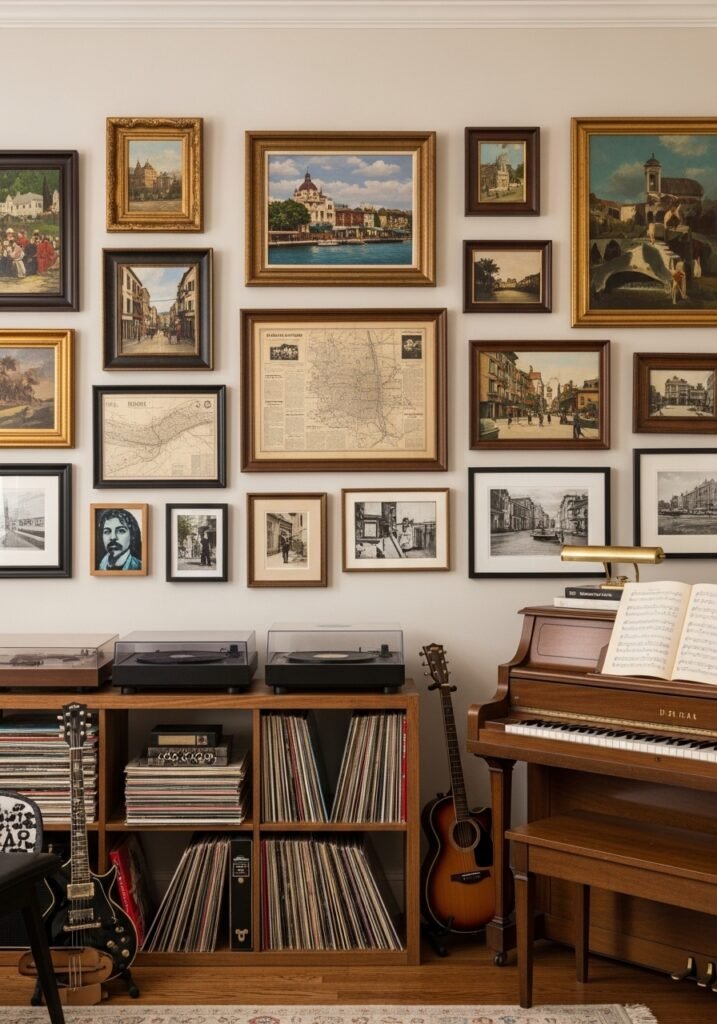
In most American homes, art is selected to match the sofa. In New Orleans homes, art is selected because it matters to the person who lives there — because they know the artist, because the subject is meaningful, because the piece carries a memory from a particular time in their life. The result is interiors that feel unmistakably personal.
Local art is a cornerstone of this approach. New Orleans has one of the most vital and accessible fine art communities of any American city, and its residents take genuine pride in supporting and displaying work by local painters, sculptors, printmakers, and photographers. Gallery walls in New Orleans homes often mix original art with vintage photographs, antique maps of the city, and framed pages from old newspapers.
Music is also present in the physical environment — not just playing in the background, but built into the room. A piano in the corner. A record collection on open shelving. Instruments that belong to members of the family, displayed rather than stored.
12. How to Begin Bringing New Orleans Energy Into Your Home — Starting Points That Actually Work
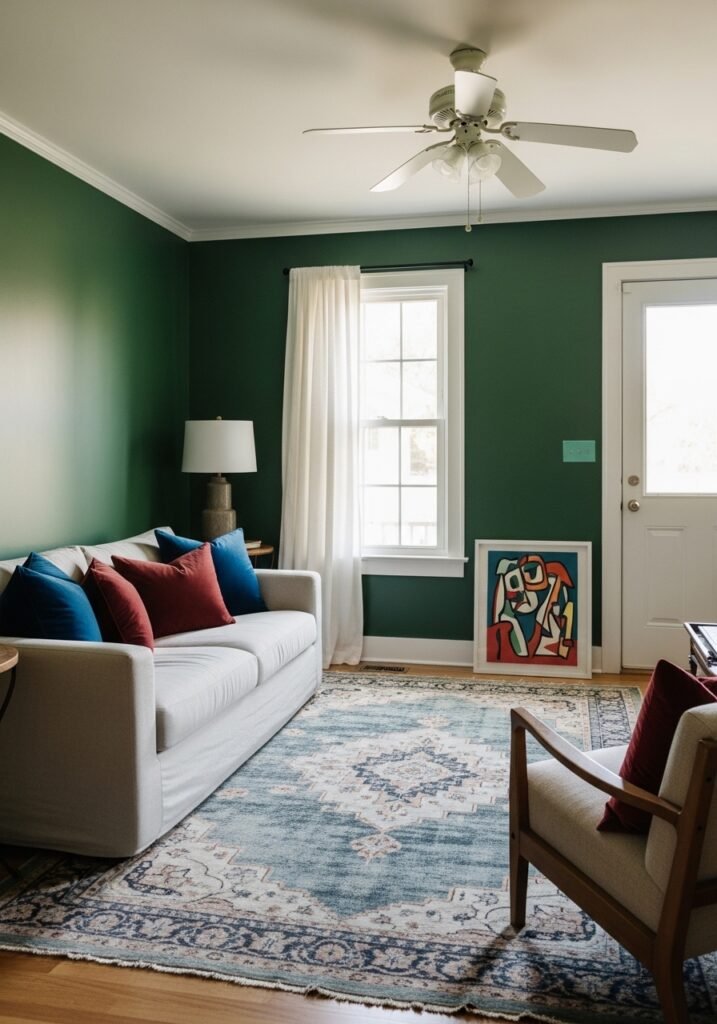
The beauty of New Orleans interior design is that it rewards commitment over budget. You don’t need to spend a fortune to make your home feel rich with character and warmth. You need intention, patience, and a willingness to invest in a few things that truly matter rather than many things that merely fill space.
Start with paint — one deeply saturated wall in a room you love, in a color that makes your heart beat a little faster when you see it. Add texture through textiles: a linen slipcover, a wool rug with some age and pattern to it, velvet cushions in a complementary jewel tone. Then, slowly, begin collecting one meaningful object at a time. A piece of local art. A beautiful old piece of furniture that has a life behind it. A set of dishes you actually love.
Let the room grow the way a New Orleans home grows — over time, through intention, through the accumulation of things that carry meaning. That’s how these interiors achieve their remarkable quality of feeling genuinely lived in and genuinely loved.
—
🌿 How to Take Care of Your New Orleans-Inspired Interior
Maintaining the warmth and character of a New Orleans-inspired home requires attention to the details that make these spaces special in the first place.
Protect your wood floors and wooden furniture by keeping humidity levels consistent — the wood in old New Orleans homes has expanded and contracted with the seasons for centuries, and your furniture deserves the same respect. Use a humidifier in dry months and ensure good ventilation in humid ones.
Care for antique and vintage pieces gently — natural beeswax polish on wooden furniture, gentle hand-washing for antique textiles, and careful placement away from direct sunlight to prevent fading of upholstery and rugs.
Tend to your plants with the same devotion that New Orleans gardeners tend to their courtyards. Indoor plants — ferns, pothos, fiddle-leaf figs — are not accessories in these spaces; they’re participants. Water them, feed them, and move them into good light.
Replenish and refresh your space seasonally, the way the city itself shifts with the seasons — lighter linens in summer, warmer throws and deeper candlelight in winter. Let your home feel the passage of time rather than resisting it.
—
❓ FAQ
Q: What is the most defining characteristic of New Orleans interior design? A: The layering of cultural influences over time — French, Spanish, African, and Caribbean traditions that have blended into something entirely unique. This shows up in the color choices, the mix of antique and contemporary pieces, the architectural details, and the deep emphasis on communal living and hospitality.
Q: Can I achieve a New Orleans-inspired interior in a modern home without original architectural details? A: Absolutely. You can add architectural character through salvaged or reproduction mantels, ceiling medallions, board-and-batten paneling, and quality millwork. The furniture, art, color, and textile choices carry the atmosphere even when the bones of the building are contemporary.
Q: What colors are most associated with New Orleans interior design? A: Deep jewel tones — forest green, burgundy, sapphire blue, warm terracotta, and mustard yellow — are most characteristic, always balanced with natural wood tones, white plaster, and aged metals like brass and wrought iron. The palette is rich and warm, never cold or sterile.
—
💭 Final Thought
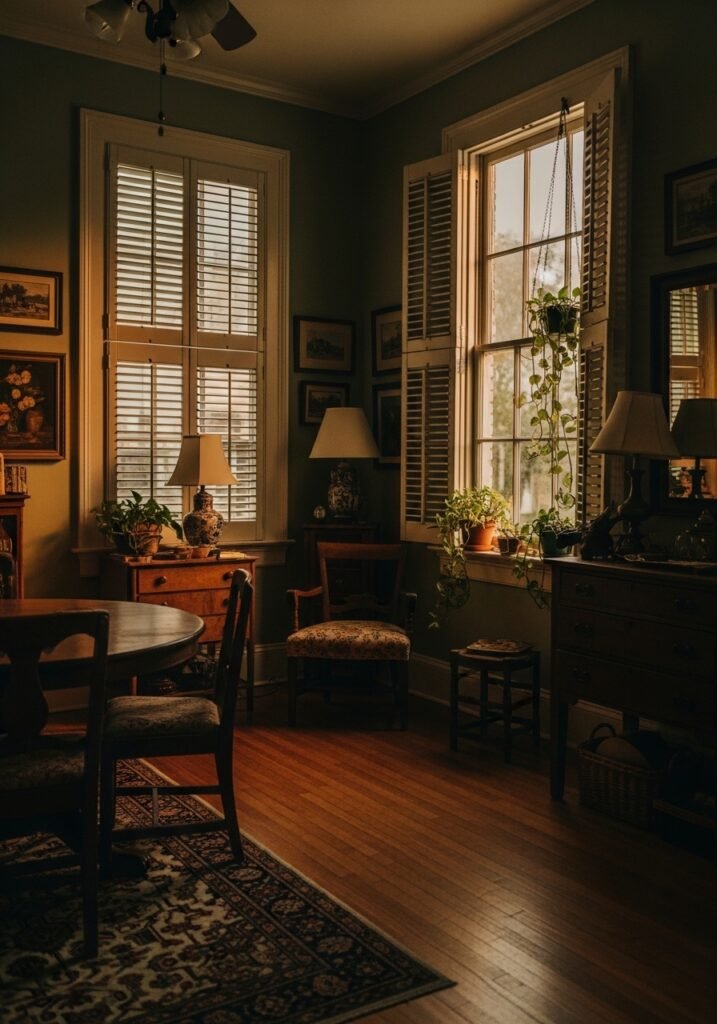
New Orleans homes are a reminder that the most beautiful spaces are never designed in a single afternoon. They grow slowly, through decades of choices made by people who believed that where they lived was worth caring about deeply. They hold stories in their walls, music in their bones, and a quality of welcome that has nothing to do with square footage or renovation budgets and everything to do with intention.
What would it mean for your home to feel truly, unmistakably like you — layered, warm, alive with the things you love?