The Soul of a Room: What Korean Interior Design Teaches Us About Living With Intention
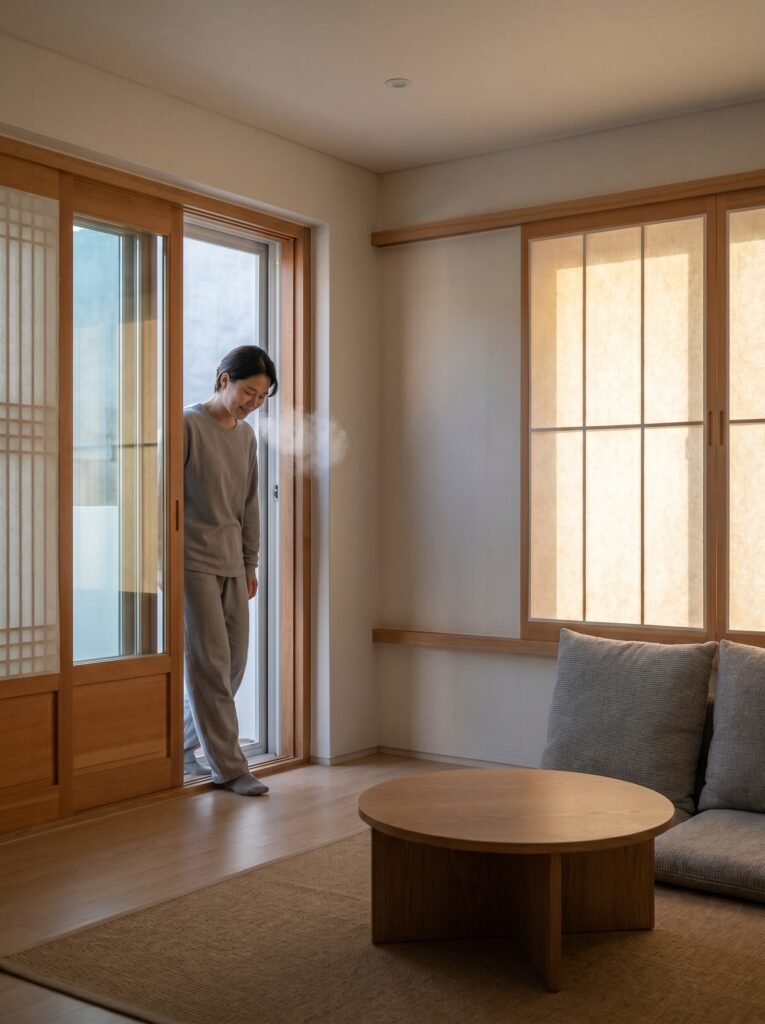
There’s a kind of home you walk into and immediately exhale. The shoulders drop. The noise in your head quiets. Korean interior design creates exactly that feeling — and once you understand why, you’ll never look at a cluttered room the same way again.
—
1. A Philosophy Before It Was Ever a Trend
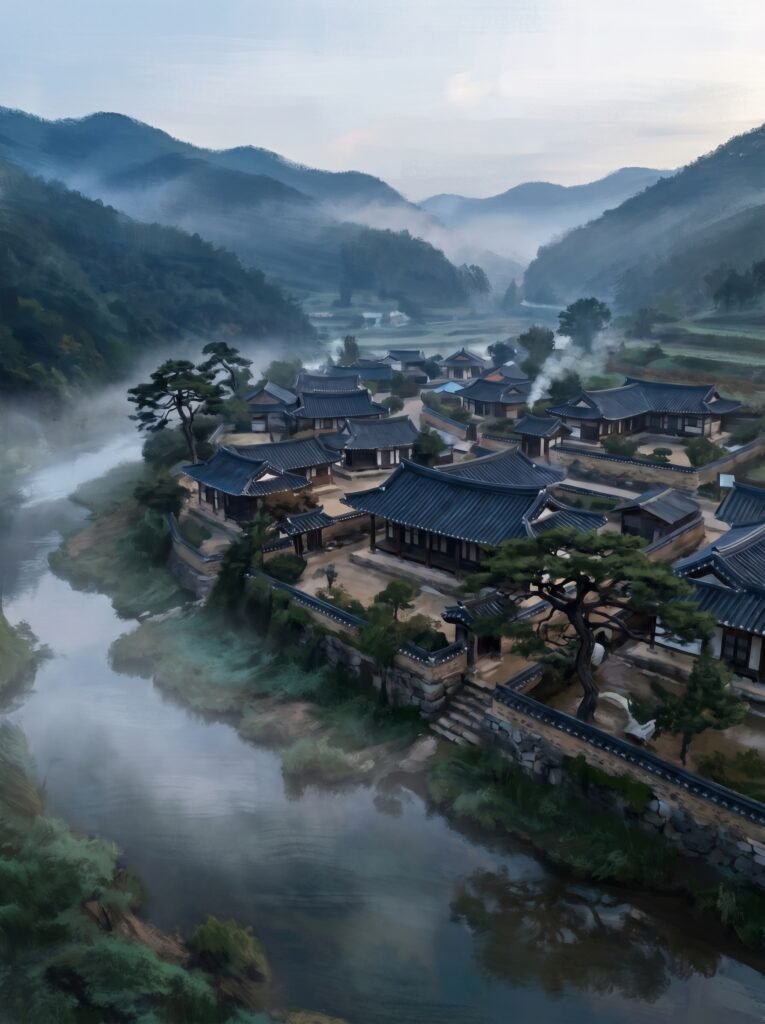
Most design styles begin with aesthetics. Korean interior design begins with a question: How do you want to feel when you’re home?
This isn’t an accident. The Korean approach to living spaces is rooted in a centuries-old concept called “Nunchi” — the subtle art of reading an environment and responding with sensitivity. Koreans have long understood that a space shapes the people inside it, not just the other way around. Long before minimalism became a Western wellness buzzword, Korean homes were being arranged around the idea that a calm space produces a calm mind.
“A well-designed room doesn’t just look beautiful — it makes you breathe differently.”
The philosophy flows from the ancient principles of Pungsu (the Korean counterpart to Feng Shui), which guided the placement of homes in valleys sheltered by mountains and facing flowing water. That same reverence for natural balance, harmony, and breathable space eventually made its way indoors — and it has never left.
2. The Quiet Power of Emptiness
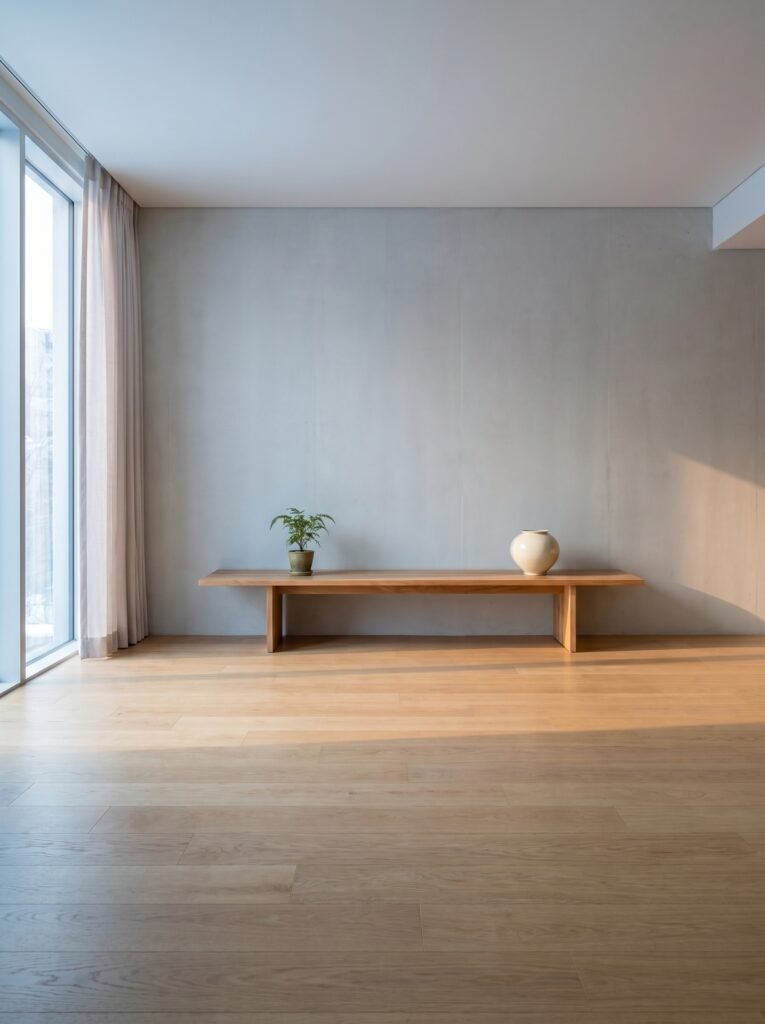
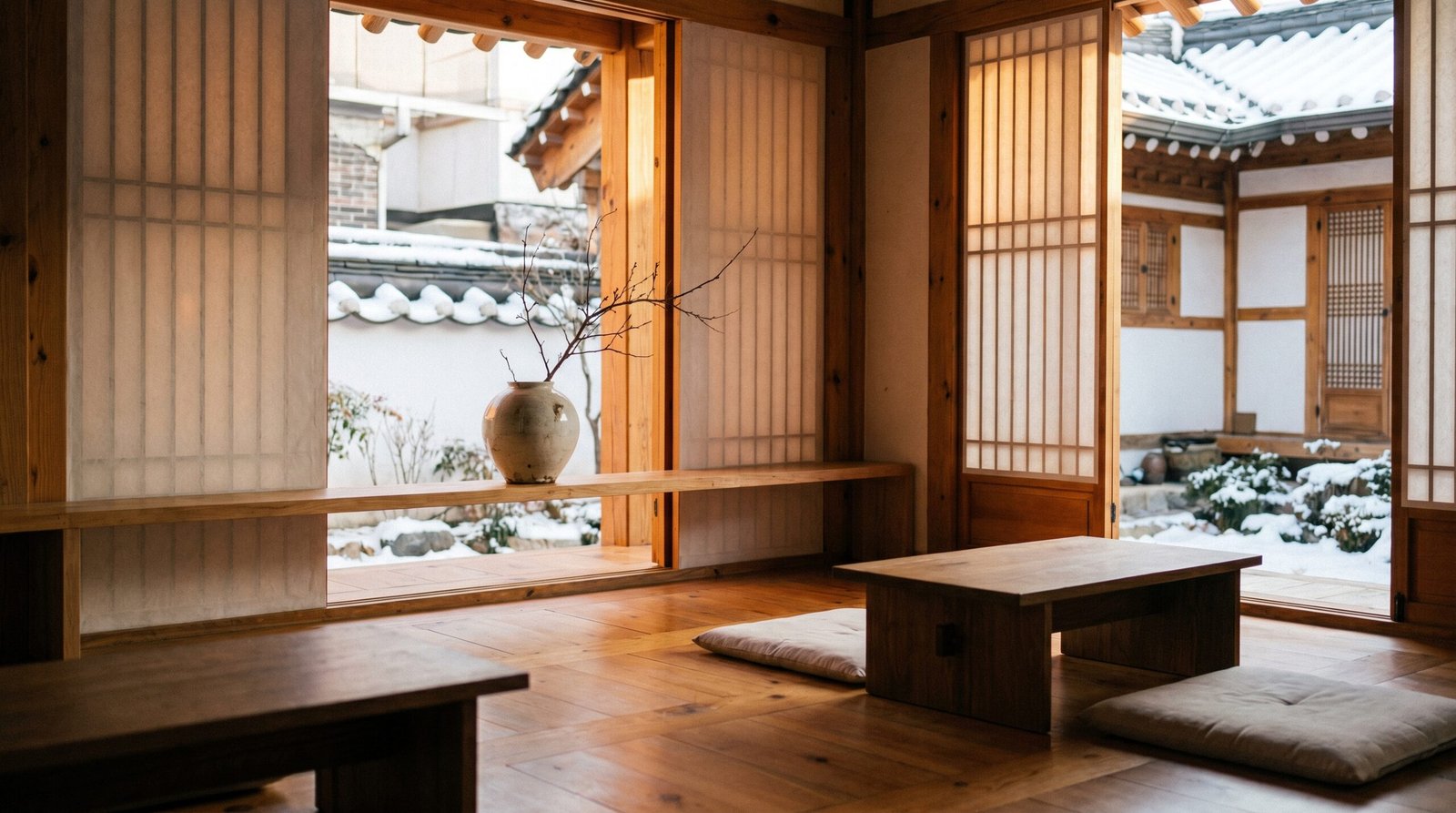
Imagine you walk into a living room and the first thing you notice is what isn’t there. No cluttered shelving. No competing patterns. No furniture that doesn’t belong. Just open floor space, a low wooden table, and pale winter light falling through a paper screen.
That intentional emptiness is called “Yeobeck” in Korean design tradition — the art of leaving breathing room. It’s the designer’s equivalent of a pause in music. Without it, everything becomes noise. In Korean interiors, negative space is not laziness or minimalism for its own sake. It is a deliberate act of generosity toward the person who will inhabit the room.
Modern Korean apartments and homes still honor this. Even in compact Seoul studio apartments, you’ll often find owners who resist the urge to fill every corner, choosing instead to leave a stretch of clean floor, a single plant, and one carefully chosen ceramic piece on an otherwise bare shelf.
3. Wood, Stone, Paper: Materials That Remember Nature
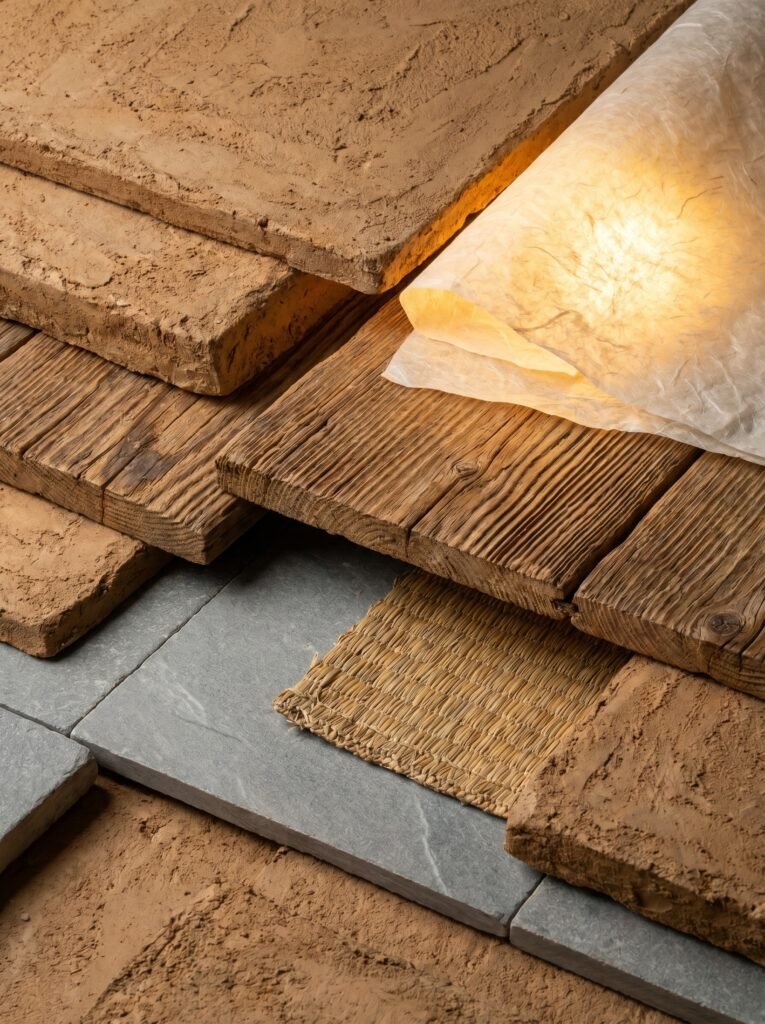
Run your hand across a piece of aged pine in a traditional Korean hanok (the iconic tiled-roof home), and you’ll understand something about Korean design that photographs can’t fully capture. The materials are not just chosen for how they look. They’re chosen for how they age, how they breathe, and how they connect you to something older than yourself.
Korean interiors traditionally rely on natural materials — untreated wood, hanji (Korean mulberry paper), clay plaster walls, stone floors, and woven grass. Each of these materials changes with the seasons. Hanji screens filter summer light into something soft and golden. Clay walls regulate humidity. Stone floors retain warmth. There is an almost biological relationship between the home and its environment.
Even in contemporary Korean design, this instinct survives. You’ll see it in the raw linen upholstery of a modern sofa, the live-edge coffee table in an otherwise sleek apartment, or the stoneware celadon vase sitting in a sunlit corner.
4. The Floor Is Not Just the Floor
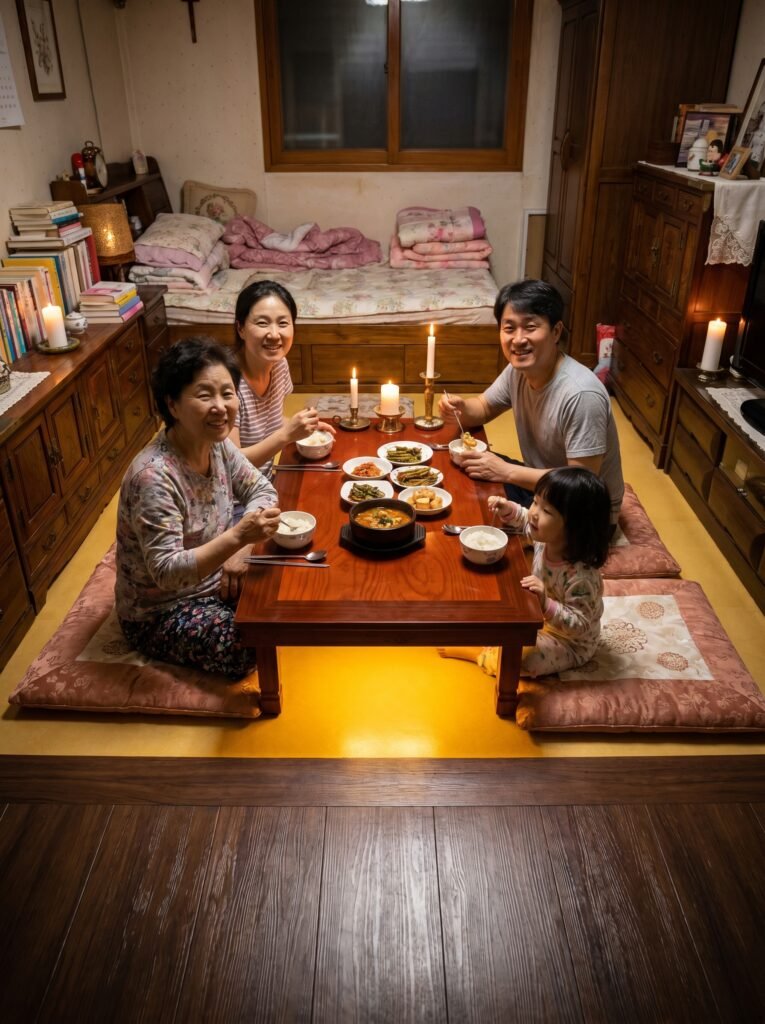
One of the most distinctive — and genuinely life-changing — aspects of Korean interior living is the relationship with the floor. In traditional Korean homes, life happens at floor level. Meals are eaten on low tables. Guests sit on cushions. Sleep happens on a thin mattress called a “yo” laid directly on the warm floor.
That warmth isn’t metaphorical. The ondol system — a method of underfloor heating using heated water pipes or, historically, channels carrying smoke — is one of Korea’s most ancient engineering achievements. The floor is meant to be warm enough to sit on in winter, to curl up on with a book, to share with family.
This fundamentally changes how a room is used. When the floor is comfortable, humans naturally descend to it. The hierarchy of furniture loosens. Children, grandparents, and guests all occupy the same level. There is an unconscious democracy to floor-level living that shapes the social texture of Korean homes in ways that are hard to quantify but easy to feel.
5. Color That Whispers Instead of Shouting

If you were to paint a mental picture of a Korean interior’s palette, you’d reach for the colors of early morning in the countryside. Soft whites. Warm grays. The pale green of celadon glaze. The amber of aged wood. The deep charcoal of hanji shadow.
“Korean design doesn’t decorate with color. It breathes with it.”
Traditional Korean color theory is informed by the philosophy of “Obangsaek” — five directional colors (blue, red, yellow, white, and black) that represent balance, nature, and cosmic order. But in living spaces, these are used as quiet accents rather than bold statements. A single blue ceramic bowl. A woven black mat against a pale floor. A red lacquered cabinet against a white wall.
The restraint is intentional. In a world of visual overstimulation, these interiors feel like a room where you can finally hear yourself think.
6. Furniture That Earns Its Place
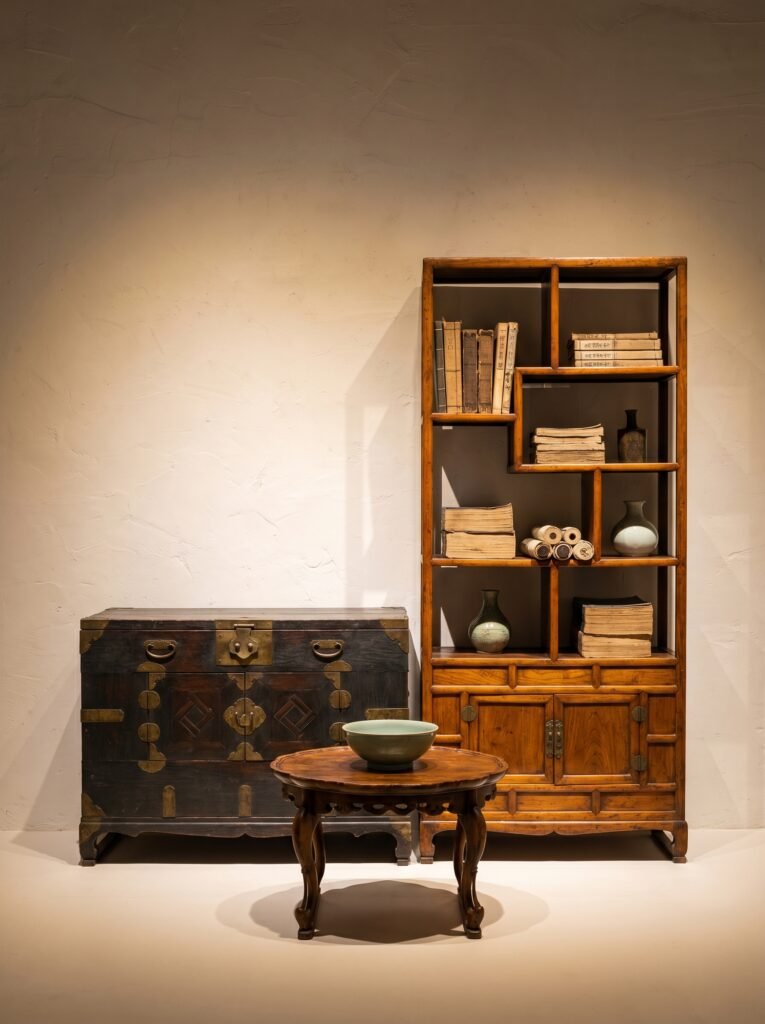
Korean furniture, particularly from the Joseon Dynasty period (1392–1897), is among the most quietly beautiful in the world. Low bandaji chests (half-chests with hinged fronts). Delicate soban serving tables with curved legs. Scholar’s bookshelves with asymmetrical compartments that somehow look completely right.
What makes traditional Korean furniture so compelling is that each piece has a reason for existing. There is no excess ornamentation for its own sake. The joinery is precise. The proportions are considered. Even decorative elements — brass fittings, crane carvings, cloud motifs — carry meaning drawn from nature and Confucian values.
In contemporary Korean interior spaces, you’ll often see this same principle applied: furniture is curated rather than accumulated. The sofa is chosen once, carefully. The dining table is meant to last decades. The idea of disposable furniture is genuinely foreign to the traditional Korean sensibility.
7. Light as a Design Material
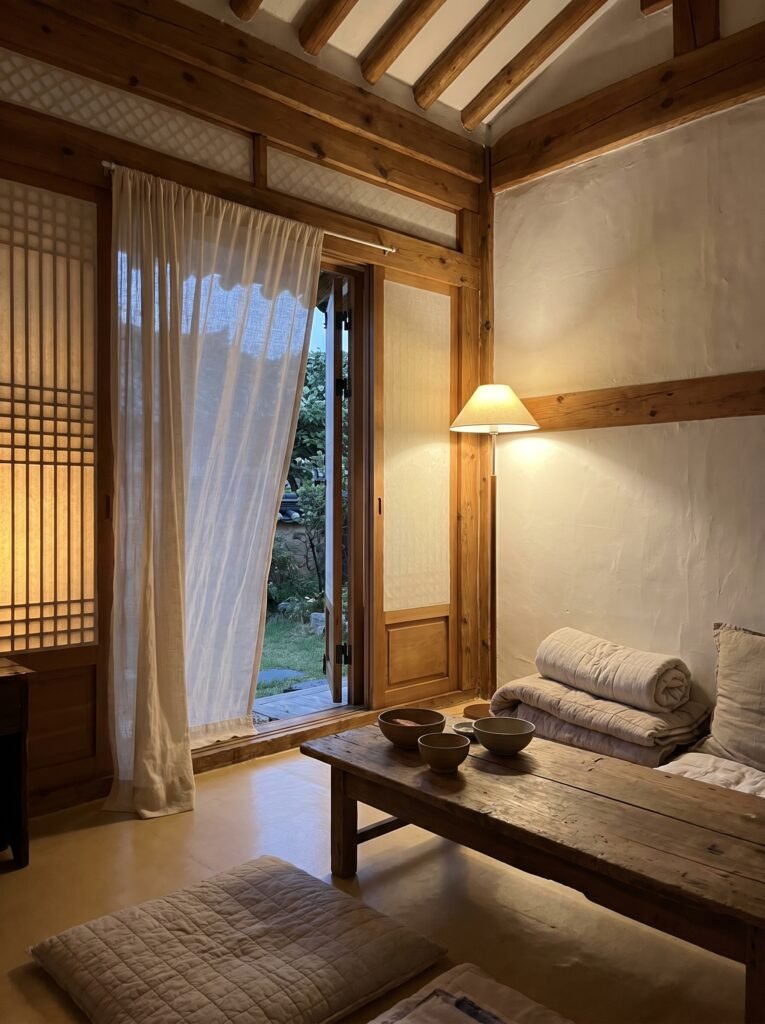
A Korean room at dusk is a particular kind of beautiful. Hanji paper filters the fading light into something honey-colored and diffuse, softening every edge in the room. The distinction between indoors and outdoors blurs pleasantly.
Modern Korean designers have carried this sensitivity to light forward in remarkable ways. Large windows are positioned not just for views but for the quality and angle of light they admit. Sheer linen curtains replace heavy drapes. Indirect lighting — warm, low, and directed toward walls rather than faces — creates the ambient glow of a room that feels lived-in rather than staged.
There’s a word in Korean — “Jeong” — that describes a deep, affectionate attachment to a place or person built slowly over time. A room lit well, inhabited consistently, and cared for gently develops its own Jeong. You feel it the moment you walk in.
8. The Art of Displaying Less
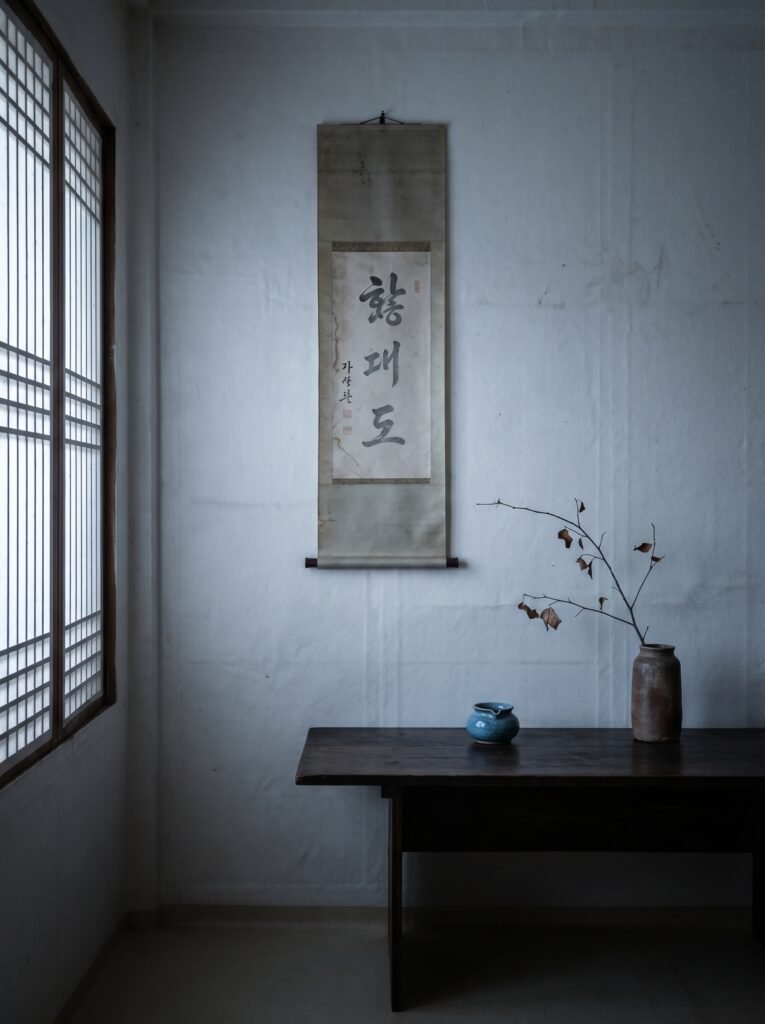
Walk into a traditional Korean scholar’s study and you might find a single scroll of calligraphy on one wall, a small ceramic water dropper on the desk, and one seasonal branch in a vase. That’s it. That’s the decor.
This practice of “Gyeongpil” — the editing of objects down to only those with true meaning — runs deep in Korean visual culture. Every object that earns a place in the room is there because it is beautiful, useful, or personally meaningful. Ideally, all three.
Contemporary Korean “styled” interiors on platforms like Pinterest and Instagram have brought this idea to a global audience. The signature look — one arching floor lamp, a textured throw, a single ceramic piece on an otherwise bare surface — is not accidental minimalism. It is inherited restraint.
9. Seasons Live Inside Korean Homes
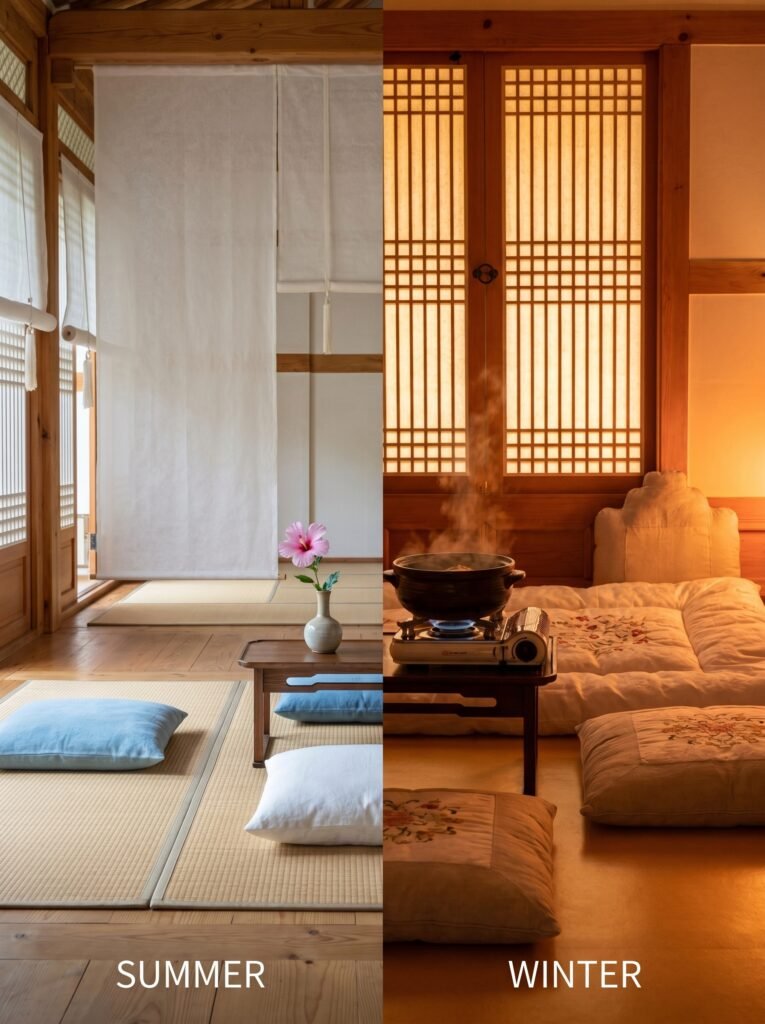
There’s something quietly radical about a design tradition that expects and welcomes change. Korean interiors have historically shifted with the seasons — different textiles for summer and winter, different arrangement of the sleeping area, different flowers or branches brought indoors to mark the turning of the year.
“A home that changes with the seasons is a home that is truly alive.”
In summer, light rattan mats replace wool rugs. Hanji screens are adjusted to let in the breeze. In winter, heavier cushions appear, the ondol is switched on, and a ceramic pot of something warm sits on the low kitchen table.
This isn’t interior design as a fixed achievement. It’s interior design as an ongoing, living practice — one that keeps the home responsive to time, weather, and the human needs that change with them.
10. The Kitchen and the Culture of Sharing
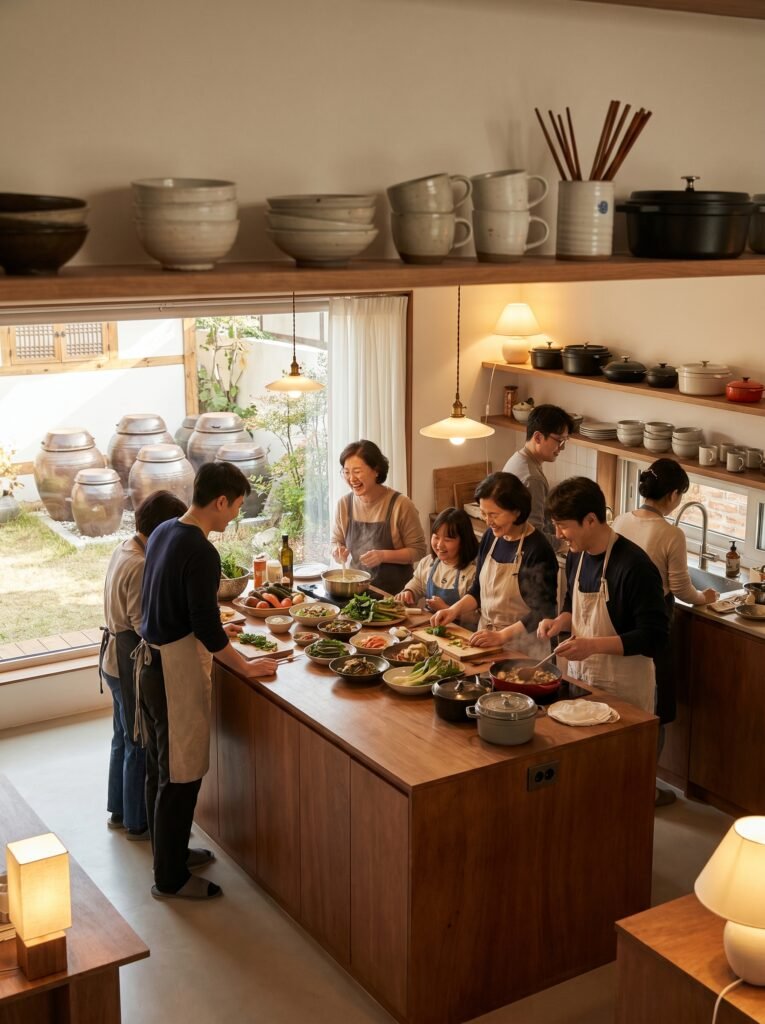
Korean kitchen design has always centered one truth: food is love made visible. Traditional Korean kitchens — bueok — were designed around communal cooking and preservation. Great clay onggi pots of fermenting kimchi would line the back courtyard. The kitchen was never hidden.
In modern Korean apartment design, open-plan kitchens are common precisely because cooking is meant to be part of the social life of the home, not separate from it. The kitchen island doubles as a gathering place. The dining area flows into the living space without a hard boundary.
This philosophy shapes how the room is arranged, how it is lit, and how generously it is stocked with beautiful everyday objects — handmade bowls, wooden chopsticks in a ceramic holder, cast iron pots that look as good on the shelf as they do on the stove.
11. Bringing the Outside In (Without Forcing It)
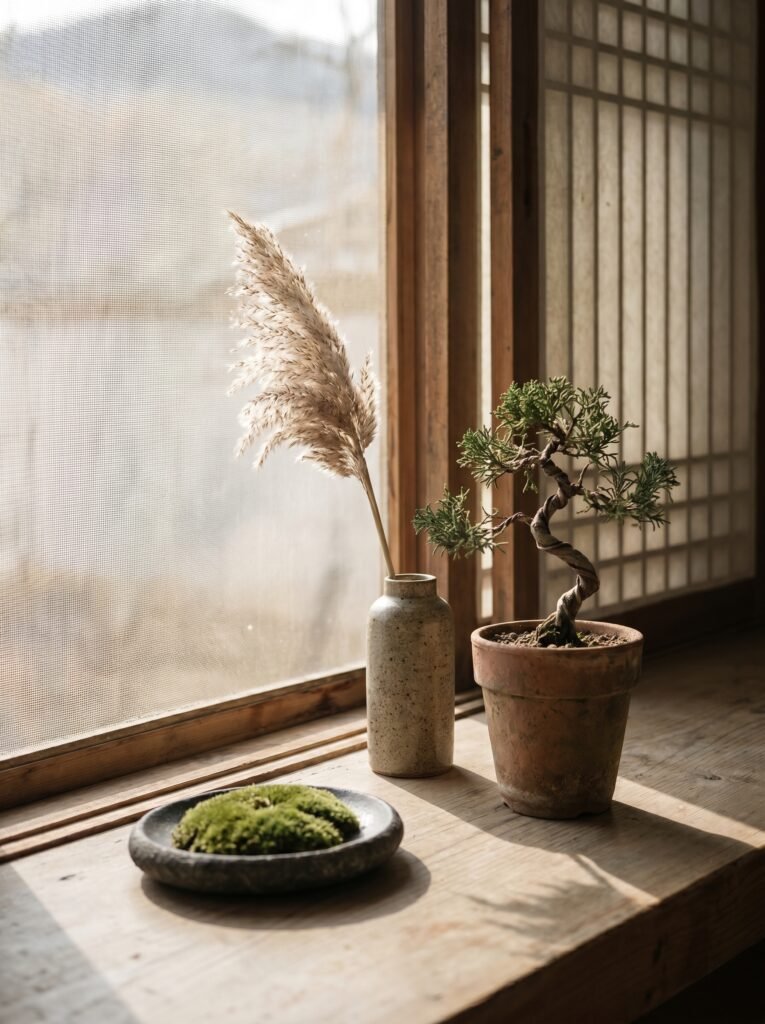
Korean design maintains a deeply respectful relationship with nature — not as a theme or a trend, but as a governing truth. Plants in Korean interiors are not just decoration. They are quiet companions. A small bonsai on a windowsill. A single stem of pampas grass in a tall vase. Moss growing in a shallow stone dish.
The principle here is “Jaseontaegeuk” — the idea that natural forms contain an inherent order and beauty that human design can reflect but should never try to surpass. Nature is brought inside not to be tamed, but to remind the occupants of something they might forget in a city: that they are part of a larger, quieter world.
12. Contemporary Korean Design and Its Global Moment
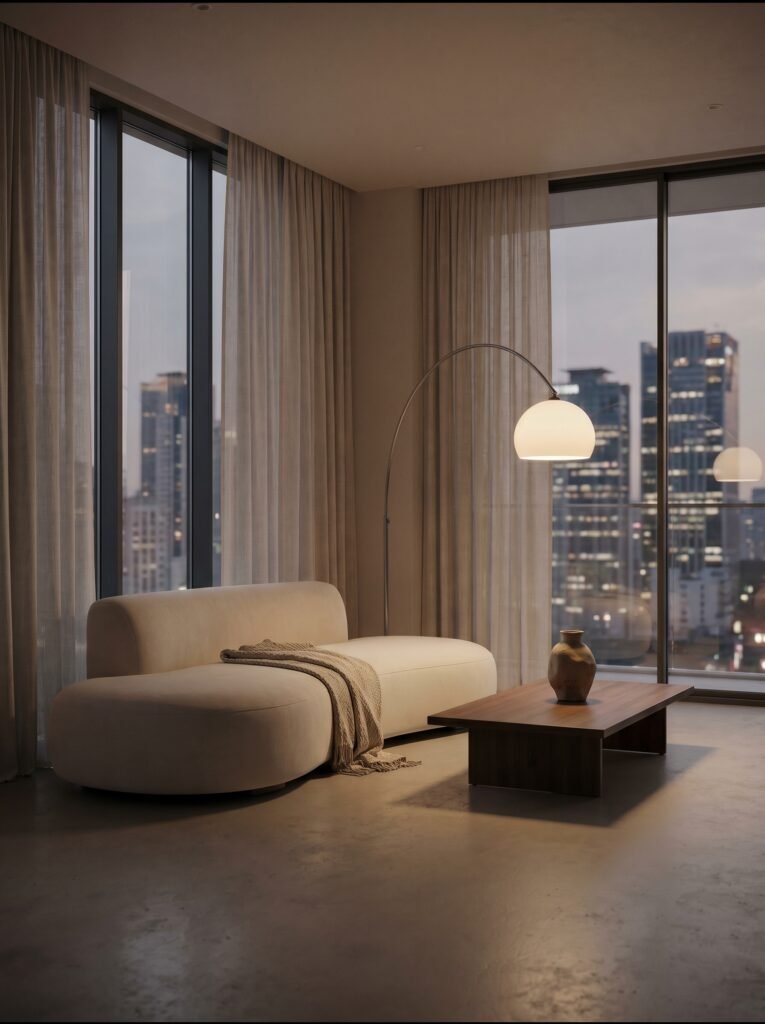
The world has been watching Korean culture closely — K-drama sets have introduced millions of viewers to sleek, serene Korean apartments. Interior designers from New York to Paris now cite Korean aesthetics as a primary influence. And the timing makes complete sense.
We are collectively exhausted by maximalism, by loud spaces, by homes that feel like they’re performing rather than supporting us. Korean interior design offers an antidote that isn’t cold or clinical. It is warm, considered, deeply human, and ancient in the best possible way.
—
🌿 How to Bring Korean Interior Design Into Your Home
You don’t need to renovate everything. Korean design is about intention, not expense. Here’s how to begin, practically and thoughtfully.
Start with subtraction, not addition. Walk through your home and identify three things in each room that are there out of habit rather than love or use. Remove them for a week and notice how the room feels. This is the most Korean thing you can do.
Invest in one beautiful, natural object. A handmade ceramic bowl. A small piece of aged wood. A living plant in a simple clay pot. Place it somewhere with breathing room around it and resist the urge to add more.
Warm your light. Swap a cold overhead bulb for a warm, indirect light source. A paper floor lamp or a simple wooden lamp with a linen shade will transform the atmosphere of a room more dramatically than almost any other single change.
Spend time on the floor. Add one floor cushion or a woven mat to your living space. Sit on it intentionally. Notice how your relationship to the room changes when you’re closer to it.
Change something seasonally. Swap a throw pillow cover, bring in a branch from outside, or rearrange a shelf to reflect the current season. Let your home be responsive to time. It will feel more alive for it.
—
❓ FAQ
Q: Is Korean interior design the same as Japanese minimalism? A: They share a reverence for natural materials and uncluttered spaces, but they have distinct origins and feels. Korean design tends to be warmer, more textured, and more connected to communal living and underfloor heating traditions. Japanese minimalism is more influenced by Zen Buddhism and tends toward a cooler, more austere aesthetic. Both are beautiful — but they are genuinely different.
Q: Can Korean interior principles work in a small apartment? A: Absolutely — and in some ways, small spaces benefit most from Korean design thinking. The emphasis on negative space, floor-level living, and carefully chosen objects means that a compact room can feel peaceful rather than cramped. The key is resisting the urge to fill every surface and instead curating deliberately.
Q: What are the most important elements to incorporate first? A: Begin with light and materials. Swap synthetic textiles for natural ones — linen, cotton, wool. Improve the quality of your lighting. Then practice the discipline of removing objects rather than adding them. These three changes will give you the essence of the aesthetic without requiring a single large purchase.
—
💭 Final Thought
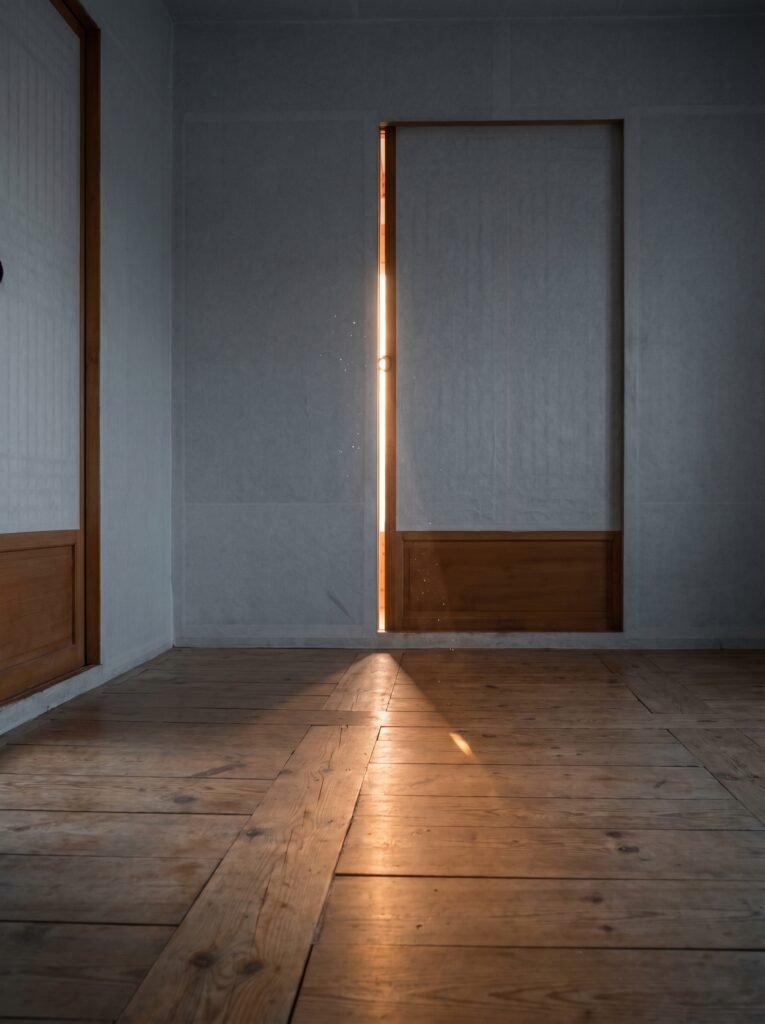
Korean interior design is not really about rooms at all. It is about the relationship between a person and the space they inhabit — a relationship built on honesty, restraint, seasonal awareness, and a quiet respect for natural beauty. In a world that constantly urges us to acquire more, decorate louder, and optimize faster, there is something radical and genuinely nourishing about a tradition that asks us to slow down, edit ruthlessly, and find joy in a single beam of morning light falling across a clean wooden floor.
What would change about how you feel at home if you removed everything that didn’t truly belong there?