When Ugly Becomes Unforgettable: The Cinder Block Wall Makeover Guide That Changes Everything
There’s something quietly heartbreaking about moving into a space full of potential — and then staring at a wall of gray, cold, industrial cinder blocks wondering how on earth you’re supposed to make this feel like home. But here’s what nobody tells you: those rough, textured, seemingly impossible walls might just be the most transformative canvas in your entire house.

—
1. Why Cinder Block Walls Are Actually a Hidden Design Treasure

Walk into any high-end loft in Brooklyn, any converted warehouse turned restaurant in Portland, or any boutique hotel lobby in Austin — and what do you see? Exposed masonry. Industrial texture. Raw, honest surfaces that designers pay extra to replicate. The cinder block wall you’ve been avoiding is already sitting in your basement, garage, laundry room, or rental apartment, doing absolutely nothing except making you feel like you live in a bunker.
The design world has quietly been falling in love with raw masonry for over a decade. What was once considered a construction shortcut — a cheaper, faster alternative to poured concrete or brick — has evolved into one of the most sought-after aesthetic elements in modern interior design. The reason is simple: authenticity. In a world of prefab everything, there’s something deeply satisfying about a surface that says, this is real, this is structural, this has weight.
But loving the look and knowing what to do with it are two very different things. The truth is, cinder block walls present real challenges — they’re porous, cold, sometimes damp, and the texture is aggressively unforgiving of anything slapped on without preparation. That’s exactly why this guide exists.
“The wall you were most embarrassed about might become the one guests can’t stop photographing.”
2. The First Step Everyone Skips — and Why It Costs Them Everything
Before you buy a single can of paint, a roll of wallpaper, or a bag of plaster, you need to understand what your cinder block wall is actually doing — structurally and environmentally. This is the step that separates a makeover that lasts from one that peels, bubbles, and cracks within eighteen months.
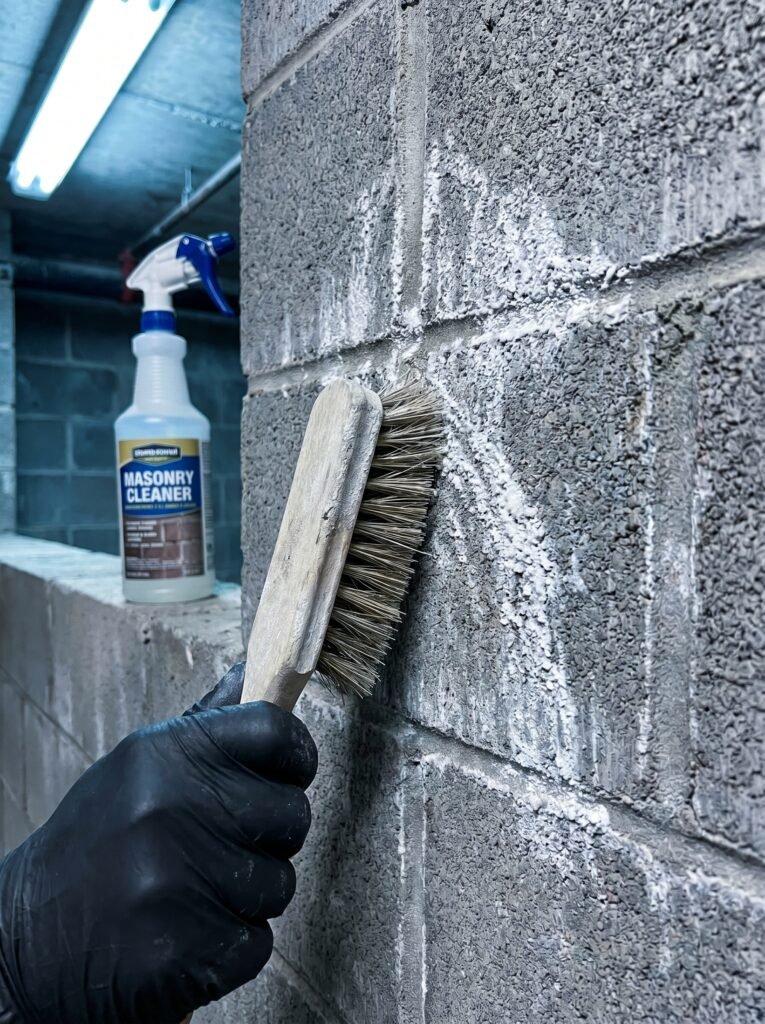
Cinder blocks are highly porous. This means moisture moves through them freely — and if your wall is below grade (meaning it sits partially or fully underground, like a basement wall), there’s a very real possibility of water intrusion. Before any cosmetic treatment, check for efflorescence — that white, powdery residue that appears when moisture carries mineral salts to the surface. If you see it, you have a moisture problem that needs to be addressed first, not painted over.
Clean the wall thoroughly with a stiff brush and a masonry cleaner, or even a diluted vinegar solution for light deposits. Fill any visible cracks with hydraulic cement or masonry caulk. Let the wall dry completely — and in a basement setting, completely can mean waiting several days to a full week. This preparation phase isn’t glamorous, but it is everything. A beautiful finish on an unprepared surface is just a countdown to disappointment.
3. The Paint Method: Simple, Budget-Friendly, and Surprisingly Stunning
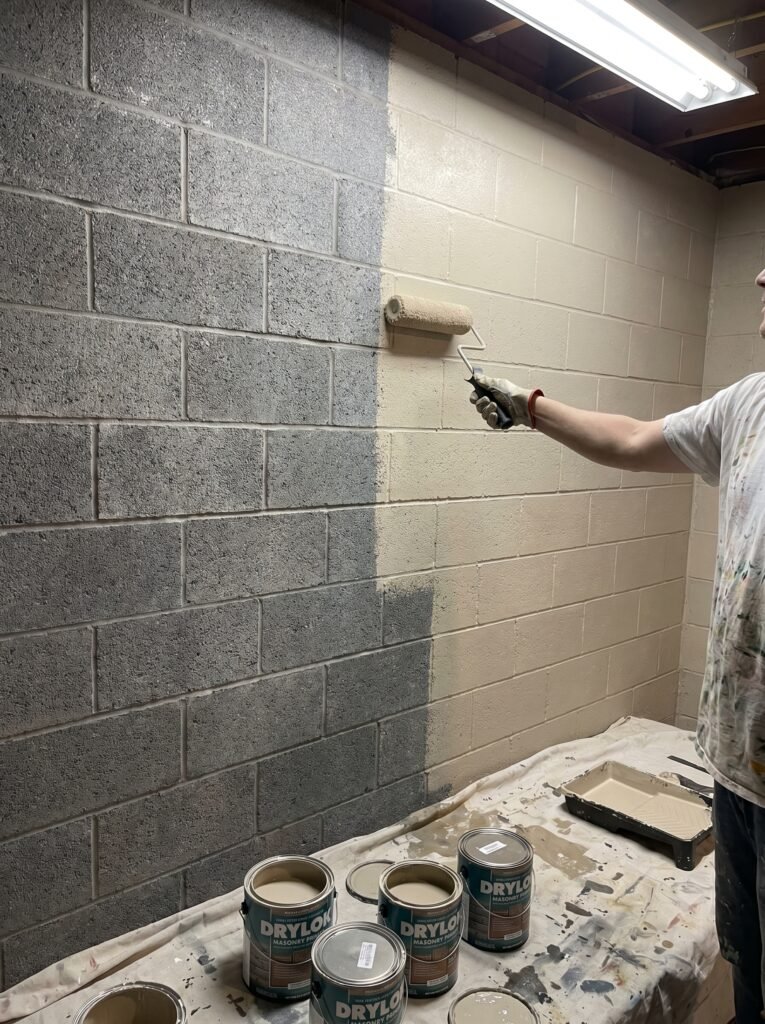
Painting cinder block is the most accessible makeover option, and when done correctly, it produces results that genuinely stop people in their tracks. The key word in that sentence is correctly — because painting masonry is not the same as painting drywall, and treating it the same way is the most common mistake homeowners make.
You need a masonry primer, full stop. Products like DRYLOK Extreme Masonry Waterproofer or Zinsser Bulls Eye 1-2-3 Primer are specifically formulated to penetrate porous surfaces and create a stable base. Apply the primer with a thick-nap roller — a nap of at least ¾ inch — so the paint can work its way into all the divots and texture. Expect to use more product than you think. Cinder blocks are thirsty.
Once primed and dried, your color choices open up dramatically. For a modern industrial look, a deep charcoal or matte black creates incredible drama — especially in a garage workshop or basement home theater. For something warmer and more livable, a soft white or warm greige transforms cinder block into something that feels almost Mediterranean, like the walls of a Santorini villa. Two coats of quality masonry paint, and you’ve created a room that looks intentionally designed rather than accidentally industrial.
4. The Plaster and Skim Coat Technique That Looks Like a Million Dollars
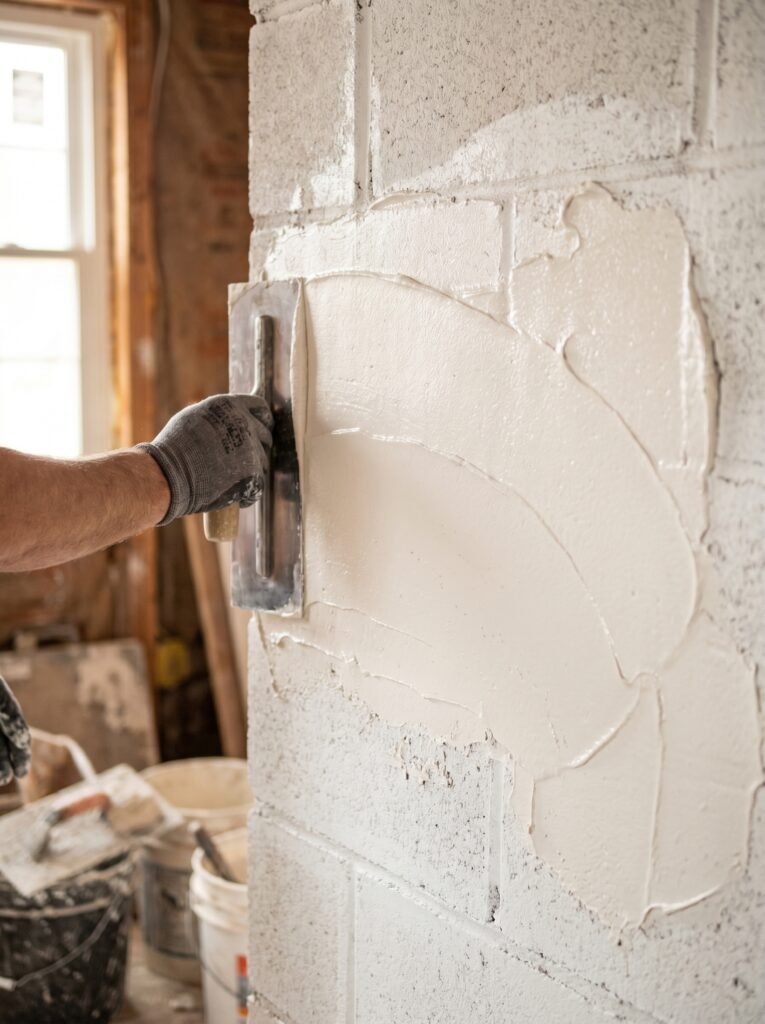
If paint feels too simple for what you’re imagining — if you want depth, texture, and a surface that looks truly artisan — then a skim coat of plaster or joint compound is your answer. This technique has been used by European craftsmen for centuries, and it brings a warmth and organic beauty that no paint alone can replicate.
The process involves applying a thin layer of finish plaster or flexible joint compound directly over the primed cinder block surface, using a wide drywall knife or trowel to spread it in sweeping, irregular motions. You’re not trying to achieve perfection — the slight variations in thickness and texture are exactly what make this finish beautiful. Think of it the way a baker thinks about the imperfect swirls on a handmade croissant. The imperfection is the point.
Once dried and lightly sanded, the plastered surface can be painted in any color, sealed with a matte wax for a Venetian plaster effect, or left in its raw state for a pale, earthy finish that photographs magnificently in natural light. This is the technique behind those impossibly cozy European kitchen walls you’ve been pinning for years.
5. Strapping and Drywall: When You Want a Clean Slate Completely
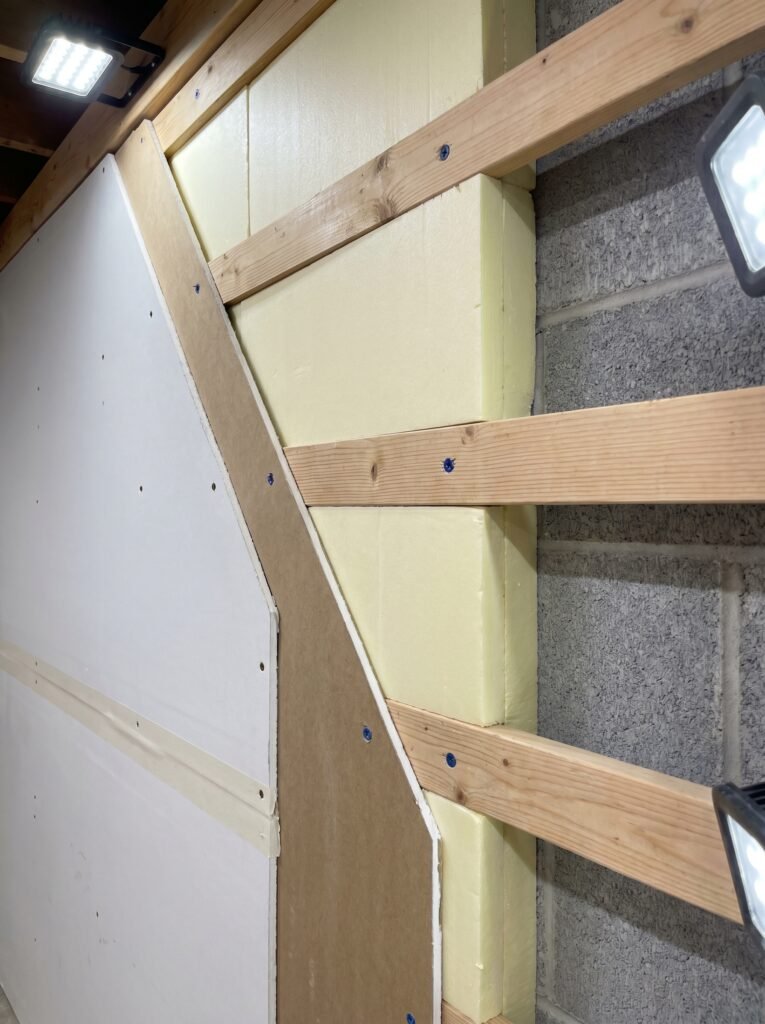
Sometimes a wall is so rough, so damaged, or so moisture-compromised that you don’t want to work with the cinder block — you want to cover it entirely. This is where furring strips and drywall enter the picture, and this method offers the most radical transformation of all.
Furring strips are narrow lengths of wood (typically 1×3 or 1×4) that are anchored directly into the cinder block using masonry screws and a hammer drill. They’re installed vertically every 16 inches, creating a framework to which standard drywall sheets can be attached. The result is a smooth, conventional wall surface that can be treated exactly like any other wall in your home — painted, wallpapered, tiled, or paneled.
“You don’t have to love what you started with — you just have to love where you end up.”
The important caveat here is insulation. The cavity between the furring strips and the cinder block is the perfect opportunity to add rigid foam board insulation, which addresses the cold, damp feeling that basement and garage walls often carry. In a space where you spend real time — a home office, a workout room, a creative studio — this thermal barrier makes an enormous difference in how the room actually feels to inhabit.
6. Wood Paneling: The Warm, Textured Alternative That Pinterest Absolutely Loves
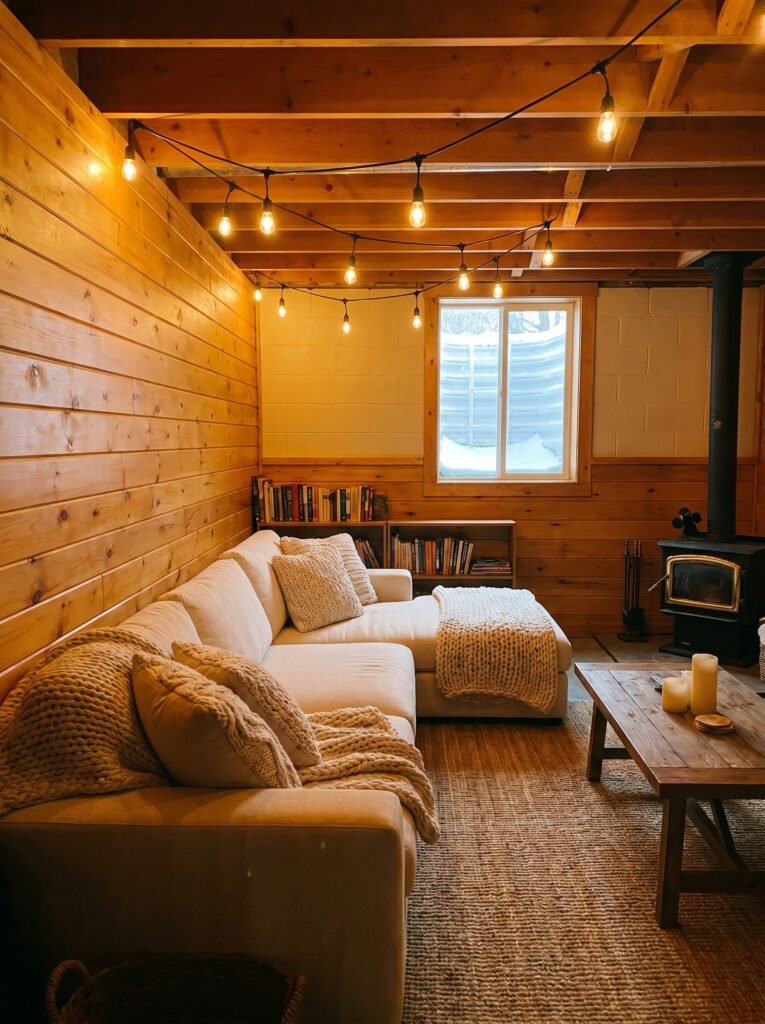
There is perhaps no faster way to make a cinder block wall feel cozy than covering it in wood. Wood paneling has undergone a complete cultural rehabilitation over the past decade — what once conjured images of 1970s rec rooms now evokes hygge, Scandinavian warmth, and the kind of intentional, slow-living aesthetic that dominates every aspirational home account on the internet.
Shiplap, tongue-and-groove pine, beadboard, and even reclaimed pallet wood are all viable options for covering cinder block, provided you’ve first installed furring strips to create a flat, stable surface. Staining the wood in a pale honey or whitewashing it with a diluted paint solution creates a finish that feels both modern and timeless — the design equivalent of a well-tailored piece of clothing that works for any occasion.
In a basement family room or a mudroom, wood-paneled walls signal warmth, thoughtfulness, and a sense of permanence. Combined with good lighting and simple textiles, a once-cold cinder block space becomes the room everyone gravitates toward on a cold winter evening.
7. The Dramatic Power of Dark Color in an Industrial Space
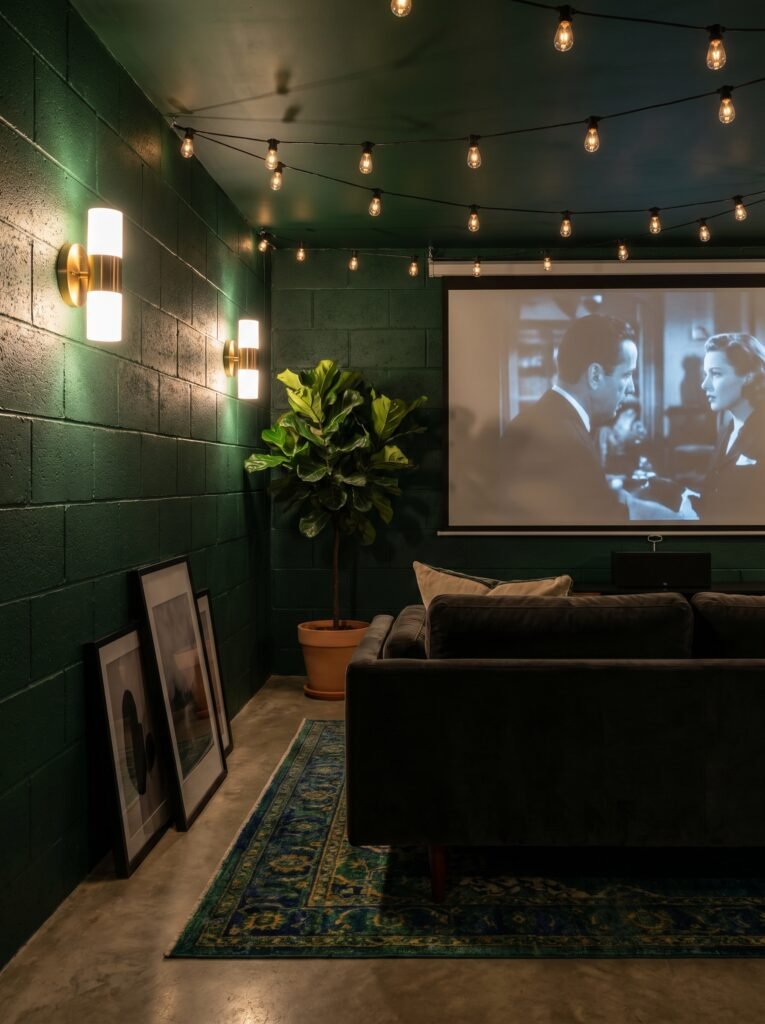
There’s a counterintuitive truth about small or dim spaces — and it’s that going darker can actually make them feel more intentional and enveloping rather than smaller and more oppressive. This principle applies beautifully to cinder block rooms.
A deep navy, forest green, or warm burgundy applied over properly primed cinder block creates a space that feels like stepping into a private world. The texture of the block becomes an asset in dark colors — it catches light differently at different times of day, creating a surface that almost seems to breathe. Pair dark walls with warm brass or matte black fixtures, simple Edison bulb lighting, and a few well-chosen plants, and you’ve created the kind of moody, atmospheric space that earns forty thousand saves on Pinterest without trying.
8. Wallpaper Over Cinder Block — Is It Possible? (Yes, With the Right Approach)
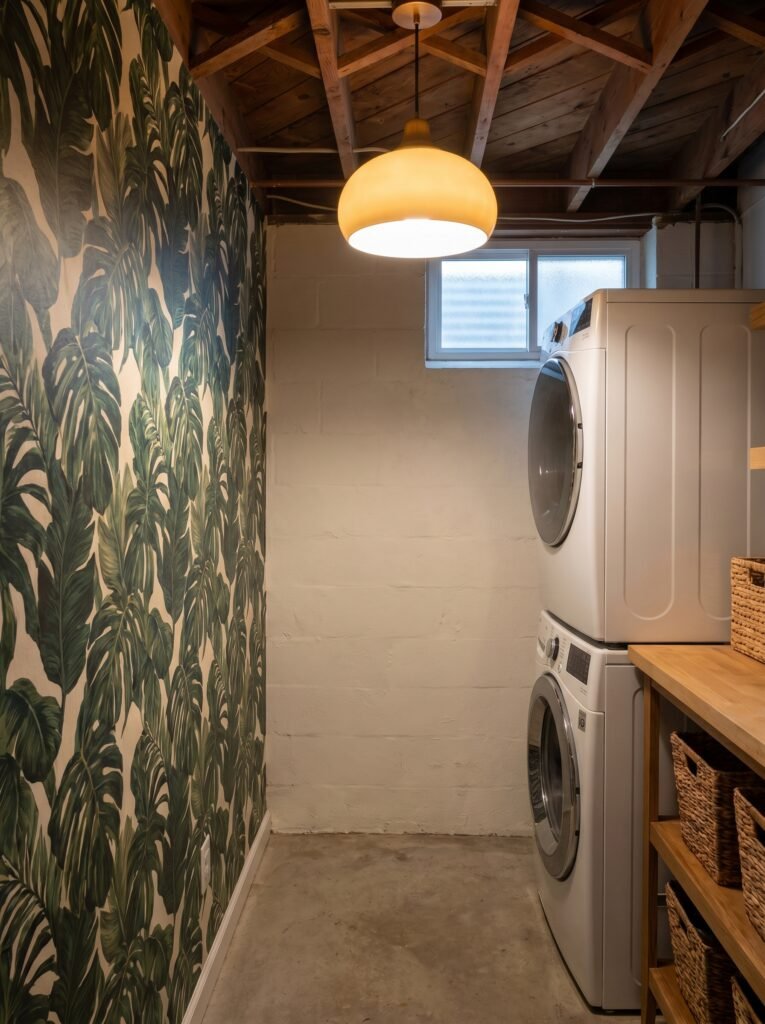
Wallpaper and cinder block seem like they should be mortal enemies — and without preparation, they would be. But with the right groundwork, wallpaper is absolutely achievable over masonry, and the results can be breathtaking.
The secret is in achieving a smooth base first. A skim coat of joint compound, applied and sanded to create a relatively smooth surface, gives wallpaper the flat foundation it needs to adhere properly and look beautiful. The wall should then be primed with a wallpaper-specific primer before any paper is hung.
Removable peel-and-stick wallpapers are the more forgiving option for cinder block spaces — they work best on smoother skim-coated surfaces and allow for changes without commitment. Traditional wallpapers require more preparation but offer more durability and a wider range of patterns and textures. In a laundry room or basement bathroom, a botanical print or geometric wallpaper against a cinder block backdrop creates an unexpected, sophisticated moment that feels entirely deliberate.
9. Creative Accent Wall Ideas: Gallery, Shelving, and Living Walls
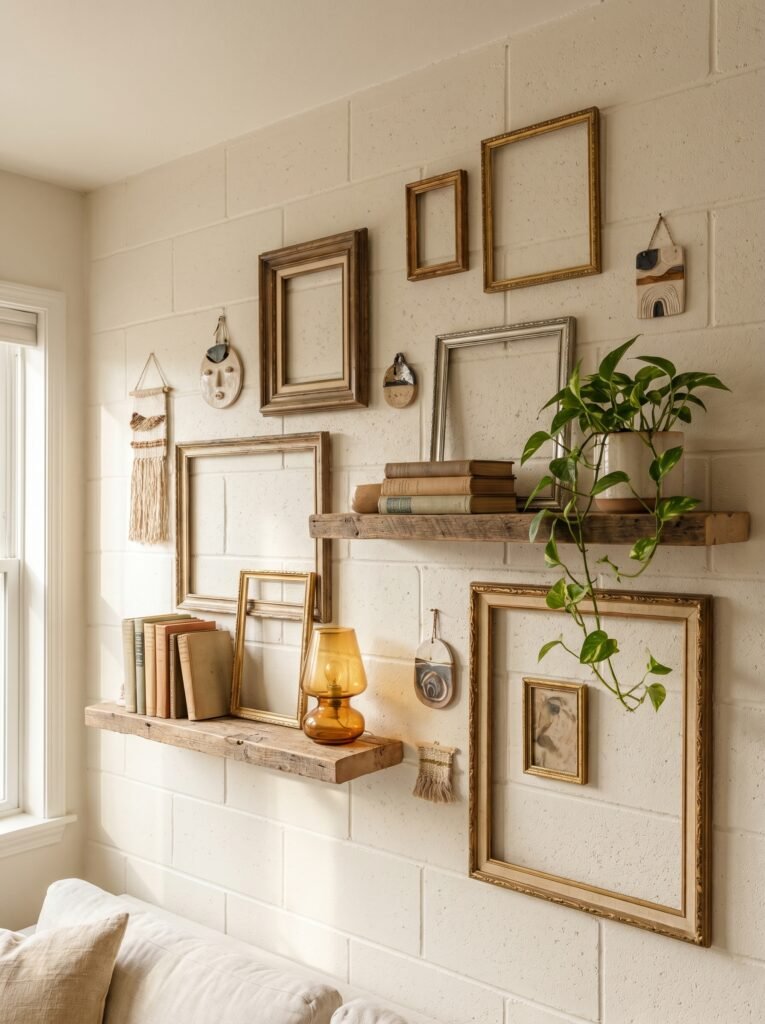
Not every cinder block surface needs to be completely transformed — sometimes the most interesting design decision is to let the block exist and build around it creatively.
A gallery wall layered over painted cinder block has a raw, gallery-like quality that finished drywall can never quite replicate. The slight unevenness of the masonry gives the wall a visual energy that makes even simple frames and prints look more considered. Use a mix of sizes, lean some pieces rather than hanging them, and incorporate objects alongside framed art — small mirrors, ceramic pieces, a hanging plant — to create something that feels curated over time rather than assembled in an afternoon.
“Sometimes the most beautiful design choice is knowing what not to change.”
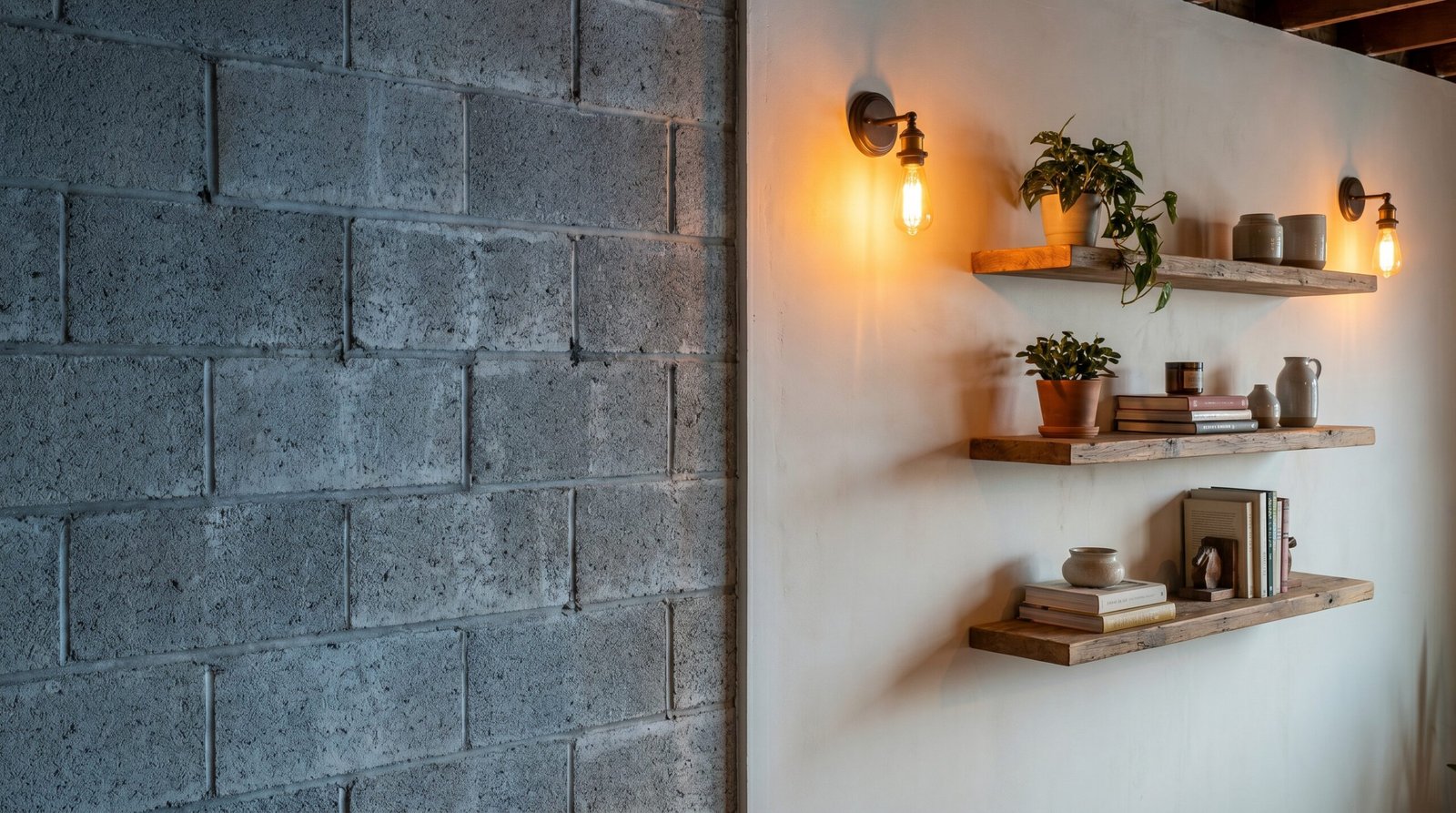
Floating shelves anchored with heavy-duty masonry anchors add function to a cinder block wall while creating visual interest at multiple levels. Styled with books, plants, small lamps, and objects that mean something to you, these shelves transform a cold industrial surface into something personal and alive.
10. Lighting’s Transformative Role in a Cinder Block Makeover
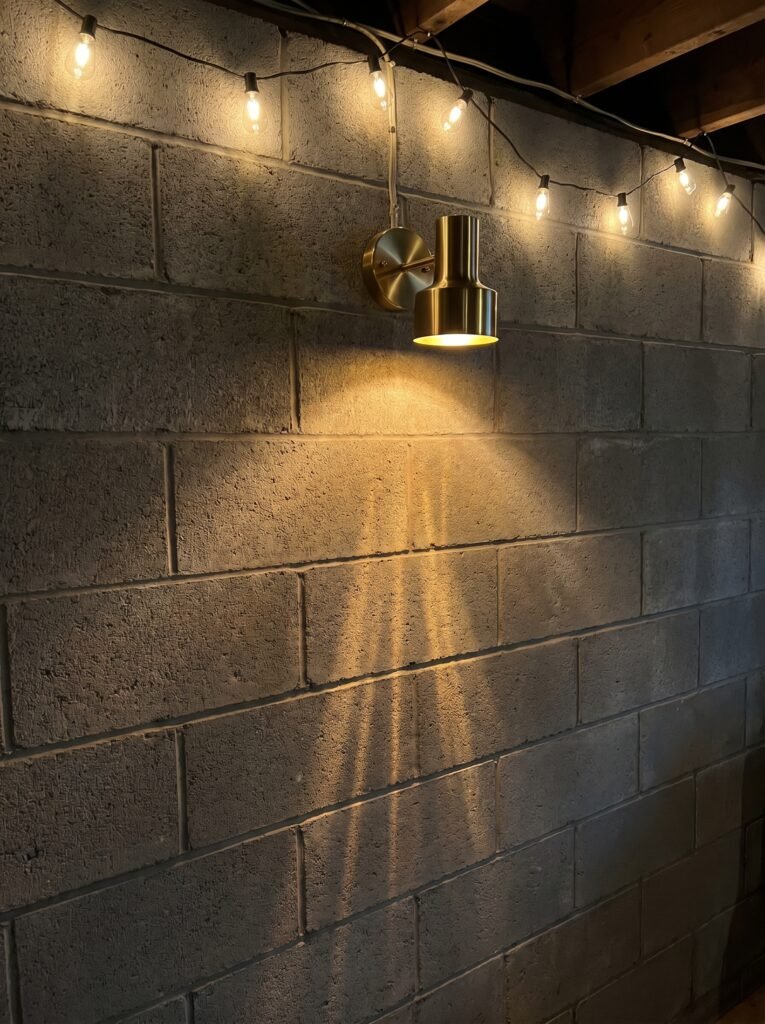
No surface renovation is complete without considering how light interacts with it — and cinder block, with its inherent texture and depth, is particularly responsive to light direction and quality.
Directional lighting — whether from wall sconces, track lighting, or even a simple clip-on spotlight — casts dramatic shadows across the surface of cinder block, emphasizing its texture and creating depth that feels architectural rather than accidental. This works especially well with painted blocks in medium tones, where the interplay of light and shadow becomes part of the room’s visual language.
Warm-toned bulbs (look for a color temperature between 2700K and 3000K) soften the inherent coldness of masonry, making even an unpainted cinder block wall feel more livable. String lights draped along the top edge of a basement wall, or neon signs mounted on a dark-painted block surface, create the kind of ambient glow that makes a utilitarian space feel like a destination.
11. The Budget Breakdown — Realistic Costs for Every Approach
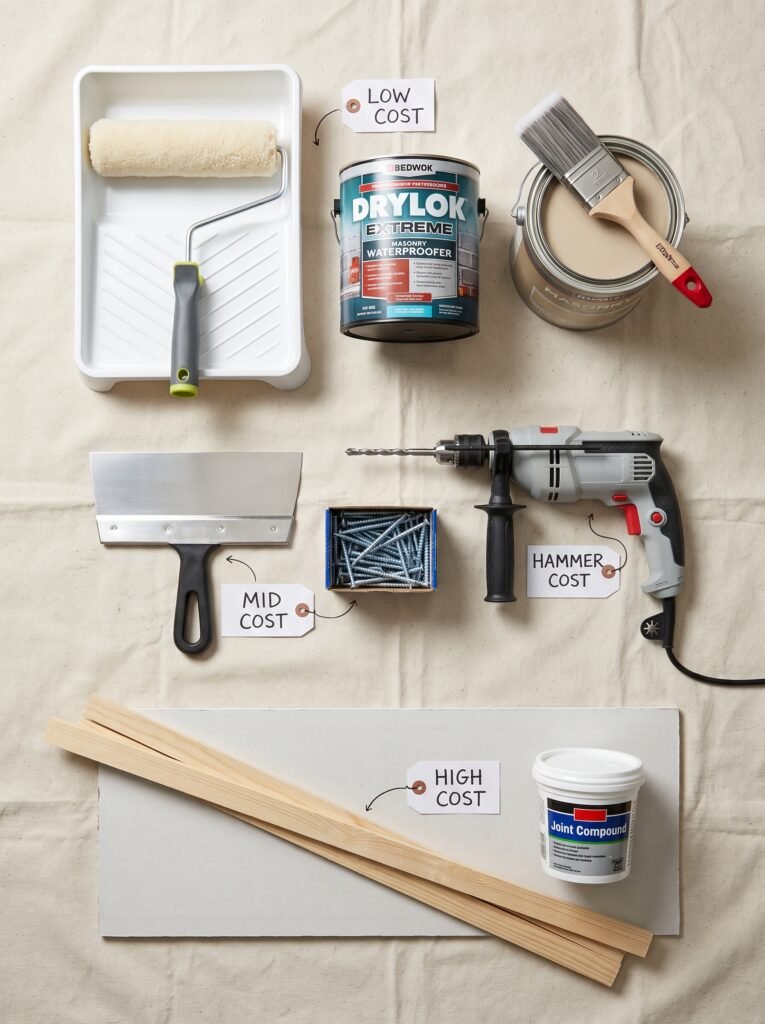
Transparency matters when it comes to home improvement, because nothing derails a project faster than a budget surprise at the hardware store. Here’s an honest look at what each approach typically costs for a standard 10×10 foot wall.
A basic paint makeover — including primer, two coats of masonry paint, and supplies — typically runs between $80 and $200 depending on paint quality and wall condition. A skim coat finish adds labor (whether professional or your own time) and materials, bringing the cost to roughly $150–$400 for a DIY approach. Furring strips with drywall and insulation generally fall between $300 and $700 for materials alone, while professional installation can push that significantly higher. Wood paneling sits in a similar range, with reclaimed or specialty wood increasing the cost considerably.
The important perspective here is value — because in each case, you’re not just spending money, you’re fundamentally changing how a room feels to be in. That’s a return on investment that’s very hard to quantify and very easy to experience.
12. The Room-by-Room Guide to Which Makeover Belongs Where
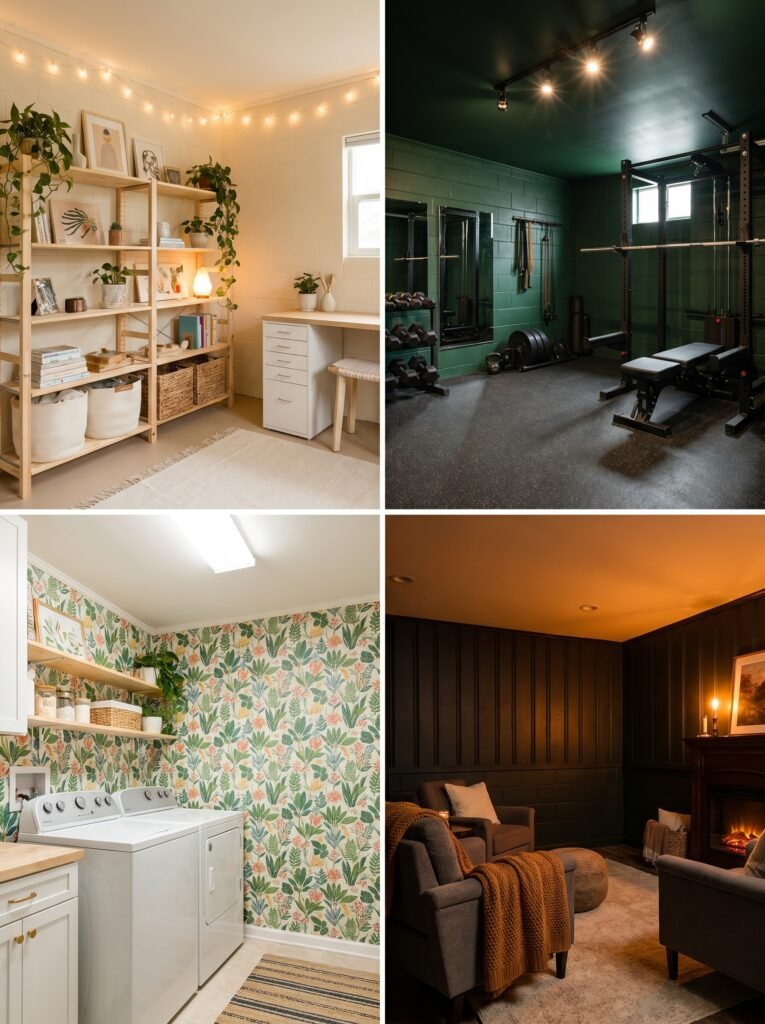
Different spaces have different needs, and the best cinder block makeover is always the one that serves the specific room’s purpose and mood.
In a basement home office or studio, the skim coat plaster approach creates a creative, slightly bohemian atmosphere that encourages focus and inspiration without feeling sterile. Pair it with warm lighting and open shelving for maximum effect.
In a garage workshop or gym, a high-quality masonry paint in a mid-tone gray or deep green is durable, easy to clean, and creates a space that feels professional and purposeful. Add good task lighting and pegboard storage for a workshop that actually inspires work.
In a laundry room or utility space, unexpected wallpaper or a bold paint color turns a purely functional room into a small, personal delight — the kind of space that makes even laundry feel slightly less tedious.
In a basement family room or den, the combination of wood paneling, warm lighting, and soft textiles creates the ultimate cozy retreat — the room that becomes the heart of the house during cold-weather months.
—
🌿 How to Take Care of Your Newly Transformed Cinder Block Wall
Once your makeover is complete, a little ongoing care keeps it looking intentional for years.
For painted surfaces, clean with a slightly damp cloth and a gentle all-purpose cleaner — avoid abrasive scrubbers that can pull paint from the textured surface. Touch up paint chips promptly before moisture can access the masonry beneath. If you used a masonry sealer over the paint, plan to reapply it every three to five years to maintain the moisture barrier.
For plastered or skim-coated walls, avoid hanging heavy objects without proper masonry anchors beneath the surface, and address any cracks immediately with flexible caulk before they spread. Humidity management is your long-term friend here — a dehumidifier in basement spaces prevents the moisture fluctuations that cause plaster to crack and lift over time.
For wood-paneled walls over furring strips, keep an eye on the wood for any signs of warping or moisture damage, particularly near floor level. A small gap at the base of the paneling (covered by baseboard trim) allows air circulation and dramatically reduces moisture-related issues.
—
❓ FAQ
Q: Can I paint cinder block walls without using a special primer? A: Technically yes, but practically speaking, no — not if you want the finish to last. Standard latex primer doesn’t penetrate masonry the way it penetrates drywall, leading to peeling and uneven absorption within months. A dedicated masonry primer creates the chemical bond that makes all the difference between a finish that lasts a season and one that lasts a decade.
Q: How do I hang things on a cinder block wall without cracking the blocks? A: The best approach is a hammer drill with a masonry bit and appropriate masonry anchors or concrete screws (Tapcons are a trusted and widely available option). Drill slowly, clear the dust from the hole, and use anchors rated for more weight than you need. Avoid drilling into the mortar joints, which are structurally weaker than the blocks themselves.
Q: Is it possible to insulate a cinder block wall without losing too much floor space? A: Yes — rigid foam board insulation (typically ½ inch to 2 inches thick) applied directly to the block before furring strips adds meaningful thermal value with minimal footprint. In rooms where every square foot matters, this approach offers the best balance between insulation performance and space efficiency.
—
💭 Final Thought
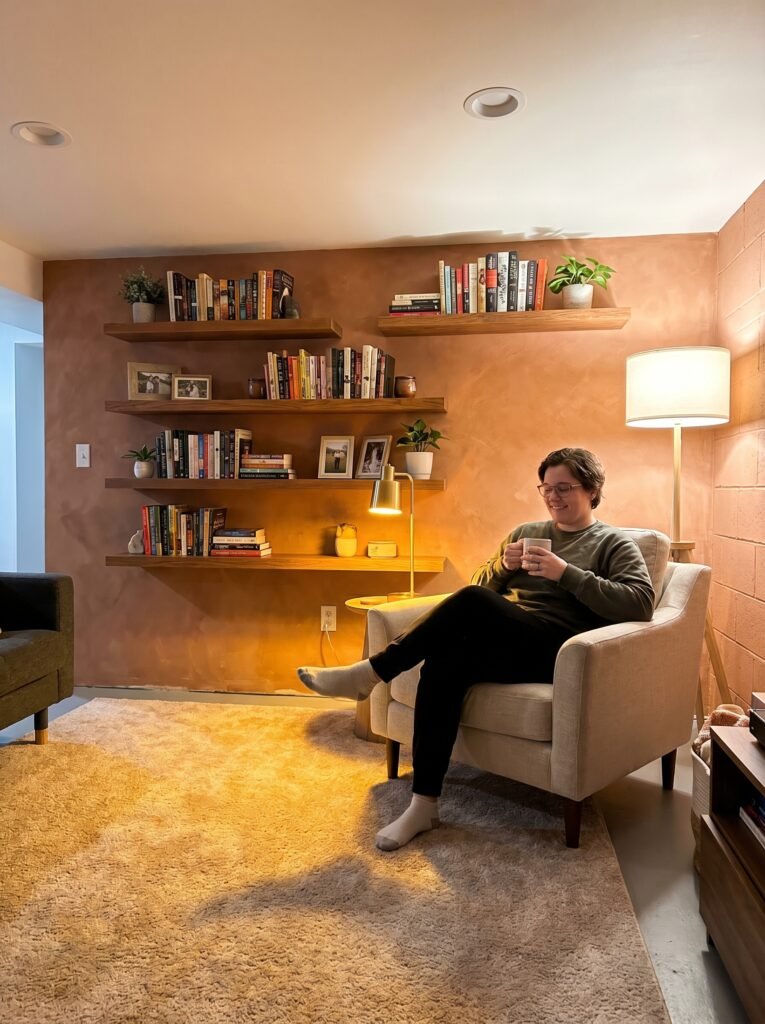
There’s something quietly powerful about taking the part of your home that seemed most beyond saving and making it the part you’re most proud of. A cinder block wall doesn’t have to be a problem to solve — it can be a story to tell, a texture to embrace, a surface that grounds your space in something honest and real.
The homes we love most aren’t the ones that look perfect. They’re the ones that look lived in, thought about, and genuinely cared for — one intentional decision at a time.
So tell me: which wall in your home have you been afraid to touch — and what might it become if you finally stopped being afraid of it?