
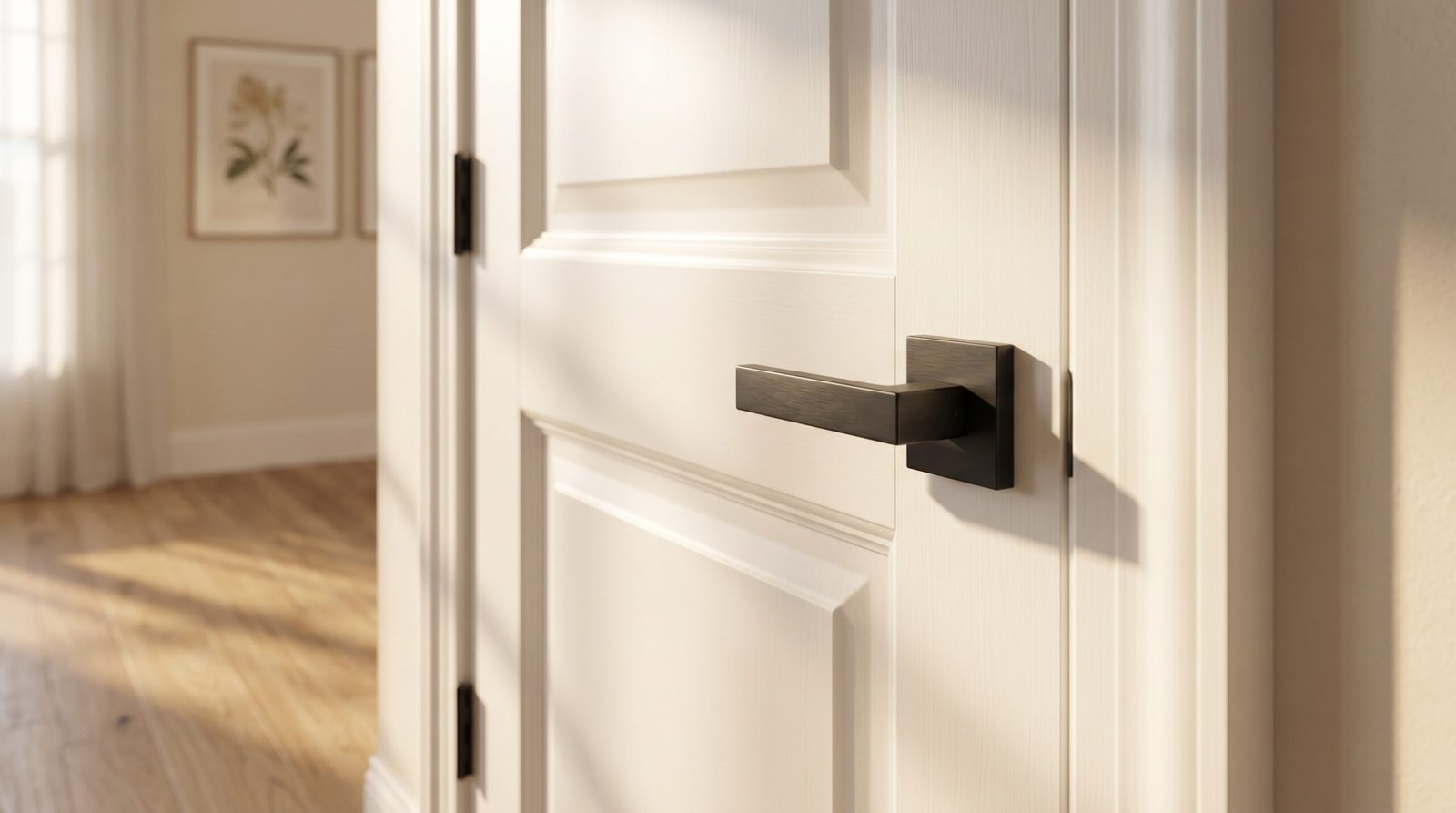
The Small Detail That Changes Everything: How Door Hardware Transforms Your Home’s Interior
There’s a moment — you’ve repainted the walls, arranged the furniture just right, hung the perfect art — and something still feels off. Nine times out of ten, the culprit is the door hardware. Those small, overlooked pieces of metal hold more design power than almost anything else in a room.
—
1. Why Door Hardware Is the Jewelry of Your Home’s Interior
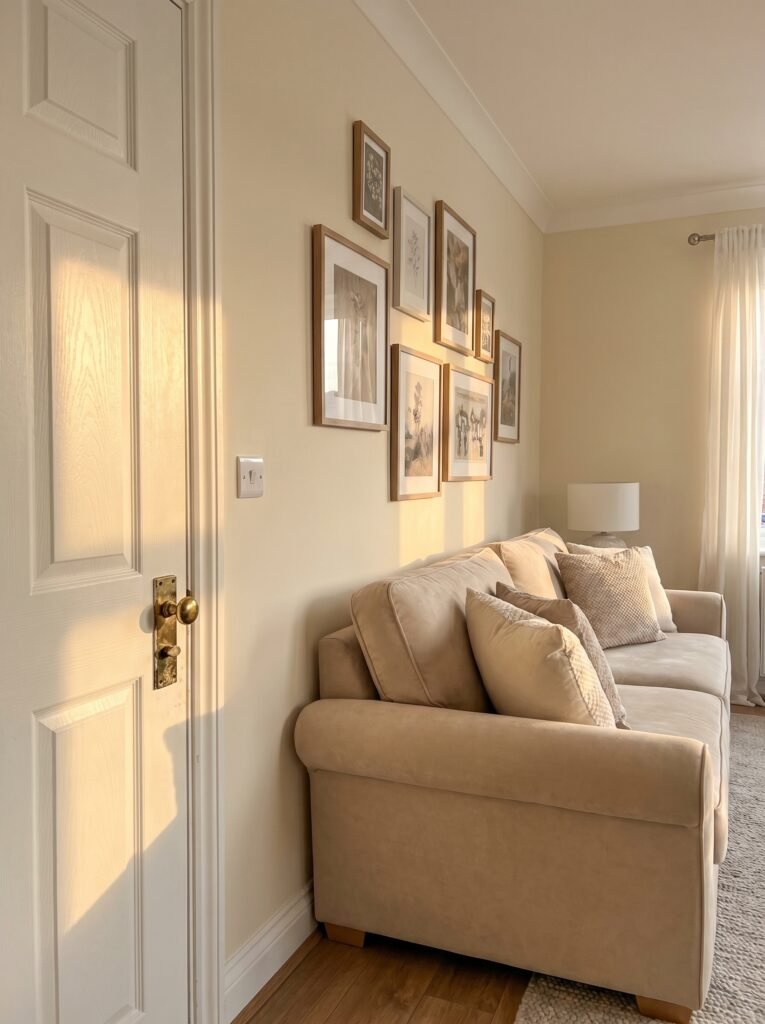
Think about getting dressed for an important evening. The outfit is beautiful, the hair is done, and then you reach for a cheap, tarnished pair of earrings. Suddenly, the whole look feels incomplete. That’s exactly what worn, mismatched, or builder-grade door hardware does to an otherwise thoughtfully designed interior.
Door hardware — knobs, handles, hinges, locks, and escutcheon plates — acts as the finishing jewelry of your home. It’s what your hands touch every single day. It’s one of the first things guests notice, even if they can’t quite name why the space feels polished or unfinished. Interior designers have known this secret for decades: invest in your hardware, and the entire room elevates effortlessly.
The beautiful truth is that swapping door hardware is one of the most affordable, high-impact upgrades you can make. No contractors, no weeks of renovation chaos — just a screwdriver, an afternoon, and a vision.
“Door hardware is the punctuation of interior design — without it, even the most beautiful sentence loses its meaning.”
—
2. Understanding the Different Types of Door Hardware (And What Each One Does)

Before you fall in love with a finish at the hardware store, it helps to understand what you’re actually choosing between. Door hardware isn’t one-size-fits-all, and the type of door — entry, interior passage, bathroom, closet — determines which hardware is appropriate.
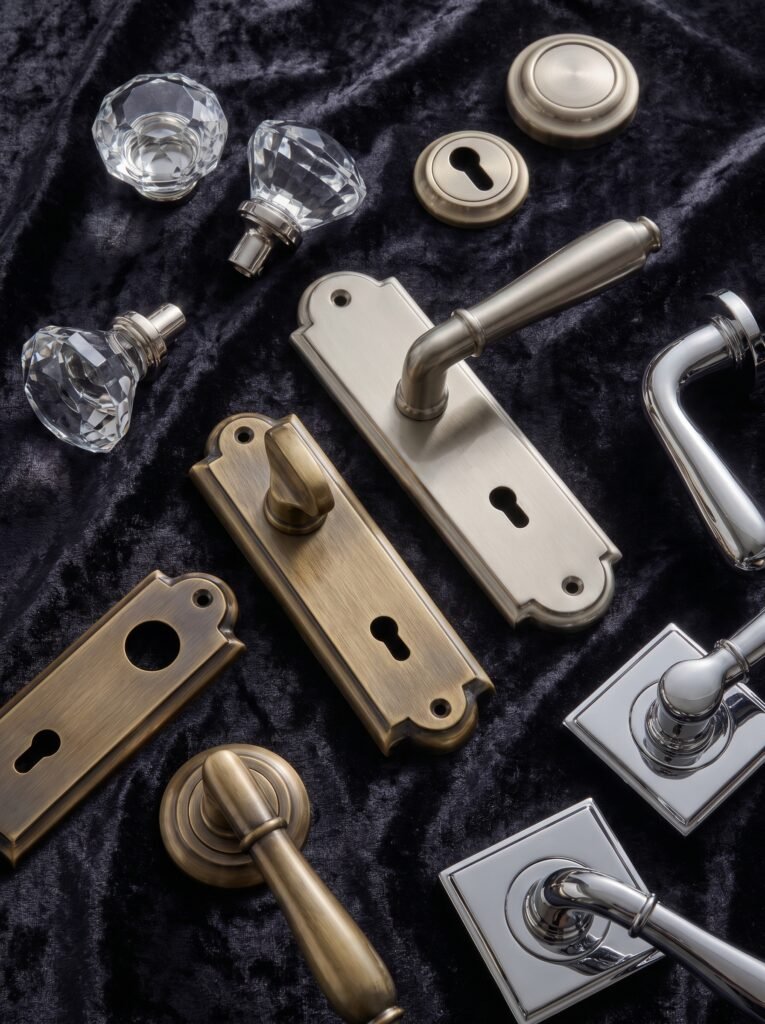
Knobs are round, classic, and timeless. They work beautifully in traditional, farmhouse, and transitional interiors. Levers are ergonomically superior — easier for children, elderly family members, and anyone carrying an armful of groceries — and tend to feel more contemporary or European in style. Pulls are long, horizontal hardware pieces most often found on sliding barn doors or cabinet-style interior doors. Each type communicates something different about the room it enters.
Beyond the visible piece, you also need to consider the latch mechanism. A passage set has no locking function and is used for hallways and living spaces. A privacy set locks from the inside — perfect for bathrooms and bedrooms. A dummy set is non-functional hardware used purely for aesthetics, typically on decorative double doors or closets that push open.
Understanding these distinctions before you shop saves you from making a gorgeous — but completely wrong — purchase.
—
3. The Most Popular Door Hardware Finishes and What They Say About Your Style
Walk into any well-curated home and you’ll notice that the hardware finishes tell a quiet story about who lives there. Finishes are more than a color choice — they’re a design language.
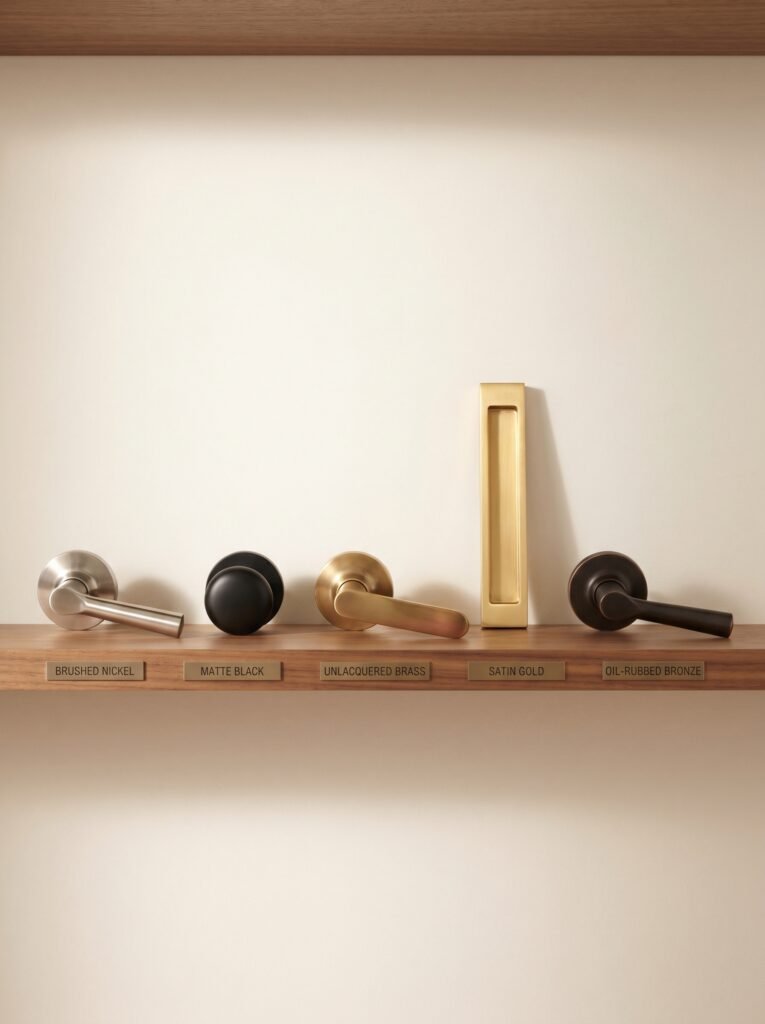
Brushed nickel has been the reigning champion of American interiors for two decades, and for good reason. It’s cool-toned, understated, and pairs beautifully with gray, white, and blue color palettes. It resists fingerprints better than polished metals and feels effortlessly clean without being cold.
Matte black has surged in popularity over the past several years, and it shows no sign of retreating. Against white walls, warm wood tones, or terracotta accents, matte black hardware creates a striking contrast that feels both modern and timeless. It’s bold without being aggressive.
Unlacquered brass is the darling of interior designers right now — and for good reason. It develops a living patina over time, warming and deepening as the years pass. It brings soul and history into a space, pairing magnetically with warm whites, sage greens, and rich jewel tones.
Satin gold, antique bronze, polished chrome, and oil-rubbed bronze round out the most common finishes — each with its own personality, each suited to different design aesthetics and lighting conditions.
—
4. The Golden Rule: How to Mix Metal Finishes Without Making It Look Chaotic
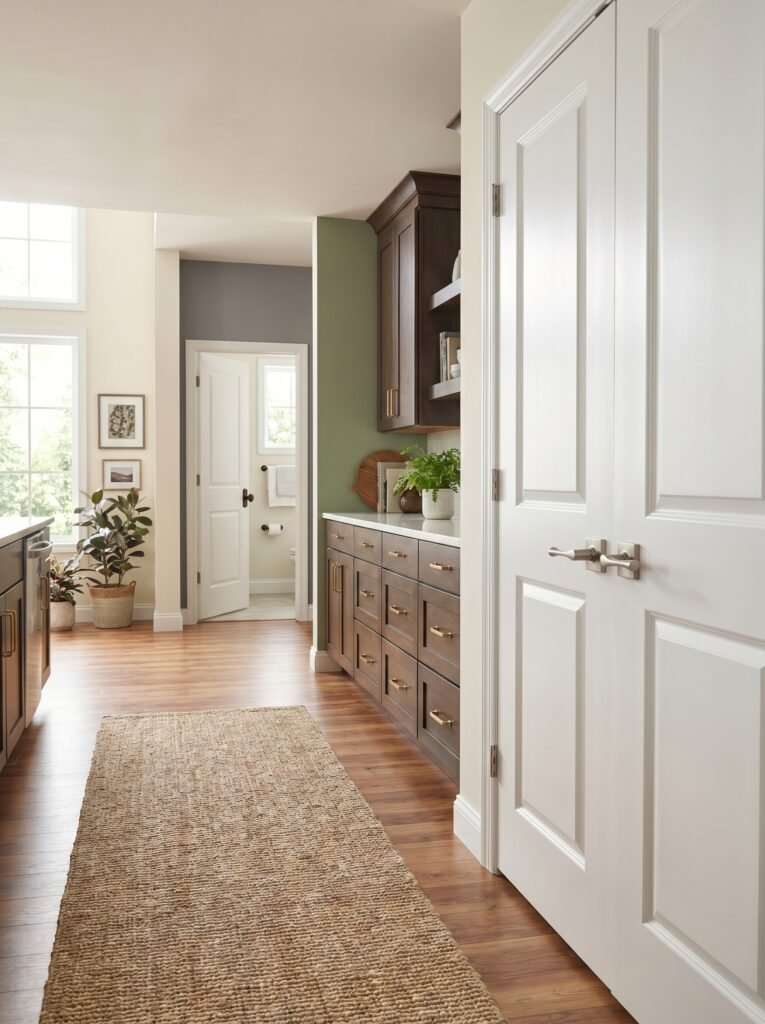
One of the most common fears homeowners have when choosing door hardware is mixing metals. There’s a persistent myth that everything must match perfectly — that your door knobs, light fixtures, cabinet pulls, and faucets must all be identical. That myth deserves to be gently dismantled.
Mixing metals is not only allowed — when done intentionally, it’s genuinely beautiful. The key word there is intentionally. The difference between a curated mix of metals and a chaotic one comes down to repetition and balance. Choose a dominant metal that appears most frequently throughout the space, a secondary metal that complements it, and perhaps one accent metal used sparingly as a surprise.
For example: brushed nickel door hardware throughout the hallway, warm brass in the kitchen, and a single antique bronze piece in the bathroom creates a journey through the home that feels collected and personal rather than showroom-generic. The metals don’t need to match — they need to converse.
“A home that looks too perfectly matched belongs in a catalog. A home that feels right belongs to someone.”
—
5. Door Hardware Styles That Pair Perfectly With Each Interior Design Aesthetic
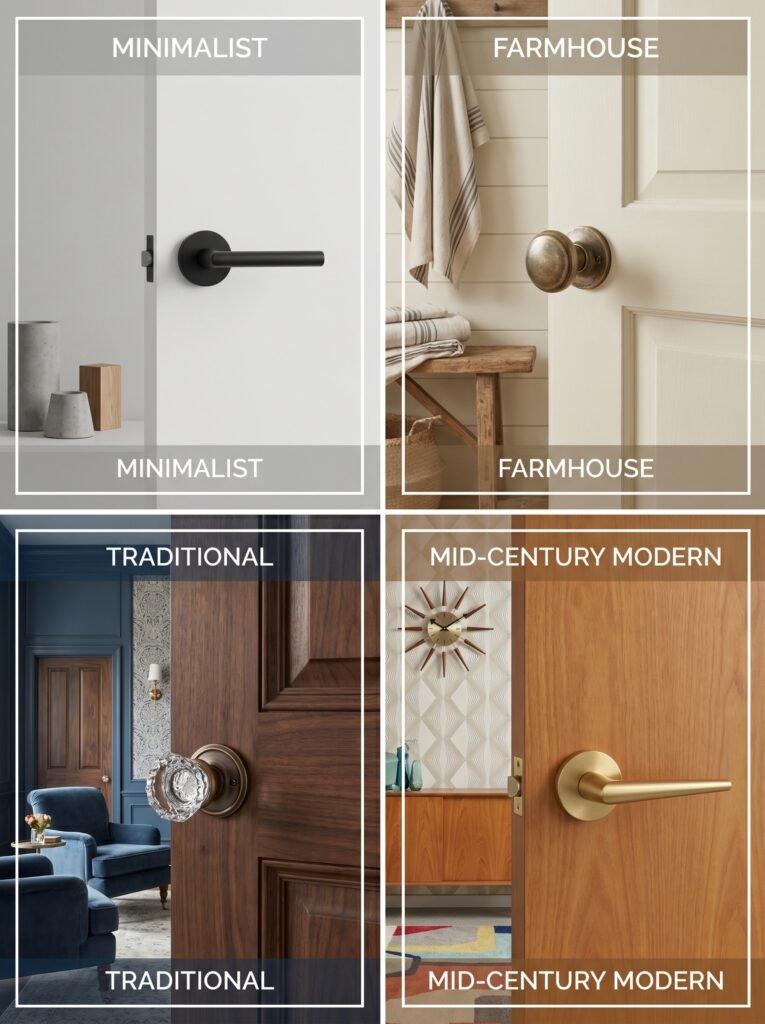
The style of your door hardware should feel like a natural extension of your interior design — not an afterthought. Here’s how to think about alignment between your decor aesthetic and your hardware choices.
For Modern and Minimalist interiors, clean lines are everything. Choose lever handles with a sleek, straight profile in matte black or brushed chrome. Avoid ornate details or decorative escutcheon plates that would feel fussy against a pared-back backdrop.
For Farmhouse and Cottage styles, round knobs in antique brass, aged bronze, or matte black feel completely at home. Look for hardware with a slightly worn quality — the kind that looks like it’s been in the family for generations. Glass knobs with a vintage feel are also a stunning choice here.
For Traditional and Classic interiors, crystal or faceted glass knobs, polished brass or nickel hardware with egg-and-dart details, and formal lever handles with decorative backplates all feel appropriate and elegant. These are spaces that appreciate ornamentation.
For Mid-Century Modern rooms, hardware with tapered, angled lines and warm metal finishes like satin brass or brushed gold feel authentic to the era. Think clean but not cold — warm but not fussy.
—
6. The Hidden Detail Most People Completely Overlook: Door Hinges
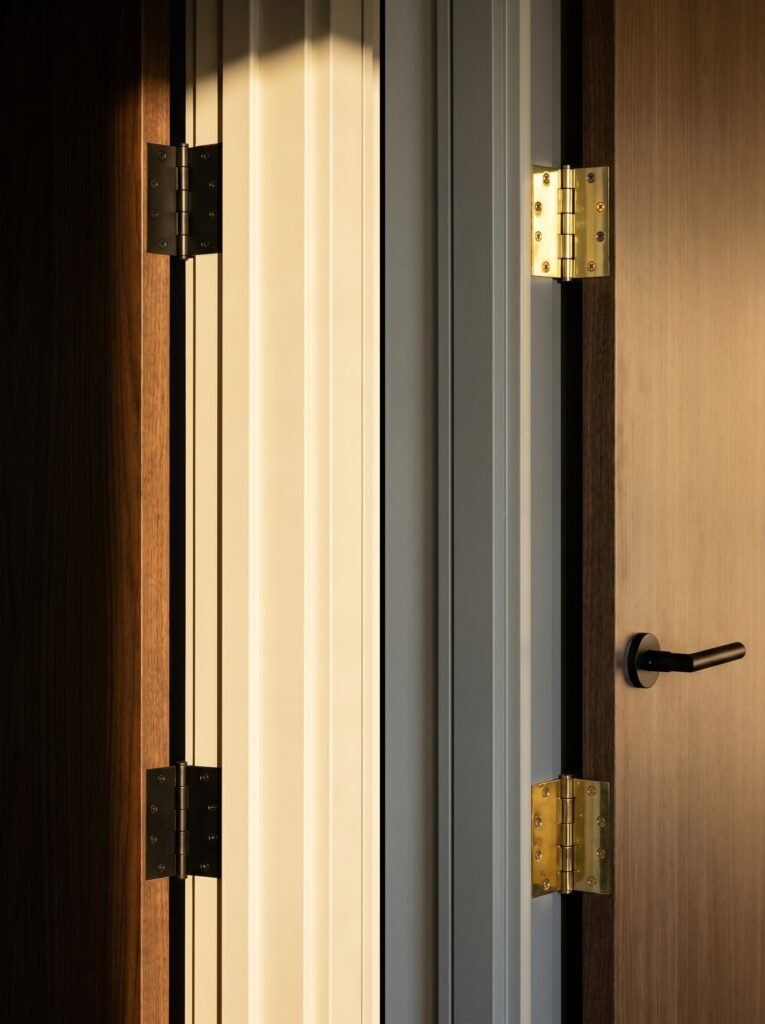
Here’s the thing nobody talks about at the hardware store, and nobody writes about on Pinterest nearly enough: your door hinges. Most homes have builder-grade brass hinges that haven’t been updated since the house was built — and they quietly undermine every beautiful design choice happening around them.
Hinges are visible. Every time a door swings open, those three or four hinges are right there, glinting or dulling in the light. If your knobs are matte black but your hinges are polished brass, you have a visual inconsistency that more perceptive visitors will feel even if they can’t name it.
The fix is simple and inexpensive: replace your hinges when you replace your hardware. Most interior door hinges are a standard size. Matching your hinges to your knobs or levers creates a cohesive, custom-looking result that genuinely elevates the entire door — and by extension, the entire room.
—
7. How to Choose Door Hardware for Small Spaces Without Overwhelming the Room
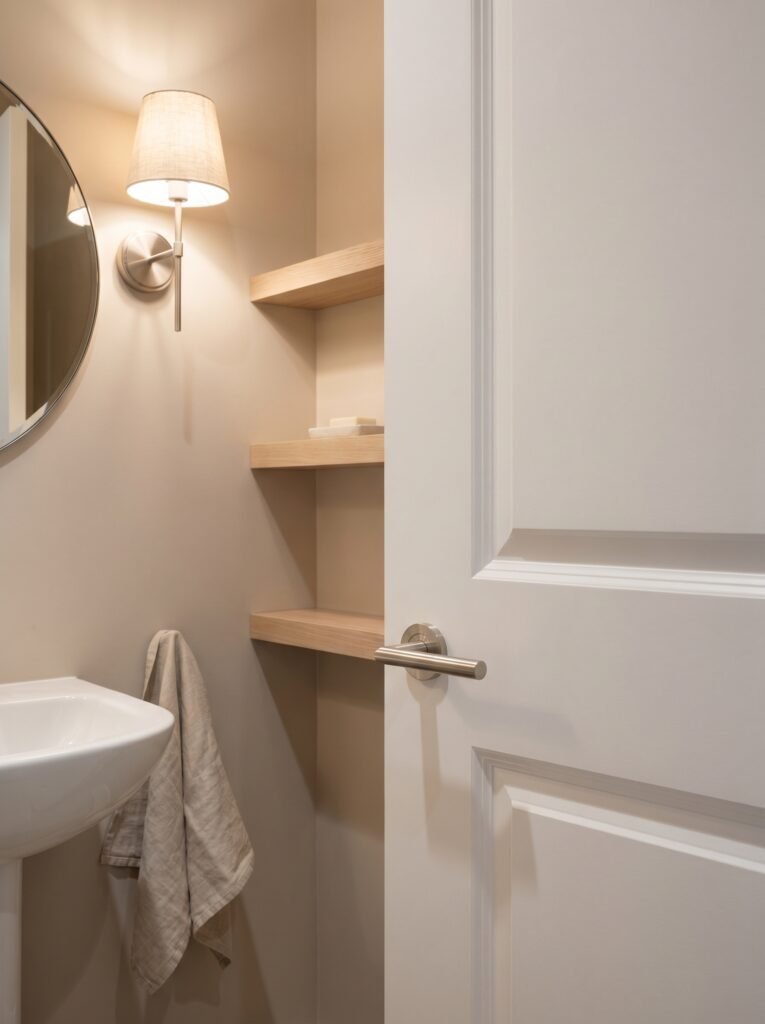
Small rooms require a different approach to almost every design decision, and door hardware is no exception. In a tiny bathroom, a powder room, or a narrow hallway, the hardware you choose can either open the space visually or inadvertently close it in.
In small spaces, scale is everything. Avoid oversized, chunky knobs or heavy decorative lever handles — they’ll fight for visual attention in a room where every element needs to breathe. Instead, opt for slim, simple profiles. A slender lever handle in a light finish — brushed nickel, satin gold, or matte white — will feel appropriately proportioned without disappearing into the background.
Lighter finishes also help in small spaces. Where matte black makes a powerful statement in a large entryway, it can feel heavy in a compact powder room. Brushed nickel or unlacquered brass brings warmth and light reflection, helping the space feel more open and alive.
“Good design in a small space isn’t about what you add — it’s about what each detail earns its right to be there.”
—
8. The Front Door: Where Your Home’s First Impression Lives
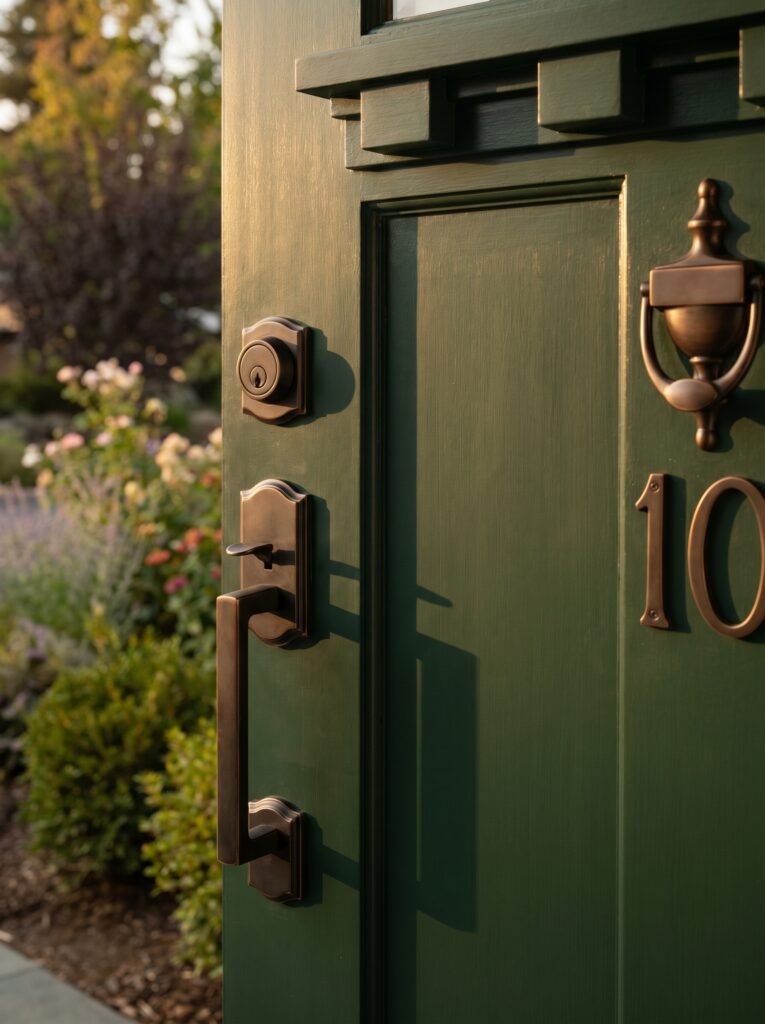
The front door is the handshake before the conversation — and its hardware sets the entire tone of what’s inside. Exterior door hardware needs to work harder than interior hardware, balancing durability, weather resistance, security, and aesthetic beauty simultaneously.
Entry door hardware typically includes a deadbolt, a handleset or knob set, and often a knocker or doorbell surround. When these elements coordinate — same finish, complementary style — the front door transforms from a functional barrier into a genuine design feature.
For a craftsman-style home, an oil-rubbed bronze handleset with a rectangular grip and decorative escutcheon plate feels authentic and warm. For a modern home with clean lines, an oversized matte black lever with a concealed deadbolt and minimal backplate makes a quietly powerful architectural statement.
Don’t forget the house numbers and mail slot if you have one — they’re part of the same first-impression composition and deserve the same intentional consideration.
—
9. Budget-Friendly Ways to Upgrade Your Door Hardware Without Breaking Your Budget
Here’s the reality that most design-forward articles skip right past: beautiful door hardware doesn’t require a designer budget. You can transform the feeling of your entire home for a fraction of what you might expect.
Start by prioritizing. Your most-used and most-seen doors — the front entry, the primary bedroom, the main bathroom — deserve your best hardware investment. Closets, laundry rooms, and low-traffic hallways can carry more affordable options without anyone noticing.
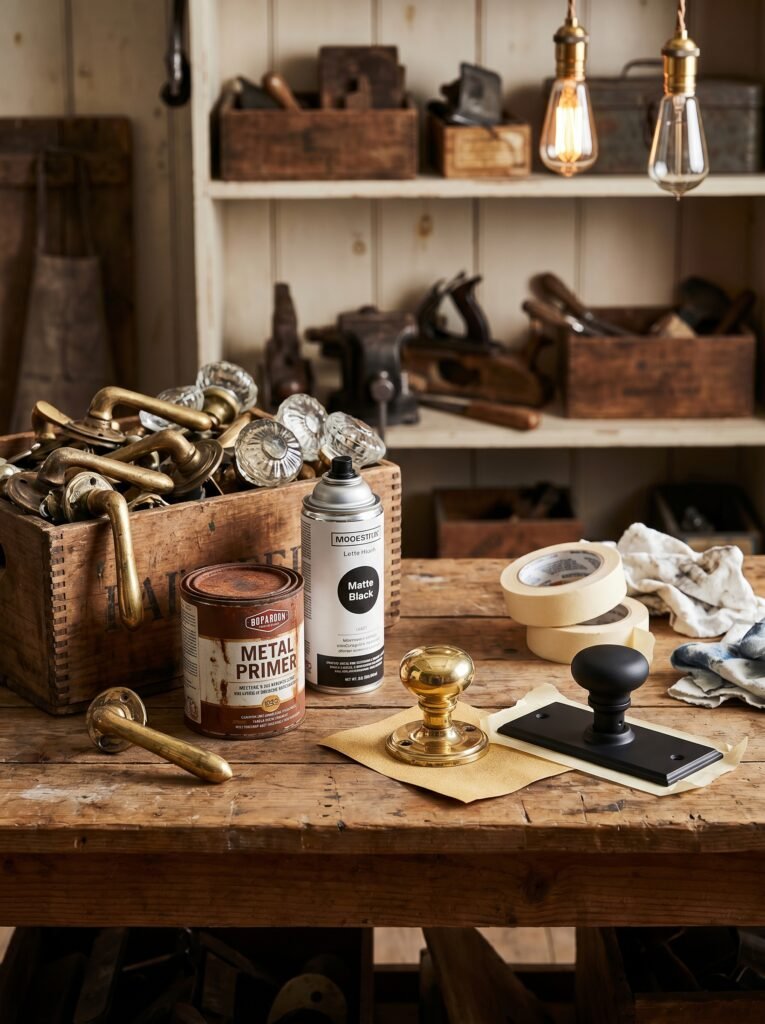
Shop architectural salvage stores and estate sales for vintage hardware. Antique glass knobs, aged brass lever handles, and original mid-century hardware can be found for a fraction of retail prices — and they carry a patina and character that no new hardware can replicate.
Consider spray painting existing hardware as a short-term transformation. Using a high-adhesion metal primer and a quality spray paint in matte black or satin bronze, you can update dated brass hardware for under twenty dollars per door. It won’t be as durable as quality finished hardware, but as a renter or a stepping-stone fix, it’s remarkably effective.
—
10. Door Hardware for Rental Homes and Apartments: What You Can (and Can’t) Change
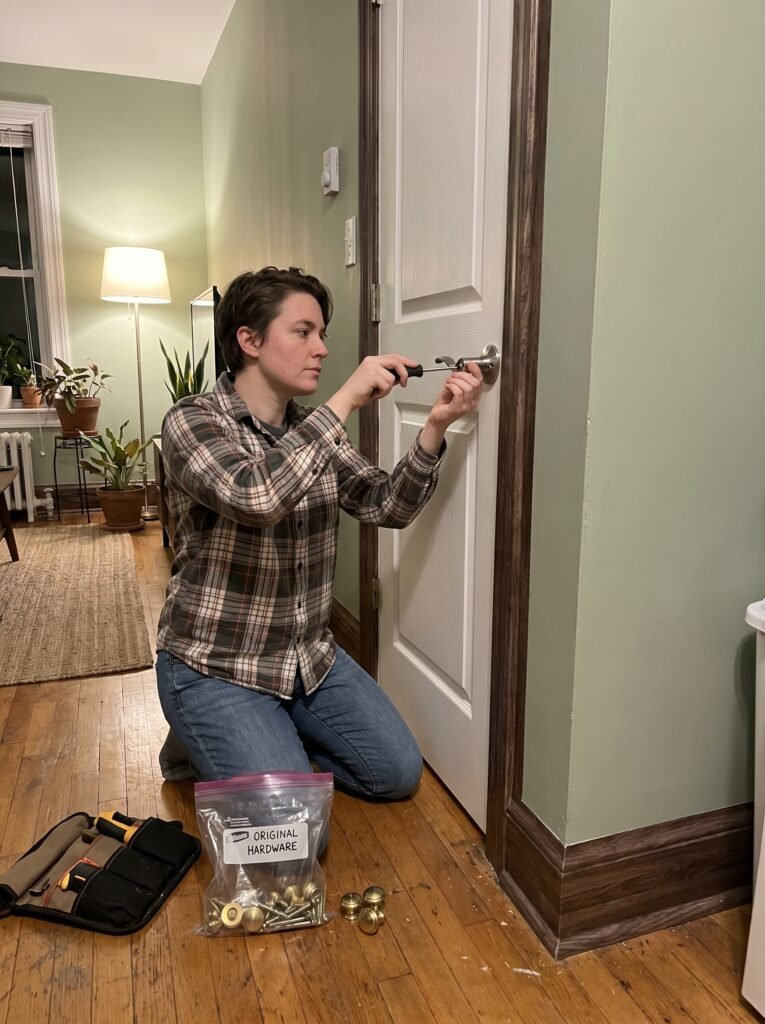
Living in a rental doesn’t mean you’re stuck with whatever builder-grade hardware your landlord installed — but it does mean you need to be strategic. The good news is that most door hardware is entirely removable and reversible, making it one of the rare design upgrades available to renters.
Before changing anything, read your lease and ideally check with your landlord. Many landlords are perfectly happy for tenants to upgrade hardware, especially if the tenant agrees to either leave the new hardware or reinstall the original before moving out. Keep the original hardware in a labeled bag stored safely — this is non-negotiable, because reinstalling it at the end of your lease protects your security deposit.
For renters who want a completely temporary solution without changing any hardware at all, consider using removable adhesive contact paper on door trim and painting walls in your allowed colors to shift the visual context of the hardware — making even dated pieces feel more intentional.
—
11. The Psychology of Touch: Why the Feel of Door Hardware Matters as Much as the Look
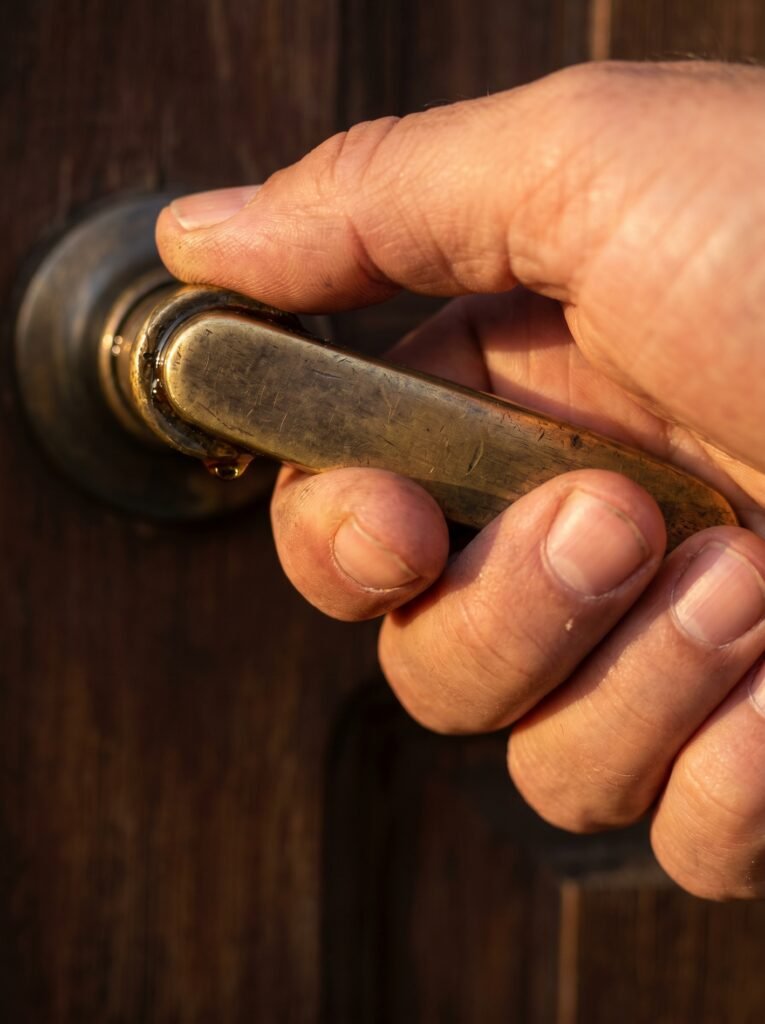
We talk endlessly about how our homes look, but we rarely pause to consider how they feel — literally, physically, in our hands. Door hardware is one of the most touched surfaces in your entire home, engaged dozens of times each day by every member of the household.
There is genuine psychological comfort in holding a door handle that feels solid, heavy, and well-made. Cheap hardware that wobbles, spins loosely, or catches on the strike plate creates a micro-frustration that accumulates over days and years into a low-level sense that your home isn’t quite right. Conversely, hardware that turns smoothly, sits firmly, and releases cleanly creates a quiet satisfaction you might never consciously notice — but would absolutely miss if it disappeared.
When shopping, always pick up the hardware physically if you can. Feel the weight. Operate the mechanism. Notice whether it feels like it will still be working beautifully in ten years. Specifications and photography online will tell you the finish and the measurements, but only your hands can tell you if the piece has the right feel for your home.
“The best door hardware isn’t the one you see first — it’s the one you feel every time you walk through the door.”
—
12. Trends Worth Watching in Door Hardware Interior Design Right Now
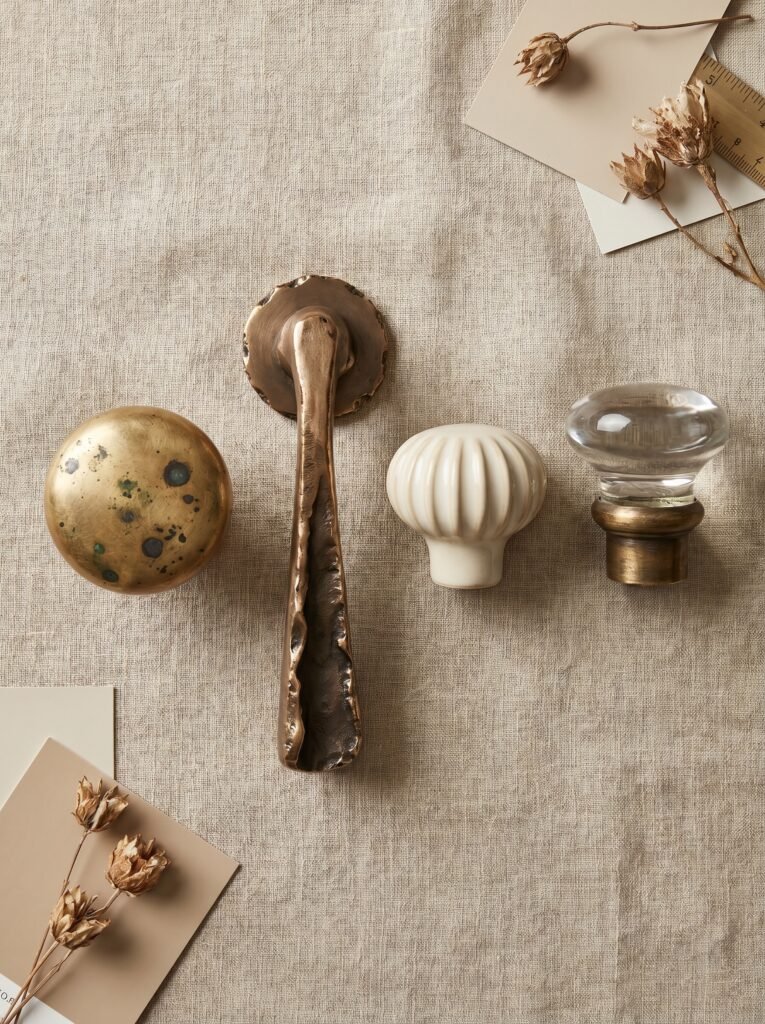
Interior design moves in cycles, and door hardware trends are no exception. Several directions are gaining momentum right now that are worth knowing about — not so you can chase every trend, but so you can identify what genuinely speaks to your personal aesthetic.
Unlacquered and living finishes are having a genuine cultural moment. There’s a growing appetite for materials that age, change, and develop character over time — a direct response to years of perfect, sterile, Instagram-uniform interiors. Unlacquered brass, raw steel, and natural bronze that patinas beautifully are all gaining serious traction.
Sculptural hardware — pieces that function as miniature art objects — is appearing more frequently in architecturally forward homes. Think cast bronze handles with an organic, hand-formed quality, or lever handles that reference geological shapes and natural forms.
Fluted and ribbed detailing, borrowed from the resurgence of fluted cabinetry and furniture, is appearing on door knobs and pull hardware. The vertical lines add tactile interest and a quiet sense of luxury that photographs beautifully.
And perhaps most notably: the return of the doorknob. After years of lever-handle dominance, round knobs — especially in glass, aged brass, and ceramic — are reappearing in homes that want to feel collected, layered, and personal rather than showroom-fresh.
—
🌿 How to Take Care of Your Door Hardware
The most beautiful door hardware in the world loses its appeal if it isn’t properly maintained. The good news is that caring for door hardware is genuinely simple, and a small amount of regular attention keeps it looking intentional for years.
Wipe hardware down regularly with a soft, slightly damp cloth — not a wet one — to remove fingerprints and surface dust. Avoid abrasive cleaners entirely, especially on living finishes like unlacquered brass, which scratches easily and loses its beautiful patina when over-cleaned.
For brass hardware specifically, understand that darkening and patinating is part of the beauty, not a flaw. If you want to slow the patina, apply a thin coat of Renaissance wax or a similar museum-quality wax twice a year. If you want to embrace it, simply leave it alone and let time do its work.
Lubricate lock mechanisms and latch sets once a year with a dry graphite lubricant — never WD-40, which attracts dust and gums up mechanisms over time. A smooth-operating latch is a lasting latch.
If hinges begin to squeak, a drop of olive oil or a rub of petroleum jelly on the hinge pin will quiet them immediately. For persistent squeaking, the hinge may need to be tightened or the pin may need replacement.
—
❓ FAQ
Q: What is the most timeless door hardware finish that won’t feel dated in ten years? A: Brushed nickel and unlacquered brass are both strong long-term choices. Brushed nickel is neutral enough to work with almost any color palette, while unlacquered brass develops a personal patina that only gets more beautiful with age. Both transcend trends far more gracefully than polished chrome or highly trendy options.
Q: Can I mix door hardware styles in the same home, or does everything need to match? A: You absolutely can mix — and in many cases, you should. The key is intentionality. Choose a finish or a style family that anchors the home, then allow rooms to have their own personality within that framework. Where mixing goes wrong is when it’s accidental rather than deliberate.
Q: How do I know what size door hardware to buy for my doors? A: Most interior residential doors use a standard 2-3/8 inch or 2-3/4 inch backset — the distance from the edge of the door to the center of the knob hole. Measure your existing hardware before purchasing. Standard knobs and lever sets are designed to fit these measurements, and the packaging will clearly indicate backset compatibility.
—
💭 Final Thought
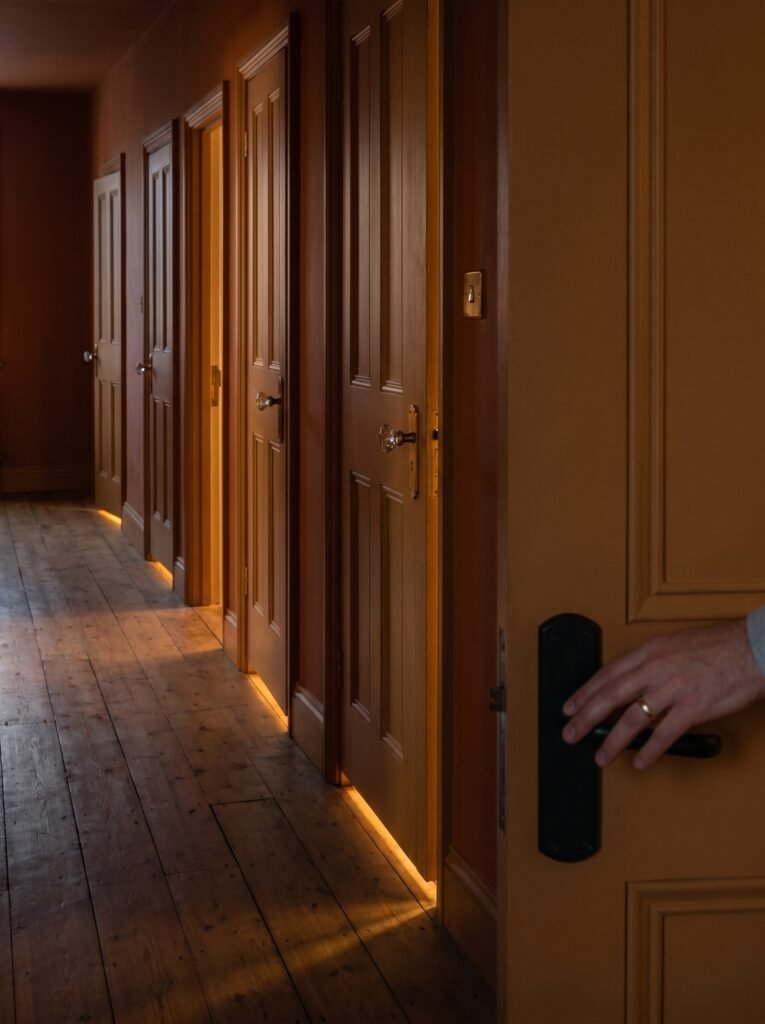
There’s something quietly profound about the idea that the pieces we touch most often in our homes are the ones we think about least. Door hardware lives at that intersection — functional and beautiful, practical and personal, small in scale but enormous in impact. When you choose hardware that feels right in your hand and looks right in your space, you’re not just finishing a room — you’re completing a conversation between you and your home.
So here’s the question worth sitting with: if your door hardware could speak, would it say something beautiful about the life being lived on the other side?