
Japan Apartment Interior: 12 Timeless Design Secrets That Make Tiny Spaces Feel Like Sanctuaries
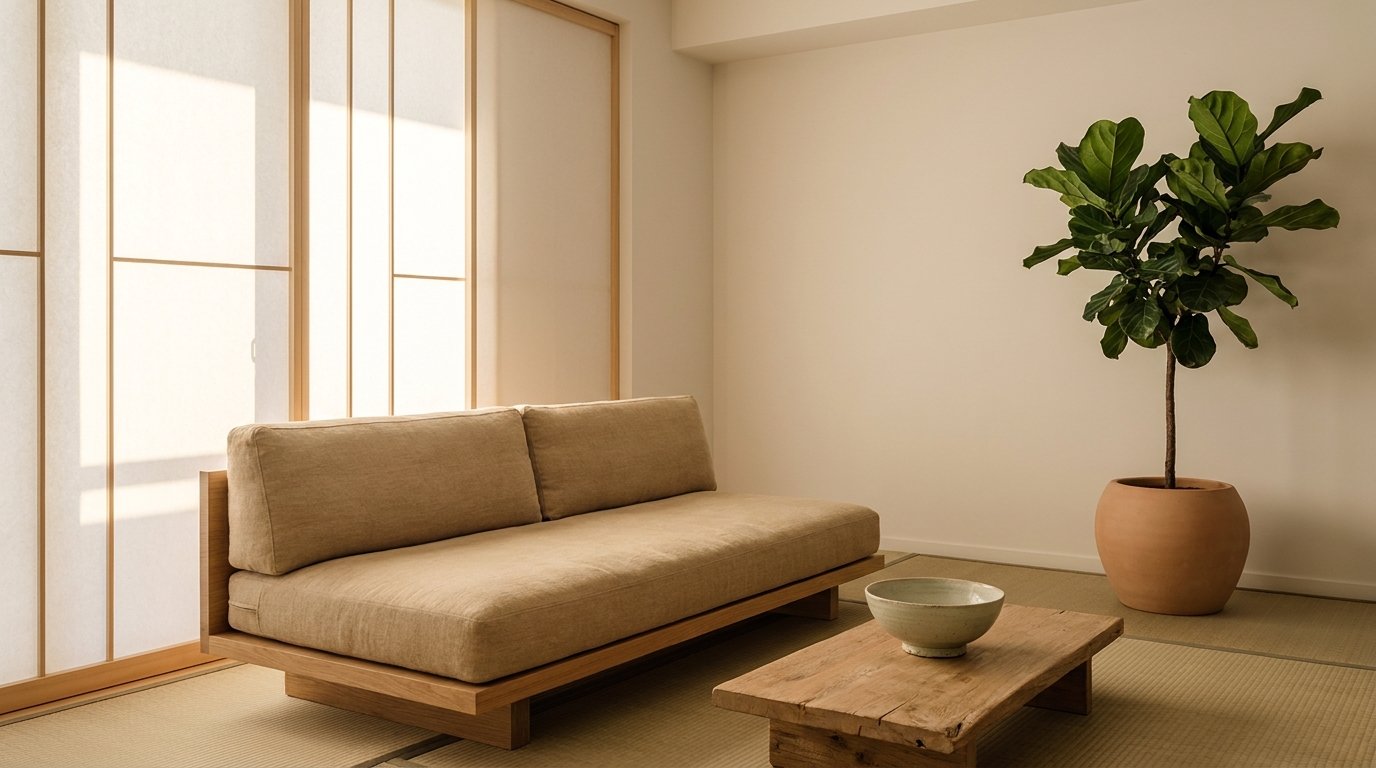
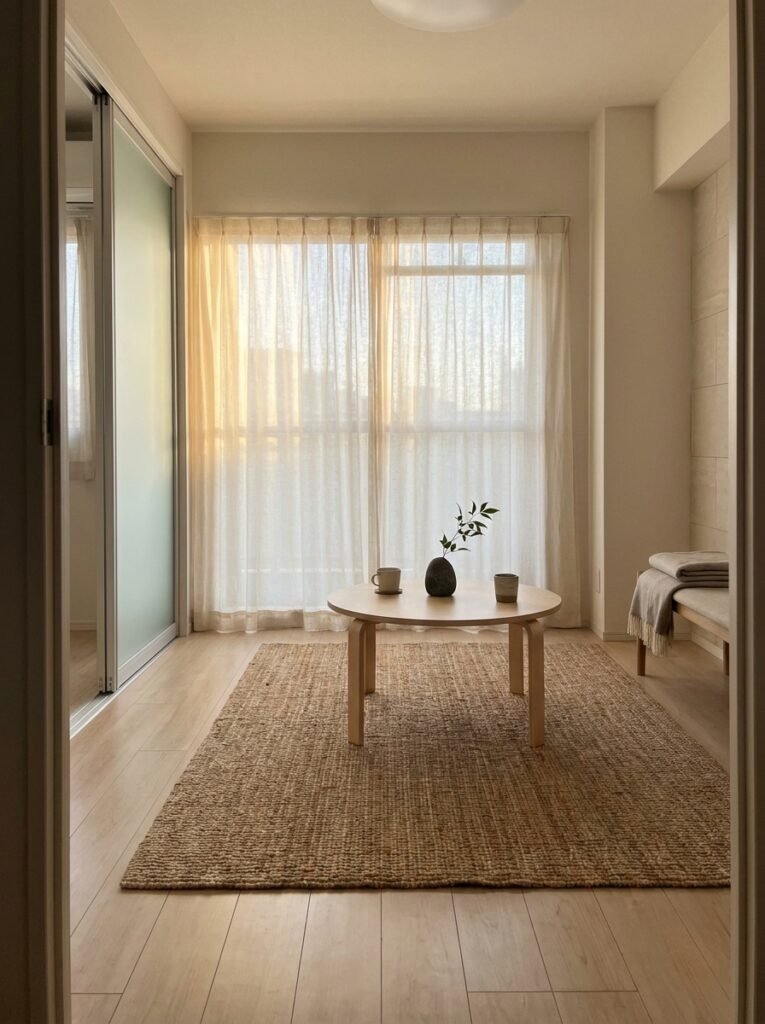
There’s something quietly magical about stepping into a Japanese apartment — the way the air feels calm, the surfaces are clear, and every single object seems to have been placed with intention. It doesn’t matter if the room is 300 square feet or 3,000; something about the Japanese approach to interior design makes space feel like a gift rather than a limitation.
—
1. The Philosophy That Changes Everything Before You Buy a Single Thing
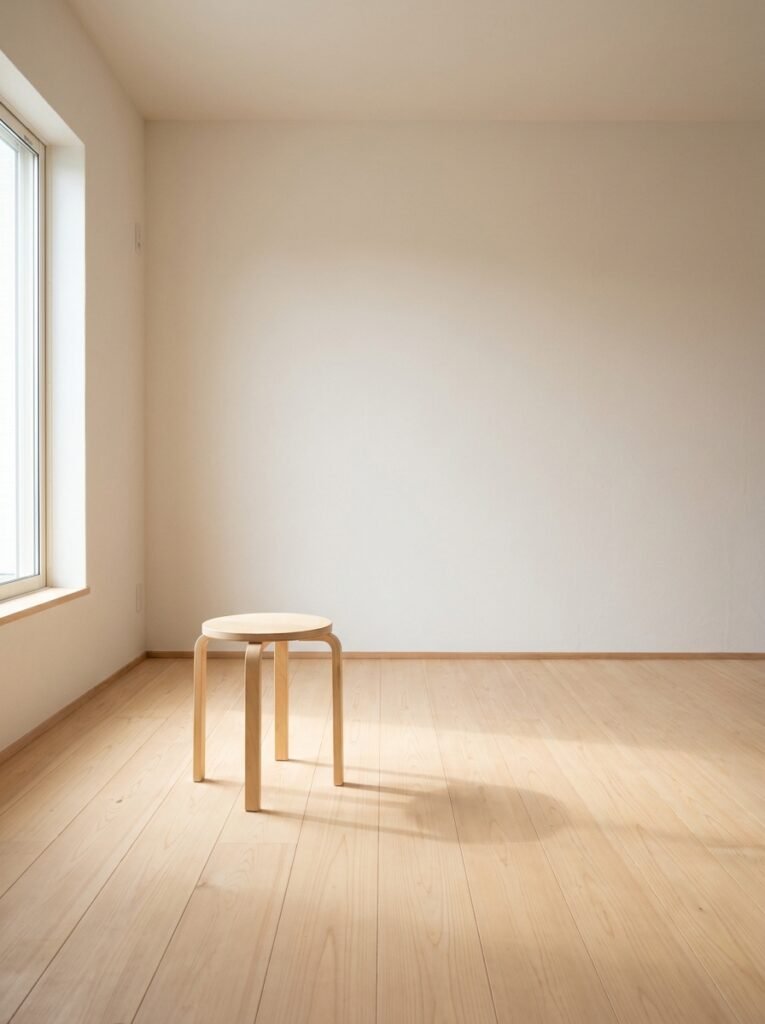
Before you rearrange a single piece of furniture or paint a single wall, the most transformative thing you can do is understand ma — the Japanese concept of negative space. Pronounced “mah,” this ancient idea holds that empty space is not wasted space. It is breathing room. It is the pause between notes that makes music beautiful.
In Western design, we often feel an instinctive pull to fill — to add a throw pillow here, a decorative object there, another piece of furniture because the corner looks “bare.” Japanese apartment interiors operate on the opposite instinct. The emptiness is the design. The clearing is the décor.
When you walk into a traditionally inspired Japanese apartment, your eye isn’t overwhelmed with competing focal points. Instead, it rests. It settles. And that sensation of restfulness is not an accident — it is the entire point.
“In Japanese design, what you remove matters more than what you add.”
Understanding ma costs nothing and changes everything. Before spending a single dollar on a new piece of furniture, spend an afternoon removing things instead. You may discover that your home was already beautiful — you just couldn’t see it through the clutter.
—
2. Why Japanese Apartments Embrace Low Furniture — and Why It Works So Well
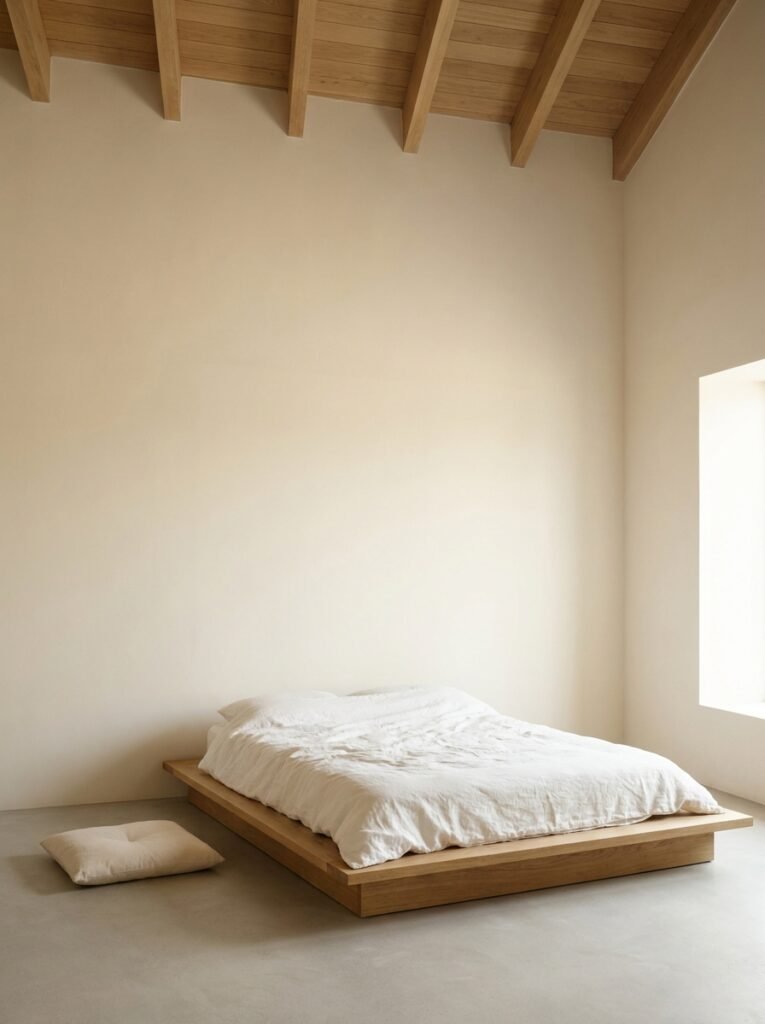
Walk into almost any Japanese home and you’ll notice the furniture sits close to the ground. Low platform beds, floor cushions called zabuton, low dining tables known as chabudai — everything pulls your eye downward and, paradoxically, makes the ceiling feel taller and the room feel more spacious.
The science behind this is simple: when the largest visual masses in a room sit low, the upper portion of the walls and the ceiling remain uninterrupted. That creates a visual sense of vertical expansion. A small studio apartment with low furniture reads as airy and open. The same apartment stuffed with tall bookshelves and high-backed sofas reads as cramped.
There’s also something deeply physical about low furniture. Sitting close to the floor changes your relationship with the space — you feel grounded, settled, present. You’re not perched above the room; you’re part of it. For anyone designing a cozy, mindful home environment, this shift alone is worth exploring.
—
3. The Quiet Power of Natural Materials in Every Single Room
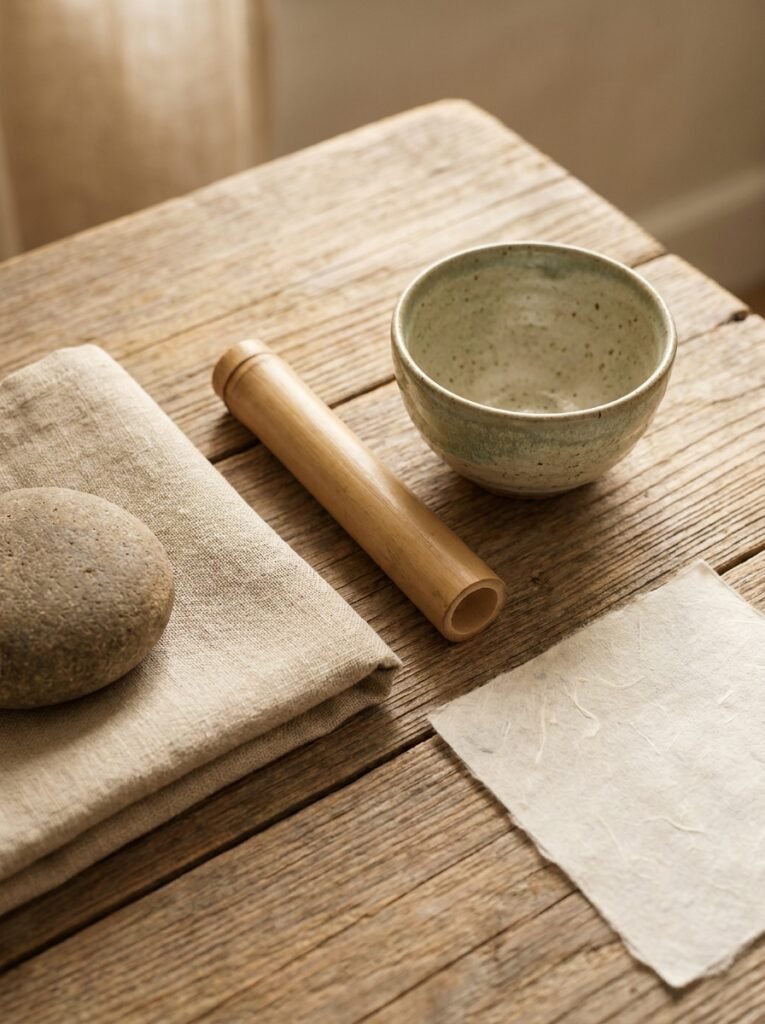
Run your hand across a Japanese-inspired interior and you’ll feel wood, stone, linen, cotton, bamboo, and washi paper. You will almost never feel synthetic materials masquerading as natural ones. This commitment to authenticity is one of the most defining characteristics of Japanese apartment design — and one of the most emotionally impactful.
Natural materials carry texture, warmth, and imperfection. A wooden side table has grain patterns that no two pieces share. A linen cushion softens and wrinkles in ways that feel lived-in and honest. Bamboo blinds filter afternoon light into something golden and dappled. These details cannot be manufactured by a plastic alternative, no matter how convincing it looks in a photograph.
In practical terms, this means choosing furniture made from real wood over laminate, selecting cotton or linen textiles over polyester blends, and opting for stone or ceramic decorative objects rather than mass-produced resin pieces. None of this has to be expensive — second-hand wooden furniture, thrifted linen, and simple ceramic bowls from a discount home store all qualify.
—
4. How Shoji Screens and Sliding Doors Transform Small Square Footage
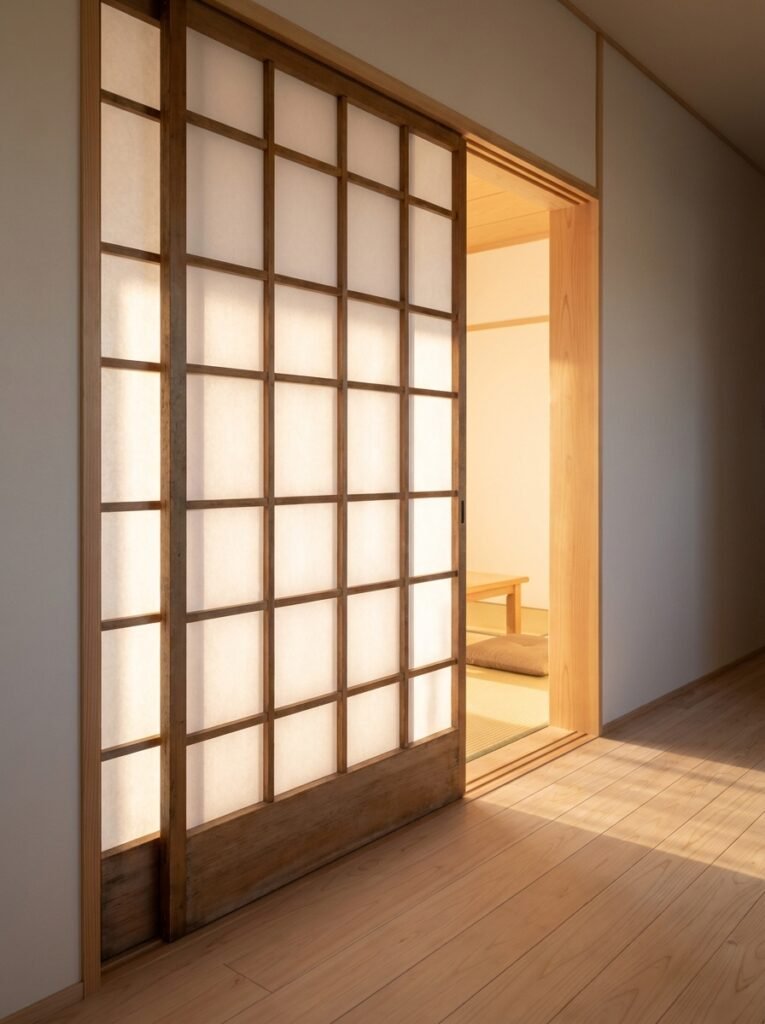
One of the most brilliant spatial solutions ever designed is the Japanese shoji screen — a sliding panel made from a wooden lattice frame and translucent washi paper. In a country where apartments have historically been small and multifunctional, the shoji solved a problem that swinging doors never could: it divides space without consuming it.
A standard door requires a swing clearance of several square feet. A sliding shoji screen requires zero. When open, it disappears entirely into the wall. When closed, it diffuses light rather than blocking it entirely — maintaining brightness while creating privacy. The effect is both practical and beautiful.
You don’t need authentic shoji screens to apply this principle. Modern sliding barn doors, curtain room dividers, or even floor-to-ceiling linen panels on ceiling tracks replicate the same effect beautifully. The key is the idea: divide your space with softness and slide rather than swing.
“A door that slides doesn’t just save space — it changes the entire mood of a room.”
—
5. The Color Palette That Makes Every Japanese Interior Feel Instantly Calm

Close your eyes and picture a Japanese apartment interior. What colors do you see? Almost certainly: warm whites, soft grays, muted greens, the honey tones of natural wood, the creamy beige of undyed linen. Perhaps one careful accent — a single terracotta vessel, a navy textile, a deep forest-green plant.
This is not a coincidence or a trend. It is a deliberate philosophy. Japanese interior design draws its palette directly from nature — from the colors you’d encounter on a walk through a forest, along a river, or in a traditional tea garden. These colors are never saturated or harsh. They exist on the quieter end of each hue family, and that restraint is what makes them feel so livable.
The psychological effect of this palette is well-documented. Muted, nature-derived colors reduce cortisol levels, slow the heart rate, and promote a sense of safety and calm. When you come home from a loud, overstimulating day and walk into a room painted in warm white with wooden accents, your nervous system genuinely exhales.
—
6. Wabi-Sabi: The Design Principle That Gives You Permission to Be Imperfect

If you’ve ever felt inadequate comparing your real home to the flawlessly styled rooms on your Pinterest feed, the Japanese concept of wabi-sabi is the antidote you didn’t know you needed. Loosely translated, wabi-sabi is the beauty of imperfection, impermanence, and incompleteness — the philosophy that a handmade ceramic bowl with an uneven glaze is more beautiful than a factory-perfect one precisely because of its irregularity.
In practical interior terms, wabi-sabi means celebrating the crack in the vintage plate you display, the uneven patina on an old wooden shelf, the asymmetry of a bouquet of dried flowers. It means that your home doesn’t need to look like a showroom — it needs to look lived in, cared for, and genuinely yours.
This principle is also deeply liberating for anyone working with a tight budget. A chipped thrift-store vase displayed with intention carries more wabi-sabi spirit than an expensive, pristine décor piece from a luxury home store. The beauty is in the story, the age, the texture — and those qualities cannot be purchased new.
—
7. Why Every Japanese Apartment Prioritizes the Entryway Above All Else
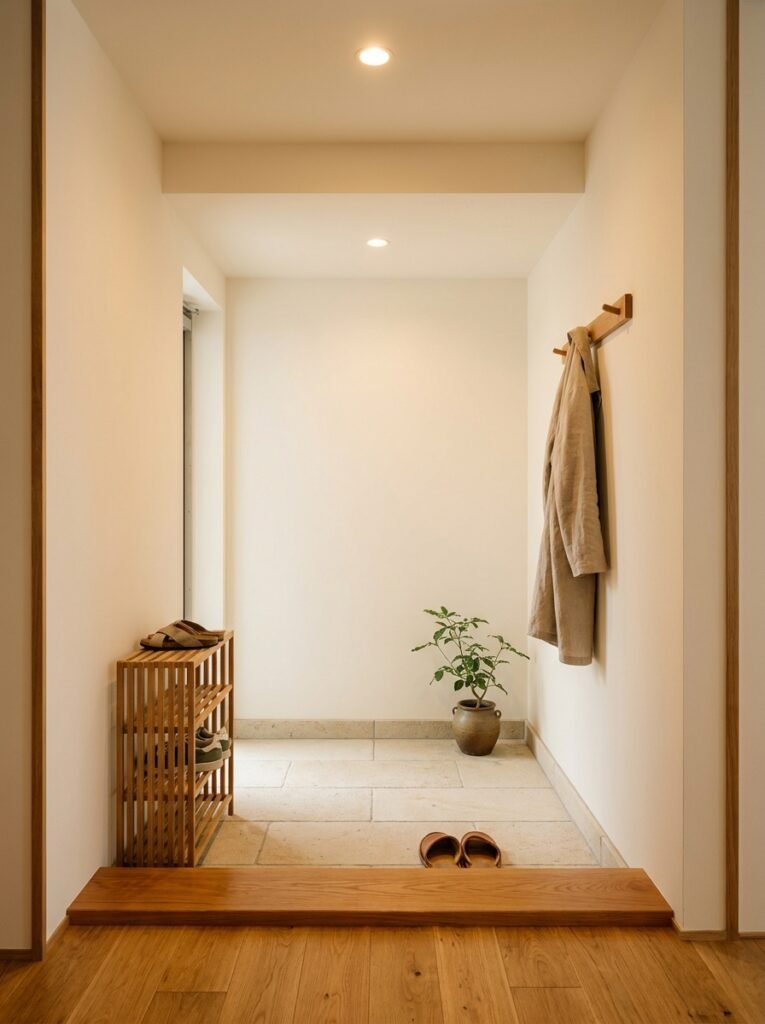
Step into a Japanese home and you will immediately notice the genkan — a recessed entryway where shoes are removed before entering the living space. This seemingly simple tradition carries enormous design and psychological significance. The genkan marks a clear threshold between the outside world and the sanctuary of home.
Even in a tiny apartment, this principle can be honored. Designate a small zone near your front door as a dedicated transition space — a shoe rack, a small bench, a hook for coats and bags. Keep it rigorously tidy. Add a single small plant or a clean mat.
What this achieves is remarkable: every time you come home, you perform a small ritual of leaving the outside world behind. You slow down. You breathe. You arrive. That intentional pause — brief as it is — sets the entire emotional tone of your home experience.
“The way you enter your home teaches your nervous system whether it’s a sanctuary or just another space.”
—
8. Storage That Disappears: The Art of Japanese Hidden Organization
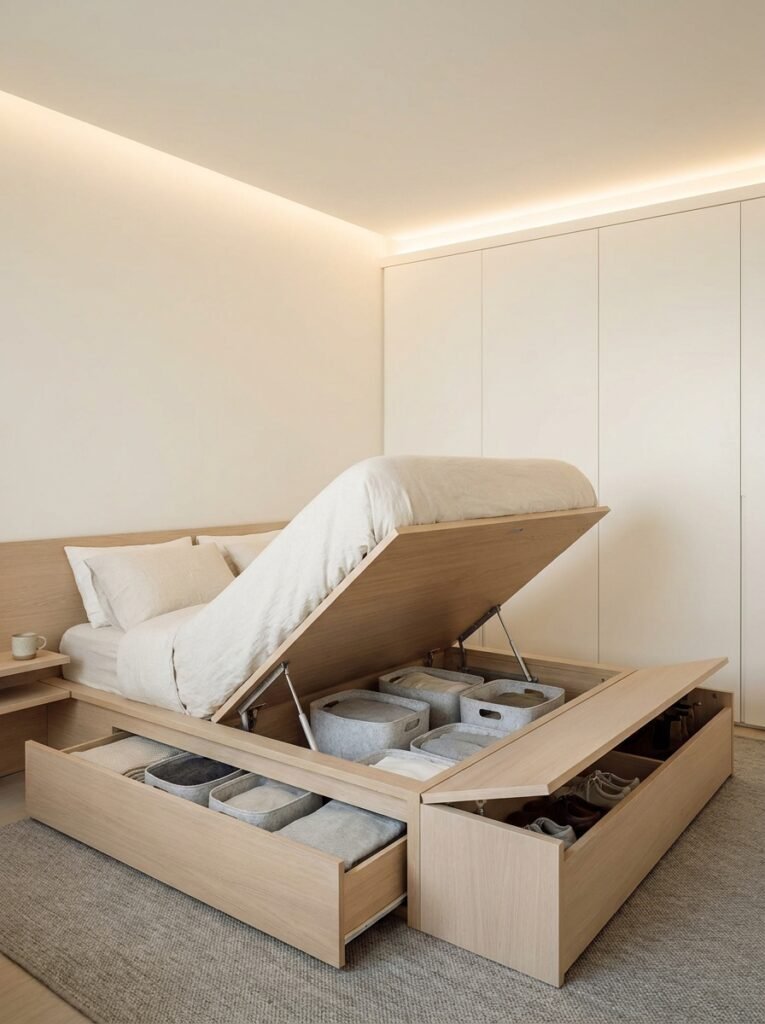
Ask anyone who has lived in Japan, and they’ll tell you that Japanese apartments are masters of making storage invisible. Built-in closets called oshiire run floor to ceiling. Furniture pulls double and triple duty — a platform bed lifts to reveal storage beneath; a low bench at the entryway opens to store shoes. Walls are used vertically, with shelves placed high to free up floor space.
The principle is not just visual — it’s deeply practical. In a Japanese apartment, items in daily use are accessible, but items not in daily use are stored completely out of sight. The rule of thumb is simple: if you can see it, it must be beautiful. If it isn’t beautiful, hide it.
This approach asks a two-part question of everything in your home. First: do I use this regularly? If yes, it can live somewhere accessible but orderly. If no, it gets stored away. Second: is this beautiful enough to be seen? If yes, display it intentionally. If no, find a closed storage solution.
—
9. How Japanese Apartments Use Plants — Thoughtfully and Sparingly
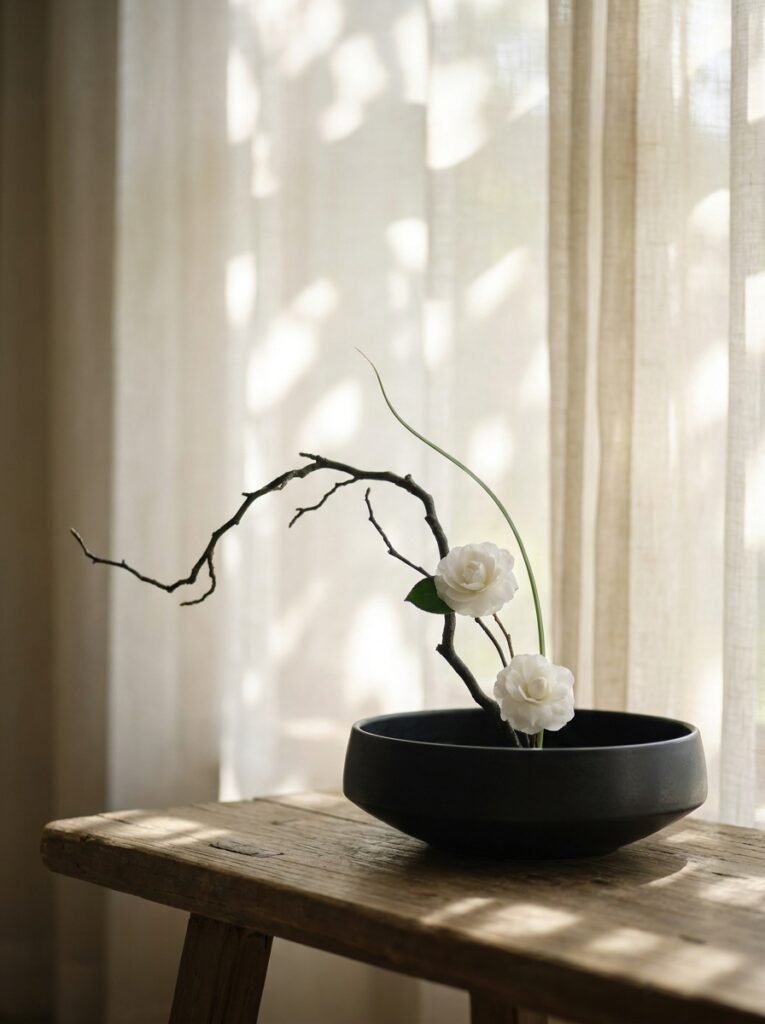
There is a Japanese art form called ikebana — flower arranging — that reveals everything about how Japanese design relates to nature. Unlike a Western bouquet that aims for lushness and abundance, ikebana uses very few stems, very deliberately placed, to evoke an entire season or feeling. One branch. Three flowers. A single sculptural curve.
This same restraint governs how plants appear in Japanese apartments. Rather than a jungle of houseplants covering every surface, you might see one carefully chosen tree — a fiddle-leaf fig or a Japanese maple in a bonsai form. One ceramic pot on a windowsill with a single succulent. A vase with two stems of eucalyptus.
The result is that each plant commands your full attention. You actually see it. You notice when its leaves turn, when it needs water, when it produces new growth. The relationship between the home’s inhabitants and its plants becomes personal and attentive rather than decorative and background.
—
10. Lighting That Moves From Functional to Poetic at Dusk
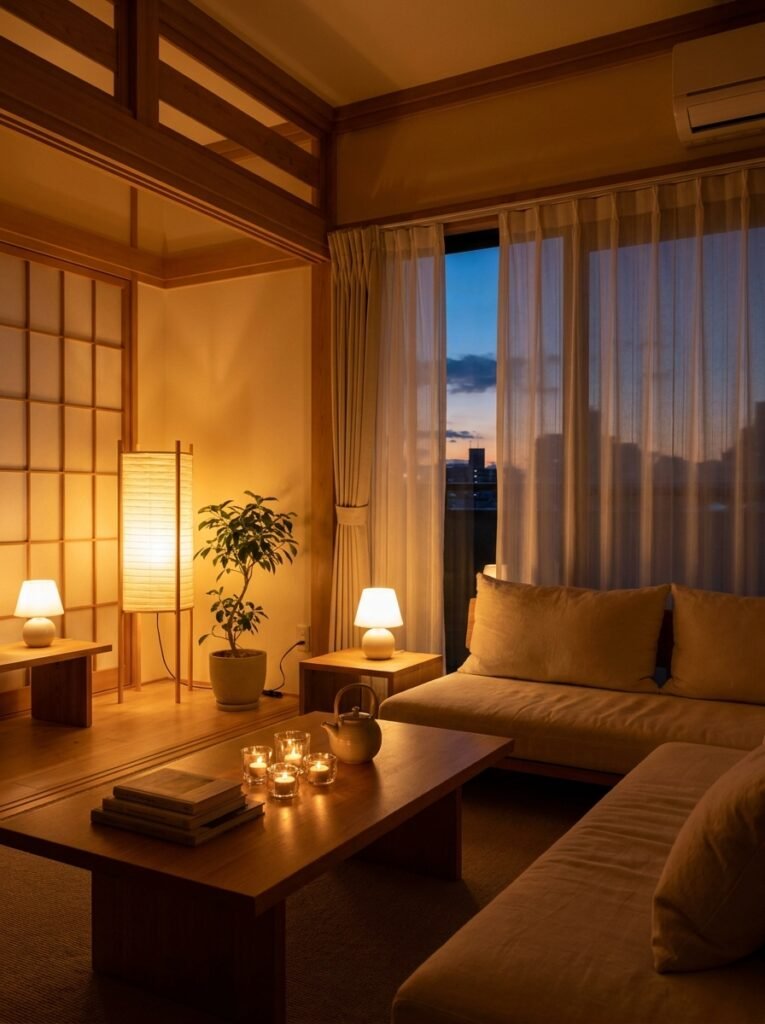
Japanese apartments rarely rely on a single overhead ceiling light. Instead, lighting is layered — low floor lamps, small table lamps with warm-toned bulbs, candles, and the natural light that filters through washi paper or sheer linen curtains. As the day progresses, the lighting in a Japanese home shifts, following the natural movement of light outside.
This is a small change with an outsized impact. Overhead lighting flattens a room and makes it feel institutional. Layered, low lighting creates warmth, depth, and intimacy. It signals to your body that evening has arrived, that it’s time to slow down — which has genuine circadian and psychological benefits beyond pure aesthetics.
In practice, this might mean replacing a harsh overhead bulb with a warm-toned LED, adding a single lamp to a corner that currently has none, or placing a few tea lights on a low coffee table in the evening. These changes cost very little and transform the evening atmosphere of a home entirely.
—
11. Textile Choices That Make Every Surface Feel Like a Soft Landing
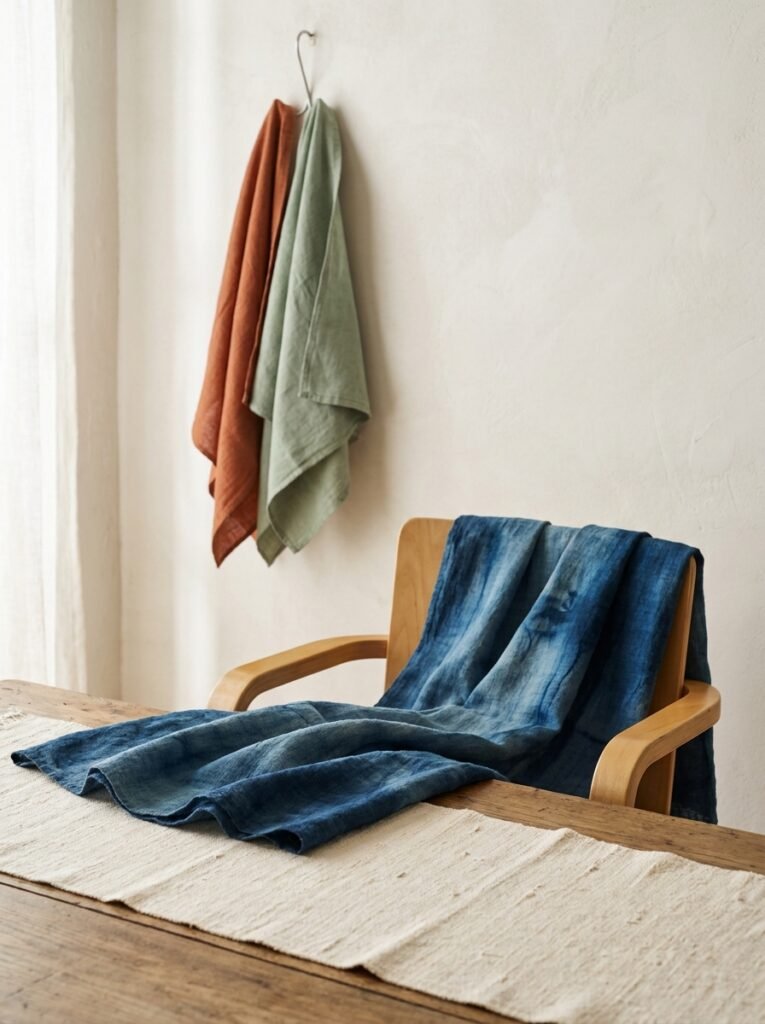
Japanese textiles have a long and extraordinary history — from the indigo-dyed cotton of traditional norén fabric dividers to the exquisite weaves of Nishijin silk. In a modern Japanese apartment, textiles appear with the same restraint as everything else: thoughtfully chosen, honestly made, and perfectly placed.
A single linen throw folded over the arm of a low chair. A hand-woven cotton runner down a wooden dining table. A set of furoshiki — traditional wrapping cloths — displayed on a hook, doubling as wall art. These textile moments are few, but each one adds tremendous warmth and texture to the overall composition.
The practical lesson here is quality over quantity. Three beautiful, natural-fiber textiles will do more for a room than twelve synthetic ones. Invest in fewer pieces that feel wonderful to touch, look honest in their materials, and age gracefully over time.
“In a Japanese interior, every textile has a purpose — and that purpose is felt, not just seen.”
—
12. The Japanese Concept of Ma in Modern City Living — Making It Your Own
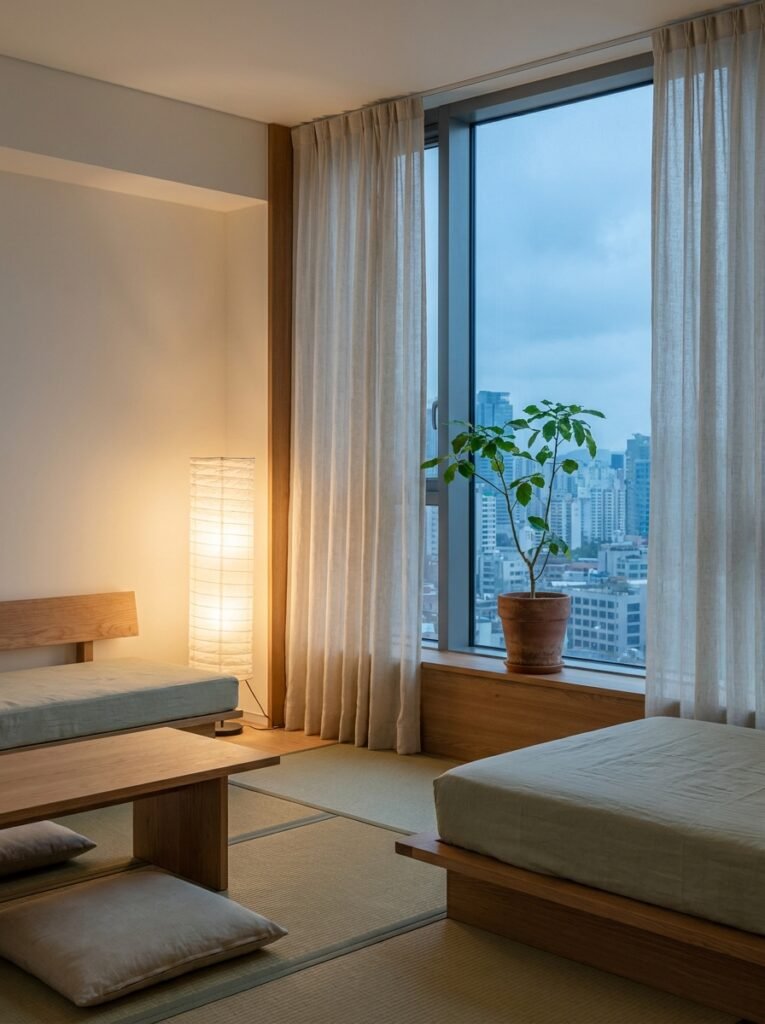
The most exciting thing about Japanese apartment interior design is how extraordinarily relevant it has become in the modern world — particularly for city dwellers living in compact spaces with overstimulating daily lives. The principles that emerged from Japan’s centuries-old design culture feel almost prescient when applied to a small urban apartment in 2025.
You don’t need to adopt every element wholesale. You don’t need to sleep on a futon or own a shoji screen. What you can do is borrow the underlying values: intentionality over accumulation, calm over chaos, nature over synthetic, emptiness as beauty rather than absence.
Start with one room. Clear the surfaces entirely. Bring back only what is genuinely beautiful or genuinely useful. Add one natural element — a single plant, a wooden bowl, a linen cushion. Swap one harsh light for a warm-toned lamp. Notice how the room changes. Notice how you change inside it.
—
🌿 How to Bring Japanese Apartment Style Into Your Own Home
The gap between inspiration and action doesn’t have to be wide. Here’s how to start, practically and affordably.
Begin with subtraction, not addition. Before purchasing anything new, spend one afternoon removing unnecessary items from your main living space. Donate, store, or rehome anything that neither functions daily nor brings you genuine visual joy. The breathing room this creates will immediately shift the feeling of your home.
Choose one natural material to introduce. Whether it’s a bamboo tray from a kitchen store, a secondhand wooden side table, or a simple ceramic mug you display rather than hide in a cabinet, one honest natural material starts to shift the energy of a space.
Invest in warm lighting. Replace one or two cold or harsh bulbs with warm-toned LED alternatives, and add a single floor or table lamp to your most-used room. This single change — costing less than $30 — can make a room feel entirely different after dark.
Honor your entryway. Even if your apartment has no formal entry hall, create a small dedicated zone near the door. A shoe tray, one hook, one plant if space allows. Keep it clear. This ritual of transition will change how you feel every time you come home.
Bring in one plant, chosen and placed with care. Not a collection — one. Find a spot where it receives the right light, place it in a simple pot, and give it your full attention. This single living element will add more warmth than a shelf of decorative objects.
—
❓ FAQ
Q: Can I achieve a Japanese apartment aesthetic on a tight budget? A: Absolutely — in fact, the principles of Japanese design are inherently budget-friendly because they center on removing rather than buying. The most impactful changes you can make, like decluttering, rearranging furniture to the floor level, and switching to warm lighting, cost very little or nothing at all. When purchases are needed, secondhand wooden furniture and natural fiber textiles from thrift stores align perfectly with the wabi-sabi embrace of aged, imperfect materials.
Q: Do I need to completely minimize my home to achieve a Japanese-inspired look? A: Not at all — this is one of the biggest misconceptions. Japanese design is not about stark emptiness or clinical minimalism. It’s about intentionality. Every object earns its place, but there can still be warmth, layers, and personality. A well-chosen collection of ceramics displayed on a wooden shelf is perfectly Japanese in spirit. The question to ask isn’t “do I have too much?” but “does each thing here serve a purpose or bring genuine beauty?”
Q: What’s the single most impactful change I can make to my apartment today? A: Clear your surfaces. Every surface — coffee tables, kitchen counters, bathroom shelves, bedroom nightstands. Remove everything, clean the surface, and then return only the items that are either used daily or beautiful enough to be displayed deliberately. This one act, which costs nothing and takes an afternoon, is the most transformative single step toward a Japanese-inspired interior.
—
💭 Final Thought
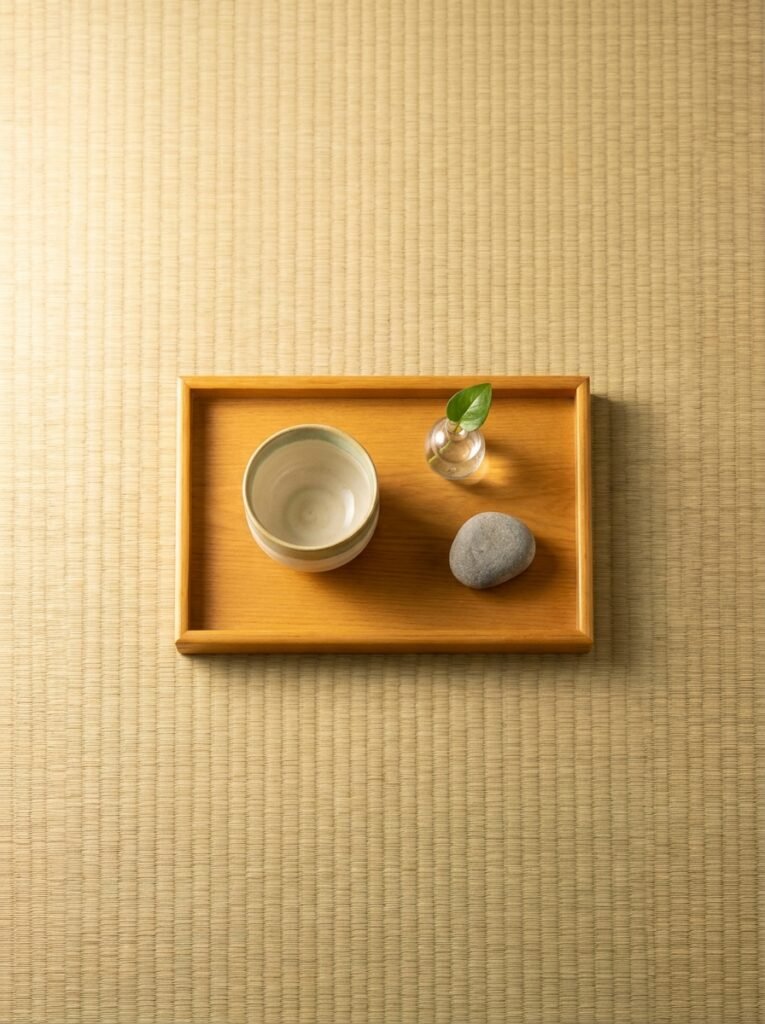
There’s a reason Japanese apartment interiors have captured the imagination of Pinterest users, designers, and homeowners all over the world — and it has nothing to do with trend cycles or aesthetic fashions. It speaks to something deeper: a universal human longing for spaces that feel calm, honest, and quietly beautiful. A home that doesn’t demand your attention, but gently restores it.
Your space doesn’t need to be large, expensive, or perfect to feel like a sanctuary. It needs to be intentional.
What would your home feel like if you designed it around rest rather than impression — and what’s one small thing you could change today to start moving in that direction?