
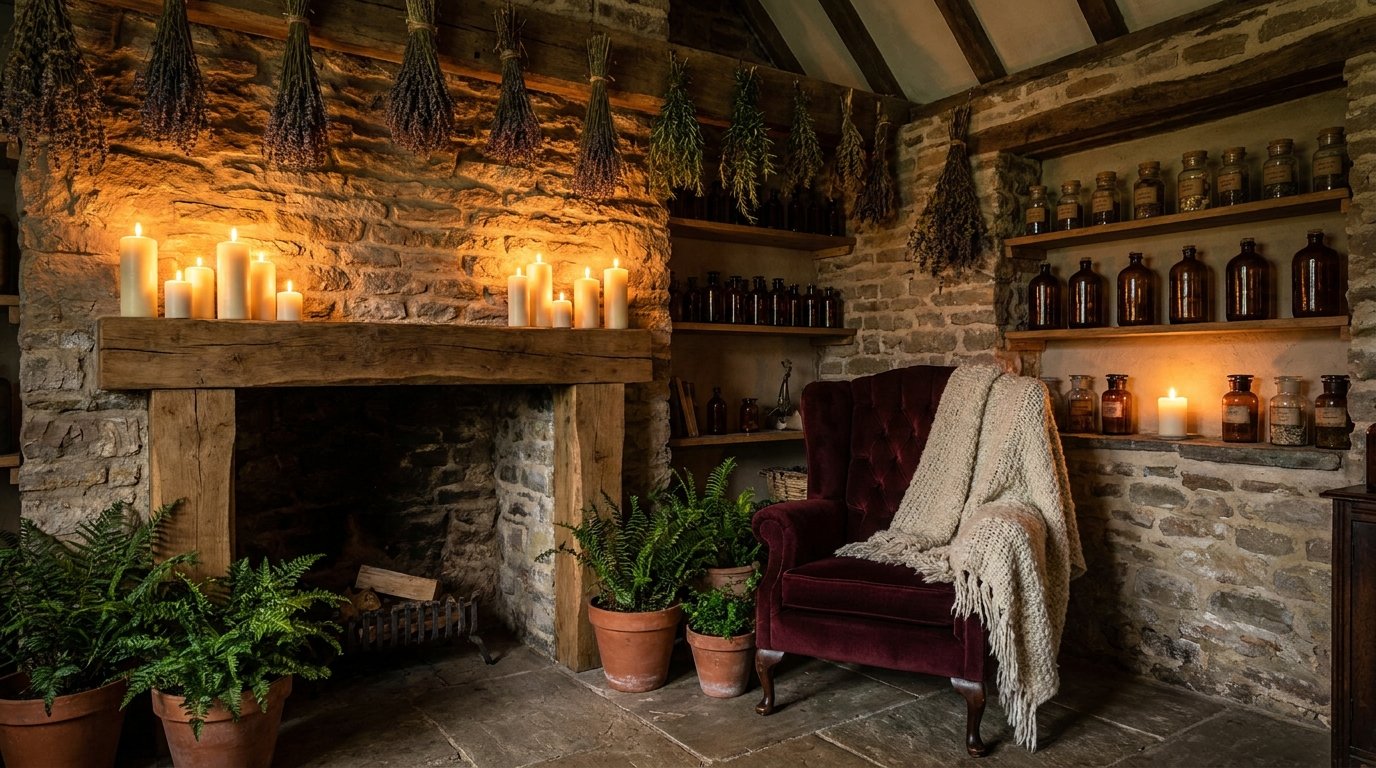
The Witch Hut Interior: How to Bring Enchanted, Moody Magic Into Your Home Décor
Imagine stepping through a weathered wooden door and into a room that smells of dried herbs, aged wood, and something faintly floral — a space that feels like it was pulled straight from a fairy tale, yet somehow still feels like home. The witch hut interior aesthetic is having a quiet, powerful moment right now, and once you fall into it, you may never want to leave.

—
1. What Exactly Is a Witch Hut Interior — and Why Is Everyone Obsessed With It?
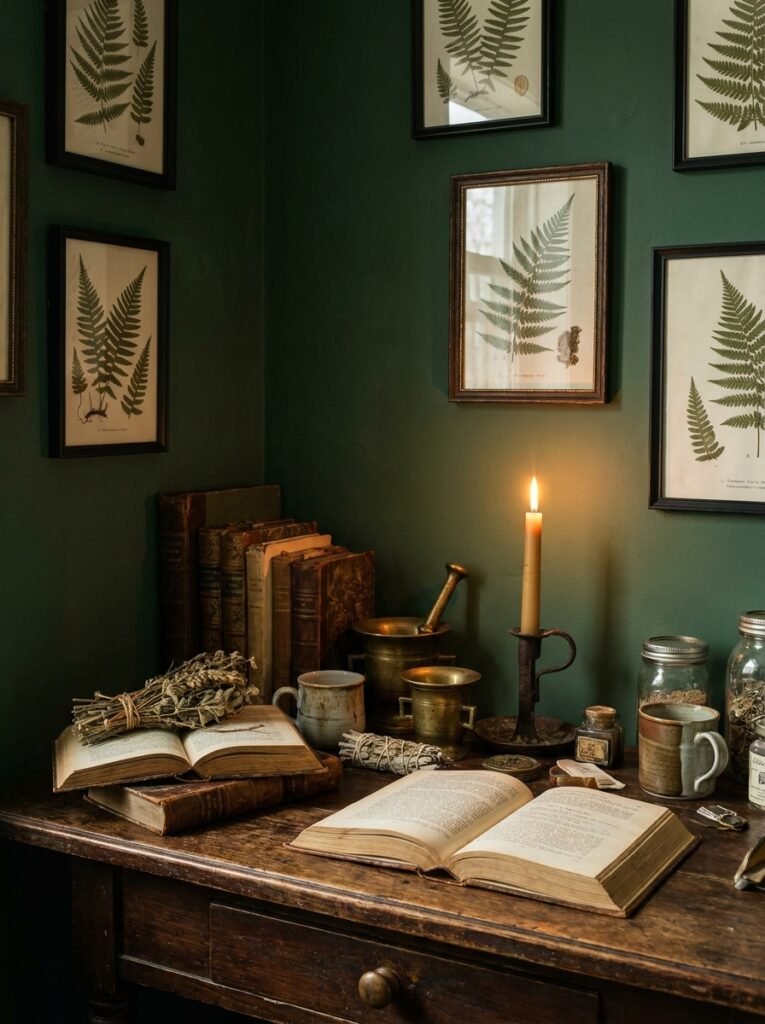
The witch hut interior isn’t about Halloween props or spooky clichés. It’s a deeply layered design philosophy rooted in natural materials, ancient wisdom, and an almost spiritual relationship with the home. Think: a cottage healer’s workspace. Think: an apothecary that doubles as a reading nook. Think: the kind of room your most interesting ancestor would have inhabited — one who knew the name of every plant, brewed her own teas, and read by candlelight because she wanted to.
What makes this aesthetic so deeply appealing right now is its rejection of the sterile, the mass-produced, and the performative. In a world of white-and-grey Scandinavian minimalism and brutally curated open-plan living, the witch hut interior whispers: clutter can be sacred. Imperfection can be beautiful. Mystery is allowed.
It draws from a rich lineage of styles — dark cottagecore, goblincore, apothecary aesthetics, medieval craft spaces, and Slavic folk traditions — and weaves them into something entirely its own. Every item in a witch hut interior has a story, a purpose, or at the very least, a gorgeous, unexplainable pull on the soul.
“Your home doesn’t need to be perfect. It needs to feel like magic happened here.”
—
2. The Foundation: Walls That Feel Like They Were Grown, Not Built
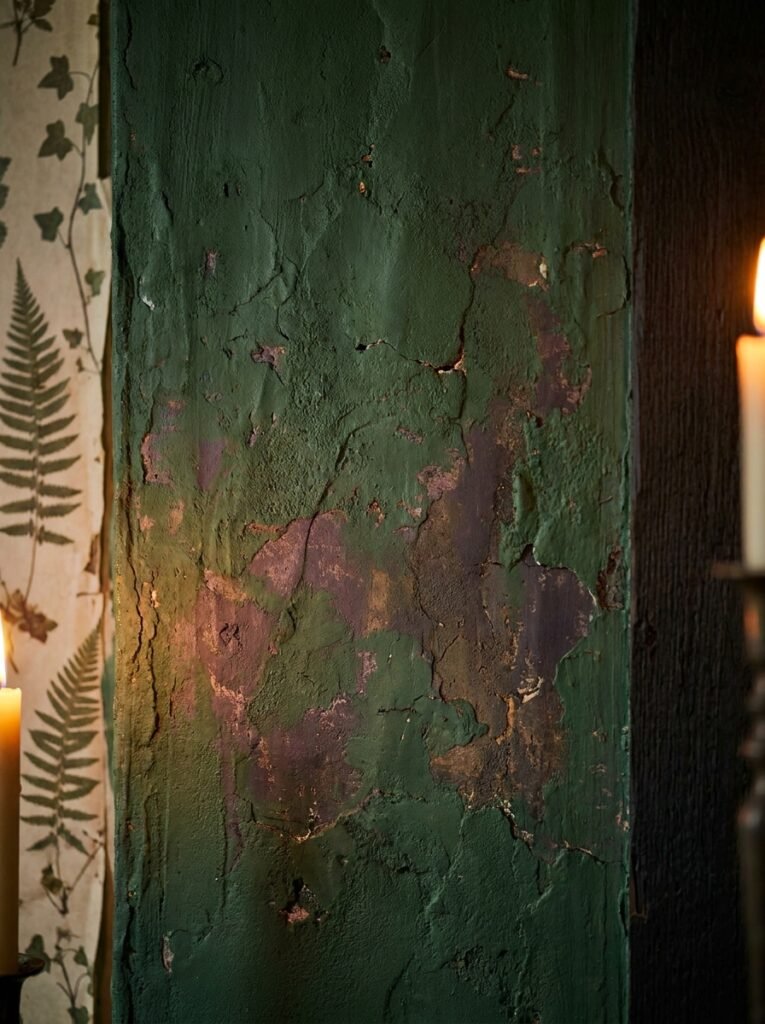
The bones of a witch hut interior begin with the walls, and the guiding principle is this: avoid anything that looks too clean, too new, or too deliberate. The ideal witch hut wall feels aged, textured, and organic — as though the room has been accumulating stories for centuries.
Exposed brick is one of the most effective starting points. Its irregular surface catches candlelight beautifully and immediately grounds the space in something ancient and earthy. If you don’t have exposed brick, faux brick wallpaper or limewash paint can achieve a similar depth. Limewash, in particular, is extraordinary — its mottled, layered texture creates the kind of wall that seems to breathe, shifting in appearance as the light changes throughout the day.
For color, think forest floor and autumn dusk. Deep forest green, warm charcoal, earthy terracotta, aged plum, and rich amber all serve this aesthetic powerfully. If painting the whole room feels too bold, choose a single accent wall — ideally the one behind your most important gathering spot, whether that’s a desk, a fireplace, or a low bookshelf.
Dark wood paneling, either real or applied as thin boards, adds another dimension of warmth and age. And if you can find antique wallpaper with botanical prints — pressed ferns, woodland mushrooms, or climbing vines — you have found something close to perfection for this aesthetic.
—
3. The Fireplace — Beating Heart of the Witch Hut
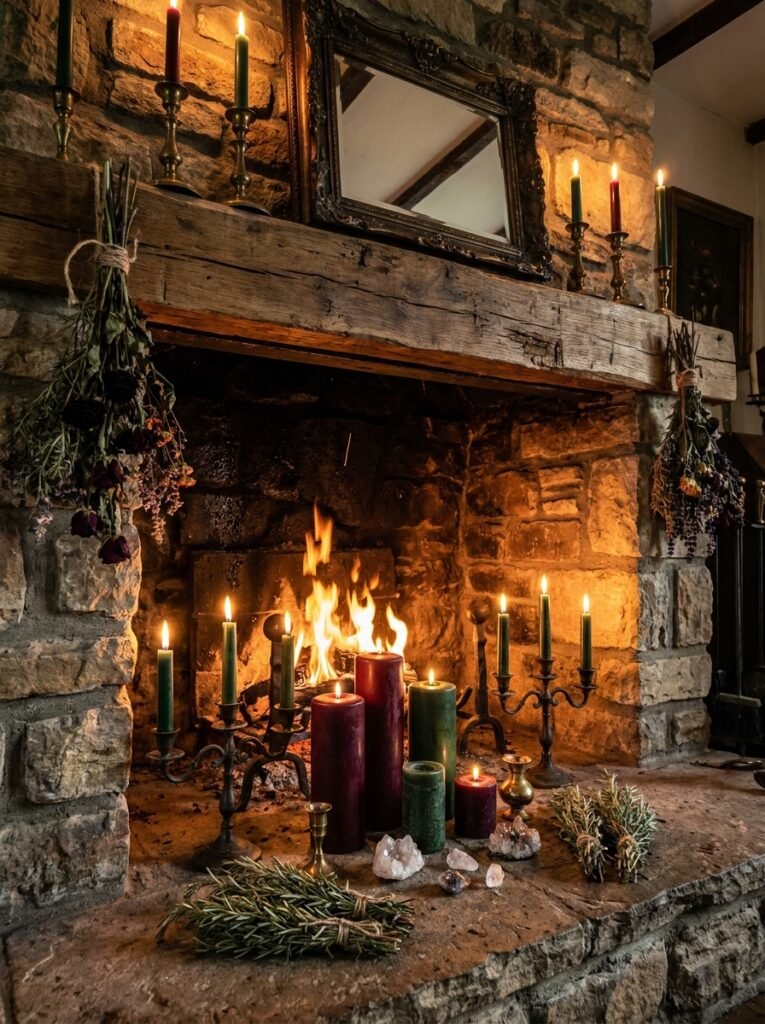
There is something almost primal about the role a fireplace plays in a witch hut interior. It is not simply a heat source. It is a focal point, a ritual space, an altar to warmth itself. Even if you don’t have a working fireplace, creating the suggestion of one — through a decorative mantel, a collection of thick pillar candles, or an electric fireplace with realistic flame effects — brings the entire room into alignment.
A real stone fireplace, of course, is the dream. The kind with a slightly uneven hearth, a mantel made from a salvaged beam, and blackened interior stones that suggest a thousand previous fires. Around it, you arrange intentionally: a stack of thick books, an iron candelabra, a few dried flower bunches tied with twine, perhaps a brass mortar and pestle.
The key to styling a witch hut fireplace mantel is layering depth. Place taller items at the back — an ornate mirror with a dark frame, a framed botanical illustration, a cluster of vintage bottles. In the middle, medium-height objects: candles, small potted plants, a decorative skull or two (always optional, always impactful). In the front, smallest items: crystals, small clay figurines, a sprig of dried rosemary, a folded piece of parchment paper. Every mantel should feel like it was assembled over time, not styled in an afternoon.
—
4. Dried Botanicals — The Soul of the Space
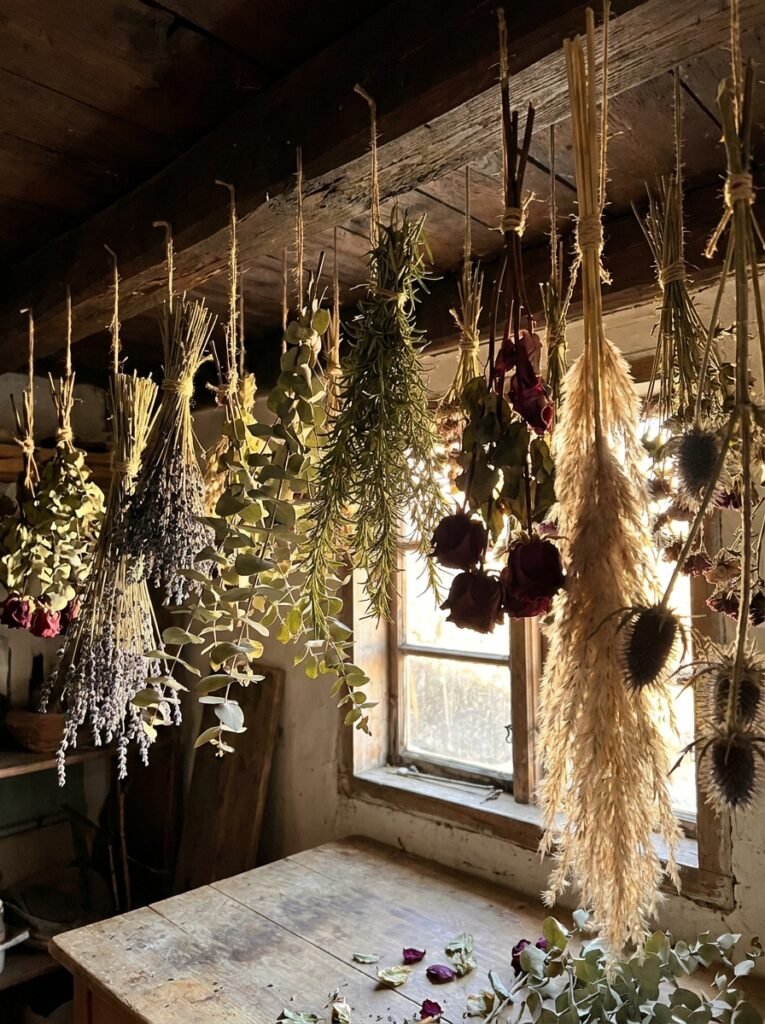
Walk into any well-designed witch hut interior and the first thing you’re likely to notice, after the rich wall color, is the dried botanicals. Hanging from the ceiling, bundled from exposed beams, arranged in ironware vases, spilling out of wicker baskets — dried herbs, flowers, and foliage are to this aesthetic what throw pillows are to a beach house: essential, everywhere, and capable of completely transforming a space.
The most beautiful dried botanicals for this aesthetic include lavender (its silver-purple color is ethereal), rosemary (which adds a faint, clean herbal scent even when dried), eucalyptus (sculptural and long-lasting), dried roses (dark red varieties feel particularly fitting), pampas grass (romantic and wild), and thistles (otherworldly in their spiky, medieval beauty).
Hang them in loose bundles from hooks in the ceiling or from beams using natural twine. Let them be slightly imperfect — a few petals on the floor, a stem that droops. This is not a space for rigid arrangement. It is a space that suggests someone lives here and works here, and the botanicals are part of that living work.
You can also press dried flowers and frame them in antique or dark wooden frames for botanical wall art that costs almost nothing but contributes enormously to the aesthetic.
—
5. The Apothecary Shelf — Where Organization Meets Enchantment
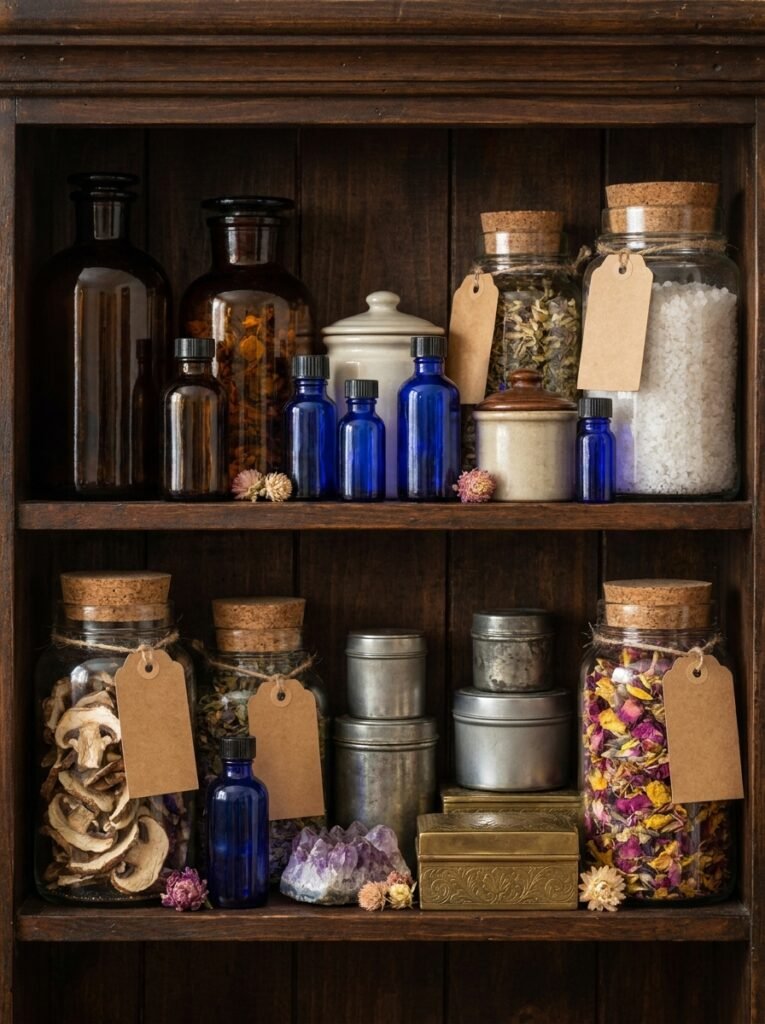
Perhaps no single element captures the witch hut interior more completely than the apothecary shelf. This is a shelf — or a series of shelves — dedicated to the display of bottles, jars, tins, and vessels that suggest knowledge, craft, and careful accumulation over time.
The vessels themselves are everything. Look for dark amber glass bottles, clear glass jars with cork stoppers, cobalt blue medicine bottles, small ceramic pots with lids, pewter tins, and brass boxes. Thrift stores and antique markets are your greatest allies here — the older and more imperfect the vessel, the better. Fill them with things that are both beautiful and purposeful: dried herbs, whole spices, sea salt, dried mushroom slices, loose-leaf tea, dried citrus peel, flower petals.
Label them with handwritten tags tied with twine, or use small embossed brass plaques for a more refined look. The act of labeling — even decoratively — suggests mastery and intention, two qualities that are absolutely central to the witch hut aesthetic.
“A shelf full of labeled jars isn’t clutter. It’s a library written in glass and herb.”
Arrange your apothecary shelf so that the tallest bottles anchor the ends, medium vessels fill the middle, and the smallest items — crystals, small figurines, dried flower heads — nestle in between. Vary the shapes: round alongside rectangular, tall beside squat. Let no two items be perfectly symmetrical.
—
6. Candlelight — The Only Light That Actually Belongs Here
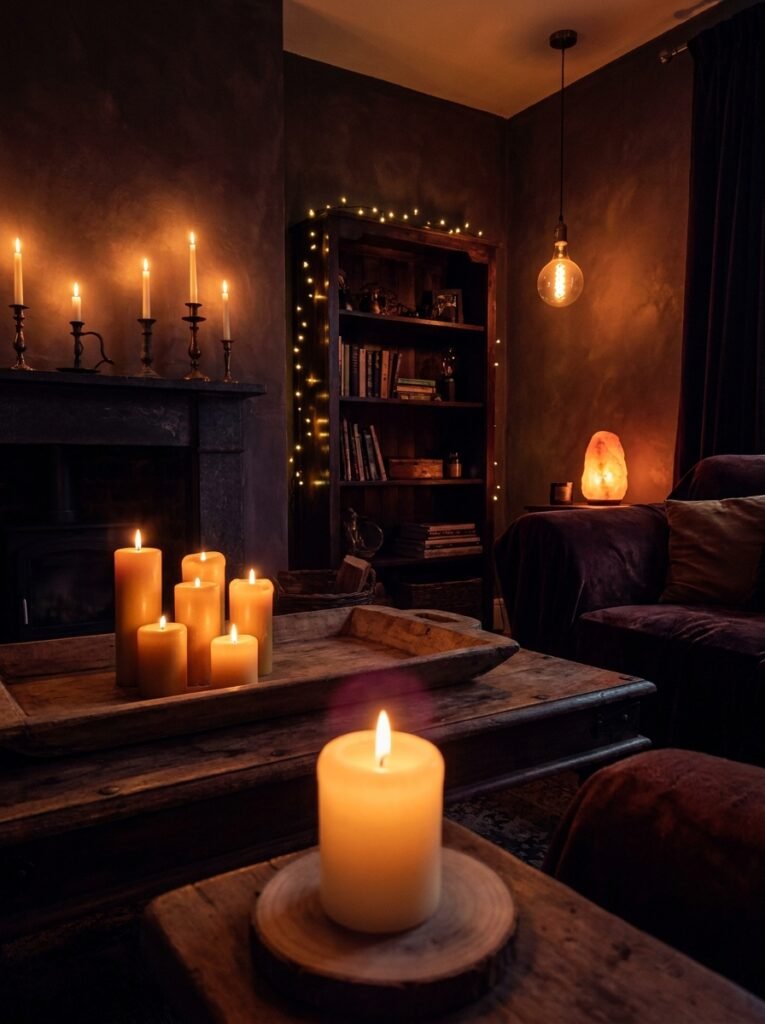
Lighting is where many attempted witch hut interiors fall apart. Overhead lighting — especially bright, white overhead lighting — is the enemy of this aesthetic. It strips out shadow, kills warmth, and turns an atmospheric room into a brightly lit room that happens to have some dark furniture.
The witch hut interior lives and dies by layered, low, amber light. Candles are, of course, the gold standard. Thick pillar candles in deep colors — black, burgundy, forest green, dark cream — clustered together on a tray or candelabra are endlessly atmospheric. Taper candles in iron holders placed on the mantel, the desk, and the bookshelves create flickering movement that makes the room feel alive in a way no fixed light source can replicate.
For practical everyday lighting, choose bulbs with a very warm color temperature — 2200K to 2700K, which produces the amber-gold light reminiscent of firelight. Plug-in sconces, Himalayan salt lamp glow, fairy lights strung loosely behind a bookshelf, and Edison bulb pendants over a work table all work beautifully. The goal is always layers: no single source should carry all the light in the room.
—
7. Furniture That Carries History (Even When It’s New)
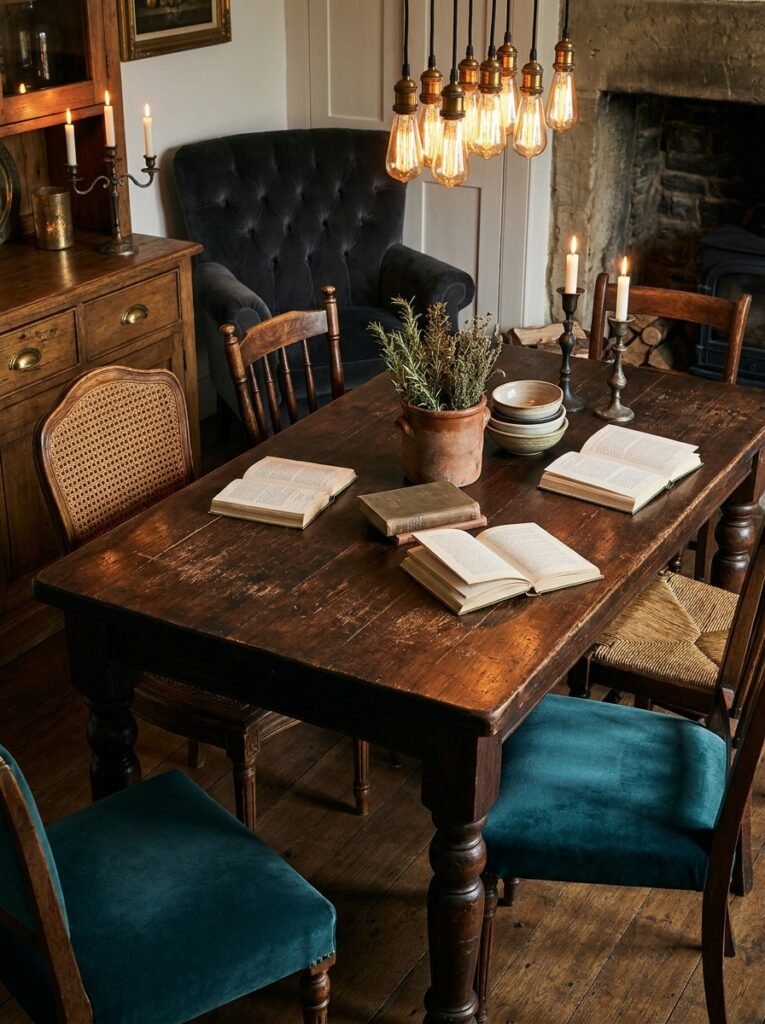
The furniture choices in a witch hut interior follow one consistent rule: everything should look like it was acquired across different eras and different places, yet somehow belong together. Mismatched, intentional, and slightly worn is the aesthetic target. Perfectly matched furniture sets have no place here.
A heavy, dark wooden farmhouse table is a central piece many witch hut interiors build around. Its chunky legs and worn surface suggest communal meals, long work sessions, and the passage of many hands. Pair it with mismatched chairs — one with a woven cane back, one with spindle legs, one upholstered in dark velvet.
Upholstery in general plays an important role. Dark velvet is almost synonymous with this aesthetic: it absorbs light rather than reflecting it, making it feel rich and slightly mysterious. Tufted velvet chairs, a low velvet chaise, or even just velvet throw pillows can instantly deepen the feel of a space. Colors to choose: deep teal, forest green, burgundy, charcoal, and midnight blue.
Wrought iron and dark-stained wood work together as the primary materials throughout the space. Brass accents — in candleholders, drawer pulls, picture frames, and lamp fixtures — add warmth without brightness.
—
8. The Bookshelf as a Landscape
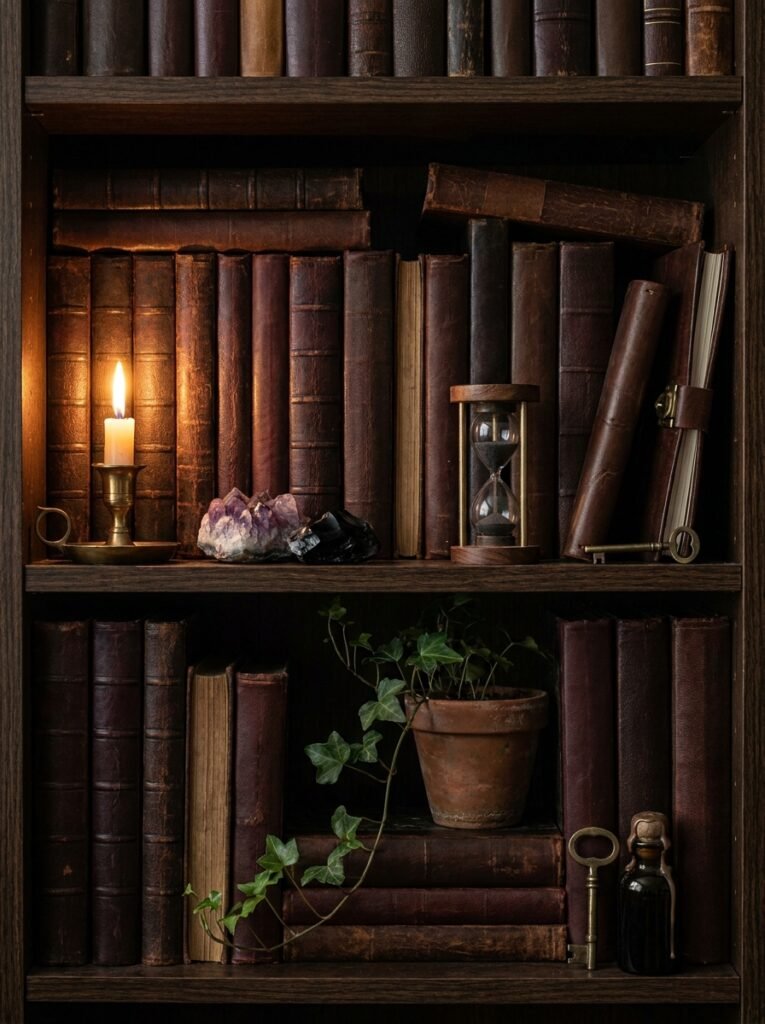
In a witch hut interior, a bookshelf is never just a bookshelf. It is a landscape — a terrain of knowledge, curiosity, and beauty that rewards close looking and casual glancing in equal measure.
Fill it generously, but not carelessly. Books with aged spines, dark covers, and leather bindings are ideal. Arrange some vertically, some horizontally, some tucked behind decorative objects. Leave space for the non-book elements that make the shelf feel like a world unto itself: a small clay pot of herbs, a cluster of crystals (amethyst, obsidian, and clear quartz all photograph beautifully), a candle, a miniature hourglass, a folded map, a vintage compass.
The witch hut bookshelf also tends to have a few deliberately mysterious items — things that invite curiosity. A closed leather journal. A key with no visible lock. A small dark bottle with a sealed wax stopper. These items do something remarkable: they make the room feel like it has secrets, and that makes it infinitely more interesting.
—
9. Nature Inside — Plants, Moss, and Living Things
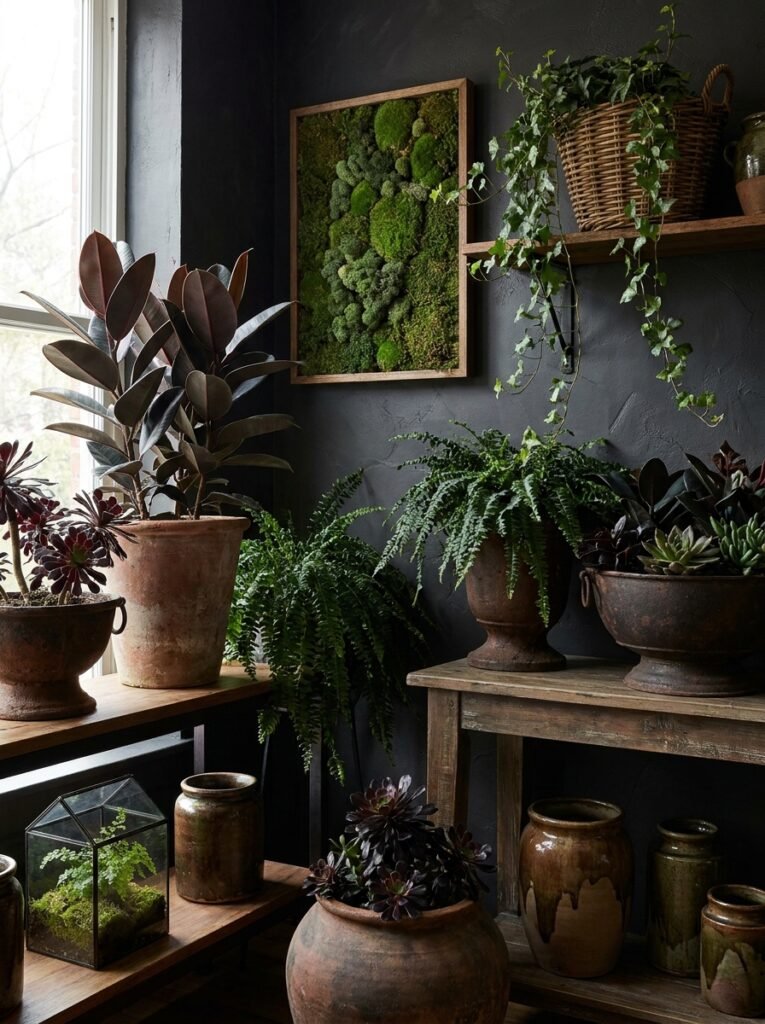
The witch hut interior is deeply connected to the natural world, and that relationship must be literal, not merely symbolic. Plants are essential — not the generic, cheerful houseplants of a bright modern kitchen, but the slightly unusual, the deeply textured, the ancient-looking.
The best plant choices for this aesthetic include: dark-leafed varieties like black mondo grass, burgundy rubber plants, or black-leafed elephant ears; ferns in their many forms, which suggest damp forests and ancient floors; trailing ivy, which adds movement and a slightly gothic romanticism; and succulents in unusual shapes — especially those with architectural, sculptural qualities.
Moss is underused and extraordinary in this context. Preserved moss (which requires no watering) arranged in frames, displayed in small bowls, or used to line the base of a terrarium creates a connection to the forest floor that feels genuinely magical.
“Bring the forest inside, one fern at a time, and watch your room remember something ancient.”
Display your plants in vessels that match the aesthetic: terracotta pots darkened with age, iron planters, wicker baskets, ceramic pots with an uneven glaze, mismatched vintage containers. Avoid bright white pots or plastic containers — they break the spell immediately.
—
10. Textiles — Layering Warmth and Mystery
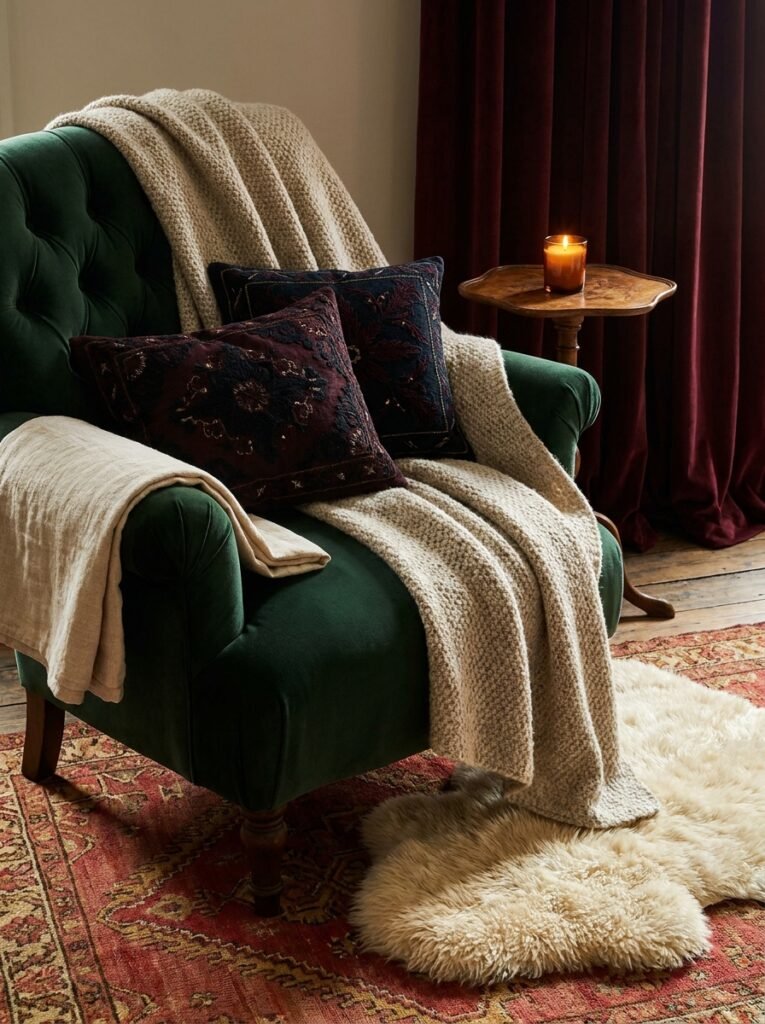
The witch hut interior is never cold, and that warmth is largely the work of textiles. The goal is layering — multiple textures, weights, and materials piled together in a way that makes the room feel deeply inhabited and irresistibly cozy.
Natural fibers are always preferred: wool, linen, cotton, jute, leather, and fur (faux fur is widely available and equally beautiful). Layer a thick wool blanket over a velvet chair. Drape a linen throw across the arm of a sofa. Pile throw pillows in dark, rich fabrics — embroidered, patterned, or simply deeply textured.
On the floor, layered rugs are a hallmark of this aesthetic: a large kilim or Persian rug as the foundation, topped with a smaller sheepskin or woven mat near the fireplace or reading chair. The rugs don’t need to match. They need to speak to each other — in color, in warmth, in the suggestion that they each came from a different, interesting place.
Curtains matter enormously here. Heavy velvet drapes in dark colors that pool slightly on the floor are ideal. They absorb light, add weight and drama to the windows, and make the room feel enclosed in the best possible way — like a secret worth keeping.
—
11. The Details That Make It Real
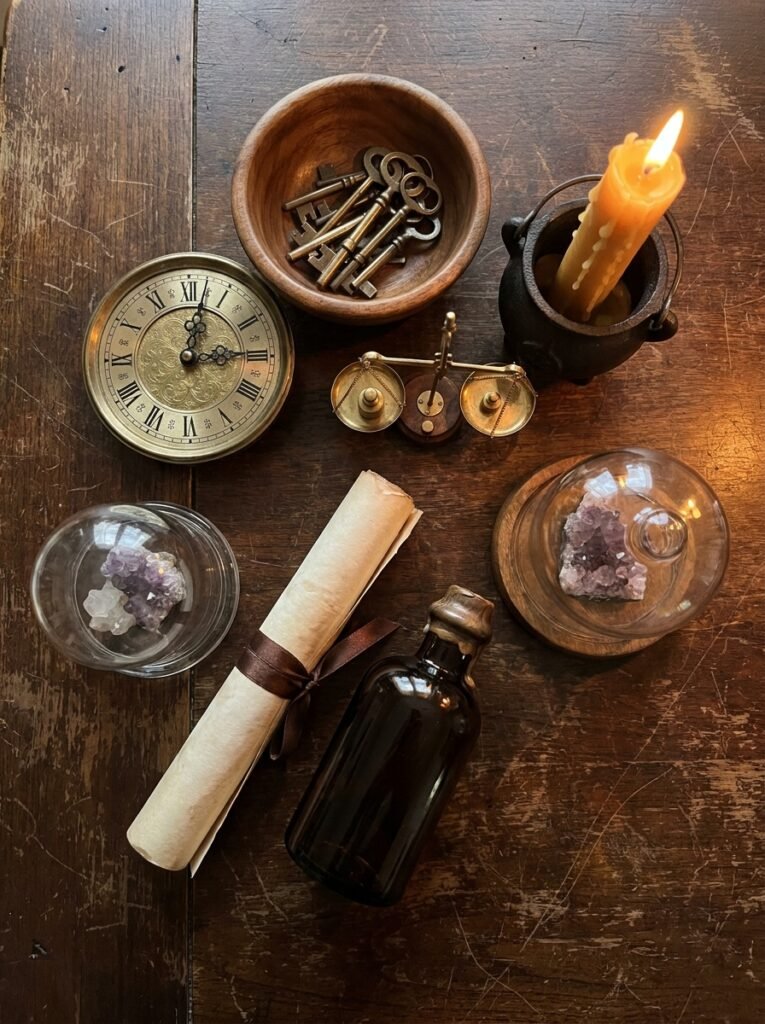
Every great witch hut interior has a collection of small, unexpected details that elevate it from a theme into a world. These are the things that make guests pause and lean in closer. They are the details that make the room feel genuinely inhabited by a curious, layered person rather than assembled from a design guide.
Consider: a vintage clock with a slightly uneven tick, its face marked in Roman numerals. A collection of antique keys in a wooden bowl. A handwritten recipe tucked into the frame of a mirror. A set of brass scales on the apothecary shelf. A rolled parchment tied with a ribbon. A glass dome covering a small curiosity — a preserved insect, a tiny crystal cluster, a single dried rose. A small iron cauldron used as a planter or a candle holder.
None of these things need to be expensive. Most can be found at thrift stores, estate sales, and antique fairs for very little money. What they require is an eye for the interesting and a willingness to look past the obvious.
—
12. Creating Your Own Witch Hut Space — No Matter Your Budget or Home Size
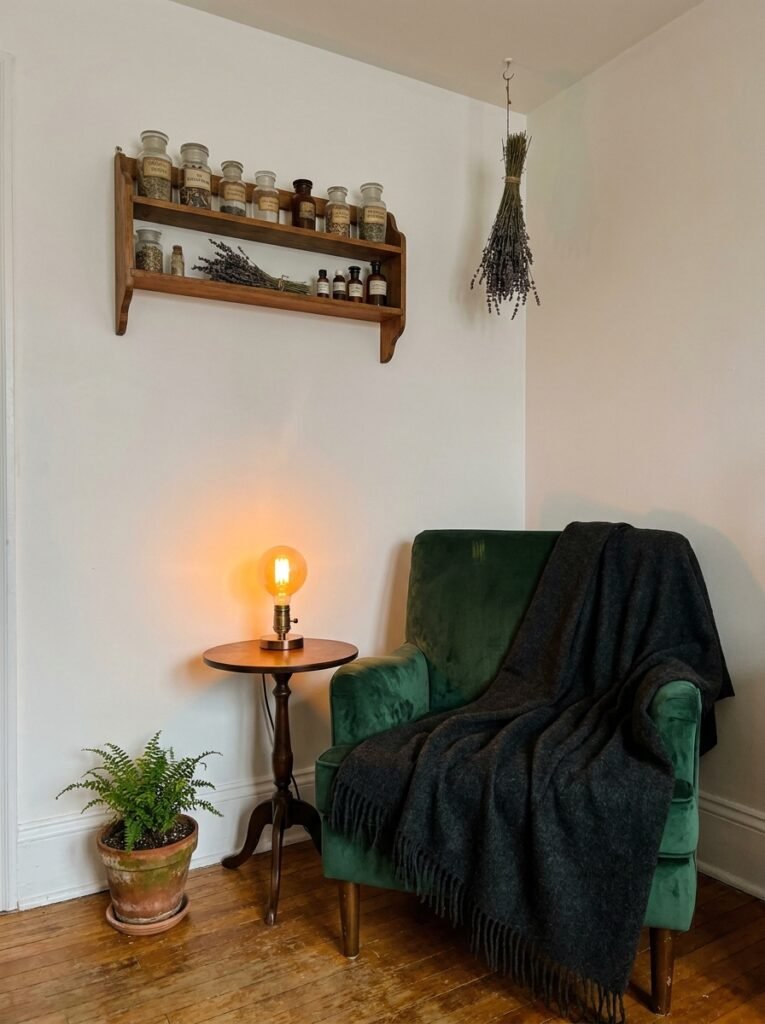
The most reassuring truth about the witch hut interior is this: it is one of the most budget-friendly, deeply personal design aesthetics available to us. It actively favors the secondhand, the repurposed, the found, and the inherited. A small apartment can host a fully realized witch hut corner. A single shelf can become an apothecary display. A few dried herb bundles and a dark candle can transform a boring windowsill into something that feels intentional and enchanted.
Start with one corner. Identify the darkest, coziest corner of your home and build from there. A chair, a small side table, a floor lamp with a warm bulb, one dark throw, one shelf of apothecary vessels, and a bundle of dried lavender hanging overhead — you have already begun. The witch hut interior is not a project you complete in a weekend. It is something you grow over time, adding layers as you find pieces that speak to you.
That is, in fact, its greatest gift: it grows with you.
—
🌿 How to Maintain Your Witch Hut Interior
Keeping a witch hut space feeling alive and intentional requires a gentle, ongoing relationship with the space rather than seasonal overhauls.
Dried botanicals last beautifully for months but eventually fade — replace bundles as they lose their color or scent, incorporating new seasonal finds like autumn seed pods, winter pine, or summer lavender. Rotate your apothecary jars seasonally to keep the display feeling fresh without starting over from scratch. Dust your crystals, candelabras, and dark shelves regularly — dust sits very visibly on dark surfaces and can make a moody space feel merely neglected rather than intentionally aged. Restock candles before they run out entirely, because a witch hut interior without the option of candlelight is like a garden without water — technically still there, but missing the point. Finally, give yourself permission to evolve the space over time. Bring in new pieces as you find them. Retire items that no longer feel right. The witch hut interior should always feel like it belongs to you.
—
❓ FAQ
Q: Do I need a large space to achieve the witch hut interior aesthetic? A: Not at all — in fact, smaller, more intimate spaces often lend themselves to this aesthetic more naturally than large, open-plan rooms. A single dedicated corner, a bedroom nook, or even a well-styled bookshelf can fully capture the essence of the witch hut interior. The key is layering depth and detail rather than spreading across a large footprint.
Q: Is the witch hut interior only for Halloween, or can it work year-round? A: It works magnificently year-round, and that’s precisely what makes it such a compelling design choice rather than a seasonal decoration. The witch hut interior is rooted in natural textures, warm lighting, and botanical elements that feel appropriate in every season — perhaps especially in winter, when the warmth and enclosure of a dark, candlelit room is exactly what the soul needs.
Q: How do I balance the dark color palette without making the room feel oppressive or cave-like? A: The secret is layering light sources carefully. Warm candlelight, fairy lights, salt lamps, and amber-bulbed fixtures prevent dark walls from feeling heavy. Mirrors — especially antique ones with dark frames — reflect light and add depth simultaneously. And incorporating natural elements like plants, wood, and linen textiles keeps the space feeling organic and breathable rather than closed-off.
—
💭 Final Thought
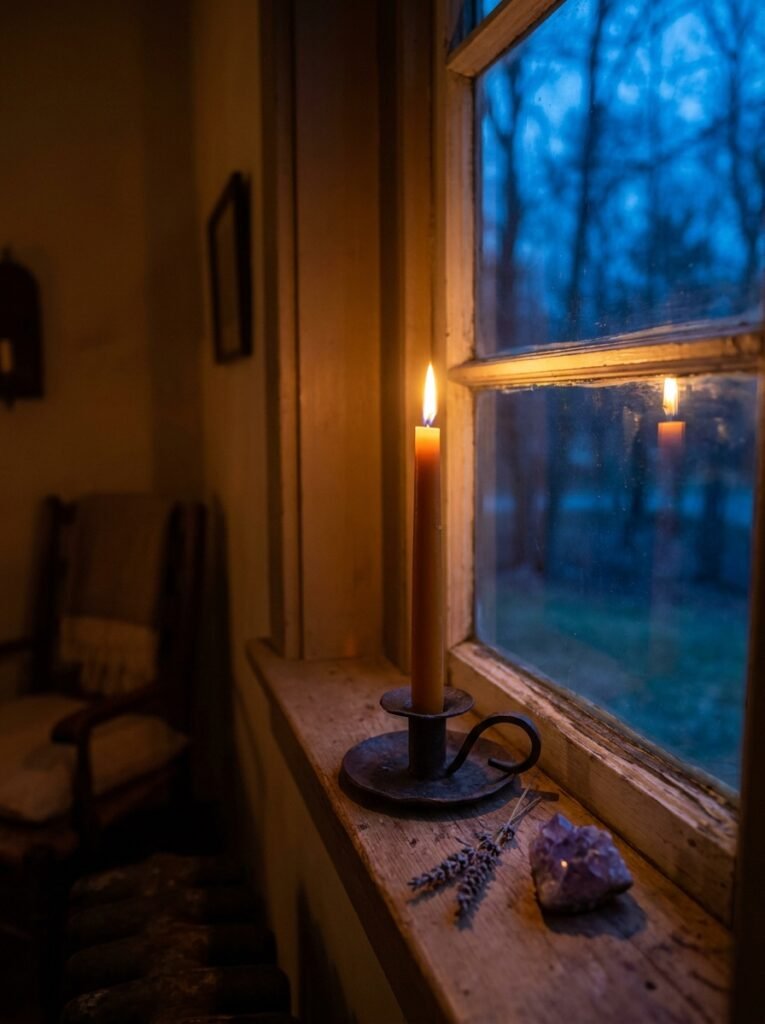
The witch hut interior is, at its heart, an act of self-expression and self-permission — permission to create a space that prioritizes feeling over function, beauty over uniformity, and depth over simplicity. It asks you to slow down, to notice the way candlelight moves across a textured wall, to smell the dried lavender when you walk past the shelf, to feel, for a moment, like the most interesting version of yourself lives here. And perhaps the most powerful thing about this aesthetic is what it says about who you are: someone who finds magic in ordinary things, who collects stories, and who believes your home is worth the effort of making truly beautiful. So tell me — what would your most enchanted corner look like?