
Why Red Brick Interiors Feel Like Coming Home — And How to Style Them Beautifully
There’s something about exposed red brick that stops you in your tracks — something raw, warm, and achingly beautiful that no paint color or wallpaper has ever quite managed to replicate. It doesn’t just decorate a room. It tells a story.
—
1. The Reason Red Brick Interiors Feel So Emotionally Different From Every Other Design Trend
Walk into a room with exposed red brick walls, and notice what happens in your chest. There’s a settling — a kind of exhale — that doesn’t happen in rooms full of smooth plaster and glossy finishes. Designers have tried for decades to understand why this feeling is so universal, and the answer, it turns out, is deeply human.
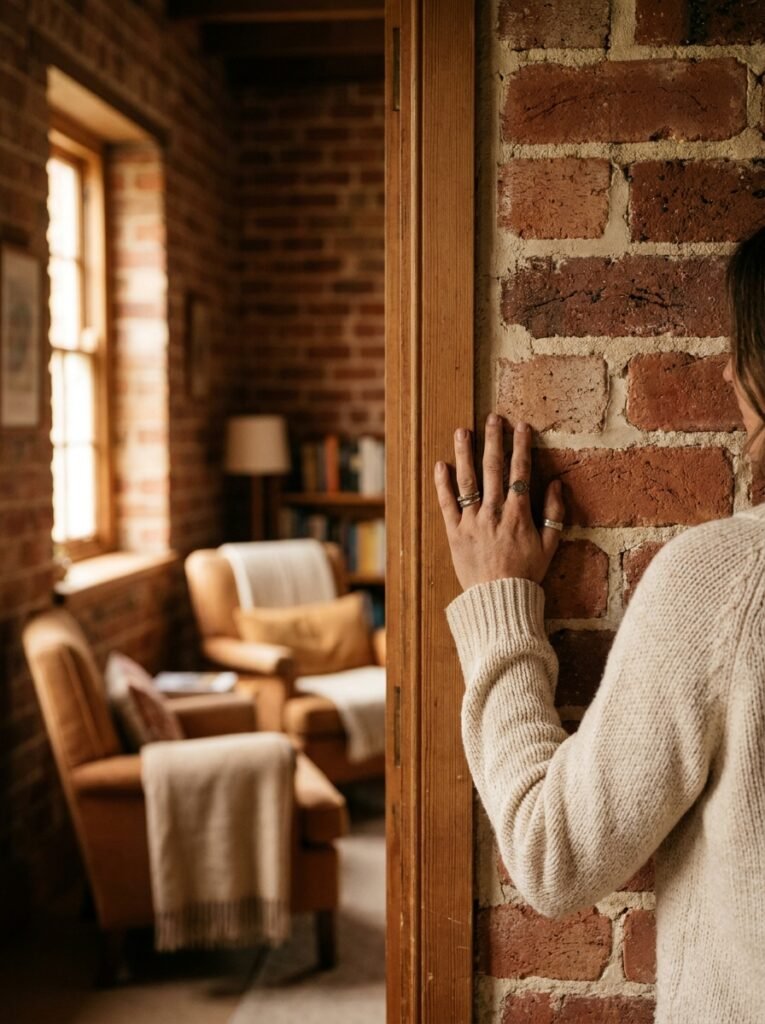
Red brick carries history in its texture. Those rough, uneven surfaces and the mortar lines between them represent real human hands, real craft, real time. Whether you’re standing in a converted Brooklyn loft or a countryside cottage kitchen in the English Midlands, the brick beneath your fingertips connects you to something older and steadier than modern life usually allows.
“Red brick doesn’t just decorate a room — it gives it a soul.”
Research in environmental psychology consistently shows that natural, textured materials — stone, wood, unfinished brick — lower cortisol levels and trigger a sense of safety. We evolved in environments made of earth and natural materials. When we surround ourselves with them, something ancient in us recognizes home.
Interior designers often say that the hardest rooms to make feel truly warm are the ones with too many perfect surfaces. Brick solves this problem effortlessly. Its imperfection is the point — and that imperfection is, paradoxically, what makes it feel so right.
—
2. A Brief, Surprising History of Brick That Will Make You See It Differently
Before you can fully appreciate red brick in interior design, it helps to understand what you’re actually looking at when you see it on a wall.
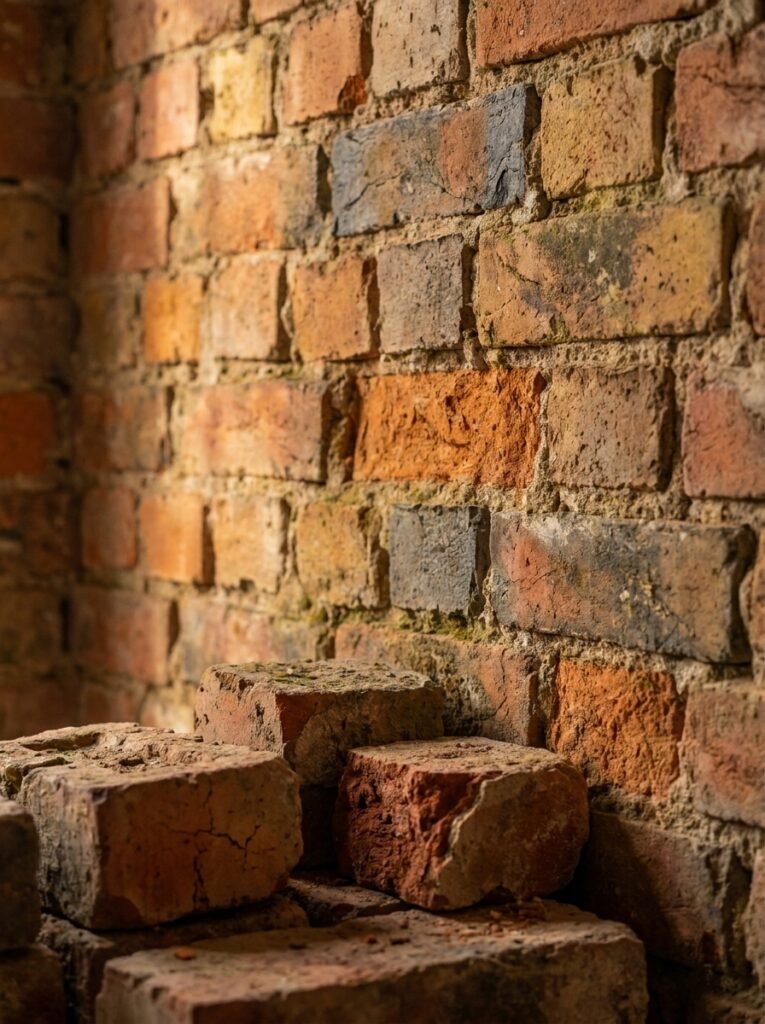
Fired clay bricks date back over 5,000 years, making them one of humanity’s oldest and most enduring building materials. From ancient Mesopotamia to Roman forums, from Tudor manor houses to Victorian factories, brick has been quietly holding civilization together. When those factory and warehouse buildings were later converted into residential and commercial spaces throughout the twentieth century — especially during the industrial loft movement of the 1970s and 80s — designers and homeowners made a discovery that changed interior design permanently: the brick walls they uncovered were beautiful.
They hadn’t been designed to be seen. They were structural, hidden behind plaster for centuries. And yet, when revealed, they brought a depth and character that no decorative finish could match. That unexpected beauty sparked a design movement that is, decades later, still going stronger than ever.
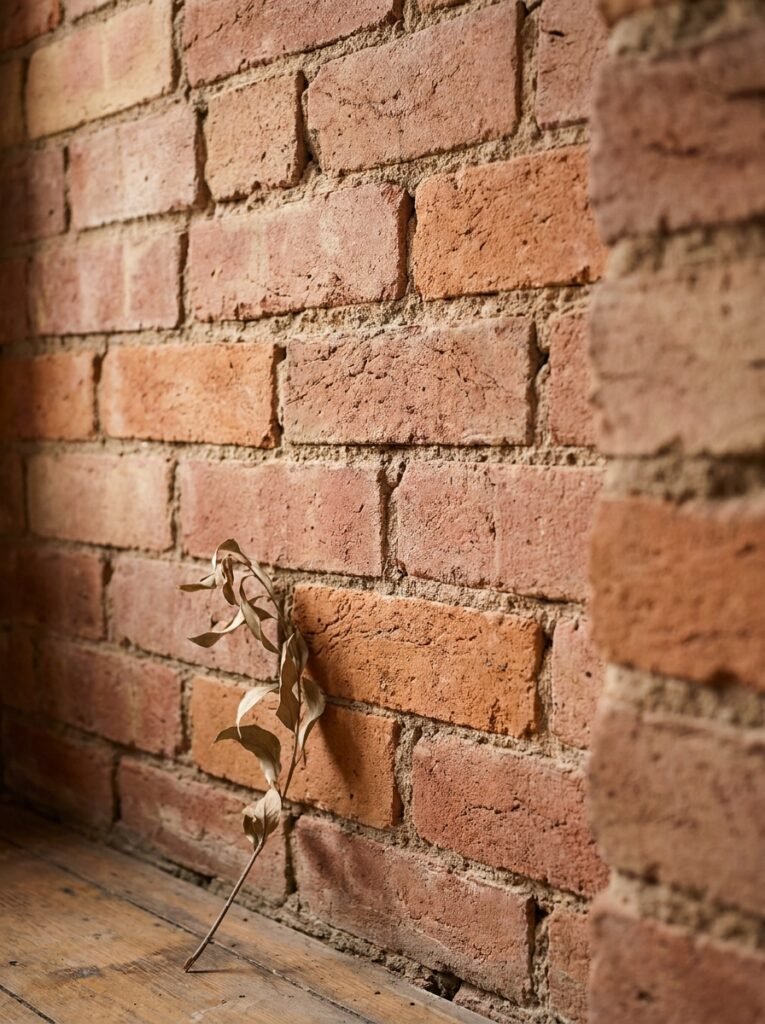
The warm red and orange tones of traditional clay bricks come from iron oxide in the clay, fired at high temperatures. Different clay compositions and firing temperatures produce the rich variety you see in old buildings — russet reds, burnt oranges, warm pinks, deep terracottas — each shade telling the story of the earth it came from.
—
3. The Color Science Behind Why Red Brick Makes Rooms Feel Warm and Alive
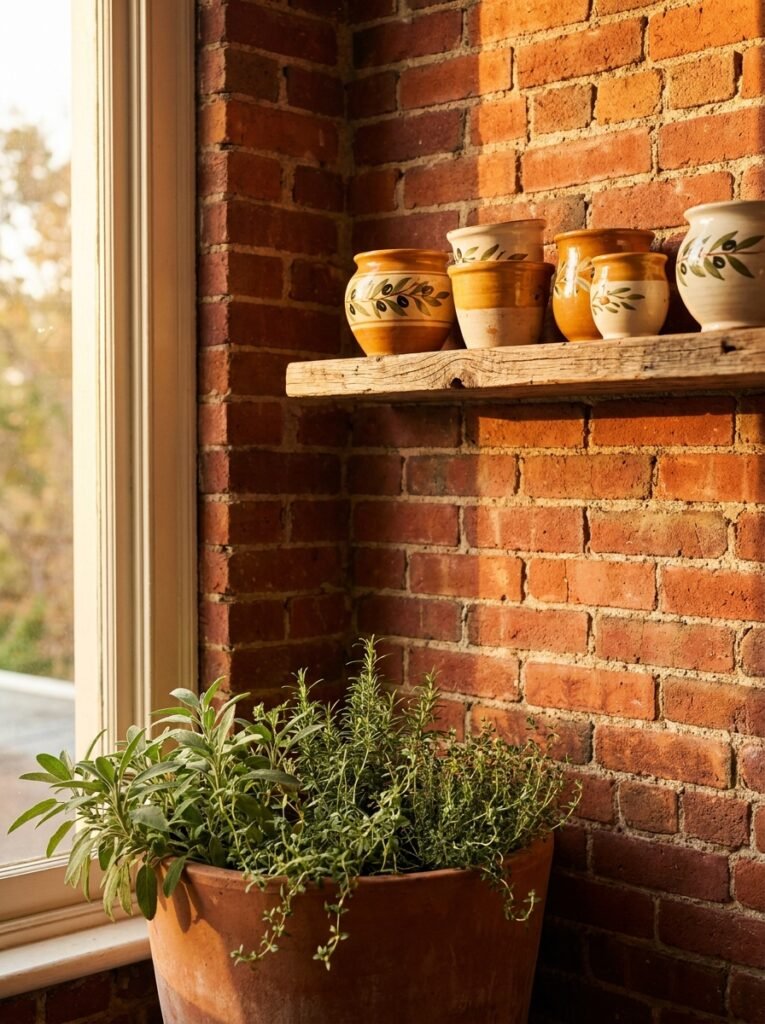
Color psychology is a genuine science, and brick red sits in a fascinating zone of the color spectrum — warm enough to feel cozy and inviting, but earthy enough to feel grounded rather than aggressive.
Pure red can feel intense and stimulating in large quantities. But brick red — softened by orange undertones, tempered by the grey of mortar, and varied by natural inconsistency — registers differently in the brain. It signals warmth without overstimulation. It’s the color of hearths, of terracotta pots in a Mediterranean kitchen, of autumn leaves on a country path. Your nervous system reads it as safe and nourishing.
This is why red brick works so spectacularly well in rooms where you want people to feel comfortable and linger — kitchens, living rooms, dining rooms, and home offices. The warmth it radiates isn’t just visual. Rooms with brick walls genuinely feel warmer in atmosphere, and many homeowners report that they feel measurably warmer in temperature too, because of brick’s excellent thermal mass properties.
The mortar lines add another layer of visual richness. They create a subtle grid that gives the eye something to travel across without feeling chaotic. It’s the same reason a herringbone wood floor feels so satisfying — the pattern is orderly enough to be calming, varied enough to be interesting.
—
4. How to Identify the Right Type of Brick Interior for Your Space

Not all red brick interiors are created equal, and understanding the differences will help you make better design decisions — whether you’re uncovering original brick or creating the look from scratch.
Original exposed brick is the gold standard. Found in older buildings — particularly pre-1950s construction — it tends to have the most character, with genuine age variations, patina, and texture that newer materials struggle to replicate. If you’re lucky enough to have this in your home, the only thing you need to decide is how much of it to reveal and how to treat it.
Reclaimed brick, sourced from demolished buildings, offers much of the same character and is used both for new walls and as a veneer applied to existing surfaces. It’s the best option for adding authentic brick texture to modern builds or renovated spaces. Quality reclaimed brick should feel uneven to the touch and show genuine weathering.
Brick-effect tiles have come a long way in the past decade and now offer a convincing, lower-cost alternative for kitchens and bathrooms where full brick installation isn’t practical. Look for tiles with genuine texture variation rather than flat, printed-only finishes — the texture is what sells the effect.
Faux brick panels are the most budget-friendly option and work well in accent wall applications, particularly in basement conversions and rental properties where structural changes aren’t possible. Quality matters enormously here — the difference between a convincing panel and a plastic-looking one is substantial.
—
5. The Design Styles That Pair Most Beautifully With Red Brick Walls
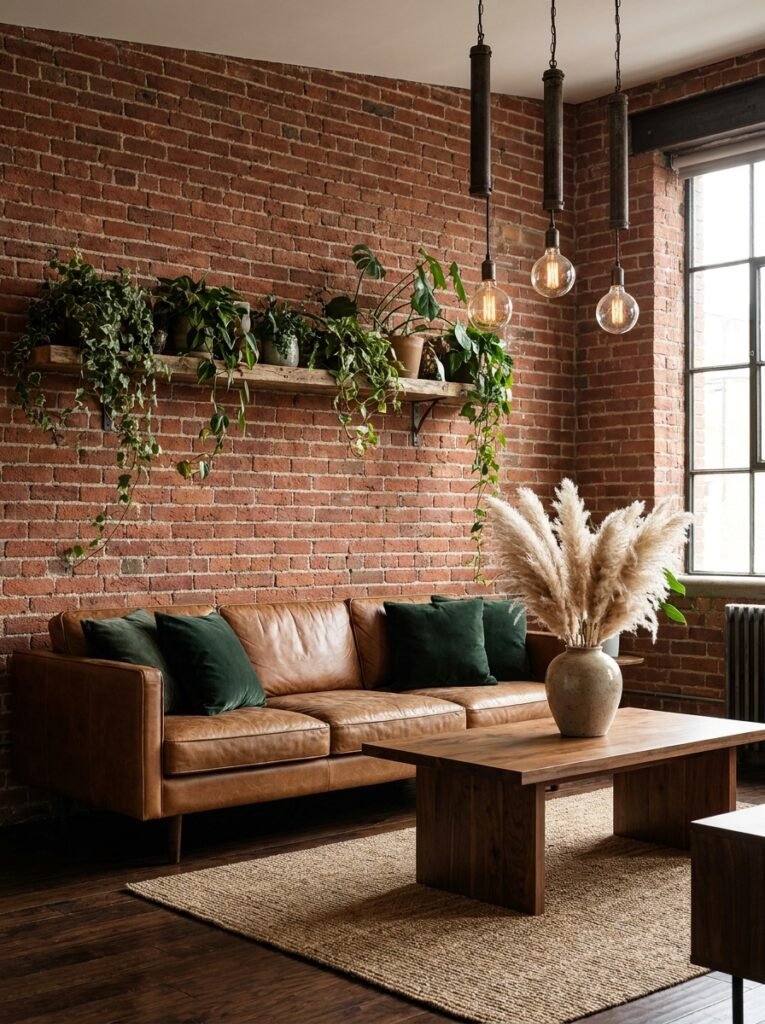
One of the most remarkable things about red brick as a design element is its extraordinary versatility. Unlike most strong design statements, it doesn’t lock you into a single aesthetic. It’s the rare foundation that genuinely works across multiple styles.
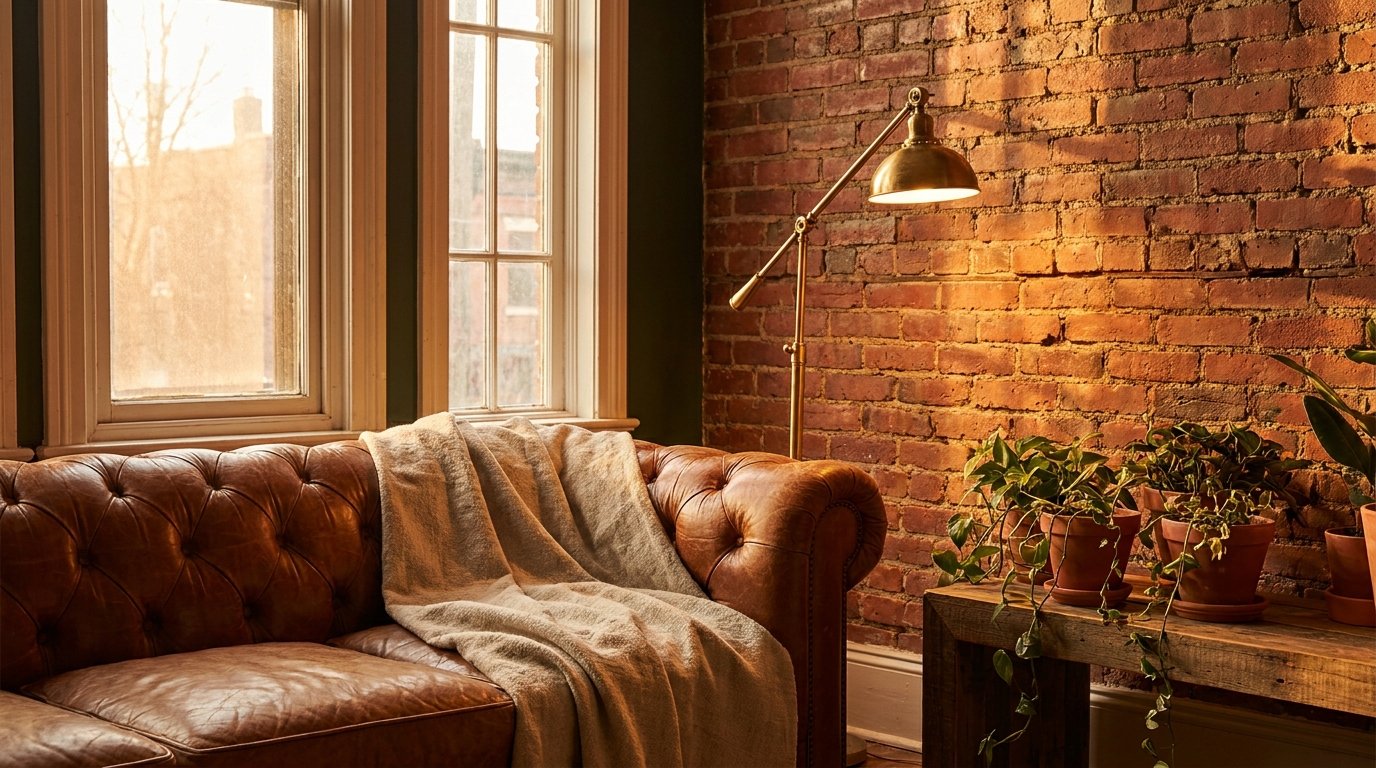
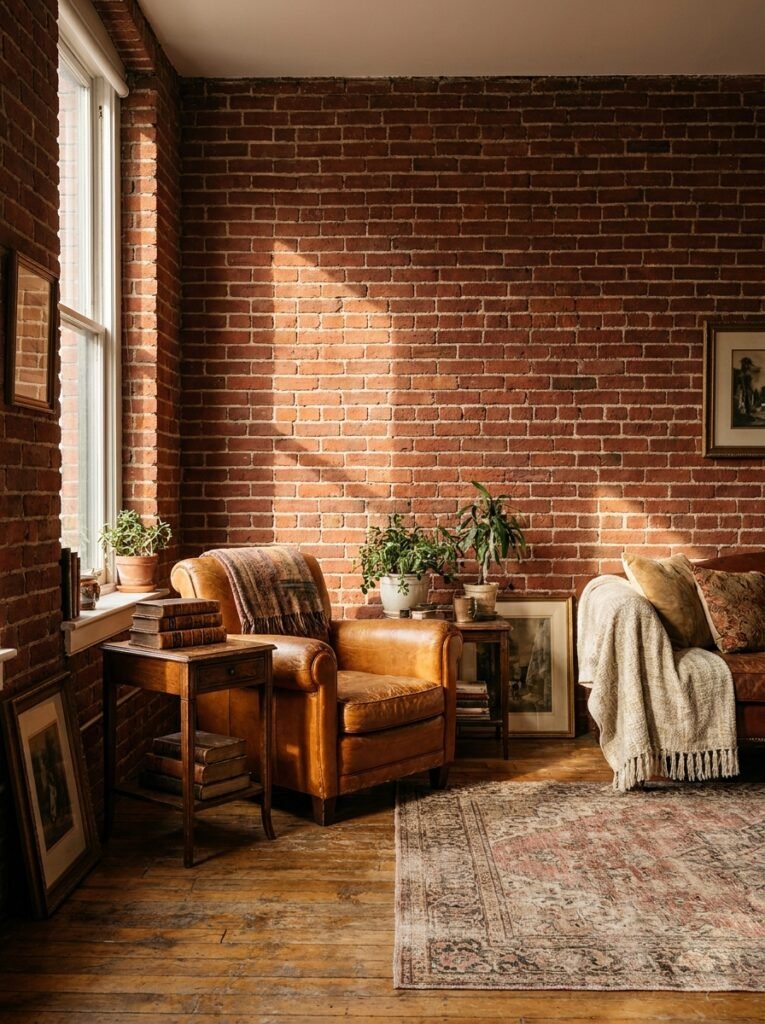
Industrial and loft style is perhaps the most iconic pairing — red brick alongside steel beams, pendant Edison bulbs, leather sofas, and raw wood surfaces. This combination has defined urban loft living for fifty years and still looks effortlessly cool. The key is balance: too much industrial coldness and the brick loses its warmth. Add soft textiles and plants to keep the space human.
Rustic farmhouse style uses red brick to anchor a warm, nostalgic aesthetic. Think brick feature walls behind a kitchen range, open wooden shelving, linen curtains, and collections of aged ceramic and glass. This style embraces the brick’s age and imperfection as central to its charm.
“The most beautiful interiors don’t decorate around brick — they build the whole story from it.”
Contemporary and minimalist design benefits surprisingly well from a single brick accent wall. In a clean, neutral space, one wall of red brick becomes a powerful focal point — textural art in architectural form. The contrast between the rough brick and smooth, modern surfaces creates visual tension that sophisticated designers actively seek.
Bohemian and eclectic interiors thrive with brick as a backdrop. Its warmth and neutrality allow bold rugs, layered textiles, plants, and collected objects to read as intentional rather than cluttered. The brick holds it all together.
Even Scandinavian-inspired spaces, typically associated with pale walls and clean lines, can incorporate brick beautifully — particularly lighter, more pink-toned brick varieties that complement the white and blonde wood palettes typical of that style.
—
6. Lighting a Red Brick Interior — The Difference Between Magic and Mediocre
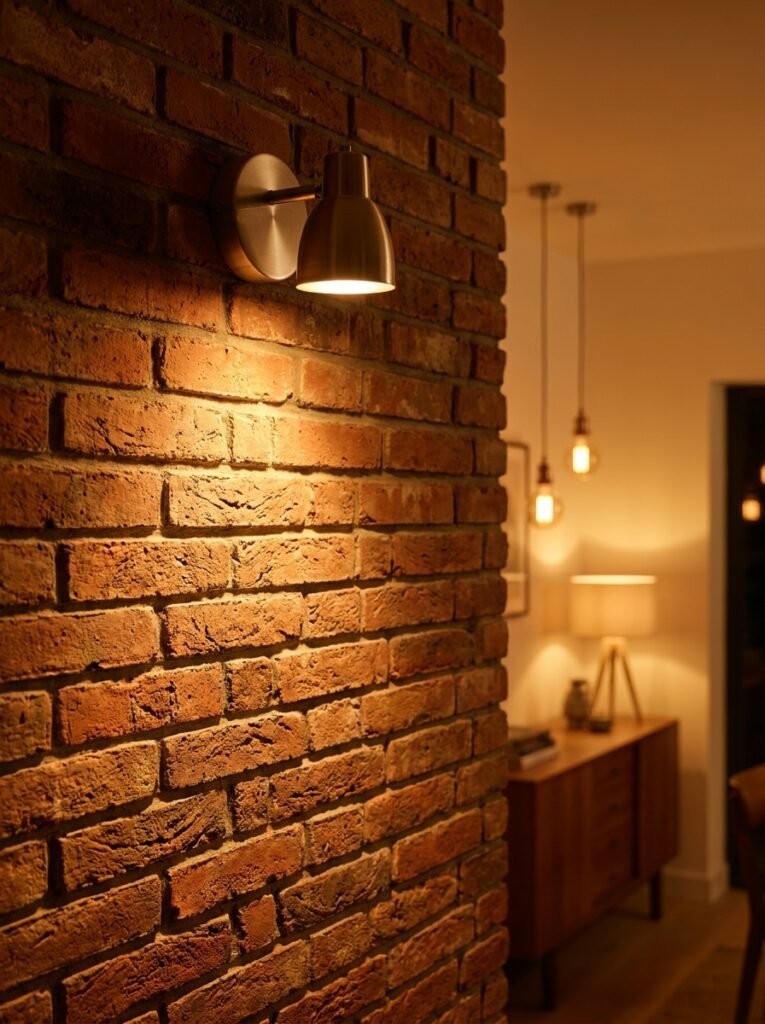
Lighting transforms red brick from pleasant to extraordinary, and it’s one of the most important decisions you’ll make in any room featuring it.
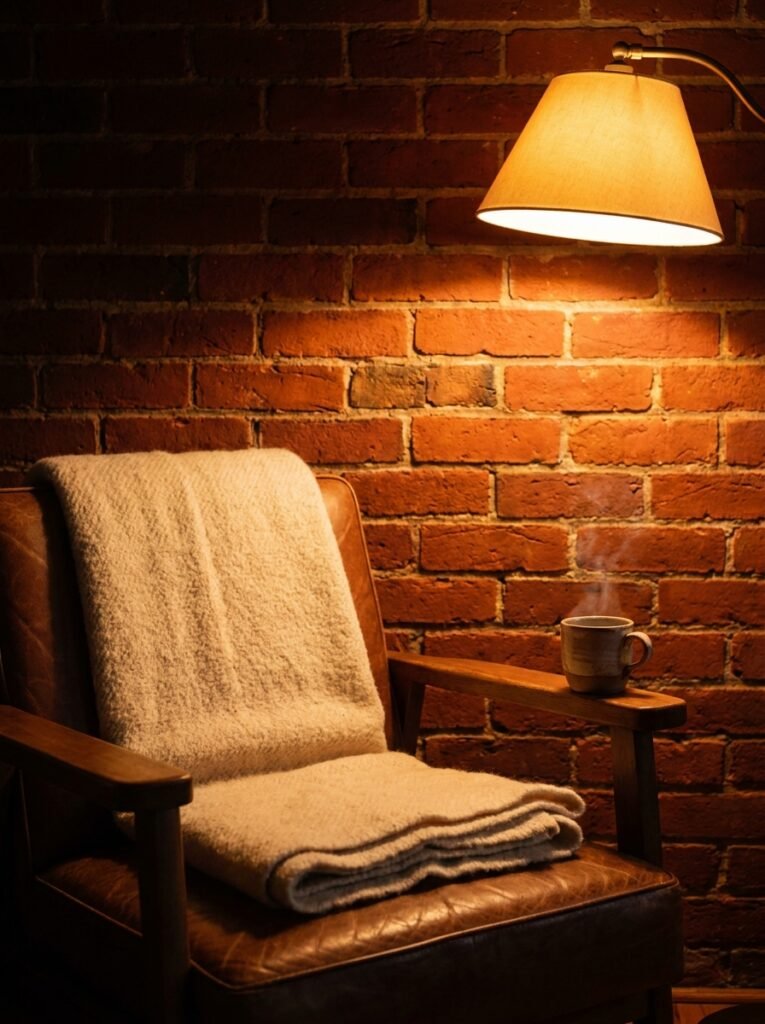
Warm-toned bulbs — those in the 2700K to 3000K range — are essential. Cool white light flattens brick, washing out its warm undertones and making it look flat and industrial in the worst sense. Warm light, by contrast, makes those iron oxide tones glow, deepens the shadows in the mortar lines, and creates the effect of natural firelight playing across the surface.
Wall-grazing — positioning light sources close to the wall and angled across its surface — is the professional technique for making texture sing. This approach casts tiny shadows across every bump and variation in the brick, turning the wall into something three-dimensional and dramatic. Directional spotlights, picture lights, and sconces all work beautifully for this purpose.
Avoid placing bright overhead fluorescent lighting as the primary source in a brick room. It creates flat, shadowless illumination that murders texture. Layered lighting — ambient, task, and accent — is the approach that makes brick interiors feel as good in the evening as they do in daylight.
—
7. Furniture and Textiles That Belong in a Red Brick Room
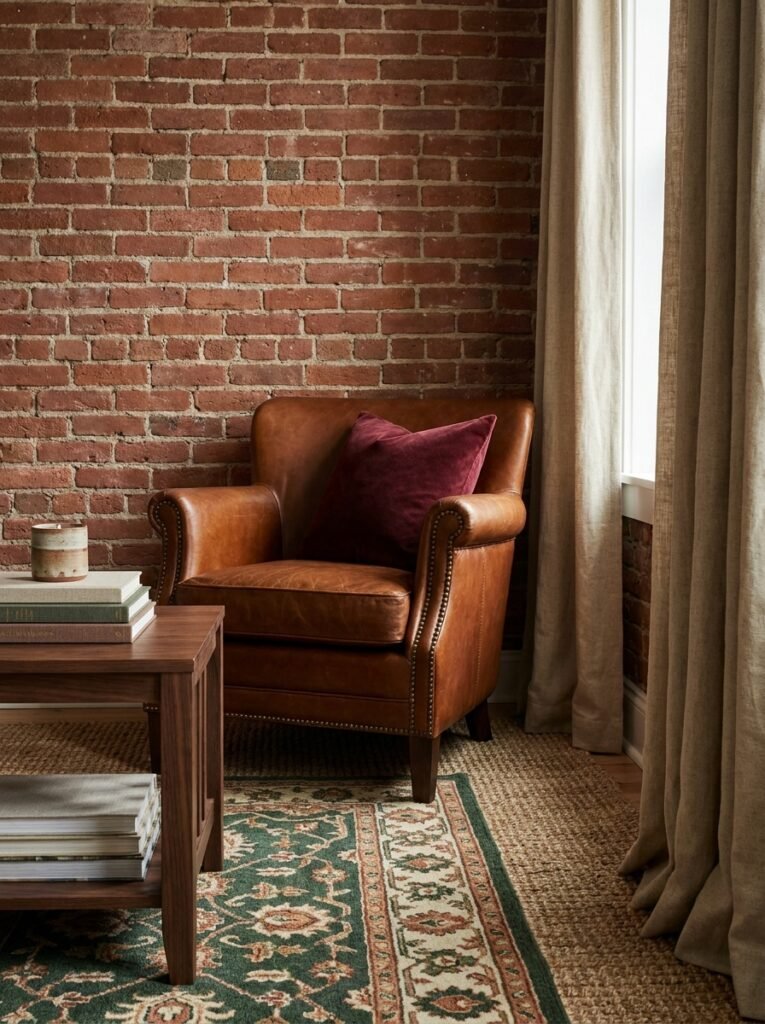
Brick’s warm, earthy tones create a specific color palette that, once understood, makes furniture and textile choices feel intuitive rather than stressful.
Leather furniture in cognac, tan, caramel, and aged brown develops a natural relationship with red brick — both materials age beautifully, and their warm tones share a family resemblance. A worn leather Chesterfield sofa against a red brick wall is one of interior design’s most satisfying pairings, full stop.
Deep jewel-toned velvet — in forest green, navy, burgundy, or burnt gold — creates rich contrast against brick without fighting it. These colors appear in the brick itself in subtle undertones, and bringing them out in upholstery creates a room that feels curated and considered.
Natural wood in warm or mid-toned finishes — walnut, oak, cherry, reclaimed pine — connects back to the earth tones of the brick and creates cohesion. Cool-toned greys and silvers tend to create contrast rather than cohesion, which can work as a deliberate choice in contemporary styles but can feel jarring if not handled carefully.
Soft textiles are non-negotiable in a brick room. Because brick is a hard, rough, visually complex material, the eye and body crave softness as counterbalance. Layer rugs generously — a jute or sisal base rug topped with a softer, patterned layer works brilliantly. Add throw pillows in linen, cotton, and velvet. Use heavy curtains that pool slightly on the floor. This layering transforms a room from interesting to genuinely cozy.
—
8. The Kitchen and Red Brick — A Combination That Feels Like Sunday Morning
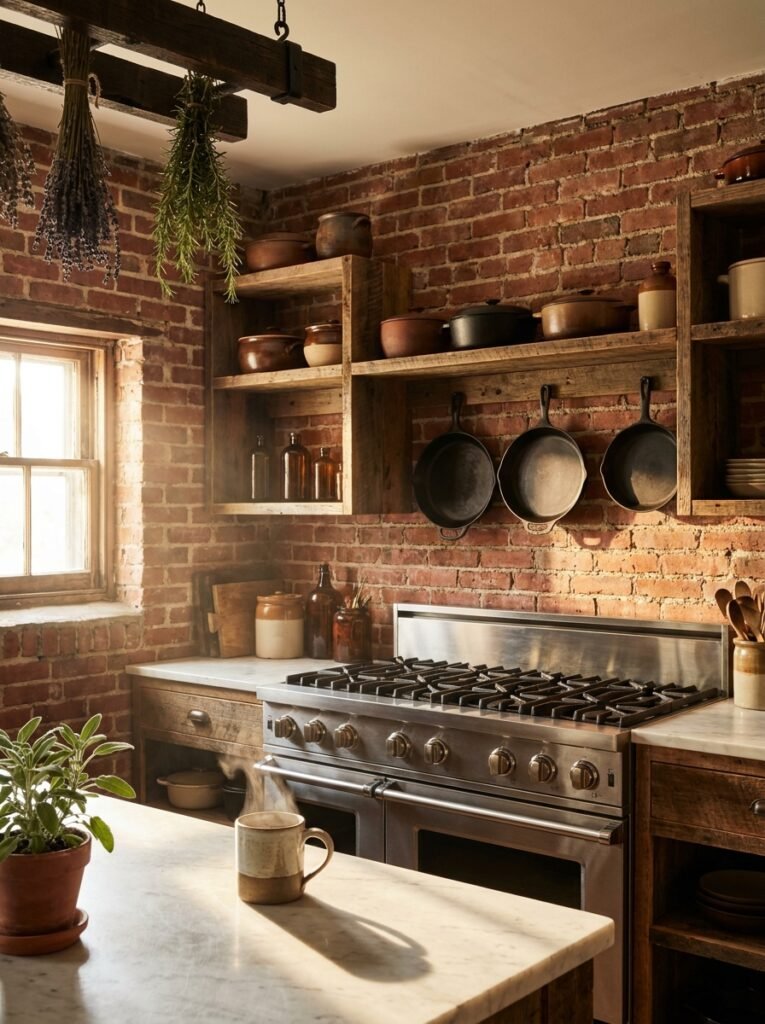
If there’s one room where red brick truly earns its reputation as the ultimate design element, it’s the kitchen.
Imagine walking into your kitchen on a slow Sunday morning — coffee steaming on the counter, the smell of something good already in the air — and one entire wall of warm, textured red brick meeting your eyes. There’s a reason this image appears in so many kitchen design inspirations. It works because kitchens are already spaces of warmth, nourishment, and gathering. Red brick amplifies every one of those qualities.
Brick works particularly well behind a kitchen range or Aga, where it functions both as a backsplash and as an architectural frame for the room’s cooking heart. It pairs beautifully with open wooden shelving displaying ceramic, cast iron, and vintage glass. It makes pendant lights look intentional and pendant lights look like art.
“A brick wall in a kitchen doesn’t just look good — it changes how the room feels to cook in.”
In kitchen design, the texture contrast between brick and other materials is especially powerful. Smooth, cold marble countertops against rough, warm brick creates a sensory richness that no single material achieves alone. White subway tile on adjacent walls keeps the space feeling fresh and well-lit without competing with the brick’s character.
Even in smaller kitchens, a single brick accent wall — even just above a counter or framing a window — can transform the entire atmosphere of the space from functional to genuinely characterful.
—
9. Small Space Strategies — Using Red Brick Without Overwhelming a Room
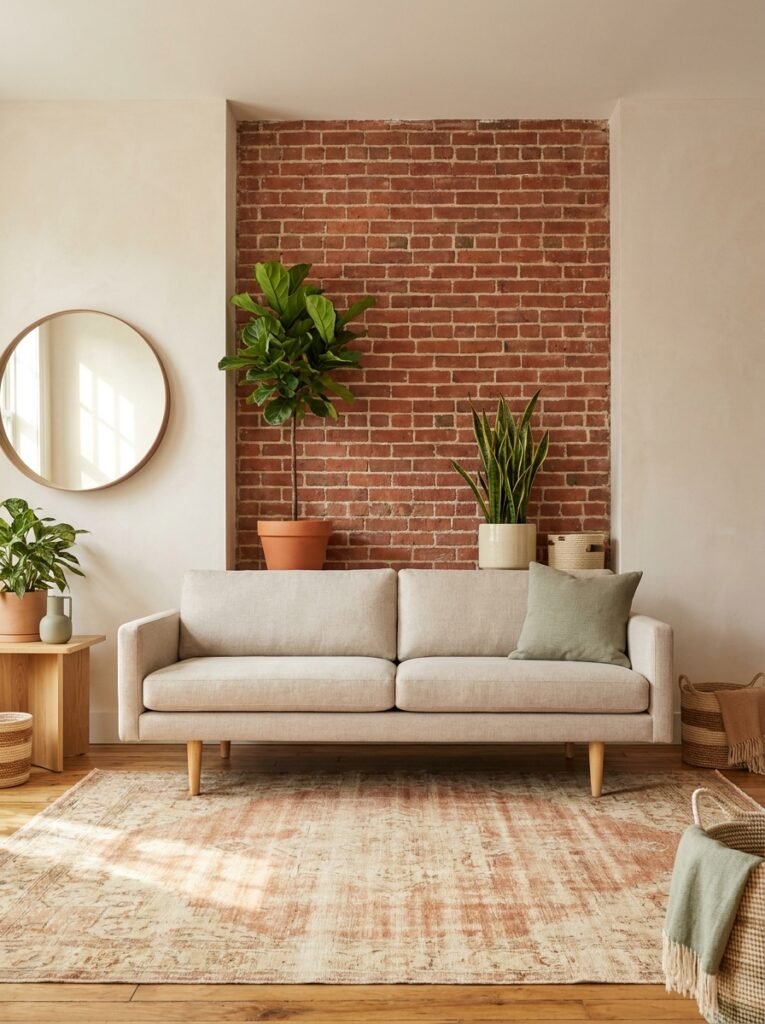
The most common concern about red brick in interiors is scale — specifically, the fear that in a smaller room, a full brick wall will feel overwhelming and visually shrink the space.
This concern is legitimate but manageable with the right approach. The key insight is that brick, because it’s textured rather than visually advancing in the way that flat dark colors can be, often reads differently than you’d expect. A white wall actually reflects light and reads as larger, but a brick wall, despite being darker and more complex, creates depth rather than advancing forward.
Confine the brick to one accent wall, and keep the remaining three walls in a pale, warm neutral — off-white, cream, warm greige, or soft linen tones. This creates visual breathing room while letting the brick be the hero. The room will feel curated and intentional rather than crowded.
Keep furniture silhouettes clean and appropriately scaled. In a small room with brick, avoid large, heavy pieces that compete for visual weight. Instead, use furniture with visible legs, lighter profiles, and a maximum of two or three substantial pieces. The brick provides all the visual weight the room needs.
Use mirrors strategically — not facing the brick wall directly, which can feel repetitive, but on adjacent walls to expand the sense of space while allowing the brick to remain the focal point.
—
10. Red Brick Exterior Versus Interior — How They Inform Each Other
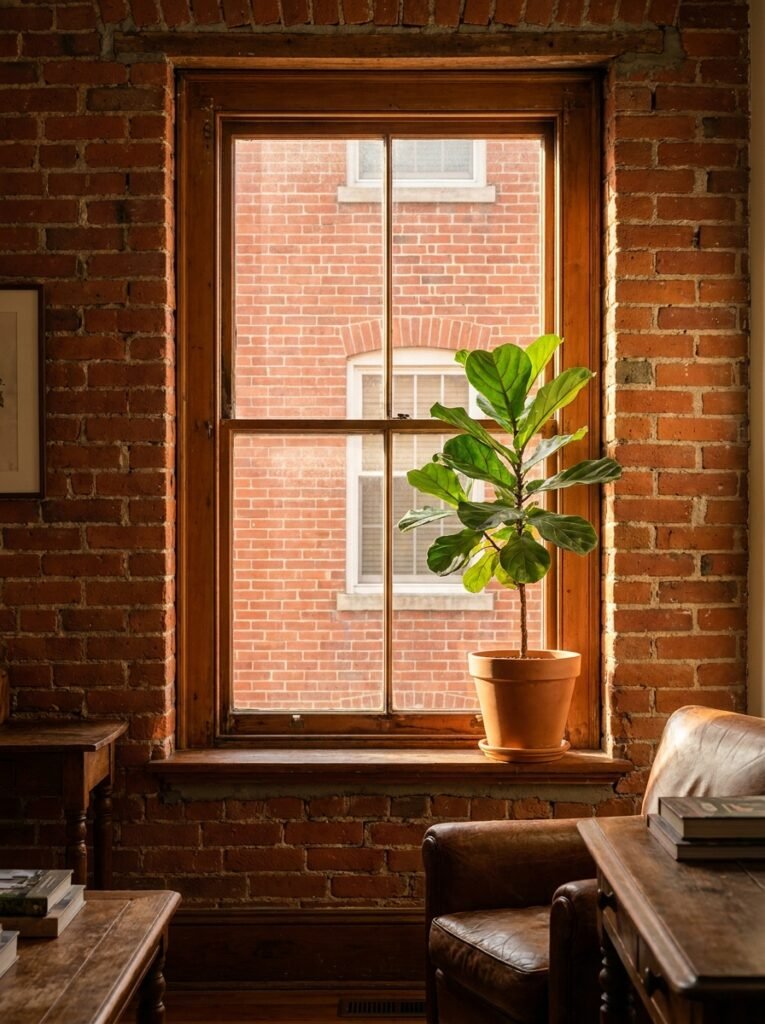
If your home has a red brick exterior, you have a remarkable opportunity to create visual continuity between inside and outside — a design approach that gives older homes a sense of effortless authenticity.
When exterior and interior brick are the same material, or even just similar in tone, the home feels rooted in itself. It reads as architecturally honest — a quality that interior designers and architects consistently describe as one of the hardest things to achieve in renovation.
For homes without existing interior brick, using brick that matches or complements the exterior tone creates this same sense of cohesion. A converted Victorian terraced house, for example, benefits enormously from revealing or reintroducing the same warm red brick inside that defines its exterior — it creates a through-line between the building’s history and its current life.
Even in modern builds with brick exteriors, bringing brick inside — through feature walls, kitchen backsplashes, or fireplace surrounds — connects the architecture to the interior in a way that creates genuine design satisfaction.
—
11. Treating and Sealing Brick — What You Actually Need to Know
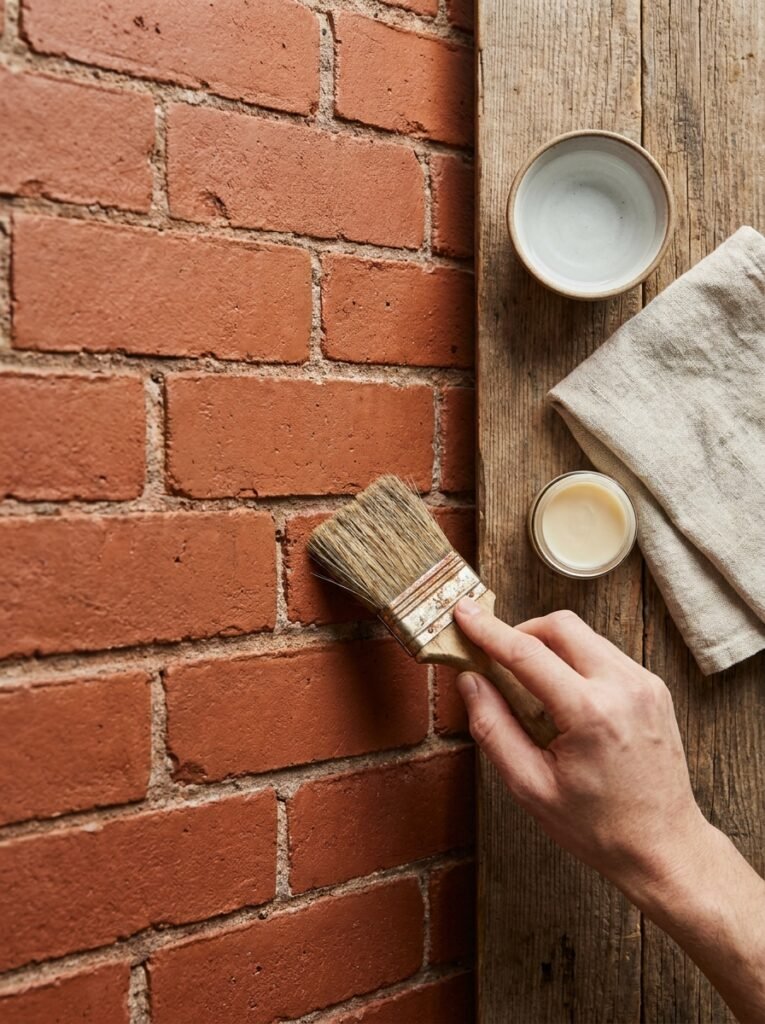
Many people hesitate to expose or rely on interior brick because they’re unsure how to care for it. The good news is that brick is a remarkably low-maintenance material when treated correctly.
Raw, unsealed brick in interior spaces will accumulate dust in its texture and can leach mineral deposits over time, particularly in areas with moisture exposure. A coat of penetrating brick sealer — not a surface coating, which can look plasticky and artificial — protects the brick while preserving its natural appearance. Applied correctly, a penetrating sealer is completely invisible and simply makes the brick easier to clean.
Light cleaning with a soft brush or low-pressure vacuum is usually all that’s needed for regular maintenance. For deeper cleaning, a mild solution of water and pH-neutral soap, applied with a soft brush and rinsed thoroughly, removes built-up grime without damaging the brick or mortar.
Avoid harsh acid-based cleaners on interior brick unless you have specific mineral staining that requires it, and even then, use them with extreme care. They can alter the color of the brick and damage mortar permanently.
Pointing — the process of repairing deteriorated mortar joints — should be done by a professional if the mortar is crumbling significantly, as poorly done repointing can be worse than no intervention at all.
—
12. The Timeless Appeal — Why Red Brick Will Never Go Out of Style
Every few years, design commentators predict the death of red brick interiors. They say it’s peaked, oversaturated on Pinterest, ready to be replaced by the next big thing. And every few years, they’re wrong.
Red brick persists not because of trends but because it connects to something genuinely enduring in human experience. It speaks to our preference for natural materials, for things made by hand, for spaces that feel embedded in time rather than dropped into the present without roots. It satisfies a desire for imperfection in a world that increasingly values the seamless and the digital.
There’s also the simple fact that it’s beautiful. Not in the way that a clever design trick is beautiful — clever until the next clever thing comes along — but in the way that a stone wall in the sunshine or a wooden floor worn smooth by decades of footsteps is beautiful. A beauty that deepens with time rather than dating with it.
The rooms people describe as their absolute favorites — the ones they return to in memory, the ones they try to recreate in new homes, the ones they photograph obsessively — are almost never the rooms that were chasing a trend. They are rooms that were built around something true. Red brick, it turns out, is one of the truest things a room can have.
—
🌿 How to Take Care of Your Red Brick Interior
Taking care of brick is simpler than most people expect, and doing it right means your walls will look better in twenty years than they do today.
Start with a quality penetrating sealer applied soon after exposing or installing brick — this is the single most important step for long-term care, and it protects without altering the natural look. Dust and vacuum the surface every few weeks with a soft brush attachment to prevent texture from trapping grime.
For kitchen brick that’s exposed to cooking steam and grease, a monthly wipe-down with a barely damp cloth and mild dish soap keeps the surface fresh without over-wetting the mortar. Dry thoroughly after cleaning — sustained moisture is brick’s only real enemy indoors.
Monitor the mortar lines annually — hairline cracks are normal as buildings settle, but deteriorating mortar should be addressed before it becomes structural. For any repointing or repair work, always consult a professional and ensure the repair mortar matches the original in color and hardness.
Finally, protect brick from furniture damage by keeping heavy pieces slightly away from the wall rather than pushed directly against it. The constant vibration of a sofa or bookcase in contact with brick can, over time, loosen mortar at that point.
—
❓ FAQ
Q: Does exposed brick in a room make it harder to heat? A: Modern interior brick walls, particularly those that have been properly sealed, are generally not problematic for heating. In fact, brick has excellent thermal mass — it absorbs heat during the day and releases it slowly, which can actually improve temperature stability. Issues arise with exterior brick walls that lack adequate insulation behind them, but interior brick walls are rarely a thermal problem.
Q: Can I paint red brick white or grey if I want a more modern look? A: You can, and whitewashed or limewashed brick is a popular and beautiful treatment. However, fully painting brick is very difficult to reverse — once paint penetrates the porous surface, removing it is labor-intensive and can damage the brick. Limewashing is a better option as it allows the brick texture and variation to show through while lightening the overall tone. Think carefully before committing, as unpainted original brick is generally considered more valuable in a property.
Q: How do I create a red brick look in a rented apartment where I can’t make structural changes? A: The most effective approaches for renters are brick-effect tiles (removable peel-and-stick versions have improved significantly in quality), removable brick-pattern wallpaper, or faux brick panels that can be attached and removed without permanent damage. Focus on one accent wall — perhaps in a kitchen, behind a bed, or in a living room — for maximum impact without overwhelming the space or risking your deposit.
—
💭 Final Thought
Red brick has been with us for five thousand years, holding up our homes, our cities, our lives — and it’s not going anywhere. There’s a reason that, in a design world full of fleeting trends, it keeps finding its way back onto our walls and into our hearts.
It asks nothing of you except that you see it clearly — all its imperfection, all its warmth, all its quiet, beautiful history. And when you do, it gives a room something that no amount of styling or spending can manufacture: the feeling that you belong exactly where you are.
What would it feel like to come home every day to a room with a little more texture, a little more warmth, a little more story in its walls?