
The Tiny Detail That Transforms Every Room: A Complete Guide to Choosing Doorknobs for Your Interior
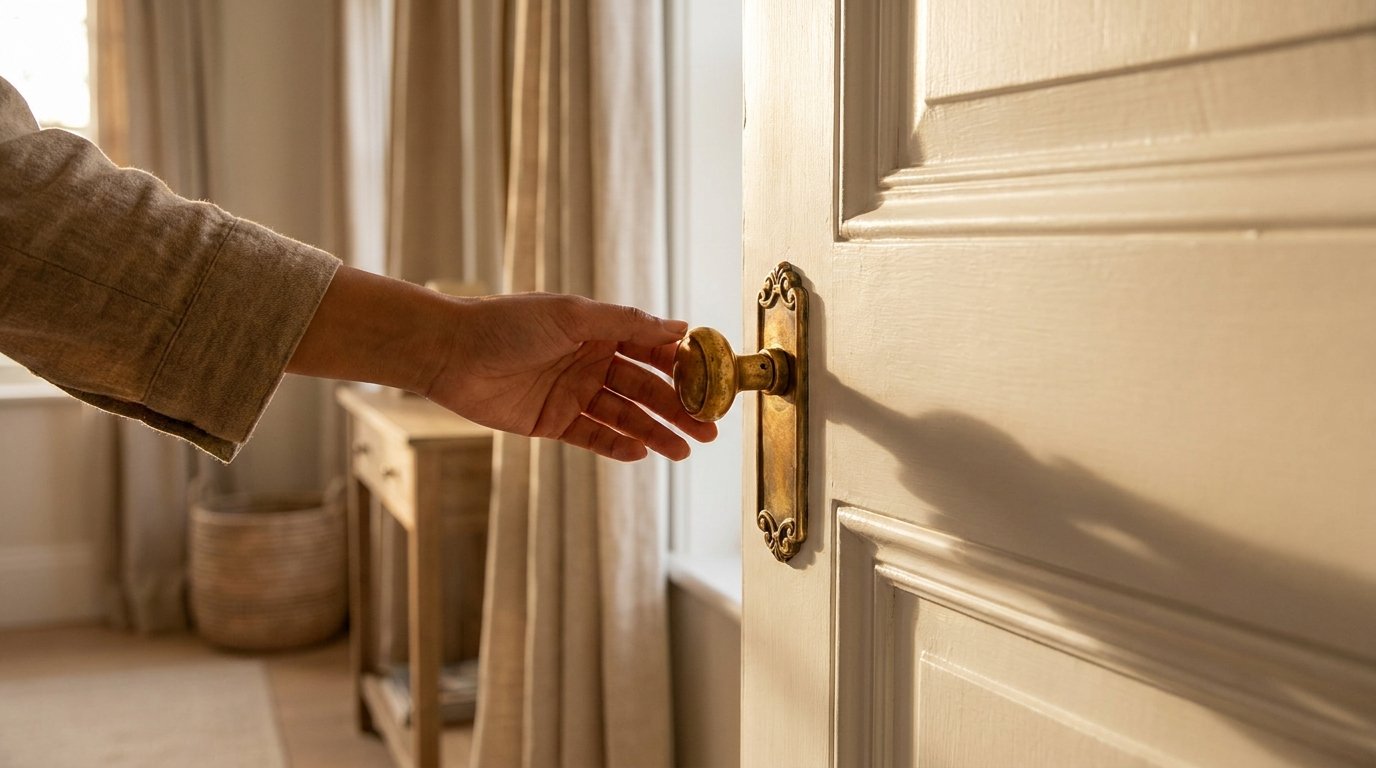
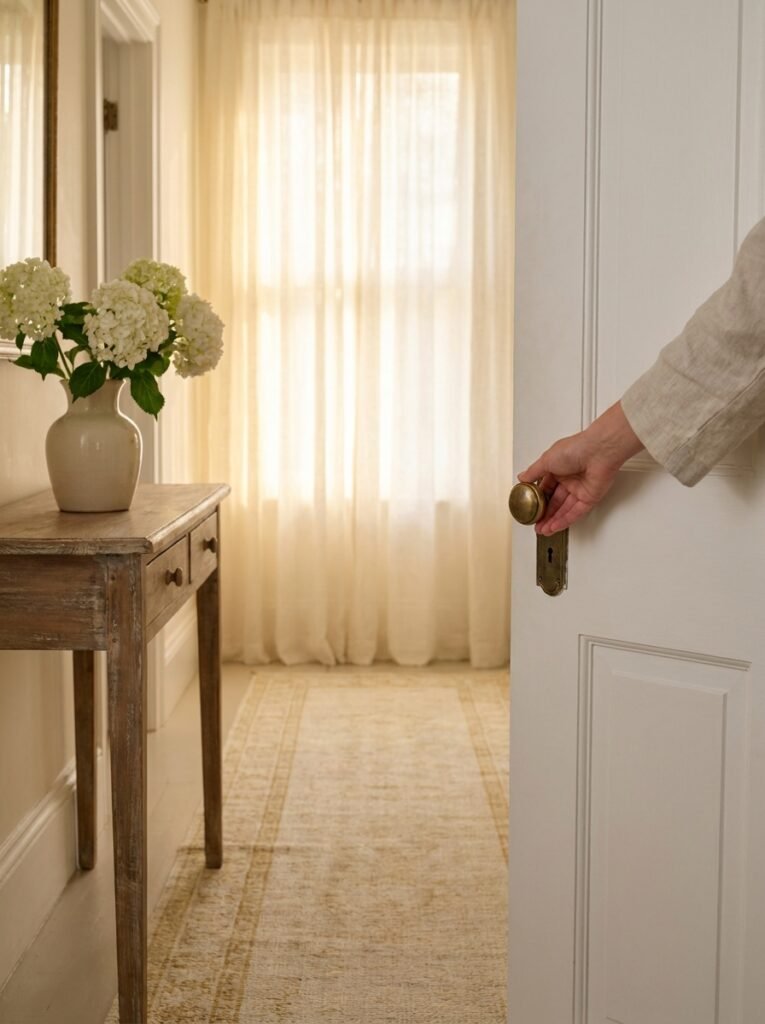
There’s a moment — small, almost forgettable — that happens dozens of times every day in your home. Your hand reaches out, closes around a knob, and pushes a door open. It takes less than a second. But what if that tiny moment could feel beautiful? What if the hardware on your doors was quietly telling a story about who you are and what you love? That’s the quiet magic of interior doorknobs — and most people have never stopped to notice it.
—
1. Why Doorknobs Are the Jewelry of Your Home’s Interior
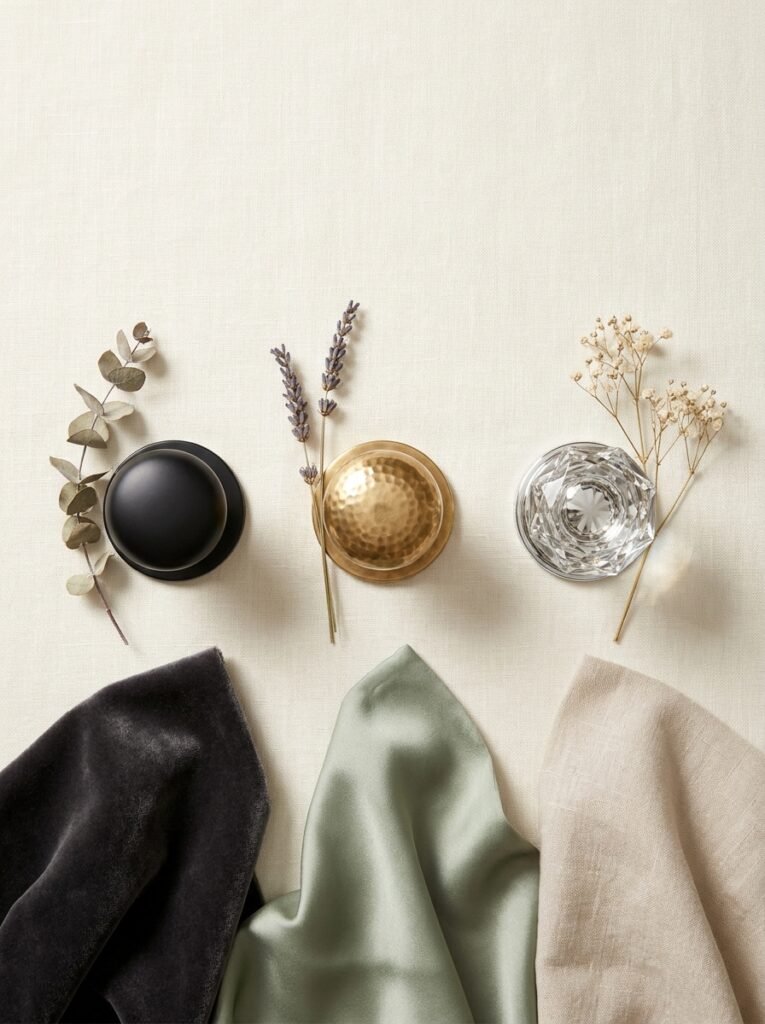
Think about the way a piece of jewelry can completely change an outfit. A simple black dress looks entirely different with pearl earrings versus hammered gold hoops. The same principle applies to your home’s interior — and doorknobs are its most overlooked accessory.
Every door in your house has one. The bedroom, the bathroom, the hallway closet, the pantry. That means you have more doorknobs than you have throw pillows, more than picture frames, more than almost any other decorative element. And yet, most of us live in homes where the original builder-grade hardware — that dull, slightly wobbly nickel knob installed sometime in the early 2000s — has never once been reconsidered.
Interior designers call doorknobs “the punctuation marks of a room.” They don’t shout. They don’t demand attention the way a sofa or a paint color does. But they quietly finish every sentence your home is trying to say. A matte black knob on a white paneled door says: modern, intentional, confident. A vintage glass knob on a linen-painted door says: romantic, layered, full of history.
“Your doorknobs are speaking about your home every single day — the only question is whether they’re saying something you actually mean.”
Choosing the right doorknobs for your interior is one of the simplest, most affordable upgrades you can make — and it has an outsized visual impact that most people completely underestimate.
2. The History Behind the Humble Doorknob (It’s More Fascinating Than You Think)
Before you choose your next doorknob, it’s worth knowing a little about where they came from — because understanding the history of this humble object makes the choice feel far more meaningful.
The doorknob as we know it was patented in 1878 by Osbourn Dorsey, a Black American inventor whose contribution to everyday life is still felt in homes around the world. Before that, doors were operated with latches, bars, and ring pulls. The round knob — so intuitive we don’t even think about it — was genuinely revolutionary.
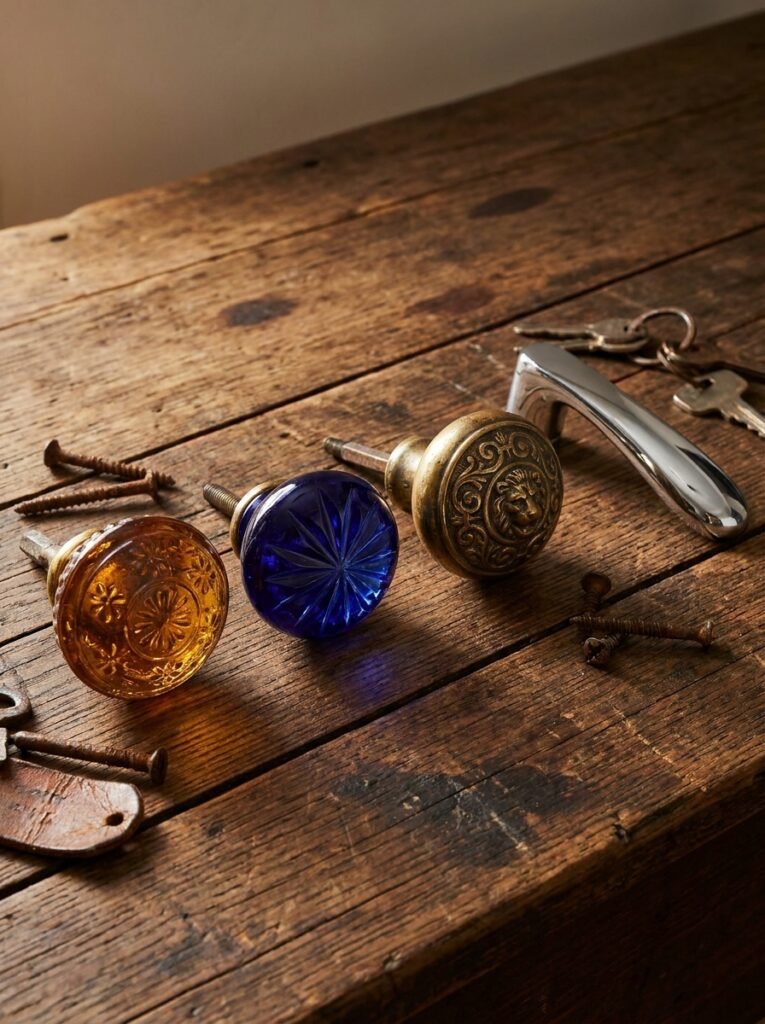
Through the Victorian and Edwardian eras, doorknobs became objects of serious craftsmanship. Pressed glass knobs in amber, cobalt, and crystal were considered marks of refined taste. Brass hardware was polished daily by household staff. In the mid-century modern era, streamlined levers and geometric shapes replaced ornate rounds. Then came the 1980s and 90s with their mass-produced satin nickel finishes — functional, affordable, and almost entirely soulless.
Today, we’re in a genuine renaissance of interior hardware. Homeowners and designers alike are returning to thoughtful, handcrafted, historically inspired doorknobs — and the market has responded with extraordinary options at every price point.
3. Understanding the Different Types of Interior Doorknobs

Before you fall in love with a style, it helps to understand what you’re actually looking at when you shop for interior doorknobs. The terminology can be confusing, and buying the wrong type for the wrong application is a mistake that’s easy to avoid.
Passage knobs are the most common type for interior doors. They turn freely in both directions and have no locking mechanism — these are your hallway, living room, and dining room knobs. They exist purely to open and close a door.
Privacy knobs include a simple locking function, usually operated with a small button or thumb-turn on one side and a small emergency release on the other. These belong on bathroom and bedroom doors.
Dummy knobs are fixed in place and don’t actually turn. They’re used on closet doors, French doors, or any door that doesn’t need a mechanical latch — purely decorative, purely tactile.
Keyed entry knobs are technically for exterior use, but some homeowners use them on home office or studio doors where they genuinely want a lock.
Understanding which function you need before you fall in love with a particular aesthetic will save you a significant amount of frustration at the hardware store.
4. The Most Popular Finishes for Interior Doorknobs Right Now
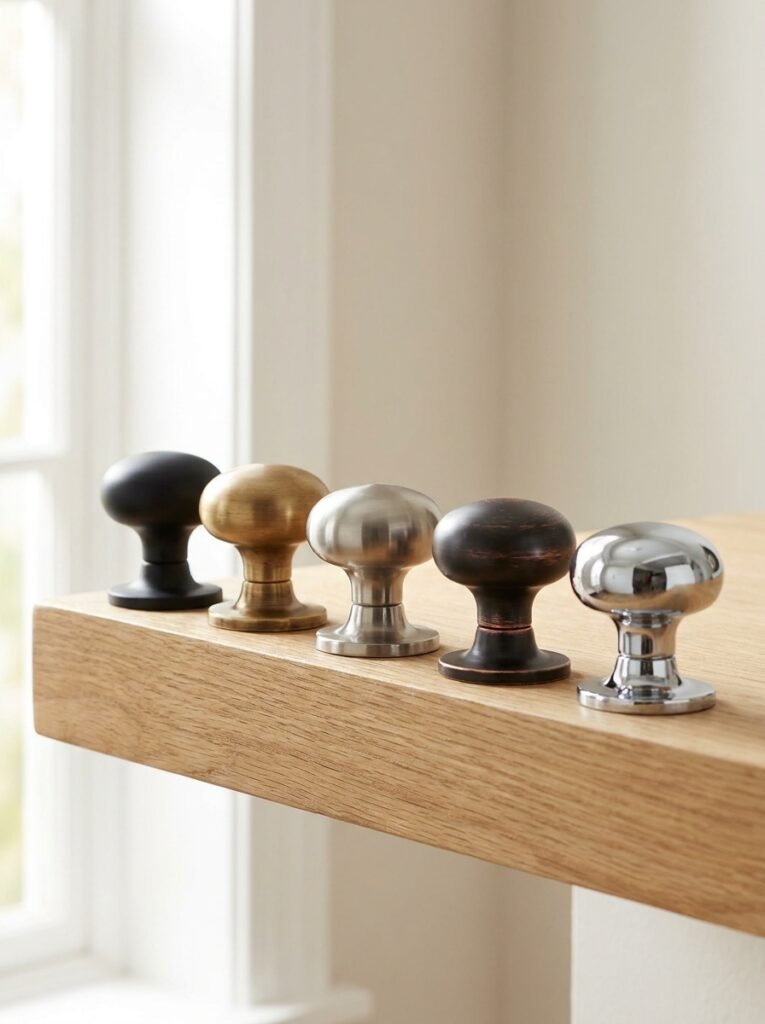
Walk into any home furnishings store today and you’ll see a wall of finish options that can feel genuinely overwhelming. Brass, bronze, chrome, nickel, black, pewter — where do you even begin?
Matte black has been the dominant finish in interior design for the past several years, and it’s showing no signs of fading. It works beautifully against white, cream, sage green, and deep navy walls. It reads as modern and deliberate without being cold.
Unlacquered brass is having a full cultural moment. Unlike the shiny, artificial-looking brass of decades past, unlacquered brass is allowed to age and patina naturally over time — developing a warm, lived-in character that feels genuinely antique. It pairs gorgeously with warm whites, terracotta, and earthy linen tones.
Satin nickel remains a reliable, versatile choice — particularly in homes with a transitional or contemporary aesthetic. It doesn’t compete, it doesn’t date quickly, and it plays well with stainless steel appliances and chrome bathroom fixtures.
Oil-rubbed bronze offers a rich, slightly aged look that suits traditional, craftsman, and farmhouse interiors exceptionally well. It has warmth and weight that feels grounded and real.
Polished chrome is the choice for ultra-modern, minimalist, or industrial interiors. It’s reflective, crisp, and architectural.
“The finish you choose for your doorknobs should feel like a natural extension of your home’s personality — not a trend you’re chasing.”
5. Glass Doorknobs: The Timeless Classic Worth Reconsidering
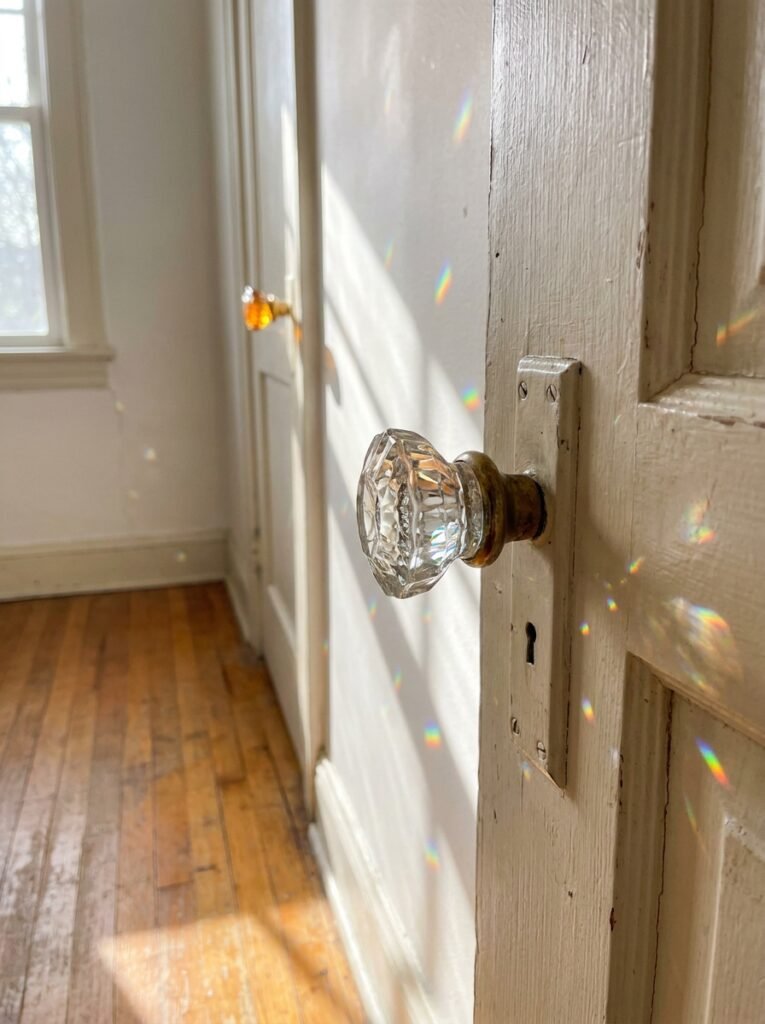
If you’ve ever walked through an older home — a Victorian, a colonial, a craftsman bungalow — and reached for a door only to feel the cool weight of a cut glass knob settle into your palm, you already know that this experience is completely different from anything a modern knob can offer.
Glass doorknobs have a tactile quality that is genuinely irreplaceable. They catch light in ways that metal simply cannot. In the morning, a crystal glass knob in an east-facing hallway can scatter tiny rainbows across the floor. In the afternoon, an amber glass knob glows like warm honey.
They were standard hardware in American homes from approximately the 1860s through the 1940s — which means authentic antique glass knobs are still surprisingly easy to find at estate sales, salvage shops, and online marketplaces. They fit standard door preparations, so installation is typically no more complicated than any other knob.
Modern reproductions are also readily available, ranging from simple clear crystal to faceted pressed glass in blush, smoke, and seafoam. They suit cottagecore, grandmillennial, romantic, and transitional interiors with equal ease.
The one consideration: glass knobs do require slightly more care. They can chip if struck hard enough, and some antique versions may have minor imperfections — which is, for many people, precisely what makes them so beautiful.
6. How to Mix Metals Without Making Your Home Look Chaotic
One of the most common fears people have when updating their doorknobs is this: what if it doesn’t match everything else? Particularly if you have a mix of existing metal finishes in your home — silver in the kitchen, gold in the bathroom, bronze in the living room — choosing a single knob finish for every door can feel impossible.
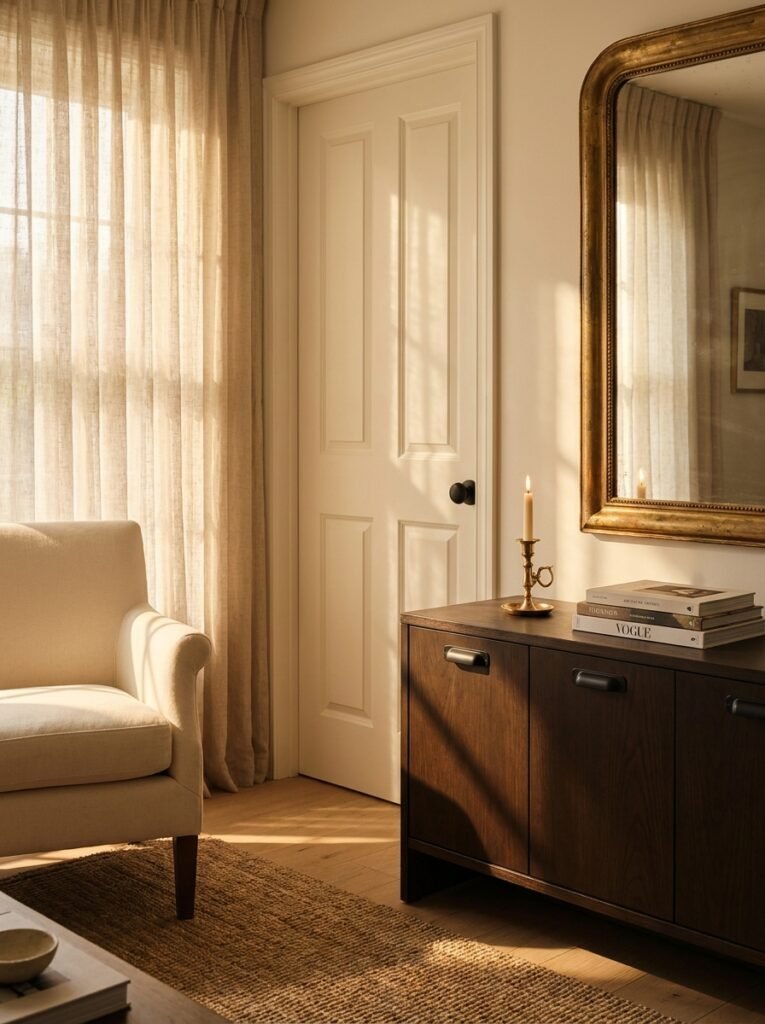
Here’s what interior designers actually do: they choose a dominant finish and an accent finish, then use them consistently throughout the home. If your dominant finish is matte black (used on cabinet hardware, light fixtures, and doorknobs), your accent might be warm brass (used on mirrors, decorative objects, and smaller accessories). These two tones can coexist beautifully.
The rule is not that everything must match. The rule is that everything must feel intentional. Two metals that appear together repeatedly throughout a home feel designed. Two metals that appear randomly — a chrome knob here, a bronze knob there, a nickel knob somewhere else — feel accidental.
When in doubt, bringing a single knob sample home and holding it next to your existing hardware is always more reliable than trying to match from memory in a store.
7. Small Space Secrets: How Doorknobs Affect the Feel of Compact Rooms
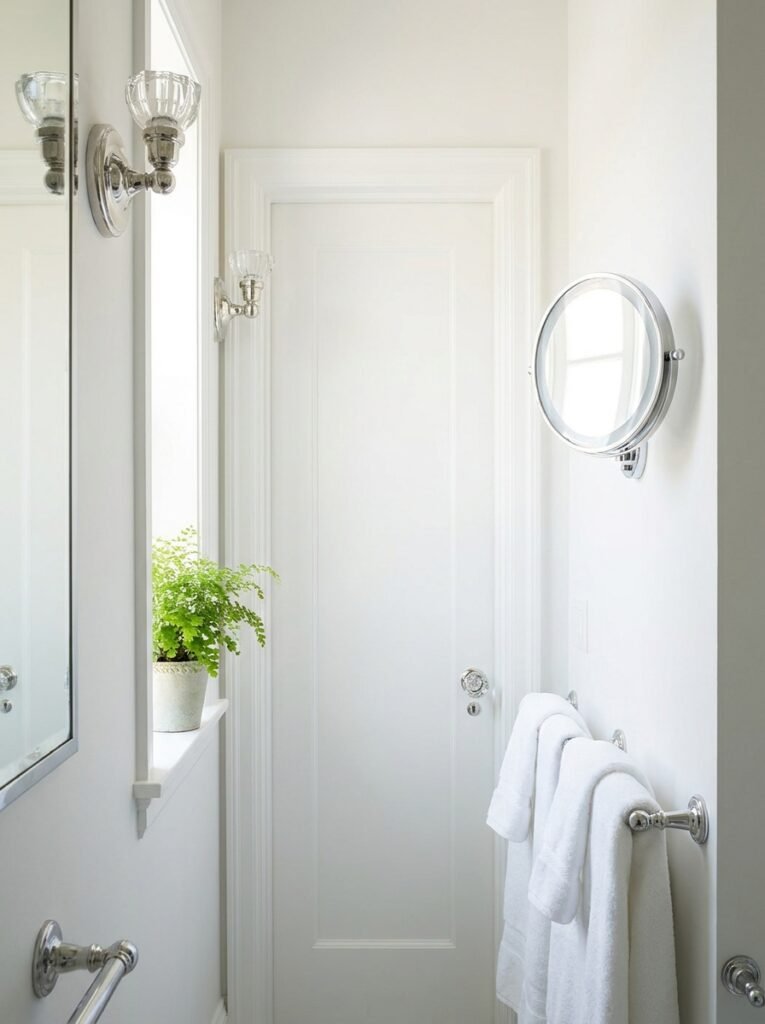
In a small apartment or a compact room, every visual element matters more than it does in a spacious home — because the eye has less room to wander and more tendency to notice details. This is actually good news for doorknobs.
In small spaces, glass and lucite knobs are particularly effective because they reflect light rather than absorbing it, which helps a tight hallway or narrow bathroom feel more luminous and open. Polished chrome and bright brass have a similar effect.
Matte finishes, while beautiful, absorb light slightly — which can make a small, dark room feel just a fraction more enclosed. This doesn’t mean you should avoid them, but it’s worth keeping in mind if you’re working with limited natural light.
The scale of the knob also matters in compact spaces. An oversized, statement knob can look extraordinary on a tall, wide door in a grand room but comically disproportionate on a narrow closet door. Most standard interior doors look best with knobs in the 2.25 to 2.5 inch diameter range. Larger statement pieces work best on doors at least 32 inches wide.
8. Budget-Friendly Doorknob Upgrades That Look Incredibly Expensive
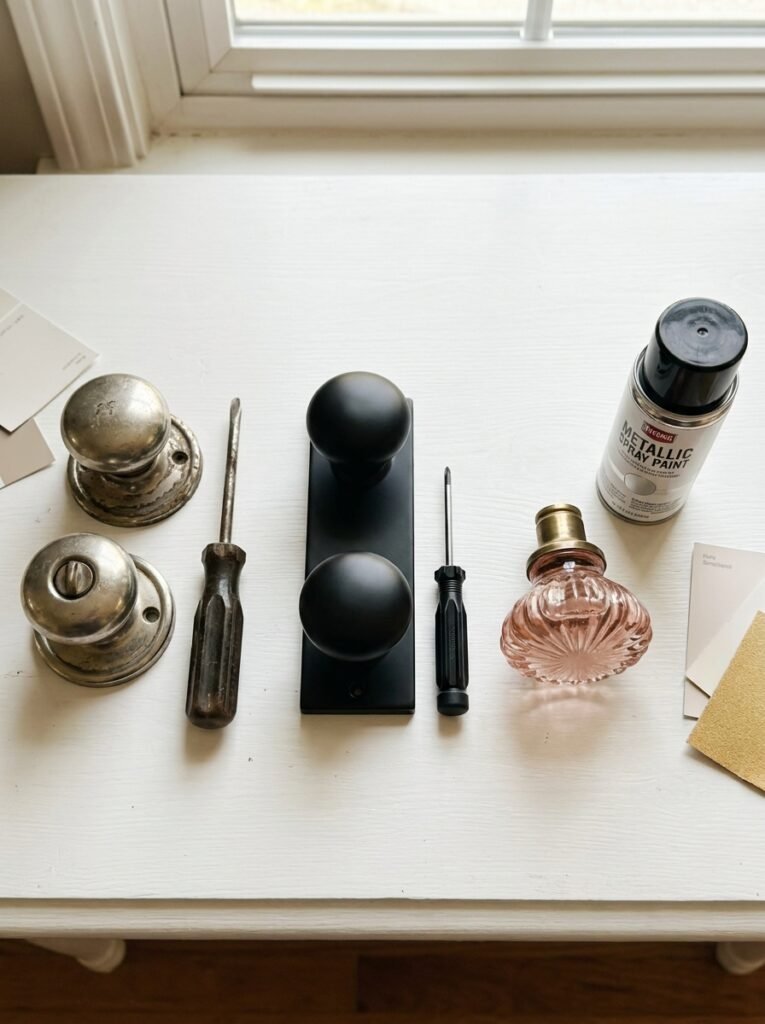
One of the most encouraging truths about updating your interior doorknobs is that it does not require a large budget to make a significant visual impact. This is one of the most genuinely high-value upgrades in home decorating — cost relative to impact ratio — available to any homeowner or renter.
A set of six interior passage knobs can often be purchased for under $100 total from retailers like Amazon, Rejuvenation’s sale section, Restoration Hardware Outlet, or even World Market. Installing them yourself requires only a screwdriver and about ten minutes per door.
Painting existing knobs is another option that is more viable than most people realize — particularly with spray paints formulated specifically for metal. A dated brass knob can be transformed into a convincing matte black with proper priming and two coats of metallic spray paint. This isn’t a permanent or flawless solution, but for renters or those on very tight budgets, it can make a remarkable difference.
Thrift stores and estate sales regularly yield beautiful vintage glass and brass knobs at a tiny fraction of their retail equivalent. If you’re patient, you can assemble a genuinely stunning set of antique glass knobs for an entire home for under $50.
“The most beautiful homes aren’t always the most expensive ones — they’re the most considered ones.”
9. Doorknobs and Interior Design Styles: Finding Your Perfect Match
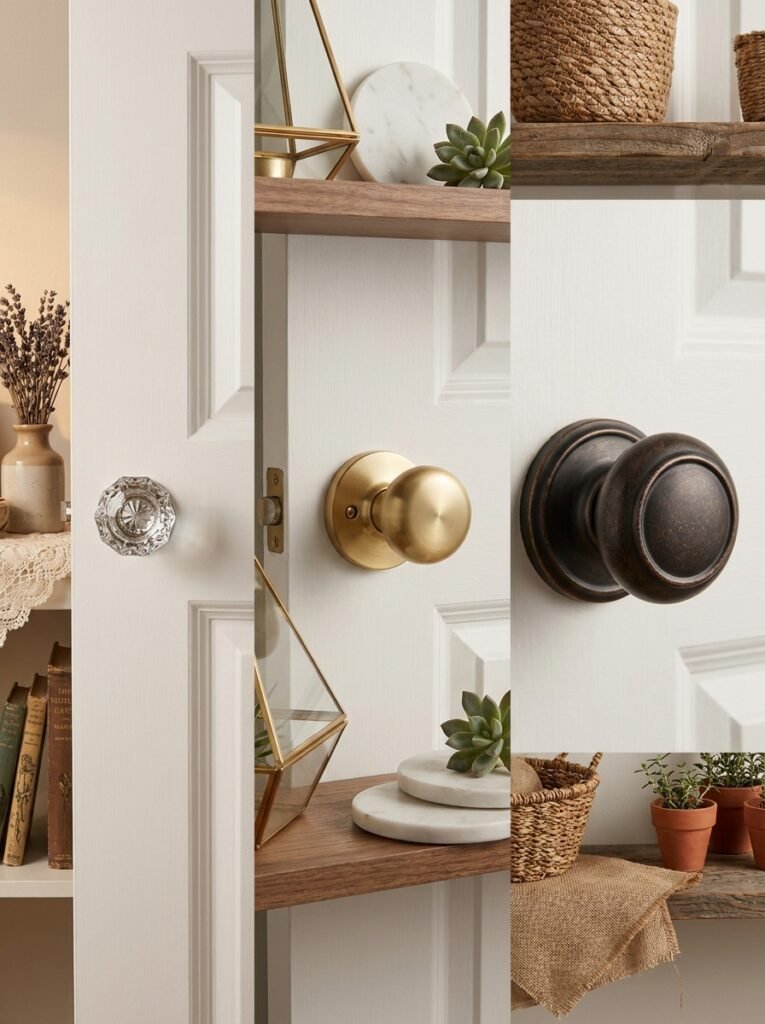
Different interior design aesthetics genuinely call for different doorknob choices — and getting this pairing right makes the whole room feel more cohesive and complete.
Modern Farmhouse: Oil-rubbed bronze or matte black knobs with a simple, slightly rounded profile. Look for knobs with subtle texture or a slightly aged finish for warmth.
Cottagecore / Romantic: Crystal or pressed glass knobs in clear or soft tones. Vintage antique brass with a gentle patina. Knobs with floral or nature-inspired detailing.
Mid-Century Modern: Sleek, geometric lever handles or minimally shaped round knobs in polished chrome or satin brass. Clean lines, no ornamentation.
Maximalist / Grandmillennial: Statement knobs in bold shapes — faceted crystal, painted porcelain, colored glass. These interiors can handle decorative complexity that more minimal styles cannot.
Transitional: Satin nickel or soft unlacquered brass in a classic round shape. The goal is a knob that could belong in a traditional home or a contemporary one without looking out of place in either.
Industrial / Urban: Aged iron or blackened steel with a raw, utilitarian feel. Hexagonal shapes and visible hardware details suit this aesthetic particularly well.
10. The Surprising Psychology of Touch: Why the Right Knob Feels So Different
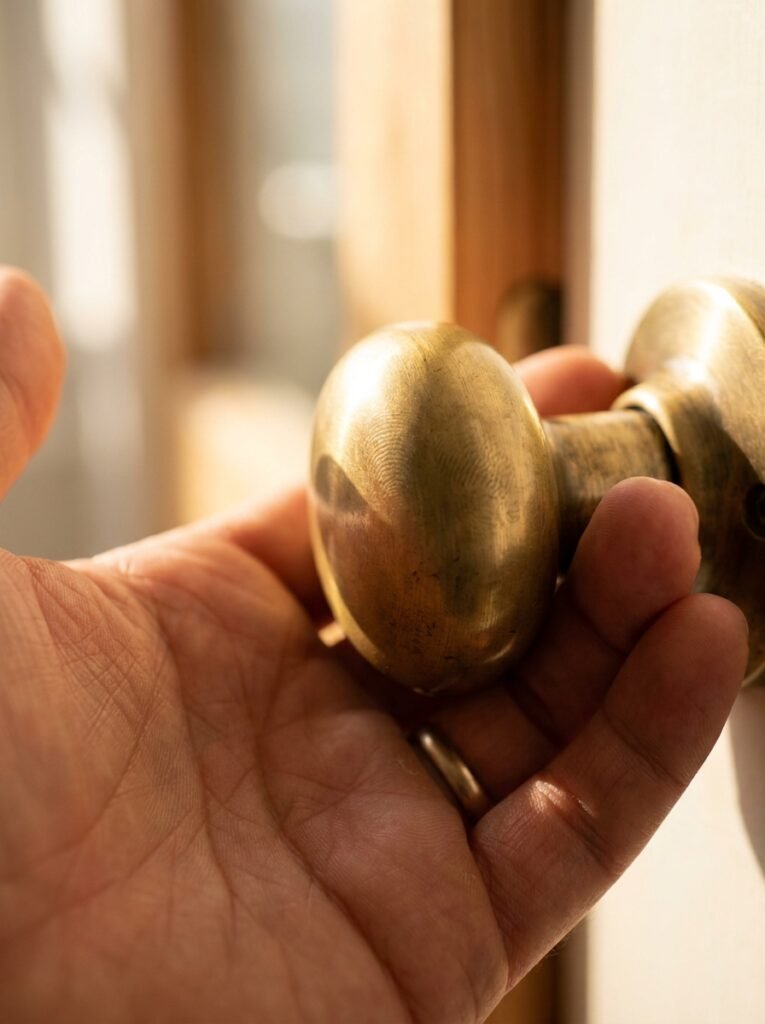
This is something that rarely gets discussed in decorating articles, but it matters deeply: the feel of a doorknob in your hand affects how you experience your home on a subconscious level.
A lightweight, hollow-feeling knob that spins loosely tells your hand — and therefore your nervous system — that something is cheap, unstable, unreliable. Even if you never consciously register this thought, you feel it every time you reach for that door. Over the course of a year, that’s hundreds of small, subtle messages that your home is not quite right.
A solid, well-weighted knob with smooth, precise movement tells your hand something completely different. It says: this is quality. This was chosen. This is cared for. The home that contains this knob is a home someone thought about.
Grip style matters too. Some people love the tactile feedback of a faceted glass knob — the way the cut edges engage your fingers. Others prefer the seamless smoothness of a polished ceramic. Still others want the cool authority of solid brass. There’s no wrong answer, but there is a your answer, and finding it is worth the brief extra attention.
11. Doorknobs for Doors With Character: Historic Homes and Architectural Details
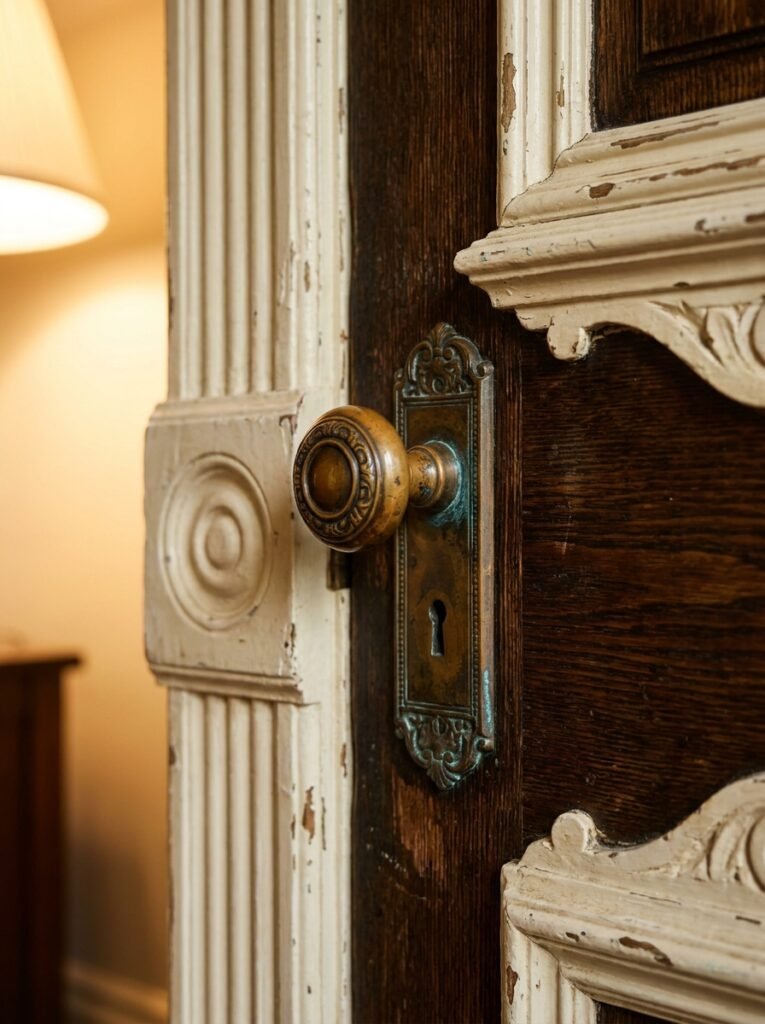
If you live in an older home — anything built before roughly 1970 — your relationship with doorknobs carries an additional dimension of responsibility: stewardship of architectural character.
Original hardware in historic homes is often irreplaceable. Mortise lock sets from the early twentieth century, brass back-plates with decorative escutcheons, hand-turned wooden knobs — these elements are part of what makes old houses feel genuinely, irreducibly old in the best possible way.
Before replacing any hardware in a historic home, always investigate whether the original knobs are salvageable. Even knobs that look tarnished, stiff, or worn can often be professionally restored for a fraction of the replacement cost — and the result will always look more authentic than any reproduction.
If replacement is truly necessary, look for period-appropriate reproductions from specialty hardware companies that focus on historic accuracy. Organizations like the National Trust for Historic Preservation often have resources and recommendations for sourcing appropriate hardware for specific architectural periods.
12. The Final Detail: Door Plates, Rosettes, and the Art of the Complete Look
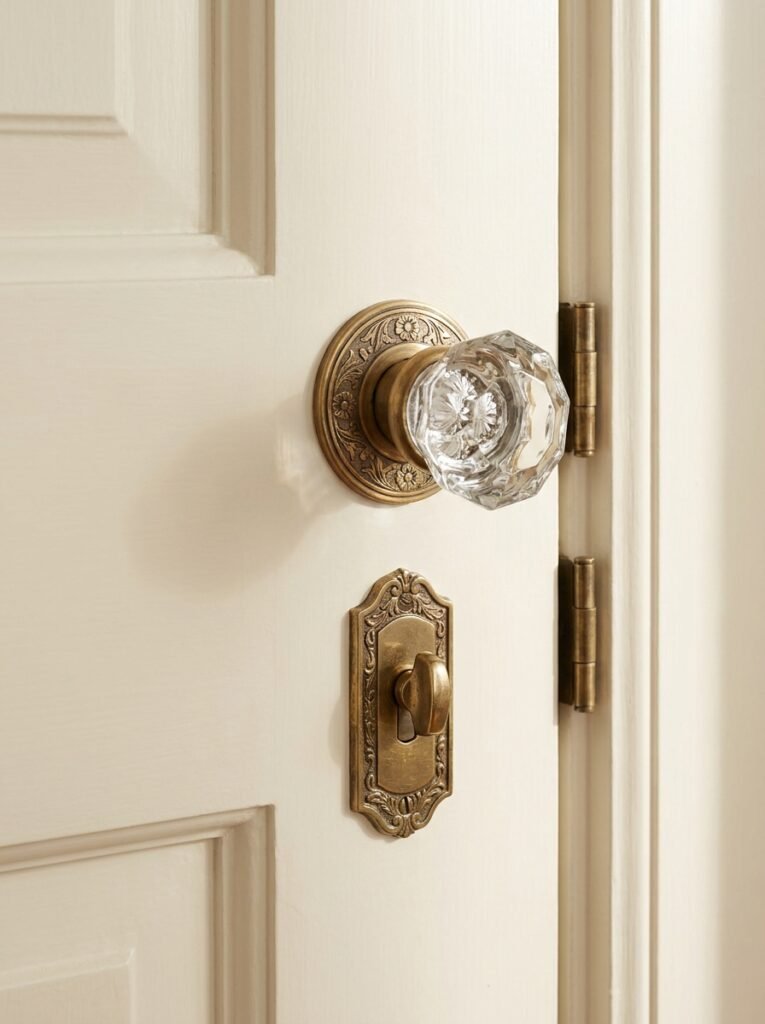
No doorknob exists in isolation — and the most thoughtful doorknob choices include the hardware that surrounds the knob itself.
The rosette is the small round plate that the knob’s base sits against on the door surface. Most modern knobs include a matching rosette as part of the set. In historic and higher-end hardware, the rosette may be sold separately and can be chosen independently for maximum customization.
The escutcheon is the decorative plate that surrounds a keyhole or privacy lock mechanism. In older homes and period-reproduction hardware, escutcheons are often works of miniature craftsmanship — engraved, embossed, or shaped to complement the knob above them.
Getting these secondary elements right completes the picture in a way that a great knob alone cannot. A beautiful glass knob on a plain, plastic rosette looks slightly incongruous — like wearing a silk blouse with plastic buttons. Matching the plate material and finish to the knob creates a seamless, intentional detail that elevates the entire door.
Consider also the door hinges. Nothing undermines carefully chosen doorknobs quite like hinges in a completely different finish. If you’re replacing knobs in a serious way, factoring in hinge replacement — or at minimum, hinge paint — into your project budget is worth the additional effort.
—
🌿 How to Take Care of Your Interior Doorknobs
Doorknobs are touched more than almost any other surface in your home, which means they accumulate fingerprints, oils, and grime at a remarkable rate. Here’s how to keep them looking their best.
Clean regularly with the right product for your finish. Matte black and oil-rubbed bronze finishes should never be cleaned with harsh abrasives or acidic cleaners — a soft cloth dampened with mild soapy water is always sufficient. Polish finishes like chrome and bright brass can handle a slightly more robust cleaning with appropriate metal polish, applied sparingly.
Protect unlacquered brass with a light wax. If you’ve chosen unlacquered brass and want to slow the natural patina process, a thin application of paste wax (the same kind used on furniture) a few times per year will help. If you want it to patina, simply leave it alone and let time do its beautiful work.
Tighten loose knobs before they become broken knobs. Most interior knobs loosen over time due to repeated use. A single screw on the side of the knob collar typically secures the mechanism — tightening it takes thirty seconds and prevents the kind of wobble that eventually cracks or strips the hardware.
Keep the latch mechanism lubricated. A small amount of dry graphite lubricant (not WD-40, which attracts dust) applied to the latch bolt a couple of times a year keeps the mechanism moving smoothly and extends the life of the hardware significantly.
Handle antique glass with extra care near hard surfaces. Antique glass knobs are durable in daily use but vulnerable to impact against tile, stone, or hardwood floors. If you’re installing them in high-traffic areas, this is simply worth keeping in mind.
—
❓ FAQ
Q: How do I know if a new doorknob will fit my existing door? A: Most interior doors in North American homes are prepared with a standard 2-1/8 inch diameter bore hole and a 2-3/8 or 2-3/4 inch backset (the distance from the edge of the door to the center of the knob hole). Check these two measurements on your existing hardware before purchasing, and confirm that any new knob matches — most product listings include this information clearly.
Q: Can I install interior doorknobs myself or do I need a professional? A: Replacing an existing doorknob with a new one of the same type is genuinely one of the most accessible DIY home projects available. If the bore hole and backset measurements match, installation typically requires only a screwdriver and about ten minutes. No professional help is needed unless you’re changing the door preparation itself (cutting a new hole or changing the lock type significantly).
Q: Are there doorknob options that work well for people with mobility or grip challenges? A: Absolutely — lever handles are significantly easier to operate than round knobs for people with limited hand strength or dexterity. They can be operated with a closed fist, an elbow, or even a forearm, making them a thoughtful and practical choice for any home where this is a consideration. Many lever styles are just as beautiful as traditional knobs and are available in every major finish and aesthetic style.
—
💭 Final Thought
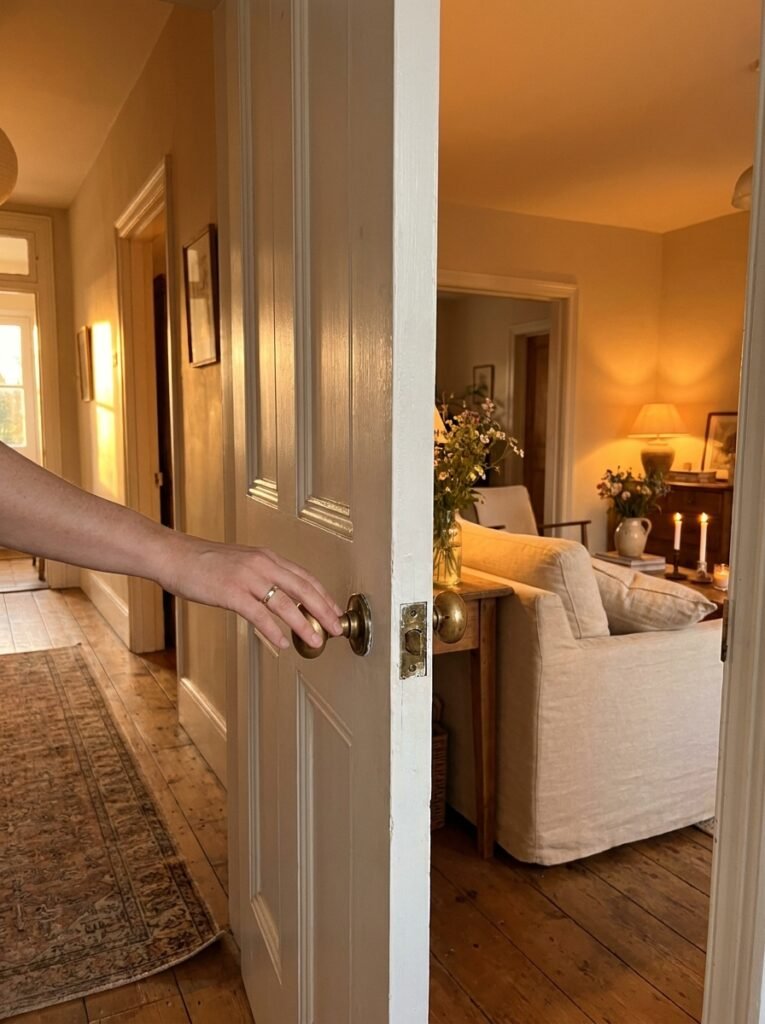
There is something quietly profound about the idea that the things we touch most often in our homes — the things our hands reach for without thinking, dozens of times every single day — deserve our attention and our care. A beautiful doorknob won’t change your life. But it might change how your home feels to live in, even just by a small and lovely degree. And sometimes, those small degrees are exactly what makes the difference between a house and a home.
So here’s the question worth sitting with: when you reach for a door in your home today, what does the knob in your hand tell you about the space you’ve created?