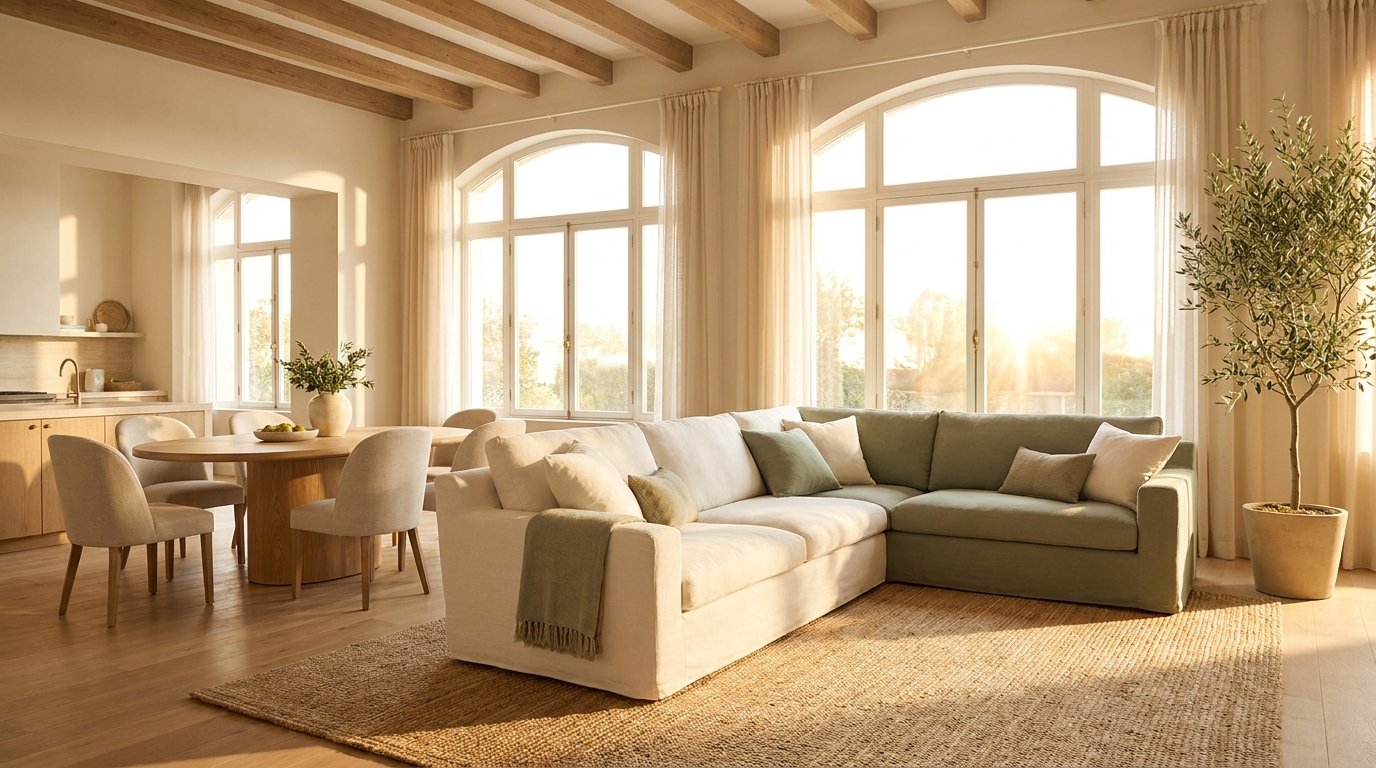
The Living Room Dining Room Combo That Finally Makes Your Open Plan Feel Like Home
You moved in with a floor plan that was supposed to feel spacious and modern — and instead, it just feels like one large, confusing room where nobody quite knows where to sit. If that sounds familiar, you are not alone. Open-plan living is one of the most common layouts in homes across the US and UK, and getting it right is an art form that nobody really teaches you.
—
1. Why the Living Room Dining Room Combo Is Both a Gift and a Puzzle
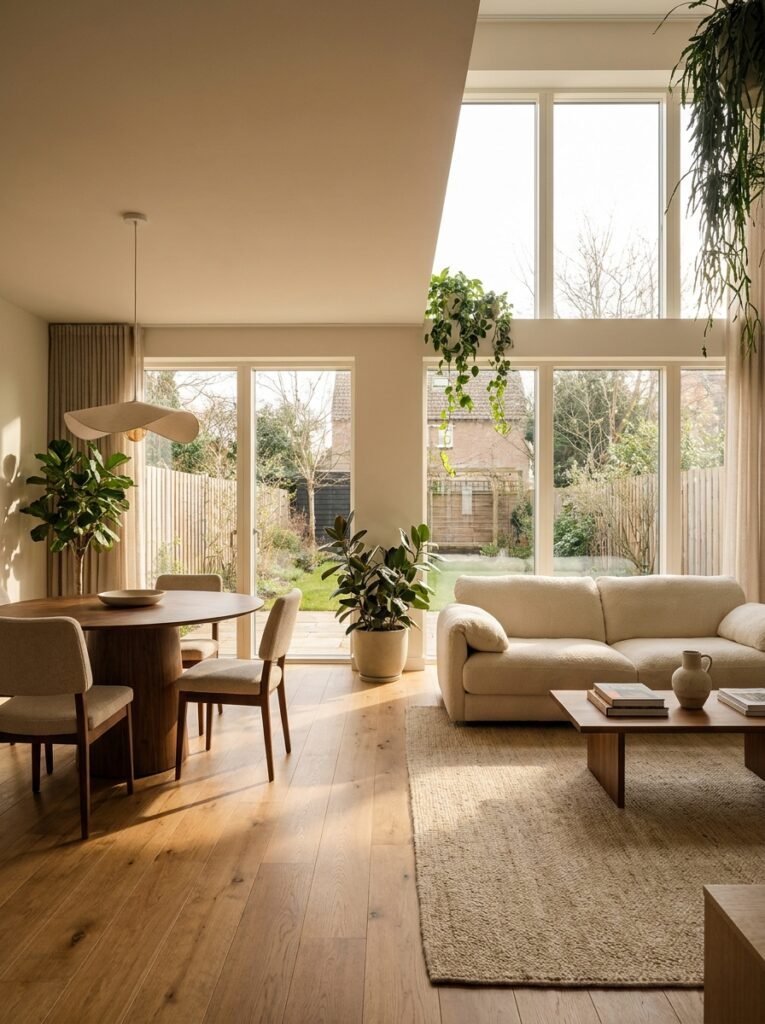
Open-plan living became the dream of the early 2000s. Knock down a wall, let in the light, watch your home transform. And in many ways, it genuinely works — the space feels airy, social, and generous. But somewhere between the Pinterest boards and the reality of actual furniture shopping, things get complicated.
The truth is that a living room dining room combo asks you to do something genuinely difficult: define two completely separate emotional zones in a single, uninterrupted space. Your dining area needs to feel purposeful and intimate — a place where people pull up a chair and linger over a meal. Your living room needs to feel relaxed and welcoming — the kind of spot where someone sinks into a sofa and exhales. These are two different feelings, and creating both in one room without walls to help you? That takes intentional design thinking.
“Your floor plan isn’t the problem — it’s the lack of a plan within it.”
The good news is that with the right layout strategies, this kind of space becomes one of the most functional, beautiful, and liveable rooms in your home. It just takes knowing where to start.
2. Measure Before You Dream — The Numbers That Change Everything
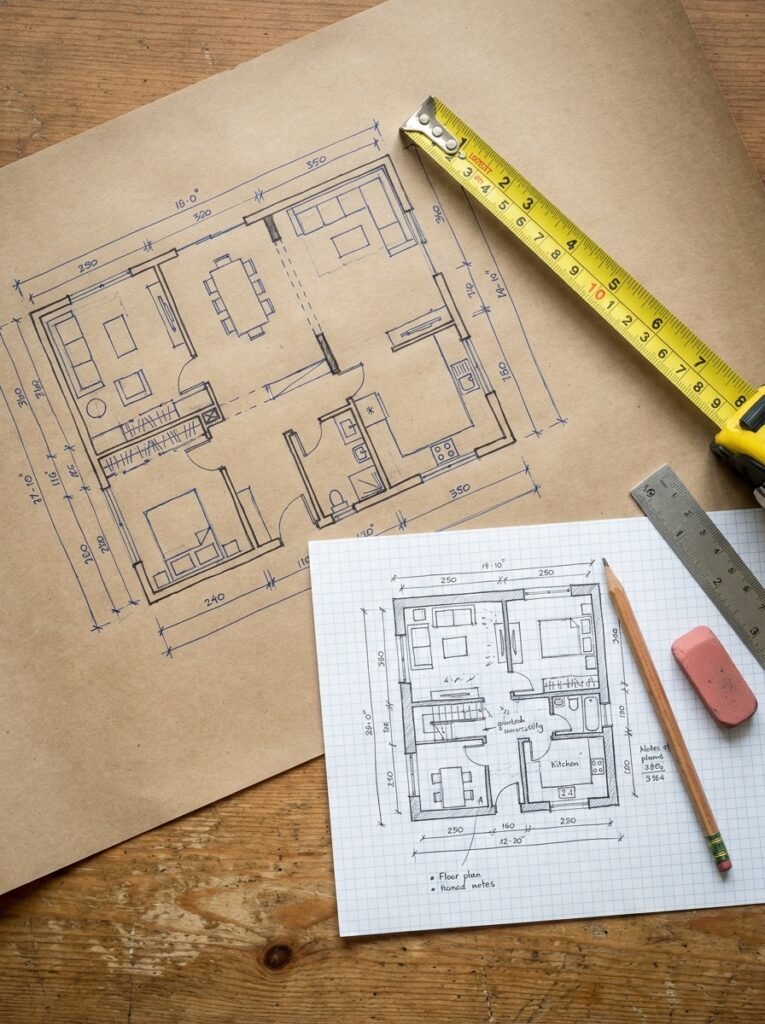
Before you move a single piece of furniture or buy anything new, get a tape measure and spend twenty minutes with it. This step is unglamorous, but it is genuinely the difference between a layout that works and one that frustrates you every single day.
In American homes, a combined living-dining space is typically somewhere between 250 and 400 square feet. In UK homes — especially in terraced houses, flats, and newer builds — you might be working with a more modest 180 to 280 square feet. These are meaningfully different scales, and the rules shift depending on which end of that spectrum you occupy.
A standard dining table for four people needs roughly 36 inches of clearance on all sides for comfortable chair movement. A six-seater needs at least 42 inches on the sides where people pull chairs out. Your sofa arrangement needs enough space that the coffee table sits comfortably 16 to 18 inches from the seat edge — close enough to reach a drink, far enough not to bark your shins every morning.
Write these numbers down. Draw a rough floor plan, even on the back of an envelope. You will refer to it more than you expect.
3. The Invisible Line That Defines the Whole Room
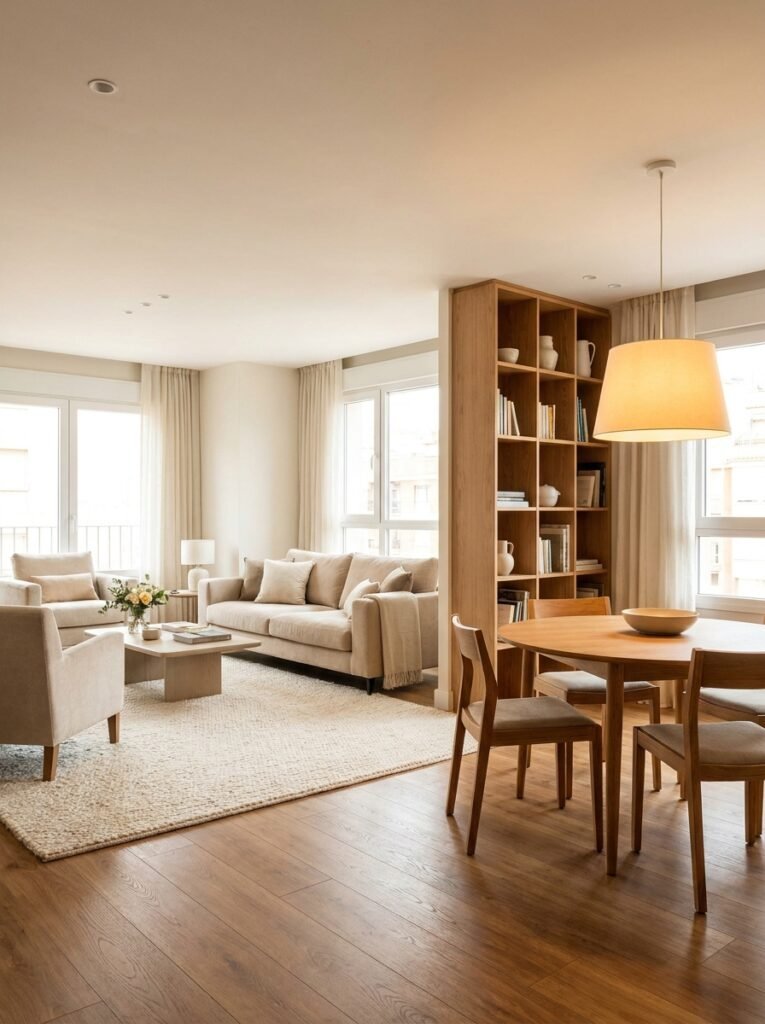
Here is a concept that professional interior designers use constantly but rarely explain to their clients: the zone line. This is an imaginary boundary — sometimes reinforced by a rug, a change in lighting, or a piece of furniture — that separates your living area from your dining area without a single wall involved.
Getting this line in the right place changes everything about how the room feels. Too close to one end and the dining area feels cramped. Too generous with the dining space and your living room seating arrangement ends up awkwardly squished against a wall. The goal is for both zones to feel proportionally balanced — as though they each got a fair share of the room.
In most rectangular open-plan layouts, the natural zone line falls roughly in the center third of the space. Your dining table occupies one end — typically closest to the kitchen — and your sofa arrangement anchors the other end, oriented toward a focal point like a TV, fireplace, or statement wall. The middle ground is where visual transitions happen, and it is the most powerful real estate in the entire room.
4. Anchor Each Zone With a Rug — and Make Them Different
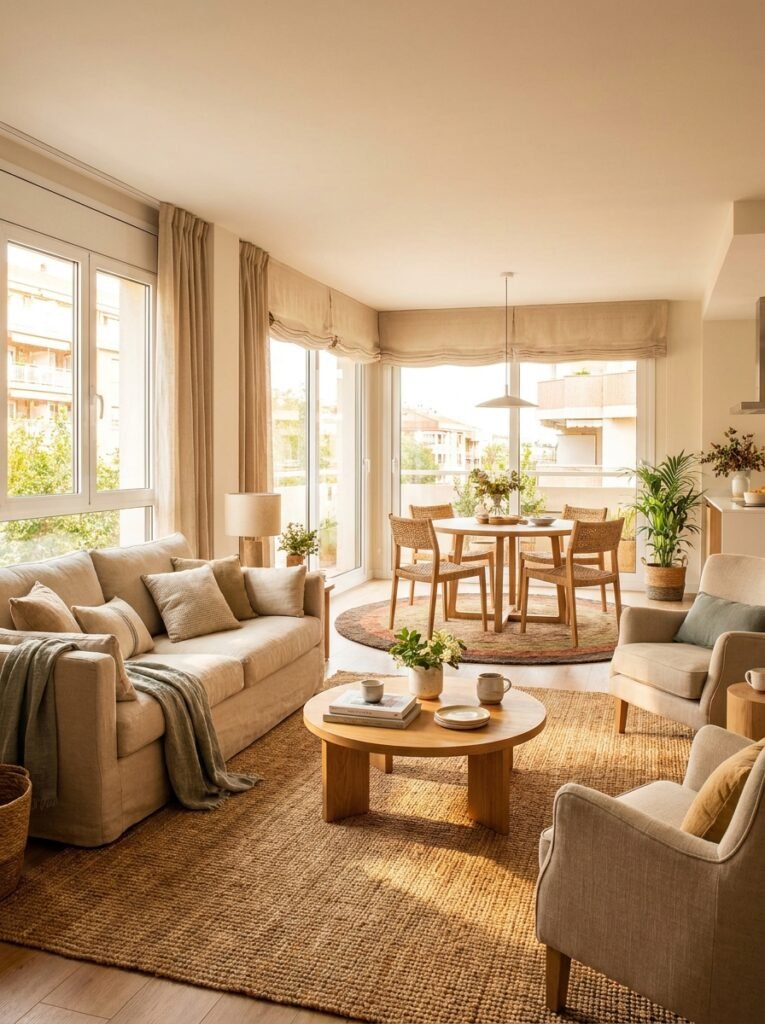
If there is one design move that transforms a living room dining room combo more than anything else, it is using two separate rugs to ground each zone. This is a trick that works in every style, at every budget, and in every size of space — and yet it is still underused by most homeowners.
In your dining area, a flat-weave or easy-clean rug works best. It needs to extend at least 24 inches beyond the table on all sides so that chairs remain on the rug even when pulled out — this is crucial. A rug that is too small under a dining table is one of the most common interior design mistakes, and it makes the whole zone feel visually shrunk and slightly off.
In your living area, you have more freedom. A plush, textured rug adds warmth and signals comfort — this is the zone for bare feet and lazy Sunday mornings, so let the rug reflect that. Choose rugs that complement each other without being identical. A jute or natural fiber rug in the dining area paired with a soft wool or wool-blend rug in the living area is a combination that feels cohesive but layered.
“Two rugs in one room isn’t a mistake — it’s the whole secret.”
5. The Sofa as a Room Divider — Smarter Than You Think
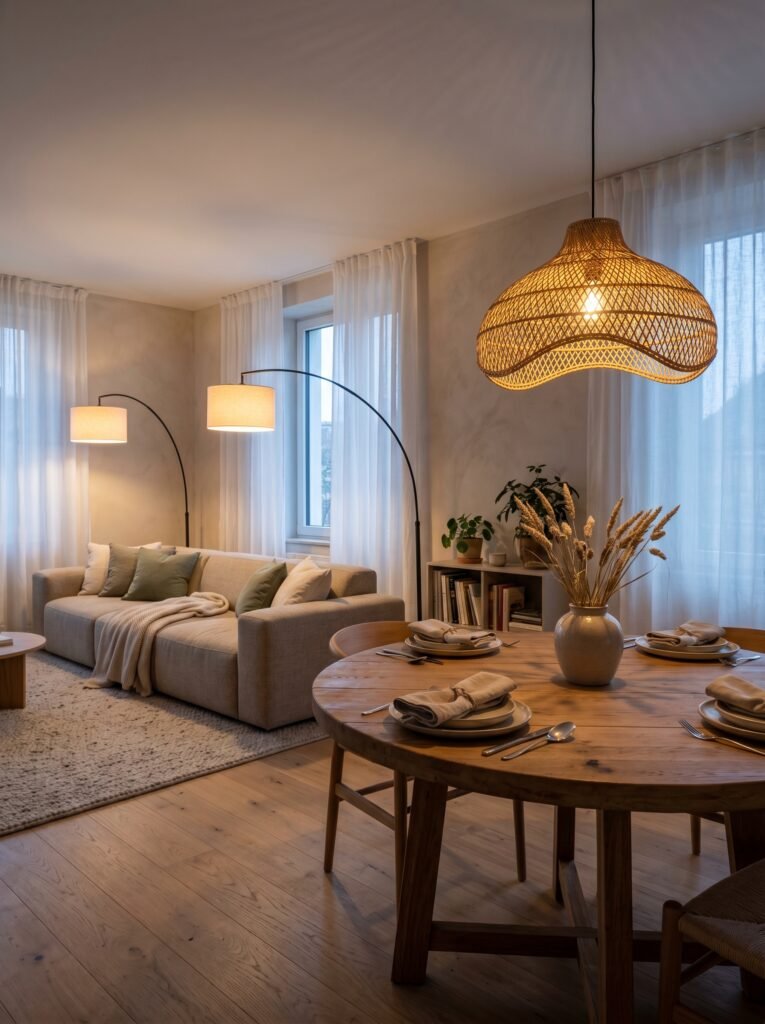
One of the most effective and underappreciated layout strategies for open-plan living is floating your sofa away from the wall and using its back as a soft room divider. This works especially well when your living and dining zones sit side by side rather than end to end.
Instead of pushing the sofa against the wall — which often leaves an awkward gap of dead space in the middle of the room — pull it forward and let it face inward toward your coffee table and focal point. The back of the sofa then creates a natural visual boundary between the dining area and the living area. Add a narrow console table behind the sofa and you have created a functional ledge for lamps, books, or a trailing plant — turning what would have been empty floor into a genuine design moment.
This arrangement works beautifully in American open-plan homes where the layout is wide and the two zones sit parallel. In UK homes with a longer, narrower layout — think Victorian terraces or modern new builds — the sofa often works better at a perpendicular angle, creating an L-shape that carves the living zone out from the through-space.
6. Lighting Is Not an Afterthought — It Is the Architecture
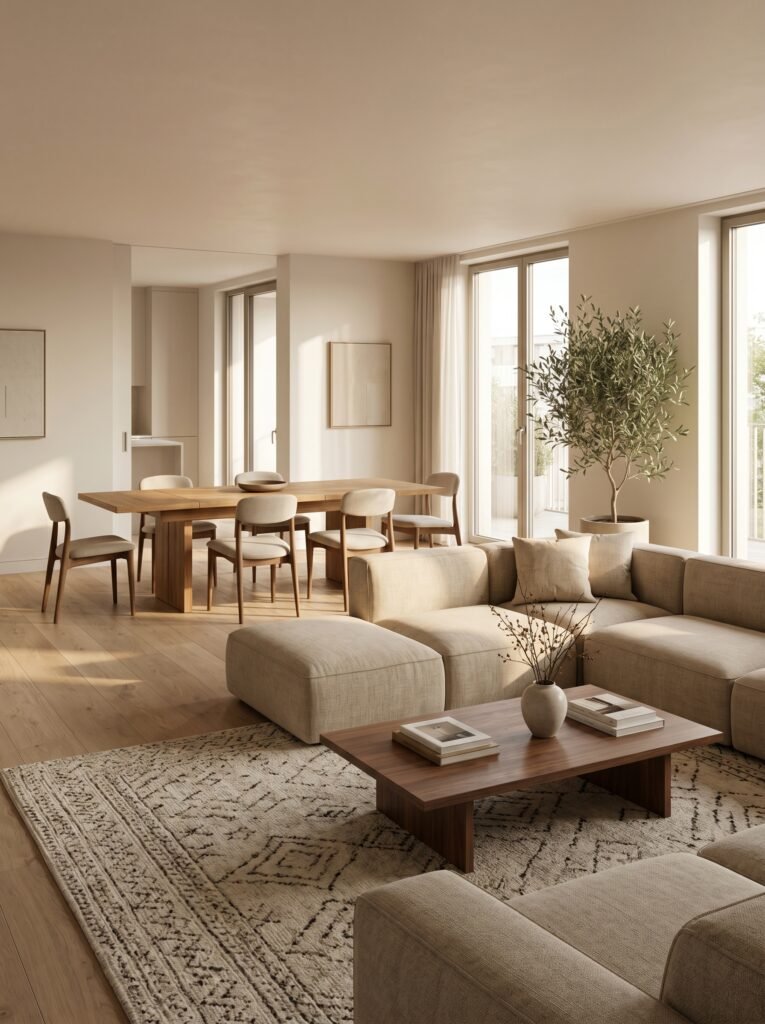
In a room without walls, lighting does the structural work. It creates enclosures without enclosing. It says this is the dining room and this is the living room without a single partition in sight. And yet lighting is almost always the last thing people think about when designing a combo layout — which is precisely why so many open-plan rooms feel flat and undefined even after all the furniture is in place.
Over the dining table, hang a pendant light — or two or three in a row if your table is long. This is non-negotiable. A pendant light over a dining table does two things simultaneously: it illuminates the space beautifully and it visually stakes the territory. It says this is where we eat in a way that no amount of furniture arrangement can replicate on its own.
In the living area, layer your lighting. An overhead light for the whole room is fine as background illumination, but floor lamps in the corners, table lamps on side tables, and perhaps a reading lamp beside an armchair create pools of warm light that make the space feel curated and lived-in rather than showroom-bright. In the evenings especially, layered lighting transforms an open-plan room from simply functional to genuinely atmospheric.
7. Choosing a Dining Table Shape That Works With Your Layout
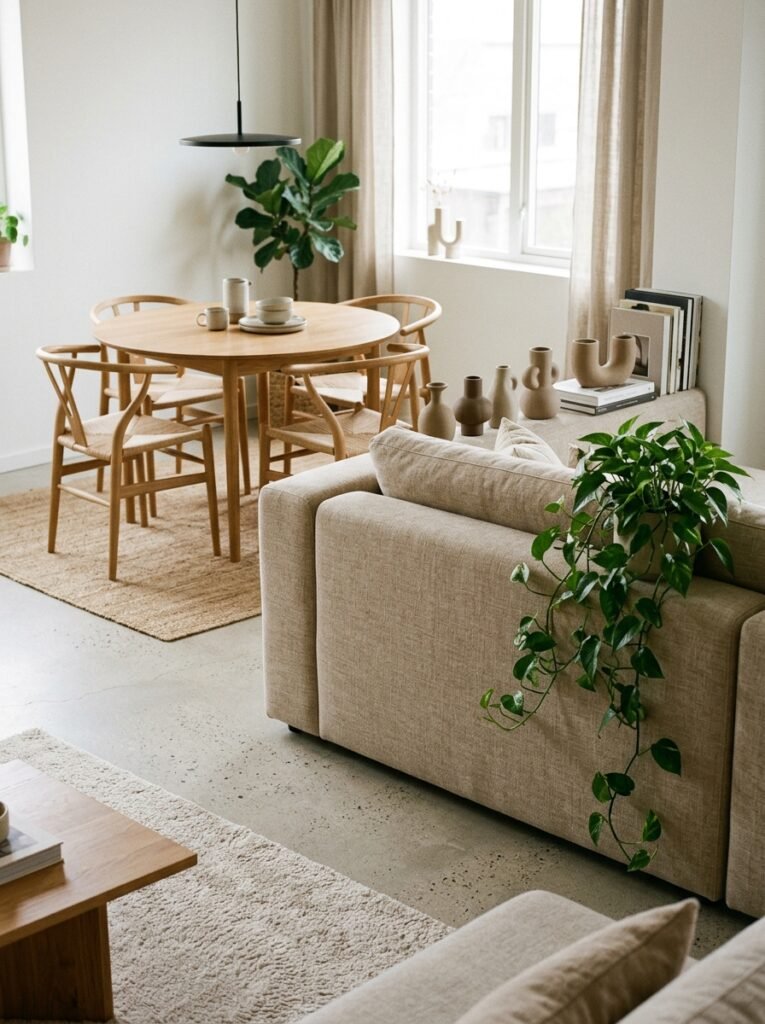
The shape of your dining table is not purely a style choice — it is a spatial one. In a combined living-dining space, this decision has a meaningful impact on how the whole room flows.
Round and oval tables are extraordinarily good in combo layouts. They take up less visual weight, they allow easier circulation, and they soften the overall aesthetic of a rectangular room. A round pedestal table for four is one of the most versatile pieces of furniture you can own in a smaller open-plan space — in the UK especially, where square footage is precious, a round 90cm to 100cm table can be the difference between a room that breathes and one that doesn’t.
Rectangular tables work well in larger spaces or in rooms where the dining zone has a clear, defined end — against a wall, beneath a window, or framed by a kitchen island. If you go rectangular, choose a table with legs at the corners rather than a trestle base — corner legs allow chairs to be tucked away more neatly when the table is not in use, which keeps the room feeling open.
8. Color Continuity — How to Use Paint Without Losing Definition
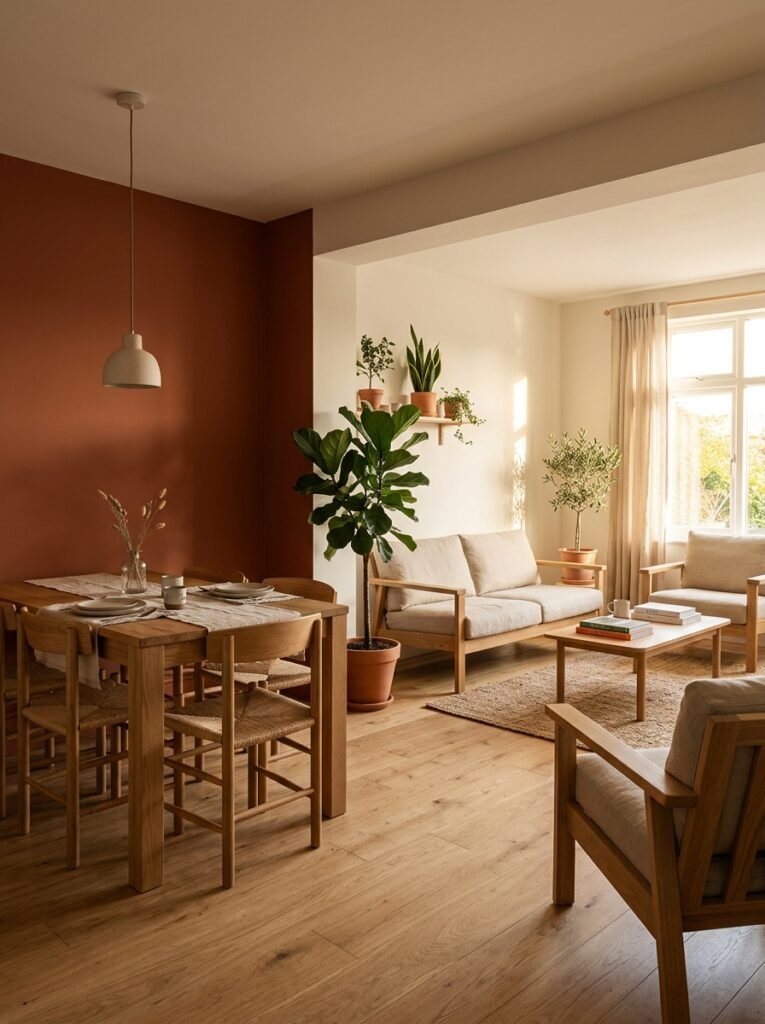
One of the most common questions about open-plan living is whether to paint the whole space one color or to differentiate the zones. The answer is more nuanced than either option suggests.
Using a single wall color throughout creates flow and makes the whole space feel intentionally designed rather than accidentally combined. This is particularly effective in smaller rooms where using two colors could make the space feel choppy or busy. A warm neutral — think Benjamin Moore’s Pale Oak in the US or Farrow & Ball’s Elephant’s Breath in the UK — works beautifully across both zones and lets your furniture and textiles carry the visual interest.
However, if you want to subtly differentiate the zones, consider painting one wall in the dining area in a deeper, more saturated tone — a forest green, a dusty navy, or a warm terracotta. This creates what designers call an accent zone — a visual anchor for the dining area that gives it its own identity without breaking the room into two disconnected halves. Keep the rest of the walls in both zones the same light neutral, and the effect is sophisticated without being jarring.
9. Furniture Scale — The Rule That Saves Every Room
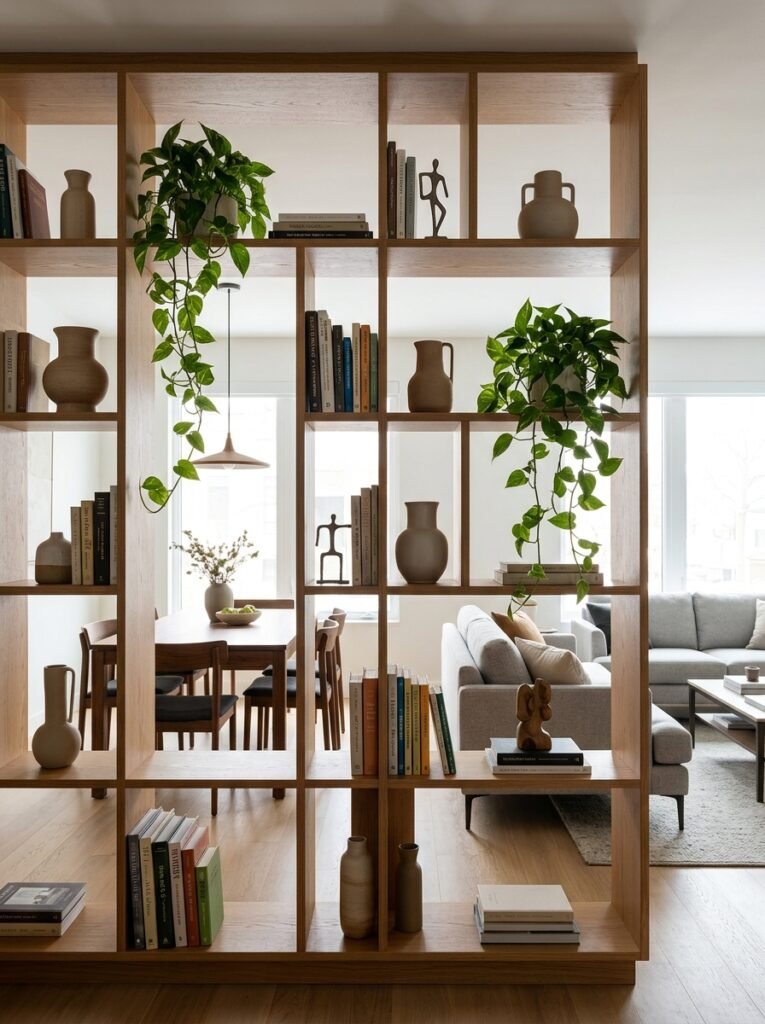
Scale is the silent killer of open-plan rooms. A sofa that is too large swallows the living zone and crowds the dining area. A dining table that is too small floats in its space and looks unconvincing. Getting scale right requires resisting the urge to buy furniture that looks beautiful in isolation and instead thinking about how each piece relates to the room as a whole.
“The most beautiful furniture in the wrong scale will always make a room feel wrong.”
A good rule of thumb: in a combined living-dining space, your sofa should be no longer than two-thirds of the total room width. Your dining table, when extended to its maximum, should leave at least 36 inches of clear walkway between it and the nearest wall or sofa back. If it doesn’t, size down — a smaller table in a room that breathes will always look better than a larger one that crowds.
10. Storage Solutions That Serve Both Zones
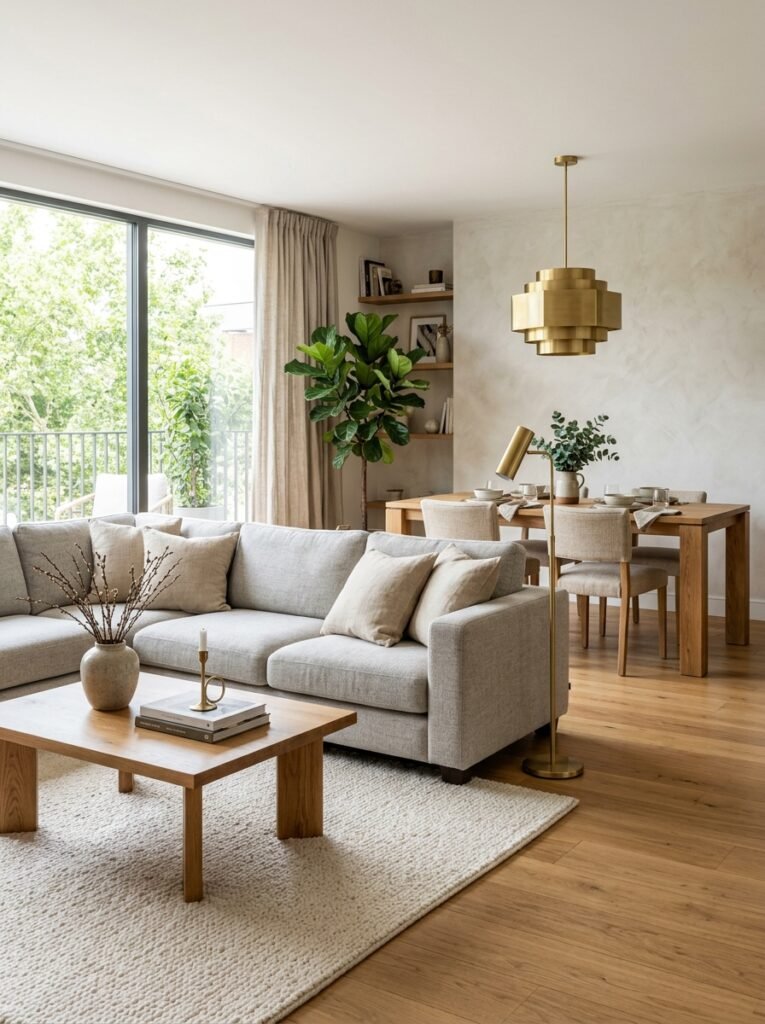
In an open-plan living-dining room, storage is both a practical need and a design opportunity. When you have two rooms functioning in one space, the clutter from both areas is on full display — and that means thoughtful storage is essential.
A sideboard or credenza is one of the hardest-working pieces of furniture you can place in a combo layout. Positioned along the dining zone wall, it stores table linens, serving dishes, and candles while also providing a surface for a lamp, a vase, or seasonal decor. In the UK, a narrow sideboard fits beautifully into the dining area of a terrace house without eating floor space. In the US, a longer credenza can anchor a dining wall in a more expansive open-plan layout.
In the living zone, built-in shelving or a media unit with closed-door storage keeps the visual noise down. An ottoman with internal storage doubles as a coffee table and hides throws, board games, or children’s toys in a moment — an especially valuable trick for families using this space for multiple purposes throughout the day.
11. Plants, Textiles, and the Warmth Only Living Things Bring
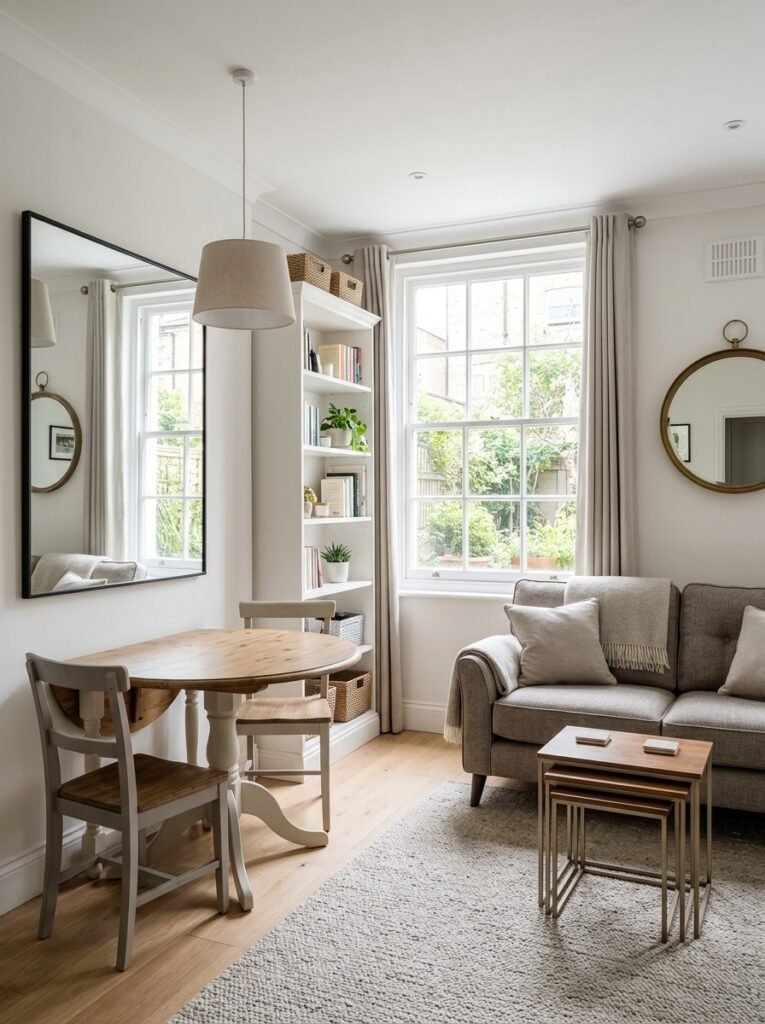
No amount of clever layout planning compensates for a room that feels cold or impersonal. The finishing layer — textiles, plants, books, candles — is what turns a well-designed room into a place people genuinely want to be in.
In the dining zone, a low centerpiece on the table — a simple vase with seasonal stems, a cluster of pillar candles, a small potted herb — creates warmth and intention without blocking sight lines across the table. In American homes, a wide, shallow bowl of fruit is a classic touch that feels domestic and welcoming. In British homes, a single stem in a bud vase with a brass candlestick holder beside it achieves the same quiet elegance.
In the living zone, layer your textiles. A throw draped over the arm of a sofa, cushions in varying textures, a woven blanket on a basket beside the armchair — these details communicate comfort in a way that no piece of furniture alone ever quite manages. Add a medium-sized houseplant — a monstera, a fiddle leaf fig, or a simple peace lily — and the room begins to feel genuinely alive.
12. The Final Edit — Why Less Is Almost Always More
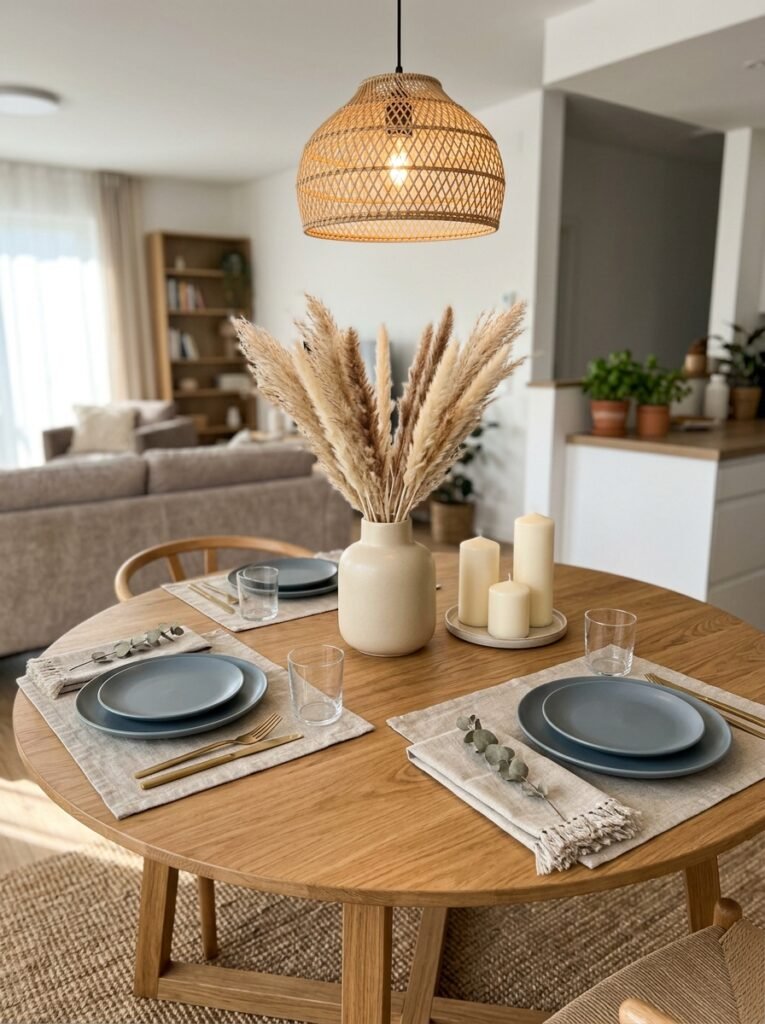
Once your layout is in place, your zones are defined, your lighting is layered, and your textiles are arranged — stand in the doorway and look at the room honestly. Then take one thing away.
This is the final edit, and it is the step most people skip. Open-plan rooms are particularly vulnerable to overcrowding because there are no walls to absorb visual weight — every object sits in full view of the entire space. A side table that made sense when you bought it might now be creating a bottleneck in the walkway between zones. A piece of wall art that felt necessary in the shop might be competing with everything else in the room now that it’s hung.
The most beautiful open-plan living-dining rooms have one thing in common: restraint. Not minimalism for its own sake, but a clear editorial eye that has decided what stays and what goes. Each piece of furniture earns its place. Each decorative object has breathing room. The room feels curated rather than accumulated — and that distinction, though subtle, is everything.
—
🌿 How to Make Your Living Room Dining Room Combo Feel Right
Getting the layout sorted is the foundation, but maintaining that sense of intentional design over time takes a few ongoing habits. Think of these as your gentle, recurring checklist.
Revisit your zone boundaries every season and ask whether they still serve how you actually live in the space — the layout that worked when it was just you might need adjusting when you start hosting dinner parties regularly. Clear the walkways between your living and dining zones regularly; even a well-designed room feels cramped when circulation paths get blocked by bags, shoes, or chairs that have drifted out of position. Swap out your table centerpiece and your living room throw with the seasons — this small change costs almost nothing but refreshes the entire feeling of the room more than a full redecoration would. Finally, photograph the room on your phone every few months. Looking at it through a lens reveals imbalances your eye stops noticing when you live with a space day after day.
—
❓ FAQ
Q: How do I separate living and dining areas in an open-plan room without using a wall? A: The most effective methods are using two distinct rugs to ground each zone, floating your sofa to create a soft visual boundary, hanging a pendant light specifically over the dining table to define that area, and using a change in paint color or accent wall to signal where one zone ends and another begins. These tools work individually, but they are most powerful when combined.
Q: What size rug do I need under a dining table in a combo layout? A: As a general rule, your dining rug should extend at least 24 inches beyond the table on all sides — this ensures that chairs remain fully on the rug even when pulled out. For a standard four-person rectangular table, a 8×10 foot rug (US) or 240x300cm rug (UK) is usually the right starting point. Going slightly larger is almost always better than going too small.
Q: Can a small open-plan room really feel like two separate rooms? A: Absolutely — and in some ways, smaller open-plan rooms respond even more dramatically to zone-defining design moves because the proportions are more contained. A round dining table, a carefully scaled sofa arrangement, layered lighting in each zone, and two complementary rugs can make even a modest combined space feel genuinely purposeful and considered. The key is proportion and intention — not square footage.
—
💭 Final Thought
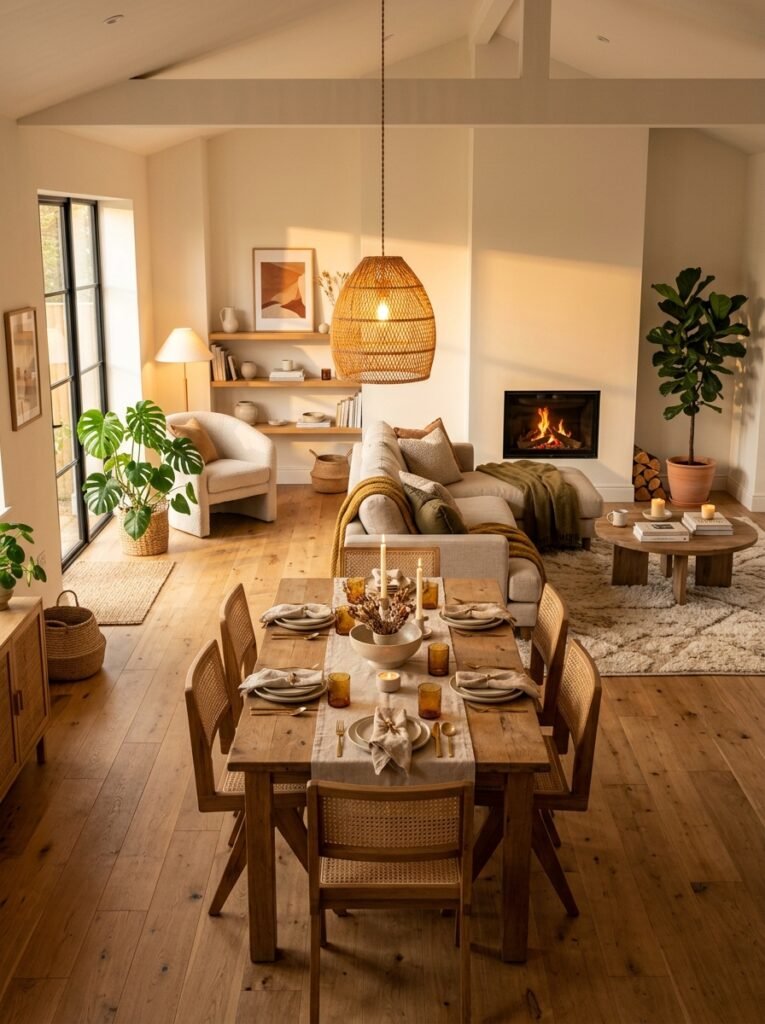
There is something quietly wonderful about a living room dining room combo that has been thoughtfully laid out — a space where breakfast happens at one end and movie nights at the other, where Sunday roasts are served and lazy afternoons are spent, all within the same four walls. It asks something of you as the designer of your own home: clarity about how you live, and confidence in the choices you make.
The best version of your open-plan room already exists — it just needs you to find its shape. So here is the question worth sitting with: What is one thing in your current layout that isn’t working, and what would it look and feel like if it finally did?