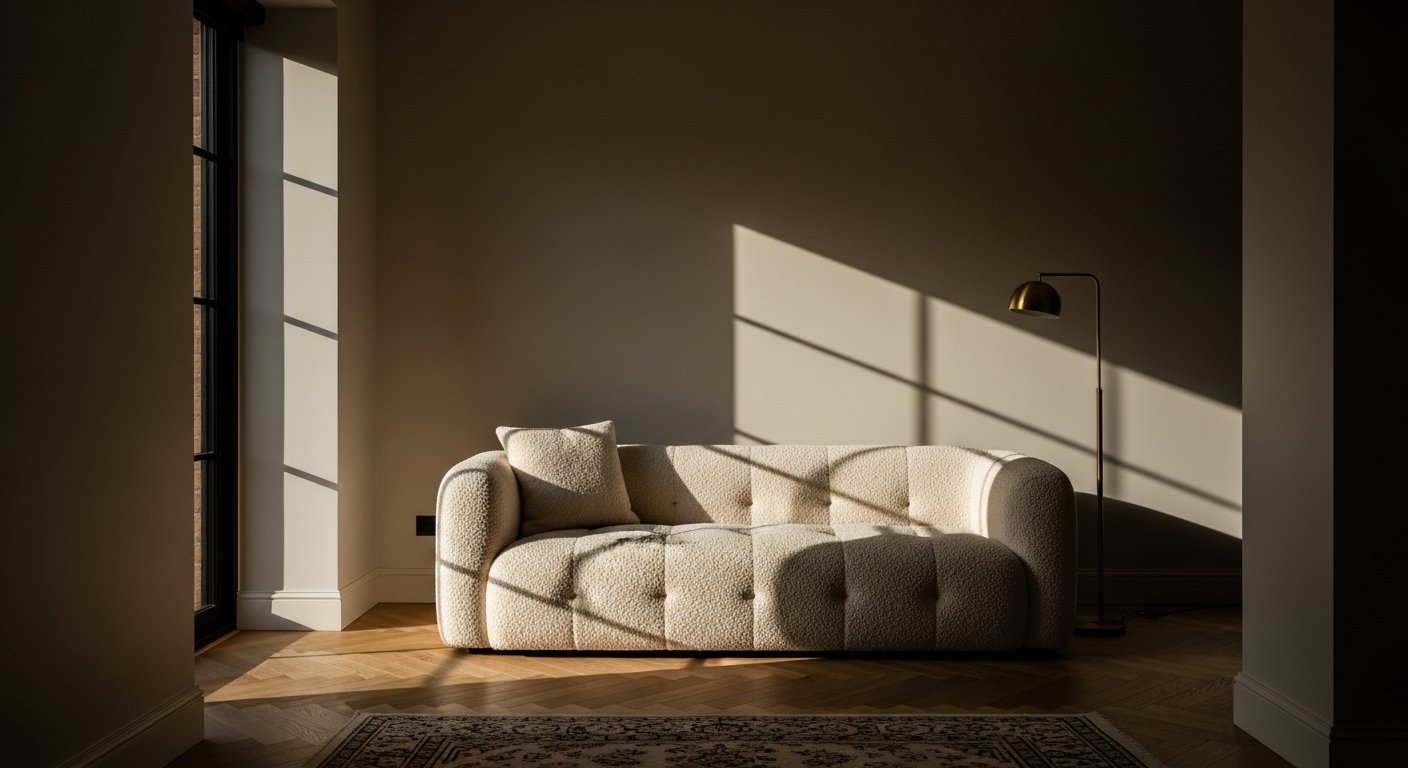
The Small Living Room That Looks Like a Million Dollars (Without the Mortgage to Match)
You walk in and you immediately think: how? The room is maybe 280 square feet. But it feels collected. Considered. Like someone with exceptional taste lives here and hasn’t apologized for a single choice they’ve made. That’s not luck. That’s a very specific set of decisions — and every single one of them is copyable.
—
1. Why “Small” Stopped Being an Excuse Around 2019 and Never Came Back
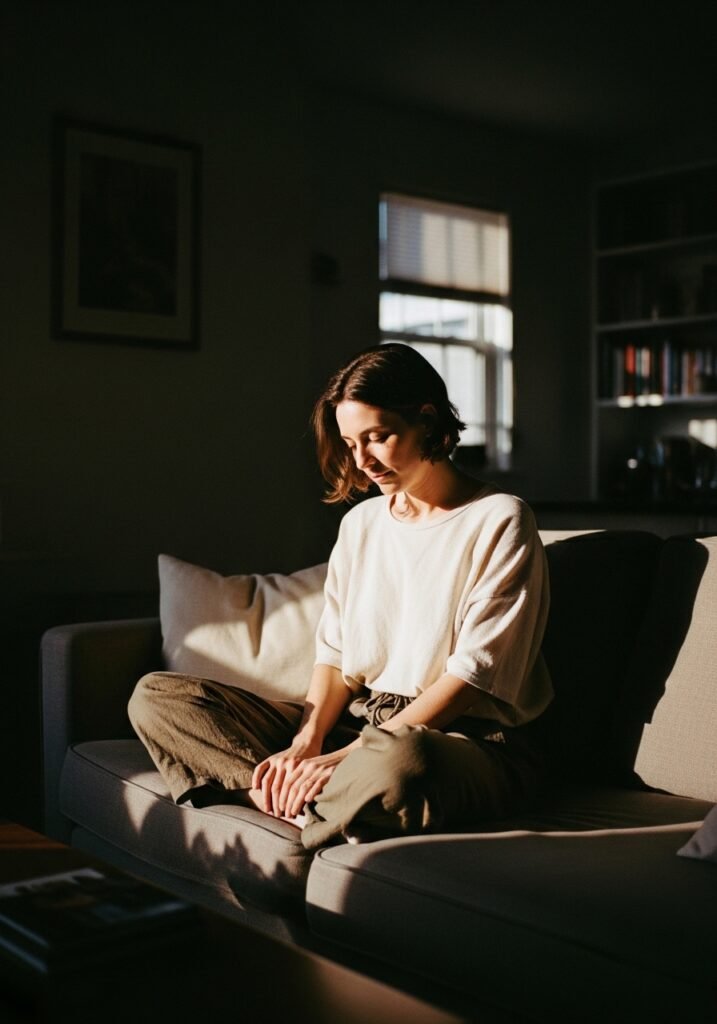
There was a time when small apartments were styled apologetically. Light neutrals on every surface. Mirrors everywhere. Furniture pushed against walls like it was frightened. The goal was to make the room look bigger — and in doing so, designers made it look like nothing at all.
That shift happened quietly, somewhere between the rise of Japanese minimalism going mainstream and the first time someone pinned a moody, jewel-toned London flat that had no business looking as good as it did. People realized something important: the goal was never to fake square footage. The goal was to make the room feel worth being in.
Modern luxury in a small space doesn’t mean tricking the eye. It means choosing with intention. It means understanding that a 12-foot sofa in a 14-foot room looks desperate, but a beautifully proportioned 7-footer in deep boucle, pulled slightly away from the wall, looks like a design decision made in Paris. Scale matters. Confidence matters. The willingness to let the room be what it is — a small, beautiful, deliberate thing — matters most of all.
The apartments that stop people mid-scroll on Pinterest aren’t trying to look bigger than they are. They’re fully committed to being exactly what they are.
“The most luxurious thing you can do in a small room is stop trying to make it look like a different room.”
2. The Sofa Choice That Will Either Make or Break the Whole Room
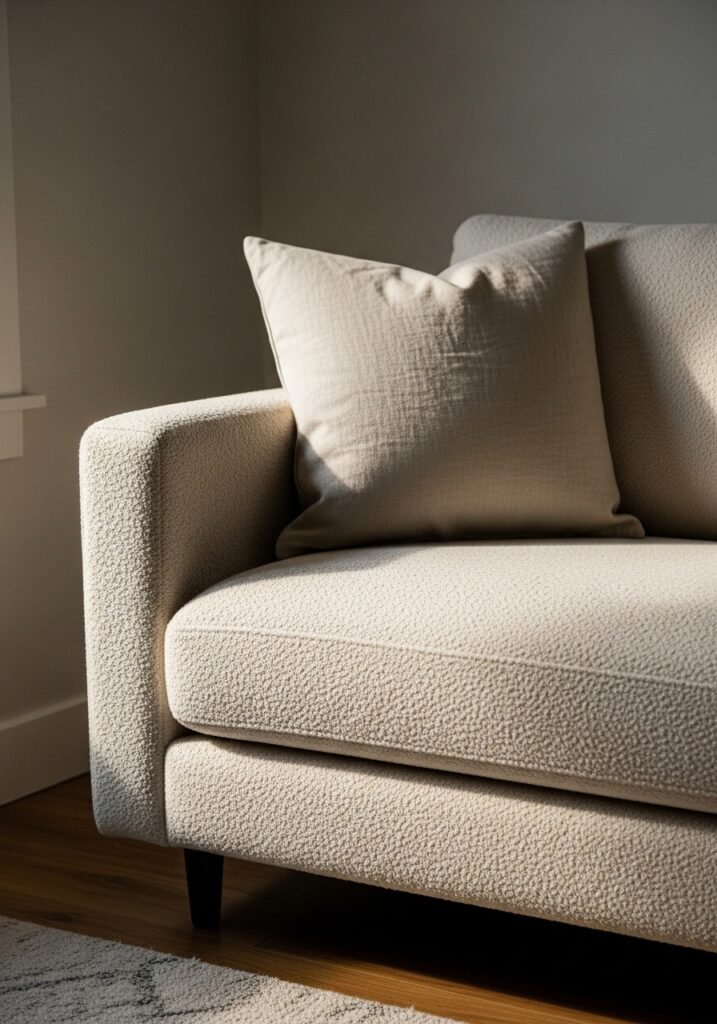
Start here. Before the art, before the throw pillows, before the debate about whether to paint the ceiling. The sofa is the room. Get it wrong and no amount of clever accessorizing will save you.
In a small living room going for modern luxury, the temptation is to buy small. A love seat. A compact sectional with a million modular pieces. Resist this. What you want is one piece that is correctly sized — not tiny — with low legs, a low back, and a silhouette that has some design intent behind it. Think sculptural. Think 1970s Italian. Think the kind of thing that shows up in an Architectural Digest tour of a Tribeca loft or a converted Georgian flat in Bristol.
Low-slung furniture is the single greatest trick in the modern luxury playbook for small spaces. When your sofa sits closer to the floor, the ceiling appears taller. The room breathes. There’s visual space above the furniture line that makes everything feel more considered and, yes, more expensive.
Color-wise: go darker than your instincts tell you to. Cognac leather. Forest green velvet. Warm camel boucle. That sage green that’s been quietly dominating every beautiful living room for three years running. The neutral-sofa-safe-choice is fine. But the room that makes people stop and stare almost always has a sofa that commits to something.
3. The Color That Keeps Showing Up in Every Stunning Small Living Room Right Now
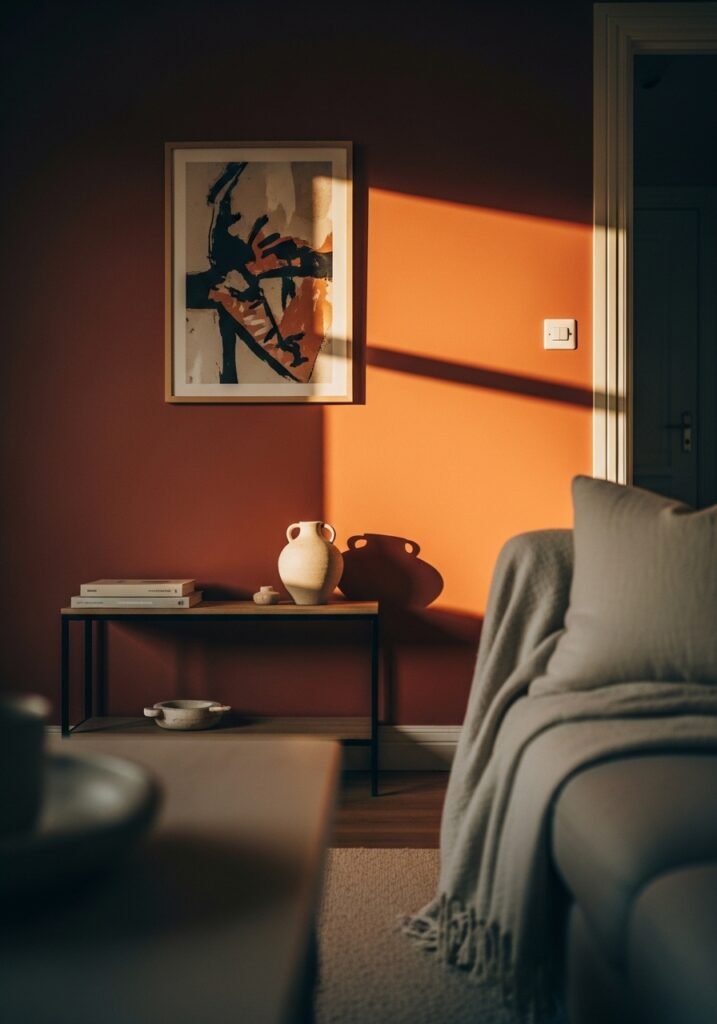
It’s not white. It’s not even the greige that dominated the 2010s. Right now, the rooms that look the most intentionally luxurious in small spaces are working with warm, deep, slightly aged tones — and one color keeps appearing: a particular shade of terracotta that sits somewhere between clay and rust, warm without being orange, earthy without being dull.
The reason it works so well in small spaces is physics meets psychology. Warm tones bring walls inward, yes — but when done right, that inward feeling becomes cozy rather than claustrophobic. It feels like the room is holding you rather than squeezing you. There’s a difference, and the difference is in how you layer it.
You don’t paint every wall this color and call it a day. You use it as an anchor. A feature wall behind the sofa. A deeply pigmented throw. Terracotta-toned ceramic vessels on a shelf. Then you let the surrounding tones breathe — warm ivories, aged brass, natural linen. The room develops a warmth that photographs beautifully and feels extraordinary to sit in, which is ultimately the whole point.
Other colors doing serious work in small luxury living rooms right now: deep plum (cooler British townhouse vibes), warm chocolate brown (literally everywhere in NYC apartments this year), and the specific dusty sage that works in both a California bungalow and a North London Victorian conversion.
4. Lighting Is Doing 40% of the Work and Most People Completely Ignore It
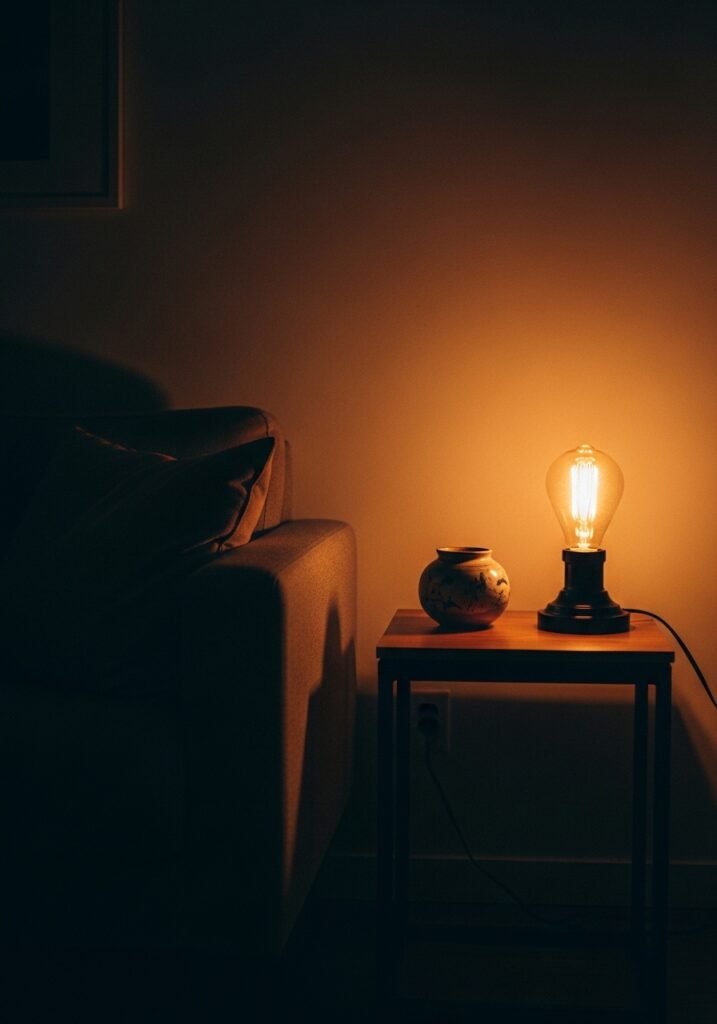
This is the thing that separates a Pinterest-worthy room from a room that’s just nicely furnished. Light. Specifically: layered, warm, intentional light that has nothing to do with the overhead fixture that came with your apartment.
Turn off the overhead light in your living room right now. Actually do it. Look around. That’s your starting point.
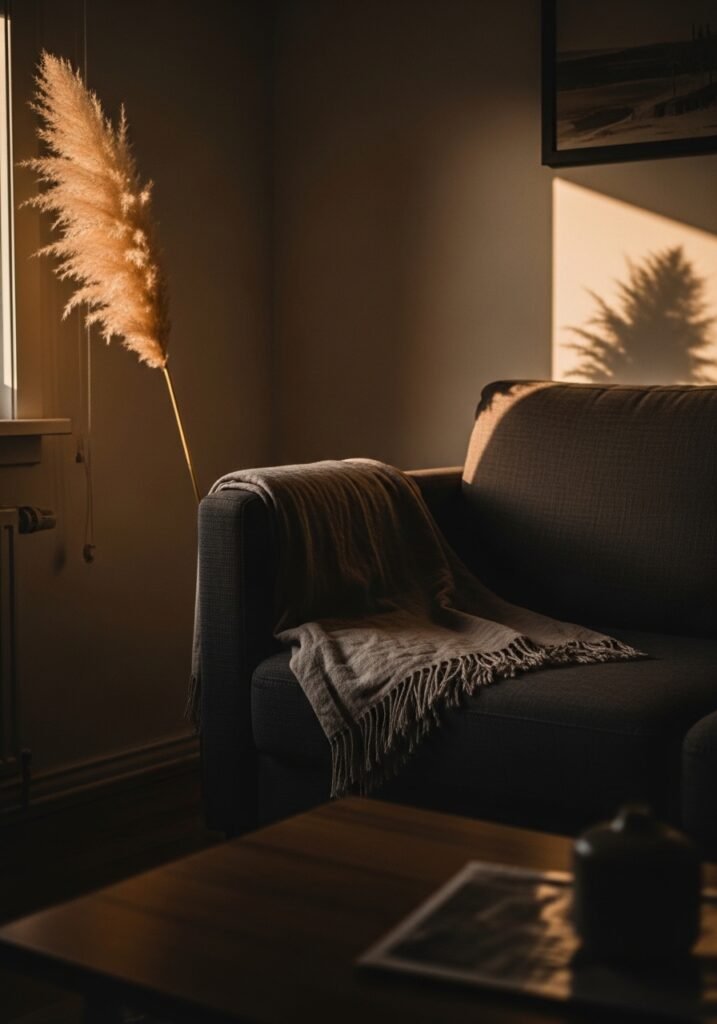
Modern luxury lighting in a small room is about creating pools of warmth rather than flooding the space. You want a floor lamp with a warm bulb in the corner that casts that amber glow at 7pm — the one that makes everyone who sits under it look like they’re in a film. You want a table lamp on whatever surface anchors your seating area. Ideally, you want something on a lower surface too — a small sculptural lamp on a coffee table tray, or even a candle cluster that earns its keep aesthetically before you even light it.
Lampshades matter more than people think. A cheap lamp with an excellent shade looks expensive. A beautiful lamp with a paper-thin flat-pack shade looks sad. Go for linen, pleated fabric, or ceramic shades with weight to them. The sculptural lamp base has had its moment and it’s not over — rattan, ribbed ceramic, aged brass, hand-thrown pottery. All of these read luxurious without requiring a luxury budget.
“One good floor lamp in the right corner will do more for your living room than a full day of reorganizing furniture.”
5. The One Rule That Makes a Tiny Room Feel Like an Intentional Design Choice
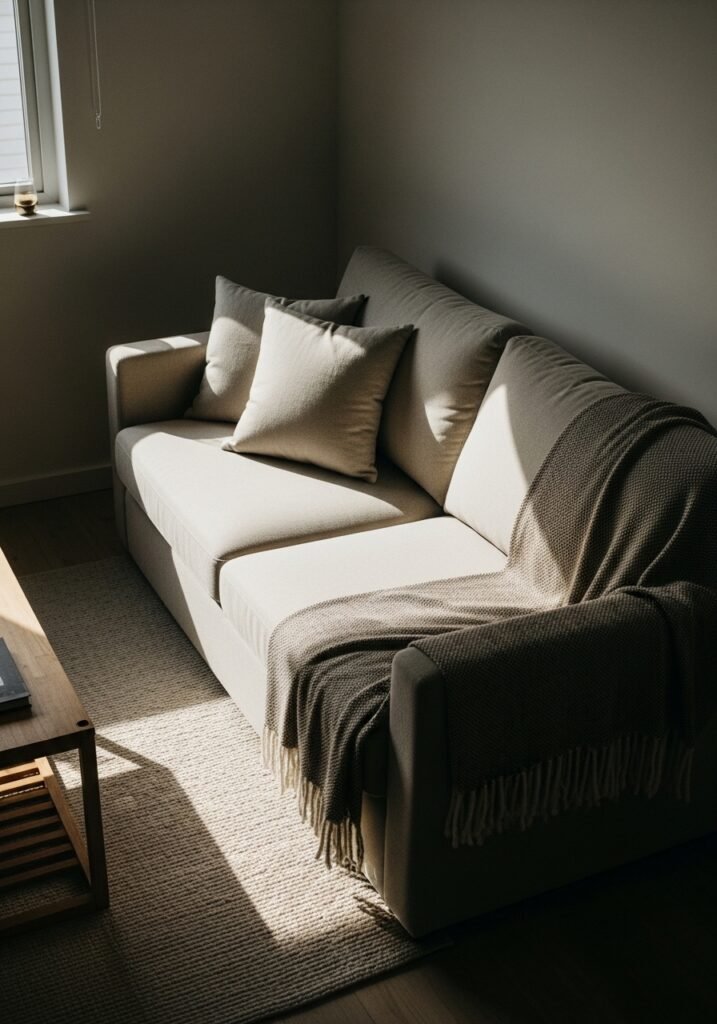
Pull the furniture away from the walls.
That’s it. That single rule, applied consistently, is the visual difference between a room that looks like a student flat with nice things in it and a room that looks like it was styled by someone who knows what they’re doing.
When furniture hugs every wall, the center of the room becomes dead space. A void. Your eye goes there and finds nothing. The furniture looks like it’s been staged for a house clearance rather than arranged for living. Even six inches of space between the back of your sofa and the wall behind it creates a floating quality — a sense that the furniture belongs in the room rather than being stored around its perimeter.
This works especially well in small spaces because it forces you to think about the room as a composition. Your sofa floats. Your rug anchors it. A small side table or slim console behind the sofa gives the space a sense of depth. Suddenly the room has layers — foreground, middle, background — and that’s exactly what luxury design looks like in photographs and in person.
The only exception: in a genuinely tiny space (under 200 square feet), you may need one piece against a wall for flow. Fine. But even then, try to give at least one piece of seating some breathing room. The room will thank you.
6. Rugs: The Mistake Almost Everyone Makes and the Fix That Costs Nothing Extra
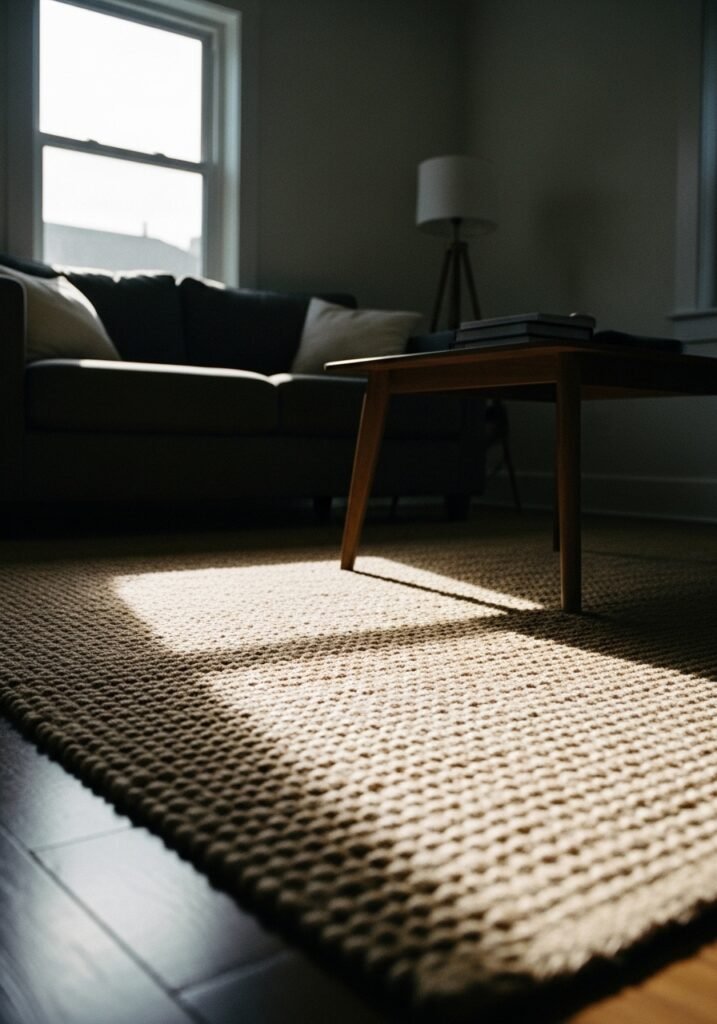
The rug is too small. In almost every room that doesn’t look quite right, the rug is too small.
A small rug in a small room doesn’t make the room look bigger. It makes the room look like you ran out of budget and settled. What you want is a rug that extends at least 12 to 18 inches beyond the sides of your sofa — ideally one where all four legs of every piece of seating either sit fully on the rug or are at least anchored to it at the front legs.
For modern luxury in a small space, the rug does double duty. It defines the zone (critical in an open-plan flat or a studio where the living area needs to announce itself) and it adds the texture layer that keeps the room from feeling flat. The best rugs for this look right now are either high-pile boucle-adjacent textures in warm neutrals, or flatweave kilim-style patterns in muted, earthy tones that bring pattern without visual noise.
What to avoid: anything that’s too graphic, too bright, or has a border that chops the room into sections. Also: beige-on-beige rooms with a white rug. It looks clean in a listing photo and lived-in sad within two weeks.
One genuinely underused option in the UK specifically: layered rugs. A large flatweave base with a smaller, more textural rug on top. Incredibly effective in a small living room for adding depth and a collected, traveled quality that’s very hard to fake any other way.
7. The Art Arrangement That’s Replaced the Gallery Wall (And Why It Works Better in Small Spaces)
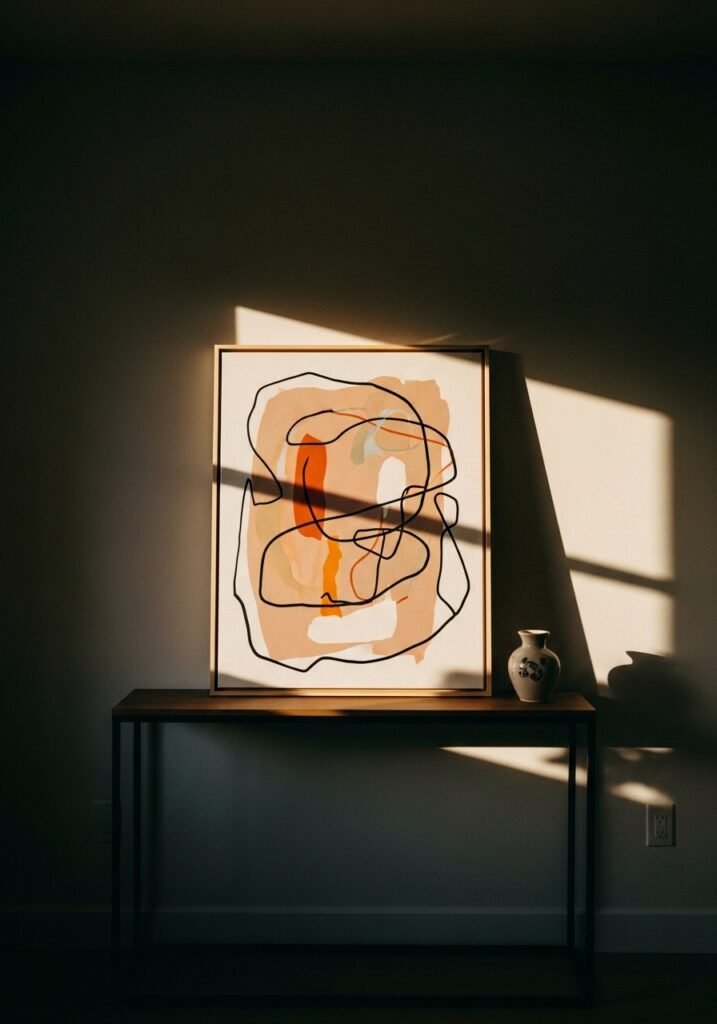
The gallery wall has had a long run. It’s not gone — done right, it still works. But the arrangement that’s been quietly replacing it in more design-forward rooms is something more deliberate: one large piece, hung slightly lower than you think, at or near eye level when seated.
This is important. We hang art too high, almost universally. We treat it like a painting in a museum, meant to be viewed standing at a distance. But in a living room, you’re sitting. The art should speak to you where you are. Hang it lower. Be surprised by how much more connected the room feels.
One large-scale piece — not a print of Van Gogh’s Sunflowers, not a word-art motivational quote — but an actual painting or large-format photograph or a serious art print in a substantial frame does something in a small room that a dozen smaller pieces can’t. It commands attention without cluttering. It says this room has a point of view.
For the modern luxury small living room aesthetic, abstract works in muted, earthy tones are having a sustained moment. So is photography in oversized matte frames. And in UK homes especially, there’s a beautiful trend of commissioning small pieces from local artists — something that’s both original and genuinely supports the creative community.
“Hang the art where your eyes actually go. Then hang it two inches lower than that.”
8. Shelving That Looks Like a Still Life, Not a Storage Solution
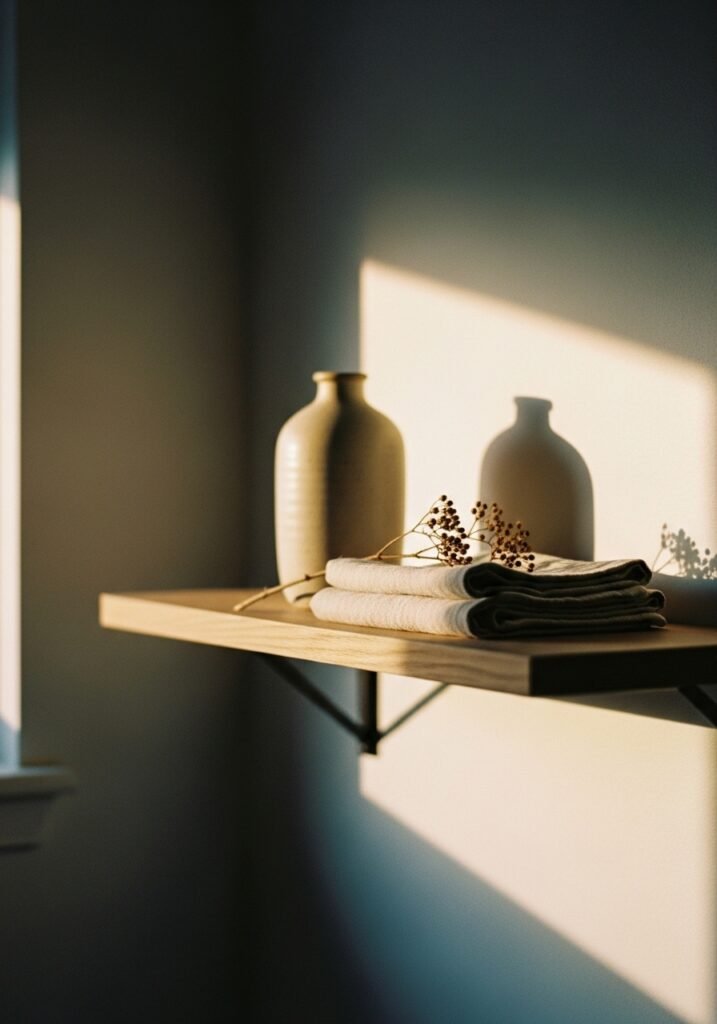
Open shelving in a small living room is either the best decision you’ve made or a constant source of visual noise. The difference is entirely in how you treat it.
The shelves that look luxurious are edited to the point of restraint. You’re not displaying everything you own — you’re curating. Books, yes, but not crammed end-to-end. Stack some horizontally, leave gaps, and lean a small piece of art against the ones at the back. Ceramics: two or three beautiful pieces with space between them rather than fifteen pieces fighting for attention. One trailing plant. One object that has no function except being interesting to look at — a piece of sculptural driftwood, an interesting stone, a vintage object from a market that means something to you.
The formula that works: something tall, something round, something with texture, something that catches light. Repeat across the shelf with variation and breathing room.
In small US apartments and UK flats alike, a single well-styled shelf does more for the feeling of the room than a room full of stuff. Less, genuinely, is more — but it has to be the right less. Arbitrary emptiness looks unfinished. Intentional emptiness looks like confidence.
9. The Plant Situation: One Statement Over Many Stragglers
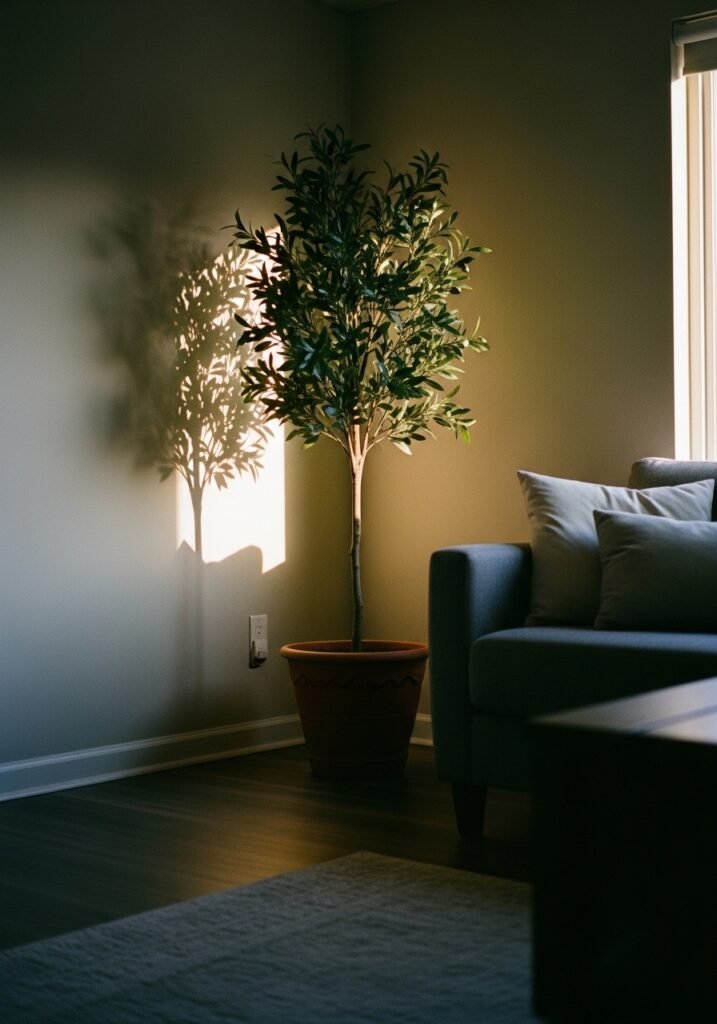
A cluster of small succulents on a windowsill is not an interior design choice. It’s a stalling tactic.
The plant strategy that works in a modern luxury small living room is the single statement plant: a fiddle-leaf fig that’s reached actual tree height, a sculptural monstera with mature split leaves, a tall, dramatic snake plant in a beautiful pot that earns its corner on design merit alone. One plant that means it when it walks into the room.
The pot matters as much as the plant. More, arguably. A beautiful ceramic pot in a matte, earthy glaze makes even a middling plant look expensive. A plastic nursery pot makes even a thriving, gorgeous plant look like an afterthought. Repot everything. It takes fifteen minutes and it changes everything.
If you love having several plants — go ahead. But give them a zone rather than scattering them throughout the room. A plant-filled corner feels lush and intentional. Plants dotted randomly across every surface feel like a waiting room.
10. Metallics: The Specific Finish That’s Winning Right Now
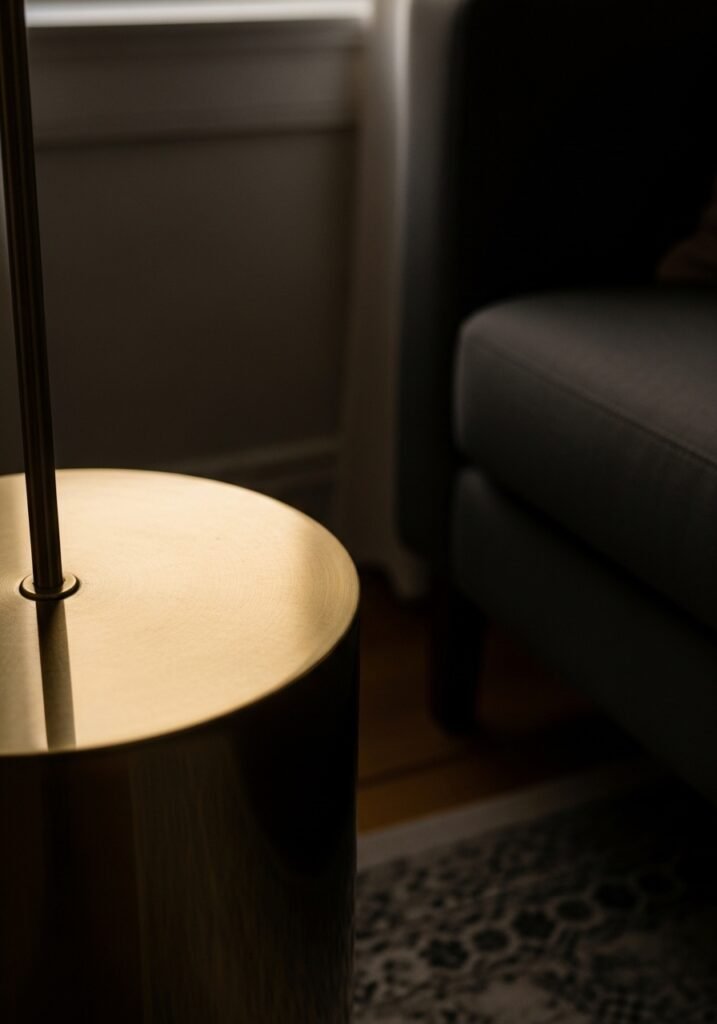
Brushed brass. That’s where we are. Not polished gold (too 2015), not chrome (too cold for where design is heading), not matte black (still beautiful but at peak saturation). Brushed brass — the warm, slightly antiqued finish that photographs warmly and pairs with almost every color direction a small living room might take.
The trick in a small room is consistency without rigidity. You don’t need every metal in the room to match exactly. But you want a family of metals rather than a free-for-all. Warm metals together: brushed brass, aged gold, antique bronze. Cool metals together: brushed nickel, gunmetal, polished chrome. Mixing warm and cool works too, but it requires confidence and a light touch.
The places metals show up in a well-designed small living room: lamp bases, cabinet hardware if there’s any built-in storage, picture frames, candle holders, the legs of a side table or coffee table, small decorative objects. Each individually subtle. Together, they create a coherent material language that makes the room feel curated rather than assembled.
11. The Ceiling and the Floor: Two Things You’re Not Thinking About Enough
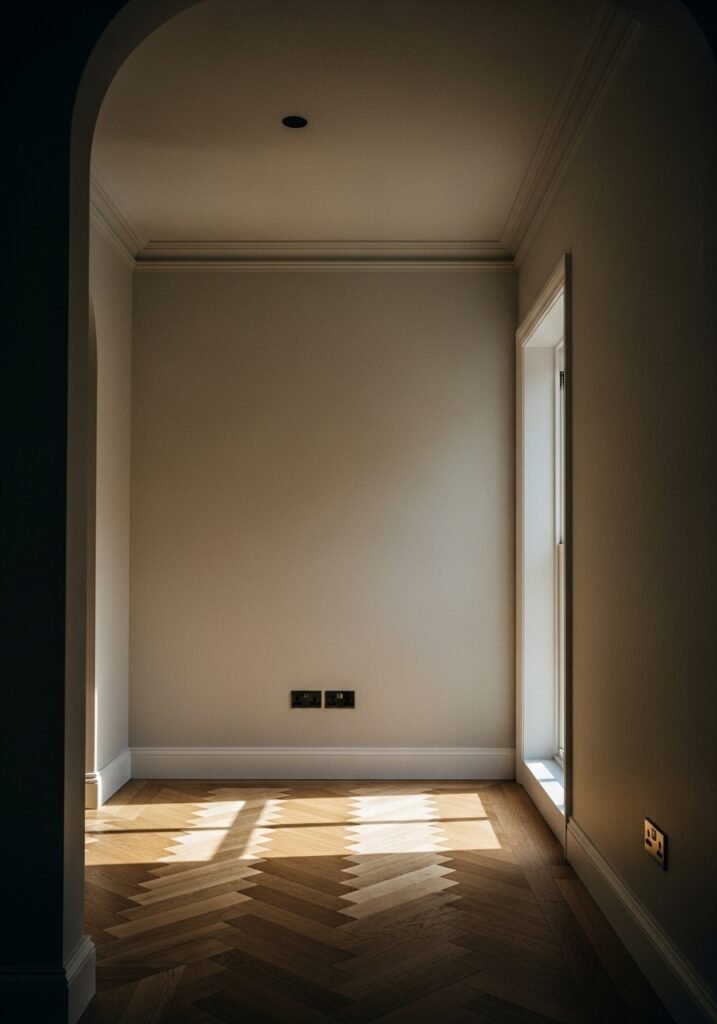
Your ceiling is either working for you or it isn’t, and in a small room, it matters more than people realize.
A white ceiling in a room with deep wall color creates a lid effect — the eye goes to the color and stops, reinforcing the walls as boundaries. Painting the ceiling the same color as the walls, or even a shade darker, removes that visual cap and wraps the room in a way that feels deliberate, cozy, and genuinely expensive-looking. It’s called color-drenching, it’s been in every serious design publication for the past two years, and it works especially well in small spaces because it removes the contrast that makes walls read as limitations.
The floor. If you have beautiful hardwood — original Victorian boards in a UK flat, wide-plank oak in an American apartment — protect them and celebrate them. If your floors are less inspiring, your large, well-chosen rug is the answer. Wall-to-wall carpet in a rental is a situation you can’t fully solve, but a large rug in a strong color or texture placed confidently over it minimizes it significantly.
12. The Thing That Actually Makes a Small Room Feel Luxurious (It’s Not What You Think)
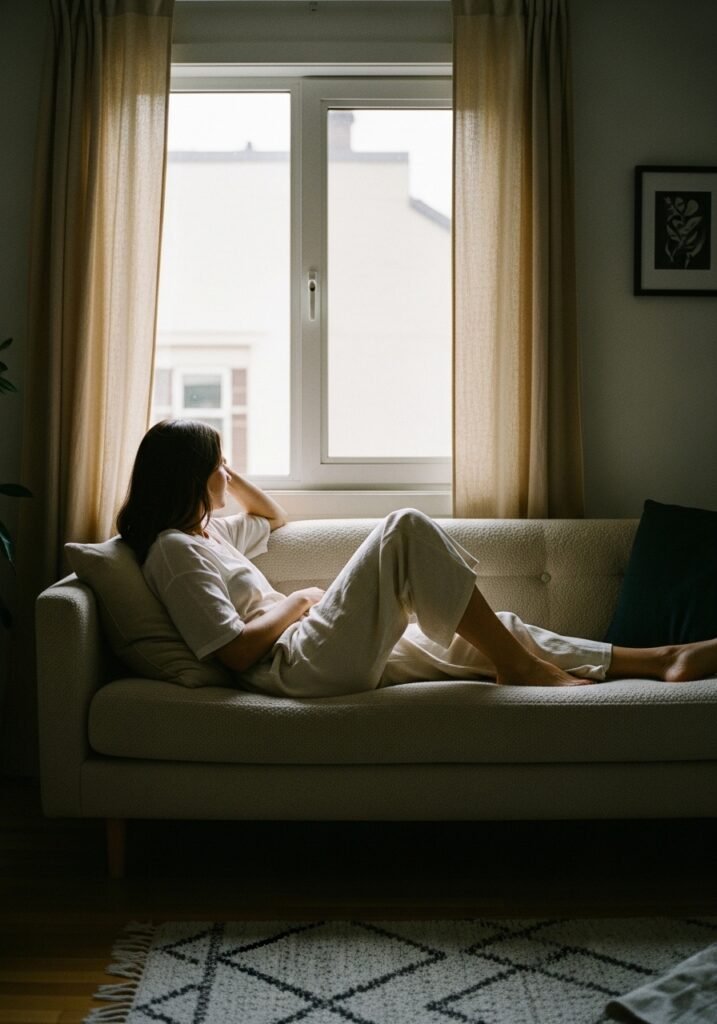
It’s not the furniture. It’s not the paint color. It’s not even the lighting, as important as that is.
It’s editing.
The rooms that look expensive are rooms where something was taken out. Where the decision was made — consciously, sometimes painfully — to remove the thing that wasn’t earning its place. The extra throw pillow. The side table that didn’t quite work. The piece of art that was fine but not right. The plant that had seen better days. The stack of magazines that became furniture.
Every object in a genuinely luxurious small room has been chosen or allowed to stay. That feels like a high bar. It is a high bar. But it’s also just clarity about what you love versus what you’ve accumulated. Those are different things, and the rooms that know the difference show it immediately.
Small rooms punish clutter and reward restraint in a way that larger rooms don’t. There’s nowhere to hide mediocrity. But there’s also nowhere to hide beauty — and that’s actually the best thing about them.
—
🌿 Quick Tips
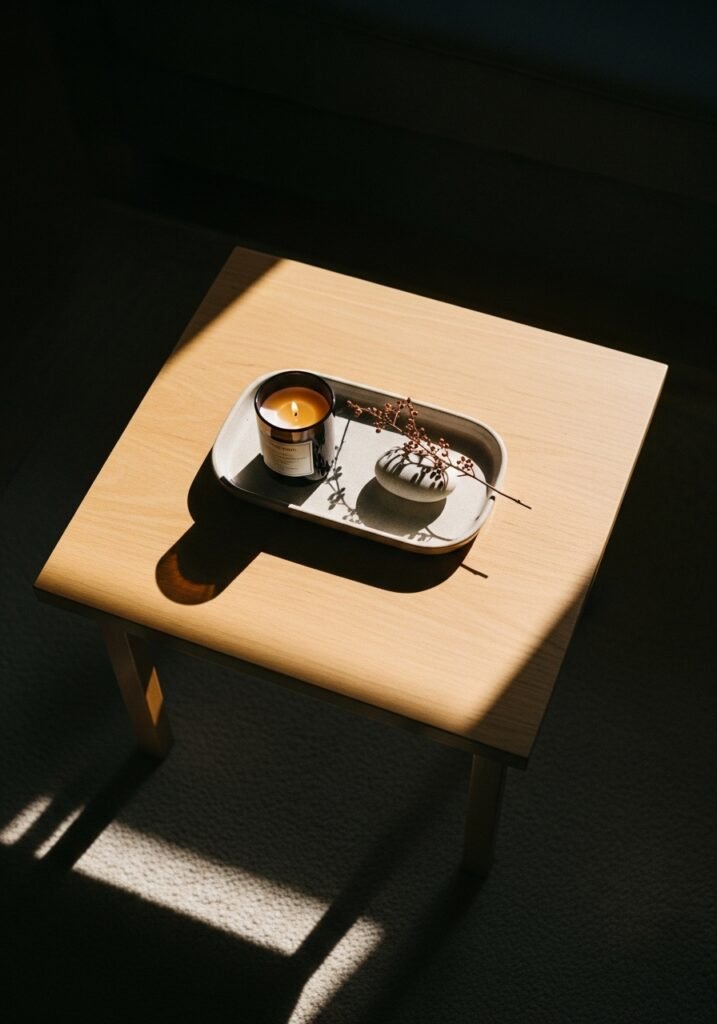
Start with the sofa and the rug and get those two things right before you buy anything else — they’re the foundation everything else builds on. Warm your lightbulbs down to 2700K or lower throughout the living room; it costs nothing and immediately makes the space feel more expensive. Invest in one genuinely beautiful ceramic object before you buy five decorative things that are just okay. Always pull furniture at least a few inches from the wall — even in a genuinely small space, the floating effect reads as intentional rather than accidental. Take a photo of your room and look at it in black and white; if it looks good without color, the tones, textures, and proportions are working.
—
❓ FAQ
Q: How do I make a small living room look more expensive without spending a lot of money? A: The biggest impact changes tend to be free or nearly free — rearranging furniture away from the walls, changing lightbulbs to a warmer temperature, and editing out things that don’t belong. After that, one good lamp and one large piece of art will do more than a dozen small purchases.
Q: What’s the best sofa color for a small living room with modern luxury style? A: Counterintuitively, deeper colors often work better than light neutrals in small rooms — they read as intentional rather than cautious. Warm camel, sage green, cognac, and deep forest tones are all doing strong work right now. The key is choosing a sofa with a low-slung, sculptural profile regardless of color.
Q: Can I do a dark paint color in a really small living room? A: Yes, and you should consider it seriously. Dark color-drenching — especially when taken onto the ceiling — removes the visual “box” of a small room and replaces it with a sense of depth and intention. The most common mistake is stopping at the walls and leaving the ceiling white, which creates a lid effect. Commit to the whole envelope and it works beautifully.
—
💭 Final Thought
The small living room that stops you mid-scroll was designed by someone who made peace with the size and decided to make something beautiful anyway. Not bigger. Just better. The square footage was never the point. What stays with you — what you’re still thinking about when you close the app — is how the room felt. Considered. Confident. Like someone lives there who knows exactly what they love.
Does your living room know what it loves yet?