Why a Sectional Might Be the Best Decision You Make for Your Living Room (And the Worst If You Get It Wrong)
You walked past it in the showroom and something just clicked. That low, wide, deeply cushioned sectional that looked like it was designed specifically for Sunday mornings and long Netflix marathons and the kind of conversations that don’t wrap up until well past midnight. But here’s the thing — a sectional can make a room or completely swallow it alive.
—
1. The Reason Sectionals Feel So Right (And Why That Instinct Is Worth Trusting)
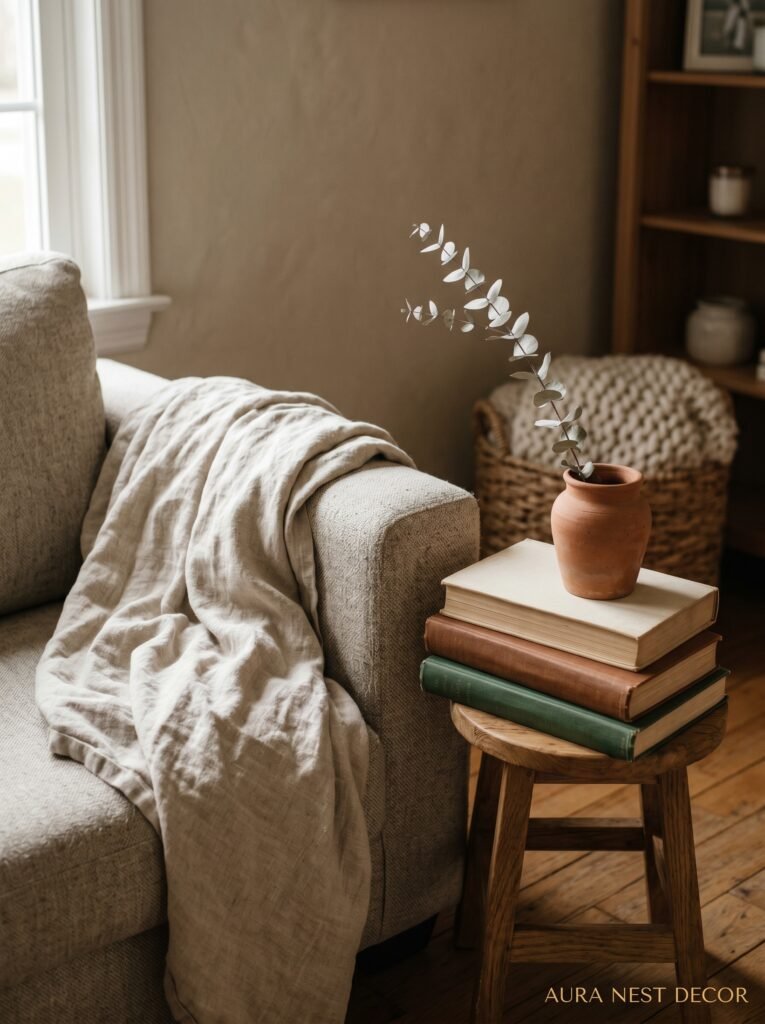
There’s a reason sectionals keep dominating Pinterest boards and design magazines and those “living room reveal” posts that rack up thousands of saves. They do something a regular sofa simply can’t. They create a room within a room. A zone. An actual destination inside your home.
Think about it — when you walk into a living room with a great sectional placed well, you immediately know where you’re supposed to go. Your body just moves toward it. It’s magnetic in a way that two accent chairs and a loveseat never quite manage to be.
But I think what people don’t say enough is this: a sectional changes the relationship between people sitting in the same room. Everyone faces slightly different directions. You can stretch your legs out. Someone’s always at the corner piece, which is secretly the best seat. You’re not lined up on a bench together like you’re waiting for a flight — you’re gathered, which is a completely different feeling.
In smaller British terraced houses and American ranch homes alike, a sectional can also solve layout problems that nothing else can. One piece of furniture anchors a room that might otherwise feel like it can’t decide what it wants to be. And honestly, that problem is more common than most people admit.
“A sectional doesn’t just fill space. It creates the reason to be in the room.”
—
2. The Size Math That Most People Get Completely Wrong
Okay, this is where things go sideways for a lot of people. And I’ve seen it happen — the sectional arrives, they get it into the room, and suddenly the couch IS the room. No space to walk. No breathing room. Just sofa as far as the eye can see.
The general rule people quote is that you need at least 18 inches between your sectional and the nearest piece of furniture or wall. That’s fine as a floor (no pun intended) but it’s not enough on its own.
What actually matters is the traffic flow. Stand in the doorway of your living room and imagine walking to the couch. Now imagine walking from the couch to the kitchen. From the couch to the TV. From the couch to the window. Do those paths exist? Or have you bricked them in with upholstery?
In a UK living room — which tends to run narrower than American ones, especially in Victorian or Edwardian semis — you might need to go with a smaller chaise configuration rather than a full L or U shape. An L-shape sectional can work brilliantly in a room that’s roughly 12×15 feet or larger. Anything under that and you’re making a gamble. Not saying don’t do it, just know the odds.
American homes often have bigger footprints but open-plan layouts, which brings its own challenges. In a great room that flows from living to dining, the sectional can actually do useful work as a divider — defining the living zone without a single wall or shelf needed.
Measure twice. Then measure again on a different day because somehow you always get a different number.
—
3. L-Shape vs. U-Shape vs. Modular — What Nobody Actually Explains Clearly

Everyone knows these names but the differences matter more than most buying guides let on.
The L-shape is the classic. One long run and one shorter return. Great for corners, great for conversation since people at either end are still sort of facing each other. This is probably the right choice for 70% of living rooms.
The U-shape — two returns instead of one — is a whole different commitment. It’s basically saying “this room exists for the couch.” Which, fair enough, but you need serious square footage. And you need to accept that the room will be organized entirely around the center of that U, probably a large coffee table or ottoman. The upside is that it holds more people than almost any other configuration, and for a family home or a house where people actually gather, that matters.
Modular is where it gets interesting. Modular sectionals are made up of individual pieces you can rearrange — add a piece here, remove one there, flip the chaise from left to right if you move house. They’re more expensive upfront but honestly they make so much sense for anyone who’s ever moved and had their sofa refuse to fit through a door. Been there. Never again.
The chaise direction thing trips people up constantly by the way. “Left-facing” and “right-facing” refer to which side the chaise extends to when you’re sitting on the sofa looking out. Which sounds obvious until you’re standing in the store, head tilted, completely confused. Ask someone to double-check your call before you sign anything.
—
4. The Fabric Decision Is Actually a Whole Personality Test

Boucle or velvet? Performance fabric or linen? This choice says more about how you actually live than anything else in the room.
If you have kids, a dog, a cat, a partner who eats popcorn on the couch, or if that’s just you — honestly no judgment — then you need a performance fabric. Not because it’s boring (it’s not anymore) but because spending two grand on a sofa you’re scared to sit on fully is a genuinely miserable way to live. Crypton, Sunbrella, and other stain-resistant weaves have gotten so good you can’t tell by looking. Go for it.
Velvet looks extraordinary in photos and in person, and it photographs so well that half of Pinterest’s living room content might as well be a velvet appreciation account. The downside is that it shows every single pet hair and every imprint from a hand brushing the wrong direction. It’s high maintenance in a way that some people find charming and others find exhausting.
Boucle is having a moment — or maybe it’s past the moment and now it’s just a permanent fixture, which is fine because it genuinely earns its place. It’s cozy in a tactile way that’s hard to explain until you’ve touched a really good boucle sofa. The loops catch light differently throughout the day. The texture reads as “intentional” even in a fairly simple room.
Linen and cotton blends are the underrated pick. Not as dramatic as velvet, not as textured as boucle, but they age gracefully and they feel cool in summer and warm in winter in a way synthetic fabrics just don’t.
“The fabric you choose isn’t about aesthetics. It’s about the life you actually live, not the one you’re styling for.”
—
5. The Color Conversation Nobody Wants to Have (But Should)
Here’s my actual opinion: beige and cream sectionals are popular for good reason and the backlash against them is overcorrection.
A warm off-white sectional doesn’t mean you’re boring or playing it safe. It means you understand that the sofa is the largest object in the room and that making it a neutral lets everything else — rugs, cushions, throws, art, plants — do the actual talking. There’s real intelligence in that choice.
That said. A deep navy sectional in a white room is something else. It commands attention in a way that feels bold without being loud. Sage green has had years of love and still doesn’t feel overdone if the tone is right — something on the grayer, dirtier side rather than mint. Terracotta is divisive but I’m here for it, especially in warm-light rooms with wooden floors.
The color I’d avoid is anything too saturated without a very intentional plan. Bright teal, vivid yellow, fire-engine red — they can work but you’re painting yourself into a corner (again, no pun intended) every time you want to update accessories.
The other thing worth saying: the sectional doesn’t have to match the room you have. It can match the room you’re building toward. Buy it for where you’re going, not where you currently are.
—
6. How to Arrange a Sectional So the Room Doesn’t Look Like a Furniture Store
The showroom look — sofa facing TV, rug underneath, coffee table in the center, lamp in the corner — isn’t wrong exactly, but it’s the default. And the default almost never feels like a home someone actually lives in.
The most interesting living rooms I’ve seen orient the sectional slightly away from the TV. Not dramatically. Just enough to suggest that conversation might also happen here, that this room isn’t purely built around the screen. It changes the energy of the whole space.
Pull the sectional away from the wall. This sounds counterintuitive, especially in smaller rooms, but pushing furniture against the walls actually makes a room feel smaller, not larger. Even four to six inches of breathing room between the back of the sofa and the wall changes things visually.
A rug that’s too small is the single most common mistake in living rooms with sectionals. The rug should be large enough that at least the front legs of every section of the sofa sit on it. If it’s floating in the middle of the floor with the sofa surrounding it but not quite touching it, the whole arrangement looks like it can’t commit.
And coffee table height — seat height plus a couple of inches. That’s it. If you can’t reach your drink without leaning forward, the table’s too low.
—
7. What to Do When Your Living Room Is a Weird Shape (Because Most Are)
Not every living room is a nice rectangle. Alcoves, chimney breasts, doorways that interrupt walls, bay windows, those weird diagonal corners that no one can explain architecturally — these are real obstacles and a sectional doesn’t automatically solve them.
For bay windows specifically, resist the urge to push a sectional into the bay. It usually blocks the light and makes the bay feel wasted. Keep the bay clear — a small reading chair, a plant, a window seat if you’re building — and let the sectional anchor the main room instead.
Rooms with a chimney breast on the main wall are tricky because you’ve got a protrusion that interrupts the natural flow. An L-shape sectional with the chaise on the opposite side from the fireplace often works well here — the two pieces of visual weight balance each other.
Open-plan kitchen-dining-living spaces, which are common in UK extensions and American new builds alike, benefit from a sectional’s ability to create definition. Face the back of the sofa toward the dining space and it becomes an invisible wall. The back of a sectional is part of the design, so it’s worth thinking about how it looks from the kitchen side too.
“The back of your sectional is furniture too. It deserves attention.”
—
8. Cushions Are Not an Afterthought — They’re Actually the Point
A sectional with the wrong cushions looks unfinished. Not in an obvious way, but in that “something’s off and I can’t say what” way that haunts a room.
First: don’t use all the cushions the sofa came with. I know. You paid for them. Use maybe half and store the rest, or swap them out entirely. Sofa-set cushions are designed to look good in a showroom, not necessarily in your home.
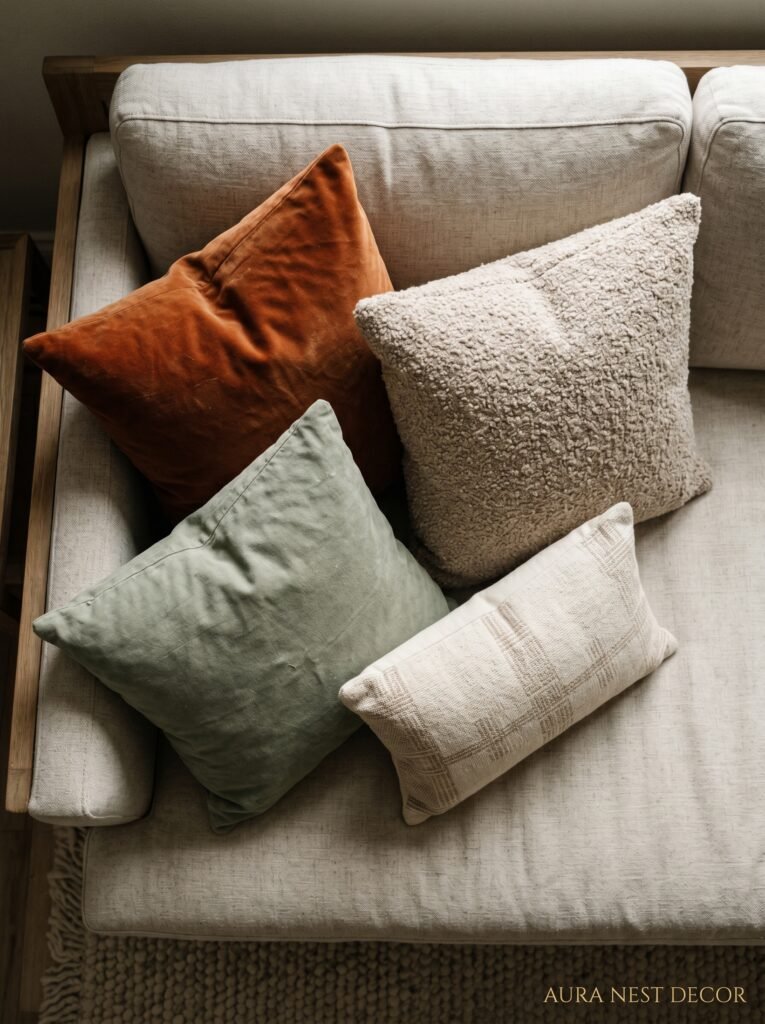
The mix that works is different scales — one larger cushion, one smaller, maybe a lumbar — and different textures within a similar color family. You don’t need chaos. You need a little variation that looks considered.
Odd numbers. Always. Two cushions in a corner looks like a hotel room. Three has movement. Five has energy. Four looks symmetrical and symmetrical looks staged.
Throws are underused. Not a folded square draped over the corner like a furniture catalogue prop, but a genuinely lived-in throw that’s slightly bunched, slightly imperfect, like someone just got up from under it. That detail alone