The Living Room Storage Problem Nobody Talks About (And 12 Ways to Actually Solve It)
You know that moment when guests are coming over in twenty minutes and you’re shoving remote controls into a throw pillow and sliding a stack of books behind the sofa? Yeah. That’s not a “you” problem. That’s a living room that hasn’t been given the right storage — and there’s a real difference.
—
1. Why Your Living Room Feels Cluttered Even After You’ve Tidied It
Here’s the thing. Tidying and having good storage aren’t the same thing. You can spend forty-five minutes putting things away and still have a room that feels chaotic, because the places things are going don’t actually make sense for the way you live.
I’ve done it a hundred times. I’d “clean up” the living room by stacking magazines on the coffee table, pushing the kids’ stuff into a corner, and folding the throws so they looked intentional. And two hours later it looked lived-in again. Not in the cozy way. In the exhausting way.
The real issue isn’t the stuff. It’s that there’s no system behind where the stuff lives. And a living room is one of the hardest rooms to sort out because it does so many jobs at once — it’s a TV room and a reading room and a socializing room and, if you’re anything like most people, also a bit of a dumping ground for things that don’t belong anywhere else.
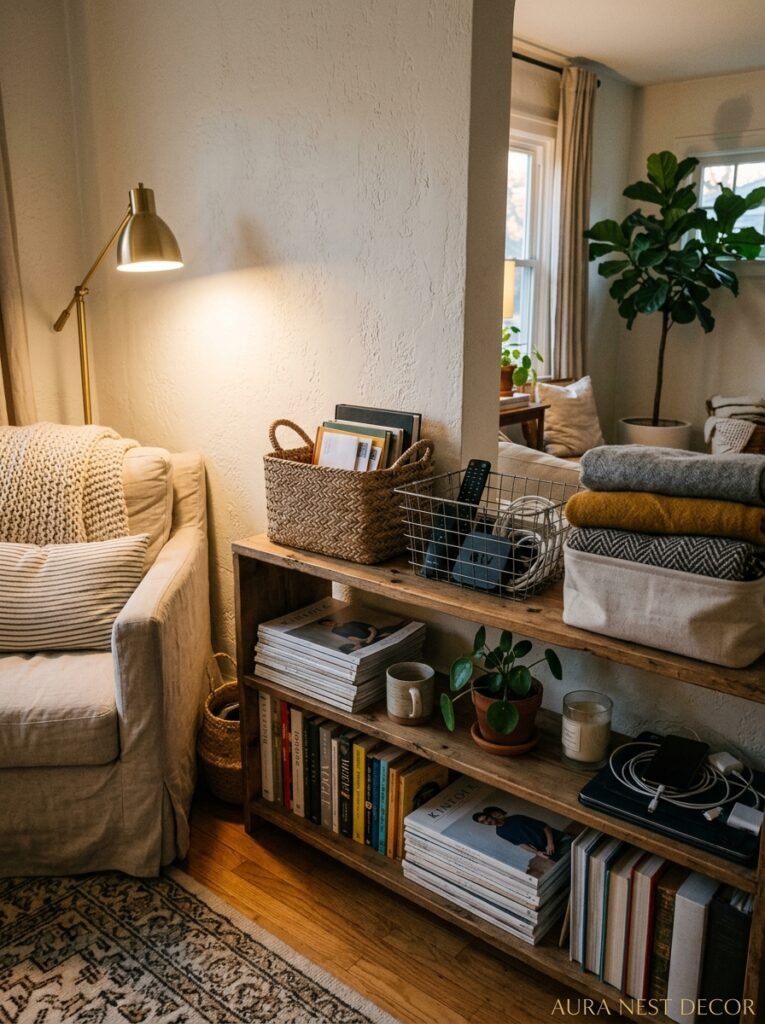
So before you buy a single basket or bookcase, ask yourself: what actually accumulates in this room every single day? Not what should accumulate. What does. Remote controls. Phone chargers. Books you’re halfway through. The dog’s toys. That one throw blanket that everyone wants. Candles you’ve burned once and left out. Start there.
“Good living room storage doesn’t hide your life. It holds it.”
—
2. The Ottoman Trick That Designers Use and Nobody Talks About Enough
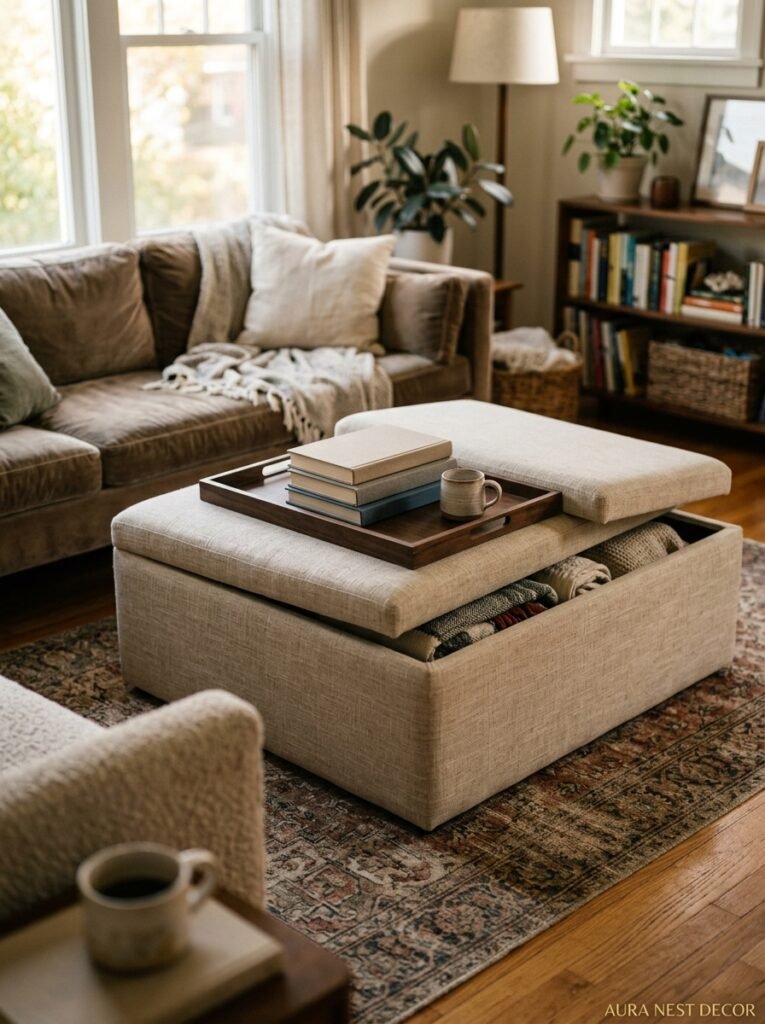
A coffee table is fine. But a storage ottoman? That’s doing double, sometimes triple duty, and it’s one of the most underrated pieces of furniture you can own.
A chunky upholstered ottoman — something square, big enough to actually rest your feet on — with a lift-up lid or a tray top will hold more than you think. Blankets. Kids’ toys at the end of the day. Board games. Extra cushion covers. The stuff that doesn’t have a drawer to go in.
But here’s what I actually love about this: it doesn’t LOOK like storage. It looks intentional. It looks like you chose it for the room. Nobody walking into your living room is going to see a velvet storage cube and think “oh she’s hiding her mess in there.” They’re going to think it looks considered and comfortable and like something out of a magazine spread.
If you’re in the UK, you can find gorgeous ones at places like Dunelm and Next. In the US, Wayfair and Target both have solid options that won’t break the bank. Get the biggest one that fits the space — you’ll always fill it, I promise.
Also, don’t overlook nesting ottomans. Two or three that tuck together and pull apart when you need extra seating. And then each one can store things. Honestly it’s the kind of furniture decision that makes me unreasonably happy.
—
3. What Floating Shelves Do That No Floor Unit Can Match
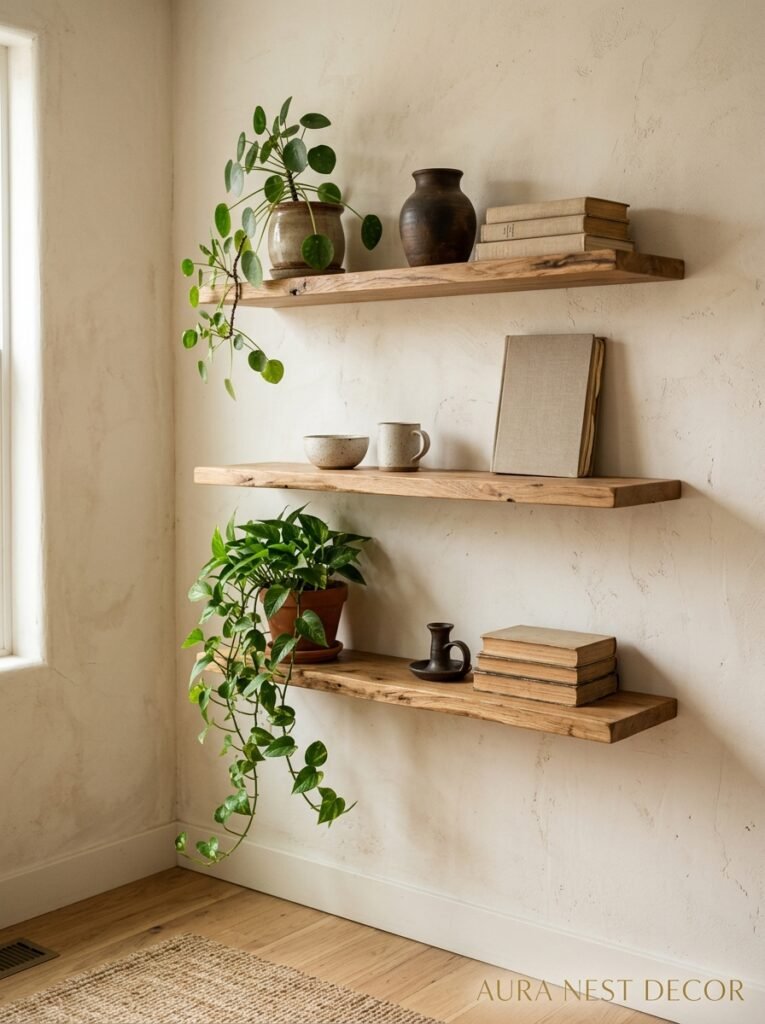
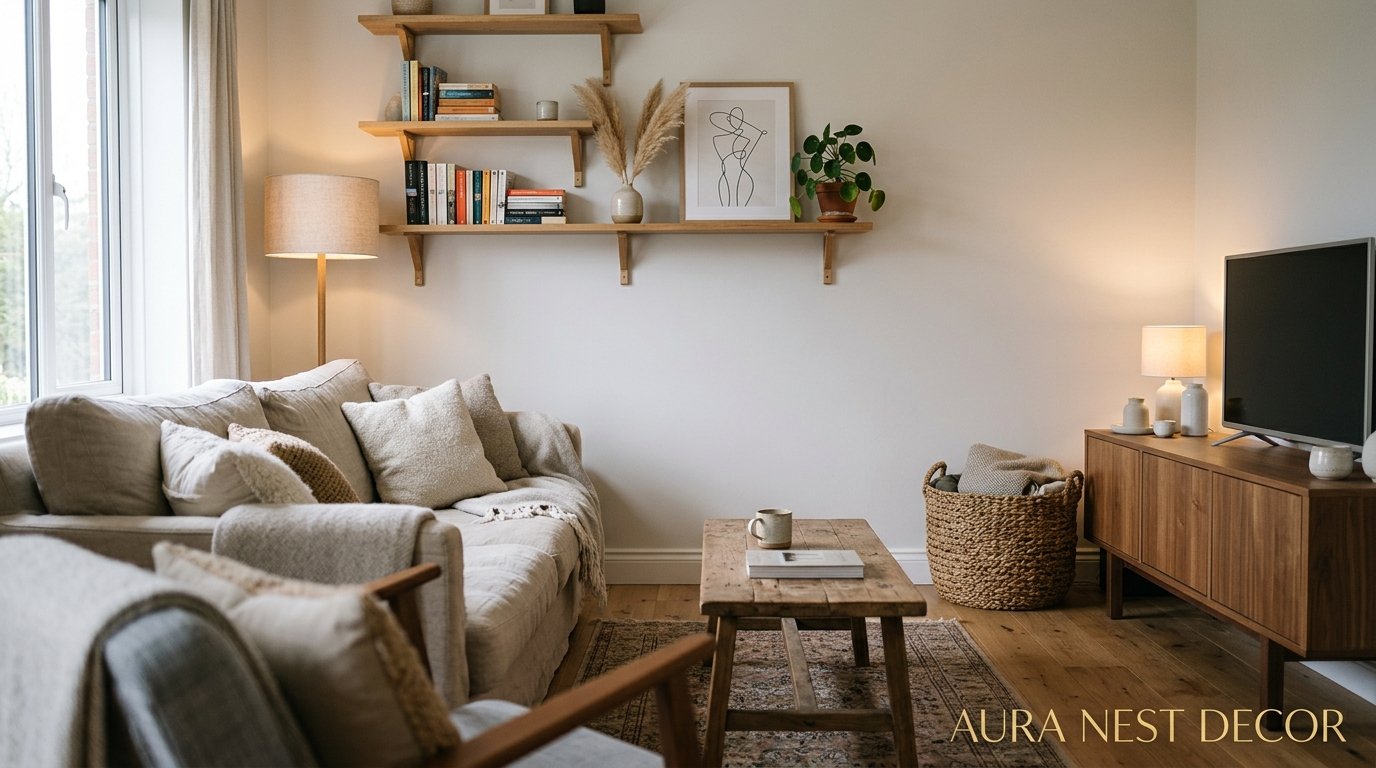
Floor space is precious. Especially in a smaller sitting room or a UK terraced house where the proportions are already pretty compact. And that’s exactly why floating shelves are so good.
They go up onto the wall and immediately your floor breathes. The room looks bigger, not because you’ve done anything dramatic, but because the eye moves upward and finds the space it was looking for.
But here’s the part most people get wrong with floating shelves: they treat them purely as display. They put a couple of plants on them, a candle, a framed photo. And then they wonder why the room still feels cluttered at eye level and below.
Use your shelves for functional storage too. Baskets that slide onto a shelf and hold things you’d otherwise leave on surfaces — TV remotes, coasters, the miscellaneous stuff that just sort of… collects. Labeled or unlabeled, doesn’t matter. What matters is that there’s a home.
Mix in the pretty things, yes. But let at least a third of your shelf space work hard for you.
—
4. Built-Ins Don’t Have to Be Built-In (This Changed Everything for Me)
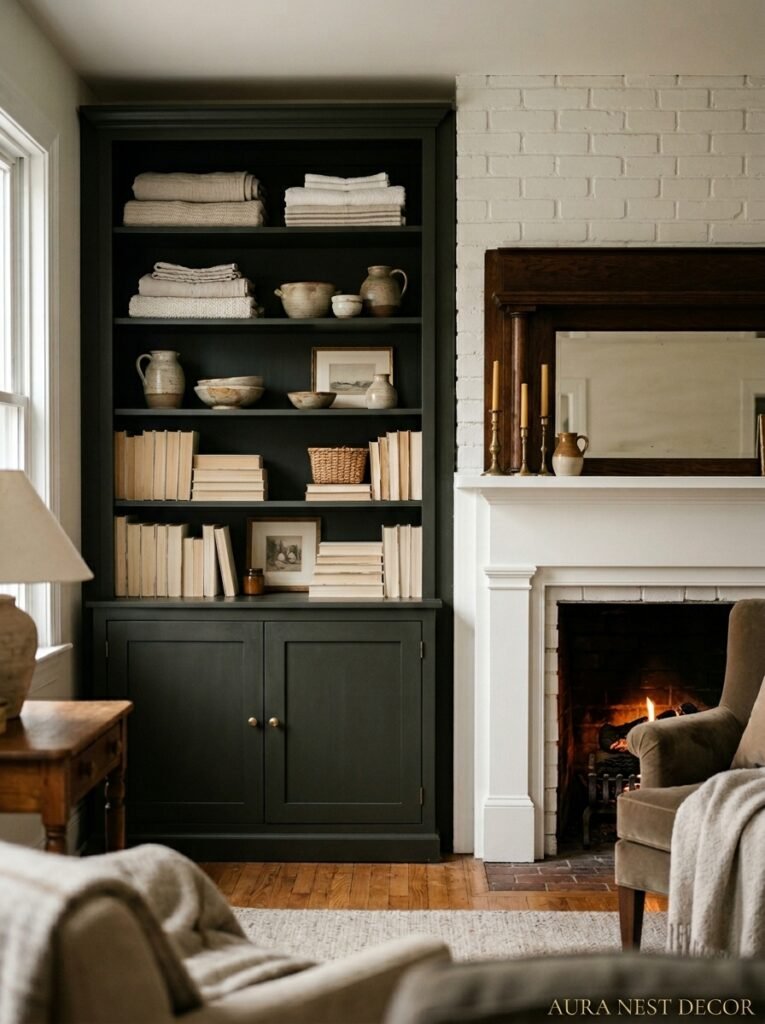
I rented for years. And there’s a particular kind of frustration that comes with renting a living room that has zero storage and zero places to add any, because you can’t drill into a listed property or touch the alcoves or paint the walls anything interesting.
So I learned the freestanding built-in trick. And I’m obsessed with it.
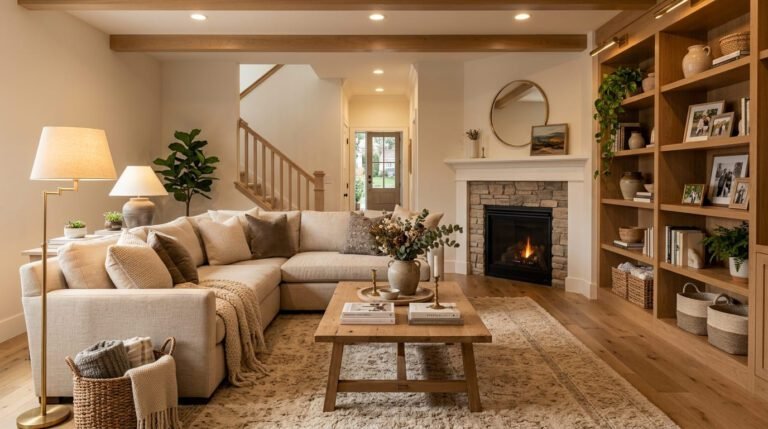
You take tall freestanding bookcases — IKEA Billy, for instance, or similar — and you place them in the alcoves on either side of a fireplace, or side by side along a wall, or flanking a TV. Then you add trim or crown molding to the top to make them look recessed. You paint them to match the wall.
Suddenly it looks built in. It looks intentional. It looks expensive. And it provides an enormous amount of storage — closed with doors (IKEA Oxberg doors fit Billy frames) or open for display. You can do a mix.
“The most stylish storage in any room is the kind that looks like it was always supposed to be there.”
This works in rental properties, in older homes, in new builds that feel soulless. It’s genuinely one of my favorite hacks and it photographs beautifully, which — since we’re all on Pinterest — matters.
—
5. The Basket Situation: Why Most People Buy Too Many Small Ones
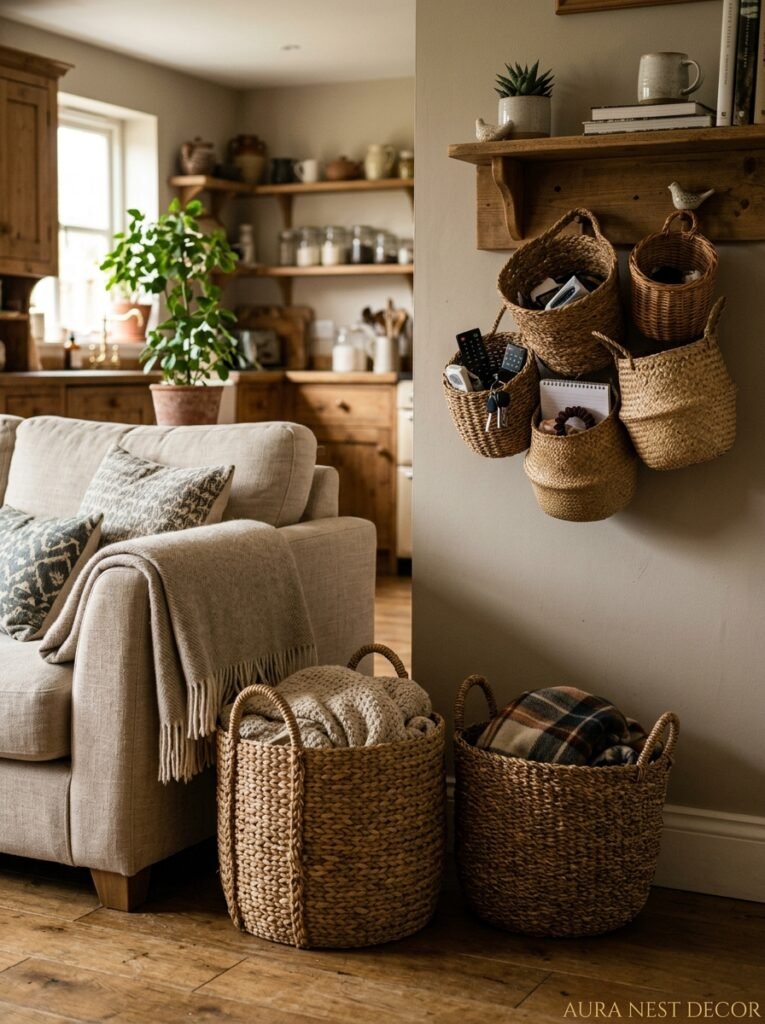
I will say this clearly: stop buying small baskets for your living room. I know they look cute. I know you see them in a set of three and you think they’ll look lovely on the shelf. They won’t do anything useful.
Get fewer baskets. Make them bigger. A really good large wicker basket — the kind that’s almost the size of a laundry basket but has that nice tight weave — next to a sofa or beside a bookcase is endlessly useful. It holds blankets. It holds cushions you don’t need out all the time. It holds the dog toys, again.
In the UK there’s a gorgeous tradition of using those big Moroccan-style straw baskets and honestly they look incredible in almost any living room, whether it’s a classic Victorian terrace or a modern flat. In the US, I love the look of a seagrass basket in a neutral coastal-ish living room but they work in rustic spaces too.
The key thing: baskets are only useful if you can get in and out of them without fussing. If you’ve got a lid that’s fiddly or a basket that’s so tightly packed you have to wrestle things out of it, you won’t use it. It’ll just become a visual element that secretly stresses you out.
—
6. Under the Sofa Is Prime Real Estate You’re Probably Wasting
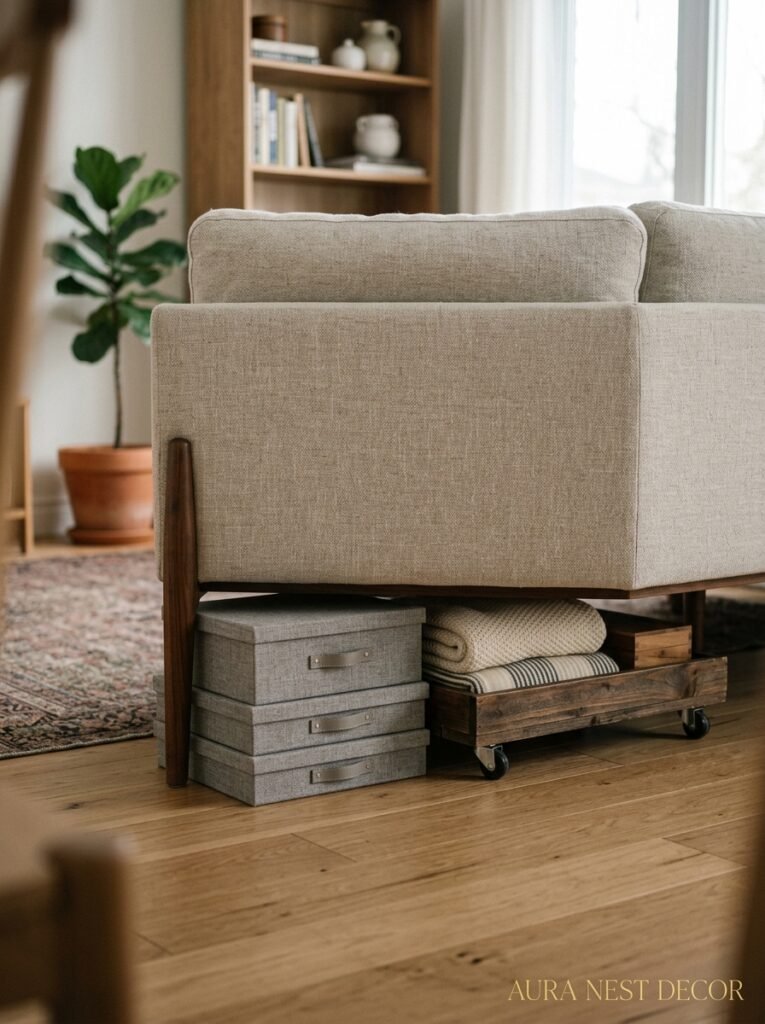
Okay, this one’s slightly unglamorous but hear me out.
The gap under most sofas is several inches at minimum. And there are flat storage containers made specifically for that space — shallow rolling drawers, flat bed-storage boxes, even just trays — that slide in and out easily. You can keep extra throws in there, seasonal cushion covers, gift wrap, kids’ books, magazines, whatever.
Out of sight. Completely out of sight. And it doesn’t change anything about how the room looks.
The trick is to measure the clearance under your sofa before you buy anything. Some modern sofas sit really low and you might only have three or four inches. Others have six to eight. Either way, there are options. Just don’t leave that space empty when it could be working for you.
Side note — if you’re choosing a new sofa and storage is a priority, look specifically for sofa beds that have built-in storage drawers underneath. Some of the Scandinavian brands do this really well. It’s not a huge range but it exists and it’s worth knowing about.
—
7. The TV Unit That Does More Than Hold a TV
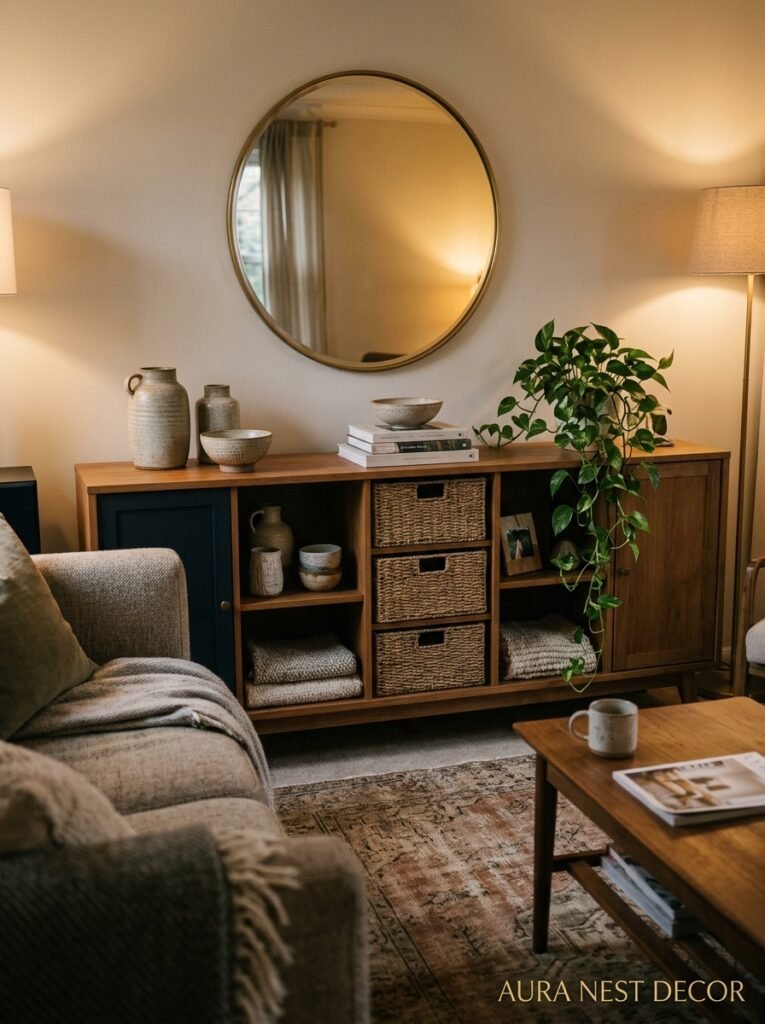
The TV unit is often the biggest piece of furniture in the living room, and in most homes it’s wildly underused in terms of storage potential. There’ll be the TV on top, maybe a game console tucked in, and then sort of… empty space.
A media unit with closed cupboard sections on either side is so much more useful than an open shelving TV stand. Inside those cupboards you can put everything — DVDs if you still own those (no judgement), board games, kids’ stuff, charging cables, the router, the stuff that needs to live in the room but doesn’t need to be seen.
If you’ve got an existing unit that’s open, add baskets or decorative boxes in the open sections to create visual closure. It immediately makes the whole thing look calmer and more intentional.
And the surface on top of the TV unit is valuable, not just for the TV. A few well-chosen decorative pieces make it feel styled. But keep one section clear for functional things — a small box for remotes, maybe a candle, something real.
“The living room that looks effortless is usually the one where every surface has quietly been given a job.”
—
8. How Books Can Be Storage AND the Best Decorating Tool You Have
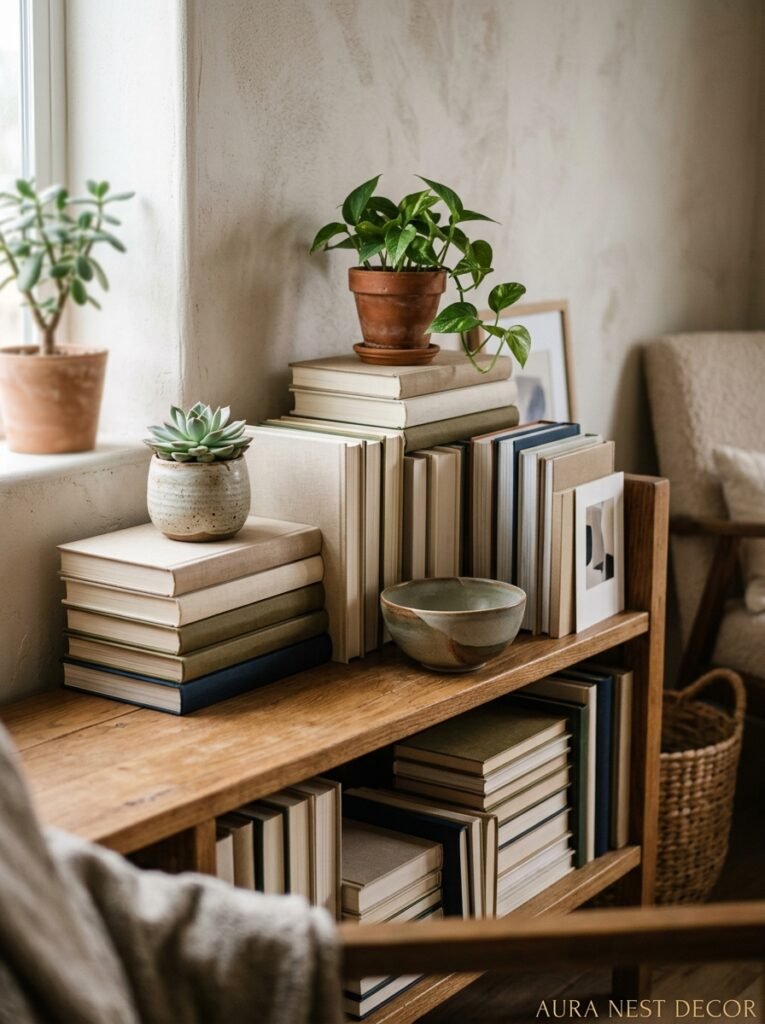
Books are having a moment. Which is funny because books never really went anywhere — they just got competed with by screens and kind of sidelined in living room design for a while. But I’m seeing them everywhere on Pinterest right now, and I think it’s because they do something no other object in a room does.
They tell you who lives there.
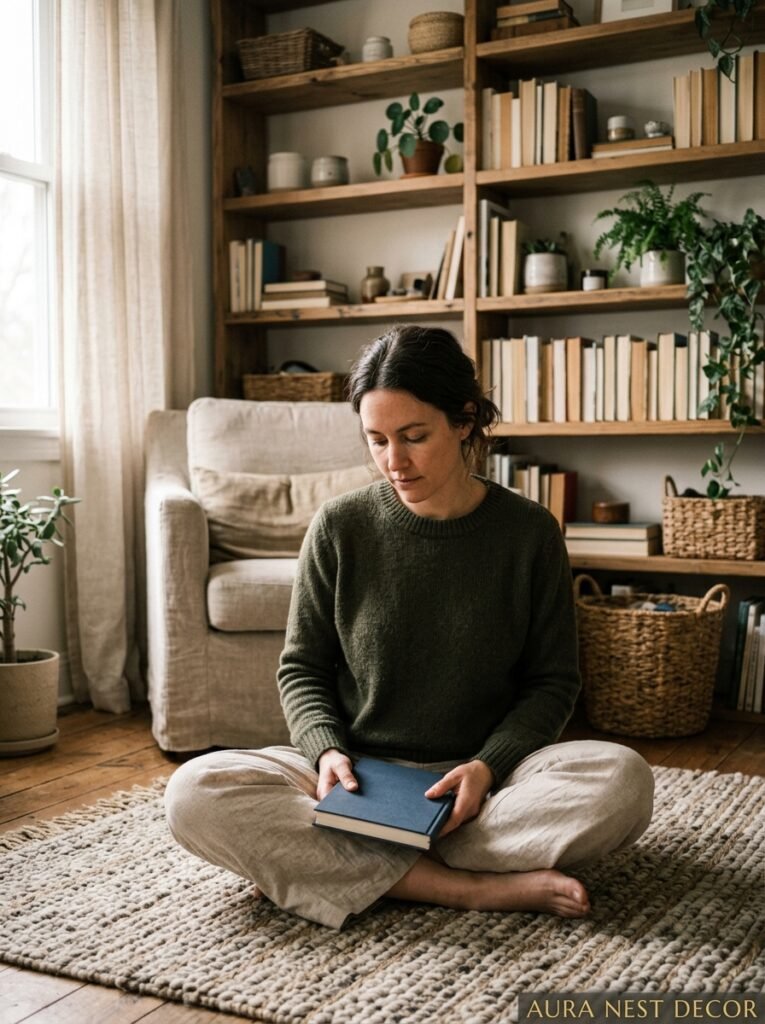
A whole wall of books is a deeply personal thing. And it’s also storage — real, significant storage. If you’re a reader, a good floor-to-ceiling bookcase solves two problems at once. It holds your books, yes, but it also becomes the visual identity of the room. The thing that makes it feel like YOUR room and not a hotel lobby.
Style them honestly. Don’t turn all the books backwards to hide the spines unless you genuinely love that look — I find it a bit cold, personally. Mix in objects: a small vase, a framed photo, a candle. Break the rows occasionally by stacking books horizontally instead of vertical.
Books are also heavy, so make sure whatever you’re putting them on is actually rated for the weight. Especially floating shelves — check the weight limit before loading them up.
—
9. Cabinets with Legs Beat Cabinets Without — Here’s Why
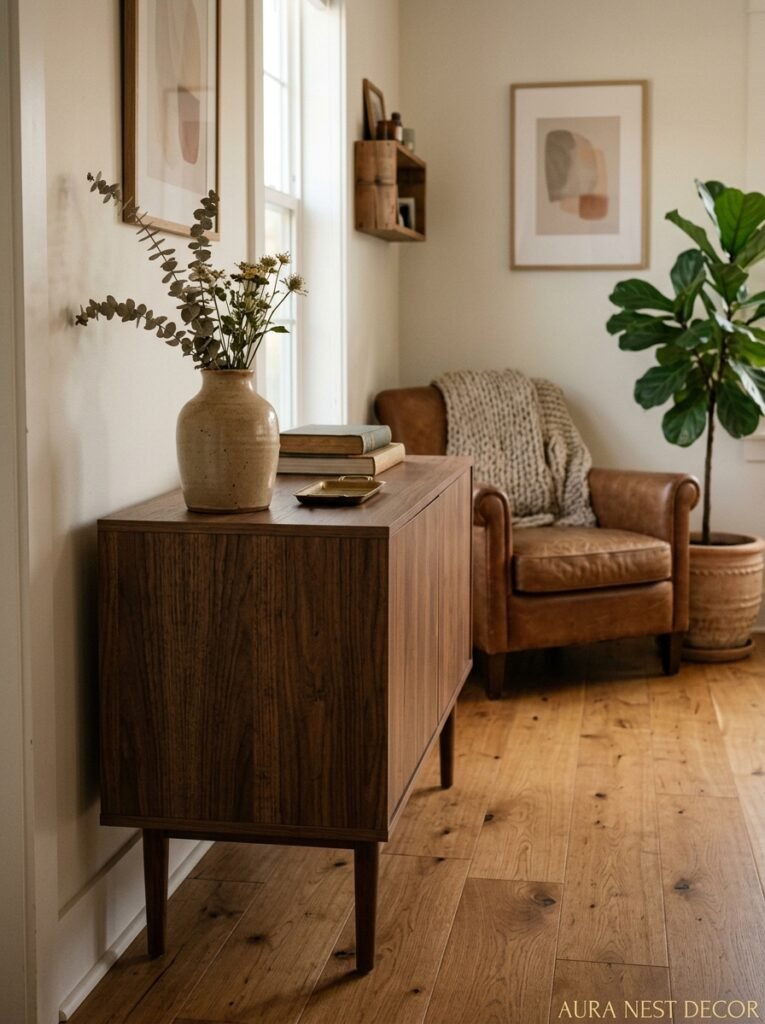
This is a small thing but it makes a real visual difference. Sideboards, media units, occasional storage cabinets — when they have legs rather than sitting flush to the floor, the room feels bigger.
Because you can see the floor underneath. Your eye gets that little gap of breathing room, that strip of floor or carpet, and it registers as more space. It sounds like a minor detail but stand in front of two identical rooms, one with legged furniture and one without, and you’ll feel it immediately.
In a smaller living room especially, or an open-plan space where you’re trying to make a seating area feel distinct without closing it off, legged furniture keeps things airy. A low sideboard with tapered wooden legs and a couple of closed-section doors is probably one of the most useful and beautiful storage pieces you can have in a living room.
—
10. Corner Spaces Are Not Dead Spaces — Stop Treating Them That Way
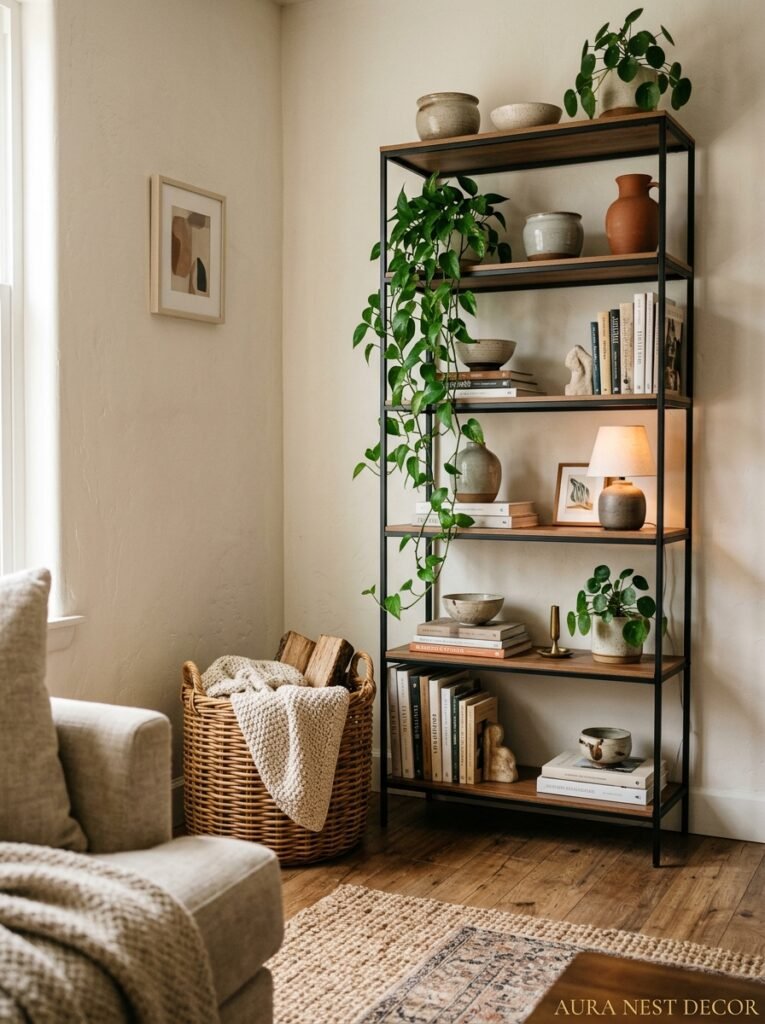
The corner of a living room is almost always wasted. There’ll be a spider plant on a stand, or a lamp that doesn’t quite reach anywhere useful, or nothing at all — just empty carpet and a bit of wall.
But corners can hold a lot. A tall corner shelf unit — the kind that’s specifically designed to fit into a 90-degree angle — is compact and gives you serious vertical storage. Or a round pedestal side table in the corner with a large basket underneath and a lamp on top creates a little functional vignette.
A reading corner with a floor lamp, a comfortable chair, and a small bookcase is another option. Not strictly “storage” in the traditional sense, but it gives a specific HOME to a category of stuff — the books, the reading glasses, the cup of tea — so it doesn’t spread everywhere else.
Don’t let the corners be afterthoughts. They’re often the most characterful part of a room.
—
11. The Drawer Within a Drawer Situation: Making Small Storage Actually Work
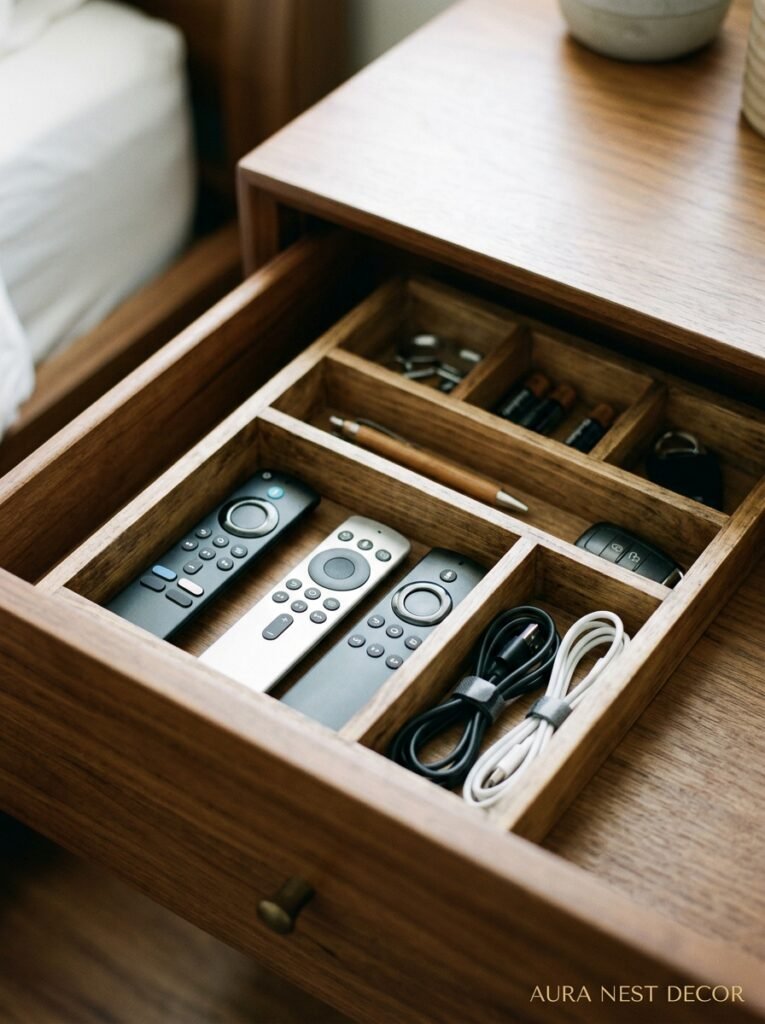
Side tables. Coffee tables. Console tables behind sofas. These are the small furniture pieces that SHOULD be doing more storage work than they usually are.
If your coffee table is just a surface, it’s only doing half its job. Look for ones with a lower shelf, or a drawer, or — back to this again — a lift-up top. Same with side tables. A side table with a single drawer is infinitely more useful than one without, and they’re usually not more expensive. That drawer is where the remote lives. Where the lip balm lives. Where the pen and the random receipt and the chapstick you’ve been looking for lives.
It’s not dramatic. It’s just considered. And those small daily-friction points — where did I put the remote, where’s a pen, where are the coasters — are the things that quietly make a living room feel either calm or chaotic. Getting the small storage right matters as much as the big stuff, maybe more.
—
12. The Thing That Actually Makes Storage Look Good (It’s Not What You Think)
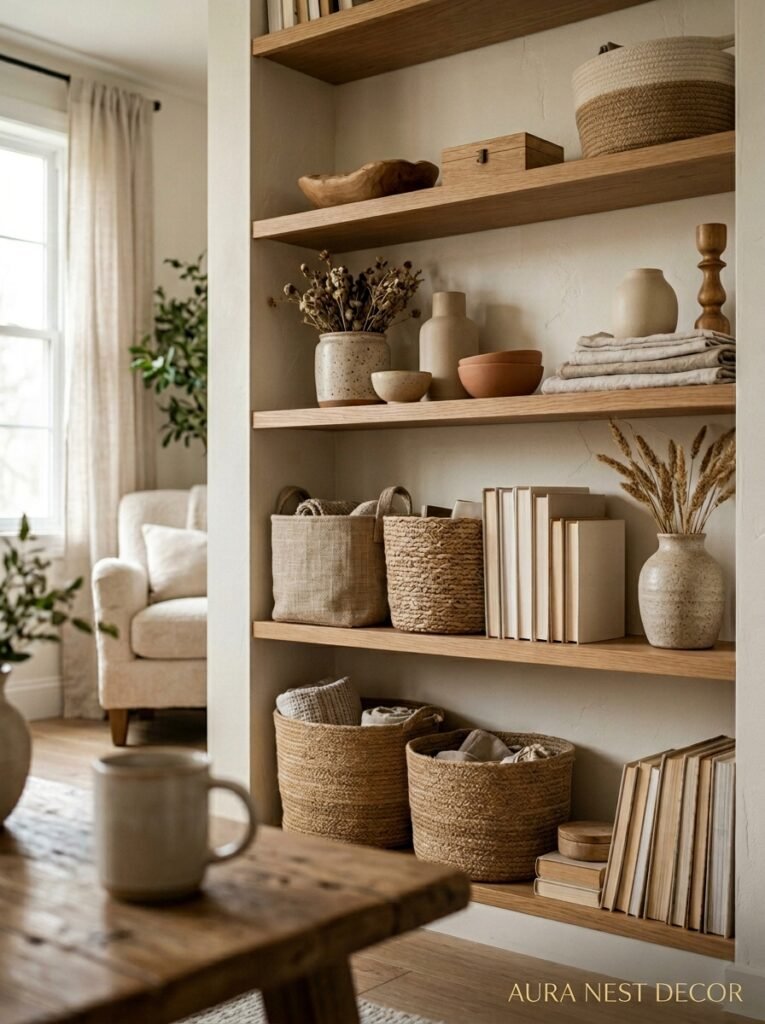
Here’s what I’ve noticed after years of thinking about this: the rooms with the BEST storage rarely look like they have any storage at all. And that’s not because the storage is hidden — it’s because it’s consistent.
Same tones. Same materials repeated in a few places. Baskets in the same weave family. Boxes in the same palette. Closed cabinet doors that match or complement each other. When storage pieces look like they belong together, even a small, densely furnished living room reads as calm.
Mix too many different basket styles, wood tones, box textures, and material types, and the room feels busy even when everything’s technically put away. Your eye doesn’t know where to land. It keeps moving, registering each different thing as a separate item, and that registers as clutter.
So the move is: pick a palette for your storage. Two or three materials max. Wicker and linen. Dark wood and rattan. White and natural. Whatever works with your room. And stick to it. Buy slowly, choose deliberately, and replace the stuff that doesn’t fit.
That’s it. That’s the secret.
—
❓ FAQ
Q: What’s the best living room storage for a really small space, like a studio apartment? A: Go vertical first — floating shelves, tall bookcases, wall-mounted cabinets above sofa height. Then look for furniture that doubles up: storage ottomans instead of coffee tables, sofas with under-seat drawers, and side tables with shelves or drawers. The goal is to keep as much floor visible as possible while using every inch of wall height.
Q: How do I store kids’ toys in the living room without it looking like a playroom? A: Large lidded baskets and ottomans are your best friends — things with lids, so toys disappear completely at the end of the day. A low sideboard with doors works brilliantly too. The trick is making sure the storage is accessible enough that kids can actually get stuff out and put it back themselves, or you’ll be doing it all forever.
Q: Is it worth investing in custom built-in storage for a living room? A: If you own the property and plan to be there long-term, yes — it adds real value and solves the space problem permanently. But if you’re renting or not sure how long you’ll stay, the freestanding IKEA built-in trick (Billy bookcases with trim and matching paint) gives you almost the same look at a fraction of the cost and you can take it with you.
—
💭 Final Thoughts
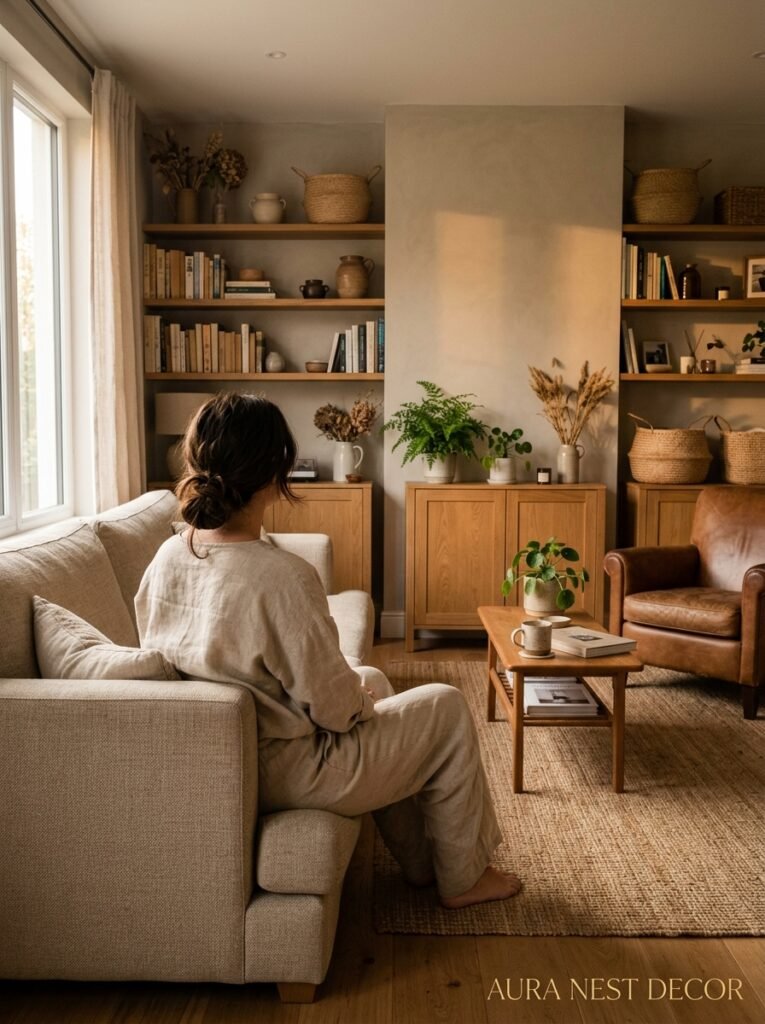
The best living room isn’t the one with the least stuff. It’s the one where everything that’s there has somewhere it belongs. And when you get that right — even partially, even just one corner of the room at a time — the whole space changes how it feels to be in it.
Start with one problem: what’s always on the surface that shouldn’t be? Solve that one thing first. Then the next.
What’s the one thing that always ends up loose and homeless in your living room, no matter how many times you tidy?