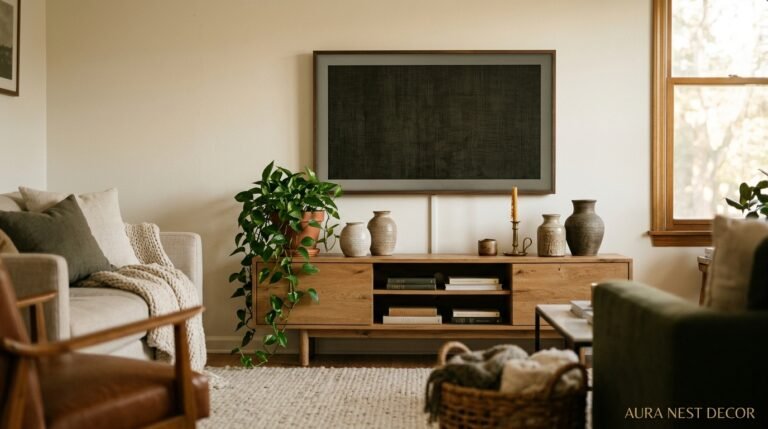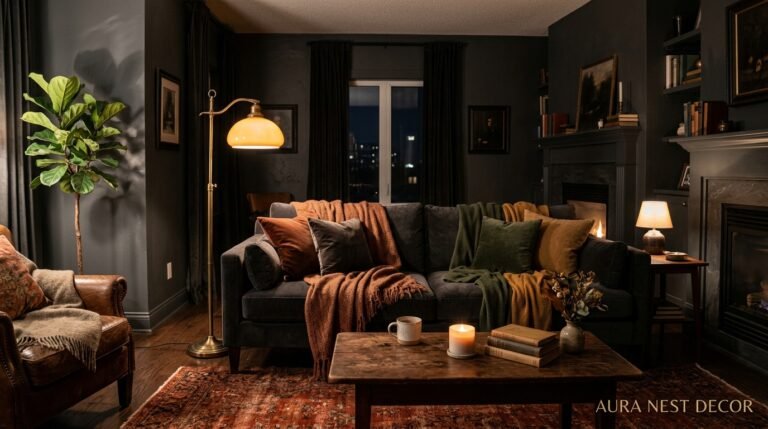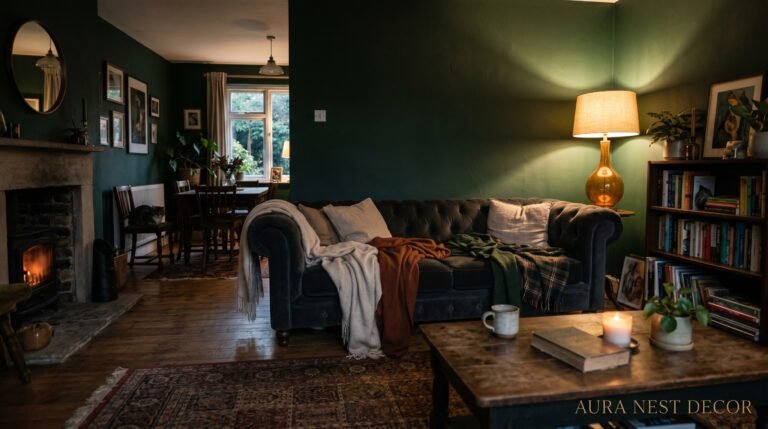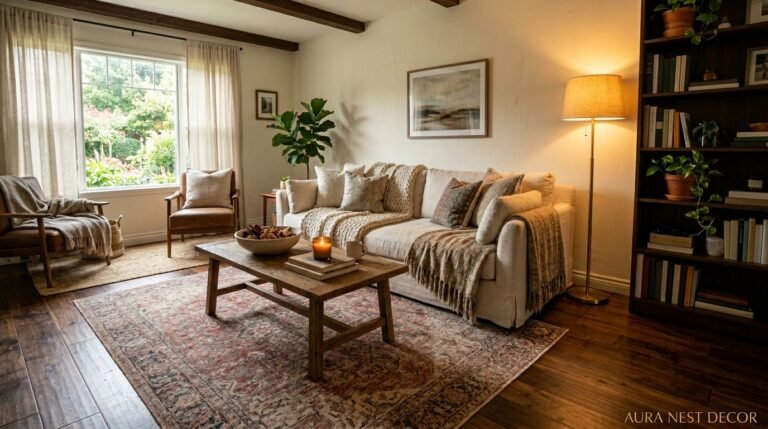
The Brown Living Room You Actually Want to Come Home To (Even If It’s Tiny)
There’s a specific feeling when you walk into a small apartment living room that just works. The proportions feel right. The colors feel warm without being heavy. You don’t immediately start mentally rearranging everything. If your living room isn’t giving you that feeling yet, and if you’ve been circling around the idea of brown — hesitating because it sounds dated, or dark, or like your grandmother’s den in 1987 — this is the article you’ve been waiting for.
Brown is having a moment. A real one. And small spaces might be exactly where it shines brightest.
—
1. Why Brown Stopped Being Boring and Started Being the Smartest Neutral in the Room
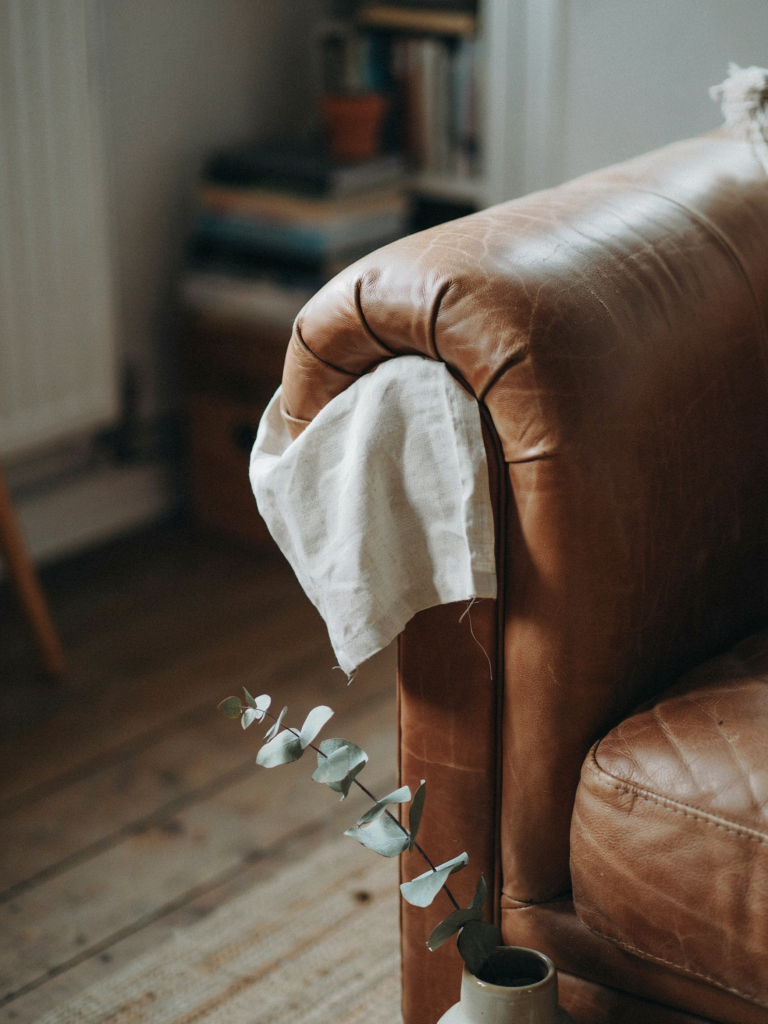
Let’s get something clear upfront: the brown that’s trending right now is not that flat, murky, mid-2000s chocolate that swallowed living rooms whole and asked nothing of you. This is something richer, more considered. We’re talking warm toffee. Aged cognac. The underside of a mushroom. Terracotta’s quieter cousin.
Brown has always been in nature — in bark, soil, dried grasses, river stones — which is precisely why it never actually disappeared. It just waited while we all went through our grey phase together. And now, after a decade of cool, corporate slate and icy linen, we are collectively, desperately craving warmth. Brown delivers that warmth in a way that grey simply cannot.
In a small apartment living room, this matters enormously. Cool neutrals can make compact spaces feel clinical, unfinished, like a waiting room someone forgot to decorate. Brown anchors a room. It tells you this is a place to stay. Whether you’re working with a 300-square-foot studio in Brooklyn or a narrow Victorian terrace sitting room in Bristol, that feeling of intentional warmth is what transforms a space from somewhere you live to somewhere you actually want to be.
The other reason brown is particularly clever in small spaces? It doesn’t fight anything. Layer a rust-red cushion against it. A cream throw. A dusty sage plant. Brown accepts everything and makes the whole room feel cohesive without you having to try very hard. That is a gift when you’re decorating a tight footprint.
“Brown doesn’t compete for attention. It just makes everything around it look better.”
2. The Exact Shade That’s Going to Work Hardest for Your Square Footage
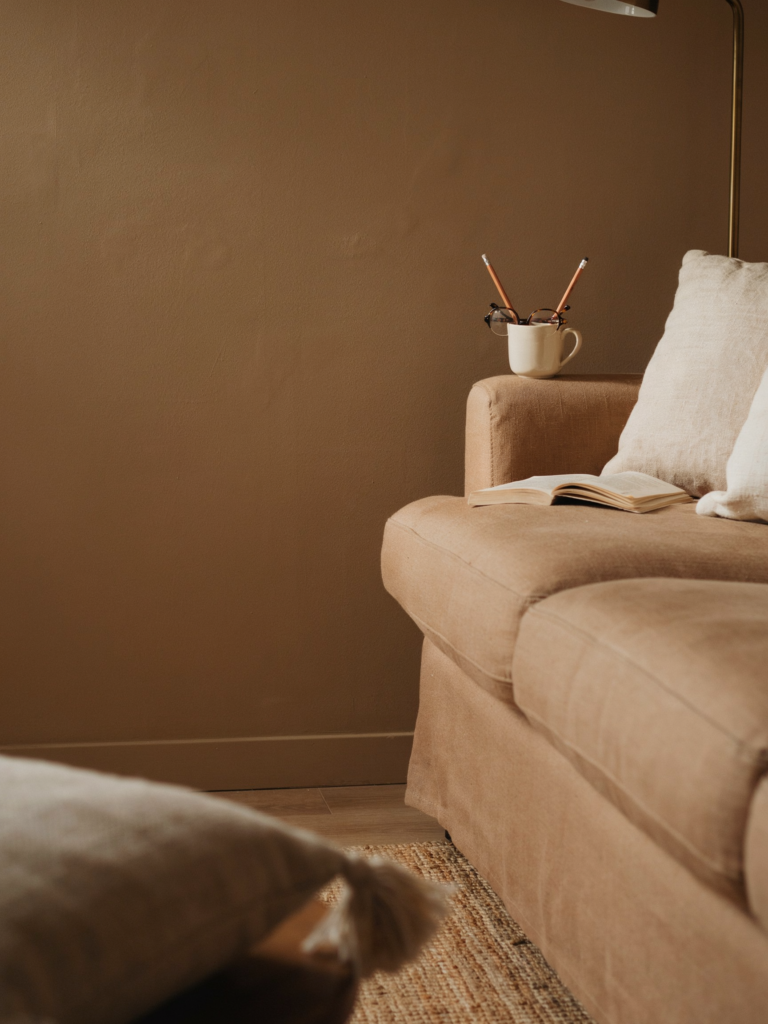
Not all browns are created equal in a small room, and getting this wrong is how you end up feeling like you’re living inside a paper bag.
The ones that consistently perform best in compact living rooms are warm mid-tones — think hazelnut, caramel, and what designers increasingly call “greige-brown,” which sits beautifully between beige and brown without committing too hard to either. These shades hold light well. They shift across the day. At 9am with natural light flooding in, they read almost blonde. At 7pm under the amber glow of a warm-toned lamp, they deepen into something almost burnished. That range of behavior is what makes them so liveable.
Avoid very dark browns for walls in tiny rooms unless you have a specific skill with lighting. Espresso and near-black walnut are stunning but they require windows and layered artificial light to stop a small room from closing in. If you love dark brown, use it as an accent — a deeply stained shelf, a leather ottoman, a single velvet cushion — rather than a dominant surface.
In the UK specifically, where rooms in Victorian and Edwardian conversions often have lower ceilings and smaller windows than their American counterparts, mid-tone browns on the lower half of a wall (think dado rail height) with a lighter cream above can be a game-changer. It adds visual interest without sacrifice.
3. The Furniture Layout Rule That Makes Every Small Brown Living Room Look Intentional
Here is the thing about small living rooms that most people get wrong. They push everything against the walls.
It feels logical — create as much open floor space as possible, give yourself room to breathe. But the effect is actually the opposite of what you want. Furniture lined up around the perimeter of a room looks like the chairs at a high school dance. Waiting. Uncertain. The room feels bigger physically but completely fails emotionally.
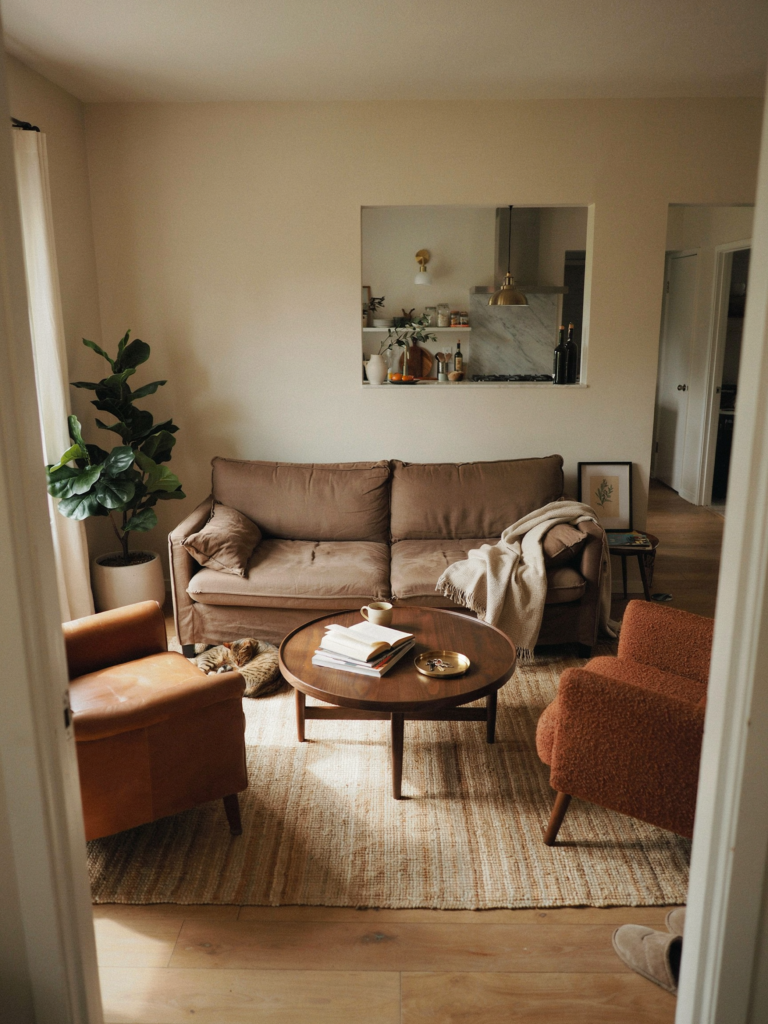
The answer is to float your furniture. Even slightly. Pull your sofa a few inches from the wall. Create a proper conversation zone in the center of the room rather than distributing everything to the edges. In a brown color story, this is especially important because brown works through texture and proximity — you need pieces to be close enough to each other that the warmth can build.
A square coffee table or a round one does better here than a long rectangular one in most small rooms. It allows more circulation paths, and it gives the room a sense of flow rather than one long corridor past the furniture. Pair it with a rug that’s actually large enough — this is the other mistake everyone makes. A tiny rug floating in the center of the room looks apologetic. A rug that anchors the seating group, with at least the front legs of every piece sitting on it, makes the room look complete.
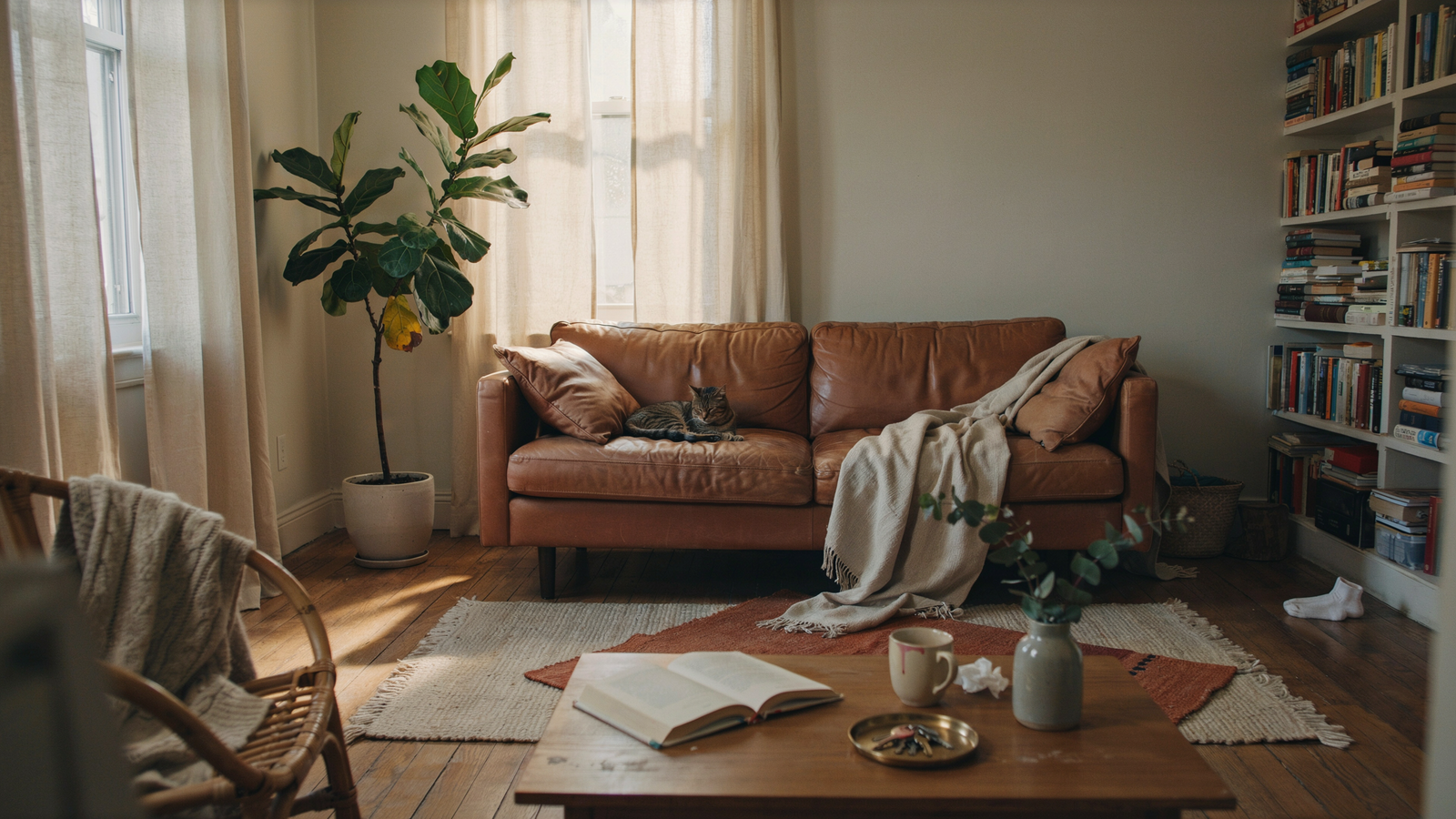
If you have a brown or caramel sofa, a jute or sisal rug in a natural tone underneath it will keep things grounded without adding visual competition.
4. The Lighting Setup That Turns a Brown Room Warm Instead of Dim
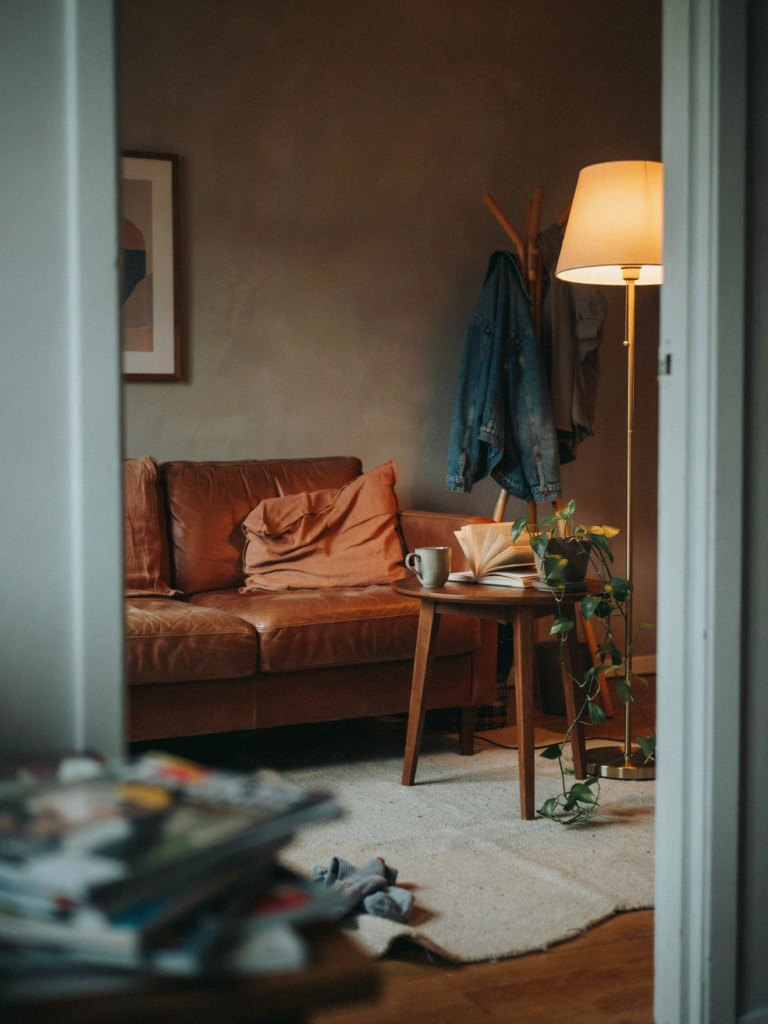
Brown and bad lighting is a disaster. Brown and layered, intentional lighting is a revelation.
The single overhead light — the one that came with the apartment, the one you’ve never replaced — is the enemy. One ceiling fixture lights a small room the way a flashlight lights a campsite: technically functional, atmospherically terrible. In a brown room especially, flat overhead light strips the color of all its warmth and leaves it looking muddy and lifeless.
What you need is three levels. First, ambient: that overhead light is fine as long as it’s on a dimmer and has a warm-toned bulb (2700K or lower — this is not negotiable). Second, task: a floor lamp beside the sofa for reading, or a slim arc lamp if floor space is tight. Third, accent: this is where the magic happens. A table lamp on a sideboard. A small lamp on a floating shelf. Candles on the coffee table on a Tuesday evening just because they make the room feel alive.
“A room lit with four small sources of light will always feel more beautiful than one lit with a single overhead fixture.”
In a brown living room, warm bulbs pull out the red and gold undertones in the color. The walls glow. The leather and wood tones deepen. The whole room feels like it’s leaning in. This is why brown rooms photograph so beautifully at night — and why your guests always feel oddly relaxed there.
5. Textures That Make Brown Richer Without Adding Visual Clutter

One of brown’s great strengths is that it invites texture in a way that cooler neutrals resist. And texture is one of your most powerful tools in a small space — it adds depth and interest without adding physical mass.
Think about a single brown sofa dressed with a chunky knit throw in cream, a velvet cushion in burnt sienna, and a linen pillow in warm white. Three different fabric weights, all in the same warm family, and the effect is layered and considered without looking busy or overwhelming a tight space.
For walls, textured wallpaper in earthy tones — grasscloth, linen-look, or even a simple limewash effect — adds dimension to a brown room without darkening it. The texture catches light differently across the day, meaning your room actually looks slightly different in the morning than in the evening, which makes it feel larger and more dynamic than a flat painted wall ever can.
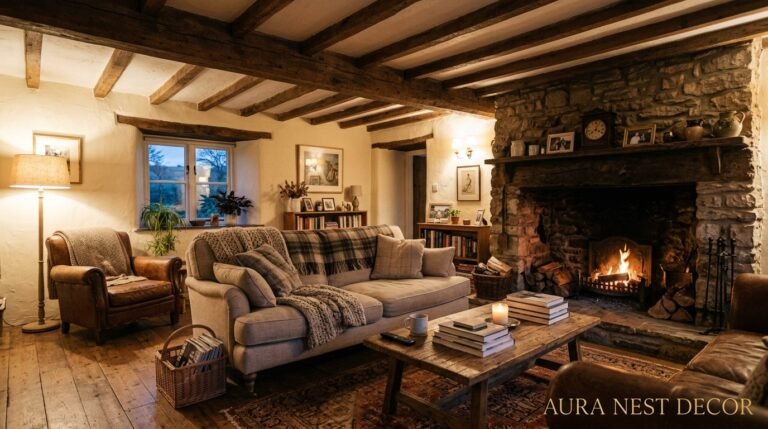
Natural materials are your best friends here. Rattan, cane, raw oak, aged leather. These materials exist in the same tonal family as brown and layering them creates something that feels organic and collected rather than decorated-to-within-an-inch-of-its-life. A rattan side table next to a terracotta armchair next to a raw linen sofa — that’s a room that breathes.
6. The Accent Colors That Make Brown Sing (And the Ones That Kill It Dead)
Brown is generous. But it does have opinions.
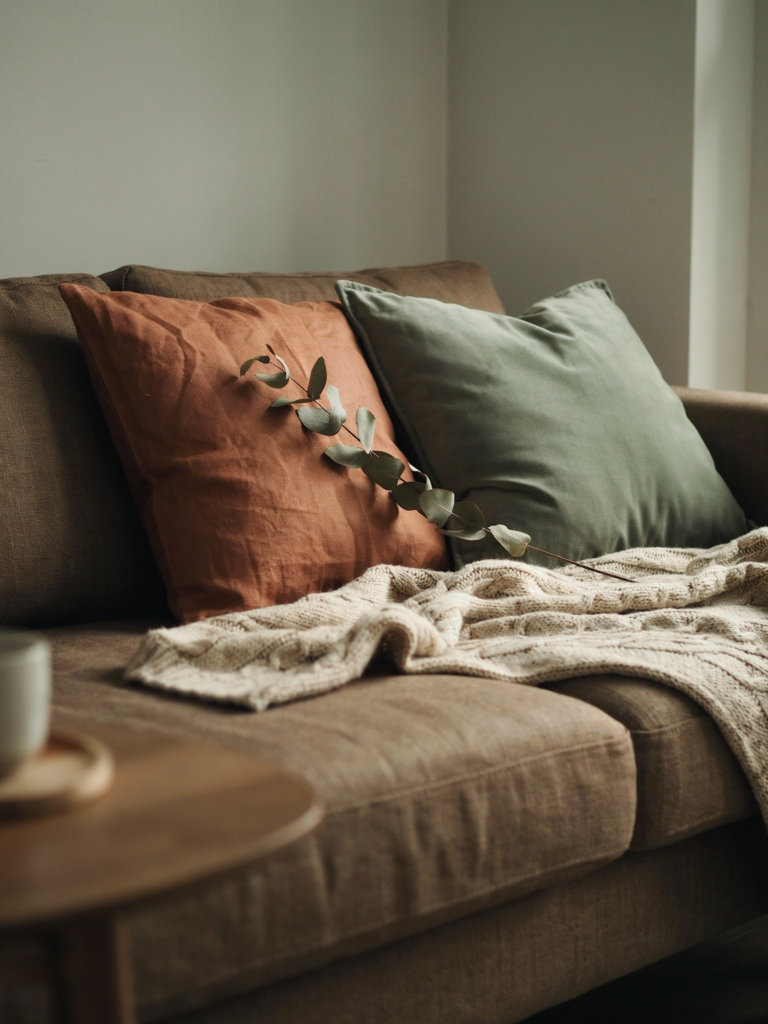
The colors that work alongside brown in a small living room are the ones that either deepen it or contrast it cleanly. Rust and terracotta deepen it — they share the same warm earth undertones and the combination feels rich and intentional. Cream and warm white contrast it cleanly — they give your eye somewhere to rest and stop the palette from feeling heavy.
Dusty sage green is perhaps the best accent color you can add to a brown room. It references nature so directly — the way moss grows on bark, the way dried olive leaves curl — that it looks completely inevitable. Not forced. Not trendy. Just right.
The colors that are harder: cool greens, anything with a blue undertone, stark white (as opposed to warm white). These don’t clash exactly, but they fight. Cool tones pull the warmth out of brown and leave it looking muddy rather than rich. In a small room where you’re trying to build a specific atmosphere, that tension works against you.
Brass and gold as metal accents are extraordinarily effective. A brass lamp base. Gold picture frames. A gilded mirror above the sofa. These warm metals amplify brown’s natural richness and catch the light in a way that chrome and silver simply won’t.
7. The Vertical Trick That Makes Low Ceilings Feel Higher in a Brown Room
Small apartments, particularly in the UK, often come with ceilings that are less forgiving than you’d like. And a warm brown room can sometimes emphasize that lowness if you’re not careful.
The answer is vertical emphasis. Draw the eye upward and the room reads as taller even when it isn’t.
Curtains hung from as close to the ceiling as possible — not from just above the window frame, but from near the ceiling or crown molding — create an immediate vertical pull that adds perceived height to any room. In a brown palette, curtains in warm cream or natural linen hung from ceiling height make a room feel dramatically more spacious than the same curtains hung correctly at window height.
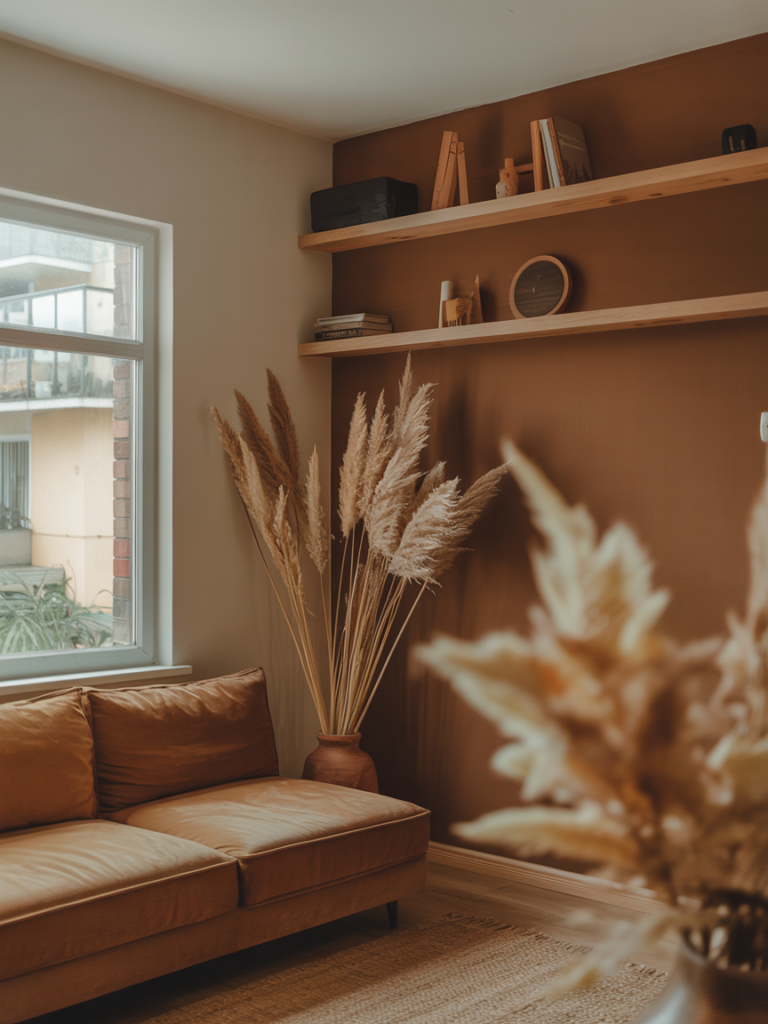
Tall, slim shelving units that reach toward the ceiling do the same work. A bookshelf that stops at chest height feels decorative but goes nowhere. A floor-to-ceiling shelf feels architectural, important, and makes the walls feel taller. Style it with books, plants that trail downward, a few objects with visual weight at eye level, and some breathing room near the top.
“Style a bookshelf like a sentence: some weight at the beginning, some space in the middle, a pause at the end.”
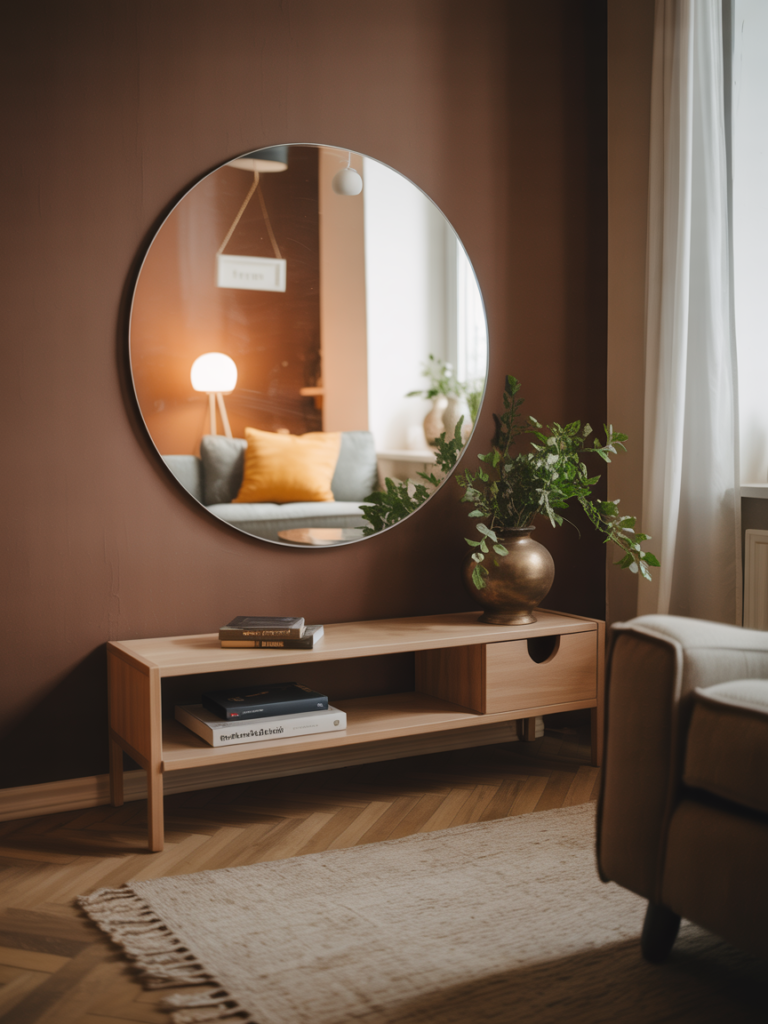
A mirror placed strategically can also perform this trick. Lean a large mirror against the wall rather than hanging it at conventional height — the lower edge on the floor and the frame tilting slightly toward you catches more light and makes the room feel taller, wider, and genuinely larger.
8. How a Brown Room Works When Your Apartment Has Almost No Natural Light
Here is the fear that makes people hesitate: my apartment is dark. Won’t brown make it worse?
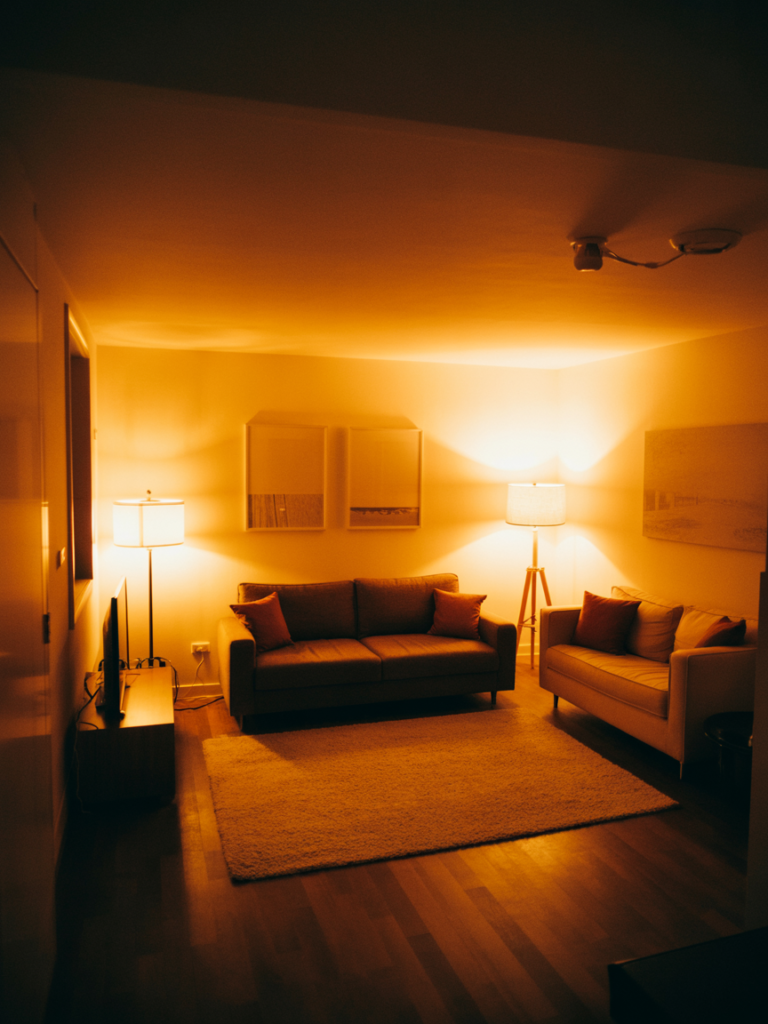
Not necessarily. This is one of the most persistent myths in home decorating. Dark rooms with cool neutrals feel chilly and unwelcoming. Dark rooms with warm brown tones feel intentional, intimate, and cozy in a way that you can actually lean into rather than fight.
The key is leaning in completely. Don’t try to fake natural light in a truly north-facing room. Instead, create an atmosphere that makes low light feel like a feature rather than a flaw. Deep brown walls, warm Edison bulbs, candles, plants with broad leaves that add life — this is the direction to move in. Make your room feel like a beautiful library or a cozy wine bar. Atmospheric rather than apologetic.
What to avoid in a low-light brown room: very dark floors paired with very dark walls and dark furniture. That’s where rooms tip from atmospheric into oppressive. Break it up with cream rugs, lighter textiles, a pale lamp shade. Keep at least one surface in the room genuinely light.
9. The Small-Space Brown Room Hack That Pinterest Keeps Burying (But Shouldn’t)
Paint the ceiling.
Not brown, necessarily. But not white, either.
A soft cream or very pale warm grey on a ceiling — as opposed to pure brilliant white — makes the transition between walls and ceiling softer and much more flattering in a brown room. Brilliant white ceilings create a sharp line that chops the room off visually. A warm cream ceiling lets the room breathe upward, feeling more seamless and actually taller.
If you have a bold brown on the walls and you want to go for it: paint the ceiling the same color but two or three shades lighter. This is an old designer trick that makes rooms feel intentionally curated rather than accidentally decorated. It feels like someone thought about it. Because they did.
In a rented apartment in the US or UK where you can’t paint at all, this effect can be partially replicated with warm textiles draped near the ceiling — macramé wall hangings, ceiling-hung plants, fairy lights strung along the top of shelves. It’s not the same, but it directs attention upward, which does some of the same visual work.
10. The Brown Sofa Question Everyone Is Afraid to Ask Their Interior Designer
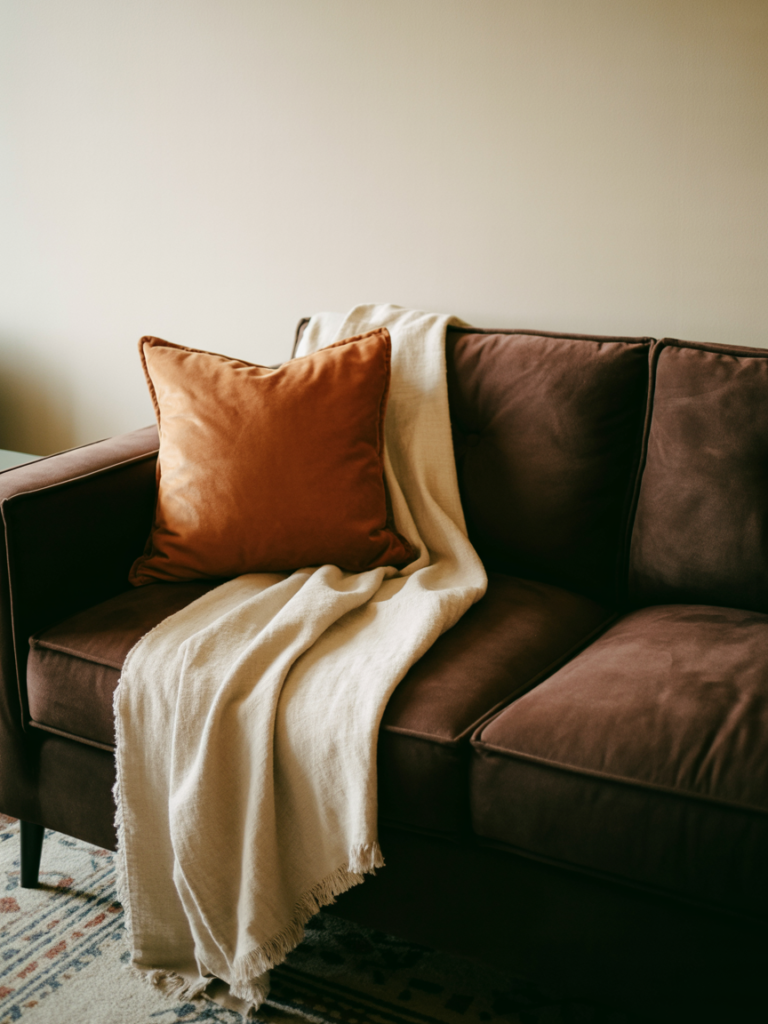
Can you build a brown room around a brown sofa without it looking like everything just… blended together?
Yes. But you need contrast to make it work.
A brown sofa in a brown room needs at least one strong anchor that stands apart. A cream or off-white wall behind it. A patterned rug with a light ground. A gallery wall with light-toned frames. Something that gives the eye a stopping point so it doesn’t just slide over everything in the room without landing anywhere.
The other trick: vary the temperature of your browns. A warm caramel sofa against a cooler mushroom wall, accented with a burnt sienna cushion — these are all “brown” but they read as three distinct tones. The variation is what creates the visual interest. Monochromatic doesn’t mean monotonous; it means working within a single family with enough range to keep things alive.
Leather sofas specifically benefit enormously from soft textile contrast. A leather chesterfield in tan or cognac paired with a deeply textured bouclé throw in cream is one of the most satisfying combinations in home decorating. The different surface qualities make each piece look better.
11. Plants That Belong in a Brown Living Room (And Why They Look Better Here Than Anywhere Else)
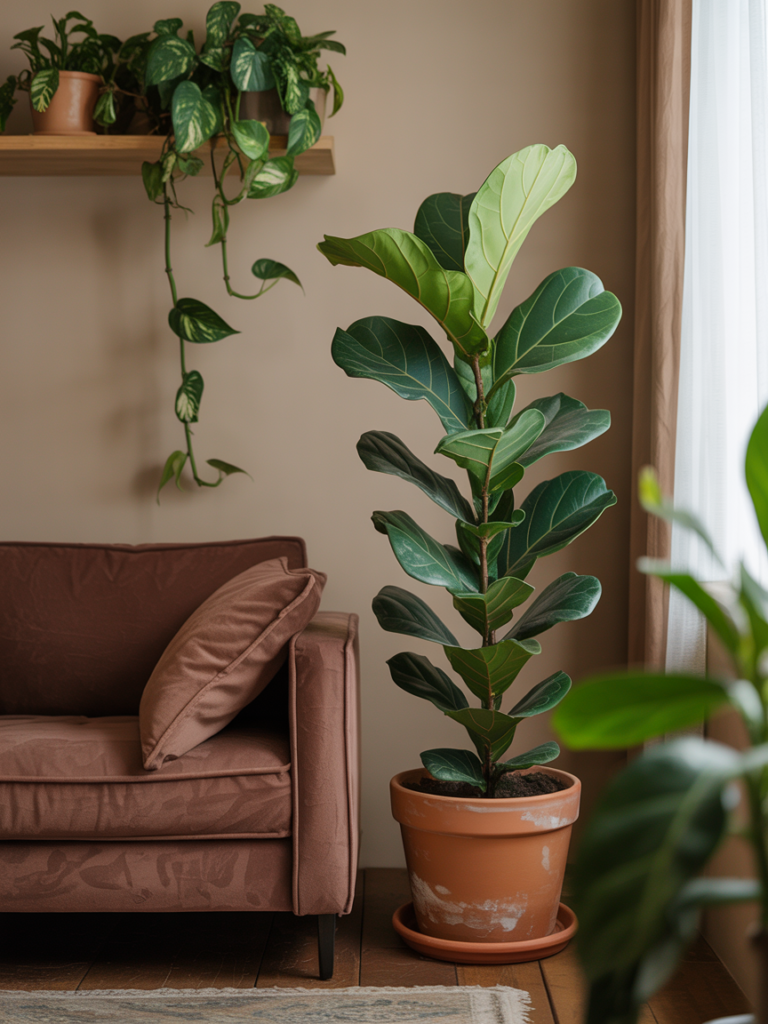
Brown rooms were made for plants. Not as decoration. As partners.
The warm earth tones of a brown palette mirror exactly what’s happening in nature — soil, bark, dried seed pods, autumn light — and plants respond visually to that context by looking more alive than they do against a cool-toned background. It’s not magic. It’s just that nature belongs in nature.
For a small apartment living room, the best choices are plants that add vertical interest or architectural shape without taking up too much floor space. A tall fiddle-leaf fig or snake plant in a terracotta pot immediately becomes a focal point. A trailing pothos on a high shelf softens angles and adds life without occupying footprint. A cluster of small plants — different sizes, same warm tone terracotta pots — grouped on a low shelf or side table creates something that feels curated and lush.
Terracotta pots are the single best investment for a brown room. The orange-red clay tone pulls out the warmth in any brown and adds that dusty, earthy quality that feels simultaneously ancient and completely contemporary.
12. The One Purchase That Will Make Your Brown Apartment Living Room Feel Finished
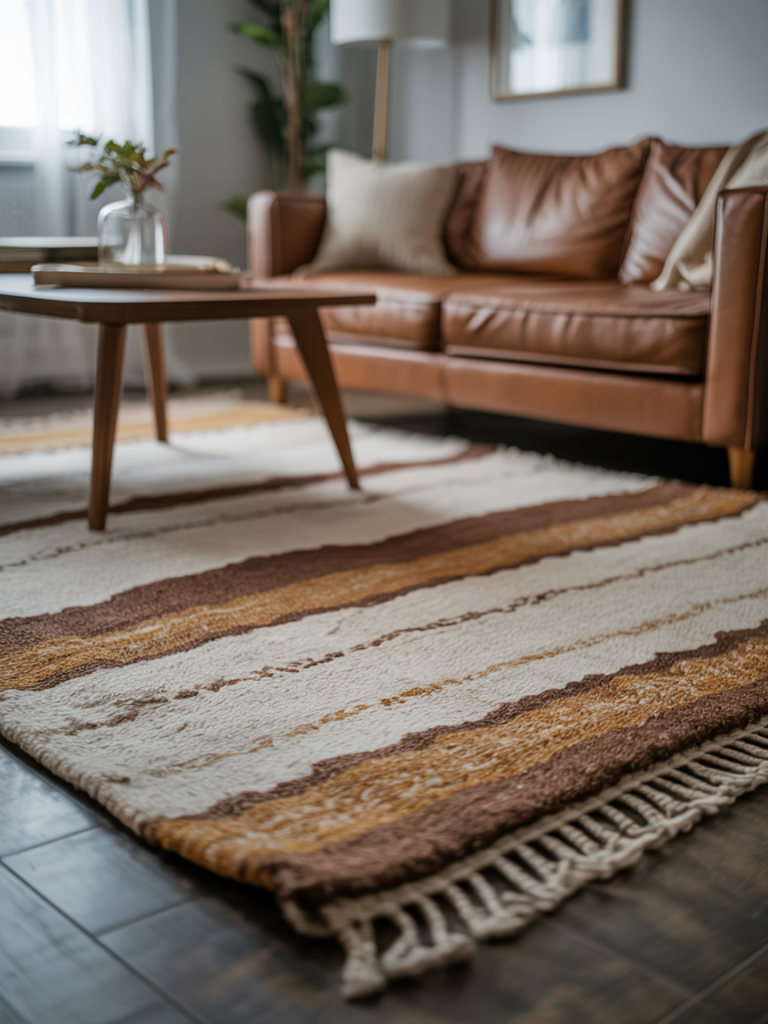
Everything else can be aspirational, gradual, built over time.
But this you should do first: get the right lamp.
A single beautiful table lamp — a warm brass base, a linen or warm-ivory shade, placed at eye level when you’re sitting — will do more for a brown small living room than almost any other change you can make. It creates the anchor that every room needs. Something to move toward, something to sit beside, something that, when it clicks on at dusk, makes the whole room settle into itself.
Place it on a sideboard, a side table, or even a pile of coffee table books on the floor if that’s all you have. Point it slightly away from the center of the room rather than at it. Watch what happens to the brown on the walls when the warm light catches them at that angle.
That glow? That’s what you were looking for all along.
—
🌿 Quick Tips
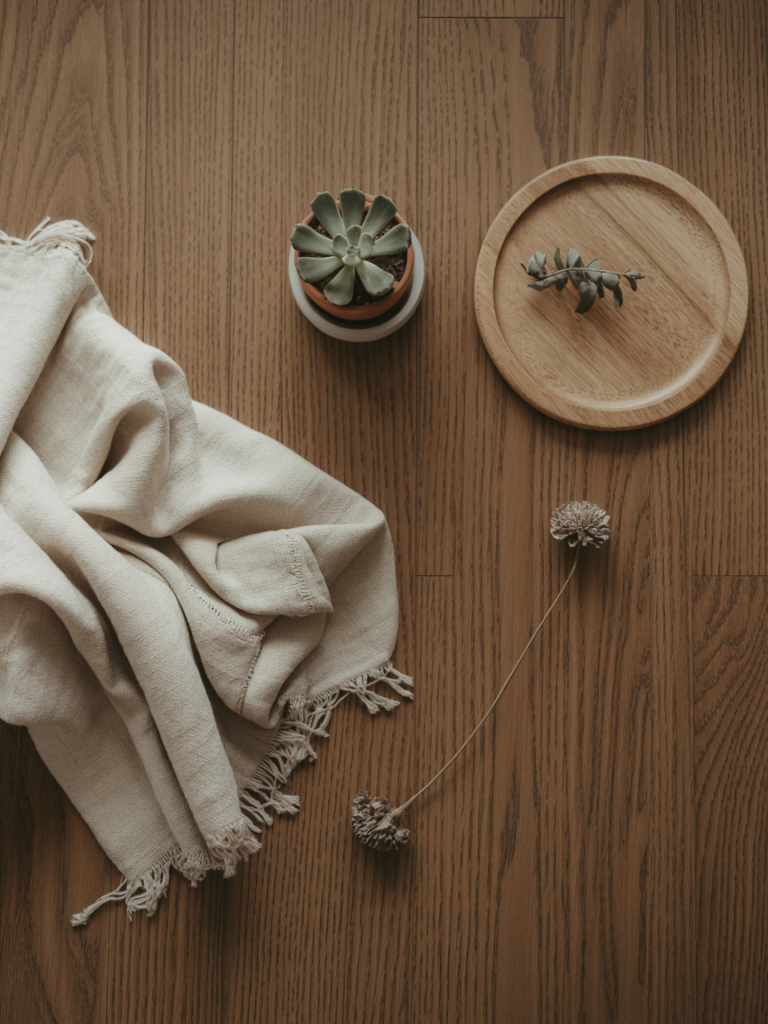
Don’t underestimate the power of layering two different shades of brown. A caramel armchair and a darker espresso shelf in the same room create depth that single-note rooms never achieve.
Rented spaces that can’t be painted can still go brown through major textiles — a large rug, heavy curtains, and a sofa cover do the heavy lifting that paint usually handles.
If your room feels too heavy after adding brown tones, add one cream or natural white element before adding another color — more often than not, that’s the only correction you needed.
Secondhand and vintage shops are the best places to find brown furniture with actual character. A worn leather armchair from a charity shop will always look more interesting than a new one.
Mirror placement matters more in a brown room than in a lighter one — position yours to reflect a window or a lamp, never a wall, and you’ll add genuine light rather than just the illusion of space.
—
❓ FAQ
Q: Will brown make my small apartment living room feel smaller? A: Not if you choose the right tone. Mid-warm browns — caramel, hazelnut, mushroom — hold light beautifully and feel grounding rather than closing. It’s very dark browns paired with poor lighting that shrink a room. Get the lighting right first, then commit to your brown.
Q: What’s the easiest way to add brown to a living room I can’t repaint? A: Start with textiles — a large brown or warm earth-toned rug, a couple of cushions, and a throw. These three elements alone can shift the entire feeling of a room. Add a secondhand wooden side table or a dark-toned lamp, and you’ve built a whole palette without touching a wall.
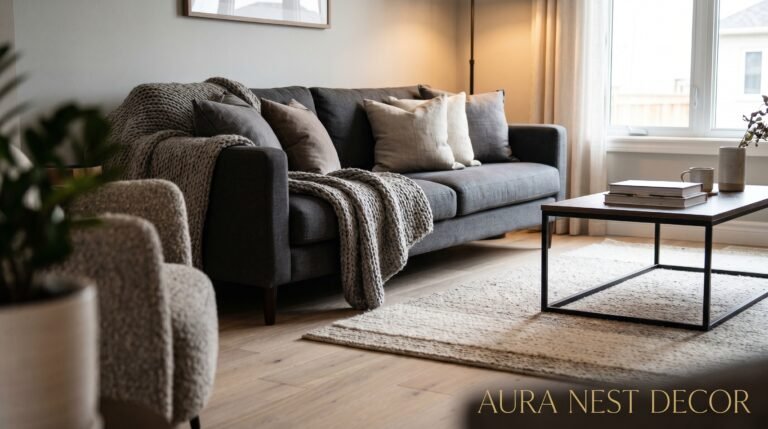
Q: Does brown work with a grey sofa I already own? A: It absolutely can, but you’ll need to warm up the grey with your surrounding choices. A jute rug, mustard or rust cushions on the grey sofa, warm wood accents, and terracotta plant pots will pull the palette toward warmth rather than letting the grey cool everything down. Don’t fight the grey — just surround it with enough warmth that it reads as a cool accent rather than the dominant note.
—
💭 Final Thought
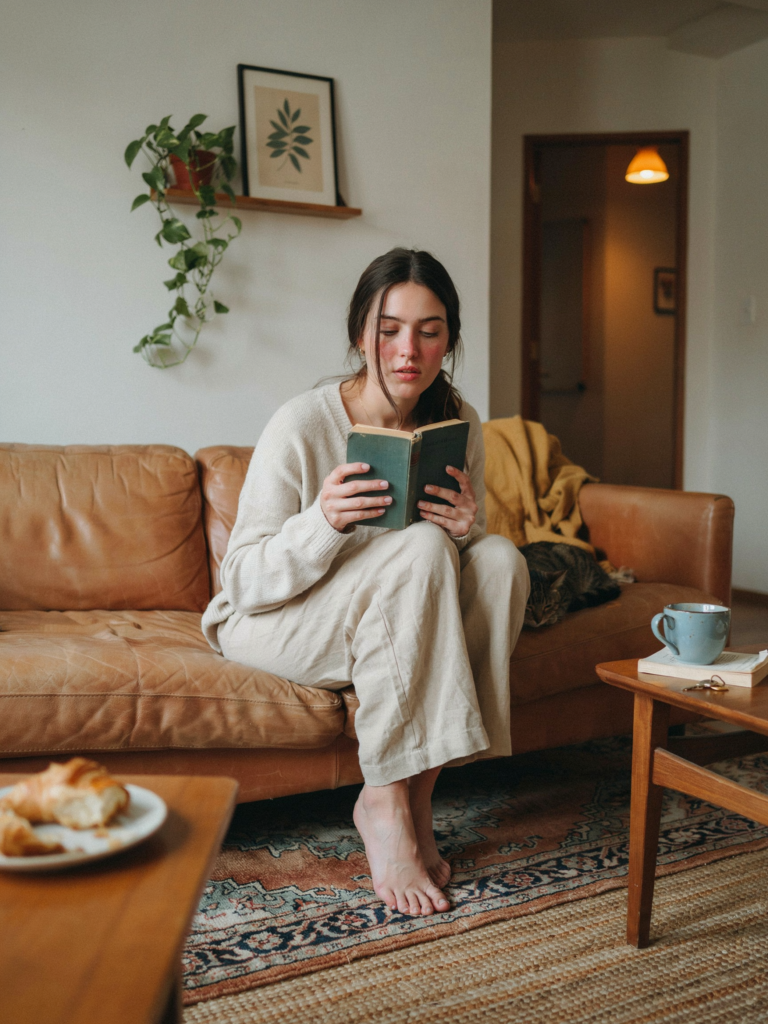
Small living rooms in brown are, at their best, rooms that feel like they were made for exactly you. Not aspirational in the way of a showroom — real, warm, specific. The kind of place where you sit down on a Sunday afternoon with a cup of tea and genuinely don’t want to be anywhere else.
The square footage doesn’t really determine whether a room feels generous. The intention does.
So — which corner of your living room are you starting with first?