Your Brown Couch Isn’t the Problem — It’s the Starting Point
You inherited it, bought it second-hand, or chose it because it was the sensible option. And now it sits in the middle of your apartment living room like a perfectly nice piece of furniture that somehow makes the whole space feel unfinished. Sound familiar?
Here’s the thing nobody says out loud: a brown couch might be the most versatile foundation you can have in a small space. You just have to know how to work with it.

—
1. Why Brown Couches Keep Showing Up in the Most Beautiful Apartments Right Now
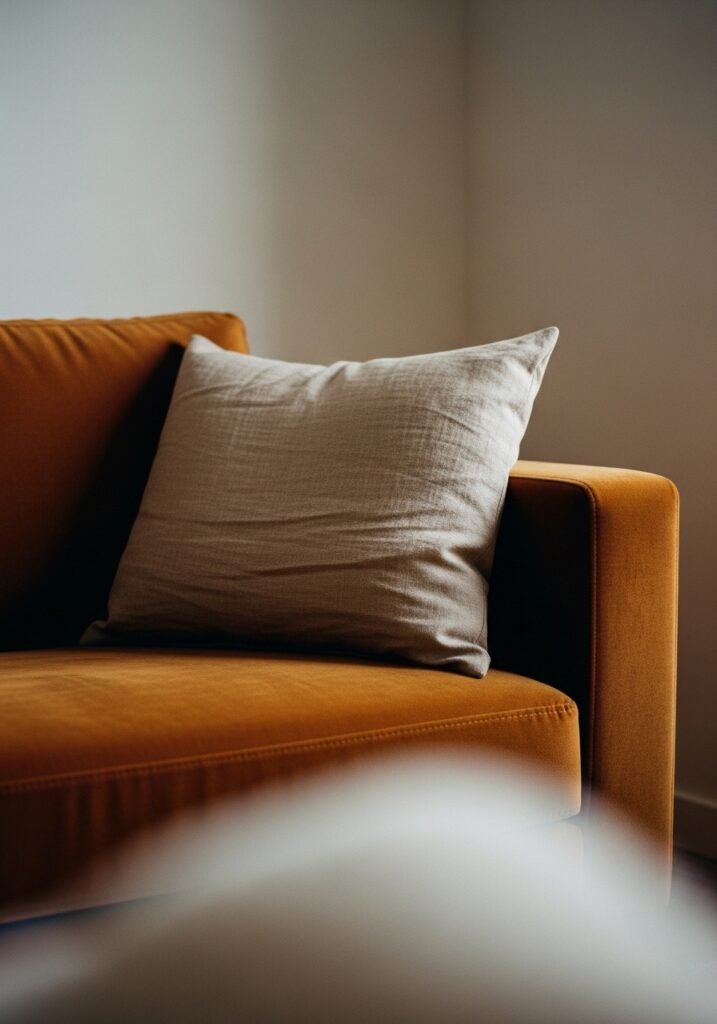
There’s a reason every interior designer worth following has slowly, quietly come back around to brown. Not beige. Not greige. Brown — warm, earthy, unapologetically grounded.
Brown connects a room to the natural world in a way that white and gray furniture simply cannot. It reads as organic. And in a small apartment, where you’re trying to create a sense of calm within limited square footage, organic warmth is everything.
The shift started happening a few years ago when people grew tired of the cold minimalism trend — all bleached wood and gunmetal accents and white everything. Rooms that looked gorgeous in photographs but felt clinical to actually live in. Brown came back because it feels liveable. It feels human.
Your apartment might be rented. The floors might not be ideal. The windows might face a brick wall. But a warm brown sofa can anchor a room with a kind of confidence that lighter furniture struggles to achieve. It says: this is a place where people actually sit, actually rest, actually live.
Don’t fight the brown. Start there and build outward.
“A brown couch doesn’t need to be hidden — it needs to be met with the right colors and the room transforms itself.”
—
2. The Color Combination That Makes Brown Couches Look Intentional, Not Accidental
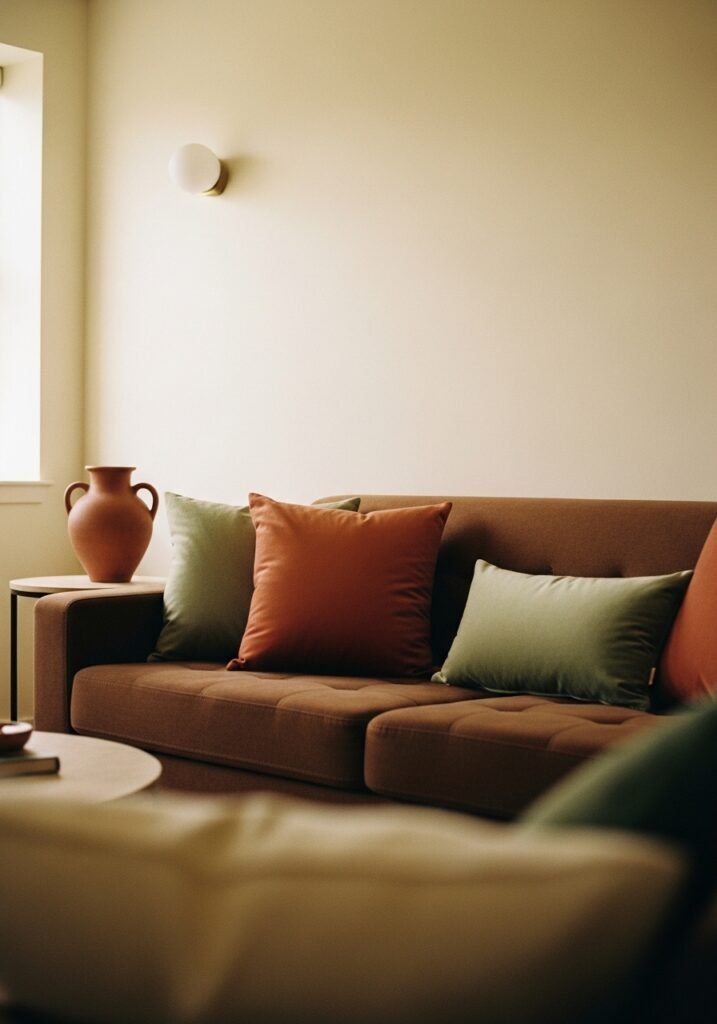
The wrong colors next to a brown couch make it look heavy and dated. The right ones make it look like a deliberate, editorial choice. So let’s talk specifics.
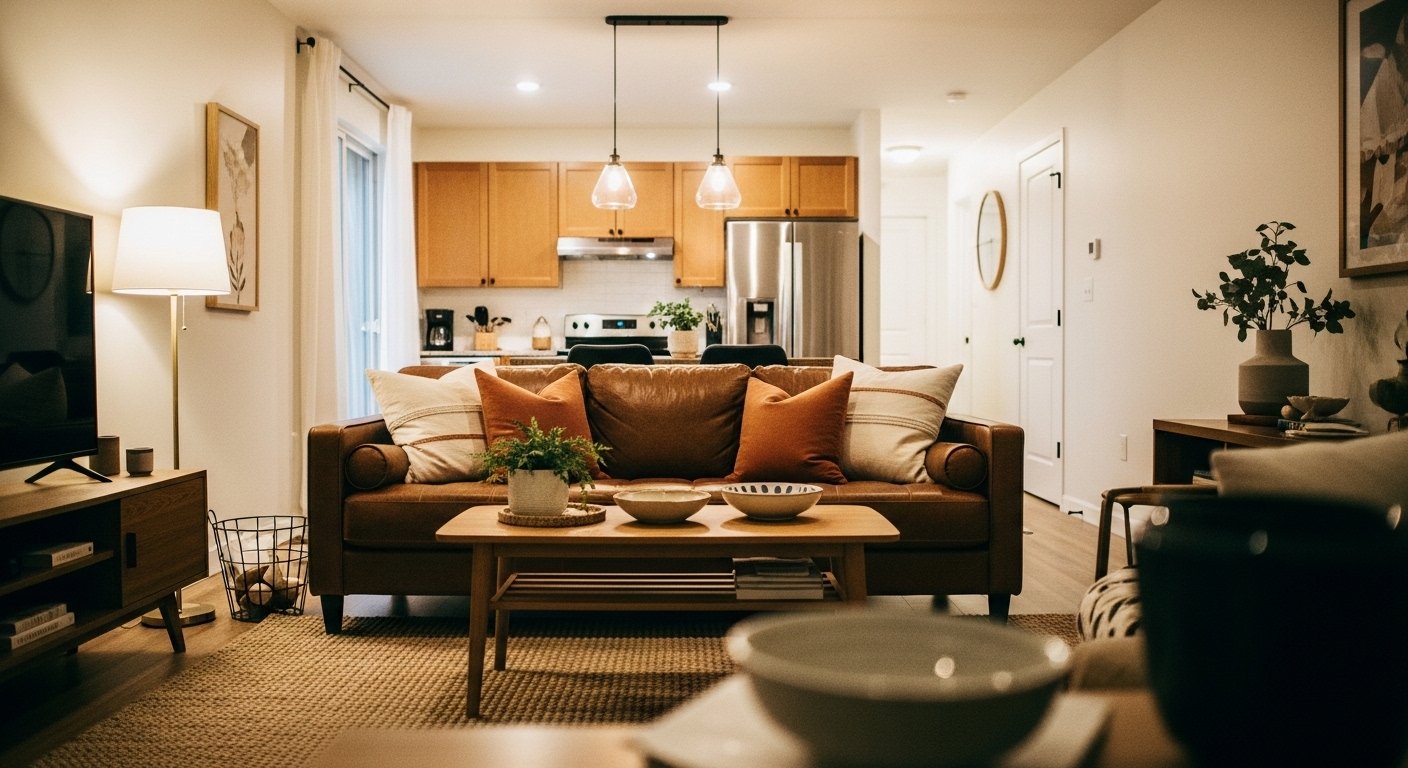
Terracotta is the obvious partner, and with good reason — it sings next to brown in the same way that autumn leaves look beautiful together even though they’re all technically warm tones. A terracotta throw pillow or a clay-toned vase on your coffee table bridges the gap between cozy and sophisticated.
Sage green is the other one. Soft, muted sage — not the bright, almost lime version — gives a brown sofa the kind of contrast it needs without fighting against it. A sage green knitted throw draped over one arm of your couch is enough to make the whole arrangement feel fresh and considered.
Then there’s the surprise option: dusty pink. Or blush. Whatever you want to call it, a muted rose tone alongside a chocolate or caramel brown couch creates something unexpectedly beautiful. It softens the weight of the sofa, adds a little personality, and photographs beautifully for anyone who likes to occasionally document their home.
What to avoid: cool grays, stark whites, and anything with a blue-green undertone. These colors pull away from brown rather than working with it, and the result always feels slightly off without anyone being able to put their finger on why.
—
3. The One Rug Rule That Makes a Brown Couch Float Instead of Sink
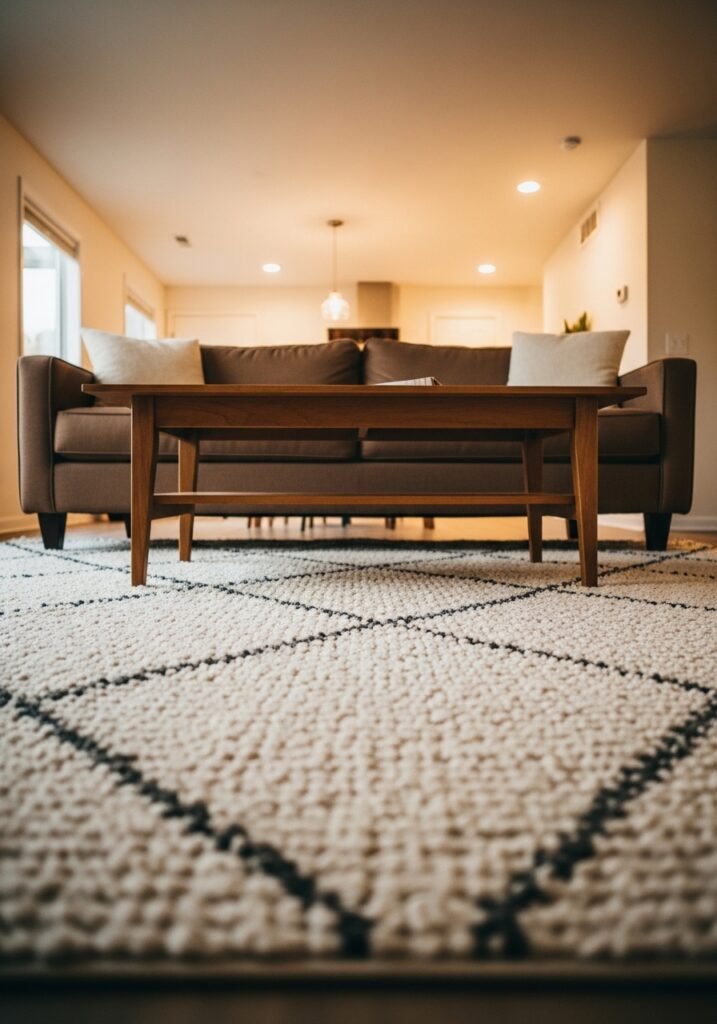
In a small apartment, the rug is doing more work than almost any other element. And with a brown couch, the rug choice can be the difference between a living room that feels cohesive and one that looks like a collection of separate things sharing a space.
Here’s the rule: go lighter than you think you should, and go bigger than you think you can.
A cream, ivory, or warm oatmeal rug under a brown couch lifts the whole arrangement. The contrast gives the sofa definition — its edges become intentional rather than swallowed by a dark floor or a similarly toned rug. In UK apartments where older properties often have darker carpets or deep-toned hardwood, layering a lighter flat-weave rug on top is a technique that works brilliantly.
The size matters enormously. The most common mistake in apartment living rooms is choosing a rug that’s too small, and then the sofa legs dangle off the edge like the furniture is trying to escape. Ideally, the front legs of your sofa should sit on the rug. In a true small-space situation where the whole sofa can’t be on the rug, at least anchor those front legs. That’s what creates the visual sense that everything belongs together.
Texture is your friend here. A jute rug, a boucle loop, a subtle Moroccan weave — all of these add visual interest at floor level so the whole room has depth without needing more furniture or more decor.
—
4. How to Use Throw Pillows Without Making Your Couch Look Like a Department Store Display
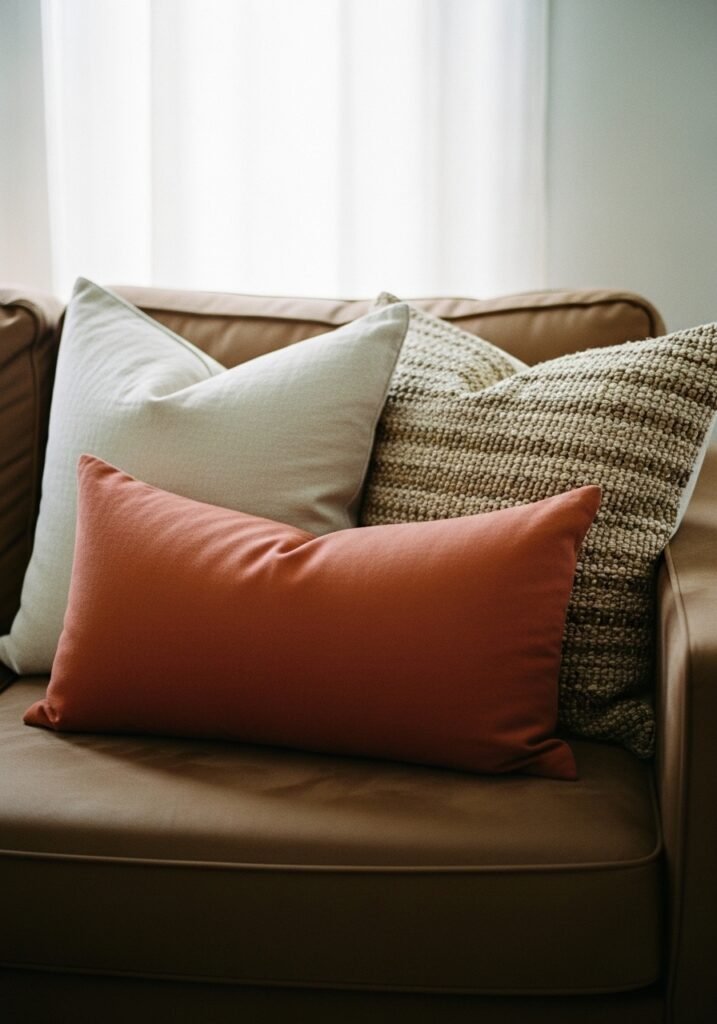
Throw pillows on a brown sofa are the detail that either makes the room or kills it. Too many, too matchy, too obviously coordinated — and the whole thing looks stiff. Too few, the wrong sizes — and the sofa looks forgotten.
Start with texture before you start with color. A chunky knit pillow, a velvet cushion, something with a subtle woven pattern — these create visual richness even if every pillow is in the same color family. The most beautiful couch styling almost always mixes textures first, colors second.
For a brown couch, a combination that works almost universally: one large neutral linen pillow in oatmeal or cream, one medium cushion in a warm accent color (terracotta, rust, mustard, or sage), and one slightly smaller pillow with some pattern or texture interest — a simple stripe, a woven check, or a tufted velvet. Three pillows on a two-seater, four or five on a three-seater. That’s your starting point.
What you want to avoid is the same tone of brown in the pillow as in the sofa. It disappears. It makes the sofa look flatter and smaller. You need contrast, even if it’s subtle contrast.
“Pillows aren’t decoration. They’re the sentence that completes the whole room.”
—
5. The Lighting Trick That Changes Everything About How Brown Looks After Dark
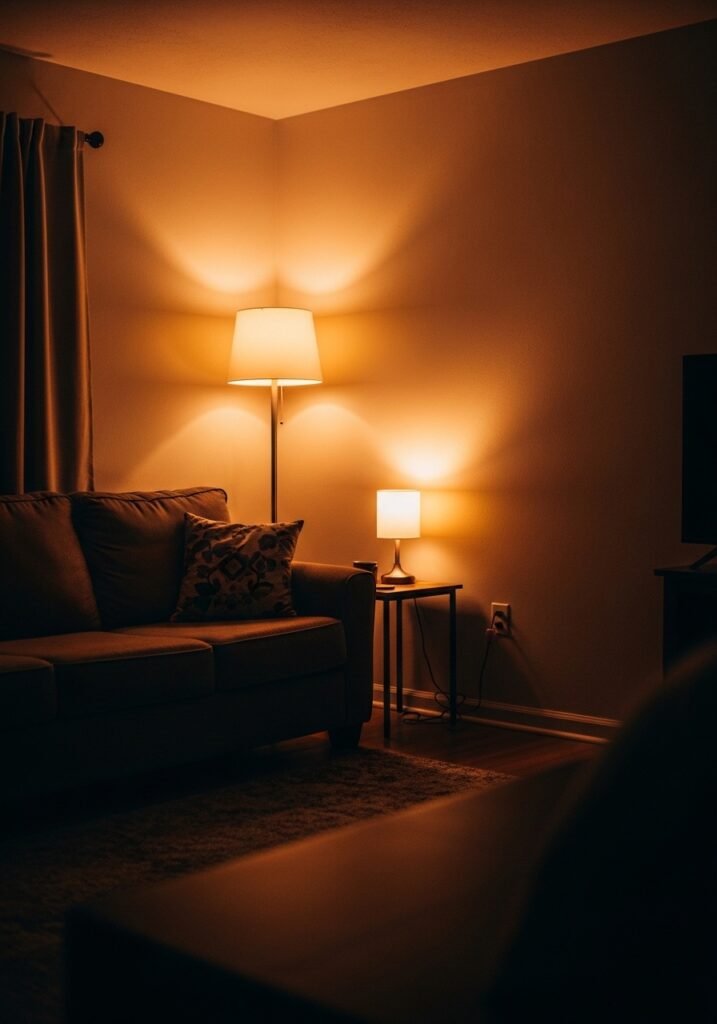
This one is underestimated more than almost anything else in apartment decorating. The overhead light in your apartment living room is probably not doing your brown couch any favors.
Overhead lighting — especially the default ceiling fixtures in most rented apartments — casts a flat, even light that drains warmth from everything in the room. A brown couch under flat overhead light looks muddy. Dull. Tired.
But put a warm-toned floor lamp in the corner behind the sofa, or a table lamp on the side table at eye level, and something shifts. The amber glow at around 7pm — that particular quality of light that feels like the room itself is exhaling — brings out the warmth in brown tones instead of flattening them.
Look for bulbs in the 2700K range. That’s the warm white end of the spectrum, almost leaning amber. In the UK, these are widely available in most lighting shops and even the major supermarkets. In the US, IKEA, Target, and most hardware stores carry them.
Two or three light sources at different heights — a floor lamp, a table lamp, maybe a string of warm Edison bulbs in a corner — will do more for your brown couch than almost any styling choice you make during the day.
—
6. The Plant Situation: Which Greens Actually Look Good Next to Brown
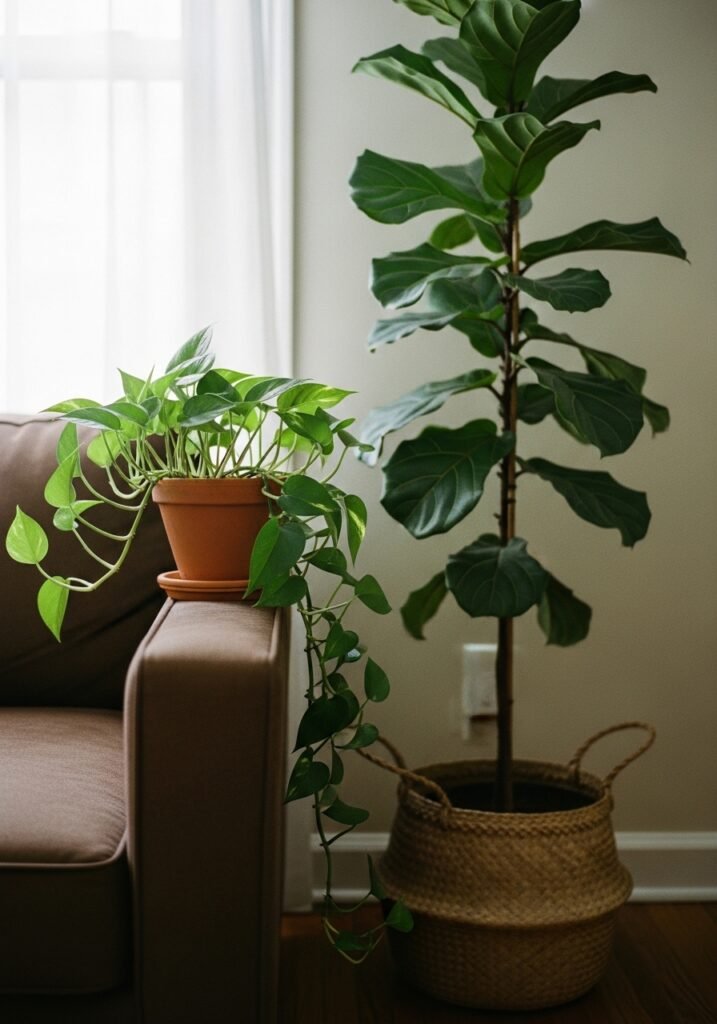
Not all plants work equally well in a brown couch context, and it’s worth being specific rather than just “add some greenery and call it done.”
The plants that look most beautiful near a brown sofa are the ones with structural presence and rich, deep green leaves. A fiddle leaf fig in a corner, even a small one on a plant stand. A trailing pothos on a shelf or bookcase to the side of the sofa, its green vines catching the light. A rubber plant with its almost wine-dark leaves, which somehow looks even more beautiful next to warm brown tones.
What doesn’t work as well: very pale or yellow-green plants, which can feel a little sickly next to brown rather than fresh. Succulents are lovely, but small succulents on a coffee table get lost visually — they don’t have the scale to make a real contribution to the overall feel of the room.
In UK apartments, where natural light can be lower — especially in north-facing rooms or during the long grey months from November through February — choose plants that genuinely tolerate lower light conditions. Pothos, snake plants, ZZ plants. These aren’t compromises; they’re just honest choices that keep the room alive all year.
The pot matters too. Terracotta pots next to a brown couch create a harmonious, earthy palette. White pots provide clean contrast. Matte black pots add a contemporary edge. Choose based on the overall direction you’re taking the room.
—
7. What to Hang on the Wall Behind a Brown Couch (And What Looks Painfully Wrong)
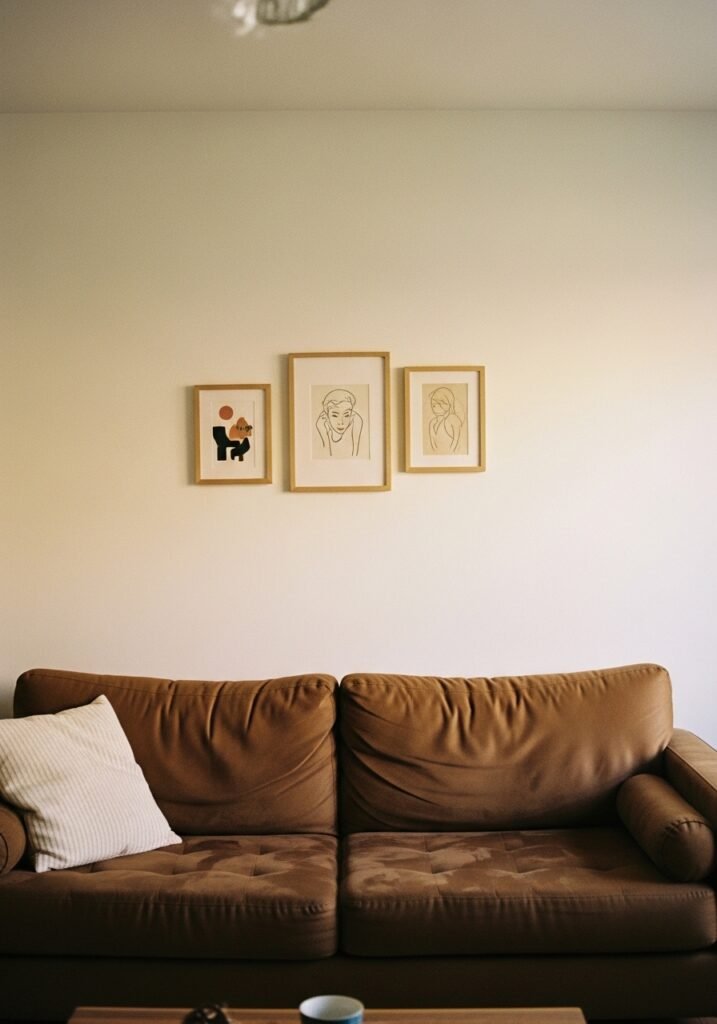
The wall behind your sofa is the most visible piece of real estate in your living room, and getting it right sets the tone for the entire space.
With a brown couch, the wall art that works best tends to have warmth in it without being matchy. Botanical prints in warm greens and ochres. Abstract art with a palette that includes rust, cream, and terracotta. A single large print in a simple frame — abstract, gestural, not too literal — can make a brown sofa feel like it belongs in an editorial spread.
What to avoid: anything very cool and contemporary in a stark blue or gray tone. The disconnect between the warmth of the couch and the coolness of the art creates a visual tension that’s hard to resolve.
Gallery walls work well with brown couches, but only if the frames have some warmth. Dark wood frames, or natural wood frames, or even warm brass frames — these all connect to the tonal world of your brown sofa. Silver and chrome frames feel like they belong in a different room.
“The art you hang is the personality of the room. Let it be specific. Let it be yours.”
A large mirror is always an option, particularly in US and UK apartments where space is tight. A round mirror in a warm wood or rattan frame adds light and depth without competing with the sofa. Rectangular mirrors with dark wood frames lean more formal. Both work. Neither is wrong. Choose based on how the rest of the room feels.
—
8. Coffee Table Choices That Don’t Fight the Brown Couch for Attention
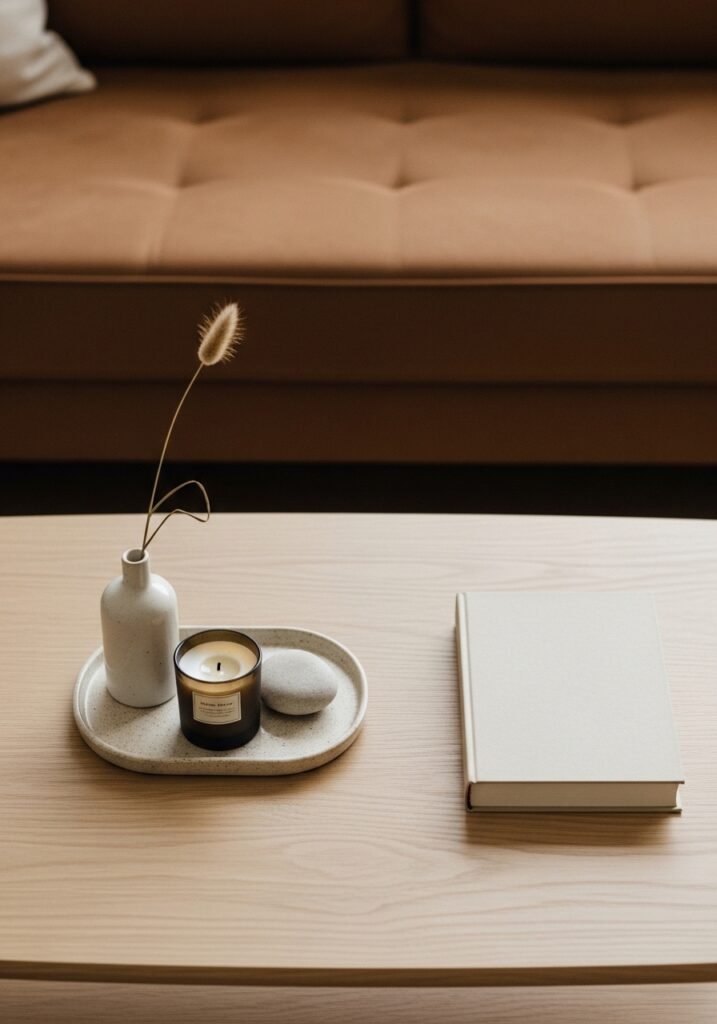
The coffee table in front of a brown sofa needs to create contrast without creating competition. It’s a supporting character, not a lead.
Light wood or natural wood tones work beautifully — think pale ash, light oak, or anything in a honey or blonde tone. This creates a gentle contrast with the dark warmth of the couch without the room feeling fragmented.
Glass coffee tables are popular for small apartments because they take up visual space without filling the room with mass — you see through them, which makes the space feel larger. With a brown sofa, a glass table with brass or warm-metal legs is a combination that’s been appearing all over Pinterest lately, and for good reason. It’s light, it’s elegant, and it doesn’t compete.
Dark coffee tables — black or very dark espresso — work only if the rest of the room has enough lightness to balance them. Cream rug, lighter walls, some natural light. Without those balancing elements, a dark coffee table in front of a brown sofa can make the whole room feel heavy in the lower half.
Style the surface simply. A tray to contain smaller items, one or two books, something with a little height — a small vase with dried flowers or a sculptural object. That’s genuinely all you need.
—
9. The Small Apartment Trick: Using One Accent Chair to Make the Whole Room Click
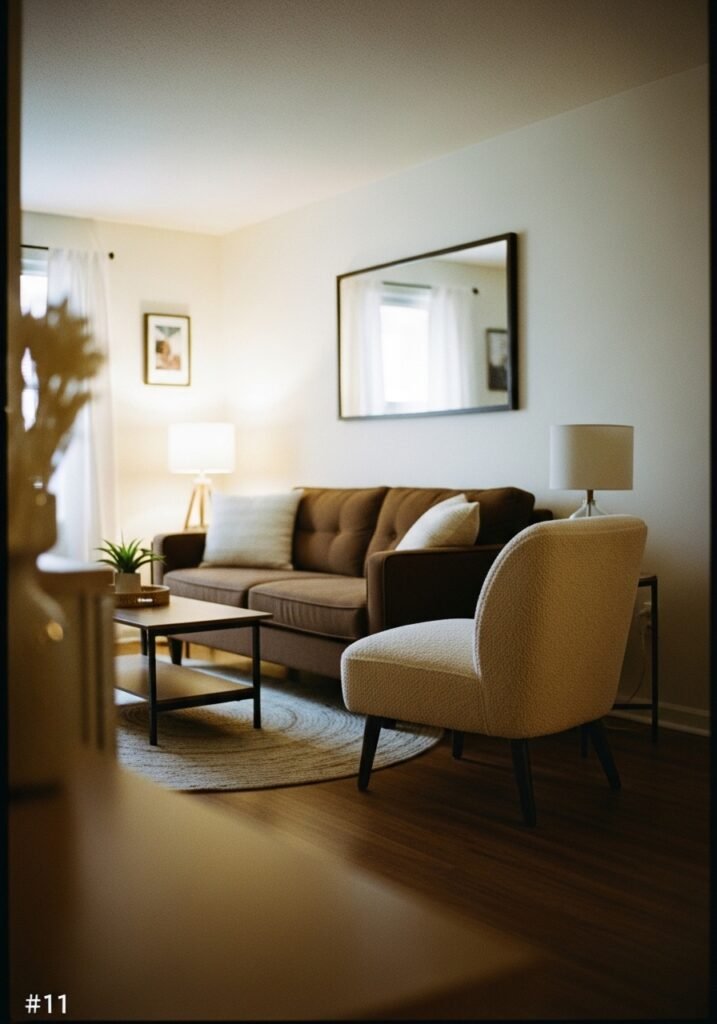
If your apartment has space for a single accent chair in the living room alongside your brown couch, use that chair to carry your accent color. This is how designers create rooms that look like they’ve been professionally styled.
The chair doesn’t need to match anything. In fact, it’s better if it doesn’t match exactly. A mustard yellow accent chair, a sage green linen chair, a rust velvet occasional chair — any of these will act as a color anchor that the eye moves toward and then back from, creating a circuit around the room that makes everything feel intentional.
Woven chairs — rattan or cane-backed chairs — work particularly well in small apartments with brown sofas because they add texture and lightness simultaneously. They don’t feel heavy, they bring a natural material into the mix, and they photograph beautifully.
In a true one-room situation or a very small apartment, even a pouffe or an ottoman in an accent color does some of the same work. It’s not the same visual impact as a full chair, but it gives the eye somewhere to land that isn’t the sofa.
—
10. The Curtain Decision That Either Opens Up Your Space or Closes It Down
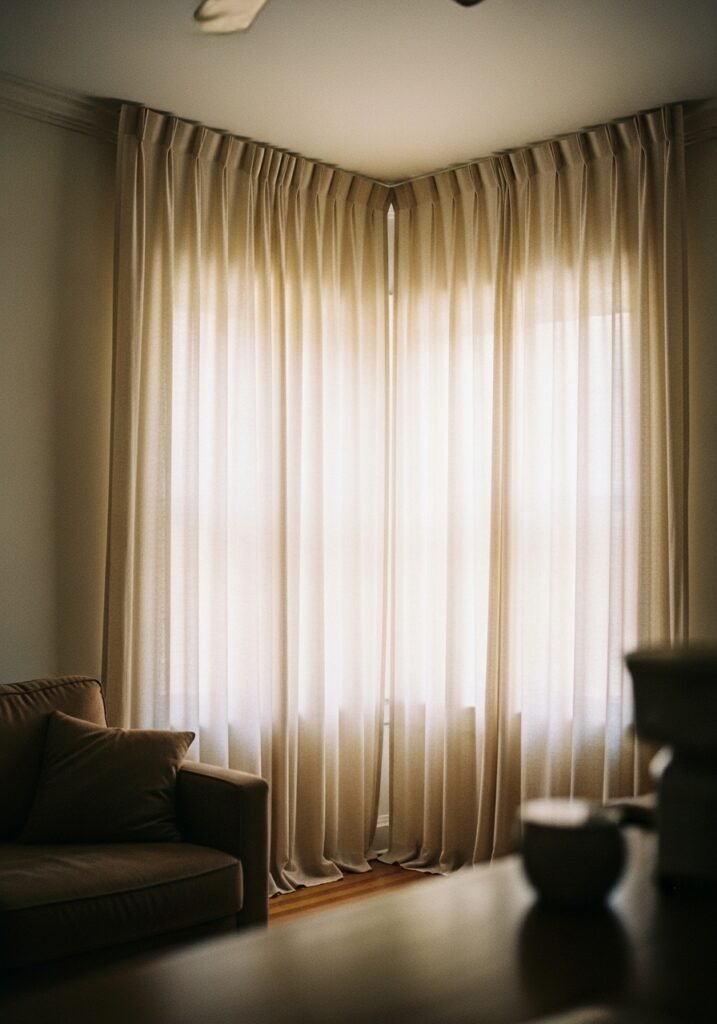
Curtains in a brown couch apartment are high-stakes. They cover a significant portion of wall, they affect the light quality dramatically, and they set the formality level of the whole room.
For a brown sofa, linen curtains in natural, off-white, or cream tones are the single most reliable choice. They add texture, they let in filtered light, they soften the walls, and they work with the warmth of the sofa rather than against it. In a small apartment, hanging them as close to the ceiling as possible and letting them drop to the floor makes the room feel taller and more spacious — this is one of those practical tricks that makes a genuine difference.
Darker curtains — deep green, terracotta, or even a warm charcoal — can be stunning with a brown sofa if the room gets enough natural light and the ceilings are a reasonable height. In darker UK apartments where light is precious, though, it’s usually worth sacrificing drama for brightness.
Patterned curtains are a more advanced move. If you’re going for it, keep the rest of the room calm. A bold botanical print curtain is a statement. Treat it like one.
—
11. Shelf Styling That Supports the Brown Couch Without Looking Like a Pinterest Cliché
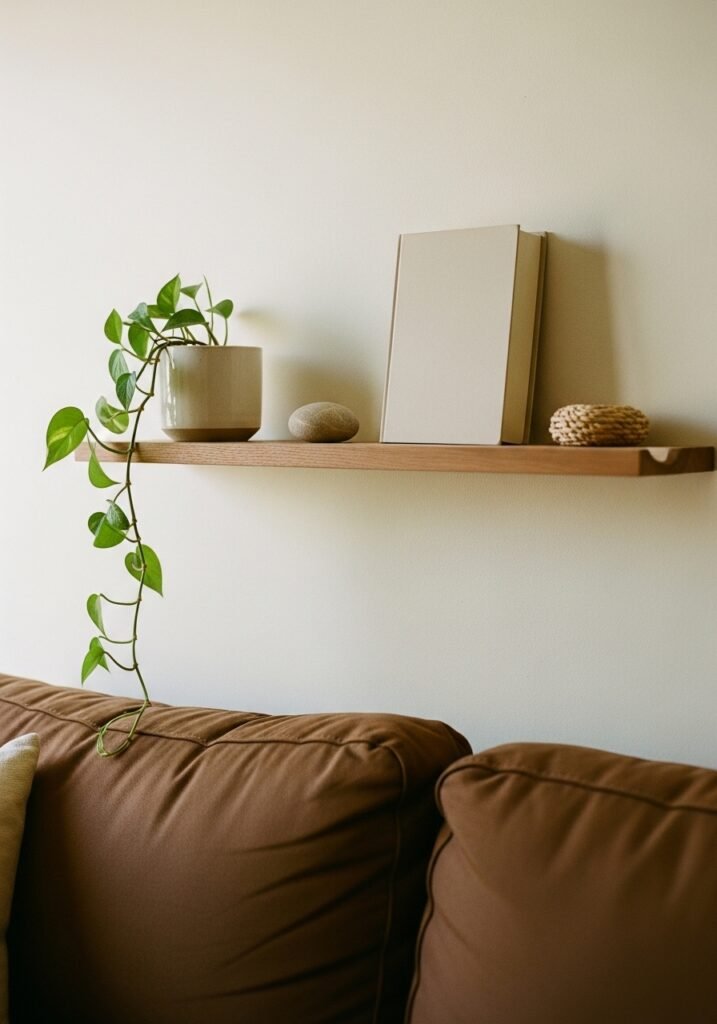
If you have bookshelves or floating shelves visible from the seating area, the way you style them either reinforces the warmth of the room or creates visual noise.
Books are the backbone — arrange some by color, let others be more organic. Books in warm tones (creams, browns, ochres, deep reds) visually connect to the sofa in a way that stacks of bright primary-colored spines don’t.
Objects matter. A few sculptural pieces — a ceramic bowl, a simple vase in a muted tone, a wooden object — create rest points for the eye. The mistake most people make is covering every inch of shelf space. Leave gaps. Negative space on a shelf makes the objects you do have look considered rather than accumulated.
Plants on shelves, as mentioned earlier, add life without requiring floor space. A trailing plant at the edge of a shelf that reaches toward the sofa creates a soft organic connection between the furniture and the walls.
—
12. The Finishing Detail Nobody Mentions: Your Scent Changes How the Room Feels
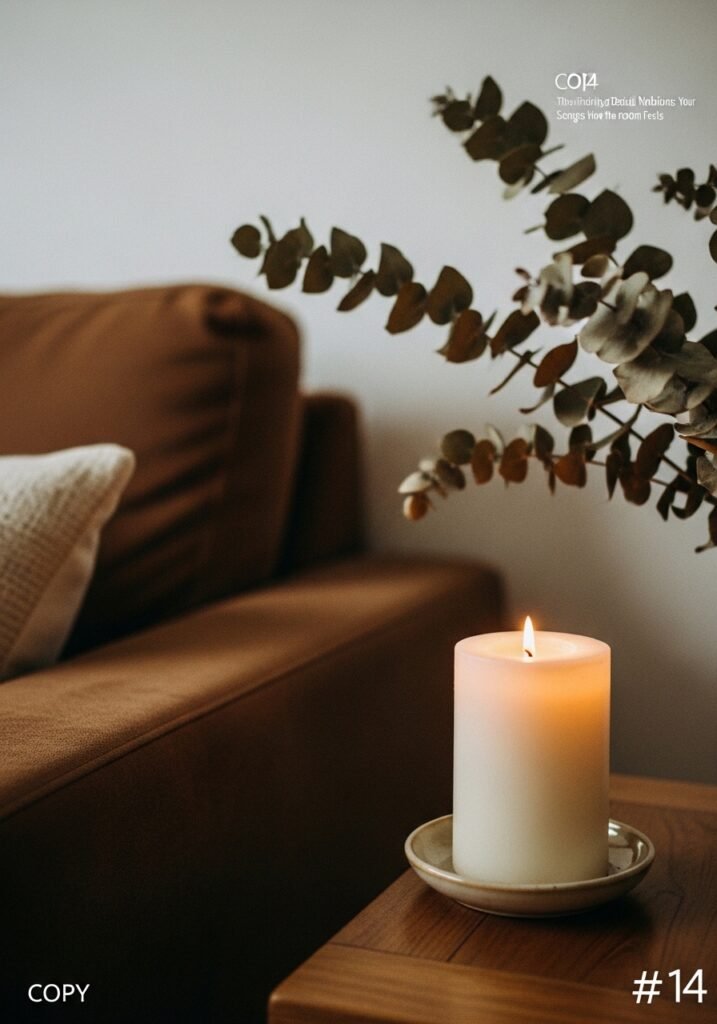
This isn’t about decor in the visual sense. But it belongs here, because it’s part of how a room lands.
A brown couch, warm lighting, earthy tones and natural materials — this visual palette has a scent equivalent. Sandalwood, cedarwood, amber, warm vanilla, vetiver. A candle or a diffuser in one of these directions completes the sensory experience of the room in a way that purely visual styling can’t.
In the US, Homesick and Boy Smells both make candles in warm, grounded scent profiles that complement a brown-couch earthy aesthetic. In the UK, brands like True Grace and Earl of East do the same job beautifully.
You walk into a room and you feel it before you really see it. Make that feeling match the room you’re building.
—
🌿 Quick Tips

Keep your throw blanket folded over one arm of the sofa rather than draped across the back — it looks more natural and less like a showroom.
If your brown couch cushions are removable, flip and rotate them every month. The color stays more even and the cushions keep their shape longer.
A single large piece of art reads as more confident and intentional than several small ones clustered together — especially in a small apartment where wall space is limited.
Don’t underestimate the power of a small side table at sofa height. It makes the whole seating area feel more functional and finished.
If you’re in a rented apartment and can’t paint the walls, concentrate your color choices in textiles, plants, and art — that’s where the real design work happens anyway.
—
❓ FAQ
Q: What colors go best with a dark brown couch in a small apartment? A: The strongest combinations are terracotta and cream, sage green and warm white, or muted rust with natural linen tones. The key principle is to bring in colors that are warm-toned rather than cool — anything with a gray or blue undertone tends to look slightly wrong next to brown rather than refreshingly contrasted.
Q: Can I put a gray rug under a brown couch? A: You technically can, but it’s one of the harder combinations to make look effortless. A cool gray rug under a warm brown sofa creates an undertone clash that’s hard to resolve. If you love your gray rug, add significant warmth elsewhere — a lot of warm-toned textiles, lots of warm lighting — to try to bridge the gap. A warm gray (one with yellow or pink undertones rather than blue) is a much easier starting point.
Q: How do I make my apartment living room look more expensive if I only have a basic brown sofa? A: A few specific things make the biggest difference: real linen or cotton throw pillows rather than synthetic ones, a well-sized rug with some texture, warm bulbs in multiple light sources at different heights, and one or two genuinely beautiful objects rather than lots of small decorative things. Restraint tends to read as more expensive than abundance in a small space.
—
💭 Final Thought
A brown couch in an apartment living room isn’t a design problem to be solved. It’s a foundation to be built on — warm, grounded, and far more flexible than people give it credit for.
The rooms that feel the most beautiful aren’t the ones with the most furniture or the most decor. They’re the ones where every choice feels like it belongs there.
What would change in your space if you stopped apologizing for your brown couch and started designing around it?