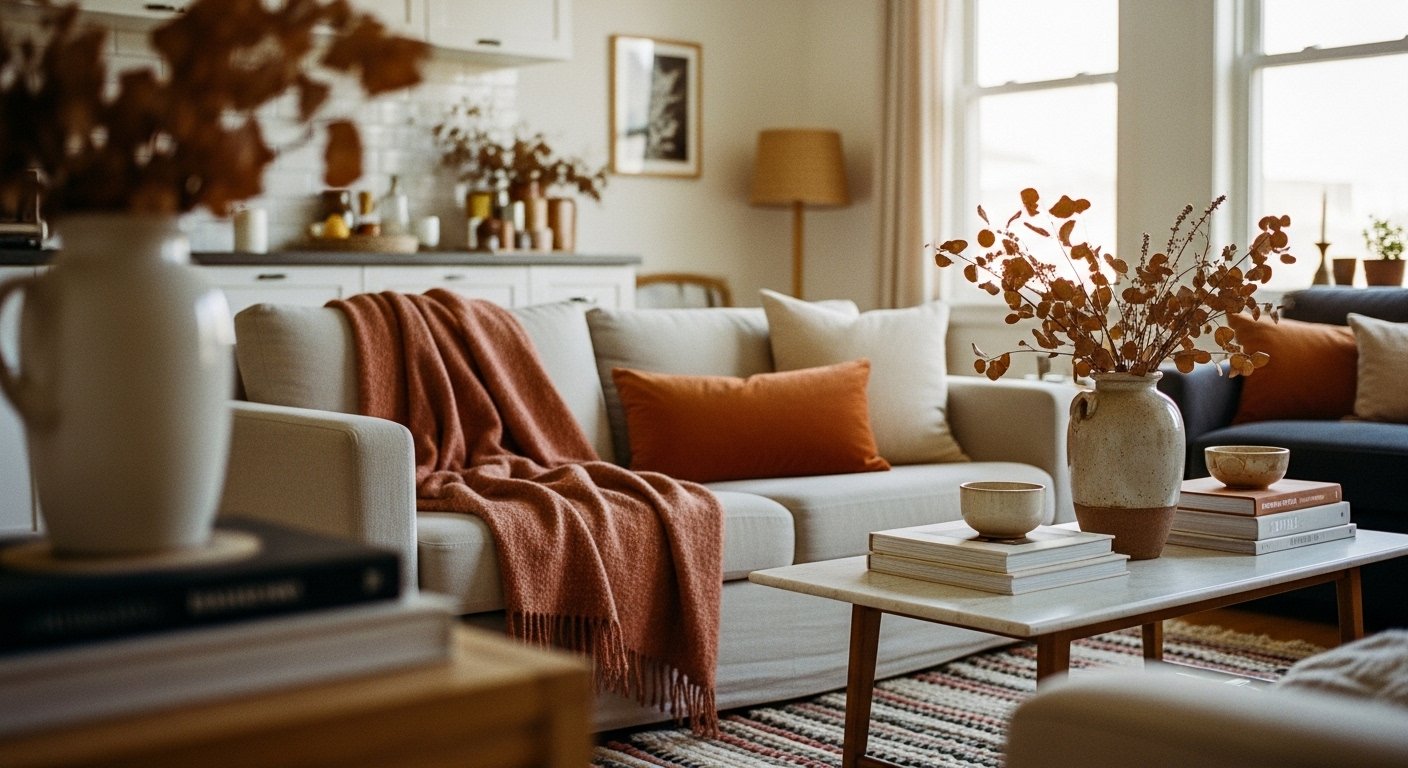
The Apartment Living Room Fall Refresh That Actually Feels Like Autumn (Not a Halloween Store)
There’s a version of fall decor that smells like cinnamon-scented plastic and looks like a craft store exploded on your coffee table. This is not that. This is the other version — the one where your apartment feels genuinely warm, a little moody, undeniably cozy, and entirely you.

—
1. Why Most Apartment Fall Decor Falls Flat (And the Fix Is Simple)
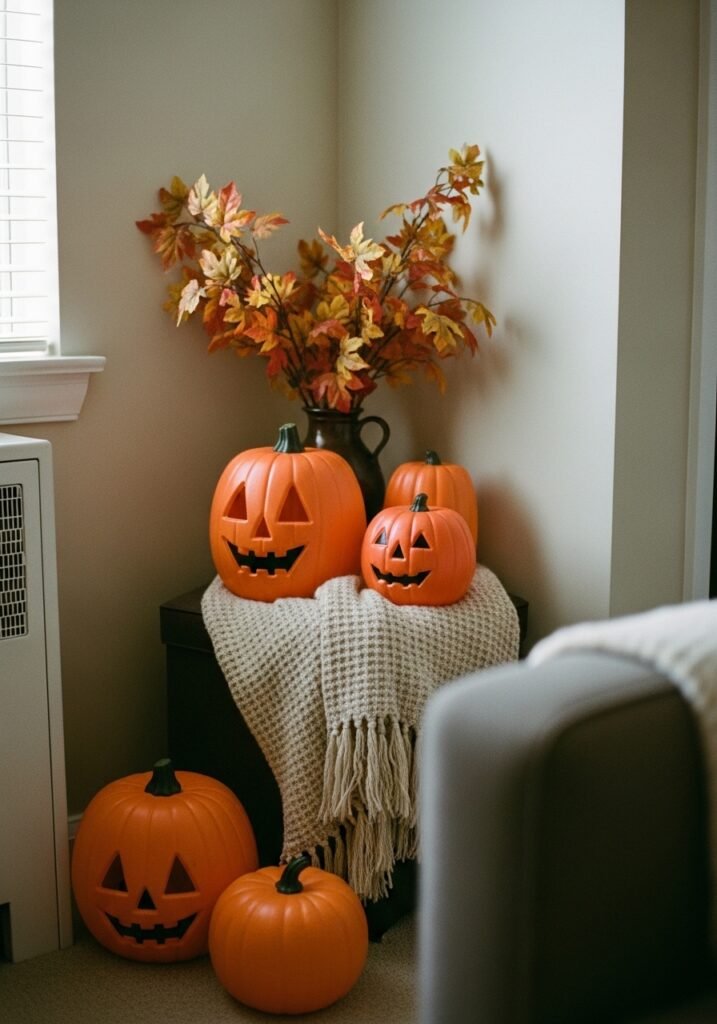
The problem isn’t the pumpkins. It’s the approach.
Most people treat fall decor like a seasonal costume — they layer things on top of what already exists without thinking about the foundation. Suddenly your neutral, beautiful living room has a basket of gourds competing with your throw pillows, a wax warmer plugged in near your gallery wall, and a “Give Thanks” sign that you’re not even sure you believe in aesthetically.
The fix is subtraction before addition.
Before anything new enters your living room this autumn, take a hard look at what’s already there. What feels heavy or summery? What needs to go into storage? Clearing out bright whites, anything tropical (yes, even the subtle leaf print), and overly light linens creates negative space. And negative space is where fall actually lives.
Think about the season itself. Autumn isn’t maximalist. It’s the time of year when things quiet down, pull inward, get heavier. Your decor should do the same. One gorgeous velvet cushion in deep burgundy says more than a shelf full of mini scarecrows. A single dried pampas stem in a ceramic vase beats a foam wreath every time.
Strip it back first. Then build slowly and intentionally. That’s the entire secret.
“Fall decor isn’t about adding more — it’s about making room for a different kind of warmth.”
2. The Specific Color Palette That Makes Small Apartments Look Expensive in Autumn
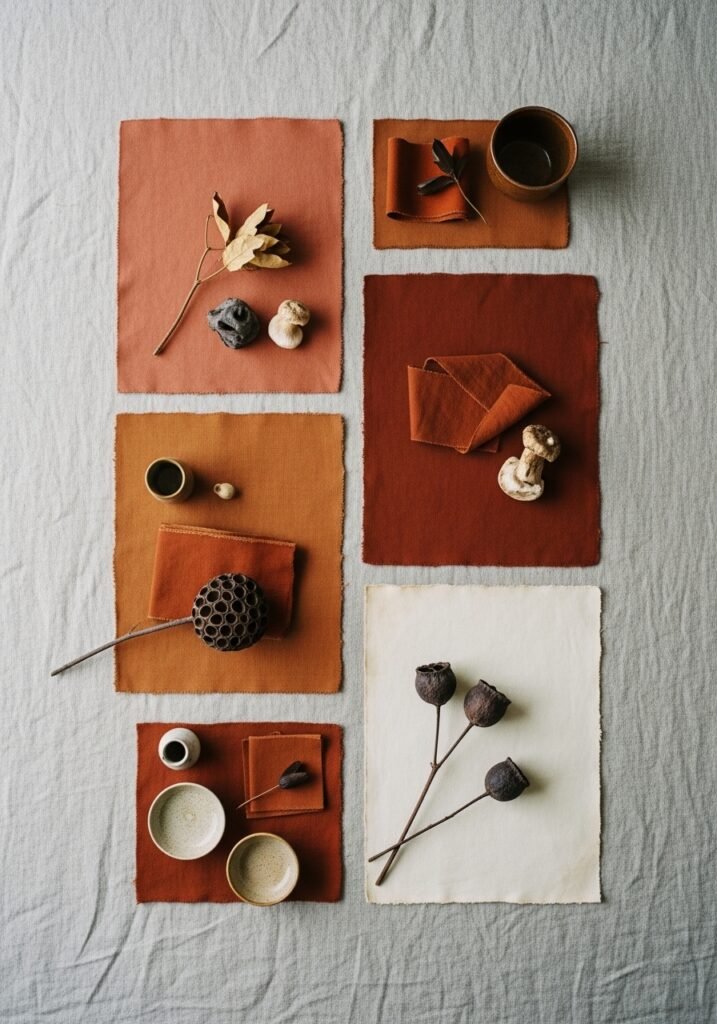
Forget orange. Well — not entirely, but the oranges you want are burnt sienna and terracotta, not tangerine.
The palette that consistently photographs beautifully and reads as “intentional fall” rather than “seasonal aisle at Target” is this: deep forest green, warm cream, rust, tobacco brown, and one moody accent — think dusty plum or charcoal slate. Five colors. That’s your ceiling.
For US apartments with neutral beige walls (the eternal rental reality), this palette works with you, not against you. The warm creams connect to whatever your landlord painted the walls, while the rust and green create contrast that feels deliberate.
For British homes, where you’re more likely to have off-white or even a subtle heritage grey on the walls, the tobacco brown and plum tones are extraordinary. They lean into the natural autumn light that UK Octobers do so well — that low golden light that comes sideways through the window at 4pm and makes everything look like a Dutch painting.
The trick with any autumn palette in a small apartment is to use the darker tones in the smallest doses. A full plum sofa would overwhelm a studio flat. But a plum candle on a stacked books display? Perfection. Keep the large surfaces neutral and light, and let the accents carry the season.
3. The Throw Blanket Strategy That Apartment Stylists Actually Use
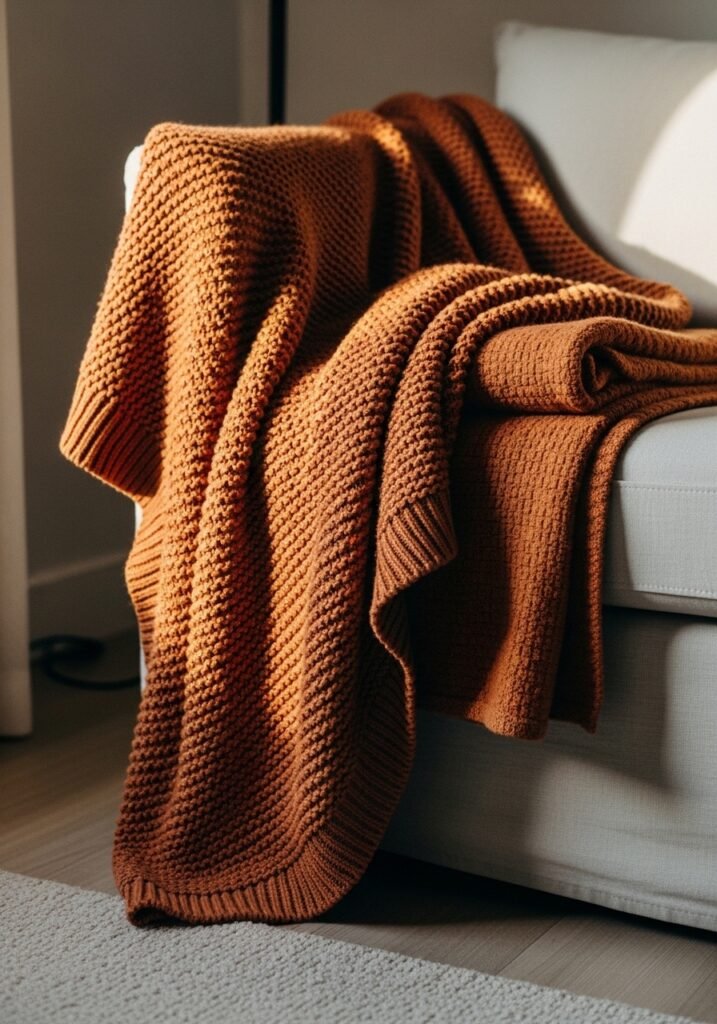
One throw blanket, styled deliberately, does more than three blankets tossed around hopefully.
Here’s the thing — in a small apartment living room, visual clutter is your enemy. Multiple throws draped over the sofa in an attempt to look “cozy” almost always end up looking like laundry day. The better move? Choose one exceptional blanket and learn to fold it.
For fall specifically, you want weight and texture. A chunky cable-knit in oatmeal or warm cream, a wool-blend herringbone in tobacco and charcoal, or — and this is a genuinely underrated pick — a mohair-blend throw in dusty sage. Something that has a tactile presence even in photos.
The fold matters. The lazy drape over one arm of the sofa is fine but a little expected. Try this instead: fold it into thirds lengthwise, then lay it across the seat cushions of the sofa in a soft horizontal line. It looks like it was placed there by someone who knows what they’re doing. Because now you do.
In a smaller apartment, consider putting a second throw inside a large woven basket near the sofa. It reads as both decorative and functional — you can see a corner of it, it adds texture to the floor arrangement, and it’s genuinely there when you need it on a cold November evening.
4. The Lighting Change That Costs Almost Nothing and Changes Everything
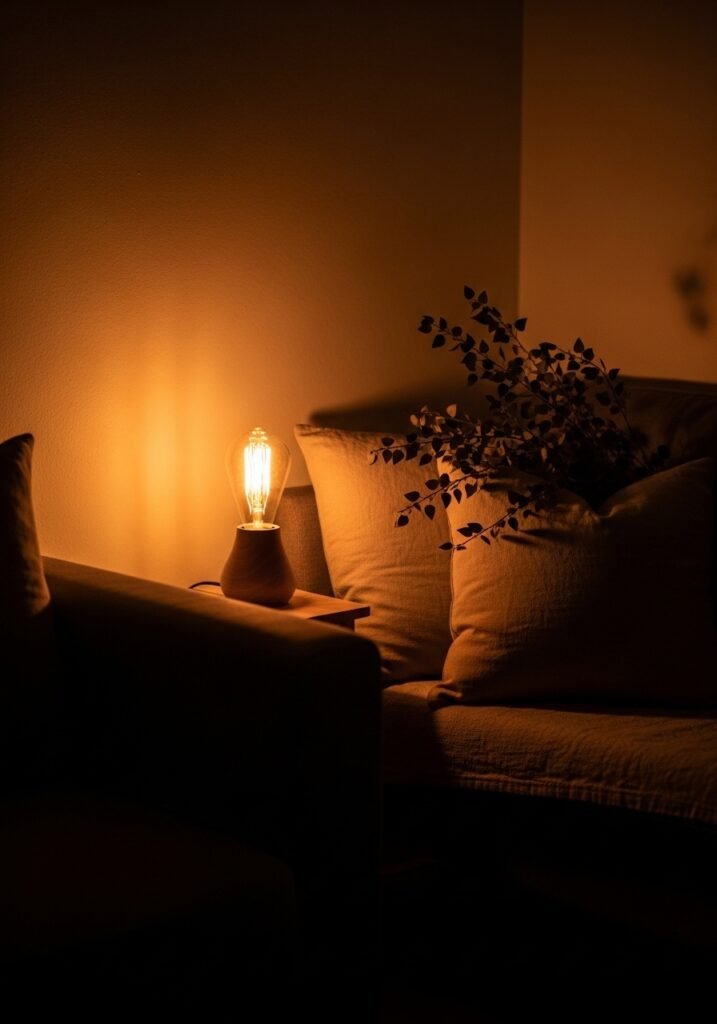
You can spend two hours rearranging your fall decor and still have it feel flat. Then you change one lightbulb and the whole room exhales.
Warm-toned bulbs — we’re talking 2200K to 2700K on the Kelvin scale — are the closest thing to a cheat code in interior styling. That amber glow at 7pm on an October evening is genuinely incomparable. It makes wood grain glow, makes terracotta shimmer, makes cream textiles look like something out of a Nancy Meyers film.
If you’re in a US apartment with standard overhead lighting, swap those bulbs first. Then add a floor lamp in the corner of the room — not dead-center, but tucked behind a chair or a plant, pointing slightly upward. That uplighting creates shadows and warmth that overhead lighting completely destroys.
For UK apartments, where standard lamps and table lamps are already more common (bless that tradition), add a second smaller lamp at a different height than what you already have. Two light sources at different levels creates that layered, intentional warmth.
Candles deserve their own sentence. Real candles, in glass or ceramic holders, placed at different heights — a low wide pillar on the coffee table, a slim taper in a clay holder on the bookshelf. The actual flicker of real candlelight is still the most beautiful thing you can do to a room.
“Change your bulbs before you buy a single pumpkin. That’s where fall actually starts.”
5. What to Do With Your Coffee Table When You Have Almost No Space
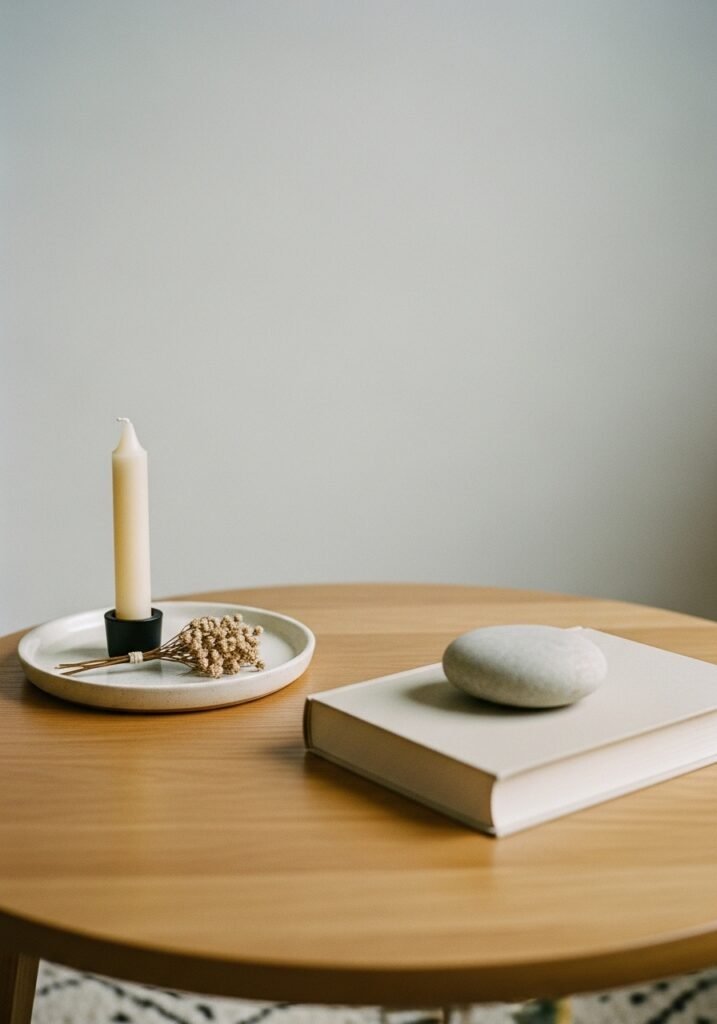
The coffee table is doing a lot of work in a small apartment. It’s storage, it’s dining, it’s the visual center of the whole room. So when you’re adding fall decor, it has to earn its place.
The formula that works in almost every space: one tall element, one medium element, one low flat element. That’s it. In autumn, this might look like a slender vase with dried grasses or eucalyptus branches (tall), a cluster of two or three small pumpkins — real ones or good ceramic versions (medium), and a stack of two or three coffee table books in earthy tones (low).
What you don’t want: a tray overflowing with things. The tray itself is fine — a round rattan tray or a dark wood rectangle actually helps contain visual chaos and tells the eye “this is a moment.” But the items inside it need breathing room.
Real pumpkins are always better than faux, with one honest caveat: they last about four weeks before they need replacing. If you’re in the UK and decorating in late September, real ones are absolutely worth it for October. In the US, grab them at the farmers market rather than the grocery store — the varieties are more beautiful and they photograph like something from a lifestyle magazine.
6. The Bookshelf Styling Trick That Makes Your Whole Room Feel Autumnal
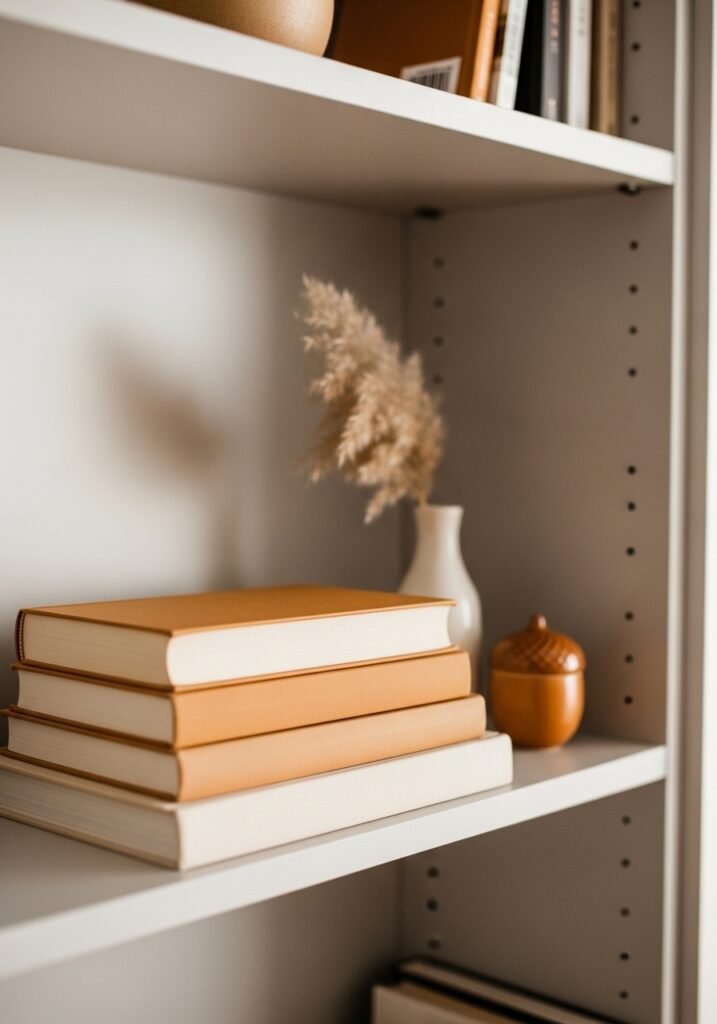
Your bookshelf is an underused seasonal canvas.
Most people don’t touch their bookshelves when they decorate for fall, and it’s a significant missed opportunity. A few small moves here can shift the entire feeling of the room without you touching the sofa or the rug.
First: pull any books with bright or summery spines to the back, or move them temporarily. Replace them at the front with books in darker earth tones — and don’t worry if the titles aren’t autumnal, it’s purely visual. Brown, forest green, rust, deep navy, aged white.
Second: add one or two small objects between the book stacks. A tiny clay pot. A smooth stone. A dried pinecone or a small botanical print in a thin frame. These don’t need to be overtly “fall” objects — they just need to feel quiet and grounded.
Third: add one candle to the bookshelf. Somewhere slightly unexpected, not centered. A short pillar candle in beeswax or a matte terracotta taper. This one detail signals that someone actually thought about this shelf, which makes your entire apartment look more curated.
The goal is a bookshelf that feels like autumn by association — earthy, layered, a little literary, slightly moody.
7. Dried Botanicals and Why They’re Worth Every Penny
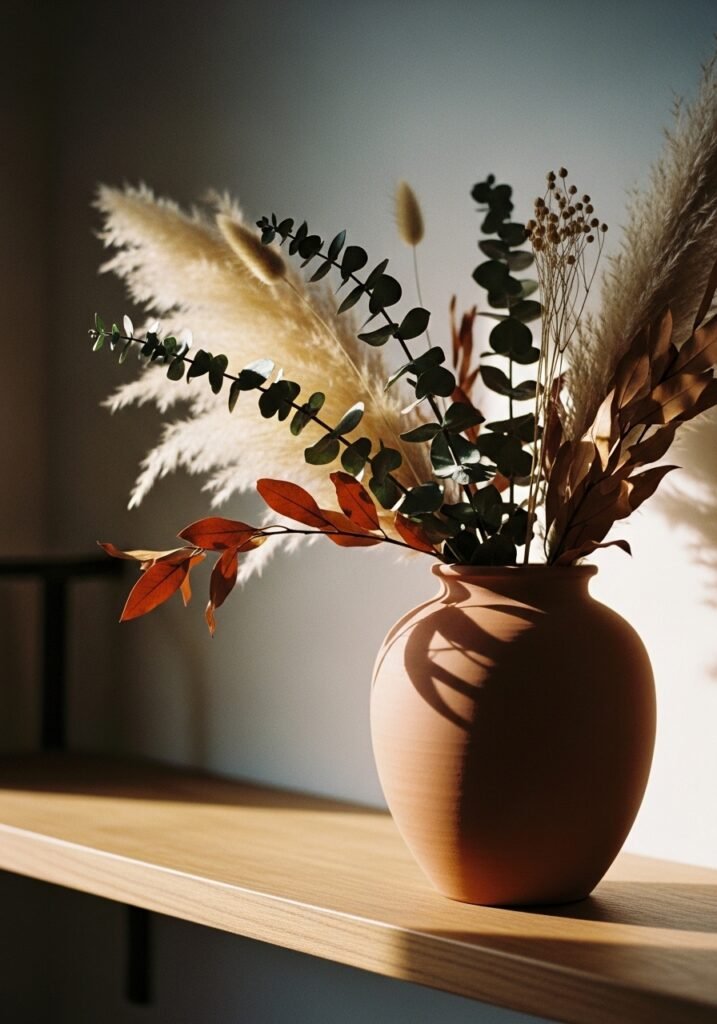
The dried botanical moment in home decor has been building for a few years now, and here’s the good news: it’s not a trend. It’s a return to something people have always done — brought the outside in and let it stay awhile.
For fall apartment decor, dried botanicals are genuinely ideal. They’re lightweight (no damage to rental walls or floors), they don’t need watering, and they last well into January if you keep them out of direct harsh sunlight.
The stars of an autumn dried arrangement: pampas grass in natural or dusty blush, dried wheat stalks, cotton branches, amaranth, lunaria (those silvery moon pods), and preserved eucalyptus. You don’t need all of them. Two or three varieties arranged in a tall ceramic or clay vase is enough — more than that and it starts to look like a centerpiece at an overstylized wedding.
In the US, you can find beautiful dried botanical bunches at TJ Maxx, HomeGoods, World Market, and increasingly at Target’s fall seasonal section. In the UK, check H&M Home, Oliver Bonas, and independent florists who often carry dried bundles in autumn.
Placement: a tall vase on the floor next to the sofa works beautifully in a small space because it fills vertical space without taking up floor plan. It’s also just genuinely lovely — the way dried grasses catch the low light of an October evening and glow like something the season ordered specifically for your apartment.
“Dried botanicals aren’t a trend. They’re the oldest way of bringing autumn inside, and they’ll outlast every other thing you bought this season.”
8. The Rug Situation: When to Layer and When Not To
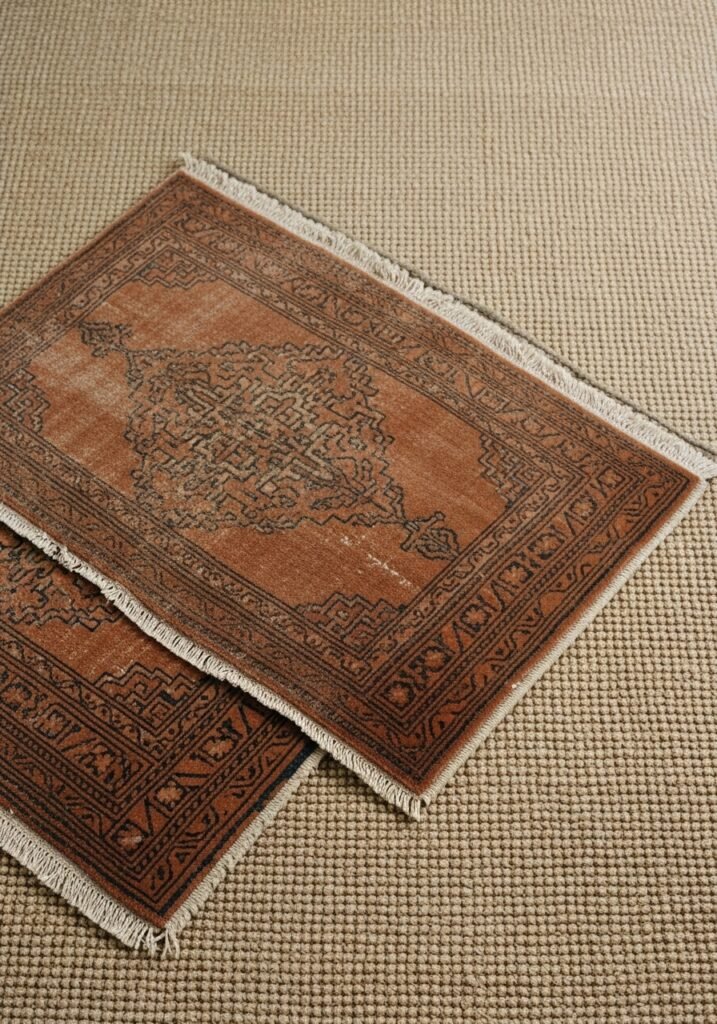
A rug can do more seasonal work than almost any other single element in your living room. But in a small apartment, getting this wrong is costly — visually, not financially.
If you currently have a light-colored rug — cream, ivory, pale grey — you have two choices. Swap it out entirely for an autumn-appropriate alternative, or layer a smaller, darker rug on top. The layering trend is genuinely wonderful in larger rooms, and in apartments it works best when the bottom rug is neutral and the top layer is smaller, with natural texture: a woven jute or sisal runner, a small Moroccan-style rug in rust and cream, or a sheepskin in caramel.
If you’re going for a full swap, the autumn rugs worth looking for are: anything with a vintage or distressed medallion pattern in terracotta and navy, plain wool rugs in deep forest green (transformative for a neutral apartment), or textured bouclé rugs in warm cream or oatmeal which read as cozy without being specifically seasonal.
The mistake people make in small apartments is going too dark with the rug and too dark with the other elements simultaneously. If you go deep olive or dark burgundy on the rug, keep everything else lighter and warmer. Let the rug be the dramatic decision, and let everything else support it.
9. Real Plants, Seasonal Plants, and the One Surprising Pick for Fall
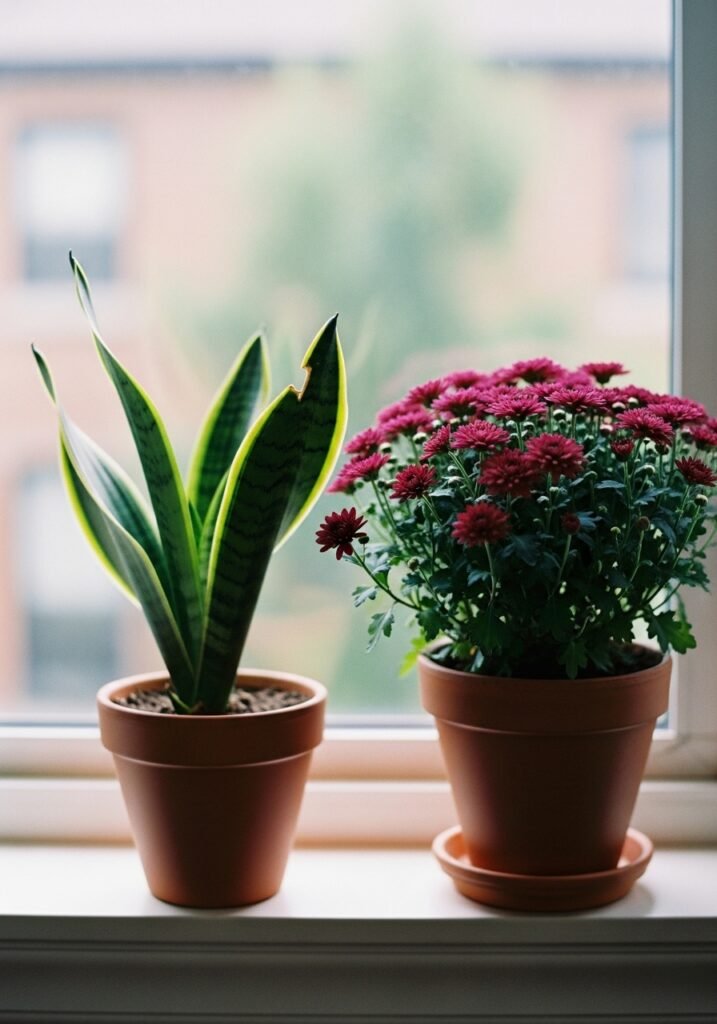
You’d be surprised how much a single well-chosen plant changes the seasonal energy of a room.
The obvious autumn plant choices are chrysanthemums (those jewel-toned beauties that appear in every UK garden center from September onward) and ornamental cabbage, which sounds strange but photographs magnificently in terracotta pots. Both are inexpensive, widely available, and deeply seasonal.
But the less obvious pick — the one that apartment stylists keep coming back to — is the fiddle leaf fig in autumn. Not because it’s new (it’s famously not), but because its large, architectural leaves genuinely look different in the warm amber light of October. Next to a rust-toned cushion and a lit candle, it stops looking like a design cliché and starts looking like it belongs exactly there.
Succulents and cacti, on the other hand, are essentially summer plants visually. Not wrong to keep them, but don’t lean on them for your autumn aesthetic.
If you want the seasonal impact without the ongoing maintenance, a single stem of realistic silk or parchment-quality faux botanicals — a leafy branch in amber and rust — in a tall thin vase can be genuinely beautiful. The quality of faux botanicals has improved so dramatically in the past few years that the only thing separating them from real is the label.
10. The Scent Strategy (Because Autumn Is Half Smell)
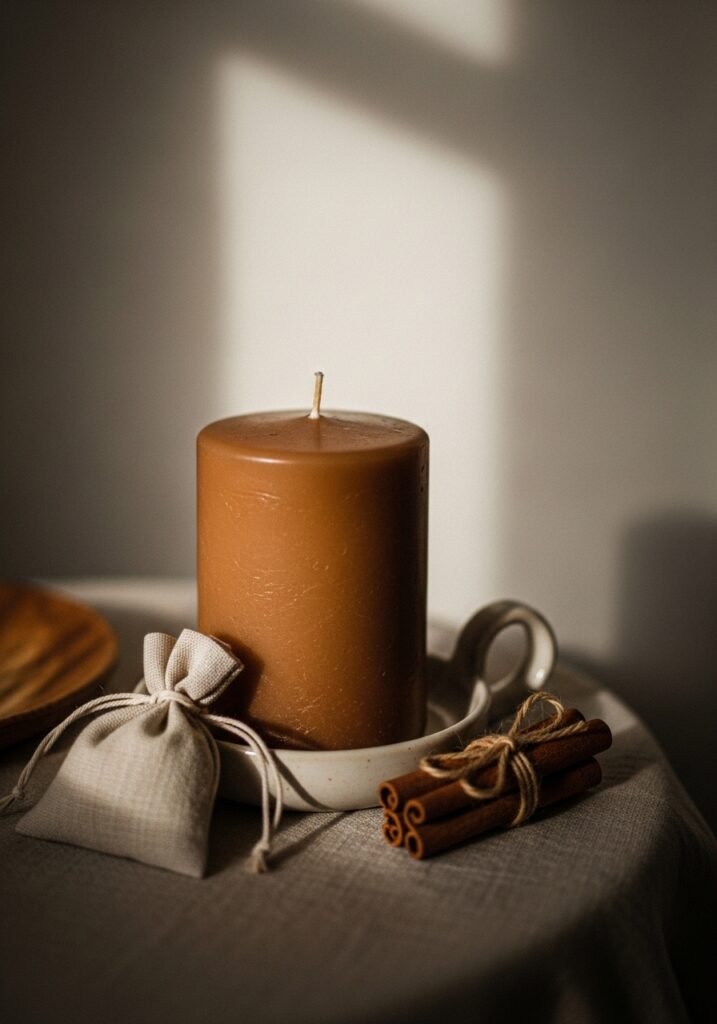
This could be its own article. But since we’re here — the scent of your apartment is doing atmospheric work that your eyes can’t.
The fall candle landscape is enormous and mostly mediocre. You’re looking for specific fragrance families that actually smell like autumn: wood smoke and tobacco, apple and cardamom (not apple pie — there’s a difference), cedar and vetiver, fig leaf, black tea, clove and sandalwood. What you’re avoiding is anything that smells like synthetic cinnamon, fake pumpkin spice, or bargain-bin vanilla.
Brands worth seeking out in the US: Homesick, Boy Smells, Paddywax, and the Hearth & Hand line from Magnolia at Target. In the UK: Earl of East (absolutely exceptional), Wick & Tallow, and the straightforwardly brilliant Neom autumn collections.
One candle lit in the corner of a well-arranged room is perfect. Two candles in different spots, with slightly different complementary scents, is the move that makes guests walk in and say “your apartment always smells so good.” Reed diffusers in autumn scents for the always-on background layer, candles for the intentional evening atmosphere. That combination is genuinely unbeatable.
11. The Gallery Wall Adjustment That Seasons Your Art Without Replacing It
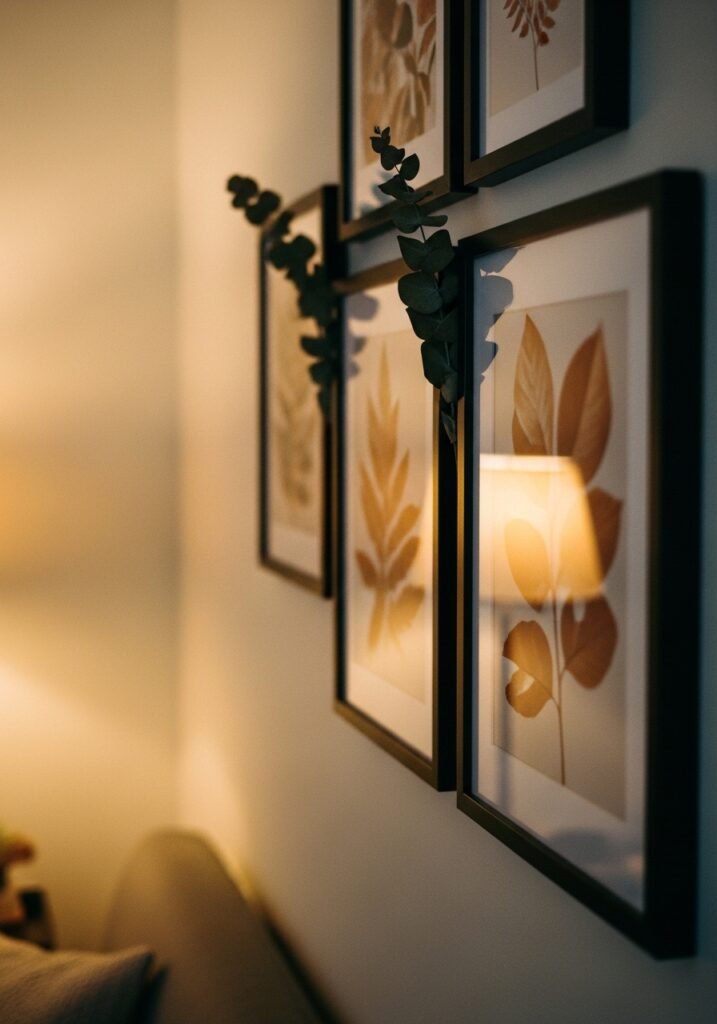
You don’t need to take down your gallery wall. You just need to adjust one or two things.
If your gallery wall has consistently bright or summery prints, consider swapping out one or two for something with autumn resonance — a botanical print in muted earth tones, a loose watercolor of dried botanicals, a simple typographic print in a warm serif font. One swap shifts the whole mood because context is everything in a gallery wall arrangement.
What you can add without removing anything: a small dried sprig tucked into the corner of a frame. A warm-toned scarf or textile hung from one of the lower frames as a soft textile element. A small ceramic wall-hung piece in terracotta or aged clay added to the edge of the arrangement.
The single most effective gallery wall move for fall is this: add warm-toned frame mats or swap in honey-oak frames for any cooler-toned black frames at the perimeter of the arrangement. Black frames are beautiful in winter. But amber wood frames in autumn change everything — they warm the wall in a way that’s subtle but unmistakable.
12. The Apartment Entryway That Sets the Tone Before They Even Sit Down
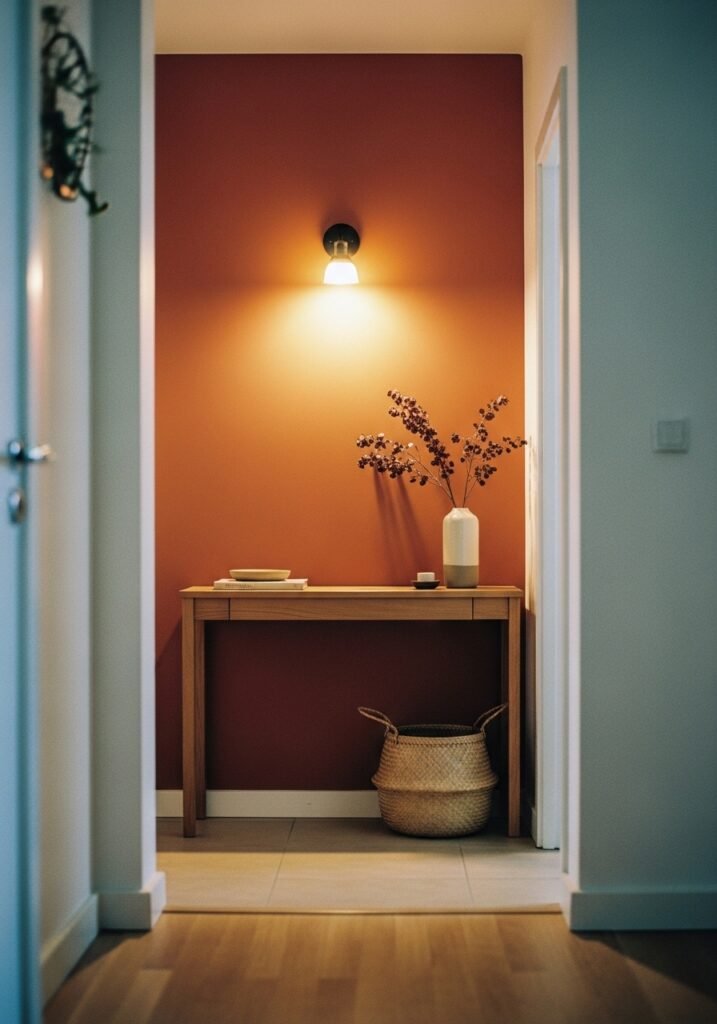
If you have any kind of entryway — even a three-foot corridor before your living room opens up — this is your single most impactful decorating opportunity.
The entryway sets the expectation. When someone opens your door in October and immediately encounters a small console table with a beeswax candle, a ceramic bowl for keys, a dried botanical arrangement, and a knitted basket for umbrellas, they have already decided your apartment is beautifully decorated before they’ve seen anything else.
For apartments with almost no entry space, a hook on the wall with a textured autumn wreath (dried leaves, cotton, eucalyptus — not plastic) does the same job. One beautiful hook with a real wreath says “the person who lives here pays attention.” That’s the entire message.
In the UK, where Victorian and Edwardian apartments often have original tile floors in the hallway, lean into that heritage feeling — a small brass umbrella stand, a dark wood console, an aged mirror with a slightly tarnished frame. It’s not costumey, it’s genuinely contextual.
What to always avoid in a small entryway: too many items competing for attention, anything that creates a tripping hazard, and seasonal items that scream “FALL” rather than whispering it. The entryway should make your guests feel something warm and curious. Not like they’ve walked into a Halloween pop-up.
—
🌿 Quick Tips
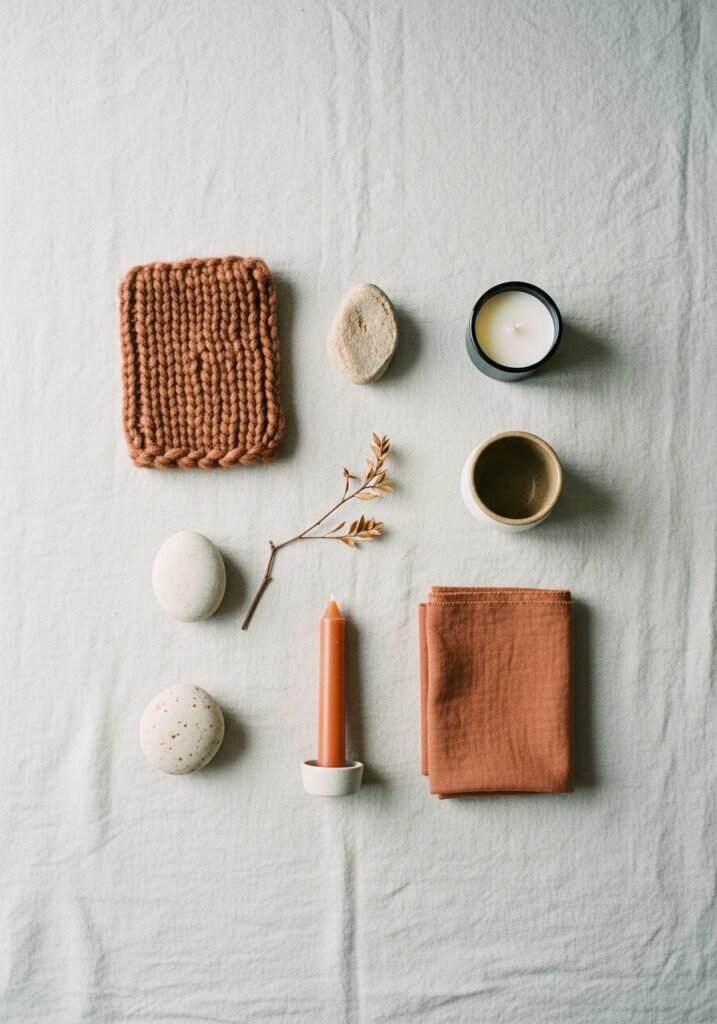
Starting with scent before you buy a single decorative object is genuinely the move — light a fall candle, smell the season, and let that set the visual tone for everything else you choose.
If you’re renting and can’t paint, the fastest way to make your autumn palette feel intentional is to group your furniture closer together, which creates an intimate warmth no paint color can replicate.
Dried pampas and wheat stems are the best value in fall decor — one good bunch from a florist or HomeGoods costs less than most single decorative objects and lasts through spring.
For both US and UK apartments, the single best investment in fall atmosphere is a proper dimmer switch on your main lamp — it costs under £15 or $20 and changes every single evening.
Don’t buy a matching “fall set” from a home store. The matched sets always look like what they are — bought together, on sale, in October. Individual pieces found over time look like a life lived.
—
❓ FAQ
Q: How do I make my apartment feel like fall without making it look tacky? A: The key is restraint and quality over quantity. Choose two or three genuine materials — real dried botanicals, a good wool throw, one excellent candle — rather than filling every surface with seasonal items. If something could belong in a party supply store, put it back.
Q: When should I start decorating for fall in the US and UK? A: In the US, early to mid-September feels natural, especially in northern states where the temperatures drop sooner. In the UK, late September through early October is when it feels genuinely seasonally appropriate — when the light actually changes and the garden centers fill up with chrysanthemums. Don’t force it in August just because the stores do.
Q: Can I do fall decor in a really small apartment or studio? A: Absolutely — and arguably it works better in small spaces because the warmth is more concentrated. The rule for studios and small apartments is one statement piece per zone: one textile, one botanical, one candle moment. Three well-chosen things in a small space feel intentional; ten things feel cluttered.
—
💭 Final Thought
There’s something genuinely lovely about the way autumn invites you inward. Your apartment doesn’t need to look like a magazine spread to feel like home — it just needs to feel like yours, a little warmer and a little quieter than the season before it. The best fall living rooms aren’t the most decorated ones.
What’s one small thing you could change in your apartment this week that would make October feel more like October?