The First Hello: Why Your Home’s Entrance Says Everything Before You Even Speak
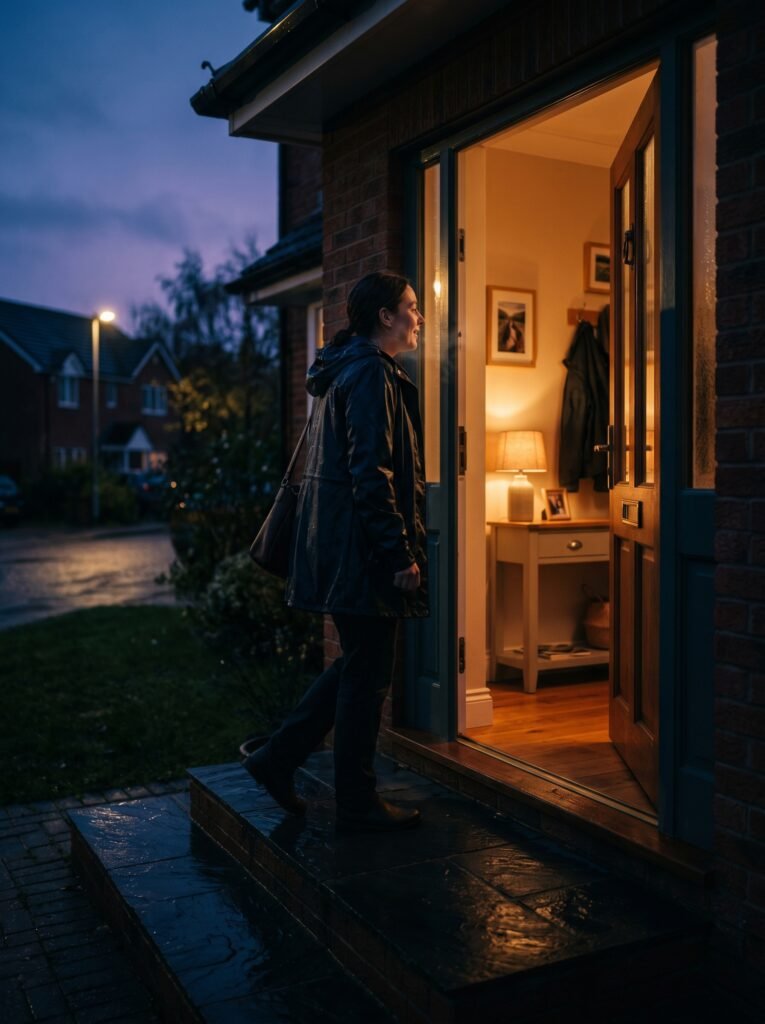
You’ve been gone all day. Work was long, traffic was worse, and somewhere between the parking lot and your front door, you exhaled — finally. You stepped inside. And in that single moment, your home either caught you or it didn’t.
That moment lives in your entrance. And most of us have never given it the attention it quietly deserves.
—
Table Of Content
1. The Space That Sets the Emotional Temperature of Your Entire Home
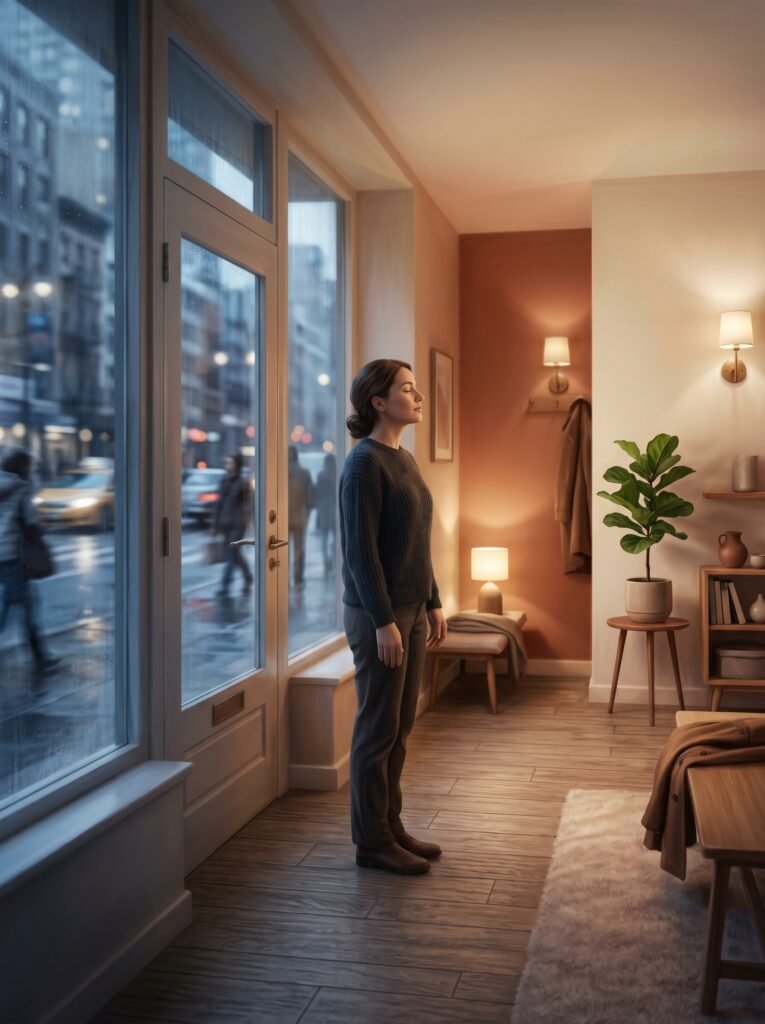
Before anyone sees your living room, your kitchen, or the carefully arranged bookshelves you spent a Saturday perfecting — they see your entrance. Interior designers often call this the “decompression zone,” and the name is more poetic than it sounds. It’s the physical and psychological bridge between the outside world and everything you’ve built inside.
Research in environmental psychology consistently shows that first impressions of a space form within seconds — not minutes. The moment someone crosses your threshold, their nervous system starts reading. Is it cluttered or calm? Bright or dim? Cold or warm? These signals travel faster than conscious thought, and they shape how a person feels about your entire home before they’ve taken five steps inside.
“Your entrance isn’t just a passageway — it’s the opening sentence of the story your home tells.”
This is why house entrance interiors deserve thoughtful attention, not afterthought design. It’s not about impressing guests. It’s about what you feel every single time you come home.
—
2. Why Most Entrance Halls Feel Like No One Lives There
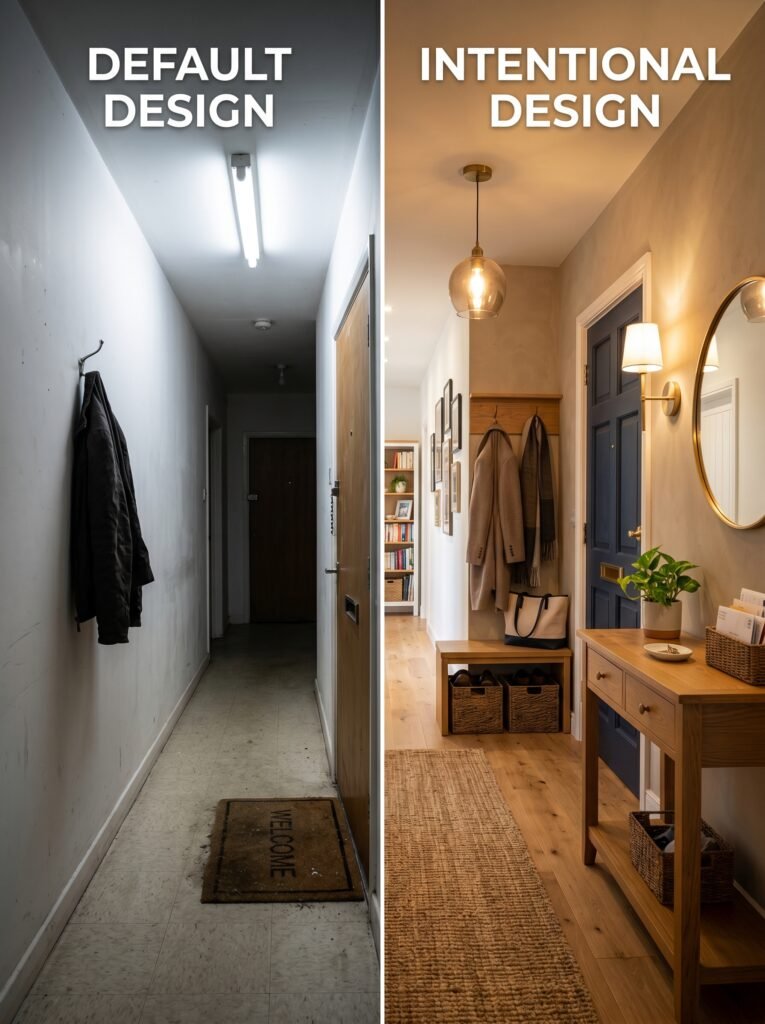
Here’s something honest: most entrance halls are designed by default, not by intention. A coat hook screwed into the wall. A mat that’s seen better days. Maybe a mirror someone received as a gift. The rest is bare wall and overhead lighting that flatters no one.
The result is a space that feels transactional — get in, move through, move on. It lacks identity, warmth, and any sense that a real human being put thought into it.
What’s missing is almost always the same trio: layered lighting, meaningful storage, and one personal element that anchors the space with personality. Without these three things, even a beautiful home can feel oddly hollow the moment you walk through the door.
—
3. Light Is the First Thing Your Eyes Trust
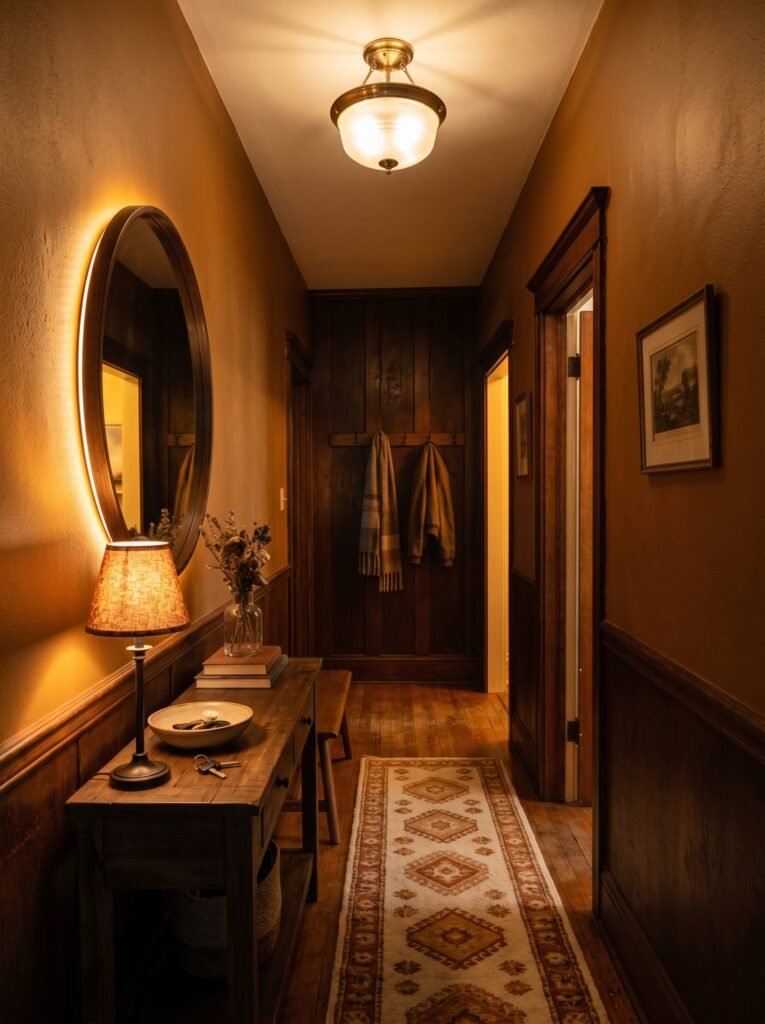
Imagine walking into a home where the entrance is lit by a single harsh overhead bulb. Now imagine walking into one where warm light spills from a small table lamp, catches the edge of a framed print, and glows against a painted wall. You don’t need to be an interior designer to know which one feels like a home.
Lighting in an entrance hall works differently than in other rooms because there’s typically no natural light anchor — no window to build around, no sunlight to rely on. This makes artificial layering essential. A ceiling fixture provides general visibility, but it should be paired with something at eye level or lower: a sconce, a lamp on a console table, or even a backlit mirror.
Warm-toned bulbs (around 2700–3000K) immediately create a sense of comfort. They’re biologically calming and visually welcoming in a way that cool white light simply isn’t. This is one of the smallest, most affordable changes you can make to an entrance — and one of the most immediately transformative.
—
4. The Console Table: Small Piece of Furniture, Enormous Emotional Payoff
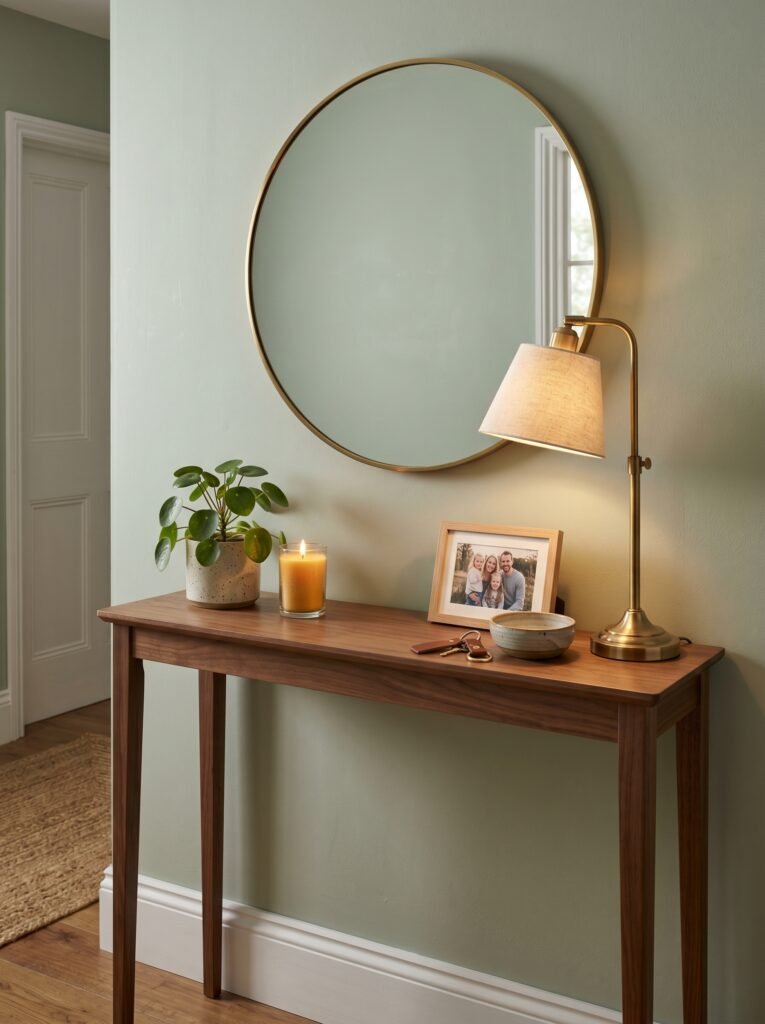
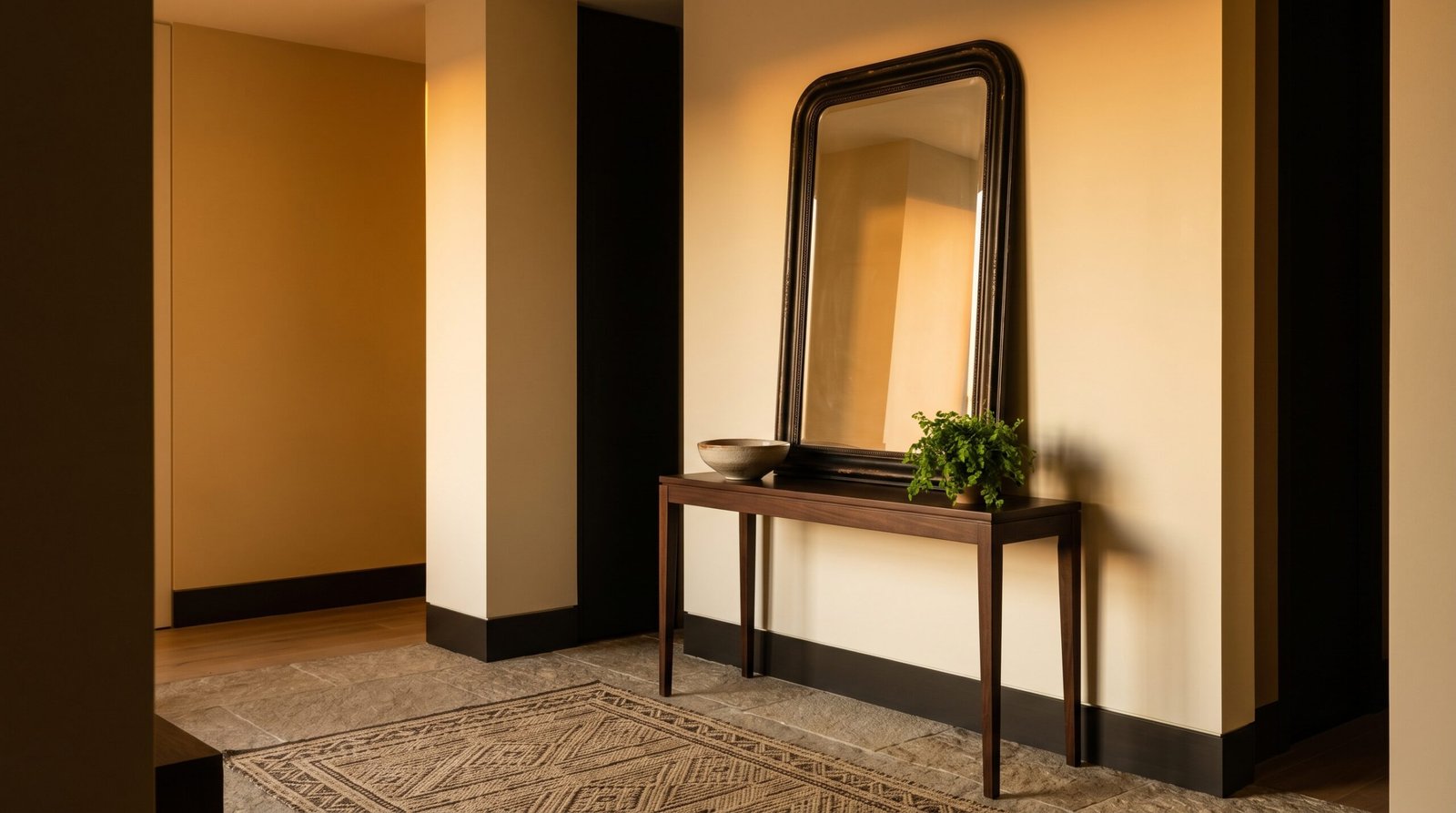
If there’s one piece of furniture that earns its keep in an entrance hall more than any other, it’s the console table. Slim, purposeful, and elegant, it solves multiple problems at once. It gives you a surface to drop keys, set down mail, and place a small lamp. It creates a visual anchor that tells the eye “this space was considered.”
But beyond function, a console table is a storytelling surface. What you place on it — a small plant, a ceramic bowl, a photograph, a candle — says something true about who lives here. It’s the one decorating decision in your entrance where personality should lead, not trend.
Console tables work in narrow hallways as shallow as 25–30 cm (about 10–12 inches) in depth, which makes them genuinely versatile. Pair one with a mirror above it, and you’ve created what designers call a “focal vignette” — a composed visual moment that greets everyone, including yourself, every time you walk through the door.
—
5. Mirrors Are Not About Vanity — They’re About Space and Light
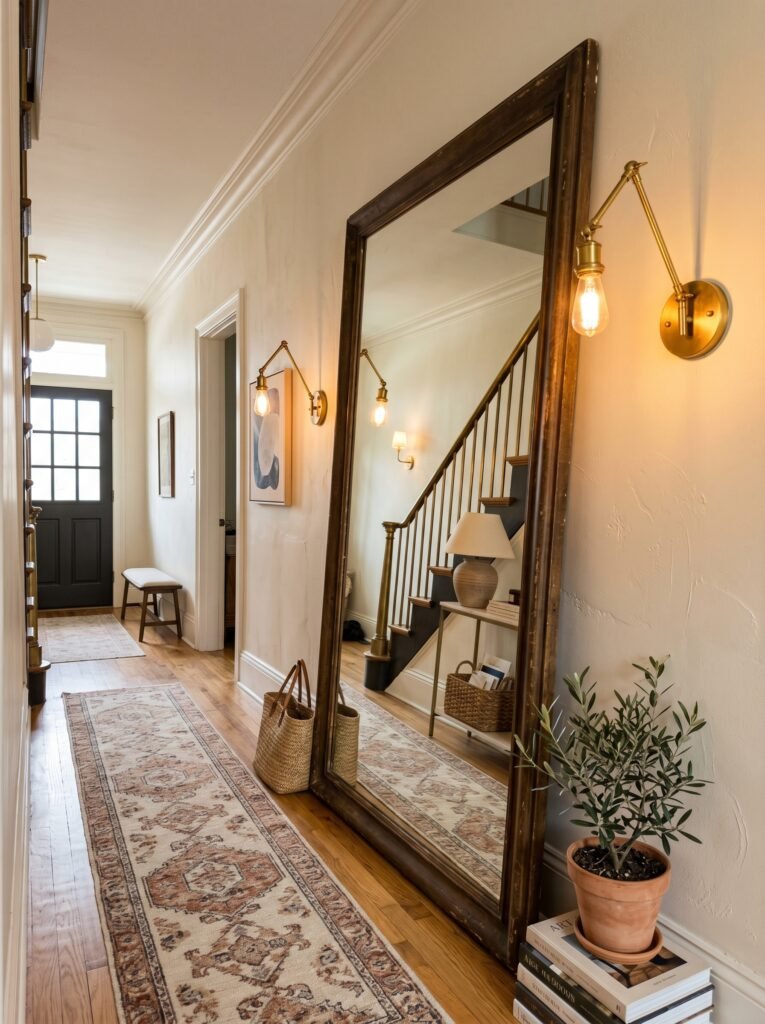
People often feel slightly self-conscious putting a mirror near their front door, as if it signals excessive concern with appearance. But mirrors in entrance halls serve a far more practical and spatial function than reflection alone.
They bounce light into a space that often needs it. They make narrow entrances feel wider. They give the illusion of depth where there may be very little. And yes — they offer a quick, reassuring glance before you head out into the world, which is not vanity. That’s just being human.
“A well-placed mirror doesn’t just reflect you — it reflects the entire feeling of the space back at itself, doubled.”
The best placement for an entrance mirror is opposite or adjacent to the light source. Leaning a large mirror against the wall rather than hanging it creates an effortlessly relaxed, layered look that feels curated without feeling stiff.
—
6. Flooring: The Part of Your Entrance That Works Hardest and Gets Thanked Least
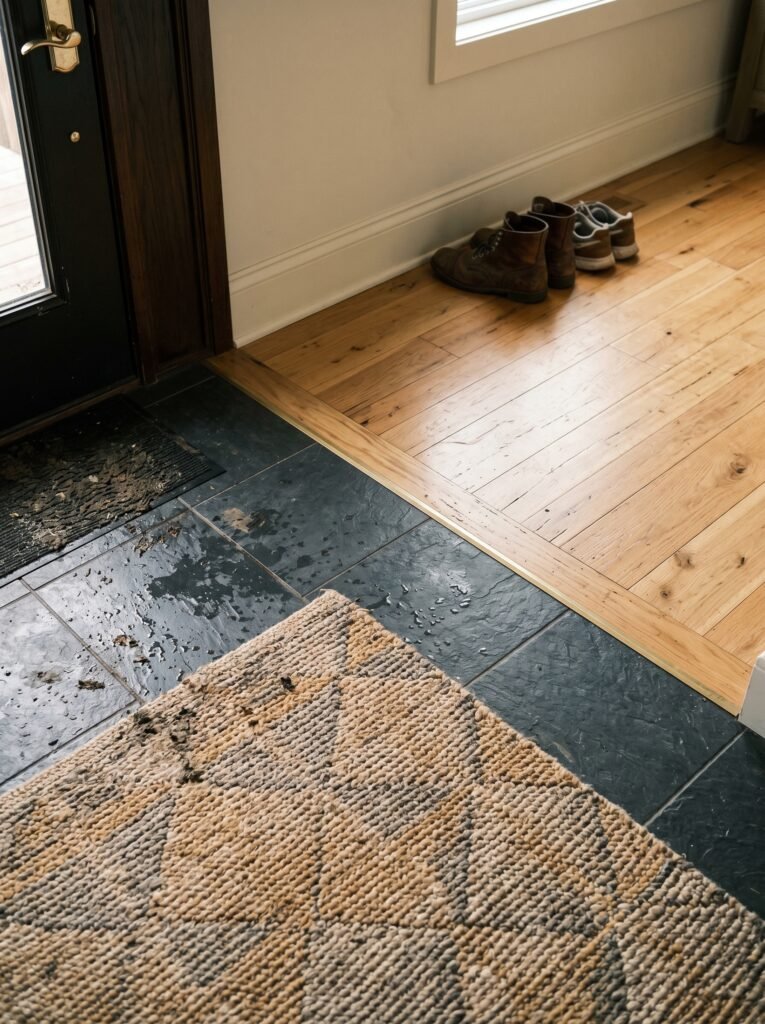
Entrance flooring is doing a quiet, relentless job. It takes the rain, the mud, the shoes still half-on, the dropped bags, and the daily shuffling of everyone who lives there. And then it’s expected to look good while doing all of it.
The most practical and beautiful entrance floors share a few things in common: they’re easy to clean, durable under foot traffic, and visually grounding. Natural stone, ceramic tile, hardwood, and high-quality vinyl are all strong choices, each with their own feel and price point.
What makes a difference aesthetically is the transition — how the entrance floor meets the floor of the next room. A subtle contrast (dark tile meeting light hardwood, for example) actually defines the entrance as its own distinct space, reinforcing that psychological decompression zone rather than letting it bleed into the rest of the home without identity.
A quality entrance rug, even layered over hard flooring, adds warmth underfoot and a visual softness that bare floor simply can’t provide.
—
7. Color Psychology in Small Spaces: What Your Entrance Wall Is Actually Saying

Color in a small entrance works differently than in an open-plan living space. Because the room is compact and often enclosed, color has an outsized effect — it saturates the space more completely, which means both its benefits and its mistakes are amplified.
Soft, warm neutrals (warm whites, stone, greige, and soft terracotta) create an enveloping, welcoming feeling without making a small space feel smaller. Deep, saturated colors — navy, forest green, charcoal — can work beautifully in a confident, moody entrance, but they require good lighting to prevent the space from feeling cave-like.
One approach that works remarkably well: keep walls neutral and introduce color through accessories — a painted ceiling, a colorful runner, a vibrant piece of art. This way, the space feels alive without betting everything on a bold wall color you might grow tired of.
—
8. Storage That Doesn’t Look Like Surrender
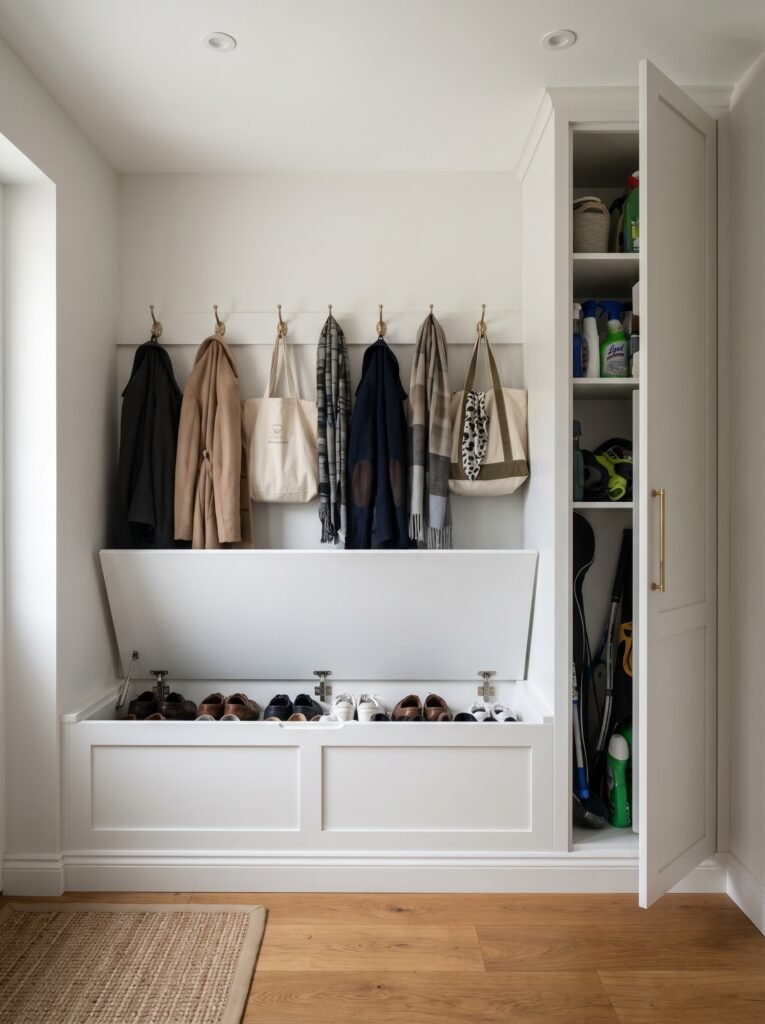
The practical challenge of any entrance hall is storage: hooks for coats, a place for shoes, somewhere logical for keys, bags, and everything else that arrives with you at the end of a day. The less elegant solution to this challenge is obvious — a row of hooks, a plastic shoe rack, a basket overflowing with forgotten scarves. It handles the problem, but barely.
Intentional storage design can handle the same volume of real-life chaos and still look composed. Built-in bench seating with a lid and interior storage solves shoes and gives you a place to sit while putting them on — two problems solved with one piece. Hooks with a rail and shelf above them handle coats, bags, and higher storage. A small, closed cabinet deals with visual clutter entirely by simply hiding it.
The principle here is elegance through concealment. Not everything needs to be on display. The things that need to be accessible don’t also have to be visible.
—
9. Plants: The Living Detail That No Décor Can Replicate
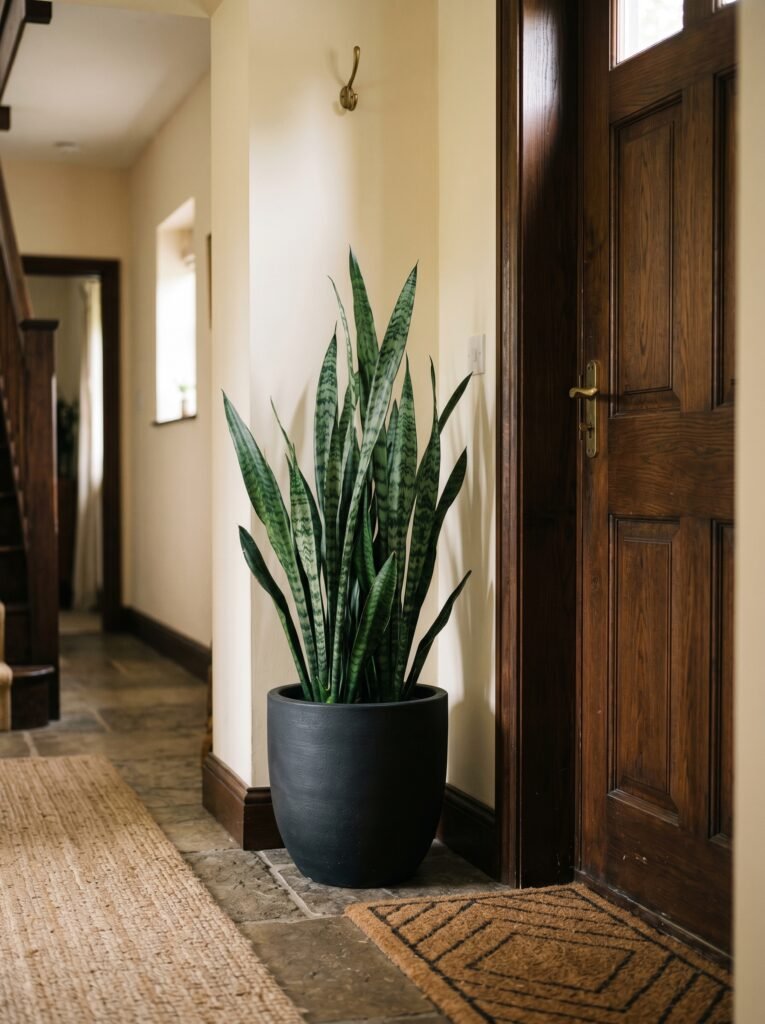
There is something about a living plant in an entrance that no amount of decorating can manufacture. It signals care. It signals life. It softens the angular, hard-surfaced world of most entrance halls with something breathing and growing.
Low-light tolerant plants are especially practical here, since entrance halls rarely get substantial natural light. Snake plants, ZZ plants, pothos, and cast-iron plants all thrive in lower light conditions and require minimal watering — which matters, since the entrance isn’t where most people spend time tending to things.
“A plant by the door is like a small, living welcome — it doesn’t say anything, and yet it says everything.”
A single well-chosen plant in a beautiful pot does more for the warmth of an entrance than an entire shelf of curated accessories. It’s the one detail that almost always makes a space feel more human.
—
10. Art in the Entrance: The First and Last Thing You See
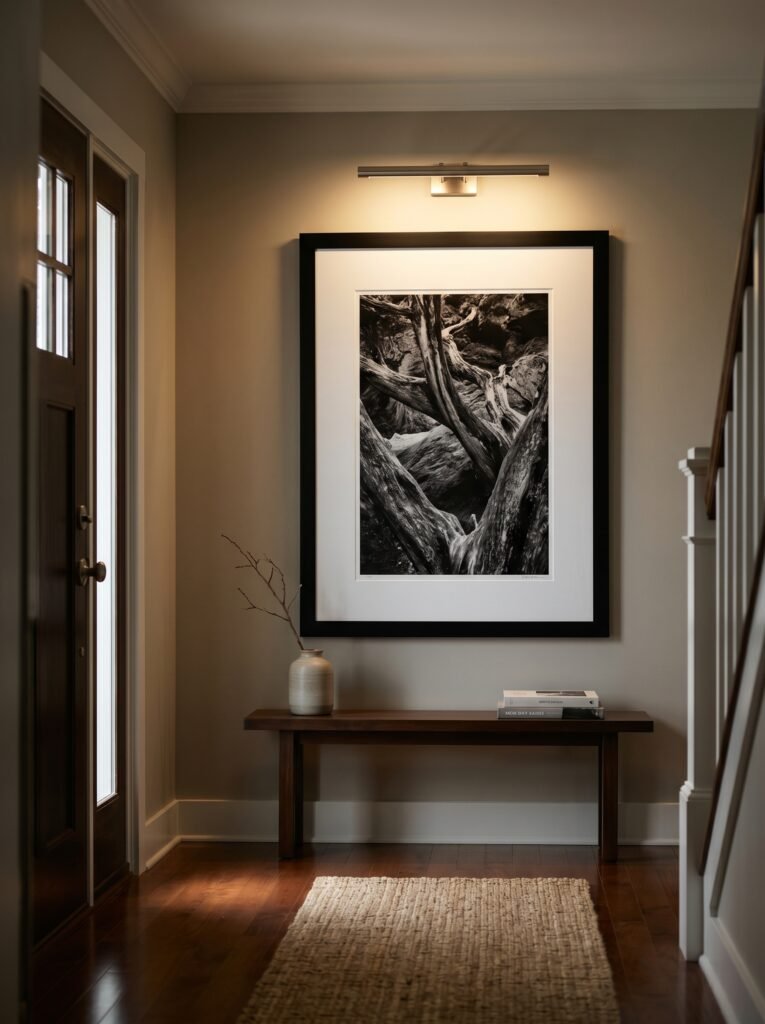
What hangs on your entrance wall is, quite literally, the first piece of art that greets anyone who enters your home — and the last image they carry out with them. This gives the entrance an unusual gallery-like significance that most people underestimate.
Art in an entrance doesn’t need to be expensive or even traditionally “fine.” A large-scale print, a carefully framed textile, a single black-and-white photograph — what matters is that it’s intentional and that it resonates with you. The worst entrance art is the piece you put up to fill a space and never really loved.
Scale matters enormously here. In a small entrance, one larger piece almost always reads better than multiple small pieces that compete with each other and fragment the wall visually.
—
11. Scent: The Sense Your Entrance Interior Often Forgets
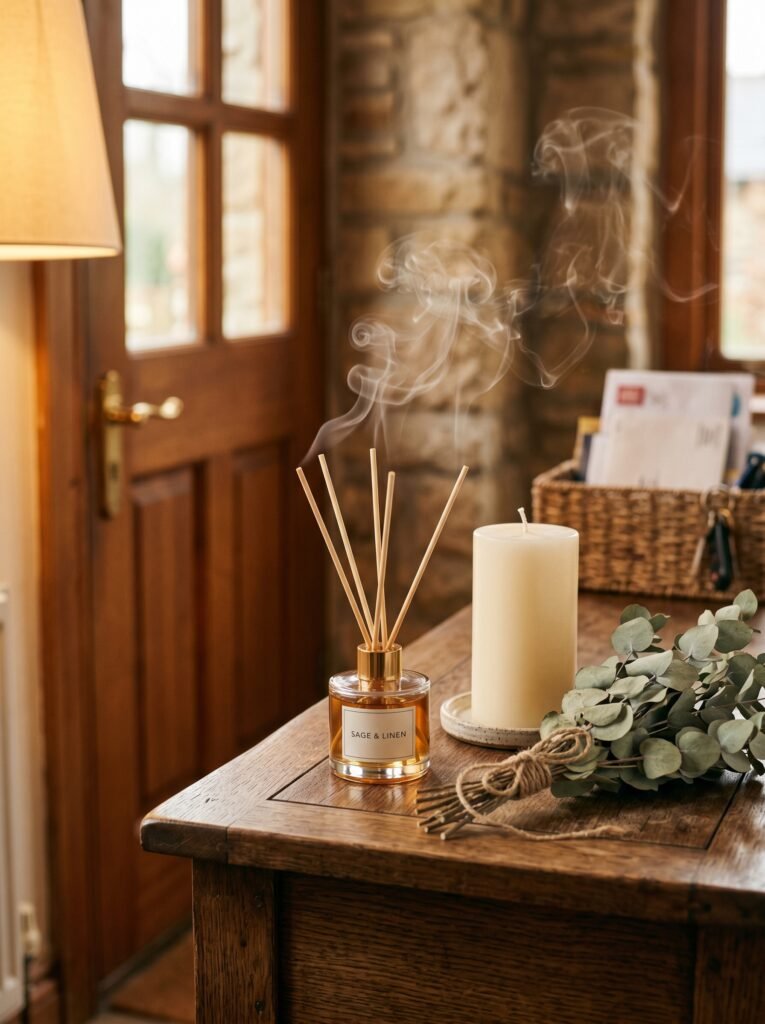
Interior design tends to focus on what we see. But when you walk into a home, one of the most immediate and emotionally charged sensations is scent. A home that smells wonderful upon entry creates an instant feeling of comfort and welcome that visual design alone cannot fully achieve.
This doesn’t require expensive diffusers or elaborate fragrance systems. A small reed diffuser, a scented candle near the entrance, or even a bunch of fresh eucalyptus hung near the door can shift the olfactory experience of an entrance completely.
The goal isn’t an overwhelming fragrance, but a subtle, clean, welcoming scent that signals home. Linen, cedar, citrus, and light florals tend to be universally calming and clean-smelling — never overpowering, always pleasant.
—
12. Small Entrances Are Not a Problem — They’re a Design Opportunity
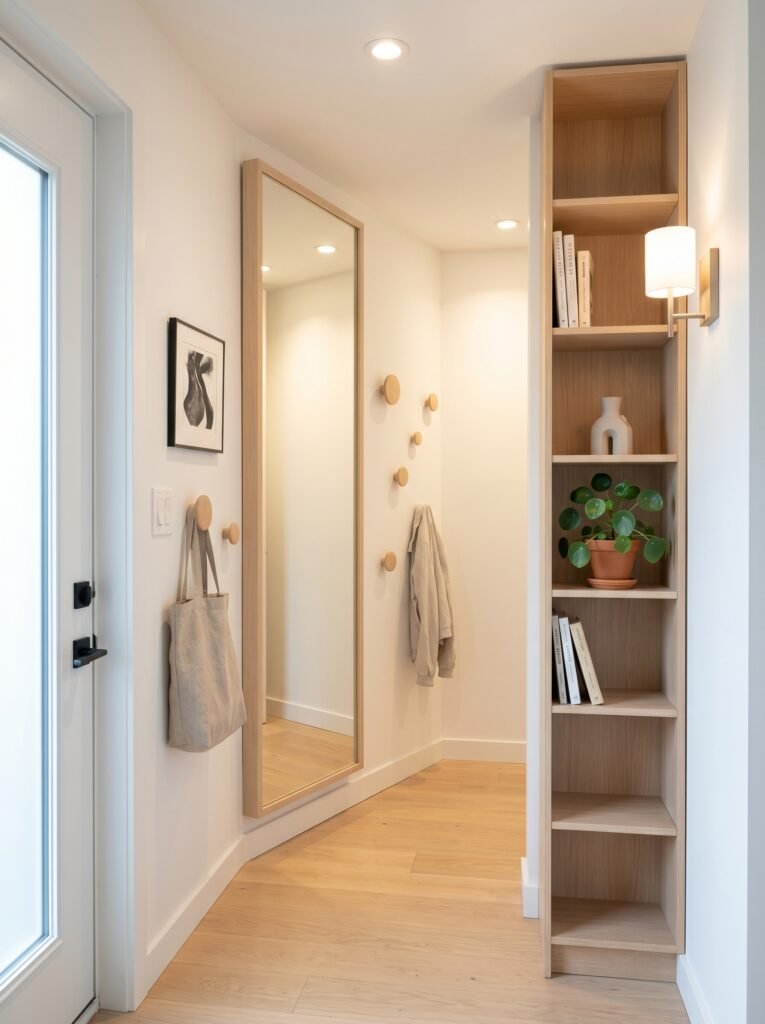
Finally, this: if your entrance is small — and most are — that is not a design failure you need to design around. It’s an invitation to make a compact space feel intentional, warm, and complete.
Small entrances benefit enormously from vertical thinking. Use wall height with tall mirrors, stacked hooks, or a narrow bookshelf. Keep the floor as clear as possible — visual floor space reads as actual space. Choose one or two accessories that genuinely earn their spot rather than filling every surface.
A small entrance that has been thoughtfully curated feels more intimate and personal than a large, underdecorated foyer. Size is not the determining factor. Intention is.
—
🌿 How to Take Care of Your Entrance Interior
Keeping an entrance hall looking and feeling its best is less about dramatic overhauls and more about consistent, small habits.
Declutter regularly, not seasonally. The entrance accumulates — shoes, bags, mail, coats — faster than almost any other area of the home. A five-minute tidy once or twice a week prevents the slow drift into chaos.
Tend to your plants on a simple schedule. Set a reminder on your phone for watering. A neglected plant in the entrance sends the opposite signal of what you want — it signals a space that’s not being cared for.
Refresh your light bulbs before they burn out. A dead or dimming bulb in the entrance casts the whole space into gloom. Keep a spare warm-toned bulb in the closet so the fix takes two minutes.
Clean your entrance mirror and surfaces weekly. Smudged mirrors and dusty console tables are among the first signs that a space is slipping. These are genuinely quick tasks that maintain the overall feeling of care.
Rotate accessories seasonally. Swap in a different plant, a new candle scent, or a different small object with the changing seasons. It keeps the space feeling fresh and intentional without requiring any significant spending.
—
❓ FAQ
Q: What is the most important element to focus on in a small entrance hall? A: Lighting and one strong focal point — like a mirror or a piece of art — will do more for a small entrance than anything else. These two elements create depth, warmth, and visual interest without requiring floor space you may not have.
Q: How do I make a dark entrance hall feel brighter without adding a window? A: Layer your artificial lighting with warm-toned bulbs, add a large mirror to bounce light around the space, and keep wall colors light and reflective. Even replacing a solid front door with one that has a glass panel can introduce meaningful natural light.
Q: What plants work best in a low-light entrance hall? A: Snake plants (Sansevieria), ZZ plants, pothos, and peace lilies are all excellent choices. They’re resilient, attractive, and genuinely tolerant of the lower light conditions most entrance halls offer.
—
💭 Final Thought
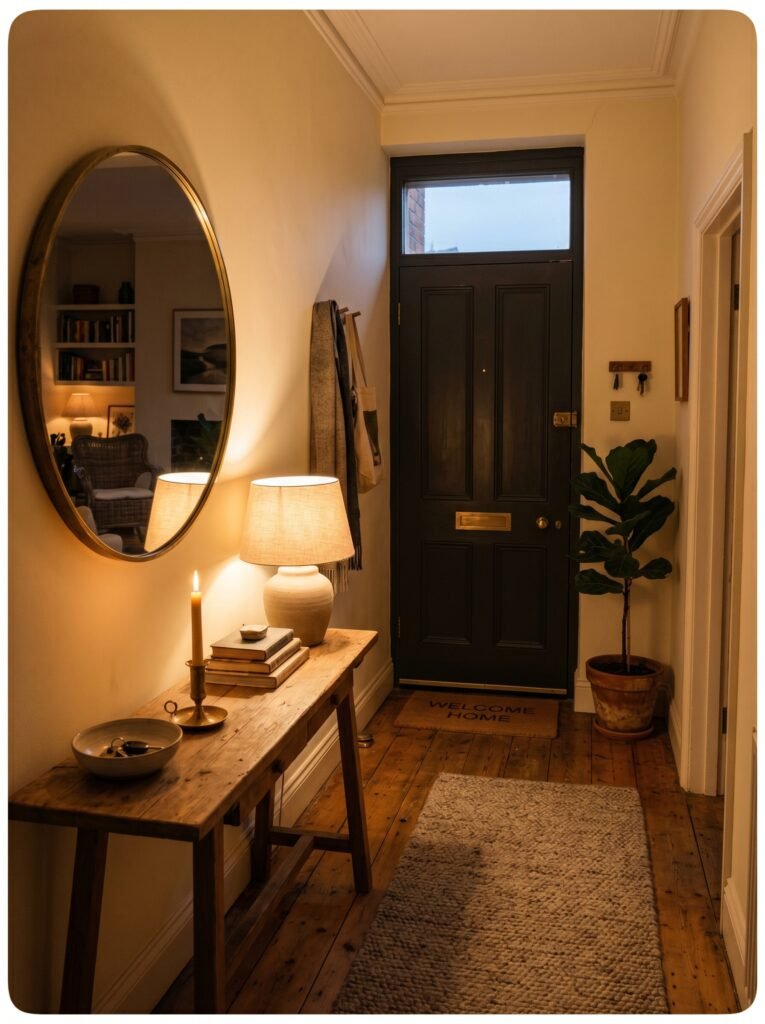
Your entrance is the first thing you feel when you come home and the last thing you feel when you leave. It’s a space that deserves to be designed with the same care and affection as any other room in your home — not because it needs to impress anyone else, but because it should make you feel something true and good every single day.
Design it with intention. Fill it with light and warmth. Let it be the first honest hello your home offers.
And ask yourself this: what does the space just inside your front door say about the life being lived beyond it?