The Home Office Interior That Finally Made Me Love Mondays Again
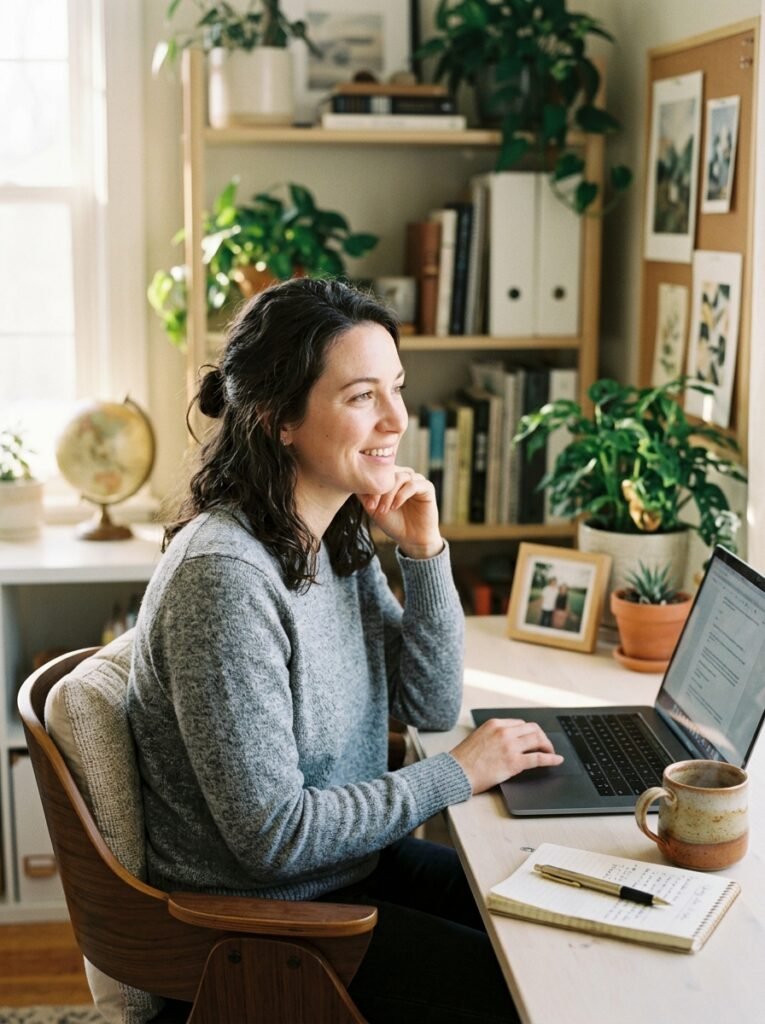
There’s something quietly revolutionary about a space that makes you want to sit down and work. Not because you have to — but because it genuinely feels good to be there. If your home office has ever felt like a place you just tolerate rather than love, this one’s for you.
—
Table Of Content
1. Why Your Home Office Deserves the Same Love as Your Living Room
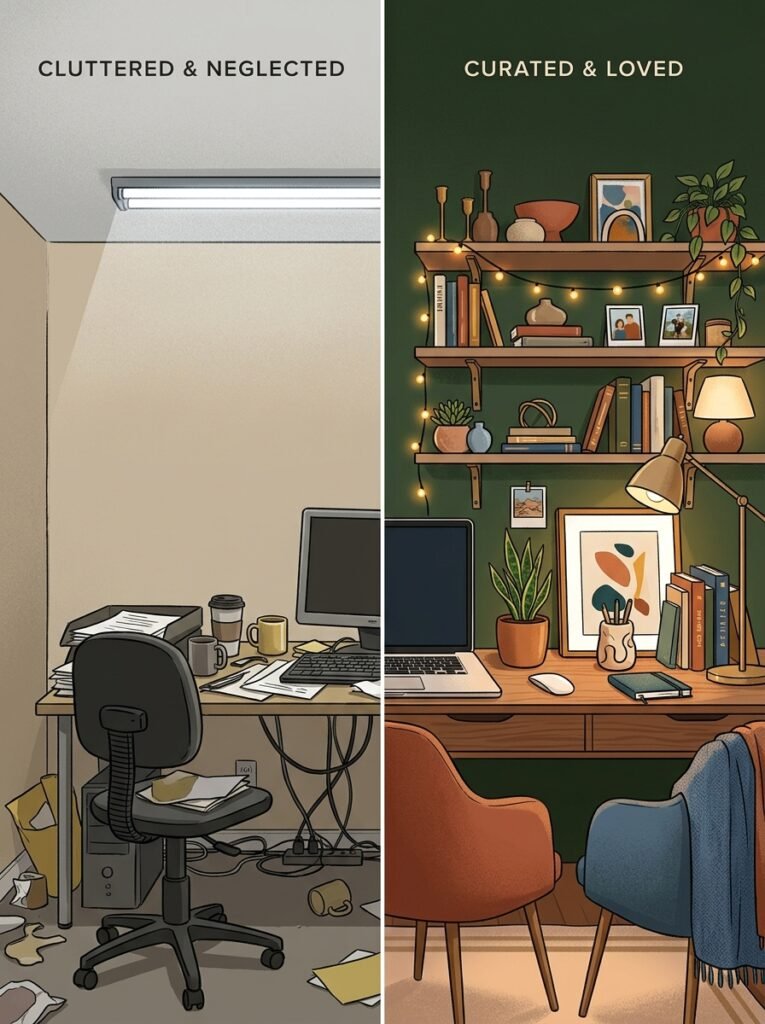
We spend hours obsessing over the perfect sofa, the right throw pillow, the exact shade of cream for the bedroom walls — and then we shuffle into our home office and sit in front of a cluttered desk shoved against a beige wall. Sound familiar?
Here’s the thing: your home office is not a lesser room. It’s arguably the most important room in the house. It’s where ideas are born, deadlines are met, businesses are built, and careers are shaped. The energy of that space directly affects the quality of your thinking, your motivation levels, and even your emotional wellbeing throughout the day.
Interior designers have long known that intentional design isn’t a luxury — it’s a tool. When a space is thoughtfully arranged, beautifully lit, and aligned with your personal aesthetic, your brain relaxes into focus. The friction disappears. The resistance lifts. And suddenly, Monday mornings feel a little less heavy.
“A well-designed home office doesn’t just look good — it quietly changes how you think, feel, and perform every single day.”
2. The Color on Your Walls Is Doing More Than You Think
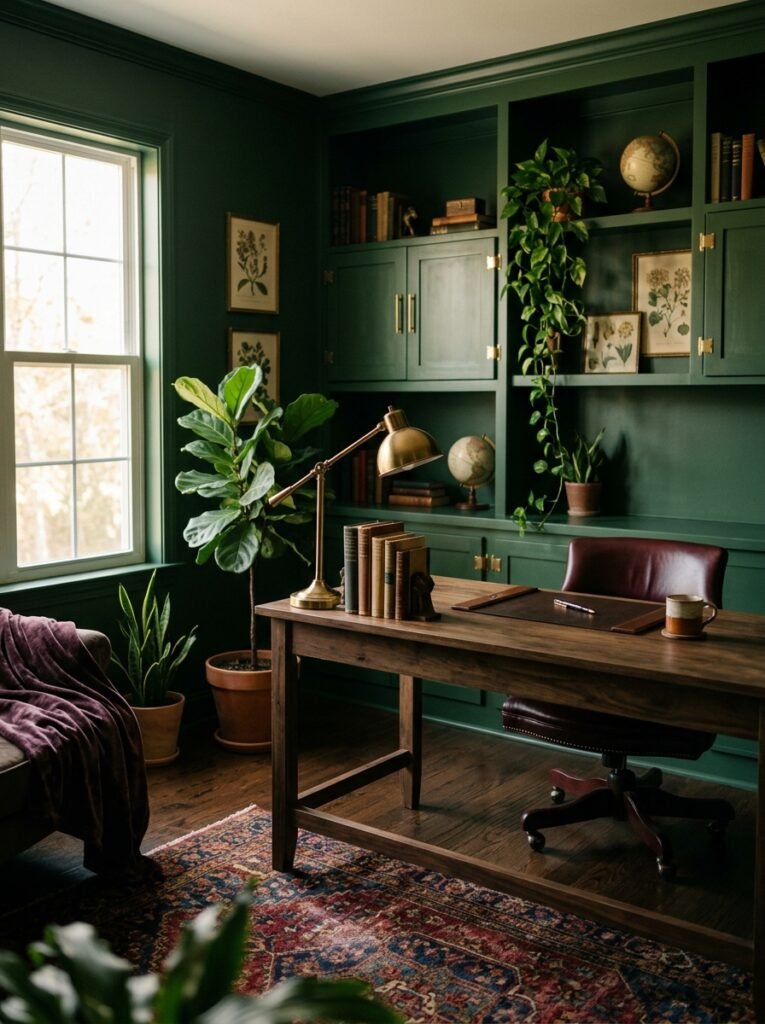
Imagine walking into a room painted in deep forest green. There’s something grounding about it — something almost meditative. Now imagine the same room in a cold, fluorescent white. Completely different feeling, right?
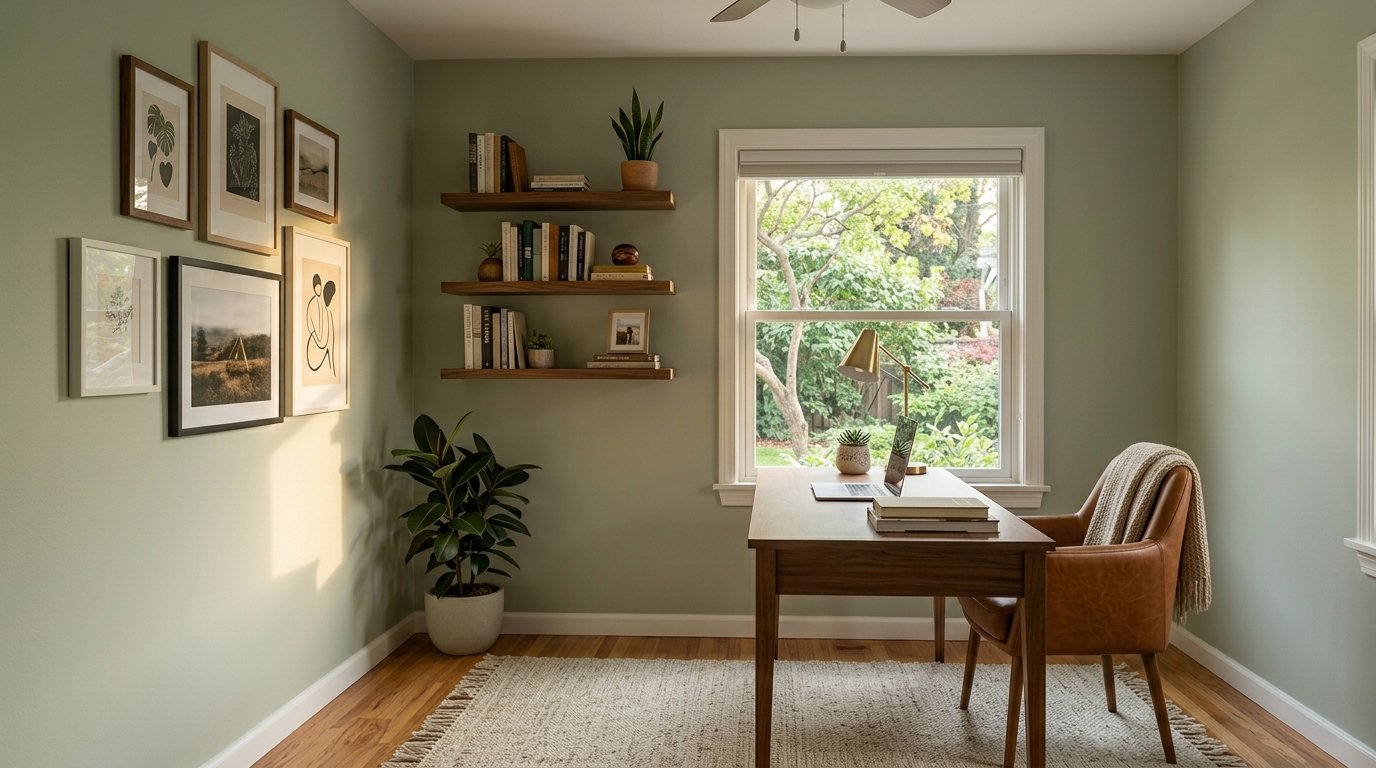
Color psychology is one of the most powerful and underused tools in home office design. The hues you choose for your walls, your furniture, and even your desk accessories send constant signals to your nervous system. Soft sage greens promote calm focus and reduce cortisol. Deep navy blues evoke confidence and creative depth. Warm terracotta adds energy without anxiety. Pale, dusty blues can actually slow your heart rate and make sustained concentration easier.
If repainting feels like too big a commitment, start smaller. A deeply colored accent wall behind your desk, a rich-toned bookshelf, or even a large piece of artwork with intentional color can shift the entire psychological atmosphere of the room. Color doesn’t have to shout to be heard — sometimes a whisper is enough.
3. The Desk Placement Mistake That Could Be Draining Your Focus
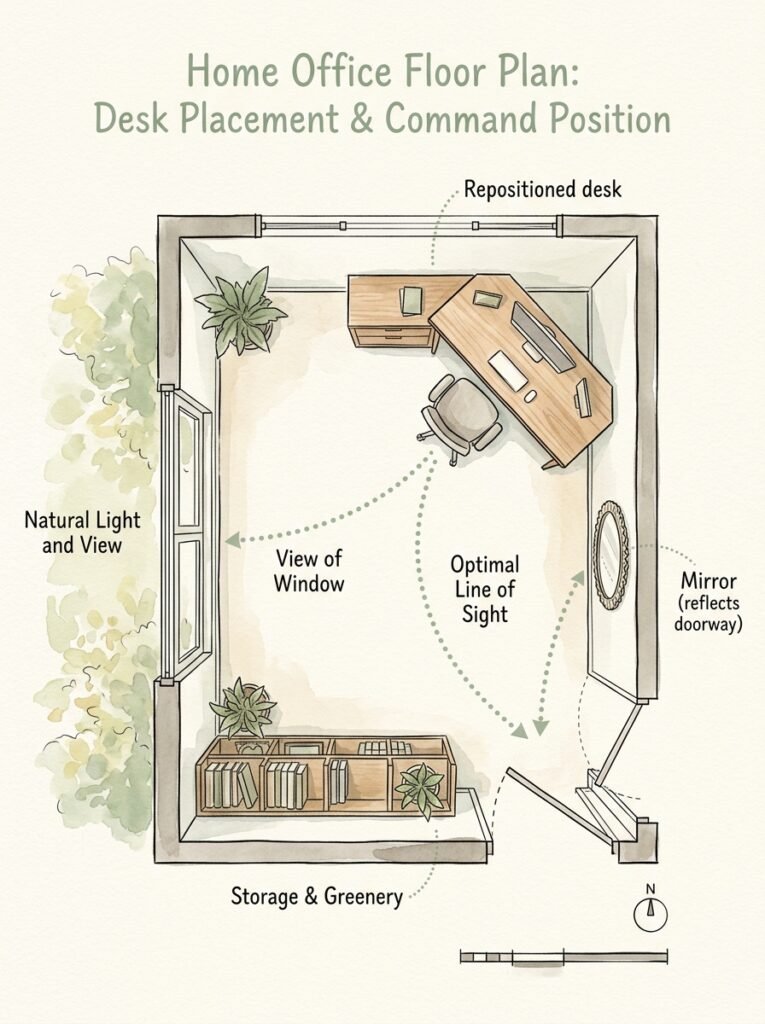
There’s a concept in interior design called the “command position” — and it matters enormously in a home office setting. The command position places your desk so that you’re facing the door, or at least diagonally toward it, rather than with your back exposed to the room’s entrance.
This isn’t superstition. It’s rooted in something deeply primal. When your back faces a door, your subconscious mind stays partially alert — scanning for movement, tracking sounds — which creates a low-grade tension you may not even consciously register. Over time, that tension quietly depletes your cognitive reserves.
Repositioning your desk to face outward — ideally toward a window with a calming view, or at the very least toward an open wall — can produce a surprisingly immediate shift in how grounded and focused you feel while working. If your room layout doesn’t allow for this, a small mirror positioned to reflect the doorway can offer a psychological compromise your brain will quietly appreciate.
4. Lighting That Actually Works With Your Brain, Not Against It
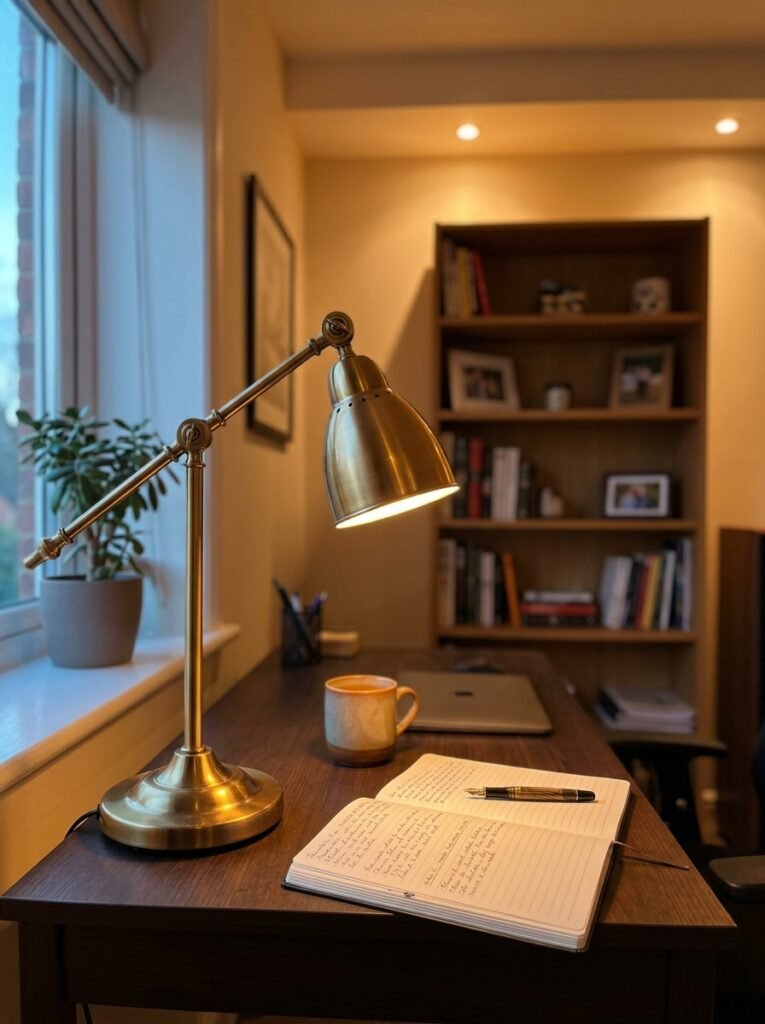
Nothing undermines a beautiful home office faster than bad lighting. And yet, it’s one of the first things people overlook when designing a workspace at home.
Natural light is always the gold standard. Studies in environmental psychology have consistently shown that workers in naturally lit environments sleep better, feel more energetic, and report higher levels of overall satisfaction with their work. If you’re lucky enough to have a window, position your desk to receive side lighting rather than direct overhead glare — this reduces eye strain significantly.
For artificial lighting, the key is layering. Overhead ambient light provides general illumination, but a warm-toned desk lamp adds focused task lighting without the harsh flattening effect of a single overhead source. In the evening, swap cool daylight bulbs for warm white ones — this signals to your body that the workday is winding down, making it easier to transition out of work mode when you close that laptop.
5. Small Shelving Decisions That Make a Surprisingly Big Difference
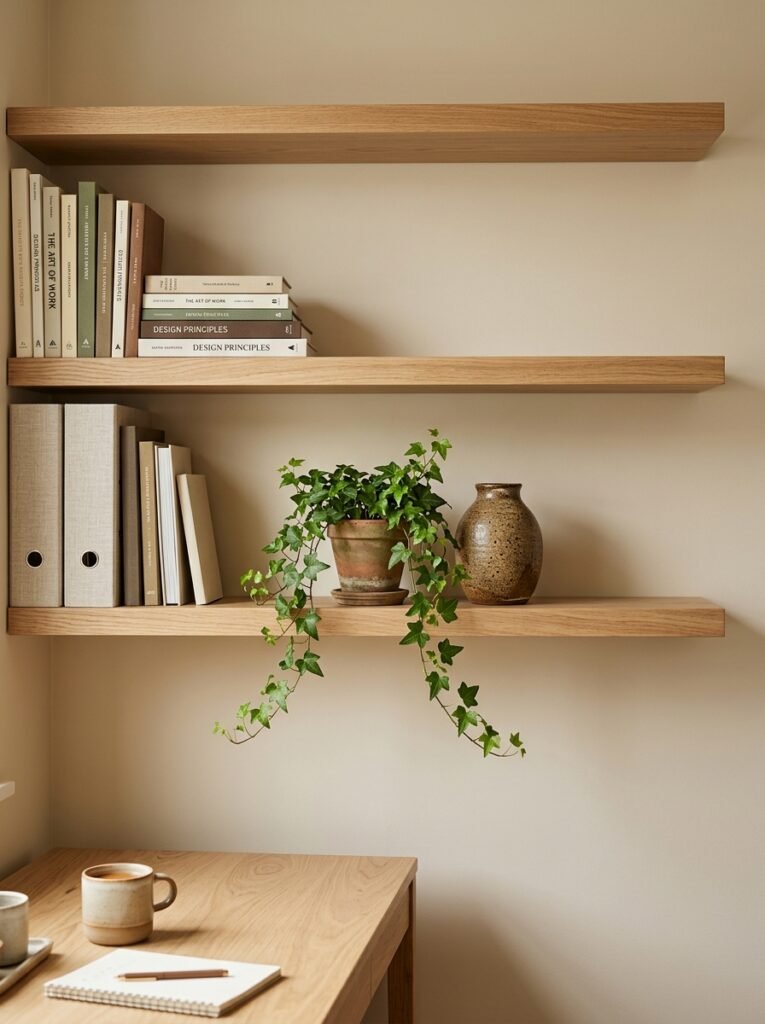
Shelving in a home office is rarely just storage. Done well, it’s architecture. It creates visual rhythm, frames the space, and tells a story about who you are and how you think.
The most beautiful home office shelves tend to follow an informal rule: one-third function, one-third decoration, one-third breathing room. Books and binders handle the functional third. A small plant, a meaningful object, a piece of pottery, or a framed photo take care of the decorative third. And the empty space — the negative space — is what makes the whole arrangement feel intentional rather than cluttered.
Floating shelves above the desk are particularly effective in smaller rooms because they draw the eye upward and create a sense of vertical space. Open shelving also keeps your most-used materials accessible without the heaviness of bulky cabinetry. And when styled thoughtfully, they become one of the most photographed — and most Pinterest-saved — elements of a home office design.
“The most inspiring offices aren’t the most filled ones — they’re the ones that leave room for the mind to breathe.”
6. How Plants Quietly Transform the Energy of a Workspace
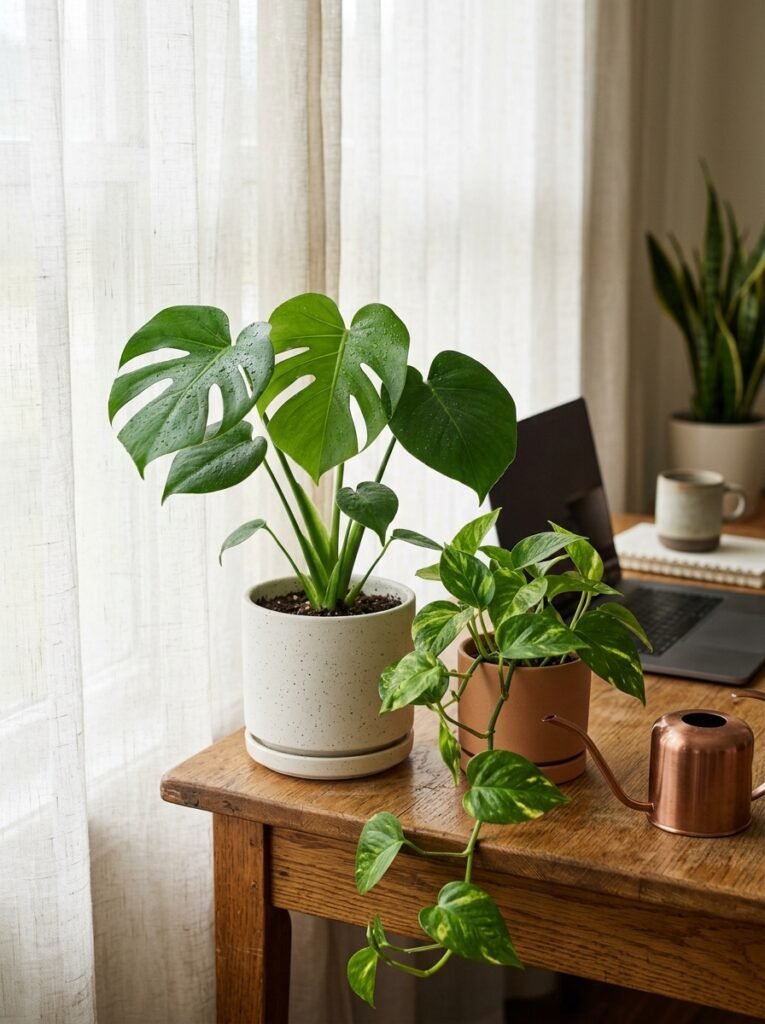
There’s something almost impossible to fully explain about what a living plant does to a room. It’s not just aesthetic — though the visual effect is undeniable. It’s something more elemental. A plant in a home office introduces the natural world into an otherwise entirely manufactured environment, and your nervous system responds to that in measurable ways.
Research from NASA’s clean air studies and subsequent environmental psychology research has shown that indoor plants reduce airborne toxins, increase humidity to comfortable levels, and meaningfully lower cortisol. But beyond the science, there’s a simpler truth: tending to something living — even briefly, even just watering it once a week — reminds you that you are not just a productivity machine. You are a person. And that reminder, offered quietly by a trailing pothos or a compact monstera on the corner of your desk, is worth more than any motivational poster.
Low-maintenance varieties like ZZ plants, snake plants, peace lilies, and philodendrons are ideal for home offices where neglect is sometimes inevitable. Place them where they’ll receive indirect light, and let them do their quiet, restorative work.
7. The Hidden Power of Choosing the Right Chair
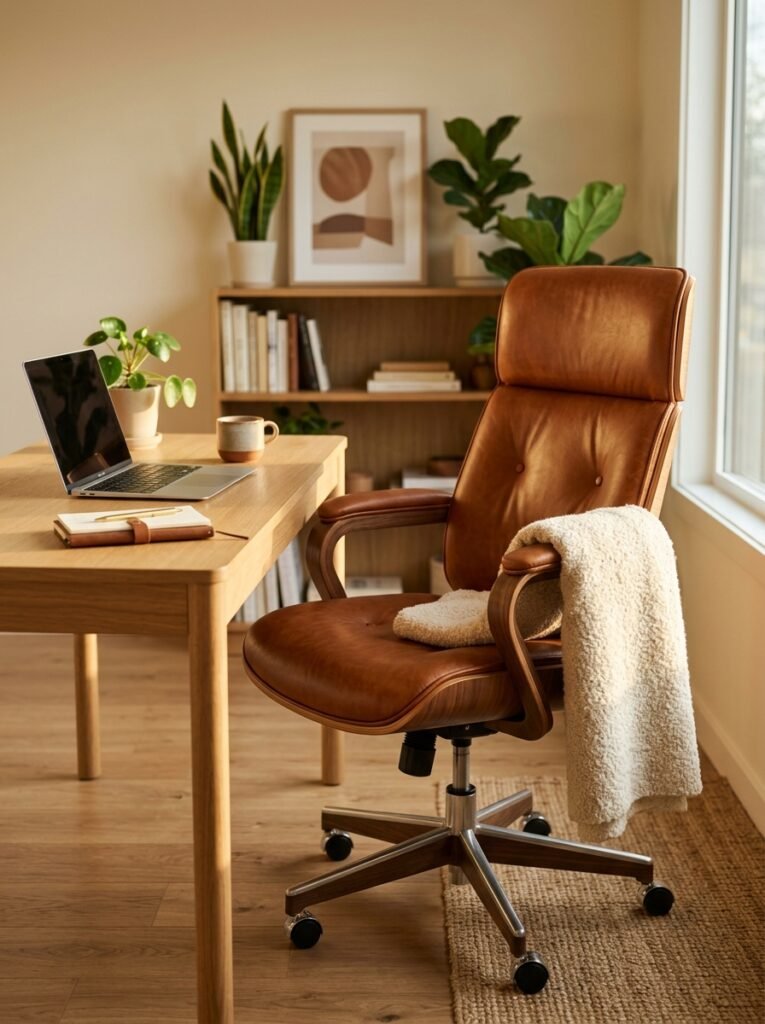
If your home office chair is an afterthought — a dining chair dragged in from the kitchen table, or the cheapest ergonomic option you found at midnight on a discount website — you’re paying for that decision with your body every single day.
The chair is not just furniture. It’s the interface between you and your work. A good home office chair supports your lumbar spine naturally, allows your feet to rest flat on the floor, keeps your screen at eye level without straining your neck, and doesn’t make you shift uncomfortably every twenty minutes. When your body is physically comfortable, your mind stops managing physical discomfort and is free to focus entirely on the work in front of you.
Aesthetically, the chair also anchors the room. A beautiful desk chair — whether it’s a sculptural modern piece in warm cognac leather, a classic mid-century design in bouclé fabric, or a clean Scandinavian mesh form — becomes a design statement. It’s one investment in your home office that pays dividends both visually and physically every single day.
8. Why a Gallery Wall Behind Your Desk Changes Everything
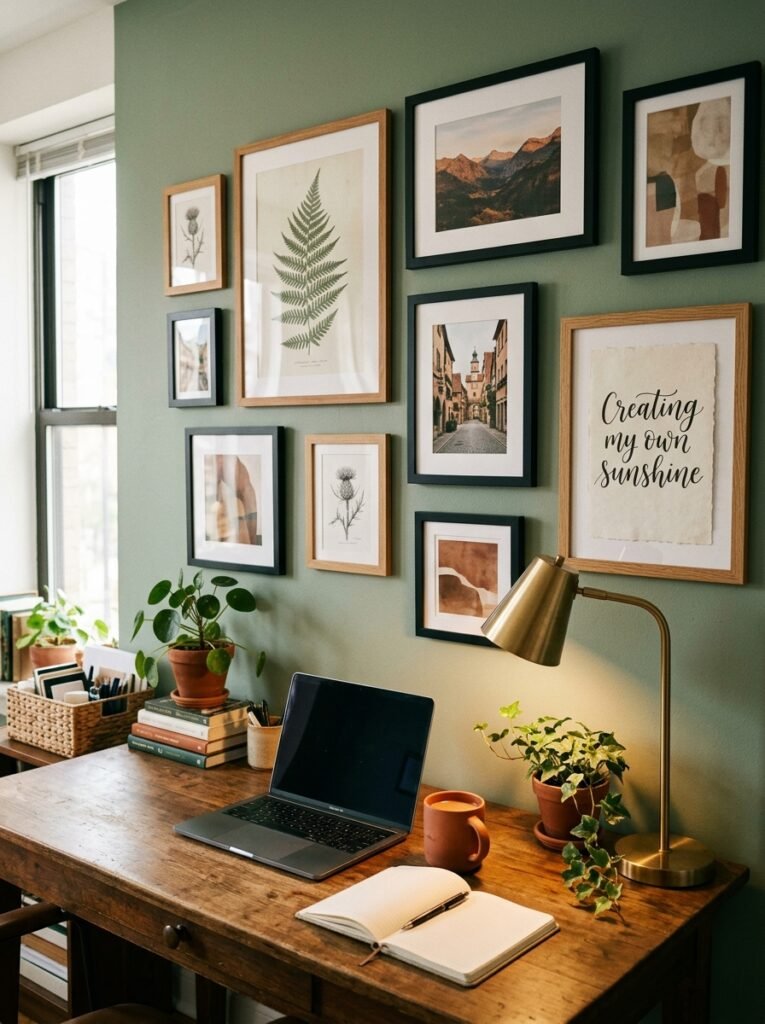
The wall behind your desk is prime real estate, and most people either ignore it completely or hang a single uninspired piece of wall art and call it done. But this particular wall — the one that frames you on every video call, the one you spend the most time looking at, the one visitors see first — deserves real thought.
A curated gallery wall behind the desk does something remarkable. It gives the room a focal point, makes the space feel lived-in and personal rather than sterile, and provides a source of visual micro-inspiration throughout the day. The secret to a gallery wall that works is cohesion — choose a limited palette (two or three colors), mix frame sizes deliberately, and include pieces that actually mean something to you. This is not a place for generic stock art prints. It’s a place for images that move you — travel photographs, botanical illustrations, hand-lettered quotes, meaningful art.
The result is a background that says something true about who you are. And that authenticity — that visual autobiography — makes the whole space feel more alive.
9. Decluttering With Intention: The Difference Between Sparse and Sterile
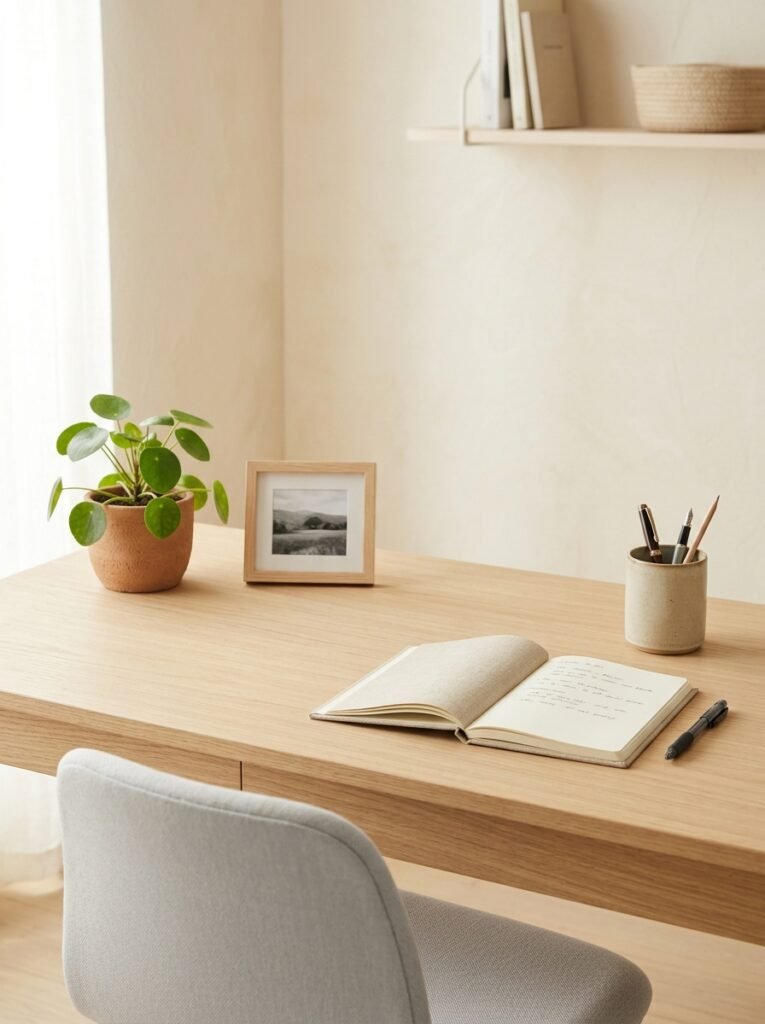
There’s a version of minimalism that goes too far — where the room becomes so stripped of personality that it starts to feel clinical, joyless, and oddly anxious to work in. And there’s a version that gets the balance exactly right, where every object earns its place and the space exhales with calm purpose.
The key to intentional decluttering in a home office is distinguishing between objects that serve a function, objects that genuinely inspire you, and objects that are simply there because you haven’t made a decision about them yet. The last category is where clutter lives. It’s not the books or the plants or the beautiful ceramic pen holder — it’s the expired coupon pinned to the corkboard, the charging cable for a phone you no longer own, the sticky note from three weeks ago that you keep meaning to throw away.
A clear surface doesn’t have to mean an empty one. It means a surface where everything you see either helps you work or reminds you why you love what you do. That distinction, practiced consistently, produces the kind of workspace that actually feels good to inhabit.
“Decluttering isn’t about owning less — it’s about making sure everything you own is worth keeping.”
10. Scent, Sound, and the Invisible Design Elements Nobody Talks About
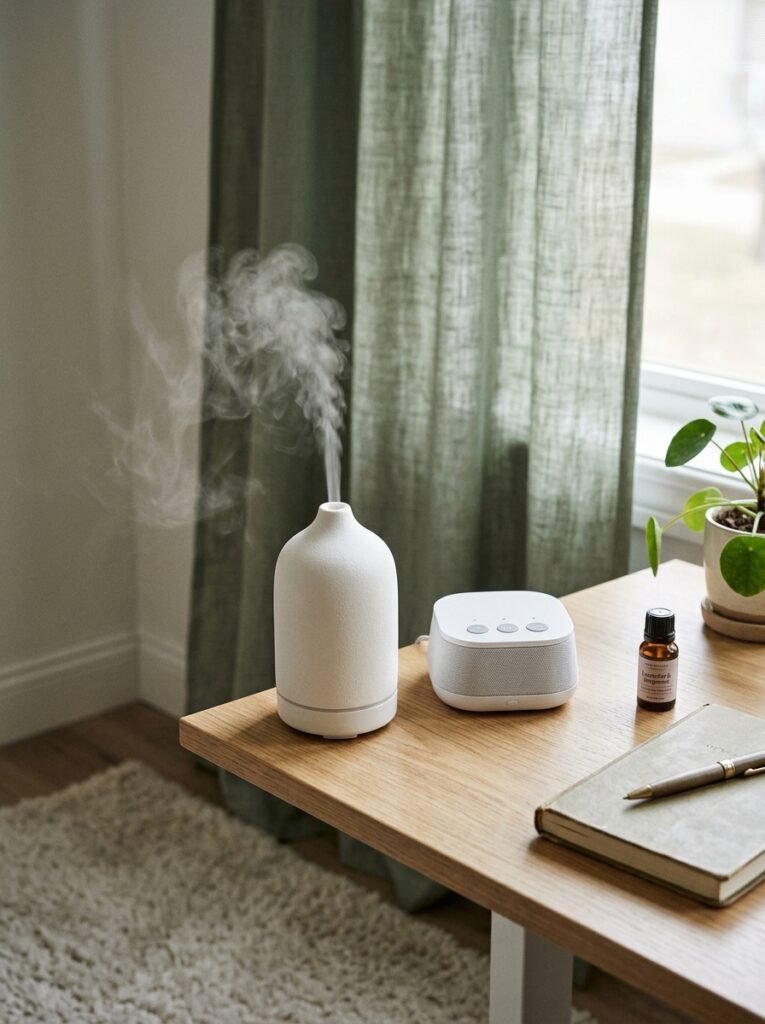
Interior design conversations almost always focus exclusively on the visual — and for good reason, since our eyes are the dominant sense by which we experience a space. But the home office that truly nourishes focus and creativity engages more than just sight.
Scent is one of the most direct routes to the brain’s emotional center. A diffuser with rosemary essential oil during deep work sessions has been shown in controlled studies to measurably improve memory recall and concentration. Citrus notes energize without overstimulating. Lavender at the end of the workday can genuinely signal the transition into rest.
Sound matters equally. If you live in a noisy environment, acoustic panels disguised as fabric wall hangings can reduce echo and distraction without requiring soundproofing. A small white noise machine tucked beneath the desk creates a neutral auditory backdrop that helps the brain sustain focus for longer periods. Even the material choices in the room — soft rugs, upholstered chairs, linen curtains — absorb sound and make the space feel quieter and more contained.
11. Designing a Home Office in a Small Space Without Sacrificing Style
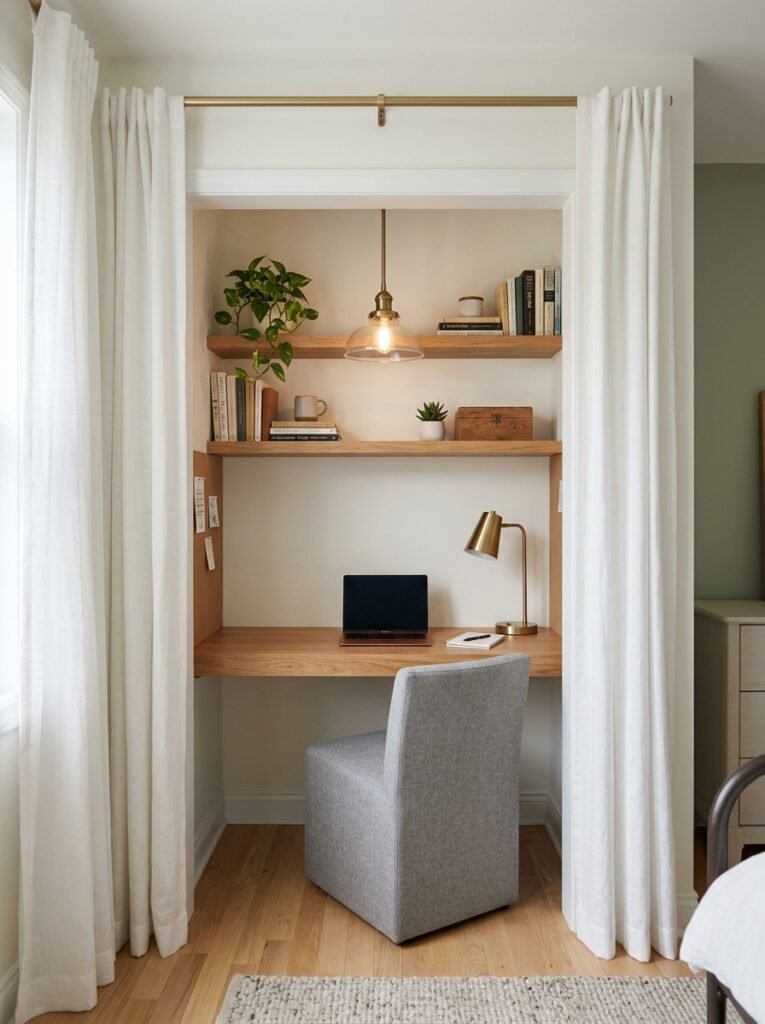
Not everyone has the luxury of a dedicated room. Many home offices begin as a corner of a bedroom, a nook in the living room, or a converted closet — and all of those options can be genuinely beautiful if approached with creativity and intention.
The converted closet, sometimes called a “cloffice,” has become one of the most popular small-space home office solutions on Pinterest for good reason. Removing the closet doors and installing a custom desk surface, shelving, and focused lighting creates a compact but fully functional workspace that can be visually closed off after hours. This boundary between work and rest is psychologically significant — particularly for those who struggle to mentally “leave” work when working from home.
In a bedroom corner, a strategic room divider — whether a decorative curtain, a tall bookshelf used as a partition, or even a large plant — can create enough visual separation to establish a distinct work zone. The goal is always the same: to make the space feel purposeful, contained, and separate from the rhythms of the rest of the room.
12. The Final Touch That Makes a Home Office Feel Truly Yours
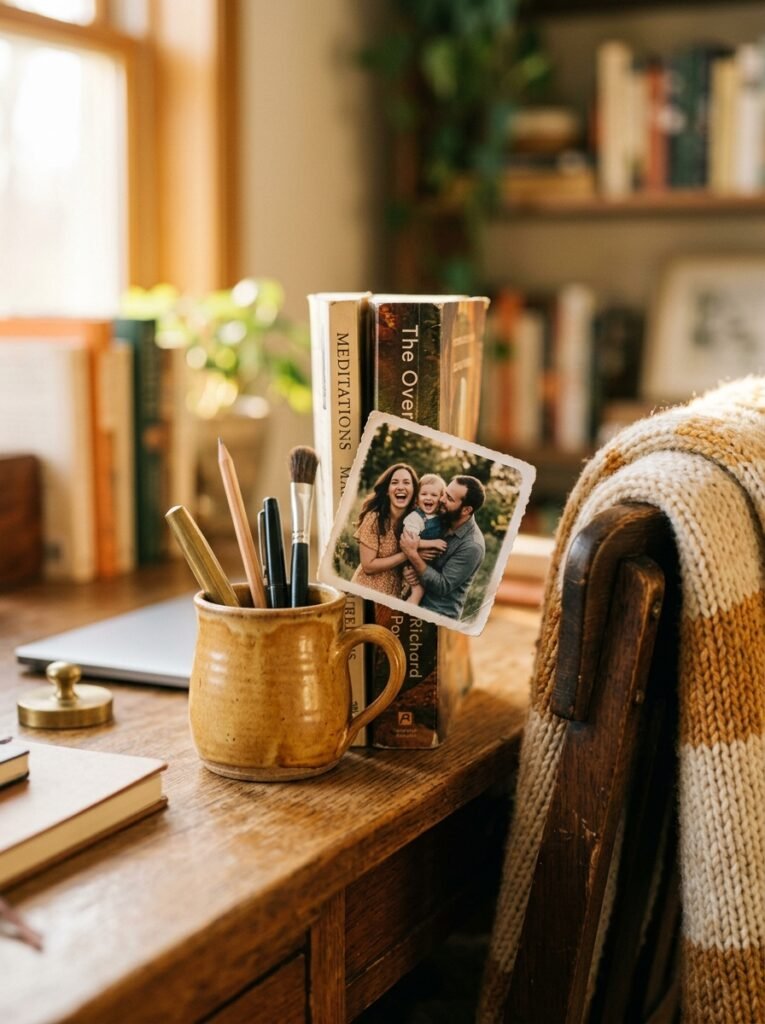
After the desk is positioned, the shelves are styled, the lighting is layered, and the walls are painted — there’s still one thing that separates a beautiful home office from a truly personal one. And it’s the details.
It’s the mug that holds your pens — the one your daughter made in her pottery class. It’s the small framed photo tucked between books on the shelf. It’s the throw blanket draped over the chair for the late-afternoon hours when the room gets cold. It’s the playlist you made that only plays when you’re working on something you love.
These small, seemingly insignificant choices are actually the soul of the space. They are what transform a designed room into a lived-in one. And they are, ultimately, what make you want to return to that desk tomorrow morning — not out of obligation, but because some quiet part of you knows that it’s yours.
—
🌿 How to Take Care of Your Home Office Interior
Maintaining a home office that continues to inspire you requires a little regular attention — not a massive overhaul every few months. A quick weekly surface clear keeps clutter from accumulating into overwhelm. Every month or so, step back and look at the room with fresh eyes — notice what’s no longer serving the space and remove it without guilt. Dust your plants, wipe down your shelves, and refresh the arrangement of your desk objects the way you might refresh a bouquet of flowers. Seasonally, consider swapping out one or two decorative elements — a different candle scent, a new print in the gallery wall, a fresh plant — to keep the space feeling alive and evolving with you rather than static and stale.
—
❓ FAQ
Q: What’s the most important element to get right in a home office interior? A: If you could only invest in one thing, make it the lighting. Natural light paired with layered artificial lighting has the most direct impact on your focus, energy, and long-term eye health. Everything else can be built gradually around a well-lit foundation.
Q: How can I make a small home office feel bigger without knocking down walls? A: Use light, reflective colors on the walls and keep the floor as clear as possible. Vertical shelving draws the eye upward and creates an impression of height. A well-placed mirror — particularly one that reflects natural light — can visually double the perceived size of even the smallest workspace.
Q: Do I really need a dedicated desk, or can I work from my kitchen table or sofa? A: A dedicated desk — even a small one — makes a significant psychological difference. The physical act of sitting at a designated workspace trains your brain to shift into a focused state more readily. Working from your sofa or kitchen table blurs the mental boundaries between rest and productivity, which can quietly erode both.
—
💭 Final Thought
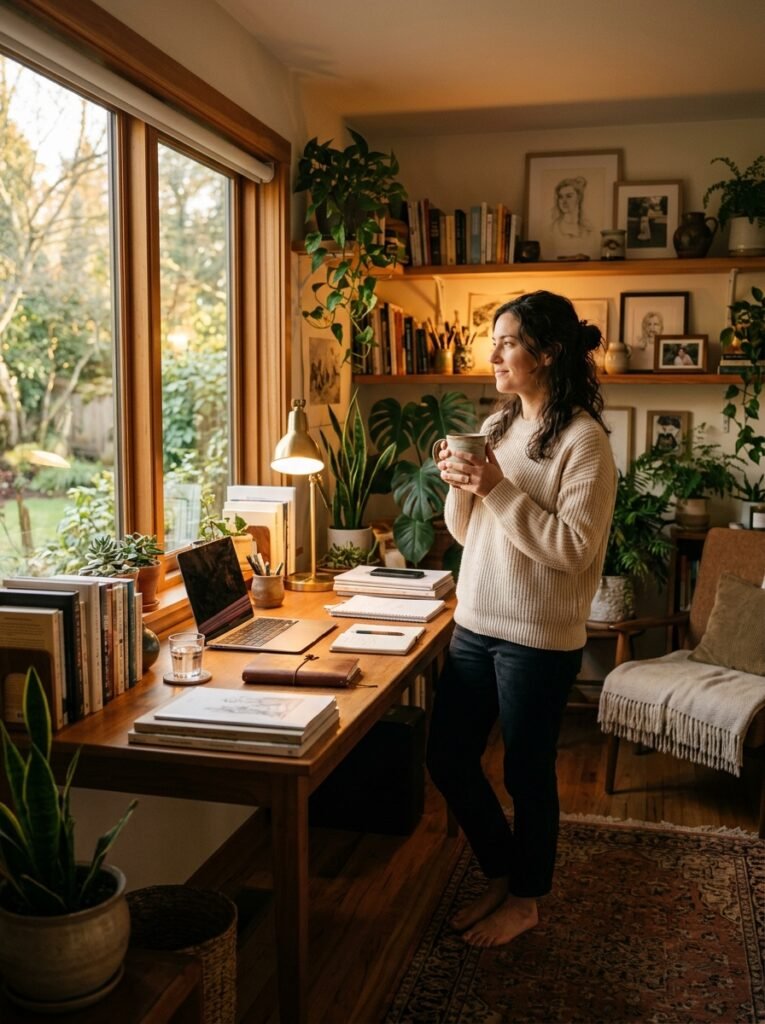
Your home office is not just a place where work happens — it’s a space that shapes how you feel about the work itself. When a room is designed with care, with intention, and with your particular needs and personality in mind, something shifts. The morning resistance softens. The creative blocks come less often. The hours feel different. And that, more than any productivity hack or time management system, might be the most meaningful change you can make in your working life. So here’s the question worth sitting with: if your home office could speak, what would it say about the way you value your own time, creativity, and wellbeing?