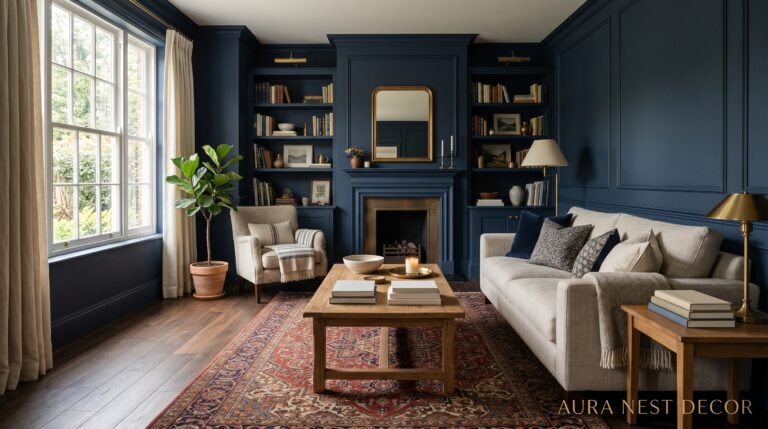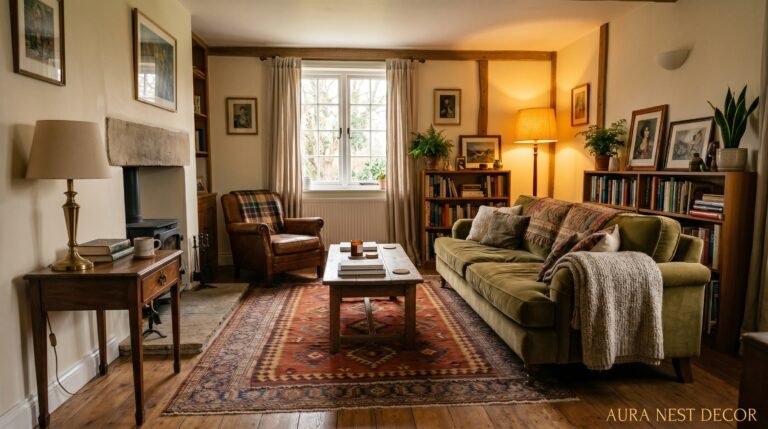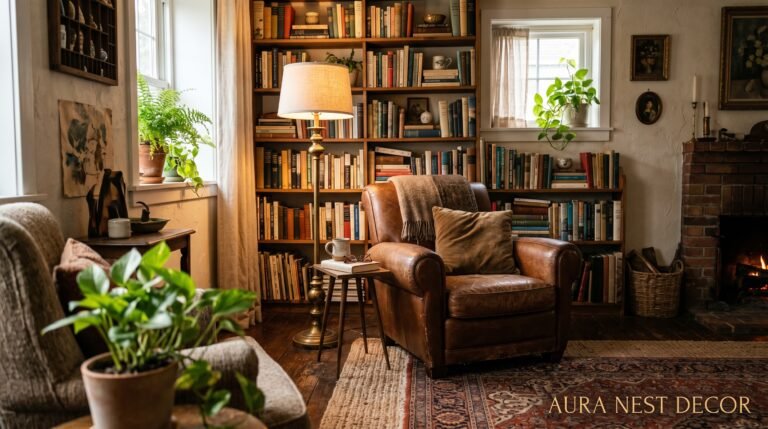
The Living Room Look That Somehow Feels Both Retro and Completely Right Now
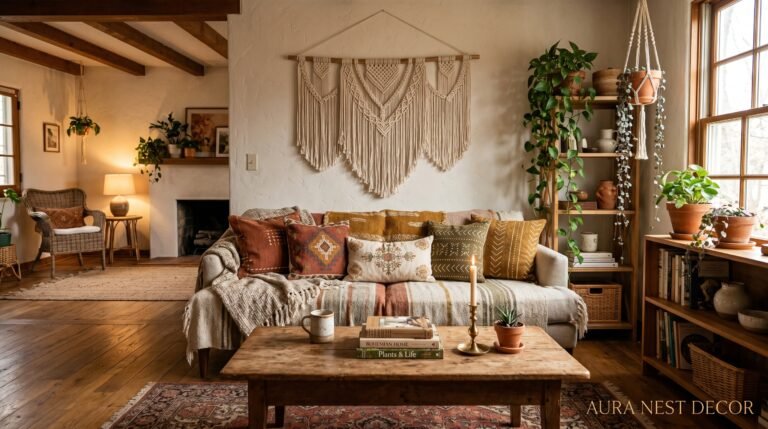
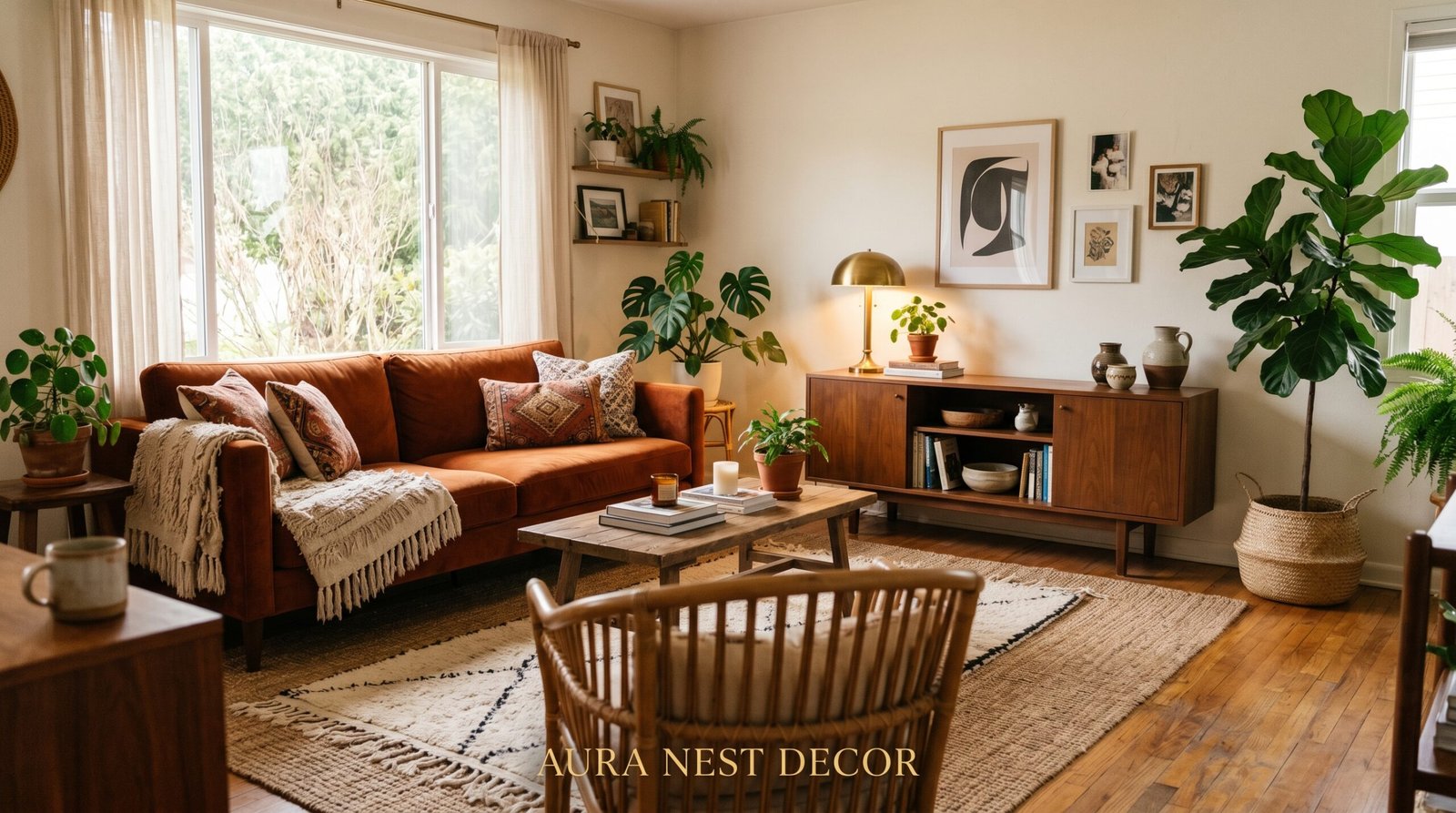
You’ve seen it everywhere lately. That living room with the walnut sideboard, the macramé hanging, the low-slung sofa in burnt sienna — and somehow it all works. It shouldn’t. But it does.
Mid century modern and bohemian design shouldn’t be natural partners. One is disciplined, architectural, deliberately restrained. The other throws open the doors and lets everything in. And yet when you put them in a room together, something clicks into place that feels more alive than either style could manage alone.
—
1. Why These Two Styles Were Always Going to End Up Together
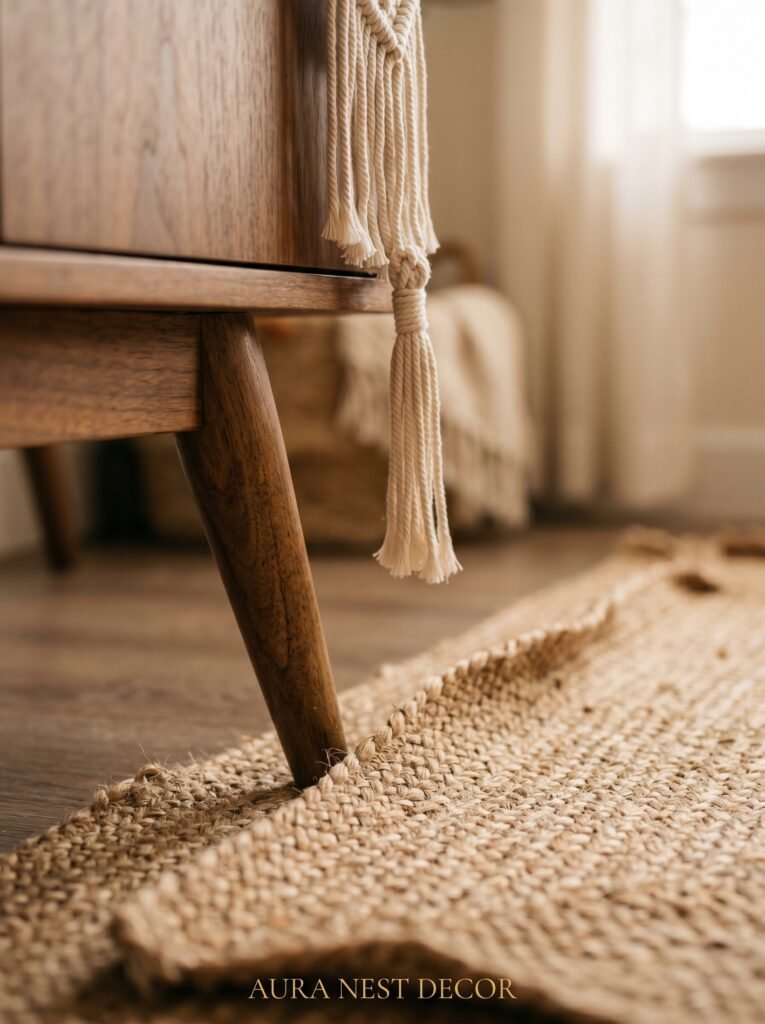
There’s a reason this pairing keeps landing on every Pinterest board and Instagram feed right now, and it goes deeper than trend cycles.
Mid century modern design — the movement that dominated American and British interiors roughly from the 1940s through the 1960s — was always rooted in a kind of optimism. Clean lines, yes. Functional furniture, absolutely. But underneath all that restraint was a genuine love of nature. Organic shapes. Wood with visible grain. Chairs that curved like a hand cupping water. The Eames chair wasn’t cold — it was body-shaped. It was human.
Bohemian design carries the same love of natural materials, but it wears it differently. Louder. Layered. Textured. Where mid century is the crisp linen shirt, boho is the vintage kimono. But both are reaching for the same thing: a space that feels like it was chosen by a real person, not assembled from a catalog.
When you combine them, the MCM elements give boho its backbone. The clean-lined furniture stops the space from feeling chaotic. And the boho layers — the textiles, the plants, the vintage finds — stop MCM from feeling like a furniture showroom.
That’s the whole secret. Structure and soul in the same room.
“MCM gives the room its bones. Boho gives it a heartbeat.”
—
2. The Sofa Decision That Sets the Tone for Everything Else
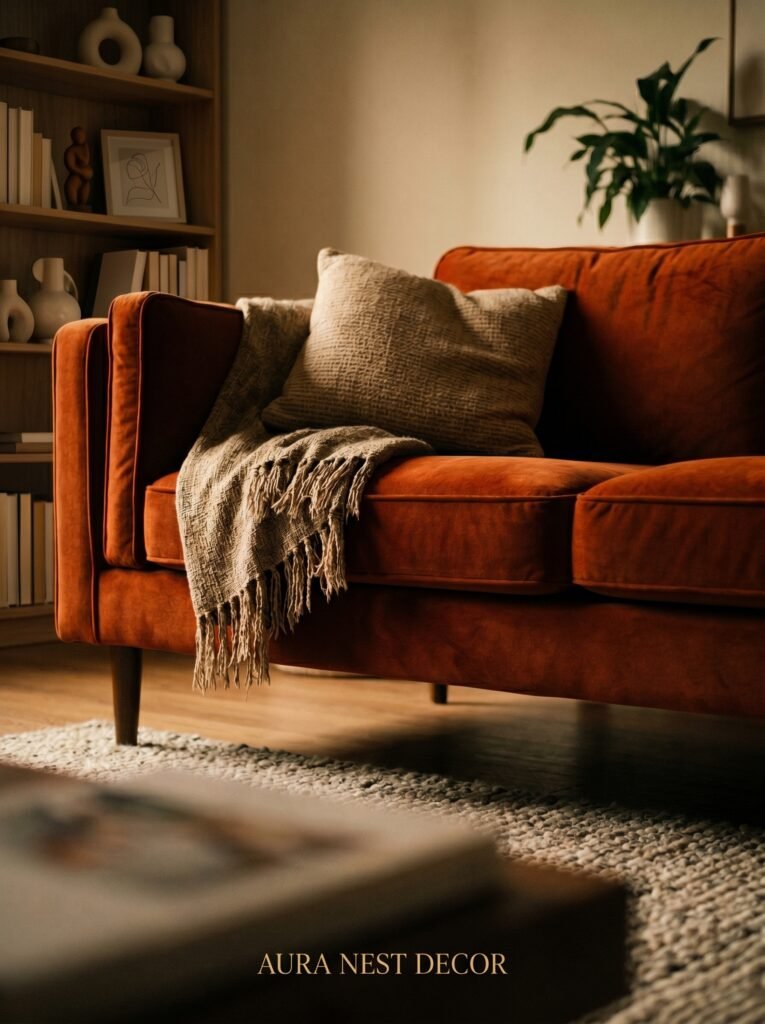
Start here. Every single design decision in a mid century modern boho living room radiates outward from the sofa, and getting this wrong means fighting the room forever.
You want low. Low profile, low arms, legs that lift the frame off the floor — that slight visual lift is a hallmark of MCM furniture and it does something genuinely magical to a room: it makes the ceiling feel higher. A sofa sitting flat on the ground feels heavy. A sofa on tapered legs feels like it’s floating.
For the boho element, bring it in through the upholstery. Forget plain grey. Burnt orange, terracotta, deep olive, rust, or even a warm cream with a tactile texture like boucle or brushed velvet — these are the colors that bridge both worlds. They’re earthy enough to feel bohemian, but on a clean-lined frame they read as intentional rather than wild.
Throw cushions do a lot of work here. A mix of woven textures, geometric prints borrowed from the sixties, and maybe one with a vintage kilim pattern — that combination signals the whole style story immediately. Keep the main sofa grounded, then let the cushions do the talking.
In a smaller British terraced house or a US apartment, a two-seat sofa plus an accent chair will often serve the space better than a large L-shape. The chair can be a statement: a tulip-style accent chair in a contrasting color, a rattan armchair with a cushion, or a genuine vintage find from a charity shop or an estate sale.
—
3. The Color That Keeps Appearing in Every Beautiful MCM Boho Room
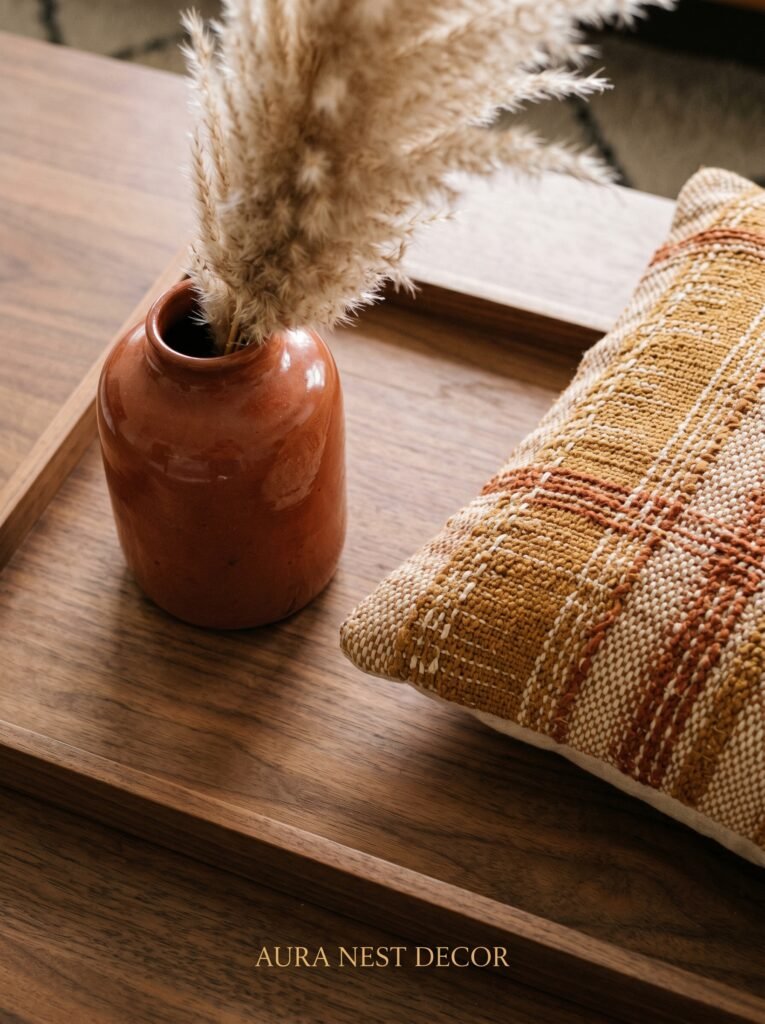
Terracotta. Full stop.
It’s been having a moment for a few years now and it simply refuses to leave — because it works in a way that trend colors rarely do. Terracotta is warm without being aggressive. It reads as both modern and ancient. On a painted wall it feels Mediterranean. On a ceramic pot it feels southwestern American. In a velvet cushion it feels unmistakably sixties.
In an MCM boho living room, terracotta acts as the connective tissue between the two styles. The mid century furniture — typically in walnut, teak, or oak — responds beautifully to terracotta because warm wood tones and warm clay tones amplify each other. The bohemian textiles — woven blankets, macramé, layered rugs — often already contain terracotta in their palette, so the room begins to feel cohesive almost effortlessly.
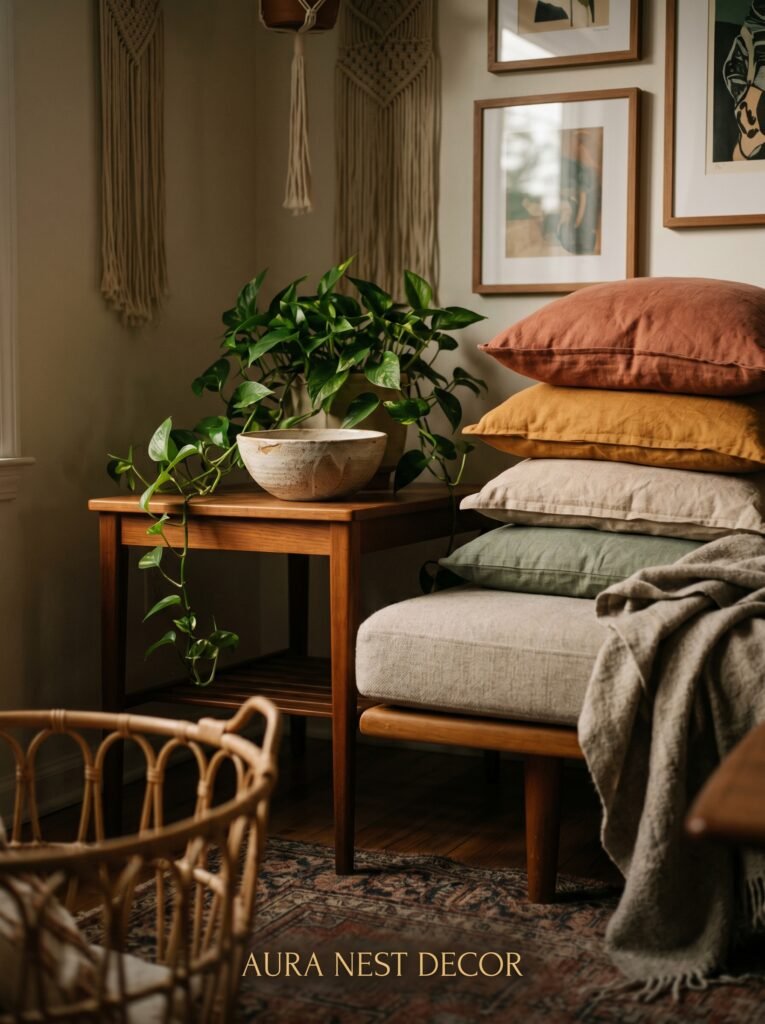
If terracotta on the walls feels like too much of a commitment, use it in moveable pieces. A large ceramic floor vase. A set of mismatched terracotta pots holding trailing plants. A linen cushion. One statement lamp base in a glazed terracotta finish.
The supporting colors that work best alongside it: warm white or off-white walls to keep the light bright; deep teal or forest green as an accent (look at any Moroccan or vintage sixties palette and you’ll find these together); and natural oatmeal tones in rugs and textiles for breathing room.
—
4. How to Layer Rugs Without It Looking Like a Jumble Sale
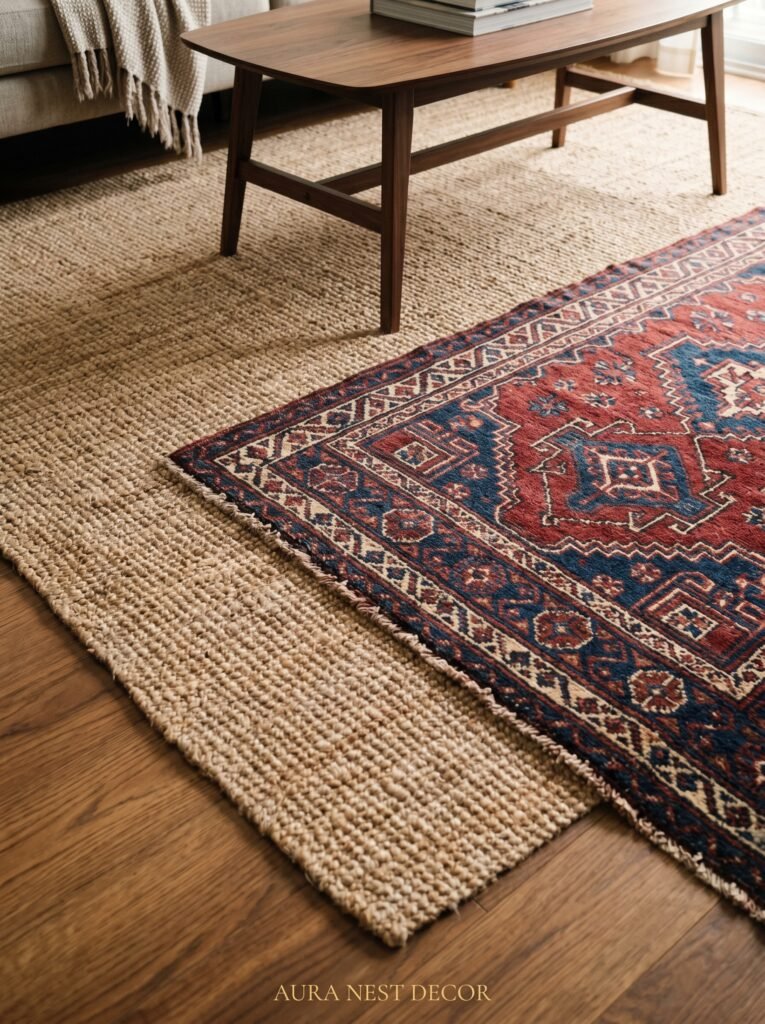
Layered rugs are one of the defining features of bohemian interiors, and they’re one of the things that people most often get wrong.
The jumble-sale version happens when two rugs of similar scale, similar color intensity, or similar pattern complexity end up fighting each other. The floor becomes visual noise. Everything that sits on top of it — the furniture, the plants, the art — gets lost.
The version that works follows one simple principle: contrast in at least two of three categories. Size, color, or texture. If both rugs are similar in size, they need to be very different in color and texture. If they’re similar in color, one should be dramatically larger and one should have a texture the other doesn’t.
For an MCM boho living room, the most reliable combination is a large, flatweave jute or sisal rug underneath — neutral, natural, textured — with a smaller vintage-style or geometric Moroccan rug layered on top, sitting mostly under the coffee table and front sofa legs. The jute gives you the bohemian warmth. The geometric pattern on the top rug nods to the sixties. The scale difference keeps them from competing.
In a typical British sitting room or American living room where the floor space isn’t enormous, even a 5×8 foot rug layered over a slightly larger flatweave can create this effect without overwhelming the room.
“The floor is not the background. In this style, it’s part of the conversation.”
—
5. The One Plant Rule That Stops Your Room Looking Like a Jungle
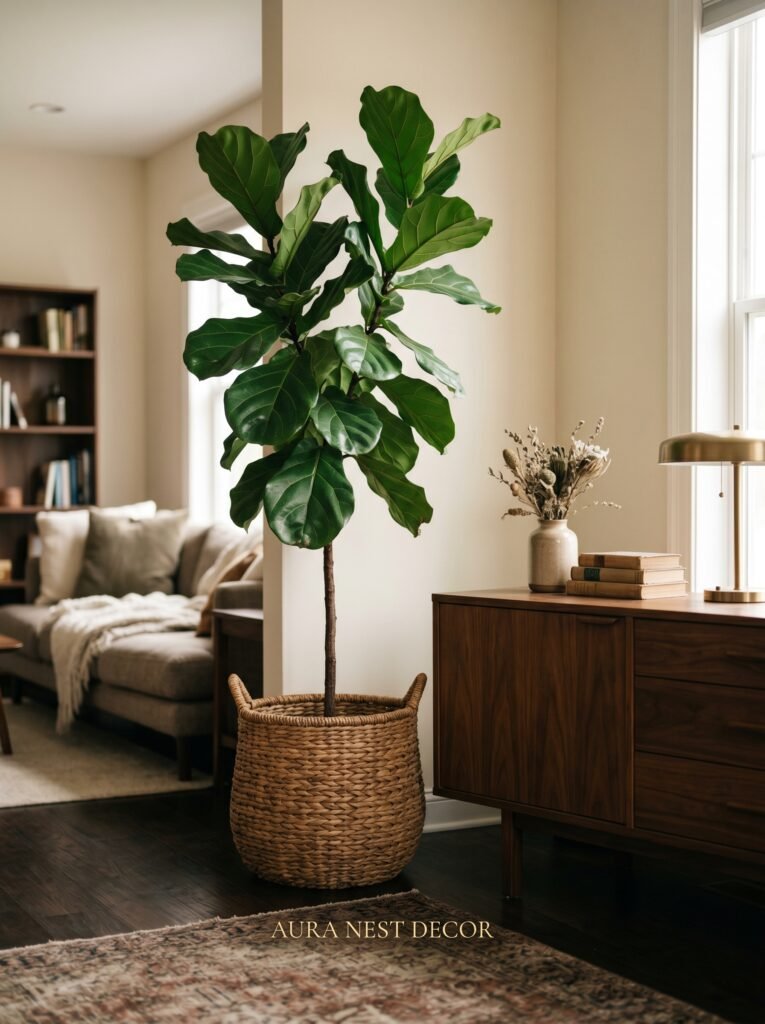
Plants are non-negotiable in MCM boho spaces. They do something that no décor item can replicate: they bring genuine life into a room. Movement, breath, color that shifts with the seasons. A room without plants in this style always looks like something is missing.
But there’s a rule worth keeping.
Choose plants with strong silhouettes.
The fiddle-leaf fig became a cliché precisely because it did this so well. The monstera. The bird of paradise. The olive tree. The snake plant. These plants don’t just add greenery — they add architecture. And in a room that’s already busy with texture and pattern, architectural plants give the eye a clean resting point.
In a mid century modern boho room, a tall floor plant in the corner — in a ceramic pot with a matte earthy glaze — does triple duty: it fills vertical space, it softens the hard angles of the architecture, and it adds that essential natural element that connects MCM’s love of organic form with boho’s love of the wild.
For smaller plants, group them at different heights rather than lining them up on a shelf at the same level. A plant on the floor, one on a mid-height wooden plinth, one on the bookshelf — the varying heights create the same kind of rhythm as a good playlist.
—
6. The Lighting That Nobody Talks About Enough
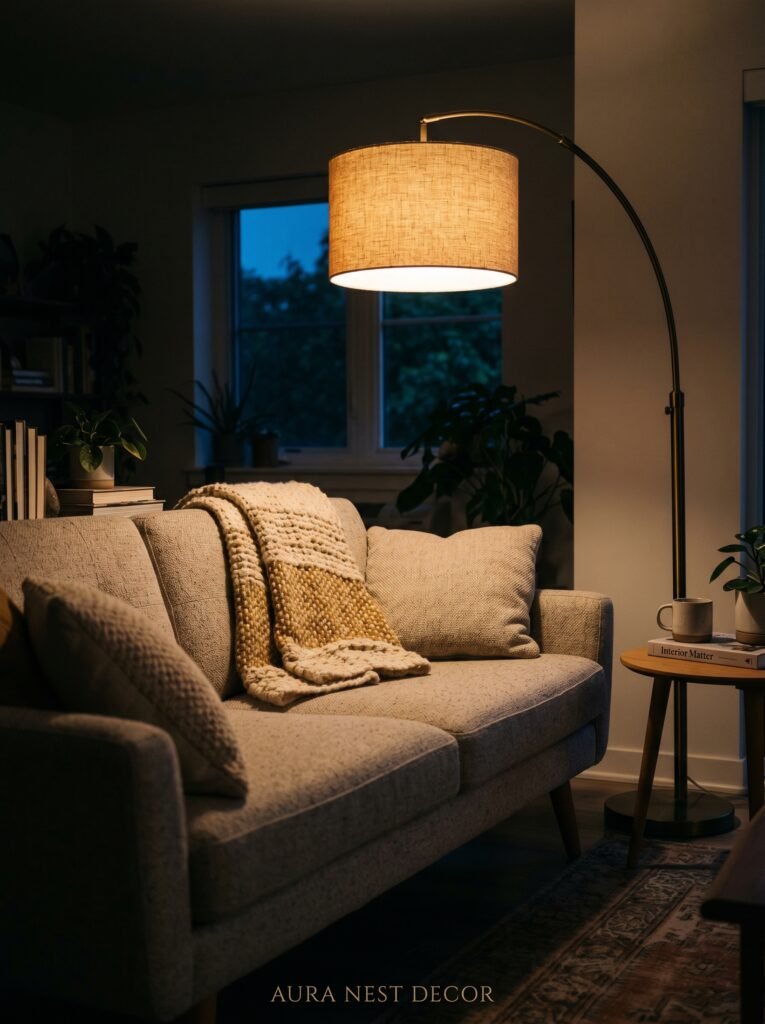
Getting the furniture right and the colors right and then flooding the room with harsh overhead lighting is one of the most common and most devastating decorating mistakes.
Overhead lights are for tasks. They are not for living rooms.
In an MCM boho space, you want layered lighting at multiple heights — and every single source should be warm-toned. Not cool white. Not daylight. Warm. The amber glow of an Edison bulb at 7pm on an autumn evening — that’s the feeling you’re chasing in every lighting decision you make.
A floor lamp with a warm linen shade positioned behind or beside the sofa creates a reading-light effect that makes the whole sofa area feel like a destination. A table lamp on a sideboard or console table adds a second layer that fills in the mid-height of the room. And if you can add one overhead pendant light — ideally something with woven rattan or a sculptural MCM shape — it ties the two styles together beautifully while keeping the light warm and diffused.
In the UK, most older homes have a single ceiling rose and pendant light in the living room. If rewiring isn’t an option, a plug-in pendant with a long cord draped across the ceiling can look genuinely intentional rather than makeshift, especially if the cord is fabric-wrapped and the shade is interesting.
Candles count too. Grouped on a tray on the coffee table, lit on a Sunday afternoon — they add a quality of light that nothing electric can quite replicate.
—
7. Finding Vintage Pieces That Actually Look Right (Not Like They Wandered In from a Different House)
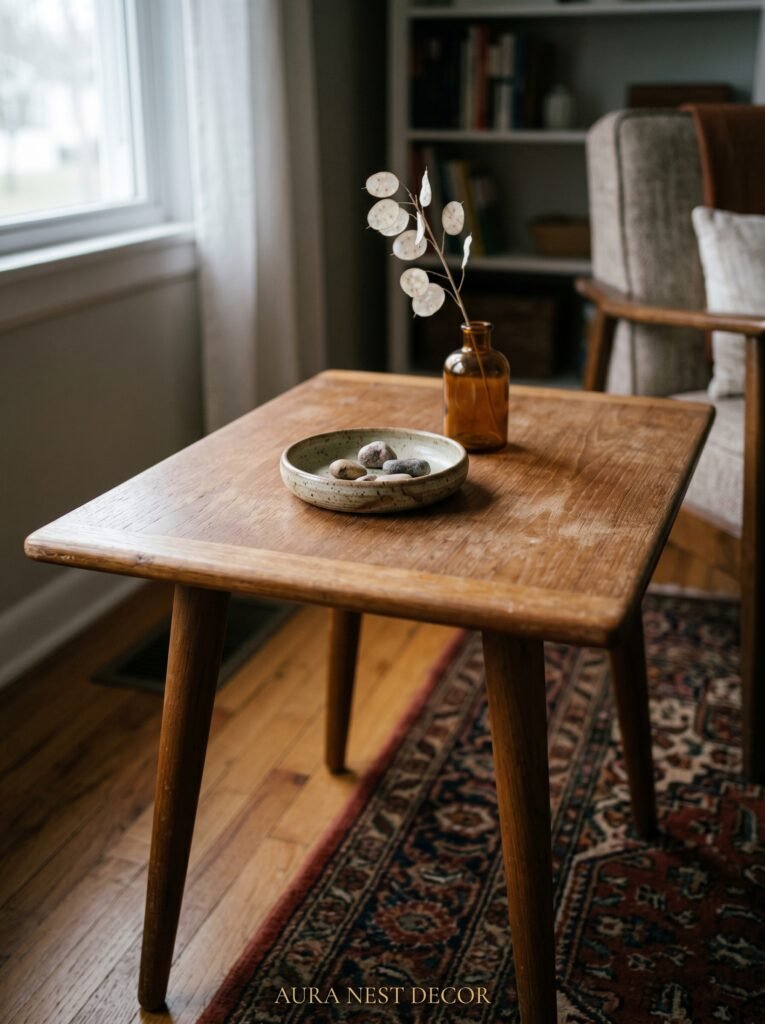
The vintage pieces are what give MCM boho living rooms their soul. A room made entirely from new furniture, however well-chosen, has a showroom quality that this style is specifically trying to avoid.
But not all vintage reads the same. A Victorian dining chair wandering into this room would look confused. A 1980s lacquered glass side table would be wrong. What you’re looking for is vintage that either has strong MCM bones — teak sideboards, walnut occasional tables, Danish-style chairs, ceramic lamps from the fifties and sixties — or vintage that has obvious bohemian energy — a kilim-covered stool, a brass Moroccan tray table, a worn Turkish rug, hand-thrown pottery.
In the UK, charity shops, car boot sales, and Facebook Marketplace are genuinely remarkable hunting grounds for MCM pieces. The British furniture industry produced excellent teak and rosewood furniture in the 1950s through 70s — brands like G-Plan and Ercol were making beautiful things that now sit in charity shops for a fraction of their worth.
In the US, estate sales, thrift stores, and Craigslist still turn up Heywood-Wakefield pieces, Danish imports, and California modern furniture from the same era.
One genuine vintage piece can anchor an entire room. You don’t need to furnish the whole space from secondhand sources — one real piece among newer supporting pieces still changes the energy of the room completely.
“One piece with a real history changes the whole room. Everything else can be new.”
—
8. The Wall Art Arrangement That Bridges Both Worlds
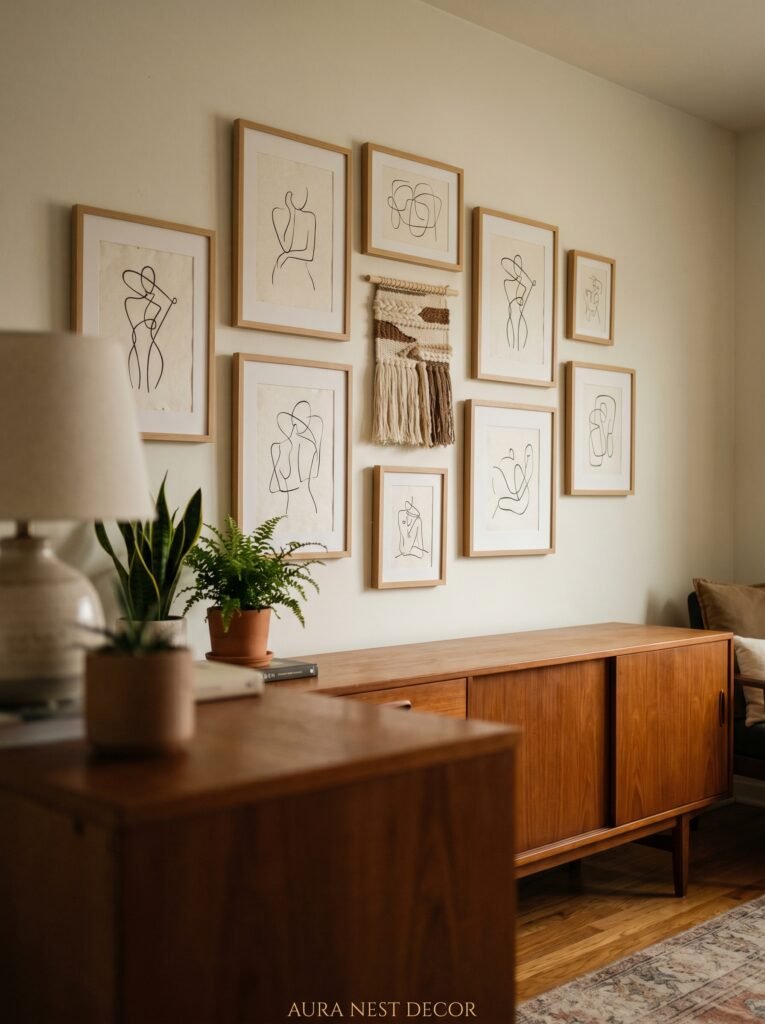
The gallery wall has been done to death in its generic Pinterest form — identically framed prints in a symmetrical grid. That’s not this. That has no personality.
In an MCM boho living room, the wall art should feel collected. Like you picked each piece up somewhere interesting and found a way to make them coexist.
The MCM contribution: prints with bold graphic shapes, block colors, or vintage travel poster aesthetics — think clean typography, flat color fields, the kind of artwork that echoes the graphic design sensibility of the postwar period. Original artwork from that era, if you can find it, is even better.
The boho contribution: woven textile art, a macramé hanging, a woven fiber piece, or a vintage mirror with a decorative frame that adds texture and depth.
Hang them together on the same wall, but don’t over-arrange it. A large macramé piece flanked by two smaller framed prints. A cluster of three botanical prints alongside a small woven wall hanging. The key is varying scale — one anchor piece that commands attention, and smaller pieces that orbit it.
In terms of frames, warm wood frames or natural rattan frames tie both styles together. Black frames can work, but they tend to push the room more firmly into MCM territory, losing some of the boho warmth.
—
9. The Coffee Table That Does More Work Than You Think
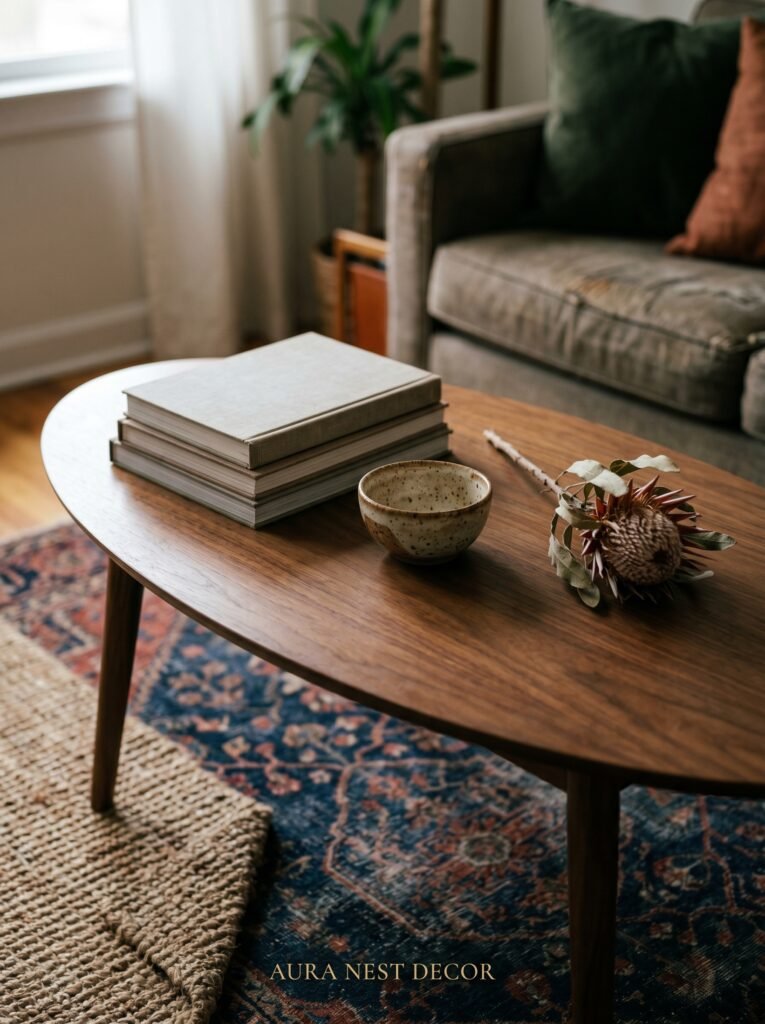
The coffee table is the center of gravity in any living room. Everything arranges itself around it. And in an MCM boho space, it has to serve two masters.
A solid wood coffee table with clean lines and tapered legs satisfies the MCM requirement perfectly. Walnut is ideal. Teak, oak, or even painted white with warm wood legs all work. What you want is something that sits low — proportion matters — and has a surface interesting enough to style but not so ornate it competes with everything else.
The bohemian styling goes on top. A stack of art and travel books with beautiful covers. A hand-thrown ceramic bowl. A trailing plant or a small succulent. Two or three candles on a tray. A small piece of sculptural driftwood or a geode. The styling on a coffee table should look effortlessly assembled, which means you actually have to arrange and rearrange it several times until the proportions feel right.
If you prefer rattan or woven furniture, a rattan coffee table or a storage ottoman works beautifully in this style, but pair it with wood-legged seating to keep the MCM structure present. A pure rattan room tips too far into boho and loses the clean-lined edge that makes this hybrid work.
—
10. The Shelf Styling Approach That Looks Curated Instead of Cluttered
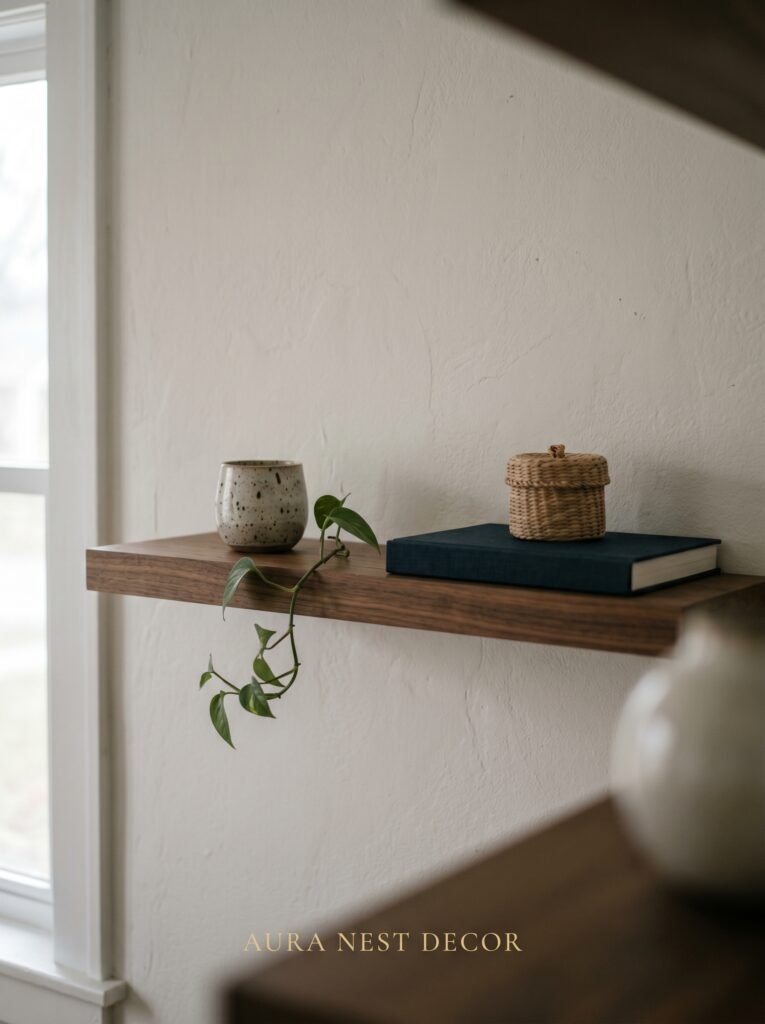
Shelves in a mid century modern boho room are about restraint. You might not expect that word in a boho context, but here’s the truth: a shelf crammed with objects, no matter how individually beautiful, reads as clutter. Clutter is not bohemian. Clutter is just chaos.
The approach that works is editing. For every six items you think you want on the shelf, display four. Give things breathing room. That space between objects is not empty — it’s doing the same thing that silence does in a piece of music. It makes what’s there more meaningful.
A beautiful combination for these shelves: books (grouped by color or by spine color to create visual order), a piece of pottery with an interesting glaze, a small plant, and one sculptural object — a carved wooden figure, a brass abstract sculpture, a ceramic form that doesn’t have an obvious function. MCM loved sculptural objects for exactly this reason: they give the eye something to rest on that isn’t purely decorative but isn’t functional either.
Books spines facing out in a consistent color grouping sounds controlling but looks quietly spectacular. Try grouping all your warm-toned spines together, all the dark ones together, and letting the plants and pottery punctuate the breaks.
—
11. The Small Details That Make People Stop and Look Closer
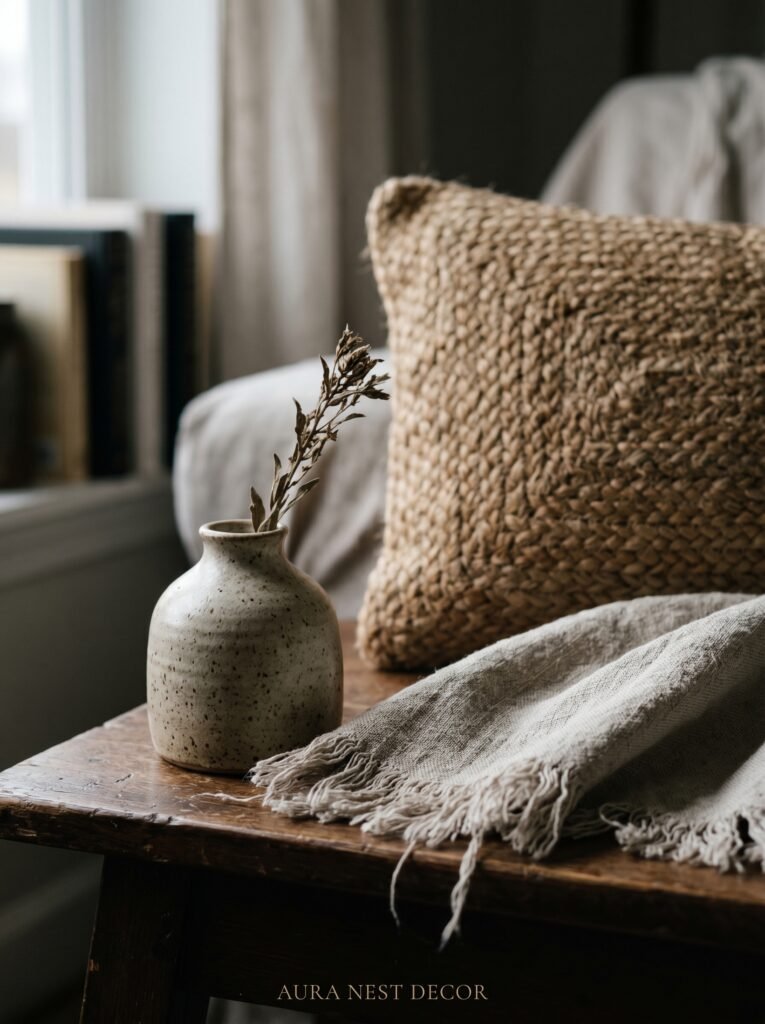
The difference between a living room that photographs well and one that actually feels good to be in usually comes down to small details. The things that reward proximity. The things you notice only when you sit down in the room.
Throw blankets that are genuinely tactile — a heavy cotton weave, a proper wool throw, something with satisfying weight that you actually want to pull over yourself on a cold evening. Not decorative-throw-that-nobody-touches.
Pottery with imperfection. Hand-thrown ceramics are everywhere right now and for good reason: the slight asymmetry, the fingerprint-visible glaze, the irregularity of the form — these qualities are the opposite of mass production, and they make a room feel like a human being chose them.
A scent that belongs to the room. A candle or reed diffuser that you use consistently — something warm and earthy, like sandalwood, amber, or cedar. When a room has a signature scent, it becomes a sensory experience rather than just a visual one. Guests remember it. You feel it the moment you walk in.
Hardware details. Switch plates, door handles, light fittings — updating these to brushed brass or matte black costs relatively little but changes the finish quality of the entire room. The original white plastic switch plate is doing your beautiful room no favors.
—
12. The Mistake That Kills the Whole Look (And How to Avoid It)
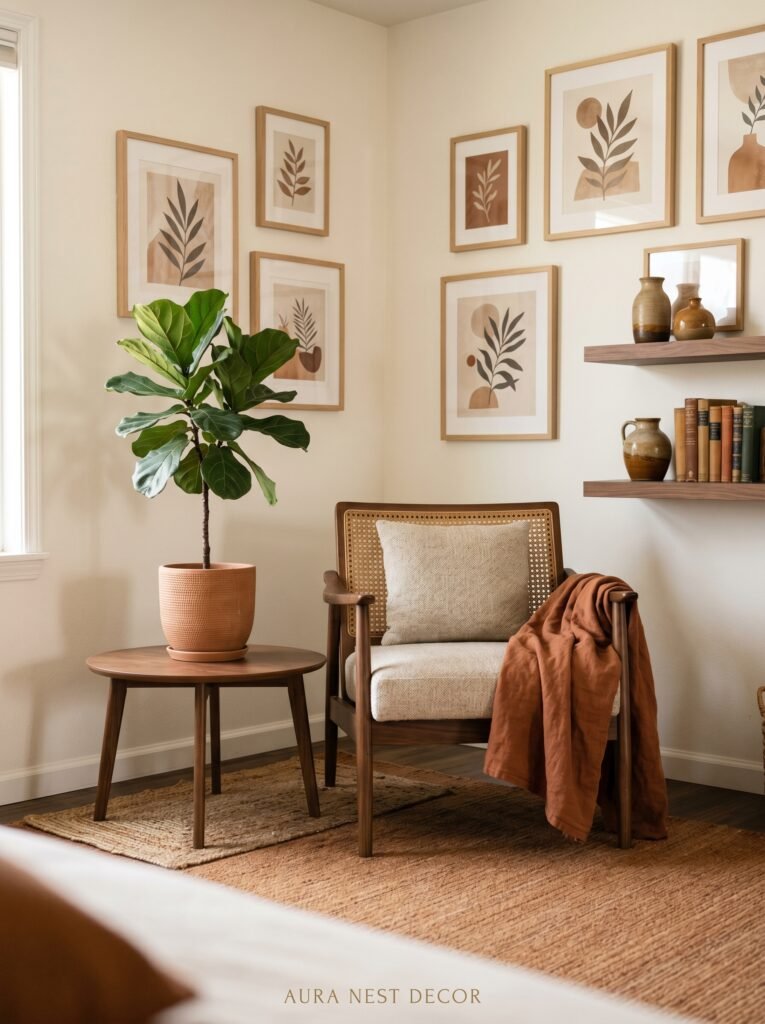
There is one way to get this entire style wrong, and it comes from trying too hard.
An MCM boho living room should look like it evolved. Like it grew from a few pieces you genuinely loved, over time, with pieces added when you found the right thing rather than when you needed to fill a gap. The version that fails is the one where you’ve bought the complete look all at once — every piece from the same collection, every color from the same palette board, every plant in matching pots from the same shop.
It looks assembled. And assembled is the opposite of what this style is trying to be.
The practical advice: start with one or two anchor pieces you genuinely love. Give them space. Live with them. Then add slowly — a vintage find here, a handmade piece there. Let the room tell you what it needs rather than telling the room what it should look like.
The spaces that photograph beautifully and feel wonderful to live in are almost always the ones where someone made choices over time rather than all at once. That unhurried quality reads in a room. You can feel it the moment you walk through the door.
—
❓ FAQ
Q: Can mid century modern and bohemian work in a small living room? A: Yes — and in some ways they work better in smaller spaces. The MCM principle of low, leg-lifted furniture keeps a small room feeling open, while strategic bohemian layering in textiles adds warmth without requiring floor space. Stick to one or two large-format boho elements (a statement rug, one macramé piece) rather than filling every surface.
Q: What’s the best way to find genuine MCM furniture in the UK without spending a fortune? A: Facebook Marketplace, local charity shops, and car boot sales are genuinely your best bets. Search specifically for G-Plan, Ercol, Nathan, or McIntosh furniture — all British brands producing quality MCM pieces in the 1950s through 70s, and all regularly appearing secondhand for reasonable prices. eBay is useful for rarer finds but prices have risen as the style has become popular again.
Q: How do I stop a boho-influenced room from looking dated or overly trend-led? A: Anchor your boho elements in natural materials rather than mass-produced versions of the trend. Real macramé, genuinely hand-thrown pottery, and actual vintage textiles will outlast any trend because they have inherent quality and character. The trend version of boho — printed macramé-effect fabric, factory-made “artisanal” pottery, polyester throws — is what dates quickly. Choose slowly, choose well, and buy fewer things of higher quality.
—
💭 Final Thoughts
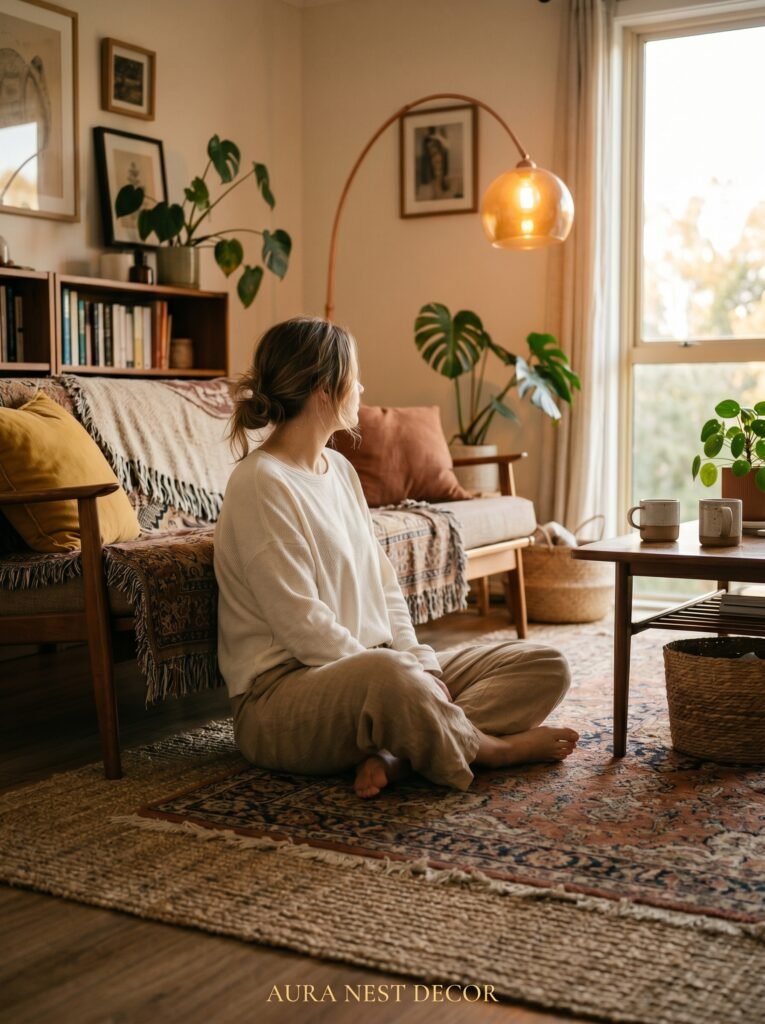
The best living rooms aren’t decorated — they’re accumulated. Slowly, thoughtfully, with pieces that each have a story attached to them and a reason for being there.
What makes the mid century modern boho combination so compelling is that it gives you permission to keep things. The beautiful old lamp you inherited, the handmade bowl you brought back from a trip, the vintage chair that nobody else seemed to want. This style doesn’t ask for a blank slate. It asks for intention.
What’s the one piece in your living room right now that you love but never quite knew how to style around — and what would happen if you built the whole room from there?