The Living Room That Feels Like a Deep Breath: Modern Rustic Done Right
You walk in and something just relaxes. The shoulders drop. The phone gets put face-down. There’s wood grain and soft linen and a candle that’s been burning long enough to smell like the whole room. That’s what modern rustic actually is — not a Pinterest mood board, not a farmhouse cliché. A feeling.
—
1. Why “Modern Rustic” Hits Different Than Plain Farmhouse
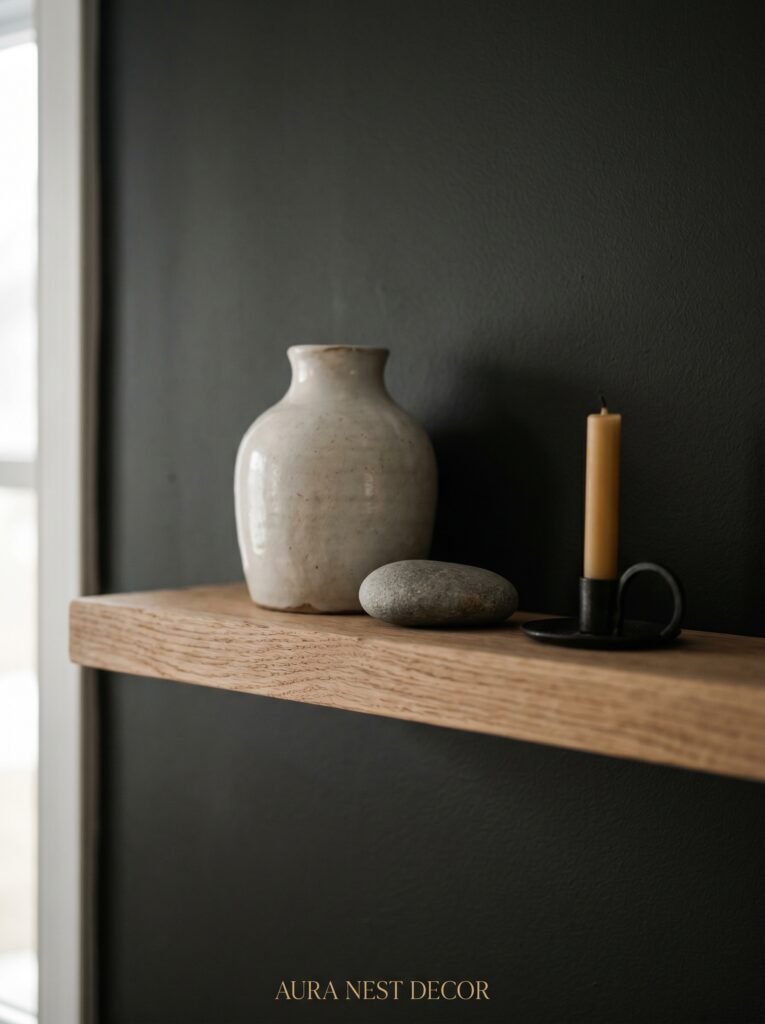
Let’s get this straight first, because a lot of people confuse the two and end up with a living room that looks like a barn conversion gone wrong.
Farmhouse leans into nostalgia. Shiplap, mason jars, the word “gather” on a wooden sign. There’s nothing wrong with it — it’s genuinely warm — but modern rustic is doing something more interesting. It’s the tension between rough and refined. It’s a chunky reclaimed wood coffee table sitting on a concrete-effect floor beside a sleek, low-profile sofa in slate grey. It’s natural imperfection paired with clean intention.
The “modern” part does real work here. It keeps things from feeling heavy or dated. Think of it as rustic that’s had a good edit. The knots in the wood are still there. The texture is still there. But the clutter isn’t. The palette is restrained. The lines are cleaner. You’re not trying to recreate your grandmother’s cottage — you’re trying to create a space that feels genuinely alive and genuinely calm at the same time.
That balance is the whole game. And once you understand it, you stop second-guessing every purchase.
“Modern rustic isn’t a style — it’s a decision to stop choosing between beautiful and liveable.”
—
2. The Neutral Palette That’s Quietly Taking Over Every Beautiful Living Room
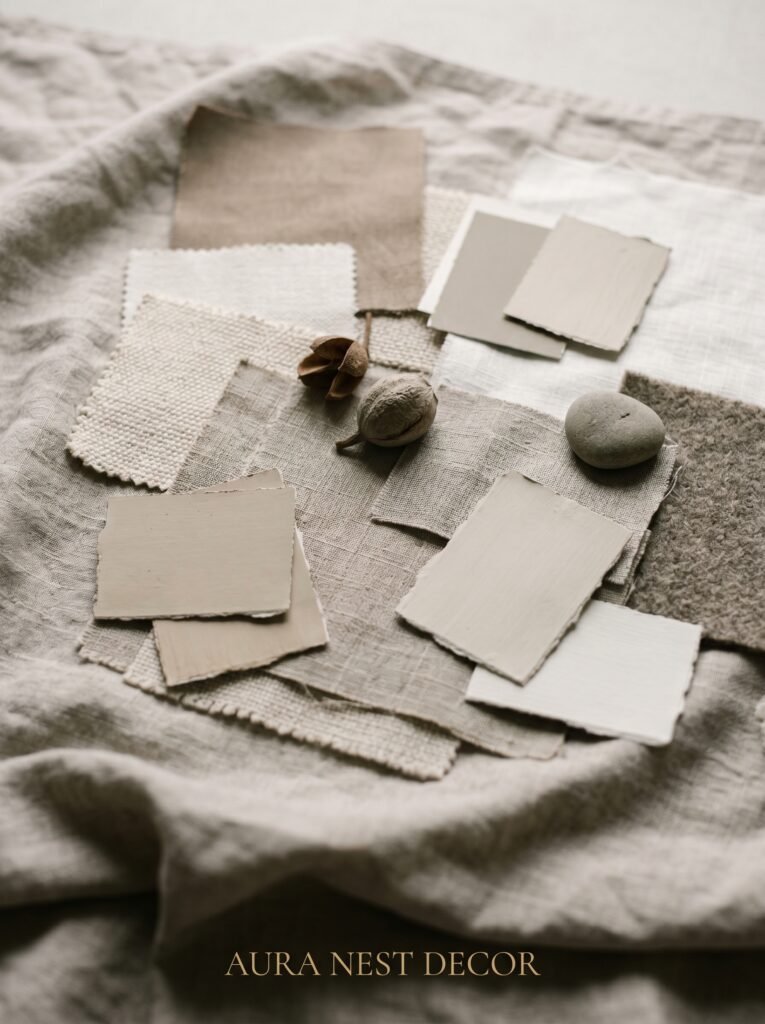
If you’ve been scrolling interior design content for more than ten minutes lately, you’ve noticed it. Warm stone. Greyed taupe. Earthy mushroom tones. The kind of off-white that has just enough brown in it to feel like it came from somewhere.
This is the palette of modern rustic, and it works for a very specific reason: it lets texture do the talking. When your walls, sofas, and rugs are all singing in the same quiet key, every rough-hewn edge and woven thread becomes visible. The room breathes. Nothing competes.
For US readers painting right now, Benjamin Moore’s “White Dove” or Sherwin-Williams “Accessible Beige” are the workhorses. In the UK, Farrow & Ball “Elephant’s Breath” and Little Greene’s “Aged Oak” are doing beautiful things in living rooms from Edinburgh to Bristol.
Go warm. Always go warm. Cool greys belong in offices and minimalist apartments. Modern rustic is about the feeling of late afternoon light on plaster, the colour of dried pampas grass, the inside of a walnut shell. Warm neutrals aren’t boring — they’re the backdrop that makes everything else land.
One word of caution: don’t go too matchy-matchy. The tones should relate to each other, not mirror each other. A slight variation in warmth between your wall colour and your sofa fabric is exactly what keeps the room from looking like a showroom floor.
—
3. The Specific Texture Combinations That Actually Work (And the Ones That Don’t)
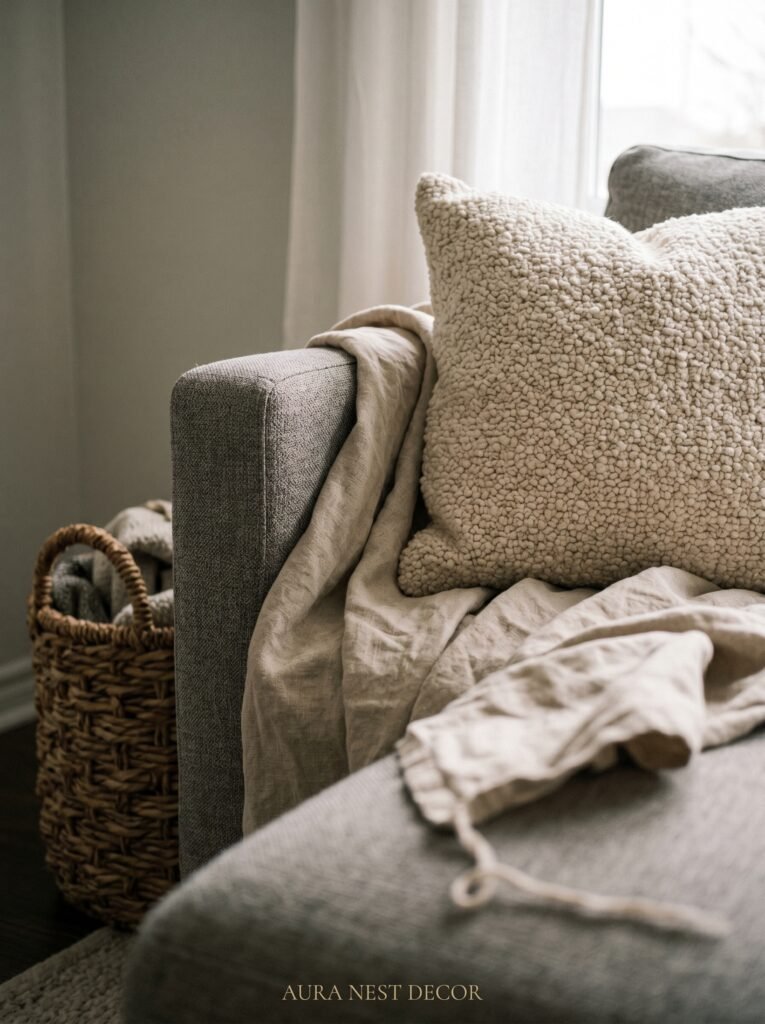
Texture is where modern rustic either sings or falls apart. Get it right and the room feels layered and considered. Get it wrong and it just looks like you bought everything from the same store in the same afternoon.
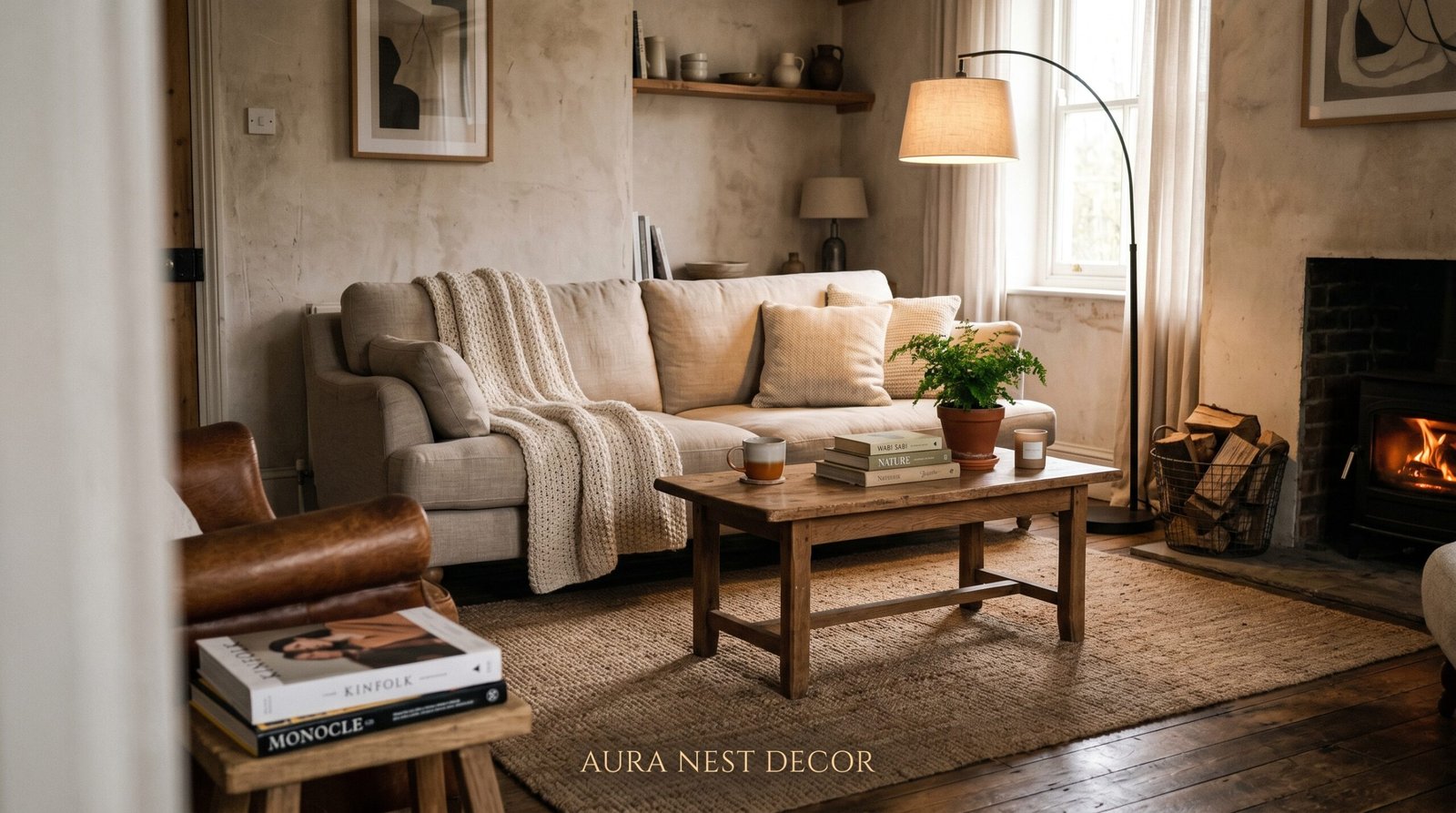
The combinations that consistently work: rough linen beside smooth matte ceramics. Chunky knit throws against a low velvet cushion. Bare, unsealed wood next to brushed brass or iron. Woven rattan beside a plastered wall with visible texture. These pairings work because they offer contrast — the eye has somewhere to travel.
What doesn’t work: too many shiny surfaces in the same room. Lacquered wood, metal-legged coffee tables, glass vases, glossy cushion covers — if they’re all in the same space, the rustic quality disappears entirely. You end up with something that looks more contemporary than cosy, and the warmth evaporates.
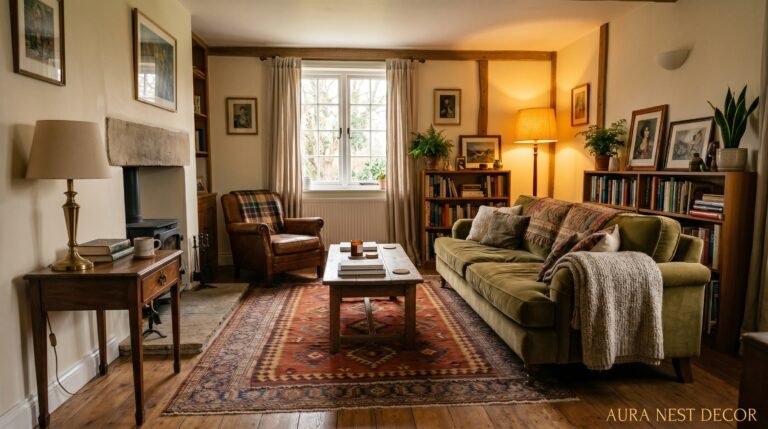
One thing worth thinking about: the floor. In the UK especially, where stripped floorboards are everywhere, resist the urge to cover them entirely. Let the wood breathe. A good jute or wool-blend rug that anchors the seating area will do more for a modern rustic room than almost any other single purchase — but leave the boards visible at the edges. That border of raw wood is doing quiet, beautiful work.
—
4. Lighting: The Reason Some Rooms Feel Like a Hug and Others Feel Like an Apology
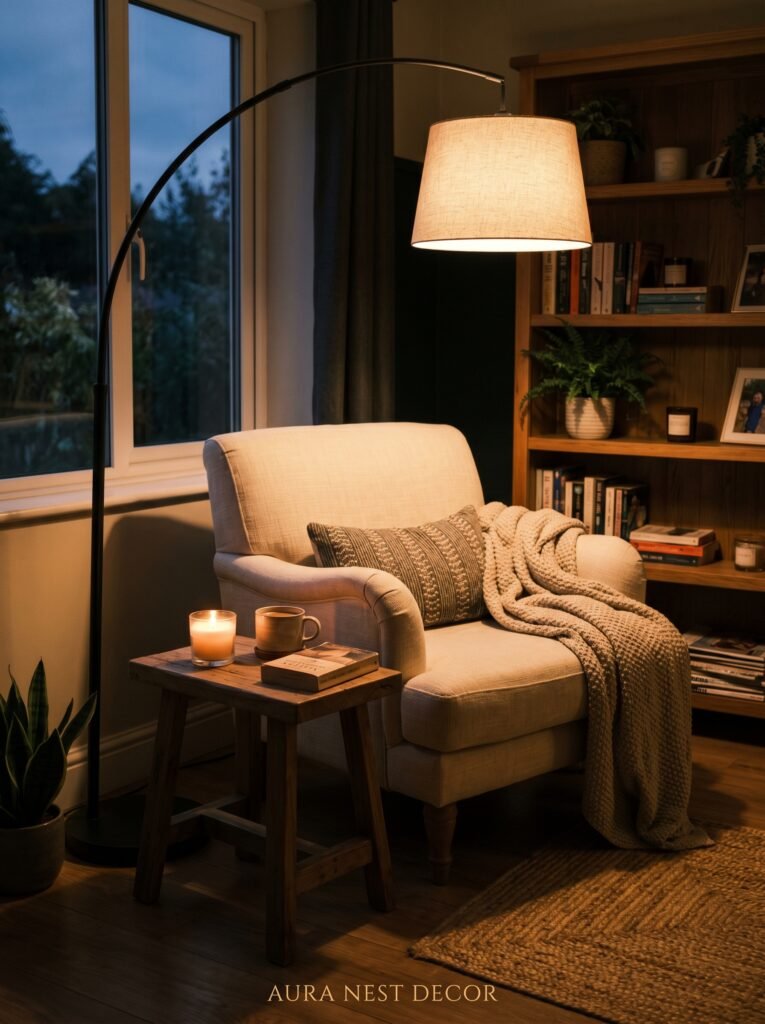
This is the one nobody talks about enough. You can have the perfect sofa, the right wall colour, a reclaimed wood shelf that cost a fortune — and if the lighting is wrong, the whole thing dies.
Modern rustic living rooms need layers of light. Not one overhead fixture blasting the room from above. That’s what makes spaces feel flat and institutional. What you want instead: a floor lamp in the corner casting a warm pool upward. A table lamp on a side table at roughly eye level when you’re seated. Candles — real ones — on the coffee table or the hearth.
“The right lighting doesn’t illuminate a room. It convinces you it’s evening even at four in the afternoon.”
For overhead light, if you have it, put it on a dimmer. Non-negotiable. And choose bulbs in the 2700K range — that warm amber tone that mimics candlelight. The difference between a 4000K bulb and a 2700K bulb in a rustic living room is the difference between a waiting room and a living room.
In the US, the Threshold and Threshold with Studio McGee ranges at Target have produced some genuinely beautiful rustic lighting at accessible prices. In the UK, Cox & Cox and Pooky do warmly lit pendant and floor lamp options that suit this aesthetic perfectly without requiring a second mortgage.
A pendant light with a woven or rattan shade hung low over a reading chair. A cluster of amber glass pendants at varying heights over a corner console. These are small decisions that change everything about how a room feels after dark.
—
5. The Coffee Table Rule That Changes Everything in a Small British Terrace or American Ranch House
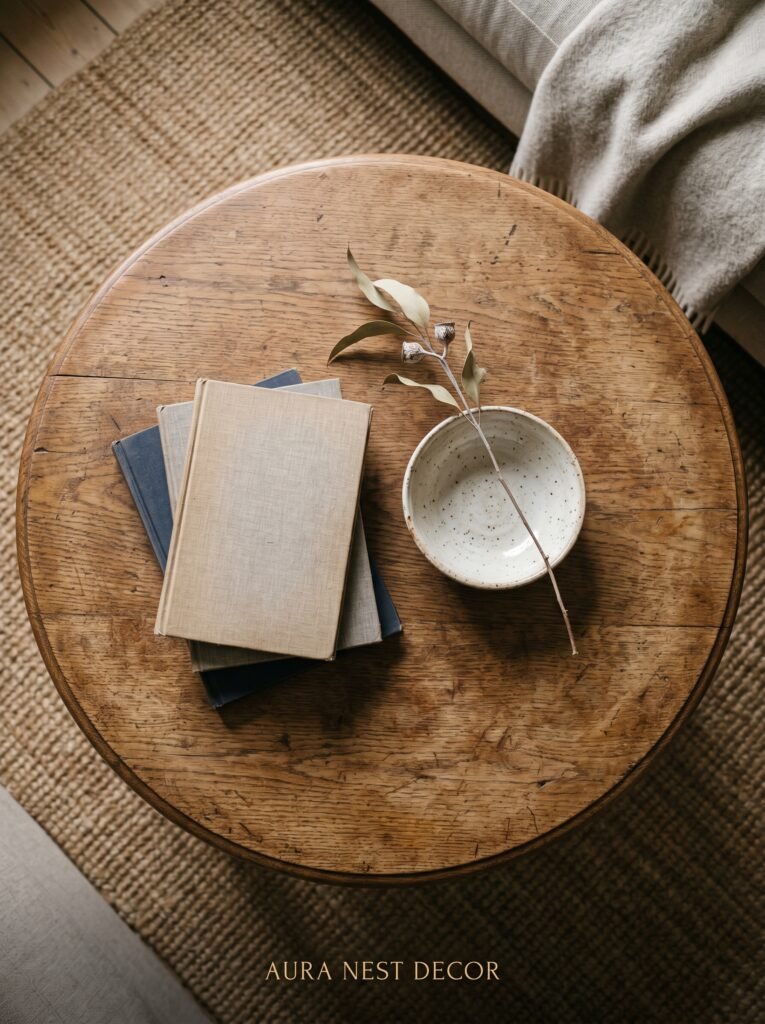
Here it is, the rule: go bigger than you think you need.
A too-small coffee table in the middle of a seating arrangement is one of the most common mistakes in living room styling, and it’s especially painful in modern rustic rooms where the coffee table is often the main textural statement piece.
In a modern rustic context, the coffee table is not just a surface. It’s an anchor. It’s the thing that grounds the whole seating arrangement and says “this is a considered space.” A chunky reclaimed oak table, a raw-edge slab of wood on iron legs, a set of nested stone-look side tables — these pieces have visual weight that the room needs.
Proportion matters enormously. In a British terrace with a typical narrow living room, a long, low rectangular table often works better than a square one. It draws the eye down the length of the room and makes the space feel intentional rather than cramped. In an open-plan American home with a larger footprint, you can afford to go genuinely large — a coffee table that’s 50 or even 60 inches long stops the seating area from floating in space.
Style it simply. A tray with a candle and a small ceramic bowl. A stack of two or three books. A single dried stem in a short clay vase. The surface should look curated, not decorated.
—
6. The Forgotten Wall: What Goes Behind the Sofa in a Modern Rustic Room
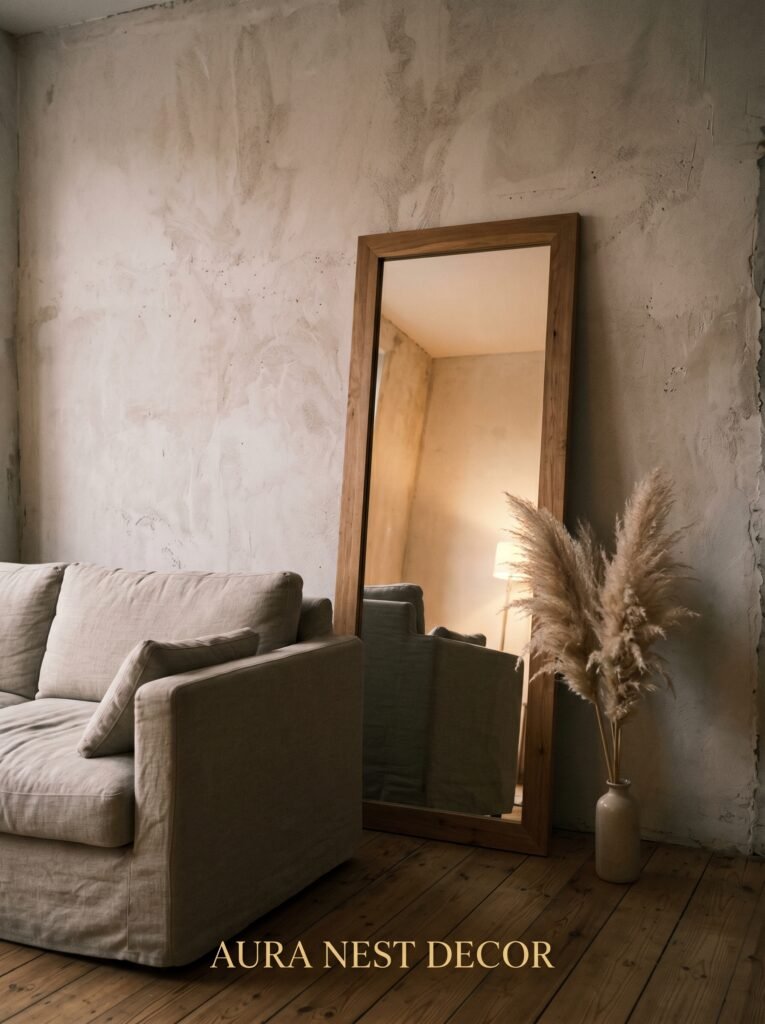
Everyone obsesses over the gallery wall above the mantle and then completely neglects the largest canvas in the room: the wall the sofa sits against.
In a modern rustic living room, this wall is your opportunity. And the options are genuinely exciting.
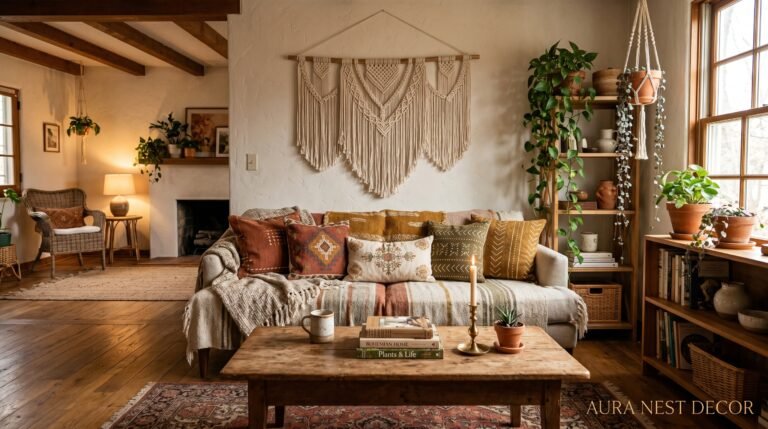
A single large piece of art — not a print, ideally, but something with real texture. An oil painting with visible brushstrokes. A piece of woven wall art in natural fibres. Even a framed piece of vintage botanical illustration at a genuinely large scale. One strong thing beats a dozen small things every time.
Another option: a simple ledge shelf running the full length of the wall at low height, styled with a mix of ceramics, trailing plants, and a propped piece of art. This creates horizontal movement and keeps the eye moving without requiring you to drill a hundred holes.
And then there’s the option that scares people but works incredibly: nothing. A beautifully textured wall — limewash painted, or a warm plaster effect — that’s left entirely bare. In a modern rustic room where the furniture and textiles are doing real work, a blank wall doesn’t feel empty. It feels like breathing room.
—
7. Plants That Actually Belong in a Modern Rustic Room (And Ones That Look Wrong Immediately)
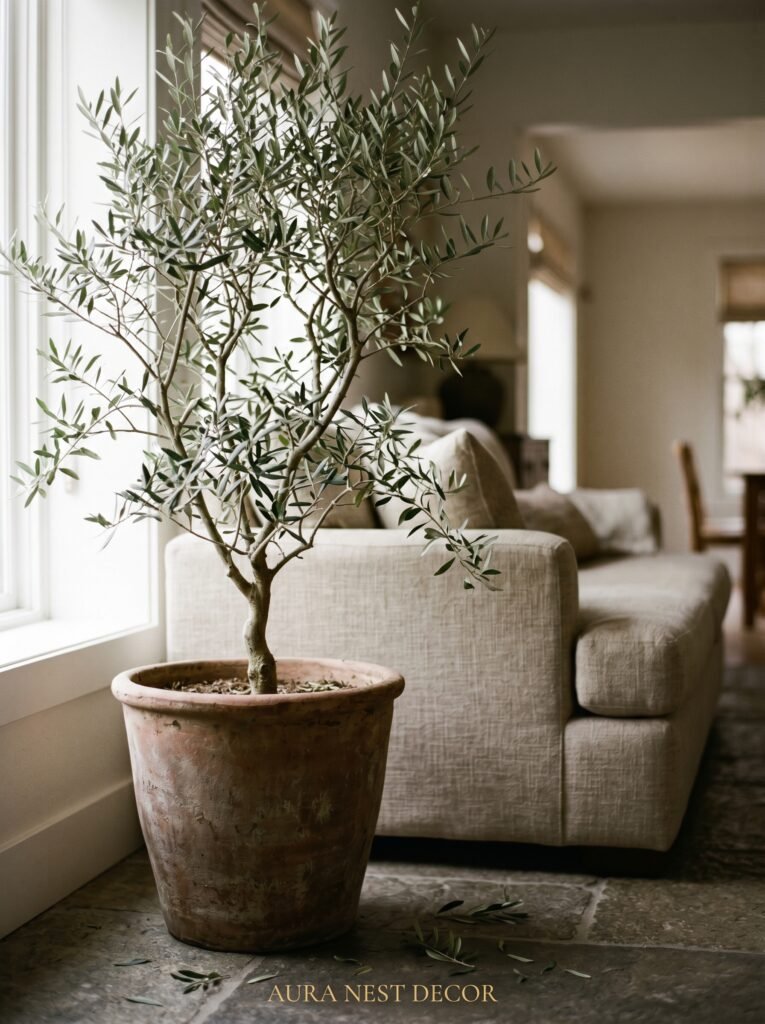
Not every plant suits this aesthetic. I know that’s an odd thing to say, but it’s true.
Succulents and cacti feel too contemporary, too desert-chic. Tropical plants with glossy, graphic leaves — monstera, birds of paradise — lean modern in a way that fights the warmth. They belong in a different room, doing different work.
What works in modern rustic: olive trees in rough terracotta or stoneware pots. A trailing pothos left to drape naturally from a shelf. Dried flowers and grasses — pampas, bunny tail, dried eucalyptus hanging in a bundle from a hook. Moss balls in a ceramic bowl. A simple fig tree in a woven basket.
“A dried stem in a handmade clay vase does more for a room than an expensive piece of furniture placed without intention.”
The key is that the plants — even the living ones — should feel like they have some age to them. Some naturalism. Not fresh from the garden centre, still in a plastic pot with a care label attached. Repot immediately, always, and choose containers in stone, clay, or woven materials.
In the UK, Pots and Joy and The Sill do gorgeous ceramic planters that suit this style. In the US, Target’s Studio McGee line and small Etsy sellers making hand-thrown pottery are consistently delivering the right kind of vessel.
—
8. The Sofa Decision You Will Live With for Ten Years — Get It Right
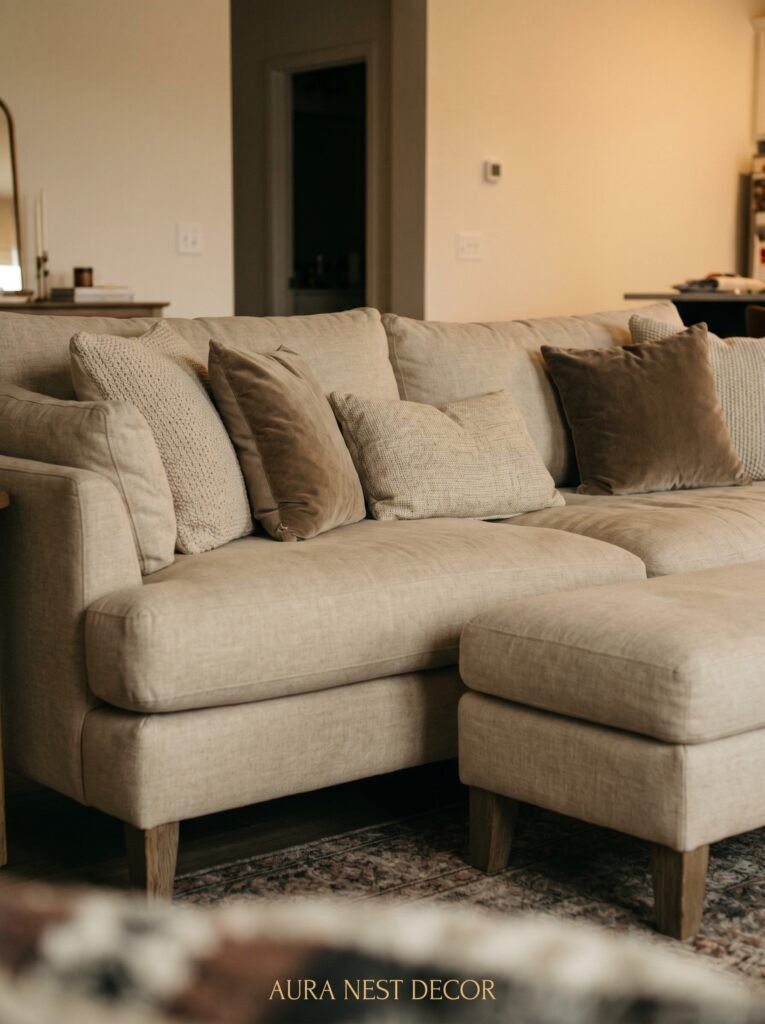
This might be the most important purchase in the whole room. And in a modern rustic context, it has a very specific brief.
You want something that looks like it’s been lived in — or could be. Not pristine. Not precious. Something that will look better with use, not worse. Linen, bouclé, or a textured weave in a warm neutral. Oatmeal, warm taupe, soft sage, terracotta if you’re brave. These fabrics and colours age gracefully. They take a blanket thrown over the arm without looking messy.
Avoid: tight, smooth upholstery in cold tones. Mid-century legs on a rustic sofa create a tension that doesn’t resolve happily. Low, modular sofas in contemporary shapes. Leather is tricky — it can work in a darker, more masculine version of this aesthetic, but it fights the softness that most modern rustic rooms are going for.
Go for generous cushioning, slightly slouchy proportions. In the US, the Albany Park sofa has been doing real work in this space at a sensible price. In the UK, Loaf (aptly named) and Neptune produce sofas that feel like a sigh of relief.
Buy the biggest one your room can honestly take. And buy washable cushion covers.
—
9. The Fireplace Situation: Real, Electric, or Just the Idea of One
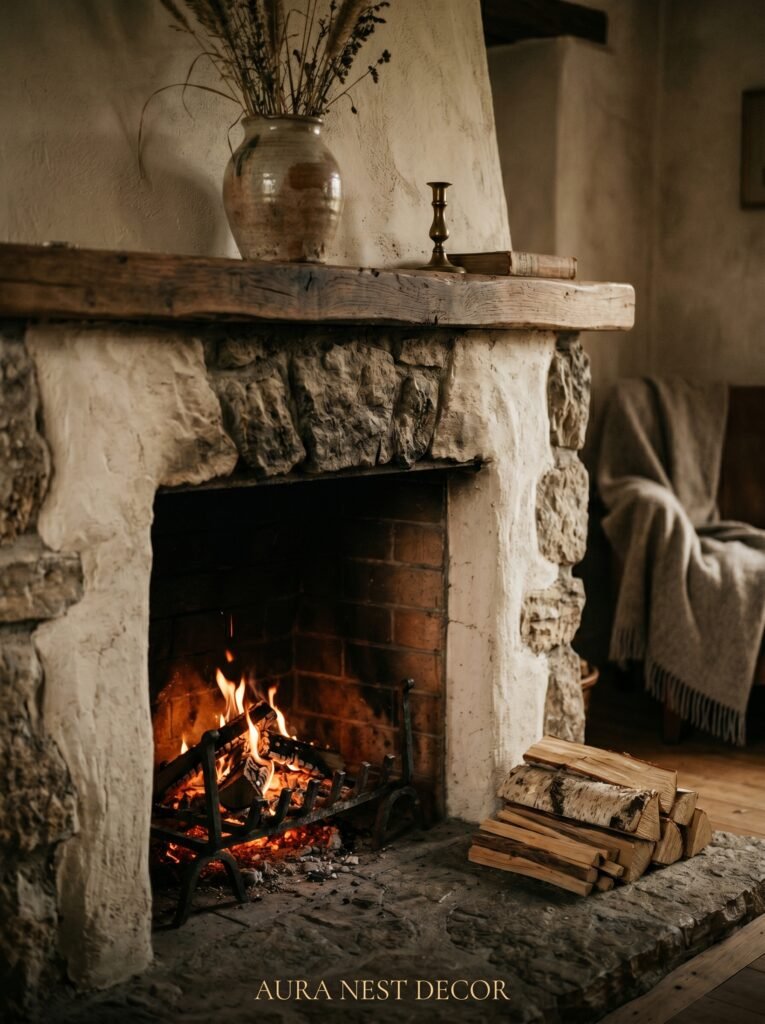
If you have a working fireplace, you are living correctly and you should use it.
But genuinely — so many people have fireplaces in the UK especially, stuffed with an electric insert or blocked up entirely, and it’s a quiet tragedy. A fireplace is the soul of a modern rustic living room. It’s the reason the whole aesthetic exists. The flickering light, the smell, the low crackle — nothing replicates it.
In the US, where open-plan living is more common and true masonry fireplaces less so, there are genuinely good alternatives. Electric fire inserts have improved dramatically. The Dimplex Opti-Myst range produces a water-vapour flame that, in low lighting, reads beautifully. Bio-ethanol fireplaces give you a real flame with no flue required and work brilliantly as a statement piece.
If you have no fireplace and no possibility of one, lean into the candlelight approach with real commitment. A cluster of pillar candles on a low stone or wooden base, varied heights, grouped together on the hearth-equivalent of your room. It’s not a fireplace. But it creates the same psychological pull — something in the room that’s alive, that flickers, that you sit and look at.
The mantelpiece, whether real or faux, is still one of the best styling surfaces in a modern rustic room. Keep it edited. One large object. Two or three smaller ones. Asymmetry always beats perfect symmetry here.
—
10. Storage That Looks Like It Belongs There, Not Like It Was an Afterthought
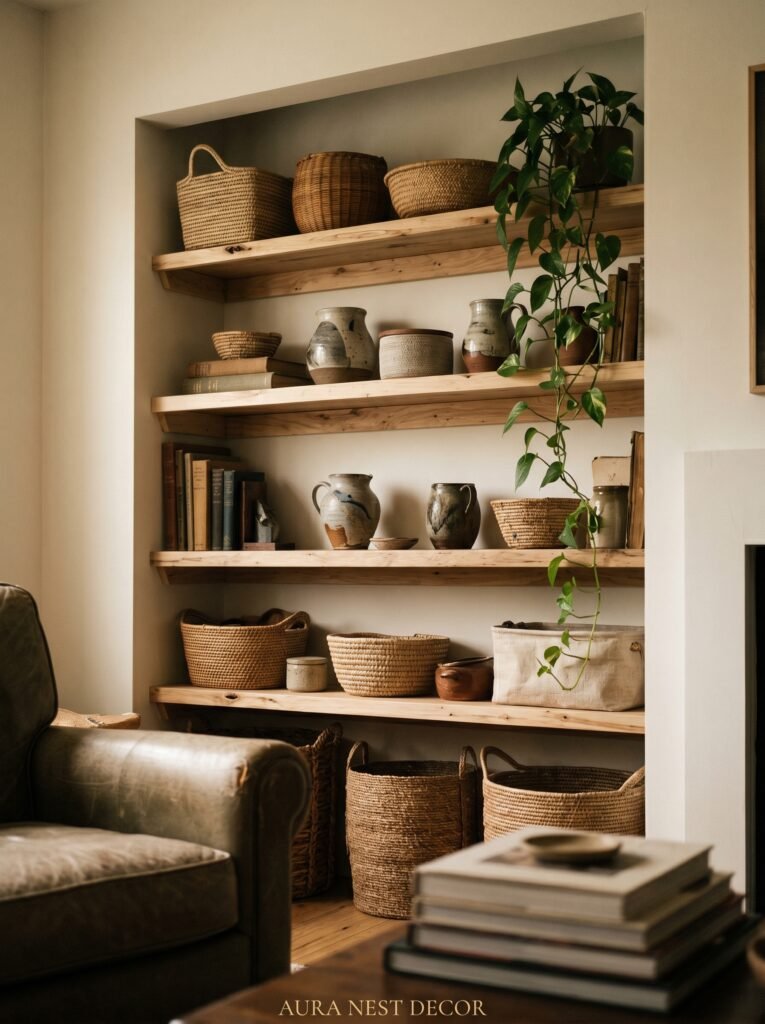
Storage in a modern rustic living room should look deliberate. Almost beautiful. Definitely not like you’re hiding the mess.
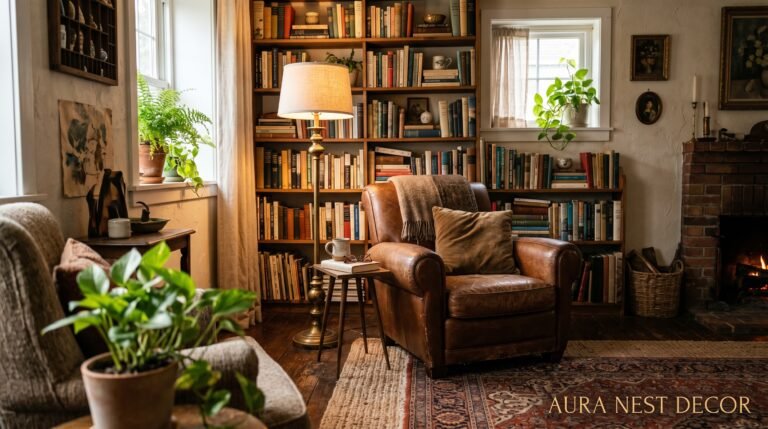
Open shelving on iron brackets with reclaimed wood boards is the workhorse of this look. And it works because it demands that you treat what’s on the shelf as part of the room’s styling. Books spines-facing-out, organised loosely by colour. Ceramics grouped by height. A plant or two. One or two things that mean something to you.
Closed storage is handled best through baskets — deep wicker or seagrass baskets under a console table, a lidded rattan basket beside the sofa for blankets and remotes. These look relaxed and intentional at once.
In the UK, there’s a long tradition of the alcove shelving unit flanking a chimney breast, and it suits this aesthetic perfectly. If you have alcoves, use them — bespoke or fitted in painted MDF looks more intentional than a freestanding unit that doesn’t quite fill the space.
What to avoid: bulky, matching entertainment units in laminate wood-effect finishes. They fight everything modern rustic is trying to do.
—
11. The One Accent Colour That Makes a Modern Rustic Room Feel Finished
Here’s where you get to make a decision that’s genuinely yours.
Modern rustic doesn’t have to be all neutrals. In fact, a room that’s entirely warm beige and taupe can tip into feeling washed-out if there’s no considered moment of colour. The trick is to choose one accent colour, use it with real restraint, and let it land hard in two or three places.
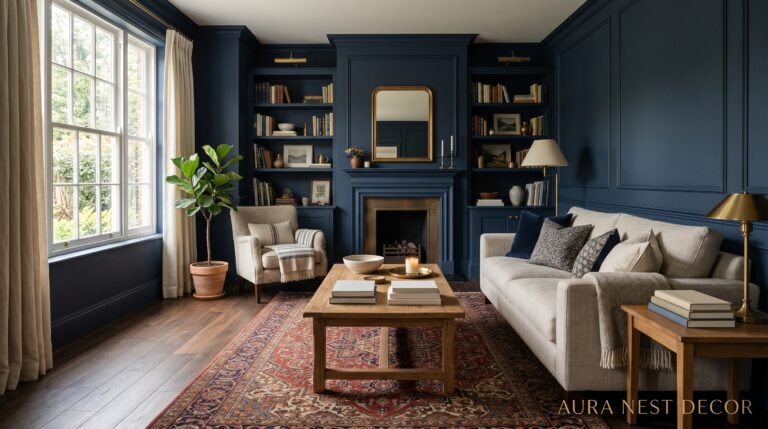
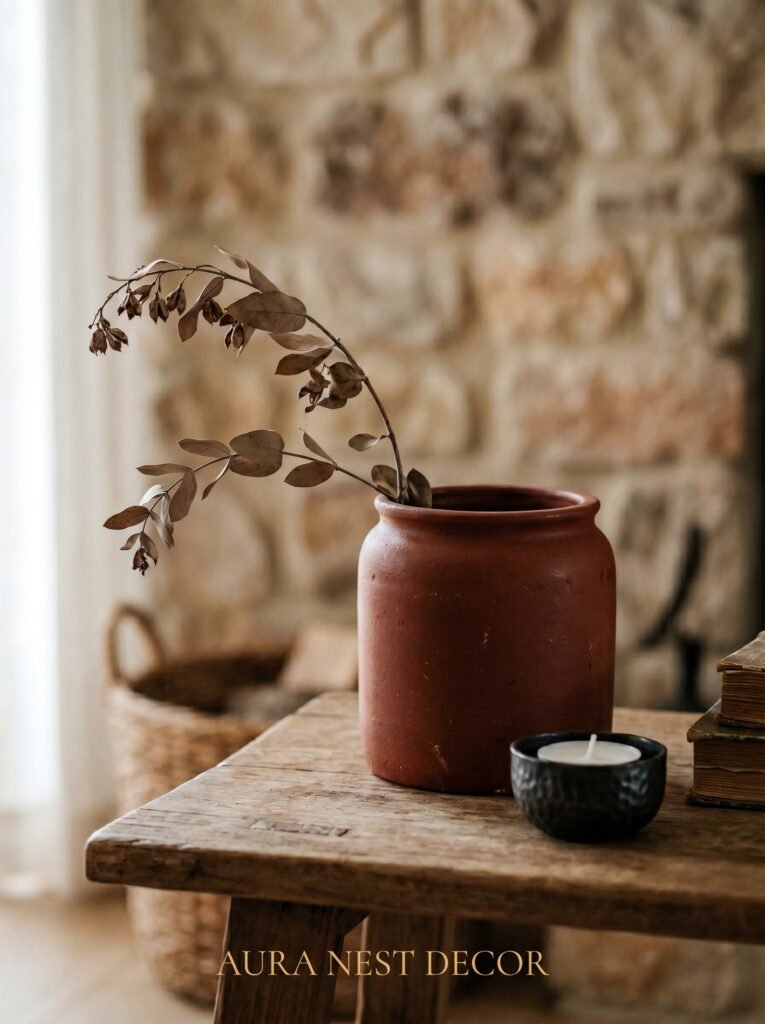
The colours that sing in this context: deep terracotta, forest green, inky navy, warm ochre, rust red. These are colours that look like they came from the natural world — from clay soil, from lichen on stone, from autumn hedgerows. They don’t fight the rustic quality of the room; they reinforce it.
A terracotta cushion. A forest green throw draped over the sofa arm. An ochre ceramic on the coffee table beside a cream candle. That’s all it takes. Three touches of the same colour, spread through the room, and the whole space pulls together in a way that feels less designed and more discovered.
Don’t buy a whole collection in your accent colour. One cushion, one throw, one small object. Less is genuinely more here.
—
12. The Styling Details That Take a Room From “Nice” to “Why Does Everyone Ask Who Decorated This?”
Real talk: the furniture is maybe 60% of the work. The remaining 40% is in the small things.
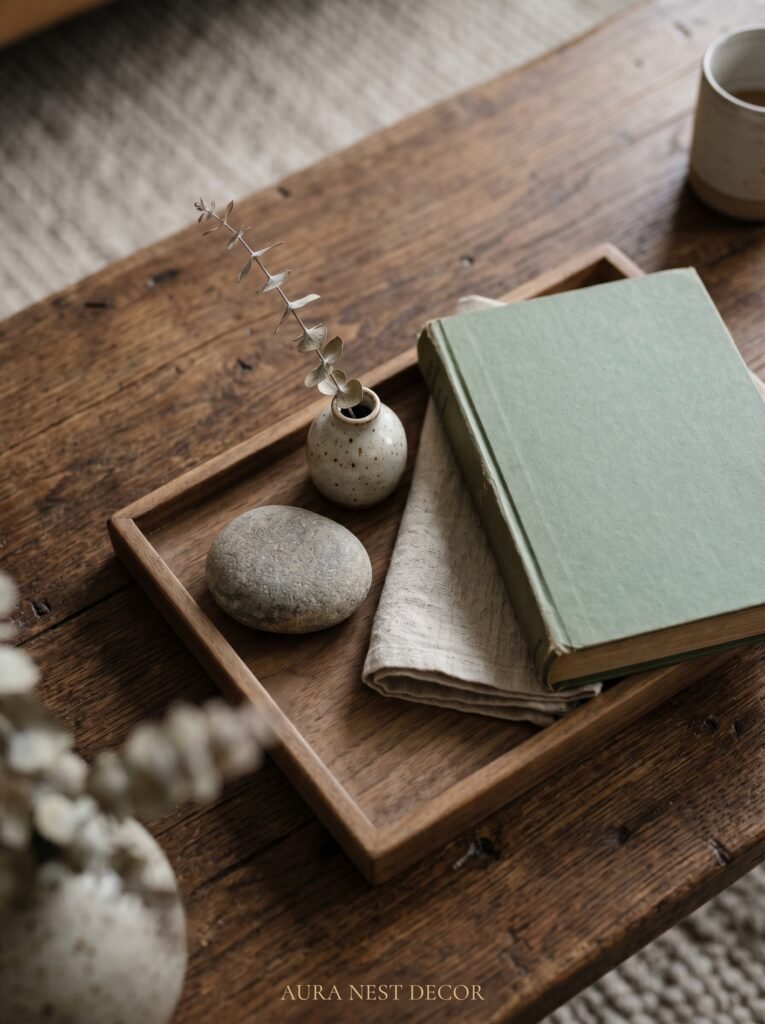
A stack of design or recipe books on the coffee table — real books you’ve actually read, not blank-spine props. A linen table runner used as a throw over a side table. A vintage wooden bowl you found at a car boot sale in Hampshire or a flea market in Nashville that has actual history in the grain. A hand-thrown mug sitting on a stack of coasters on the side table — because you live here and you drink tea and that is beautiful evidence of a life being lived.
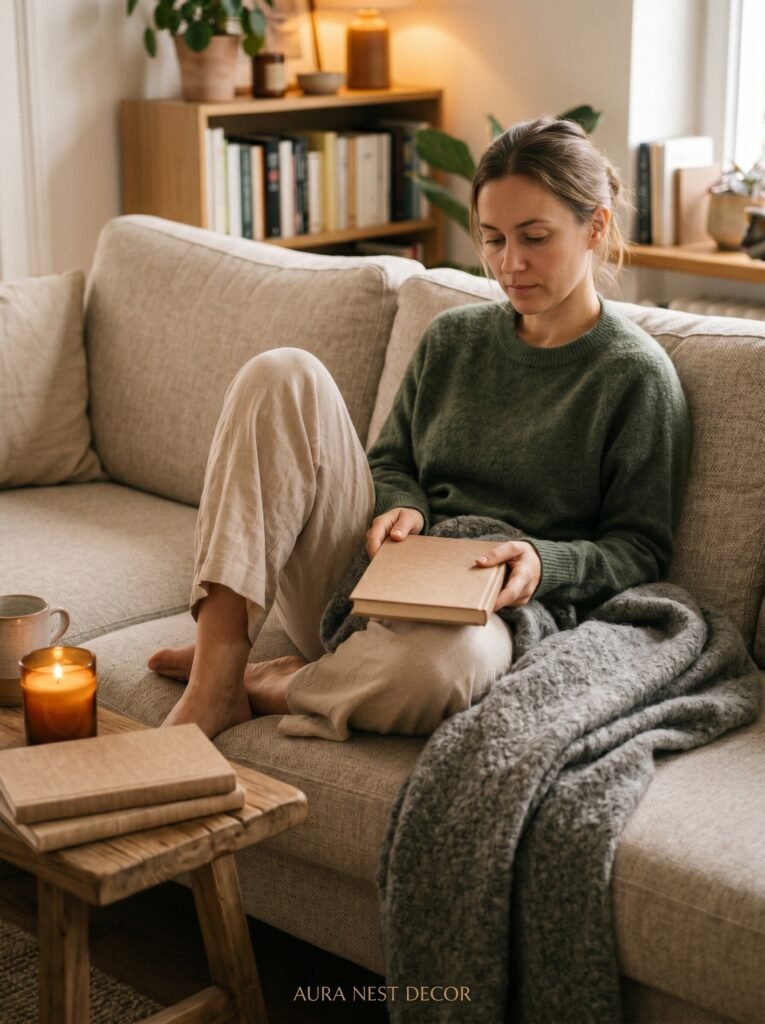
The rooms that stop people mid-scroll are never perfect. They have a candle that’s been burned down three-quarters of the way. A blanket that’s been actually used. A book face-down because someone is actually reading it. They look like someone real lives there and chooses, every day, to make it beautiful.
That’s the whole secret.
—
❓ FAQ
Q: How do I make a modern rustic living room work in a new-build home that has no original features? A: New-builds are actually brilliant canvases for this — the clean lines give the rustic elements room to breathe. Focus on adding texture through materials rather than architectural features: a limewash effect paint on one wall, reclaimed wood shelving, and a genuinely good jute rug go a long way. A statement fireplace insert or bio-ethanol fire can create that central focal point that new builds typically lack.
Q: What’s the difference between modern rustic and cottagecore — are they the same thing? A: They’re related but different. Cottagecore is maximalist and nostalgic — floral prints, vintage china collections, a slightly wild feeling. Modern rustic is more restrained, more contemporary in its bones. Both value natural materials and warmth, but modern rustic keeps things edited and intentional rather than charmingly cluttered. Think of cottagecore as the country grandmother’s sitting room and modern rustic as the converted barn that was designed by someone who studied architecture.
Q: I have a very small living room — can modern rustic still work without it feeling cramped? A: Yes, and it often works better in smaller rooms because the textures and warmth read more intensely. Keep the palette cohesive and light, choose furniture with legs rather than pieces that sit directly on the floor (it creates visual space), and be disciplined about what you put on display. One large piece of art reads better in a small room than a gallery wall, and good lighting will do more for perceived space than almost anything structural.
—
💭 Final Thoughts
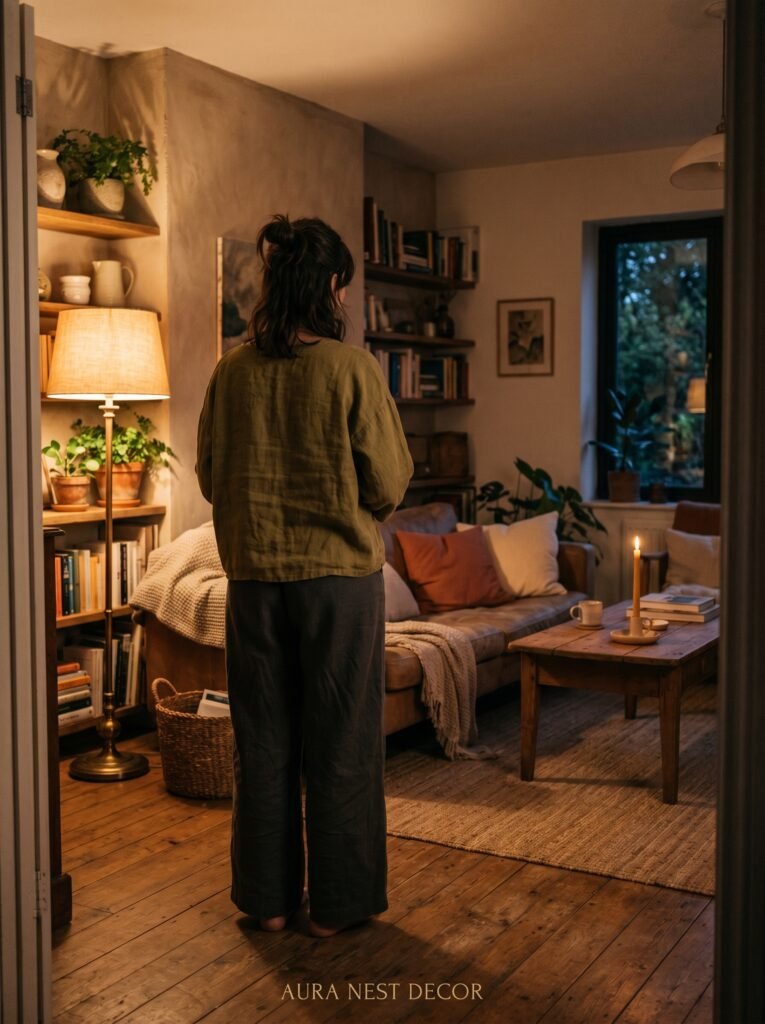
Modern rustic is ultimately an act of trust — trusting that warmth is enough, that imperfection is interesting, that a room doesn’t need to perform or impress. It just needs to feel like somewhere you genuinely want to be at the end of a long Tuesday.
The best version of this style is always the one that looks most like the specific person who lives there, with their particular books and their particular candle and their particular battered wooden bowl from somewhere that meant something.
So — what’s the one thing in your living room right now that already belongs in this story?