The Modern Rustic Living Room Wall That Stopped Every Single Guest in Their Tracks
You know that moment when someone walks into a room and just… stops? They don’t say anything for a second. They’re just looking. That’s what the right wall can do. And the modern rustic aesthetic — that tension between raw, weathered texture and clean, intentional design — is one of the few styles that pulls this off every single time.
—
1. Why the Best Modern Rustic Walls Always Start with One Anchor Piece (Not Five)
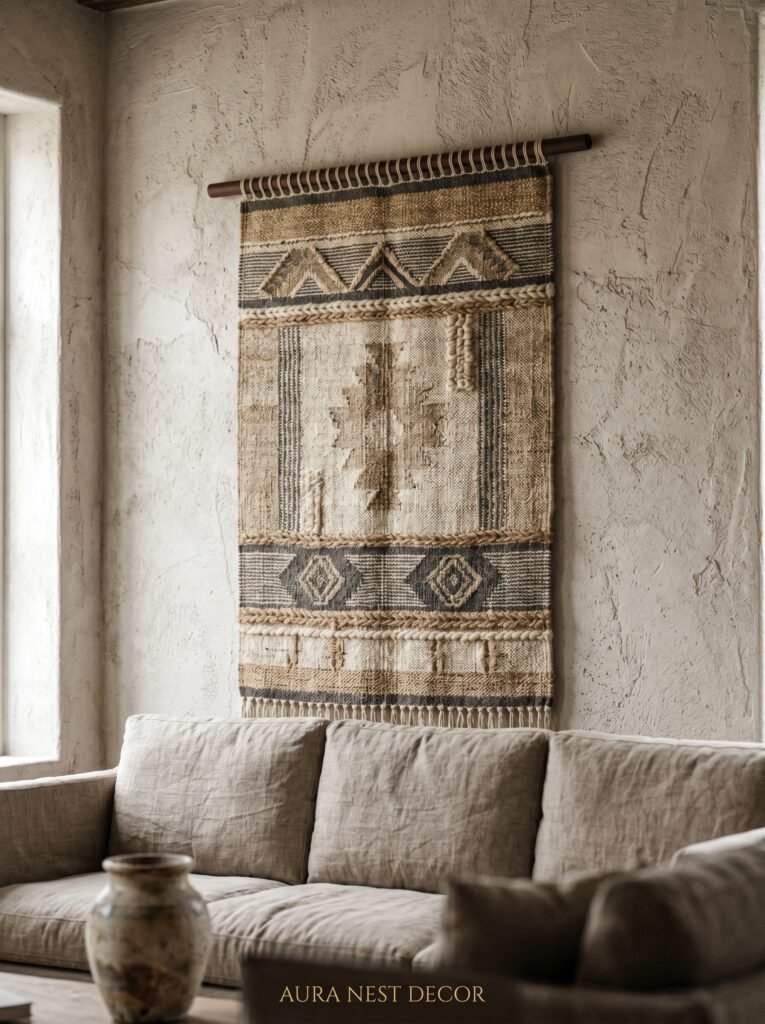
Here’s where most people go wrong. They Pinterest-spiral for three weeks, order seven different things, and end up with a wall that looks like a car boot sale curated by someone who really loves neutrals.
The anchor piece changes everything.
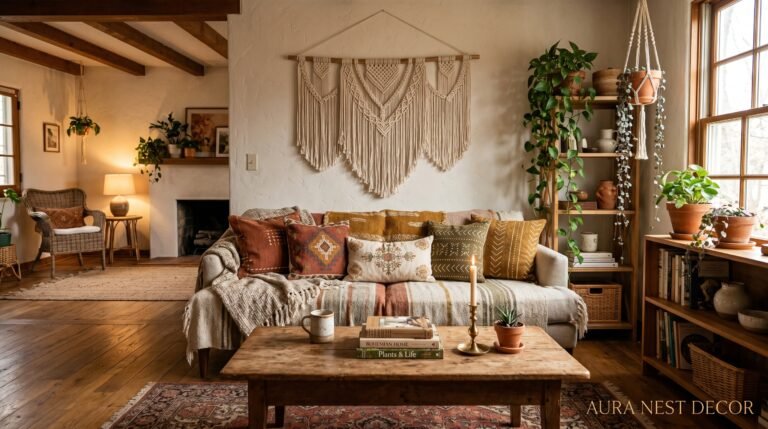
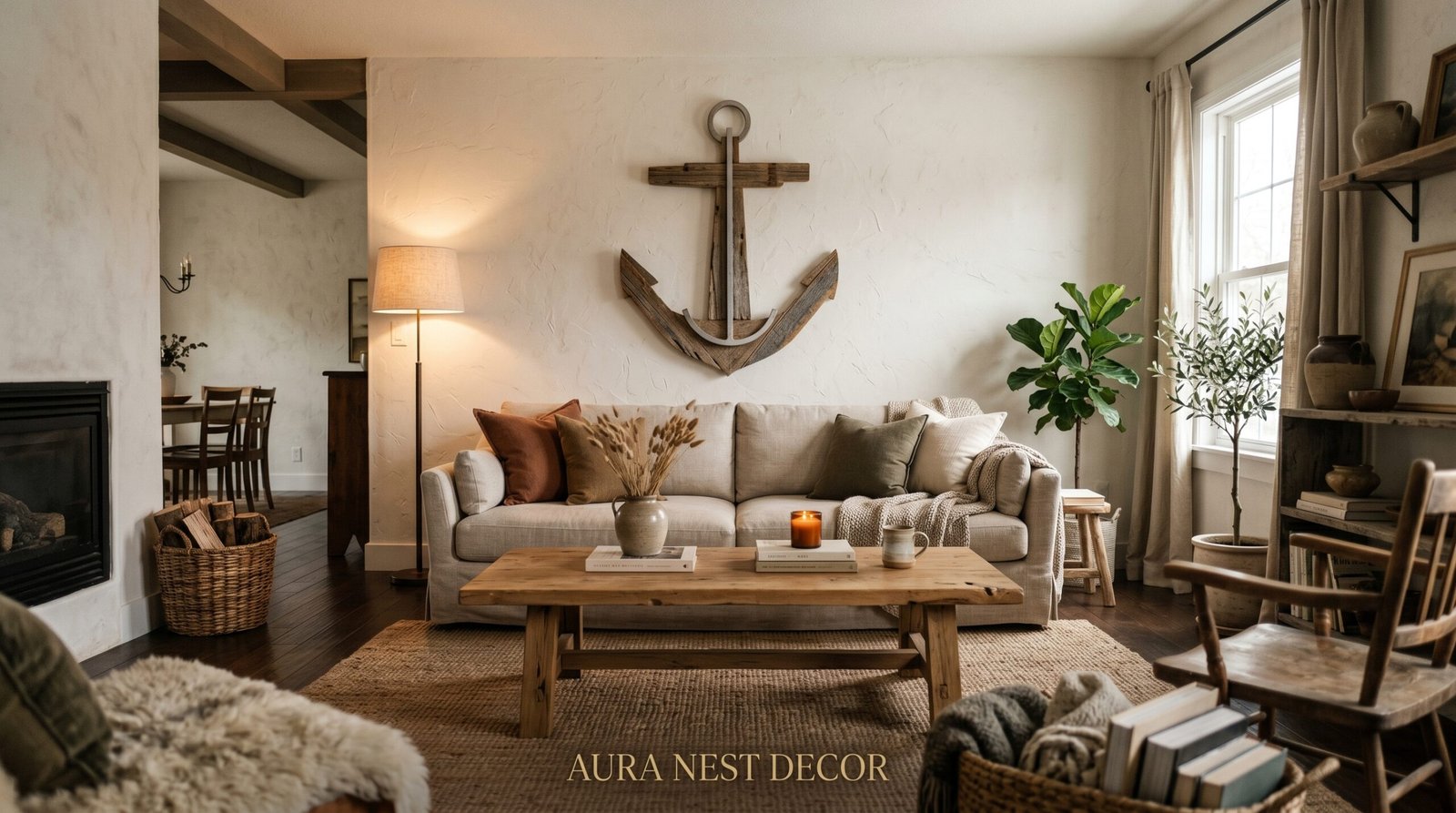
In modern rustic design, your anchor is the one element that carries the most visual weight — and it earns that weight through texture, scale, or age. Think a single oversized piece of reclaimed wood art. A large woven wall hanging with actual depth to it, the kind where you can see every thread in different light. A vintage oil painting in a chunky, unpainted oak frame. Something that, if you removed everything else from the wall, would still hold the room.
The reason this works is pure visual psychology. When there’s a clear focal point, the brain relaxes. It knows where to look. Everything else you add becomes supporting cast — intentional, not competing. A good anchor piece also gives you your entire color palette and texture story in one move, which makes every subsequent decision so much easier.
In terms of scale, err bigger than your instincts tell you. Most people hang things too small and too high. Your anchor piece should feel like it belongs to the wall, not like it’s visiting.
“One thing that means something beats ten things that match.”
2. The Texture Combination That Makes Modern Rustic Feel Expensive, Not Chaotic
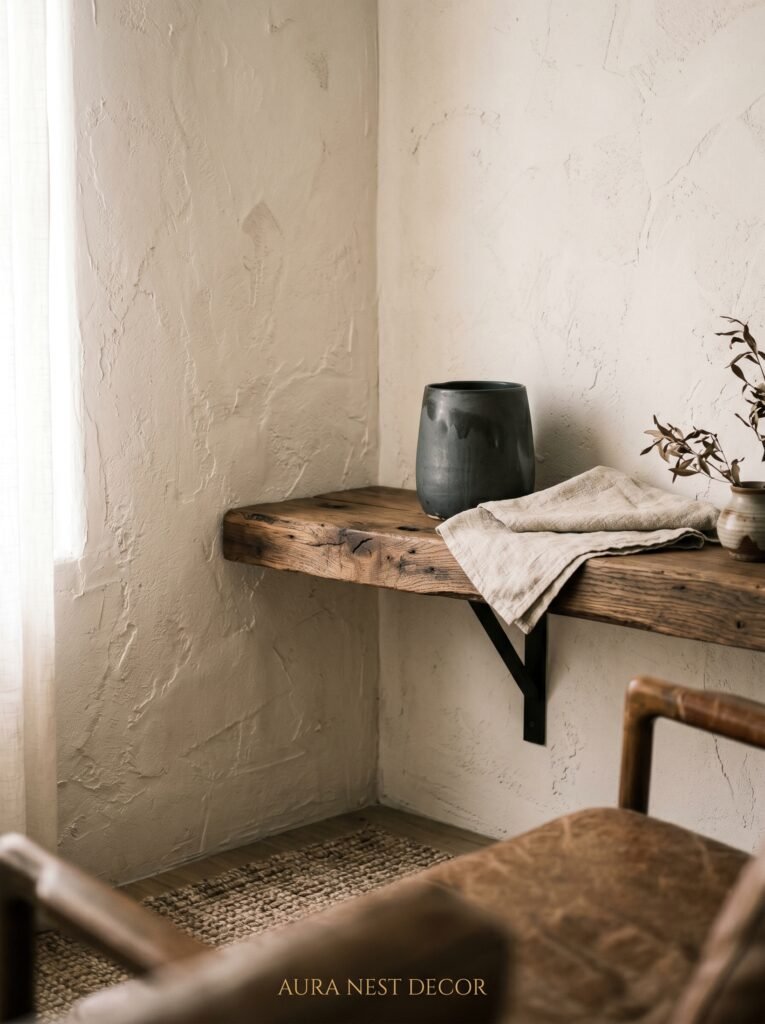
Texture is the engine of this style. But there’s a formula — loose, flexible, but real — that separates rooms that look magazine-ready from rooms that just look busy.
Three textures. Maximum four.
In modern rustic wall decor, the most successful combinations I’ve seen over and over again are: raw wood + woven fiber + matte metal. That’s it. That’s the recipe. The wood brings the warmth and history. The woven element (a macramé panel, a rattan frame, a jute wall hanging) brings softness and artisan character. The matte metal — a dark iron sconce, a brushed steel shelf bracket, a hammered copper frame — brings the modern back into modern rustic. It’s the thing that stops the wall from feeling like a log cabin gift shop.
Notice what’s not in that list: anything shiny, anything plasticky, anything with a high-gloss finish. Those things don’t just look wrong against raw wood and natural fibers — they actively fight the mood you’re trying to create. The whole point of modern rustic is that everything on the wall looks like it was made by a person, not a factory. Even if it was made by a factory, it should look like it wasn’t.
When you’re shopping for pieces, run your eyes over the surface textures before you read the price tag or the description. If a piece has visible grain, visible weave, visible brushwork, visible hammer marks — it belongs in this style.
3. The Color Mistake That Makes Rustic Walls Look Dated Instead of Timeless
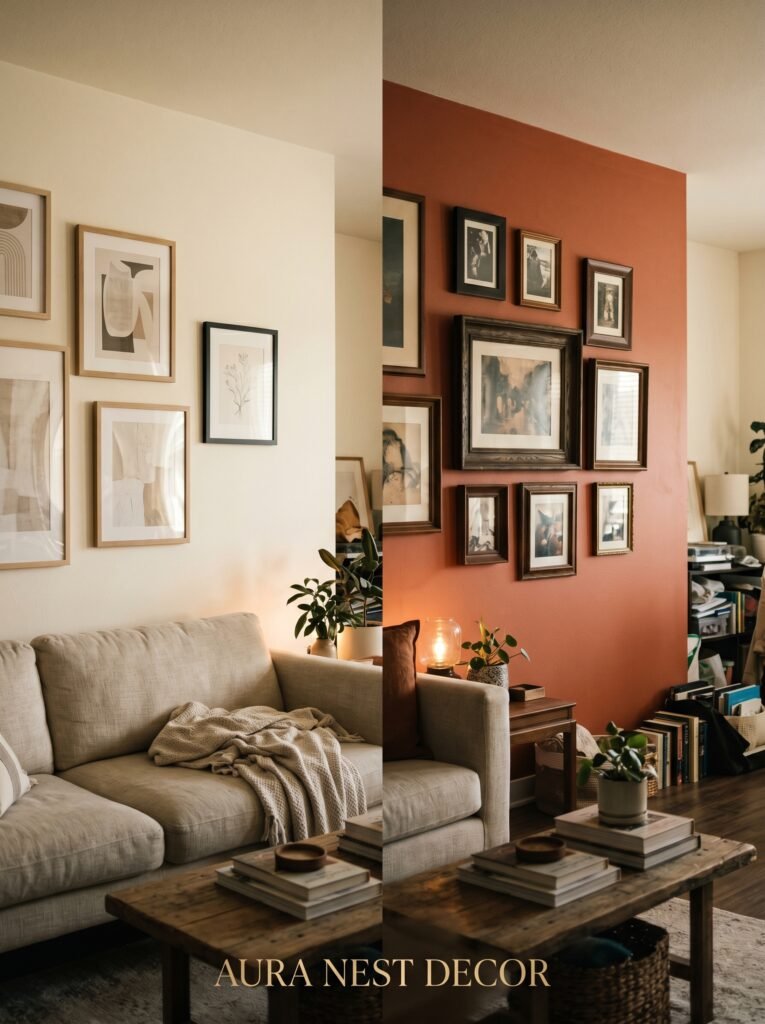
It’s greige. I’m saying it.
Not greige itself — greige walls can be genuinely beautiful. The mistake is stopping at greige and thinking the wall is done. A flat, smooth, pale neutral wall with rustic elements hung on it will always look slightly off, like wearing hiking boots with a silk blouse. Technically it can work, but there’s friction.
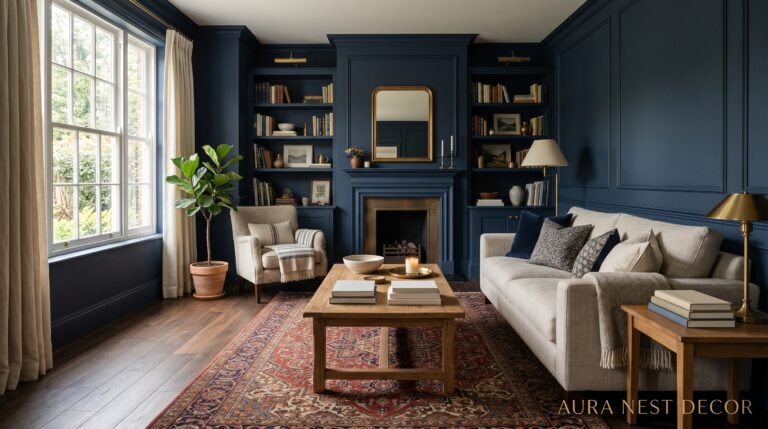
What gives modern rustic walls their staying power is contrast. Specifically: the contrast between your wall color and the depth of the materials you’re hanging. If your walls are pale, you need pieces with real darkness in them — the deep umber of aged wood, the near-black of wrought iron, the shadow inside a woven wall hanging. If your walls are darker (a warm charcoal, a clay-toned terracotta, a deep forest green — all having a major moment in both US and UK homes right now), your pieces can be lighter: bleached wood, natural linen, raw cotton rope.
The colors that consistently age the best in this aesthetic are warm, earthy, and just slightly unexpected. Burnt sienna. Warm slate. Mushroom. Dried sage. Rust. These aren’t the colors of a trend cycle — they’re the colors of actual natural materials, which means they never really go out because they were never really “in.”
4. How to Hang a Gallery Wall Without It Looking Like a Mood Board You Forgot to Edit
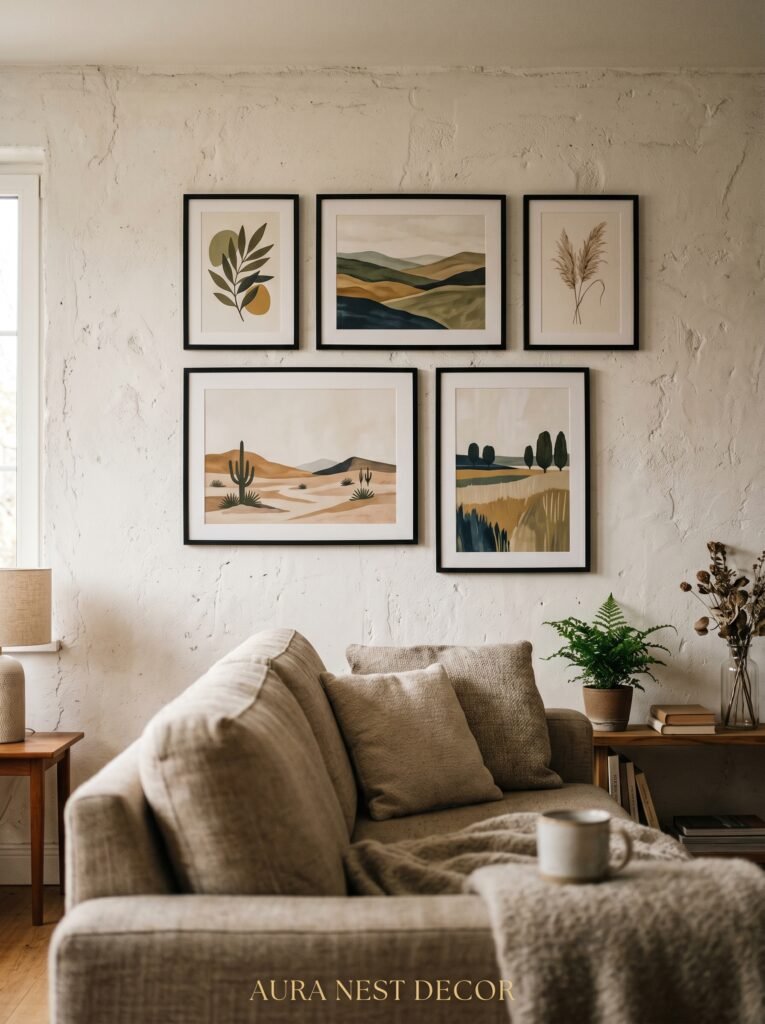
Gallery walls are polarizing and I get it. Done badly, they look like controlled chaos, emphasis on chaos. Done well, they’re the single most personal, layered, interesting thing a wall can have.
The modern rustic gallery wall has a few rules that make all the difference.
Frames do not need to match. They need to agree. There’s a difference. Matching means identical. Agreeing means they share a material language — all wood, or all metal, or a mix where nothing fights. A chunky walnut frame next to a thin brass frame next to a frameless stretched canvas — that works, because the variety is intentional and the pieces themselves carry the cohesion.
Vary the format obsessively. Landscape next to portrait. Large next to small. A physical object (a small shelf with one object, a dried botanicals arrangement mounted directly to the wall, a single ceramic piece on a picture ledge) next to flat art. The moment you mix formats, the gallery wall starts to feel like a collection rather than a decoration.
“A gallery wall should look like it grew over time, not like it was installed in an afternoon.”
Lay everything out on the floor first. Photograph it from above. Live with that photo for a day. You’ll see immediately what needs to move.
5. The Lighting Trick That Changes Everything After 6pm
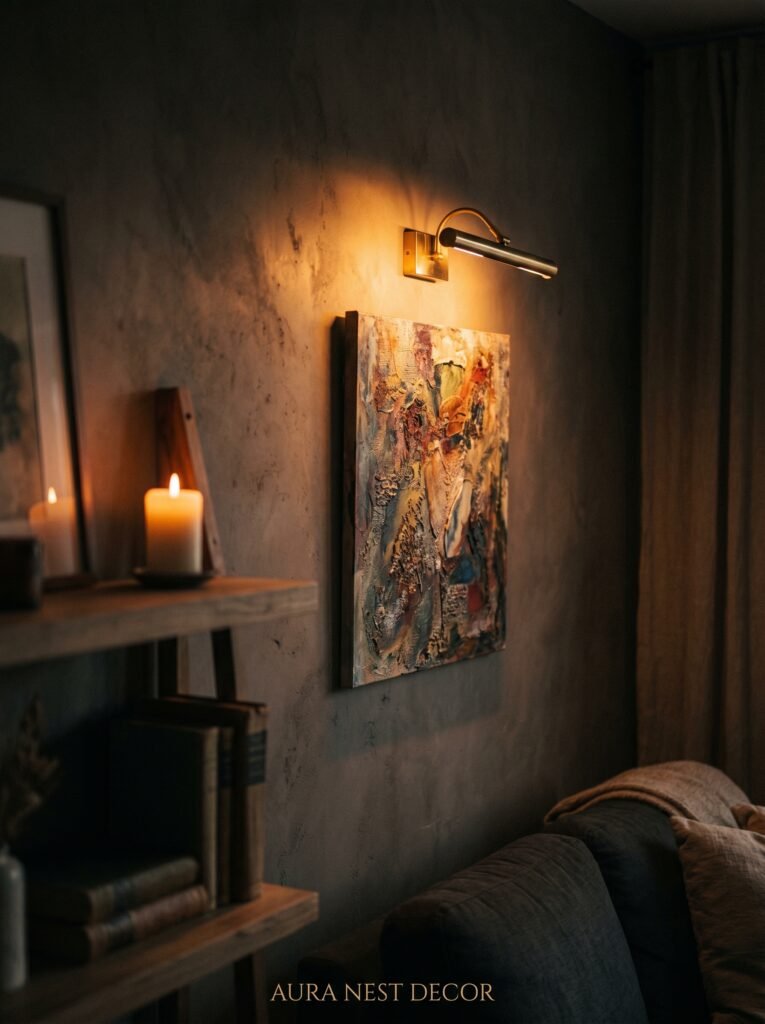
Here’s something nobody puts in the caption: the way your wall looks at night is arguably more important than how it looks during the day.
In daylight, natural light does the work. Textures cast their own shadows, colors read true, everything has depth. But once the sun goes down and you’re relying on artificial lighting, a rustic wall can either glow warmly or flatten completely — and the difference is entirely in how you light it.
Wall sconces are the answer. Not overhead lighting aimed at the wall. Actual sconces mounted on the wall itself, ideally at eye level or slightly below. The light they cast is directional and low, which means it rakes across your textured surfaces and creates shadows in all the right places. The grain in that reclaimed wood piece? Sconce lighting makes it sculptural. The depth in that woven hanging? It suddenly has dimension you didn’t know was there.
For bulb temperature in a modern rustic space, 2700K is your number. That’s the amber warmth that reads like firelight. 3000K starts to tip toward cool and clinical. 2200K gets so warm it can look orange. 2700K hits the exact register that makes raw wood and natural fibers look like they were made for each other.
6. What British Homes Get Right About Rustic Walls That American Homes Often Miss
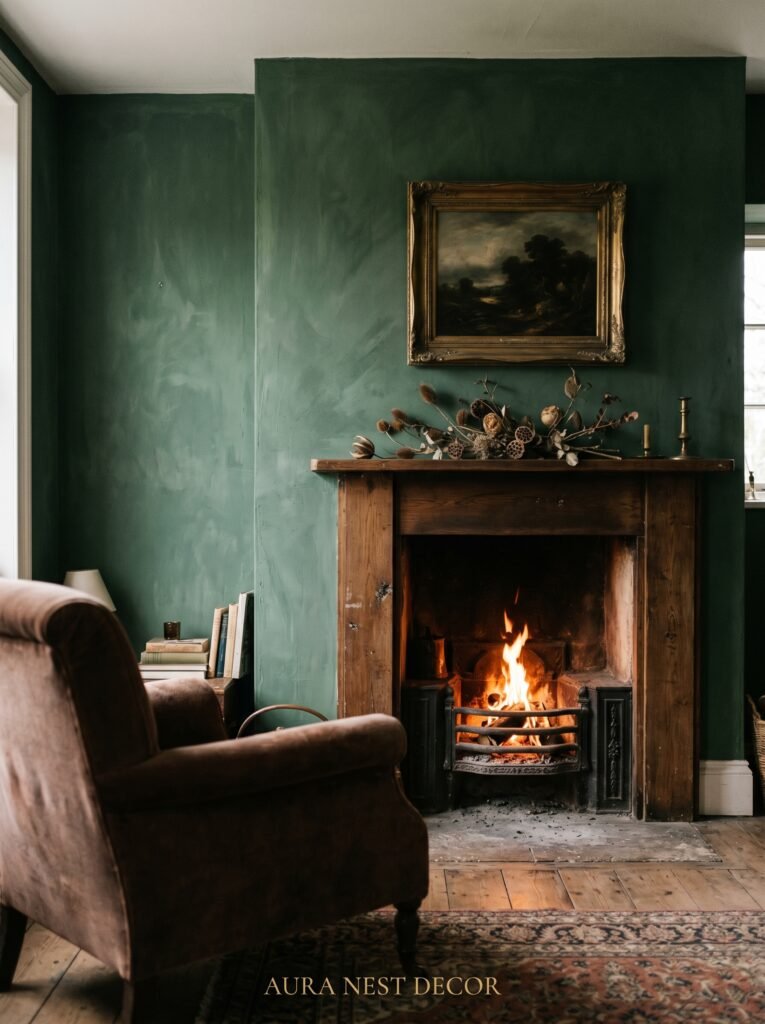
I’ve spent enough time scrolling both sides of the Atlantic to notice the difference, and it’s not a small one.
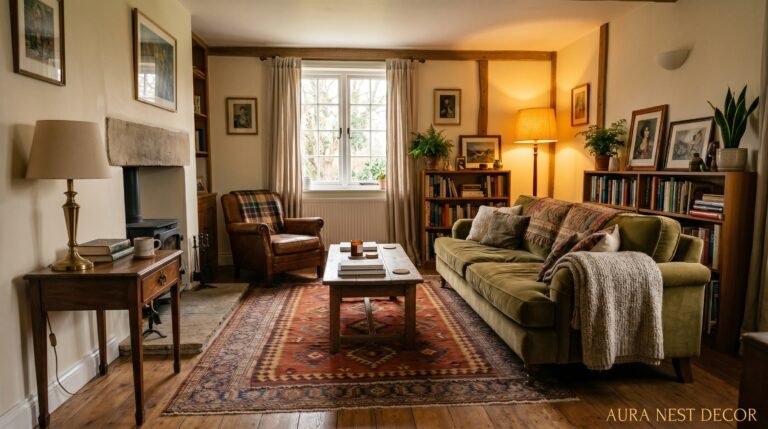
British interiors — particularly in older homes with period details — tend to lean into imperfection with a confidence that feels almost nonchalant. A slightly uneven plaster wall isn’t a problem to be fixed; it’s part of the texture story. A crack in the ceiling gets painted over and becomes part of the history. The architecture itself is already doing rustic work, which means the decor can be restrained and still land beautifully.
American homes, especially newer builds, often have to create that texture and history from scratch — and the temptation is to overcompensate. To fill every inch of wall. To go so heavily rustic that the “modern” falls out completely and you’re left with something that looks more like a farmhouse theme than a design choice.
The lesson from British interiors: restraint is a feature. If the architecture is plain, let one genuinely beautiful, textured wall piece carry the whole story. Don’t compete with it.
7. The Reclaimed Wood Panel Debate — and When It Actually Works
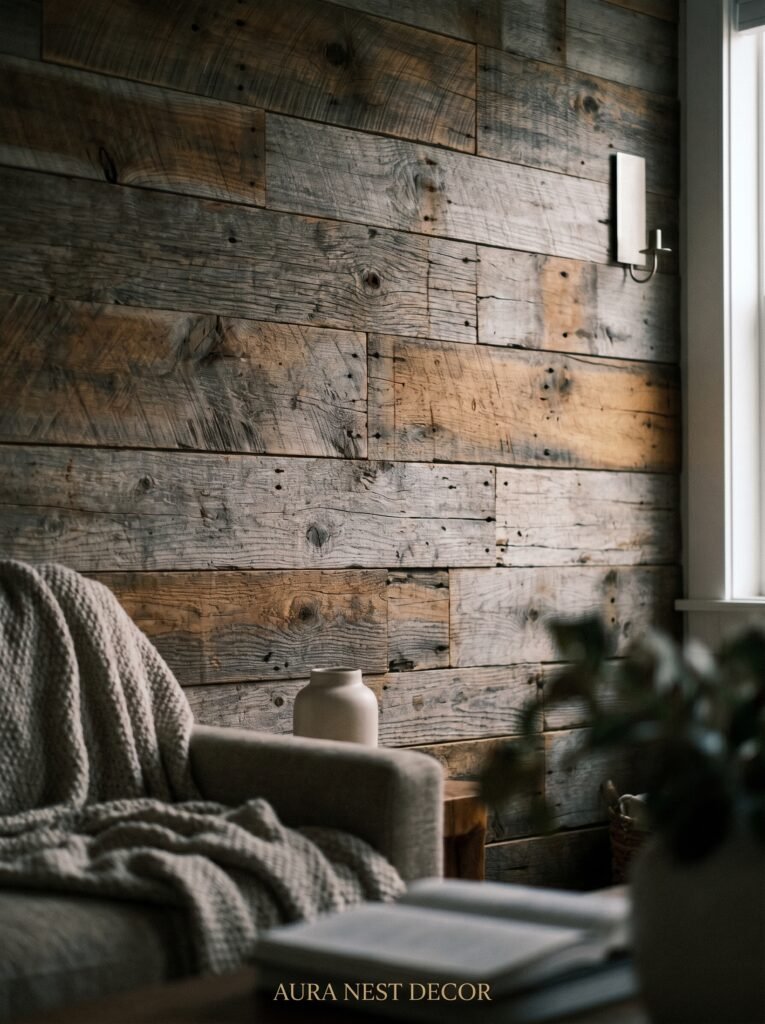
Reclaimed wood wall panels are everywhere right now. You see them in every before-and-after, every new build renovation, every open-plan kitchen-diner that’s trying to feel warmer than it is. And honestly? I have complicated feelings about them.
When they work, they’re extraordinary. A full or partial accent wall in aged, varied-tone reclaimed wood brings a physical weight and warmth to a room that nothing else can replicate. The color variation — the grays and silvers and honeys and darks — is something no paint color can fake. If you have high ceilings and clean, minimal furniture, a reclaimed wood feature wall is one of the strongest design moves available to you.
“Real wood doesn’t just look warm. It changes the way sound moves through a room.”
When they don’t work is when the scale is wrong. A full wood panel wall in a small, low-ceilinged room will shrink the space aggressively. In that case, a partial panel — waist-height dado style, or a horizontal band at picture-rail height — carries all the character without consuming the room.
Installation tip: if you’re DIY-ing this in a UK home with older walls, check what’s behind the plaster before you start attaching anything heavy. Victorian and Edwardian walls can be unpredictable. In American drywall builds, a stud finder and some construction adhesive will get you most of the way there.
8. Mirrors as Texture: The Modern Rustic Trick That Opens Up a Room
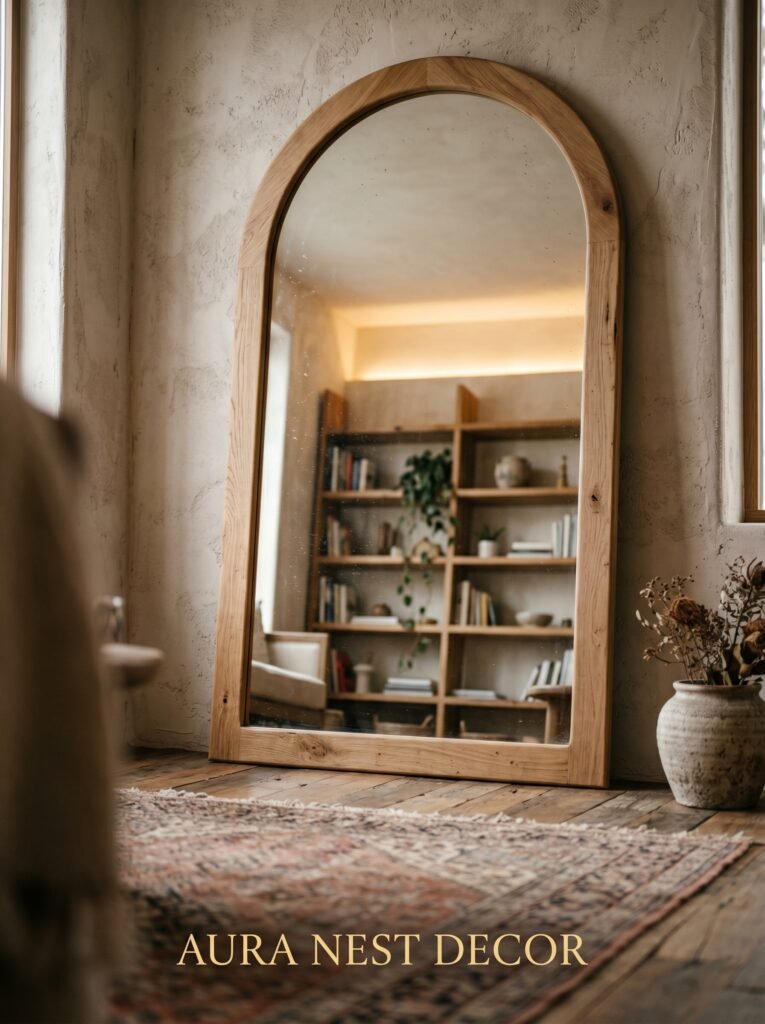
Most people think of mirrors as a trick for making a room look bigger, and yes — they do that. But in a modern rustic context, a mirror does something more interesting than just bounce light around.
A mirror in a weathered, worn, chunky wooden frame reads as an object first, a mirror second. It has physical presence. The frame is doing texture work, the glass is doing light work, and together they create a piece that functions in two registers simultaneously.
The shapes that work best in this aesthetic lean irregular. Arched mirrors are having a significant moment in both the US and UK right now, and for good reason — the curve softens all that raw, linear wood and stone. Irregular, organically shaped wooden frames work beautifully too. What to avoid: super thin metal frames and anything with a high-polish chrome finish. They’ll feel like they belong in a different room entirely.
Position a rustic mirror where it catches your most flattering light source — across from a window during the day, reflecting a sconce at night. The double texture of frame plus reflected wall becomes one of the best layering tricks in modern rustic design.
9. The Plants-on-Walls Conversation We Need to Have
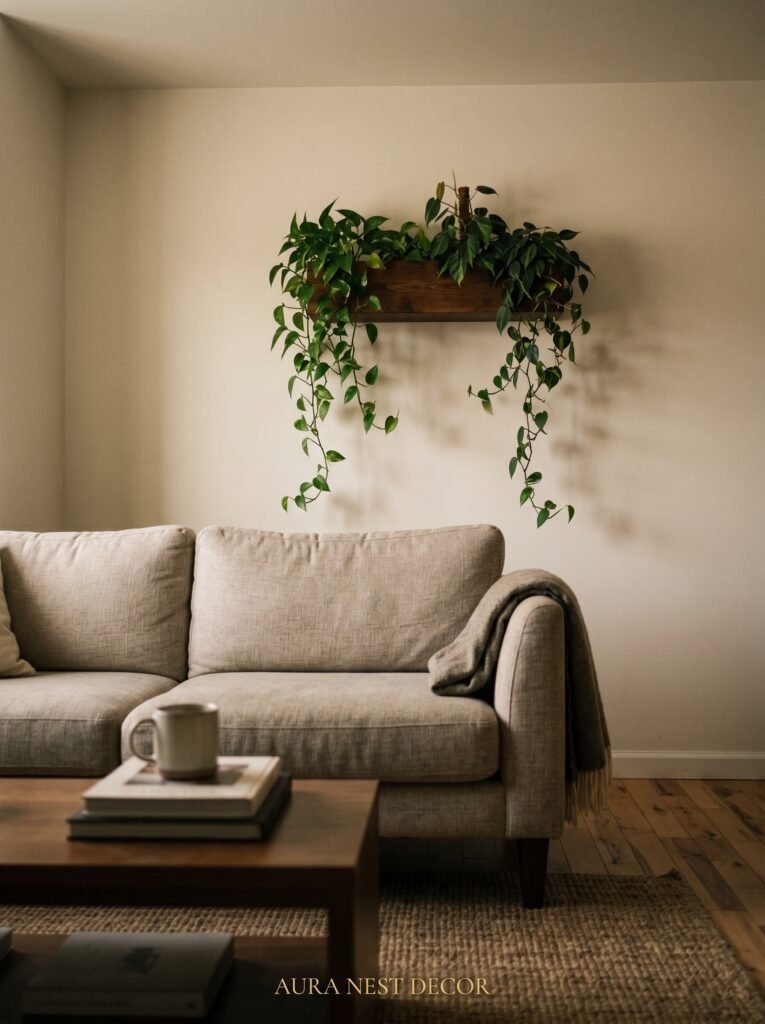
Living walls and plant shelves are either the most joyful thing you can do to a wall or the most high-maintenance commitment you’ll ever make to your decor. I say this as someone who has killed a mounted air plant installation twice.
But done with honesty about your actual lifestyle — how much you travel, how reliable you are with watering, whether your home gets enough natural light — plants on walls are extraordinary in a modern rustic living room.
The most forgiving options for wall-mounted greenery: trailing pothos on a picture ledge shelf (grows fast, forgives missed waterings, looks genuinely lush within weeks), dried botanicals arrangements (literally zero maintenance, age beautifully, and the warm tawny tones of dried pampas or dried eucalyptus are perfect against raw wood), and a single large mounted succulent arrangement if you get strong southern light.
What ties plants into the modern rustic aesthetic specifically is the container material. Terracotta wall pots. Woven basket planters hung directly. Small carved wooden vessels on floating ledges. The greenery brings life; the containers bring the material story.
10. The One Art Style That Fits Modern Rustic Without Trying Too Hard
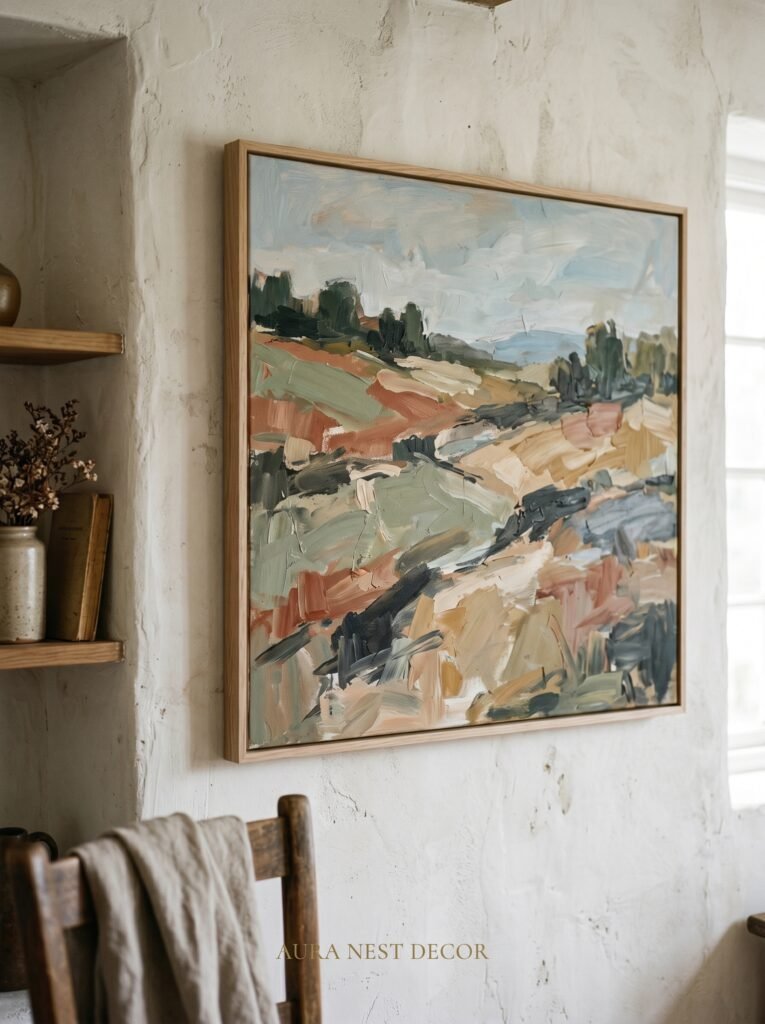
Abstract art is a cheat code in this style, and I mean that as a compliment.
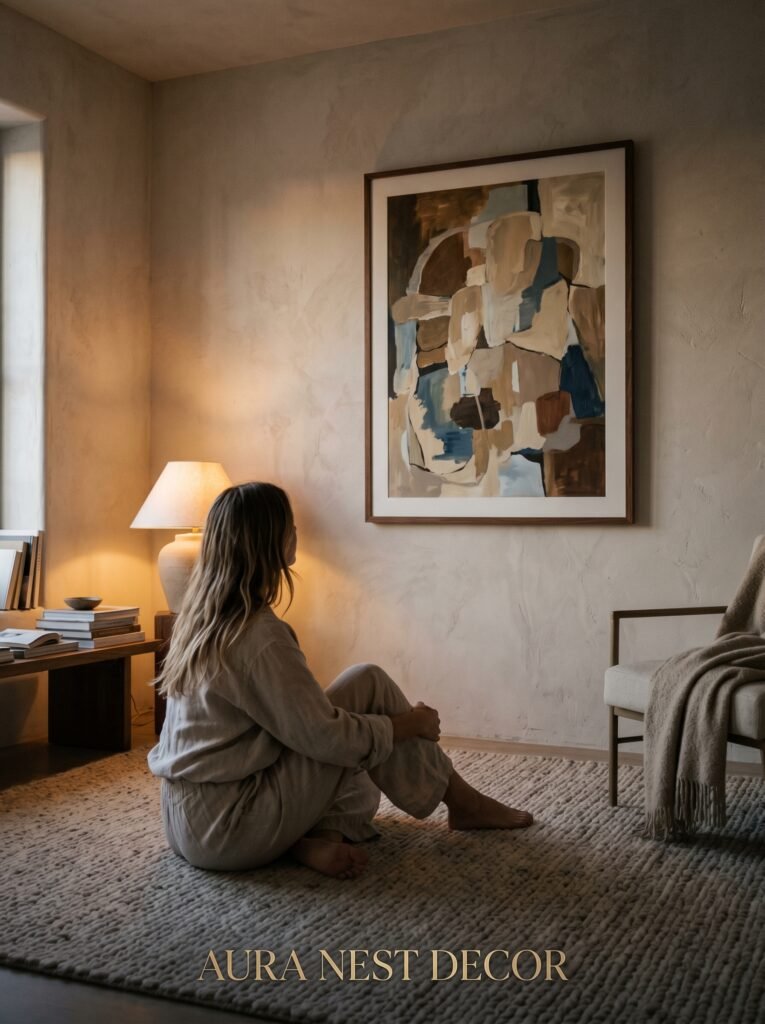
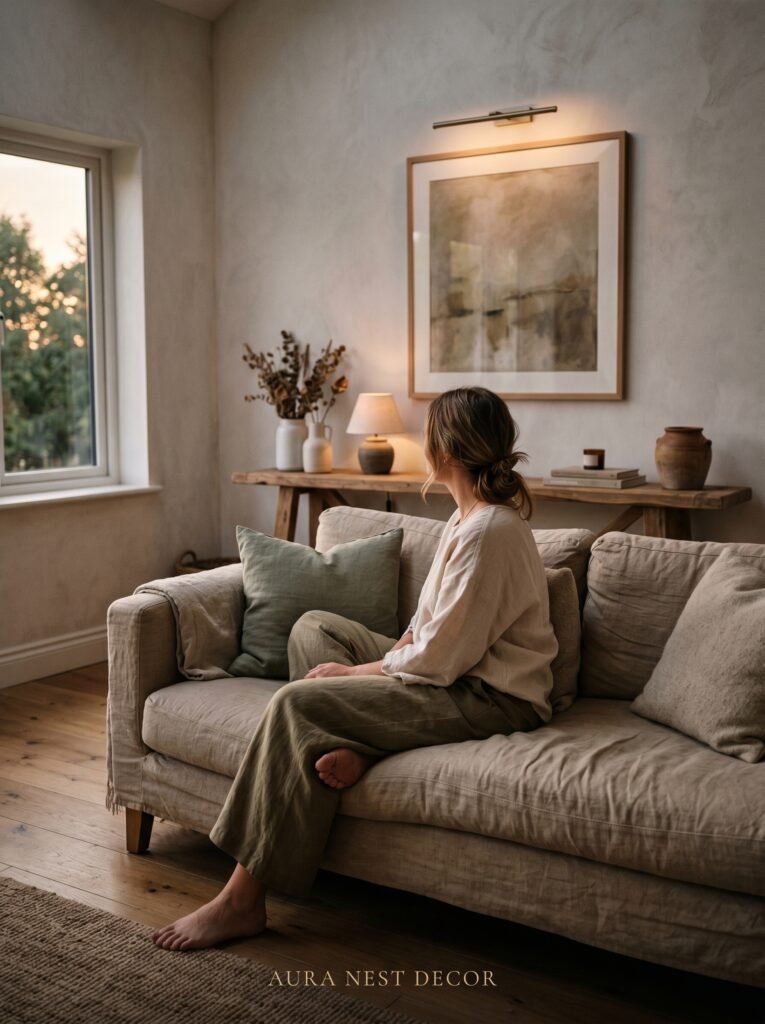
The best abstract art for a modern rustic wall has three qualities: earthy tones, visible texture in the medium itself (think impasto brushwork, palette knife marks, sand mixed into paint), and a scale that commands attention. When you hang a large abstract canvas with visible, physical texture over a raw wood console or a linen sofa, something clicks. The art feels intentional without being literal. It’s not a landscape trying too hard to look rustic. It’s not a botanical print being sweet. It’s just color and texture and scale, doing exactly what the wall needs.
The specific palette that threads the needle between modern and rustic: warm whites and raw linens, clay and dusty terracotta, deep forest greens, aged brass yellows, and the near-black of charred wood. Any abstract piece that sits within this palette will feel native to the style.
If you’re on a budget, canvas prints of textured abstract art are genuinely excellent now. The key is: order large, matte finish only, and get it framed in an unpainted wood frame if the canvas wrap itself doesn’t carry enough visual weight.
11. Small Living Room, Big Rustic Ambition — Making It Work Without Overwhelming the Space
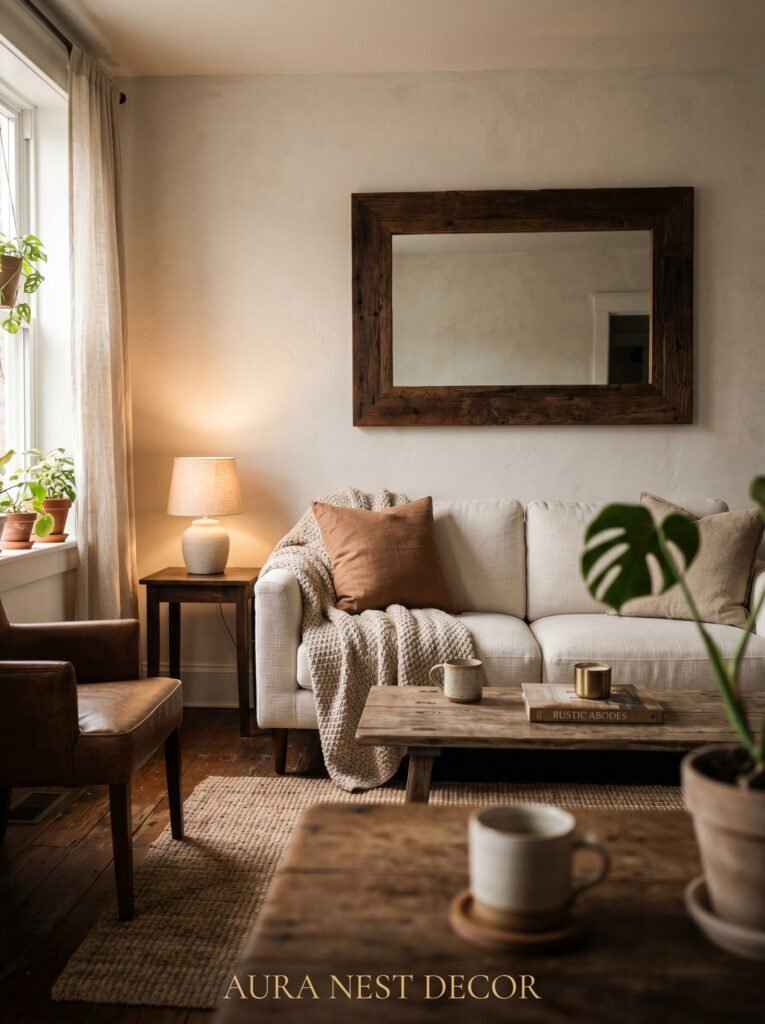
The fear with modern rustic in a small living room — especially in UK homes where a “spacious” living room is anything over 150 square feet — is that all that wood and texture and weight will crush the space.
It won’t, if you’re selective about where you put it.
Vertical is your friend in a small room. A tall, narrow reclaimed wood piece or a vertically hung woven wall tapestry draws the eye up and makes the ceiling feel higher. A single floating wooden shelf at picture-rail height running the length of one wall creates storage, display space, and visual architecture without taking any floor space at all.
The other thing that saves a small modern rustic room: the wall color. Contrary to what you might expect, a darker, richer wall color actually makes a small room feel more intentional rather than smaller. A warm terracotta or deep sage on the walls, with lighter natural pieces hung against them, creates a cozy enclosure rather than a cramped box. It’s the difference between a room that’s small and knows it, and a room that’s small and owns it.
12. The Final Layer: What You Put In Front of the Wall Matters as Much as the Wall Itself
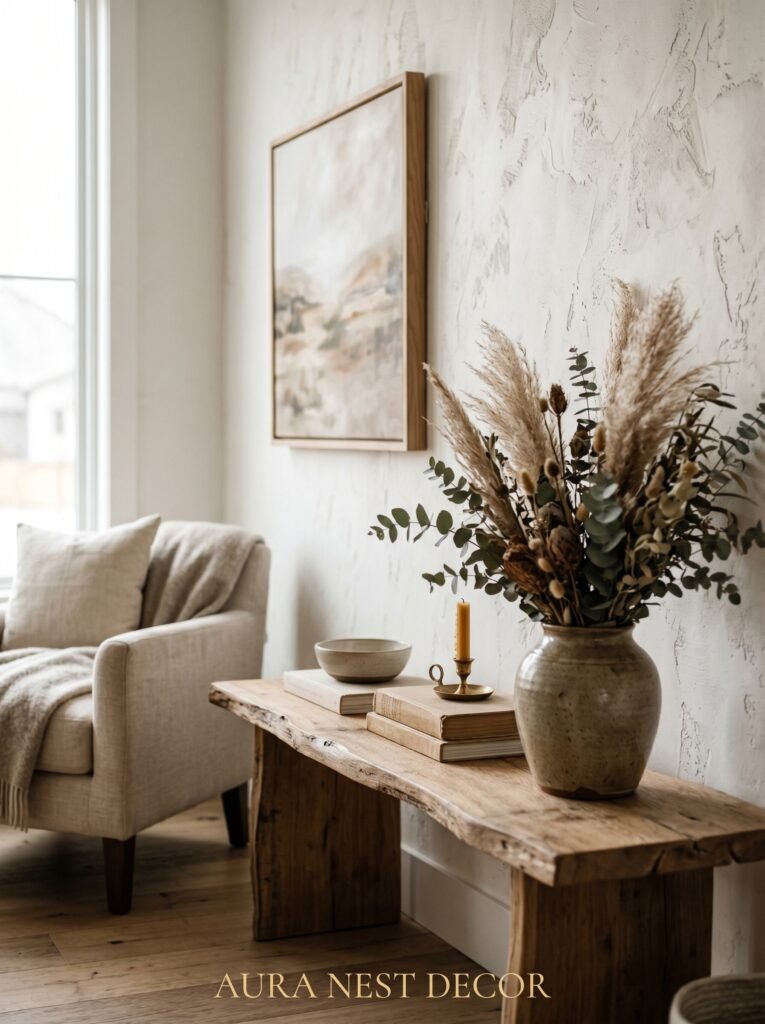
This is the thing that takes a wall from looking like a showroom to looking like a home.
The ledge in front of your wall, whether that’s a console table, a fireplace mantel, a low sideboard, or even just the floor — is part of the composition. It’s not separate from the wall; it extends it. The objects you place in front create foreground depth, which is what gives the wall its full visual impact.
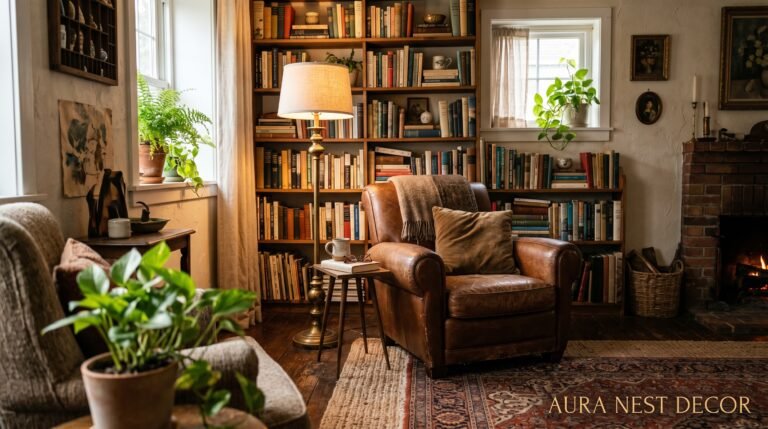
In modern rustic styling, the best foreground objects share the texture language of the wall: a stack of thick-spined books in natural linen covers. A ceramic vase in a matte, unglazed finish. A lantern with a thick pillar candle inside. A small woven basket holding something practical. A single dried flower stem in a narrow-necked pottery vessel. These aren’t decorations for the sake of decoration — they’re the final notes in a piece of music that started with your anchor piece and moved through every texture and tone on the wall above.
The wall and the space in front of it are one thing. Style them together.
—
❓ FAQ
Q: What colors work best for modern rustic living room walls? A: The most timeless choices are warm neutrals and earthy tones — think warm white, aged linen, warm clay, dusty terracotta, mushroom, and deep warm greens. These colors work because they mirror the natural materials (wood, stone, fiber) that define the style. Avoid cool grays and stark whites; they fight the warmth that modern rustic depends on.
Q: How do I make rustic wall decor look modern and not old-fashioned? A: The “modern” comes from restraint, scale, and the mixing of materials. Keep the number of pieces intentional rather than abundant. Add at least one element with clean lines or simple geometry — a simple geometric metal frame, a minimal floating shelf. And let some wall breathe. Empty space in a modern rustic room isn’t a failure; it’s part of the design.
Q: Where can I find affordable modern rustic wall decor in the US and UK? A: In the US, look at Etsy for handmade woven wall hangings and reclaimed wood art, and World Market for larger anchor pieces at reasonable prices. In the UK, Rockett St George, Cox & Cox, and independent sellers on Etsy UK consistently carry pieces with genuine rustic character. Charity shops and car boot sales are still one of the best sources for aged wooden frames and vintage art — the provenance is real, and the price is unbeatable.
—
💭 Final Thoughts
Modern rustic is one of those rare design directions that rewards patience more than money. The best walls in this style weren’t assembled in one afternoon — they were built up slowly, with pieces that meant something, positioned with a bit of nerve and a willingness to trust your eye. Start with one anchor piece that stops you in your tracks. Let the rest follow. The question worth sitting with: what’s the one thing on your wall right now that you’d actually miss if it was gone?