The Living Room That Feels Like a Deep Exhale (And Exactly How to Create It)
You walk in after a long day and the room just… receives you. Nothing is screaming for your attention. Nothing is cluttered or cold. It’s warm, it’s spare, and somehow it feels more personal than any room stuffed with things ever could. That’s cozy minimalism — and once you understand how it actually works, you can’t unsee it anywhere.
—
1. Why “Cozy Minimalism” Isn’t a Contradiction — It’s a Revolution
Most people hear “minimalism” and picture a stark white room with one concrete bowl and a sense of mild dread. That version is real, and honestly, it’s fine. But it’s not what we’re talking about here.
Cozy minimalism is something different. It’s the philosophy that fewer things, chosen with intention and real warmth, create more comfort than a room full of stuff ever could. It’s the opposite of the maximalist approach — but it’s equally opposite to the cold, gallery-style spaces that make guests afraid to sit down.
Think of it this way. When you strip a room back to only what you genuinely love, what remains carries so much more weight. That ceramic vase your friend brought back from Portugal. The wool throw your grandmother knitted. The lamp you saved up for because the light it throws is unlike anything else. Each object breathes. Each one has room to be noticed.
In the UK, this aesthetic has deep roots in the Scandinavian influence that’s been woven into British interiors for decades — the hygge philosophy dressed up in linen and oak. In the US, it’s found a huge following among people exhausted by the pressure to fill their homes with trend-driven pieces that feel empty the moment the package arrives.
The first thing to understand is that cozy minimalism is not about owning less. It’s about loving everything you own.
“You don’t need an empty room. You need a room where nothing feels like noise.”
—
2. The Furniture Arrangement Trick That Changes How a Room Feels Entirely
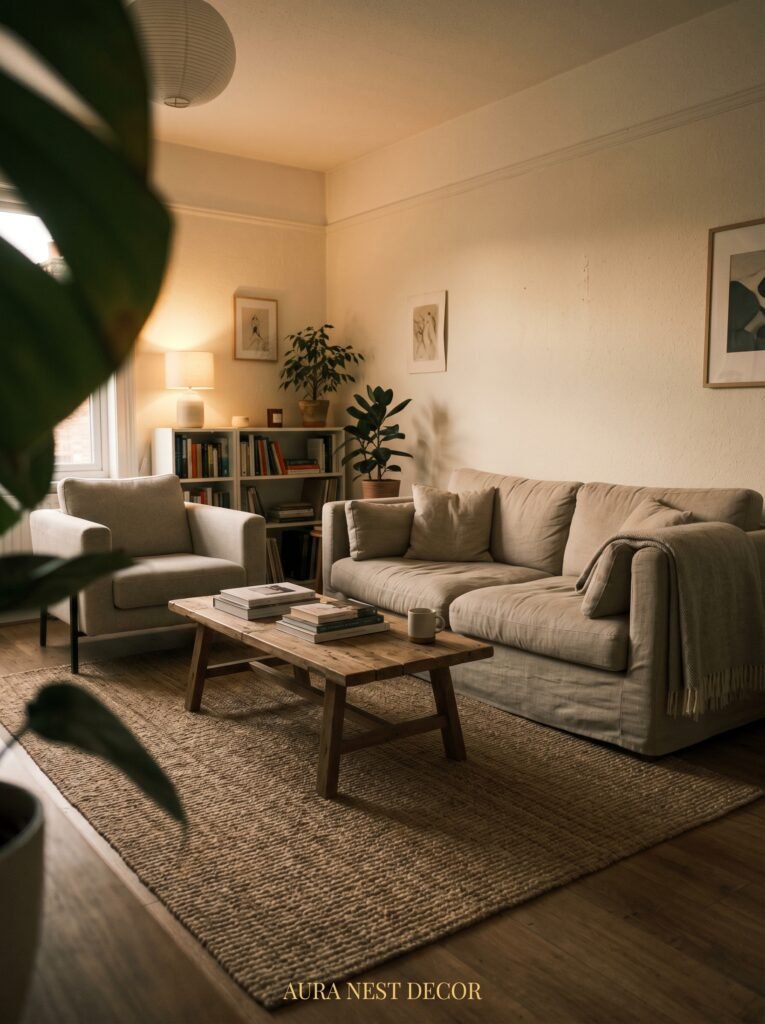
Here’s something that gets overlooked constantly: it’s not always what’s in the room, it’s where things are pointed.
Most people arrange furniture to face the television. It’s instinctive. But in a cozy minimalist living room, the arrangement often centers on a different anchor — a fireplace, a window, even just a beautiful low coffee table. The furniture turns inward. Toward conversation. Toward presence.
Pull your sofa away from the wall. Even a few inches makes the room feel intentional rather than crammed. Place two chairs at a slight angle rather than rigidly parallel. Let there be a sense of looseness, as if the room was arranged for an evening where good things might happen.
If you have a small living room — and plenty of people do, especially in British terraced houses or American urban apartments — resist the urge to push everything against the walls. That creates a perimeter effect, where the room feels like a waiting area. Instead, let the furniture float. Define a central zone and let the edges of the room breathe.
The golden rule: you should be able to walk around every main piece of furniture without squeezing. Space is not wasted. Space is the point.
—
3. The Color That Keeps Showing Up in Every Beautiful Cozy Minimalist Room Right Now
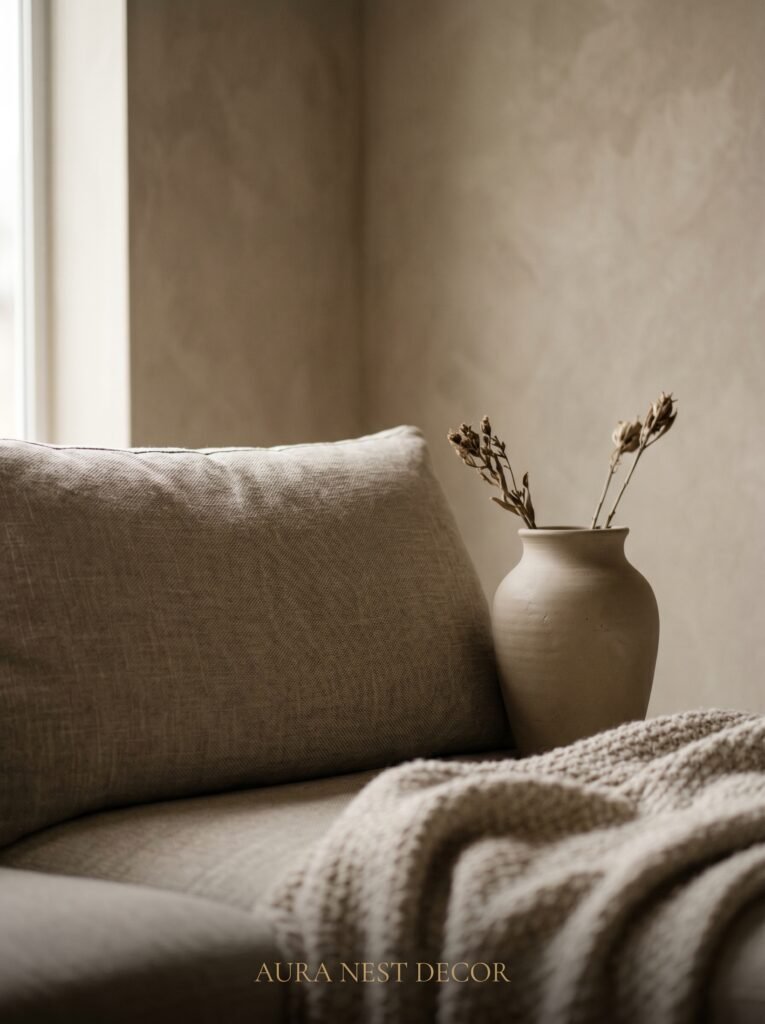
It’s not white. It’s not even off-white, really. It’s something deeper — a warm greige, a clay tone, a color that sits between sand and dust and feels like the inside of an old farmhouse on a November afternoon.
Colors like Farrow & Ball’s “Elephant’s Breath,” Benjamin Moore’s “Pale Oak,” or Sherwin-Williams’ “Accessible Beige” are dominating Pinterest boards for a reason. They do something clever: they warm the light in a room without making it feel dark, and they provide a backdrop that makes every natural material — wood, linen, terracotta — look like it was born to be there.
The deeper principle here is that cozy minimalism relies on analogous color palettes. Colors that live near each other on the spectrum: warm whites, soft tawny browns, faded greens, dusty pinks. Nothing jarring. Nothing that fights for attention.
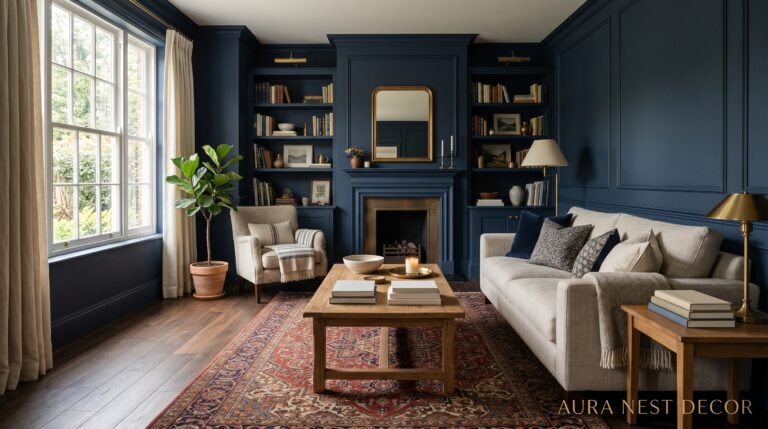
That doesn’t mean your room should be monotone and forgettable. One darker accent wall — a soft charcoal, a muted forest green — can anchor a space and make everything feel more deliberate. But it should feel like a choice made in confidence, not a statement made in panic.
Walls matter. Get the color right and everything else gets easier.
—
4. The One Type of Lighting That Does More Work Than Everything Else Combined
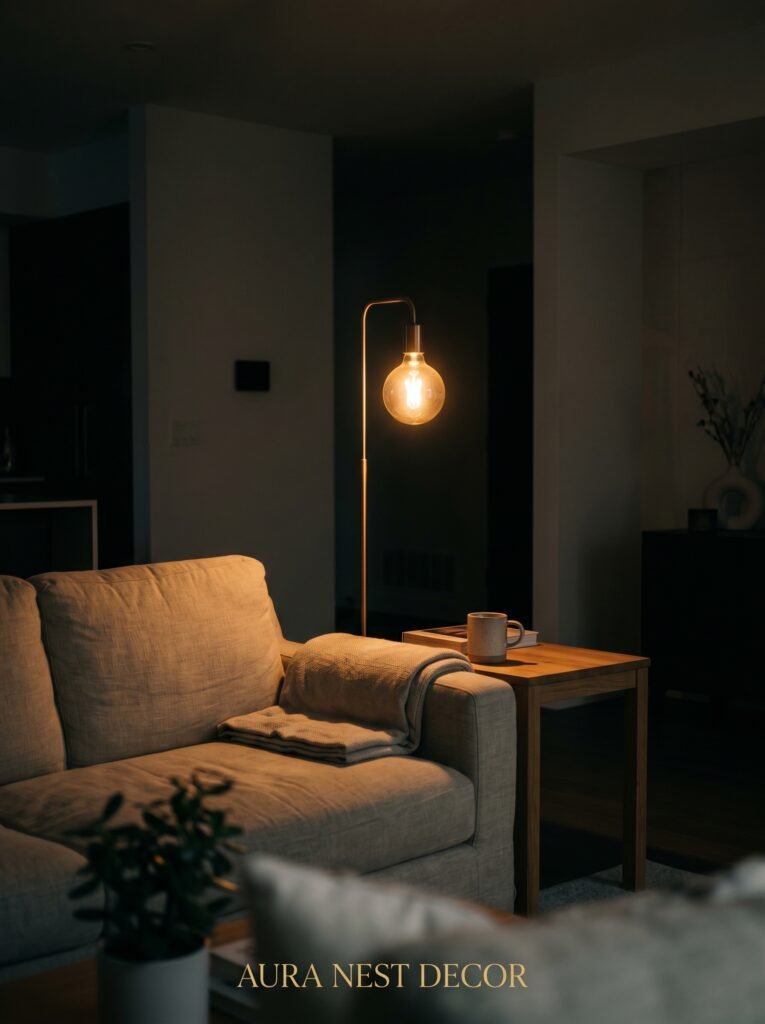
Overhead lighting is the enemy of cozy.
I know that’s a strong statement. But the flat, even wash of a ceiling light is the single fastest way to drain warmth from a room that otherwise has everything going for it. It exposes rather than invites. It illuminates corners that don’t need illuminating and flattens everything it touches.
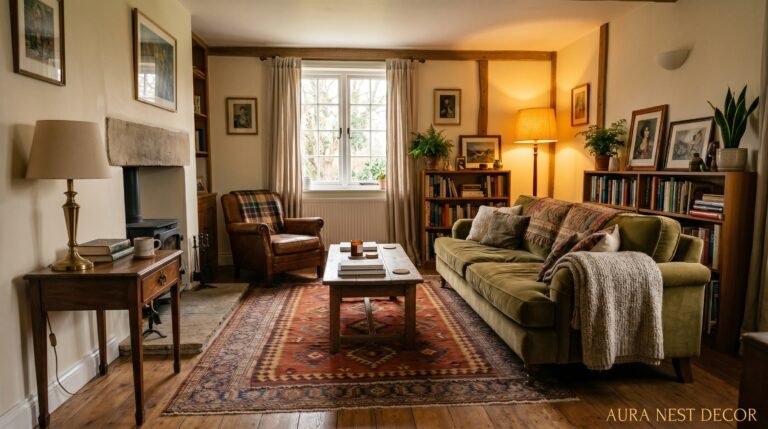
The trick is layering. Three or four light sources at different heights create depth and warmth that a single overhead fixture simply cannot match. A floor lamp with a warm Edison bulb in the corner. A table lamp on the side table with a linen shade that diffuses the glow softly. A few low candles on the coffee table at evening. Perhaps one single pendant light hung low over a reading chair.
At 7pm on a winter evening, this combination produces something that’s almost indescribable. It’s the light that makes people sink into sofas and not want to leave.
In the US, look for bulbs in the 2200K to 2700K range — they’re labeled “warm white” or “soft white” and they’re transformatively different from the bright daylight spectrum. In the UK, most standard household bulbs run slightly cooler than this; it’s worth checking the packaging and switching up.
“Swap one overhead light for a floor lamp and watch your room change its whole personality by 6pm.”
—
5. How Texture Does the Heavy Lifting When You Have Less Stuff
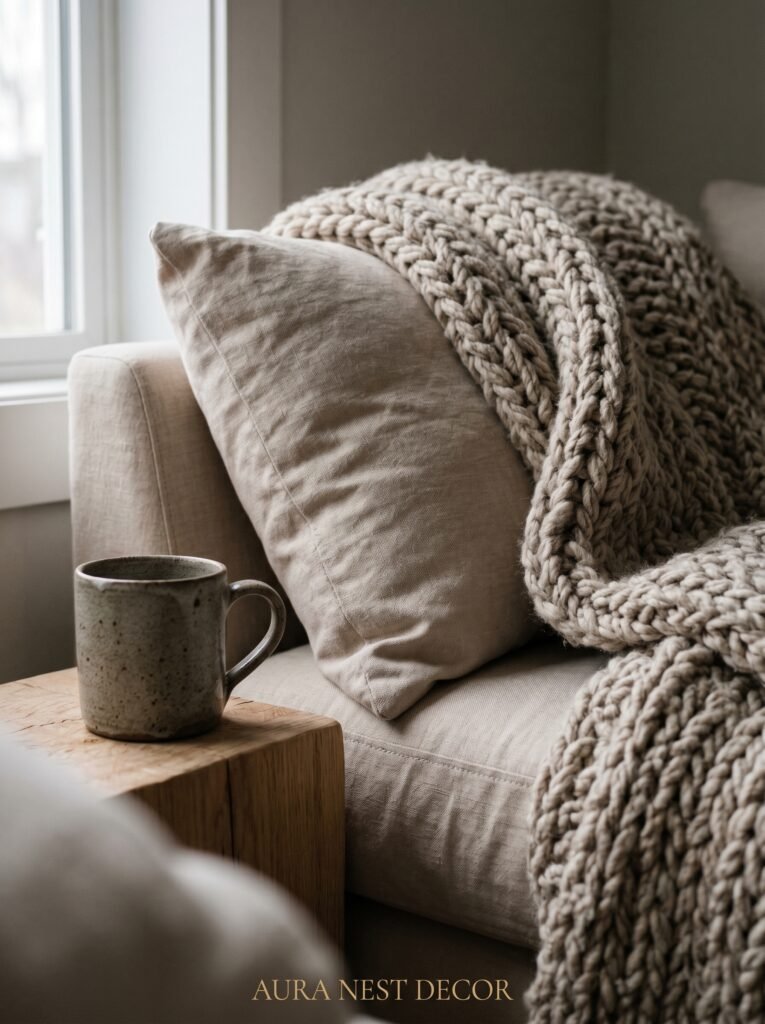
This is the part where cozy minimalism earns its name. When you remove excess objects, texture becomes your primary tool for warmth. It’s what stops a pared-back room from feeling sparse or cold.
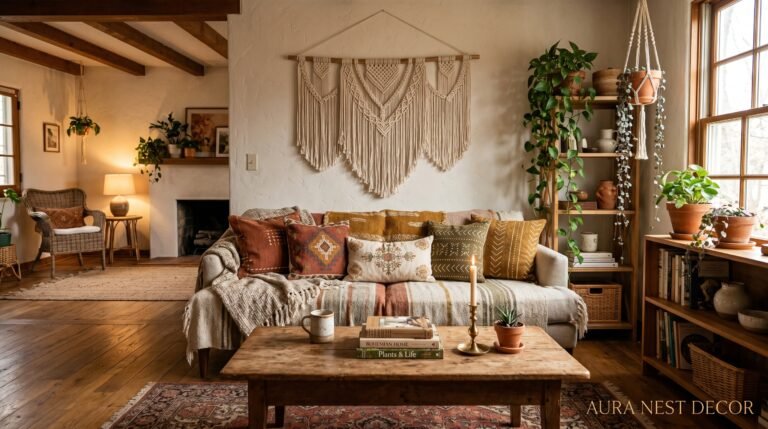
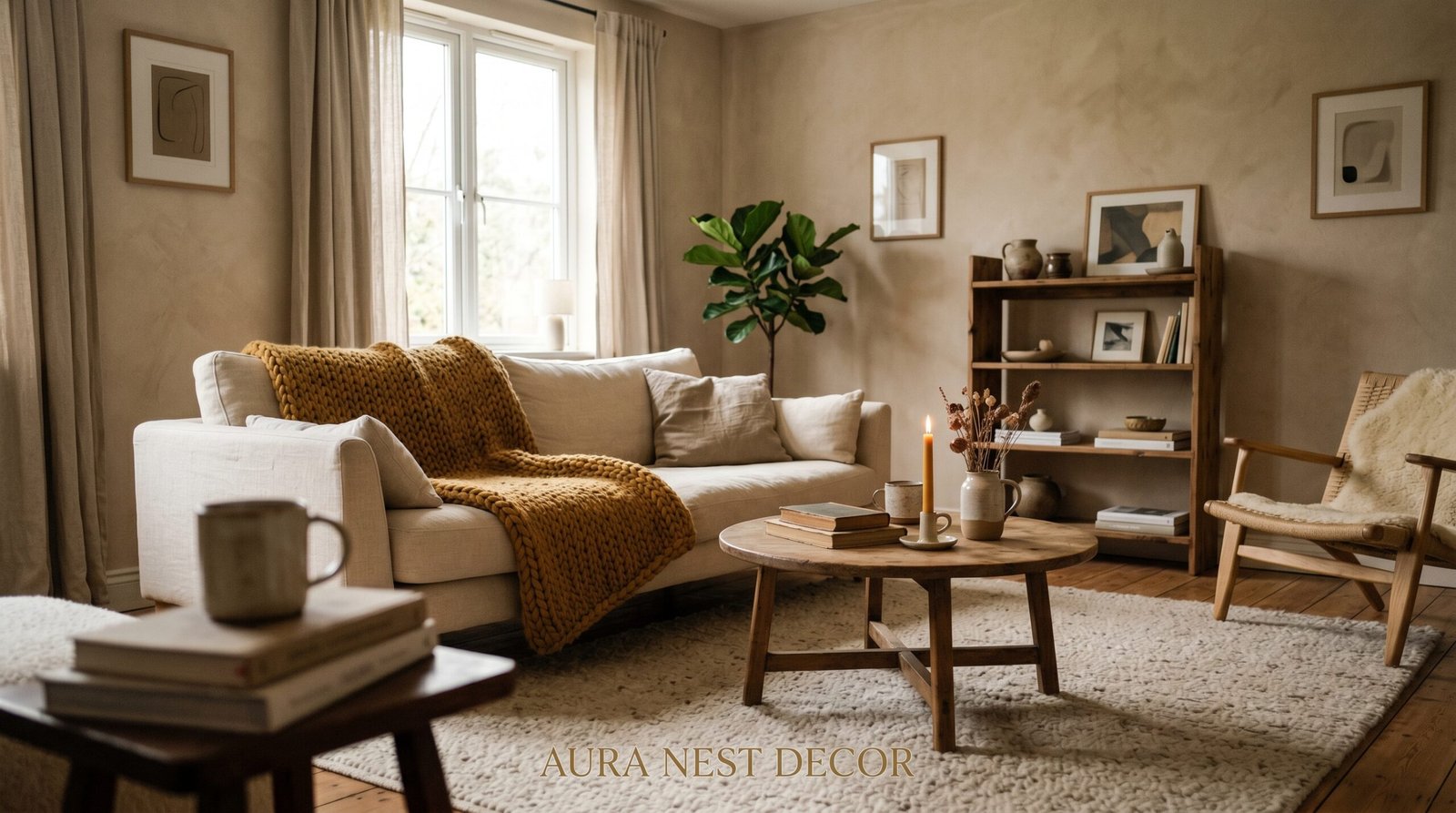
Texture in a cozy minimalist space is layered but controlled. A chunky knit throw folded over the arm of a natural linen sofa. A jute rug underfoot. A smooth ceramic vase beside a wooden tray. A velvet cushion among linen ones. These combinations create visual interest without visual noise — they give your eyes somewhere to rest, something to notice and appreciate.
The rule to remember: vary the texture, keep the palette tight. If your textures are fighting each other in color, the room feels chaotic. But if they’re all speaking the same warm language — even if they’re dramatically different in feel — the room holds together beautifully.
Wool, linen, jute, raw wood, stone, matte ceramics. These are your vocabulary. They’re all natural, all warm, all beautiful in their imperfection. They’re also the exact materials that photograph brilliantly for Pinterest, which doesn’t hurt.
Don’t underestimate what a single good rug does. A generous, natural-fiber rug that sits under all the main furniture — not just in front of the sofa — grounds the whole room and makes the space feel finished in a way that nothing else quite replicates.
—
6. The “Slow Shelving” Method That Makes Bookshelves Feel Curated, Not Crammed
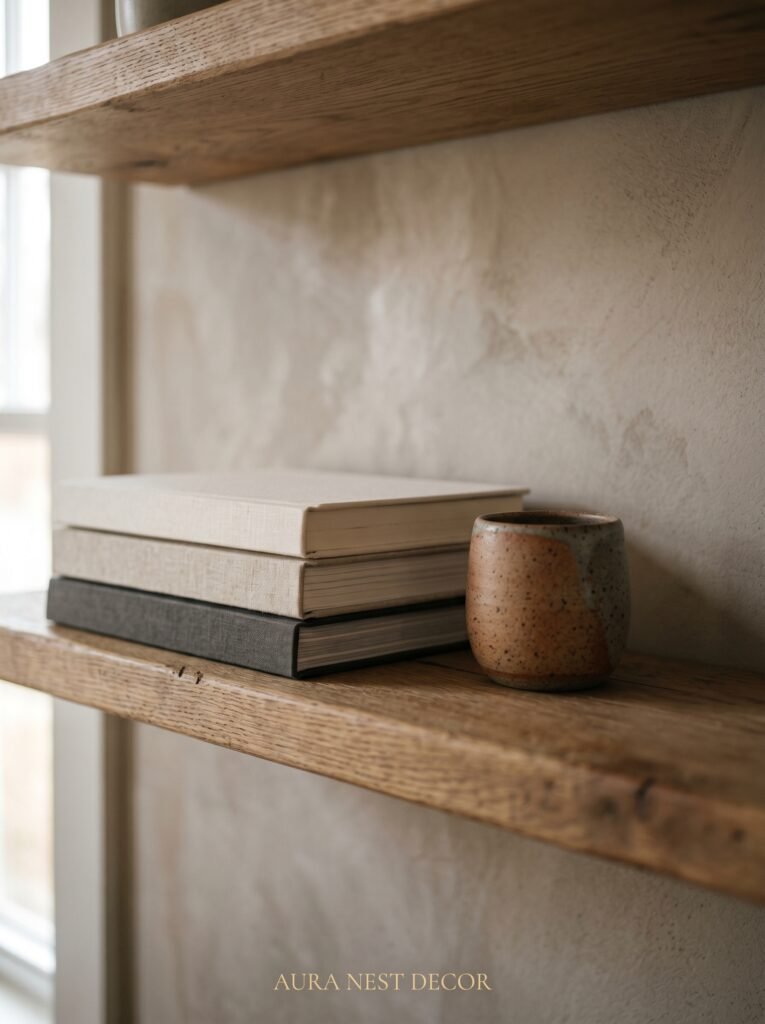
Bookshelves are either the best thing in a cozy minimalist room or the worst. The difference comes down to one principle: space is an object.
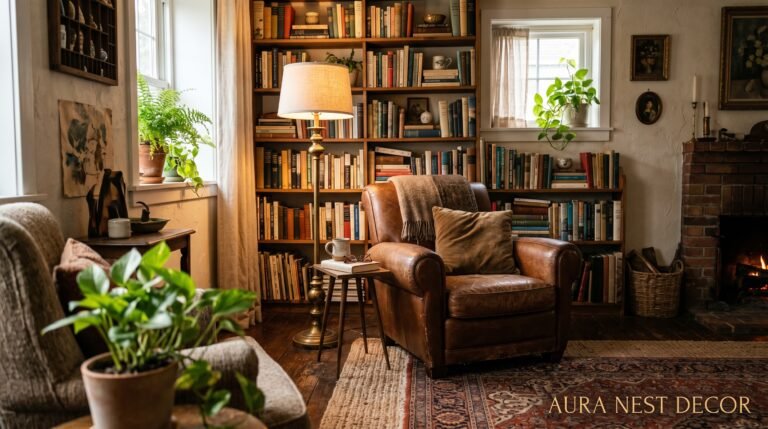
Slow shelving means you don’t fill shelves to capacity. You leave gaps. You treat negative space as intentional, as if the empty section is as deliberate as the books or objects on either side of it. You group things in odd numbers — three items, five items. You lean things casually rather than standing everything upright.
Stack some books horizontally and place a small object on top — a piece of driftwood, a small brass figurine, a dried stem in a thin bottle. Alternate vertical and horizontal arrangements so the eye moves rather than scans flatly from left to right.
The real edit, though, happens before anything goes on the shelf. Take everything off. Then put back only what you’d be genuinely pleased to see every single day. Not what you feel obliged to display. Not the thing that cost a lot but that you never really loved. The thing that makes you feel, even briefly, a small flicker of something good.
That feeling is what the whole room is reaching for.
—
7. Why the Sofa Decision Is Actually the Most Important Design Choice in the Room
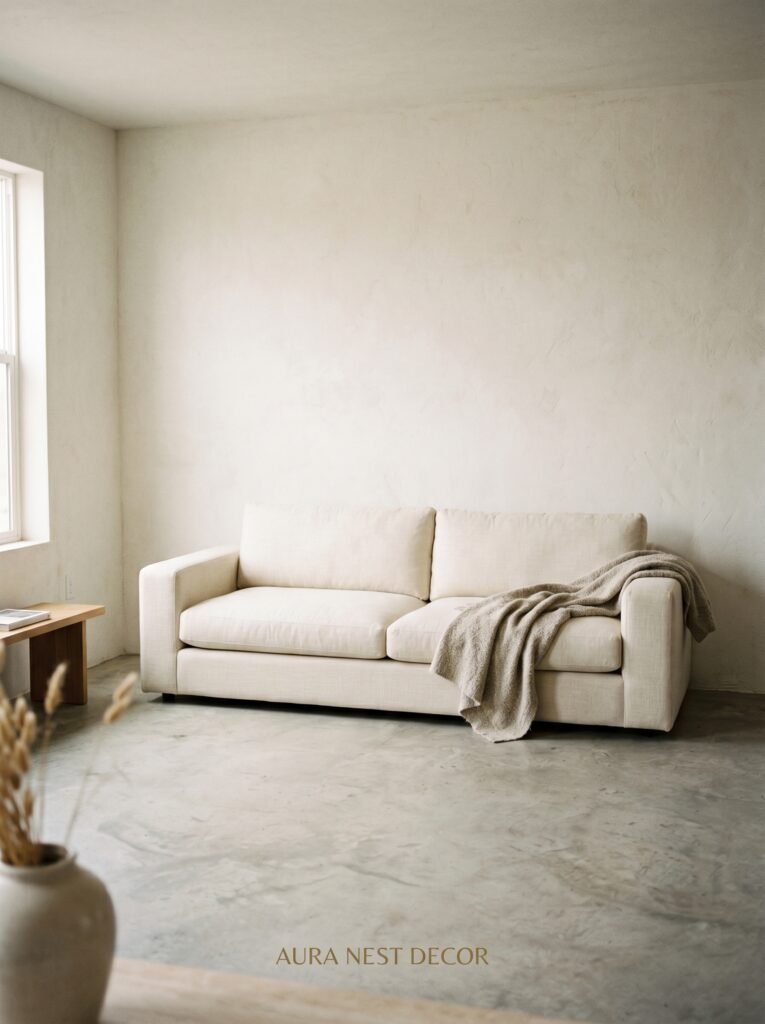
Everything else orbits the sofa. Get it wrong and no amount of good lamps and beautiful rugs will save you. Get it right and the room already works before you’ve added another thing.
In a cozy minimalist living room, the sofa needs to do two things at once: it needs to feel visually quiet and it needs to feel genuinely, physically comfortable. The worst outcome is a beautiful sofa you’re slightly afraid to sit on — too pale, too pristine, too structurally rigid. The second worst is a comfortable sofa that looks like a minor traffic accident.
The sweet spot is a sofa in a natural, slightly forgiving fabric — stonewashed linen, brushed cotton, soft boucle — in a tone that belongs to the earth. Oatmeal. Warm grey. Dusky sage. Something that will show the odd crease and look better for it.
Size matters enormously. In American living rooms, there’s often the luxury of going large — a wide, deep sofa that genuinely fits a family. In British living rooms where the proportions are tighter, a two-and-a-half seater with good arms and clean legs can be just as luxurious in feel.
The legs, actually, deserve mention. Raised legs — even just a few inches off the floor — let light pass underneath the sofa and make the room feel airy rather than weighted. It’s a small detail. It makes a real difference.
“The sofa you love sitting on is always the sofa the room is built around. Start there.”
—
8. Greenery That Earns Its Place Without Becoming a Jungle
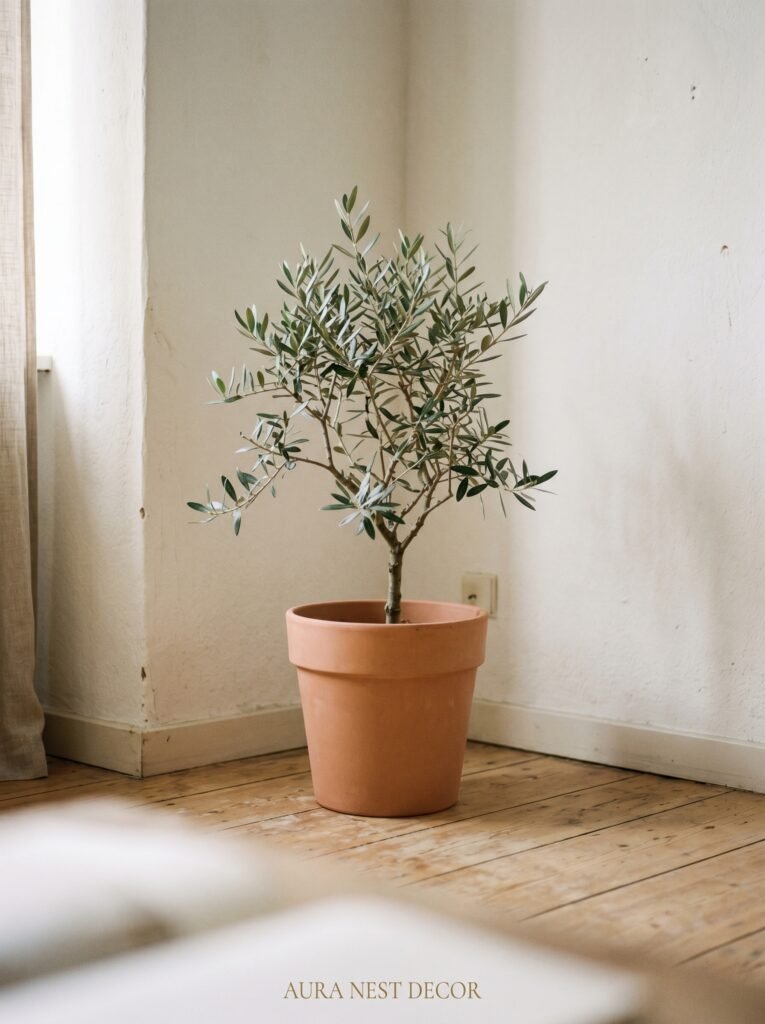
Plants are frequently the thing that tips a cozy minimalist room from perfectly balanced to just slightly too busy. One too many trailing vines, one more terracotta pot than the room needed, and suddenly you’ve built a greenhouse rather than a living room.
The key is choosing plants for their form as much as their life. A single, sculptural fiddle leaf fig in the corner. One trailing pothos on the shelf at the right height. A small, round cactus on the windowsill that asks nothing of anyone. These make their presence felt without demanding attention.
In the UK, where natural light can be genuinely limited from October to March, it’s worth being honest about what will thrive. Snake plants, ZZ plants, and pothos are forgiving and beautiful. Don’t fill a dark corner with a dying plant and call it decoration. A healthy plant with good bones in the right light will always outperform three struggling ones.
The vessels matter as much as the plants themselves. Matte terracotta. Rough stone. Dark stoneware. These belong in the same world as your other textures and keep the room speaking one language.
—
9. The Single Piece of Art That Anchors the Whole Room (And How to Actually Find It)
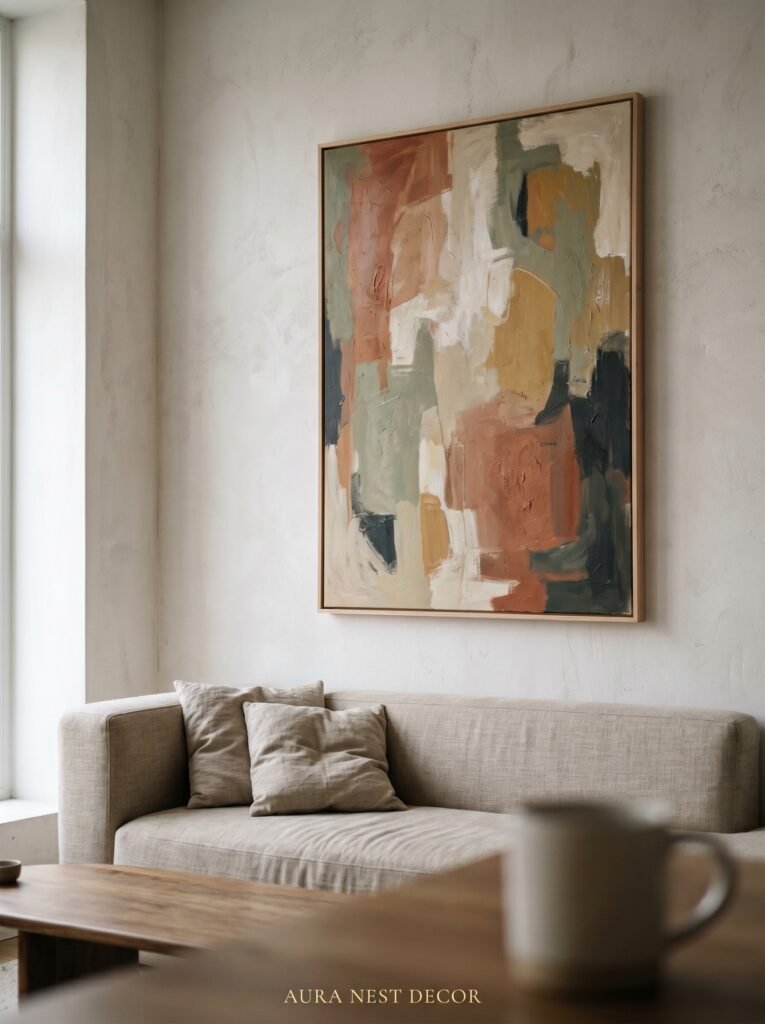
One piece of art, chosen with care, does more for a cozy minimalist living room than a gallery wall ever could. This isn’t an argument against gallery walls in general — in the right home, they’re wonderful. But in a space built on restraint and warmth, a single, considered piece on a single wall carries enormous weight.
The question is finding the right one. Here’s the honest truth: it doesn’t have to be expensive. It doesn’t even have to be from a gallery. Some of the most beautiful art in cozy minimalist homes is a large-format print from an independent artist on Etsy or Society6, framed simply in natural oak or simple black. Abstract shapes in warm ochre and ivory. A botanical illustration in faded greens. A simple landscape in tones that echo the room.
Size is where most people err too small. If you’re hanging art above a sofa, the piece should feel close in width to the sofa itself — or the arrangement of pieces should. A small picture centered on a large wall looks lost and apologetic.
Go larger than feels comfortable. Most of the time, the larger choice is the right one.
—
10. The Coffee Table Setup That Actually Works for Real Life
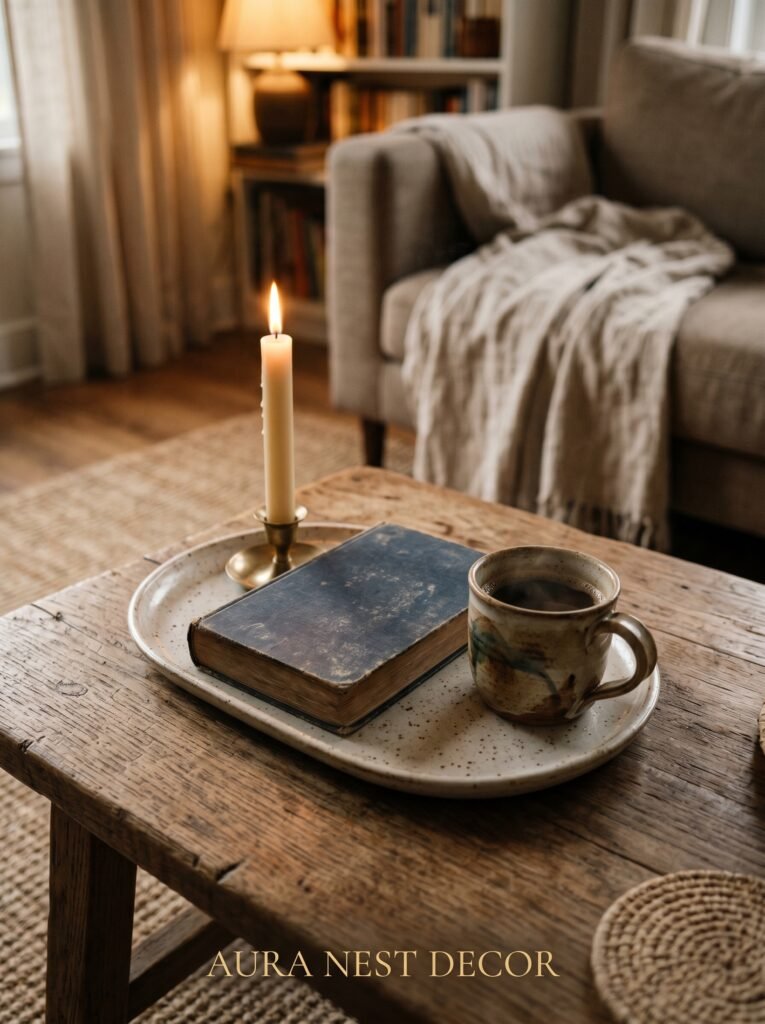
Coffee tables in cozy minimalist rooms walk a very fine line. Too styled and they look like a magazine shoot, which is beautiful to look at and miserable to live with — nowhere to put your actual coffee mug. Too cluttered and the whole careful mood of the room collapses.
The approach that works: one tray, containing three or four small objects. A candle. A small stack of books. One object of beauty — a piece of stone, a small ceramic, a sprig of dried eucalyptus. Everything else lives in a drawer or a basket nearby for real life.
The tray is the key. It creates a visual boundary. It says: within this space, things are curated. Outside it, you can live. Your TV remote, your headphones, your actual mug — they can be on the table, as long as they live outside the tray. It’s a small piece of visual organisation that makes a genuinely disproportionate difference.
Opt for a coffee table with some storage underneath — a shelf, a drawer. Real life has things in it. The room should have somewhere to put them.
—
11. The Scent Layer That Most People Never Think About (But Always Notice)
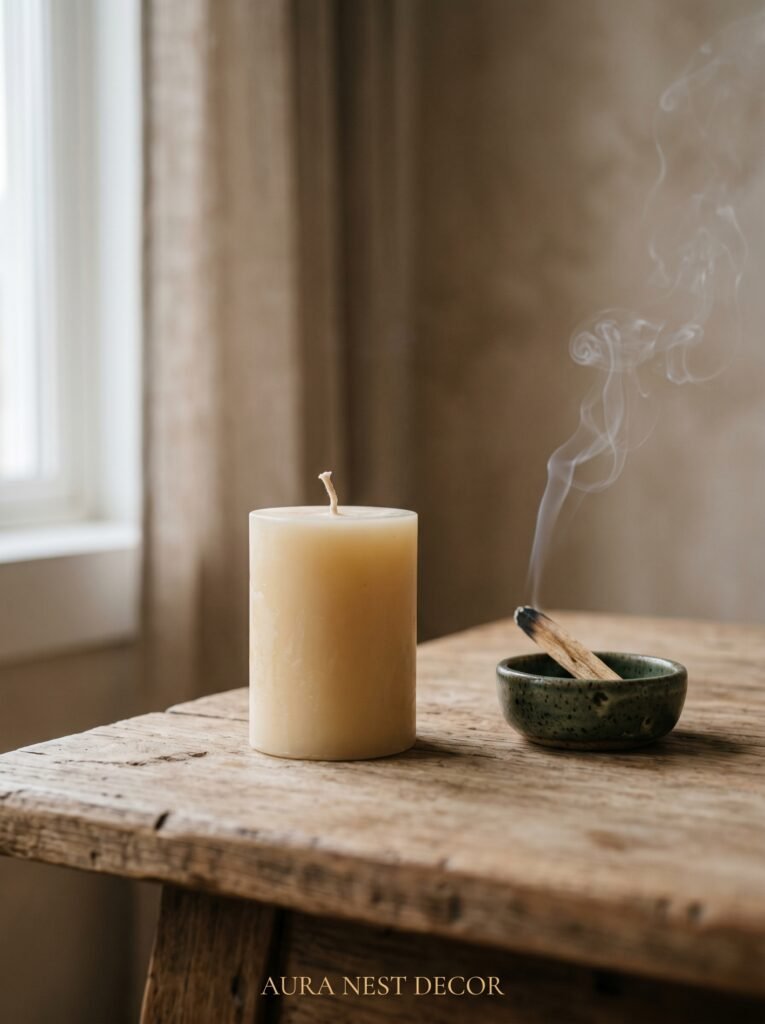
A cozy minimalist room isn’t just visual. It’s a whole sensory experience, and scent is the ingredient that most home stylists forget entirely and every guest notices the moment they walk in.
Scent in the home should be singular and considered, the same way everything else in the room is. One candle burning in the evening — something in the woody, warm register. Cedarwood. Sandalwood. Vetiver. Amber. These scents smell like the visual aesthetic of the room: deep, natural, grounded.
In autumn and winter in both the US and UK, a warm spiced scent can be extraordinary. Not sweet or artificial, but genuinely spiced — clove and cardamom, or cinnamon bark and black pepper. Something that smells like a kitchen that’s been busy on a cold afternoon.
In summer, shift to something lighter — dried linen, fig, cut grass. Something that opens the room up the way a window does.
One quality candle beats five cheap ones. The wax quality, the wick quality, the way a good candle throws its scent through a room without being overwhelming — it’s noticeable. It’s worth it.
—
12. The Edit That Never Ends (And Why That’s Actually the Best Part)
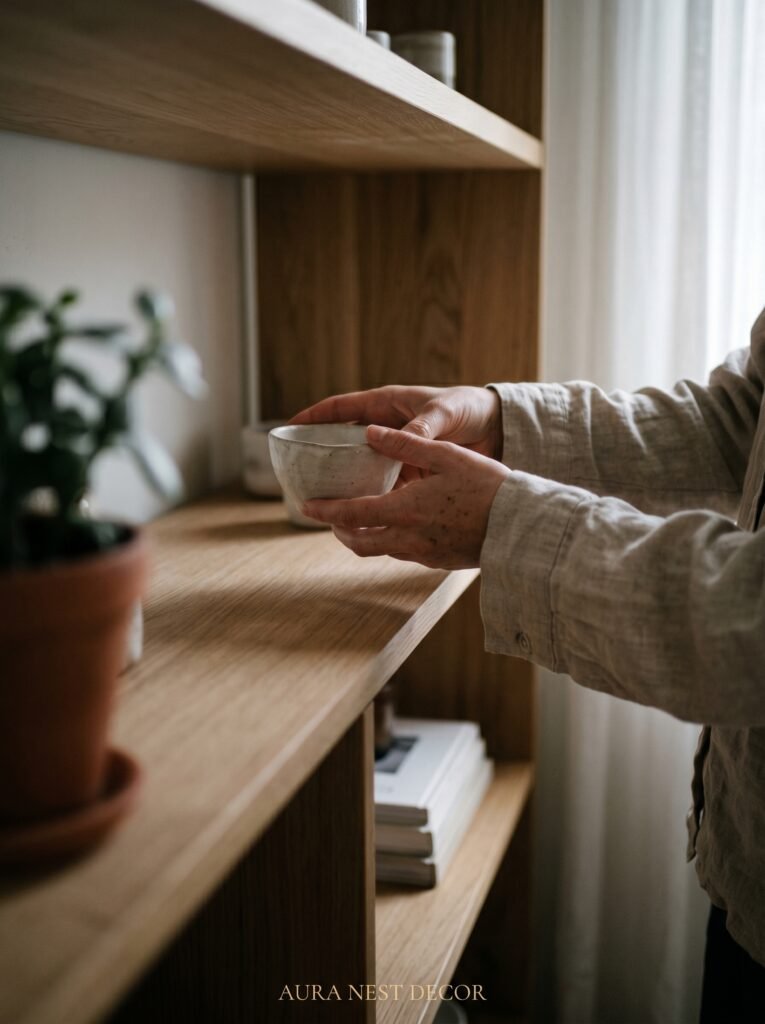
Here is the thing about a cozy minimalist living room that no one tells you at the beginning: it is not a project with a finish line. It is a practice.
The edit is ongoing. Seasons change and the throw that was perfect in January feels heavy in May. You find a better lamp. You fall out of love with something you thought you’d always keep. A friend gives you something beautiful and you have to honestly decide whether it belongs in the room or whether it belongs elsewhere in the house.
This ongoing process is not a burden. It’s one of the most genuinely satisfying aspects of living this way. It keeps you paying attention to your home. It keeps the room alive.
The rooms that feel most deeply cozy and most clearly themselves are the ones that have been lived in and slowly edited over time. They carry the evidence of real decisions made by real people who actually thought about what they wanted. That’s not something you can buy in one shopping session.
Start with what you have. Remove what you don’t love. See what remains. Then begin.
—
❓ FAQ
Q: How do I make a small living room feel cozy and minimal without it feeling empty or cold? A: Focus on texture and warm lighting rather than objects. A well-chosen rug, layered lamp sources, and one or two genuinely beautiful pieces will always feel more abundant than a room full of small decorative objects. The room should feel edited, not bare.
Q: What’s the best sofa color for a cozy minimalist living room? A: Earthy neutrals are your safest and most beautiful bet — oatmeal, warm grey, sand, soft sage. These tones work with virtually every natural material and don’t date. If you want longevity, avoid anything too trend-driven or too pale for real daily use.
Q: How do I start editing my existing living room toward this look without redecorating from scratch? A: Begin by removing, not adding. Take things off shelves and surfaces and live with the room emptier for a few days. Notice what you genuinely miss and what you don’t. What remains is your foundation. Then add back only deliberately — one good lamp, one beautiful throw, one piece of art — rather than replacing everything at once.
—
💭 Final Thoughts
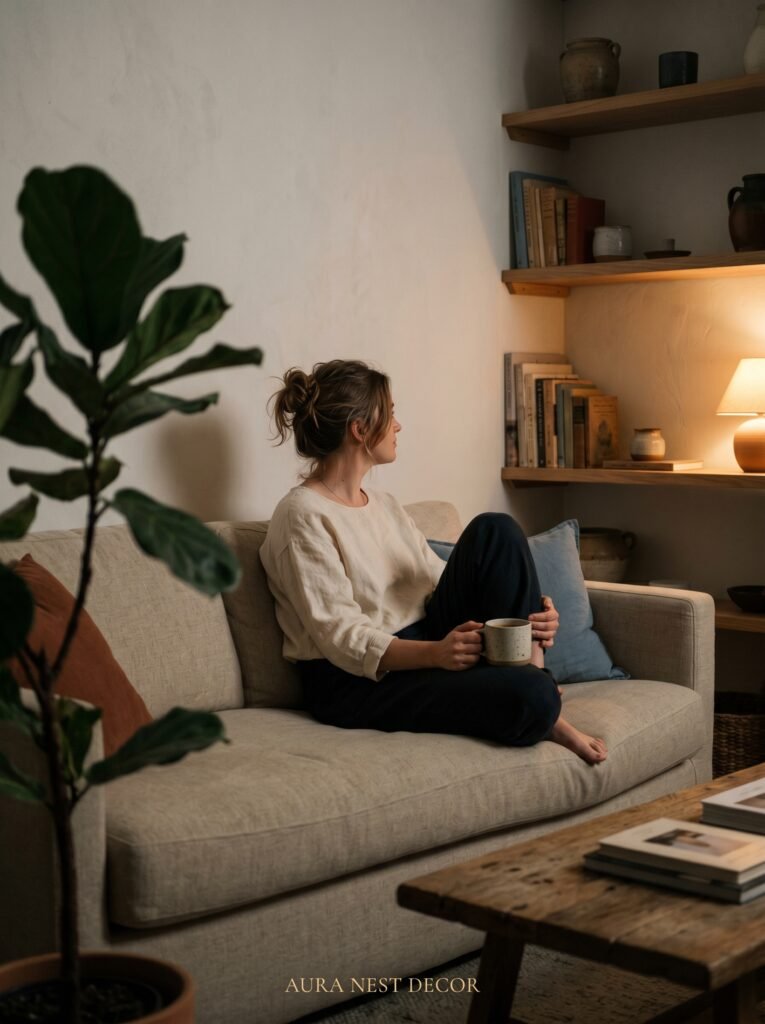
A cozy minimalist living room is, at its heart, a room that knows what it is. It’s not trying to be everything. It’s not performing. It’s just deeply, quietly itself. And that quality — that settledness — is what you feel the moment you walk in. Are you ready to stop adding things, and start paying attention to what’s already there?