
The Small Detail That Changes Everything: Why Door Handles Are the Secret Soul of Your Interior Design
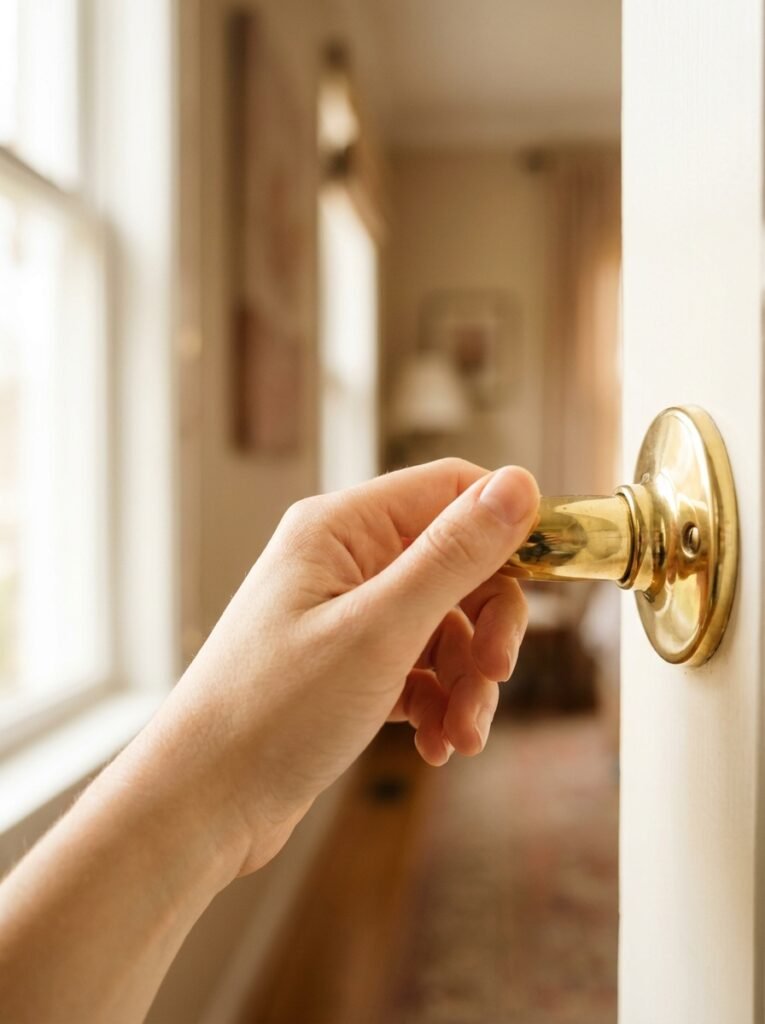
There’s a moment — quiet, almost unconscious — that happens dozens of times each day in your home. Your hand reaches out, wraps around a piece of metal or brass or ceramic, and a door swings open. You never think about it. And yet, that tiny moment of contact is where your home’s personality lives.
—
1. The Most Overlooked Design Decision You’re Making Every Single Day
Walk through any beautifully designed home — the kind that stops you mid-scroll on Pinterest, the kind that makes you save seventeen photos before you even realize what you’re doing — and you’ll notice something. Everything feels intentional. The way the light hits the walls. The way the furniture sits. The way even the doors feel like they belong.
That last part? That’s the door handles talking.
Interior design has what some designers quietly call “the hierarchy of attention.” We spend weeks choosing paint colors and months saving for the right sofa. We agonize over tile and lighting fixtures. And then we slap on whatever door handle came with the house — or worse, whatever was cheapest at the hardware store — and call the room done.
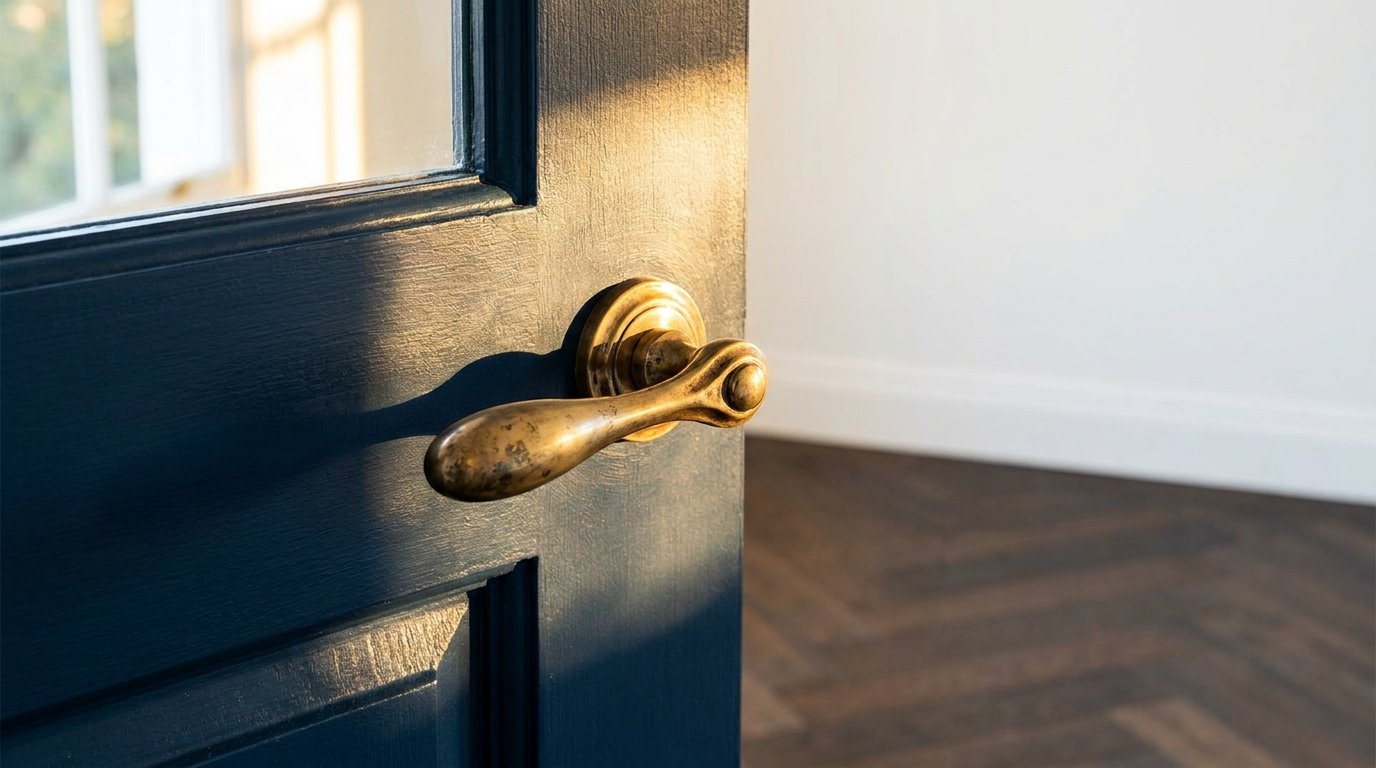
Here’s the truth that changes everything: door handles are jewelry for your home. They are the earrings you put on after the outfit is assembled, the detail that elevates the entire look from “nice” to “unforgettable.” A brushed gold lever handle on a deep navy door doesn’t just open a room. It announces it.
“Your door handle is the handshake between your home and everyone who enters it — make it count.”
The average person interacts with door handles roughly 20 to 30 times per day. That’s 20 to 30 moments of tactile, visual contact with a design choice you made. More than you touch your light switches. More than you look at your artwork. The handle is always there, always part of the experience. So why do we treat it like an afterthought?
This article is your invitation to stop doing that.
—
2. A Brief, Surprisingly Fascinating History of the Door Handle

To truly appreciate why door handles matter, it helps to know where they came from — because the story is richer than you’d expect.
For most of human history, doors were secured with simple wooden latches, iron rings, or rope pulls. The concept of a handle that both latched and turned — the lever or knob mechanism we recognize today — didn’t emerge in any sophisticated form until the 17th and 18th centuries, when European craftsmen began producing ornate iron and brass fittings for the doors of wealthy estates.
The humble doorknob as a widely accessible household item is largely an American story. By the mid-1800s, manufacturers in New England were producing cast iron and glass doorknobs at scale, and the form began appearing in middle-class homes across the country. Victorian-era handles were works of art — pressed glass knobs in amber and cobalt, ornate brass backplates stamped with botanical motifs, lever handles shaped like scrolling vines.
Then the 20th century arrived, and with it, mass production. Efficiency won. The character got stripped away. The generic brass knob — round, plain, nearly identical across a million homes — became the default, and it stayed that way for decades.
What’s happening now in interior design is a beautiful kind of rebellion. Homeowners and designers are rediscovering the handle as a design statement. Unlacquered brass that patinas over time. Matte black that makes a modern door feel architectural. Hand-thrown ceramic knobs that bring artisan warmth to a bathroom door. The detail is having its moment, and it’s long overdue.
—
3. Understanding the Different Types of Door Handles (And What Each One Says About Your Space)

Not all door handles are created equal — and understanding the main categories helps you make smarter, more intentional choices for every room in your home.
Lever handles are the most common style in contemporary interiors. They offer excellent accessibility, work beautifully in both modern and transitional spaces, and come in an almost infinite range of finishes and silhouettes. A long, slender lever in satin nickel reads sleek and minimal. A more curved, substantial lever in antique bronze feels warm and layered.
Knobs are round — the classic form — and they carry a very specific energy. Glass knobs feel vintage and romantic. Ceramic knobs feel cottage-core and artisan. Brushed metal knobs feel clean and unfussy. The knob is a more tactile choice than the lever; you wrap your entire hand around it, which creates a different kind of physical relationship with the door.
Pull handles — long, straight bars meant to be gripped and pulled rather than turned — are most often seen on front doors, wardrobe doors, and internal sliding doors. They’re architecturally bold and work particularly well in contemporary, Scandinavian-influenced, or industrial interiors. A long, square-profile pull handle in matte black on a white kitchen cabinet is quietly one of the most Pinterest-worthy combinations in modern home design.
D-pull handles are a softer version of the pull handle — curved into a D-shape, they add a gentle, ergonomic quality that works well in kitchens and bathrooms. Flush pulls are recessed into the door itself, creating a completely seamless look that’s ideal for pocket doors or hidden storage panels.
Each type sends a different design signal. Knowing which signal you want to send is the starting point of every great handle decision.
—
4. The Psychology of Finish: What Your Door Handle’s Metal Says About You
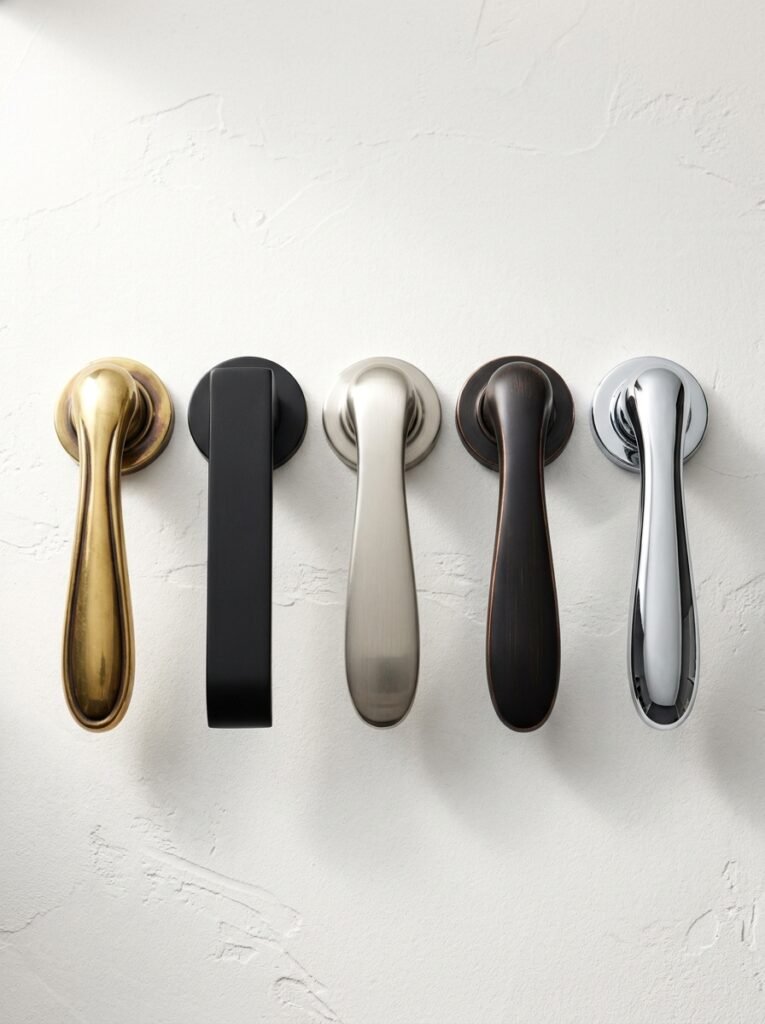
Before you choose a handle shape, you’ll almost certainly choose a finish — and that choice carries more psychological and aesthetic weight than most people realize.
Polished brass has made a triumphant return. After decades of being considered dated, it’s now one of the most coveted finishes in interior design, particularly in its unlacquered form. Unlacquered brass develops a living patina over time — darkening at the points of most contact, lightening where it catches light — which means your handle literally changes and deepens with your home’s story. It feels warm, historic, and somehow deeply personal.
Matte black is the dramatic choice — bold, architectural, and uncompromising. It works best in contemporary, industrial, and maximalist interiors and creates a particularly striking contrast against light walls or natural wood doors. It’s a finish that makes a statement without saying a word.
Satin nickel sits in the beautiful middle — not as warm as brass, not as dramatic as matte black. It’s cool-toned, understated, and extraordinarily versatile. If you’re uncertain, satin nickel is rarely a wrong choice.
Antique bronze and oil-rubbed bronze carry deep, layered warmth. These are the finishes of homes with bookshelves and Persian rugs, of kitchens that smell like something’s always on the stove. They age gracefully and work beautifully in traditional, farmhouse, and Mediterranean-influenced spaces.
Chrome is clean, modern, and reflective — excellent in contemporary bathrooms and kitchens where you want the light to bounce and the space to feel alive.
“The finish of your door handle is a whisper about who you are — even when you think no one is listening.”
Mixing metals, once considered a design sin, is now actively encouraged. The key is intention: choose two metals maximum, repeat them throughout the space, and let one lead while the other accents.
—
5. Room by Room: Choosing the Right Door Handle for Every Space in Your Home
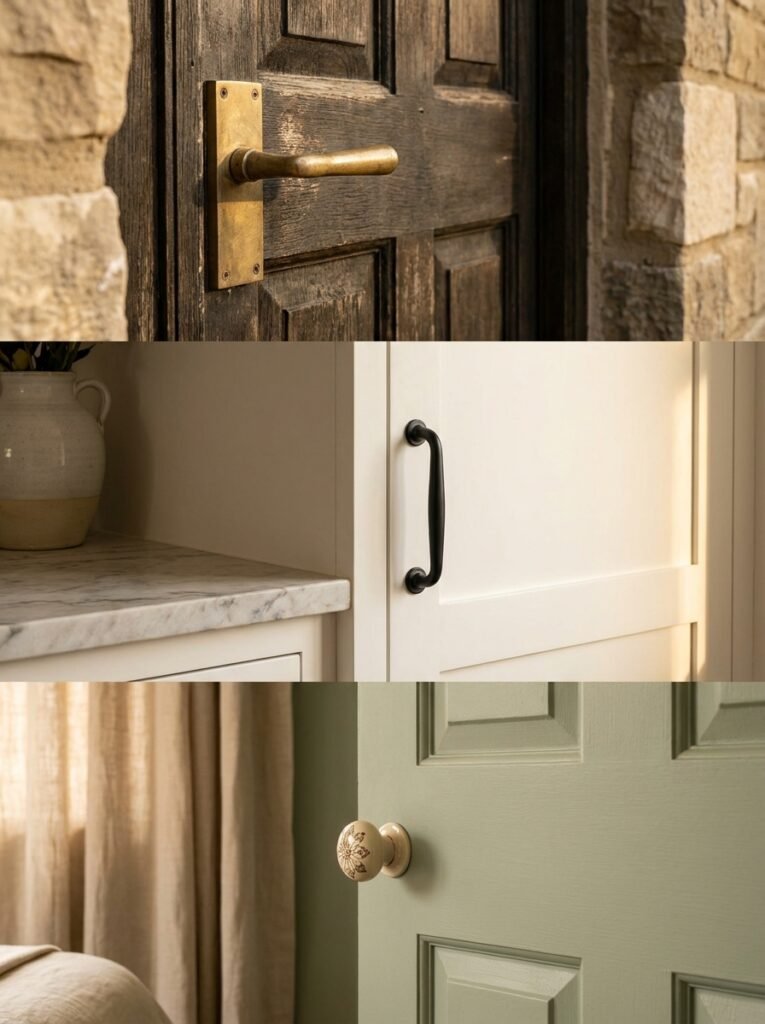
Here’s where theory meets practice — because the best handle for your front door is not necessarily the best handle for your bathroom, and understanding these nuances is what separates a thoughtfully designed home from a merely decorated one.
Your front door handle is your home’s first handshake with the world. It needs to be durable, weather-resistant, and visually striking. This is where you can afford to be bolder than anywhere else inside the house. A substantial lever handle in unlacquered brass or a long, architectural pull in matte black signals immediately that what’s inside was considered with care.
In the kitchen, functionality leads. You’re opening drawers and cabinet doors with wet hands, floury hands, hands that are mid-task. Bar pulls and D-pull handles are popular here because they’re intuitive to grab without requiring a precise grip. In terms of finish, brass and matte black both photograph beautifully and have become the dominant choices in design-forward kitchens.
Bedroom door handles deserve more romance than they typically receive. A glass or ceramic knob in a bedroom creates an instant atmosphere of softness. If you prefer a lever, choose one with a curved profile rather than an angular one — it reads as more restful, which is psychologically appropriate for a space dedicated to sleep.
Bathroom door handles need to stand up to humidity and frequent cleaning. Solid brass, stainless steel, and quality zinc alloy handles with durable finishes are all excellent choices. Avoid hollow handles with lower-quality plating — the bathroom is precisely where they’ll fail first.
For closet and wardrobe doors, this is your opportunity for a genuinely whimsical or artisan choice. Because the handle doesn’t need to latch and lock the way a main door does, you can choose purely on aesthetic grounds — a hand-painted ceramic pull, a leather tab pull, a sculptural brass knob. These small moments of personality are what make a home feel truly lived in and loved.
—
6. The Surprising Impact of Door Handles on Your Home’s Resale Value
This is the section that surprises most people — and it probably surprises most because nobody talks about it enough.
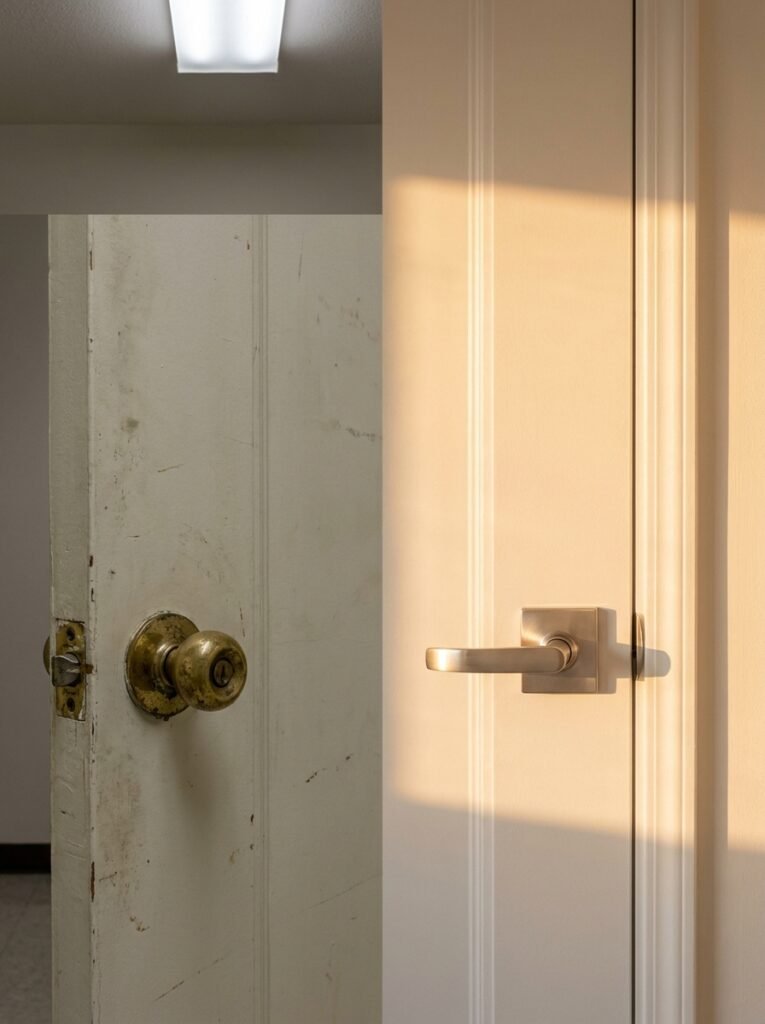
When a potential buyer walks through a home, they’re building an impression that is part conscious and part deeply subconscious. The handles, the hinges, the outlet covers — these are the details that register in the subconscious as signals of quality, care, and attention. A home with beautiful, consistent, high-quality hardware throughout reads as a well-maintained, well-loved property.
Real estate agents and home stagers have known this for years. One of the most cost-effective updates you can make before selling a home is replacing dated or mismatched hardware with a cohesive, updated set. The cost is relatively modest. The visual impact is disproportionately significant.
Think about it from a buyer’s perspective: if the door handles look tired or cheap, the mind immediately starts asking — what else wasn’t maintained? It’s an unfair leap, perhaps, but it’s a deeply human one. The small details speak to the large ones, whether we mean them to or not.
For homeowners not thinking about resale — for those of you who are simply building a home that feels right — the impact is different but equally real. There is a quiet satisfaction that comes from touching something well-made every day. Quality hardware is one of the most touchable, most consistently experienced elements of your home. It earns its price in daily pleasure.
—
7. How to Mix and Match Door Handles Without Making Your Home Feel Chaotic
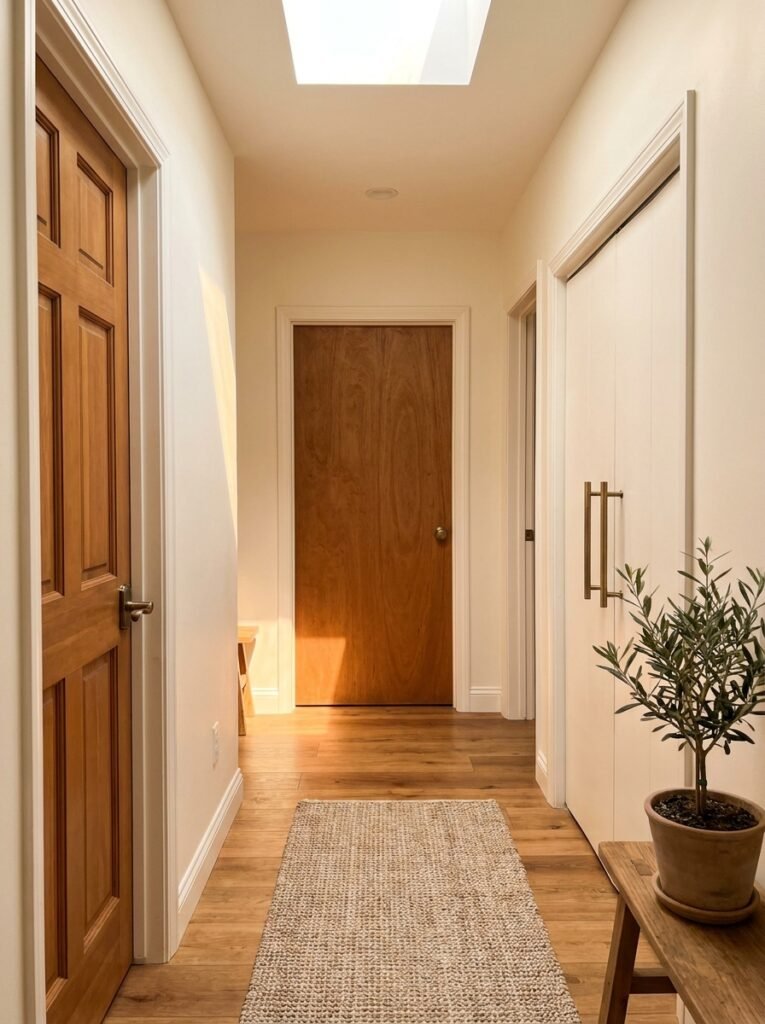
The idea of having different handles throughout a home makes some people nervous — and that nervousness is understandable. Inconsistency in design can feel jarring. But intentional variation? That feels layered, personal, and alive.
The rule is simple: vary the shape, but unify the finish. Or vary the finish, but repeat a consistent shape language. Mixing both shape and finish without a unifying thread is where things tip into chaos.
For example: brass lever handles in the main living spaces, brass knobs in the bedrooms, and brass bar pulls in the kitchen. The finish is consistent — the whole home feels cohesive — but each room has its own distinct handle personality.
Alternatively, all lever handles throughout the home, but satin nickel in the kitchen and bathrooms, antique brass in the living and dining areas. The consistent shape provides visual harmony even as the finish shifts.
The one place to be genuinely careful is the open-plan space — a kitchen-dining-living area where everything is visible simultaneously. In these spaces, the handles should match exactly, or be so deliberately complementary that the difference reads as design rather than accident.
—
8. The Artisan Alternative: Why Ceramic, Glass, and Leather Handles Are Having a Moment

There is a growing movement in interior design — particularly in the spaces that gather on Pinterest and in shelter magazines — toward the genuinely handmade. And nowhere is this more charming, or more accessible, than in door handles.
Ceramic door knobs are perhaps the most delightful expression of this movement. Hand-thrown or hand-painted, they carry the visible evidence of human hands in their slight imperfections, their organic glazes, their one-of-a-kind character. A white ceramic knob with a hand-painted blue floral motif on a painted cottage door is the kind of detail that makes people gasp softly when they notice it.
Glass knobs — particularly vintage glass knobs salvaged from older homes or carefully reproduced — bring a prismatic, almost magical quality to a door. They catch light and scatter it. They feel cool to the touch. They’re nostalgic in the best possible way.
Leather pull handles — a simple loop or tab of quality leather attached to a door — have become one of the most copied details in Scandinavian-influenced and wabi-sabi interiors. They feel organic, warm, and quietly handsome. They’re also surprisingly easy to DIY, which is part of their Pinterest appeal.
“When your home holds one handmade thing for every ten manufactured ones, it stops looking decorated and starts feeling inhabited.”
Wood handles are another artisan option gaining real traction — particularly in kitchens that want warmth without the metallic gleam. A turned wood knob on a pantry door, or a smooth wooden bar pull on an upper cabinet, introduces natural texture in a way that feels grounding and organic.
—
9. Door Handles and Color: The Combinations That Stop the Scroll
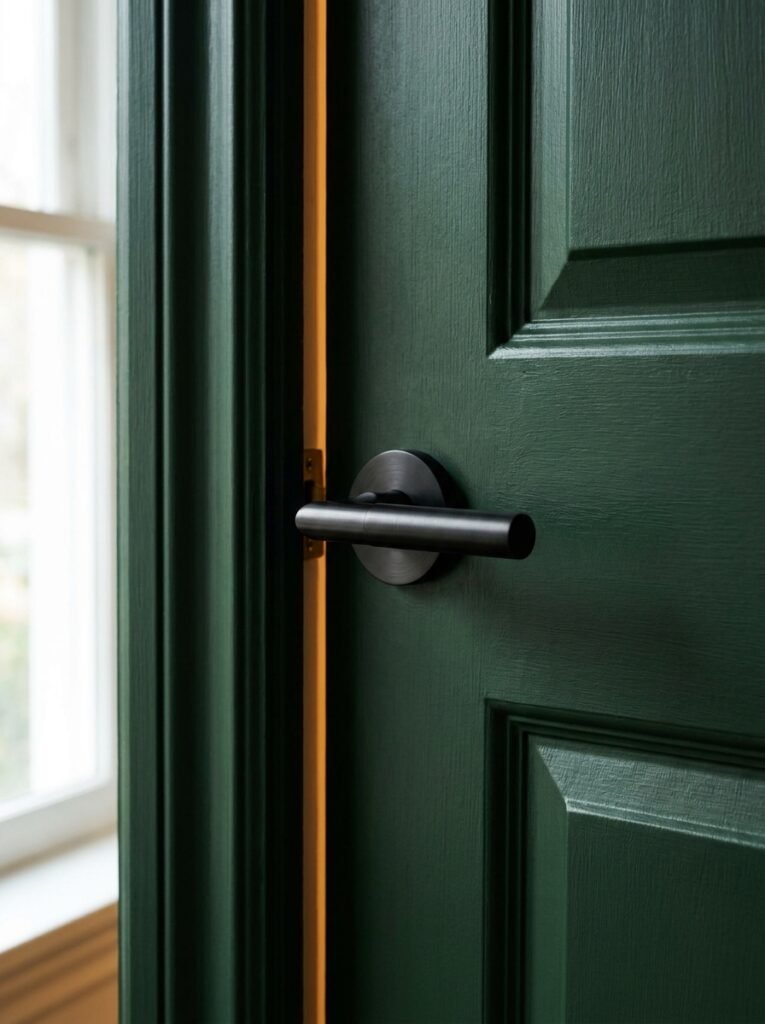
If there’s one area where door handle choices intersect most dramatically with the visual language of Pinterest, it’s color pairing. The right handle on the right door color creates a combination so satisfying it stops people mid-scroll — and makes them save the image before they even consciously register why.
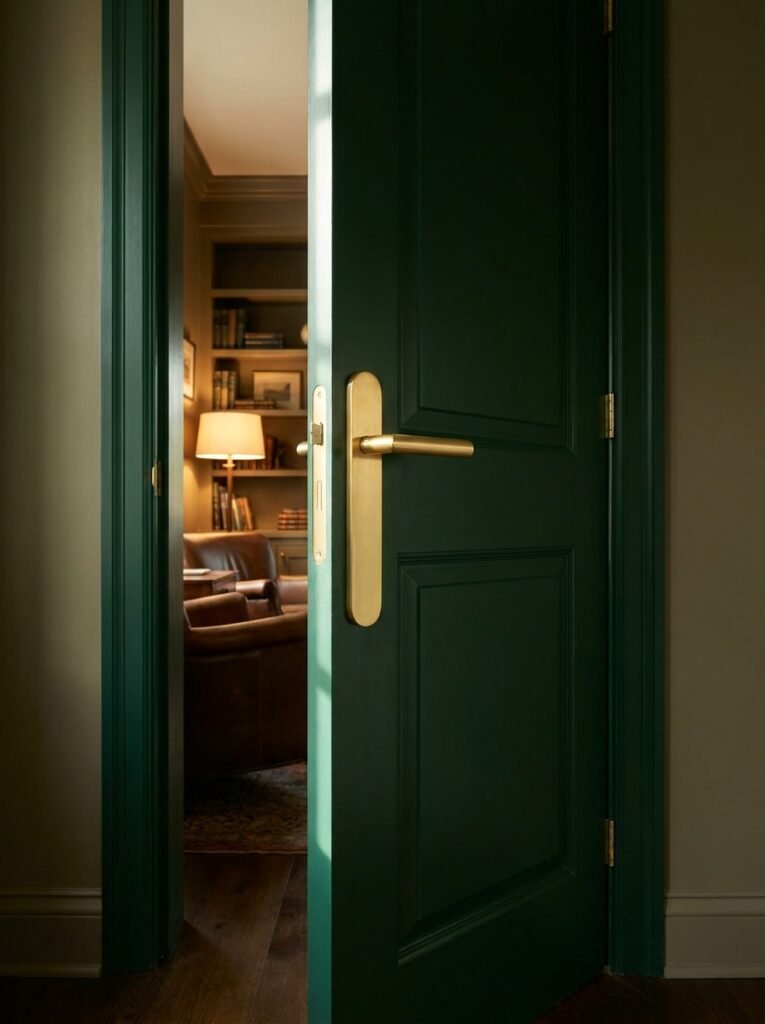
Some combinations have become genuinely iconic: matte black hardware on a deep hunter green door. Unlacquered brass on a rich, moody navy. Antique bronze on a warm terracotta. Polished nickel on crisp, bright white. These pairings work because they honor the principle of contrast — the handle becomes visible, purposeful, and beautiful against the door color, rather than disappearing into it.
The most common mistake? Choosing a handle finish that’s too similar in value (lightness or darkness) to the door color. A light brass handle on a pale door disappears. A dark oil-rubbed handle on a very dark door disappears. You want the handle to be seen — to be part of the composition, not an accident.
Beyond contrast, consider warmth and undertone. Warm-toned doors (terracotta, olive, warm white, honey wood) almost always look more beautiful with warm-finish hardware — brass, bronze, warm gold. Cool-toned spaces (gray, crisp white, blue-green) tend to sing with cooler hardware — nickel, chrome, matte black.
—
10. Installation Matters: What Nobody Tells You About Fitting Door Handles
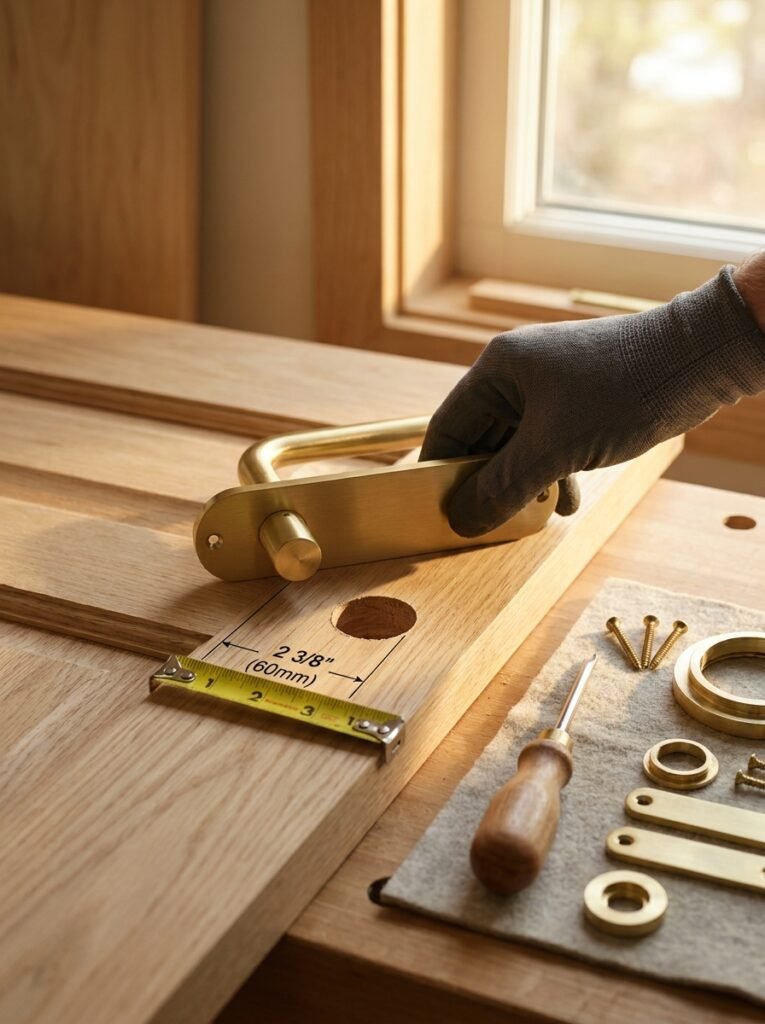
You can choose the most beautiful handle in the world and have it undermine your whole design if it’s installed poorly. And yet — because it seems like such a straightforward task — installation is where a surprising number of people run into trouble.
The most important measurement is the backset — the distance from the edge of the door to the center of the borehole. Standard backsets are 60mm and 70mm. Before purchasing any lever or knob set with a latch mechanism, confirm your door’s backset, because a mismatch will leave you either unable to install the hardware or with an off-center handle that looks immediately wrong.
Height matters, too. The standard mounting height for door handles in the UK and Europe is 1000mm from the floor. In North America, it’s closer to 900mm to 1000mm depending on the context. In terms of visual comfort, handles mounted at the natural midpoint of the door look correct. Handles mounted too high or too low create an unease that people can feel without being able to name.
If you’re replacing existing hardware, check whether your new handle matches the existing bore pattern in your door. Adding extra holes is possible, but it complicates the project significantly. Swapping one lever set for another with the same bore dimensions is the easiest possible upgrade — something even a confident first-time DIYer can accomplish in an afternoon.
Backplate size also matters for covering existing marks or imperfections around the bore. A larger escutcheon or backplate can neatly hide the ghost of whatever was there before.
—
11. Sustainable and Ethical Choices in Door Hardware

As awareness of sustainability grows in every area of home design, it’s worth thinking about door handles through this lens — because the choices you make here can either add to the environmental cost of your renovation or reduce it.
Solid brass handles are, in many ways, the most sustainable option. Brass is an alloy of copper and zinc — both infinitely recyclable materials — and solid brass handles last for generations. When they’re finally done (which may be after 50 or 100 years), they can be melted down and reformed. They don’t peel, flake, or chip the way plated handles do. Buying once, buying well, and buying brass is one of the most quietly sustainable decisions you can make in a home.
Salvaged or antique hardware is another excellent option. Architectural salvage shops, estate sales, and online vintage marketplaces are treasure troves of beautiful, quality door handles that would otherwise end up in landfill. There is something wonderfully poetic about a door handle that has already been part of another home’s story — about incorporating that history into your walls.
When buying new, look for manufacturers who are transparent about materials and production. Solid construction over hollow, and genuine finishes over sprayed lacquers, will always outlast and outperform the cheaper alternative — and ultimately generate less waste.
—
12. Styling Your Doors for the Ultimate Pinterest-Worthy Interior
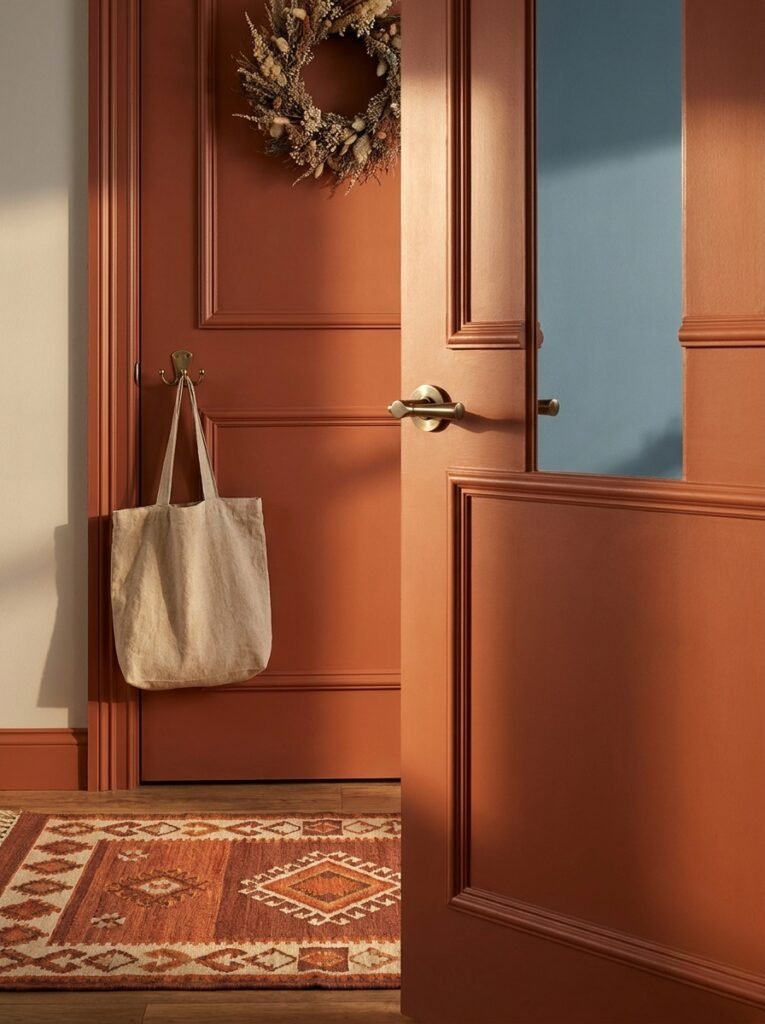
We’ve spent a long time in the details, so let’s zoom out for a moment — because a door handle doesn’t live in isolation. It lives within the composition of a door, which lives within the composition of a room, which lives within the composition of a home.
The most Pinterest-worthy interior doors are treated as design elements in their own right, not just functional dividers. Paint the door a different color from the walls — particularly the back of the door, where the color becomes a lovely surprise when the door swings open. Add architectural interest with panel moldings applied with construction adhesive. Hang a wreath or dried botanicals at a height that frames the handle rather than competes with it.
Consider the hinges, too. Hardware consistency extends to hinges — choose the same finish for your hinges as for your handles. It’s a small detail, but it’s the kind of small detail that makes a design photograph beautifully and feel considered in real life.
Think about what sits near the door: a coat hook in the same finish, a small shelf at handle height, a rug that picks up the color of the door. The handle becomes part of a moment, a vignette, rather than just a mechanism for opening a door.
The most beautiful interiors aren’t those with the most expensive pieces. They’re the ones where someone clearly thought about every element — where even the act of opening a door is a small, satisfying experience. And that quality of attention? It begins with the handle.
—
🌿 How to Take Care of Your Door Handles
Door handles are touched constantly, which means they need a little consistent love to stay beautiful. The good news is that care is simple, and taking a few minutes occasionally will keep your hardware looking its best for years.
For brass handles — especially unlacquered brass — avoid harsh chemical cleaners entirely. A soft cloth dampened with warm water and a tiny drop of mild dish soap is all you need. For stubborn spots, a paste of baking soda and lemon juice applied gently with a soft cloth works wonders without stripping the natural patina. Dry thoroughly after cleaning, because water left to sit on brass can cause spotting.
For matte black handles, the enemy is residue buildup from fingerprints and hand creams. A microfiber cloth — slightly damp, nothing else — used weekly keeps matte black looking sharp and even. Avoid anything abrasive, which will create shiny patches in the matte surface.
For chrome and polished nickel, a dedicated metal polish applied occasionally with a soft cloth will maintain the reflective finish. Remove toothpaste or soap residue in bathrooms promptly, as these can etch the finish over time if left to dry repeatedly.
For ceramic and glass knobs, gentle cleaning with warm water is sufficient for regular maintenance. For hand-painted ceramics, avoid soaking or using anything acidic.
Tighten screws gently every six months or so — handles that get significant daily use can work a little loose over time, and a slightly wobbly handle is both frustrating and harder on the mechanism over the long term.
—
❓ FAQ
Q: What is the most popular door handle finish right now? A: Unlacquered brass and matte black are currently the most sought-after finishes in interior design, with satin nickel remaining a consistently popular choice for its versatility. Unlacquered brass in particular has seen a dramatic resurgence because of its living patina quality — it evolves with time and use in a way that feels uniquely personal to each home.
Q: Can I mix different door handle styles throughout my home? A: Absolutely — in fact, a home where every single handle is identical can feel a little flat. The key is to maintain a unifying thread: either keep the finish consistent while varying the shape, or keep the shape language consistent while allowing the finish to shift between spaces. The goal is intentional variation, not accidental inconsistency.
Q: How do I choose between a lever handle and a knob? A: Consider both aesthetics and practicality. Lever handles are easier to operate for everyone — particularly children, older adults, and anyone carrying something — and tend to read as more contemporary. Knobs require a gripping and twisting motion and feel more traditional or artisan in character. For main interior doors, levers are generally the more functional choice. For bedroom and closet doors where the aesthetic is paramount, knobs offer wonderful design flexibility.
—
💭 Final Thought
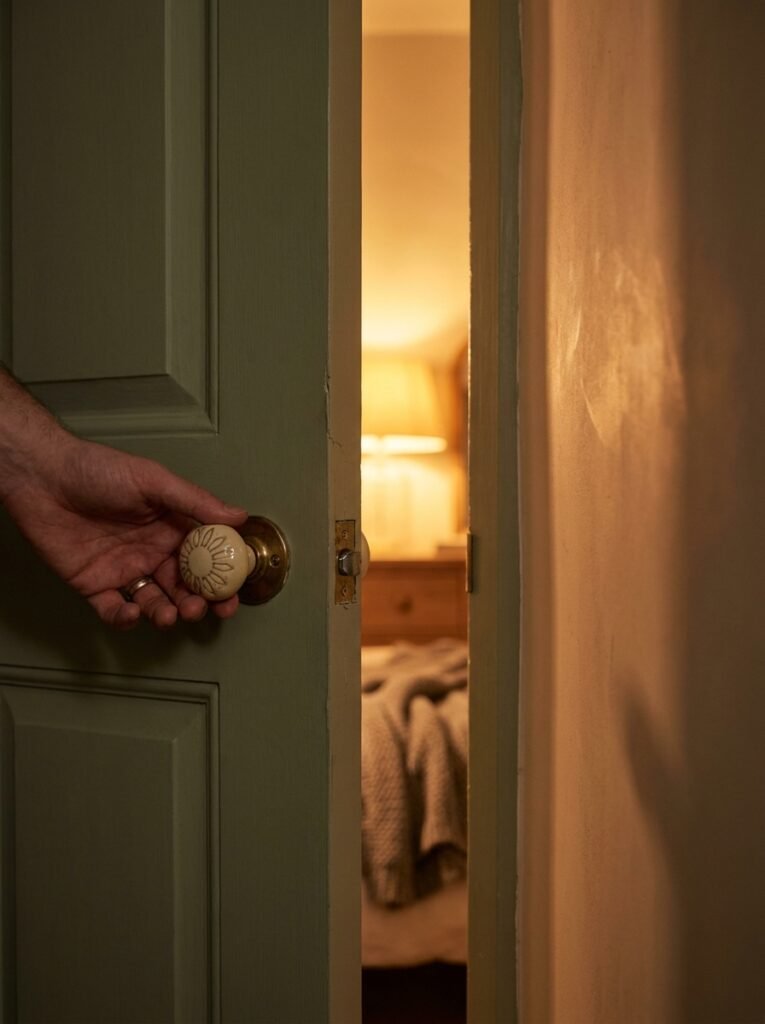
There’s something quietly profound about the idea that a home’s character is shaped not just by its grand gestures — the dramatic light fixture, the statement sofa — but by the smallest, most repeated moments of physical contact. The handle you reach for in the morning. The knob you turn when you slip into your bedroom at night. These are the details that live with you, that your hands know by feel before your eyes have fully opened.
Choosing them with care isn’t decoration for decoration’s sake. It’s an act of making your home more fully, more honestly yours — one beautiful detail at a time.
So here’s the question I’ll leave you with: if your door handles could speak, what would they say about the home you’ve built — and is that the story you want them to tell?