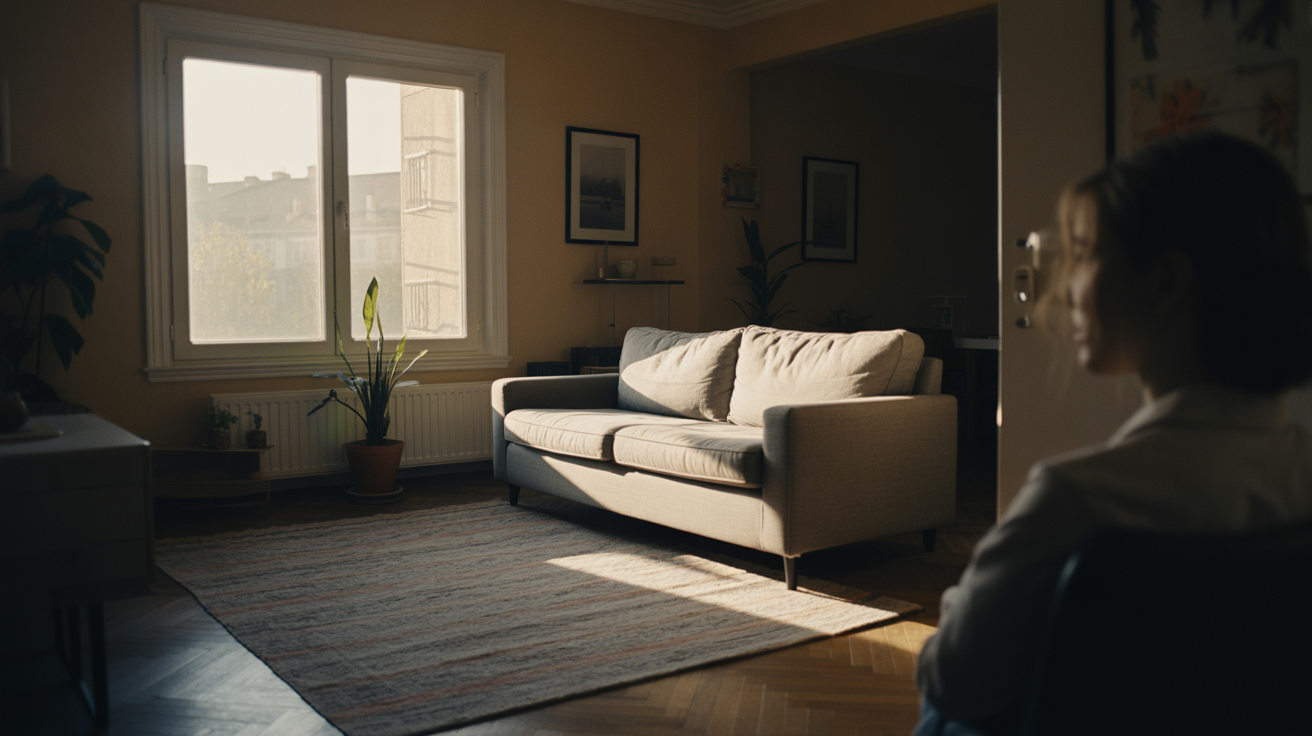
The Small Living Room That Actually Feels Like a Place You Want to Be
You know that feeling when you walk into someone’s apartment and immediately want to curl up and stay forever — even though it’s barely bigger than your bedroom? That’s not luck. That’s intention.
Small doesn’t have to mean cramped. It doesn’t have to mean sad sectionals shoved against every wall, or that weird empty corner you don’t know what to do with, or lighting that makes everything feel like a waiting room. Small can mean curated. Considered. Completely yours.
Here’s how to get there.
—
1. The Sofa Decision That Determines Everything Else
This is where most people go wrong first.
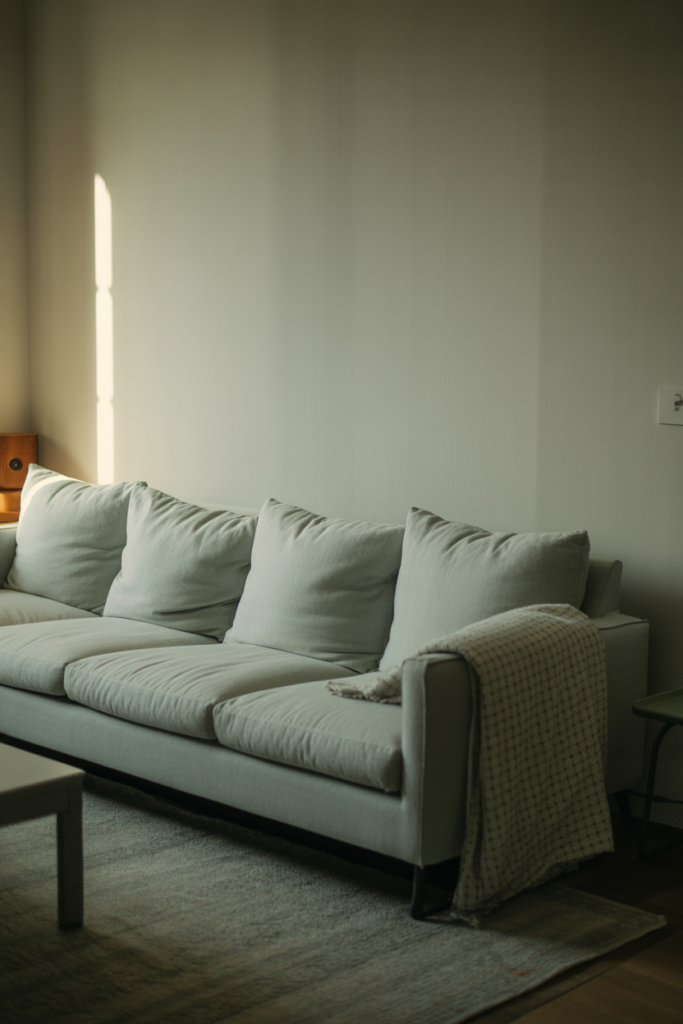
They either buy the biggest sofa that technically fits — because more seating feels like the right move — or they buy something too small and spend the next three years wondering why the room feels off. Neither extreme works. What you’re looking for is the sofa that anchors the space without eating it alive.
In a small living room, the sofa is not just furniture. It’s the emotional center of the entire room. Everything else orbits it. So before you buy anything else — lamps, rugs, side tables — you need to know exactly what you’re working with.
A two-seater or a narrow three-seater often works better than a traditional three-seater in rooms under 12 feet wide. Not because you’re giving up comfort, but because the extra floor space it leaves you changes the entire atmosphere of the room. You can breathe. You can move. The room suddenly has negative space, and negative space is what makes rooms feel intentional rather than packed.
Linen and boucle textures in warm neutrals — oat, stone, warm cream — photograph beautifully and read as soft and inviting without visually weighing the room down. Dark velvet, while gorgeous, can make a small sofa feel like a visual anchor that’s too heavy for the space unless you balance it carefully with light walls and pale flooring.
One thing a lot of people overlook: sofa leg height matters enormously. Low-slung sofas without visible legs make the floor feel smaller. A sofa raised on slim tapered legs lets light travel under the piece, which tricks the eye into reading the floor as continuous and open.
“The right sofa doesn’t just fit the room — it frees it.”
—
2. Why Your Rug Is the Most Powerful Thing in the Room (And Probably Too Small)
Say this out loud: my rug is too small.
It probably is. Undersized rugs are the single most common decorating mistake in small living rooms, and it’s completely backwards logic — people think small room means small rug. The opposite is true. A rug that’s too small makes a room feel chaotic and unintentional, like all the furniture is floating. A properly sized rug pulls everything into a cohesive whole.
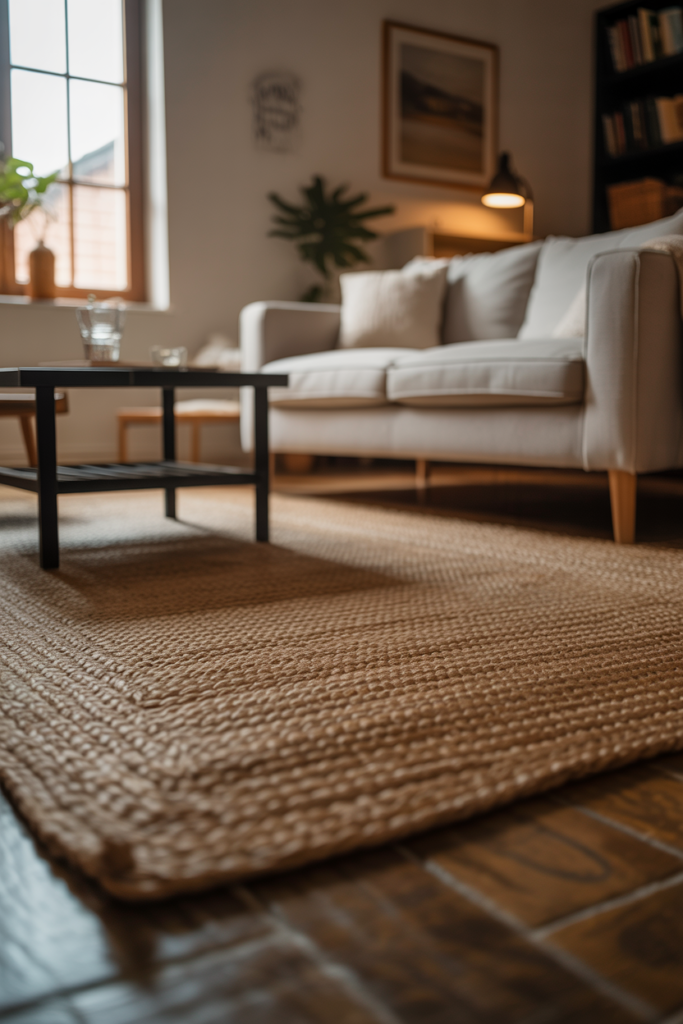
The rule is simple: your sofa’s front legs — at minimum — should sit on the rug. Better still, all four legs of every piece of seating in the room. This grounds the entire seating arrangement and signals to the eye that all these pieces belong together.
In a small space, a 5×8 rug is almost always too small. A 6×9 or 8×10 will serve you significantly better, even if it feels counterintuitive to put a large rug in a tight room.
For cozy apartments, textures matter enormously here. A flatweave jute or sisal rug brings warmth without visual weight — it layers beautifully and feels appropriately casual. A low-pile wool rug in a warm beige or terracotta adds softness underfoot and works in almost any lighting condition.
And lighting condition is everything with rugs. That gorgeous cream rug that looks clean and warm in the store can look dingy and cold under harsh overhead lighting. Always look at rug samples in your actual space, at night, under your actual bulbs.
—
3. The Color That Keeps Showing Up in Every Beautiful Small Living Room Right Now
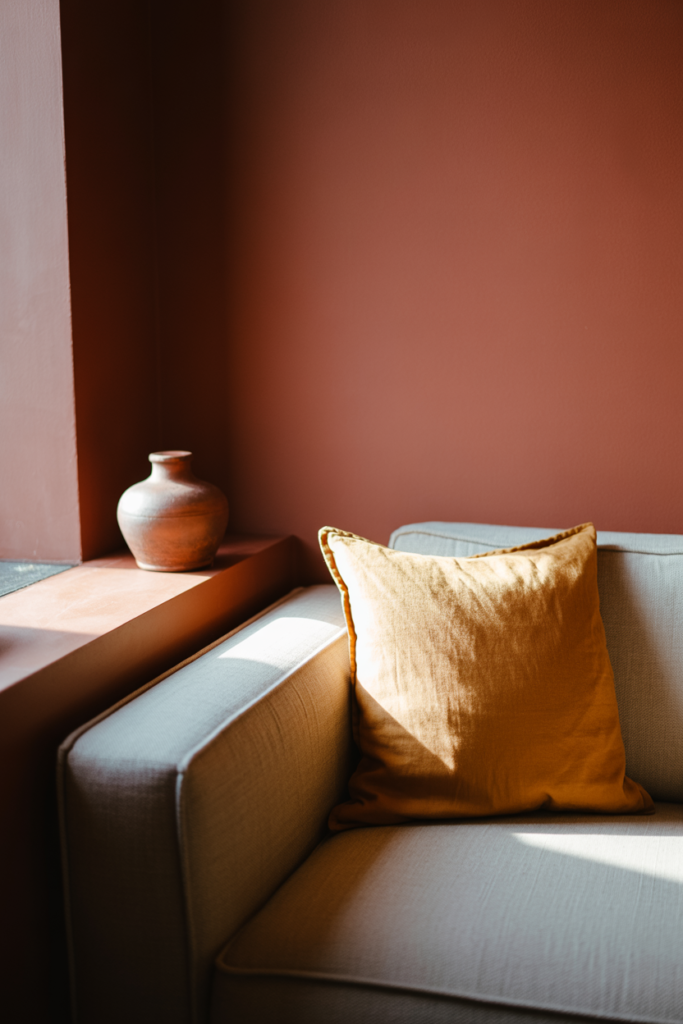
It’s not white. It’s not gray. And it’s not that millennial blush pink that peaked around 2019.
It’s warm clay. Terracotta’s softer, more livable cousin. The color of afternoon light on old brick. That specific shade that reads as barely-there in some lights and deeply rich in others.
Here’s why it works so well in small spaces: unlike cool neutrals, which can make a small room feel clinical and slightly cold, warm clay tones wrap around you. They feel deliberate. They feel like someone made a choice, rather than defaulting to the safest option available. And because the color has depth without being dark, it doesn’t close a room in — it encloses it in the best way, the way a good hug does.
You don’t have to commit to four walls of it if that feels like too much. One warm-toned wall behind the sofa, or warm clay cushions and throws against neutral walls, works beautifully. You can also layer it through objects — a terracotta planter, a clay-colored ceramic lamp base, a rust-adjacent throw blanket draped over the arm of a linen sofa.
The key is keeping the surrounding palette clean and uncomplicated. Warm clay with off-white, natural wood, and greenery is a combination that’s nearly impossible to get wrong.
—
4. The One Wall Trick That Makes Any Tiny Room Look Bigger on Purpose
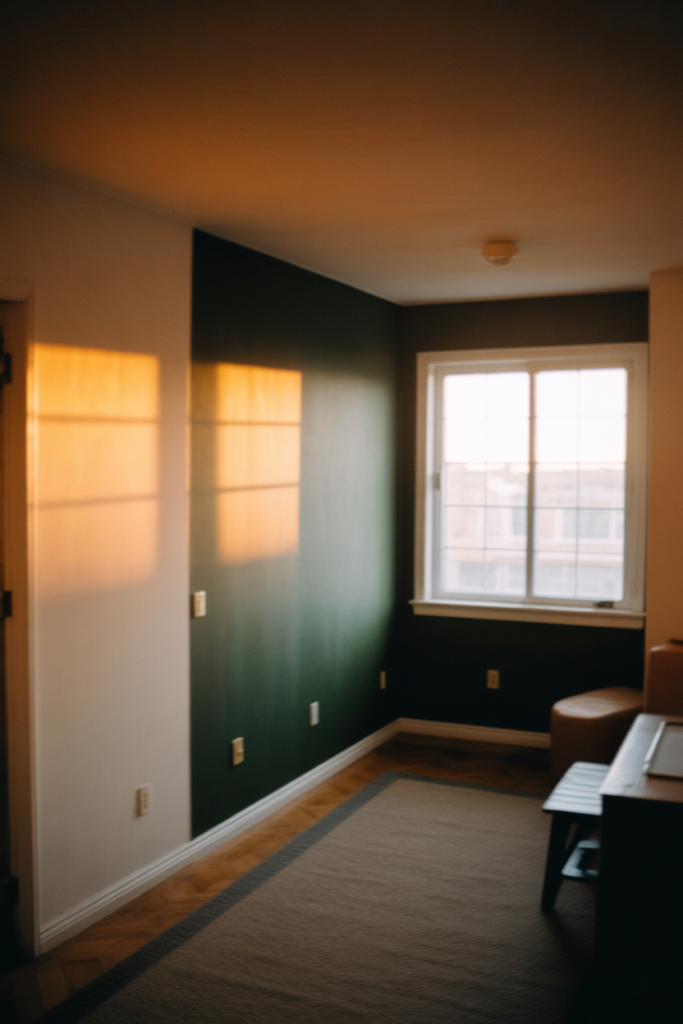
Forget mirrored walls. Forget painting the ceiling. The most effective visual technique for small living rooms is also the simplest: create one wall that does everything, and let the other three walls rest.
This is called — in decorator circles, though nobody uses the term in normal conversation — a focal wall strategy. But really it just means: pick one wall and make it interesting. Everything else can stay quiet.
This wall can be your sofa wall or the wall opposite your main seating. It can carry a large piece of art — and I mean large, significantly larger than feels comfortable, because timid art in small rooms disappears completely. It can hold a gallery arrangement that takes up most of the vertical space. It can feature a floating shelf arrangement that goes floor to almost-ceiling, with books, objects, and a trailing plant tumbling down from the top.
The psychological effect is profound. When one wall has all the visual weight, the room reads as layered and intentional. Your eye travels to that wall, takes it in, and the other surfaces feel deliberately clean rather than empty. The room feels bigger because you’ve given it a destination.
“One strong focal wall does the work that four mediocre ones never could.”
—
5. What Lighting Actually Does to a Room Nobody Talks About Honestly
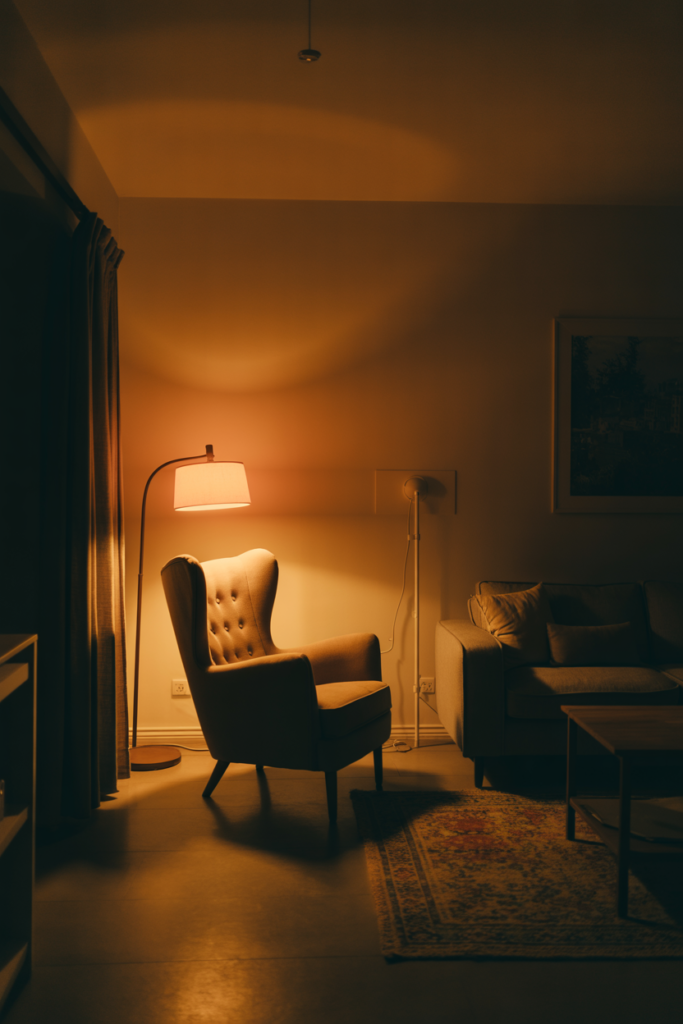
Let’s be clear about something: overhead lighting, used alone, ruins rooms.
A single ceiling light — especially a recessed fixture or a flat flush-mount — flattens everything. It kills shadow, removes dimension, and makes even the most beautiful room feel like a budget hotel. And yet almost every small apartment comes with exactly one ceiling light and nowhere obvious to put anything else.
The fix is layered lighting, and it doesn’t have to cost much. You want three sources of light, minimum, at three different heights. A floor lamp behind or beside the sofa. A table lamp on a side table or shelf. And something lower still — even a plug-in or battery-powered lamp at coffee table level makes an enormous difference after dark.
The bulbs matter as much as the fixtures. Warm white bulbs — 2700K is the sweet spot — create that amber glow that makes a room feel lived in and warm rather than interrogated. Cool daylight bulbs above 3500K are for offices. Not for living rooms. Not for anywhere you want to feel comfortable.
The amber glow of an Edison bulb at 7pm, reflecting off warm-toned walls and a linen sofa, is one of the most purely pleasurable small-apartment experiences there is. It costs almost nothing to engineer, and it changes everything.
—
6. The Furniture Arrangement Nobody Tries (That Completely Unlocks Small Rooms)
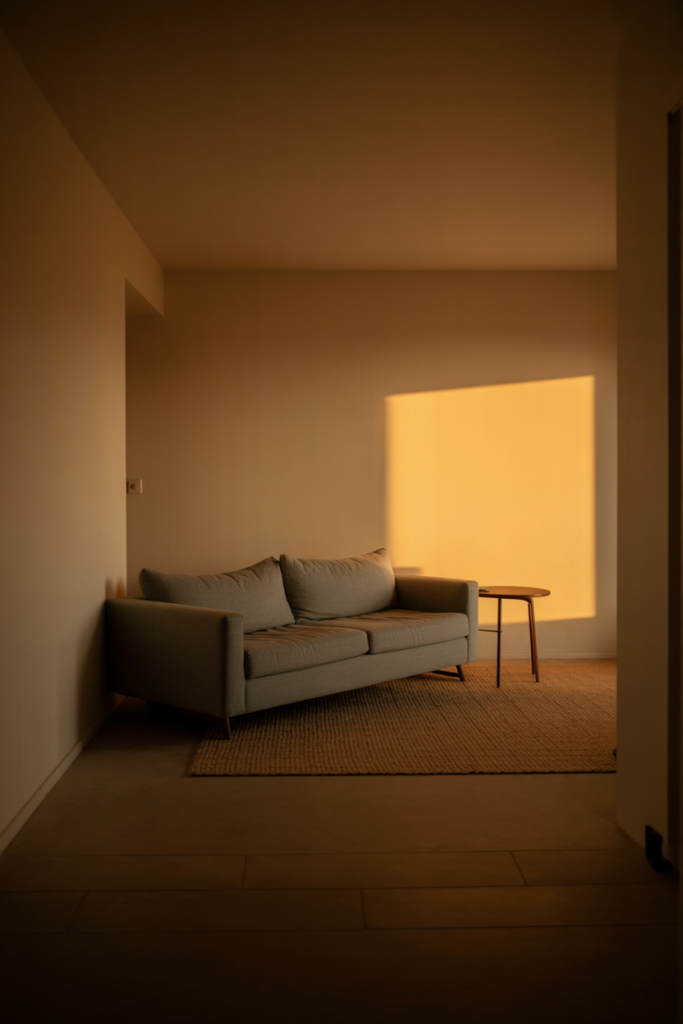
Almost everyone arranges small living room furniture the same way: sofa against one wall, chairs against another, coffee table in the middle. It’s safe. It’s predictable. And it often makes the room feel smaller than it actually is.
Floating your sofa away from the wall — even six inches, even three — changes the entire energy of the room. It creates a sense of space behind the piece, which makes the room read as larger. It breaks the visual pattern of “all furniture jammed against edges” which is the dead giveaway of a room that hasn’t been thought about.
Angling a chair diagonally in a corner is another arrangement most people never try because it feels wrong on paper. In practice, it adds enormous personality and often solves the problem of what to do with an awkward corner. Add a floor lamp behind it and a small stacked side table, and suddenly you have a reading nook that looks completely considered.
The most important thing is to try arrangements before you commit. Push the furniture around. Take photos. Sit in different spots. A room looks completely different from sofa level than it does standing in the doorway.
—
7. Plants That Actually Work in Low-Light Living Rooms (And Where to Put Them)
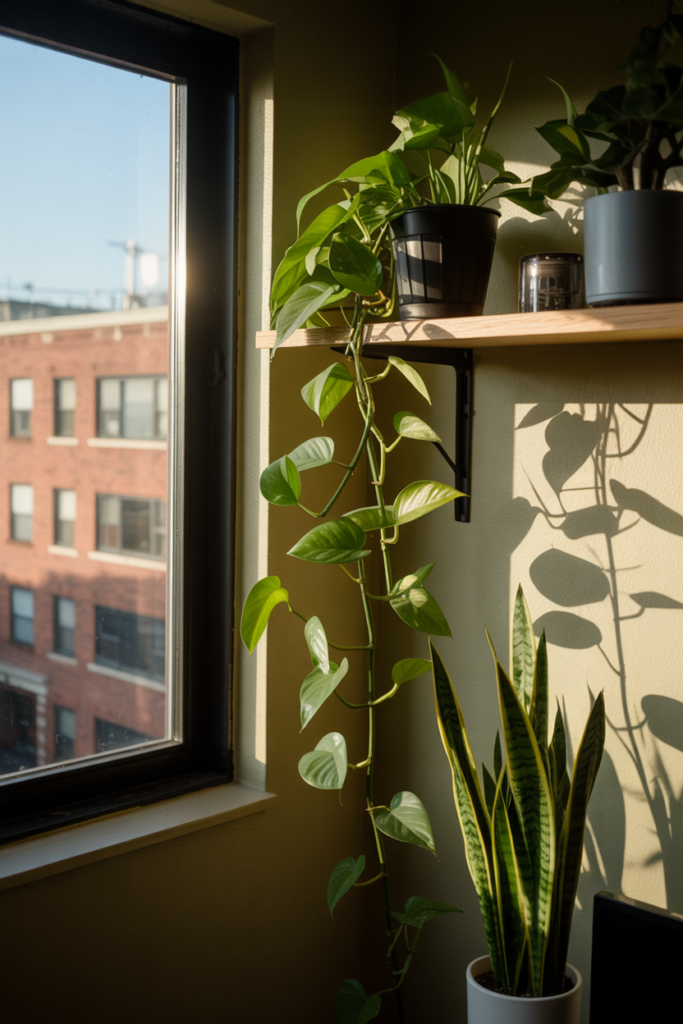
Not every small apartment is bathed in natural light. North-facing living rooms, basement flats, rooms with small windows blocked by buildings — these are real, and they’re common, and they don’t have to be plantless.
Pothos, snake plants, ZZ plants, and cast iron plants all thrive in genuinely low light. Not “bright indirect light” — actual low light. These are not boring plants. A golden pothos trailing down from a high shelf is beautiful. A large snake plant in a terracotta pot in a corner reads like sculpture.
Where you place plants in a small room matters enormously. One large plant — a fiddle leaf fig, a monstera, a tall snake plant — makes more visual impact than six small plants scattered around. It feels collected, rather than cluttered. It gives the eye somewhere specific to land.
Height is your friend here. Use plant stands, stack a plant on a pile of design books, place trailing plants on high shelves. Varying the height of your greenery stops the room from looking flat. It gives it life. Literally.
“One large plant does more for a room than six small ones ever will.”
—
8. The Coffee Table Swap That Immediately Makes a Small Room Feel Lighter
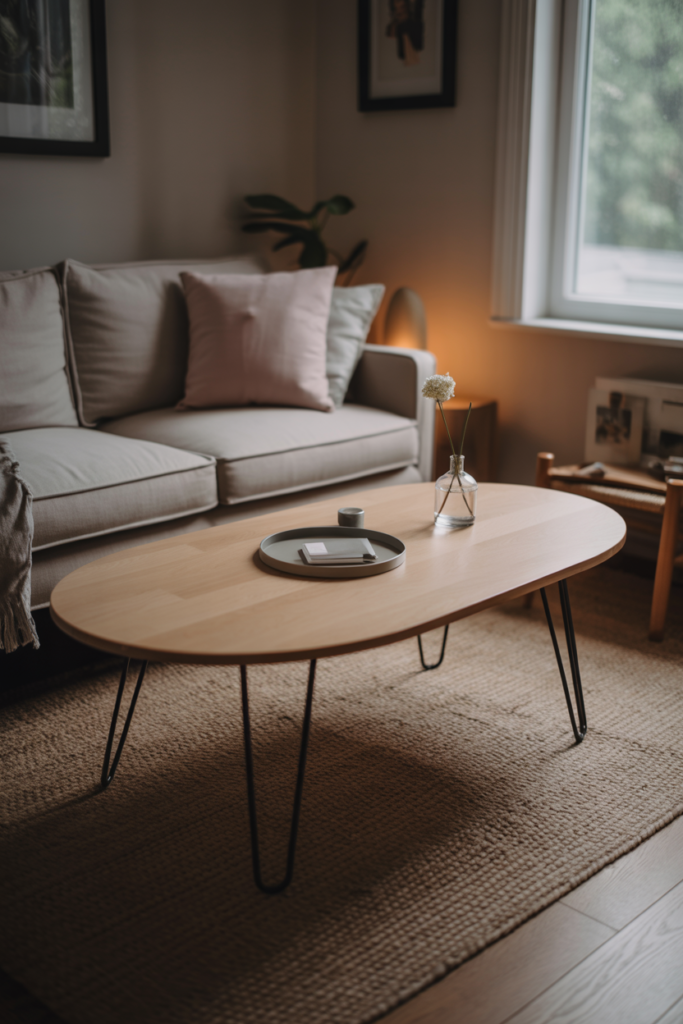
Replace your solid coffee table with a glass top or a rattan piece.
This one change — just this single swap — makes a room feel visually lighter and more open than almost any other adjustment you can make. A solid wood or painted coffee table is a visual block in the center of your space. Glass or open-weave rattan lets the eye travel through and underneath, maintaining the sense of openness in the floor plane.
Round coffee tables are also significantly better in small rooms than rectangular ones. They eliminate corners — both visual and literal — which makes the room easier to move through. They prevent that ankle-catching collision with a sharp table edge that everyone in a small apartment knows intimately.
If you’re not ready to replace your current table, consider raising it on a rug (which you’ve already solved in section two) and styling the surface very deliberately. Three objects maximum. One taller piece, one flat piece, one small organic element — a candle, a stack of books, a small vase with a single stem. Restraint on a coffee table surface makes a small room feel like it has room to breathe.
—
9. Storage That Doesn’t Look Like You’re Hiding Things
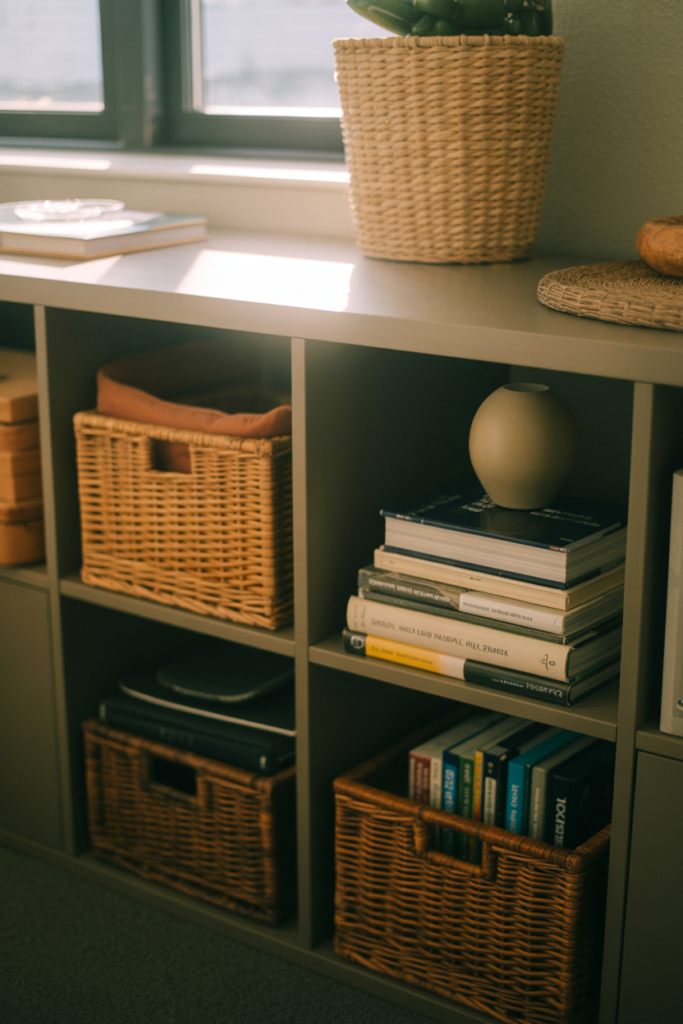
The aesthetic problem with most storage solutions in small living rooms is that they look exactly like what they are: storage. Baskets shoved under a console, boxes stacked in a corner, a shelving unit crammed with everything you own.
Beautiful storage is specific and slightly curated. It says “I put thought into this” rather than “I needed somewhere to put things.”
Ottoman storage with a clean, upholstered lid looks like a design choice. A sideboard with closed doors keeps everything contained and adds a warm, furniture-like quality rather than a storage-unit quality. Baskets in matching textures — a set of three seagrass baskets, all the same material, in graduating sizes — look intentional on a shelf in a way that random plastic boxes never will.
The secret is also editing. Not everything needs to be stored in the living room. The less visible storage you need, the less the room reads as a room where things are being managed rather than lived in.
—
10. What Curtains Are Actually Doing to Your Perceived Ceiling Height
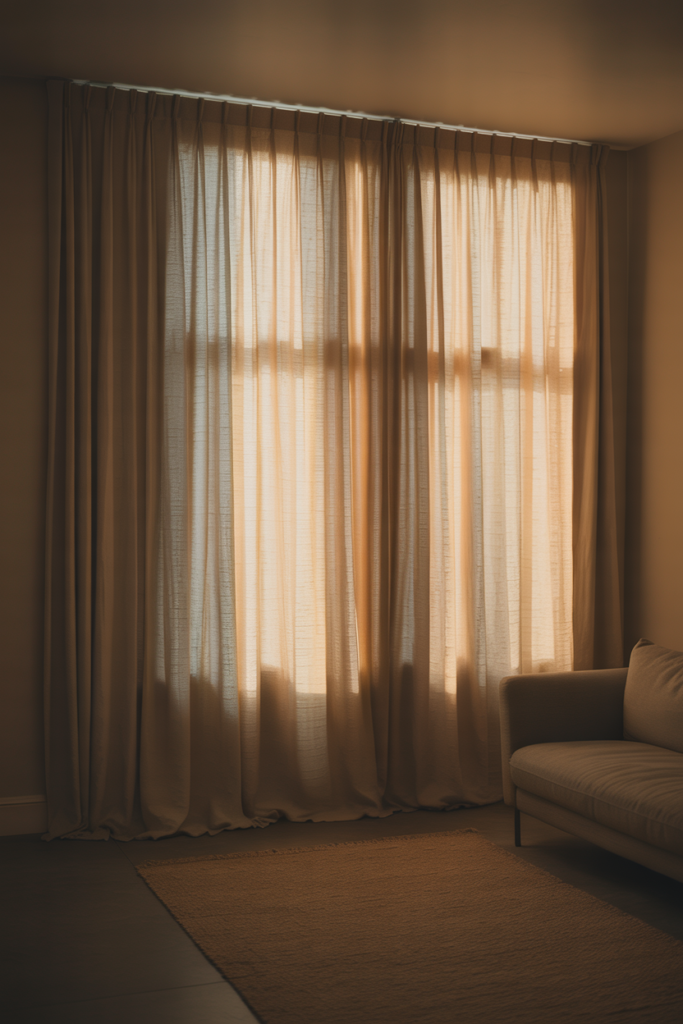
Curtains hung at window level — meaning the rod is positioned right at the top of the window frame — are one of the most common and consequential decorating mistakes in small rooms.
Hang your curtain rod as high as possible. Ideally four to six inches from the ceiling, or at the ceiling itself if your ceiling is low. Then hang curtains that drop all the way to the floor, even if your window is halfway up the wall.
This does something almost magical to a room. The vertical line from ceiling to floor makes the wall appear taller, which makes the entire space read as larger. It’s the same logic as wearing vertical stripes — your eye travels up and down rather than across, which changes your perception of the whole.
The curtains themselves should be simple. One fabric, no pattern necessary, in a texture that complements your sofa. Linen curtains in a warm natural or off-white are the most forgiving, most flattering choice for nearly any small living room. They filter light beautifully, they feel soft and inviting, and they don’t date.
—
11. The Corner You Keep Ignoring and What to Do With It Finally
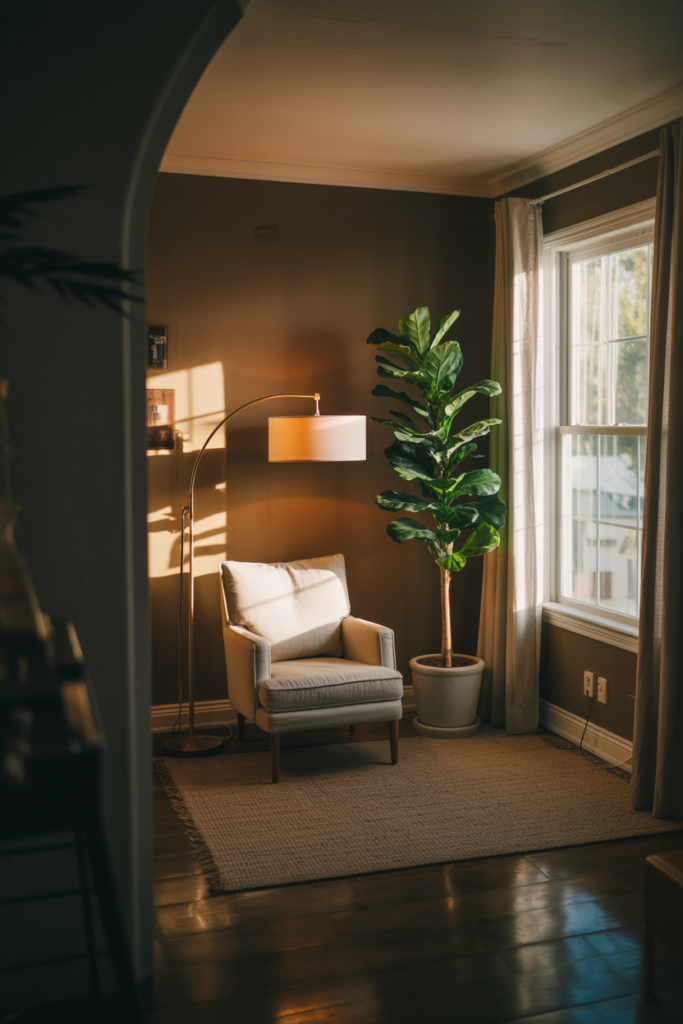
Every small living room has one. That corner. The one that gets a random floor lamp, or a pile of bags, or absolutely nothing at all and just sits there looking apologetic.
The corner is actually one of the most valuable real estate opportunities in a small room, and the fix is almost always the same: go vertical.
A tall, narrow bookcase — genuinely tall, ceiling height if possible — fills a corner with purpose and adds enormous character. Styled with books spine-out or stacked horizontally, plus a mix of objects, frames, and a plant, it becomes one of the most photographed corners in the room.
Alternatively, a single tall floor lamp with a sculptural shade turns a dead corner into a light source that defines the perimeter of your seating arrangement. Add a small side table and a plant, and you’ve created a moment in a space that previously had none.
Corners that are left bare in small rooms feel like the room ran out of ideas. Corners that are deliberately addressed feel like the room was designed.
—
12. The Difference Between a Room That Looks Good in Photos and One That Feels Good to Live In
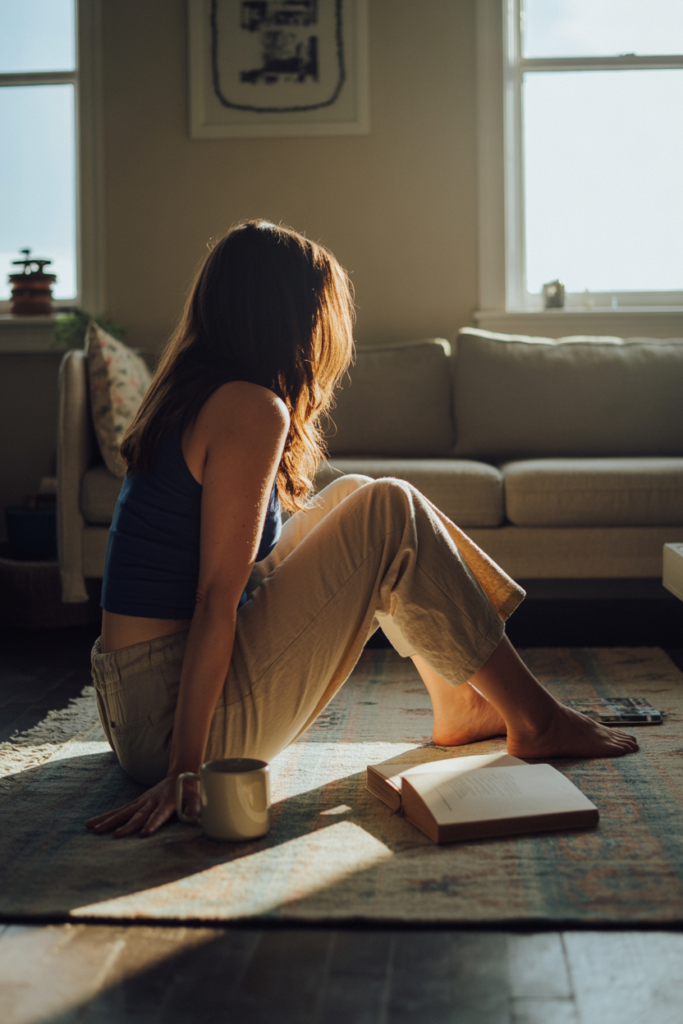
Here’s something worth saying plainly: not every Pinterest-perfect room is comfortable to actually spend time in. Some of the most photographed spaces are cold, impractical, and quietly exhausting to live with. Too many objects. Too much visual competition. Styled within an inch of their lives but not actually set up for a human being to come home to after a long day and sink into.
The rooms that feel genuinely good — that make you exhale the moment you walk through the door — have something slightly unfinished about them. There’s a real book left on the sofa. There’s a throw that’s been actually used, not artfully arranged. There’s a plant that’s outgrown its pot slightly, or a rug that’s shifted just a little.
Cozy doesn’t come from perfection. It comes from evidence of life. From a room that looks like someone is actually using it and loving it, rather than preserving it for a future photo opportunity.
Design your small living room to be lived in first and photographed second. That, paradoxically, is how you end up with the best photos anyway.
—
🌿 Quick Tips
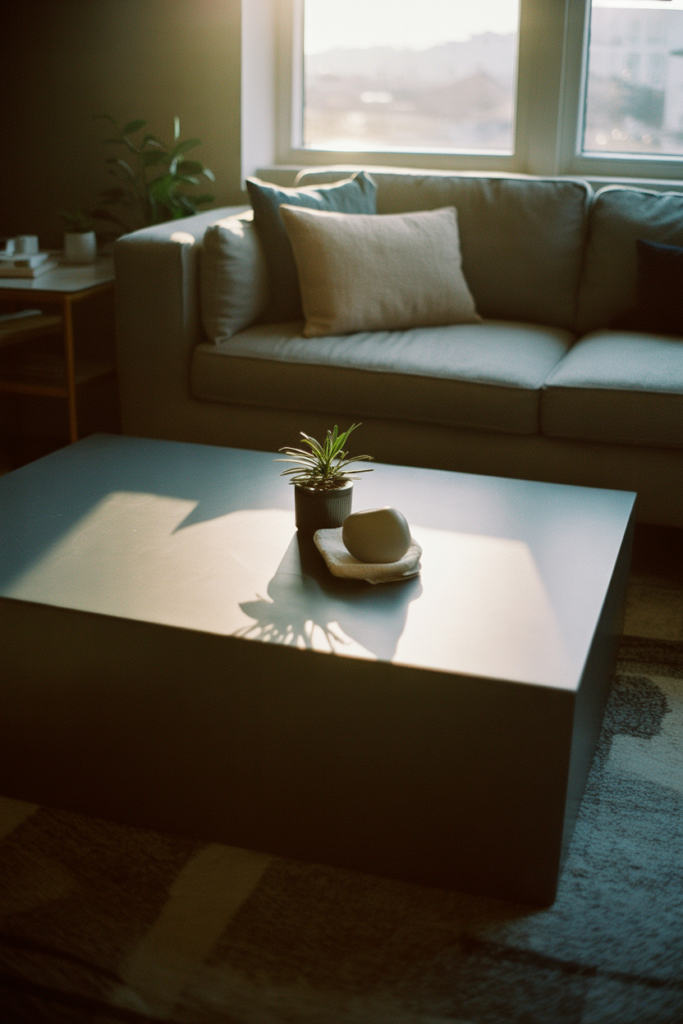
Keep your sofa’s front legs always on the rug — this single rule makes the entire seating area feel grounded and intentional, regardless of room size.
Switch every bulb in your living room to warm white 2700K. Do it tonight. The difference is immediate and it costs almost nothing.
When in doubt about whether a room feels cluttered, remove one item from every surface. Not because the objects aren’t beautiful, but because space between beautiful things is what lets them be seen.
Buy one large plant instead of multiple small ones. A single large fiddle leaf or monstera creates presence and personality that a collection of small succulents simply cannot match.
Hang your curtain rod at ceiling height, always, regardless of where your window frame sits. This single adjustment does more for perceived ceiling height than any paint color or mirror trick.
—
❓ FAQ
Q: How do I make a small living room feel cozy without making it look cluttered? A: The secret is layered texture rather than layered objects. You can have a boucle throw, a jute rug, a linen sofa, and a wooden side table — all different textures creating warmth — without a single additional decorative object. Texture reads as cozy; accumulated stuff reads as clutter. Edit your objects down and layer your materials up.
Q: What size rug should I get for a small living room? A: Almost certainly larger than feels right. In a small room, a 6×9 is a sensible minimum — an 8×10 often works better than you’d expect. The front legs of your sofa should always be on the rug, and ideally all the legs of every piece of seating. A rug that floats in the middle of the room with no furniture touching it does nothing good for the space.
Q: Can I use dark colors in a small living room without making it feel smaller? A: Yes — and sometimes dark colors actually make a small room feel more enveloping and intentional rather than simply smaller. The key is that dark walls need warm undertones (terracotta, warm brown, soft forest green rather than cool charcoal or cold navy), and the lighting needs to compensate — more lamps, warmer bulbs, more sources. A dark small room with good lighting feels like a jewel box. A dark small room with one cold overhead bulb feels like a cave.
—
💭 Final Thought
Small living rooms are, honestly, some of the most interesting spaces to design. The constraints force creativity. They demand that every single thing you bring into the room earns its place. There’s no room for fillers, no space for things you kind of like — only things you genuinely love.
What would it feel like to walk into your living room tomorrow and have it feel completely different just from changing the lighting and moving the curtain rod?