The Small Living Room That Feels Like a Five-Star Hotel (Without the Five-Star Price Tag)
You walk into a small living room and immediately feel it — that effortless sense of yes, this is exactly right. Not crowded. Not compensating. Just intentional, beautiful, quietly expensive-looking. Here’s how to create that feeling in your own space, even if your living room could fit inside someone else’s foyer.
—
1. The Furniture Rule That Interior Designers Never Post About
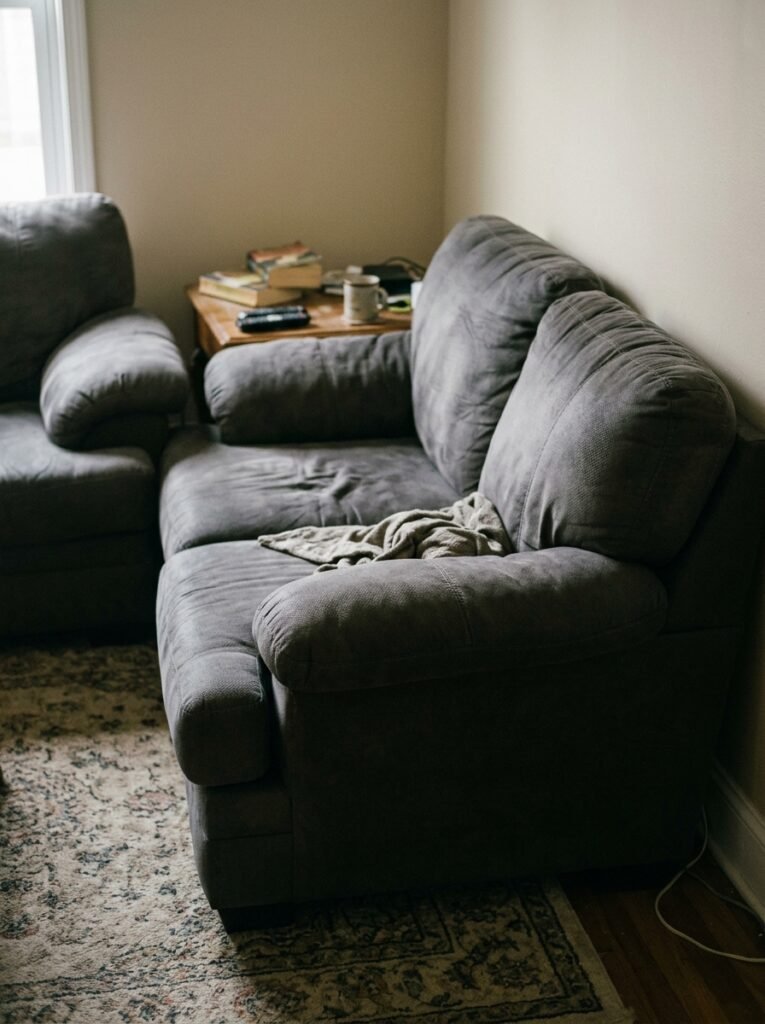
Everyone tells you to go small with furniture in a small room. Fewer pieces, smaller scale, keep it minimal. And then you follow that advice and your room looks like a waiting area at a budget dentist’s office.
Here’s what actually works: one large, genuinely good piece.
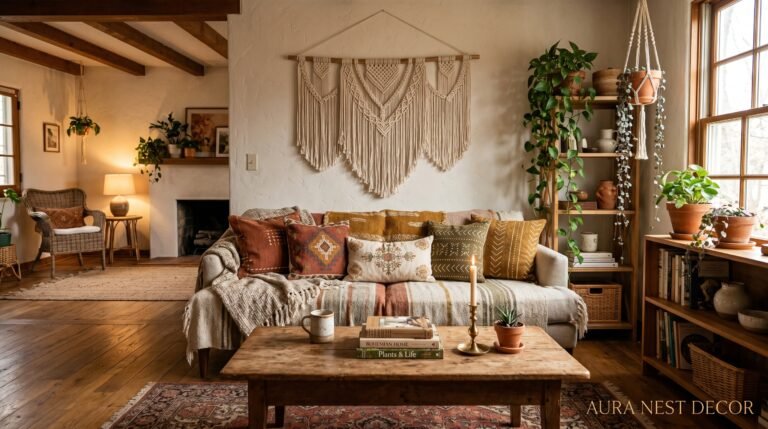
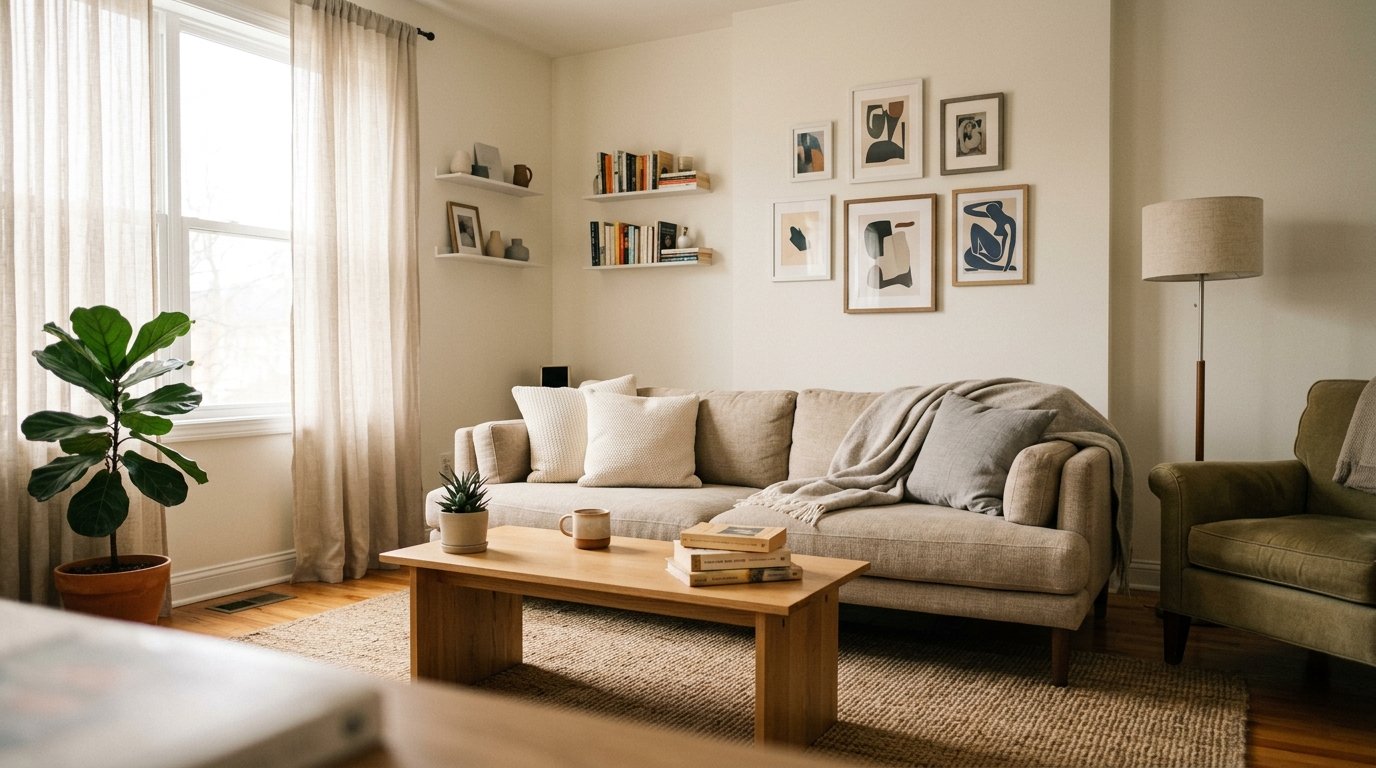
Not four small, forgettable ones. One sofa that means business. A deep, well-cushioned sectional in a warm neutral — oatmeal boucle, dusty sage velvet, warm greige linen — that fills the room with intention rather than apology. When you anchor a small space with one piece that has real presence, everything else around it falls into place. Your eye travels to it, rests there, and reads the whole room as curated rather than cramped.
The mistake most people make is treating a small room like a puzzle to solve rather than a mood to create. Luxury isn’t about fitting more in. It’s about caring deeply about what you do put in. One sofa that you genuinely love, positioned with confidence, does more for a small living room than a dozen carefully sourced accent pieces scattered around like nervous energy.
“Luxury isn’t about fitting more in. It’s about caring deeply about what you do put in.”
—
2. The Color That Keeps Showing Up in Every Beautiful Small Living Room Right Now
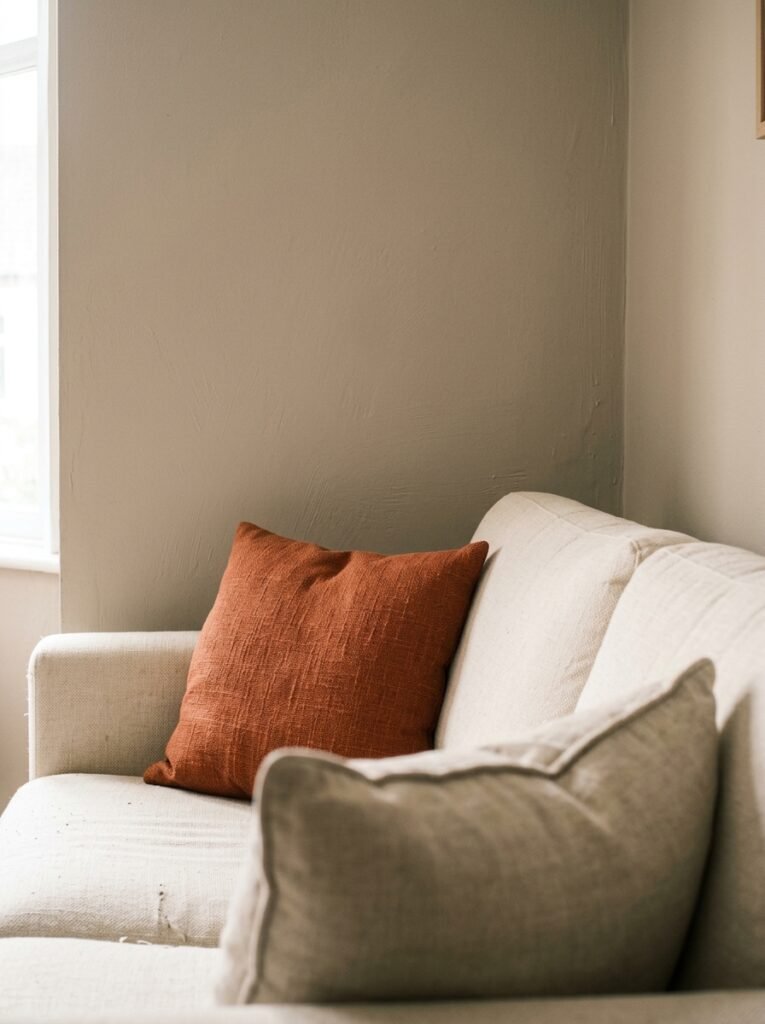
Warm white is over. Cool grey has been over for years. What’s happening in the most quietly impressive small living rooms right now — in Brooklyn brownstones, in London terraced houses, in converted flats with original cornicing and radiators that clank — is warm, deep, committed color.
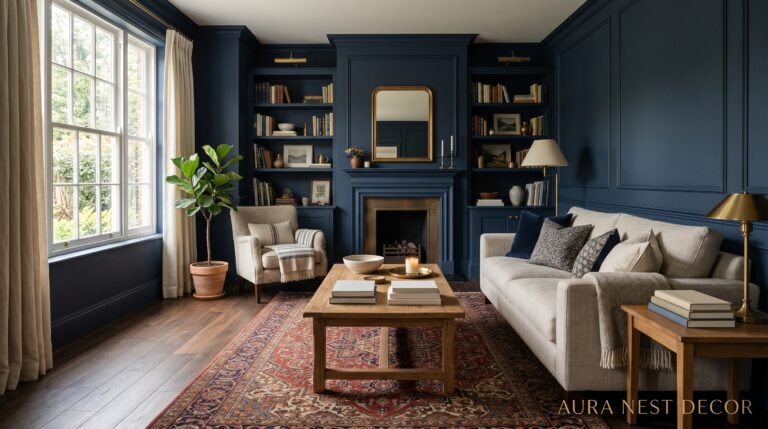
We’re talking mushroom. Warm clay. That particular shade of off-white that’s so close to blush it makes you second-guess yourself. Paint the walls, the ceiling, and the trim all the same tone and watch what happens to the room. The boundaries soften. The corners blur. The space stops feeling contained and starts feeling enveloping.
This is an old trick that feels new again. In the UK they call it “drenching” — wrapping every surface in a single color to make the architecture disappear and the mood take over. In smaller American homes it works even harder, because that sense of being wrapped up in a color is genuinely luxurious. It’s the feeling of being inside something intentional rather than just decorated.
Pick something with a warm undertone — Benjamin Moore’s Pale Oak, Farrow & Ball’s Elephant’s Breath, or Sherwin-Williams’ Accessible Beige pushed into a slightly richer version of itself. Then commit. Every surface. Don’t stop at the walls.
—
3. Why Your Ceiling Might Be the Most Wasted Opportunity in Your Entire Home
Look up. Seriously. Look at your ceiling right now.
If it’s plain white, you’re leaving an enormous amount of visual potential completely untouched. Ceilings in small rooms are not neutral — they’re just unaddressed. And an unaddressed ceiling in a small living room telegraphs “I ran out of ideas at about five feet eight inches.”
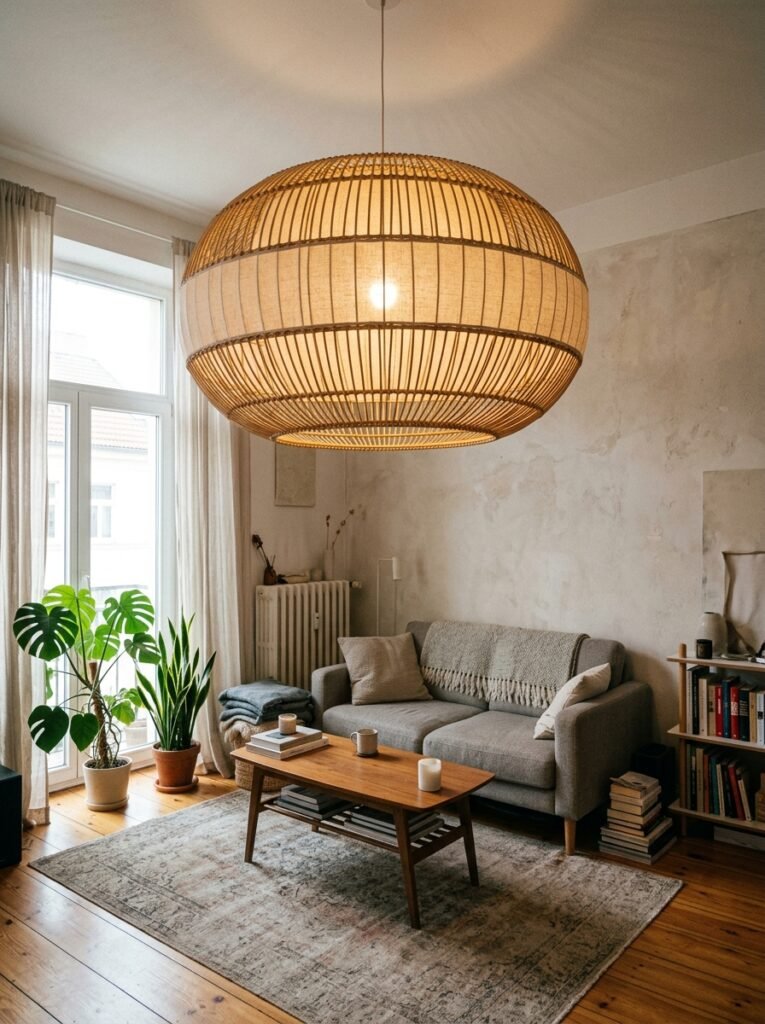
The rooms that feel luxurious — regardless of size — almost always have a ceiling that’s doing something. A plaster rose, even a simple one. Painted the same color as the walls for that drenching effect. Fitted with a single large, sculptural pendant light that draws the eye up and makes the room feel taller than it is. In some of the most beautiful small living rooms I’ve seen, the ceiling is the whole story.
A drum pendant in brushed brass. A papier-mâché chandelier from a small maker. Even just a warm-toned bulb in a simple ceramic fitting, centered perfectly, casting that amber glow at 7pm that makes every conversation feel important. The ceiling is your secret weapon. Use it.
—
4. The Mirror Placement That Actually Works (And the One That Doesn’t)
Every article about small living rooms tells you to hang a mirror. They’re right. But they never tell you where, and that’s where most people go wrong.
The mirror above the fireplace, centered perfectly, reflecting the room back at you — that’s the classic. It works because it creates a focal point that bounces light exactly where you want it. But there’s another placement that barely gets talked about and does something almost magical in a small space: leaning a large mirror against the wall at an angle, floor to ceiling or close to it, in the darkest corner of the room.
That corner that collects shadow? That corner that makes the room feel smaller at night? A leaned mirror there — framed in antique brass, dark wood, or even raw wood — opens it up without the commitment of hanging, adds that editorial, slightly undone quality that characterizes genuinely stylish rooms, and bounces both natural and lamp light in ways that make the room feel like it has a whole other dimension tucked inside it.
The mirror that doesn’t work: a small ornamental mirror, hung too high, in an already bright spot. That’s decoration for its own sake. No geometry. No purpose. In a small room, every choice has to work harder than that.
“Every choice in a small room has to work harder than decoration for its own sake.”
—
5. The One Lighting Layer Most Small Rooms Are Missing Entirely
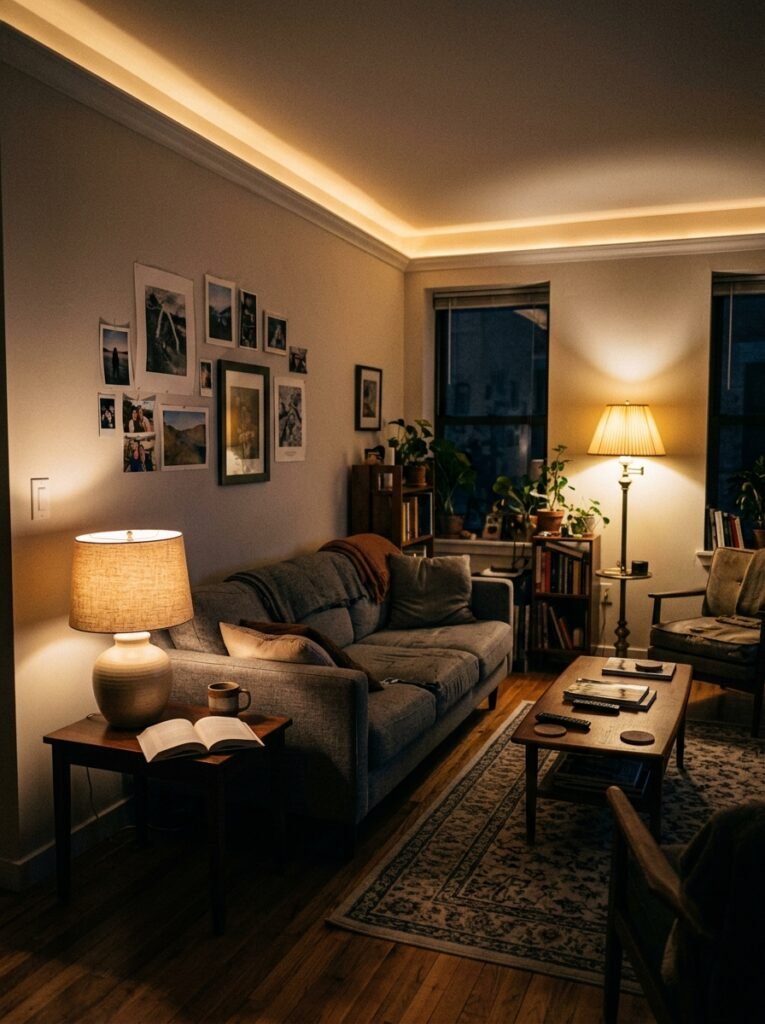
Most living rooms have one overhead light and nothing else. Maybe a floor lamp in the corner if they’re trying. And then people wonder why the room doesn’t feel cozy, doesn’t feel rich, doesn’t feel like those images they saved to their boards.
The missing layer is always the same: low, warm, directed light at eye level.
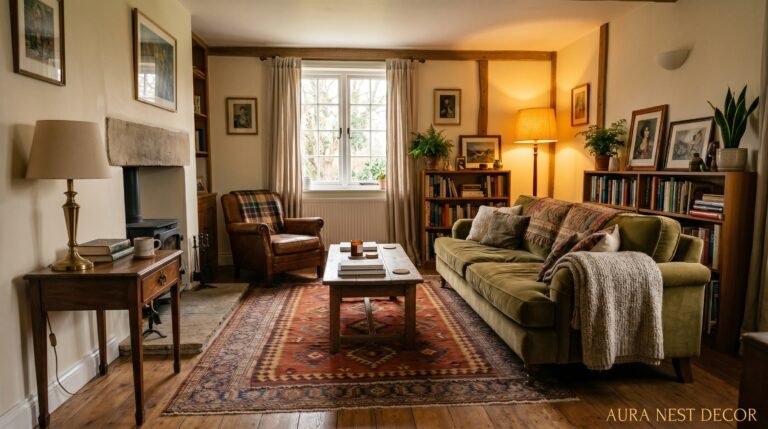
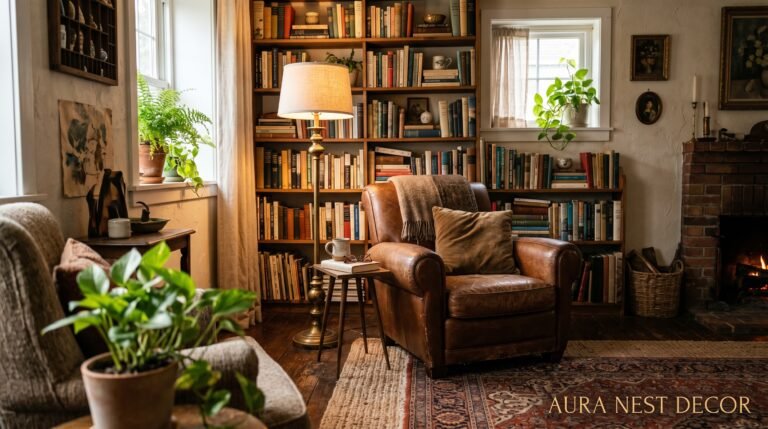
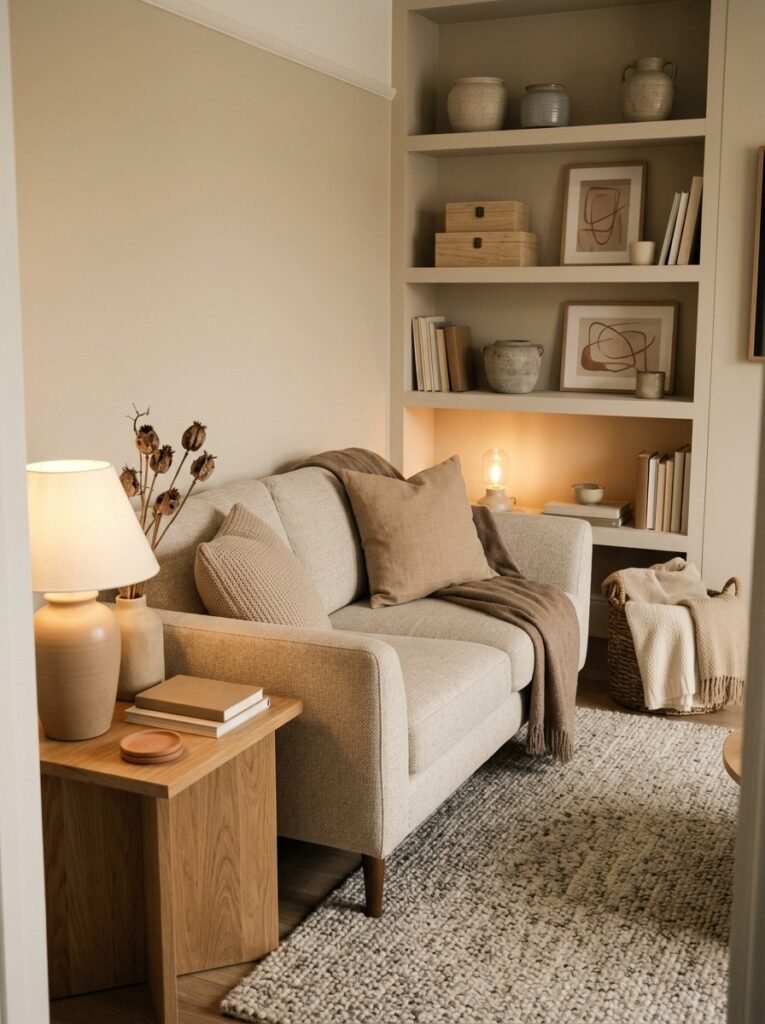
Table lamps on side tables. A small lamp on a bookshelf. A low-wattage lamp on the floor behind a plant, sending light up through the leaves. These aren’t just decorative choices — they’re atmospheric engineering. They pull the light down from the ceiling, where it sits harshly and makes the room feel institutional, and they redistribute it around the room at the level where your eye naturally rests when you’re relaxing.
In a small living room with luxury ambitions, you want at least three light sources operating at once after dark: one overhead that’s dimmed low, one table lamp, and one ambient source — a candle cluster, a backlit shelf, a glowing lantern. The combination creates depth. It makes a small room feel textured rather than flat, layered rather than limited.
—
6. What “Modern Luxury” Actually Means in 2025 (It’s Not What You Think)
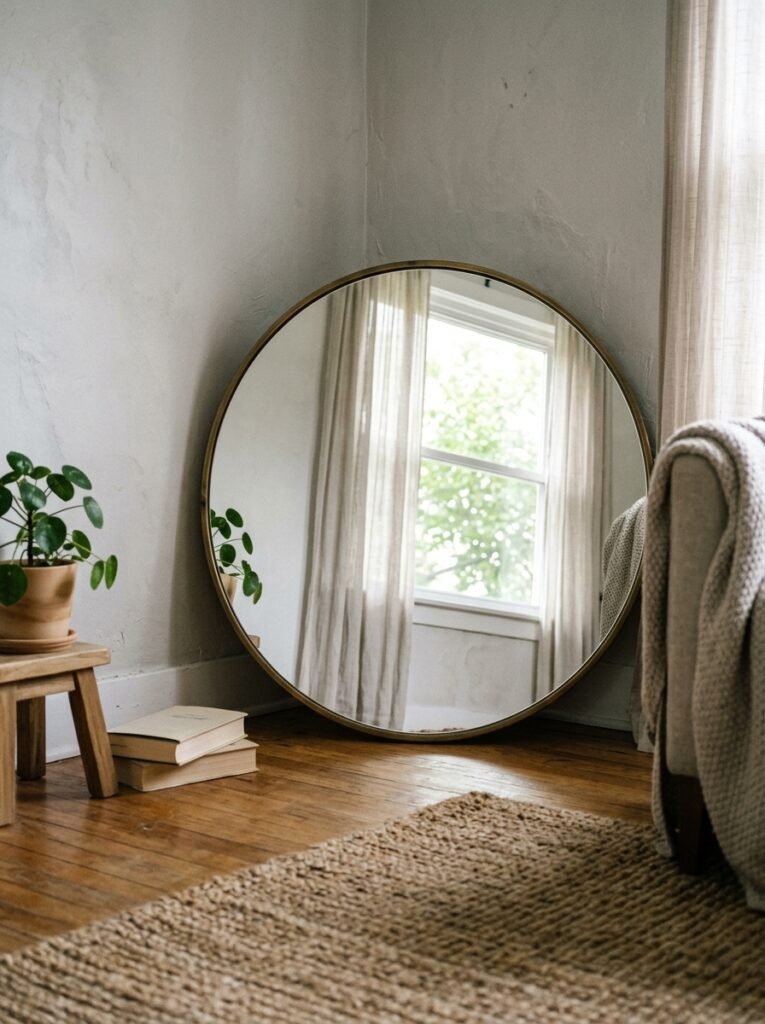
Here’s the thing about modern luxury right now: it’s quiet. It’s not gold everything, not glossy surfaces, not the kind of maximalism that announces itself the moment you open the door. What’s happening in genuinely beautiful interiors right now is a kind of confident restraint that takes real courage to pull off.
Modern luxury in a small living room in 2025 looks like natural materials — linen, jute, plaster, unlacquered brass, raw wood — put together with real care. It looks like investment in texture over pattern. It looks like one or two things that are genuinely, quietly expensive sitting alongside things that cost very little but look exactly right.
A hand-thrown ceramic vase. A linen throw that’s been washed so many times it has that impossible softness. A coffee table with thick, honest legs. A rug with actual weight to it, not the papery kind that slides and pills within a month.
The British interiors world calls this “considered.” Americans tend to say “intentional.” Whatever you call it, the feeling is the same — that every object in the room was chosen rather than accumulated. In a small room, that distinction is everything.
—
7. The Coffee Table Trick That Makes a Small Room Look Designed
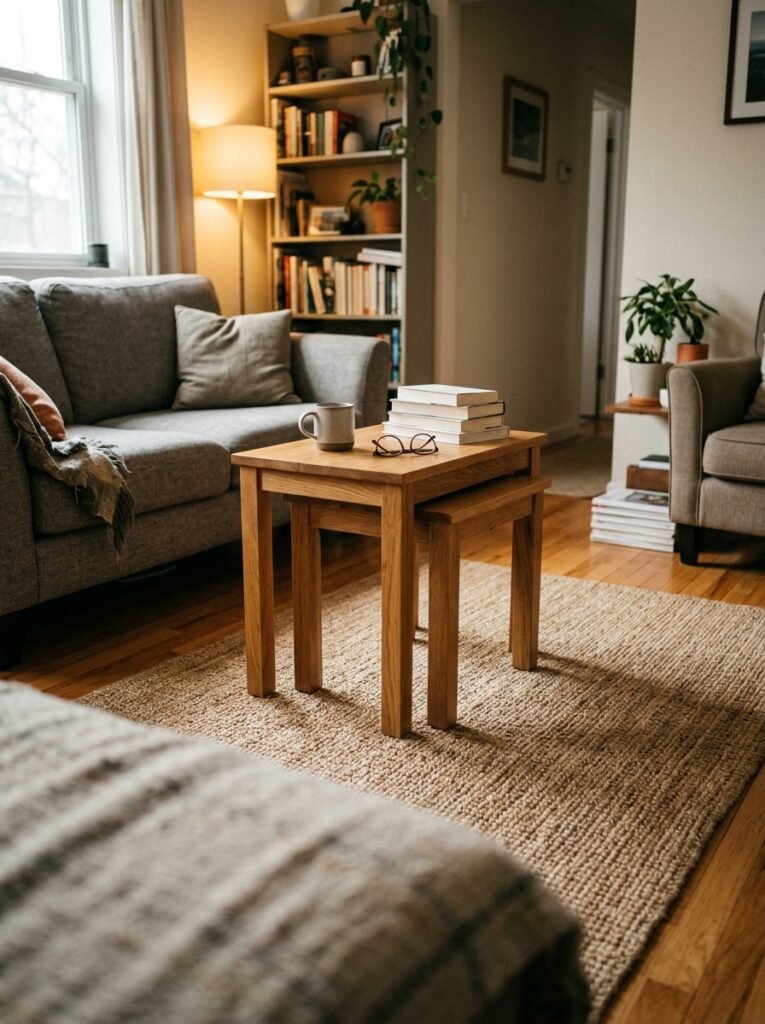
Your coffee table is working way too hard. Or not nearly hard enough. One of those two things is almost certainly true.
In a small living room that’s reaching for luxury, the coffee table has a specific job: to hold a very small number of very deliberate objects and to have beautiful legs.
The legs matter more than most people realize. Legs that taper. Legs that are dark and contrasting against a light rug. A coffee table with architectural presence that lets the floor breathe underneath it rather than a solid block that sits like a parked car. Glass is one option, but actually the best small living room coffee tables right now are solid wood with a shape that’s interesting — oval, slightly irregular, the kind that looks handmade even when it isn’t.
On top: a tray (it organizes without looking organized), a candle (always lit or recently lit — the wax should never be pristine), a small stack of books whose spines you’ve chosen carefully, and nothing else.
That’s it. The negative space on a coffee table is as important as what’s on it.
“The negative space on a coffee table is as important as what’s on it.”
—
8. Why Curtains Are the Cheapest Route to an Expensive-Looking Room
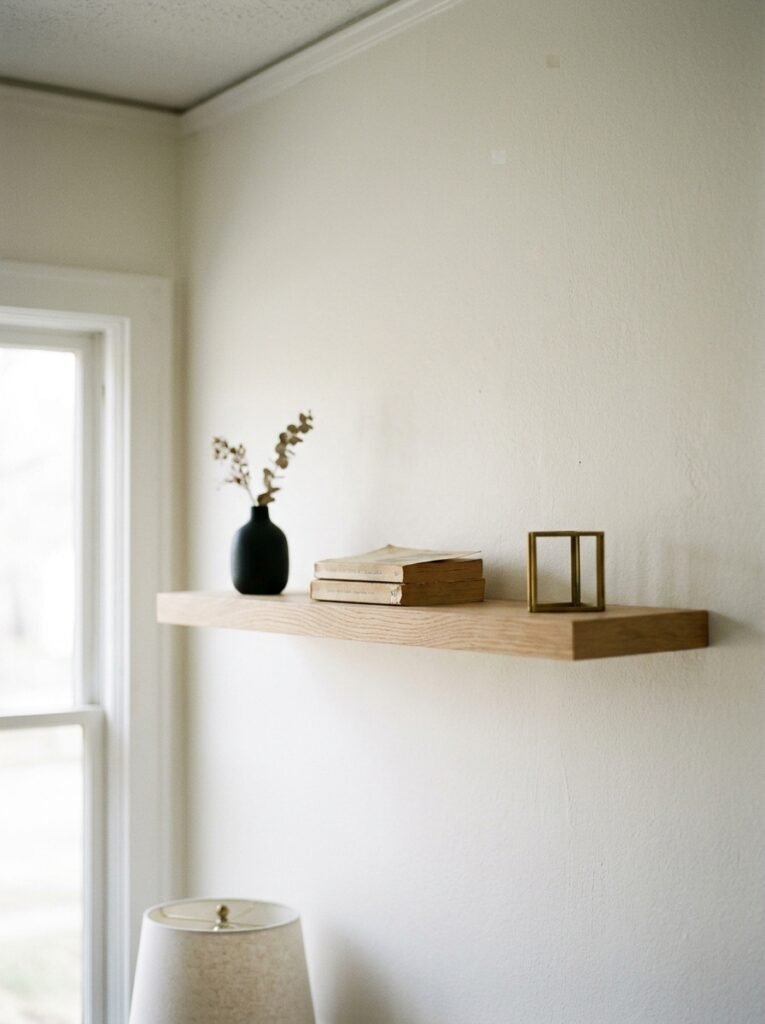
Floor-to-ceiling curtains. Not “curtains that reach the floor.” Curtains hung at ceiling height — or as close to it as your rails allow — that pool very slightly onto the floor.
This single change does more for a small living room than almost any other choice you can make. It makes the ceiling feel higher. It makes the windows feel larger. It makes the whole room feel like it belongs somewhere grand.
The fabric matters enormously. Cheap polyester breaks the illusion immediately. Linen is the right choice for this moment — it drapes softly, it wrinkles beautifully, it reads as effortless even when it’s very much on purpose. In a soft white, warm cream, or a dusty, muted tone that’s just slightly darker than your walls.
In the US, IKEA’s DYTÅG curtains in off-white are the open secret of people who know how to do a lot with a little. In the UK, Dunelm’s linen-blend options hang with a generosity that costs half what they look like. The trick is always the same: hang them high, let them fall long, and press them just once when they go up — then let them live in their beautiful, natural wrinkle after that.
—
9. The Plant Placement That Changes the Whole Energy of a Room
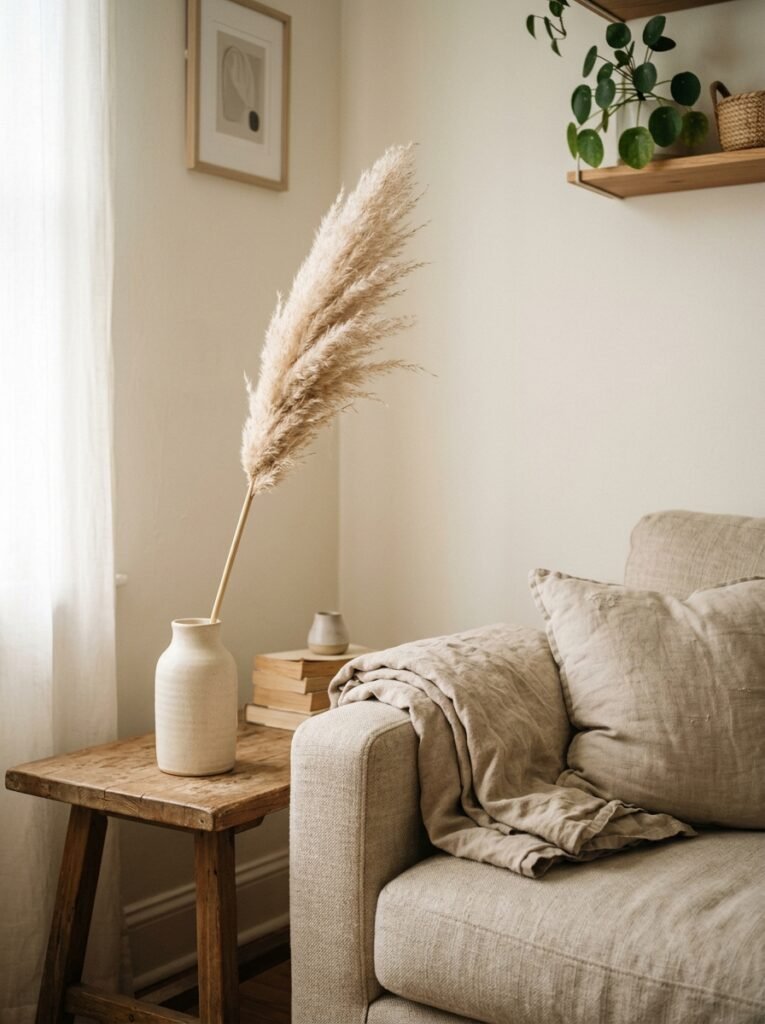
Not a cluster of small plants on a windowsill. Not a shelf of succulents that you’re slowly killing. One large plant, placed deliberately, given room to breathe and be seen.
A fiddle leaf fig in the corner with the light behind it. A tall olive tree in a terracotta pot near the window, casting those long, dancing shadows onto the wall. A monstera allowed to get genuinely large, leaning slightly, doing its own thing with full confidence.
Large plants in small rooms are counterintuitive but completely correct. They add the vertical element that small rooms desperately need. They bring in the organic imperfection that makes a well-designed room feel lived in rather than staged. And they have a particular quality of warmth — the green of them, the living nature of them — that no amount of cushions or accessories can replicate.
In a modern luxury small living room, one large, healthy, properly sized plant is worth more than ten smaller ones. Give it a pot that deserves it — glazed ceramic, large-scale terracotta, or woven rattan — and position it where the light will actually reach it, because a dying plant looks sadder than no plant at all.
—
10. The Rug Size Mistake That’s Making Your Room Look Smaller Than It Is
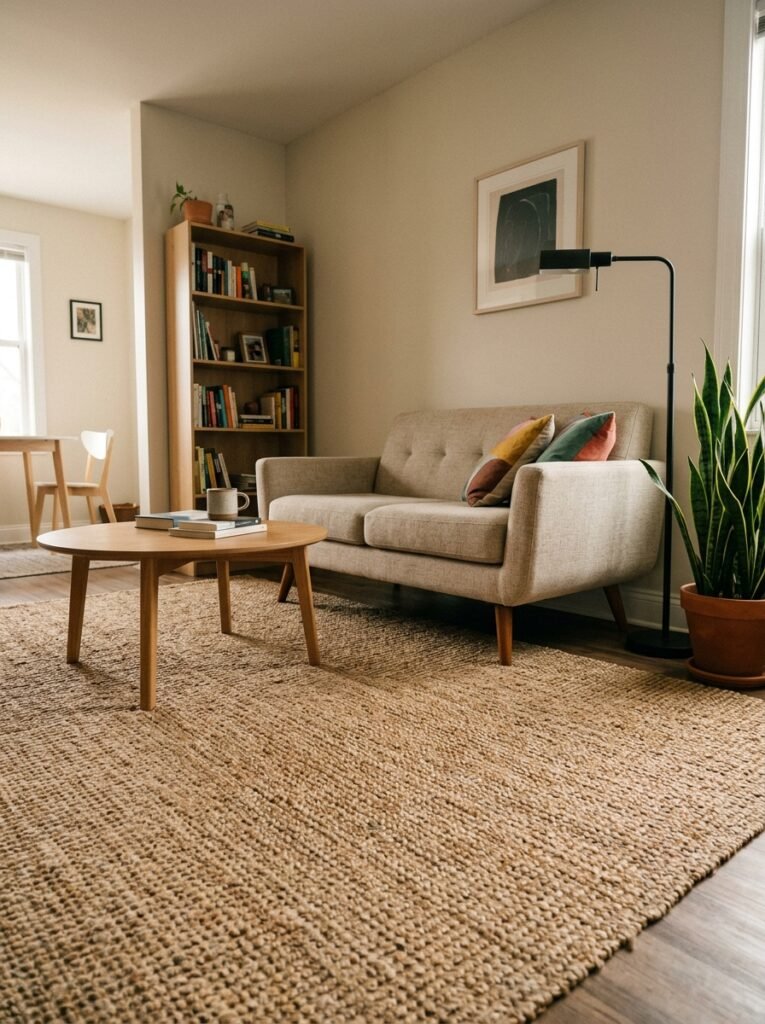
Too small. Almost always, the rug is too small.
In a small living room, the instinct is to choose a modest rug — something that fits “in” the seating area without overwhelming the space. But a rug that’s too small makes all the furniture look like it’s floating