The Sofa That Changed Everything: How to Choose, Style, and Fall Deeply in Love With Your Living Room’s Most Important Piece
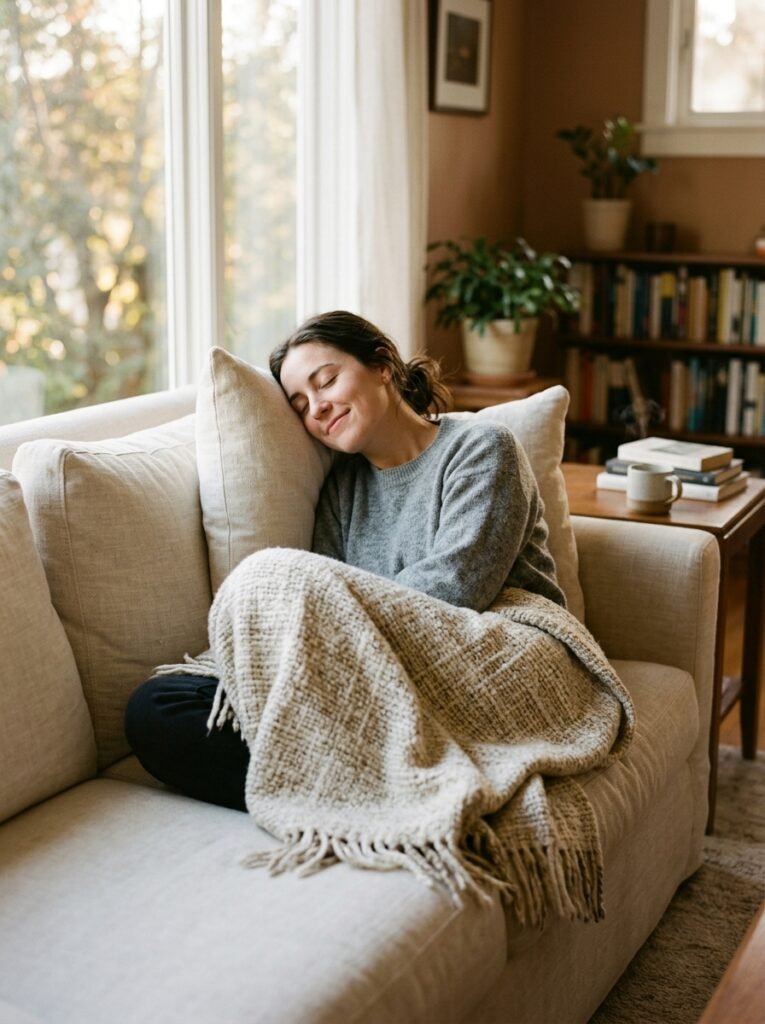
There’s a moment — you probably know it — when you sink into a sofa so perfectly suited to your life that the rest of the world goes quiet. That moment isn’t accidental. It’s the result of understanding what a sofa truly is: not just furniture, but the emotional center of your home.
—
Table Of Content
1. Why the Sofa Is the Most Powerful Piece of Furniture You’ll Ever Buy
Ask any interior designer where to start when decorating a living room, and they’ll give you the same answer without hesitation: the sofa. It’s not just because of its size, though it certainly commands the room. It’s because every other decision — the rug, the coffee table, the curtains, the art — radiates outward from that one central choice.
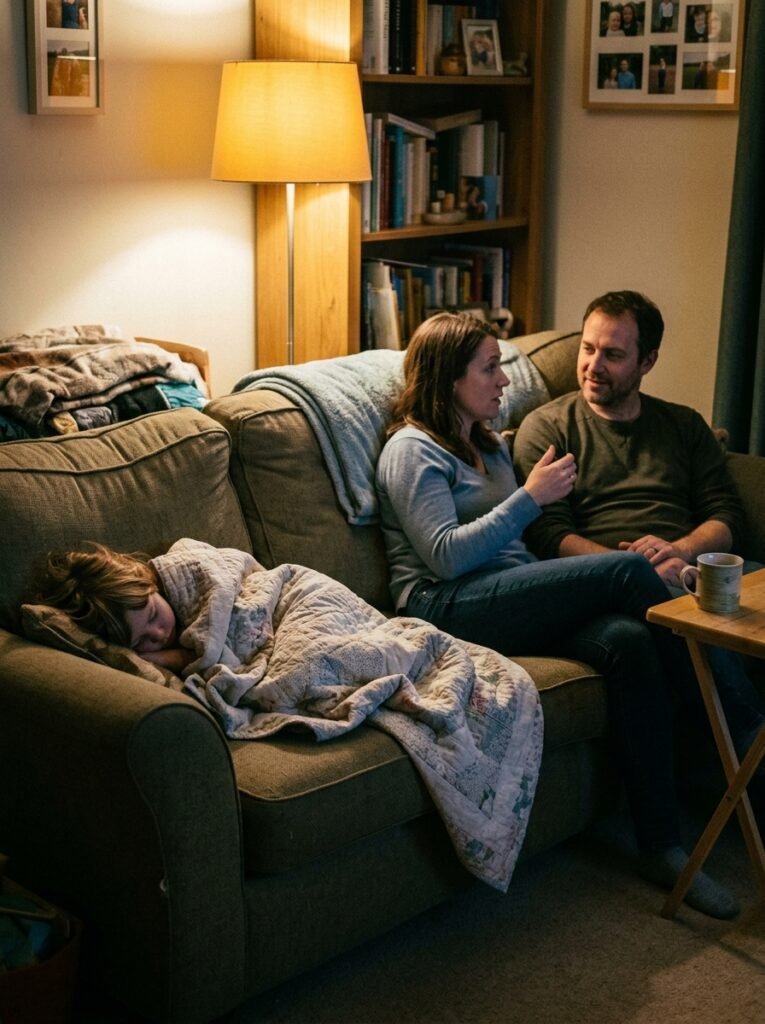
Think about it. The sofa is where you have your best conversations, your worst days, and your laziest Sundays. It holds your children when they’re sick, your friends when they’re heartbroken, and you when you just need ten quiet minutes before the world starts again. No other piece of furniture carries that kind of emotional weight.
That’s why choosing a sofa deserves more than a scroll through a catalog and a decision based on price alone. It deserves real thought — about your life, your rhythms, your aesthetic, and the kind of home you’re trying to build.
“Your sofa isn’t just furniture — it’s the heartbeat of your living room and the gathering place of your most human moments.”
—
2. The Hidden Language of Sofa Shapes and What They Say About You
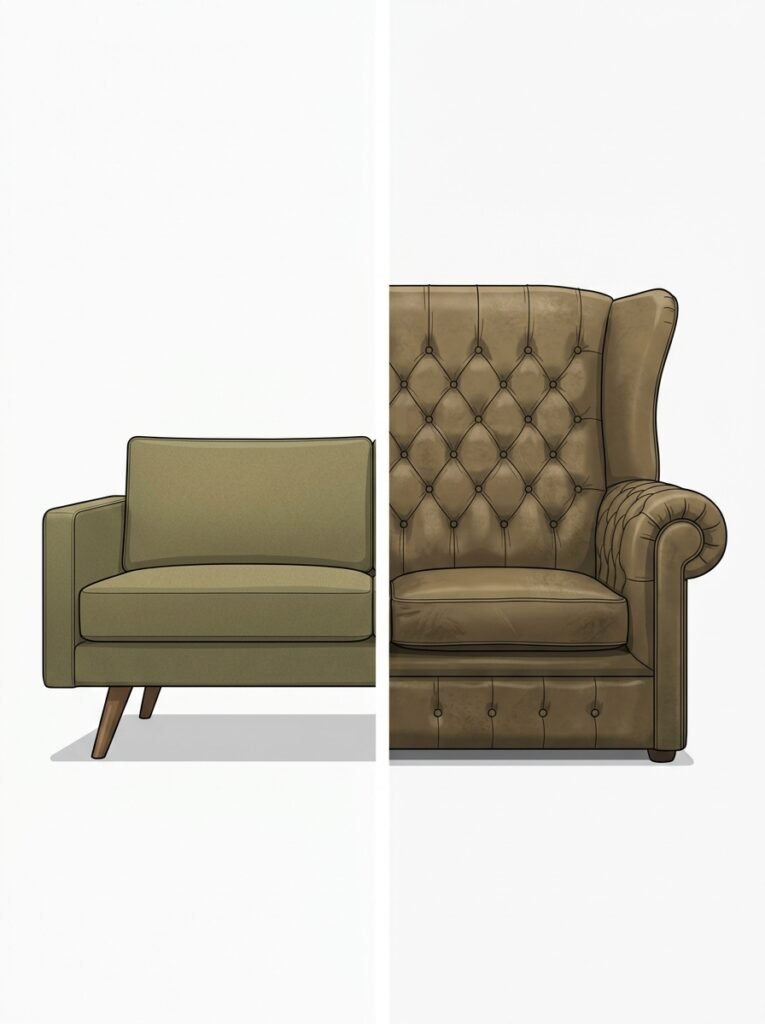
Before color, before fabric, before anything else — shape matters. The silhouette of a sofa sends a message before anyone sits down on it. A low-slung, mid-century modern sofa says something entirely different than a deep, tufted Chesterfield. And neither is wrong — they’re just speaking different languages.
A sofa with clean, straight lines and minimal arms tends to feel contemporary and airy. It works beautifully in smaller spaces because it doesn’t visually crowd the room. By contrast, a sofa with curved arms and a high back feels enveloping and traditional — the kind of piece that says, this is a home where people linger.
The curved sofa trend that’s been sweeping interior design circles for the past few years isn’t just an aesthetic whim. Curves are psychologically softer than angles. They invite people in. A rounded sectional or a sofa with a gentle banana-shaped silhouette creates an atmosphere that feels inherently more welcoming — almost like the furniture itself is leaning toward you.
Pay attention to the arm height and the seat depth, too. A deep seat with loose cushions is perfect for curling up with a book. A firmer, shallower seat is better for conversation and daily functionality — especially if you’re hosting dinners or have elderly family members who need to sit and rise easily.
—
3. Sectional vs. Standard Sofa: The Decision That Defines the Room
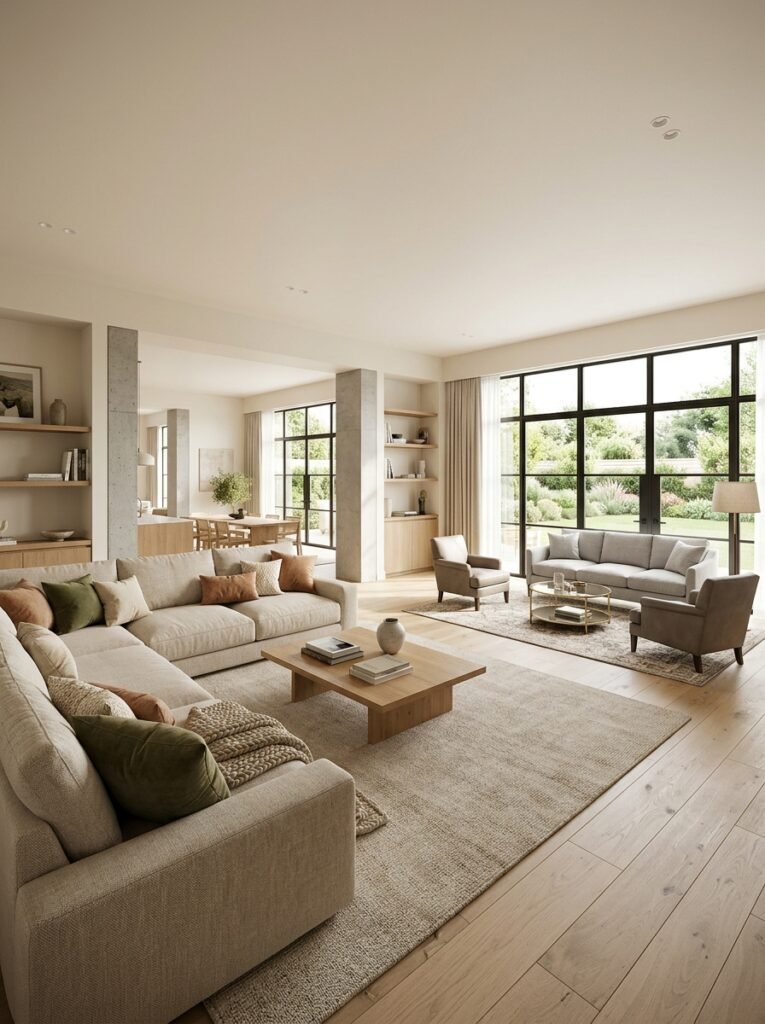
This is one of the most common crossroads in interior design, and the answer isn’t as obvious as you might think. A sectional feels like the easy, generous choice — more seating, more sprawl, more family-friendly comfort. But a standard sofa with accompanying chairs can actually create a more dynamic, flexible, and visually interesting space.
Sectionals shine in large, open-plan living rooms where they can anchor a conversation area without floating awkwardly in the middle of too much space. They’re ideal for families with children, homes that do a lot of casual entertaining, and spaces where movie nights are a weekly ritual.
Standard sofas — typically two or three-seaters — allow you to pair them with armchairs, chaise lounges, or a loveseat to create a more layered seating arrangement. This approach gives your living room a collected, intentional feel, as though the space evolved organically over time rather than arriving all at once from a showroom floor.
One often-overlooked tip: consider how your sofa affects traffic flow. A poorly placed sectional can turn a living room into an obstacle course. Always walk through your space — literally map out pathways — before committing to any large sofa configuration.
—
4. The Color Psychology of Sofas (And Why It Matters More Than Trends)
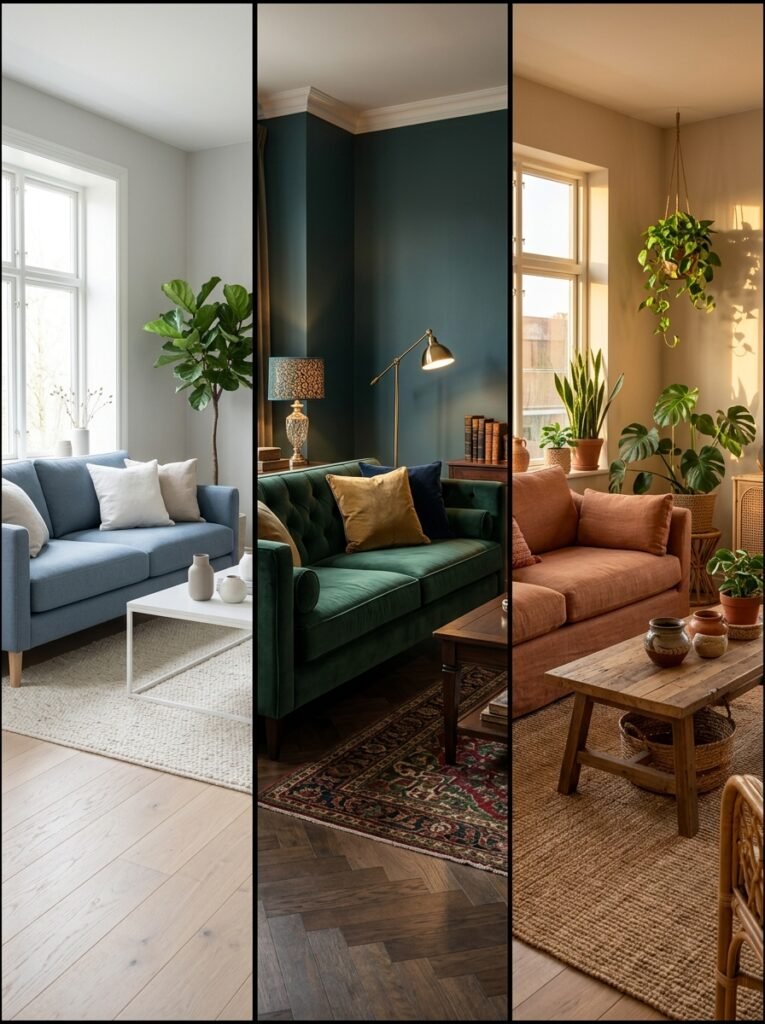
Sofa color is one of those decisions people tend to agonize over, and for good reason. It’s the largest block of color in most living rooms, and it sets the emotional temperature of the entire space.
Neutral sofas — warm creams, soft greiges, classic charcoals — are perennial favorites because they offer flexibility. They allow you to shift the mood of your room through accessories, throw pillows, and seasonal textiles without ever making a major investment. A cream linen sofa in summer, layered with rust and terracotta cushions in autumn, can feel like an entirely different room.
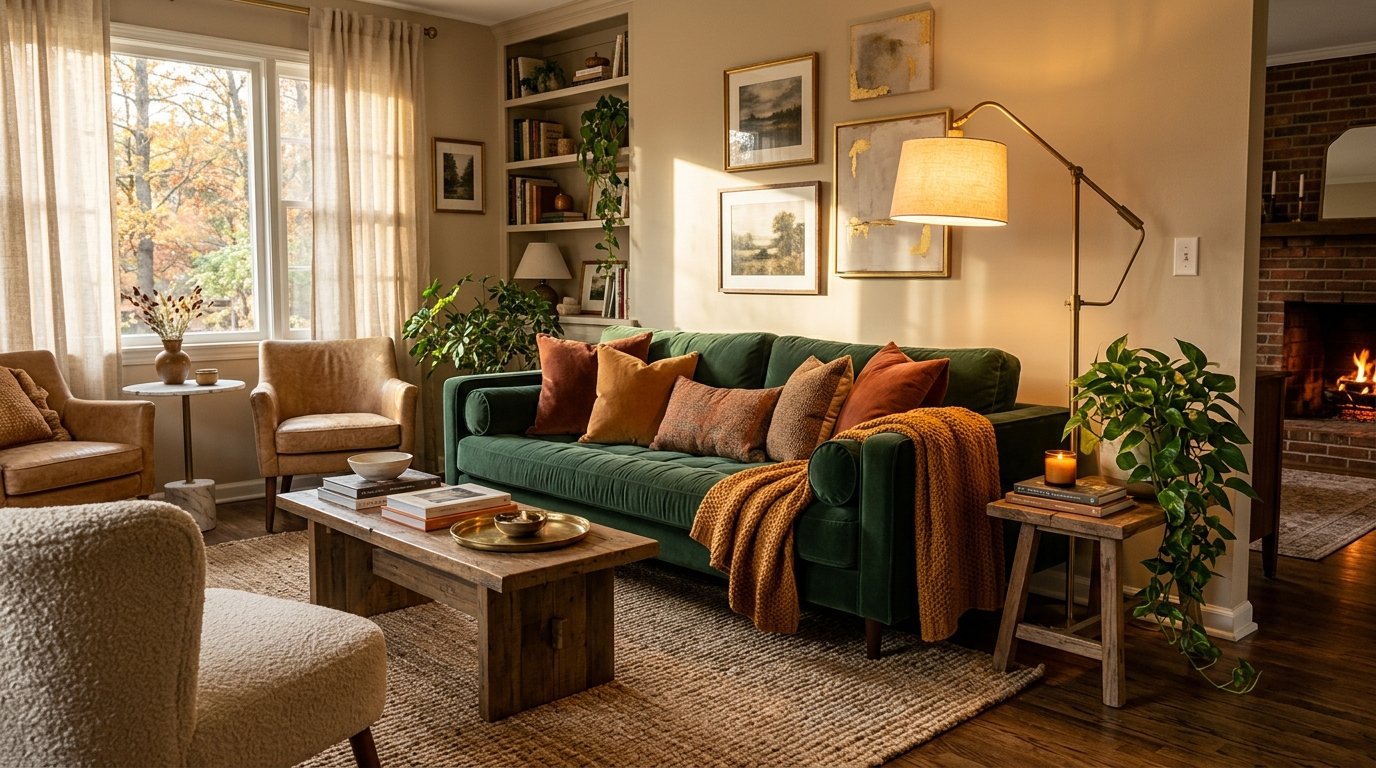
But don’t underestimate the power of a colored sofa. A deep forest green velvet sofa grounds a room with elegance and intimacy. A dusty blue sofa brings calm and a sense of airiness that no paint color on the walls can quite replicate. A warm terracotta sofa is joyful and grounding at once — it connects the indoors to the natural world in a way that feels both sophisticated and earthy.
The most important thing isn’t whether a color is trendy — it’s whether it makes you feel something good every time you walk into the room.
—
5. Fabric First: The Material Truth About Sofa Comfort and Longevity
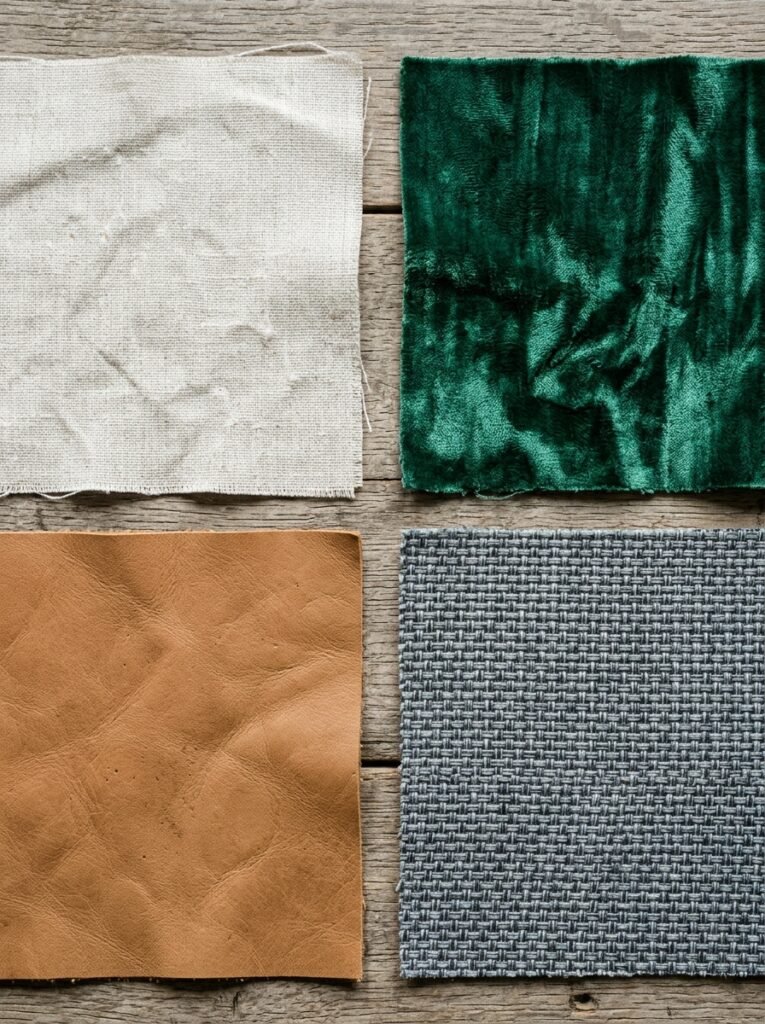
Here is where so many beautiful sofa purchases go quietly wrong. The shape is perfect, the color is dreamy — and then life happens. Coffee spills. Children happen. Pets happen. And suddenly that gorgeous sofa is wearing the evidence of every Tuesday.
Fabric choice is a long-term decision disguised as a short-term aesthetic one. Linen is beautiful and natural but can wrinkle easily and shows wear in high-traffic areas. Velvet is lush and rich but can flatten in spots and requires more careful maintenance. Leather is incredibly durable and develops a gorgeous patina over time, though it can feel cold in winter and warm in summer without proper styling.
Performance fabrics — a broad category that includes materials like Crypton and indoor-outdoor weaves — have become a serious contender in the design world. They look and feel like high-end upholstery but resist stains, moisture, and abrasion in ways that would make any pet owner weep with gratitude.
“The right fabric isn’t the one that photographs best — it’s the one that still looks beautiful five years after your real life has lived on it.”
—
6. How to Style a Sofa With Throw Pillows Without It Looking Like a Showroom
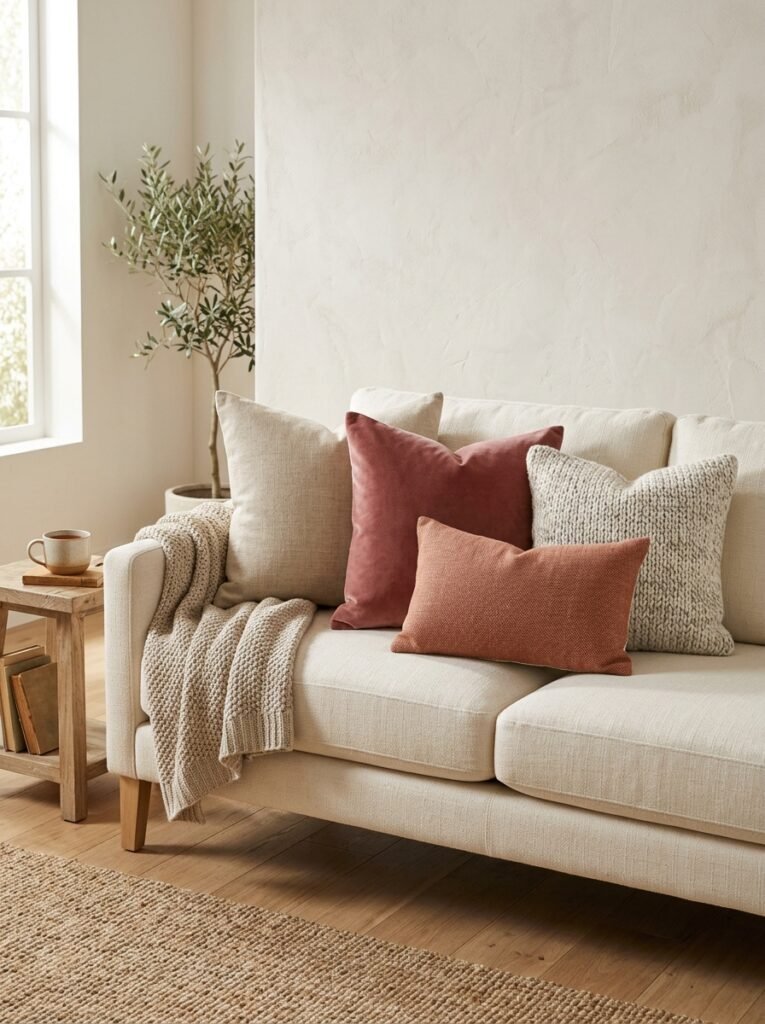
Throw pillows are one of those details that seem simple but can easily tip from styled to cluttered. The goal isn’t more — it’s intentional.
Start with a foundation of two or three larger pillows in a neutral or primary color that relates to your sofa. These are your anchors. Then layer in one or two smaller pillows in a contrasting texture or complementary pattern. Finally, a lumbar pillow — that rectangular one — ties everything together while giving the arrangement visual structure.
The golden rule of pillow mixing: vary texture, scale, and pattern — but keep the color story cohesive. A velvet pillow next to a linen one next to a knitted one creates the kind of tactile richness that makes a sofa feel genuinely inviting. Stick to a palette of two or three colors, and you’ll find the arrangement pulls itself together almost naturally.
One more thing: edit ruthlessly. Remove pillows before adding more. More often than not, three pillows styled with intention will look far better than eight pillows jostling for space.
—
7. The Sofa and the Rug: A Relationship Built on Proportion
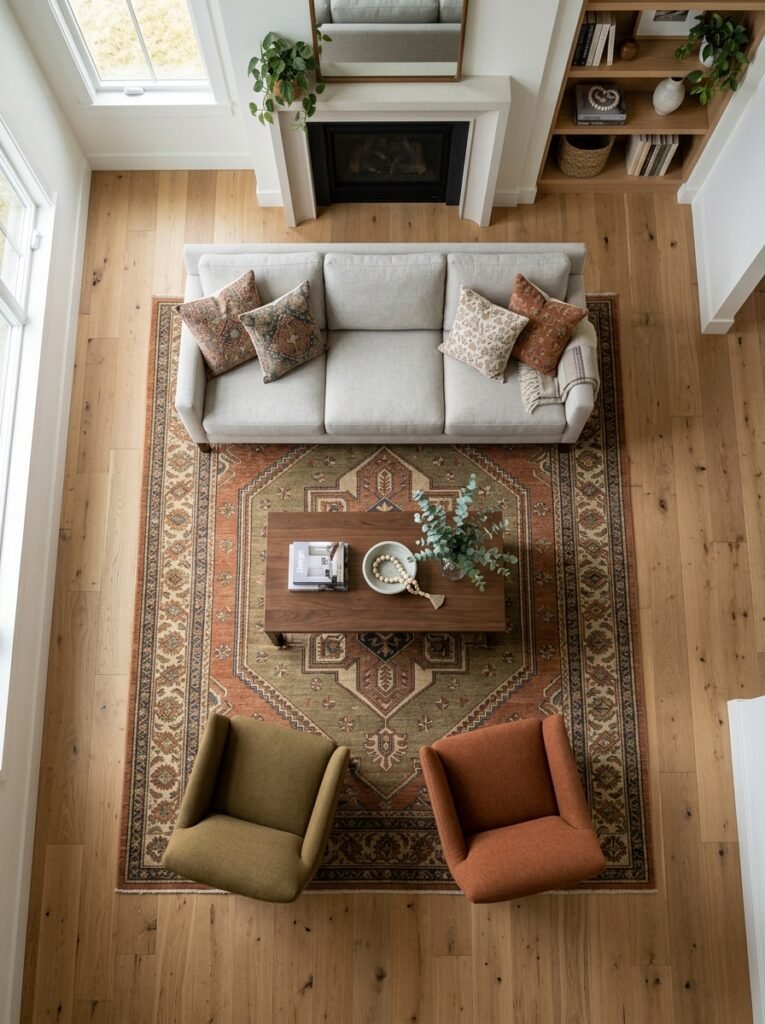
If the sofa is the heart of the living room, the rug is the ground beneath it — and the relationship between the two determines whether your space feels intentional or accidental.
The most common mistake? Buying a rug that’s too small. A rug that floats in the center of the room with only the front legs of the sofa touching it — or worse, no furniture touching it at all — makes the space feel disconnected and visually small, even in a large room.
The ideal: all four legs of the sofa on the rug, or at minimum the front two legs, with the rug extending at least 18 to 24 inches beyond the sofa on all sides. This grounds the seating arrangement and creates a defined “room within a room” — a concept that’s particularly powerful in open-plan spaces.
As for texture and pattern: if your sofa is a bold statement piece, let the rug play a supporting role in a quieter texture or solid color. If your sofa is neutral, the rug is your opportunity to introduce pattern, warmth, and visual complexity.
—
8. Lighting Your Sofa Area: The Secret Ingredient Everyone Forgets
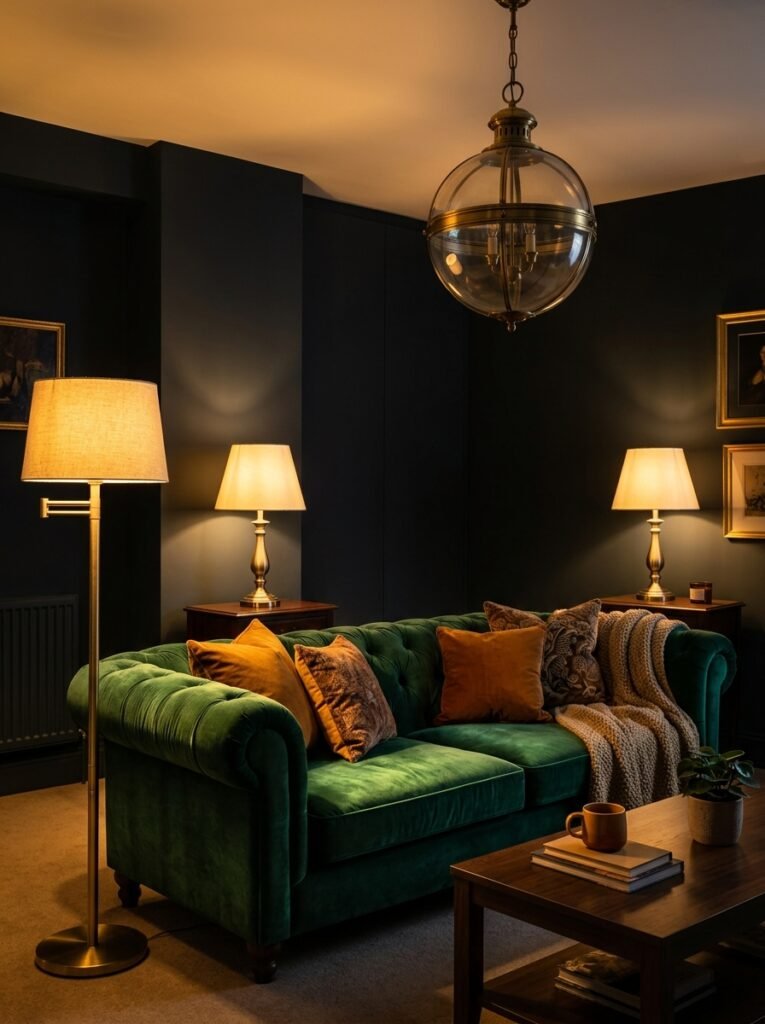
You can have the most beautiful sofa in the world, styled to perfection with the ideal rug and the dreamiest throw pillows — and it will look flat and uninspiring if the lighting is wrong. Lighting is the difference between a living room that photographs beautifully and one that actually feels beautiful to live in.
Overhead lighting alone is almost never enough. It tends to cast a flat, slightly harsh light that flattens texture and depth. What a sofa area truly needs is layered lighting: a floor lamp positioned beside or behind the sofa to create a warm reading glow, table lamps on side tables to frame the sofa symmetrically, and — when budget allows — a statement pendant or chandelier overhead that anchors the ceiling.
The warmth of your bulbs matters enormously. Aim for a color temperature of 2700K to 3000K for living spaces — this range produces the golden, amber-toned light that makes everything feel cozy and inviting.
—
9. Small Space Sofas: Choosing Big Comfort for Compact Living
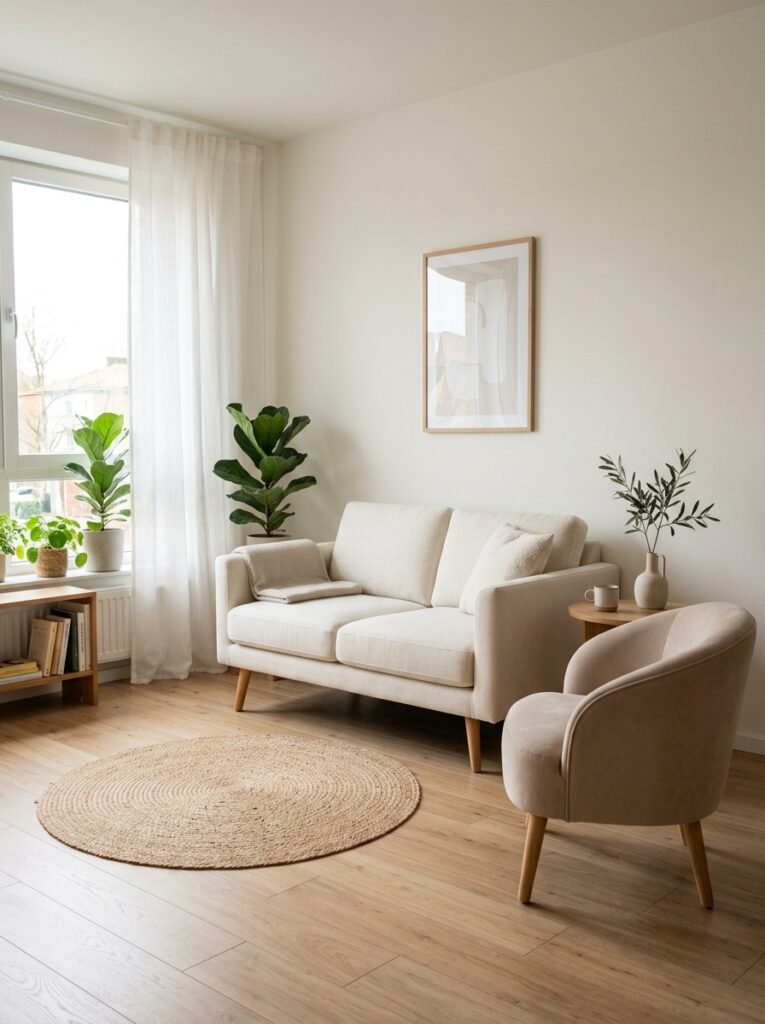
One of the great misconceptions of small-space design is that you have to sacrifice comfort to avoid overwhelming the room. That simply isn’t true — you just need to make smarter choices.
A sofa with legs — as opposed to one that sits directly on the floor — creates visual breathing room by revealing the floor beneath it. This lifts the piece optically and makes the room feel more spacious. A sofa in a light or neutral color has a similar effect: it recedes rather than advances, allowing the eye to move through the room more freely.
“In a small space, the right sofa doesn’t shrink your room — it gives the room permission to breathe.”
Consider a two-seater sofa paired with a single armchair rather than defaulting to a three-seater. The asymmetry is actually more visually interesting, and it allows for more flexible furniture arrangement — particularly useful in rooms where layout needs to serve multiple functions.
—
10. The Art of the “Sofa Moment”: Creating a Vignette That Stops the Scroll
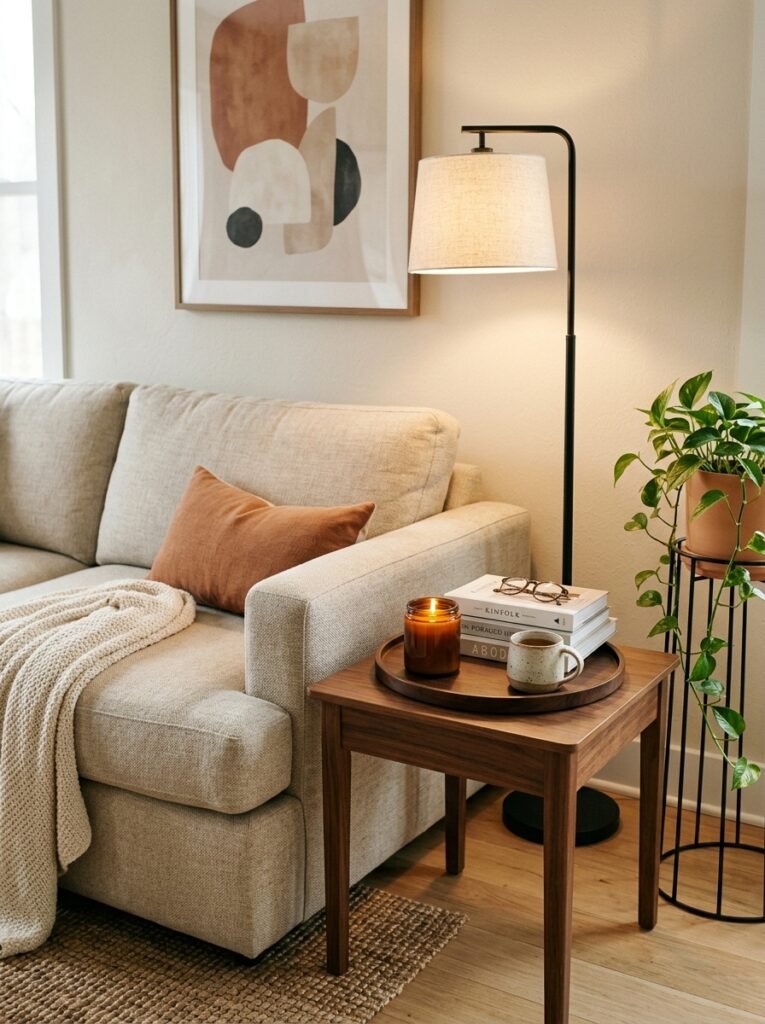
In the world of interior design content, a “sofa moment” is that irresistible styled corner that makes someone pause mid-scroll and reach for the save button. It’s the combination of sofa, lamp, side table, tray, plant, and personal object that tells a story in a single frame.
Building this moment isn’t about accumulating expensive things. It’s about curation. A wooden tray on the side table holding a candle, a small stack of books, and a ceramic cup creates visual narrative. A trailing plant on a stand beside the sofa adds life and organic texture. An interesting piece of art on the wall behind gives the eye a vertical journey.
The real secret to a compelling vignette is odd numbers. Three objects feel balanced but not rigid. Five elements feel abundant but controlled. Two or four tend to feel either too minimal or strangely symmetrical. Trust the odd number instinct — it works almost every time.
—
11. Seasonal Refresh: How to Transform the Same Sofa Four Times a Year
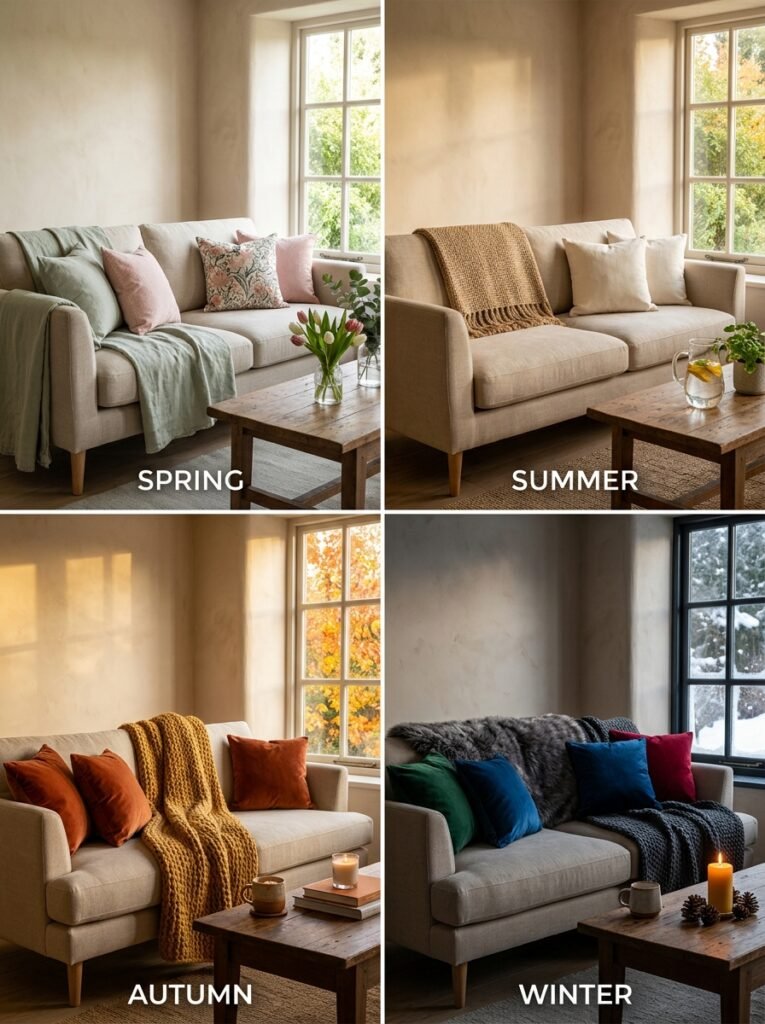
One of the most cost-effective and creatively satisfying things you can do as a homemaker is seasonally refresh your sofa without spending significant money. The sofa itself stays the same — but the layers change, and with them, the entire mood of the room shifts.
In spring, strip back. Lighter linen throws in soft whites, sage greens, and blush tones replace the heavier textiles of winter. In summer, add a woven basket throw and minimal cushions — let the sofa breathe. In autumn, layer in burnt orange, deep burgundy, and warm brown textures — chunky knit throws, velvet cushions, the works. In winter, go fully into nest mode: faux fur, heavyweight wool, deep jewel tones, a candle on the side table, a warm lamp glowing beside it.
This rhythmic practice of refreshing your sofa with the seasons keeps your home feeling alive and intentional — a place that responds to the world outside its windows.
—
12. When It’s Time to Let Go: Recognizing That Your Sofa Has Had Its Moment
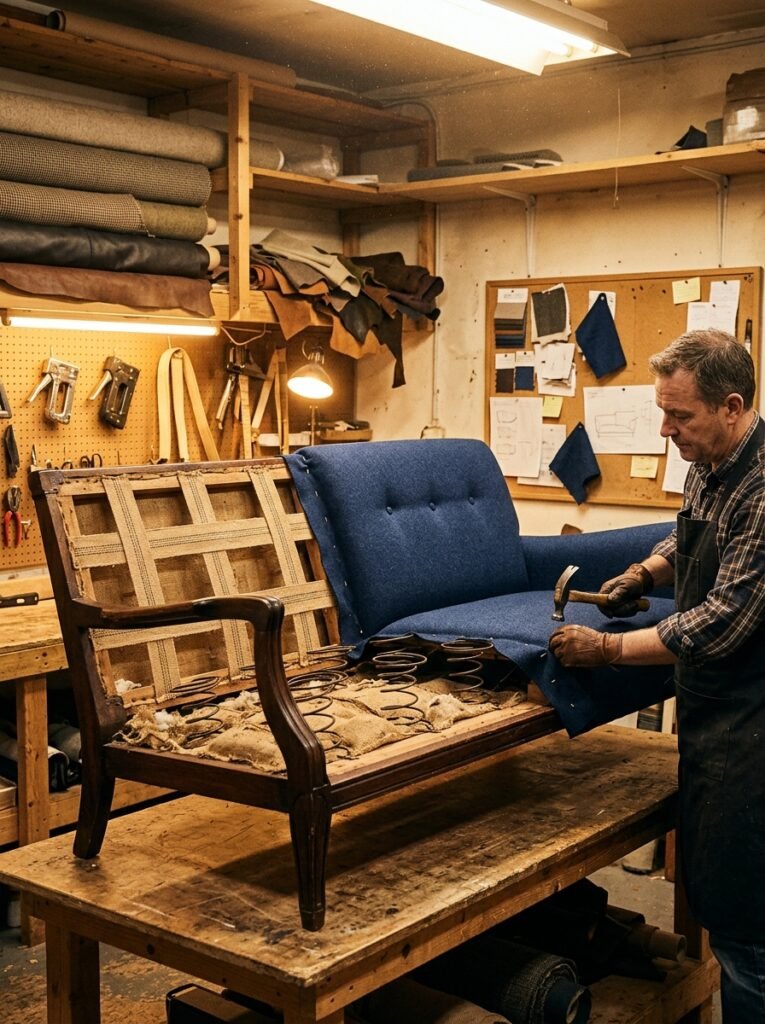
Every sofa has a lifespan — not just in terms of wear and tear, but in terms of your life and the story it’s trying to tell. Sometimes the sofa that was perfect for your twenties — bold, low, maybe a little impractical — simply doesn’t serve the home you’re building now.
Signs it might be time to invest in something new: the cushions no longer hold their shape, the frame creaks or shifts, or every time you walk into the room, something feels subtly off — a dissonance you can’t quite name but definitely feel. That feeling is worth taking seriously.
But before you replace it entirely, consider reupholstering. A quality sofa frame can often be given an entirely new life with fresh fabric — at a fraction of the cost of a new piece and with a fraction of the environmental impact. Some of the most beautiful sofas in the most beautifully designed homes are second-hand frames wearing new textile skins.
—
🌿 How to Take Care of Your Sofa
Caring for a sofa doesn’t require a complicated routine — it requires consistency and a little understanding of your materials.
Rotate and fluff your cushions regularly. This is the simplest thing you can do to extend the life of your sofa dramatically. Cushions that are turned and plumped weekly hold their shape and comfort for years longer than neglected ones.
Address spills immediately and correctly. Blot — never rub — using a clean cloth and cold water. For fabric sofas, keep a gentle upholstery cleaner on hand. For leather, a slightly damp cloth followed by a dry one handles most everyday mishaps beautifully.
Protect your sofa from direct sunlight when possible. UV rays are the silent enemy of upholstery, fading even the richest colors over time. Use sheer curtains or UV-filtering window film if your sofa sits in a sun-drenched room.
Vacuum your sofa every two to three weeks using an upholstery attachment. This removes dust, crumbs, and debris that gradually work their way into fabric fibers and accelerate wear.
Finally — and this one is for your own enjoyment as much as maintenance — take a moment occasionally to really look at your sofa area. Notice what’s working, what feels cluttered, what’s missing. A home is a living thing, and your sofa is its heart.
—
❓ FAQ
Q: How long should a quality sofa last? A: A well-made sofa with a hardwood or kiln-dried frame and quality upholstery should last 10 to 15 years with proper care, and sometimes significantly longer. The frame is the most important factor — if the bones are good, the sofa can often be reupholstered to extend its life further.
Q: What’s the best sofa color for a small living room? A: Light, neutral tones — soft cream, warm white, light gray, or pale beige — tend to work best in smaller rooms because they don’t visually dominate the space. A sofa that sits on legs rather than the floor also helps the room feel more open and airy.
Q: How do I know if a sofa frame is high quality before buying? A: Look for frames made from kiln-dried hardwood — this process removes moisture from the wood, preventing warping and cracking over time. Sit on the sofa and feel for any give or creaking in the frame. Lift one front leg slightly off the floor — if the opposite back leg lifts too, the frame is solid and well-constructed. Avoid sofas with frames that feel light or hollow.
—
💭 Final Thought
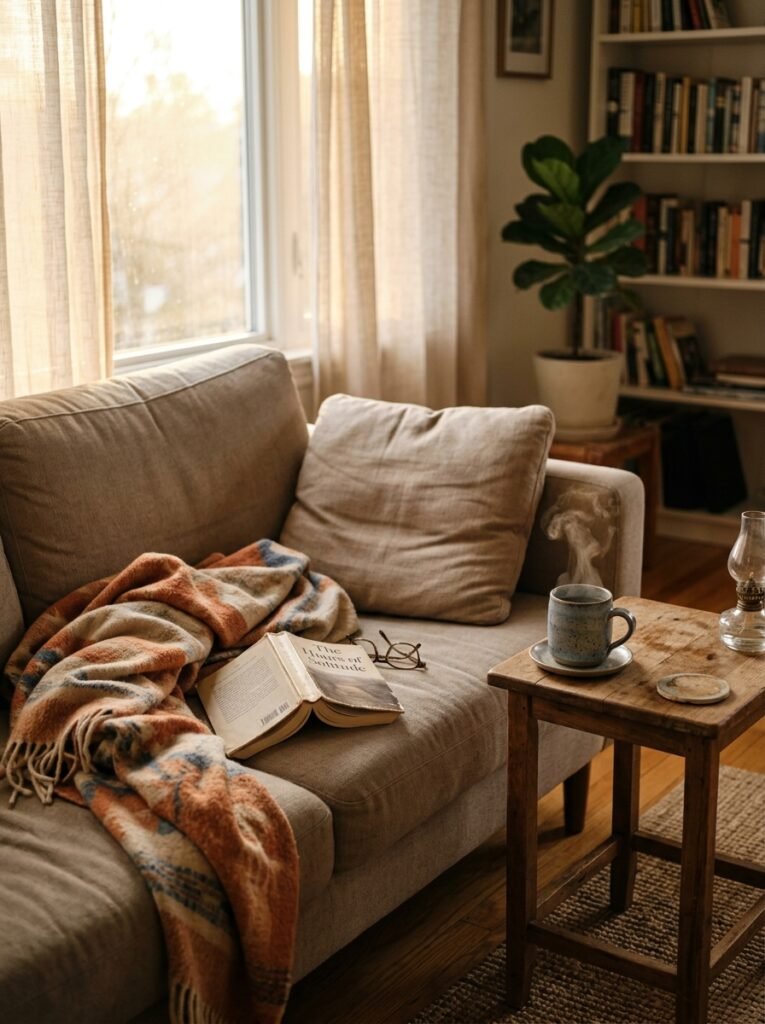
A sofa is many things — a design statement, a functional necessity, a gathering place, a comfort object. But above all, it is the place where your real life happens: the late nights, the lazy mornings, the big conversations, the small silences. Choosing and styling it with intention isn’t indulgence — it’s an act of care for yourself and the people who share your home.
So as you look at your own living room today, what is your sofa saying about the home you’re building — and the life you want to live inside it?