Tudor Cottage Interior: The Timeless Charm That Makes a House Feel Like It’s Been Loved for Centuries
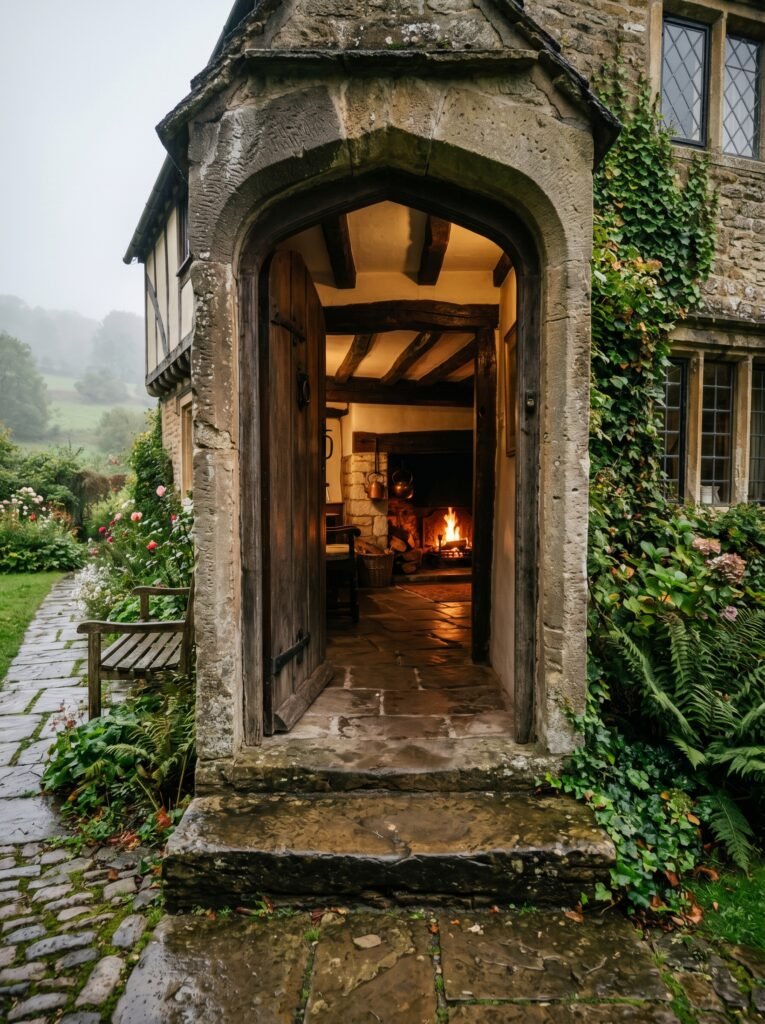
There’s a particular kind of house that stops you in your tracks — not because it’s trying to impress you, but because it feels like it’s been quietly waiting for you all along. A Tudor cottage does exactly that. Step through its low doorway, and you’re stepping into a world where thick walls hold centuries of warmth, crooked beams tell their own stories, and every corner whispers of slow mornings and firelit evenings.
—
Table Of Content
1. What Makes Tudor Cottage Style Different From Every Other Interior Trend
Before we talk about how to recreate it, it’s worth understanding what a Tudor cottage interior actually is — because it’s not just a style choice. It’s a philosophy.
Tudor architecture spans roughly 1485 to 1603, the era of the English Tudor monarchs, and the domestic interiors of the period were defined by necessity as much as beauty. Thick stone or plaster walls kept out the damp English cold. Low ceilings preserved heat. Exposed timber frames weren’t a design statement — they were the structure. Everything you see in a Tudor cottage interior existed because it had to, and that functional honesty is precisely what makes it so enduring and so deeply appealing to modern eyes.
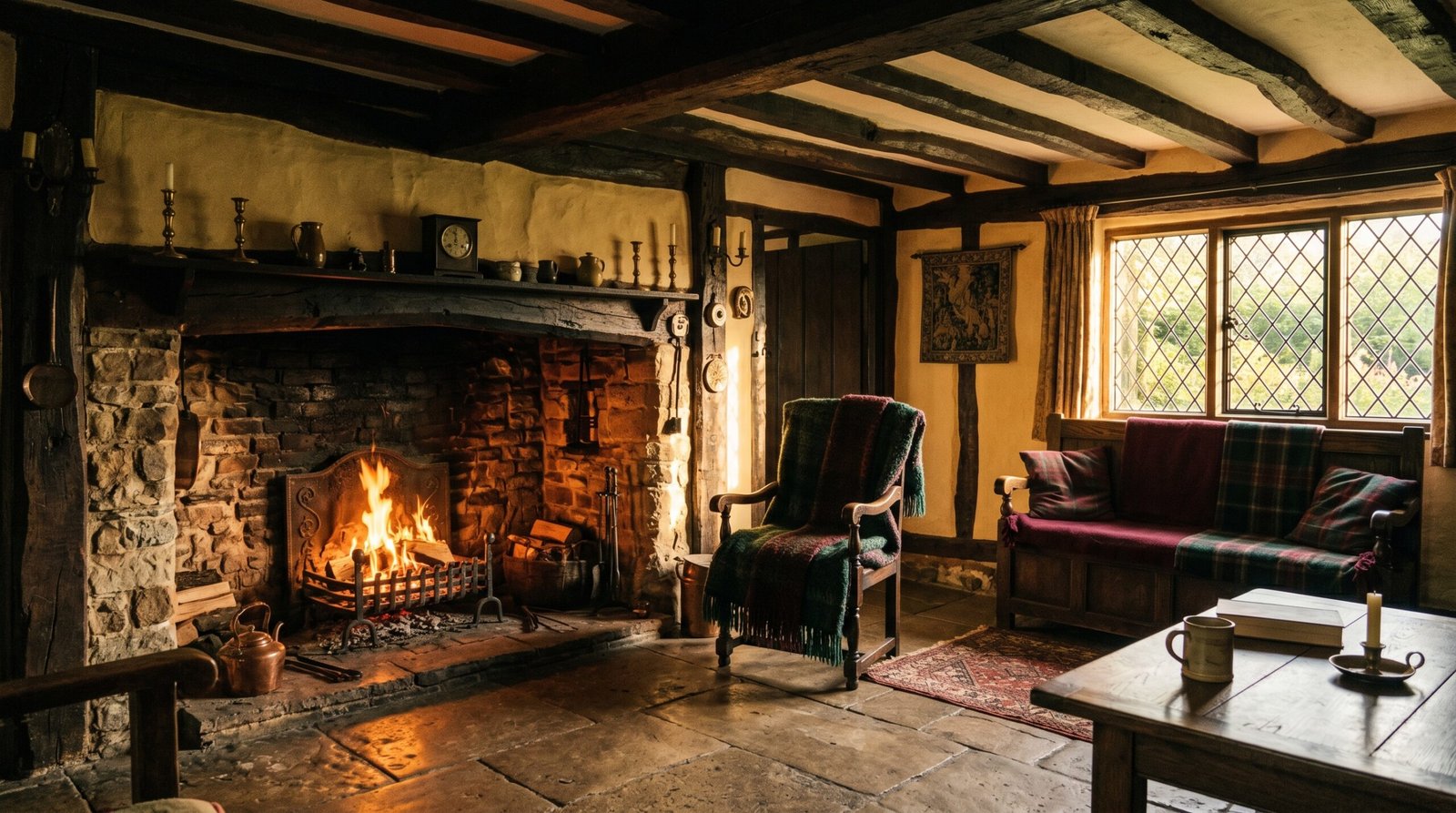
Today, Tudor cottage interior style refers to an aesthetic that draws on those historical roots — oak beams, inglenook fireplaces, leaded windows, uneven plaster walls, stone floors — while layering in the warmth and livability we need for modern life. It’s not a museum recreation. It’s a living, breathing homage to a time when craftsmanship was everything and homes were built to last five hundred years.
“A Tudor cottage doesn’t ask to be admired — it asks to be lived in, fully and slowly.”
2. The Bones of the Style: Exposed Beams That Hold More Than the Ceiling
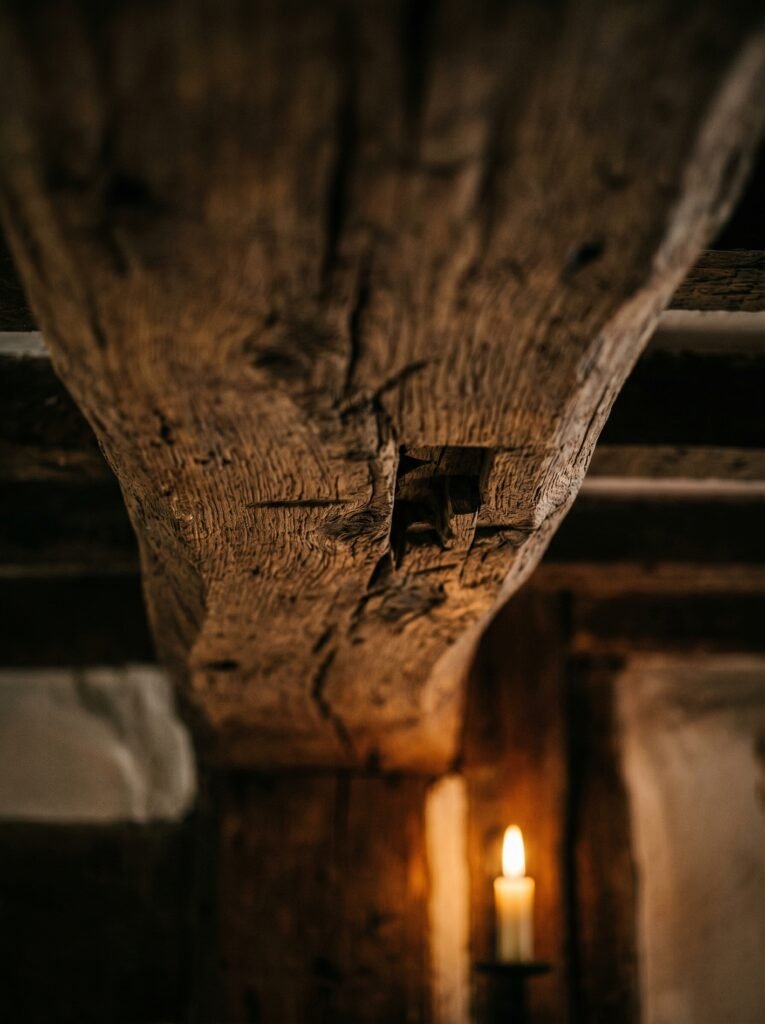
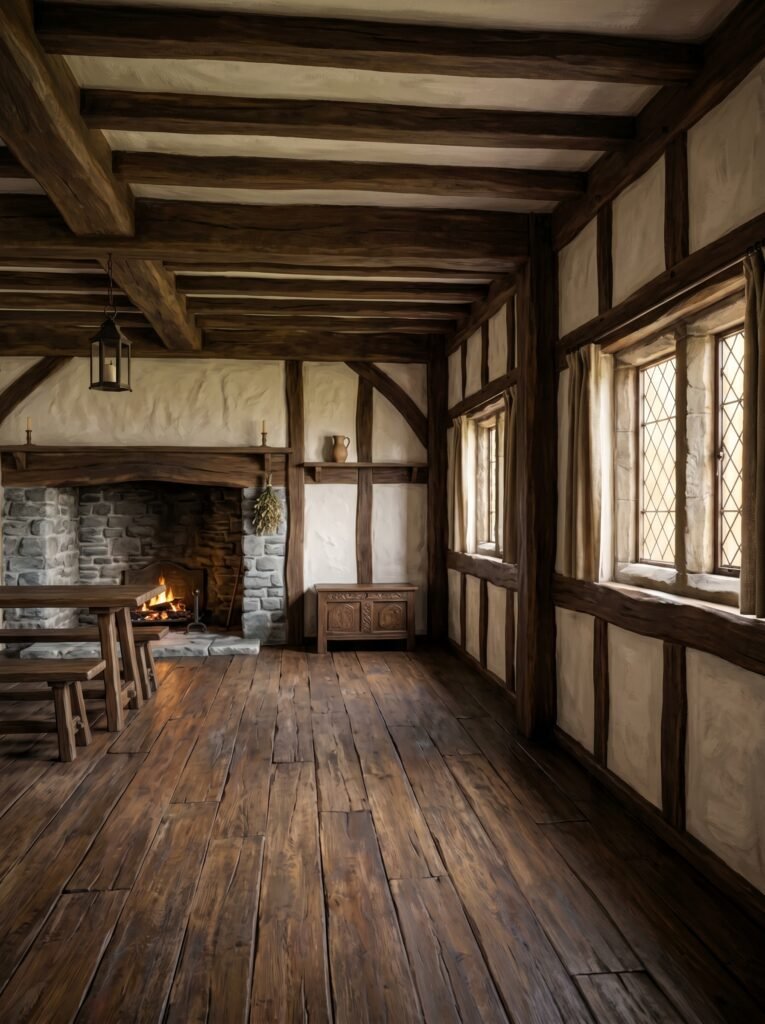
If there’s one single feature that defines Tudor cottage interiors above all others, it’s the exposed timber frame. Those dark oak beams — running across ceilings, framing doorways, rising up walls — are the skeleton of the whole aesthetic, and every other design decision you make should work in harmony with them.
Authentic Tudor beams are made from green oak that was cut while still wet and allowed to dry in place, which is why so many original beams are slightly bowed, twisted, or irregular. That imperfection is not a flaw — it is the whole point. If you’re lucky enough to live in a period property with original beams, treat them like the heirlooms they are. Strip back any paint that may have been applied over the decades (a deeply upsetting but sadly common renovation sin) and allow the natural grain and colour to breathe.
If you’re adding beams to a newer home for the Tudor look, choose rough-hewn oak rather than smooth, machined timber. The texture matters enormously. Even faux beams — when done well — can transform a plain white ceiling into something that feels rooted and real, especially when paired with warm lighting and the right wall tones.
3. Walls That Tell a Story: Plaster, Wattle, and That Unmistakable Warmth
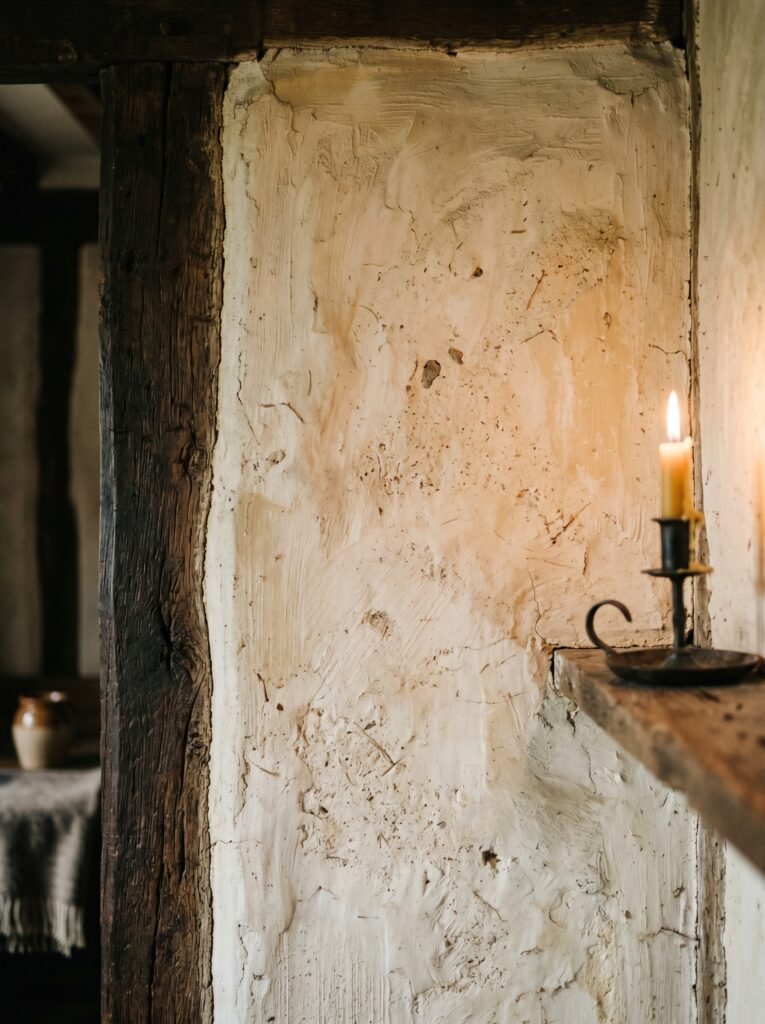
Tudor walls are rarely flat, rarely perfect, and never cold. In original cottages, the walls were built using wattle and daub — a mixture of woven sticks and mud, straw, or animal hair plastered over and painted with limewash. The result is a surface with gentle undulation, a soft texture, and a warmth that no modern drywall can replicate.
In a Tudor-inspired interior today, the goal is to recreate that quality of imperfect, layered texture. Lime plaster applied by a skilled plasterer is the gold standard — it breathes, it ages beautifully, and it glows in candlelight or firelight in a way that feels genuinely alive. If a full lime plaster job is outside your budget, textured paint applied with a wide brush or a sea sponge in warm off-white or cream tones can approximate the effect beautifully.
Colour on Tudor walls should feel earthy and rich — think ochre yellows, terracotta, deep sage green, or warm white. These aren’t flat, modern hues. They’re the colours of natural pigments, of clay and iron oxide, of a palette drawn directly from the English countryside.
4. The Inglenook Fireplace: The True Heart of a Tudor Home
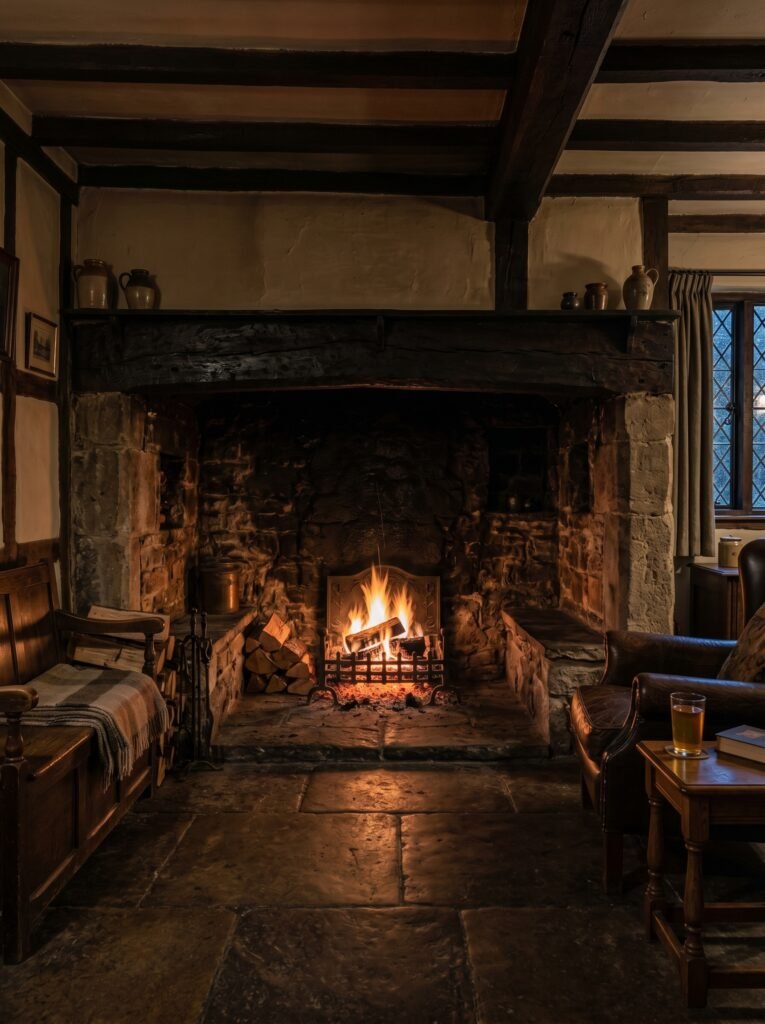
Imagine walking into your living room on a winter evening and seeing a fireplace so deep you could almost step inside it — a real inglenook, with a heavy oak mantel, a stone hearth worn smooth by centuries of feet, and a fire burning low and orange in the grate. Everything in a Tudor cottage arranges itself around this moment.
The inglenook fireplace is one of the most distinctive features of Tudor domestic architecture. In original cottages, the fireplace was the centre of the home — for cooking, for heat, for light, for gathering. It was often large enough to accommodate a bread oven on one side and built-in seats within the chimney breast where people would sit to stay warm.
In a modern Tudor-inspired interior, you may not be able to recreate a full inglenook from scratch, but you can honour the spirit of it. A deep stone or brick fireplace surround, a heavy timber lintel, a wide hearth of worn flagstone, and a real fire or high-quality log-effect insert — these elements together create that same sense of gravitational pull. Place your furniture to face the fire. Let it be the anchor of the room.
“Every Tudor room is a room built around fire — everything else is just furniture.”
5. Floors That Ground You: Stone, Flagstone, and Ancient Oak
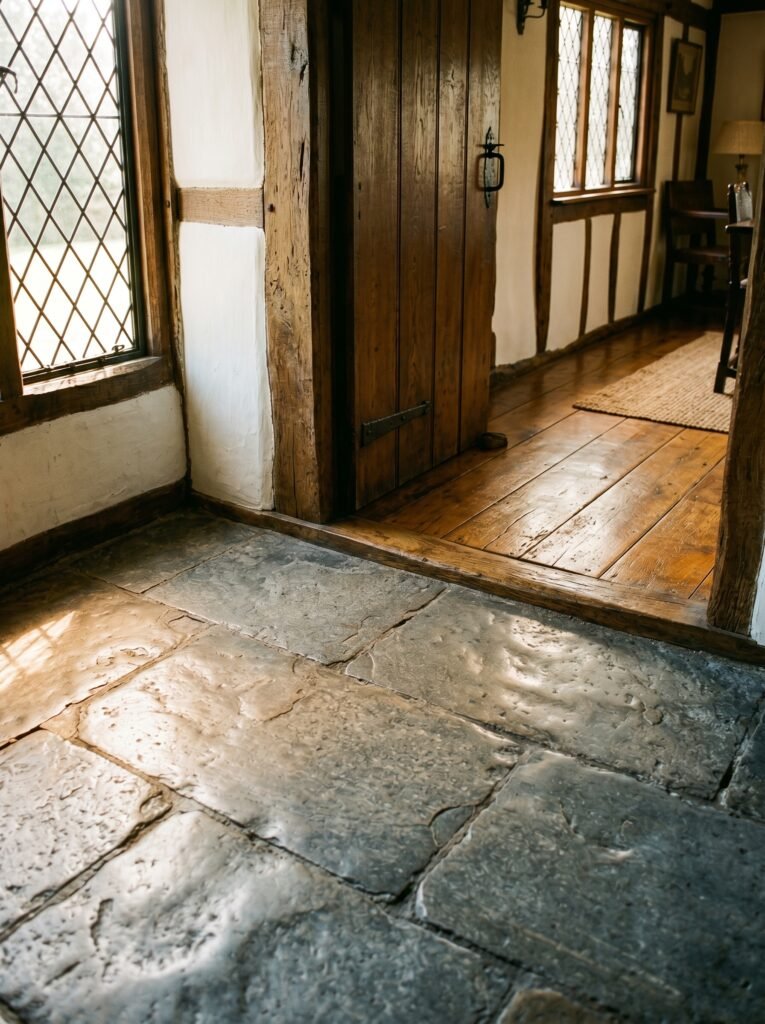
Tudor cottage floors are not trying to be pristine. They’re trying to be honest. In original period homes, ground floors were laid with local stone — flagstone, slate, or limestone — worn smooth and slightly uneven by centuries of use. Upper floors were typically wide oak planks, often with visible pegs where they were fixed to the joists beneath.
Both of these materials have a quality that modern flooring simply cannot manufacture: the patina of age. Real flagstone develops a sheen from years of feet and furniture. Antique oak boards widen and deepen in colour with every passing decade. If you’re working with an original property, cherish and restore these floors rather than covering them. A good stone conservator can work wonders on flagstone that looks beyond hope.
For newer homes, reclaimed materials are your greatest ally. Reclaimed flagstone from salvage yards, antique oak boards sourced from demolished period buildings — these bring genuine history with them and age beautifully from day one. Underfloor heating beneath stone floors is an entirely modern luxury that pairs wonderfully with the Tudor aesthetic, because there’s nothing more incongruous than a beautiful old cottage with freezing cold floors.
6. Windows That Filter Light Like Honey: The Magic of Leaded Glass
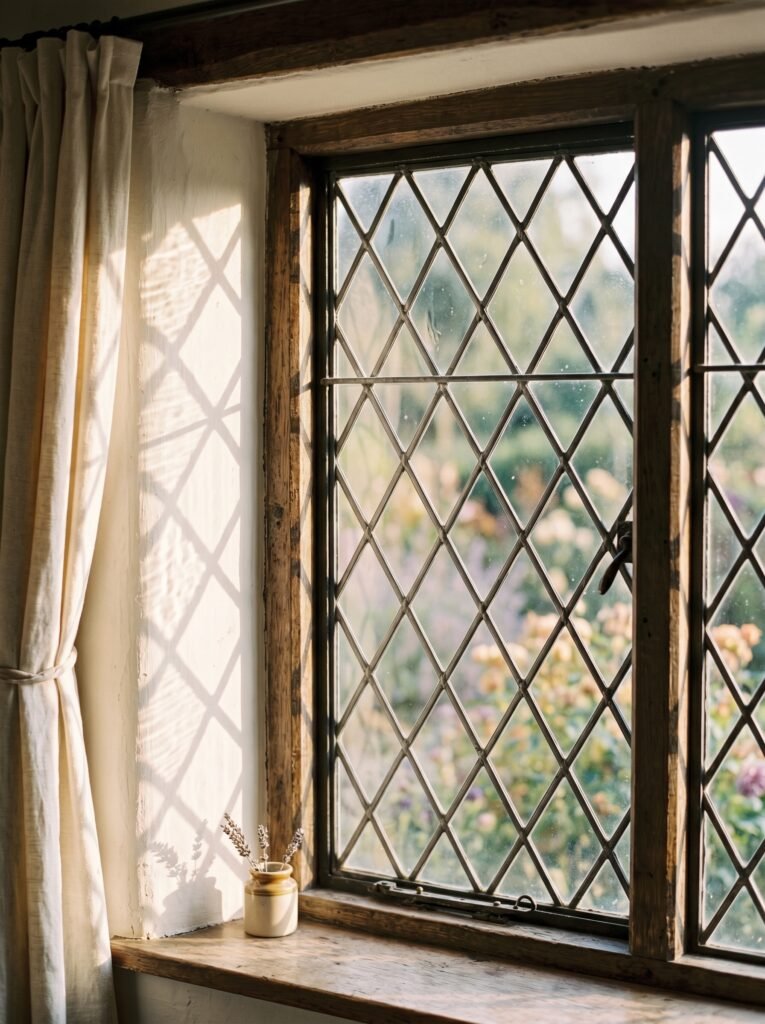
There is a particular quality of light in a Tudor cottage that you notice before you consciously understand where it comes from. It’s dappled, slightly golden, slightly diffused — as if the light itself is being filtered through something soft and warm. That quality comes almost entirely from the windows.
Tudor windows were small by necessity — glass was expensive, and large openings weakened the wall structure — and they were glazed with small panes held together by lead strips, a style known as leaded or lattice glazing. The slightly uneven, sometimes bubbled quality of old glass creates the most beautiful distortion of incoming light, casting subtle patterns across walls and floors as the sun moves through the day.
In a Tudor-inspired interior, leaded windows are transformative. Even in a modern extension or renovation, adding leaded light panels to casement windows immediately grounds the space in its historical context. If new windows must be plain glazed for planning reasons, you can achieve a softer quality of light through the use of linen or sheer cotton curtains hung simply, without heavy pelmets or formal dressing.
7. Furniture: Heavy, Honest, and Built to Outlast Every Trend
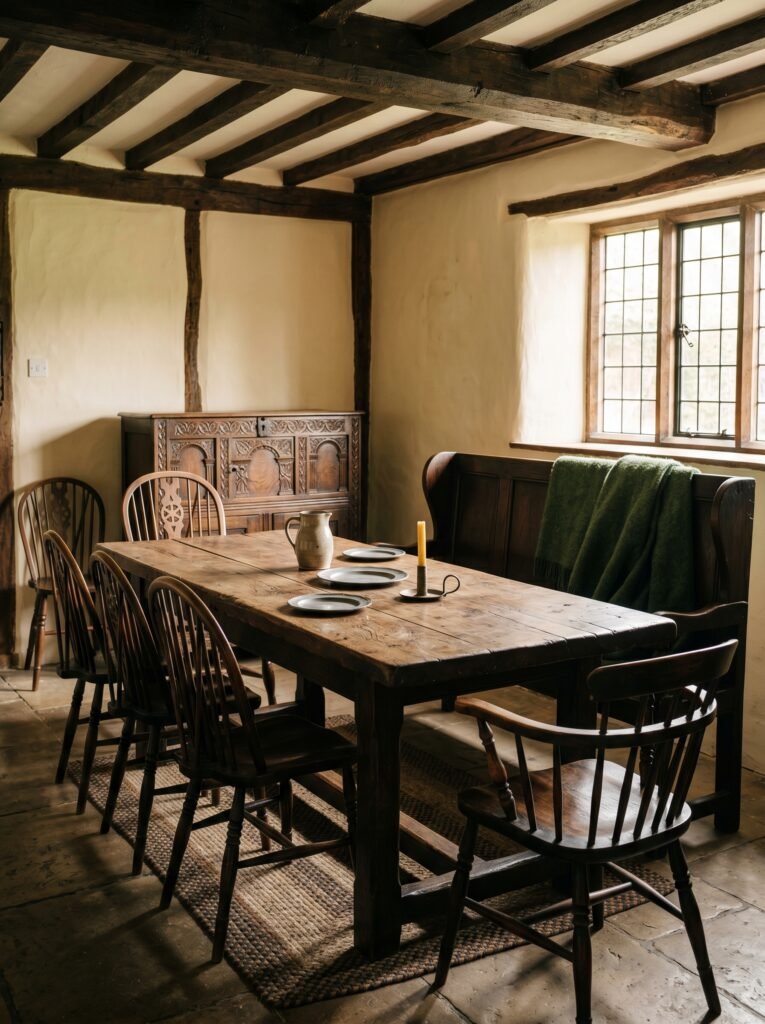
Tudor furniture is not delicate. It is not decorative in the fussy, ornamental sense. It is built — solidly, deliberately, with an eye toward permanence rather than fashion. Think refectory tables of thick oak, Windsor chairs with turned spindles, settle benches with high backs designed to block drafts, and carved wooden chests used for storage.
The key quality to look for in Tudor-inspired furniture is weight and honesty — pieces that look like they were made to last a lifetime, from materials that have their own character and grain. Antique oak pieces from the seventeenth and eighteenth centuries, when the Tudor style was giving way to Stuart and Georgian influences but still carrying much of the same craftsmanship, are ideal. Estate sales, antique shops, and online antique marketplaces are excellent hunting grounds.
Don’t be afraid of scale. Tudor rooms with low ceilings and thick walls can absorb large, heavy pieces in a way that lighter, more airy styles cannot. A massive oak dining table with mismatched antique chairs feels completely at home here — even celebratory.
8. Textiles That Breathe and Age: Linen, Wool, and Velvet
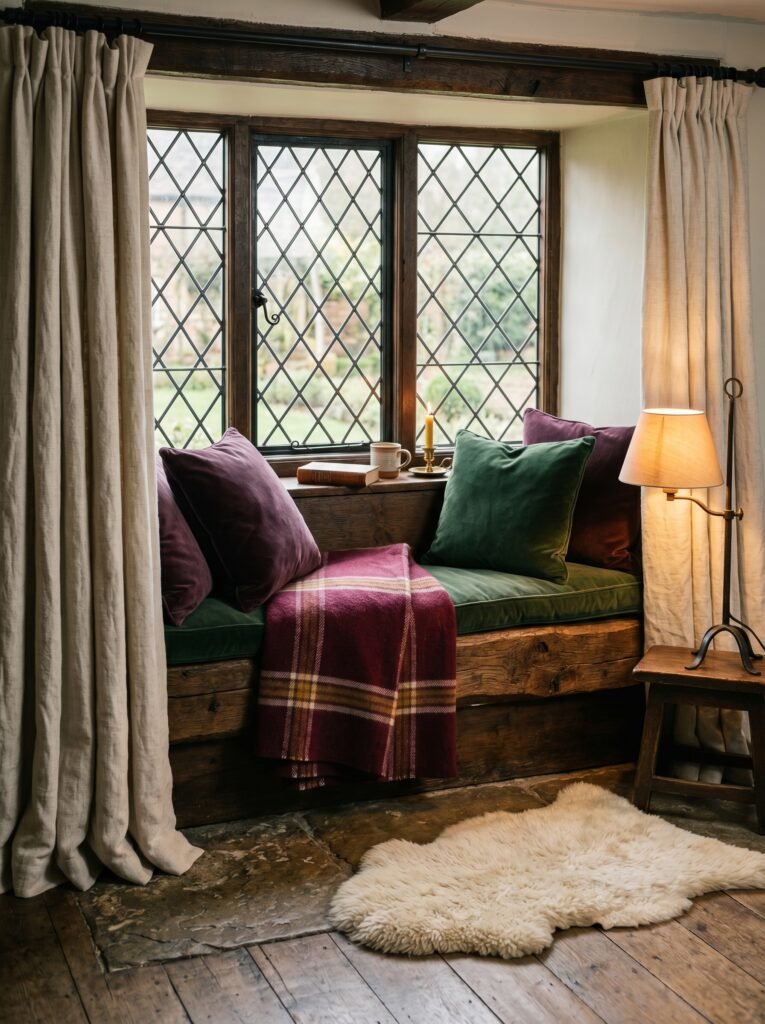
In a Tudor cottage, softness comes from textiles — and the right textiles make all the difference between a room that feels like a museum exhibit and one that feels genuinely lived in and loved.
The Tudor palette in textiles leans toward deep, saturated jewel tones — burgundy, forest green, navy, mustard gold — and natural neutral underpinnings of undyed linen and raw wool. Think heavy linen curtains pooling slightly on a flagstone floor, wool throws folded over an oak settle, velvet cushions in deep plum or forest green piled on a window seat.
Texture layering is essential. A Tudor interior room should reward the touch as much as the eye — rough linen against smooth polished oak, nubby wool against cool stone, the softness of a sheepskin rug against wide floorboards. This is not a minimalist aesthetic. It’s generous, layered, and deeply sensory.
“In a Tudor cottage, comfort is not an afterthought — it’s a philosophy woven into every textile and every surface.”
9. Lighting: The Transformative Power of Warm, Low Light
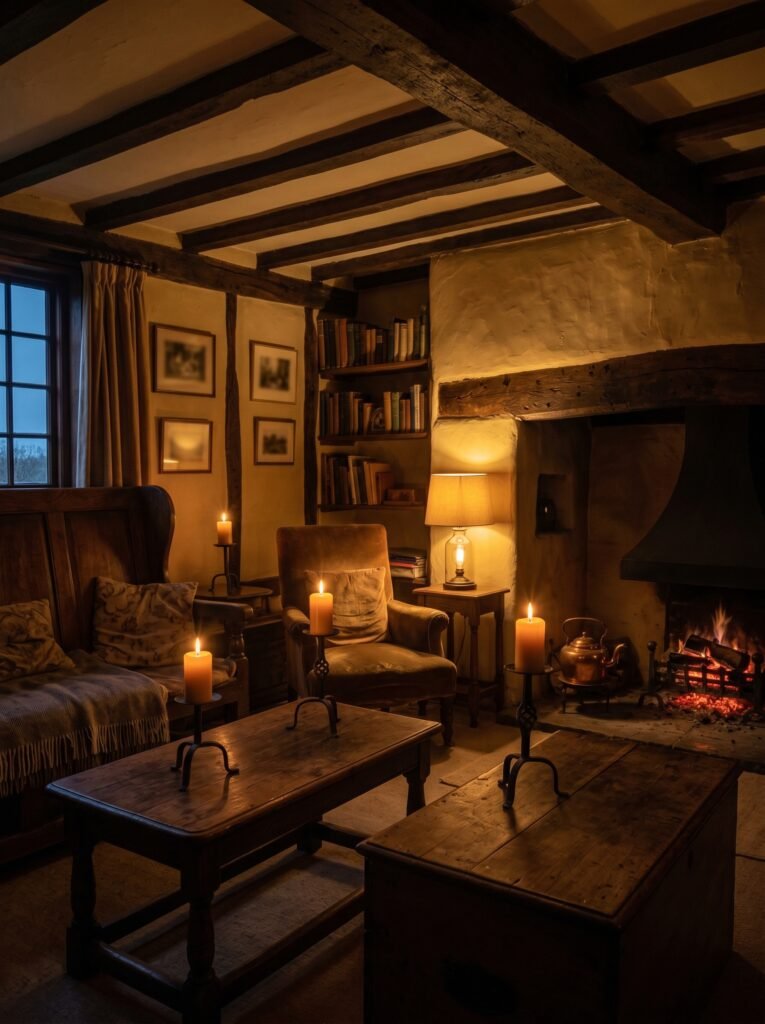
No single design decision will make or break a Tudor cottage interior more dramatically than lighting. This is a style that was literally designed around firelight and candlelight — and it shows. Harsh overhead lighting strips the warmth from every surface, flattens the texture of plaster and timber, and makes even the most beautiful Tudor room feel wrong.
The goal is to create pools of warm, low light throughout the space rather than one uniform wash of brightness. Wall-mounted lantern-style lights, table lamps with low-wattage warm bulbs, genuine candles and pillar candles in iron or pewter holders, and the fire itself as a primary light source — these are the tools of a Tudor-inspired lighting scheme.
Dimmer switches are non-negotiable. The ability to dial down the electric light as the evening progresses and let candles and firelight take over is one of the most powerful moves you can make in this interior style. It costs almost nothing and changes everything.
10. The Kitchen in a Tudor Cottage: Where Function Becomes Beauty

The Tudor cottage kitchen is, perhaps, the most Pinterest-worthy room in the entire house — and also the most honest. This is not a showroom kitchen. It’s a working kitchen, where the equipment is visible, the shelving is open, and everything is arranged around the practicalities of real cooking.
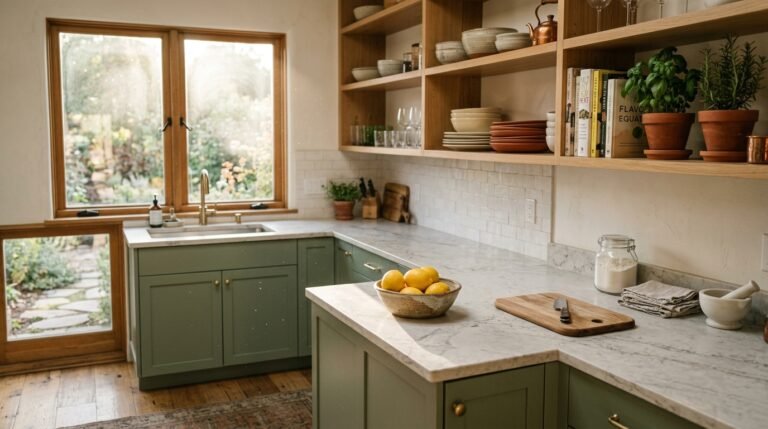
Think painted Shaker-style cabinetry in deep olive green or charcoal, butcher block or stone worktops worn smooth with use, a Belfast sink deep enough to wash a whole Sunday roast’s worth of pots, and a range cooker — ideally an Aga or Rayburn — that becomes the warm heart of the room just as the fireplace dominates the living room.
Open shelving displaying everyday ceramics in earthy glazed tones, bunches of dried herbs hanging from a beam, a wooden plate rack above the sink, baskets of root vegetables on the floor — these are not styling props. They’re the real, functional elements of a cottage kitchen that happens to look extraordinarily beautiful.
11. Bringing the Garden In: Botanicals, Stone, and the Natural World
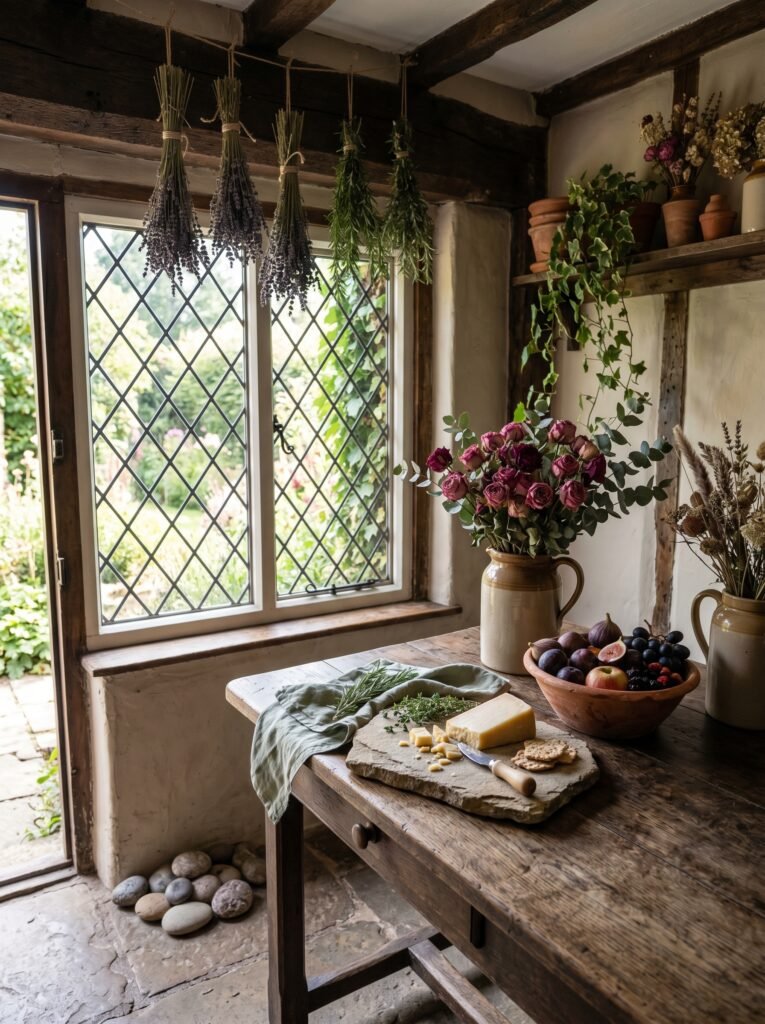
Tudor England was deeply connected to the natural world in a way that modern life has largely severed — and Tudor cottage interiors reflect this with an abundance of organic materials and botanical references that blur the boundary between inside and outside.
Dried flowers and herbs — lavender, rosemary, eucalyptus, dried rose heads — hung from beams or arranged in stoneware jugs are as authentically Tudor as they are beautifully contemporary. Fresh flowers in simple glazed pots, foliage trailing from a high shelf, a bowl of seasonal fruit on the kitchen table — these small gestures of the natural world inside the home are some of the most characterful and Pinterest-worthy details in the whole aesthetic.
Stone and wood in their most natural forms — pebbles used as doorstops, a slice of live-edge wood as a trivet, a rough-edged stone slab as a cheese board — reinforce the connection to the land that is at the heart of the Tudor philosophy.
12. Modern Life in an Ancient Space: How to Make Tudor Cottage Living Actually Work
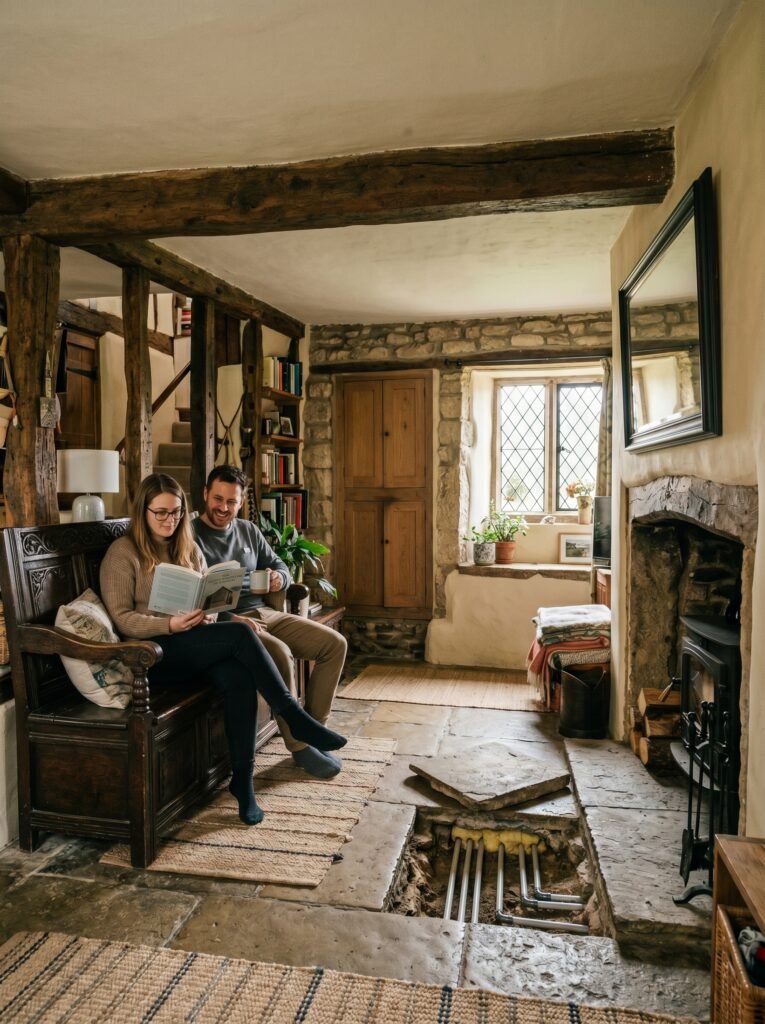
Here is the truth that no purely aspirational design blog will tell you: Tudor cottages are characterful, beautiful, and sometimes genuinely challenging to live in. Low doorways (brace yourself literally and figuratively), limited natural light, restricted storage, and the relentless thermal poetry of stone floors — these are real considerations.
The secret to making Tudor cottage living genuinely wonderful rather than merely beautiful is to work with the architecture rather than against it. Low ceilings don’t need the illusion of height — they need comfortable, lower-slung furniture and warm lighting that makes them feel cosy rather than claustrophobic. Limited light means you need every window working as hard as possible — clean glass, light-coloured reflective surfaces, mirrors placed to bounce light deeper into the room.
Storage in a Tudor cottage is tucked rather than hidden — built-in cupboards within thick walls, furniture with storage beneath, baskets and trunks that add to the aesthetic while solving the practical problem. And underfloor heating, as mentioned, is the single best modern intervention you can make in a period stone-floored property.
—
🌿 How to Take Care of a Tudor Cottage Interior
Maintaining the beauty of a Tudor cottage interior is less about cleaning schedules and more about understanding the nature of the materials you’re working with.
Lime plaster walls should never be painted with modern vinyl or latex paint, which traps moisture and causes the plaster beneath to crack and fail. Use breathable limewash or clay-based paints, which allow the wall to do what it was designed to do — absorb and release moisture gently over time.
Exposed oak beams need very little maintenance beyond keeping them clean and dry. If they appear to be drying out or lightening in colour more than you’d like, a light application of raw linseed oil or beeswax polish, worked in with a cloth and buffed off, will nourish the wood and deepen its tone beautifully.
Stone floors are best maintained with pH-neutral stone cleaner and should be sealed periodically to prevent staining while still allowing the stone to breathe. Avoid harsh chemical cleaners, which can strip the surface and dull the natural finish.
For antique oak furniture, beeswax polish applied sparingly and buffed to a gentle shine is the gold standard — it nourishes the wood, protects the surface, and builds up over years into a patina that no factory finish can replicate.
Finally — and this is perhaps the most important care tip of all — resist the urge to make everything match perfectly. A Tudor cottage interior improves with age, with the accumulation of things you love, with a little gentle imperfection. Lean into it.
—
❓ FAQ
Q: Can I achieve a Tudor cottage interior look in a modern house without original features? A: Absolutely — and many people do it beautifully. The key is to focus on materials and mood rather than architectural authenticity. Rough-textured plaster effect walls, faux or real oak beams, stone or reclaimed wood flooring, and a fireplace as the room’s focal point will create an entirely convincing Tudor atmosphere even in a new-build home.
Q: What colours work best in a Tudor cottage interior? A: Think of the palette of the English countryside in autumn and winter — warm creams and off-whites for walls, deep forest greens, ochre yellows, burgundy and plum for textiles and accents, and the rich dark brown of aged oak running throughout. Avoid anything too cool, too bright, or too grey — Tudor warmth comes from the entire palette working together in earthy harmony.
Q: Is Tudor cottage interior style expensive to achieve? A: It doesn’t have to be. While original period properties and reclaimed materials can command significant prices, the core of the Tudor aesthetic — texture, warmth, natural materials, firelight — can be approximated beautifully on a careful budget. Salvage yards, antique markets, secondhand furniture, and skilled DIY plastering or painting can achieve extraordinary results without extraordinary expense. The style actually rewards age and patina, which means nothing needs to be perfect — or expensive — from the start.
—
💭 Final Thought
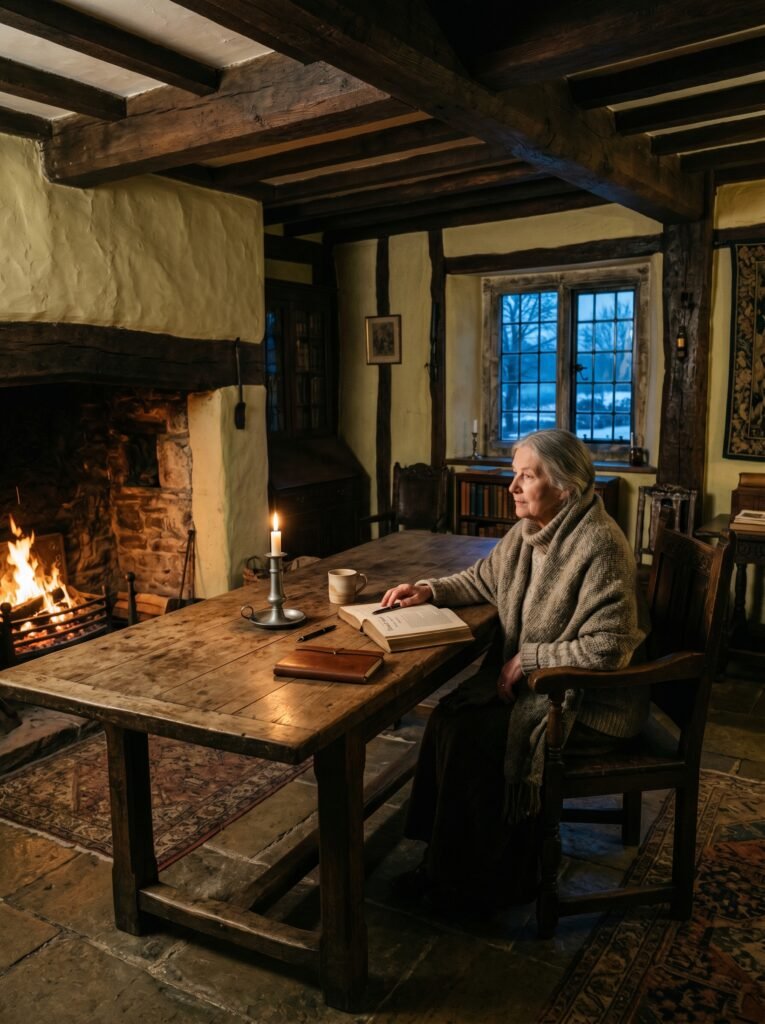
A Tudor cottage interior is not a trend. It was never a trend. It’s a way of living that puts warmth at the centre, that values craftsmanship over novelty, that finds beauty in the honest mark of time on honest materials. In a world where everything is optimised, updated, and replaced before it has a chance to develop a soul, there is something quietly radical about choosing a space that asks you to slow down, to light a fire, to sit at a heavy oak table and stay a while.
So here’s the question worth sitting with: in a home that has been loved for five hundred years, what would you want to add to its story?