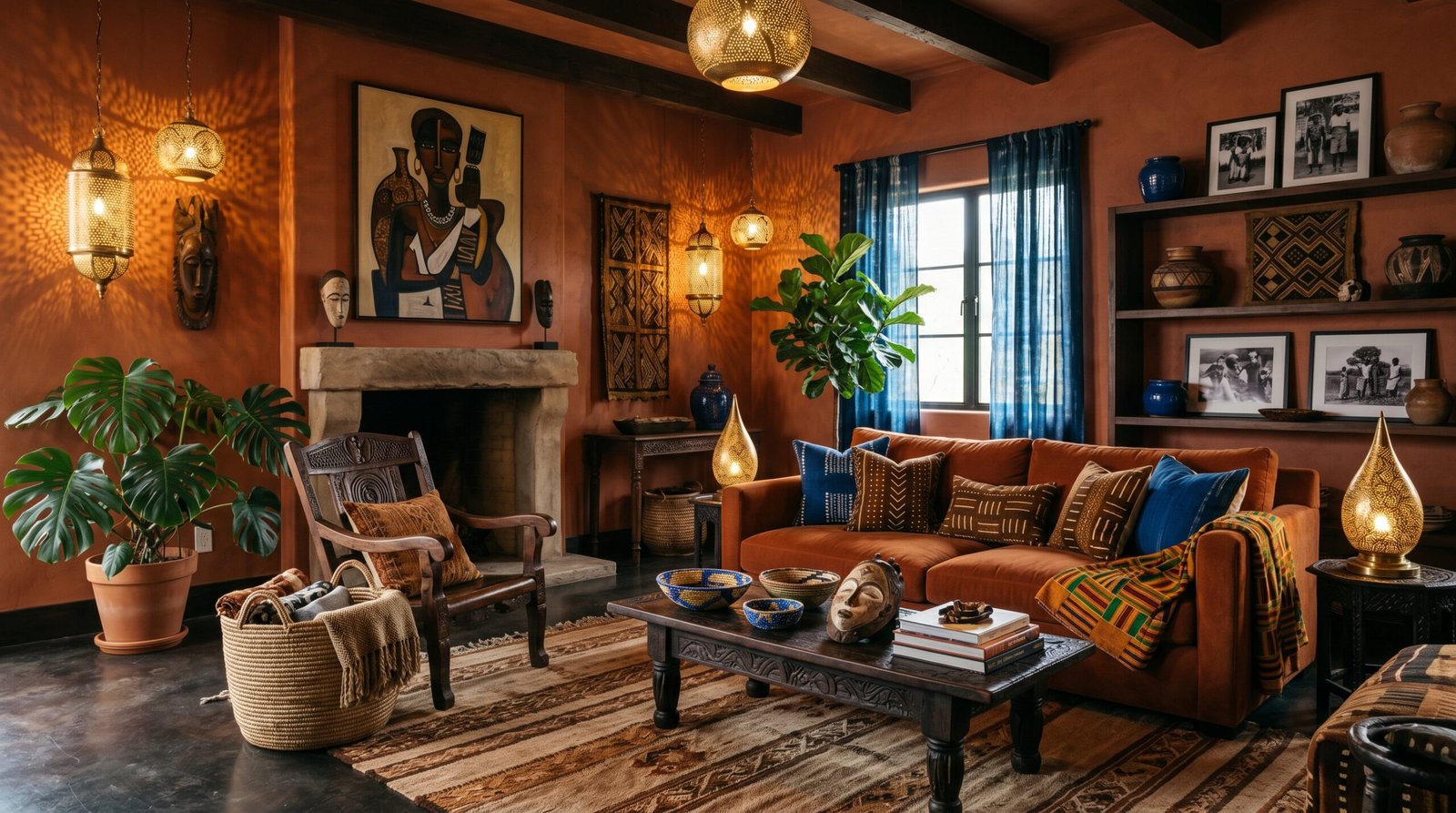
When Your Home Tells a Story: The Timeless Power of African Style Interior Design
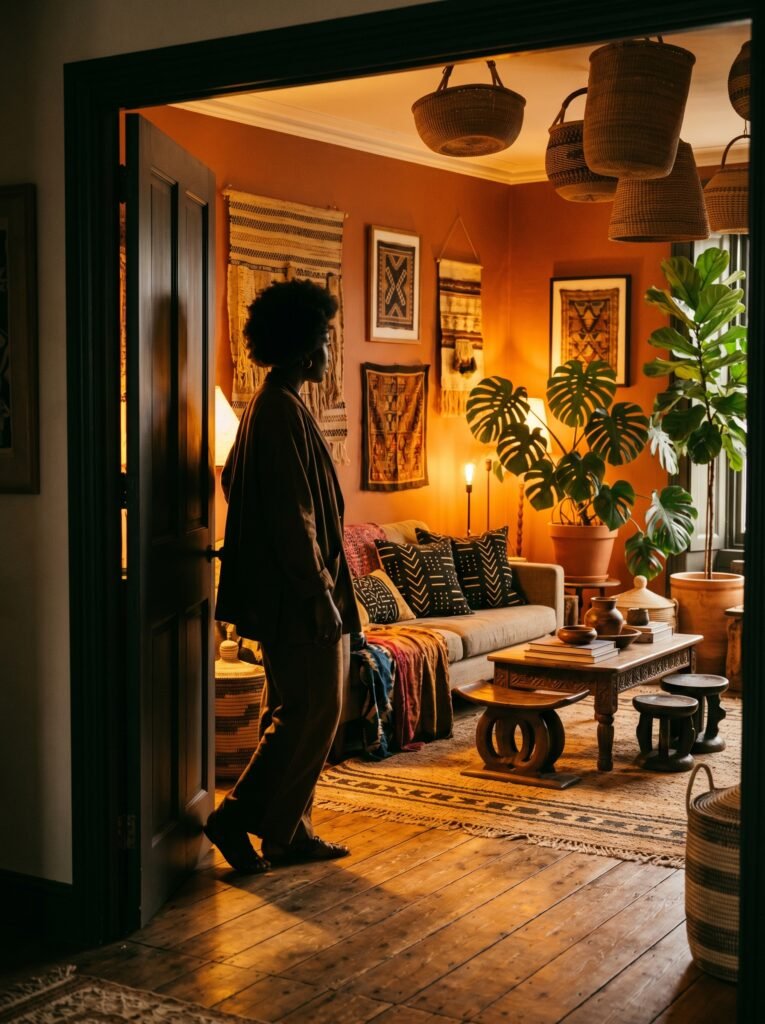
There’s a particular moment that happens when you walk into a room decorated in African style — you stop. Not because it’s loud or overwhelming, but because it feels alive. It feels like somewhere someone actually lived, loved, and left a mark.
—
Table Of Content
1. More Than Décor — It’s a Living Philosophy
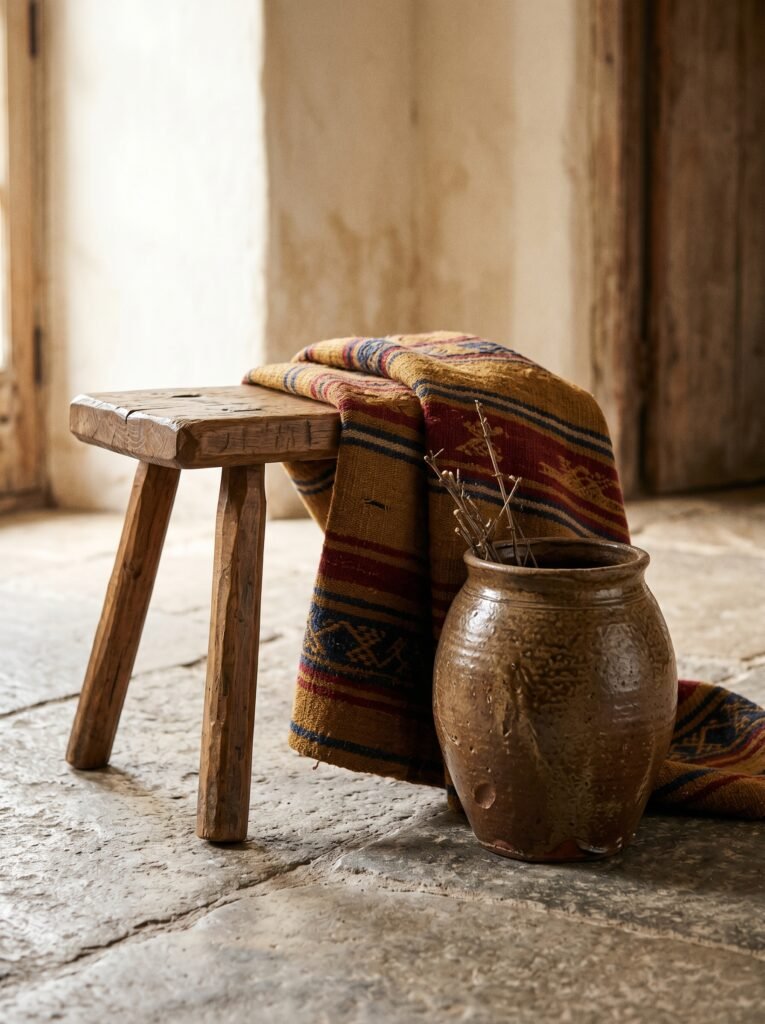
Most interior design trends are rooted in aesthetics. African style interior design is rooted in something deeper: the belief that a home is not just a shelter, but a reflection of the people, land, and stories that shaped it. Across the continent’s 54 countries and thousands of distinct cultural groups, there is no single “African aesthetic” — and that’s precisely what makes it so rich.
What unites the broad tradition of African-inspired interiors is a shared reverence for nature, community, and craft. Every carved wooden stool, every hand-woven textile, every piece of ironwork carries the fingerprint of the person who made it. In a world where so much of what surrounds us is mass-produced and anonymous, that kind of intentionality feels almost radical.
“In African design, nothing in a home is accidental — every object carries memory.”
2. The Earth Beneath Your Feet (and Walls, and Ceiling)
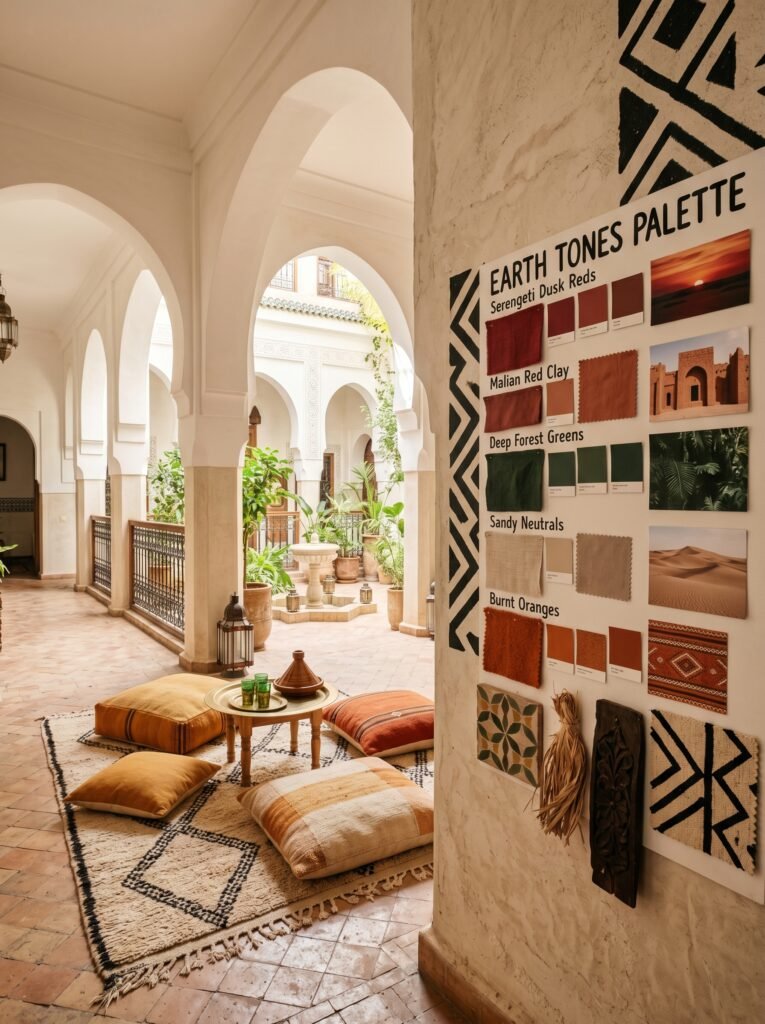
If you want to understand the color palette of African interior design, close your eyes and picture the Serengeti at dusk, the red clay of a Malian village, the cream-white walls of a North African riad, the deep forest greens of the Congo Basin. That’s where the color story begins.
Terracotta reds, warm ochres, sandy neutrals, deep browns, and burnt oranges form the backbone of this aesthetic. These are earth tones in the most literal sense — colors harvested from the ground itself. When you build a room around them, something almost biological happens: the space starts to feel grounding in a way that cool grays and clinical whites simply cannot replicate.
Contrast is introduced through bold black geometric patterns, the occasional burst of cobalt blue or forest green in textiles, and the natural variations of wood grain and woven fiber. The result is a palette that feels simultaneously ancient and immediately warm.
3. Texture Is the Secret Language of This Style
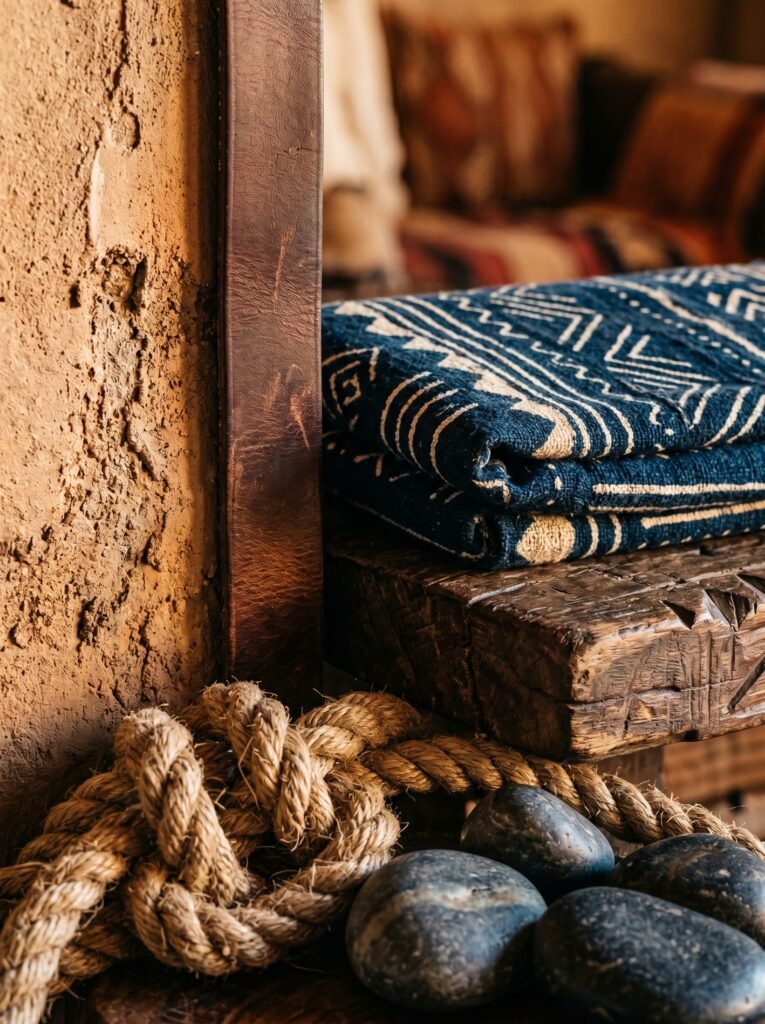
Run your hand along the walls of a traditionally inspired African interior and you might feel raw plaster, smoothed clay, or rough-hewn stone. Look down and you might find sisal rugs, carved wooden floors, or cool terracotta tiles. African style interior design is deeply, unapologetically tactile.
This is not accidental. In many African design traditions, texture communicates status, protection, craftsmanship, and belonging. A woven mat isn’t just a floor covering — it’s a record of someone’s time and skill. A mud-cloth throw isn’t just a blanket — it’s a symbol system with meaning embedded in every pattern.
When you layer textures in an African-inspired room — rough linen next to smooth leather, knotted rope near polished stone — you’re participating in a design conversation that has been ongoing for centuries.
4. The Furniture That Refuses to Be Ignored
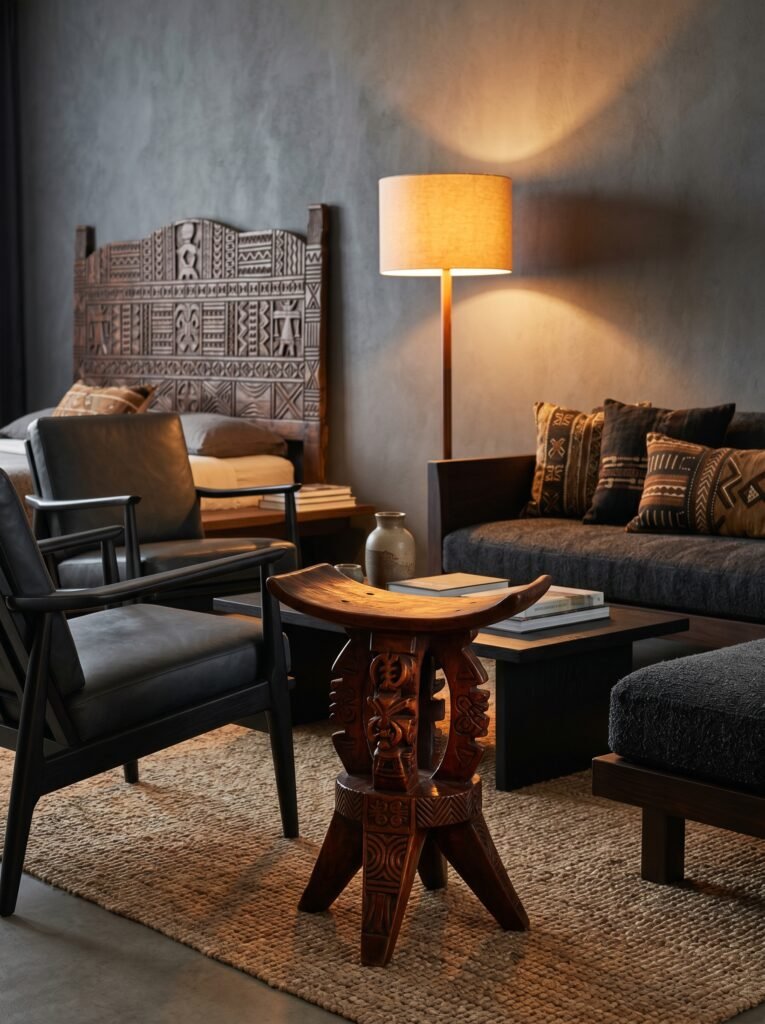
African furniture design is bold in the most confident possible way. Think low-slung seating made from dark hardwoods, hand-carved headboards that double as sculpture, stools with intricately worked legs, and side tables made from repurposed natural materials. The emphasis is almost always on handcraft and material honesty — you can see how things were made, and that’s considered beautiful, not something to hide.
The iconic three-legged wooden stool of the Ashanti people of Ghana, for example, is not merely a seat. It is a spiritual object, a symbol of chiefly authority, and a piece of engineering elegance — all at once. When that design sensibility enters a contemporary living room, it elevates everything around it.
“A single well-chosen piece of African craftsmanship can give a whole room its soul.”
5. Patterns That Carry the Weight of Generations
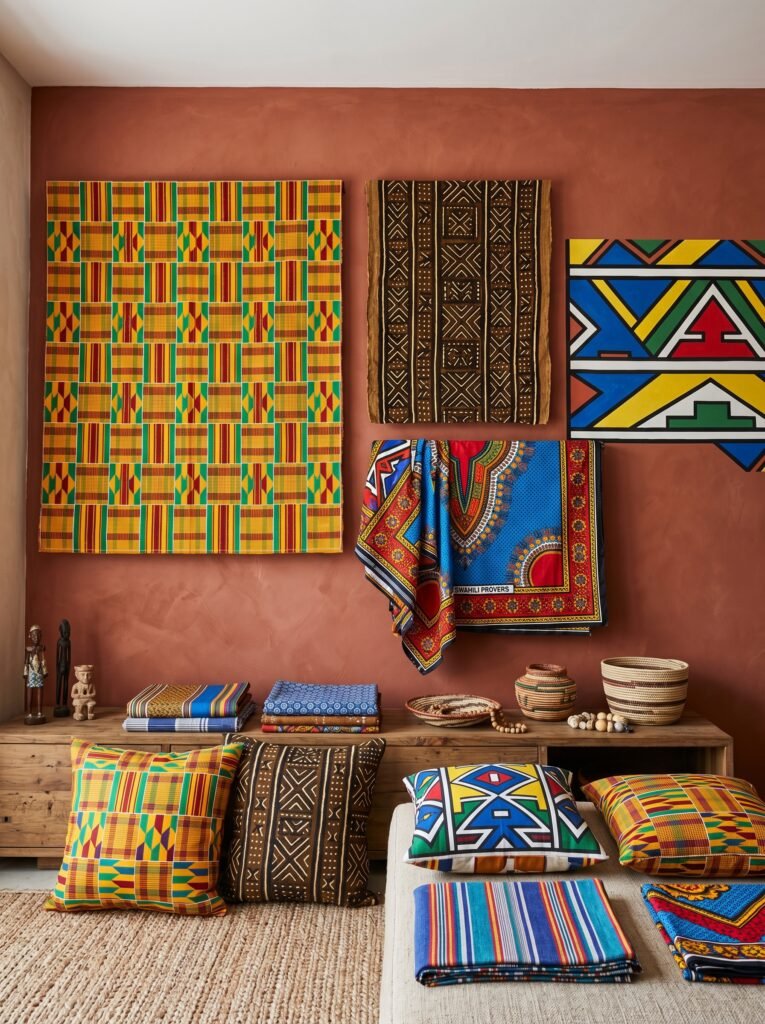
Kente cloth from Ghana. Kanga wraps from East Africa. Ndebele geometric murals from South Africa. Bogolan mudcloth from Mali. African textiles and patterns are among the most visually striking in the world, and incorporating them into an interior space is one of the most powerful moves you can make in this design style.
What makes these patterns more than decoration is their depth of meaning. The geometric precision of Ndebele designs, for instance, traditionally marked the transitions of a woman’s life — painted on walls, worn on the body, they were a visual autobiography. When you hang a piece of Ndebele-inspired textile art in your home, you’re not just adding visual interest. You’re acknowledging a tradition of women as storytellers.
In practical terms, these patterns work beautifully as throw pillow accents, wall hangings, upholstery on accent chairs, or even framed fabric art above a mantelpiece.
6. Let Light Work the Way Nature Intended
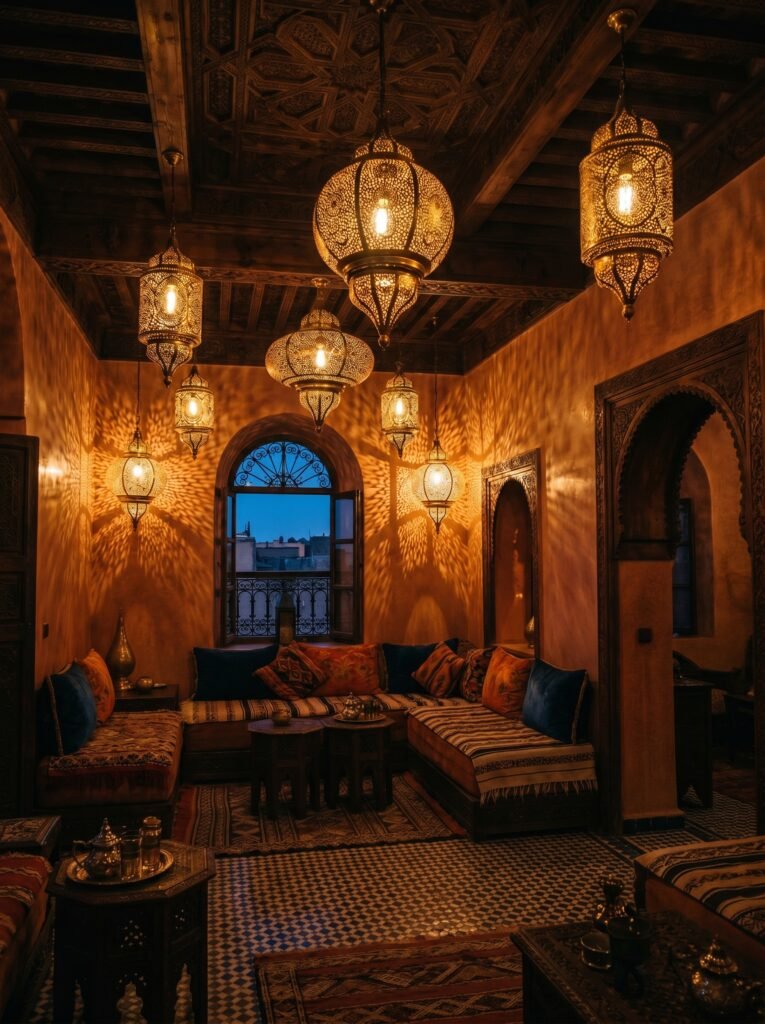
African style interiors tend to think about light in an organic, unhurried way. Rather than flooding a room with harsh overhead lighting, this design tradition favors warm ambient light — candles, lanterns, pendant lights made from woven materials, and the soft glow of Edison bulbs behind perforated metalwork that casts dappled patterns across the walls.
Think of the beautifully pierced brass lanterns of Morocco, which throw intricate geometric shadows across every surface. Or the simple beauty of a hand-carved wooden lamp base draped with a warm-toned shade. Light in these spaces is not just functional — it participates in the atmosphere.
7. Animals, Botanicals, and the Invitation of the Wild
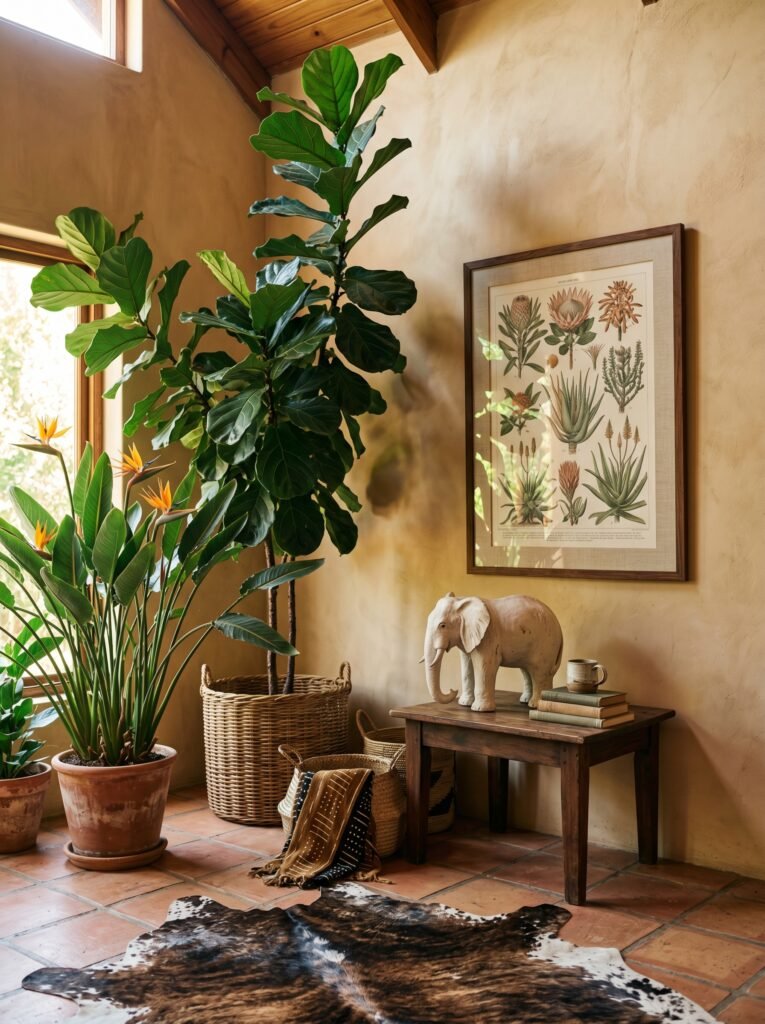
One of the most recognizable threads in African interior design is its relationship with the natural world. Animal hides (or their ethically sourced imitations), sculptural depictions of elephants, giraffes, and birds, mounted antlers, ceramic animal figures, and botanical prints all appear frequently — not as tourist kitsch, but as genuine expressions of humanity’s oldest relationship: our bond with the living world around us.
Indoor plants are equally important. Large-leafed tropical plants like the fiddle-leaf fig, monstera, and birds of paradise feel perfectly at home in an African-style space. They add life, humidity, oxygen, and that lush, verdant energy that speaks to the continent’s extraordinary biodiversity.
8. The Art of Mixing Old and New
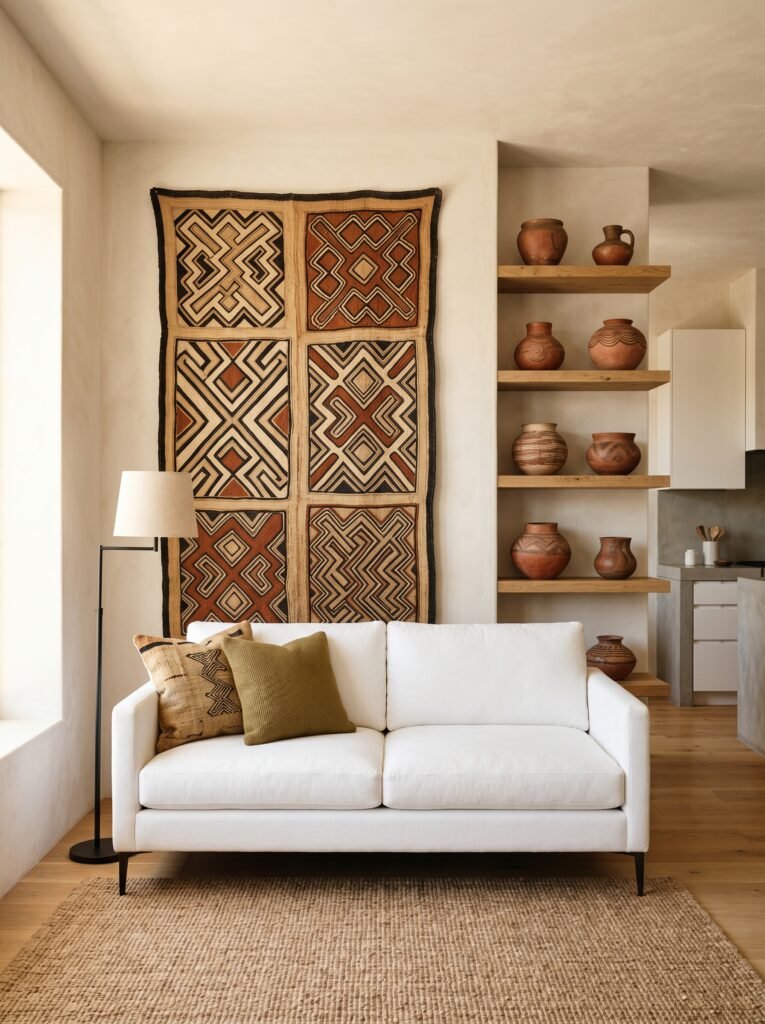
One of the most exciting things about African style interior design in contemporary practice is the way it refuses to be museum-like. The best modern African-inspired interiors are not frozen in time — they are in conversation with the present. A sleek, modern white sofa looks extraordinary against a wall adorned with traditional Kuba cloth. A minimalist kitchen becomes something extraordinary when its open shelves hold a row of hand-thrown West African pottery.
This fusion approach — rooted in tradition but unafraid of modernity — is actually deeply authentic to African design heritage, which has always absorbed and transformed outside influences rather than being destroyed by them.
“The finest African-inspired rooms feel both ancient and entirely of this moment.”
9. Walls That Speak Before You Do
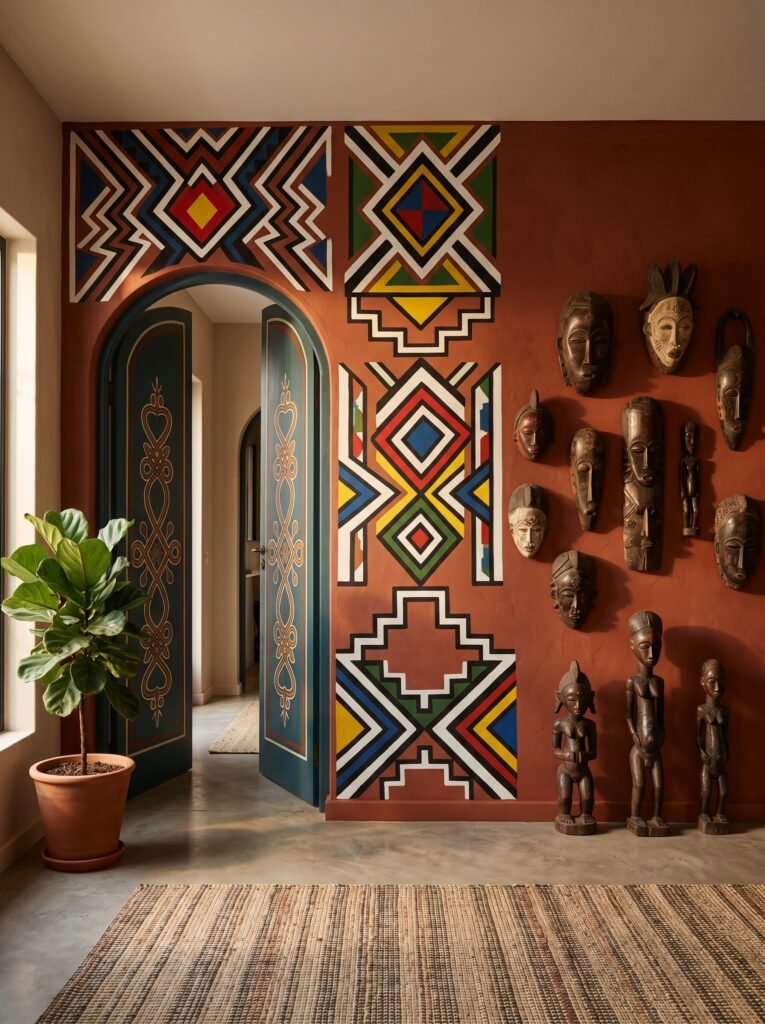
In many African cultures, the walls of a home are not neutral backgrounds. They are active participants in the life of the space. Ndebele women of South Africa have painted the exterior walls of their homes in vivid geometric murals for generations, each design a declaration of identity and artistry. In the Horn of Africa, hand-painted decorations around doorways signal welcome and protection.
In a contemporary setting, you don’t need to go quite that far — but the principle holds. Don’t let your walls be passive. Consider a feature wall painted in a deep terracotta or rust tone. Hang a large-scale textile or a grouping of handcrafted masks and carvings. Commission a local artist to paint something inspired by traditional motifs. Make the walls say something.
10. Handmade Objects: The Antidote to the Generic
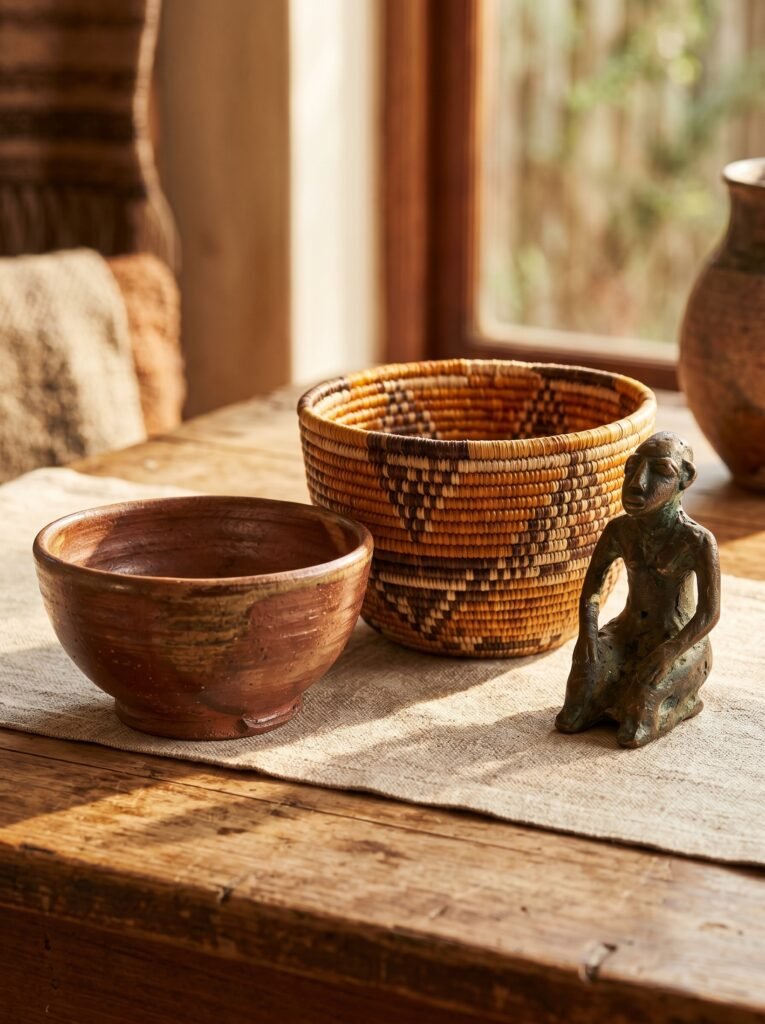
We live in an age of remarkable convenience, where a piece of furniture can arrive at your door in 48 hours looking exactly like the one in 10,000 other homes. African style interior design is, among many things, a quiet protest against that sameness.
Seek out handmade objects: pottery thrown on a wheel by an artisan, baskets woven by a cooperative of craftspeople in rural Zimbabwe, bronze sculptures cast using the centuries-old lost-wax process. These objects carry energy that manufactured goods simply don’t possess. They tell the truth about the human hands behind them.
11. Space, Flow, and the Wisdom of Not Overcrowding
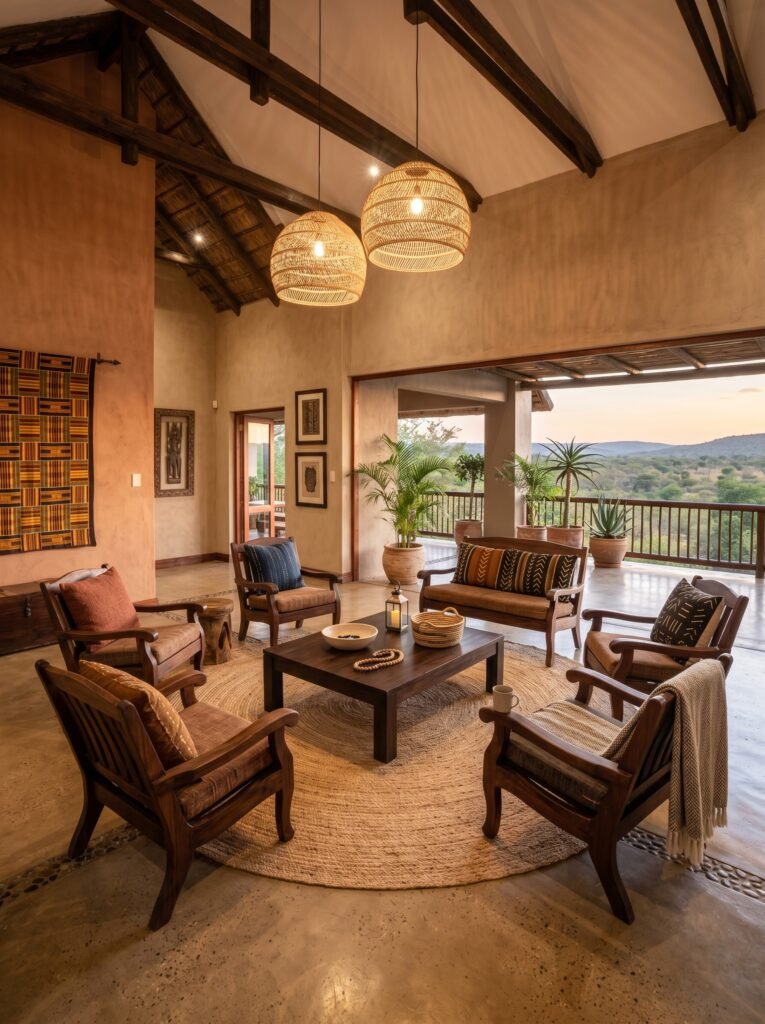
Despite the richness of its visual elements, African style interiors at their best are never cluttered. There is a wisdom in how traditional African living spaces balance abundance with openness — enough to feel generous and alive, but never so much that the eye can’t rest.
Negative space is respected. Rooms are designed to be lived in, not just looked at. Furniture arrangements tend to encourage gathering and conversation rather than passive consumption. The living room becomes a place where people actually talk, sit close, and share.
12. Scent, Sound, and the Full Sensory Experience
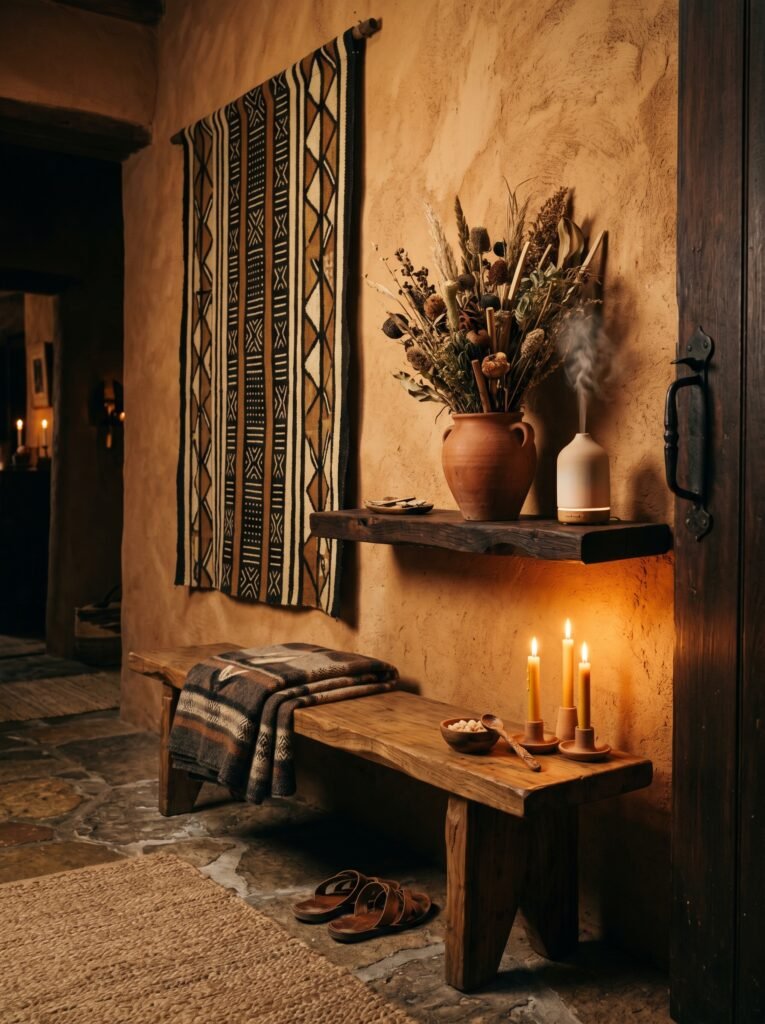
Truly great interior design engages every sense, not just sight — and African-inspired spaces understand this intuitively. The smell of warm wood, the faint earthiness of a terracotta pot, the subtle smokiness of an incense blend rooted in African botanical tradition — these scents deepen the experience of a space in ways that no amount of visual styling can replicate.
Consider adding a diffuser with base notes of vetiver, cedarwood, or frankincense. Place a bowl of dried botanicals near the entry. Play ambient music that echoes the rhythmic, organic soundscapes of the continent. When a room speaks to all five senses, it stops being a backdrop and becomes an experience.
—
🌿 How to Bring African Style Into Your Home
Bringing African design into your space doesn’t require a complete renovation or a trip to the continent. It requires intention, respect, and a willingness to let your home tell a story.
Start with your color palette. Swap out stark white walls for warm sandy neutrals, terracotta, or deep earthy browns. Even one feature wall in the right tone can shift the entire energy of a room.
Layer your textiles thoughtfully. A mudcloth cushion, a Kente-inspired throw, or a sisal rug layered over a wooden floor can transform a living space without touching the furniture.
Invest in one meaningful handcrafted object — a carved wooden bowl, a hand-thrown piece of pottery, a woven basket used as a fruit bowl. Let it anchor the room and start a conversation.
Bring in plants and natural materials. Raw wood, stone, woven rattan, and lush greenery are the connective tissue of this aesthetic. They ground the space and keep it feeling alive.
Finally, resist the urge to buy an entire “African look” package from a single retailer. Build slowly, choose pieces with stories behind them, and let the room evolve the way a life does — organically, layer by layer.
—
❓ FAQ
Q: Does African style interior design work in small apartments? A: Absolutely. The key principles — warm earth tones, layered textures, meaningful objects — scale beautifully into smaller spaces. In fact, a single bold textile or a carefully chosen handcrafted piece can give a small room enormous personality without overwhelming it.
Q: How do I incorporate African design without it feeling like cultural appropriation? A: The difference lies in respect and sourcing. Buy directly from African artisans and brands where possible, learn the stories behind the objects you choose, and avoid reducing rich cultural symbols to mere decoration. Appreciation that is informed, intentional, and economically supportive of the cultures it draws from is deeply different from exploitation.
Q: What are the most beginner-friendly elements of African interior design to try first? A: Start with color and textiles — they’re the lowest-commitment, highest-impact changes you can make. A terracotta paint color on one wall, a mudcloth cushion on your sofa, or a woven basket on your kitchen counter will immediately begin to shift the feel of your space toward something warmer and more grounded.
—
💭 Final Thought
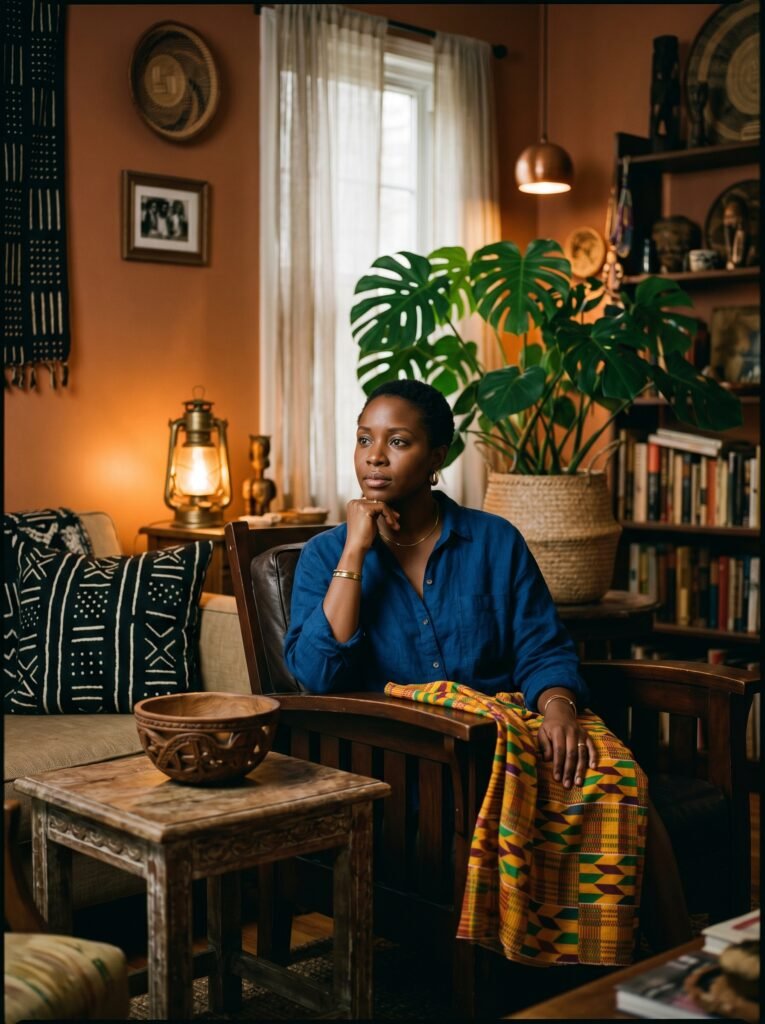
There is something quietly revolutionary about choosing to fill your home with objects that carry history, craftsmanship, and meaning — in a world that keeps pushing us toward the disposable and the generic. African style interior design is, at its heart, an act of remembering: remembering that beauty can be useful, that homes can be sacred, and that the things we surround ourselves with shape the people we become.
So here’s the question worth sitting with: What story is your home currently telling — and is it the one you actually want to live inside?