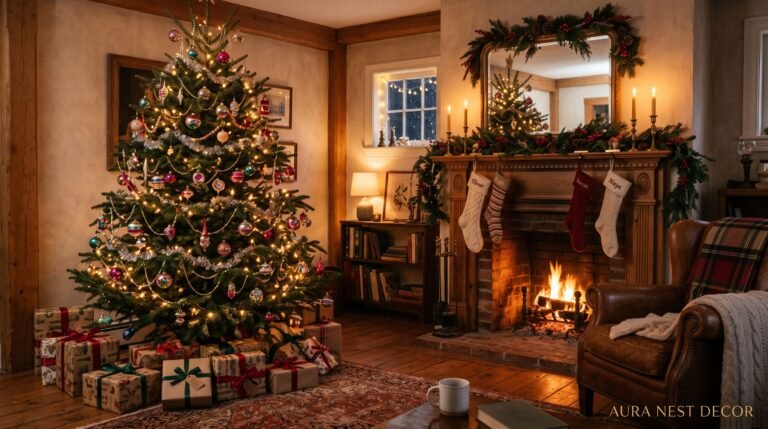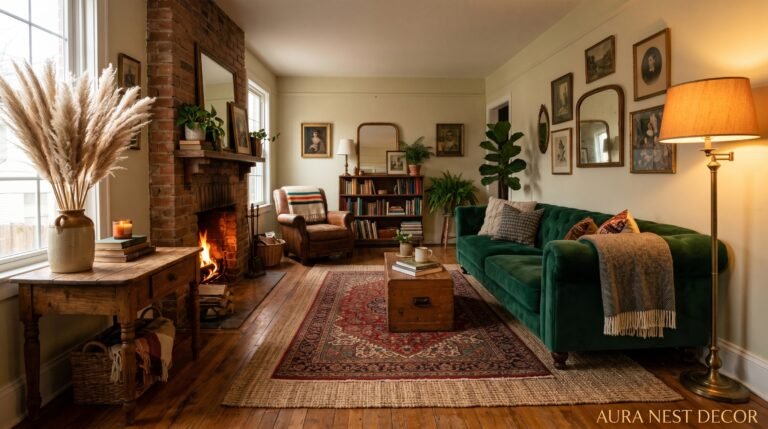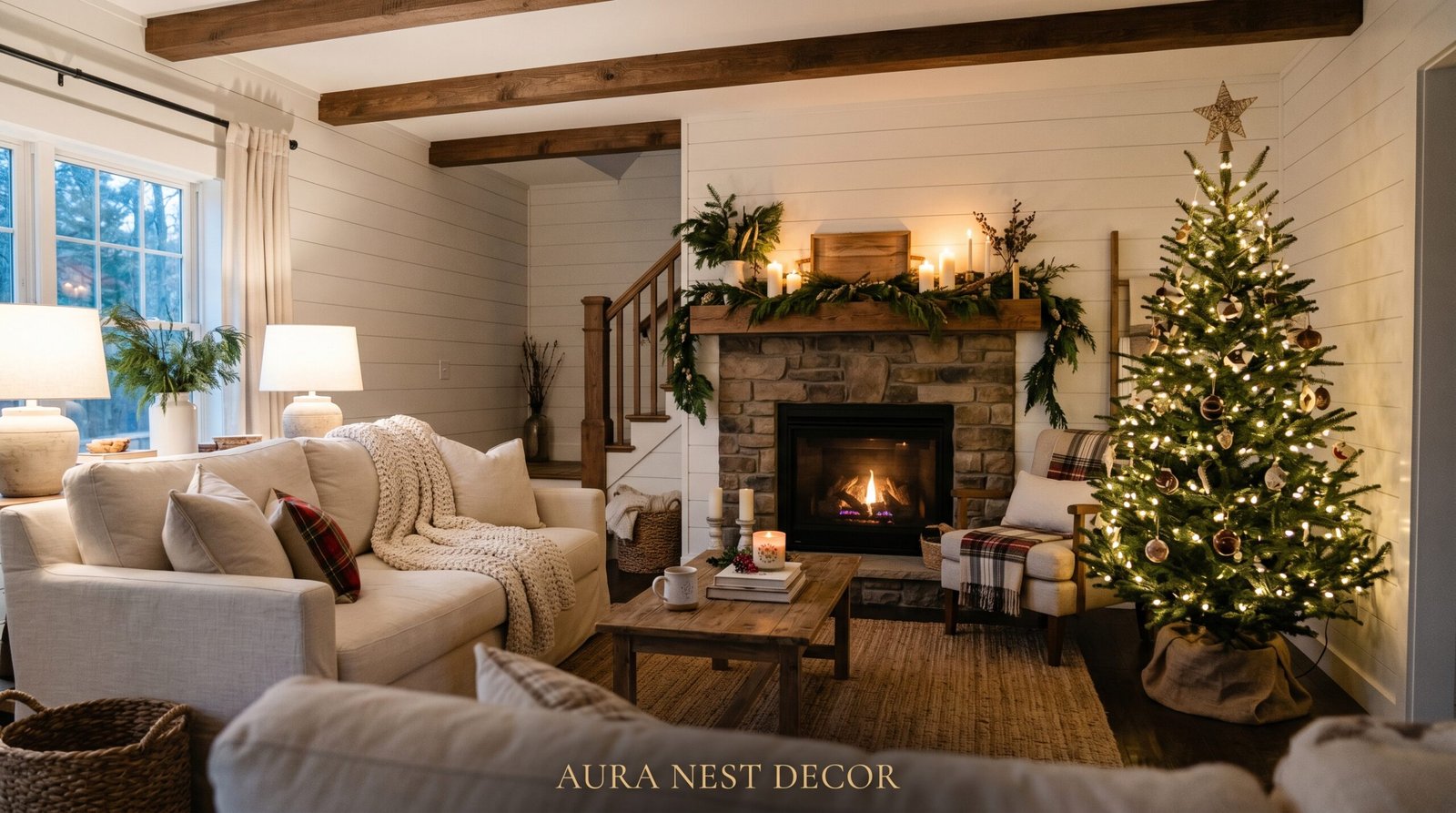
Why the Modern Farmhouse Christmas Living Room Is the Only Aesthetic That Actually Feels Like the Holidays
You know that specific feeling — walking into a room and letting out a breath you didn’t know you were holding? That’s what a modern farmhouse Christmas living room does. It’s not fussy. It’s not trying too hard. It just feels like the holidays actually feel, not the way a department store wants you to think they should.
—
1. The Difference Between “Rustic Christmas” and Modern Farmhouse (and Why It Matters)
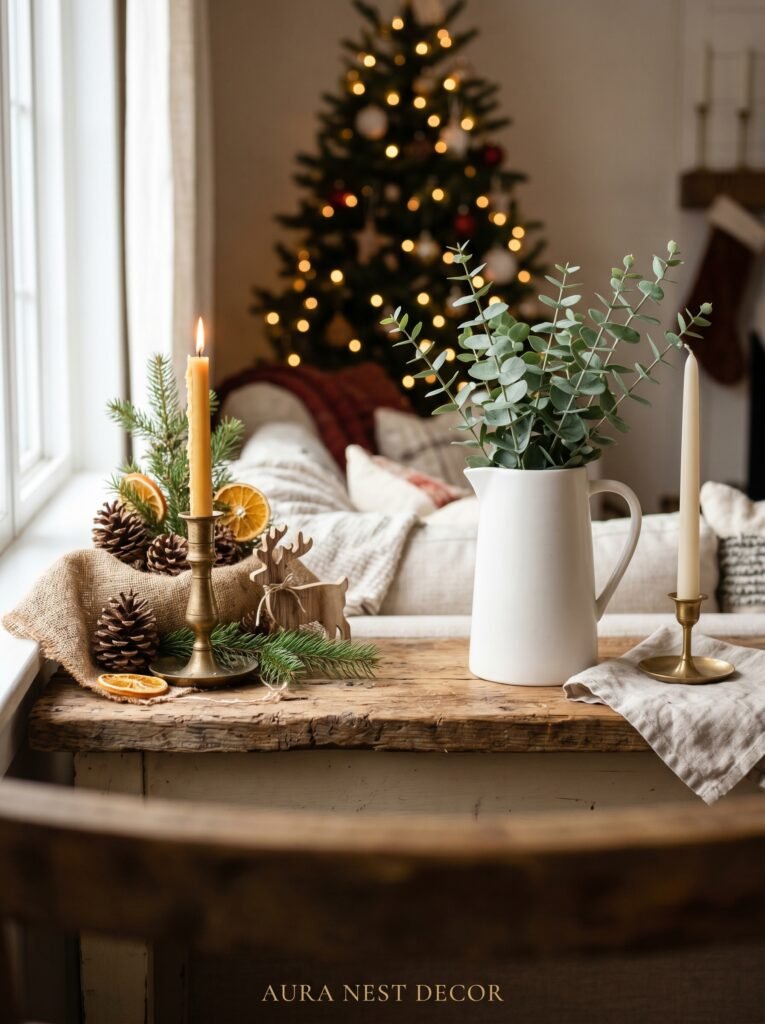
Let’s clear something up immediately, because Pinterest makes this confusing. Rustic Christmas and modern farmhouse Christmas are not the same thing, and knowing the difference is what separates a gorgeous living room from one that looks like a craft fair exploded in December.
Rustic is antlers, burlap everywhere, and decorations that look like they belong in a log cabin in Montana. Modern farmhouse is something else entirely. It takes the warmth and texture of that farmhouse sensibility — the reclaimed wood, the linen, the quiet natural palette — and layers in something cleaner. More intentional. The lines are straighter. The negative space actually breathes. There’s usually a black element somewhere: a matte black candle holder, a wrought iron lantern, a picture frame. That one dark note is what makes everything else feel curated rather than collected.
Think of it as the difference between a beautifully worn quilt your grandmother made and a beautifully worn quilt your grandmother made that you’ve put on a linen-slipcovered sofa next to a stack of three identical white pillar candles. Same warmth. Different intention.
For Christmas, this means your decorating isn’t about accumulating. It’s about choosing. And that restraint — that is what makes a room feel rich.
“Modern farmhouse Christmas isn’t about adding more. It’s about choosing better.”
2. The Mantel Formula That Interior Designers Keep Coming Back To
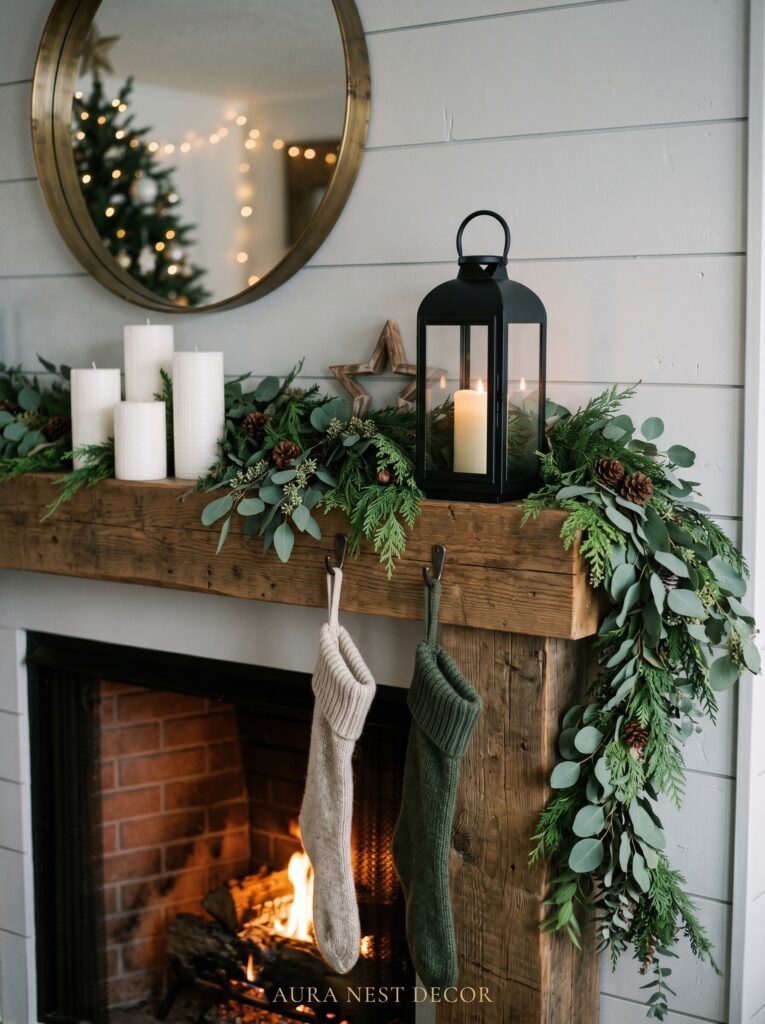
The fireplace mantel is the heart of a Christmas living room. Full stop. If you have one, everything flows from it. If you don’t, you create the illusion of one — but we’ll get there.
Here’s the formula that works, every single time, without fail: one tall element on each end, one wide organic element in the middle, and something textural running across the base. That’s it. That’s the whole secret.
The tall elements are almost always greenery in modern farmhouse styling. Not full arrangements — just branches. A spray of eucalyptus in a simple vase, or better yet, just loosely laid against the mantel with no container at all. Magnolia branches with their silver-green leaves are extraordinary here, and they’re very achievable whether you’re shopping in Georgia or at a garden centre in the Cotswolds. The wide middle element is typically your focal point — a vintage wooden sign, an aged clock face, a round wreath laid flat against the wall rather than hung. The textural base is where you get to play: pinecones, raw cotton stems, a few pillar candles at varying heights with a runner of dried orange slices weaving between them.
The whole thing should take you twenty minutes to assemble. If it’s taking longer, you’re overthinking it.
3. The Color That Keeps Showing Up in Every Beautiful Modern Farmhouse Christmas Room Right Now
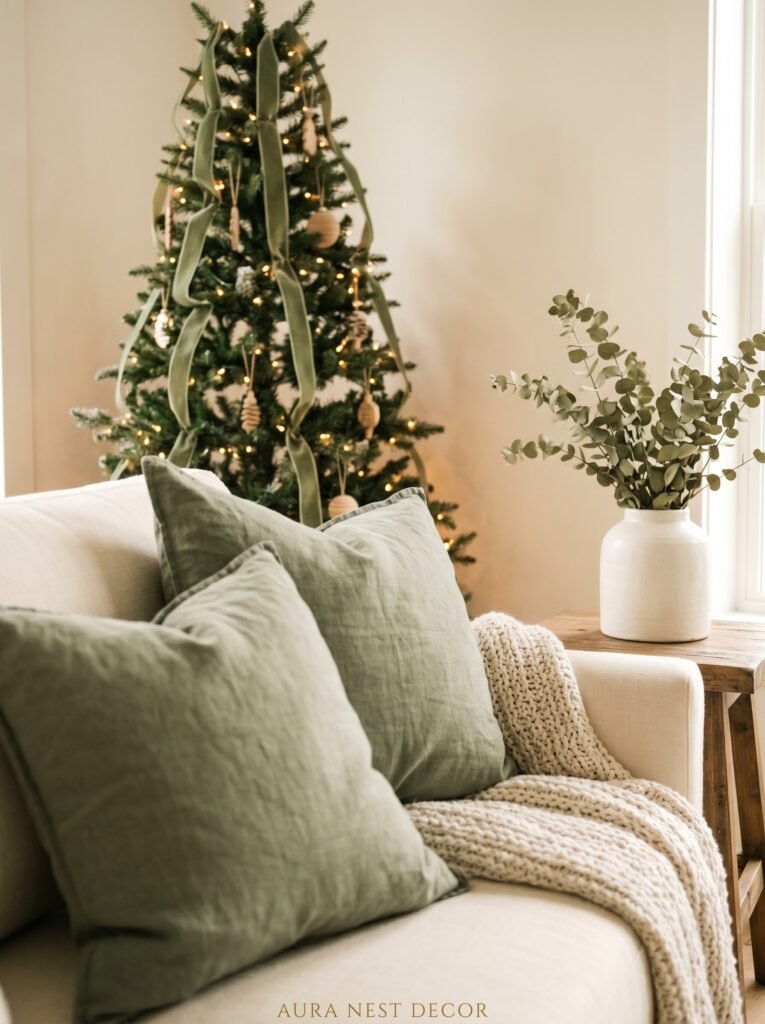
Sage green. Not hunter green. Not the deep Christmas-tree green of traditional decorating. Sage.
It’s muted. It’s almost dusty. And when you pair it with cream, warm white, and the soft grey-brown of natural linen, something magical happens — it reads as festive without screaming “holiday decoration.” Sage green velvet throw pillows on a neutral sofa. Sage green ribbon woven through garland. A sage green ceramic pot at the base of a Christmas tree.
This color is having a significant moment in both American and British home interiors right now, and Christmas is the perfect time to lean into it because it bridges the seasonal and the timeless. Your room will look appropriately Christmassy in December and those sage green accents won’t feel embarrassingly seasonal when you pull them out of the box next year.
The other colors in a modern farmhouse Christmas palette are very specific: creamy white, warm beige, the deep charcoal of aged iron, the honey-gold of dried grasses and wheat stalks, and the occasional dusty burgundy — not bright red, not candy-cane red, but the deep muted red of a pomegranate just before it splits. These are the only colors you need.
4. What Your Christmas Tree Actually Needs (It’s Less Than You Think)
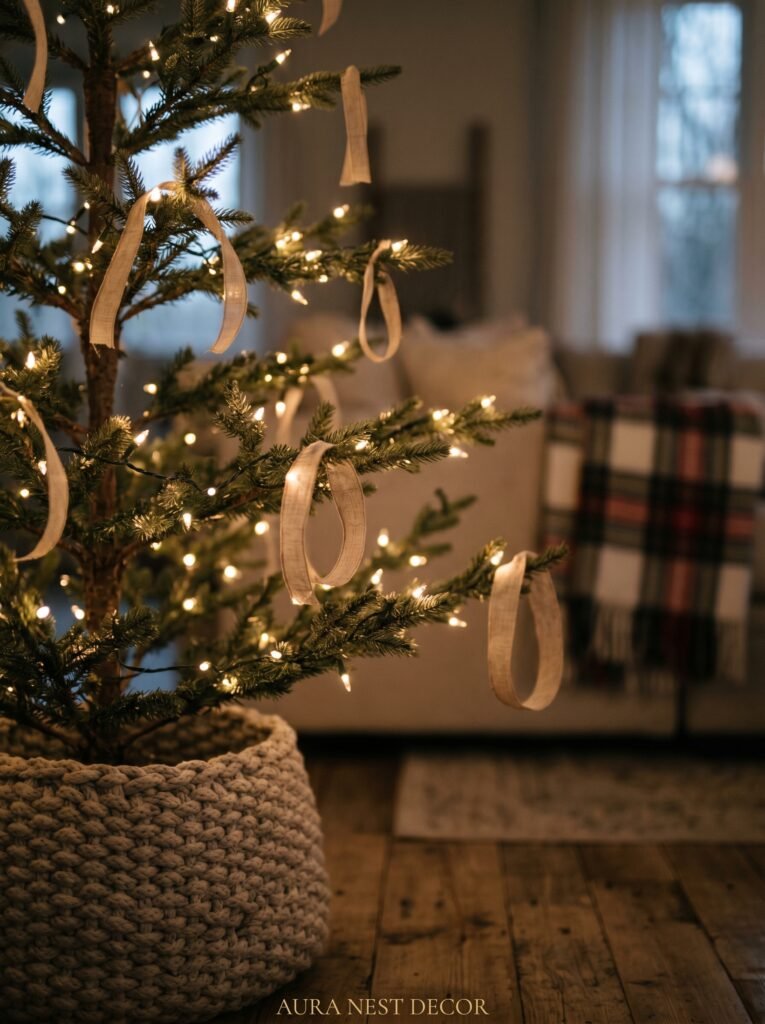
This is where people go wrong. They buy a tree — artificial or real, beautiful either way — and then they cover every single inch of it in ornaments, tinsel, and lights until the tree itself disappears entirely under the weight of thirty years of accumulated decorations.
For a modern farmhouse living room, the tree is part of the room’s architecture. You should be able to see its shape. Its branches. The negative space inside it.
Start with your lights — and for this aesthetic, warm white only, always. The slightly amber glow of warm white lights at 9pm when the rest of the room lamps are on is the single most beautiful thing about a Christmas living room. That light cannot be replicated by cool white LEDs no matter how many you string.
Then add your ornaments in three passes. First pass: your largest ornaments, spaced widely, tucked back into the middle of the tree rather than hung on branch tips. Second pass: medium ornaments, still with breathing room between them. Third pass: natural elements — a few cinnamon sticks tied with jute, a handful of dried orange slices, raw cotton stems. Stop there. The tree should look finished, not full.
A simple hessian or linen tree skirt at the base. A few birch log rounds nearby if you can source them. Done.
“The tree should look finished, not full. That’s the whole difference.”
5. The One Thing British Homes Do Better at Christmas (Americans, Take Note)
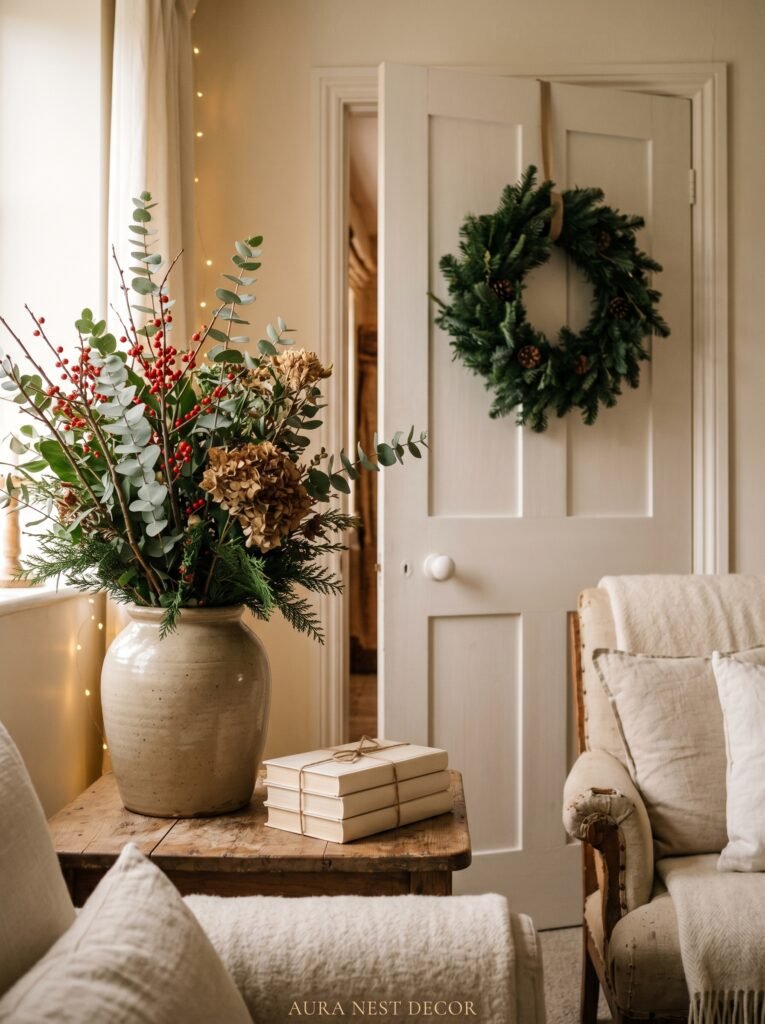
The British knack for styling a Christmas living room with paperwhites and amaryllis in simple terracotta pots is genuinely underrated. Walk through any National Trust property gift shop in November and you’ll see them everywhere — bulbs in plain clay pots, just beginning to push up their first inch of green growth, arranged on windowsills and side tables with no fanfare whatsoever.
It’s effortless. It’s beautiful. And it brings something into a farmhouse Christmas living room that no manufactured decoration can: actual life. Actual growth. The quiet thrill of watching something bloom in the middle of winter.
Amaryllis in particular is perfect for modern farmhouse styling. Choose white or deep burgundy varieties — avoid the bright lipstick reds — and pot them in aged terracotta or simple white ceramic. Group three together on a console table or side table. Let them grow. They’ll be blooming by Christmas Day if you start them in late November, and they’re spectacular.
Americans can find these at virtually any garden center or farm stand starting in October. This is one trend worth crossing the Atlantic for.
6. Why Every Modern Farmhouse Christmas Room Needs at Least One Lantern
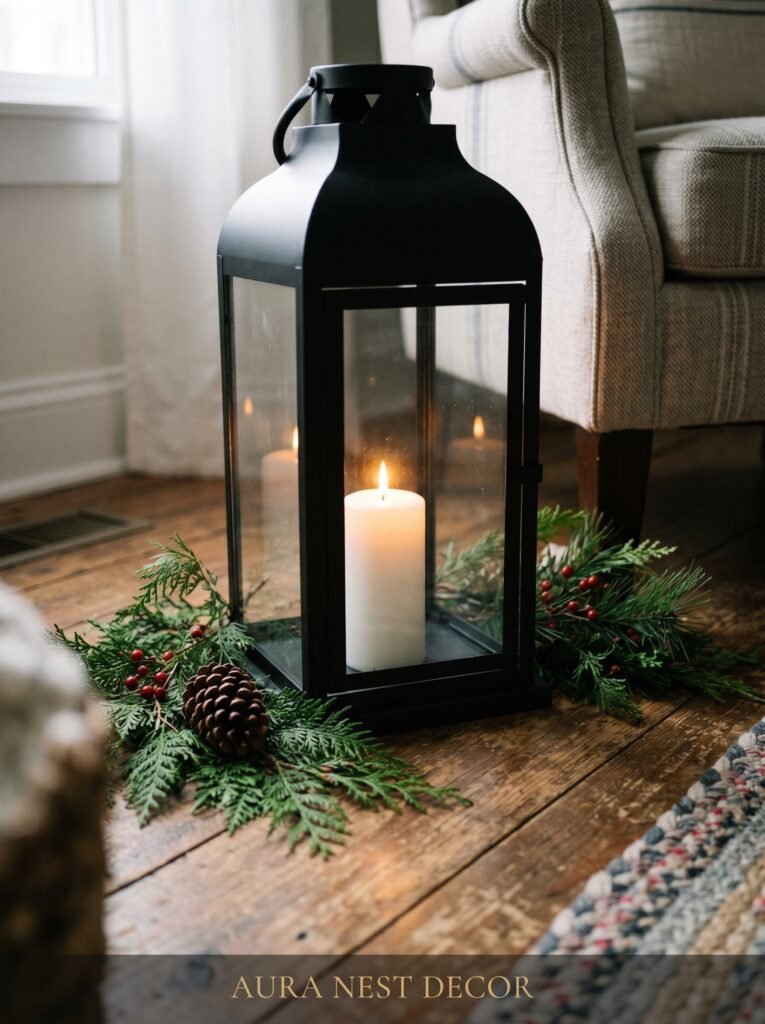
Not a candle. Not a sconce. A lantern.
There’s something about a lantern — the kind with an aged metal frame and glass panels, sized somewhere between a small lamp and a stepping stone — that does for a farmhouse room what a fireplace does for a house. It creates a center of warmth. An actual reason to look at a corner of the room.
For Christmas, you tuck pillar candles inside them (real or flameless, depending on your household and your nerves) and surround the base with a loose wreath of eucalyptus, a couple of cinnamon sticks, and maybe a mercury glass ornament or two just dropped casually nearby. You can place them on the hearth, on either side of the fireplace opening. You can cluster a small one with a medium one on a console table. You can put one on the coffee table as a centerpiece with a ring of greenery around its base.
The effect is the amber glow of an Edison bulb at 7pm stretched across the whole room. It’s the visual equivalent of turning the volume down on everything stressful.
Get lanterns in matte black or aged bronze. Avoid anything shiny or overly ornate. The simpler the better.
7. How to Style Garland Like a Designer Instead of a Hardware Store Display
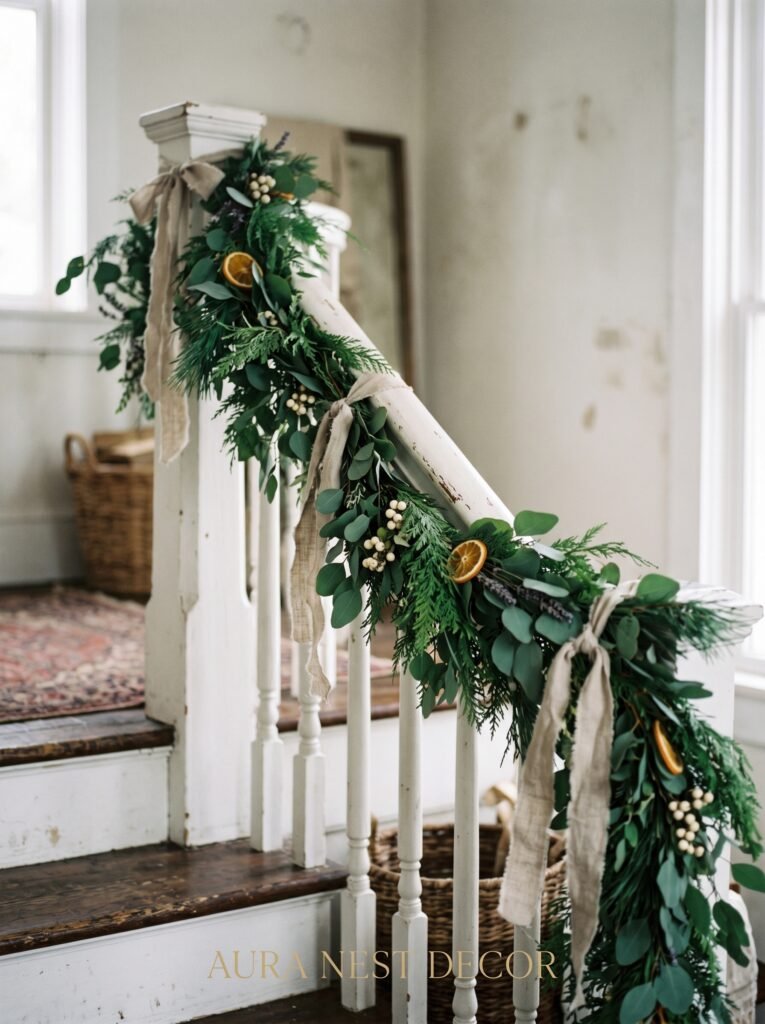
Most garland-styling errors come from the same place: too much, too uniform, too perfectly draped. Real garland in a beautiful room looks like it was placed there by someone who genuinely loves the space, not someone following instructions on a box.
The technique is this: anchor your garland at the ends and in the middle, then let the rest droop naturally — more than you think it should. The swag should look almost lazy. A little heavy. Like it’s been there since the first frost.
Then layer in. Fresh eucalyptus (the smell alone is worth every penny), cedar sprigs, a few sprigs of berry — white snowberries if you can find them, which read beautifully against cream walls. Tuck dried orange slices at intervals. A few pine cones near the anchor points. Ribbon sparingly: if you use it at all, make it wide velvet ribbon in sage, cream, or a deep muted plaid. Let it drape, not bow. Bows are for gift wrap.
“Garland should look like it arrived there naturally, not like it was installed.”
8. The Forgotten Surface That Can Transform a Living Room at Christmas
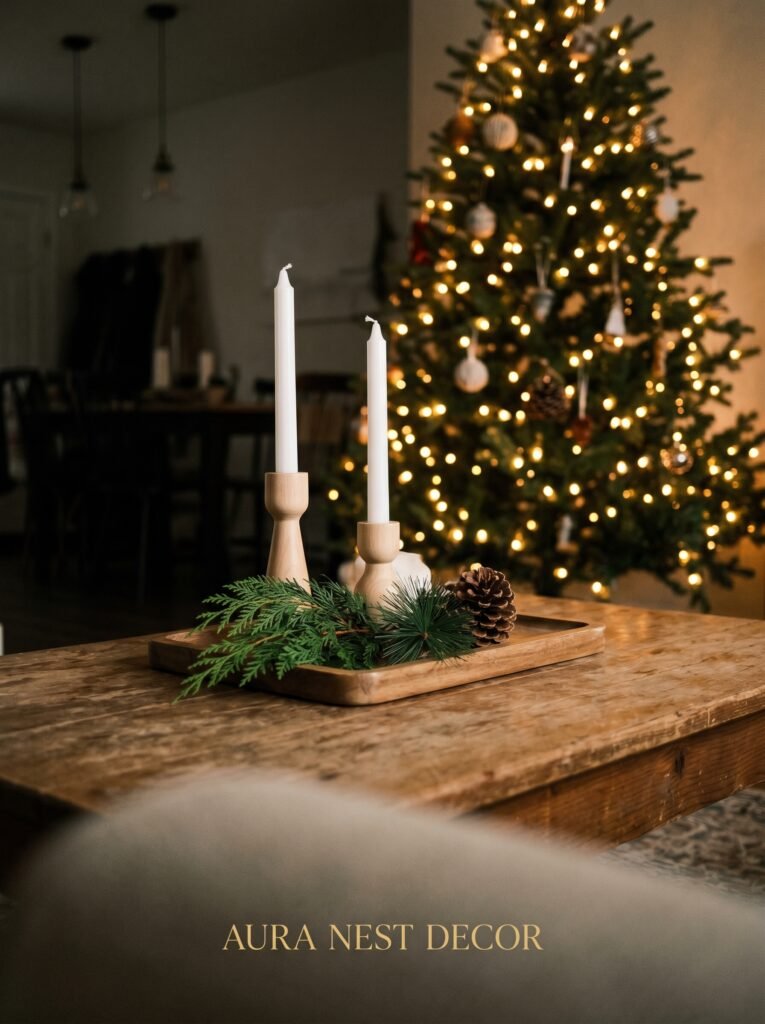
The coffee table. People style their mantels beautifully, dress their trees with care, drape their windows in garland, and then abandon the coffee table entirely or just shove a poinsettia in the center and call it done.
The coffee table is the geographic heart of a living room. It’s where everyone’s eyes land when they sit down. In December, it deserves intention.
A modern farmhouse coffee table Christmas setup: a raw wooden or concrete serving board or tray as your base. Inside the tray, a cluster of three pillar candles at varying heights, all in cream or white. Around them, a loose scatter of pinecones, a few dried orange slices, and two or three small mercury glass ornaments just set down like afterthoughts. That’s it. Contained, cohesive, beautiful.
If your table is small, even simpler: a single large glass vase with a few stems of eucalyptus and one amaryllis stem. The negative space around it tells the story.
The point is: the coffee table should feel like part of the room’s Christmas design, not an afterthought that escaped the edit.
9. The Textiles That Make the Whole Room Feel Like a Hug
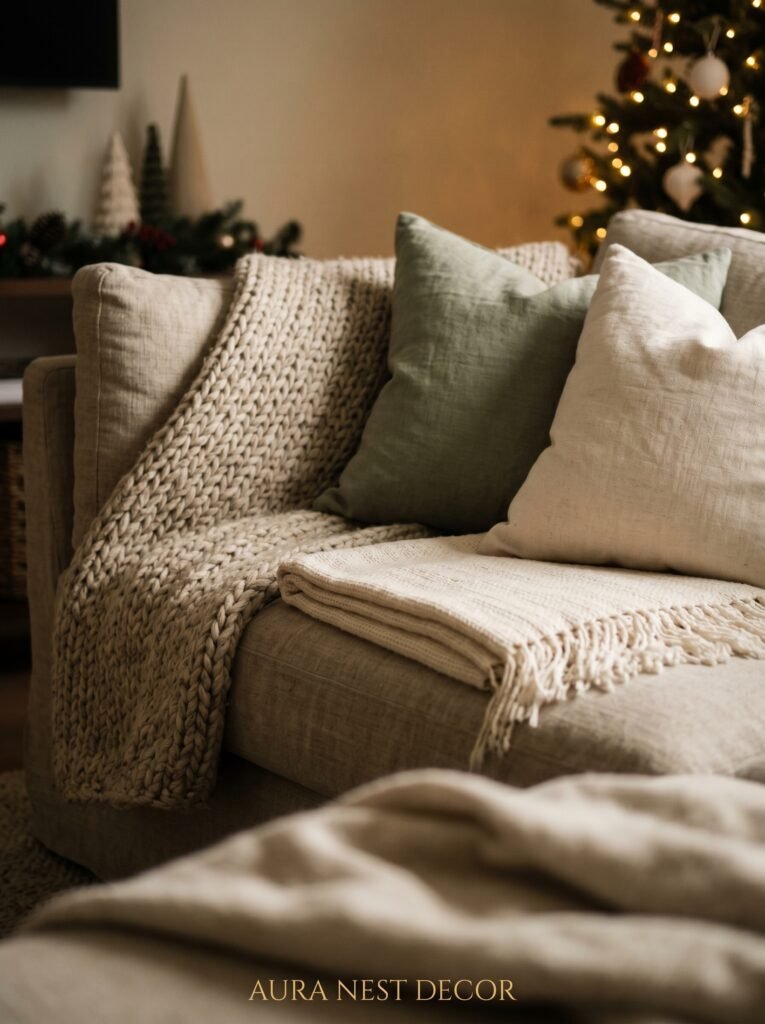
This is the thing that makes a modern farmhouse Christmas living room actually feel different when you walk into it rather than just look different in a photograph.
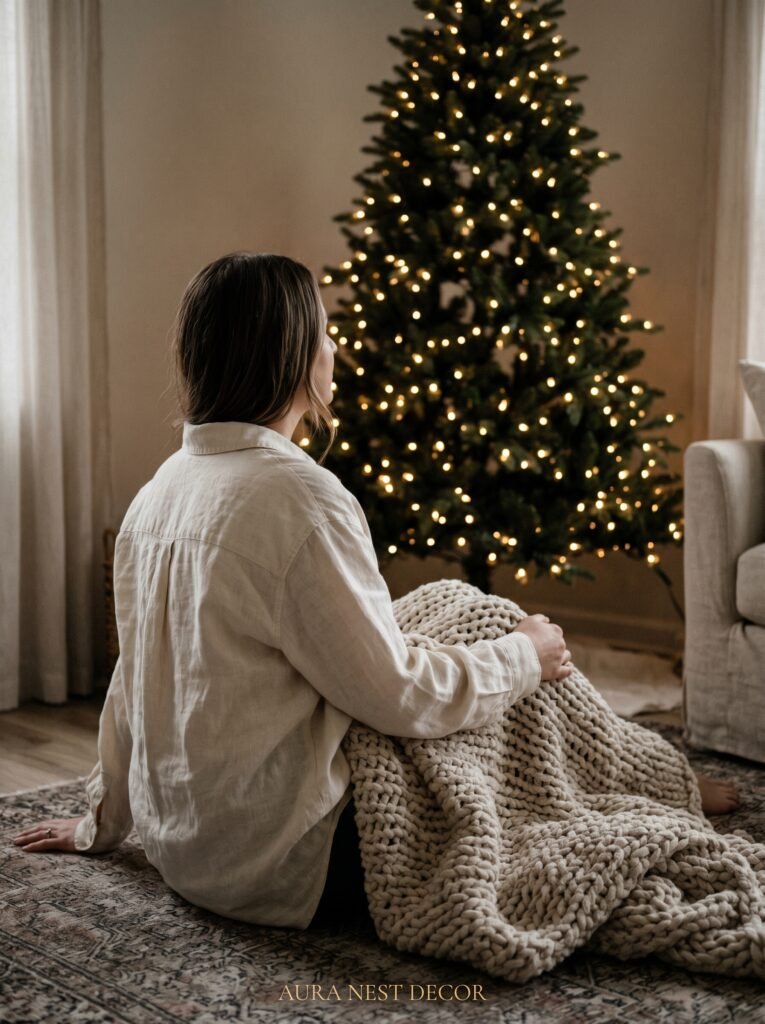
Layer your textiles like you’re building warmth from the ground up. Chunky knit throws in oatmeal, cream, or soft grey — draped over the arm of the sofa, not folded neatly on the back of it. A faux sheepskin or genuine sheepskin over an armchair. Linen pillow covers in natural tones with one or two seasonal additions — a buffalo check in cream and charcoal, or a subtle embroidered holiday motif rather than anything with a saying on it (please, no “Let it Snow” pillows in a modern farmhouse room, I’m begging you).
A jute or wool rug under the coffee table, if you don’t already have one, immediately grounds the room.
The goal is that when someone sits down in your living room in December, they want to stay there. The textiles are why. They’re tactile permission to stop moving, stop scrolling, and just exist in a beautiful room for a while.
10. Making a No-Fireplace Living Room Feel Just As Cozy
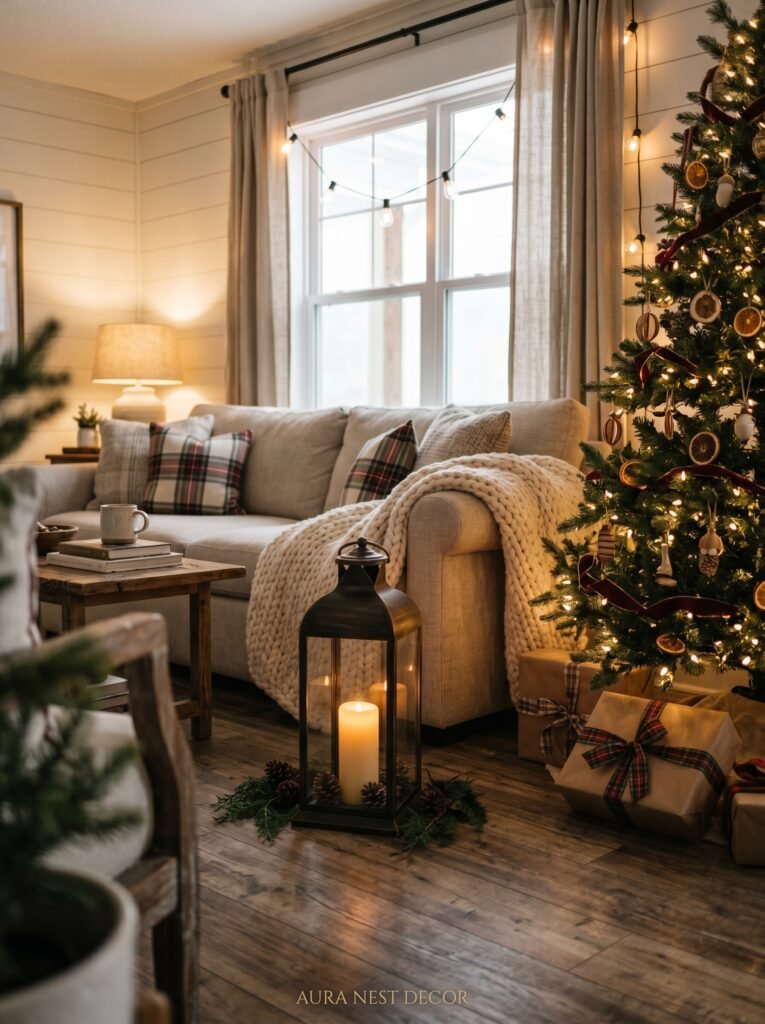
Not every home has a fireplace. Many beautiful city apartments and older terraced houses in the UK have had theirs bricked up. Many American open-plan homes were built without them. This is not a defeat.
Create your focal point wall. Choose one wall — ideally the one the sofa faces — and build everything from there. A large mirror with a simple frame in aged wood or matte black becomes your mantel’s equivalent: hang it at mantel height and style the console table or dresser beneath it exactly as you would a mantel. Greenery, candles, the whole composition.
Then light that wall. A collection of pillar candles on the console surface. Lanterns flanking the mirror. A string of warm white lights arranged in a loose arch over the mirror. When everything else is off and those lights are on, the room does something extraordinary. It finds its warmth.
Nobody misses the fireplace.
11. The Small Details That People Notice Even When They Can’t Name Them
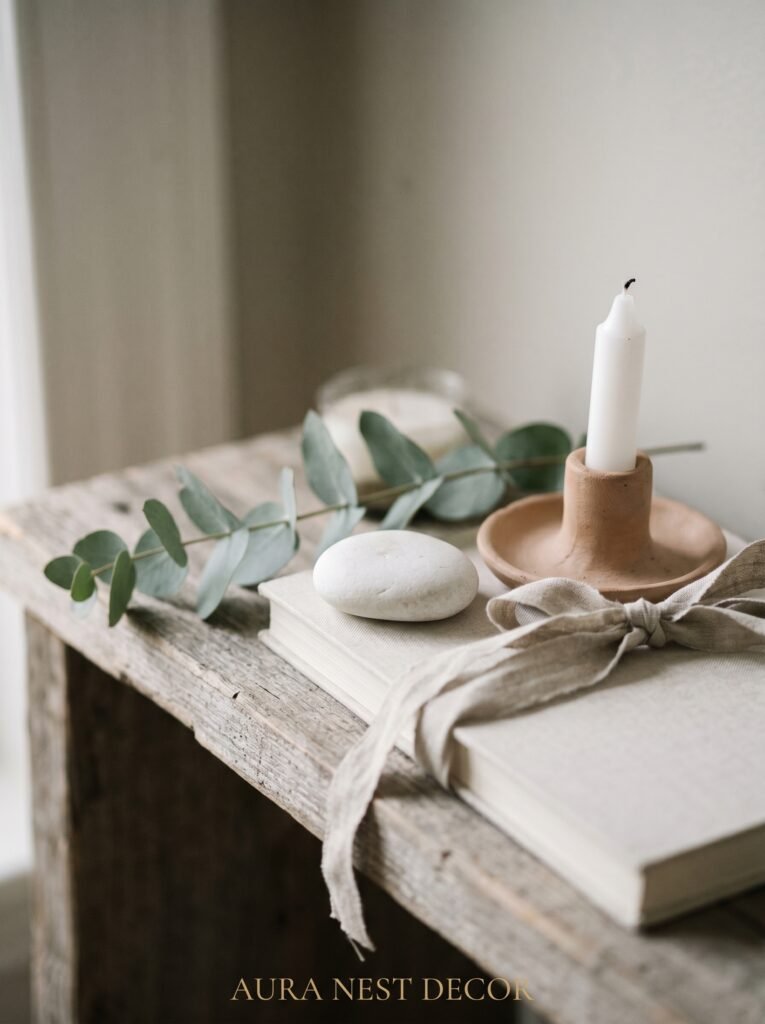
There’s a category of Christmas styling decisions that visitors never consciously articulate but always feel. These are the micro-details that separate a room that looks good from a room that feels enchanting.
A small dish of whole cloves on the side table. The smell of cinnamon and citrus that hits you before you even register it consciously. A few sprigs of fresh rosemary tucked into the greenery — it looks like miniature pine and smells extraordinary when brushed past. Book spines turned backwards on a bookshelf to reveal the cream paper edges instead of the titles, creating an instant textural backdrop for ornaments and greenery displayed in front.
A vintage wooden advent calendar on the mantel or side table, even if you don’t use it. The patina of something old and loved in a modern room says more than any new decoration can.
These details cost almost nothing. They take minutes. And they’re exactly what someone means when they say “I don’t know what it is, but this room just feels like Christmas.”
12. The One Rule That Stops a Modern Farmhouse Christmas Room from Feeling Overdone
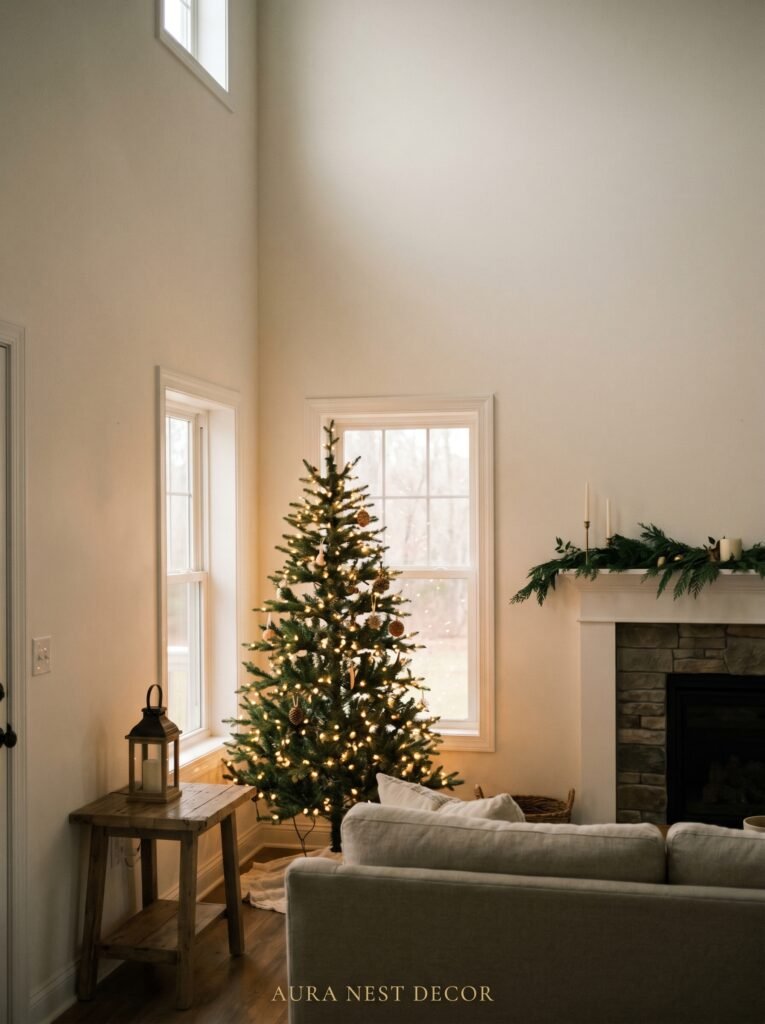
Everything you add should feel like it belongs to the room even when it’s not Christmas.
That’s it. That’s the whole rule.
If you look at a decoration and you can only imagine it in December, it probably doesn’t belong in a modern farmhouse living room. The greenery, the candles, the natural textures, the linen and wool — these are things that could theoretically live in your home year-round. They’re just expressing something slightly different right now.
When you shop with this principle, you stop buying decorations and start buying things you genuinely love. And rooms decorated with things you genuinely love always look better than rooms decorated with things you thought you were supposed to buy.
Put back the plastic wreath. Put back the light-up reindeer. Pick up the eucalyptus. Pick up the good candles. Go home and let the room tell you what it needs.
—
❓ FAQ
Q: How do I achieve the modern farmhouse Christmas look on a tight budget? A: Start with what you already have — linen throws, wooden trays, neutral candles — and add only fresh or dried natural elements. A bunch of eucalyptus from a florist, a bag of pinecones from a garden center, and a few white pillar candles from any homeware shop will do more for your room than a basket of purchased ornaments. The aesthetic is fundamentally about restraint, which happens to be very budget-friendly.
Q: Can I mix real and artificial Christmas trees with this aesthetic? A: Absolutely. A quality artificial tree in a slim or pencil silhouette can look beautiful in a modern farmhouse living room, especially when decorated with warm white lights and natural ornaments. What matters far more than real versus artificial is the shape of the tree and the restraint of the decorating. A sparsely decorated real tree with beautiful lights will always look better than an over-decorated artificial one, but the reverse is also true.
Q: What’s the best way to incorporate traditional Christmas colors into a modern farmhouse palette without it looking clash? A: The key is choosing muted, deeper versions of those traditional colors. Instead of bright red, use deep burgundy or pomegranate. Instead of bright green, use sage or eucalyptus green. Instead of gold, use honey or antique brass. These dusty, aged versions of the classic Christmas palette sit beautifully within a neutral farmhouse room without jarring against the linen and wood tones.
—
💭 Final Thoughts
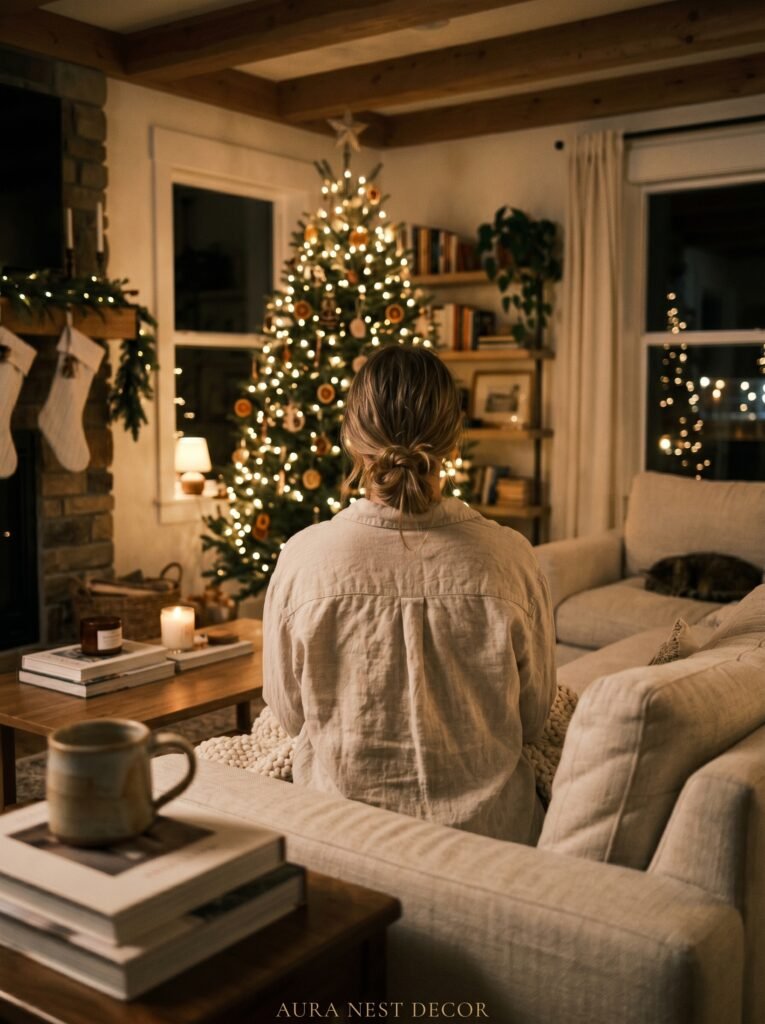
A modern farmhouse Christmas living room isn’t a style trend you chase — it’s a feeling you build slowly, starting with what you love and subtracting what you don’t need. The rooms that stop you mid-scroll on Pinterest aren’t full of expensive purchases; they’re full of intention. Of restraint. Of someone trusting that less, done beautifully, is always more.
This December, before you add a single new thing, look at what’s already in your living room and ask yourself what it’s trying to tell you.