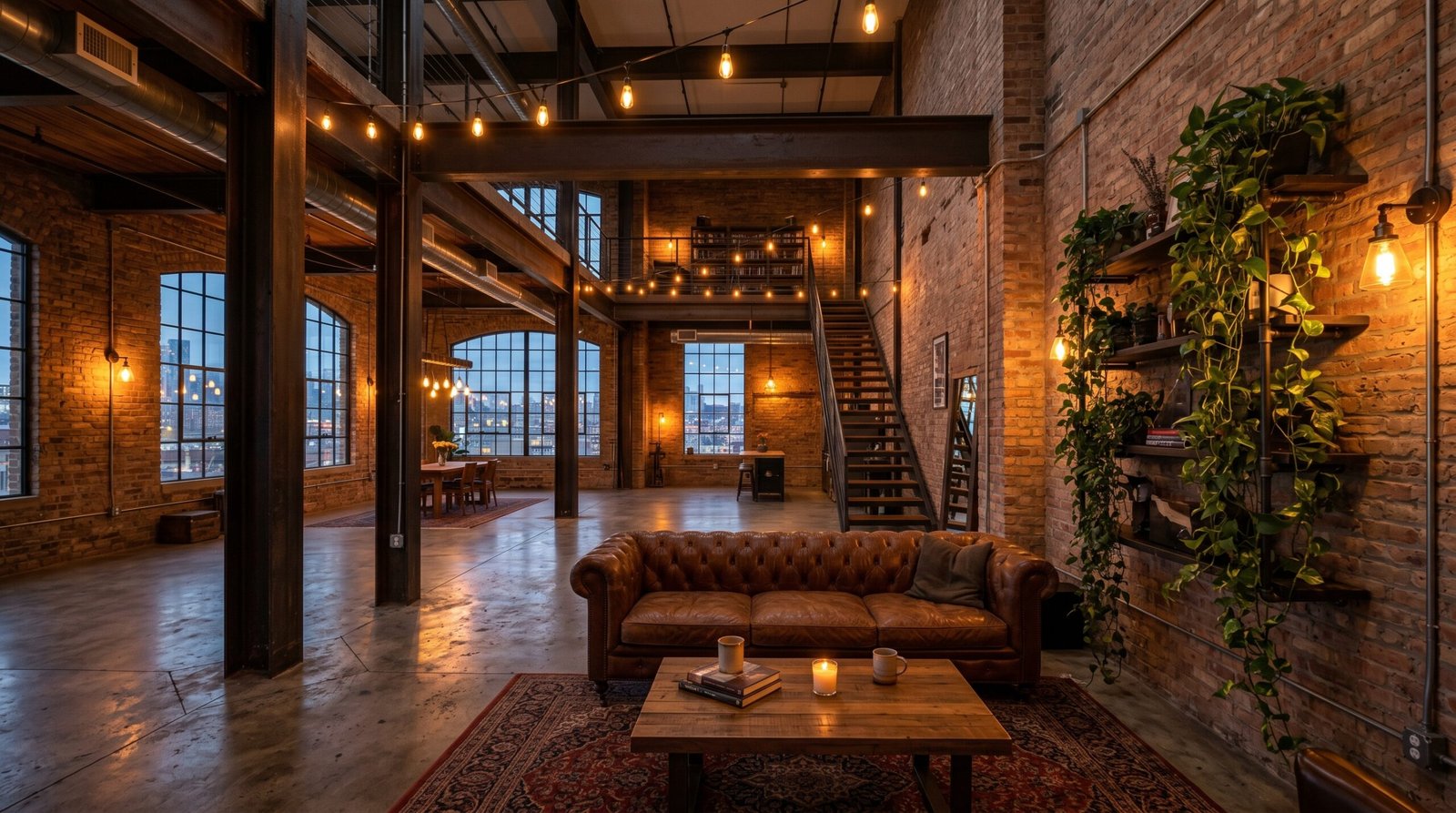
The Raw, Honest Beauty of Industrial Interior Style: How to Make Exposed Brick and Steel Feel Like Home
There’s something quietly radical about walking into a space that refuses to hide its bones. Industrial interior style does exactly that — it strips away the pretense, celebrates the imperfect, and somehow turns exposed pipes and weathered wood into something that feels more honest, more alive, than any polished showroom ever could.
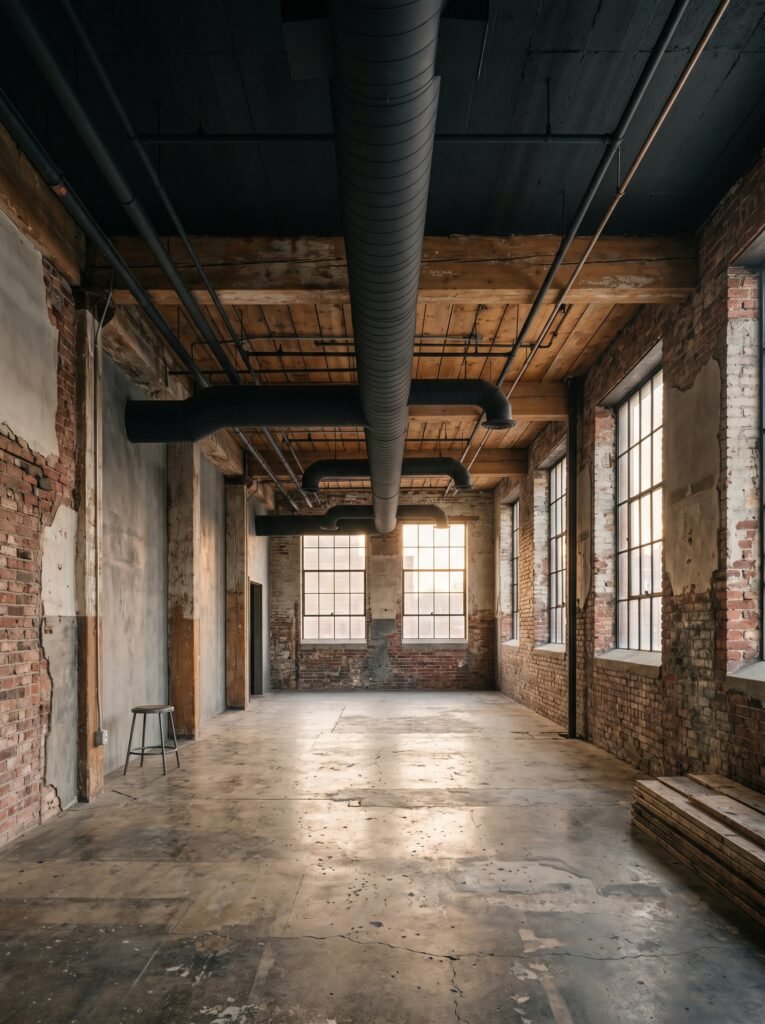
—
Table Of Content
1. What Industrial Style Actually Means (And Why People Fall in Love With It)
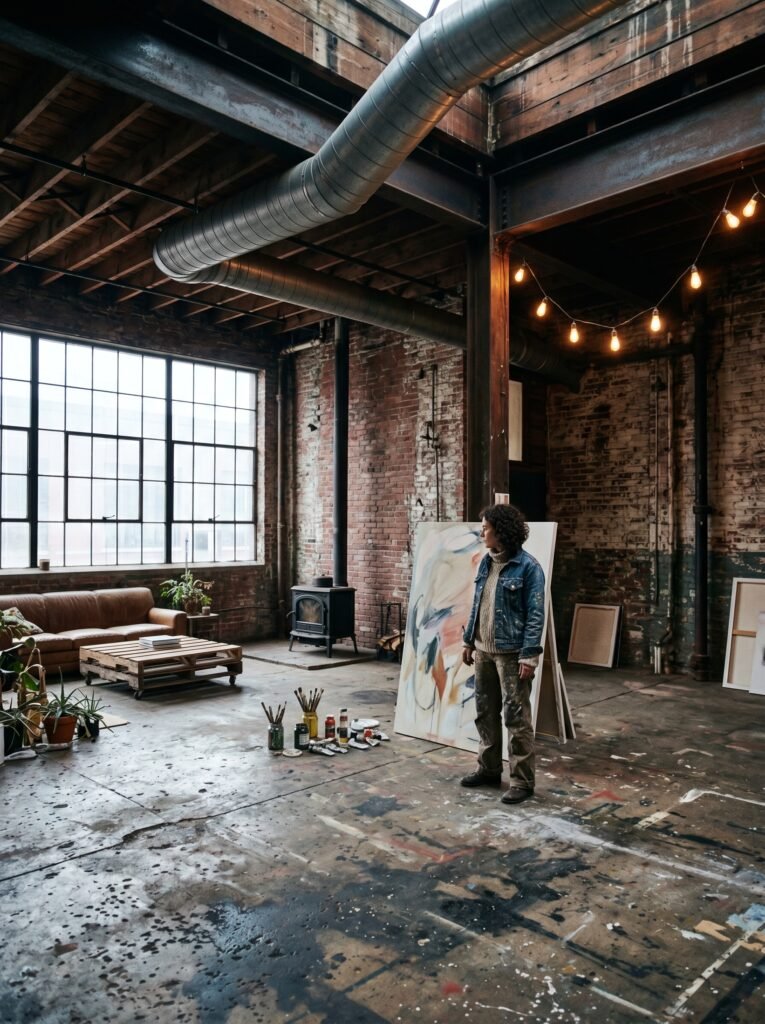
Industrial interior design draws its DNA from the repurposed factories, warehouses, and loft spaces that began appearing in major cities during the 1970s and 1980s. Artists and creatives — priced out of traditional housing — moved into these cavernous, utilitarian spaces and did something unexpected: they didn’t renovate away the rawness. They leaned into it. High ceilings with exposed ductwork, brick walls stripped of plaster, concrete floors scarred by decades of machinery — these weren’t flaws to fix. They became the features.
What makes this style so enduring isn’t nostalgia alone. It’s the emotional honesty of it. Industrial spaces feel like they have a past, a story etched into every surface. And in a world saturated with perfectly staged, algorithmically curated interiors, that authenticity hits differently.
“Industrial design doesn’t ask you to be perfect — it asks you to be real.”
The beauty is that this aesthetic isn’t locked inside actual converted warehouses anymore. It has traveled from urban lofts into suburban homes, small apartments, and even cozy cottages — because the philosophy behind it is universal. Embrace what’s real. Work with what you have. Find beauty in structure itself.
2. The Core Elements That Define an Industrial Space
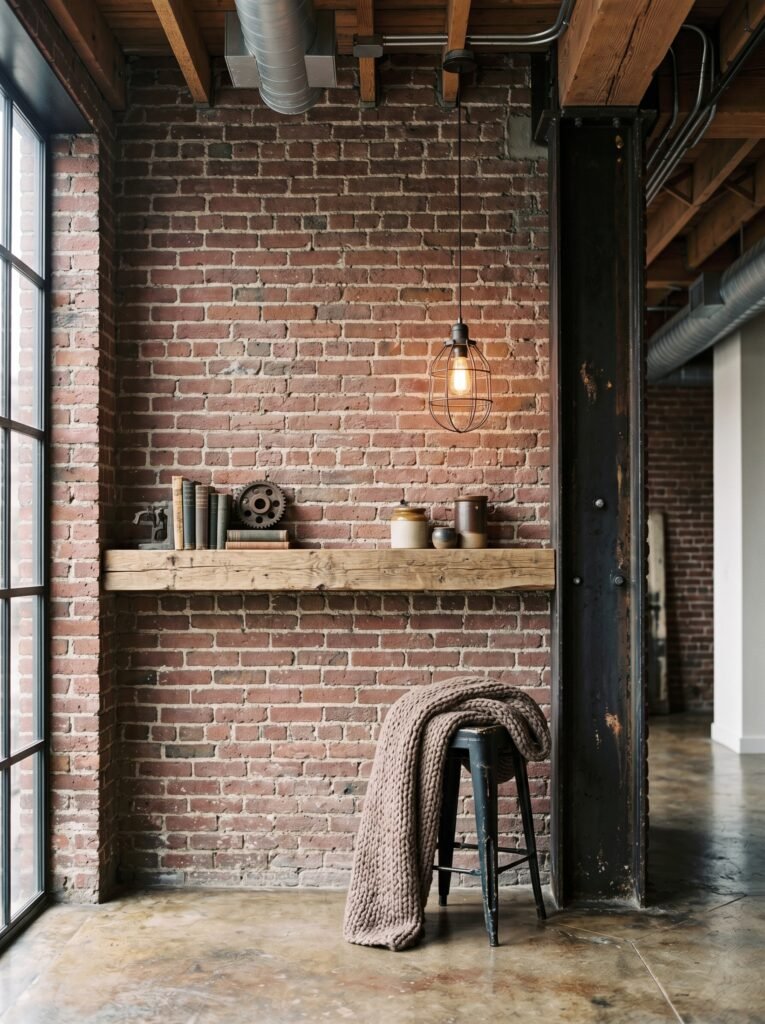
If you want to understand industrial style at its foundation, think about five essential ingredients: raw materials, neutral tones, visible structure, functional objects, and deliberate contrast. These five elements work together to create that unmistakable feeling — rugged but refined, minimal but layered.
Raw materials mean exposed brick, untreated wood, concrete, and stone. These surfaces aren’t smoothed over or hidden — they’re celebrated in their most natural state, complete with texture and irregularity. Visible structure means letting the architecture speak: open ceiling beams, exposed pipes, steel columns, and ductwork left uncovered become part of the visual language of the room.
Functional objects — think vintage factory pendants, metal stools from old workshops, reclaimed wooden shelving — bring a sense of purpose to every piece of furniture. Nothing is decorative for its own sake. And the contrast element is what keeps the space from feeling cold or institutional: soft textiles, warm lighting, and carefully chosen greenery create moments of unexpected tenderness within the harder edges.
3. The Color Palette That Makes Industrial Design Work
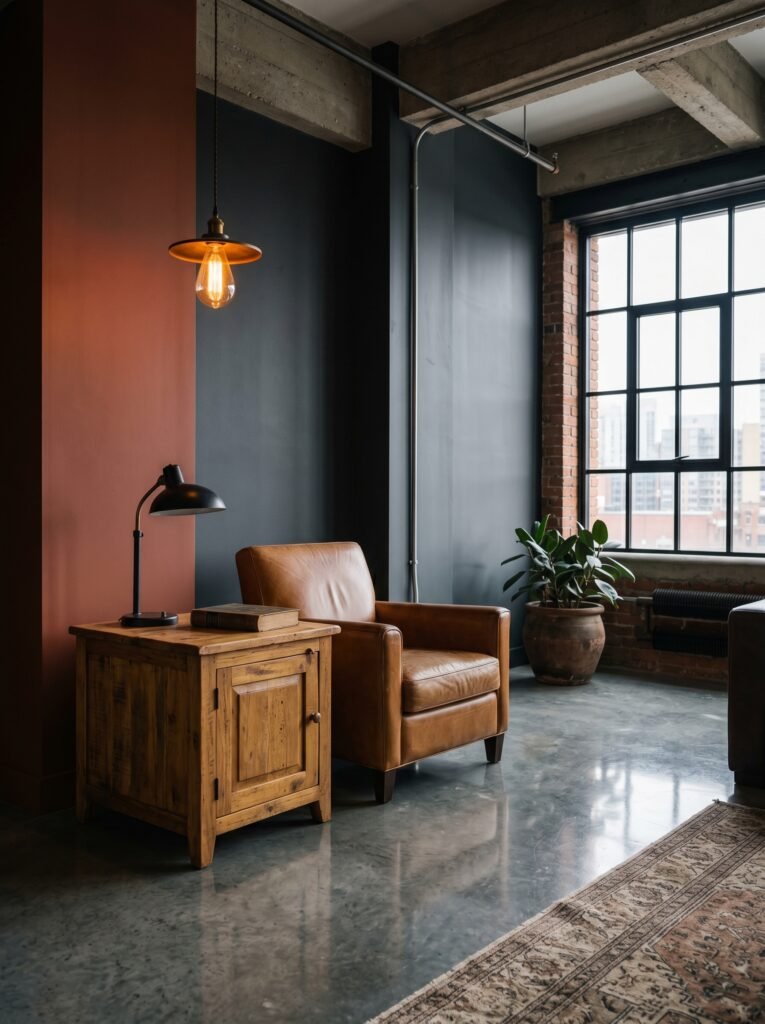
Color in industrial interiors is intentional and restrained — but restrained doesn’t mean boring. The core palette leans on charcoals, slate grays, deep blacks, warm taupes, and the natural tones of brick and aged wood. These are colors that feel grounded, like the earth itself has been pulled inside.
What makes this palette sing is how it interacts with texture. A matte black wall doesn’t feel flat when it’s standing beside a section of worn, honey-colored wood. A cool gray concrete floor comes alive when it reflects the warm glow of an Edison bulb overhead. The palette works because the materials themselves add the color variation — you’re not relying on paint alone to create visual interest.
That said, many modern interpretations of industrial style have begun introducing warmer tones — deep terracotta, dusty olive, caramel leather — to soften the aesthetic and make it feel more livable and personal. This evolution is precisely why the style has such longevity: it absorbs new influences without losing its essential character.
4. The Power of Exposed Brick — Why No Other Texture Compares

Imagine running your hand along a wall of exposed brick. Feel the roughness, the irregularity, the way each individual brick has its own personality — a chip here, a variation in color there. That sensory experience is impossible to replicate with wallpaper or paint, and it’s exactly why exposed brick holds such a special place in industrial design.
Brick brings warmth into a style that could otherwise skew cold. Its reddish-brown tones — ranging from deep terracotta to almost dusty pink — act as a natural heating element in the visual sense, softening the grays and blacks that dominate the rest of the palette. In a living room, a single exposed brick wall becomes the anchor of the entire space. In a kitchen, it transforms backsplash into architecture.
If you don’t have real brick, Venetian plaster or faux brick panels can approximate the effect — but if you ever have the option to strip plaster and reveal what’s underneath, take it. What you find will almost certainly be worth it.
5. Lighting in Industrial Spaces: Where Function Becomes Art
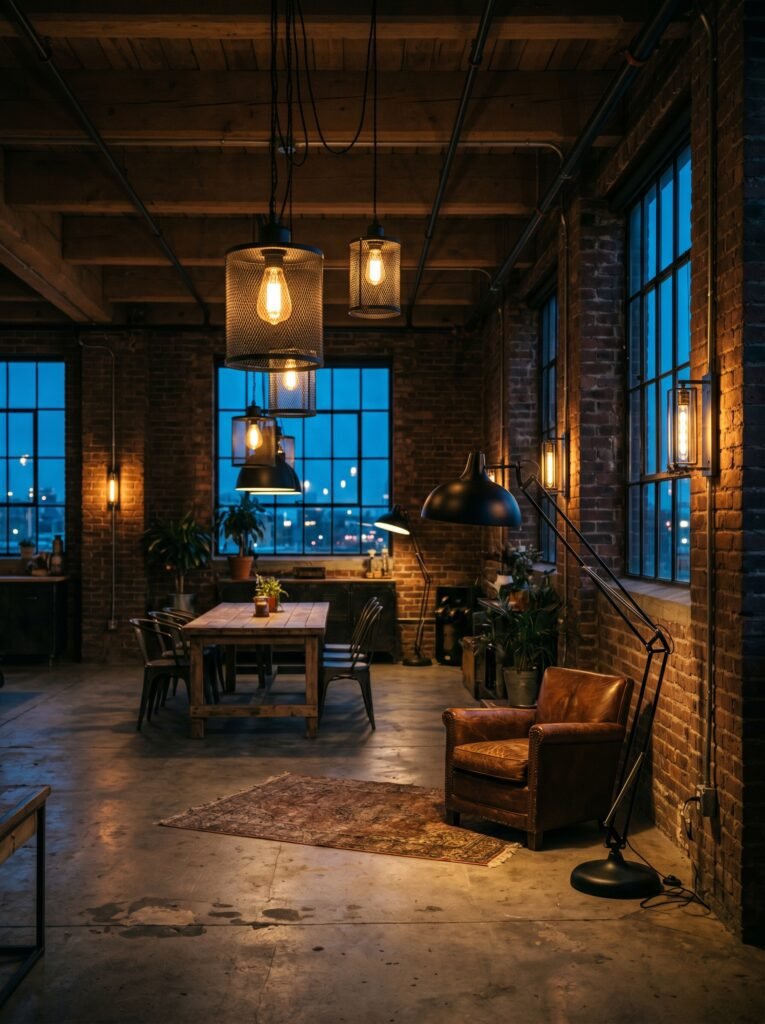
Lighting is where industrial interiors become genuinely cinematic. The style has given us some of the most iconic light fixtures in modern design — the Edison bulb hung on a simple cord, the factory-style cage pendant, the oversized arc floor lamp with a matte black finish, the metal wall sconce that casts dramatic shadows. Each one is functional first, beautiful second — but somehow that order of priority produces the most visually compelling results.
The key principle in industrial lighting is warmth through contrast. You want the light itself to be warm — amber-toned Edison bulbs or warm white LEDs — while the fixture remains cool and metallic. That interplay creates a quality of light that feels both dramatic and deeply inviting, like the golden hour inside a room.
“In industrial spaces, the light doesn’t just illuminate — it transforms.”
Layering is also essential. A single overhead pendant isn’t enough. You need floor lamps creating pools of warm light, under-cabinet lighting in the kitchen, candles or table lamps for evening atmosphere. This layered approach is what separates a genuinely atmospheric industrial space from one that just looks like an empty warehouse.
6. Furniture Choices That Carry the Industrial Spirit
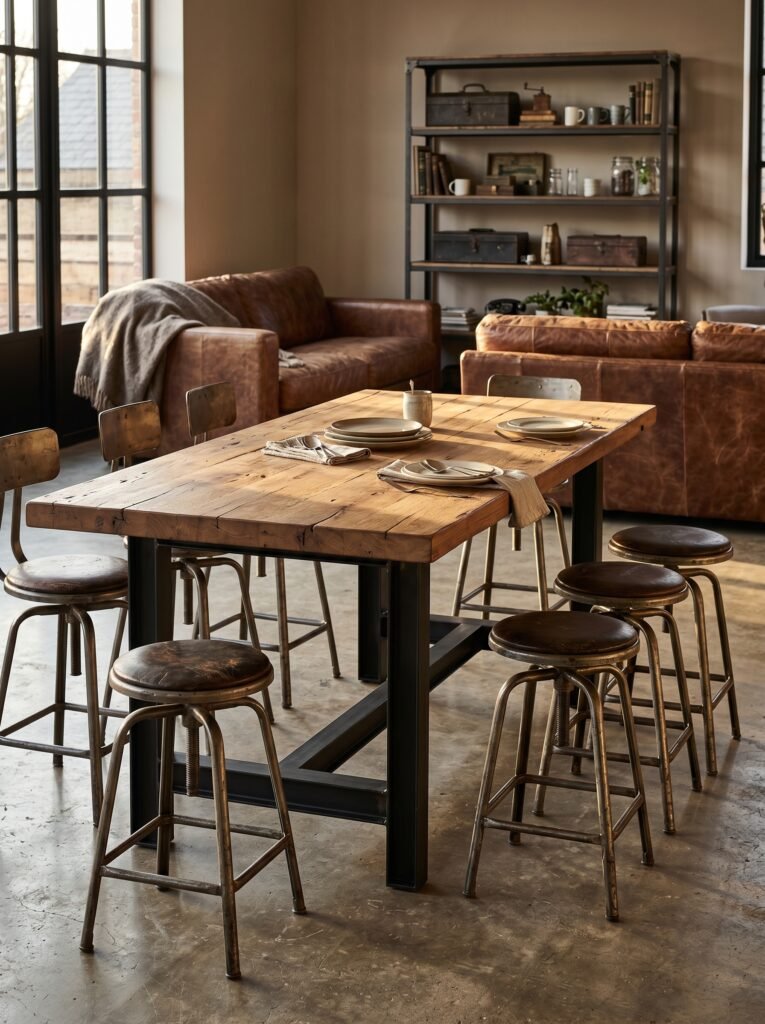
Industrial furniture has a distinct philosophy: it’s built to last, not to impress. Think solid steel-frame dining tables with reclaimed wood tops, leather sofas with a worn patina that only gets better with age, metal shelving units originally designed for workshops, and wooden benches that double as coffee tables and storage.
The proportions tend to be generous — substantial pieces that feel anchored to the floor. There’s nothing flimsy about industrial furniture. Even when a piece is deliberately simple, it has a physical presence that commands the room. This is furniture you can imagine surviving for decades, developing character with every scratch and scuff.
One of the most beautiful aspects of sourcing furniture for an industrial space is that vintage and secondhand markets are your best friends. A worn leather club chair found at a flea market, a factory stool discovered at an estate sale, a metal locker repurposed as a hallway cabinet — these pieces carry genuine history, and history is the most valuable material in industrial design.
7. Open Floor Plans and the Architecture of Space
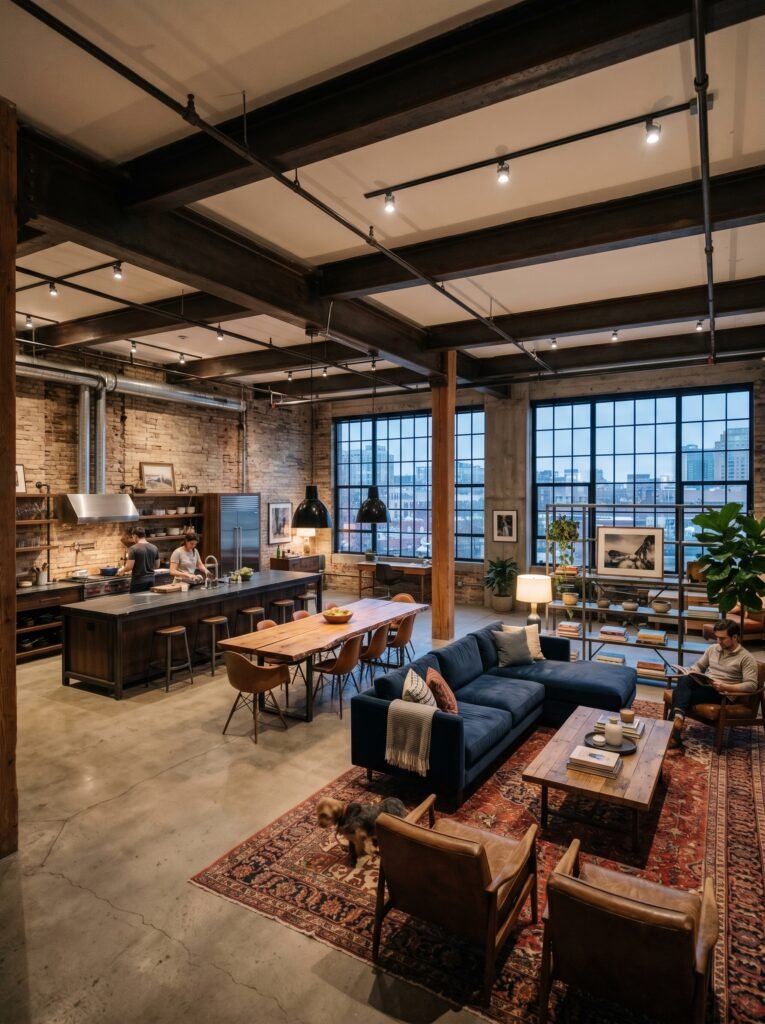
Industrial design loves space — specifically, the generous, uninterrupted flow of an open floor plan. This isn’t accidental. The original industrial spaces were single large rooms, and that openness became one of the defining characteristics of the aesthetic. When walls are removed or minimized, the architectural elements — beams, columns, the ceiling itself — become more visible and more powerful.
In practical terms, this means that industrial interiors often blur the lines between kitchen, dining area, and living room. Rather than being separated by walls, these zones are defined by furniture arrangement, rugs, and lighting. A large kitchen island becomes the dividing line between cooking and dining. A vintage Persian rug grounds the seating area within a larger space.
This approach requires thoughtful planning. Without walls to contain them, spaces can feel chaotic or undefined. But when executed well, the open plan creates a sense of freedom and possibility that enclosed rooms simply cannot match.
8. The Role of Metal — Steel, Iron, and Copper in Every Detail
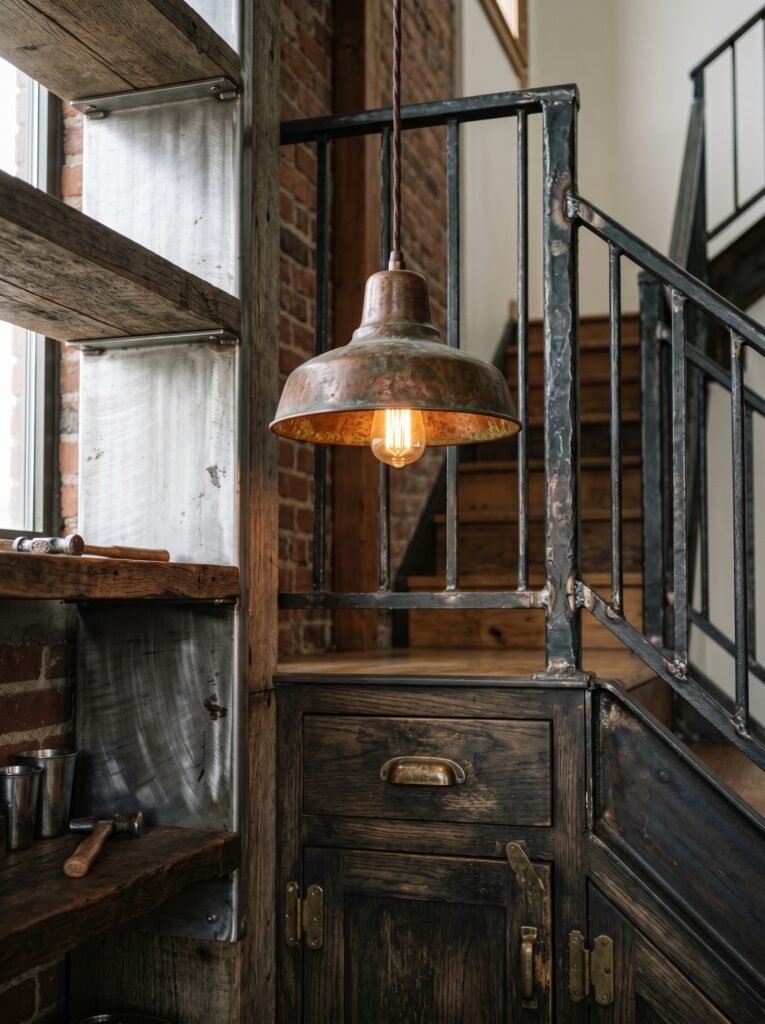
Metal is the spine of industrial design. It appears in furniture frames, light fixtures, exposed pipes, window frames, hardware, and decorative objects. But not all metal is created equal in this context — different metals carry different emotional registers, and knowing how to balance them is key.
Steel and iron are the foundational metals: cool, strong, structural. They appear in shelving, table legs, stair railings, and window frames. Copper and brass introduce warmth and a hint of luxury — used in plumbing fixtures, pendant lights, and cabinet hardware, they soften the harsher edges of the industrial palette. Aged or blackened metal finishes are particularly powerful, suggesting a history of use and wear that feels authentic rather than manufactured.
One design principle worth following: mix your metals deliberately, not randomly. Choose two or three metals and repeat them throughout the space to create visual cohesion. Steel for structure, copper for warmth, and aged brass for detail is a combination that almost never fails.
9. Bringing Softness Into the Industrial Frame
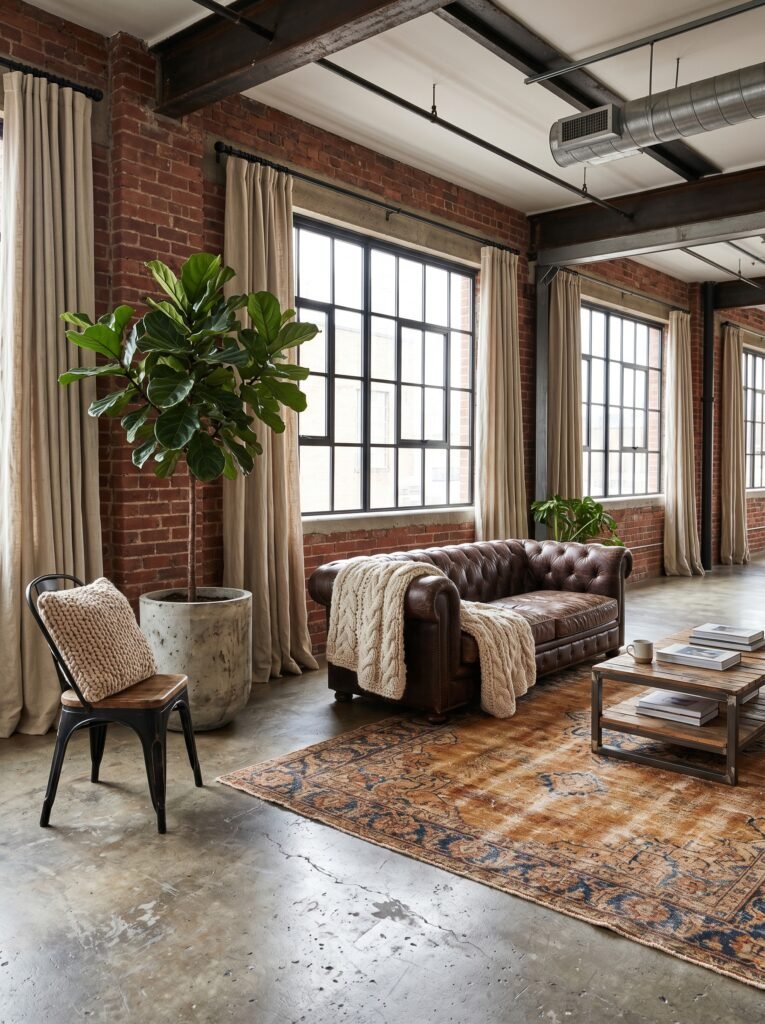
Here’s a truth that surprises many people new to industrial design: the style needs softness to be livable. Without it, you end up with something that looks more like a building site than a home. The art is in knowing where to introduce warmth and texture without diluting the essential character of the space.
Textiles are your most powerful tool here. A thick wool throw draped over a leather sofa, linen curtains pooling on a concrete floor, a chunky knit cushion on a metal chair — each of these creates a moment of comfort within the harder architectural framework. Rugs are particularly transformative: a large, vintage-style rug in warm tones can single-handedly make a stark industrial space feel deeply cozy.
“Softness in an industrial space isn’t a compromise — it’s the secret ingredient.”
Plants also play a crucial role. The organic, irregular shapes of trailing pothos, oversized fiddle-leaf figs, or cascading monstera plants create a visual counterpoint to the straight lines and hard materials that dominate industrial design. And there’s something deeply satisfying about the combination of living green against aged brick or weathered steel — it feels like nature and industry shaking hands.
10. Industrial Style in the Kitchen: Where Utility Becomes Beauty
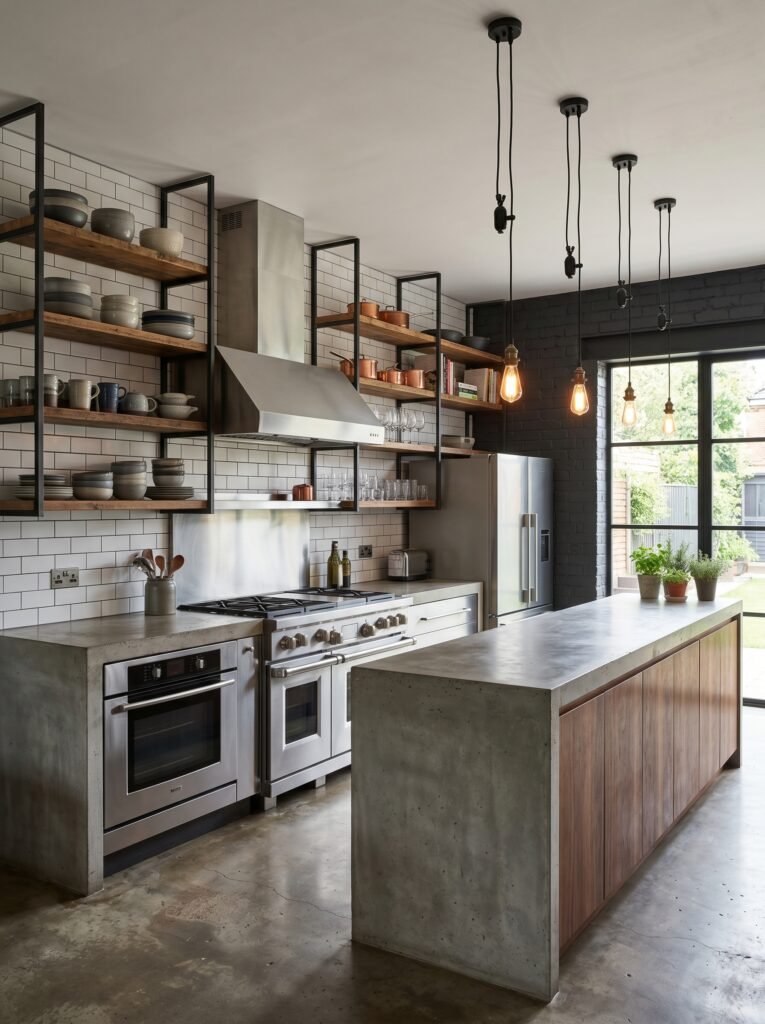
The kitchen might be the room where industrial style feels most naturally at home. After all, professional kitchens have always embraced industrial aesthetics — stainless steel surfaces, open shelving, pendant lighting, commercial-grade appliances. Bringing that energy into a residential kitchen creates something that feels both purposeful and deeply satisfying.
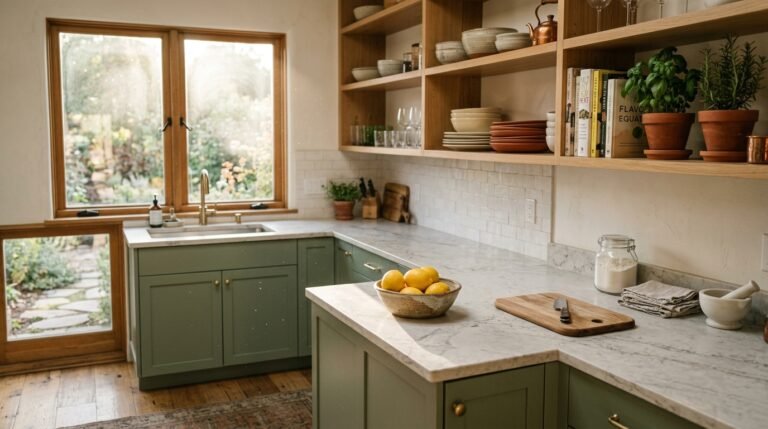
Open shelving is a cornerstone of the industrial kitchen. Rather than hiding everything behind cabinet doors, shelves allow you to display your collection of ceramics, glassware, and cookbooks as part of the room’s design. The key is curation: only display what you genuinely love and use. Industrial kitchens have no patience for clutter, but they have infinite appreciation for honest, well-made objects.
Countertops in honed concrete, butcher block wood, or brushed stainless steel are all authentic choices. Subway tiles in matte white or even pressed tin tiles for the backsplash carry the industrial spirit beautifully. And nothing transforms a kitchen ceiling quite like pendant lights on adjustable cord pendants hung at varying heights — creating a visual rhythm that feels dynamic and intentional.
11. Small Spaces and the Industrial Approach — It Can Work Anywhere
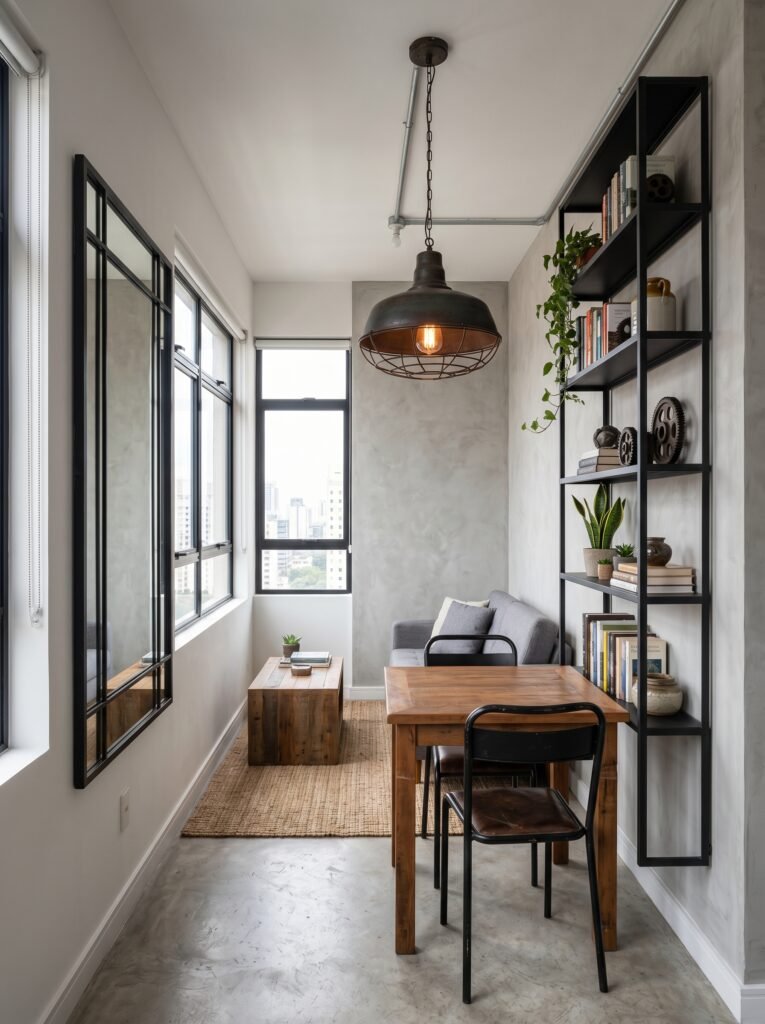
One of the most persistent myths about industrial interior style is that it requires large spaces to work — that only loft apartments and open-plan houses can pull it off. This simply isn’t true. The industrial aesthetic scales beautifully to smaller spaces when you understand which elements to prioritize.
In a small apartment, focus on two or three key industrial elements rather than trying to achieve everything at once. A statement pendant light above the dining table, a metal-framed bookshelf along one wall, and exposed brick or a concrete-effect wall treatment can be enough to establish the aesthetic. The mistake people make is overcrowding a small space with too many heavy, dark pieces — industrial design in a compact room needs editing.
Mirrors with industrial-style black metal frames are genuinely brilliant in small industrial spaces — they amplify light, create depth, and reinforce the aesthetic simultaneously. And remember that vertical space matters enormously: floor-to-ceiling shelving or high-mounted hooks and rails draw the eye upward, making any ceiling feel higher and any room feel larger.
12. How to Avoid the Most Common Industrial Design Mistakes
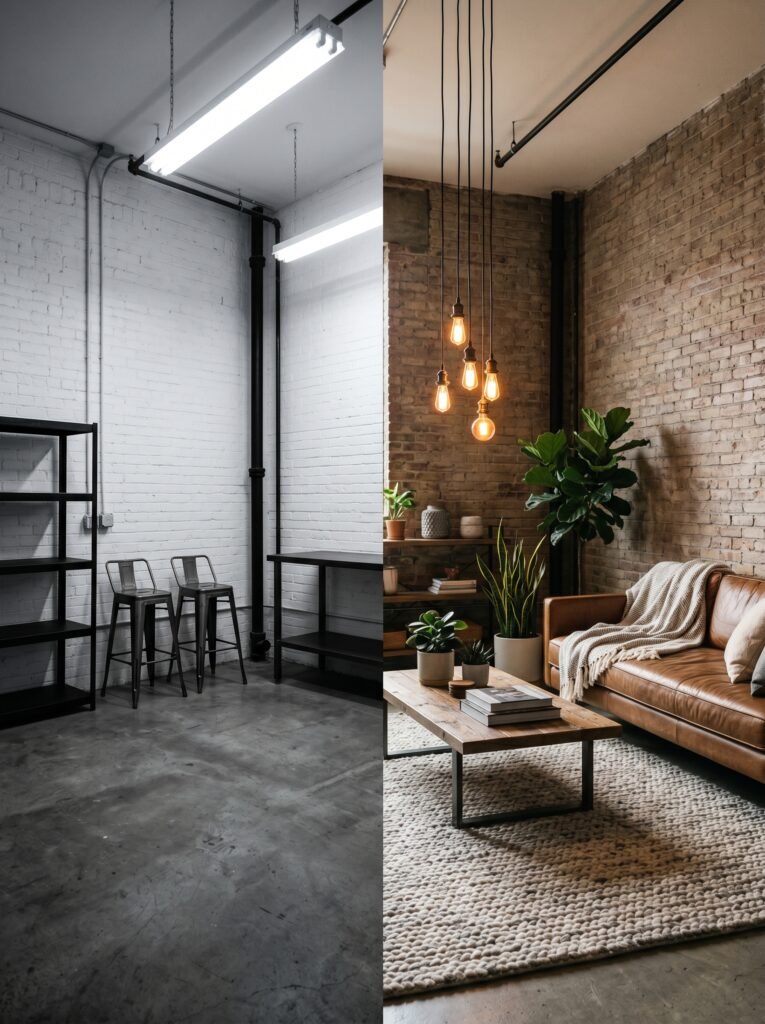
Industrial design looks effortless when it’s done well, but getting there requires avoiding a handful of common pitfalls. The first is coldness — creating a space that feels stark, uninviting, and difficult to actually live in. This usually comes from an over-reliance on gray and black without enough warm materials or soft textiles to balance them. Remember: even the most authentic warehouse loft needs a comfortable sofa.
The second mistake is inauthenticity — choosing ornate, decorative pieces that clash with the honest, utilitarian character of the style. If a piece of furniture looks like it was designed purely to impress rather than to function, it probably doesn’t belong in an industrial interior.
The third, and perhaps most subtle mistake, is inconsistency. Industrial design has a distinct visual language, and the most beautiful rooms speak it fluently throughout — in the hardware, the lighting, the furniture, and even the way objects are displayed. This doesn’t mean rigidity. It means intention. Every choice, down to the style of doorknobs and the color of outlet covers, contributes to the overall feeling of the space. Get the small things right, and the large things tend to take care of themselves.
—
🌿 How to Take Care of Your Industrial-Style Home
Maintaining an industrial interior is less about preservation and more about understanding how these materials age — and embracing it. Exposed brick should be sealed every few years to prevent moisture absorption and crumbling, but avoid over-treating it; the goal is protection, not a shiny finish. Concrete floors and countertops need sealing too, and benefit from occasional waxing to maintain their character without losing their matte texture.
Metal furniture and fixtures will develop a patina over time — this is a feature, not a flaw. Wipe down steel surfaces regularly to prevent rust in humid environments, but don’t try to polish away every mark. Reclaimed wood should be treated with natural oil periodically to prevent drying and cracking, which will deepen its color beautifully over time.
For your soft furnishings — leather sofas, wool rugs, linen cushions — regular maintenance is straightforward. Condition leather twice a year to prevent cracking, rotate rugs to ensure even wear, and wash textiles according to their specific care labels. Think of maintaining an industrial home not as upkeep, but as the ongoing relationship you have with a space that’s built to last.
—
❓ FAQ
Q: Is industrial interior design too cold for a family home? A: Not at all — it just requires thoughtful balancing. Layering warm textiles, warm-toned lighting, and plenty of natural materials like wood and plants creates an industrial space that feels genuinely cozy and deeply livable, even for families with young children.
Q: What’s the difference between industrial and modern industrial style? A: Classic industrial design stays very close to its warehouse roots — raw, unfinished, utilitarian. Modern industrial softens those elements, introducing warmer tones, more comfortable furniture, and occasional decorative touches while keeping the core architectural elements like exposed brick, metal, and open structure intact.
Q: Can I achieve an industrial look on a tight budget? A: Absolutely. Secondhand markets, salvage yards, and thrift stores are goldmines for authentic industrial pieces at a fraction of retail prices. Swap out light fixtures for industrial-style pendants (often very affordable), add open metal shelving, and consider a concrete-effect paint or plaster treatment on one wall — these three changes alone can establish the aesthetic convincingly without a significant investment.
—
💭 Final Thought
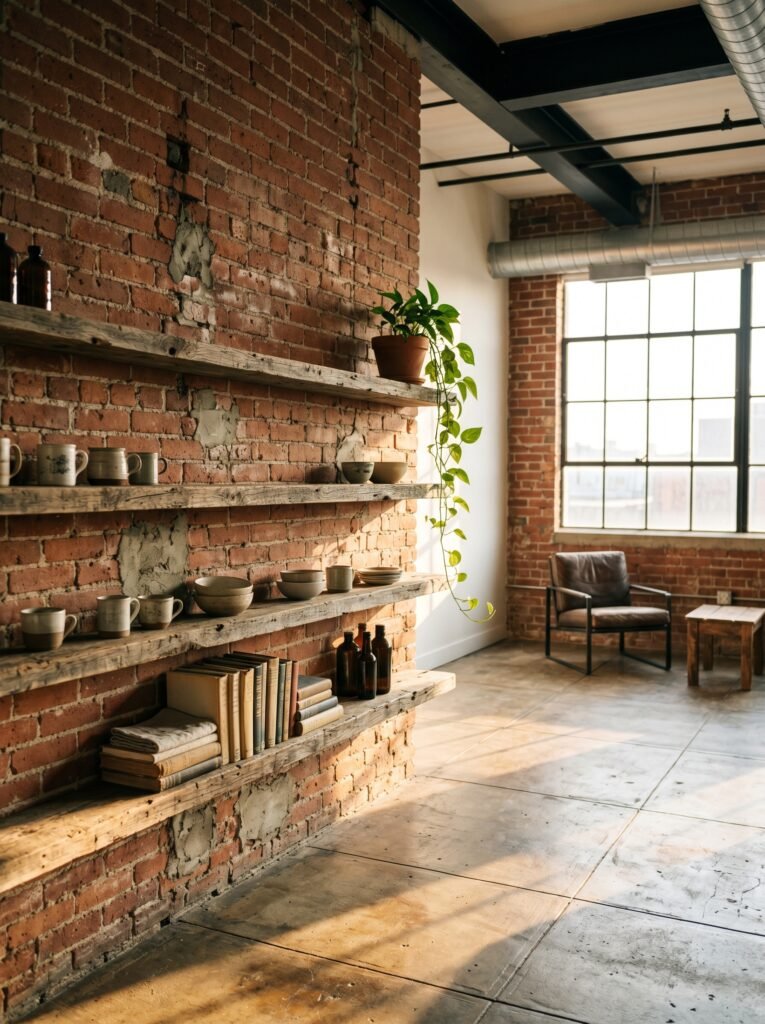
Industrial interior style endures not because it’s trendy, but because it’s truthful. It asks us to see beauty in the unfinished, to find warmth in raw materials, and to trust that a space doesn’t need to be perfect to be genuinely wonderful. There’s a kind of courage in that philosophy — in choosing honesty over ornamentation, function over pretense.
So perhaps the real question isn’t whether industrial style would work in your home — it’s whether you’re ready to let your space tell the truth about what it’s made of.