Why Stained Trim Interior Is the Design Detail That Makes Every Room Feel Like a Home
There’s a moment — maybe you’ve felt it — when you walk into a room and something just feels right. The walls, the light, the furniture all seem to exhale together. More often than not, the secret is in the details you almost didn’t notice. The trim. That quiet, defining edge between floor and wall, between ceiling and air, between ordinary and extraordinary.
—
Table Of Content
1. The Quiet Power of Stained Trim That Most Homeowners Overlook
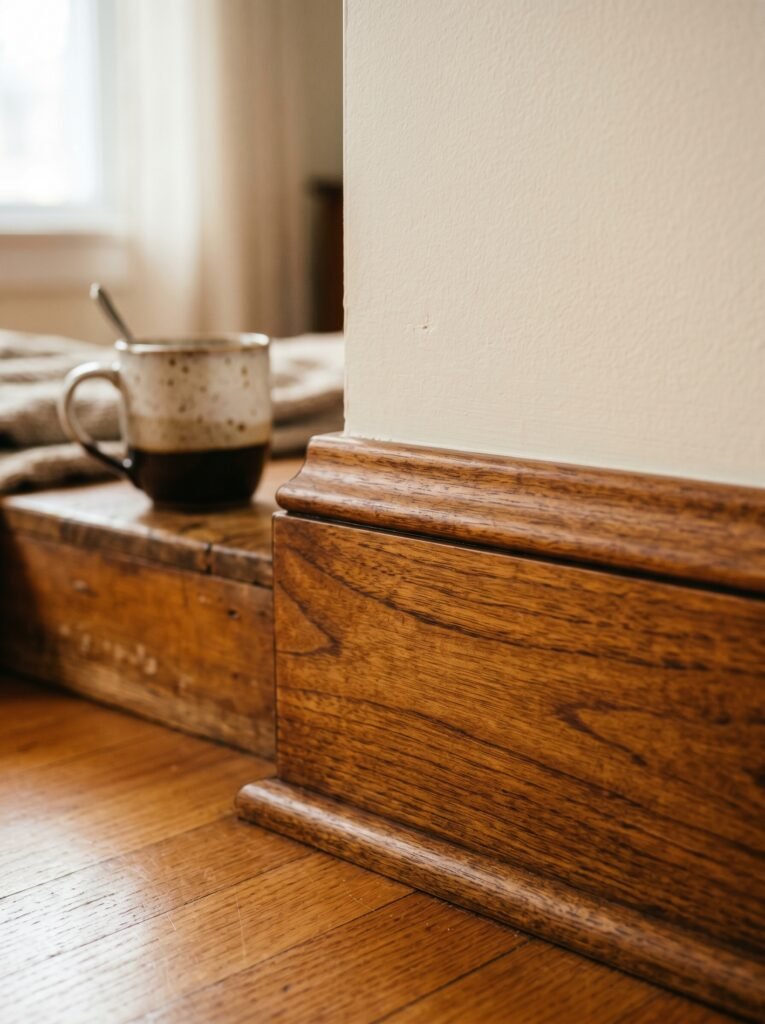
Most people paint their trim white and move on. It’s the default — the safe choice — and there’s nothing wrong with that. But somewhere between safe and remarkable lives a decision that changes everything: choosing to stain your trim instead.
Stained trim has this uncanny ability to ground a room. Where painted white trim can feel crisp and modern, stained wood trim feels rooted — like the house grew naturally from the earth and simply arranged itself around your life. It brings warmth that no wall color alone can manufacture. It introduces texture and character that make a space feel less like a showroom and more like a place where people actually live, laugh, and linger over their morning coffee.
The beauty of stained trim is that it works across almost every interior design style. Rustic farmhouse? Absolutely. Mid-century modern? Strikingly effective. Transitional homes that blend old and new? Stained trim is practically the glue that holds that whole story together. Once you start noticing it, you’ll see it everywhere — in the homes that feel warmest, in the spaces that make you slow down.
“Stained wood trim doesn’t just frame a room — it tells the room’s story.”
—
2. What “Stained Trim Interior” Actually Means (And Why the Difference Matters)
Before we go further, let’s get grounded in what we’re actually talking about — because “stained trim” is a term that gets used loosely, and the distinction matters when you’re making real design decisions.
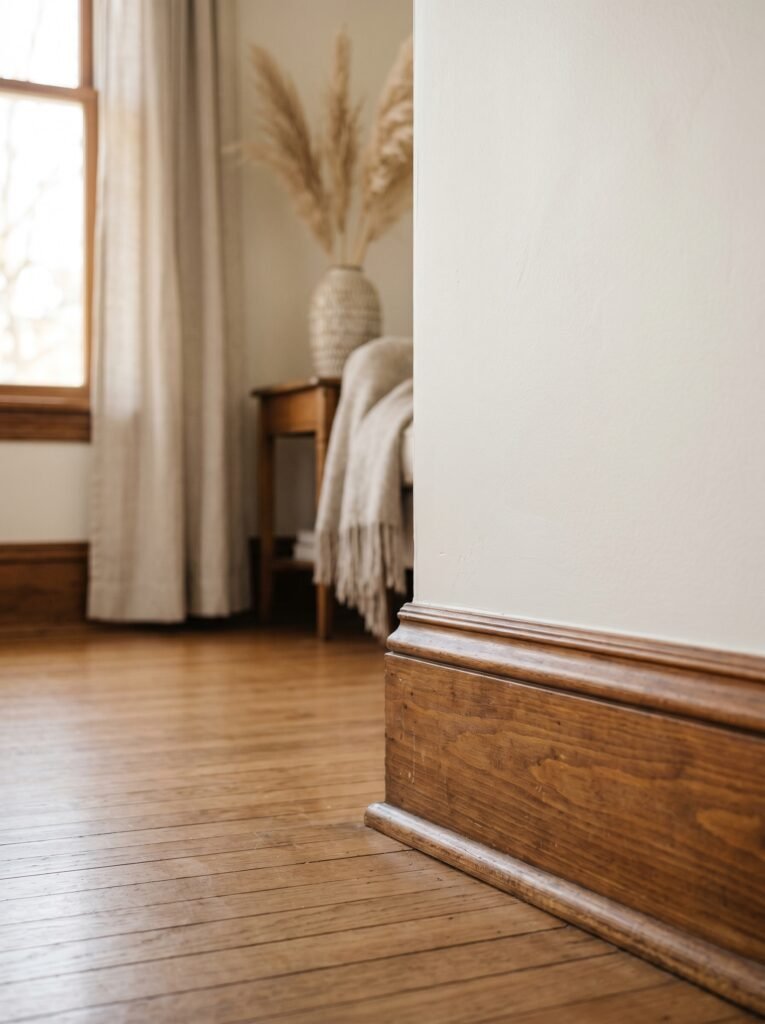
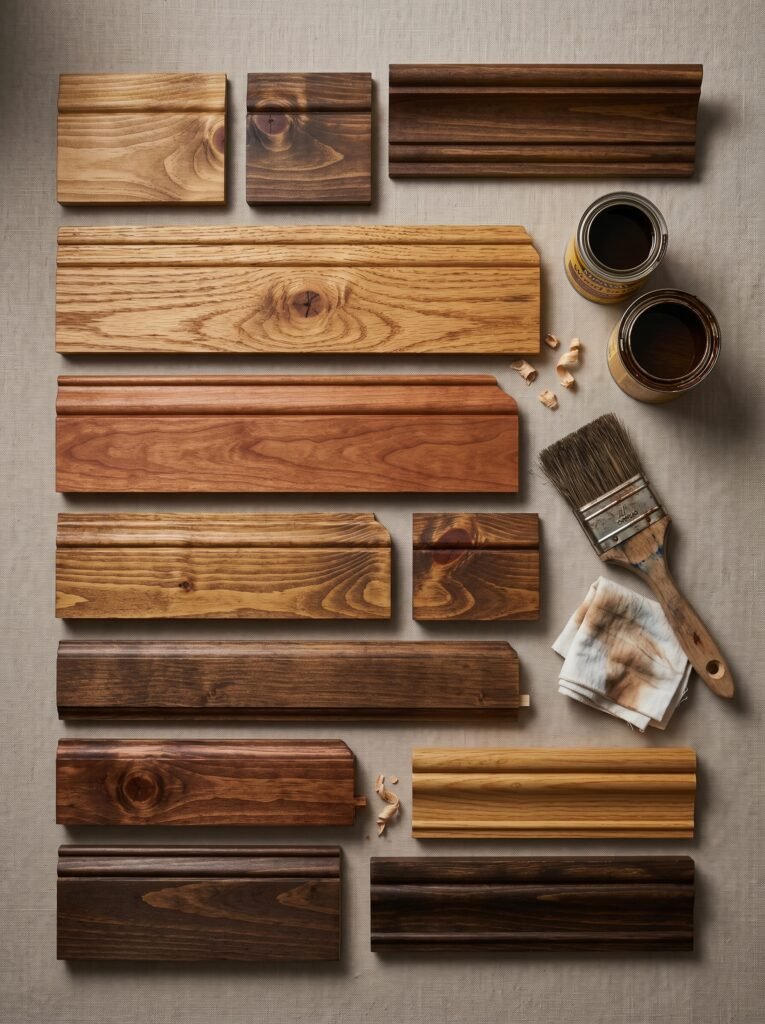
Stained trim refers to any interior wood trim — baseboards, door casings, window casings, crown molding, chair rails — that has been treated with a wood stain rather than covered with paint. Wood stain is a penetrating finish, meaning it soaks into the wood’s grain rather than sitting on top of it the way paint does. This is the crucial difference. Paint conceals the wood. Stain celebrates it.
The result is that every piece of stained trim is, in some sense, unique. The grain patterns of the wood show through — the knots, the swirls, the subtle variations in tone that make real wood so visually compelling. Two pieces of trim stained with identical product can look beautifully different because the wood beneath tells a different story.
Stain also comes in a vast range of tones, from pale honey and golden oak to deep walnut, espresso, and everything in between. That spectrum means stained trim isn’t one look — it’s a whole family of looks, each with its own personality and emotional register.
—
3. The Emotional Case for Stained Wood Trim — It’s Not Just Aesthetic

Here’s something interior designers know that the design world doesn’t talk about enough: warmth in a home isn’t purely visual. It’s emotional. It’s felt in the body before it’s registered in the mind.
Stained wood trim contributes to that felt warmth in a way that’s hard to fully explain but very easy to experience. Natural wood has been part of human shelter for thousands of years — there’s a deeply embedded psychological comfort in seeing and touching it. When you walk into a room with stained wood trim, your nervous system receives a quiet signal: this is a safe place. This is home.
Research in environmental psychology supports what our instincts already know — natural materials in interior spaces reduce stress and increase feelings of well-being. Wood, in particular, has been shown to lower heart rate and cortisol levels in indoor environments. So when you choose stained trim over painted trim, you’re not just making a style choice. You’re making a comfort choice. A wellness choice. You’re designing a room that takes care of the people inside it.
—
4. Choosing the Right Stain Color — A Decision Worth Taking Seriously
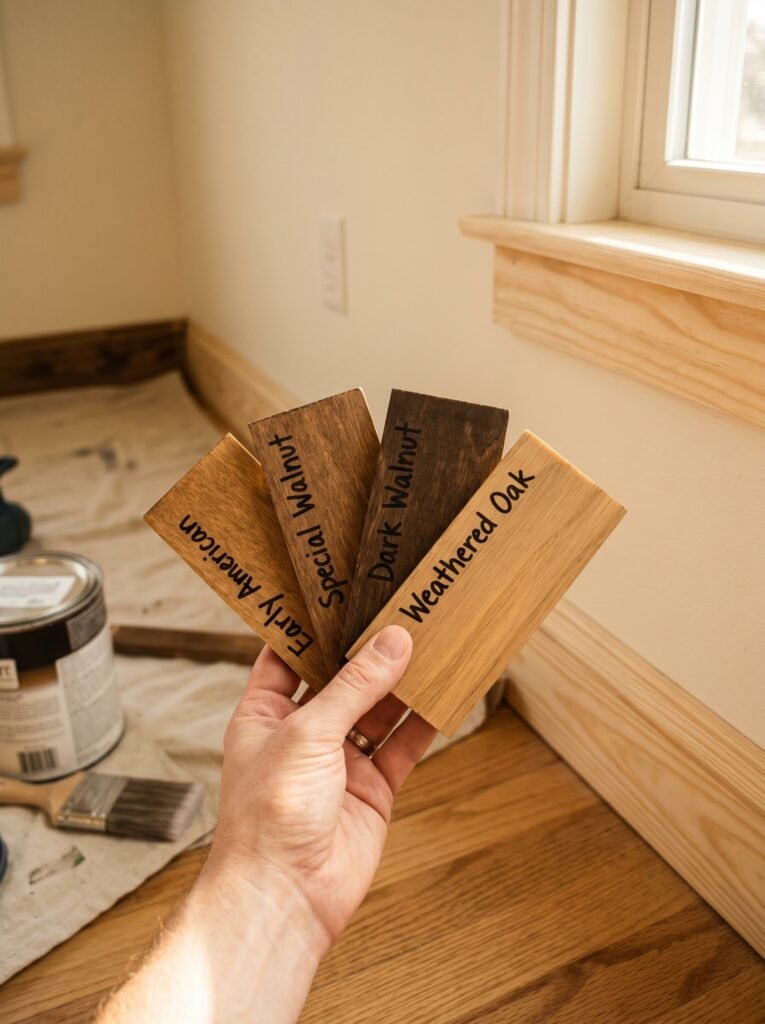
If you’ve ever stood in a hardware store holding a fan of stain samples under fluorescent lights, trying to imagine how they’ll look on your baseboards at home in the golden afternoon light, you already know — choosing a stain color is harder than it sounds.
The key is to think about your stain as a relationship, not a solo act. It needs to relate to your flooring, your furniture, your wall color, and your overall design direction. As a general guiding principle: match the undertone, not necessarily the exact shade. If your hardwood floors pull warm, go warm with your trim. If your flooring has cool gray-brown undertones, a cooler stain on the trim will feel intentional rather than mismatched.
Some beloved stain colors for interior trim include Early American (warm, golden-brown), Special Walnut (a medium brown with rich depth), Dark Walnut (dramatic and sophisticated), and Weathered Oak (pale and contemporary). Each creates a completely different atmosphere. Early American feels like a farmhouse kitchen on a Saturday morning. Dark Walnut feels like a well-appointed library. There’s no wrong answer — only the answer that’s right for your home.
—
5. Stained Trim vs. Painted Trim — Understanding the Trade-Offs
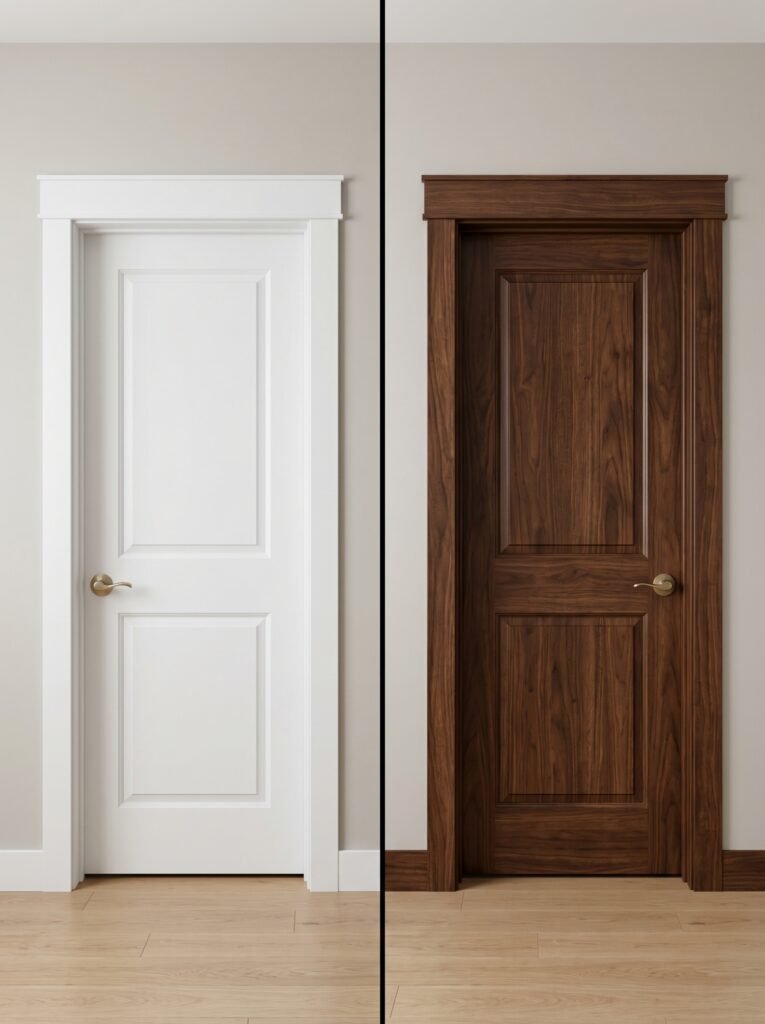
This isn’t a competition. Both options have genuine merit, and the best choice depends entirely on your home, your lifestyle, and what you want your rooms to feel like. But understanding the real differences helps you make a decision you’ll still love five years from now.
Painted trim offers clean, crisp lines. It reflects light beautifully and can make small rooms feel more open. It’s also easier to touch up when it chips or scratches — you simply dab on more paint. The downside? It chips and scratches more visibly in the first place, especially in high-traffic areas like hallways and around doors. And once you’ve painted over wood, going back to stained trim means significantly more labor.
Stained trim is more durable against everyday scuffs because the finish penetrates the wood rather than sitting on its surface. It hides minor wear better. It adds that irreplaceable warmth and character. The trade-off is that stained trim is harder to repair when it does get damaged — you’ll need to sand and re-stain, which requires more precision than touching up paint. It also won’t work on all trim materials; MDF (medium-density fiberboard), for example, doesn’t absorb stain the way real wood does.
“The best interior choices aren’t trends — they’re decisions that age beautifully, just like the homes we love most.”
—
6. Stained Trim With White Walls — A Classic Combination That Never Gets Old
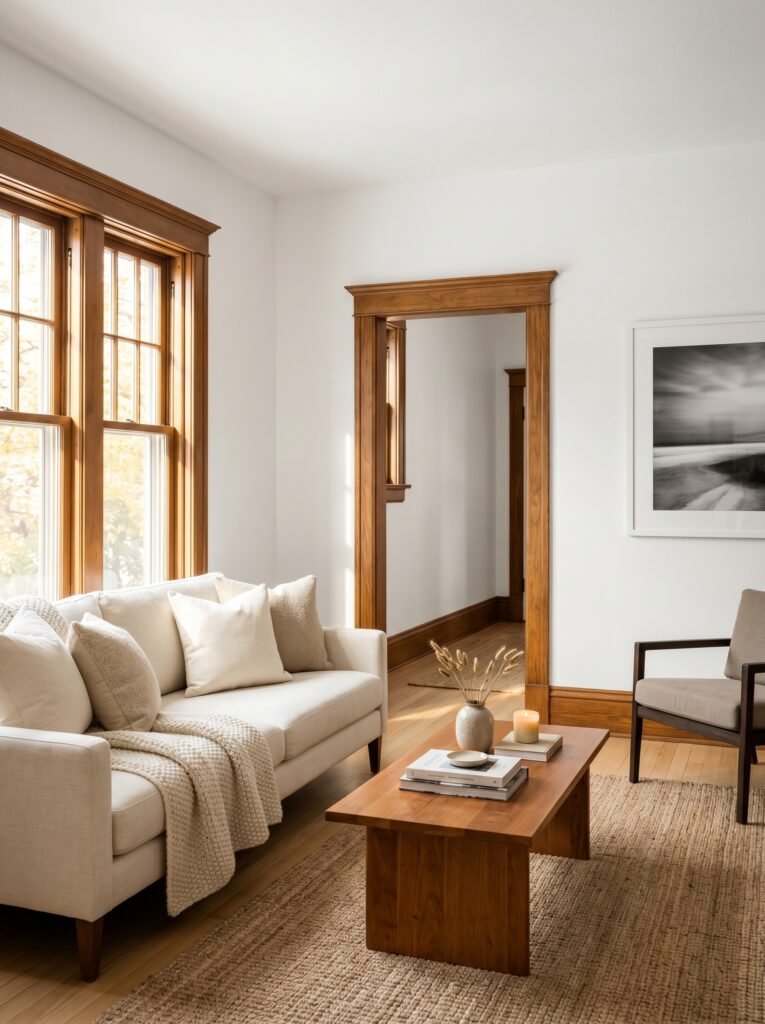
If you’re just beginning your stained trim journey and feeling a little uncertain, start here: white walls, stained trim. It’s the combination that interior designers return to again and again, and for good reason — it simply works.
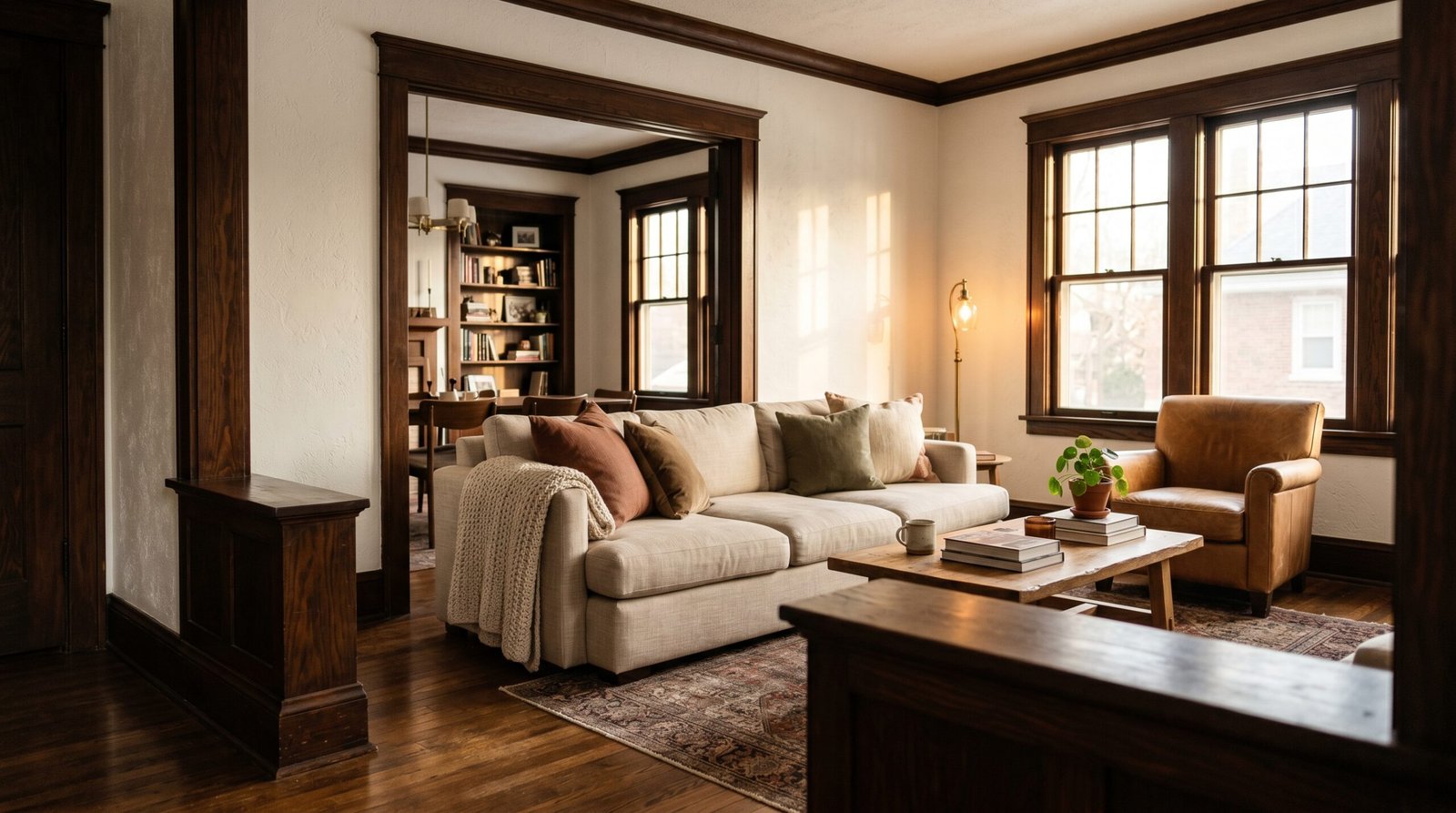
White walls are generous. They give stained trim room to breathe, to be noticed, to do its job of anchoring the room with warmth and structure. The contrast between the bright, neutral wall and the rich wood trim creates a visual dynamic that feels intentional and sophisticated without being stiff. It says “I know what I’m doing” without shouting it.
This pairing works beautifully in almost every room of the house. In a living room, it creates a cozy-yet-airy balance. In a bedroom, the warmth of the stained trim keeps the white walls from feeling cold or clinical. In a kitchen — especially with stained wood cabinet details or open shelving — this combination creates that magazine-worthy warmth that makes everyone want to linger over dinner just a little longer.
—
7. The Impact of Stained Trim in Small Spaces — Bigger Than You’d Think
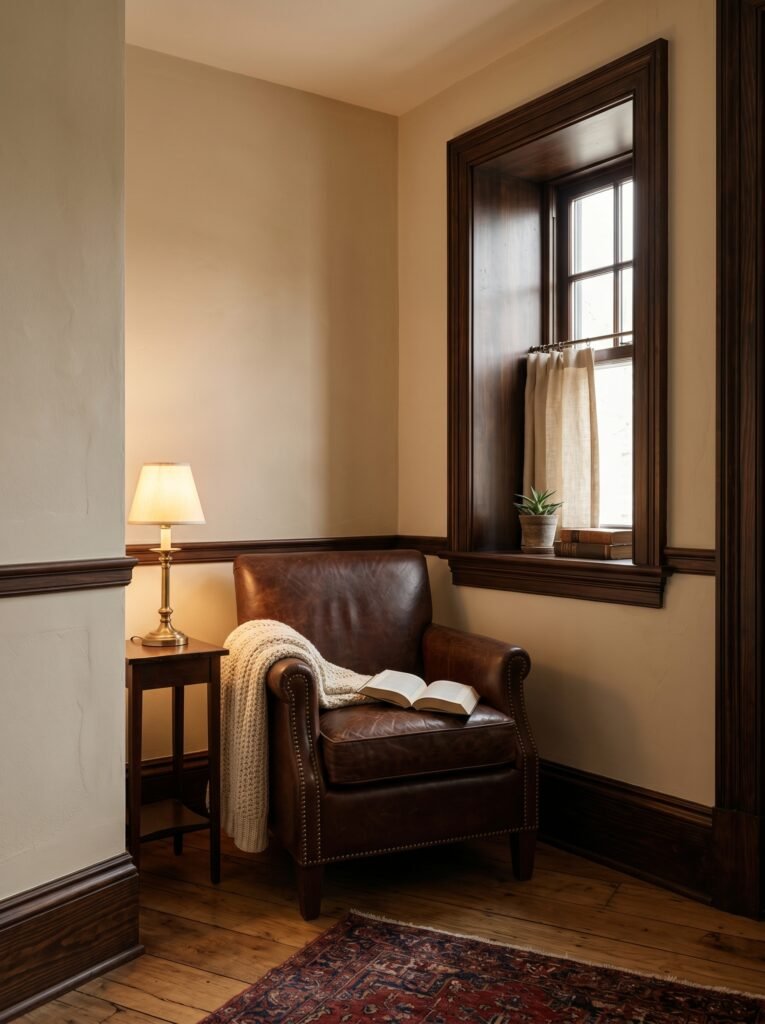
There’s a common misconception that small rooms need to keep everything light and uniform to feel larger. And while that strategy has its place, it isn’t the only path — and it’s not always the most interesting one.
Stained trim in a small space does something counterintuitive: it creates definition. And definition, paradoxically, can make a small room feel more intentional and expansive — more like a room that means something rather than a box you’re trying to escape. When your eye has a clear visual boundary — the richness of stained baseboards against your wall, the frame of a stained door casing — the room feels composed rather than cramped.
In small bedrooms, powder rooms, and cozy reading nooks, stained trim adds personality that small spaces desperately need. It’s one of the most cost-effective ways to transform a modest room into something that feels genuinely designed.
—
8. Stained Trim in the Kitchen — Where Design Meets the Everyday
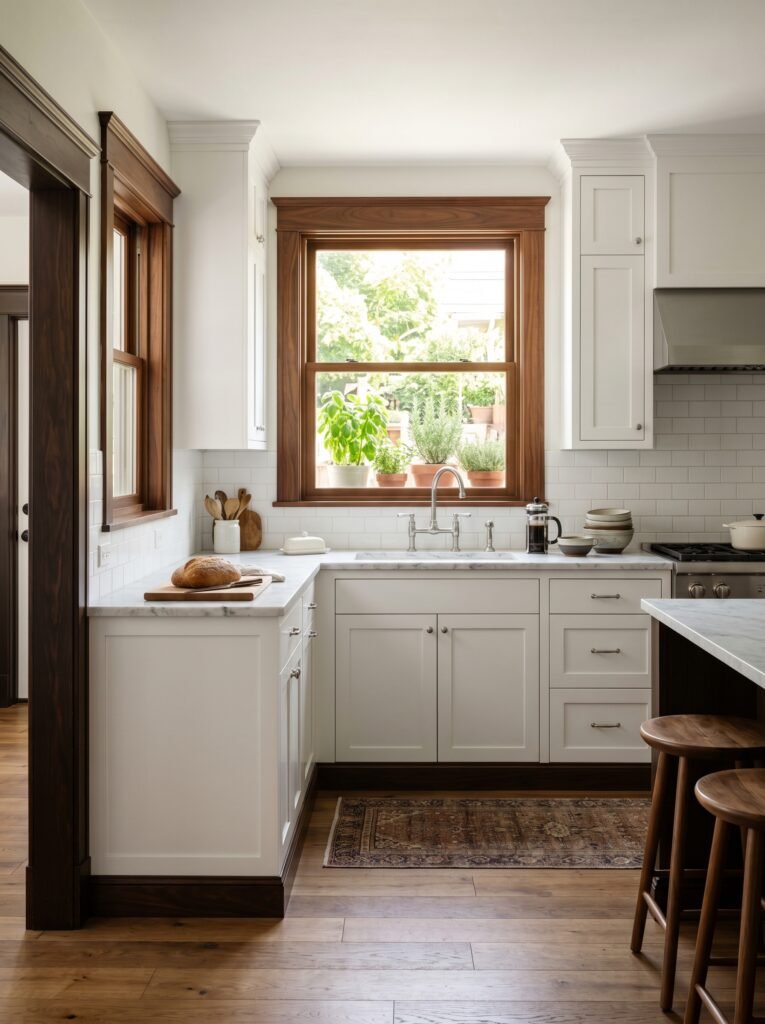
The kitchen is where design decisions get tested by real life. It’s where cooking splatters happen, where kids grab the doorframe with sticky hands, where the morning rush means nobody’s being gentle with anything. And stained trim in the kitchen doesn’t just survive all of that — it thrives.
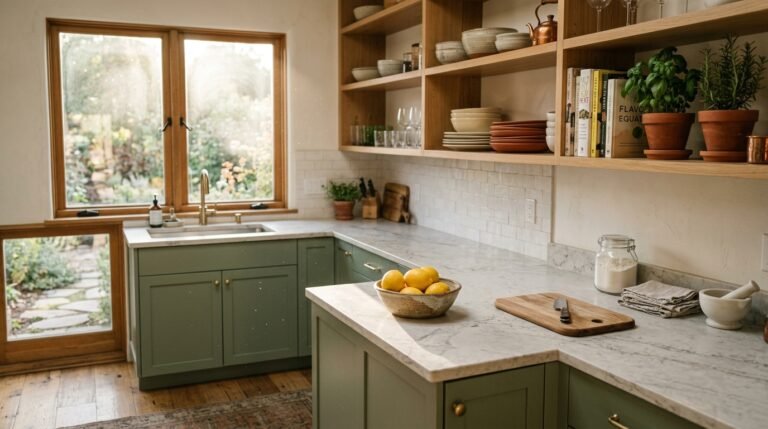
Darker stained trim in a kitchen creates a beautiful grounding effect, particularly when paired with light-colored cabinetry or open, bright countertops. It brings warmth to a space that can sometimes feel cool and utilitarian. Picture warm walnut-stained window casings framing a view of your backyard herb garden. Picture espresso-stained baseboards anchoring a kitchen with white Shaker cabinets and marble countertops. The result is timeless rather than trendy — a kitchen that will still feel beautiful a decade from now.
Lighter stained trim — think golden oak or honey tones — works wonderfully in kitchens that lean into a farmhouse or cottagecore aesthetic. It pairs beautifully with butcher block countertops, open shelving, and ceramic pendant lights.
—
9. Pairing Stained Trim With Bold or Colorful Walls
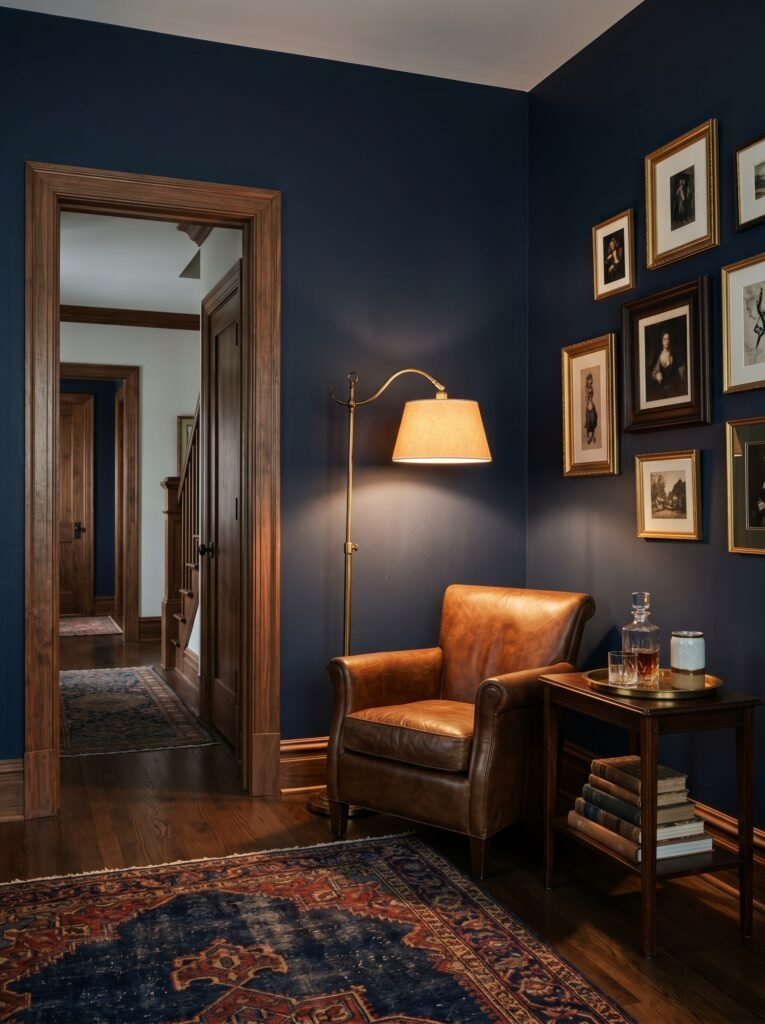
Here’s where things get interesting — and where many people pull back out of fear. The idea of combining stained wood trim with a bold wall color can feel risky. What if it clashes? What if it feels too heavy? What if it’s just… too much?
The truth is that stained trim can be one of the most grounding elements you can pair with a bold wall color, precisely because it’s natural. Natural wood has an inherent neutrality to it — it doesn’t fight with color the way white trim sometimes can (white trim next to a warm-toned wall, for instance, can actually pull slightly purple or yellow, depending on light conditions).
Deep navy walls with medium walnut trim? Stunning — the kind of room that appears in shelter magazines. Sage green walls with warm honey-stained trim? A combination that feels like a gentle exhale. Terracotta or warm rust walls with a rich dark-stained trim? Unapologetically beautiful, layered and warm in a way that feels collected rather than decorated.
“Bold color and natural wood don’t compete — they complete each other.”
—
10. The Cost Reality of Staining Your Trim — What to Expect
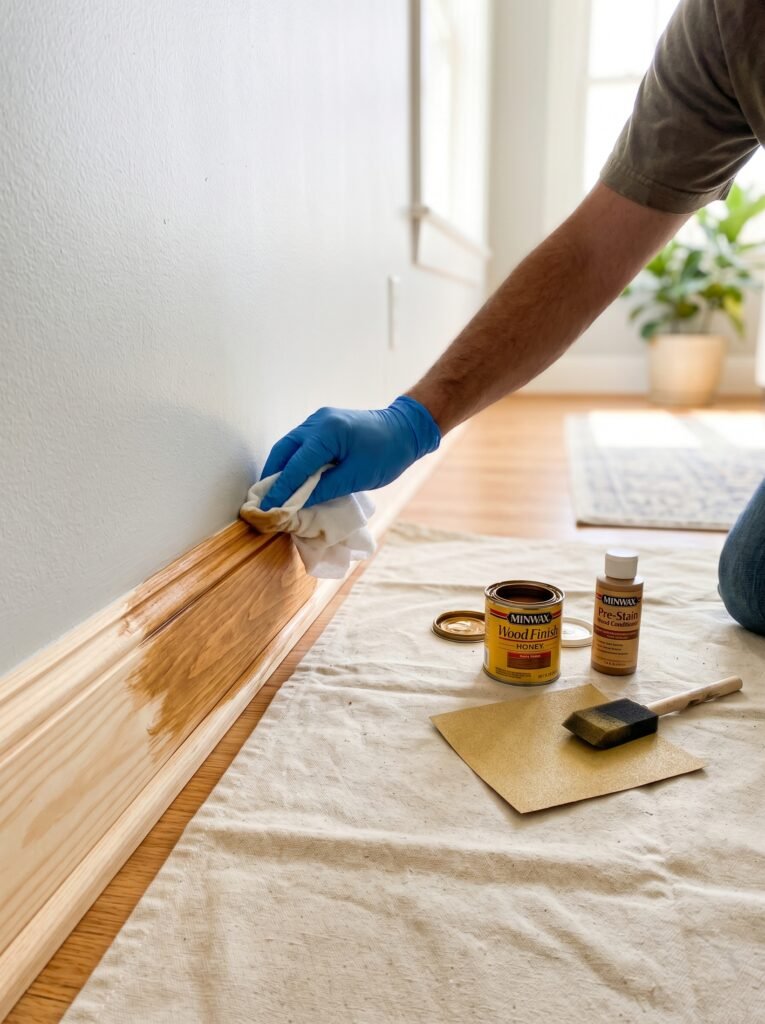
Let’s talk practically, because beautiful design should be accessible — and understanding costs is part of making a decision you feel good about. The cost of staining your interior trim depends on several factors: the square footage of trim in your home, whether you’re doing it yourself or hiring a professional, and the products you choose.
DIY staining is absolutely achievable for handy homeowners. The materials themselves — wood stain, pre-stain conditioner, brushes, cloths, finish coat — are relatively affordable, often running between $50 and $150 for a small to medium room. The real investment is your time. Proper trim staining requires preparation: cleaning the wood, lightly sanding, applying conditioner for even absorption, staining carefully, and finishing with a protective topcoat. Done well, though, the results last for years.
Professional trim staining runs higher — expect $3 to $7 per linear foot depending on your region, the complexity of the trim profiles, and the number of coats required. For a full home, that can add up. But when you consider the lasting warmth and character stained trim adds to your home’s overall feel and resale value, most homeowners find it to be one of their best investments.
—
11. Mixing Stained and Painted Trim — When Breaking the Rules Is the Right Move
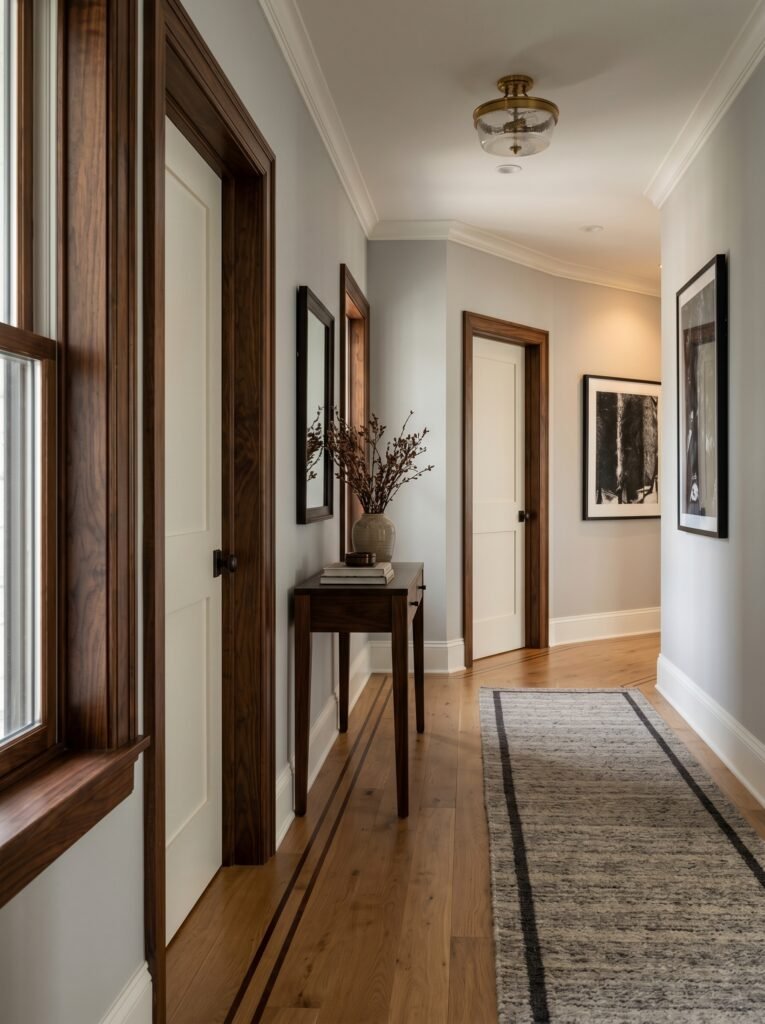
Somewhere along the way, someone decided that all trim in a home should match — same finish, same color, top to bottom. And while consistency certainly has its place, the most interesting homes often break this rule thoughtfully.
Mixing stained and painted trim, when done with intention, can create a beautiful layered effect. A common approach: stained door casings and window frames, with painted white baseboards. Or a stained wood ceiling beam paired with painted crown molding. Another beloved choice is using stained wood trim in common living areas and painted trim in more private spaces like bedrooms and bathrooms — letting each zone of the home have its own personality while the stained trim anchors the spaces where life happens most.
The rule isn’t “never mix” — it’s “when you mix, make it look intentional.” Repeat your stain color in at least a few places (flooring, furniture, an accent) so it reads as a design decision rather than an oversight.
—
12. Why Stained Trim Is a Design Choice That Grows More Beautiful Over Time
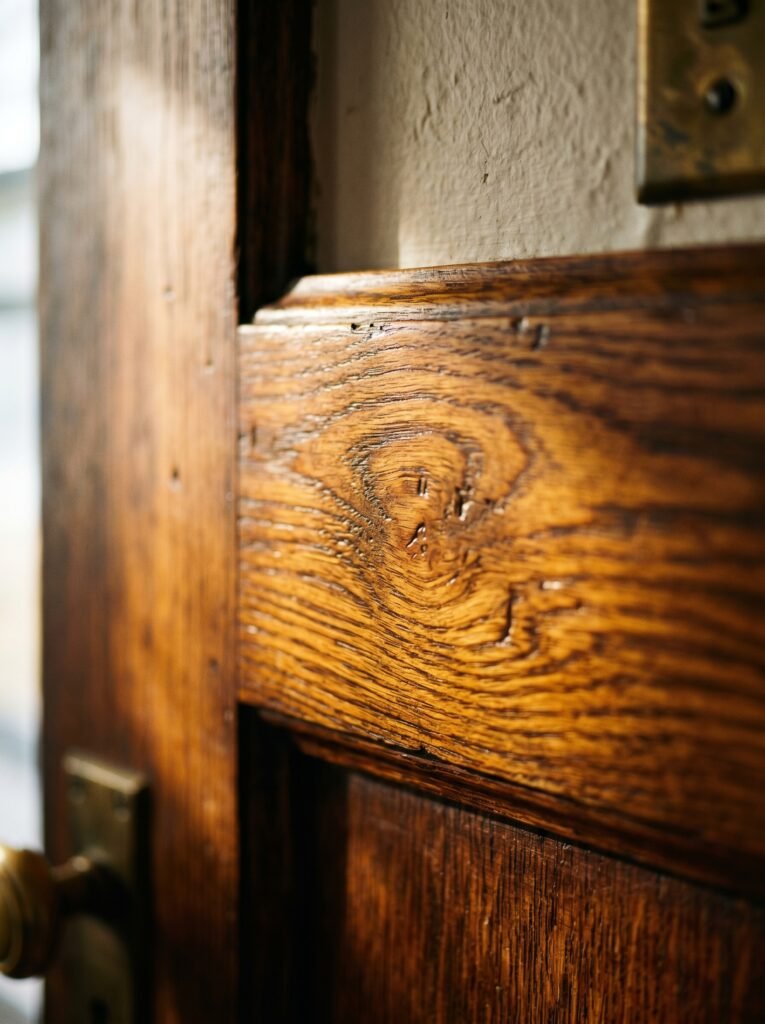
Here is perhaps the most compelling thing about stained wood trim — something that painted trim simply cannot offer. Wood ages. And aged wood, properly cared for, becomes more beautiful with time rather than less.
Painted trim yellows, chips, and eventually needs to be completely redone. But stained trim develops what woodworkers and collectors call patina — a depth and richness that only comes from years of light, warmth, and life. The grain becomes more pronounced. The color deepens and settles. Each small imperfection tells the story of a home that has been lived in, loved in, used.
This is, ultimately, what makes stained trim feel so different from other design details. It’s not a trend that will look dated in ten years. It’s a material choice that honors the wood itself — that lets something natural remain natural — and in doing so, creates a home that feels genuinely timeless. Not perfectly curated. Not staged. Timeless.
—
🌿 How to Care for Stained Trim Interior
Stained trim is wonderfully low-maintenance, but a little consistent care keeps it looking its best for decades. Think of it less like cleaning and more like tending — small, regular attention that pays off beautifully over time.
Dust your stained trim regularly with a soft, dry microfiber cloth. Dirt and dust are abrasive over time, and removing them gently prevents the finish from dulling. For deeper cleaning, use a slightly damp cloth with a mild wood-safe cleaner — never harsh chemicals or abrasive scrubbers, which can strip the finish and damage the wood grain.
Every few years, depending on traffic and wear, consider refreshing your trim with a light sanding and a fresh topcoat of polyurethane or oil finish. You don’t need to re-stain — just renewing the protective layer is usually enough to restore the warmth and sheen. If you do notice any deep scratches, a stain marker in a close color can work wonders for spot repairs without the need for full refinishing.
In rooms with direct sunlight, consider UV-protective window treatments to slow the natural darkening that sunlight can cause on wood finishes over time. And finally — just live in your home. Stained trim is meant to be touched, brushed against, lived alongside. It’s a material designed for real life.
—
❓ FAQ
Q: Can I stain trim that has already been painted? A: Yes, but it requires significant preparation. You’ll need to strip the paint completely, sand the wood down to bare grain, and then apply a pre-stain conditioner before staining. If the trim is MDF rather than solid wood, staining won’t produce the same result — MDF absorbs stain unevenly and doesn’t have a visible grain. It’s worth checking your trim material before committing to the process.
Q: Does stained trim work with modern or contemporary interiors? A: Absolutely — and beautifully. In modern interiors, stained trim in cooler tones (gray-brown, weathered oak, or pale ash) bridges the gap between the warmth of natural material and the clean aesthetic of contemporary design. The key is to choose a stain color that aligns with the cool, restrained palette of a modern space rather than a warm, rustic tone.
Q: How long does interior stained trim last before it needs refinishing? A: With proper care, a well-applied stained and sealed trim finish can last anywhere from 7 to 15 years before requiring full refinishing. High-traffic areas like door casings may need attention sooner, while baseboards in low-traffic rooms can go much longer. Regular maintenance — gentle cleaning and periodic topcoat renewal — significantly extends the lifespan of the finish.
—
💭 Final Thought
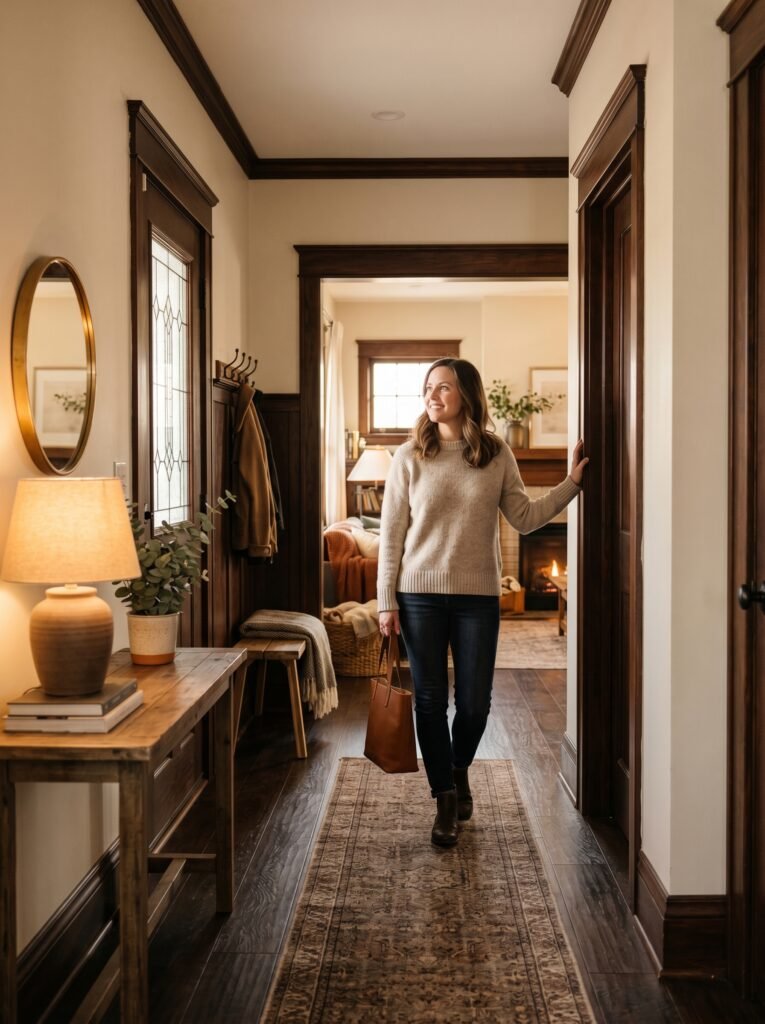
Stained trim interior is one of those design decisions that reveals itself slowly — not in a dramatic before-and-after moment, but in the way your home gradually feels more like you. It’s in the warmth that greets you at the door after a long day. It’s in the way guests pause in your hallway and say, without knowing exactly why, that your home feels so cozy. Beauty, in a home, is rarely about the loudest thing in the room. It’s almost always about the quiet details that hold everything together.
So here’s the question worth sitting with: what quiet details in your own home could tell a richer, warmer story — if only you gave them the chance?