Why Wooden House Interiors Feel Like Coming Home — Even When You’ve Never Been There Before
There’s a particular moment that happens to almost everyone who walks into a wooden house for the first time. You pause at the doorway. You breathe in slowly. Something in your chest unclenches — and you don’t quite know why.

—
Table Of Content
1. The Science Behind Why Wood Makes Us Feel Safe
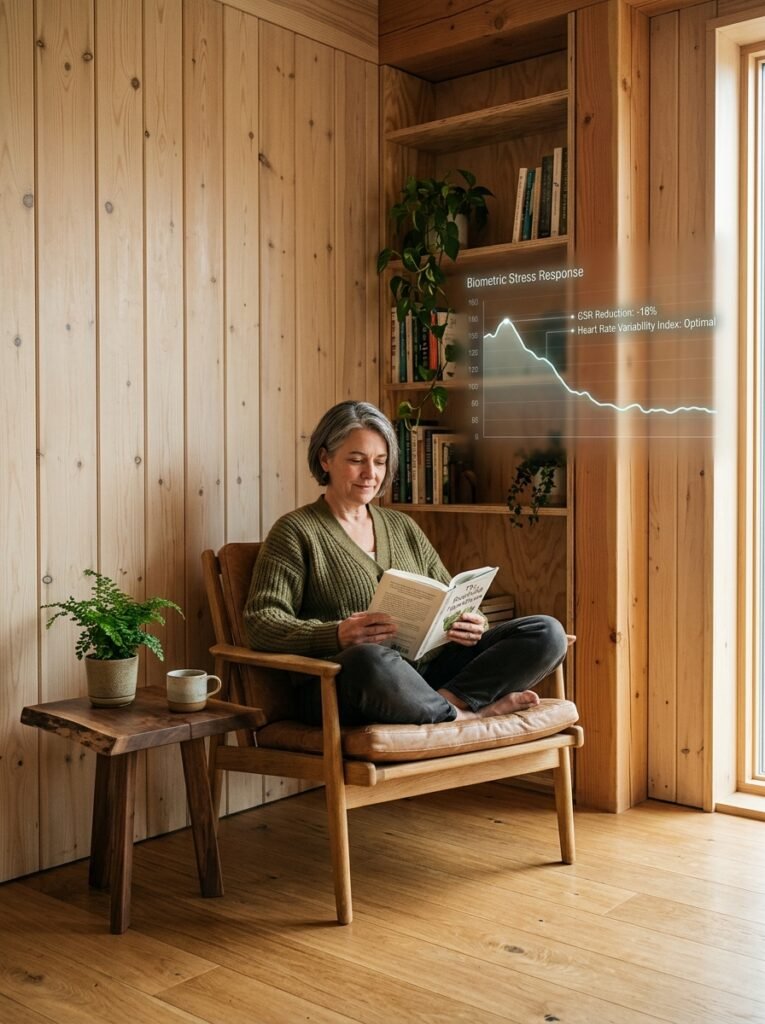
It isn’t imagination. It isn’t nostalgia. The calming effect of wood in interior spaces has been studied seriously by environmental psychologists, and what they’ve found is quietly remarkable. Research out of Austria and Japan has consistently shown that exposure to natural wood surfaces lowers cortisol levels — the hormone your body releases when it’s under stress. Heart rate slows. Blood pressure drops. The nervous system, so often braced against the noise of modern life, begins to soften.
The concept even has a name in Japanese culture: biophilic design — the idea that human beings are wired, deep in their evolutionary memory, to feel comfort and safety when surrounded by natural materials. Wood, in particular, signals shelter, warmth, and life. It’s the material our ancestors built their worlds from, and somewhere beneath all the modernity, our bodies still remember.
“Wood doesn’t just fill a room — it tells your nervous system that you are safe, sheltered, and home.”
2. Every Knot and Grain Tells a Story No Factory Could Replicate
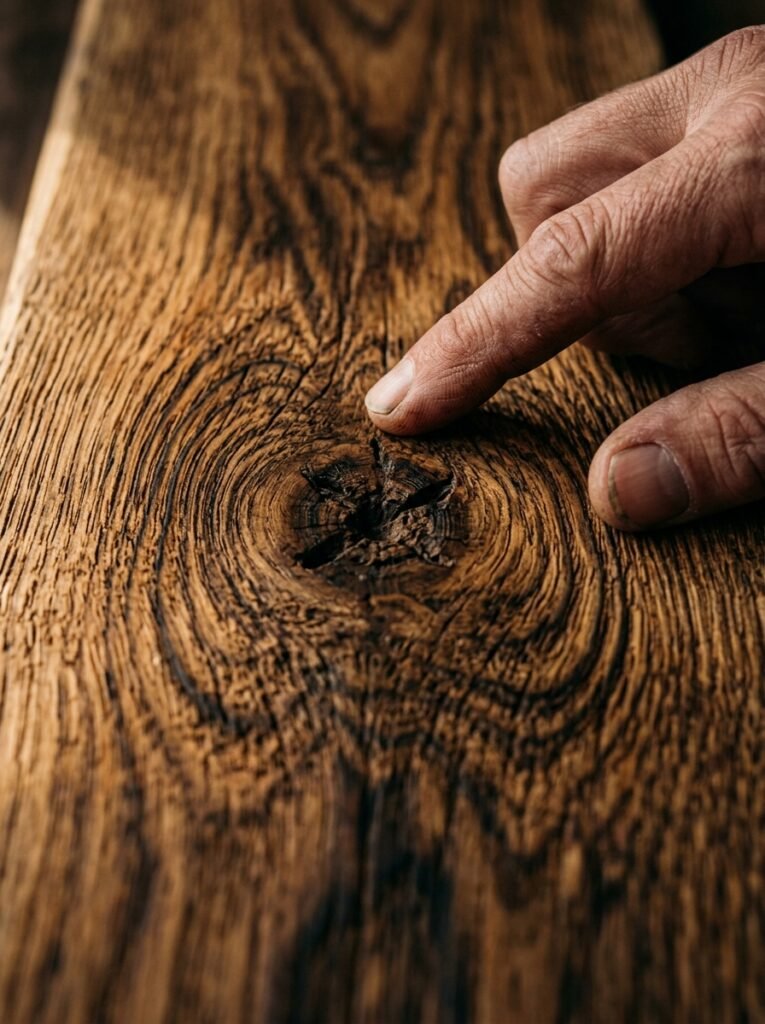
One of the most underappreciated qualities of a wooden interior is its irreproducibility. Run your hand along a plank of oak or pine, and you’re tracing the actual growth record of a living thing — the wet springs that pushed wide rings, the dry summers that pulled them tight, the storm that knocked a branch and left a dark, beautiful knot in its wake. No two planks are alike. No two rooms are alike.
This matters in ways that go beyond aesthetics. In a world saturated with mass-produced materials — laminate, vinyl, prefabricated composites — a wooden interior offers something increasingly rare: genuine singularity. The floor beneath your feet existed as a forest before it became your home. That lineage gives a space a kind of quiet dignity that no synthetic material can convincingly imitate.
3. The Warm Palette That Changes With the Light
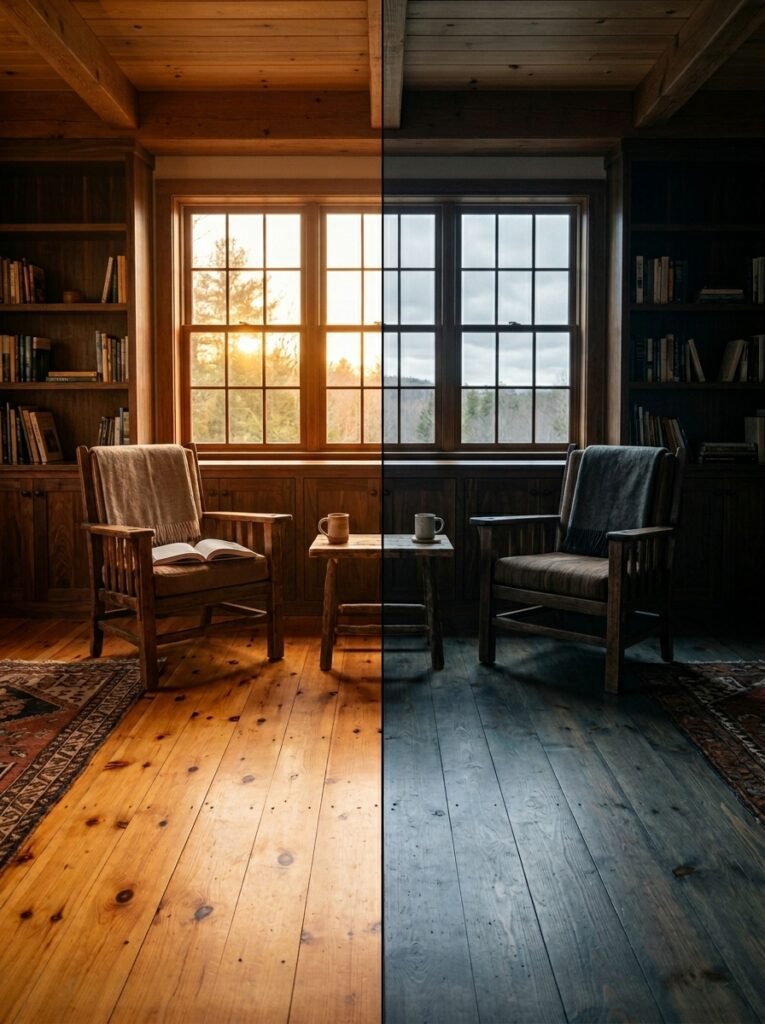
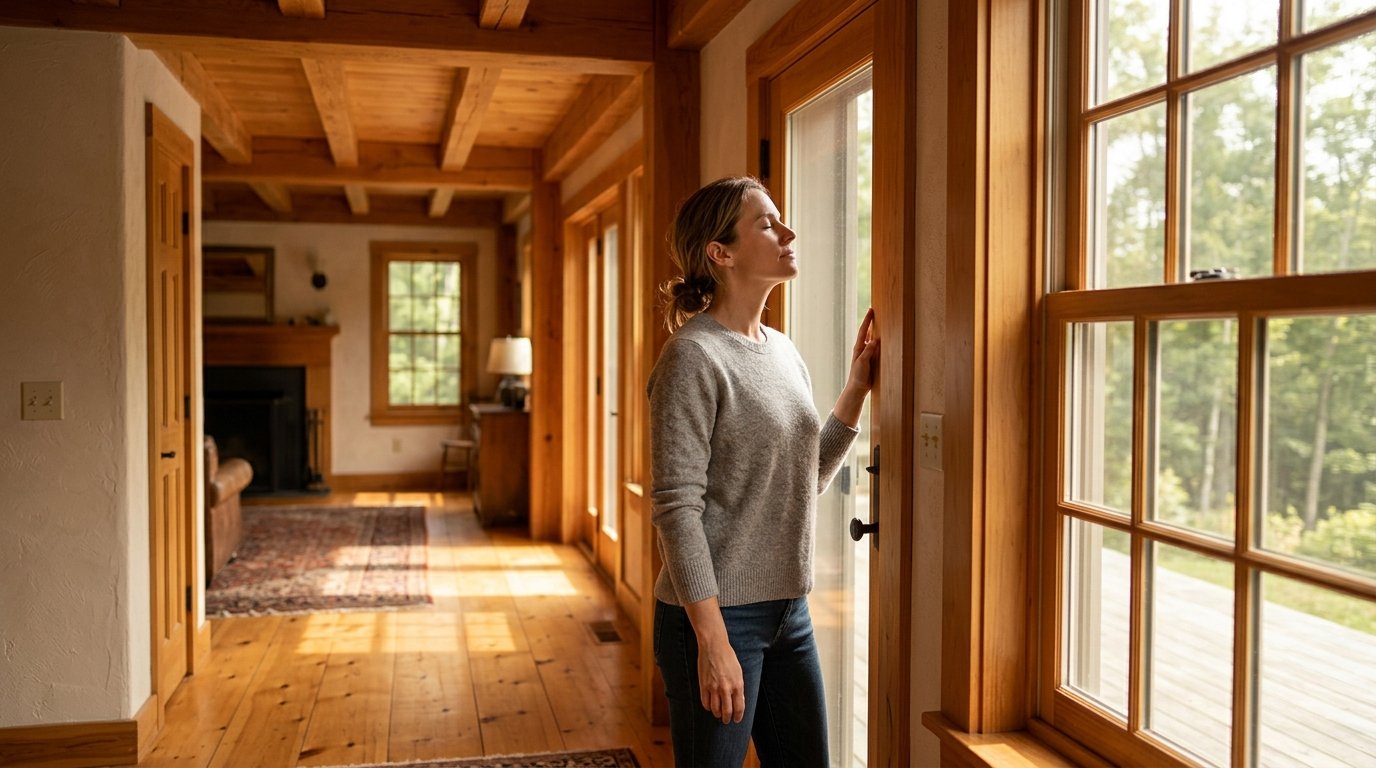
Walk through a wooden interior at 7 AM and again at 4 PM, and you’ll feel like you’re in two completely different spaces — and you’d be right to feel that way. Wood is one of the most light-responsive materials in interior design. Morning sun throws golden warmth across a pine floor, softening the knots into amber pools. The cool light of an overcast afternoon deepens walnut paneling into something rich and serious, almost like the inside of an old library.
This responsiveness to natural light is one of wood’s greatest architectural gifts. It means a wooden interior is never static — it breathes with the day, with the seasons, with the weather. The room you wake up in isn’t quite the same room you return to at dusk, and there’s something deeply alive about that.
4. The Difference Between Wood Species — And Why It Actually Matters
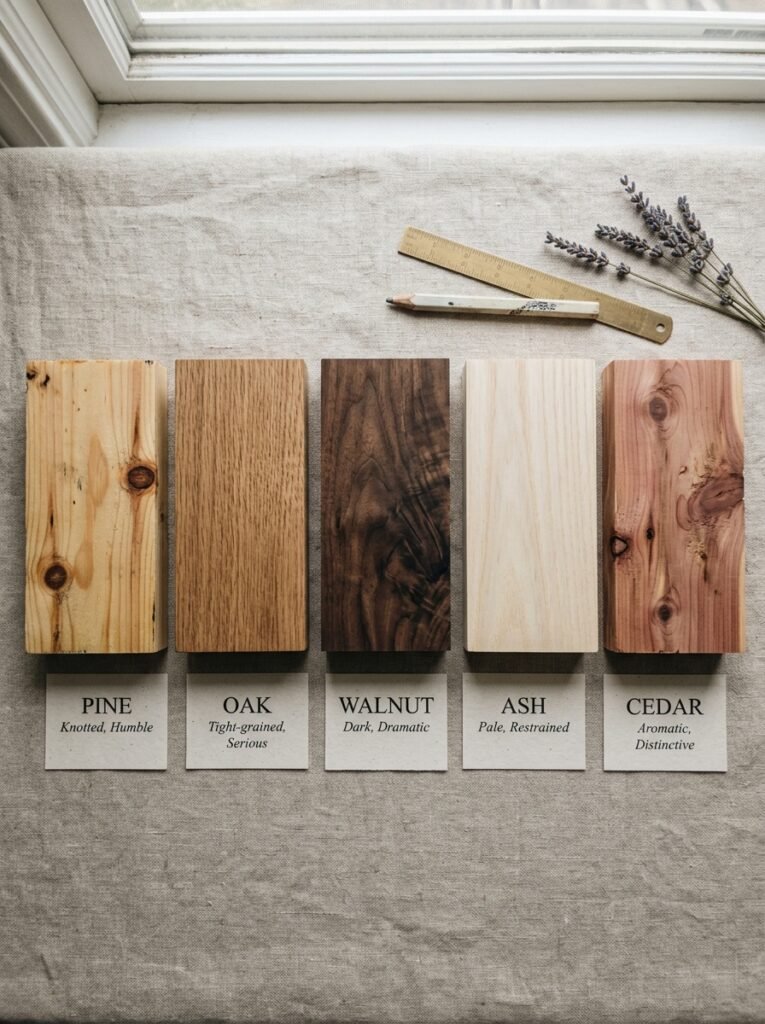
Choosing wood for an interior isn’t a single decision; it’s a conversation about personality. Pine is humble and warm, full of knots and character, and tends to feel casual and countryside-comfortable. Oak is structural and serious, with a tighter grain that reads as classic and enduring. Walnut brings darkness and drama — it’s the wood for reading corners and thoughtful spaces. Ash is pale and clean, almost Scandinavian in its restraint. Cedar carries a scent that fills a room without a single candle being lit.
The species you choose communicates something about the life you want to live inside those walls. That’s not design-speak — it’s simply the truth that different woods create genuinely different emotional atmospheres, and experienced interior designers choose them as carefully as a painter chooses a palette.
5. Wooden Ceilings — The Design Detail Most People Forget
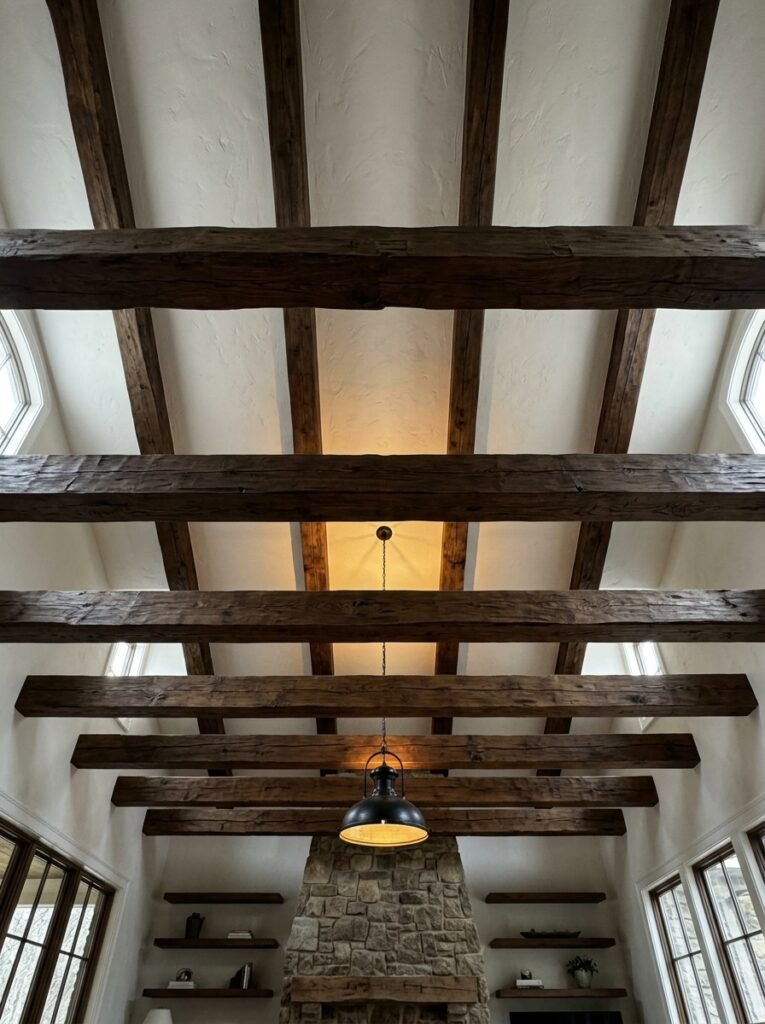
Ask someone to describe their dream wooden interior, and they’ll almost always start with the floors. Almost no one mentions the ceiling — which is precisely why a wooden ceiling is such a transformative choice. A beamed ceiling in reclaimed oak changes the entire vertical experience of a room. Suddenly the eye has somewhere interesting to travel upward. The proportions of the space shift. The room feels considered from top to bottom rather than simply furnished.
In Scandinavian interiors, tongue-and-groove pine ceilings are common enough to be almost traditional, and they do something architecturally lovely — they bring a low ceiling down into coziness rather than allowing it to feel oppressive. In larger, more open spaces, exposed dark beams create a visual anchor that keeps grand rooms from feeling unmoored or cold.
“The most overlooked canvas in any room is the ceiling — and wood transforms it from forgotten to unforgettable.”
6. How Texture Creates an Interior That Feels Lived In From Day One
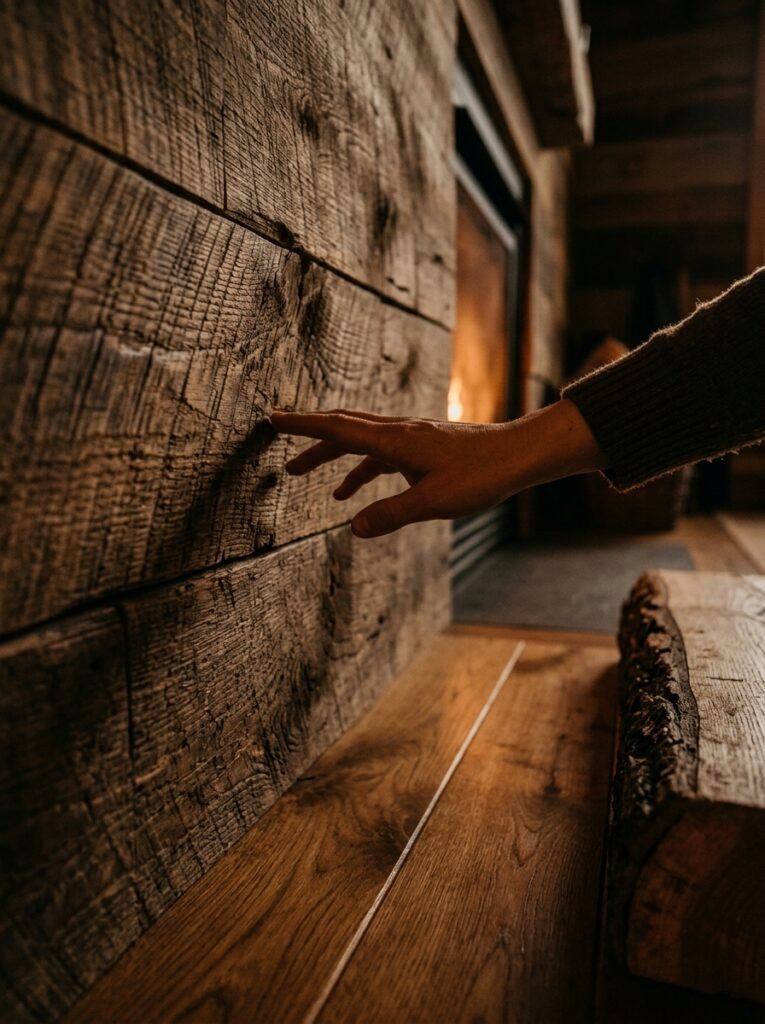
New homes often have a particular problem: they feel unlived in. Everything is too clean, too flush, too perfect. Wooden interiors solve this problem almost automatically because wood carries texture as part of its nature. Rough-sawn planks on a feature wall. Smooth, hand-oiled floorboards. A rustic mantelpiece with bark still visible along one edge. Each texture invites touch, and an interior that invites touch is one that feels immediately, genuinely habitable.
Interior designers call this quality “tactile warmth,” and it’s what separates a house that photographs beautifully from one that actually feels good to be inside. Wood is one of the few materials that achieves both with very little effort.
7. The Practical Case for Wood — Durability That Outlives Trends
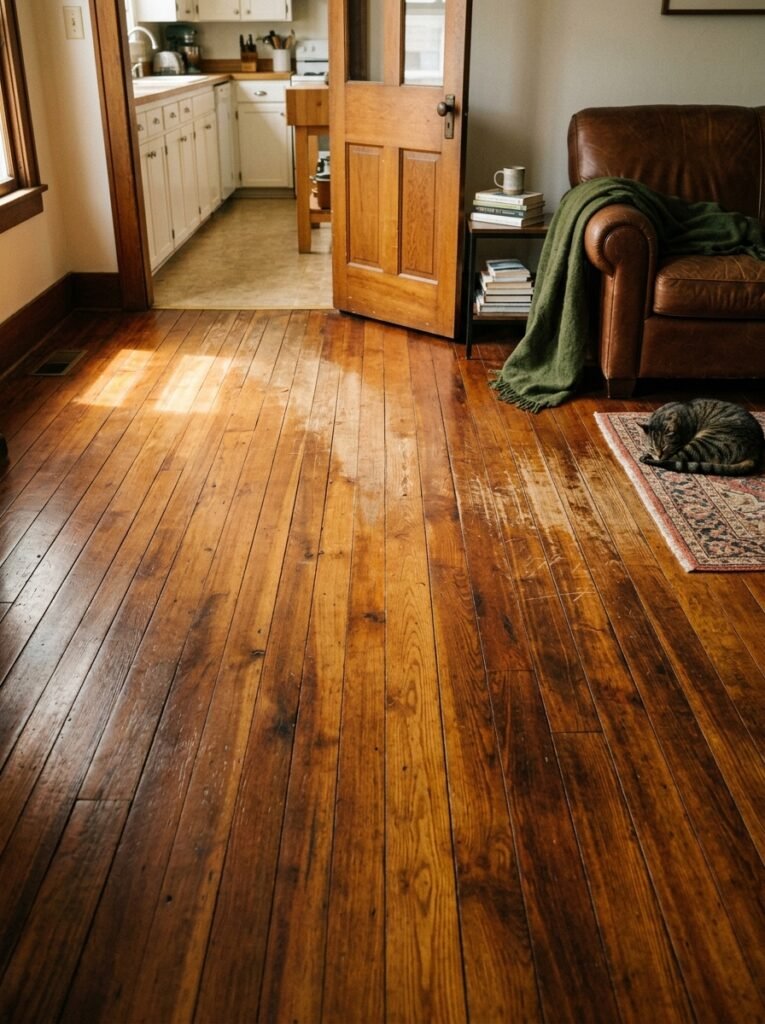
There’s a certain type of beauty that improves over time rather than degrading, and solid wood is one of its purest expressions. A well-maintained hardwood floor doesn’t just last decades — it deepens, darkens, and develops a patina that makes it more beautiful at fifty years than it was at five. Scratches that would ruin vinyl flooring become part of the story on a wooden floor — evidence of a life fully lived in that space.
This durability also makes wooden interiors a sound practical investment. Solid hardwood floors can be sanded and refinished multiple times over their lifespan. Wooden structural elements — beams, frames, panels — can outlast everything else in a building by centuries, as the ancient timber-framed houses across Europe quietly prove.
8. Mixing Wood With Other Materials — Where the Magic Really Happens
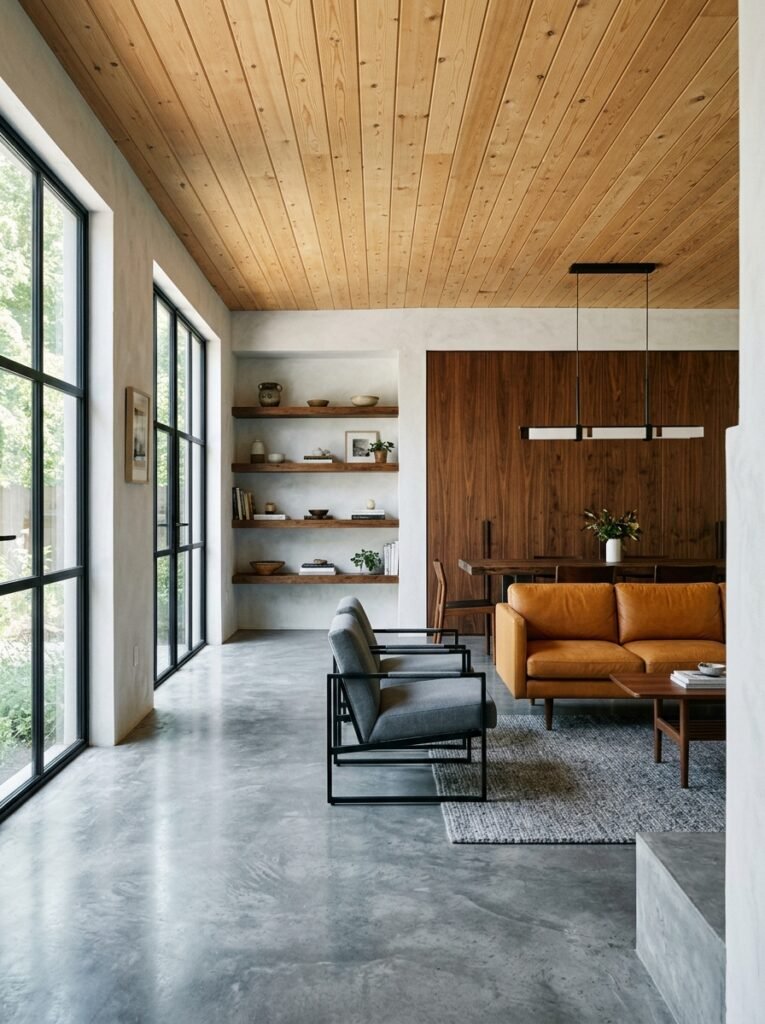
A common misconception about wooden interiors is that they must be exclusively wooden to work. In practice, some of the most beautiful wooden interiors use wood in deliberate conversation with other materials. Concrete floors with warm pine ceiling boards. Steel window frames against rich walnut wall paneling. White lime-washed plaster walls alongside raw, dark oak shelving.
The contrast is the point. Wood anchors these harder, cooler materials and stops them from feeling clinical. And the industrial or minimalist elements, in turn, prevent the wood from feeling too rustic or heavy. This interplay is where contemporary wooden interiors find their most compelling expression — neither purely traditional nor purely modern, but something genuinely its own.
9. The Role of Wood in Acoustic Comfort

This is something interior designers discuss at length and everyone else experiences without realizing it: wood absorbs and diffuses sound in a way that makes a space acoustically pleasant to be in. Hard, smooth surfaces — glass, concrete, tile — reflect sound in ways that create echo and a subtle but constant sense of auditory tension. Wood scatters sound waves, softening the acoustic environment of a room without deadening it.
This is why music sounds better in a wooden room. Why conversations feel more intimate. Why a kitchen with wooden elements feels warmer than an all-tile equivalent, even at the same temperature. The ears are experiencing the room along with the eyes, and wood satisfies both.
“The sound of a wooden house is quieter than other homes — not because it’s silent, but because it knows how to listen.”
10. Sustainability — Choosing Wood That Carries a Clear Conscience
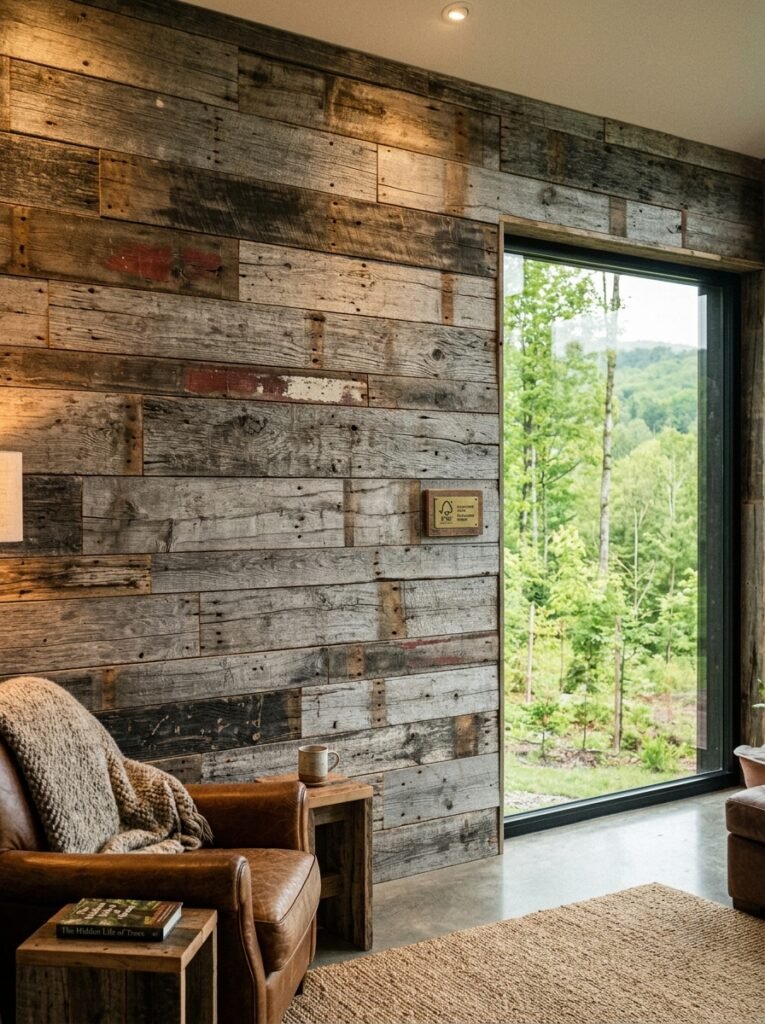
The environmental story of wood in interiors is more nuanced than a single headline, but the core of it is genuinely positive. Wood is the only major building material that is inherently renewable. Responsibly sourced timber — look for FSC or PEFC certification — comes from forests managed so that harvesting is balanced by replanting and natural regeneration. A wooden floor or panel also stores carbon captured during the tree’s lifetime, keeping it locked away rather than released into the atmosphere.
Reclaimed wood takes this further still. Old barn boards, salvaged factory timbers, and deconstructed architectural elements carry history into a new space while requiring no new trees to be felled. Reclaimed wood interiors are, in the truest sense, the most sustainable option available — and also among the most characterful.
11. Small Wooden Details That Change Everything
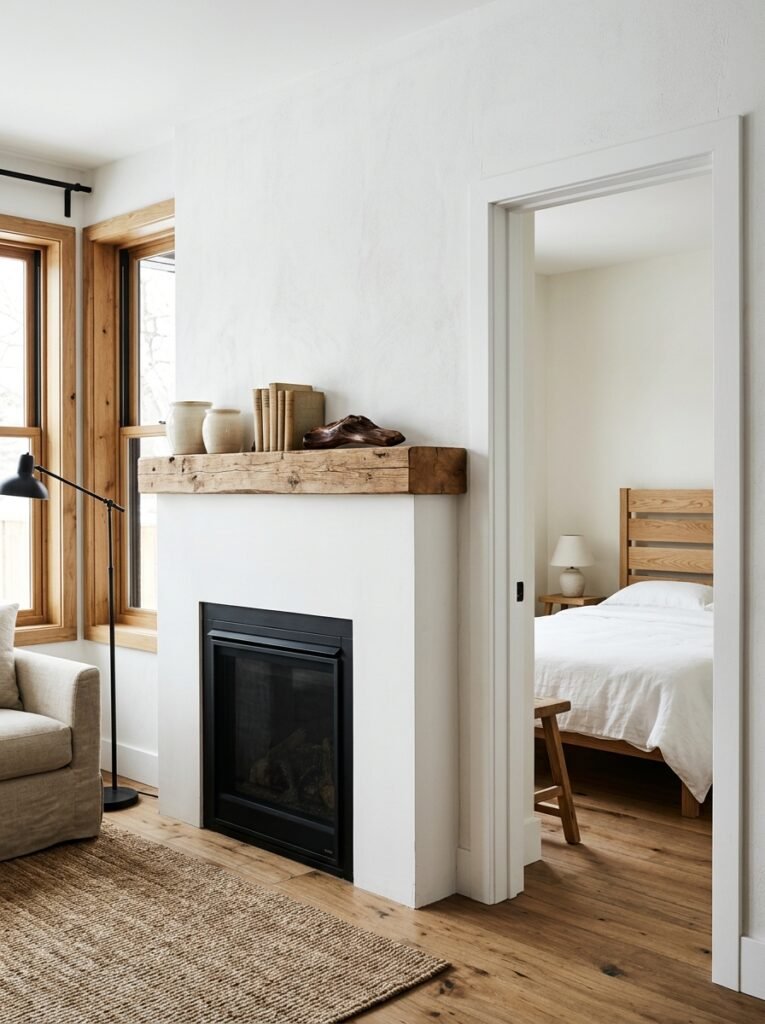
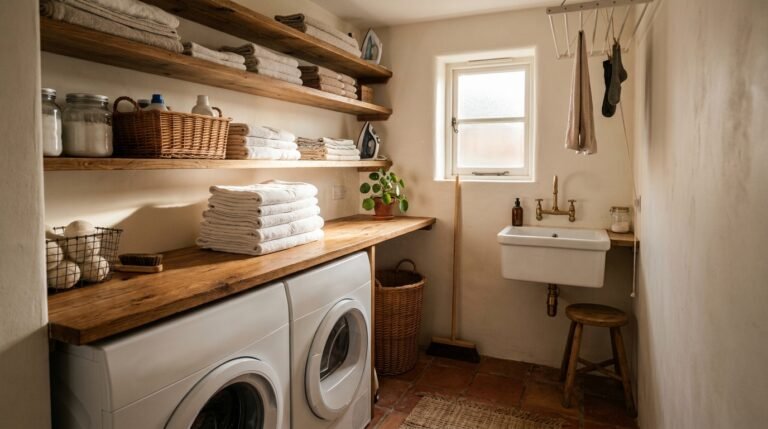
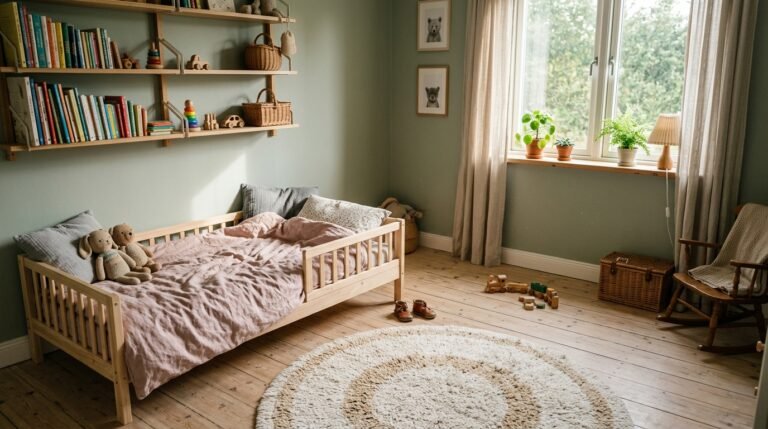
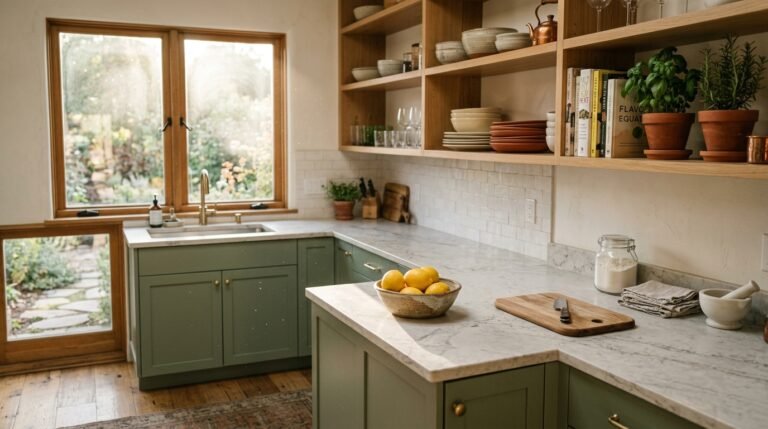
Not every home has the budget or the structure for full wood-paneled walls or hardwood floors throughout. But the beauty of working with wood is that it rewards even modest investment in specific, well-chosen places. A single wooden shelf above a fireplace. A reclaimed wood dining table in an otherwise modern room. Wooden window frames in a space with metal everything else. A handmade wooden headboard in a bedroom.
These small commitments to natural material have a disproportionate effect on how a room feels — because the human eye is drawn to authenticity, and the human body responds to warmth, and wood delivers both in a way that is surprisingly scalable.
12. Why Wooden Interiors Connect Us to Something Larger Than Ourselves
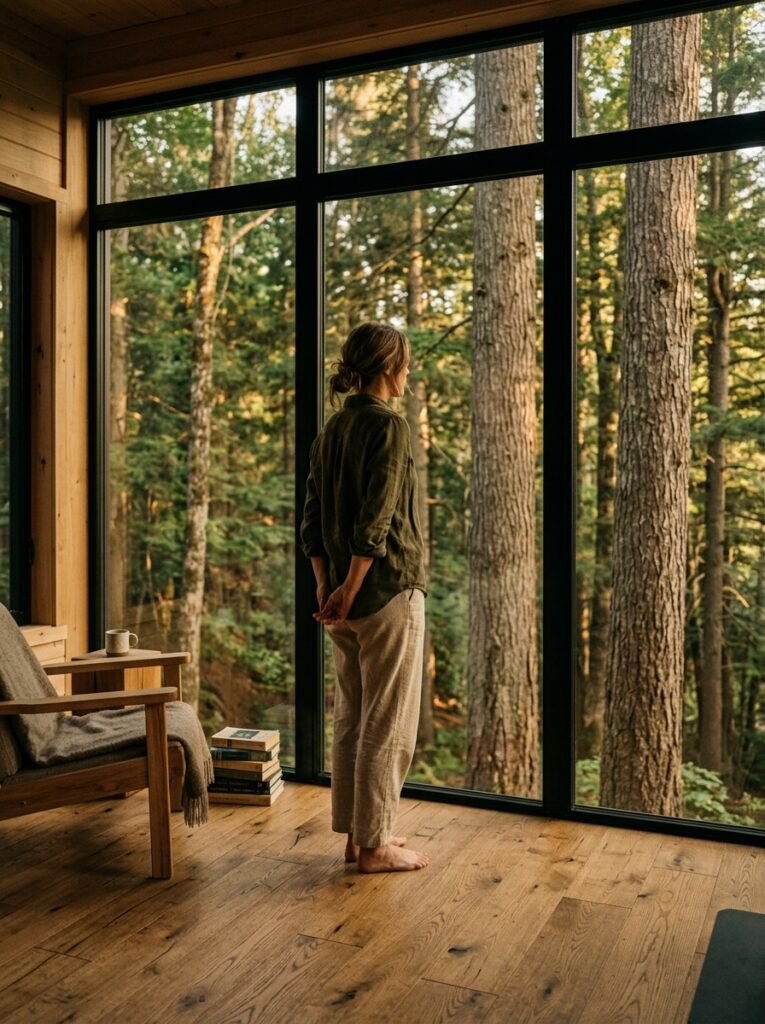
There is a philosophical dimension to living with wood that goes beyond design trends or material properties. Wood is, at its core, a reminder that we live within the natural world rather than apart from it. A wooden interior makes the forest present in your home — not as a decorative motif, but as literal material carried from a living ecosystem into your daily life.
In an era when so much of modern living is mediated, synthetic, and screen-bound, that physical connection to something that grew in soil, rained on, and breathed is not trivial. It’s quietly grounding in a way that’s difficult to articulate but almost universally felt the moment you step inside a home built honestly from natural wood.
—
🌿 How to Take Care of a Wooden Interior
Living with wood is not demanding, but it does ask for a little attention — and it rewards that attention generously.
Keep humidity stable. Wood expands and contracts with moisture, so maintaining indoor humidity between 40% and 60% year-round prevents warping and cracking. A simple hygrometer can tell you where you stand on any given day.
Oil or wax your floors and surfaces annually. Hardwax oil finishes, in particular, are beautiful, natural, and easy to maintain. They nourish the wood from within rather than sealing it under plastic-feeling lacquer. A well-oiled wooden floor feels entirely different underfoot than a lacquered one — more alive, more honest.
Clean gently and with the grain. Avoid soaking wood with water. A barely damp cloth, always wiped in the direction of the grain, is all most wooden surfaces need for day-to-day cleaning. For sticky spots, a mild soap solution works well — just dry the surface immediately afterward.
Address scratches early. Small scratches on oiled floors can be touched up with a drop of matching oil, rubbed in and buffed off. Left unattended, scratches open the wood’s surface to moisture. Attended to promptly, they simply disappear.
Let it age. The single best thing you can do for a wooden interior is resist the urge to keep it looking brand new. Patina is not damage — it is the record of a life well lived in a beautiful space.
—
❓ FAQ
Q: Is a wooden interior difficult to maintain compared to other materials? A: Not significantly. Most wooden surfaces need only occasional oiling or waxing and gentle daily cleaning. The key is consistency rather than intensity — a few small, regular habits keep a wooden interior looking beautiful for decades with very little effort.
Q: Can wooden interiors work in humid climates like bathrooms or kitchens? A: Yes, with the right species and finish choices. Teak, cedar, and properly sealed oak all perform well in humid environments. The key is ventilation and ensuring wood is sealed appropriately for the moisture levels it will encounter. Many Scandinavian and Japanese homes feature wood extensively in bathrooms with great results.
Q: How do I choose between different wood species for my interior? A: Think first about the atmosphere you want — light and airy calls for ash or pale pine; warm and classic suits oak; dramatic and contemporary suits walnut or smoked oak. Then consider practical factors like traffic levels (harder woods for high-traffic floors) and your existing color palette. If you can, bring large samples home and live with them for a few days in the actual light of your space before deciding.
—
💭 Final Thought
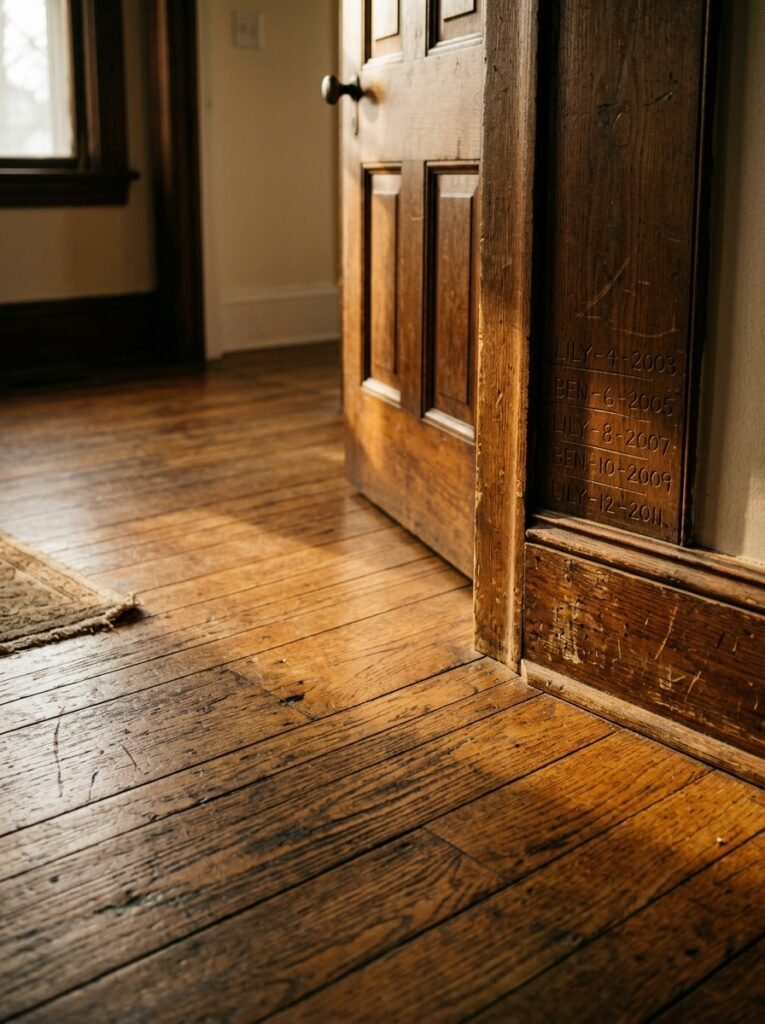
There’s something quietly radical about choosing wood in a world that increasingly prefers the synthetic and the disposable. A wooden interior is a commitment — to a material that ages instead of deteriorating, to a home that feels rather than just looks beautiful, to a kind of living that keeps you connected to the natural world even when you’re standing in your own kitchen.
Wood doesn’t shout. It doesn’t trend and un-trend with the seasons. It simply endures, deepens, and gives back to every person who pays it even a little attention.
So here’s the question worth sitting with: in a home that’s yours to design entirely from scratch, what would it mean to choose materials that grow more beautiful the longer you live with them?