
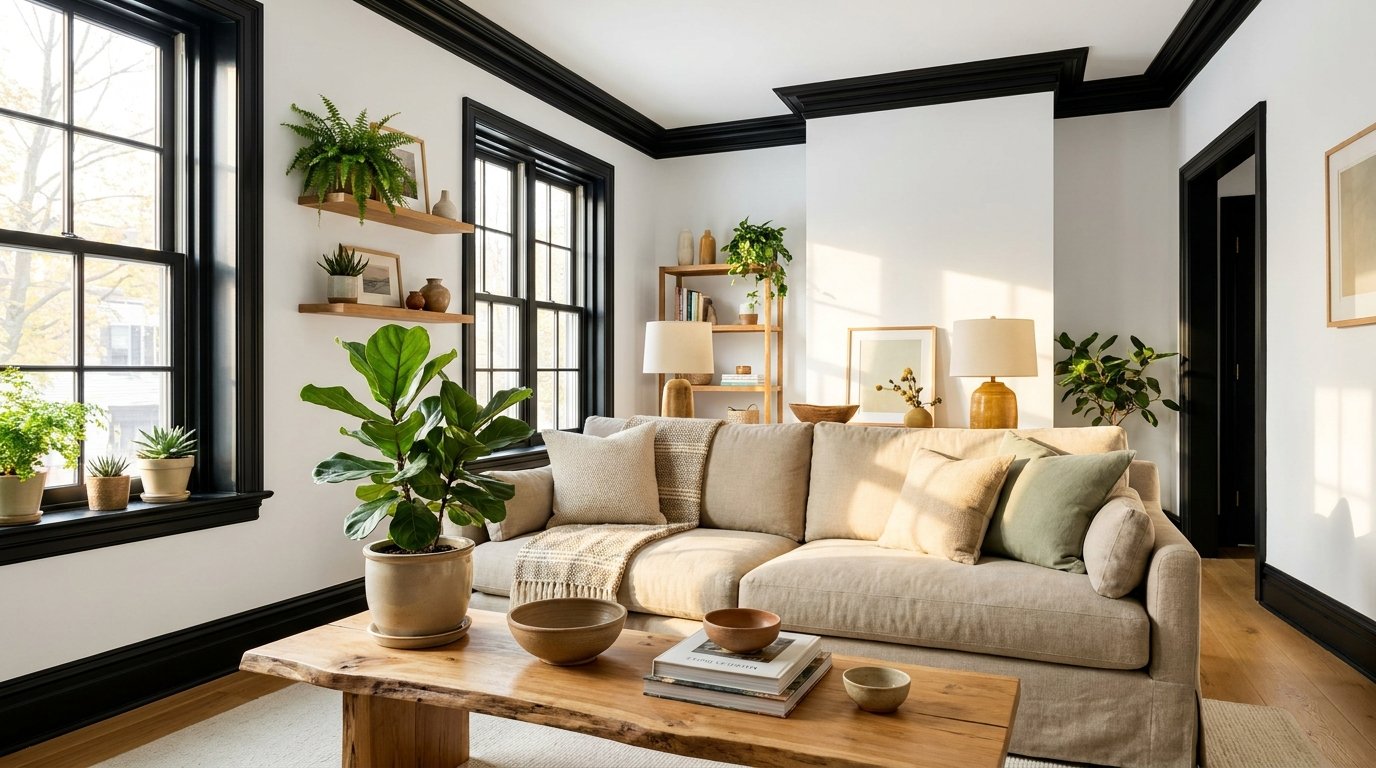
Why Black Trim Is the Interior Design Choice You Didn’t Know Your Home Was Begging For
There’s a moment — maybe you’ve had it — where you walk into a room and something just feels different. The walls might be white, the furniture familiar, but there’s this quiet boldness in the details that makes the whole space sing. Chances are, that secret ingredient was black trim. Once considered too dramatic or too risky for most homes, black trim has quietly become one of the most transformative, character-rich choices in modern interior design — and if you’ve been hesitating to try it, this article is your sign to stop waiting.
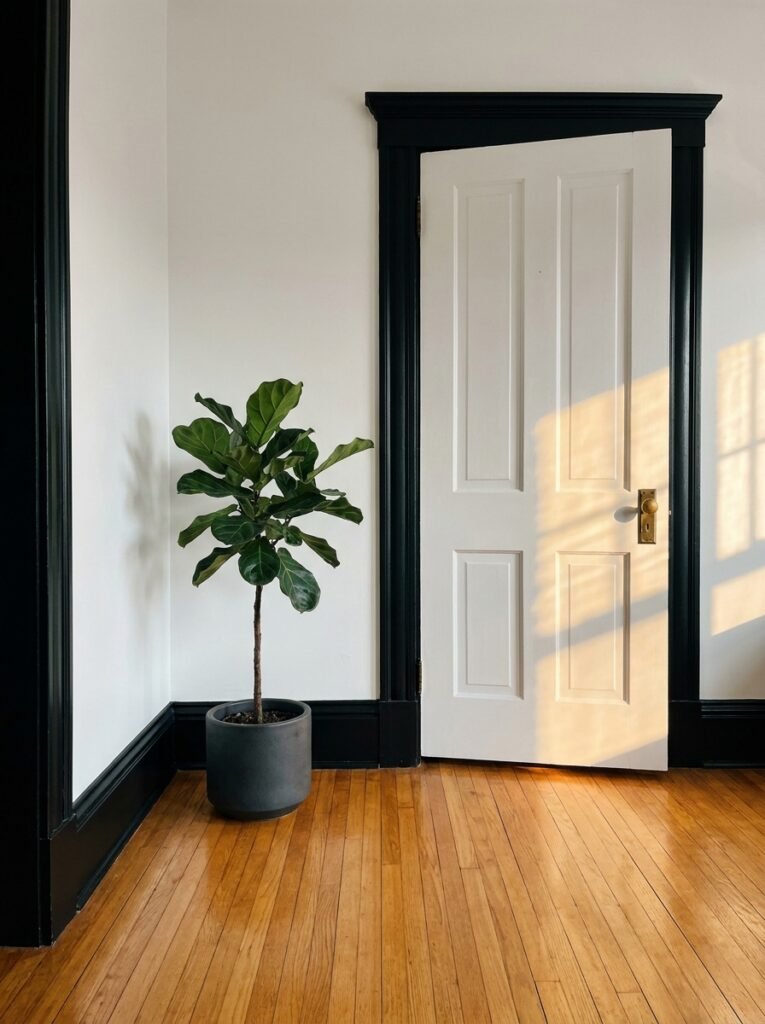
—
1. The Unexpected Psychology Behind Why Black Trim Works So Well
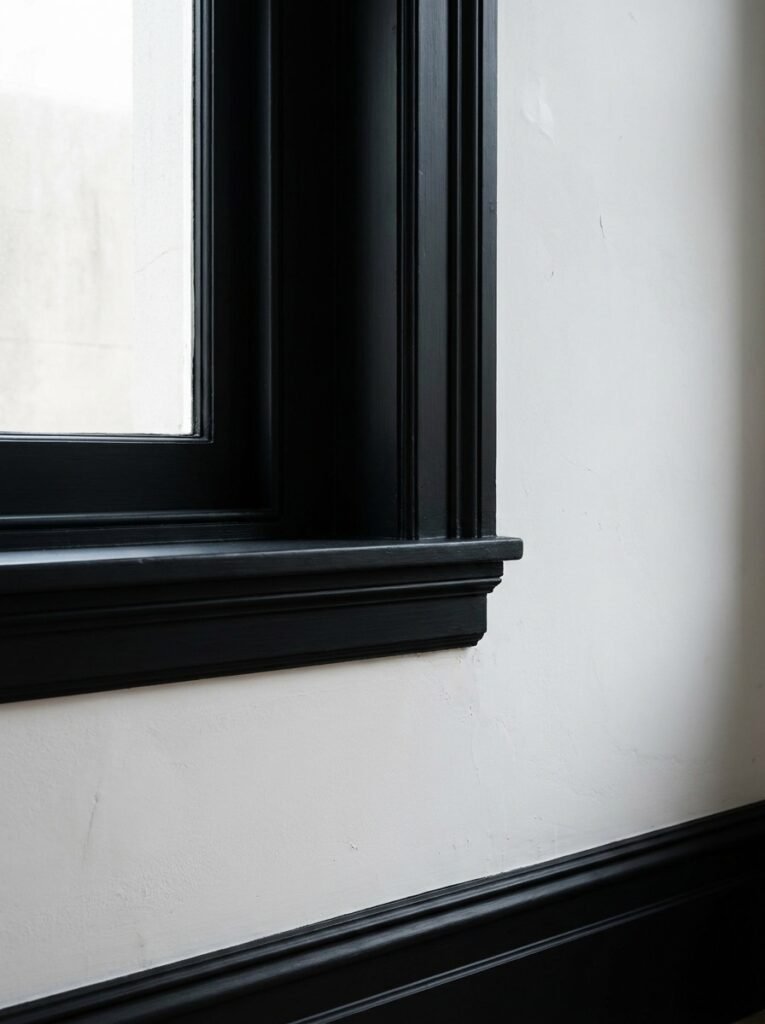
Before we talk paint swatches and room combinations, let’s talk about why black trim has such a powerful effect on a space — because it’s not just aesthetic instinct. It’s rooted in color psychology.
Black, when used as an accent rather than a dominant color, creates what designers call a “grounding effect.” It pulls the eye downward and inward, giving a room a sense of stability and intentionality. Think of it like a frame around a painting — without it, the colors inside feel loose, undefined, almost restless. With it, everything inside the frame looks deliberate, curated, complete.
When you apply that same principle to baseboards, window casings, crown molding, or door frames, you’re essentially framing every wall in your home like a piece of gallery art. Suddenly, even a simple white wall looks like a conscious design decision rather than a default choice.
“Black trim doesn’t just outline a room — it gives the room a reason to exist.”
This psychological depth is why black trim works in almost every design style, from farmhouse to modern minimalism to maximalist eclectic. It doesn’t belong to one aesthetic. It elevates all of them.
—
2. The Color Combinations That Make Black Trim Absolutely Breathtaking
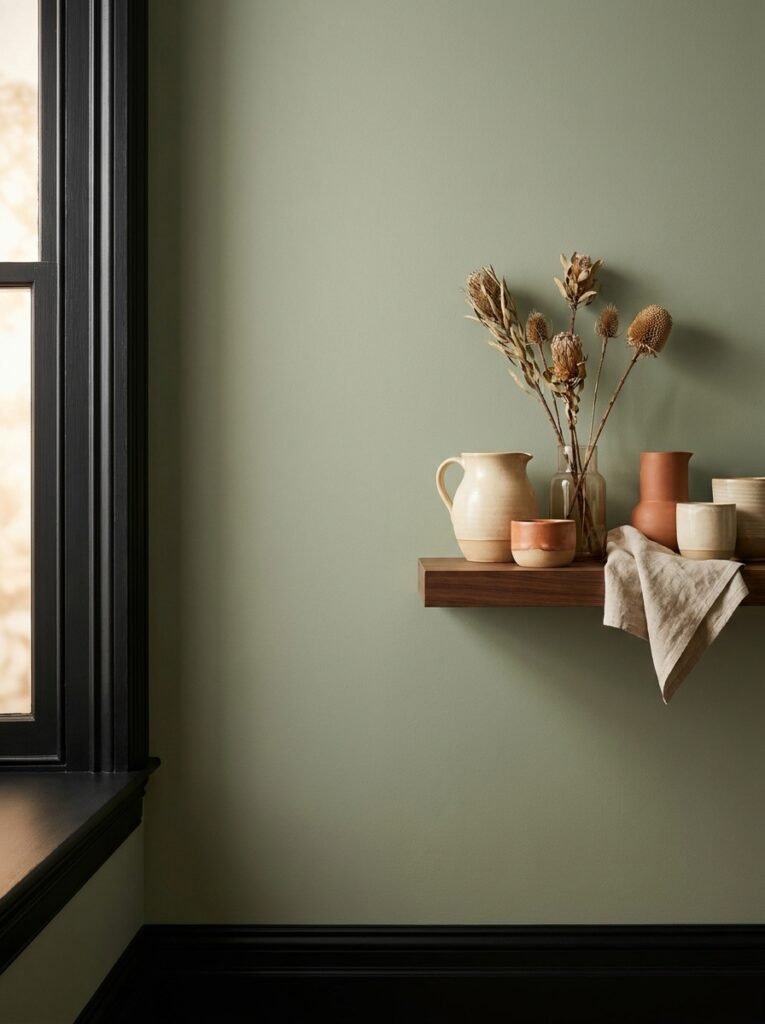
Here’s where things get genuinely exciting — because the wall color you pair with black trim will completely transform the mood of the room. These aren’t just suggestions; they’re tried-and-true pairings that interior designers return to again and again.
Crisp white walls with black trim is the classic for a reason. It’s sharp, clean, and undeniably sophisticated. This combination works especially well in kitchens, bathrooms, and modern living rooms where you want architectural details to feel intentional and graphic.
Sage green walls with black trim is arguably the most Pinterest-worthy combination of the last several years — and for good reason. The earthy, muted green feels organic and calming, while the black trim adds just enough edge to keep it from feeling too soft. Together, they create a space that feels both cozy and current.
Deep navy or moody blue walls with black trim creates a rich, layered look that feels like stepping into a boutique hotel. Because the wall color is already dark, the black trim acts as a tonal continuation rather than a sharp contrast — the effect is dramatic without being jarring.
Warm beige or greige walls with black trim brings a classic European farmhouse feel that photographs beautifully. The warmth of the walls prevents the black from feeling cold or severe, making this combination perfect for living rooms, dining spaces, and entryways.
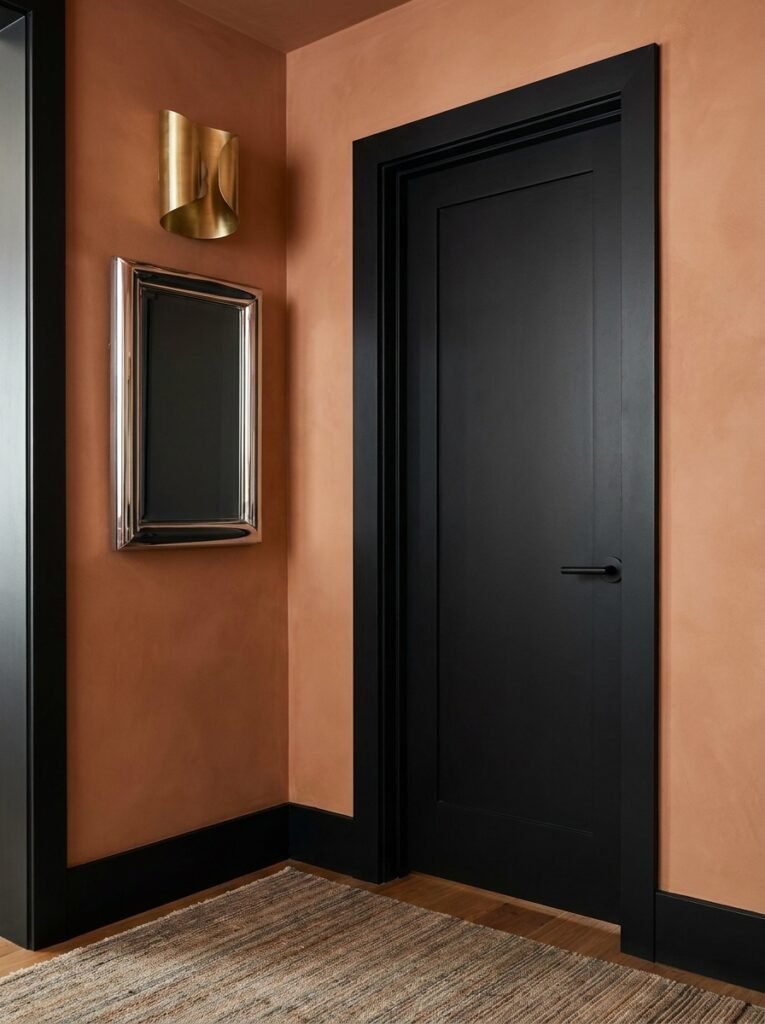
Terracotta or dusty pink walls with black trim is the bold choice that rewards the brave. The unexpected pairing of a warm, blush tone against crisp black trim creates an almost editorial quality — the kind of room that stops people mid-scroll on Pinterest.
—
3. Why Your Kitchen Might Be the Perfect Place to Start
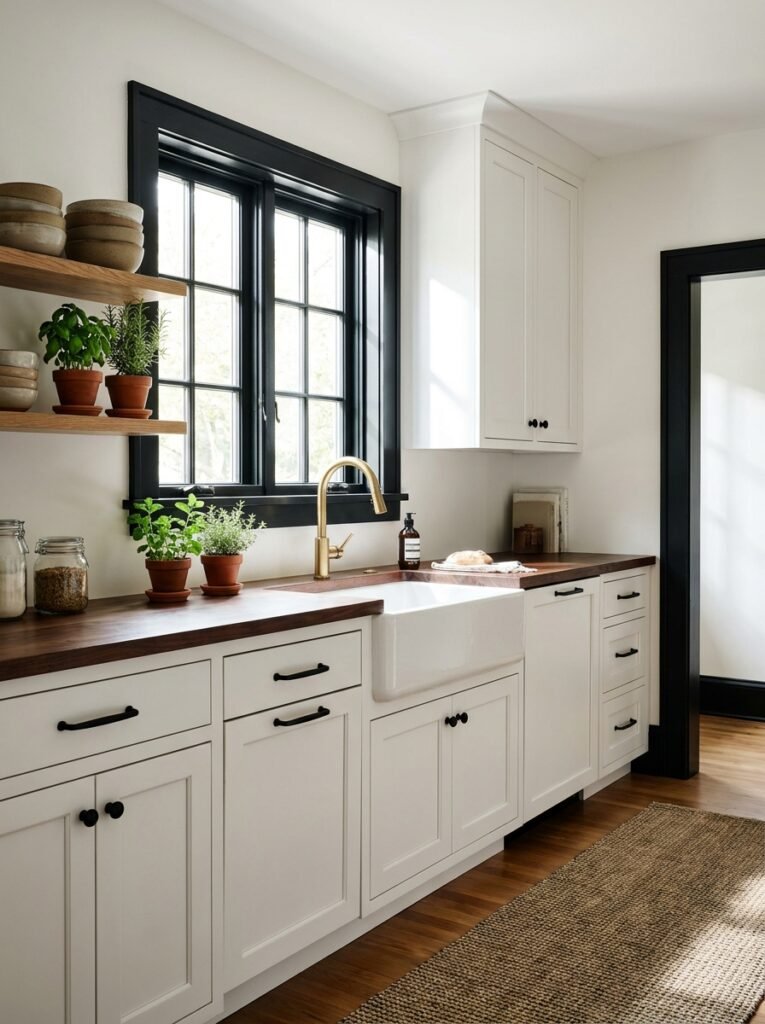
If you’re not ready to commit to black trim throughout your entire home, the kitchen is the ideal testing ground. And not just because mistakes are easier to repaint — but because the kitchen is already a space where bold, graphic contrasts feel natural.
Imagine white shaker cabinets with black trim around the windows and door frames. The trim echoes the hardware and fixtures, creating a visual rhythm that makes the space feel designed rather than assembled. Add black window casings in a kitchen with open shelving, and suddenly every herb plant and ceramic bowl on those shelves looks like it belongs in a lifestyle magazine.
The kitchen is also a space where architectural details — like the trim around a pass-through, a doorway arch, or a window above the sink — get noticed on a daily basis. Making those details count in black is a decision you’ll feel good about every single morning when you make your coffee.
—
4. Living Rooms That Feel Like a Magazine Without the Budget
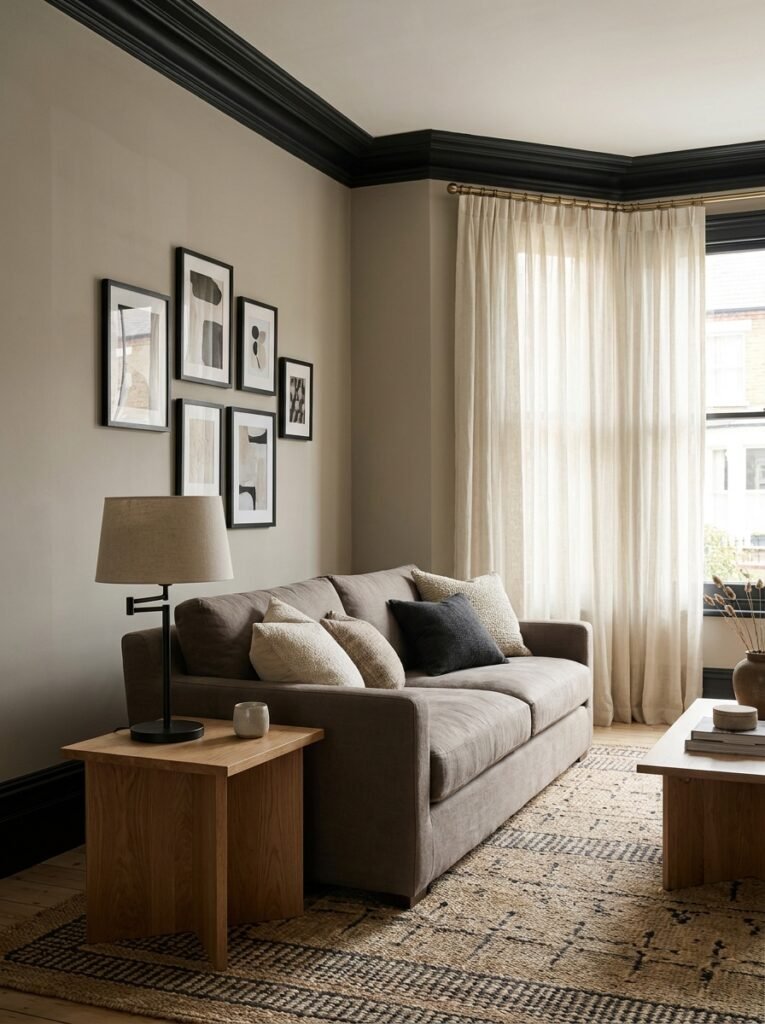
The living room is where black trim earns its most impressive reputation — because this is where you have the most square footage, the most windows, and the most visible door frames to work with. That means the most opportunity for impact.
In a living room with high ceilings, black crown molding and baseboards create a visual bracket that makes the architecture feel intentional and grand. Even in a room with standard eight-foot ceilings, black trim draws the eye along the lines of the room, making the space feel more considered and architecturally interesting.
Pair this with a warm neutral sofa, linen curtains, and natural wood furniture, and you have a room that feels layered, lived-in, and expensive — without a renovation budget. The black trim does the heavy lifting.
“The right trim color doesn’t just finish a room — it starts the whole conversation.”
One word of advice here: don’t stop at the trim alone. Let the black trim inspire a few black accent pieces — a picture frame cluster, a side table, a lamp base — so the trim feels like part of a cohesive design language rather than an isolated choice.
—
5. Bedrooms That Feel Like a Retreat From the Moment You Walk In
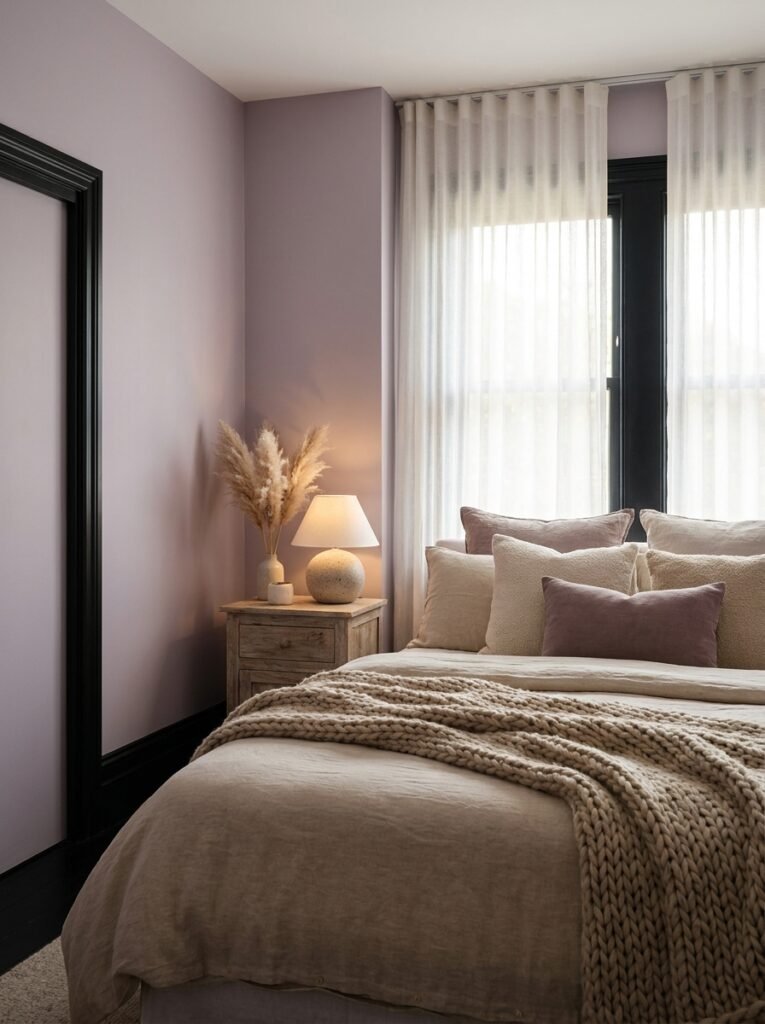
There’s something deeply comforting about a bedroom with black trim. It might sound counterintuitive — you’d expect it to feel heavy or stark — but in practice, black trim in a bedroom creates a sense of enclosure and intimacy that feels genuinely restful.
Pair black trim with dusty lavender or soft sage walls, add linen bedding in warm white or oatmeal tones, and the result is a space that feels like a boutique inn in the countryside. The black trim holds the room together, preventing all that softness from feeling undefined.
In children’s rooms, black trim paired with a gentle warm white or a soft butter yellow creates a classic, story-book quality. It’s charming rather than dramatic, especially when paired with natural wood furniture and simple cotton textiles.
—
6. Small Spaces Where Black Trim Is Surprisingly Magical
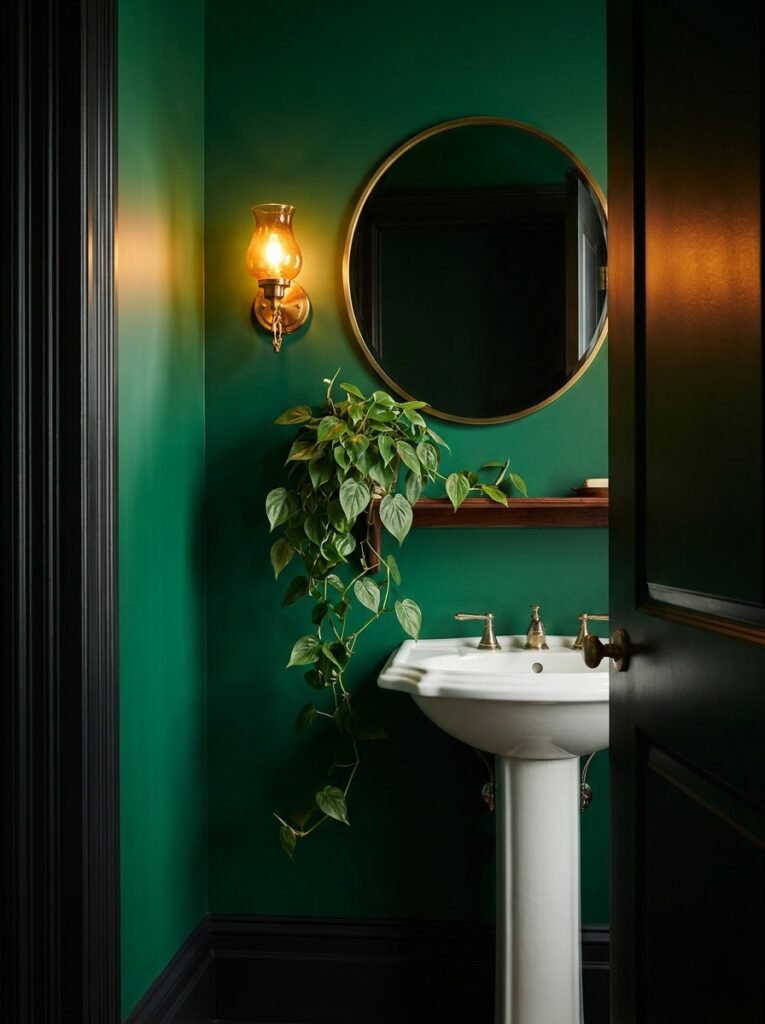
Here’s the design myth worth busting: black trim in a small space will make it feel smaller. In reality, the opposite is often true. In a small entryway, powder room, or reading nook, black trim creates a jewel-box effect — it makes the small space feel intentionally intimate rather than just cramped.
A powder room with deep emerald green walls and black trim, for example, is one of the most talked-about design decisions a homeowner can make. Guests walk in expecting a forgettable bathroom and walk out genuinely impressed. The small scale actually allows the boldness to feel playful rather than overwhelming.
In a narrow hallway, black trim on the doors and baseboards creates a visual structure that guides the eye forward and makes the space feel like a gallery corridor rather than a tight squeeze.
—
7. How Lighting Changes Everything About Black Trim
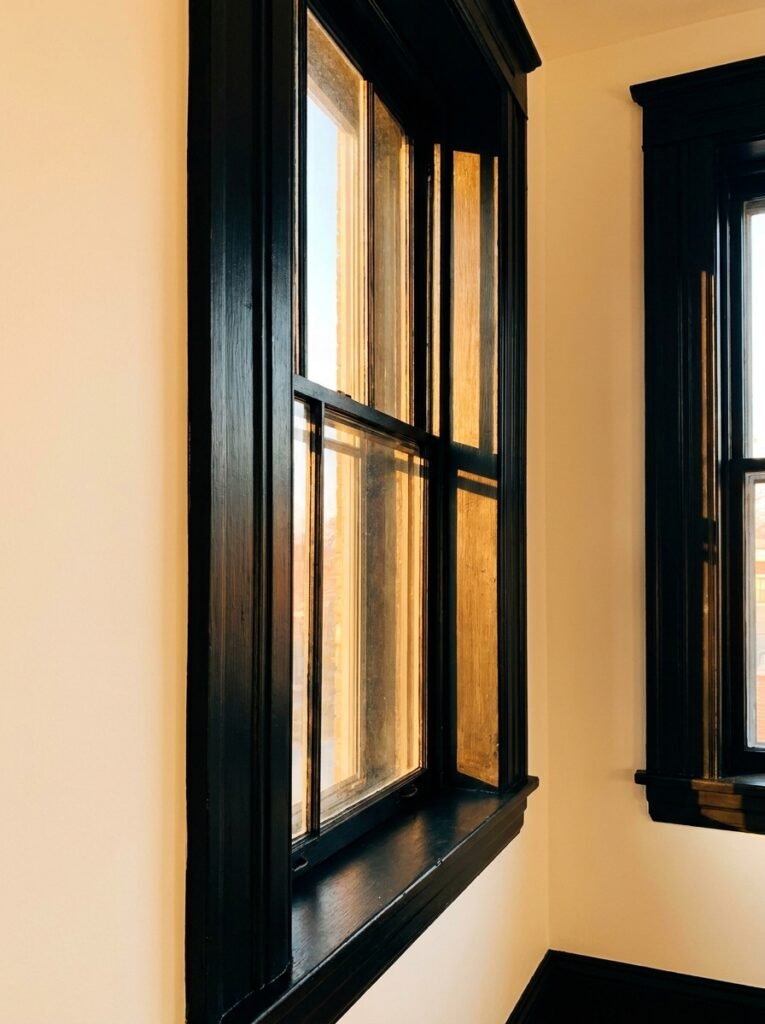
This is the detail that most people overlook when planning a black trim color scheme, and it’s arguably the most important one. Black trim behaves completely differently depending on the quality and direction of light in the room.
In a room with abundant natural light — large south-facing windows, for example — black trim looks crisp, confident, and slightly graphic. The contrast is sharp and the effect is clean and modern. In a room with warmer, dimmer lighting, black trim softens and deepens, taking on an almost chocolatey quality that feels rich and intimate.
This means the same paint color applied to trim in a sun-drenched kitchen will feel entirely different than the same color in a north-facing living room. Always test your trim paint color in the actual light of the room at different times of day before committing. What looks perfect on a paint chip can look dramatically different on an actual door frame at dusk.
—
8. The Finish Matters as Much as the Color
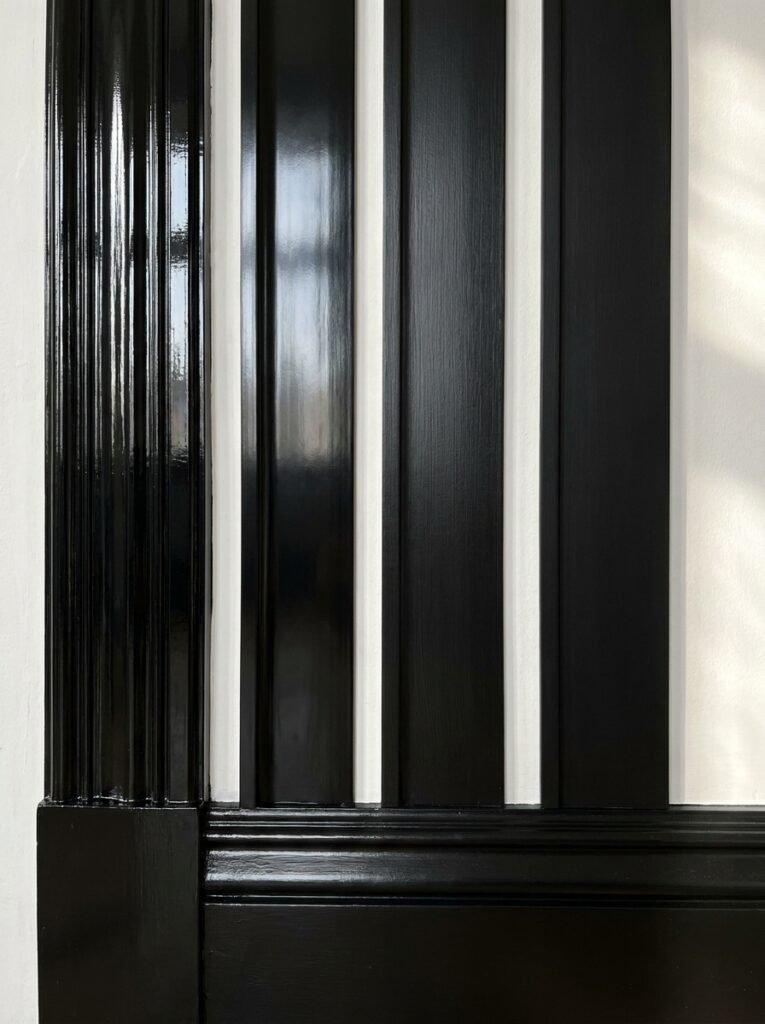
When you decide on black trim, the conversation doesn’t end at “black.” The finish — whether you choose matte, satin, semi-gloss, or high gloss — completely changes the personality of the trim and how it interacts with the rest of the room.
High-gloss black trim is bold, theatrical, and deliberately sophisticated. It reflects light beautifully and works especially well in formal dining rooms or entryways where you want a strong architectural statement.
Semi-gloss black trim is the workhorse choice — durable, slightly reflective, and flattering in most lighting conditions. It’s the go-to for kitchens, bathrooms, and any high-traffic area where the trim needs to be cleaned regularly without losing its quality.
Satin finish black trim sits beautifully in living rooms and bedrooms, where the subtle sheen adds depth without the drama of high gloss.
Matte black trim is the most editorial and modern choice — it photographs stunningly, especially against light walls, but requires more maintenance as it shows fingerprints and scuffs more easily.
“The finish you choose tells the room what kind of story it wants to tell.”
—
9. The Paint Colors You Should Actually Use for Black Trim

Not all “black” paints are equal — and this matters enormously in interior design. True black can sometimes read as cold, flat, or harsh. Many of the most beloved black trim colors are actually very dark versions of other tones: deep charcoal, warm near-black, or soft ebony.
Some of the most consistently beloved choices among interior designers include Benjamin Moore’s Onyx (2133-10), which is a rich, slightly warm black that works beautifully with cream and sage tones. Tricorn Black by Sherwin-Williams (SW 6258) is considered one of the truest, cleanest blacks available and is a top choice for graphic white-and-black color schemes. Iron Mountain by Benjamin Moore (HC-173) is a deep, almost-black charcoal with a slight warmth that makes it feel grounded rather than stark.
For those who want the drama of dark trim without fully committing to black, Black Fox (SW 7020) by Sherwin-Williams is a warm, dark brown-black that gives a similar effect with slightly more approachable energy.
—
10. How to Make Black Trim Work in an Open-Plan Space
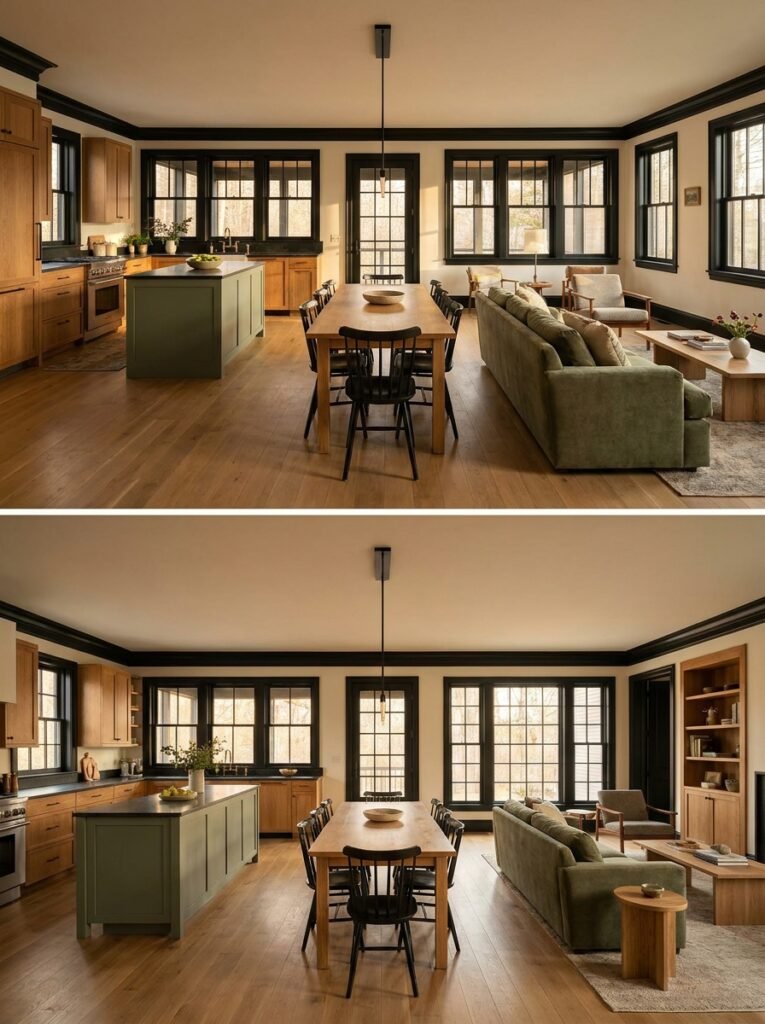
Open-plan living presents a unique challenge with bold trim choices — because the trim runs continuously through multiple zones, it has to work with every color and vibe in the connected space. The good news is that black trim is one of the most flexible choices for exactly this reason.
Because black is technically neutral, it bridges different zones without clashing. A kitchen flowing into a dining area flowing into a living room, all unified by continuous black window casings and door frames, feels cohesive and deliberately designed even if each zone has a slightly different color palette. The trim acts as the common thread, the visual grammar that ties the whole open space together.
—
11. Budget-Friendly Ways to Introduce Black Trim Without Repainting Everything
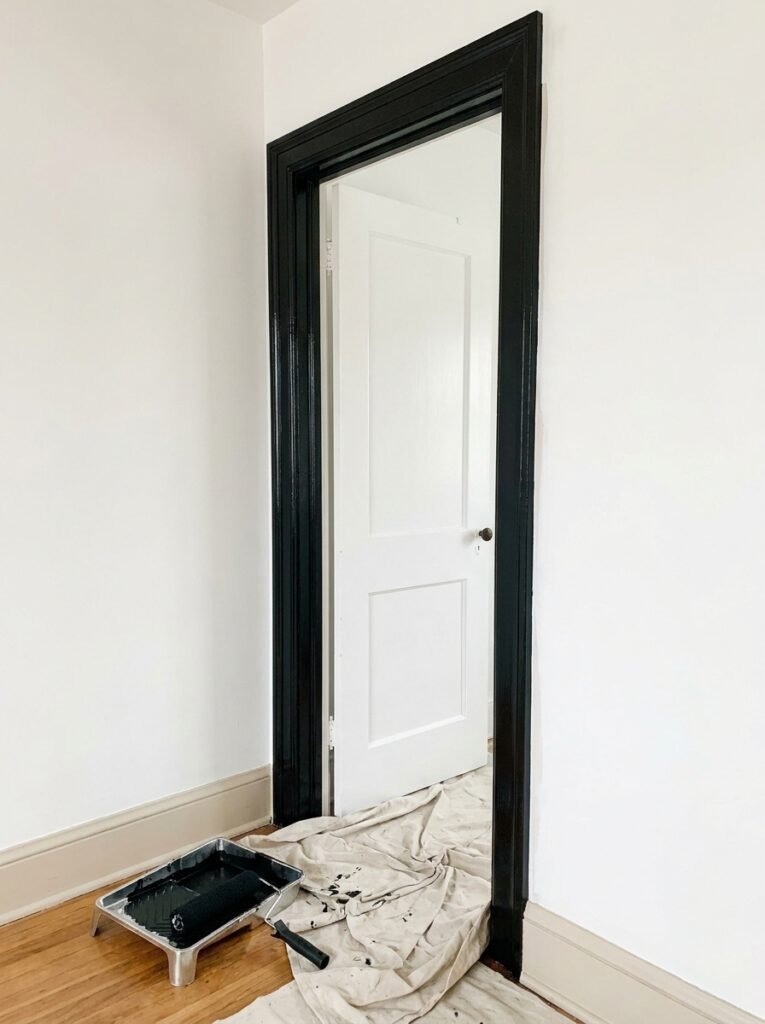
Not everyone is ready to repaint all the trim in their home — and that’s completely valid. There are thoughtful, budget-conscious ways to introduce the black trim effect without a full commitment.
Start with a single doorway — ideally one that gets a lot of visual attention, like the entry from your living room to your kitchen. Paint just that door frame in black semi-gloss and live with it for a few weeks. The effect will almost certainly convince you to keep going.
Another approach is to paint interior doors black while leaving the baseboards and window casings in their existing white or neutral tone. Black doors are an incredibly high-impact, lower-commitment way to bring that bold trim energy into your home — one door at a time if needed.
—
12. The Style Rules Worth Breaking When You Go Black
Every design rule has a point where it becomes more of a suggestion — and black trim is a perfect opportunity to trust your instincts over the conventional wisdom.
The “rule” that dark colors make small rooms feel smaller? Black trim often defies it. The “rule” that you need to match all your metal finishes? Black trim plays beautifully with mixed metals — brushed brass, chrome, and matte black hardware can all coexist in the same room when black trim is the unifying anchor. The “rule” that trim should always be lighter than the walls? Black trim turns that assumption on its head entirely — and almost always for the better.
Design rules exist to help people who don’t know where to start. Once you understand why a rule exists, you’re free to decide when it applies to your specific space and when it simply doesn’t. Black trim is proof that the most transformative design choices are often the ones that politely ignore the rulebook.
—
🌿 How to Get the Most Out of Your Black Trim Color Scheme
Living with black trim is a commitment, and like any great design decision, it rewards a little ongoing care and thoughtfulness.
Touch up black trim paint more regularly than white — scuffs and chips show more on dark surfaces and are worth addressing quickly before they become an eyesore. A small container of your original trim paint stored in a cool, dry place makes this effortless.
Clean your black trim regularly with a damp microfiber cloth rather than chemical cleaners, which can dull the finish over time. For satin and semi-gloss finishes, light cleaning is usually all you need to keep the trim looking sharp.
When styling your room, let the black trim guide your accent choices. Black trim naturally calls for at least a few other black elements in the space — whether that’s a vase, a lamp, a throw pillow, or a picture frame cluster — to feel like part of a complete design rather than an isolated detail.
And finally, trust the process. Black trim can look surprising in the middle of a paint job — too stark, too dramatic, too much. But once the room is fully styled and you’re standing in it with the lights on and a cup of coffee in hand, you’ll almost certainly feel exactly what you hoped to feel when you started: that this is a home that knows exactly what it wants to be.
—
❓ FAQ
Q: Does black trim work in a small room or will it feel too heavy? A: Black trim actually works beautifully in small spaces — it creates what designers call a “jewel box” effect, making the room feel intimate and intentional rather than cramped. The key is pairing it with lighter wall colors or rich, deep hues that feel deliberately dramatic rather than accidentally dark.
Q: What wall colors pair best with black trim? A: The most popular and consistently beautiful pairings are crisp white, sage green, warm beige or greige, deep navy, and terracotta. Each creates a completely different mood while the black trim ties the room together with structure and sophistication.
Q: Should I use true black or a softer near-black for my trim? A: Most interior designers recommend a warm near-black or deep charcoal rather than a stark true black for trim — colors like Tricorn Black by Sherwin-Williams or Onyx by Benjamin Moore are widely praised because they read as bold without feeling cold or flat in varying lighting conditions.
—
💭 Final Thought
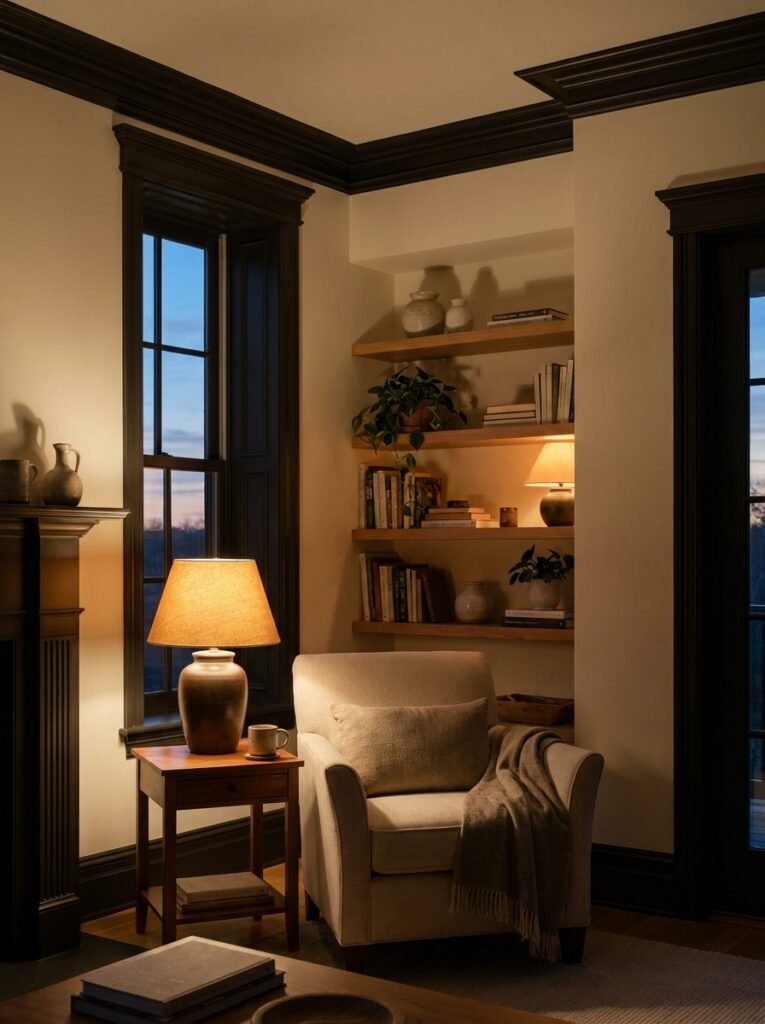
Black trim isn’t a trend — it’s a design philosophy. It’s the decision to stop letting the details of your home fade into the background and start letting them say something. There’s a quiet confidence in a room that knows its own lines, that frames its windows like art and grounds its walls with intention. Once you experience a space with thoughtfully executed black trim, it’s very hard to look at plain white baseboards the same way again.
What’s one room in your home where you think black trim could completely change the way the space feels?