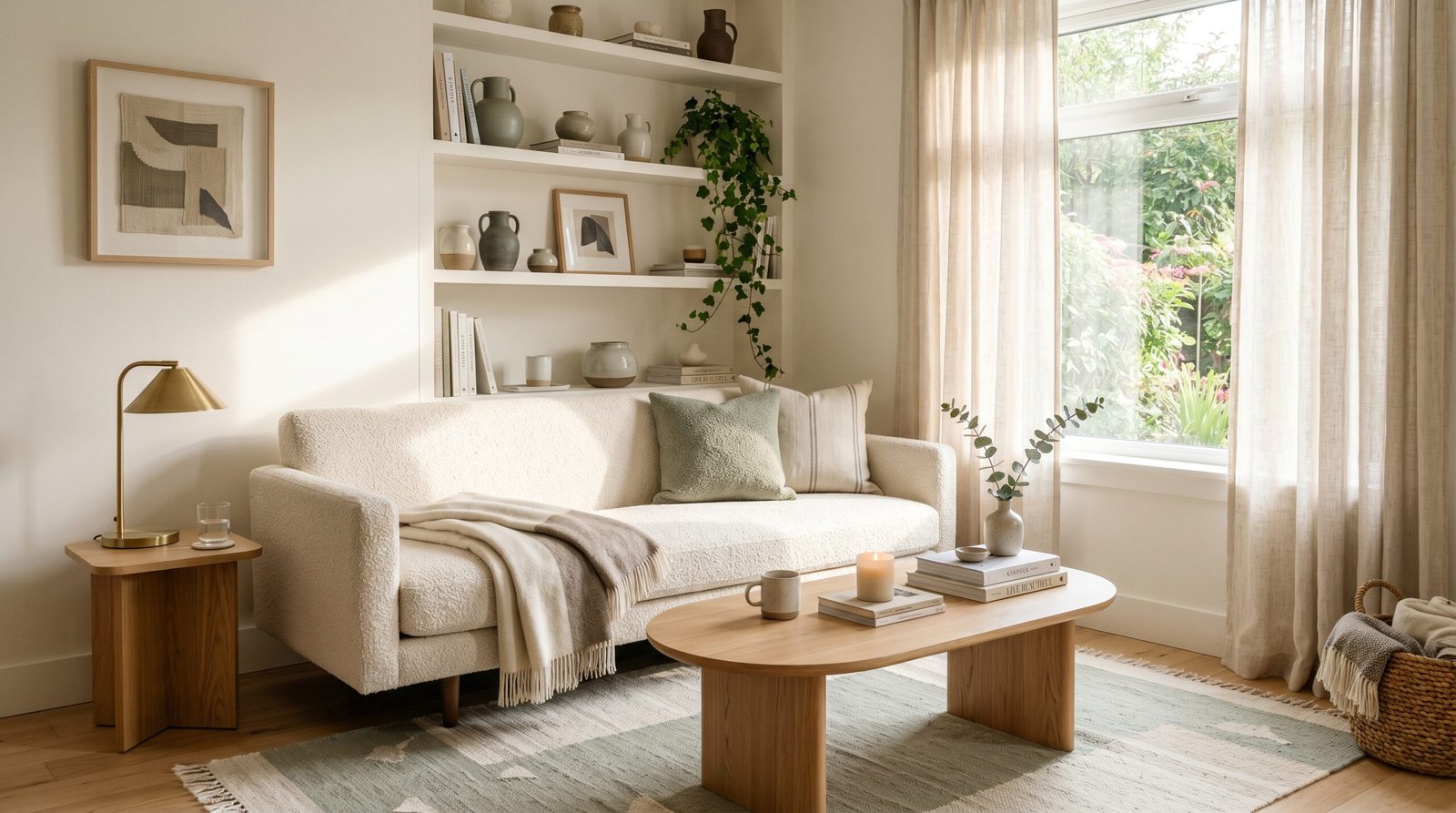
Small Living Room, Big Personality: The Most Beautiful Decor Ideas for Tiny Spaces That Actually Work
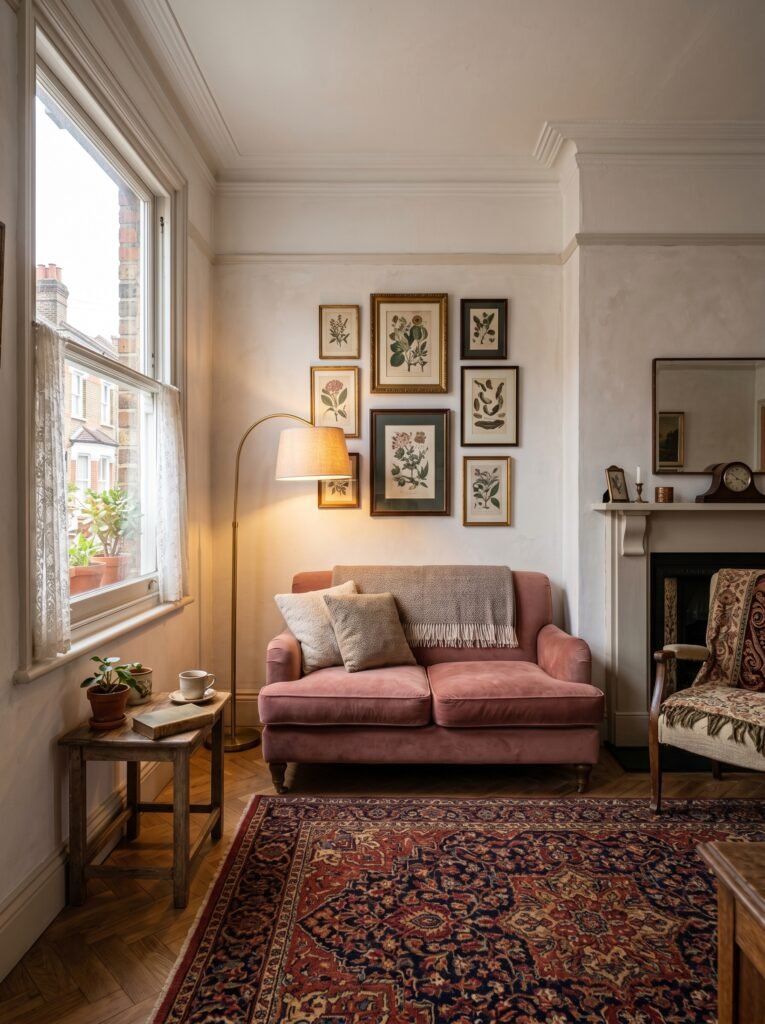
There’s something quietly heartbreaking about standing in a small living room with a Pinterest board full of dreamy interiors and wondering — will any of this ever work for me? The answer, without hesitation, is yes. In fact, some of the most gorgeous, character-filled living rooms in both the US and UK are under 150 square feet — and they’re proof that limitation can be the mother of stunning design.
—
1. Why Small Spaces Have a Secret Advantage Most People Miss
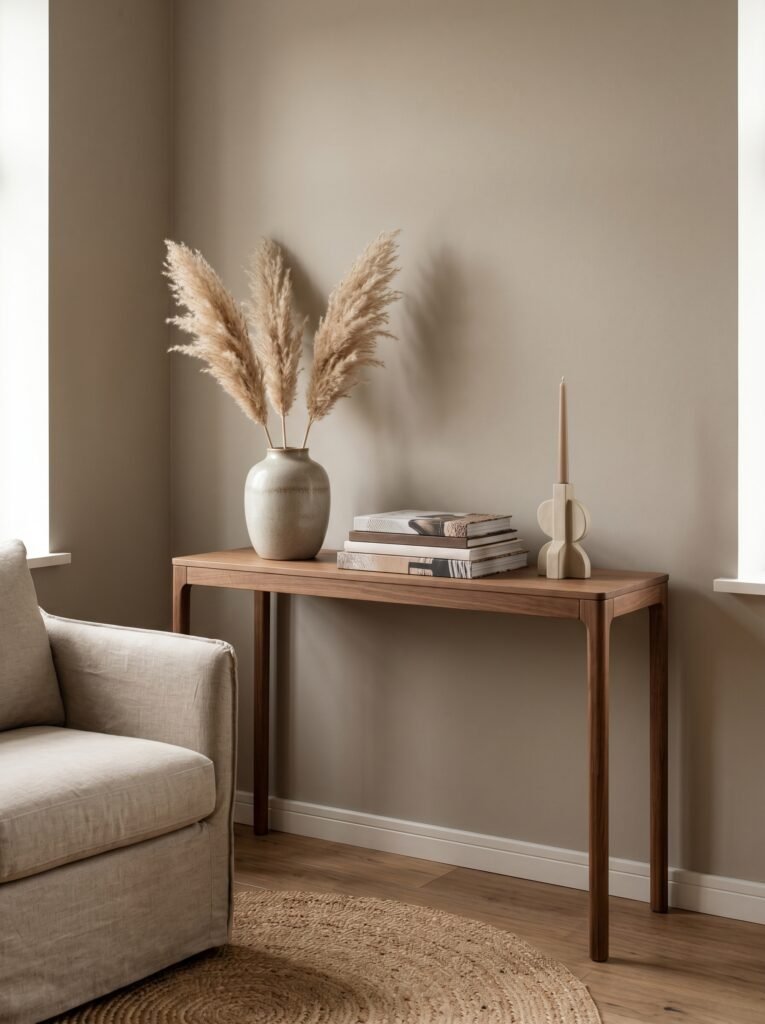
Here’s the thing nobody tells you when you’re measuring your shoebox apartment or your terraced house sitting room for the hundredth time: small rooms are easier to make feel intentional. Every object is visible. Every choice counts. You can’t hide clutter behind square footage, so you’re pushed — beautifully pushed — toward only keeping what truly matters.
Interior designers often say that large rooms are harder to style because they require so many elements to feel cohesive and lived-in. A small living room, on the other hand, can feel curated and complete with just a few strong decisions. Think of it less like a limitation and more like a tighter frame on a photograph — it forces the composition to be better.
“The rooms that feel most like home are rarely the biggest ones — they’re the ones where every inch was chosen with care.”
In Britain, millions of people live in Victorian and Edwardian terraced houses with front rooms no larger than 12 by 11 feet. In the US, studio apartments in cities like New York, Chicago, and Seattle routinely feature living areas under 200 square feet. If you’re among them, you’re in brilliant company — and you’re about to discover just how beautiful your space can be.
—
2. The One Furniture Rule That Changes Everything in a Small Living Room
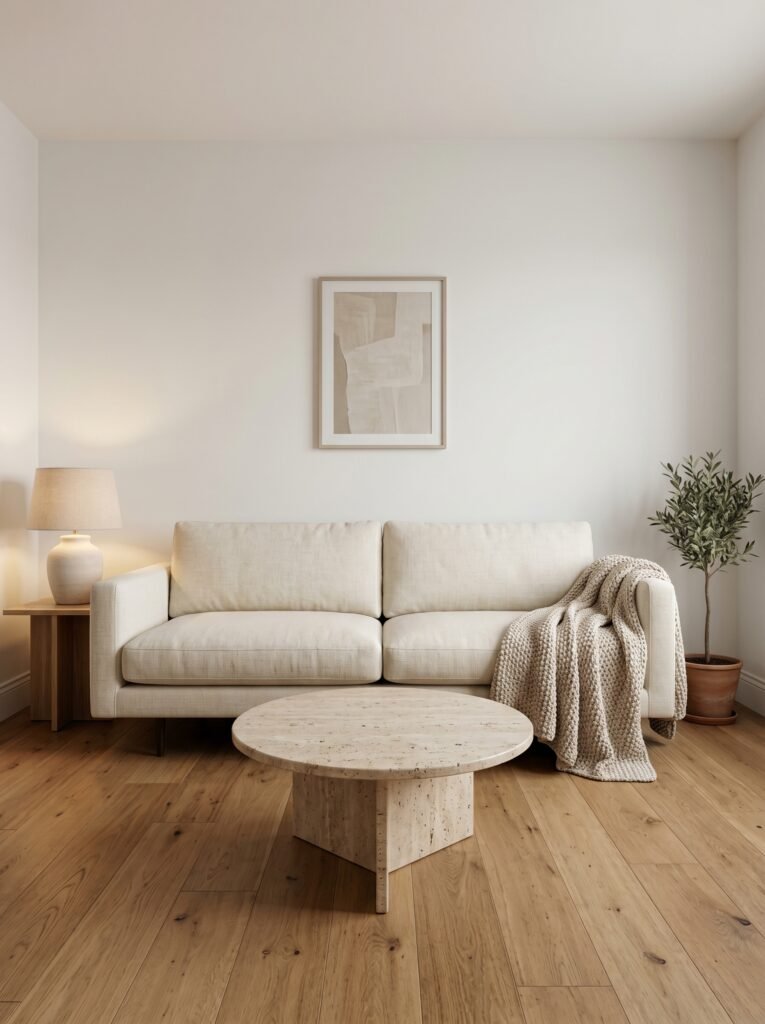
Let’s talk about the rule that every experienced interior designer swears by but beginners consistently get backwards: don’t push all your furniture against the walls.
It feels counterintuitive, doesn’t it? You want to maximize floor space, so naturally everything migrates to the perimeter. But floating furniture slightly away from walls — even just 2 to 3 inches — creates a sense of depth and intentionality that makes rooms feel larger and more designed. It allows the eye to travel around the space rather than getting trapped in the corners.
Start with your sofa. Pull it forward from the wall by a few inches and angle your coffee table close enough to remain functional. This single shift can transform a cramped, static-feeling room into something that breathes.
—
3. The Sofa Size Equation: Getting It Right the First Time
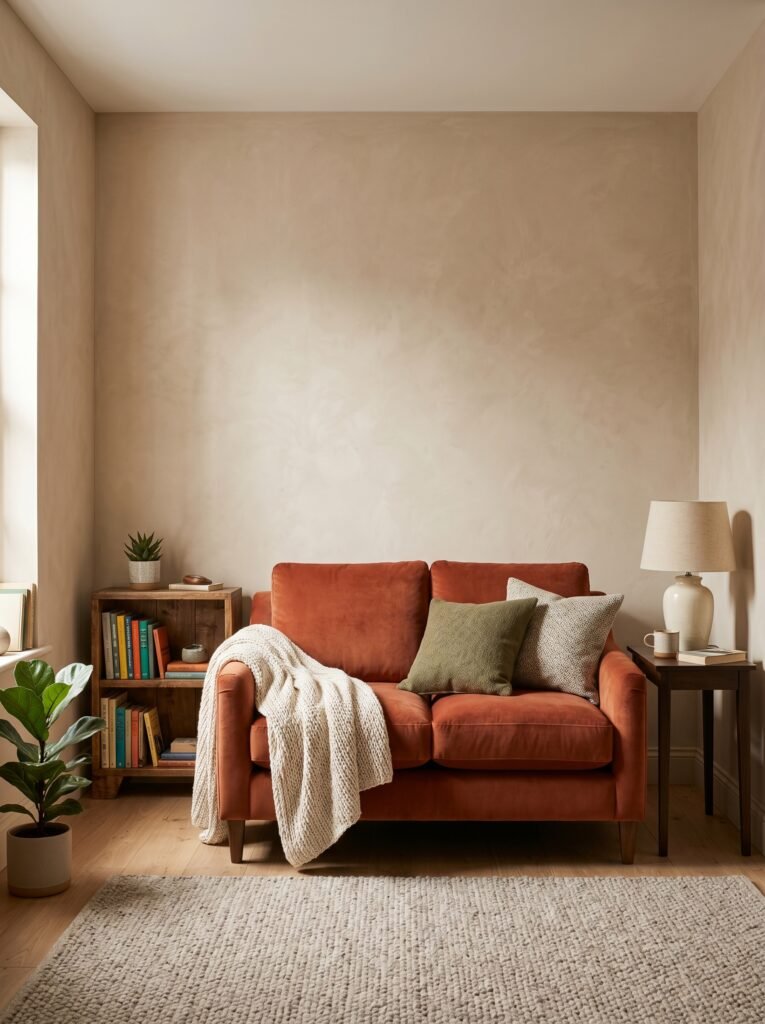
Buying a sofa for a small living room without measuring first is one of the most common — and costly — decorating mistakes American and British homeowners make. A loveseat that’s 52 inches wide can feel just as comfortable and look just as beautiful as a larger three-seater if it’s the right scale for the room.
A general guideline: your sofa should occupy no more than two-thirds of the wall it rests near. In a room that’s 11 feet wide, that means a sofa no longer than approximately 7 feet, 4 inches. In metric, if your wall is 3.3 metres wide, aim for a sofa no longer than 2.2 metres.
Legs matter enormously too. Sofas and chairs with visible legs — rather than those that sit flush with the floor — allow light to pass underneath, creating a visual sense of more floor space. It’s a subtle trick, but its impact is remarkable.
—
4. Color Psychology for Small Living Rooms: Beyond the “Paint It White” Advice
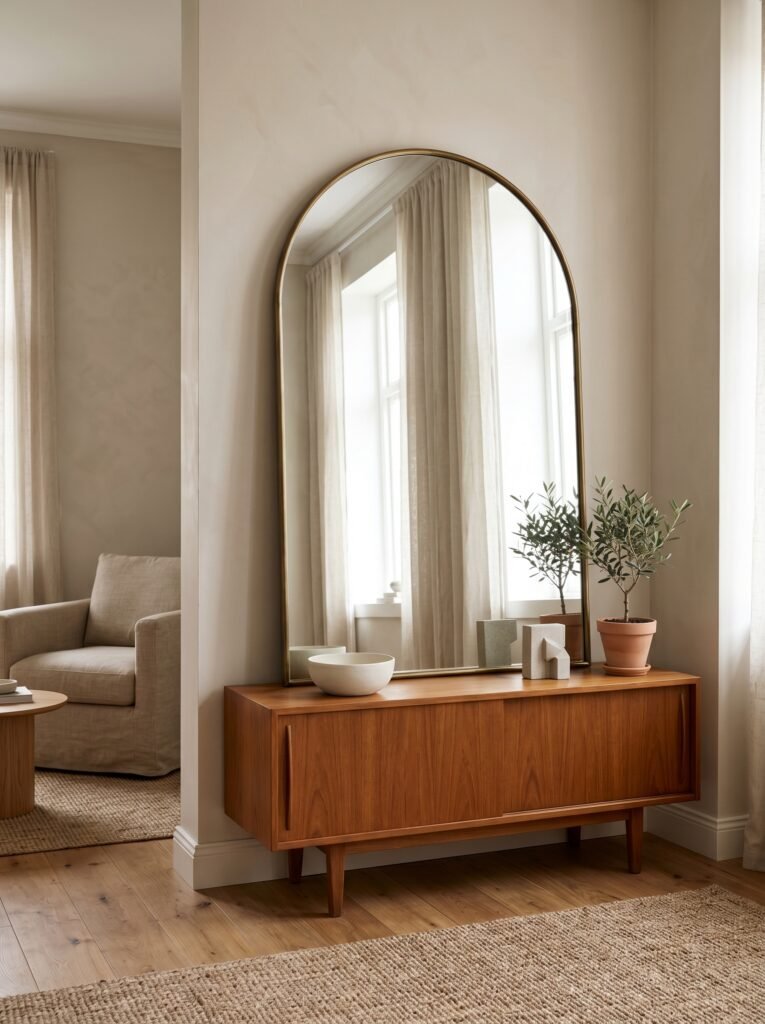
Everyone tells you to paint small rooms white. And yes, white and off-white tones like Farrow & Ball’s All White or Benjamin Moore’s Chantilly Lace are reliably beautiful. But the real conversation around color in small spaces is more nuanced — and more exciting — than that.
Dark colors, used with confidence, can make a small living room feel intimate, dramatic, and deeply atmospheric rather than claustrophobic. A deep forest green, a moody navy, or a warm charcoal can wrap a room in a sense of coziness that white simply can’t touch. The key is to extend that color from the walls onto the trim and even the ceiling — a technique called color drenching — which eliminates hard visual breaks and actually makes the space feel more expansive, not less.
If bold feels too brave, consider a warm greige (grey-beige) tone. In the UK, Dulux’s Warm Pewter and Perfectly Taupe have been bestsellers for years. In the US, Sherwin-Williams Accessible Beige consistently tops designer recommendation lists. Both create that wrapped-in-warmth feeling without committing to anything dramatic.
—
5. Mirrors: The Oldest Trick in the Book (And Still the Best)
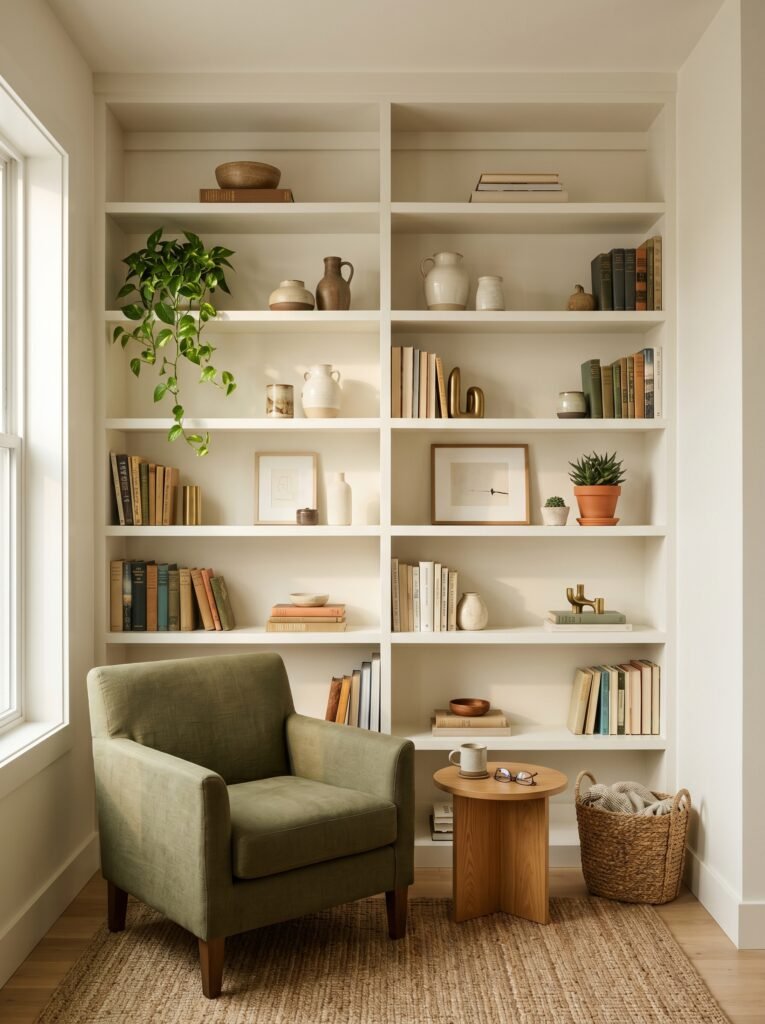
Before you roll your eyes at yet another mention of mirrors — hear this out, because there’s a right and a wrong way to use them in small living rooms.
A large, leaning floor mirror placed opposite a window doesn’t just visually double the light — it creates what feels almost like a second window. This technique is particularly powerful in UK homes where natural light can be limited for months at a time, and in north-facing apartments anywhere.
The mistake people make is hanging small mirrors in clusters or placing a mirror where it reflects something unattractive — a blank wall, a dark hallway, or a radiator. A mirror should always reflect something beautiful: a window, a lamp, a piece of art, or a verdant houseplant.
“In a small room, a well-placed mirror isn’t decoration — it’s architecture.”
For an elegant, Pinterest-worthy look, try a vintage-style arched mirror from stores like IKEA, Wayfair, or Dunelm. They’re inexpensive, widely available in both the US and UK, and they photograph extraordinarily well.
—
6. Vertical Space: The Dimension That Most People Completely Ignore
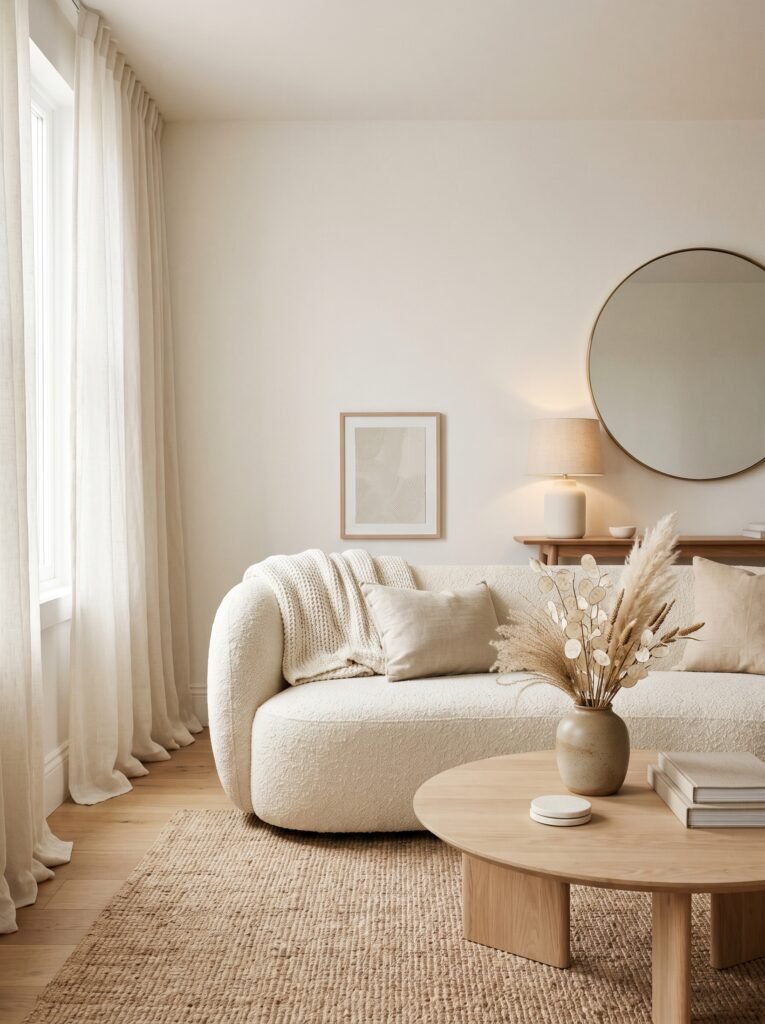
When floor space is precious, you have exactly one direction left to go — up. Vertical space is the most underutilized dimension in small living rooms, and embracing it fully can transform how spacious and intentional a room feels.
Install shelving high on the walls, drawing the eye upward. Use tall, slender bookcases that reach toward the ceiling rather than short, wide ones that eat floor space without offering much in return. Hang curtains from as close to the ceiling as possible — even if your window is only mid-height — and let them drop all the way to the floor. This elongates the wall dramatically and makes ceilings feel taller than they are.
In a UK terraced house with high Victorian ceilings, this approach is particularly powerful. In a modern American apartment with standard 8-foot ceilings, it’s transformative.
—
7. The Art of Layering Textures in a Compact Space
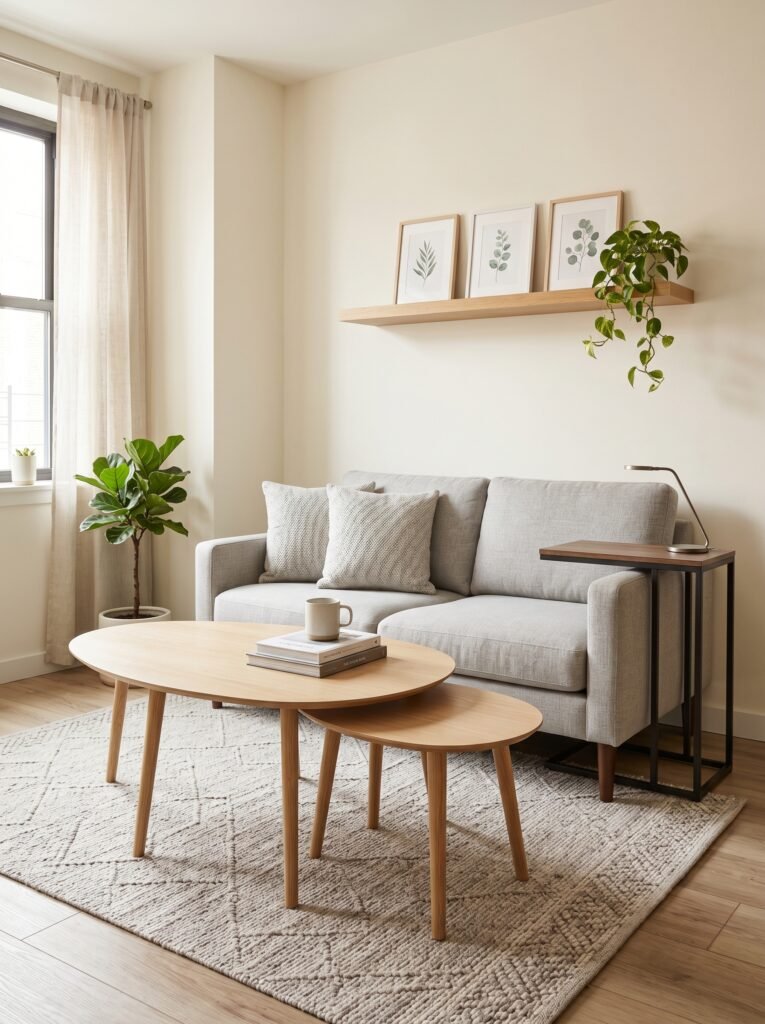
In a small living room, you might have fewer surfaces and less floor space — but you can layer an extraordinary amount of texture into what you do have. Texture is what gives a room soul. It’s the difference between a space that looks nice in photographs and one that makes people say, “I want to stay here forever.”
Think of it in layers: a jute rug as the foundation, a linen or velvet sofa as the anchor, then cotton cushions, a chunky knit throw, a ceramic lamp, a woven basket, and a timber coffee table. Each material speaks a different sensory language, and together they create a room that feels rich and intentional rather than sparse.
A common worry with small spaces is that layering too much will feel cluttered. The distinction between layered-and-beautiful and layered-and-chaotic comes down to editing. Keep your color palette tight — two or three tones maximum — and let the textures be the variation.
—
8. Multi-Functional Furniture That Earns Its Place Every Single Day
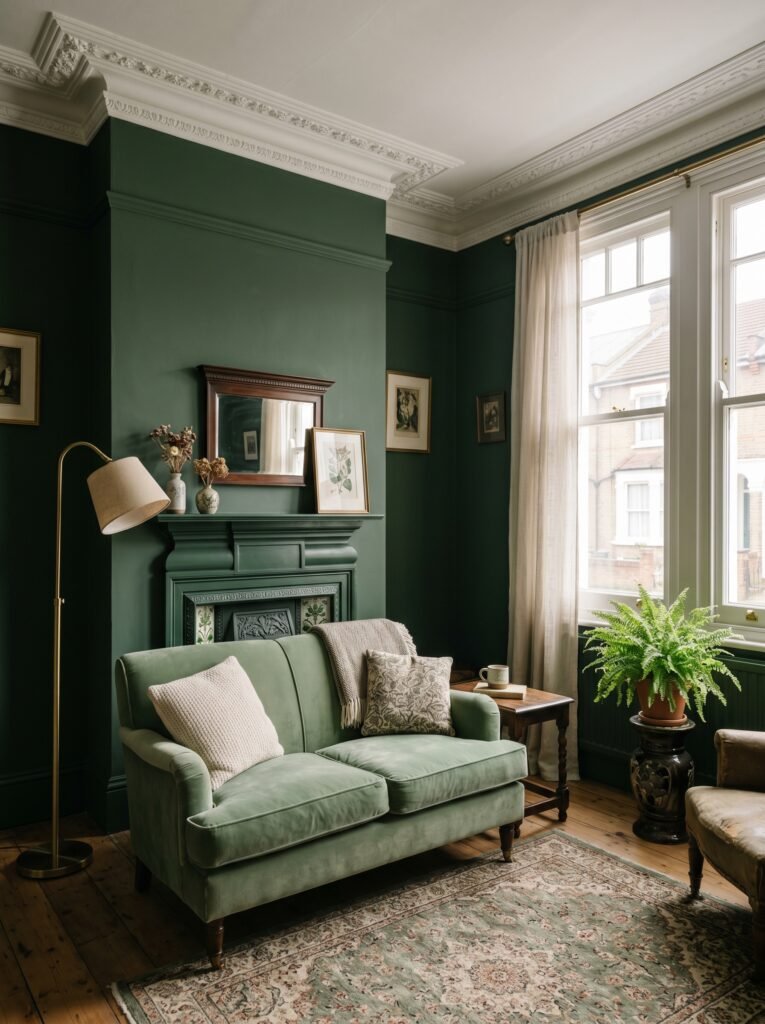
In a small living room, every piece of furniture should ideally serve at least two purposes. This isn’t about compromise — some of the most beautiful furniture on the market is designed with dual function in mind.
An upholstered ottoman with interior storage replaces both a coffee table and a storage trunk. A slim console table behind a floating sofa doubles as a desk or drinks station. Nesting side tables slide apart when you need them and tuck together when you don’t. A daybed along one wall can function as seating by day and a guest bed by night.
In the US, brands like IKEA, West Elm, and Target’s threshold range offer excellent small-space furniture at accessible price points. In the UK, look to IKEA, John Lewis, Habitat, and MADE (now available via Dunelm) for thoughtful, well-designed small-space pieces.
—
9. Lighting Layers That Make a Small Room Feel Like a Sanctuary
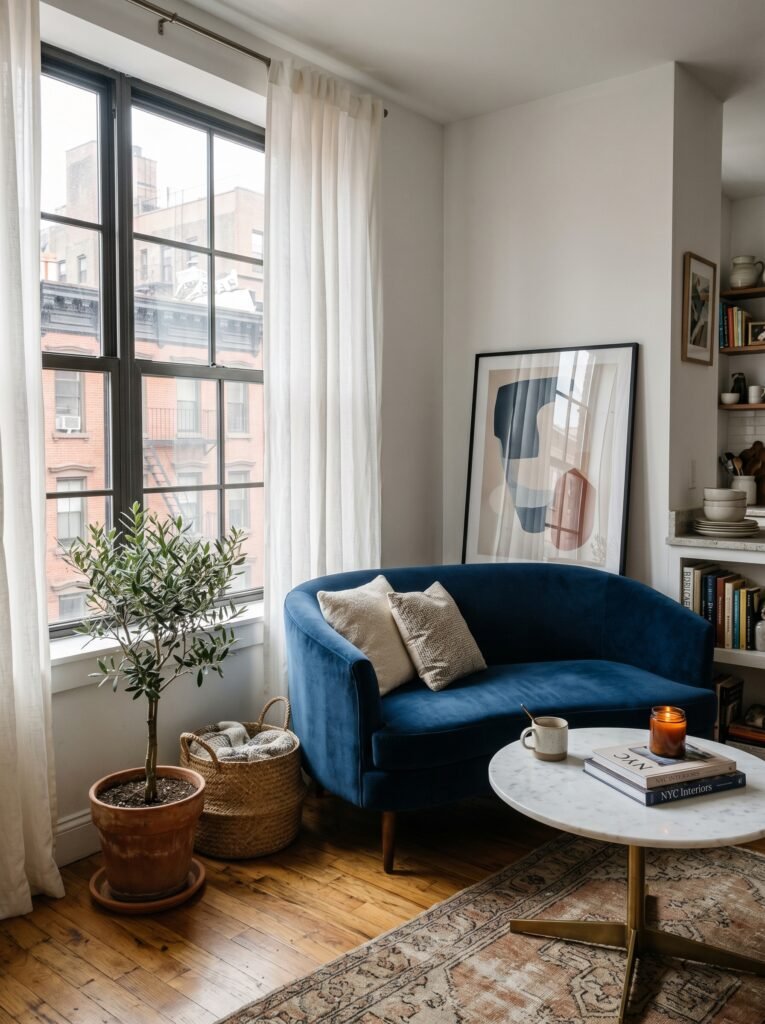
Overhead lighting alone is the enemy of a cozy living room — and this is doubly true in a small space. A single ceiling light creates flat, uniform illumination that flattens depth and makes a small room feel institutional rather than inviting.
The goal is to create what lighting designers call layers of light: ambient (overall), task (functional), and accent (decorative). In a small living room, this might mean a floor lamp in one corner, a table lamp on a side table, LED strip lights behind a shelving unit, and a few well-placed candles on a coffee tray.
“Lighting isn’t what you see — it’s what everything else looks like because of it.”
Warm-toned bulbs — between 2700K and 3000K — are essential for creating that golden, inviting atmosphere. In the UK, this is sometimes called “hygge lighting,” borrowing from the Danish concept of cozy living that has deeply influenced British interior culture over the past decade.
—
10. Plants and Greenery: The Cheapest Way to Add Life to a Small Room
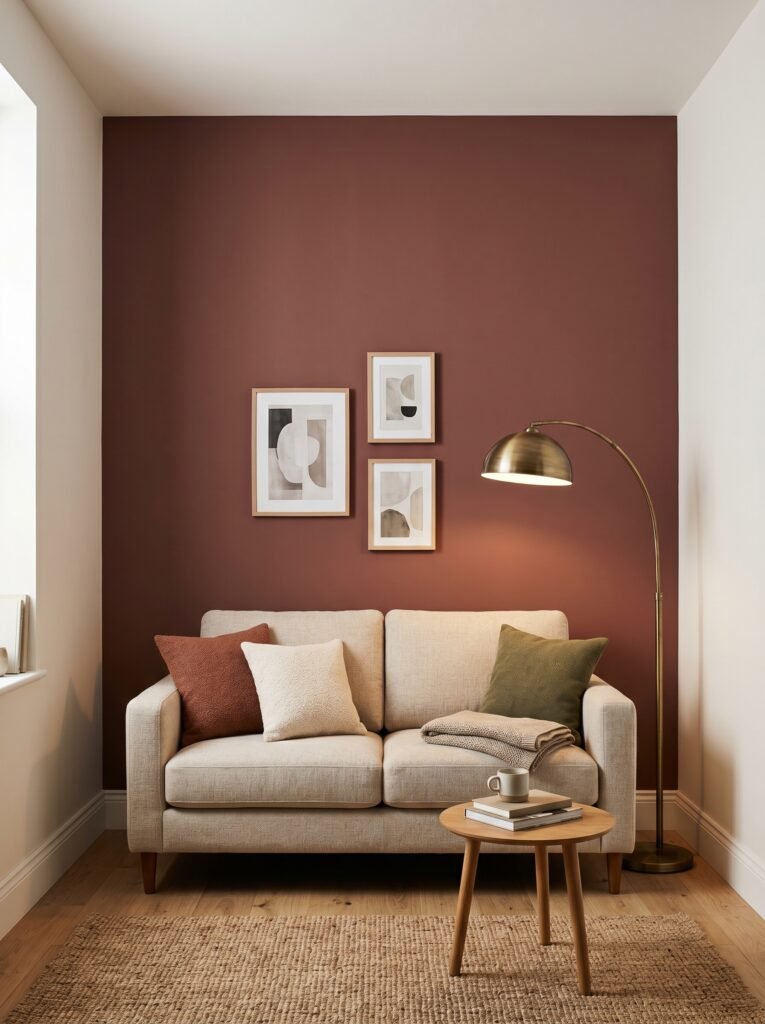
There is almost no decorating challenge that a well-placed plant cannot improve. In a small living room, greenery introduces organic shapes, living color, and a sense of vitality that no piece of furniture or art can replicate.
The key for small spaces is choosing scale-appropriate plants. A trailing pothos or string of pearls on a high shelf draws the eye upward. A single large-leaf plant like a monstera or fiddle leaf fig in a corner acts as a living sculpture — far more dramatic than anything you could buy in a homeware shop. A cluster of small succulents on a windowsill adds charm without consuming space.
UK homes often suit ferns and peace lilies beautifully due to lower light levels. American homes with generous southern exposure can support larger, more light-hungry varieties like fiddle leaf figs and rubber plants.
—
11. The Coffee Table Conversation: Glass, Wood, or Nothing at All?
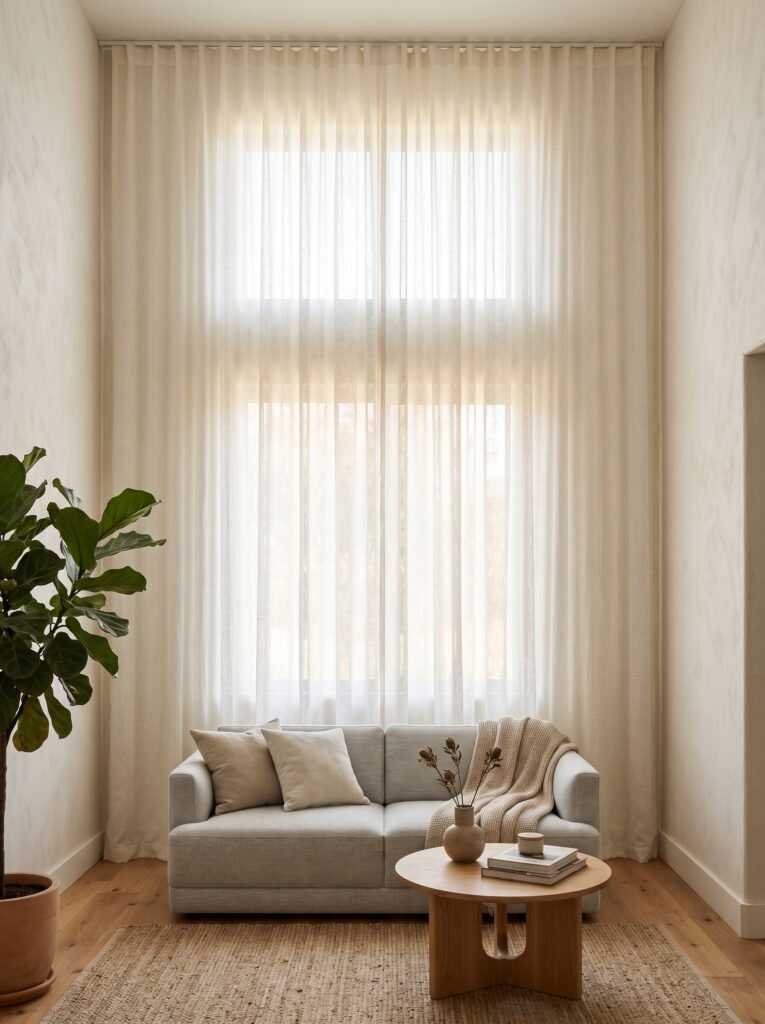
The coffee table sits at the physical and visual center of your living room arrangement, which means in a small space it has disproportionate impact. Choose it thoughtfully.
Glass or lucite (acrylic) coffee tables are genuinely transformative in small spaces because they take up visual space without appearing solid. The eye passes through them rather than stopping at them. A round glass coffee table in a small living room is one of those “why didn’t I do this sooner” decisions.
If you prefer warmth and texture, a small wooden table with a lower shelf — where you can tuck books, trays, or a basket — is both beautiful and functional. Avoid large, solid ottomans as a primary coffee table unless you have enough surrounding floor space; they can make a small room feel blocked.
And occasionally — in the smallest of spaces — no coffee table at all, just a small tray on a pouf and a floor lamp nearby, can feel unexpectedly chic and wonderfully open.
—
12. Accessories, Art, and the Edit That Brings It All Together
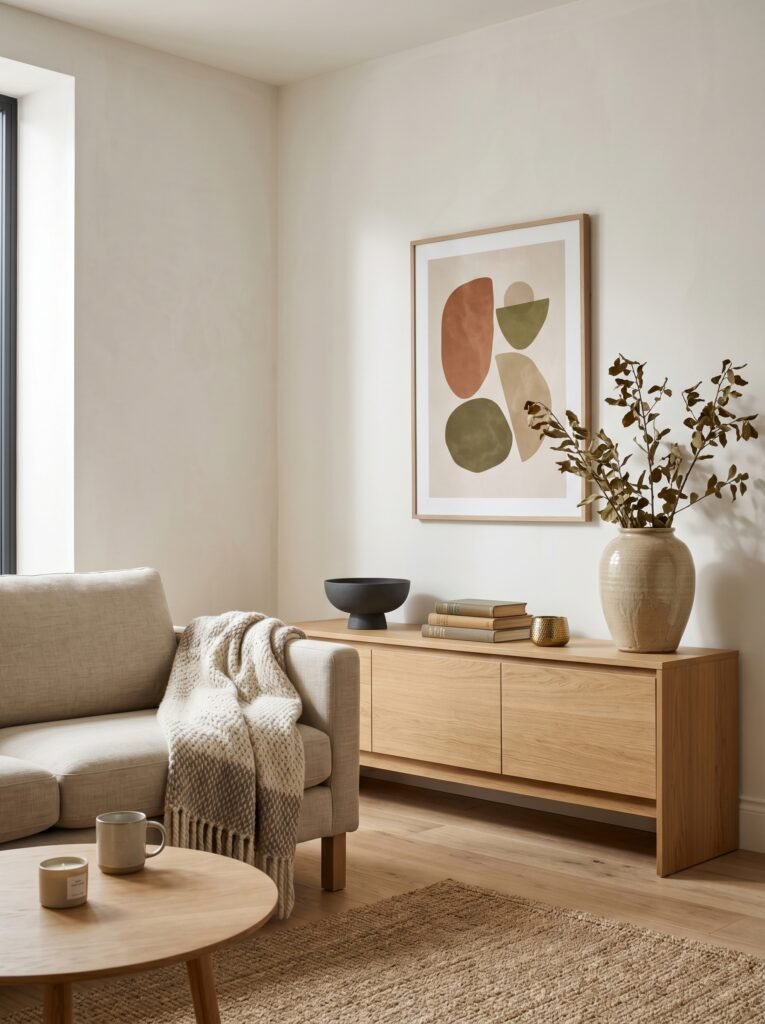
Here’s where so many beautifully designed small living rooms fall apart: the accessories. More is not more in a small space — but neither is bare minimalism the answer. The magic is in the edit.
Choose a small number of meaningful, beautiful objects and give each one enough breathing room to be noticed. A single large piece of art makes a more powerful statement than a gallery wall of small prints fighting for attention. A trio of varying-height candles on a tray creates more visual interest than a sill scattered with random objects.
The question to ask about every object before it enters your small living room is simple but demanding: does this earn its place here? If it’s beautiful and you love it, yes. If it’s just filling space, it doesn’t belong.
Before-and-after photographs of real small living rooms consistently show the same thing: the transformation usually isn’t about adding more — it’s about removing the four or five things that were working against the room.
—
🌿 How to Take Care of Your Small Living Room Décor Long-Term
Maintaining a beautifully styled small living room isn’t about a single weekend makeover — it’s a gentle, ongoing habit.
Edit seasonally. Every few months, walk through your space with fresh eyes and remove anything that’s become clutter or stopped feeling intentional. Small spaces fill up quickly, and a seasonal reset keeps things feeling curated rather than crowded.
Keep surfaces clear. In a small living room, surfaces like coffee tables and console tables are prime real estate. A simple rule — one tray, one plant, one stack of books — prevents surface clutter from creeping back.
Watch the light. As seasons change (especially in the UK where winter light is genuinely limited), adjust your lamps and candle placement to compensate. Introduce warmer, cozier accessories in autumn and winter.
Rotate accessories. You don’t need to buy new things to refresh a small room. Moving a plant from one corner to another, swapping cushion covers, or changing a throw can make a room feel new again for zero cost.
Protect your rug. In a small living room, the rug anchors everything — literally and visually. A rug pad underneath protects both the rug and the floor and prevents slipping.
—
❓ FAQ
Q: What size rug should I use in a small living room? A: The most common mistake is going too small. In a small living room, aim for a rug that sits under the front legs of all your seating — this anchors the space and makes the room feel more cohesive. A 5×8 foot (approximately 150x240cm) rug works well in most compact living rooms in both US and UK homes.
Q: Should I use curtains or blinds in a small living room? A: Floor-length curtains — hung as close to the ceiling as possible and wide enough to extend past the window frame on each side — make small rooms feel dramatically taller and more elegant. Blinds alone can make windows feel small and the room feel lower. If privacy is a concern, layer a simple roller blind behind beautiful curtain panels.
Q: Can a small living room have a dark accent wall? A: Absolutely — and done well, it can look stunning. A dark accent wall on the wall behind your sofa creates depth and makes the room feel deliberately designed rather than simply small. Pair it with warm lighting, light-toned soft furnishings, and a mirror to balance the drama.
—
💭 Final Thought
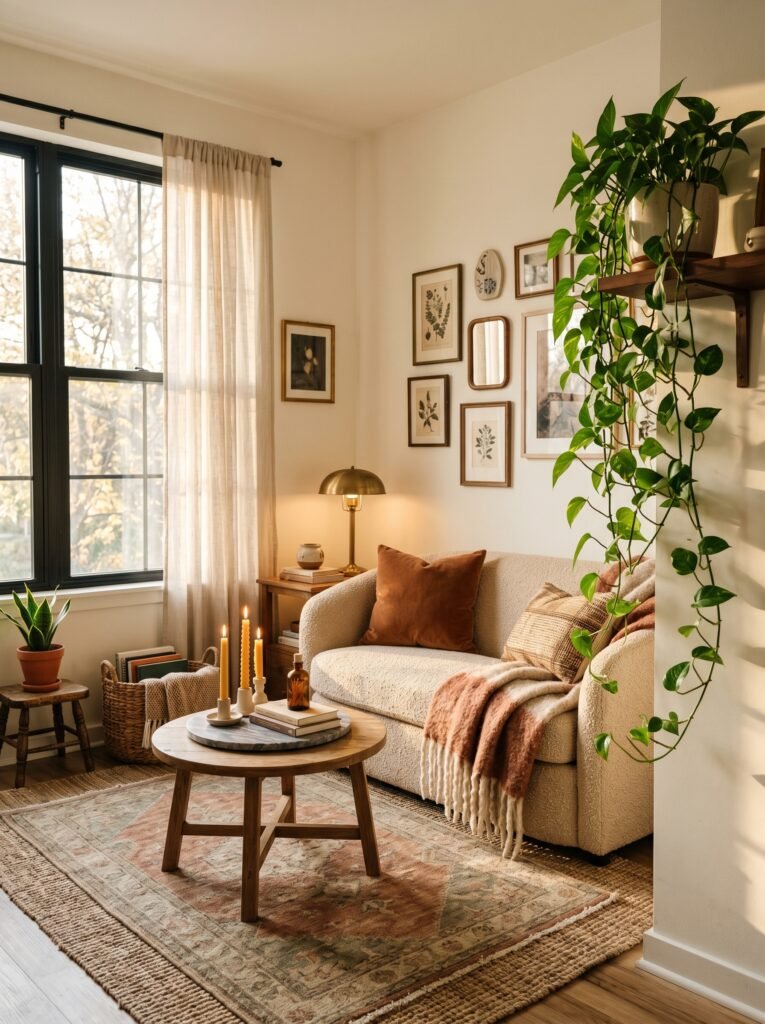
Your small living room isn’t a problem to be solved — it’s a space to be loved. Some of the most genuinely beautiful, warmly memorable homes exist within modest square footage, filled not with square footage but with intention, personality, and care. The rooms people remember long after they’ve left aren’t the biggest ones — they’re the ones that made them feel something.
So as you look at your own small living room today, ask yourself this: What would this space feel like if you decorated it as though it were exactly enough?