Why a Black Couch Might Be the Best Decision You Ever Make for Your Apartment
You walked past it in the store three times. Too bold, you thought. Too much. And then you bought it anyway — and now your whole living room has a reason to exist.
—
1. The Myth That Black Furniture Makes a Room Feel Small (And Why It’s Simply Not True)
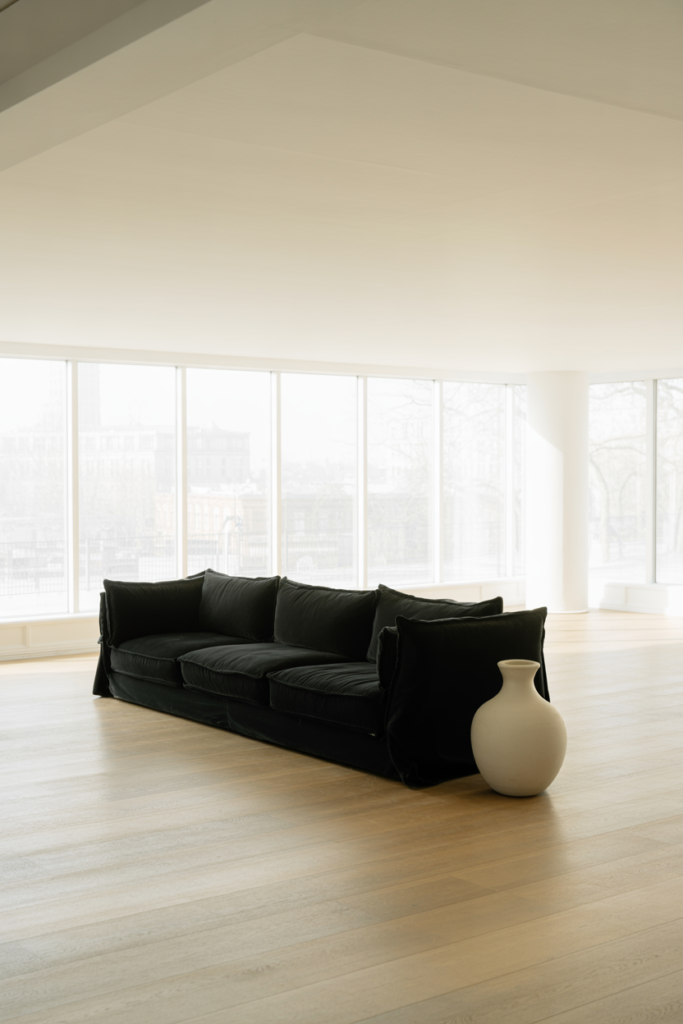
Here’s the thing nobody tells you when you’re standing in a furniture showroom with a measuring tape and a vague sense of anxiety: darkness doesn’t shrink a room. Visual clutter does.
A black couch is one solid, intentional anchor. Your eye goes straight to it, settles there, and the rest of the room feels organized around a purpose. Compare that to a beige sofa surrounded by beige walls and a beige rug — suddenly everything bleeds together and nothing reads as deliberate. The room feels unfinished even when it’s fully furnished.
In apartments specifically, this matters enormously. You’re working with limited square footage. Every piece you bring in needs to pull its weight. A black couch doesn’t apologize for being there — it claims the space confidently, which paradoxically makes the room feel more curated and more spacious at the same time.
Light still matters, of course. Keep windows clear. Use mirrors strategically. But don’t let fear of “dark” furniture talk you out of something that could genuinely anchor your entire space.
“A black couch doesn’t shrink your room — it gives it a spine.”
2. The Exact Shade of Black That Actually Works in a Living Room
Not all blacks are the same. This sounds obvious and yet it trips people up constantly.
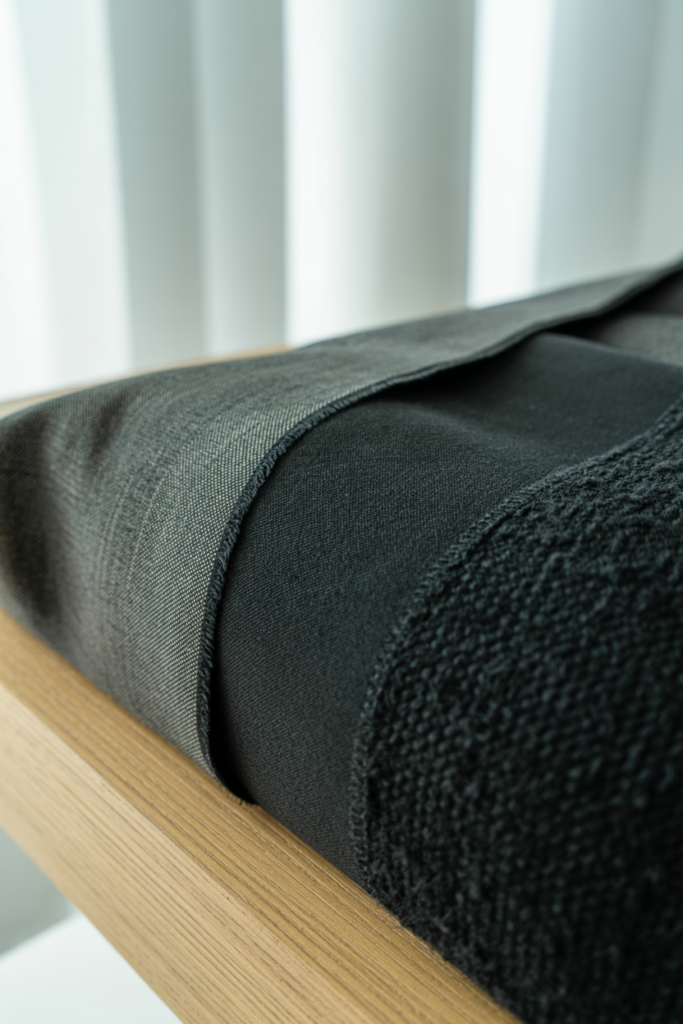
There’s blue-black, which has a cool, almost ink-like quality. There’s charcoal-black, which reads warmer and softer in evening light. There’s true matte black, which absorbs light completely and feels contemporary and slightly serious. And then there’s black with a subtle sheen — velvet, bouclé, or a brushed microfibre — which catches light differently depending on the angle and time of day.
For apartments with limited natural light, a velvet black sofa is almost always the right call. Velvet reflects ambient light in a way that flat fabric never does. At noon it looks deep and moody. At 7pm, under warm bulbs, it practically glows navy at the edges. It never looks flat. It never looks cheap.
If your apartment gets good natural light, you have more freedom. A matte linen blend in a near-black charcoal can look stunning against white walls and raw wood floors. Clean, Scandinavian, intentional.
Don’t just choose black — choose the right black for the light you actually live in.
3. The Color That Keeps Showing Up Next to Black Couches in Every Beautiful Living Room Right Now

Warm terracotta. Every single time.
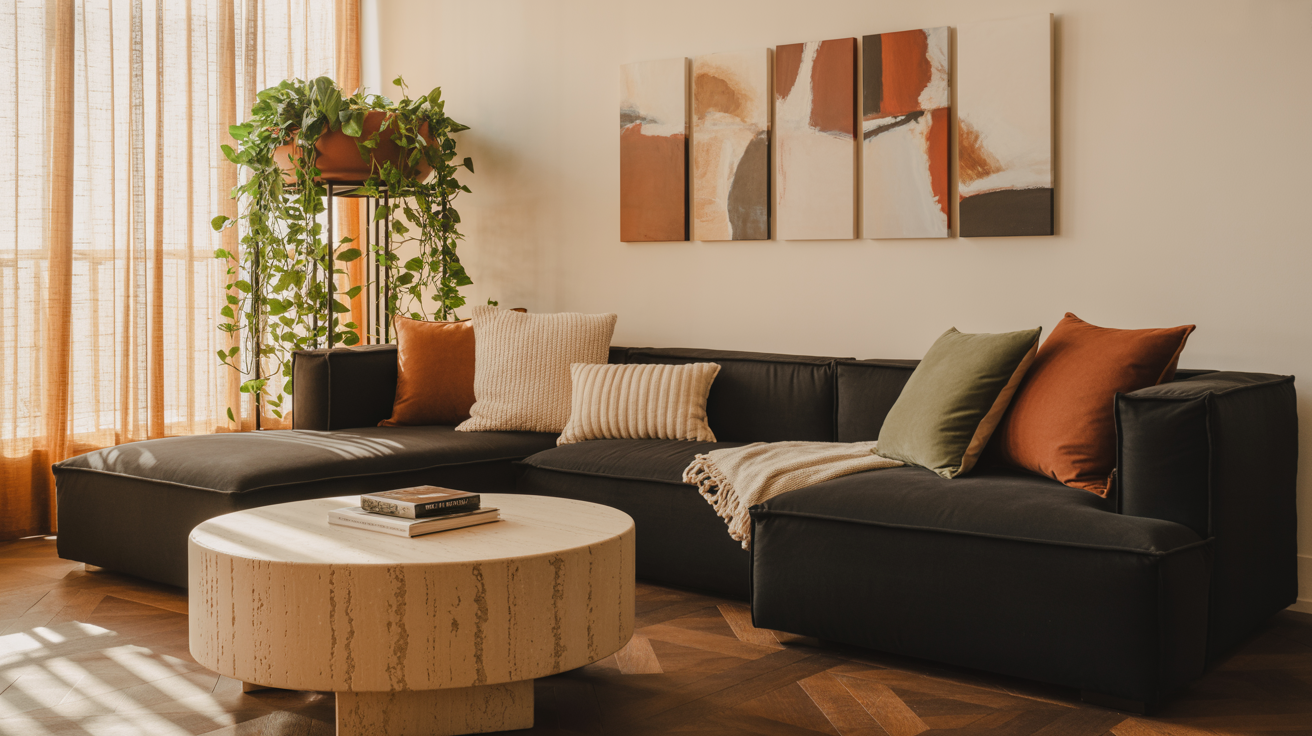
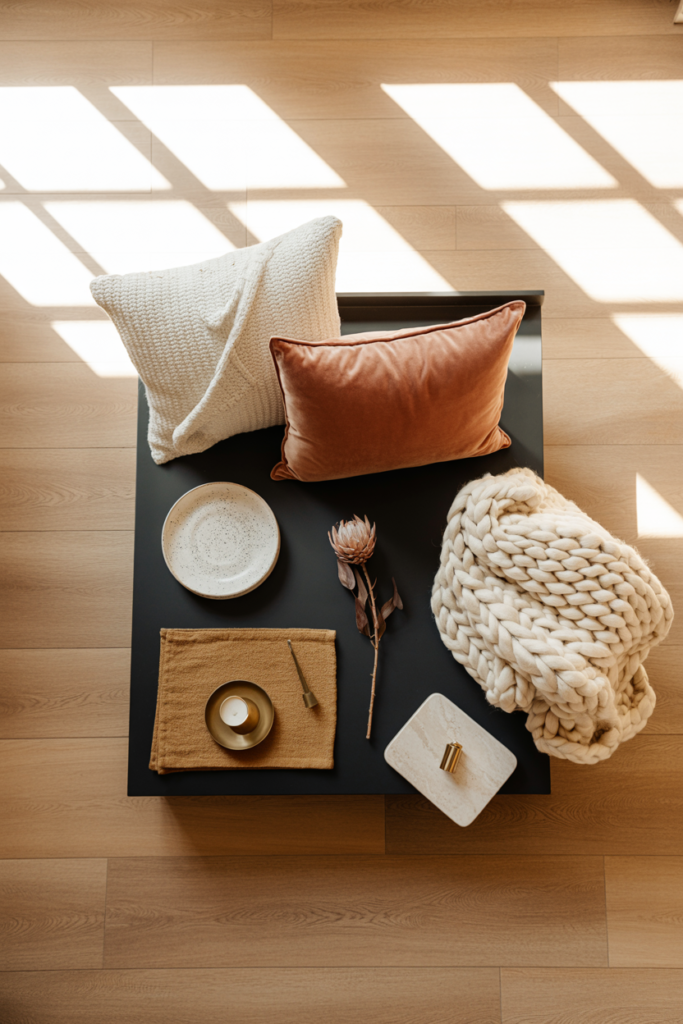
You’ve seen it. Burnt orange throw pillows. A clay-toned ceramic lamp. A rust-colored area rug with a low pile. Against a black couch, terracotta does something almost alchemical — it makes the black look warmer, less stark, less “showroom” and more “someone who has taste actually lives here.”
The combination works because of contrast and temperature. Black is cool and neutral. Terracotta is warm and saturated. Together they create balance without being predictable. It’s not the obvious pairing people reach for (black and white, black and gold), but it’s the one that tends to stop people in their tracks when they see it in person.
You don’t need much. A large terracotta-colored cushion, a small woven basket in a warm amber, a plant pot in a matte rust glaze. The black couch becomes the canvas. The terracotta becomes the art.
If terracotta isn’t your thing, try deep forest green. Or warm camel. Both work beautifully and for similar reasons — they’re warm, they’re grounded, and they make black feel like a choice rather than a mistake.
4. How to Layer Textures So Your Black Couch Doesn’t Look Like a Void
The single biggest styling mistake people make with a black couch is treating it like a finished thing.
It’s not. It’s a starting point.
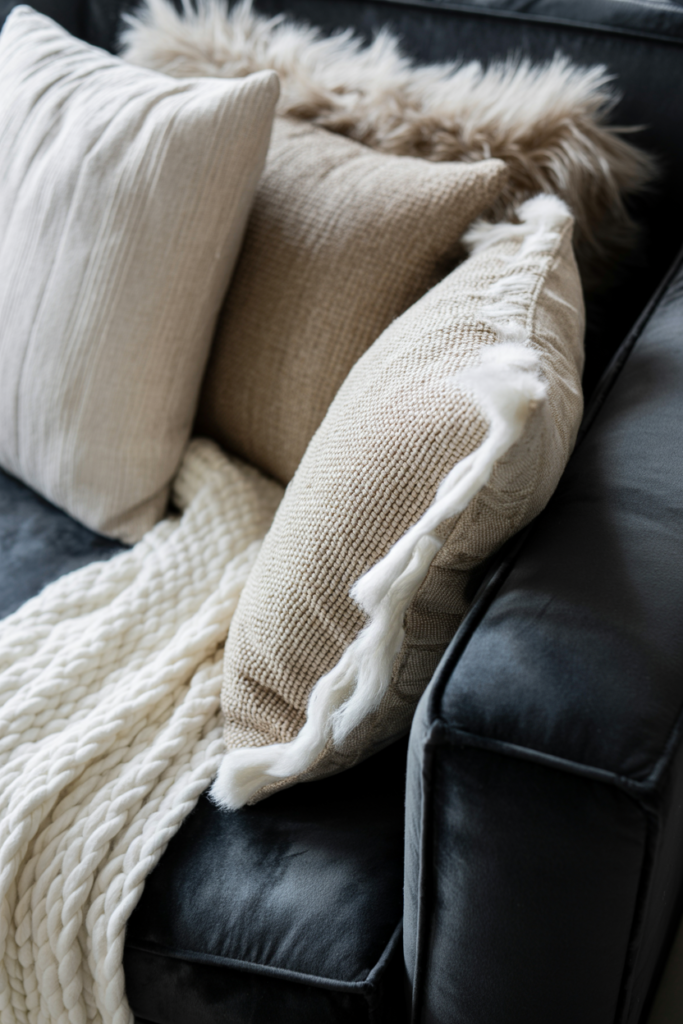
Texture is everything here. A black velvet sofa under a chunky cream knit throw. A woven jute cushion next to a smooth leather pillow. A sheepskin draped over one armrest. What you’re doing — consciously or not — is breaking up the visual weight of that dark mass and giving the eye somewhere interesting to travel.
Without texture layering, a black couch in a small apartment can look a little like a hole in the room. Heavy. Unintentional. But add three different textures and suddenly it looks like something from an interiors magazine shoot.
A practical formula: one smooth texture (leather, silk, or brushed cotton cushion), one rough or woven texture (jute, rattan, chunky knit), and one soft or fluffy texture (faux fur, velvet, bouclé). That’s it. Three textures. Rotate them seasonally and your couch will always look considered.
“Texture is how a black couch goes from furniture to focal point.”
5. The Rug Size Mistake That Undermines the Whole Room
Get a bigger rug. I’m serious. Whatever size you’re considering right now — go up one size.
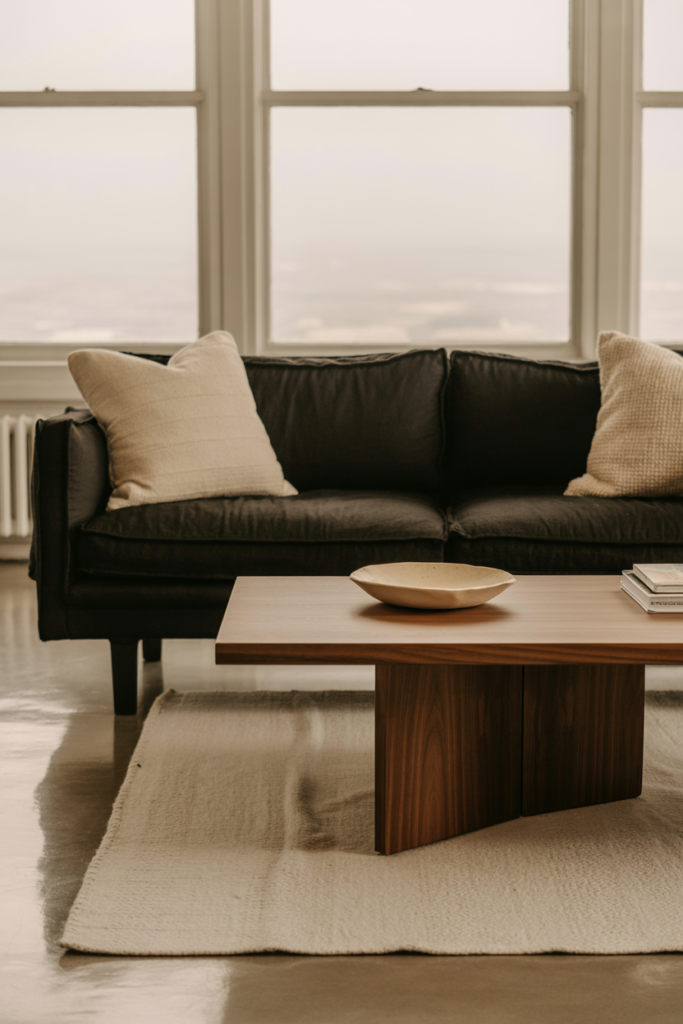
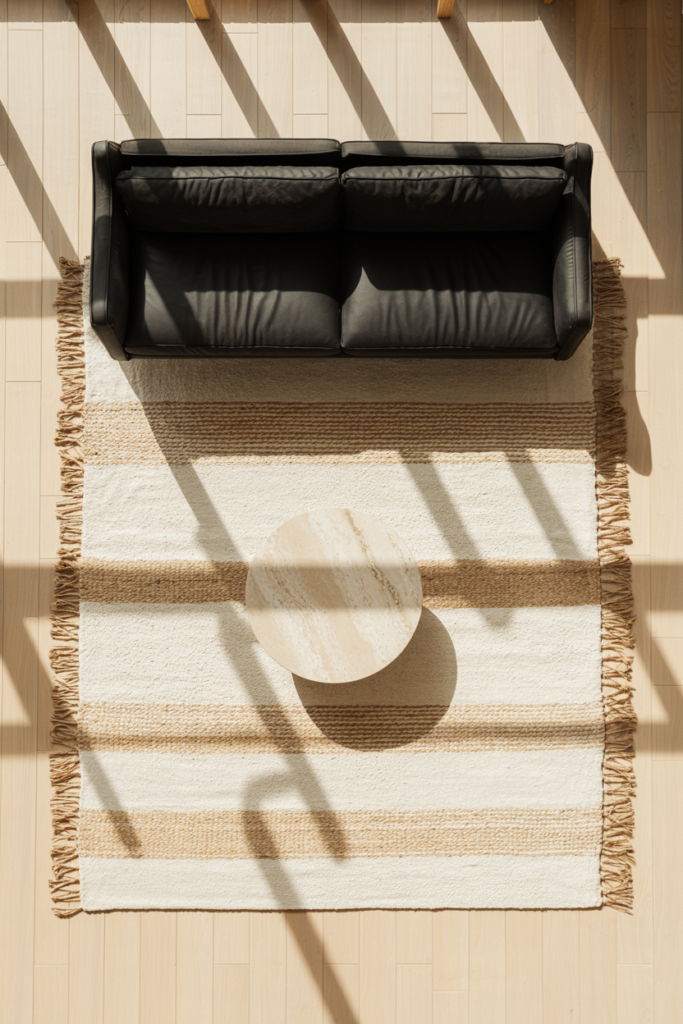
This is the piece of advice that sounds minor and changes everything. A rug that’s too small makes your black couch look like it’s floating on an island. A properly sized rug — one where at least the front legs of the sofa sit on it — grounds the whole seating area and makes the room feel intentional and complete.
For most apartments, a 8×10 or 9×12 rug is the right call for a main living area. In a studio or smaller one-bedroom where you’re working with less square footage, don’t go below 6×9 if you want the couch to read as anchored rather than accidental.
Color and pattern matter too. With a black couch, you have real freedom here. A cream or ivory rug creates contrast and keeps things feeling light. A deep Persian-style rug in jewel tones (navy, burgundy, forest green) creates a rich, layered look that feels genuinely warm. A natural fiber rug like sisal or jute adds an earthy quality that softens the darkness of the couch beautifully.
What doesn’t tend to work: a grey rug under a black couch in a room with white walls. All that cool neutrality collapses into something flat and lifeless. Give the room some warmth somewhere, and the rug is an easy place to start.
6. Wall Art Arrangements That Actually Complement a Dark Sofa

A black couch creates a natural frame. The wall behind it becomes the most viewed wall in your apartment, and what you put there matters more than most people realize.
Gallery walls work brilliantly here — but only when they’re curated rather than collected. Choose a consistent mat or frame color (warm brass or light natural wood tend to sing against dark upholstery), and vary the sizes deliberately. Three prints that are too uniform look like a PowerPoint slide. Vary between a large statement piece and smaller supporting works.
Single large-format art can be deeply satisfying above a black couch. One oversized piece — abstract, botanical, photographic — does more for the room than six small pieces ever will. If the art has warm tones (amber, rust, forest green, cream), it will pull those elements from the rest of the room and make everything feel connected.
What to avoid: dark art on dark walls directly above a dark couch. You’ll lose the couch entirely. You want contrast. Light-toned art, creamy linen gallery frames, or even an unframed canvas with warm tones will create the visual separation your eye needs.
Mirrors work brilliantly here too. A large vintage-framed mirror above a black couch catches light and opens the room in ways that no paint color ever could.
7. Lighting That Makes a Black Couch Look Expensive Instead of Heavy
Overhead lighting is the enemy of every dark sofa on the planet.
Harsh downlights or a single ceiling fixture will flatten your beautiful black couch and make your apartment look like a hotel lobby. Layered lighting is the answer — and it doesn’t have to be complicated or expensive.
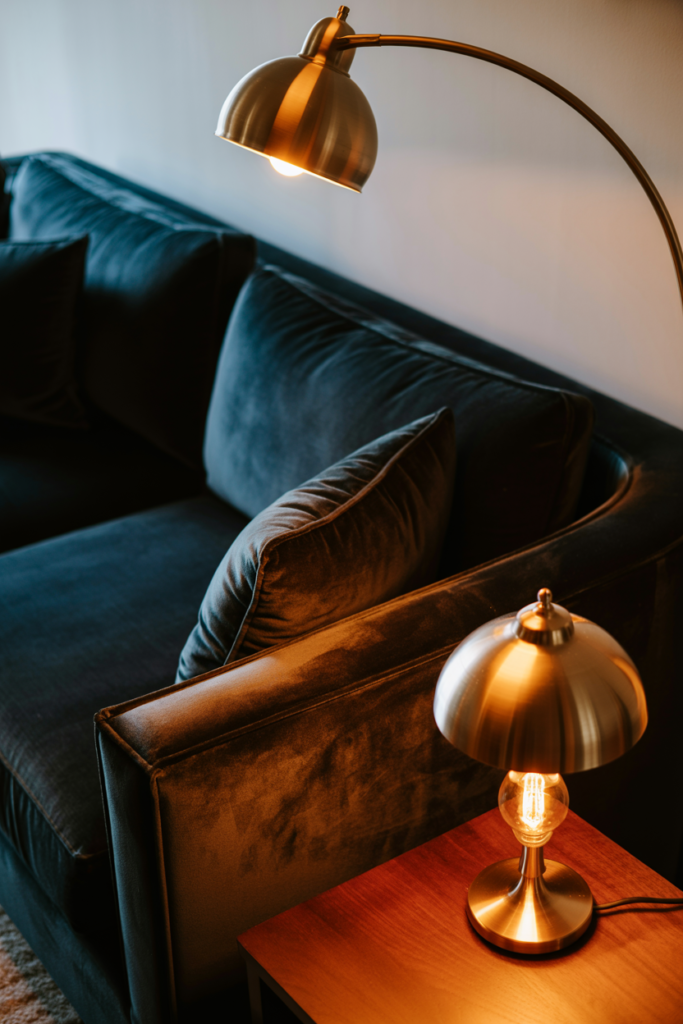
Start with a floor lamp positioned beside or slightly behind the sofa. An arched floor lamp in matte black or warm brass that curves over the couch creates intimacy and direction. It says “this is a reading corner, this is a place to settle in.” A table lamp on the opposite side of the room, at eye level when you’re seated, fills the room with warmth without flooding it with light.
Candles on the coffee table at eye level (LED or real — both work) add depth and shadow in a way that no electric light source replicates. That low, flickering quality makes a black couch look lush and deliberate at evening time.
The color temperature of your bulbs matters enormously. Anything above 3000K leans cool and clinical. Aim for 2700K warm white. That amber quality makes black upholstery look rich rather than flat, and it makes your whole apartment feel like a place someone actually wants to be.
“Warm bulbs at 2700K are the best styling trick you’re not using.”
8. Plant Placement That Stops a Black Couch Dominating the Room

Plants and black furniture have a relationship that decorators don’t talk about nearly enough.
Dark upholstery creates high contrast with greenery. Every shade of green — from the deep emerald of a rubber plant to the pale, almost-grey-green of a eucalyptus — looks alive and vivid against black in a way it never does against beige or grey. Your plants will look better. The room will look better. Everyone wins.
Position matters. A large plant — a fiddle leaf fig, a monstera, a tall snake plant — placed at one end of the couch creates a natural diagonal that breaks up the horizontal mass of the sofa and adds height. It prevents the couch from reading as a long, low slab of darkness.
Smaller plants on the coffee table or a side table next to the sofa add life at different heights. The goal isn’t a jungle — it’s punctuation. Green full stops in the right places.
Trailing plants work beautifully on shelves or windowsills near a black couch. A pothos or string of pearls cascading from a high shelf behind the sofa adds softness and movement. That contrast between the rigid, dark sofa and something living and irregular is one of the most effortlessly beautiful things you can create in an apartment living room.
9. The Coffee Table Pairing That Interior Designers Keep Coming Back To
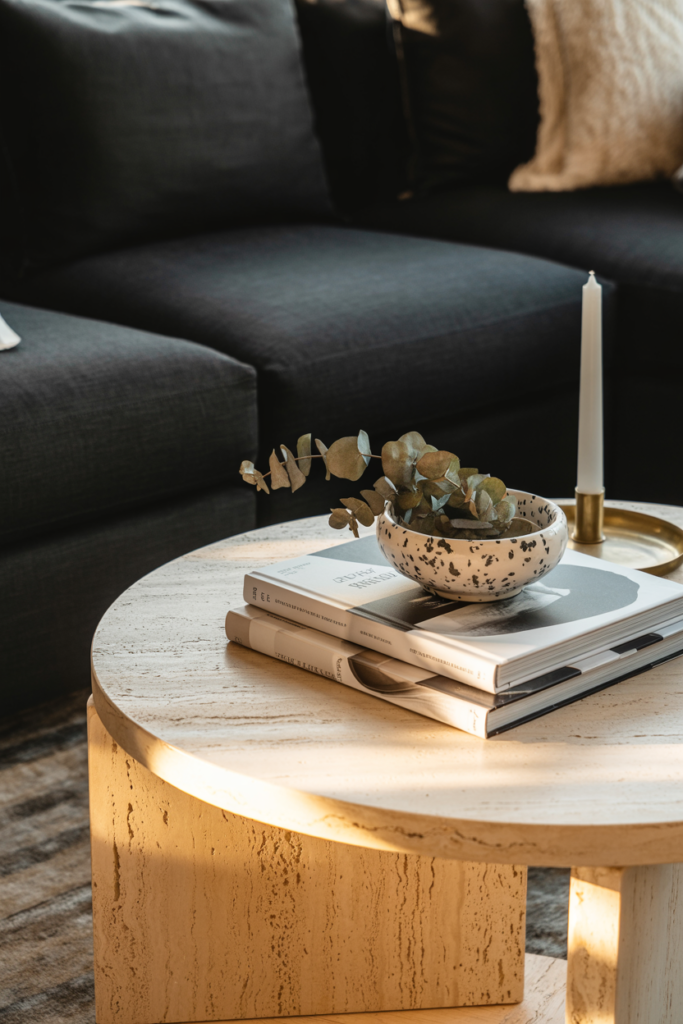
Warm wood. Full stop.
Light oak, honey walnut, blonde acacia — any of them next to a black couch creates an almost instant balance. The warmth of natural wood grain stops the couch from feeling too serious, too industrial, too “I’m trying very hard to look minimal.” It introduces the organic, the natural, the lived-in.
A round or oval coffee table in light wood is particularly effective in apartment living rooms because it softens the straight lines of the sofa and makes the room feel less boxy. Apartments often have enough corners and right angles already — a curved table is a small rebellion that pays off.
If you love the idea of a glass coffee table, choose one with a warm-toned metal base — brushed brass or antique bronze rather than chrome or cool silver. The transparency of glass keeps the room feeling open (crucial in smaller spaces), while the warm metal base stops everything from feeling cold.
What tends to miss: a black coffee table in front of a black sofa. Unless your entire design concept is monochromatic and extremely deliberate, this creates a dark blob in the center of your room that you’ll spend years trying to style your way out of.
10. What to Do With the Wall Color When You Have a Black Couch
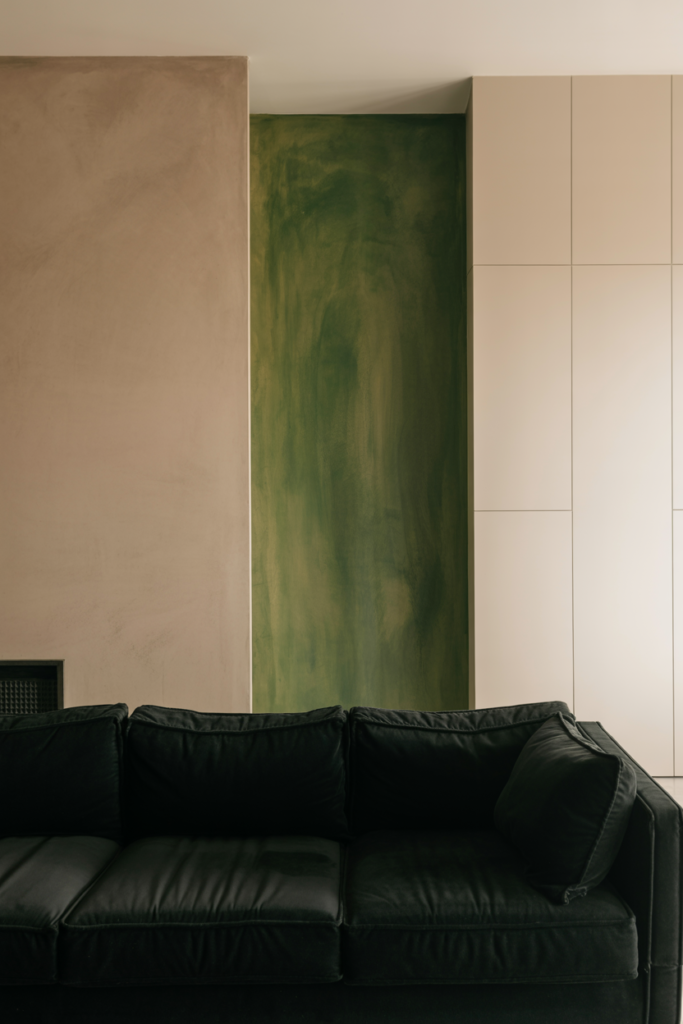
White is not your only option. I want to be very clear about that.
White walls with a black couch look clean, modern, and effective — but they also look like approximately half of every interior design Instagram account you’ve ever seen. If you want something with a little more personality, you have real options.
Warm off-whites — linen, cream, soft ecru — are almost always more interesting than bright white and they do something wonderful with a black couch. The warmth of the wall bounces back into the room and makes the dark sofa feel anchored rather than austere.
Deep sage green on one wall (just one, if you’re nervous) behind a black couch creates a look that feels both contemporary and rooted. It has the quality of a room that’s been slowly, carefully put together by someone who knows what they like.
Warm caramel or clay tones work beautifully in rooms with limited light. These aren’t colors you see on every renovation reveal, which is exactly why they’re worth considering.
And if you’re feeling genuinely bold: deep navy on the walls with a black couch and warm brass accents is one of the most cohesive, intentional combinations you can create in an apartment. It shouldn’t work. It does.
11. The One Accessory That Ties a Black Couch Living Room Together Every Time
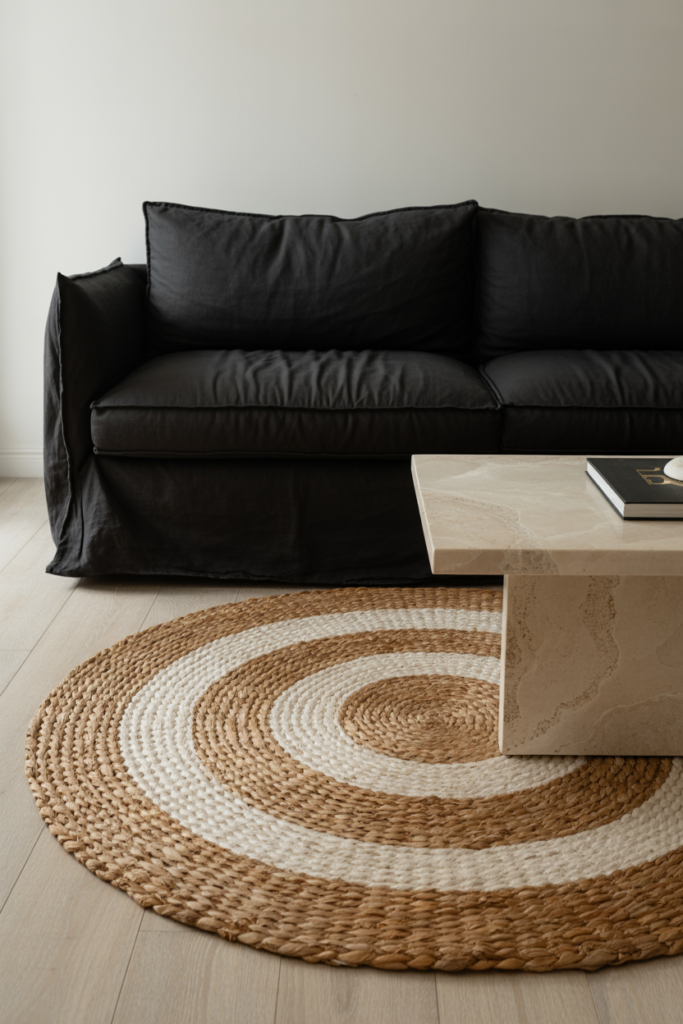
Warm brass. Specifically, aged or matte brass — not the shiny kind that looks like a prop from a 1980s hotel renovation.
Brass picture frames, brass side table legs, brass candleholders, a brass lamp base, brass cabinet handles on nearby furniture — it appears in small doses and it does something important. It introduces warmth and a hint of luxury without being ostentatious about it.
Black and brass is a pairing with genuine staying power. It doesn’t follow a trend so much as it sits slightly outside of trends altogether, which means a living room built around this combination will look as good in five years as it does today.
You don’t need to overdo it. Three or four brass elements in a room is enough. A lamp, a small tray on the coffee table, a couple of picture frames. Let the black couch lead and let the brass punctuate.
12. Small Apartment Tricks That Make a Black Couch Work Harder in a Tight Space
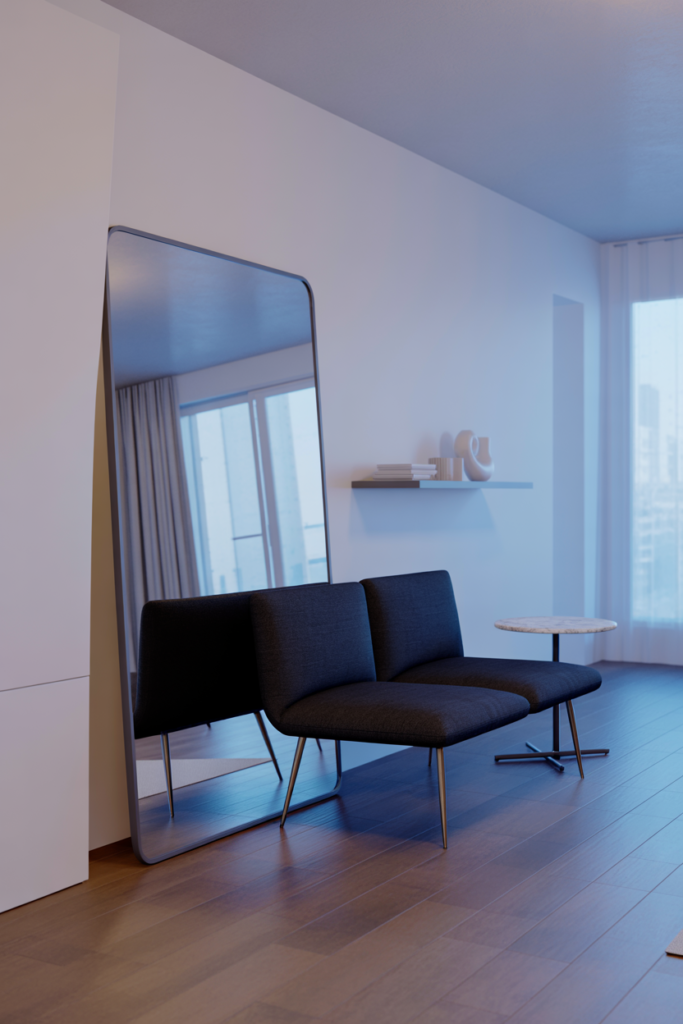
In a studio or one-bedroom apartment where the living room is doing a lot of work at once, the black couch needs to be styled thoughtfully so it doesn’t overwhelm.
First: keep the area immediately around it breathing. Don’t push the couch against the wall (even though every instinct tells you to in a small space). Pulling it even 6–8 inches away from the wall creates a sense of depth that actually makes the room feel larger.
Second: use the back of the couch as a design opportunity. A low-profile open shelf unit behind a floating sofa can act as a room divider in a studio while also giving you storage and display space. Style it with plants, books, and a warm lamp and suddenly your studio apartment feels like it has distinct zones.
Third: keep the furniture around the couch light. A glass coffee table. A slim-legged side table in light wood. Chairs in a pale linen or a natural rattan. The black couch provides all the visual weight the room needs — everything else can be light and airy.
A black couch in a small apartment isn’t a problem. It’s a point of view. And a room with a strong point of view always looks bigger than it is.
—
🌿 Quick Tips
Swap out your throw pillows seasonally — terracotta and rust for autumn, cream and forest green for winter and spring. Your couch will feel like a different room without spending a penny on furniture.
Don’t cover the whole couch in cushions. Three to five is the magic number. More than that and it starts to look like you’re hiding something.
If your apartment has low ceilings, hang your artwork and mirrors slightly higher than feels natural. It pulls the eye up and makes the room feel taller, which balances the visual weight of a dark sofa.
A textured black couch (velvet, bouclé, or boucle blend) hides wear and pet hair significantly better than a smooth or flat-woven fabric. Practical and beautiful.
If you’re worried about your apartment feeling dark, paint the ceiling a warm white even if the walls are a deeper tone. Light ceilings bounce ambient light downward and keep the room feeling open regardless of what’s happening at floor level.
—
❓ FAQ
Q: Does a black sofa make a small apartment look smaller? A: Not if it’s styled properly. A single, confident dark piece actually reduces visual clutter, which makes a small room feel more intentional. What makes a small room feel cramped is too many competing tones and shapes — a black couch grounds everything around it, and that calm actually opens up the space visually.
Q: What colors should I avoid pairing with a black couch? A: Cool greys in large quantities tend to drain the warmth from a room that already has a dark sofa, leaving things feeling cold and clinical. Very bright primary colors — particularly electric blue or red — can feel jarring rather than bold. Stick to warm neutrals, earthy tones, or deep jewel colors and you’ll rarely go wrong.
Q: Is a black couch hard to keep clean? A: It depends entirely on the fabric. Velvet and microfibre tend to show lint and pet hair more visibly but wipe down or lint-roll easily. Leather black sofas are genuinely low maintenance — a damp cloth handles most things. Avoid loosely woven fabrics in a busy household. Performance fabrics in dark tones are the best of all worlds if you have kids or pets.
—
💭 Final Thought
A black couch is a commitment, and commitments make rooms feel real. There’s something about a space that has a clear, decided center — a piece that the whole room is organized around — that feels genuinely livable in a way that cautious decorating never quite achieves.
You don’t have to be fearless to pull this off. You just have to trust that the room knows what it wants.
What’s the one thing holding you back from making a bold choice in your living room?