Brown Living Room Decor Ideas for Apartments That Feel Like a Warm Hug the Moment You Walk In
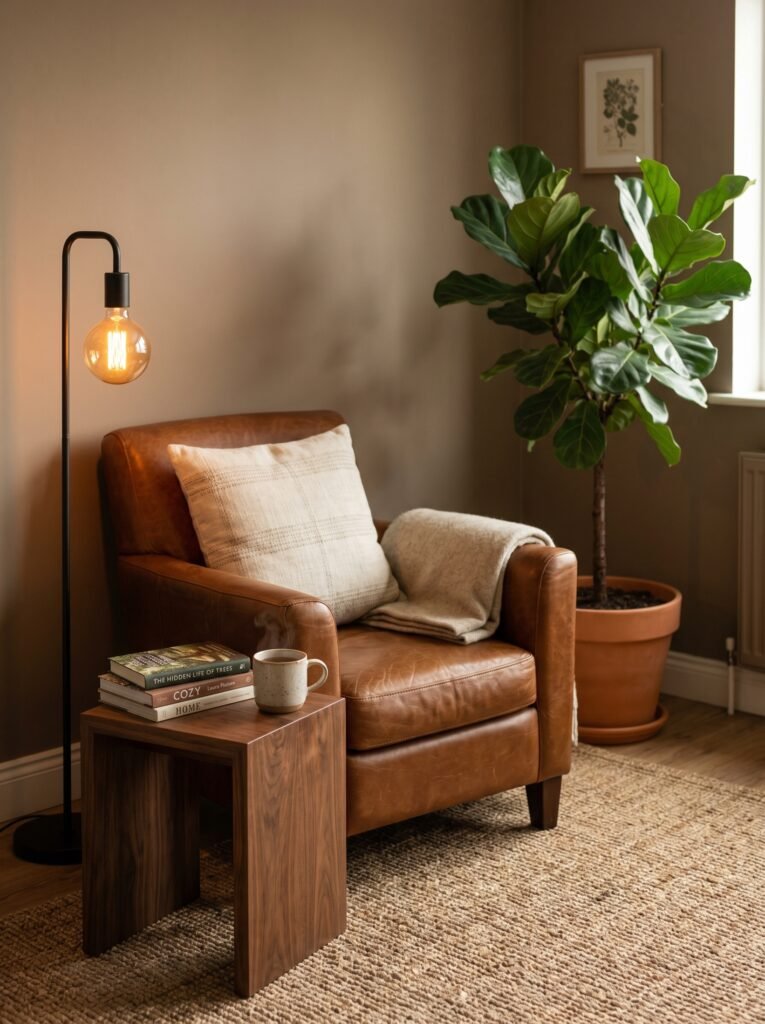
There’s a moment — you know the one — when you step into someone’s living room and instantly feel your shoulders drop. The tension dissolves. The noise of the outside world fades. That feeling almost always has brown somewhere in it. Whether you rent a compact city flat in London or a one-bedroom apartment in Chicago, brown might just be the most underestimated color you could ever bring home.
—
1. Why Brown Deserves a Second Chance in Your Living Room
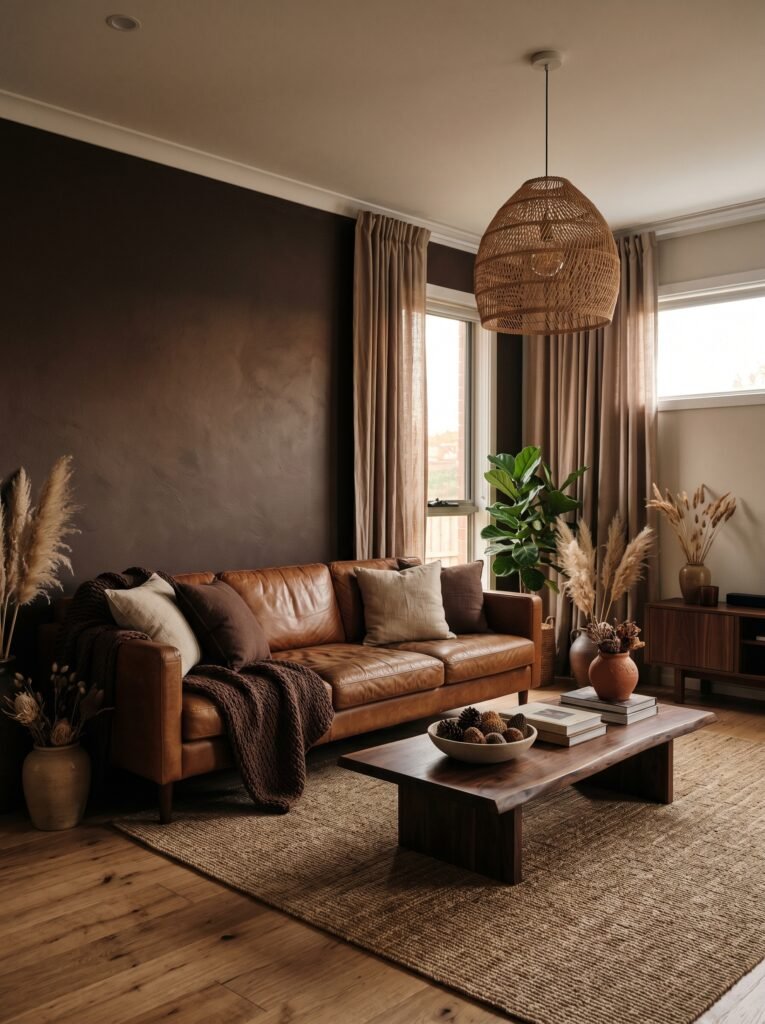
Brown has been unfairly sidelined for years. Blamed for looking dated, heavy, or uninspired, it was quietly pushed aside in favor of cooler grays and stark whites that — let’s be real — can feel more like a dentist’s waiting room than a cozy home. But here’s the truth: brown is having a full-blown revival, and this time it’s showing up with confidence.
The reason is simple. Brown is the color of earth, of aged leather, of timber floors worn smooth by years of Sunday mornings. It carries an inherent warmth that no paint color can fake. In an apartment — a space that often feels temporary, transient, or like it belongs to no one quite yet — brown anchors you. It says I live here. This is mine.
“Brown doesn’t just decorate a room — it grounds it, roots it, makes it feel like somewhere you genuinely belong.”
Interior designers on both sides of the Atlantic are leaning into this shift. In the US, the warm, earthy aesthetic has become synonymous with the “cozy apartment” trend dominating home tours on Pinterest and TikTok alike. In the UK, brown is making its way back into British homes through rattan furniture, terracotta accents, and dark walnut shelving — a nod to the maximalist country house aesthetic reimagined for modern flats.
2. The Spectrum of Brown You Probably Haven’t Considered
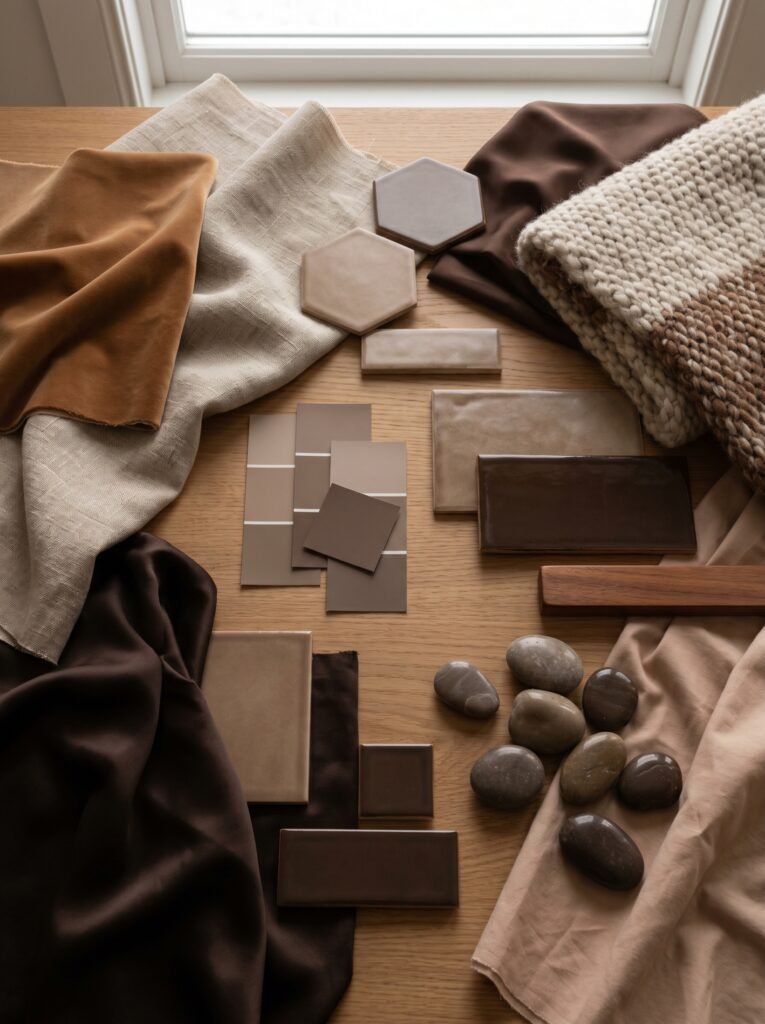
Before you picture a 1970s chocolate shag carpet nightmare, let’s talk about the actual range that exists within this single color family. Brown is not one shade — it’s an entire landscape. There’s warm caramel, pale linen, deep espresso, dusty taupe, rich chestnut, sandy mushroom, and blushing nude. Each one creates a completely different emotional experience in a room.
For small apartments — think studio flats or open-plan living rooms in converted buildings — lighter browns like warm linen or taupe keep the space feeling airy without sacrificing coziness. In the US, popular paint picks like Benjamin Moore’s “Pale Oak” or Behr’s “Caramel Latte” capture this balance beautifully. UK paint lovers tend to gravitate toward Farrow & Ball’s “Dead Salmon” or Little Greene’s “Stone Dark” — both sitting in that gorgeous warm-neutral territory where brown quietly asserts itself.
Darker shades — think deep chocolate or mahogany — work beautifully as accent walls in living rooms with good natural light. A north-facing flat in Manchester or a ground-floor apartment in Boston might want to be careful here, but with the right lighting strategy (more on that soon), even the moodiest brown can feel richly atmospheric rather than oppressive.
3. The Art of Layering Textures in a Brown Living Room
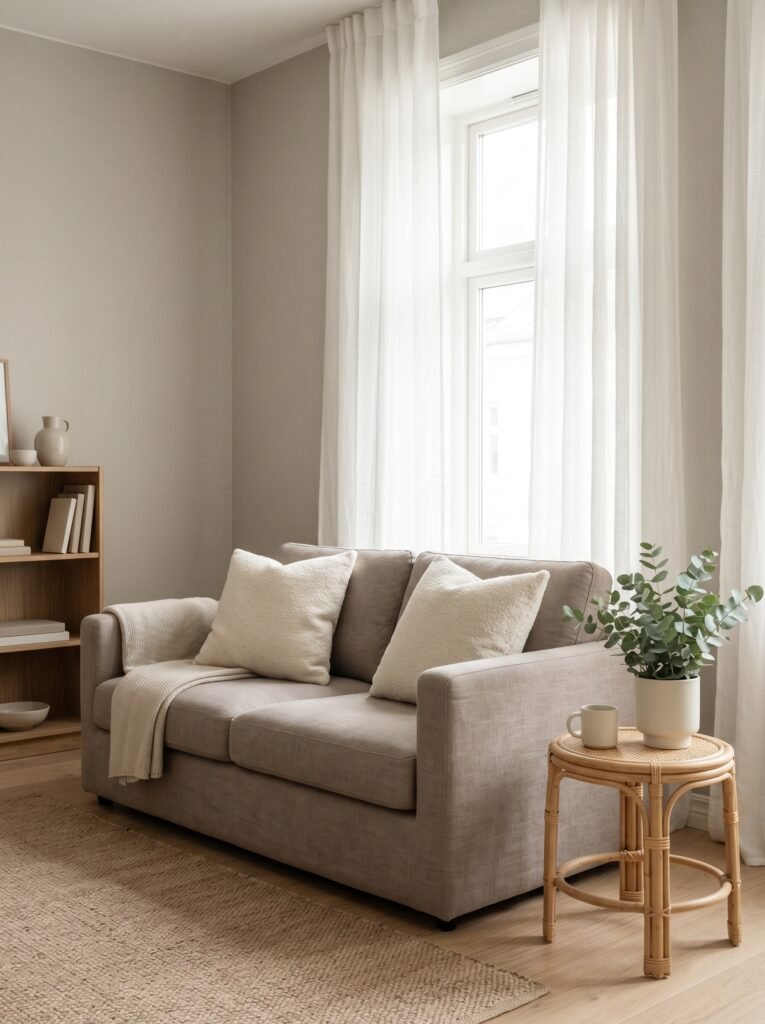
Here’s the secret that separates a beautifully styled brown living room from one that feels flat and dated: texture. Brown, without texture, looks like mud. Brown with texture? It looks like luxury.
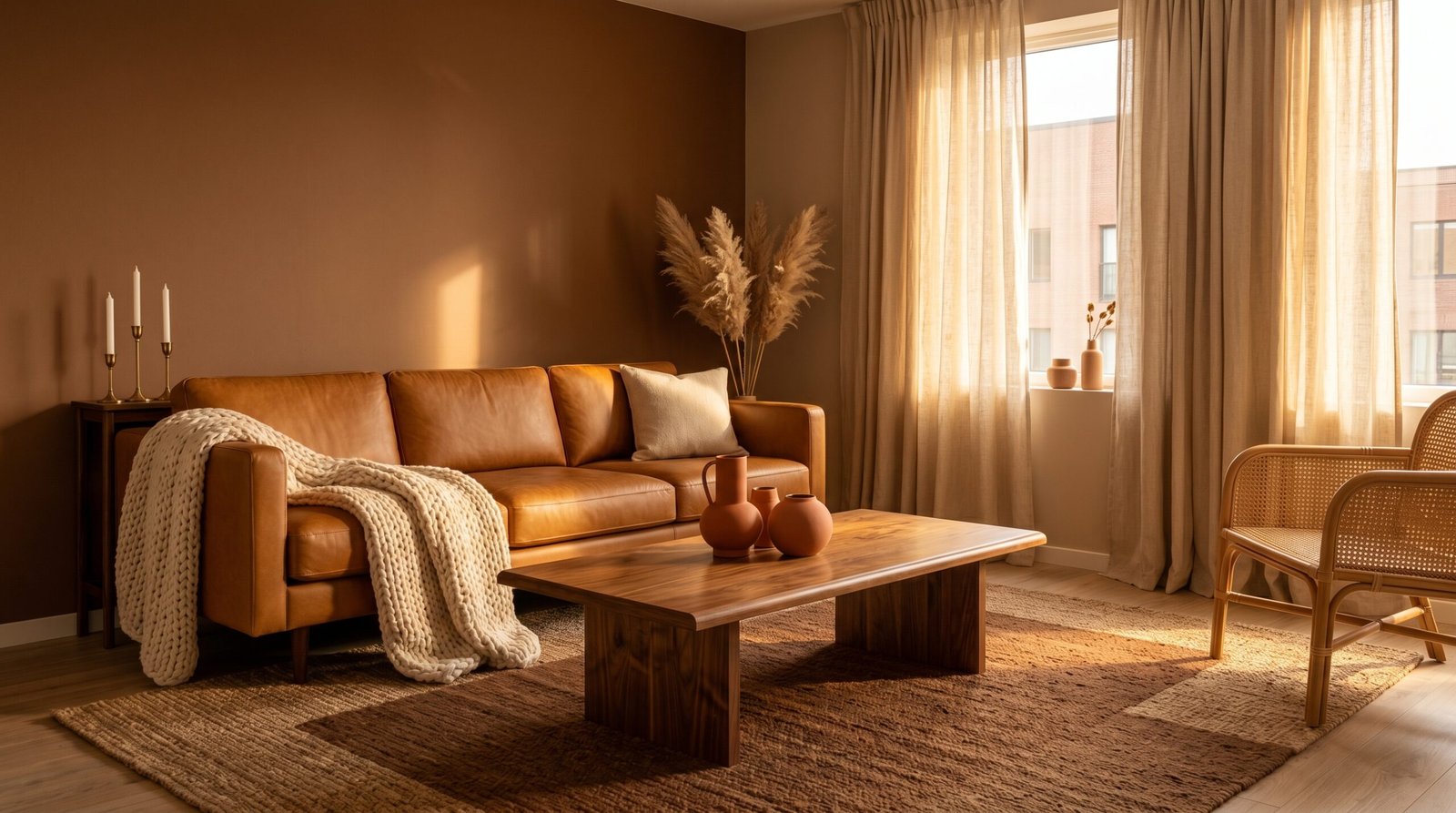
Think about the difference between a brown velvet sofa and a brown leather armchair placed side by side. The visual weight shifts, the light catches differently, and suddenly the room has depth. Layer in a chunky knit throw — the kind you can pull from a basket on a cold November evening — and a jute rug underfoot, and you have something genuinely beautiful happening.
Materials to weave into a brown-toned apartment living room include natural rattan and wicker for warmth without weight, linen and cotton cushion covers in complementary earth tones, aged wood coffee tables or side tables in walnut or oak, a sheepskin draped casually over the sofa arm, and woven wall hangings or macramé that add visual texture to the walls.
The British interiors community calls this “layering” — and American designers often refer to it as “collected warmth.” Whatever you call it, the principle is the same: pile on the textures until the room starts to feel lived-in and loved.
4. Furniture Choices That Transform a Brown Apartment Living Room
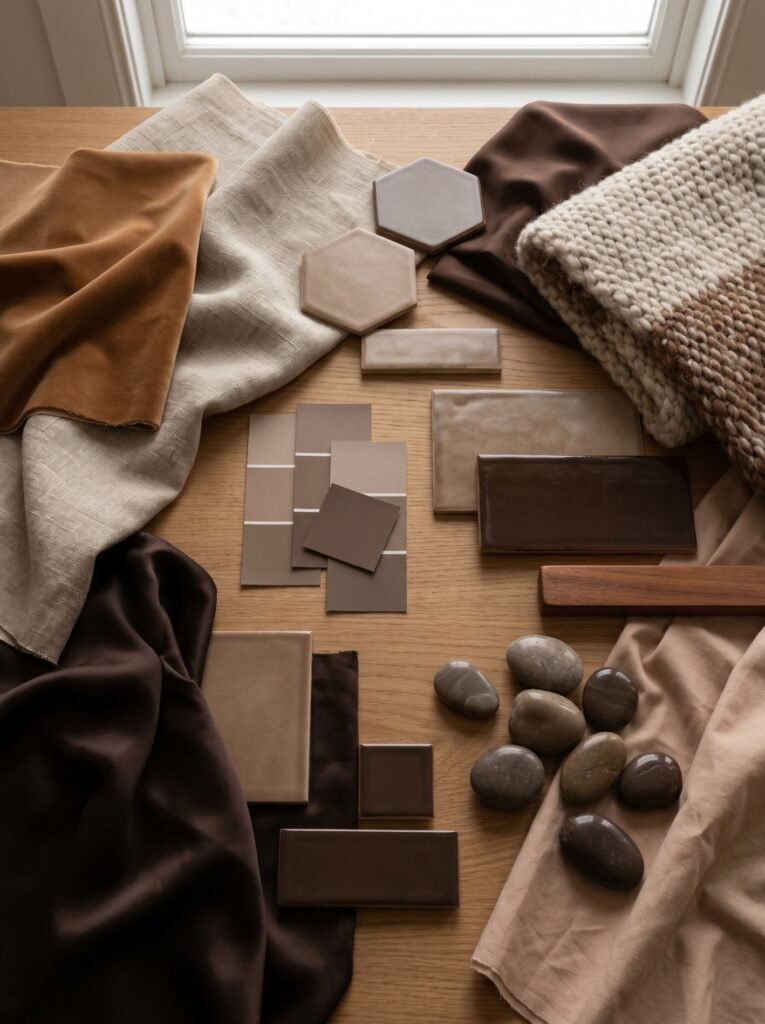
The sofa is the heartbeat of any living room, and in a brown-themed apartment, it’s doing double duty as both anchor and focal point. A caramel-colored sofa in a bouclé or velvet fabric is having an enormous moment right now — it pairs effortlessly with everything from cream walls to forest green accents.
But not everyone wants a brown sofa in a brown room — and that’s a fair instinct. Instead, consider using brown in the supporting furniture: a warm walnut media unit, a dark mahogany bookshelf, or a pair of tan leather accent chairs flanking a fireplace or window. This approach gives the room its earthy depth without overwhelming the eye.
“The best apartment living rooms don’t match — they harmonize, like musicians who’ve been playing together for years.”
For US apartments, where open-plan living is common, double-duty furniture becomes essential. A brown leather storage ottoman that serves as a coffee table and extra seating is a perfect example. In UK flats, where rooms tend to be smaller and more defined, a compact velvet loveseat in a warm caramel shade can do remarkable things for a tight space.
5. Colors That Make Brown Sing (Your Ultimate Pairing Guide)
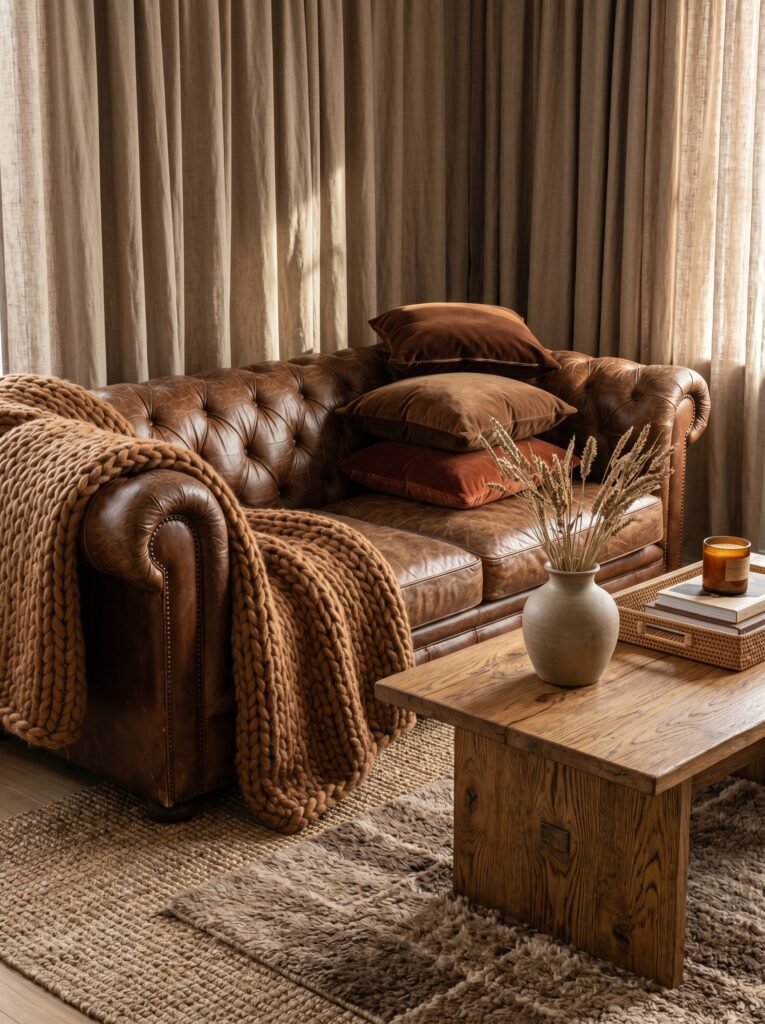
If you’ve ever worried that brown would clash or create a visual mess alongside other colors, this section is your reassurance. Brown is genuinely one of the most versatile neutrals in the design world — it plays beautifully with a surprising range of colors.
Cream and ivory soften brown’s depth and create an effortlessly elegant pairing. Think cream linen curtains against walnut shelves. Forest green and brown is perhaps the most beloved natural combination — it evokes woodland, countryside, and deep botanical beauty, making it particularly popular in British interiors. Rust and terracotta alongside brown creates a warm, Southwestern-inspired palette that’s huge in US home design right now. Blush pink with brown creates a romantic, unexpected softness — a single blush cushion on a chocolate sofa can completely shift the mood of a room. And dusty blue with brown creates a more eclectic, earthy-meets-serene vibe that works beautifully in apartment living rooms with high ceilings or exposed brickwork.
The key is confidence. Choose your accent color and repeat it throughout the space in small doses — a cushion, a vase, a piece of art — so the eye has a visual thread to follow.
6. The Power of Lighting in a Brown Living Room
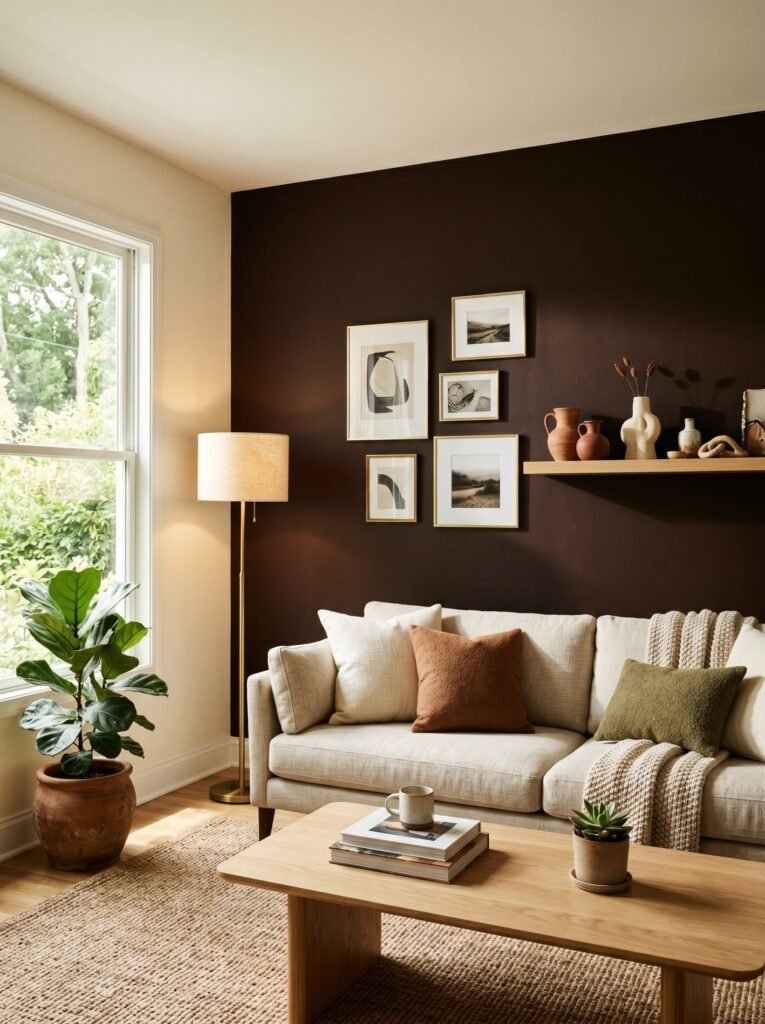
Lighting is the single most transformative tool in interior design, and in a brown apartment living room, it’s non-negotiable. The wrong lighting can make brown look dingy and depressing. The right lighting makes it look like a spread from a design magazine.
The golden rule: layer your light sources. Overhead lighting alone — especially the harsh, flat light that comes standard in most apartments — flattens brown tones and strips the room of atmosphere. Instead, build a lighting plan that includes a floor lamp with a warm-toned bulb in the corner, table lamps on either side of the sofa or on side tables, and candles or LED candle holders for evening ambiance.
Warm white bulbs (2700K–3000K color temperature) are your best friend in a brown room. They bring out the honey and amber undertones in wooden furniture and warm the whole space up instantly. In darker UK apartments — and there are many, particularly in period buildings — a well-placed arc lamp can make all the difference between a room that feels like a cave and one that feels like a sanctuary.
7. Small-Space Strategies for Brown Apartment Living Rooms
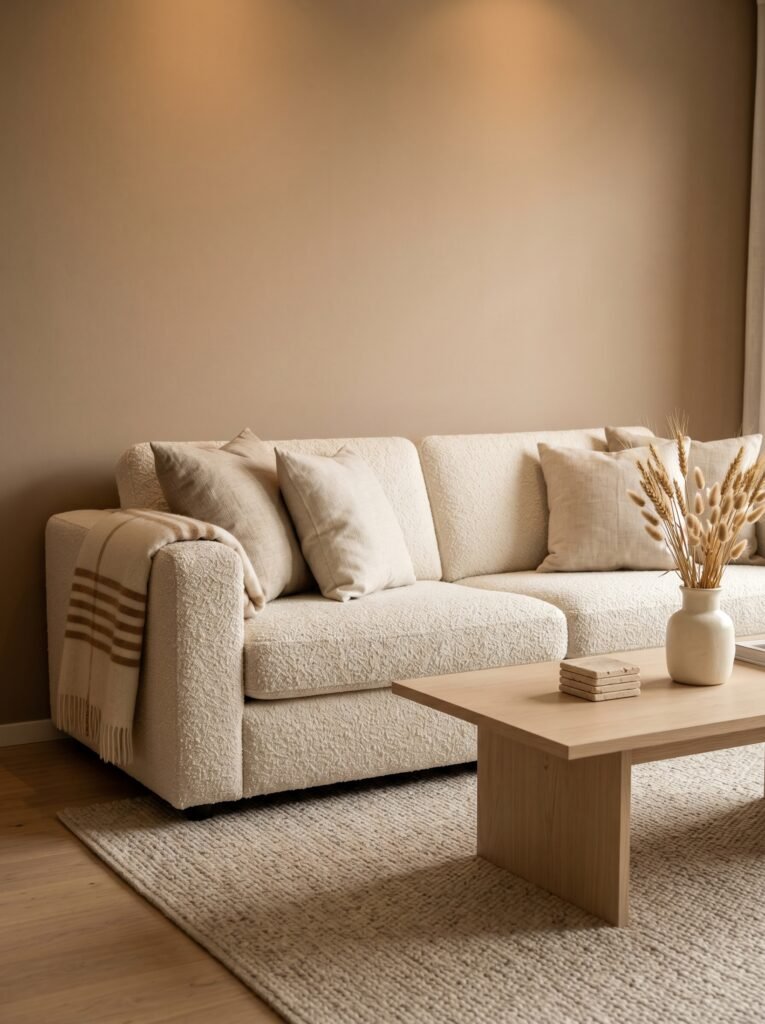
Apartment living comes with real constraints — low ceilings, awkward corners, shared walls, limited square footage. Brown can work beautifully within those limitations, but it asks for a little strategy.
First, use rugs to define and warm the space. A large jute or sisal rug in a warm brown-beige tone grounds the seating area and immediately makes the room feel more intentional. In open-plan apartments, this is especially powerful — it creates the visual impression of a dedicated living room even when the kitchen is three steps away.
Second, embrace vertical space. Wall-mounted shelving in walnut or dark oak draws the eye upward, makes the room feel taller, and gives you space to display the books, plants, and objects that tell your story. In UK apartments, where Victorian and Edwardian proportions often mean beautiful high ceilings, this strategy is particularly effective.
Third, don’t be afraid of a feature wall. A single wall painted in a deep, rich brown — or wallpapered in a botanical or textural print with warm brown tones — creates depth without closing the room in.
“In a small apartment, a single bold decision made with confidence always outperforms a thousand cautious ones made in fear.”
8. Plants: The Life-Giving Element in a Brown Living Room
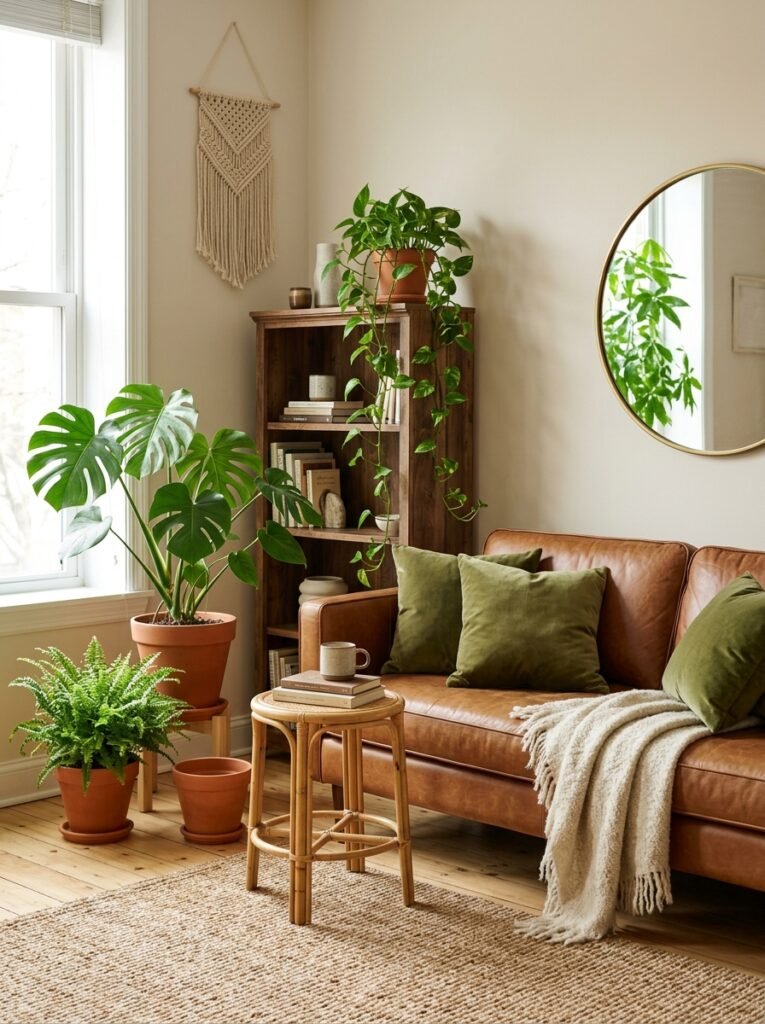
If there’s one thing that unites Pinterest home inspo boards across the US and UK, it’s plants. And in a brown living room, they are not optional — they are essential. The relationship between brown and green is ancient, instinctual, and utterly beautiful. It’s the color of a forest floor. It’s the palette that our nervous systems were literally designed to find calming.
For apartment living rooms with limited light, go for resilient, low-maintenance plants like pothos, snake plants, ZZ plants, or peace lilies. A large-leafed monstera in a terracotta pot placed in the corner of a brown living room is one of those design moments that genuinely stops people mid-conversation to say, “Oh, this room is beautiful.”
For the styling-conscious, cluster plants at different heights — a tall plant on the floor, a medium one on a shelf, a trailing pothos on a high ledge — to create a lush, layered botanical look that costs relatively little and pays dividends in atmosphere.
9. Art and Accessories That Complete the Look
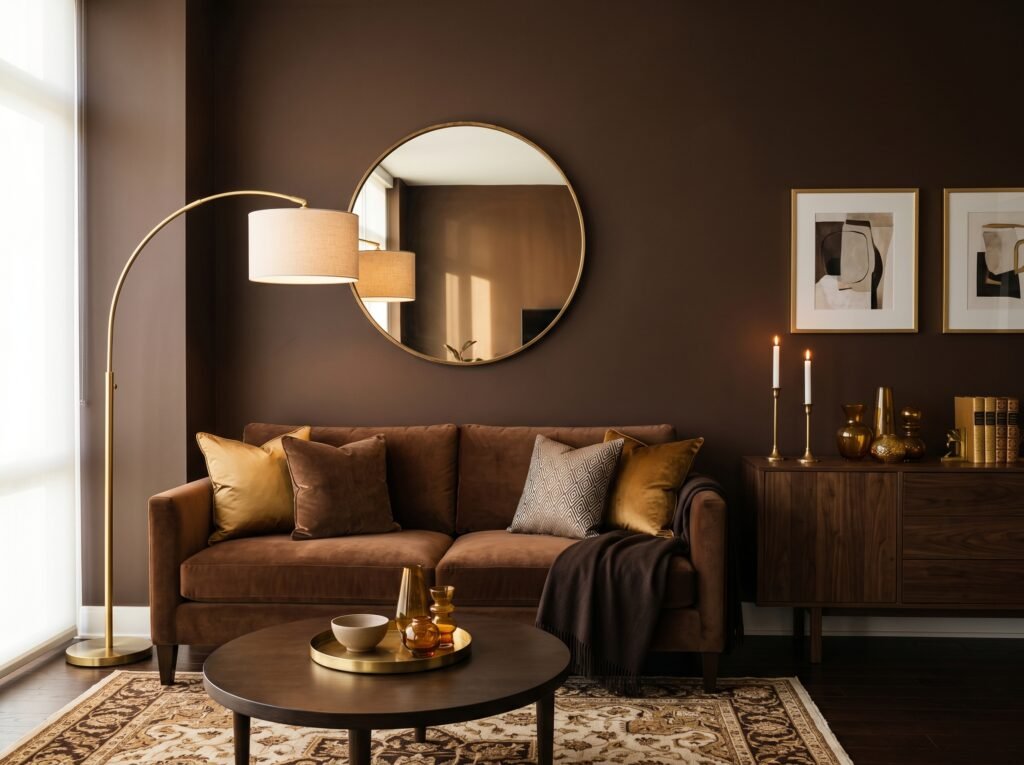
A brown living room without thoughtful accessories is like a beautifully styled outfit without the shoes — almost there, but not quite. The art and objects you choose are the punctuation marks in your room’s story.
For wall art, lean into organic, nature-inspired prints — botanical illustrations, landscape photography, abstract art in ochre, rust, and cream. Gallery walls work brilliantly in apartment living rooms because they fill vertical space and create visual interest. Mix frame styles — black, walnut, brass — for a collected, curated feel rather than a showroom one.
On your coffee table, practice what designers call “the rule of three” — group objects in odd numbers at varying heights. A stack of coffee table books, a small ceramic vase with dried pampas grass, and a pillar candle in a warm amber shade create a vignette that feels artfully casual.
10. Brown Walls: Daring, Bold, and Surprisingly Liveable
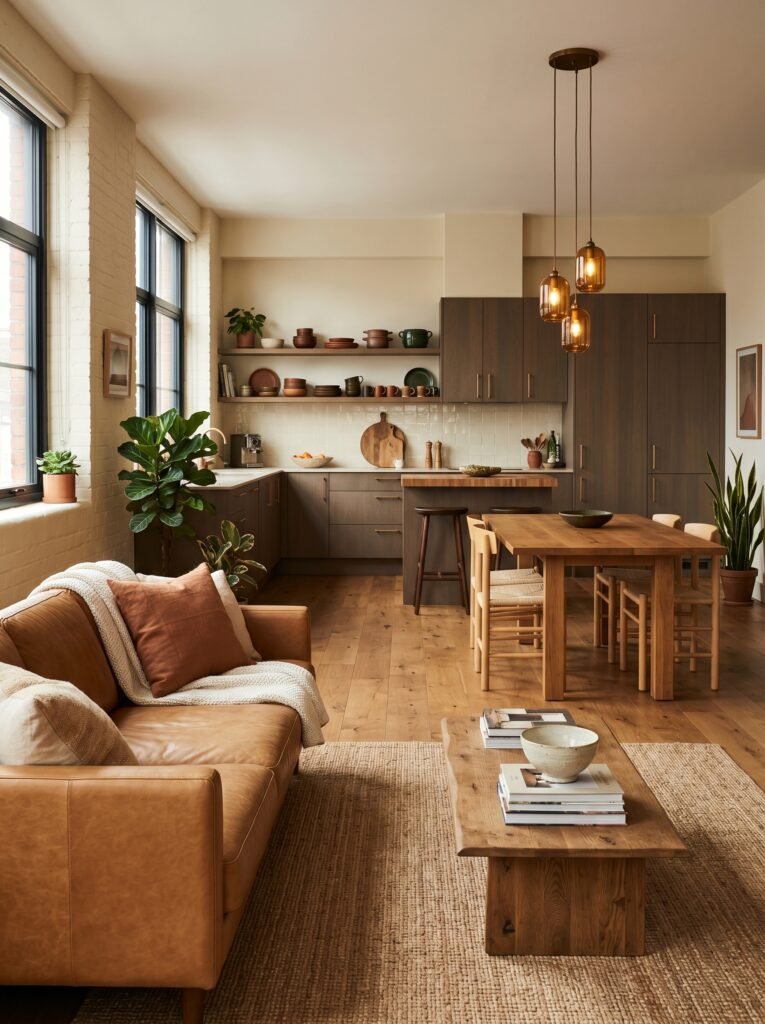
Painting your walls brown in a rented apartment might feel terrifying — but hear this out. If you’re allowed to paint (and many landlords in both the US and UK are increasingly flexible), a brown accent wall can be one of the most transformative things you do to your living room.
Deep brown walls create a cocoon effect that is unmatched for evening comfort. When paired with warm lighting, cream textiles, and lots of greenery, a dark brown wall doesn’t shrink a room — it gives it presence. It makes the room feel deliberate and considered. Brands like Sherwin-Williams (US) offer gorgeous options like “Kiva” and “Auburn Hearth.” UK renters might look to Dulux’s “Warm Cocoa” or Crown’s “Roasted Peanut” for achievable, renter-friendly transformation.
If painting isn’t an option, consider peel-and-stick wallpaper in warm, earthy tones — the quality has improved dramatically in recent years, and many are renter-safe and fully removable.
11. Budget Decorating: Building a Brown Living Room Without Breaking the Bank
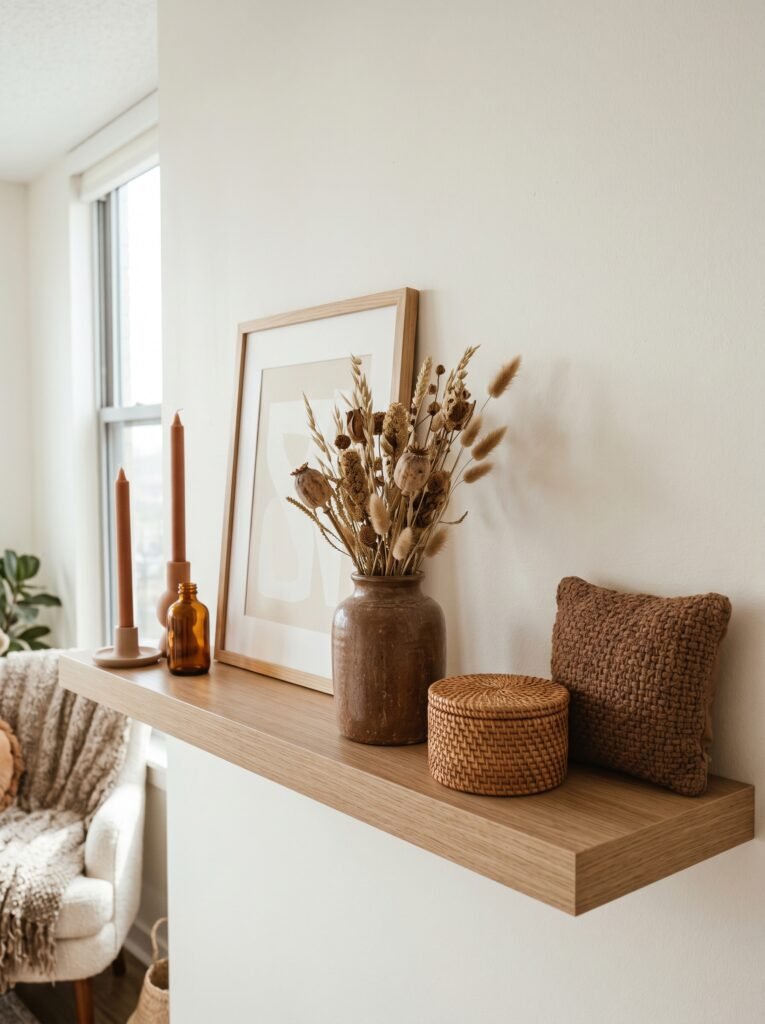
Beautiful doesn’t have to mean expensive, and a brown living room is actually one of the most budget-friendly aesthetics to pull together — because so much of what it relies on is found naturally in charity shops, thrift stores, and vintage markets.
Vintage leather armchairs are classics that appear regularly at estate sales, Facebook Marketplace, and UK charity shops like British Heart Foundation or Oxfam. A worn leather piece in caramel or cognac brings immediate character that new furniture simply can’t replicate.
Second-hand wooden side tables and shelving can be sanded, stained, or simply cleaned up to look beautiful alongside newer pieces. IKEA’s walnut-effect range — popular on both sides of the Atlantic — offers affordable pieces that work genuinely well in warm brown schemes. For cushions and throws, TK Maxx (UK) and TJ Maxx (US) consistently stock beautiful earth-toned textiles at a fraction of boutique prices.
12. The Mood You’re Really Creating: Comfort, Safety, and Home
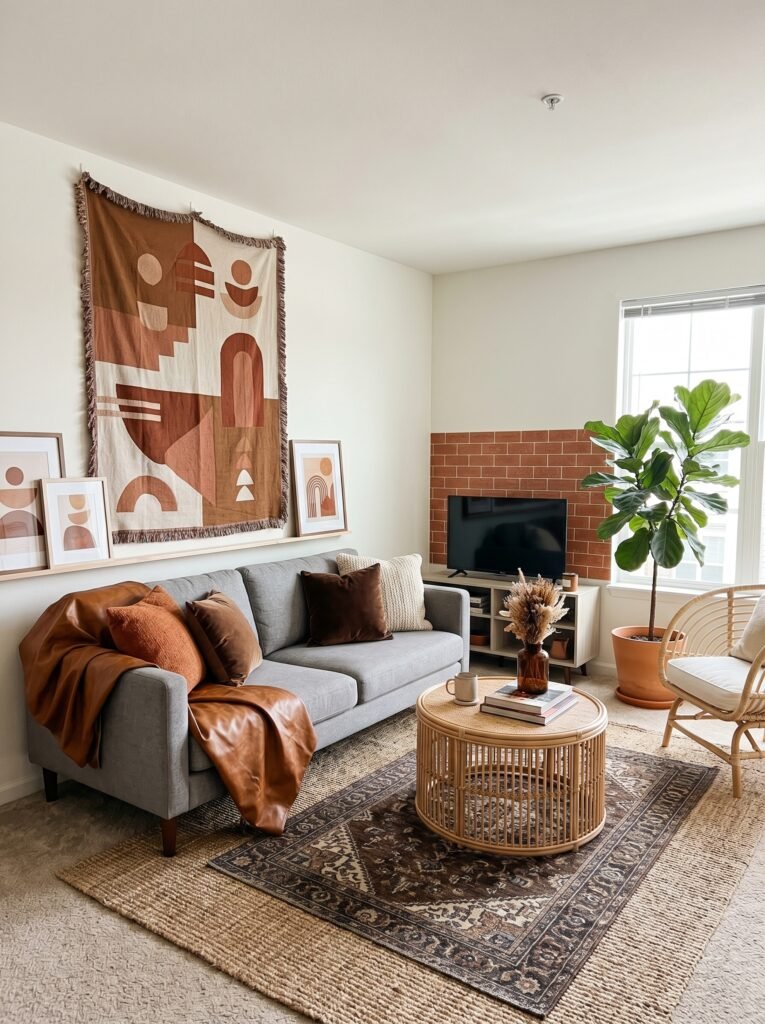
Ultimately, decorating a brown apartment living room isn’t really about color theory or furniture placement or lighting angles. It’s about creating a place where you exhale. A place where, after a long commute, a difficult day, or a noisy world, you step inside and the room holds you.
Brown, more than almost any other color, has that capacity. It’s the color of the places humans have always gathered — around fires, at wooden tables, on worn floors. It is, in the deepest sense, the color of home.
When you build a brown living room with care — layering textures, choosing art that moves you, placing plants that breathe life into the corners — you’re not just decorating. You’re building a refuge. And that’s something entirely worth the effort.
—
🌿 How to Take Care of Your Brown Living Room
Maintaining the warmth and intention of a brown living room requires a few simple but meaningful habits. Rotate your cushion covers seasonally — deeper, richer tones in autumn and winter; lighter linens in spring and summer — to keep the room feeling fresh without a full overhaul. Dust wooden furniture regularly with a soft, slightly damp cloth and use a good wood conditioner every few months to keep grain and color rich and beautiful. Keep plants hydrated but not overwatered — most apartment-friendly plants prefer to dry out slightly between waterings. Reposition your throw blankets and style your coffee table vignette every so often; small resets prevent a room from feeling stale. Finally, replace candles and check your warm-toned bulbs periodically — nothing undermines a beautifully styled brown room faster than cool, harsh overhead light.
—
❓ FAQ
Q: Is brown too dark for a small apartment living room? A: Not at all, if used thoughtfully. Lighter brown tones like taupe, linen, and warm beige keep small spaces feeling open and bright. For darker shades, use them on a single feature wall with plenty of warm lighting and mirrors to bounce light around the room. The key is balance, not avoidance.
Q: What colors go best with brown in an apartment living room? A: Brown pairs beautifully with cream, forest green, rust, terracotta, dusty blue, and blush pink. For a timeless, neutral look, cream and ivory are safest. For something bolder and more contemporary, forest green or rust alongside brown creates a striking, nature-inspired palette that photographs beautifully.
Q: How do I make a brown living room feel modern rather than dated? A: The trick lies in texture and contrast. Pair brown with matte black hardware and accents, add contemporary art with clean lines, and choose furniture silhouettes that are sleek rather than heavy. Mixing materials — leather, rattan, linen, wood — keeps the palette feeling fresh and layered rather than heavy or old-fashioned.
—
💭 Final Thought
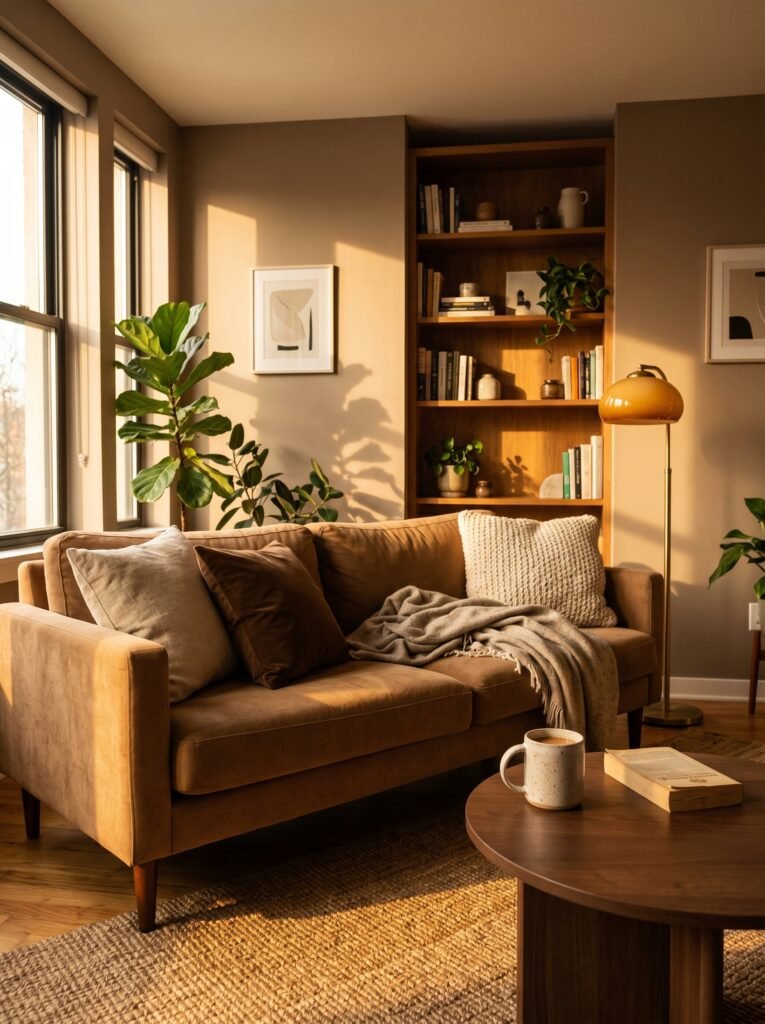
A brown apartment living room, done with love and intention, doesn’t just look beautiful — it feels like somewhere you’ve always wanted to return to. It’s the interior design equivalent of a favourite jumper or a reliable cup of tea; familiar, comforting, and somehow exactly right. As you think about your own space, whether you’re in a rented flat in Edinburgh or a walkup apartment in New York, ask yourself this: what does the room I come home to say about what I need most right now — and does it say it with warmth?