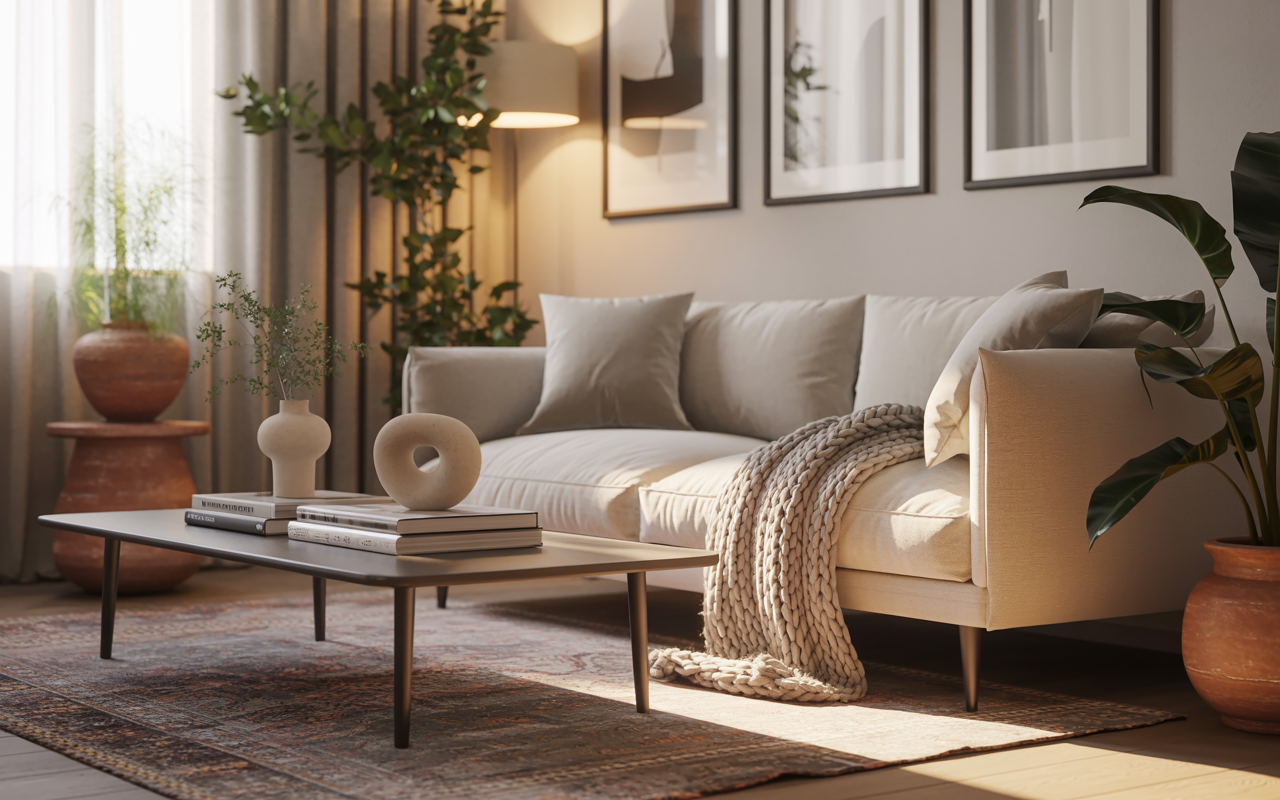
Modern Apartment Living Room Decor Ideas That Will Make You Fall in Love With Your Space All Over Again
There’s a particular kind of magic that happens when you walk into a living room that feels completely, undeniably yours — where every corner tells a story and every cushion was chosen with quiet intention. If you’re renting a flat in London or owning a condo in Chicago, this guide is for you: the dreamer who wants a modern living room that feels like home, not a showroom.
—
1. Why Modern Doesn’t Have to Mean Cold or Minimal
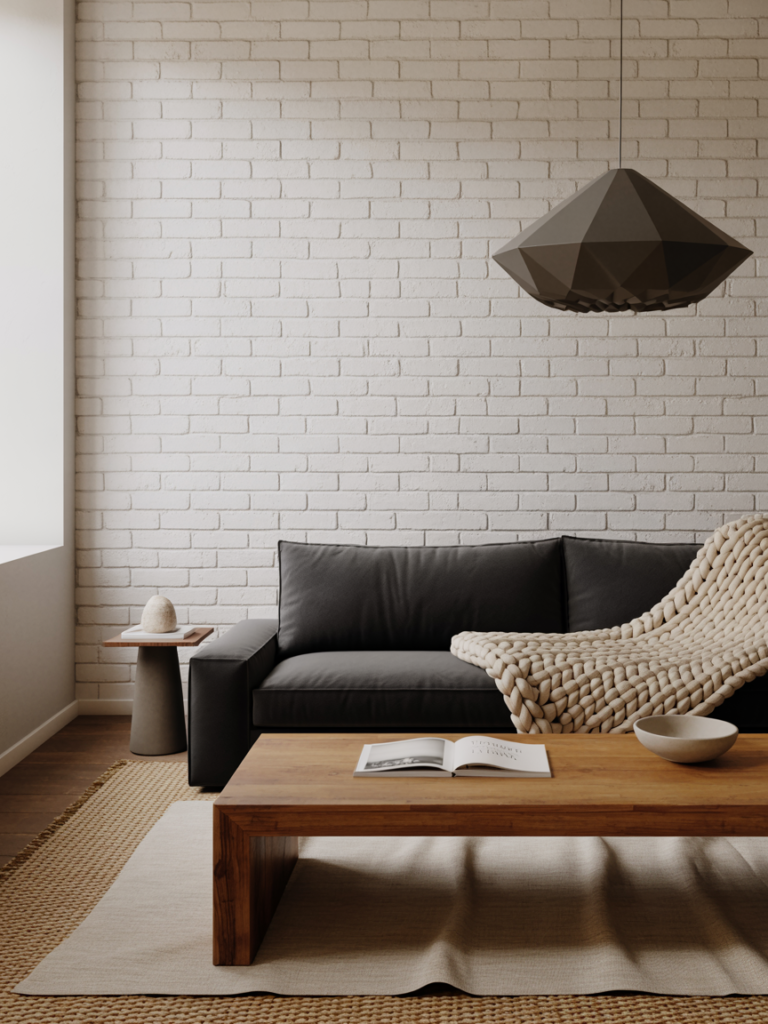
Let’s clear something up right away, because this misconception has held so many people back from decorating the home they actually want. “Modern” in interior design doesn’t mean stark white walls, concrete floors, and furniture so angular it makes you nervous to sit down. That’s a narrow reading of the style — and honestly, a bit of a myth that Pinterest and Instagram have been quietly dismantling for years.
Modern apartment living room decor, in its truest and most livable form, is about clean lines married with warmth. It’s about edited choices rather than empty spaces. Think of it as a conversation between simplicity and soul — where you strip away the unnecessary but keep everything that makes you feel something. A sleek sofa with a hand-knitted throw draped across one armrest. A low-profile coffee table topped with a small stack of books you’ve actually read. A gallery wall with clean frames but wildly personal photographs.
The modern aesthetic gives you structure and restraint as your foundation, and then you layer in texture, color, and personality to make it feel human. In the US, modern decor often leans into industrial or Scandinavian influences — exposed brick, warm wood, matte black fixtures. In the UK, there’s a beautiful tendency to blend contemporary lines with heritage pieces: a Victorian terrace flat furnished with a mid-century sofa and a statement neon light above the mantle. Both interpretations are valid. Both are stunning.
“Modern living doesn’t mean empty living — it means intentional living.”
2. The Foundation: Choosing a Sofa That Works Hard and Looks Beautiful
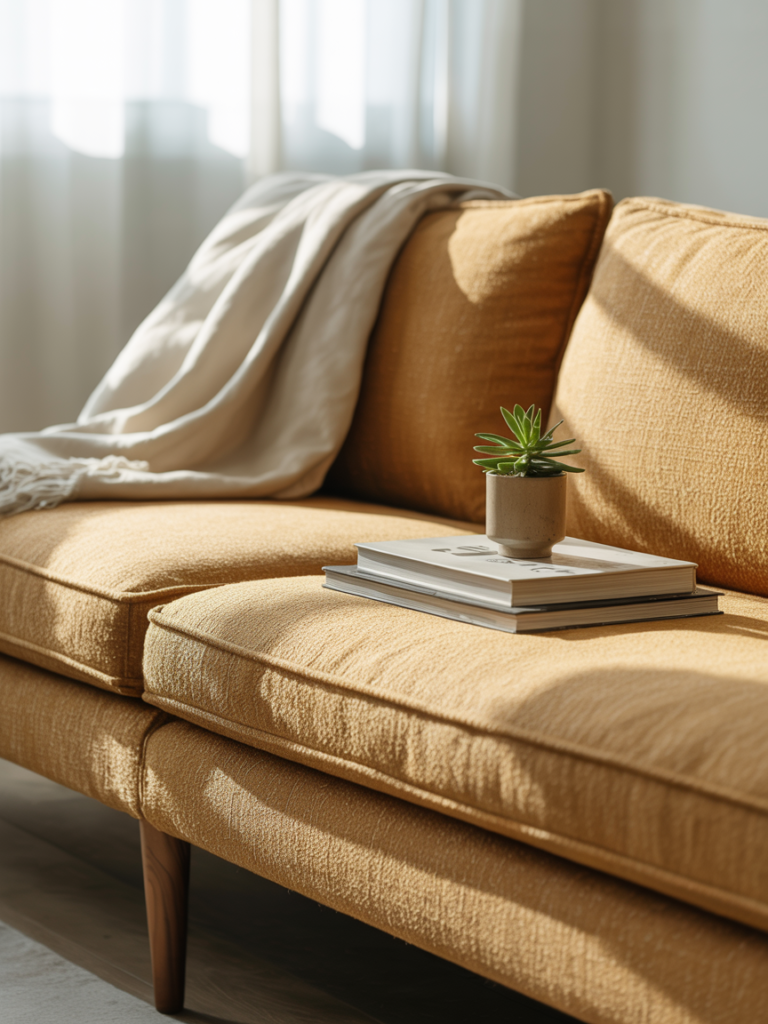
Your sofa is the anchor of your living room. It’s the piece every other decision orbits around — the rug, the coffee table, the curtain color, even the artwork placement. In a modern apartment, this choice carries enormous weight, so it deserves more than a five-minute scroll through a furniture website.
For modern apartment spaces, which are often on the smaller side — whether you’re in a studio in Brooklyn or a one-bedroom flat in Manchester — a low-slung sofa with tapered legs is your best friend. This profile keeps the room feeling open and airy because you can see more of the floor, which tricks the eye into perceiving a larger space. A sectional can work beautifully too, but only if it’s measured carefully. There’s nothing that shrinks a room faster than an oversized sofa wedged against every wall.
Fabric choice matters enormously here. Bouclé has had a very well-deserved moment over the last few years, and it shows no signs of stopping — that creamy, textured weave brings a tactile warmth to any modern room. Velvet in deep jewel tones (emerald, dusty rose, slate blue) adds richness without visual clutter. Linen is perennially good for British homes especially, where the light tends to be softer and a natural fabric just feels right. For families or renters who need something practical, performance fabrics in neutral tones — oatmeal, warm grey, sand — are the modern decorator’s secret weapon.
3. The Rule of Three Neutrals (And Why It Actually Works)
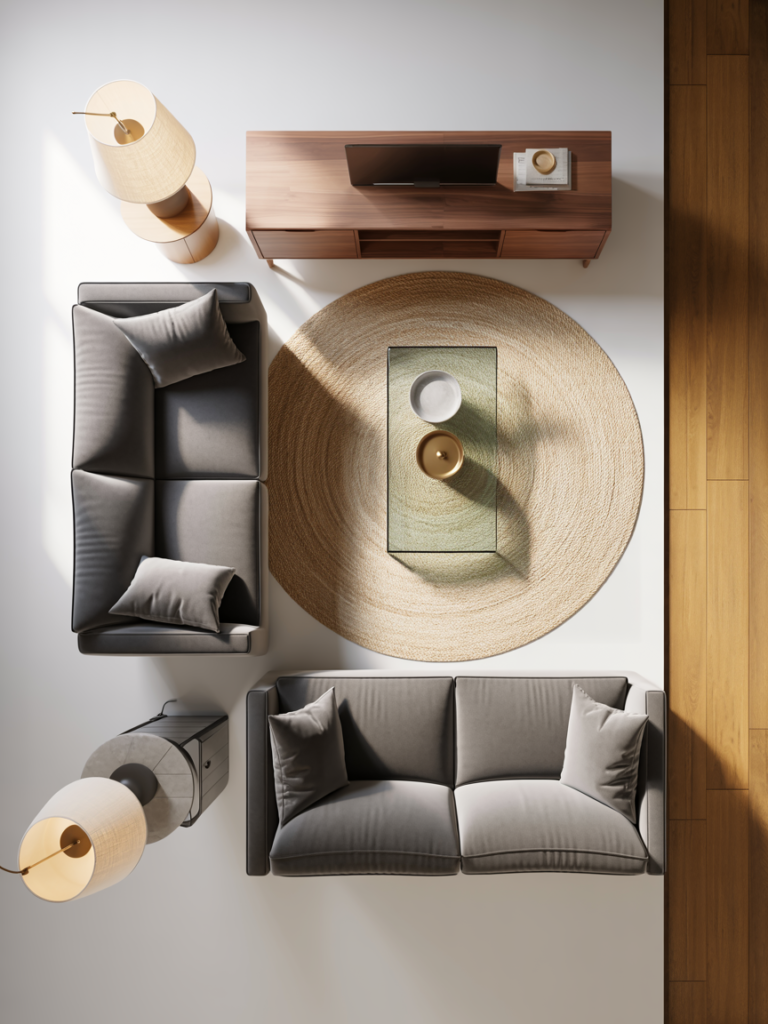
There’s a reason interior designers keep returning to this principle: it works reliably, across styles, budgets, and room sizes. The rule of three neutrals means selecting three foundational colors for your living room — typically one warm, one cool, and one natural — and building your whole palette from there.
In a modern apartment, this might look like: warm white walls, a charcoal sofa, and natural oak wood accents. Or it could be: warm cream walls, a dusty green sofa, and matte black fixtures. The genius of this approach is that it creates visual cohesion without making the room feel flat or one-dimensional. Every element belongs, and nothing fights for attention.
From there, your accent colors — in cushions, artwork, plants, and small objects — can be bolder and more expressive, because the neutral base gives them room to breathe. A burnt orange ceramic vase hits completely differently against a restrained neutral backdrop than it would in a room already fighting with pattern and color from every angle.
4. Lighting: The Invisible Decorator That Changes Everything
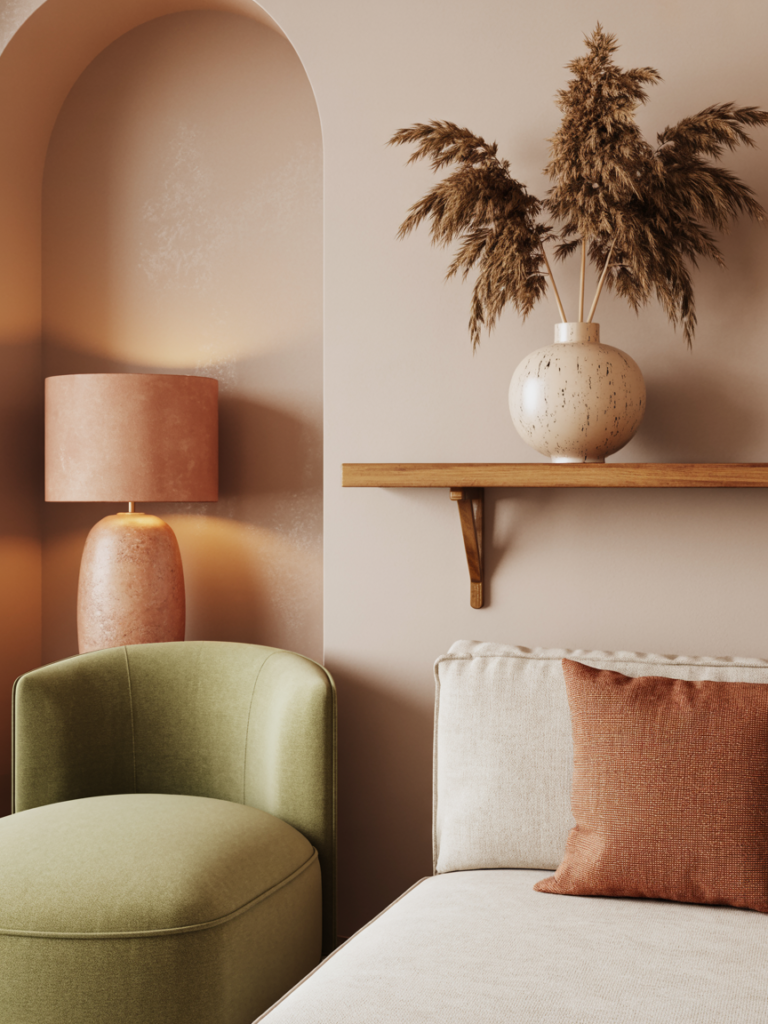
If there is one area where apartment dwellers consistently underinvest, it’s lighting — and it’s the single biggest missed opportunity in modern interior design. Overhead lighting alone (especially the harsh, flat kind that comes standard in most rented apartments) will make even the most beautifully furnished room feel institutional and flat.
The fix is layered lighting, and it’s more achievable than it sounds. Think of your room in three lighting zones: ambient (the overall brightness), task (functional light for reading or working), and accent (the warm, atmospheric layers that make a room feel cozy and intentional). In a modern apartment living room, this might mean: a statement pendant light above the coffee table, a sculptural floor lamp in the reading corner, and small table lamps on either side of the sofa or on a console table.
Warm bulb temperatures — around 2700K to 3000K — are essential for a living room. They cast that golden, flattering glow that feels welcoming rather than clinical. Dimmer switches, where your tenancy allows, are absolutely transformative. Being able to shift from bright and functional on a working-from-home Tuesday afternoon to warm and atmospheric on a Friday evening with a glass of wine — that’s the kind of flexibility that makes a house feel like a home.
5. How to Make a Small Apartment Living Room Feel Twice the Size
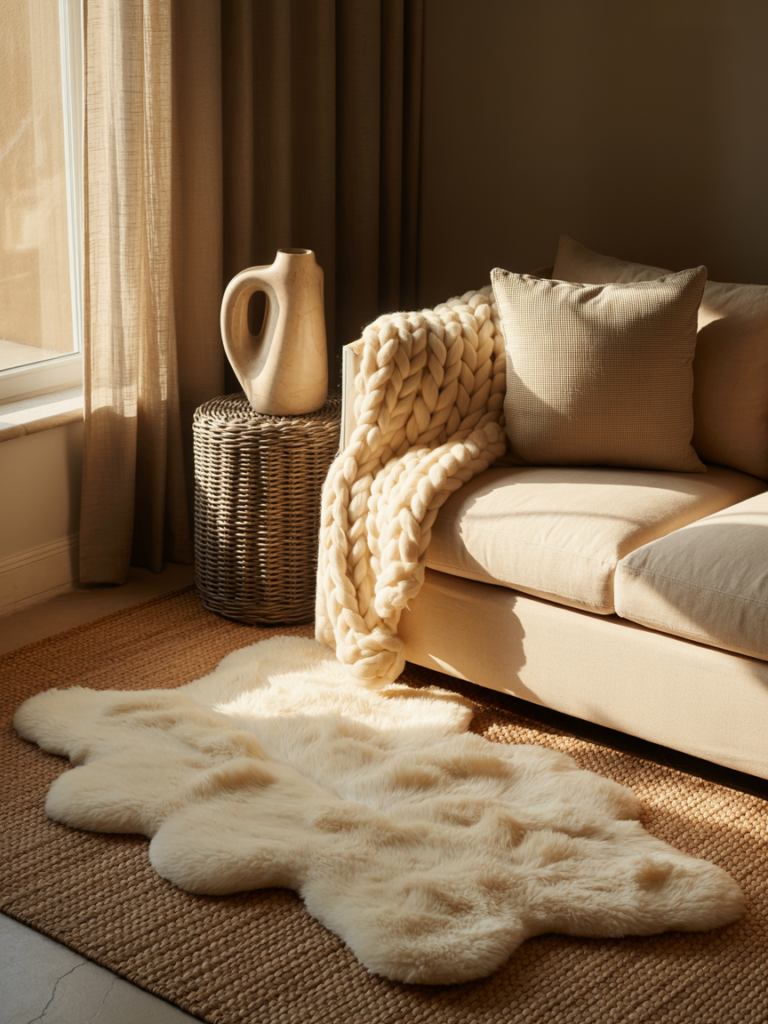
This is the question that sits at the heart of so many apartment decorating conversations, particularly in cities like New York, London, or Edinburgh where square footage is precious and expensive. The good news is that perceived space is highly manipulable through design — you don’t need a bigger flat, you need smarter choices.
Mirrors are the oldest trick in the book, but they remain remarkably effective. A large mirror on the wall opposite your main window doubles the natural light in the room and creates the visual illusion of depth. In a modern room, lean toward mirrors with simple, architectural frames — a slim brass rectangle, a minimalist arch, a clean-edged round mirror — rather than ornate designs that add visual noise.
Furniture with legs, as mentioned earlier with sofas, creates breathing room at floor level. Coffee tables with lower profiles, open-base shelving rather than solid bookcases, and chairs with exposed legs all contribute to a sense of lightness. Keeping your largest furniture against the walls (rather than floating pieces in a small space) preserves precious circulation room. And vertically — think about it. Tall bookshelves, floor-to-ceiling curtains, and art hung slightly higher than feels natural all draw the eye upward and signal height.
“A small room well-decorated is infinitely more beautiful than a large room thoughtlessly filled.”
6. The Rug: Grounding Your Space With Intention
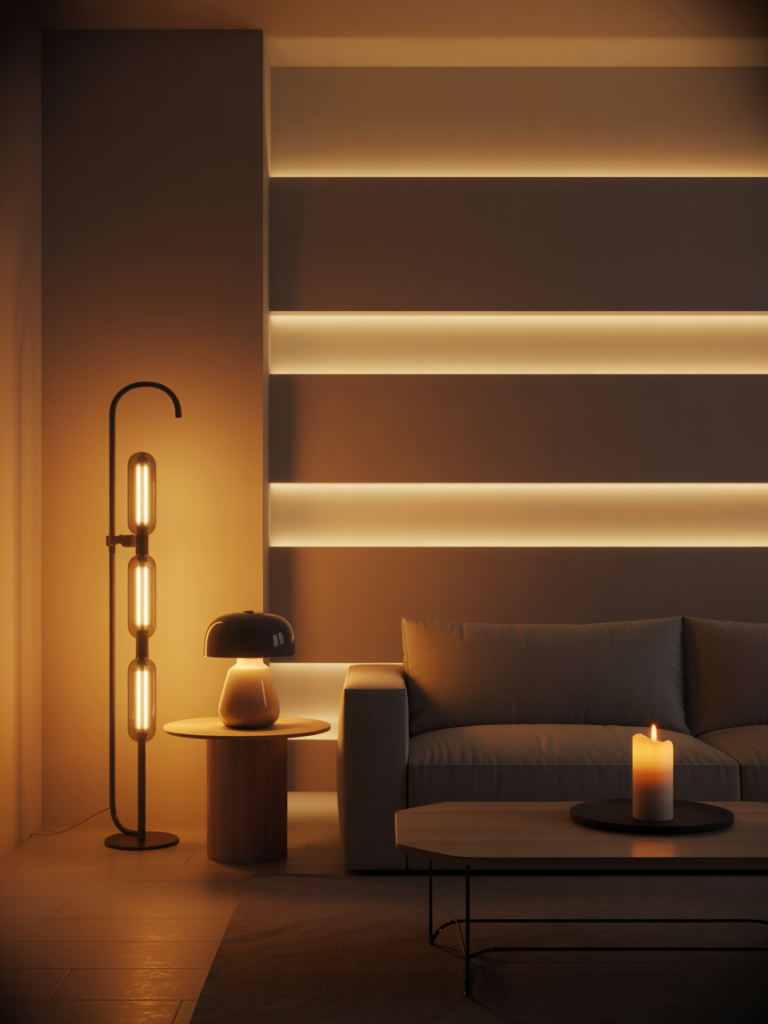
A rug in a living room isn’t just decorative — it’s architectural. It defines the seating zone, brings warmth to hard floors, and ties disparate pieces of furniture into a cohesive grouping. In modern apartment decorating, choosing the right rug (and placing it correctly) is genuinely one of the most impactful decisions you’ll make.
Size is where most people go wrong. The single most common rug mistake is going too small — selecting a rug that only fits under the coffee table, leaving the sofa and chairs to float untethered on bare floor. For a properly proportioned living room rug, all the front legs of your main furniture pieces should sit on the rug, if not all four legs entirely. A rug that feels almost too big when you’re shopping will almost always feel exactly right once it’s on the floor.
For modern apartments, flat-weave or low-pile rugs in geometric patterns, abstract designs, or subtle organic textures work beautifully. Cream, warm grey, and terracotta have all been having sustained moments, and each pairs well with the clean-lined furniture that defines modern style. Wool rugs offer the best durability and natural warmth. If budget is a consideration — and it often is in apartment living — there are genuinely excellent options from retailers like IKEA, Ruggable (whose washable design is a game-changer for renters), and H&M Home.
7. Bringing Nature Indoors: Plants as Living Decor
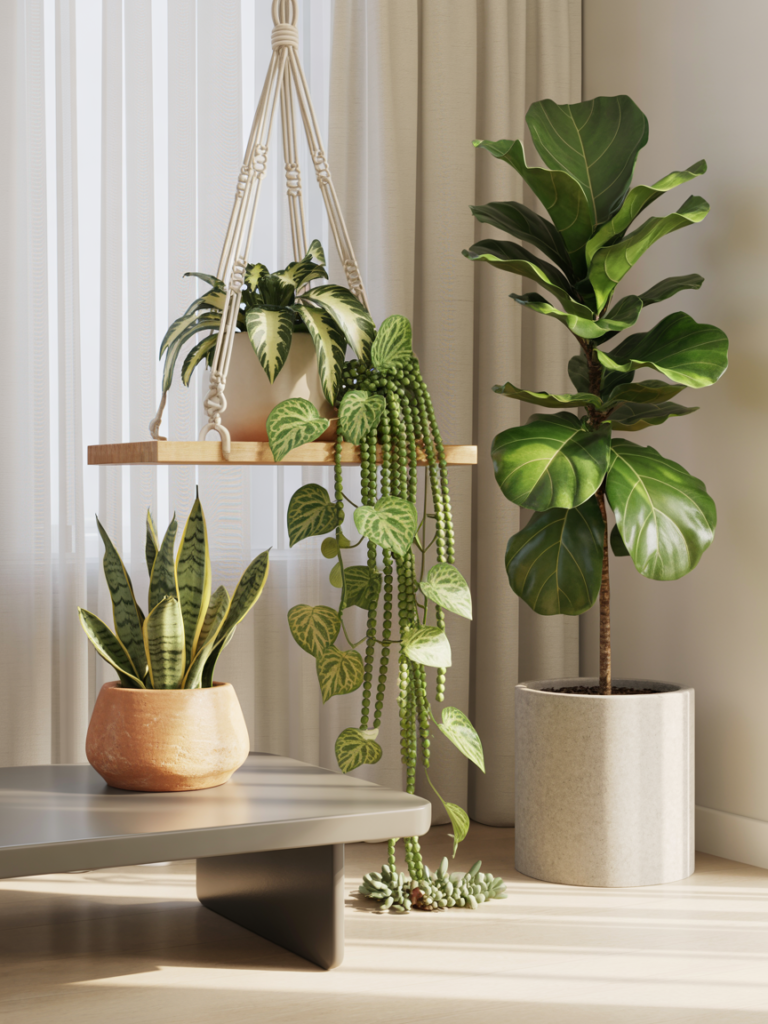
There is something about a living room with plants in it that feels fundamentally different from one without. Not just aesthetically — though the visual effect is beautiful — but in terms of atmosphere. Plants soften hard edges, introduce organic shapes that no furniture piece can replicate, and create the subtle sense that a space is alive and cared for.
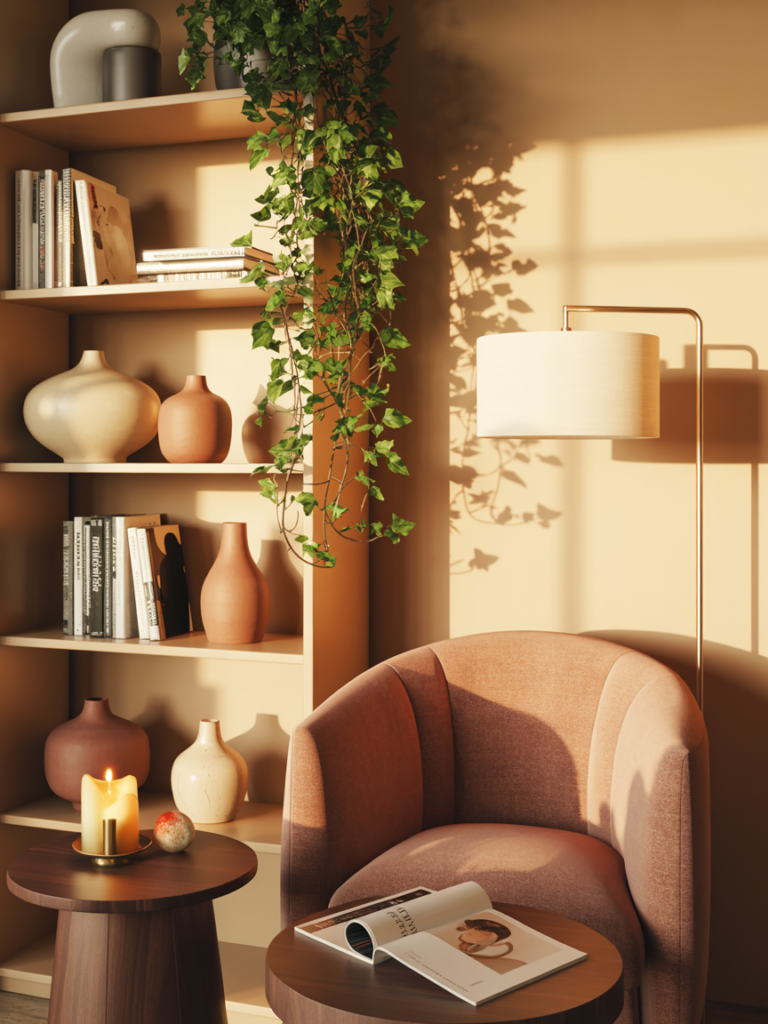
In modern interiors, plants work best when they’re chosen with some editorial restraint rather than crowded in chaotically. One large statement plant — a fiddle-leaf fig, a Monstera deliciosa, a Birds of Paradise — can serve as an organic sculptural element, particularly in a corner that needs visual weight. A cluster of smaller plants in varying heights on a console table or window ledge creates rhythm without clutter. Trailing plants like pothos or string of pearls work beautifully on high shelves, softening those clean modern lines in the most satisfying way.
Modern planters in matte ceramic, textured terracotta, or brushed metal complement the overall aesthetic without competing with it. Anthropologie, The White Company in the UK, and West Elm in both markets carry planters that are genuinely worth the investment as objects in their own right.
8. Gallery Walls That Feel Curated, Not Chaotic
A gallery wall done well is one of the most personal and impactful things you can add to a modern living room. Done poorly, it looks like an accident. The difference lies almost entirely in intentionality — matching frame finishes, a consistent color story within the artwork, and a thoughtful arrangement tested on the floor before a single nail goes into the wall.
For modern apartments, gallery walls with uniform or tonal frames — all black, all natural wood, all brushed brass — create the visual cohesion that the modern aesthetic requires. The art itself can vary in style and medium (photography, illustration, abstract prints, typography) as long as the framing unifies the collection. Odd numbers of pieces tend to feel more dynamic than even groupings. And leaving slightly more space between frames than feels natural gives each piece room to breathe and registers as intentional rather than cramped.
Downloadable art prints — from designers on Etsy and Society6 — have made building a beautiful gallery wall surprisingly affordable. You can print locally at a print shop in your city, frame with off-the-shelf options, and create a wall that looks entirely bespoke.
9. Storage Solutions That Double as Style Statements
In a modern apartment, storage isn’t something you hide — it’s something you design. The days of shoving everything behind closed cabinet doors are fading, replaced by a much more satisfying approach: curated open storage that is both functional and visually interesting.
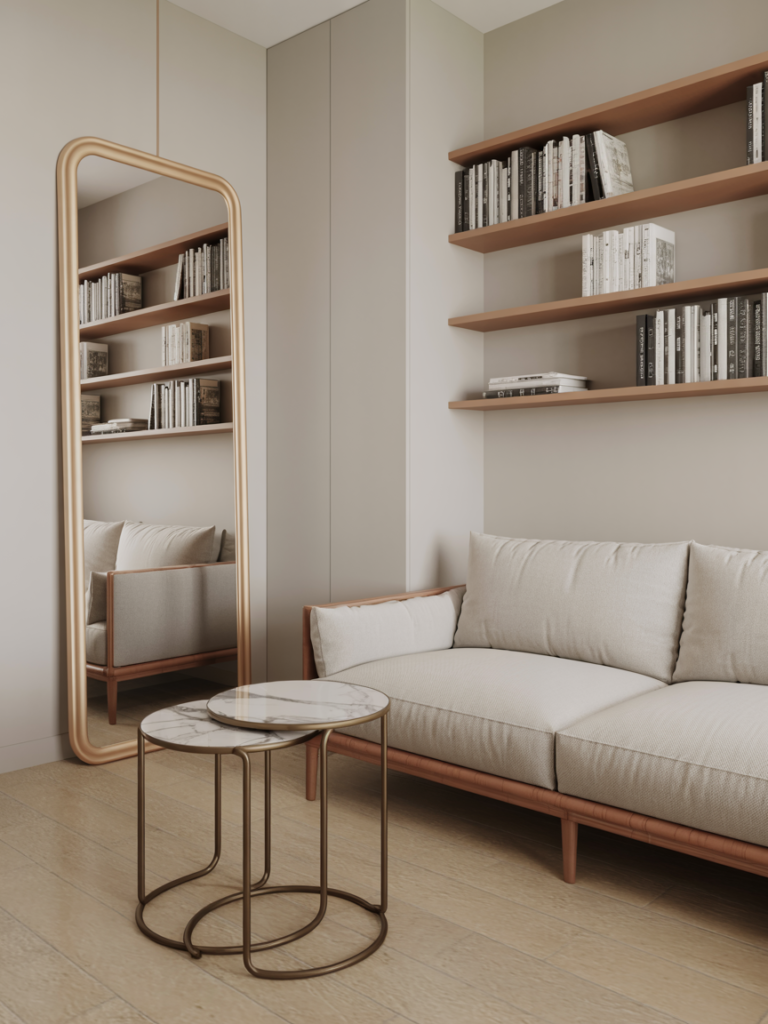
Floating shelves in natural wood or painted a shade deeper than your walls add dimension and display space without consuming floor area. The key to styling them in a modern context is the edit — books (organized by color or size for visual rhythm), one or two meaningful objects, a small plant, and deliberately left negative space. That empty space is doing important work: it signals confidence and calm rather than desperation to fill every inch.
A media console or TV unit is another storage opportunity in most living rooms. Low, long media units in walnut or dark oak are a modern classic for good reason — they anchor the TV without dominating the room, and their horizontal line adds visual stability. Wicker or rattan baskets tucked into open shelving bring warmth and texture while corralling the inevitable clutter of remote controls, chargers, and blankets.
“Your home should tell the story of who you are, not who you think you should be.”
10. Color Psychology: Choosing a Palette That Serves Your Mood
The living room is where you unwind at the end of a long day, host the people you love most, and spend quiet Sunday mornings with coffee and a book. The colors in this room have a measurable effect on how you feel in it — and modern interior design gives you permission to be both thoughtful and bold about that.
Warm neutrals like terracotta, warm white, and sand create rooms that feel enveloping and restful — deeply popular in both US and UK interiors right now. Sage green and other muted botanicals bring a sense of calm and connection to the natural world. Navy or deep charcoal feature walls in a modern living room add drama without sacrificing sophistication. And if you’re drawn to lighter, brighter tones, soft blush or warm ivory walls with rich wood accents strike an enduringly beautiful balance.
Painting is one of the most transformative and affordable updates you can make — even as a renter, many landlords will allow painting if you agree to return the walls to their original color. Brands like Farrow & Ball and Little Greene in the UK, and Sherwin-Williams and Benjamin Moore in the US, offer thoughtfully curated palettes that take much of the guesswork out of selecting a color that will actually work in your light conditions.
11. The Personal Touches That Elevate a Room From Beautiful to Meaningful
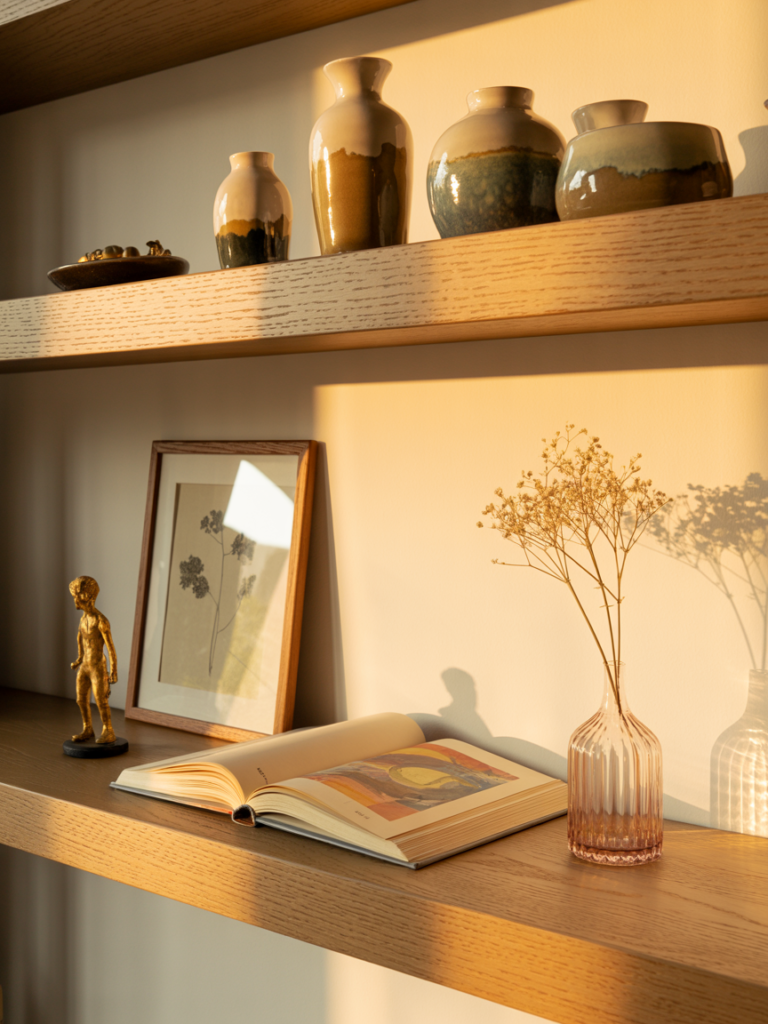
This is the part that no interior designer can prescribe for you — and it’s the most important part of all. A modern living room that feels truly extraordinary is always one where the personality of the person who lives there is visible and present. Not shouted, not cluttered — but quietly, confidently expressed.
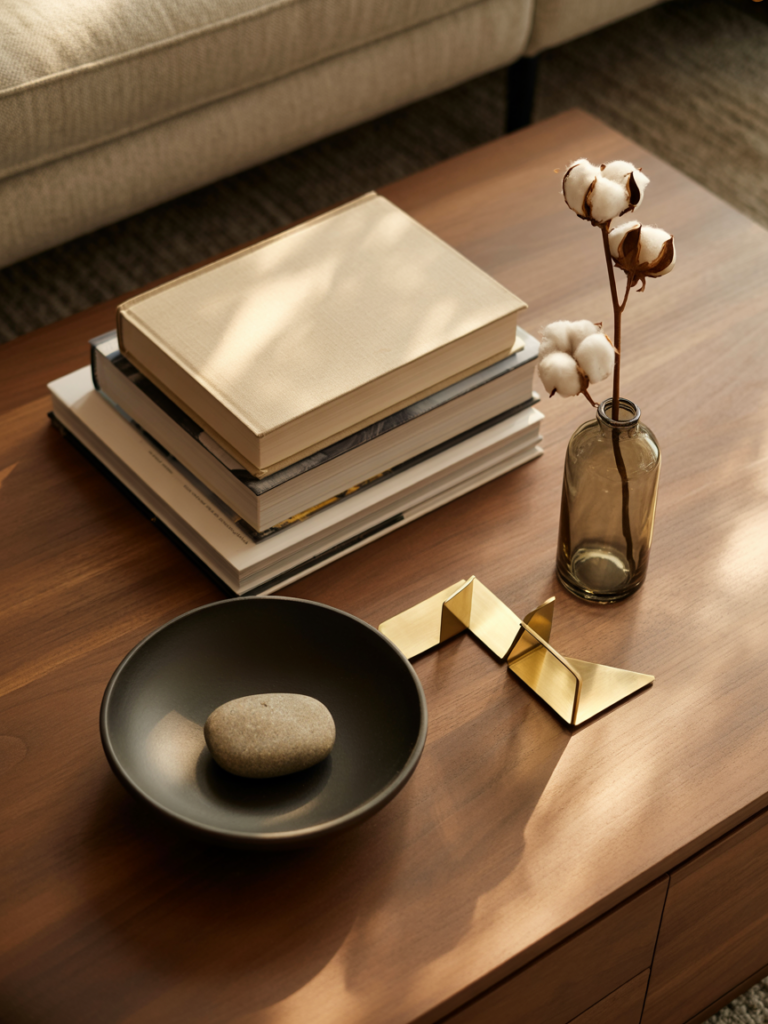
It might be a small sculpture you bought at a market in Barcelona. A stack of design books you’ve actually read cover to cover. A photograph of your grandmother’s kitchen enlarged and framed above the fireplace. A hand-painted ceramic bowl from a local artist that holds your keys or a single beautiful piece of fruit. These objects don’t just decorate a room — they tell a story. They make a visitor curious. They make you smile when you catch them from across the room on an ordinary Tuesday evening.
Don’t rush this layer of decoration. It accumulates beautifully over time, and a room that is 90% finished with space for meaningful objects to appear gradually is far more interesting than one that was completed in a single shopping trip.
12. Keeping It Fresh: Seasonal Updates That Cost Almost Nothing
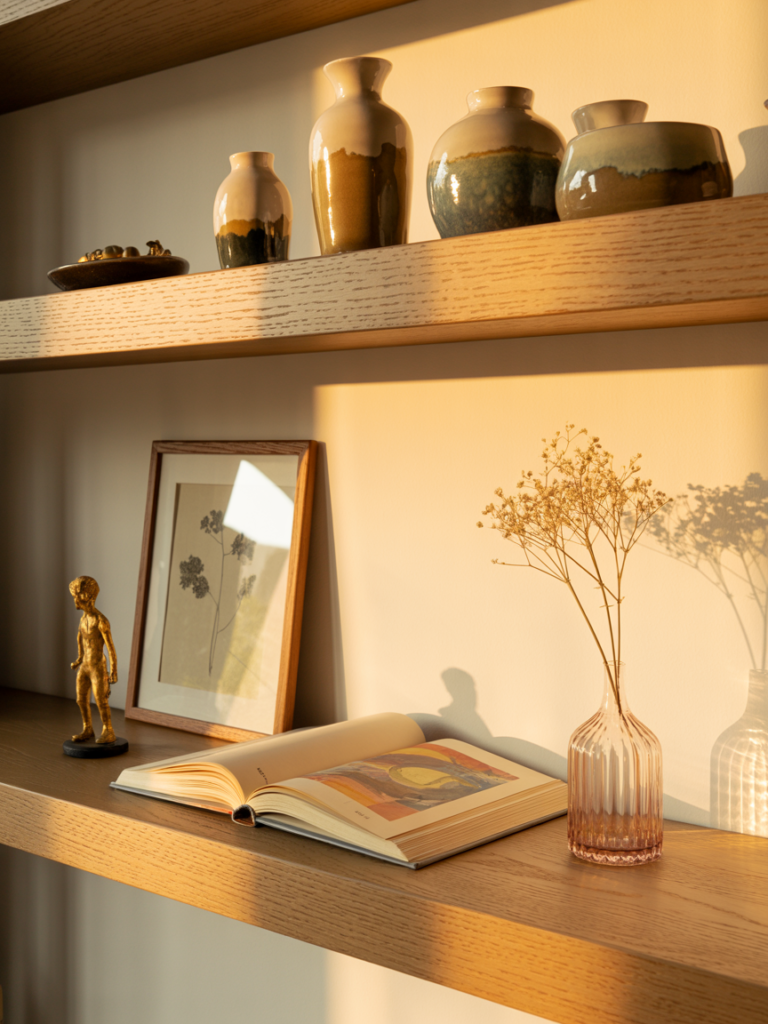
One of the quietest joys of apartment living is the ability to shift and refresh your space seasonally — without a major renovation or significant spend. Modern interiors, with their neutral bases and clean foundations, are perfectly designed for this kind of gentle evolution.
In autumn and winter, layer in warmth: a chunky knit throw in caramel or cream, heavier curtains in deep linen or velvet, an extra scatter cushion or two in burnt orange or forest green, candles clustered on the coffee table or mantle. In spring and summer, strip it back: lighter cushions, fresh flowers from the market, a woven rattan tray, curtains in a lighter fabric that moves beautifully in an open window. These small, intentional updates keep your living room feeling current and alive without requiring anything more than a little thoughtfulness and a willingness to rotate what you display.
The modern living room isn’t a finished destination — it’s an ongoing, evolving relationship between you and your space.
—
🌿 How to Take Care of Your Modern Living Room Decor
Maintaining a modern living room that continues to look beautiful and feel intentional takes less effort than you might think — but it does take consistency.
First, build a quick weekly reset habit into your routine. Five minutes every Sunday evening to plump cushions, clear surfaces of accumulated clutter, wipe down the coffee table, and return objects to their intended places. This tiny ritual makes a disproportionate difference to how your room feels day-to-day.
Second, care for your textiles regularly. Rotating cushion covers and washing throws seasonally keeps them looking fresh and extends their life significantly. Vacuum your sofa — particularly important for bouclé and linen — and address any spills promptly with a gentle upholstery cleaner.
Third, tend to your plants consistently. A wilting, neglected plant does more damage to a room’s atmosphere than almost anything else. Research the needs of each variety you choose, build a simple watering schedule, and dust the leaves occasionally — dusty leaves are both sad and bad for the plant.
Fourth, edit rather than accumulate. Every few months, do a gentle audit of your surfaces and shelves. Remove anything that’s crept in without intention, donate what no longer serves the space, and allow a little negative space to return. Modern interiors breathe best when they’re not overloaded.
—
❓ FAQ
Q: How do I make a rented apartment living room look modern without damaging the walls or losing my deposit? A: There are more options than most renters realize. Command strips and adhesive hooks have become genuinely reliable for lighter artwork and shelving. Removable wallpaper in modern patterns or textures can transform an accent wall with zero damage. Large-scale area rugs over carpet or existing flooring dramatically change the feel of a room. And furniture, lighting, plants, and textiles do the heavy lifting without touching a wall at all.
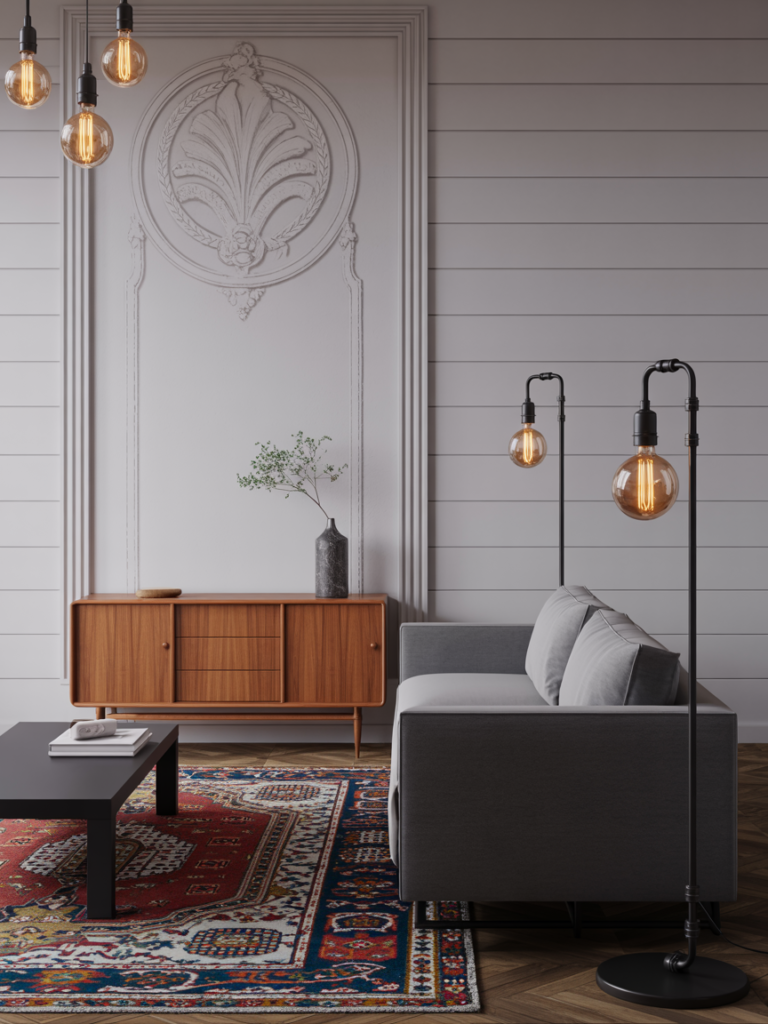
Q: What’s the best way to mix modern decor with older or antique pieces I already own? A: This is actually where modern interiors shine — a single statement antique or vintage piece in an otherwise contemporary room becomes an instant focal point and adds the kind of character that can’t be bought new. The key is contrast: an ornate gilt mirror above a minimalist console, a vintage Persian rug under a sleek Scandinavian sofa. Let the modern elements provide the structure and let the older piece provide the story.
Q: How do I choose the right coffee table for a modern apartment living room? A: Consider scale first — your coffee table should be approximately two-thirds the length of your sofa and sit at a comfortable height for reaching from the sofa (roughly equal to sofa seat height or slightly lower). For modern apartments, materials like marble, dark wood, cane, or glass all work well. Round tables are a brilliant choice in smaller rooms because they eliminate sharp corners and improve traffic flow, which makes the space feel more generous.
—
💭 Final Thought
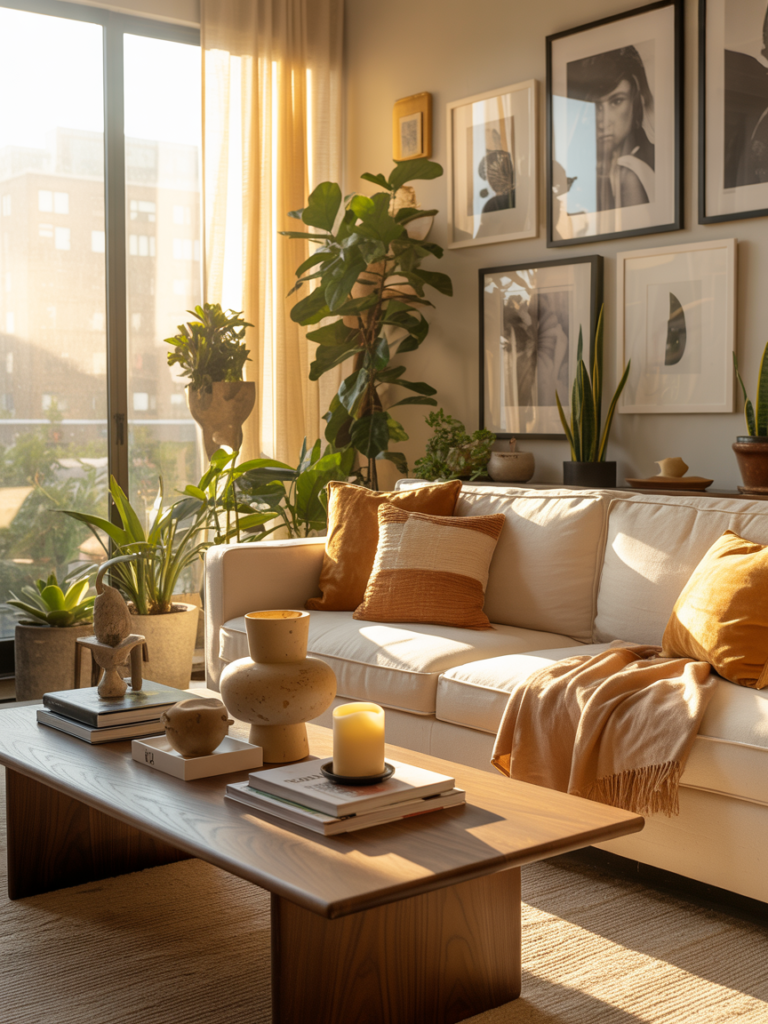
Your apartment living room — whether it’s 400 square feet in East London or 600 in Seattle — has the capacity to be one of the most beautiful spaces you’ve ever inhabited. Not because of its size, or its original features, or how much you’ve spent on furniture, but because of the intention you bring to it. The care. The small choices made over time that accumulate into a room that feels, unmistakably, like you.
So as you start — or continue — this wonderful process of making your living room your own, here’s the question worth sitting with: What feeling do you most want to have when you walk through your front door at the end of a long day, and is your living room currently giving you that feeling?