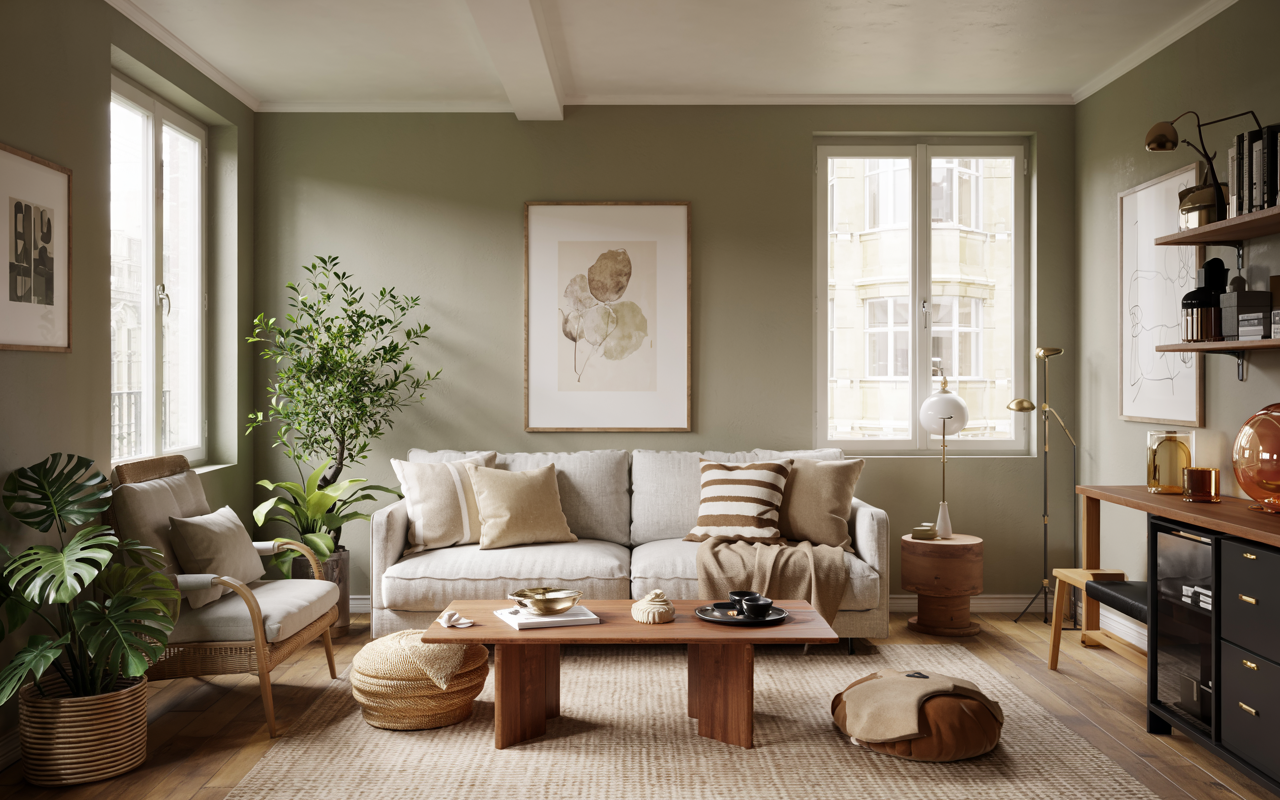
Small Modern Living Room Ideas That Will Make Your Apartment Feel Like a Dream Home
There’s a particular kind of magic that happens when a small space is decorated with intention — when every corner breathes, every piece of furniture earns its spot, and the room feels layered, warm, and undeniably you. If you’re living in a city apartment in London, Chicago, Manchester, or New York and wondering how to make your compact living room feel anything other than cramped, this is the guide you’ve been waiting for.
—
1. Why Small Living Rooms Are Actually a Designer’s Secret Weapon
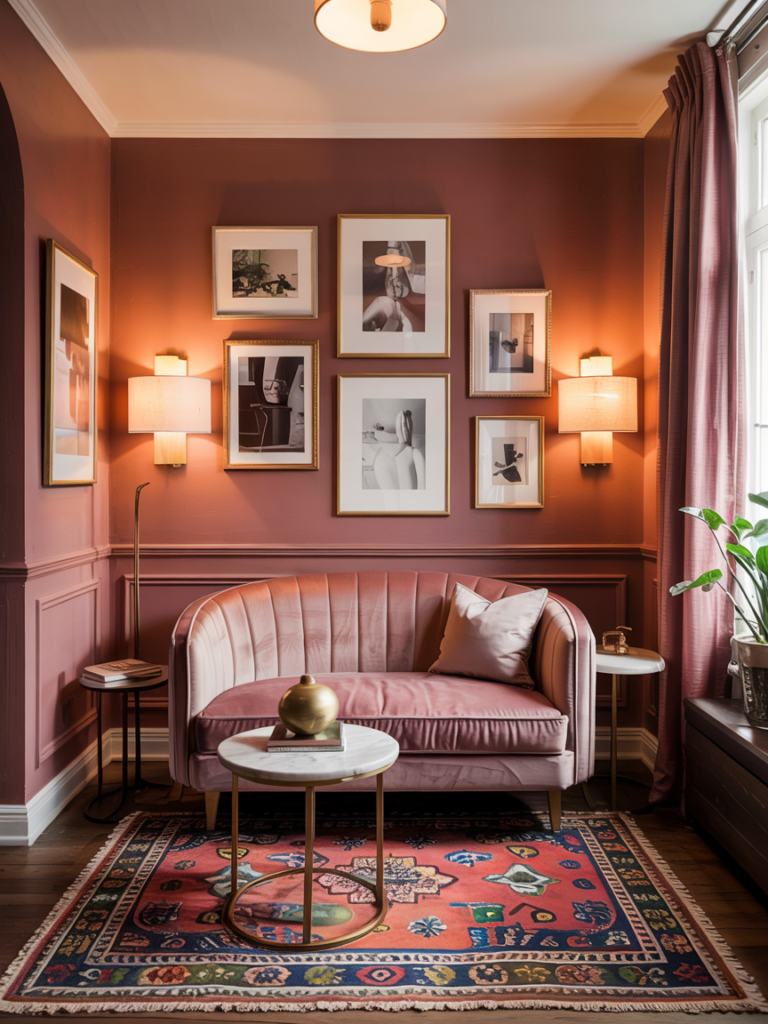
Here’s something interior designers quietly know that the rest of us often miss: small rooms are easier to get right than large ones. When you have a sprawling open-plan space, creating intimacy and cohesion is genuinely difficult. But in a compact apartment living room, every element is close together — which means warmth, conversation, and coziness happen almost automatically when you set the space up thoughtfully.
The modern design movement has been quietly championing small-space living for years, and for good reason. Think of the stunning pied-à-terres in Paris, the clever studio apartments in Manhattan, the terraced house front rooms in Bristol or Leeds. None of them are vast. All of them can be breathtaking.
“The size of your room has nothing to do with the size of your style.”
The shift in mindset here is everything. Stop apologizing for your square footage and start seeing it as a creative constraint — the kind that pushes brilliant designers to their best work. Your apartment living room isn’t a limitation. It’s a canvas.
2. The One Color Rule That Changes Everything in a Small Space
Color psychology is genuinely fascinating when it comes to small modern living rooms, and there’s one principle that interior designers return to again and again: light, consistent color palettes make rooms feel exponentially larger. This doesn’t mean everything needs to be white — in fact, a flat, stark white can feel clinical and cold, especially in UK homes where natural light is often softer.
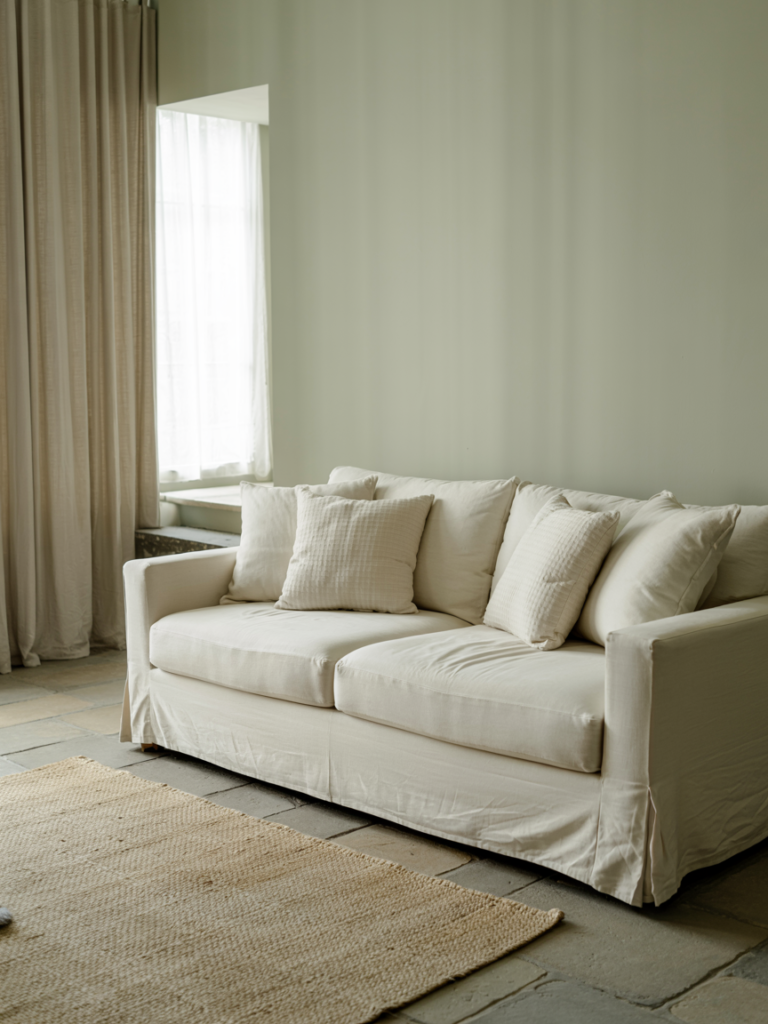
Instead, consider what designers call “tonal decorating” — layering three or four shades from the same color family. A soft sage green on the walls paired with an ivory linen sofa, stone-colored curtains, and warm cream cushions creates depth without visual clutter. Similarly, warm greiges (that beautiful grey-beige blend that’s dominated both US and UK interiors for the past few years) work brilliantly because they reflect light while still feeling grounded and sophisticated.
If you’re renting and can’t paint, don’t panic. Large format art prints in tonal shades, removable peel-and-stick wallpaper in soft neutrals, and a thoughtfully chosen rug can shift the entire color temperature of a room without touching a single wall with permanent paint.
3. Furniture That Does Double Duty — and Looks Good Doing It
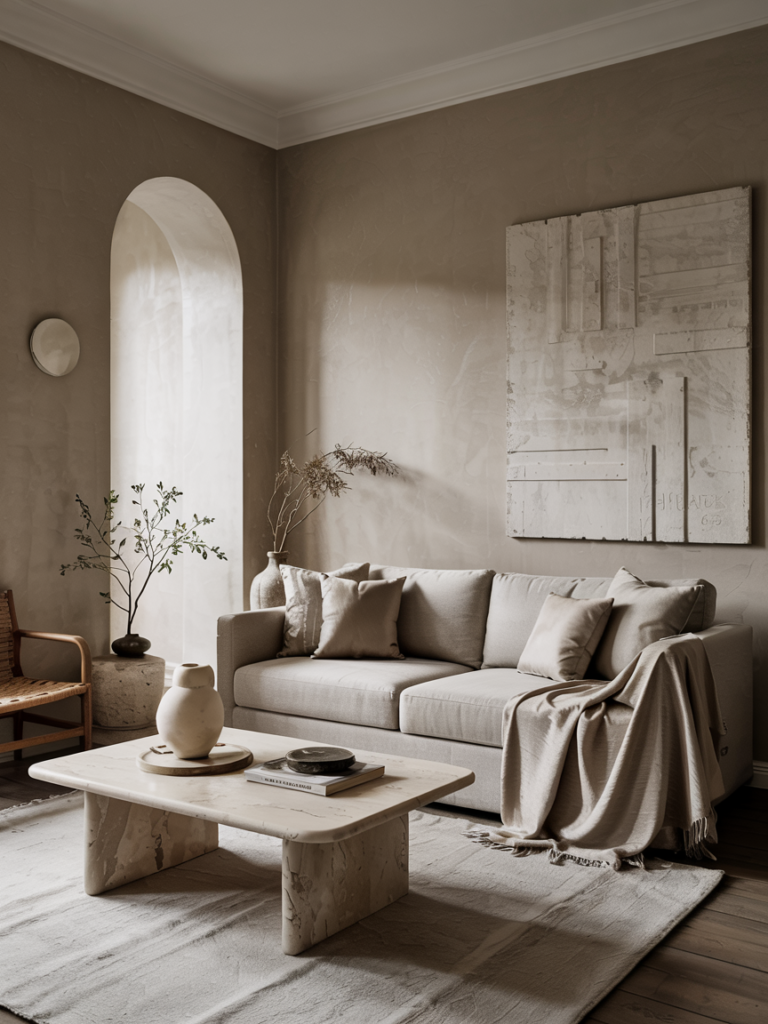
In a small apartment living room, every single piece of furniture needs to justify its presence — and ideally, it should do more than one job. This is the heartbeat of modern small-space design. A beautiful ottoman with hidden storage underneath. A console table tucked behind the sofa that doubles as a workspace. A nesting side table set that can expand when you have guests and tuck away when you don’t.
The sofa is usually the largest investment in a living room, and in a small space, getting this right matters enormously. A two-seater or a compact three-seater with a low back and slim legs will feel airier and less imposing than a traditional deep-cushioned sectional. Brands like IKEA, John Lewis, and West Elm all offer beautifully designed compact sofas that don’t sacrifice comfort for scale.
Lift-top coffee tables are a game-changer for apartment living — they can function as a dining surface when needed, provide hidden storage, and look sleek enough to photograph beautifully. If you’ve been on the fence about investing in one, consider this your gentle nudge.
4. The Myth of the Small Rug (and Why You’re Probably Getting This Wrong)
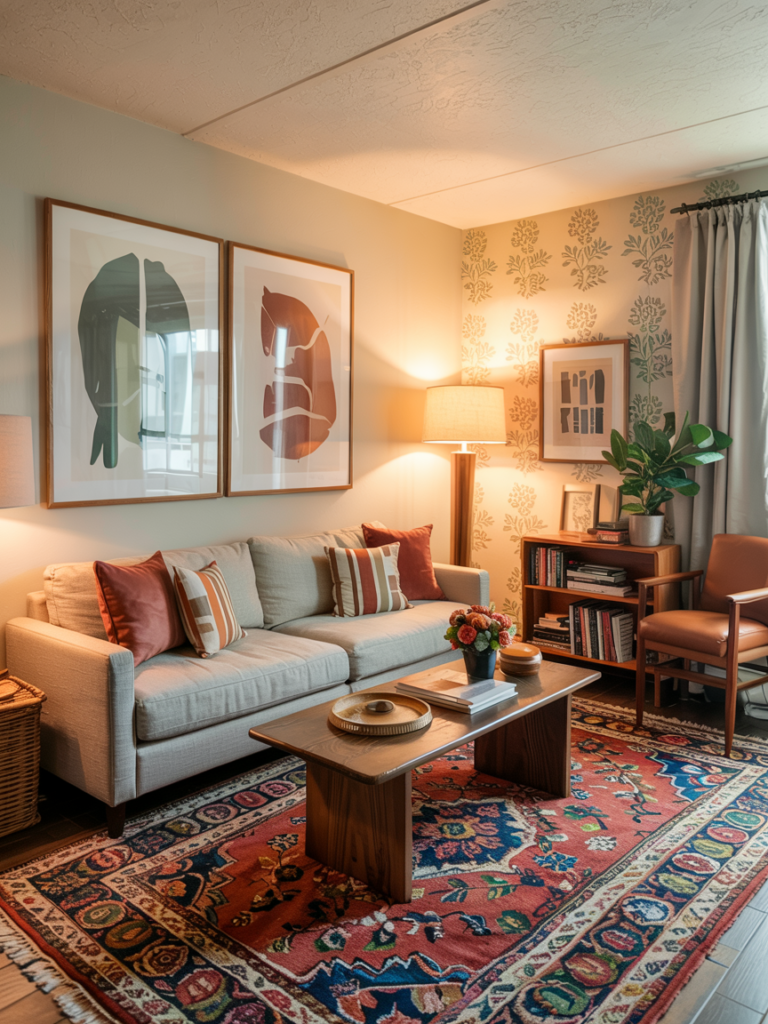
This is one of the most common mistakes people make in small living rooms, and it’s worth addressing directly: buying a rug that’s too small. It seems counterintuitive — surely a smaller rug for a smaller room makes sense? But actually, a rug that’s too small makes a room feel more fragmented and disjointed, like the furniture is floating on an island with no connection to each other.
The rule of thumb that most interior designers follow is that your rug should be large enough for at least the front legs of all your seating to rest on it. In a small modern living room, this anchors the seating area, creates visual cohesion, and — crucially — makes the room feel more intentional and complete.
For apartments, a 5×8 foot rug (or roughly 150x240cm for UK readers) is often the sweet spot for small living rooms. Go for a low-pile design to avoid the space feeling heavy, and choose a pattern with light, open motifs rather than dense, dark designs that will visually shrink the room.
“A well-chosen rug doesn’t just decorate a room — it defines it.”
5. Light Layering: The Secret Language of Cozy Modern Interiors
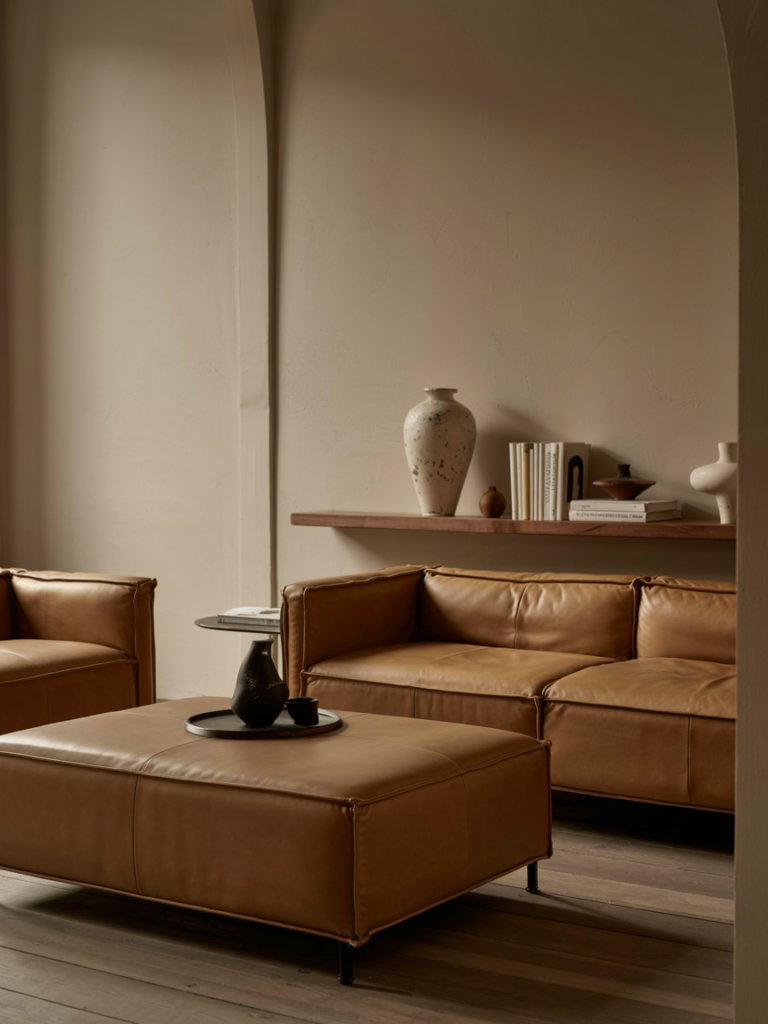
Walk into any beautifully styled apartment living room and pay close attention to the lighting. You’ll rarely find a single overhead fixture doing all the work. Instead, you’ll notice pools of warm light — a table lamp casting a golden glow in one corner, a floor lamp arching gracefully over a reading chair, candles on the coffee table creating flicker and intimacy.
This is called light layering, and it’s one of the most transformative techniques you can apply to a small modern living room without spending a fortune. A single harsh overhead light flattens a room and makes it feel like a waiting room. Multiple warm light sources at different heights create depth, atmosphere, and that elusive quality every Pinterest board tries to capture: coziness.
For apartment dwellers, plug-in wall sconces are a brilliant solution — they give the elevated look of hardwired wall lighting without the need for an electrician or landlord permission. Brands like Etsy sellers, IKEA, and Anthropologie carry beautiful plug-in options that genuinely look like built-in fixtures when styled well.
Aim for bulbs with a color temperature between 2700K and 3000K — this warm, golden-white range is far more flattering and inviting than the bluish-white of daylight bulbs, which can make even the most carefully decorated room feel cold.
6. Vertical Space: The Untapped Real Estate Every Small Room Has
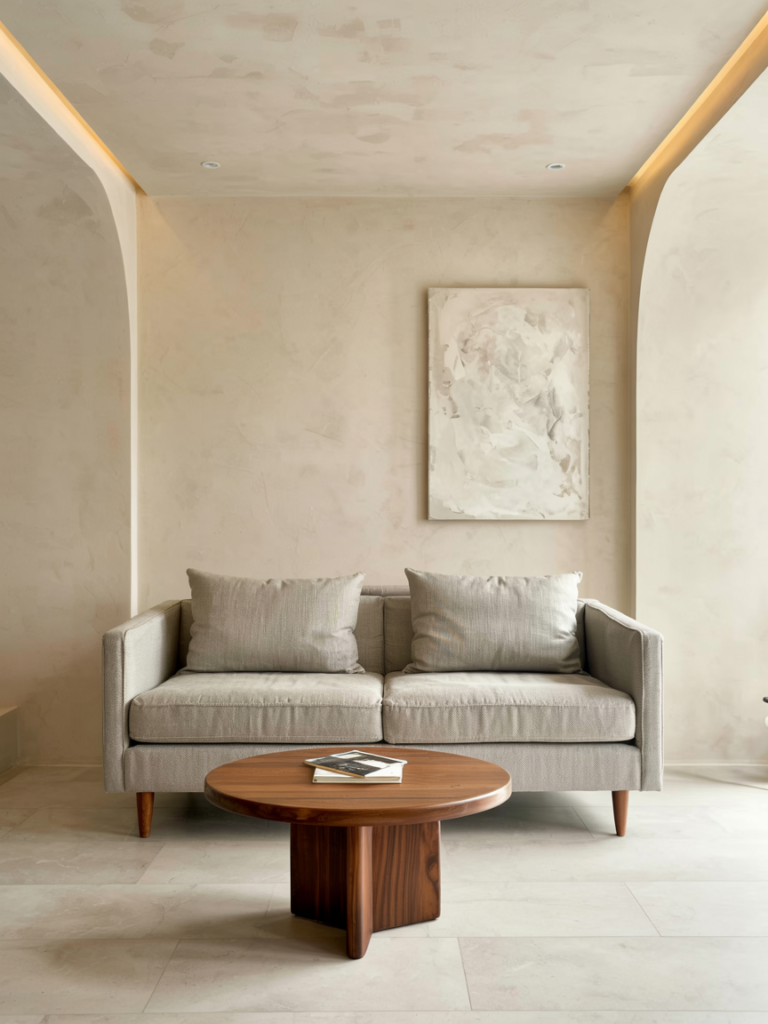
When floor space is limited, the answer is almost always to look up. Vertical space is the most consistently underutilized asset in small apartment living rooms, and learning to use it effectively can genuinely transform how a room feels and functions.
Tall bookshelves that reach close to the ceiling draw the eye upward, creating the illusion of height and making ceilings feel higher than they actually are. This works beautifully in both US apartments with standard 8-foot ceilings and UK Victorian conversions where ceiling heights can vary dramatically from room to room.
Gallery walls are another powerful vertical tool — but for a modern, curated feel, consider a single column of three to five frames rather than a sprawling salon-style arrangement. This creates a strong visual line without overwhelming the wall or making the room feel busier than it is. Keep frames in consistent metal or wood tones for a cohesive, intentional look that feels more designer than DIY.
7. The Power of Mirrors — Used With Real Intention
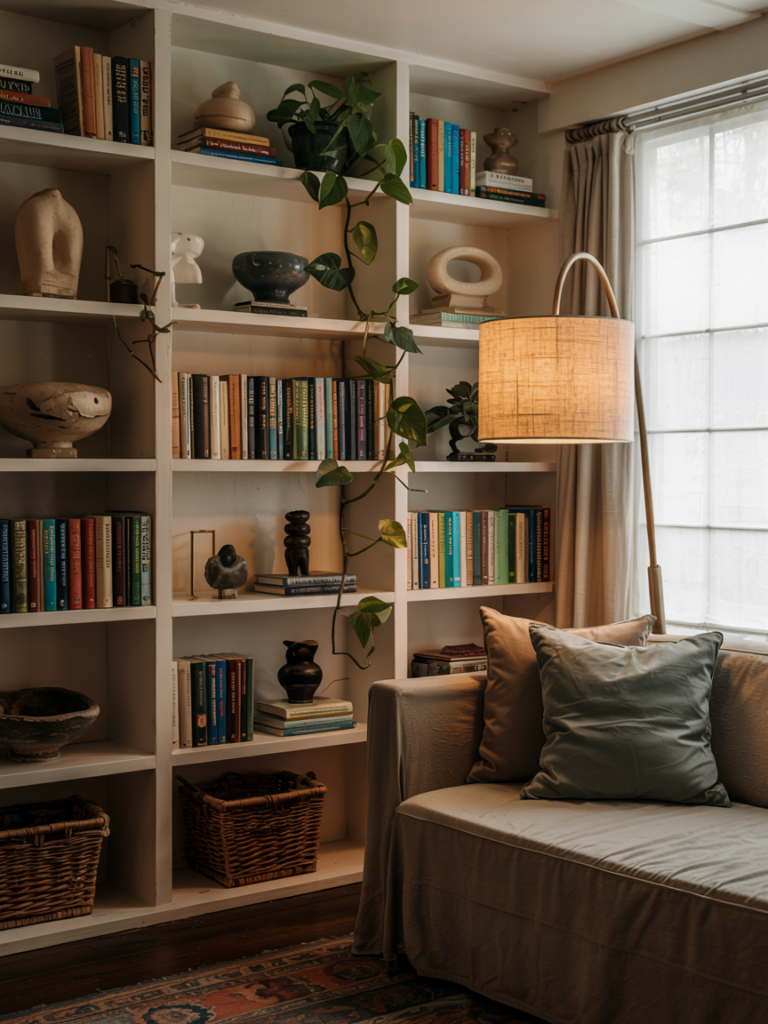
Mirrors in small spaces are almost a design cliché at this point, but that’s only because they genuinely work. The key is using them with intention rather than simply hanging the biggest mirror you can find and hoping for the best.
A large mirror placed directly opposite a window is the classic technique, and it works because it essentially doubles the natural light in the room and creates the impression of a second window — or even a doorway leading to another space. In north-facing London flats or darker Chicago apartments where natural light is precious, this can be genuinely life-changing.
Leaning a large floor mirror against a wall rather than hanging it creates a more casual, lived-in feel that suits modern apartment aesthetics perfectly. Antiqued or smoked glass mirrors have been trending strongly in both US and UK interiors — they add warmth and character without reflecting too harshly, which can feel overwhelming in a small space.
8. Plants as Architecture — Not Just Decoration
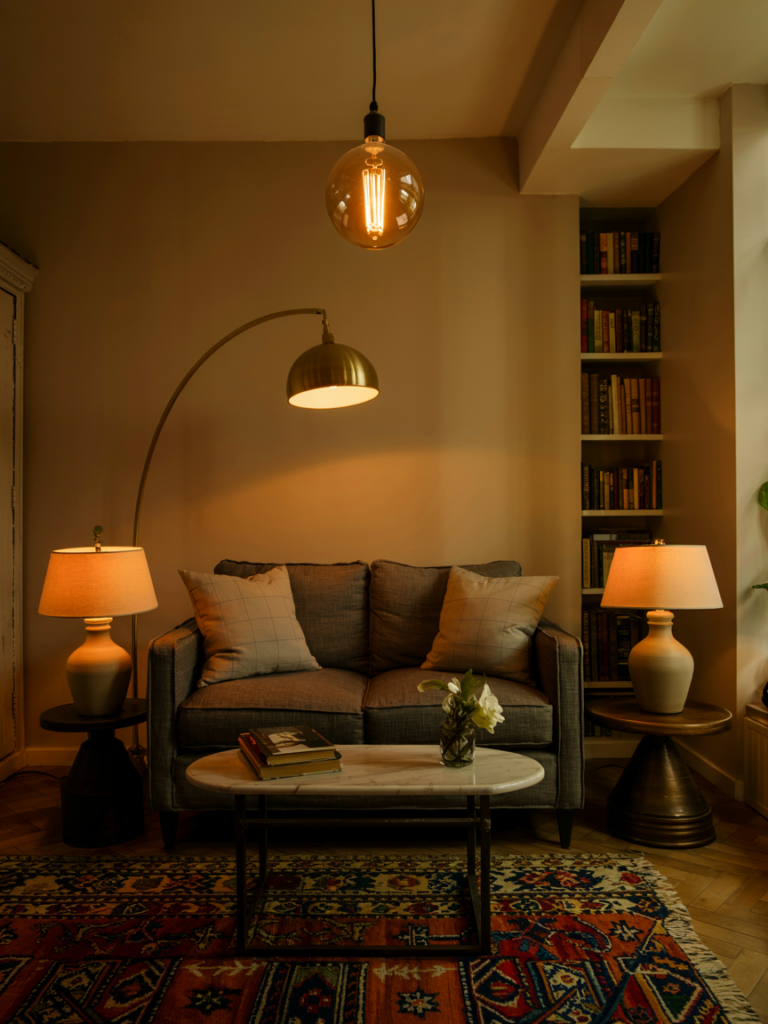
There’s a reason every beautifully styled living room you’ve ever saved on Pinterest has at least one well-placed plant. Greenery brings a room to life in a way that no cushion, throw, or art print can replicate — it adds organic texture, filters air, and creates the sense that a space is cared for and alive.
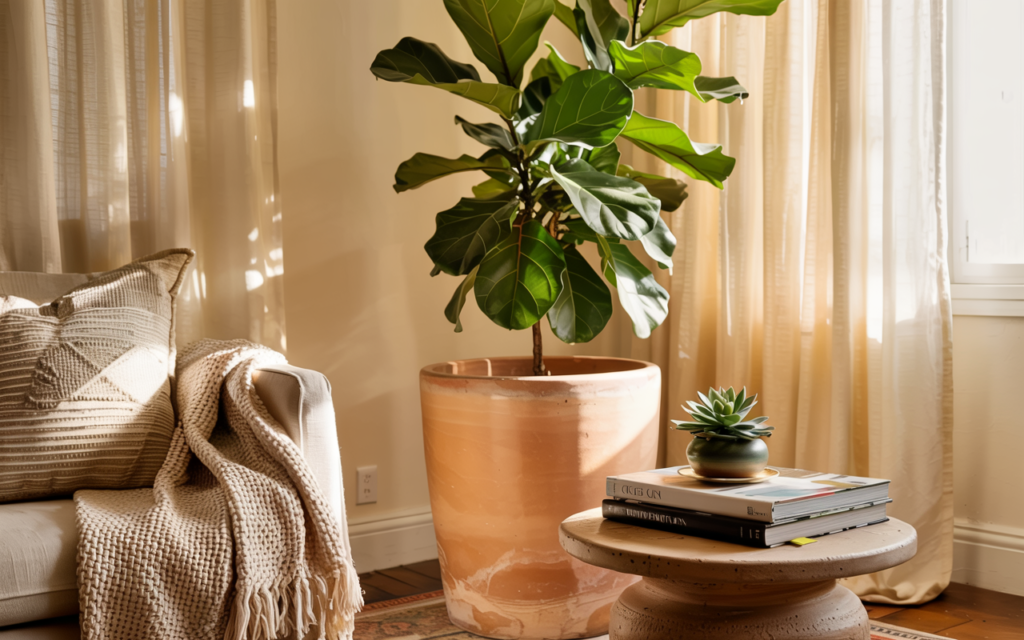
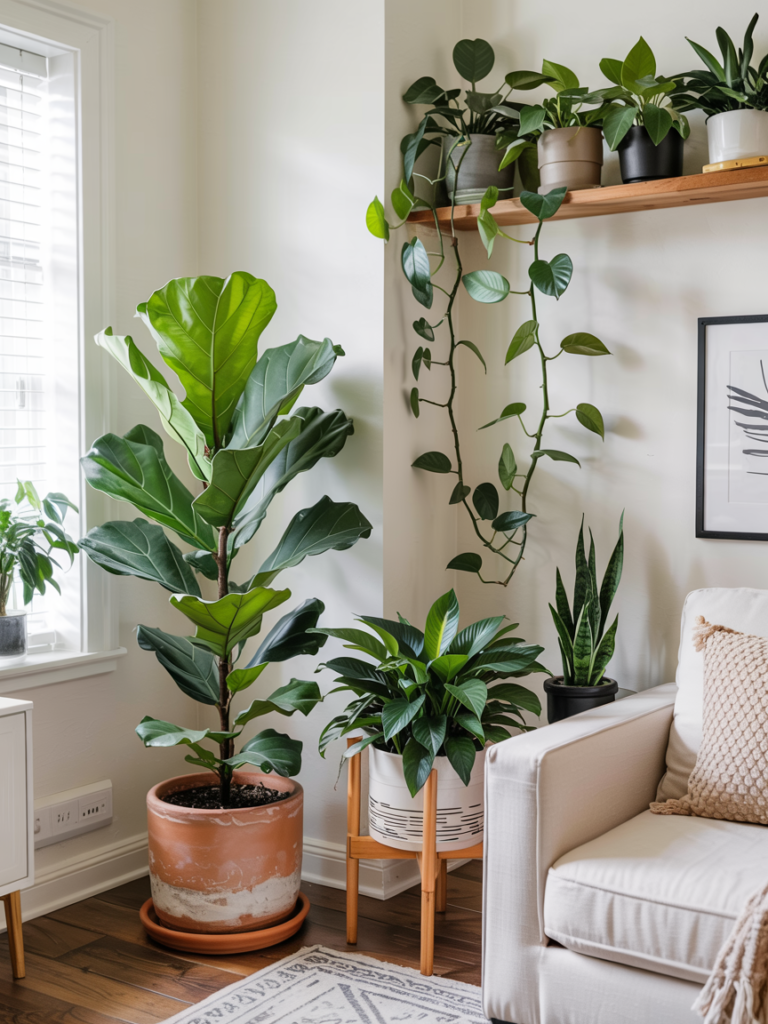
In a small modern living room, choose your plants strategically. A tall fiddle leaf fig or a sculptural snake plant in a textured planter can serve almost as a piece of furniture — defining a corner and adding height. Trailing pothos or string of pearls on a shelf or hanging planter adds softness and movement without taking up precious floor space.
“A room with plants is a room that breathes.”
For those who struggle with plant care (and there’s absolutely no shame in that), high-quality faux plants have improved dramatically in recent years. Brands like Nearly Natural and Amazon’s own-brand options offer convincingly realistic alternatives that give you the visual benefit without the maintenance anxiety.
9. The Art of Negative Space — Knowing When to Stop
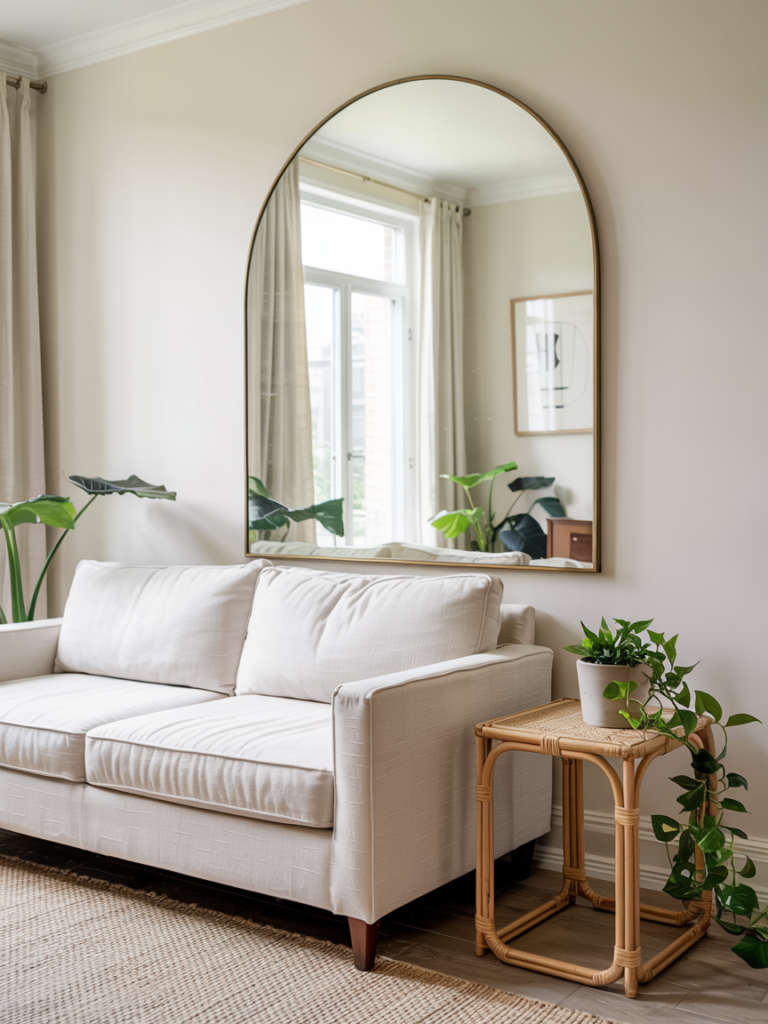
One of the most counterintuitive lessons in small-space design is that sometimes the most powerful thing you can add to a room is nothing. Negative space — the intentional empty areas in a room — allows the eye to rest, makes featured pieces feel more significant, and prevents the suffocating, cluttered feeling that plagues so many compact apartments.
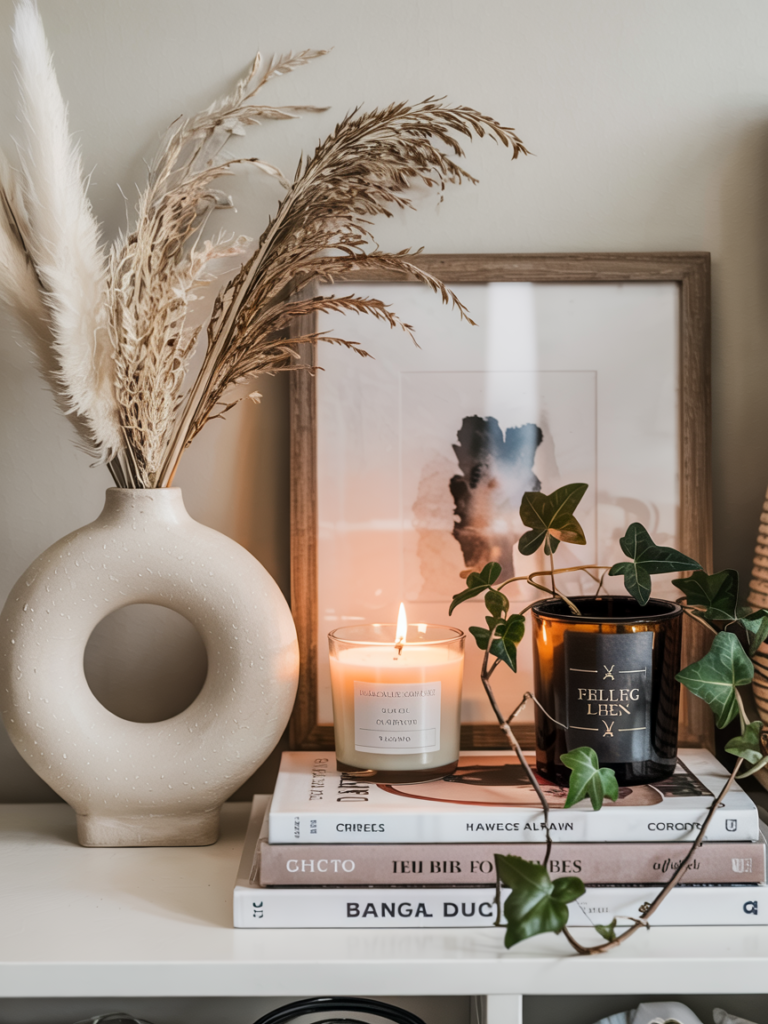
Modern design, in particular, celebrates restraint. A single beautiful ceramic vase on a shelf. Three books stacked with a small plant beside them. A coffee table with only a candle and a small tray. These deliberate choices feel more elevated and considered than a surface crowded with decorative objects, no matter how lovely those objects are individually.
The Marie Kondo influence is still very much present in US and UK home culture — that idea of keeping only what genuinely brings joy. In a small living room, this philosophy isn’t just emotionally satisfying; it’s functionally essential.
10. Curtains That Trick the Eye Into Seeing a Bigger Room
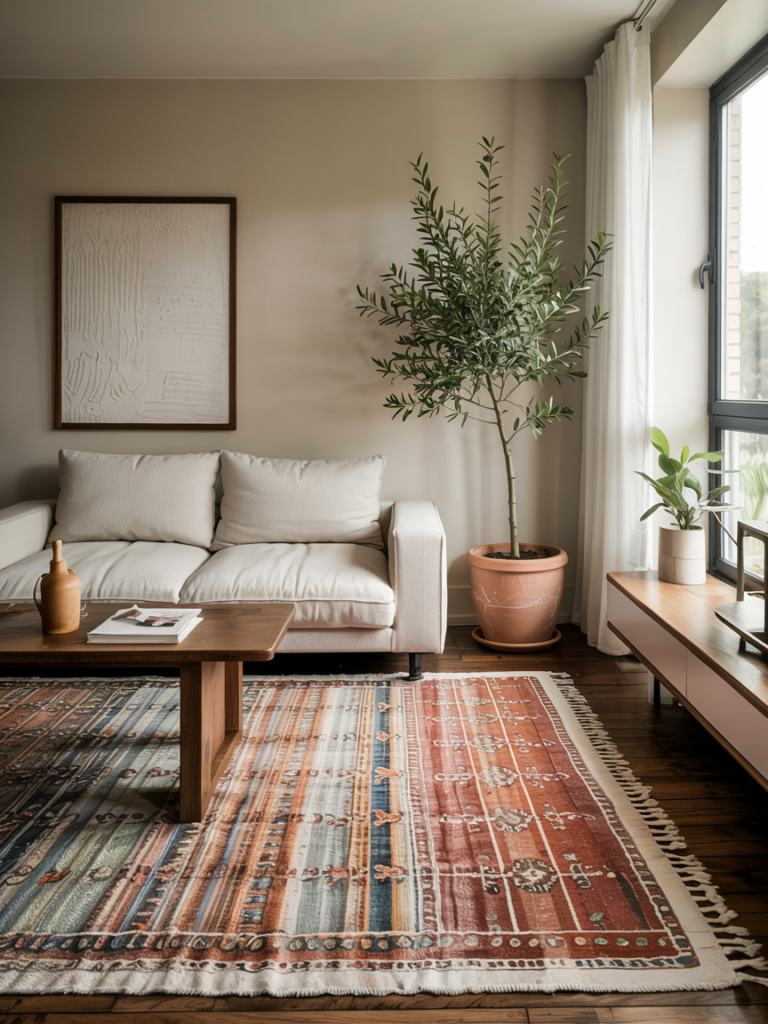
The way you hang your curtains can visually add or subtract several inches of perceived ceiling height — and in a small apartment living room, every inch matters. The technique is simple but consistently overlooked: hang your curtain rod as close to the ceiling as possible, and let the curtains fall all the way to the floor.
This creates an unbroken vertical line from ceiling to floor that makes the room feel taller, grander, and more intentionally designed. It’s a trick used constantly in show homes and staged apartments because it photographs beautifully and feels genuinely impressive in person.
For fabric, sheer linen or cotton in soft white or warm cream is almost always the right choice for a small modern living room. It allows natural light to filter through while maintaining privacy, and it moves gently in a breeze in a way that feels genuinely alive and inviting. Velvet curtains, while beautiful, can feel heavy in a small space — save those for larger rooms or use them as a single statement panel rather than full coverage.
11. Creating Zones in an Open-Plan Apartment Living Room
Many modern apartments, particularly newer builds in both the US and UK, feature open-plan layouts where the living room blurs into the kitchen or dining area. This can feel wonderfully spacious or chaotically undefined, depending on how you approach it.
Creating subtle zones without walls is an art form in itself. A rug anchors the living area. A pendant light above the dining table defines that zone. A bookshelf or a slim console table can act as a visual divider between spaces without blocking light or flow. These layered cues tell both you and your guests where the living room begins and ends — creating the psychological sense of separate spaces within a single room.
For renters, this is particularly empowering because all of these zoning techniques are completely reversible. You’re essentially curating the experience of the room through furniture placement and lighting rather than structural changes.
12. Personalizing Your Small Modern Living Room Without Cluttering It
This is, perhaps, the most important point of all — and the one that separates a beautifully styled apartment from one that feels like a showroom. Your living room should feel like you live there. Not in a messy, haphazard way, but in a warm, layered, personal way that makes guests immediately understand something about who you are.
The key is curating your personality rather than simply displaying it. Three meaningful books on a shelf rather than thirty. A single framed photograph that genuinely moves you rather than a cluster of unrelated prints. A throw blanket in your favorite color draped over the sofa arm. A small tray with items that reflect your interests — a particular candle scent, a beautiful object picked up on a trip, a handmade ceramic mug.
These small, intentional personal touches are what transform a room from a collection of furniture into a home. And in a small apartment, where every choice is magnified by proximity, getting this right doesn’t just make the room look better — it makes you feel genuinely, deeply comfortable in your own space.
—
🌿 How to Keep Your Small Modern Living Room Looking Its Best
Maintaining the feeling of a well-styled small living room is an ongoing practice, not a one-time project. Here are a few habits that genuinely make a difference.
Edit regularly — once a month, walk through the room with fresh eyes and remove anything that no longer feels intentional. Small spaces accumulate clutter faster than large ones, and regular editing keeps the room feeling considered. Rotate your accessories seasonally to keep the space feeling fresh without buying anything new — swap cushion covers, swap throws, bring in different plants or flowers. Clean your windows more often than you think necessary; in a small living room, every bit of natural light matters enormously. Use storage solutions that are beautiful as well as functional — a woven basket, a linen-lined box, a wooden crate — so that storage itself becomes part of the decor rather than an eyesore. Finally, keep the floor as clear as possible. In a small room, visible floor space reads as generous space, and anything piled on the floor shrinks the room visually and emotionally.
—
❓ FAQ
Q: What’s the best sofa size for a small modern apartment living room? A: Generally, a two-seater or a compact three-seater with a depth of no more than 35 inches (about 90cm) works best in a small living room. Look for sofas with slender legs and low backs — they feel less imposing and allow more light to flow under and around them, which makes the room feel larger.
Q: Can dark colors work in a small living room? A: Absolutely — and when done well, they can feel incredibly sophisticated and dramatic rather than claustrophobic. The key is to use dark colors on a single accent wall rather than all four walls, balance them with light-colored furniture and plenty of layered lighting, and ensure the room has good natural light. Deep navy, forest green, and warm charcoal are all trending beautifully in both US and UK apartments right now.
Q: How do I make a small living room feel modern without it feeling cold? A: The balance between modern and warm is achieved through texture. Modern design often features clean lines and minimal clutter, but warmth comes from tactile materials — chunky knit throws, linen cushions, wooden accents, rattan baskets, soft rugs. Layer these natural textures into a clean, modern framework and the room will feel both contemporary and inviting.
—
💭 Final Thought
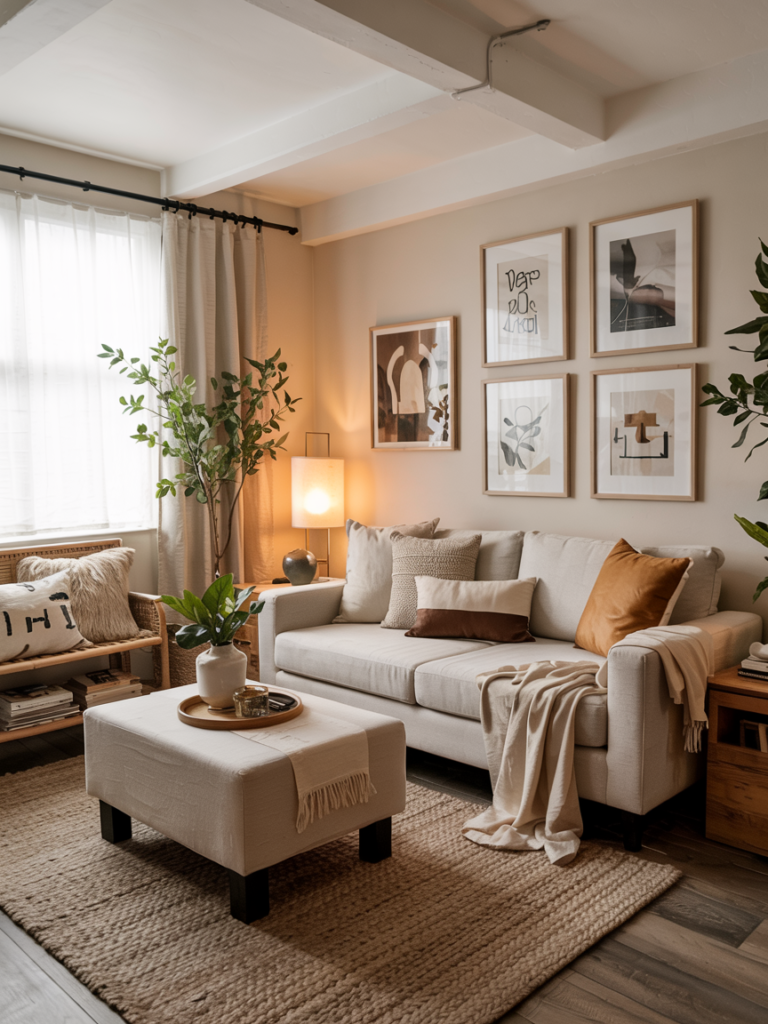
A small apartment living room isn’t a problem to be solved — it’s a space to be loved, layered, and made entirely your own. The most beautiful rooms aren’t the largest ones; they’re the ones that feel most thoughtfully inhabited. Every cushion placed with care, every lamp switched on at dusk, every plant tended to on a Sunday morning — these small acts of attention are what turn four walls into a home.
So as you scroll through endless Pinterest boards looking for your next source of inspiration, ask yourself this: what one small change could you make to your living room this weekend that would make you fall a little more in love with the space you already have?