Mid-Century Modern Apartment Living Room Decor Ideas That Will Make You Fall in Love With Your Space All Over Again
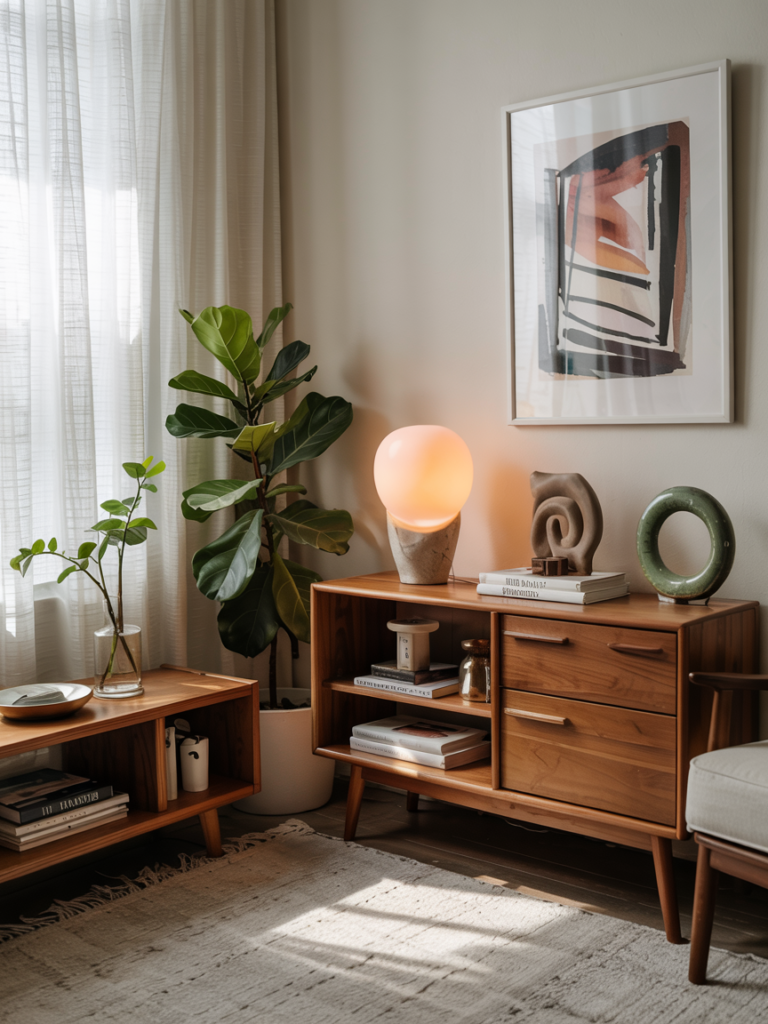
There’s something almost cinematic about a well-decorated mid-century modern living room — the clean lines, the warm walnut tones, the way a single sculptural lamp can make an entire corner feel intentional and alive. Whether you’re in a compact flat in London’s Hackney or a sunlit apartment in Portland, Oregon, this design movement has a remarkable gift: it makes even the smallest spaces feel curated, calm, and quietly extraordinary.
—
1. Why Mid-Century Modern Still Feels Incredibly Relevant Today
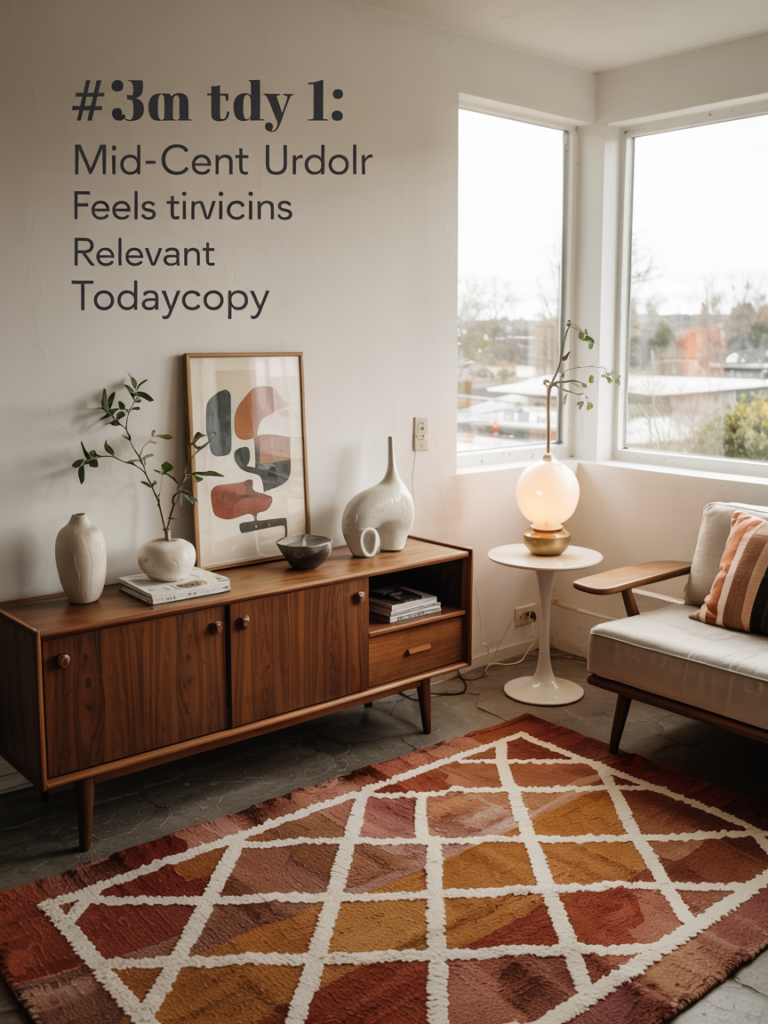
Here’s a question worth sitting with: why does a design style born in the 1940s and 50s feel more relevant than ever in 2025?
The answer is deceptively simple. Mid-century modern (MCM) was always about solving real problems — how do you create beautiful furniture that everyday families can actually live with? How do you bring the outdoors in without losing warmth? How do you make a modest space feel generous and considered? Those aren’t vintage questions. They’re the exact questions renters and homeowners in New York, Manchester, Chicago, and Edinburgh are asking right now.
The style emerged post-World War II when American and Scandinavian designers began rejecting the ornate excess of earlier decades. They wanted function married to beauty — pieces that worked hard and looked effortless doing it. Designers like Eames, Saarinen, and Bertoia became household names not because of luxury, but because of accessibility with elegance. And that legacy lives on every time someone pins a walnut sideboard or a tulip chair to their dream home board.
“Mid-century modern isn’t a trend. It’s a philosophy — beauty through purpose, comfort through simplicity.”
2. The Color Palette That Makes Every MCM Living Room Sing
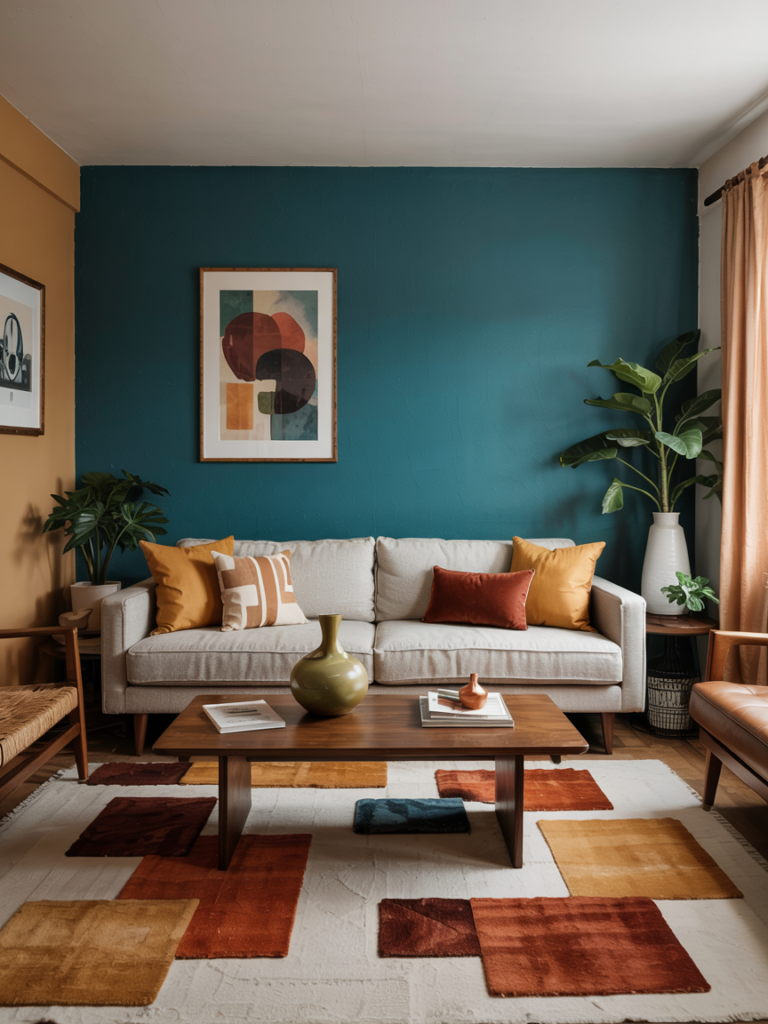
Color is where so many people get MCM wrong, and it’s such an easy mistake to make. You see “mid-century” and assume you need avocado green walls or burnt orange velvet sofas. And while those shades are absolutely part of the aesthetic, the real foundation of an MCM living room is far more nuanced.
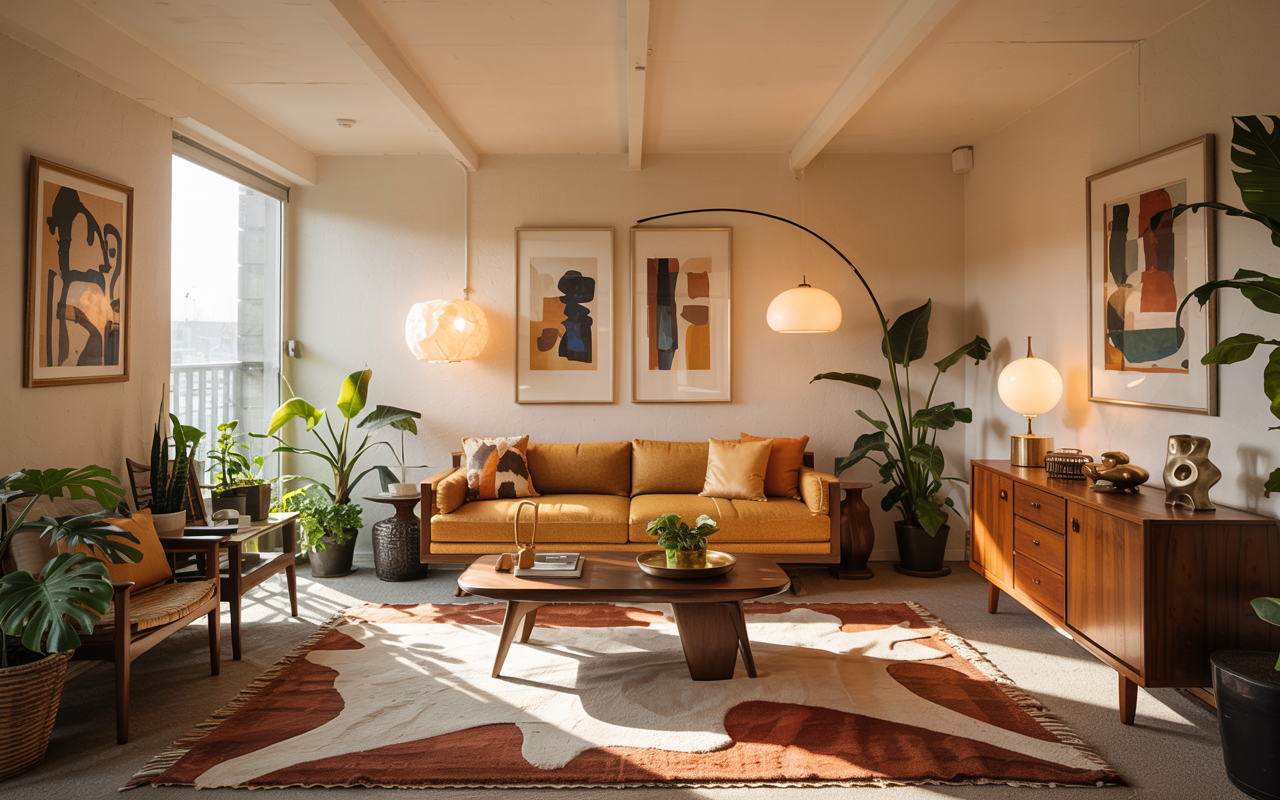
Start with a warm neutral base — think ivory, oatmeal, or a soft greige that catches the light beautifully at different times of day. From there, you build. Deep teal, mustard yellow, rust, olive green, and terracotta are your accent colors — the ones that appear in throw pillows, a single painted wall, or an area rug’s geometric pattern. What you’re creating is warmth through restraint.
In American apartments, where open-plan living is often the norm, this palette keeps spaces feeling cohesive even across large square footage. In British flats, where rooms tend to be more compartmentalized, these warmer tones work against the tendency toward dark or drafty-feeling rooms.
One practical tip: don’t be afraid of a single bold feature wall. A deep teal or forest green behind your sofa — especially against a light wood media unit — creates instant depth without making the space feel heavy.
3. Choosing the Right Sofa: The Piece That Anchors Everything
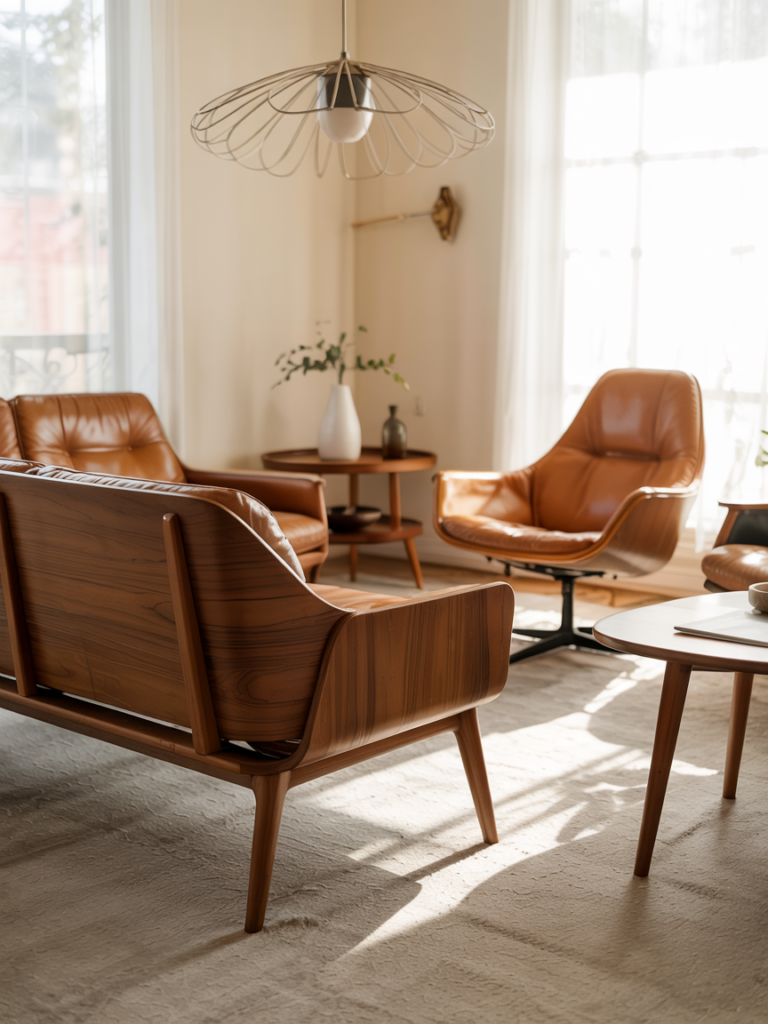
If there’s one furniture investment worth making in an MCM living room, it’s the sofa. Not because it needs to be expensive, but because it needs to be right. And “right” in mid-century modern terms means one specific thing: low to the ground with clean, simple lines.
The classic MCM sofa sits close to the floor, often with tapered wooden legs (walnut is the gold standard), a firm but comfortable cushion, and no fussy detailing. No nail-head trim. No tufting. No curved, overstuffed arms that eat up visual space. The profile is sleek and horizontal — it stretches across the room rather than piling upward.
In terms of fabric, you have beautiful options. Bouclé has had a massive resurgence and looks gorgeous in camel or cream. Velvet in teal, mustard, or sage gives you that rich mid-century jewel tone. Tweed and herringbone nod to both the American and British heritage of the era perfectly.
High street and mid-range finds from MADE, West Elm, Article, and even John Lewis often nail this silhouette without requiring you to hunt vintage showrooms — though if you can find an original Danish or American piece at a local estate sale or antique market, that story will always be worth more than the price tag.
4. The Magic of Tapered Legs: How One Detail Changes Everything
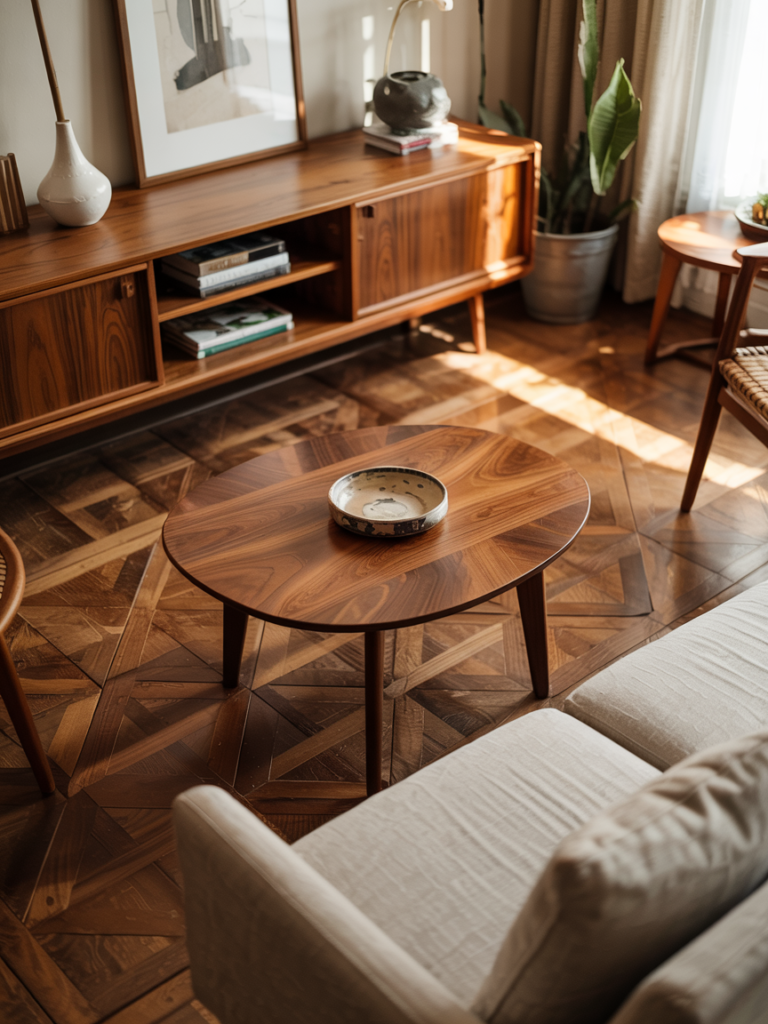
It sounds almost too simple to matter. But tapered legs — on your sofa, your coffee table, your accent chairs, your credenza — are the single most transformative detail in a mid-century modern living room.
Here’s why it works: tapered legs lift your furniture visually off the floor. They create a sense of airiness and openness that makes even a small apartment living room feel larger and less cluttered. When you can see the floor beneath your furniture, the eye travels further and the space expands.
This is particularly important in British apartments, where living rooms often have lower ceilings and less square footage than American equivalents. Furniture that sits flat on the floor creates visual weight. Furniture on tapered legs appears to float — and that lightness is everything in a compact space.
Don’t underestimate this detail when shopping. If you fall in love with a piece but it has block feet, ask yourself honestly whether it serves the aesthetic you’re building. Often, it won’t.
“The secret to a room that feels twice its size isn’t more mirrors — it’s furniture with legs.”
5. Lighting That Does More Than Illuminate
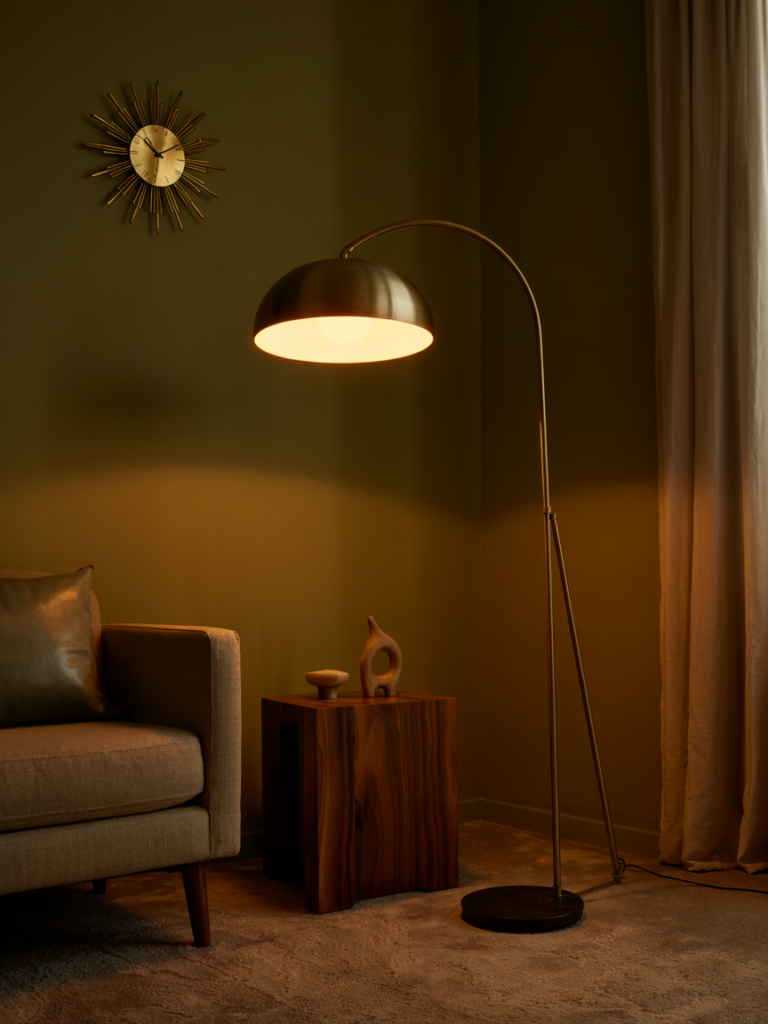
Mid-century modern lighting is arguably the most sculptural of any design era. Pendant lights, arc floor lamps, and ceramic table lamps aren’t just functional — they’re statements, focal points, conversation starters. Get this right and your living room gains an entirely new dimension.
The iconic arc floor lamp — a long curve of polished metal swooping over a seating area — is one of the most practical and visually powerful choices for an MCM apartment. It brings light down into the center of a room without requiring ceiling wiring, which makes it a gift for renters in both the US and UK who can’t hardwire fixtures.
For ceiling pendants, look for designs with globe or sputnik silhouettes in brushed brass, matte black, or smoked glass. These shapes were central to mid-century lighting design and they remain visually compelling today precisely because they treat light as art.
Layering is essential. You want ambient light (overhead or from a large floor lamp), task light (a reading lamp beside your sofa or chair), and accent light (a table lamp on a sideboard, perhaps). This layering creates the kind of warm, inviting glow that photographs beautifully and, more importantly, makes your apartment feel genuinely lived in and loved.
6. The Credenza: Your Living Room’s Most Hardworking Hero
The credenza — sometimes called a sideboard or media unit — is perhaps the most quintessentially mid-century piece of furniture, and in a living room, it’s absolutely indispensable.
Functionally, it solves storage. In apartments where every square foot matters (whether you’re in a studio in Chicago or a one-bed in Bristol), a low credenza offers drawers, shelving, or cabinet space for everything from spare blankets to board games to vinyl records. And because it sits low to the ground — typically around 24 to 30 inches high — it doesn’t interrupt the sight lines of the room.
Stylistically, it gives you a horizontal surface that’s built for styling. Think: a small potted plant (a fiddle-leaf fig or trailing pothos works beautifully), a framed piece of art leaning against the wall, a ceramic table lamp, a small stack of well-chosen books. This kind of vignette transforms a functional piece into something that tells a story about who you are.
In terms of material, walnut remains the gold standard — the warm, chocolate-brown grain reads as effortlessly elegant and ages beautifully. But teak, oak with a darker stain, or even well-made painted options in white or sage can work brilliantly depending on your overall palette.
7. Area Rugs: The Unsung Foundation of the Whole Room
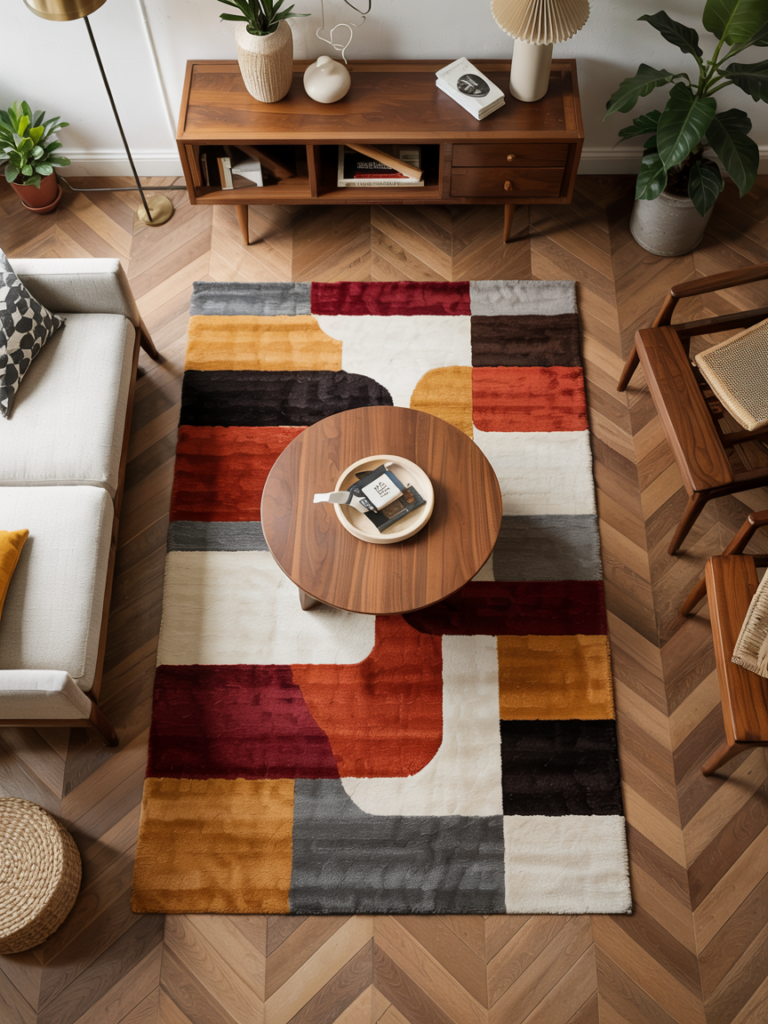
An area rug in a living room isn’t decorative — it’s architectural. It defines the seating zone, anchors the furniture, and brings warmth to hardwood or laminate floors (the default in most UK and US apartments). In an MCM living room, the rug also carries enormous pattern responsibility.
Geometric patterns are your best friend here. Think bold diamonds, abstract sunburst shapes, Aztec-inspired repeating motifs, or even simple stripes in a bold colorway. These patterns feel genuinely authentic to the era while remaining versatile enough to work with most modern furniture.
Size matters more than most people realize. A rug that’s too small makes a room feel fragmented and unsettled. As a general guide, you want all the front legs of your main furniture — sofa, chairs, coffee table — to sit on the rug. In American rooms with larger square footage, an 8×10 or 9×12 foot rug is often the right call. In UK apartments, a 160x230cm rug is typically the minimum for a standard living room.
Wool rugs offer the best longevity and the most beautiful texture underfoot. If budget is a concern, flat-weave kilim-style rugs often come in MCM-appropriate patterns at very accessible price points from retailers like Wayfair, H&M Home, or Dunelm.
8. Bringing in Organic Shapes to Balance the Lines
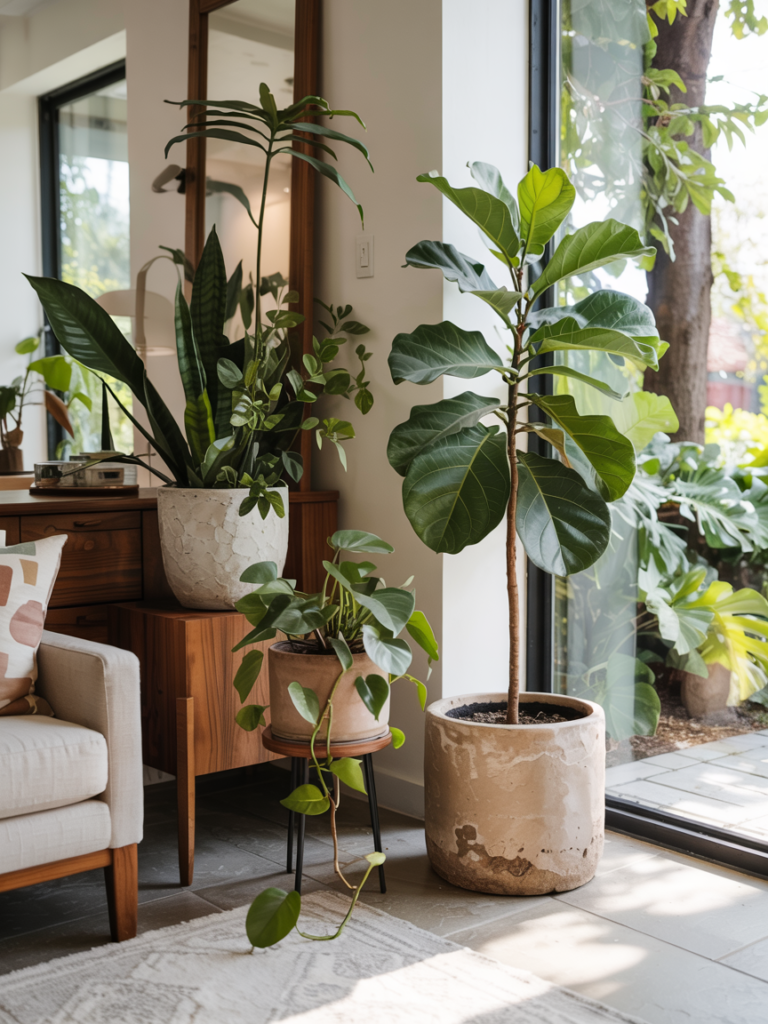
One of the most common mistakes in mid-century modern decorating is leaning too hard into the geometric. Yes, clean lines and angular furniture are central to the style — but the designers who defined this era were equally inspired by organic, natural forms. Think of the kidney-shaped coffee table, the tulip pedestal base, the egg chair’s curved embrace.
This tension between the geometric and the organic is what gives MCM rooms their visual interest and livability. A room full of only straight lines and right angles feels cold and corporate. Add a curved velvet chair, a kidney-shaped side table, or a round coffee table, and suddenly the space breathes.
Plants play a role here too. Large-leaf indoor plants — the fiddle-leaf fig, the monstera, the bird of paradise — bring organic shapes and living texture into a room full of designed objects. They’re also one of the most affordable ways to add visual drama, which is relevant whether you’re decorating on a London renter’s budget or making the most of a first apartment in Nashville.
“Balance in interior design isn’t about symmetry. It’s about knowing when to break your own rules.”
9. Art and Wall Decor: The Abstract Language of the Era
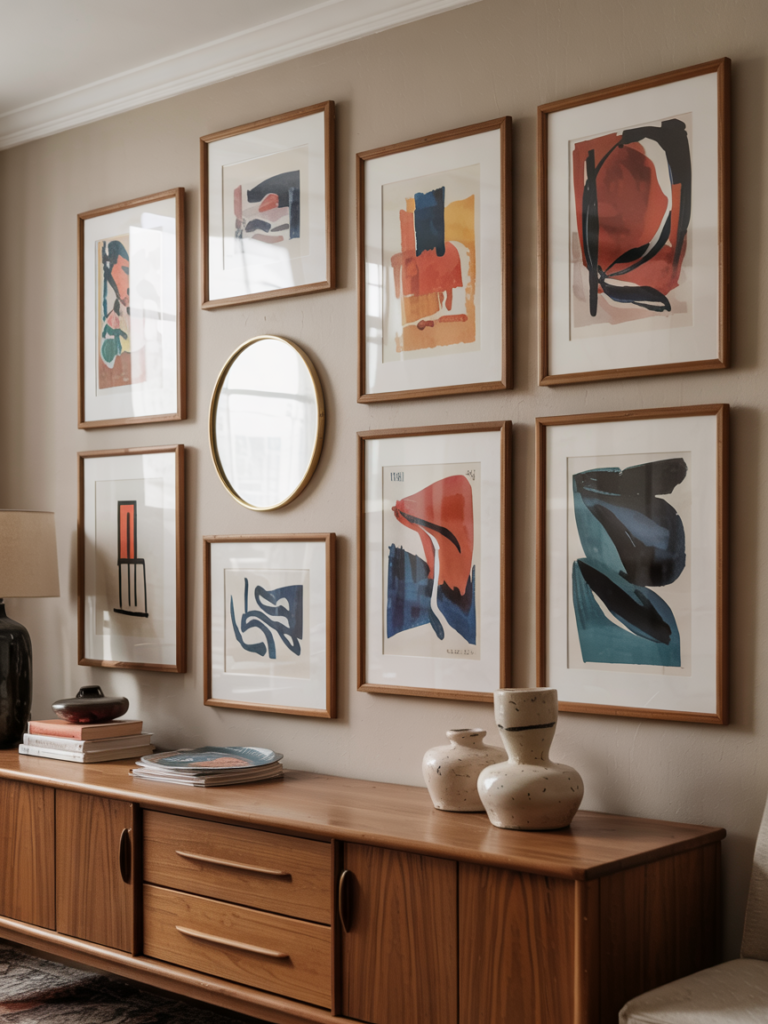
MCM living rooms have a very particular relationship with wall art — and understanding that relationship will elevate your space immediately. The style favors bold, abstract works over representational paintings. Think graphic prints with limited color palettes, abstract oil or acrylic paintings, or framed vintage travel and exhibition posters.
The scale should be confident. One large piece — say, a 24×36 inch canvas or print — makes more of a statement and feels more authentically mid-century than a gallery wall of smaller frames. That said, a carefully curated duo or trio can work beautifully if the pieces share a cohesive palette or aesthetic thread.
Macramé and woven wall hangings became popular in the later MCM period and continue to add beautiful organic texture — particularly in British apartments where exposed brick or plaster walls benefit from something soft to contrast them.
For framing, thin black metal, natural wood, or gold frames are all period-appropriate and widely available. Avoid chunky or ornate frames, which fight against the clean aesthetic rather than serving it.
10. Small-Space MCM: Making a Compact Living Room Feel Considered
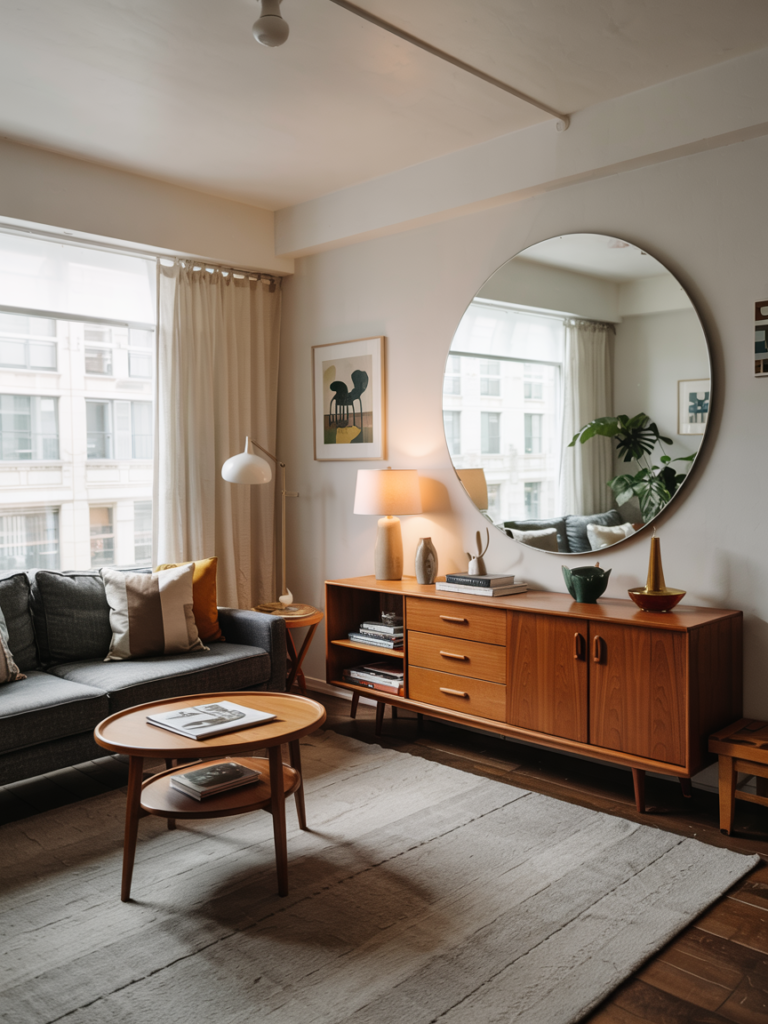
Apartment living often means working with limited square footage, and this is where mid-century modern genuinely shines — because the style was literally designed with space efficiency in mind.
The key principles for small MCM living rooms are these: keep your furniture count intentional (five well-chosen pieces beat fifteen mediocre ones), prioritize furniture with built-in storage, and keep your color palette light and warm to maximize the sense of space.
Mirrors are a useful tool here, but avoid using them formulaically. A single large mirror in a vintage-style frame, or a collection of smaller round mirrors arranged on one wall, can double the visual depth of a room without feeling like a trick. In north-facing UK flats where natural light is often at a premium, a well-placed mirror across from a window is genuinely transformative.
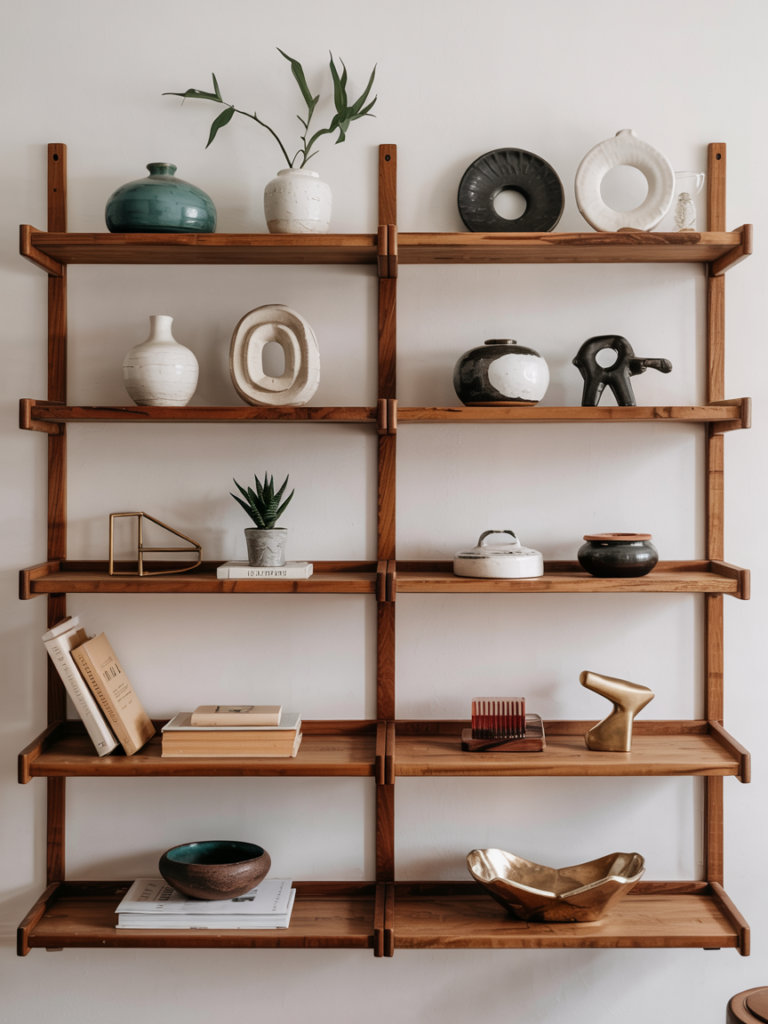
Floating shelves in walnut or a walnut-stained wood add vertical storage without taking up floor space — and when styled with a mix of books, small plants, and objects, they contribute enormously to the layered, lived-in quality that makes MCM interiors feel so warm and personal.
11. Mixing Vintage and New: The Art of the Imperfect Room
Here’s one of the most liberating things about mid-century modern: it doesn’t require perfection, and it doesn’t require a budget that would make your accountant wince. Some of the most beautiful MCM rooms are assembled over years, mixing genuine vintage finds with well-chosen new pieces.
Charity shops and thrift stores across the US and UK regularly surface genuine MCM pieces — a teak side table, a walnut credenza, a set of dining chairs with tapered legs. Facebook Marketplace and Craigslist in the US, and Gumtree or Vinterior in the UK, are genuinely excellent sources for vintage finds at accessible prices.
The rule of thumb is to mix intentionally. One or two authentic vintage pieces — even modest ones like a ceramic lamp base or a tulip-base side table — elevate a room of newer budget pieces because they bring genuine material quality and history. You’re not recreating the era; you’re honoring it while living your own version of it.
12. The Finishing Details: Textiles, Objects, and the Art of Restraint
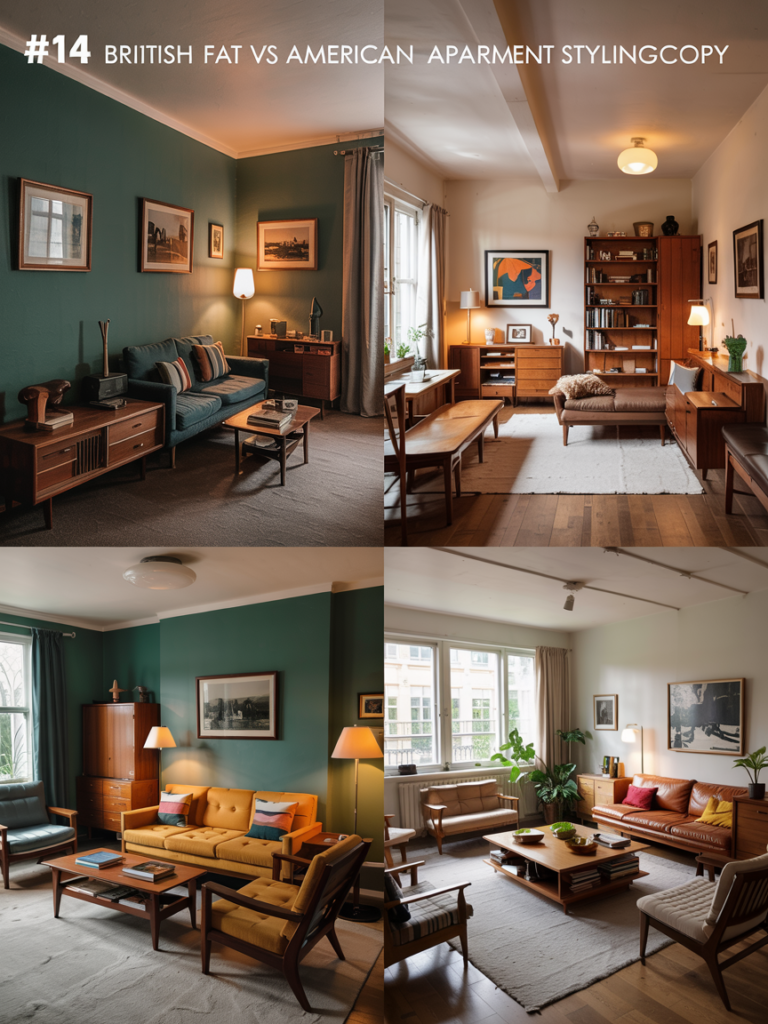
Mid-century modern decor has one golden rule that applies above everything else: restraint is the ultimate luxury. The finest MCM rooms are never overcrowded. They breathe. Every object earns its place.
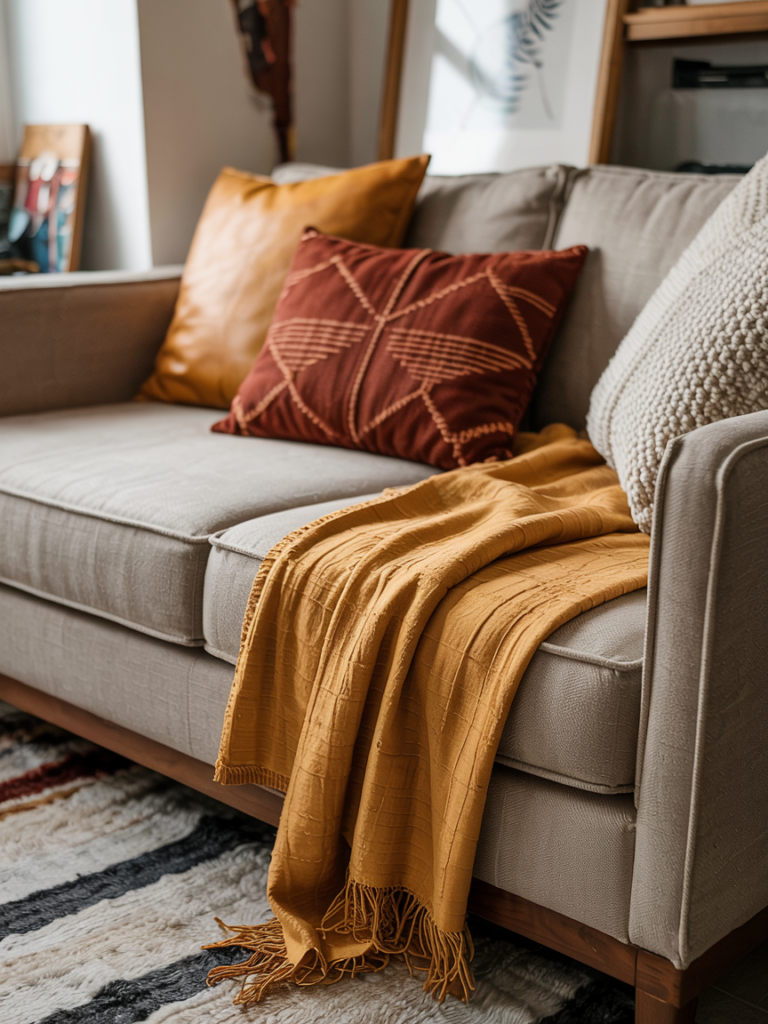
For textiles, layer thoughtfully. A woven throw over the sofa arm, two or three cushions in complementary textures and colors (velvet, boucle, and a printed cotton, for example), and a warm area rug together create comfort without clutter. Avoid anything too busy or baroque — simple geometric patterns and solid jewel tones are your anchors.
For objects and accessories, think quality over quantity. A single beautiful ceramic vase, a small collection of vintage paperbacks, a tray on the coffee table holding a candle and a small succulent — these details suggest a life well-lived rather than a space overdressed for company.
The magazines, the worn-spined books, the single framed photograph on the credenza — these are the human touches that transform a Pinterest-perfect room into a home someone actually loves coming back to.
—
🌿 How to Start Your MCM Living Room Transformation
Starting an MCM makeover doesn’t require gutting your space or spending a fortune. Begin with your largest piece — the sofa — and work outward from there. If budget is tight, reupholstering an existing sofa in a period-appropriate fabric can be transformative for a fraction of the cost of replacement.
Secondly, address your lighting before anything else decorative. Swapping a harsh ceiling fitting for a warm-toned pendant or adding a sculptural arc lamp will change the atmosphere of the room immediately and dramatically.
Next, audit what you already own. Mid-century modern rewards the selective — keep pieces that feel clean and purposeful, and be honest about what’s cluttering rather than contributing. Sell or donate what doesn’t serve the vision.
Finally, give yourself permission to work slowly. The rooms that feel most authentically MCM are rarely the ones assembled in a single IKEA haul. They’re built piece by piece, with care and intention — and that patience shows in every corner of the finished space.
—
❓ FAQ
Q: Is mid-century modern hard to achieve on a tight budget? A: Not at all. MCM is one of the most budget-friendly design styles to work with because its core principles are about simplicity and proportion, not luxury materials. Charity shops, thrift stores, Facebook Marketplace, Gumtree, and affordable retailers like IKEA (particularly the STOCKHOLM and LÖVBACKEN ranges) all offer MCM-adjacent pieces at very accessible price points. Focus on silhouette — tapered legs, low profiles, clean lines — over material, and the effect will feel authentic.
Q: Can mid-century modern work in a very small apartment living room? A: Beautifully, yes — in fact, it often works better than more ornate styles. The emphasis on visual lightness (furniture on tapered legs, low-profile pieces, limited clutter) makes spaces feel larger rather than smaller. Keep your furniture count intentional, choose one statement piece per zone, and let the floor breathe between pieces.
Q: What’s the most important single piece to invest in for an MCM living room? A: The sofa. It anchors the entire room, you’ll use it every day, and getting the silhouette right — low profile, tapered legs, clean lines — sets the tone for everything else you add. A well-chosen sofa makes even inexpensive accent pieces look considered and intentional.
—
💭 Final Thought
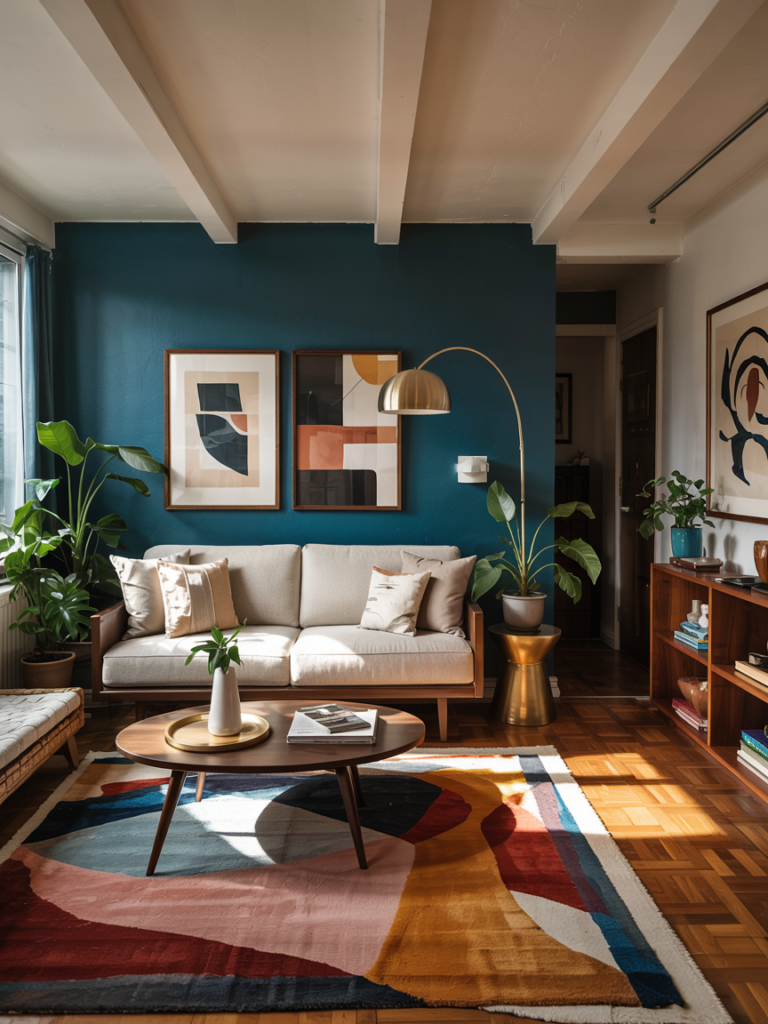
Mid-century modern isn’t really about recreating a decade — it’s about choosing to live deliberately, surrounding yourself with objects that are beautiful because they work, and creating a home that feels like a quiet exhale at the end of a long day. Whether you’re in a Victorian terrace in Leeds or a sun-drenched apartment in Austin, these principles translate with remarkable grace.
What would it feel like to walk into your living room tomorrow and find it exactly the way you’ve always imagined it could be?