The Modern Living Room Makeover That Finally Made My Apartment Feel Like Home
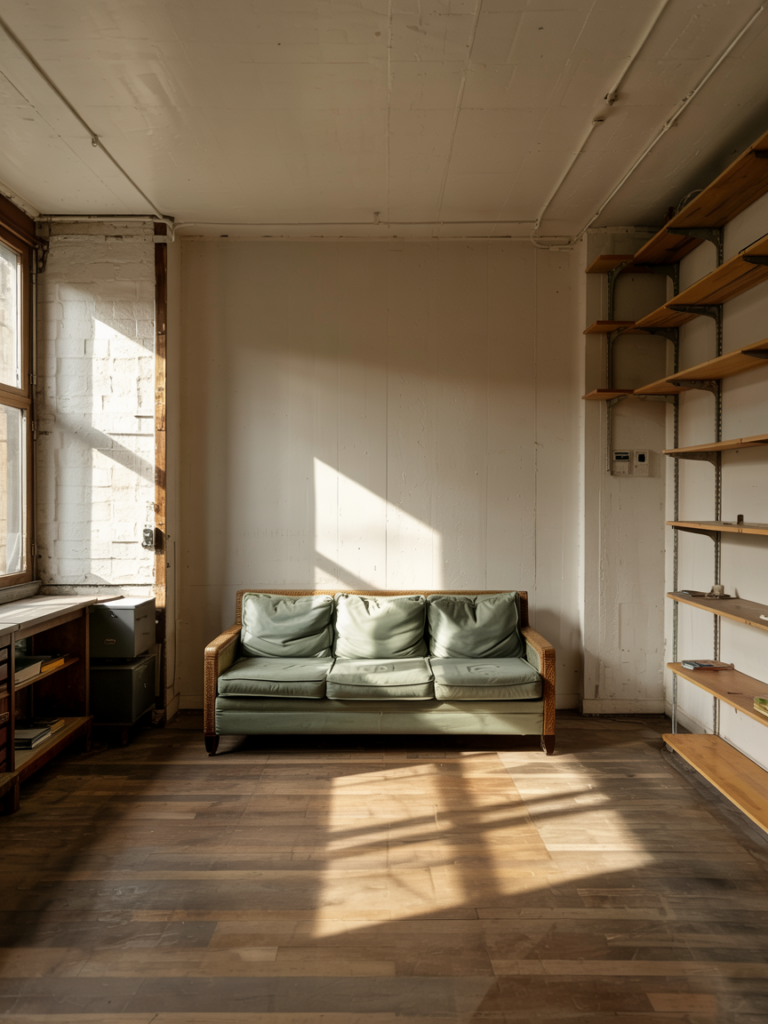
There’s a moment — maybe you’ve felt it too — when you walk into your own living room and feel nothing. Not uncomfortable, not unhappy, just… nothing. Like the space belongs to someone else and you’re just passing through. That’s exactly where I was eighteen months ago, standing in my rented flat with a secondhand sofa and blank walls, wondering why a room full of furniture could feel so completely empty.
—
1. Why Modern Interior Design Feels So Different From What We Grew Up With
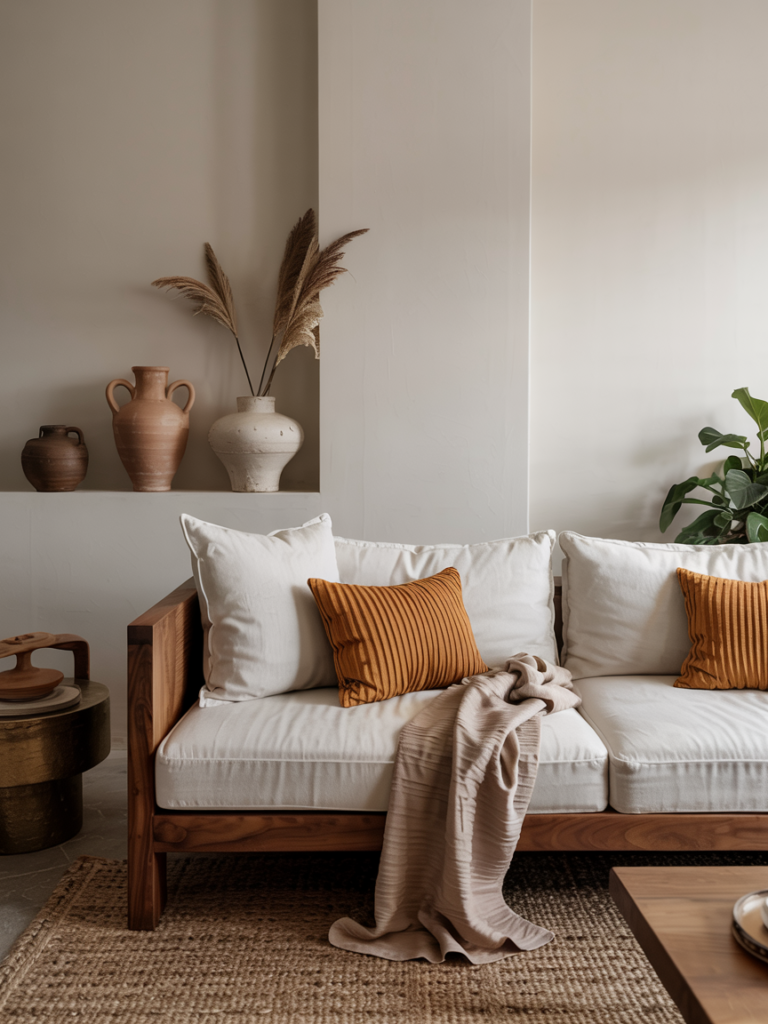
Modern interior design has a reputation for being cold — all glass, steel, and surfaces you’re afraid to touch. But the version of modern living that’s taken over Pinterest boards from Chicago to Chelsea is something warmer and more livable than that. It’s sometimes called “warm modernism,” and it sits beautifully between the clean lines of contemporary design and the inviting textures of a home that’s actually lived in.
Think of it this way: your grandmother’s living room had soul but no breathing room. The ultra-minimal aesthetic of the early 2000s had breathing room but no soul. Modern interior design in 2024 and beyond is trying to find that third thing — the space that exhales when you walk in, where every item has a reason to be there, and where you actually want to spend a Sunday afternoon.
“Modern doesn’t mean cold. It means intentional — and intentional spaces always feel like home.”
This shift matters especially for apartment dwellers. In the US, the average apartment living room is around 250 to 300 square feet. In the UK, it’s often even smaller — particularly in London, Manchester, or Edinburgh flats where open-plan living is common. Modern design, done thoughtfully, is actually one of the best approaches for smaller spaces because it prioritizes purpose and proportion over accumulation.
2. The Single Design Principle That Changes Everything in a Small Living Room
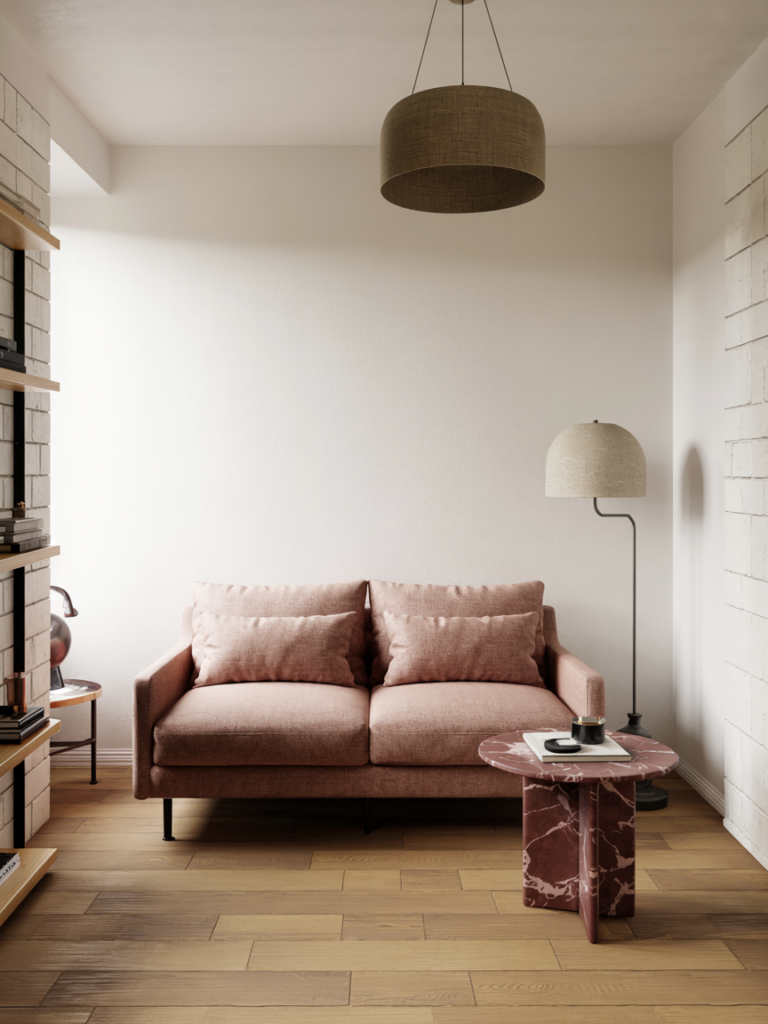
Before you buy a single throw pillow or repaint a wall, you need to understand the principle that professional interior designers use on every project: every piece of furniture must earn its place.
This isn’t just about minimalism. It’s about intentionality. In a smaller living room — whether that’s a one-bedroom apartment in Brooklyn or a Victorian terrace conversion in Bristol — every item you introduce either opens the room up or closes it down. A bulky sectional sofa that looked stunning in the showroom can make a narrow living room feel like a corridor. A beautiful oversized coffee table that seats six might mean you can never comfortably walk to your window.
Start by measuring your space. In the US, standard sofas run between 70 and 96 inches wide. In the UK, most three-seater sofas sit around 180 to 220 centimeters. Measure your wall, then measure your sofa, and then — this is the step most people skip — measure the walking clearance around it. You want at least 30 to 36 inches (75 to 90cm) between your sofa and the coffee table, and at least 18 inches (45cm) of clearance around all sides of the furniture arrangement.
When you get those numbers right, the room stops feeling crowded and starts feeling curated.
3. The Color Palette That’s Quietly Taking Over Modern Living Rooms
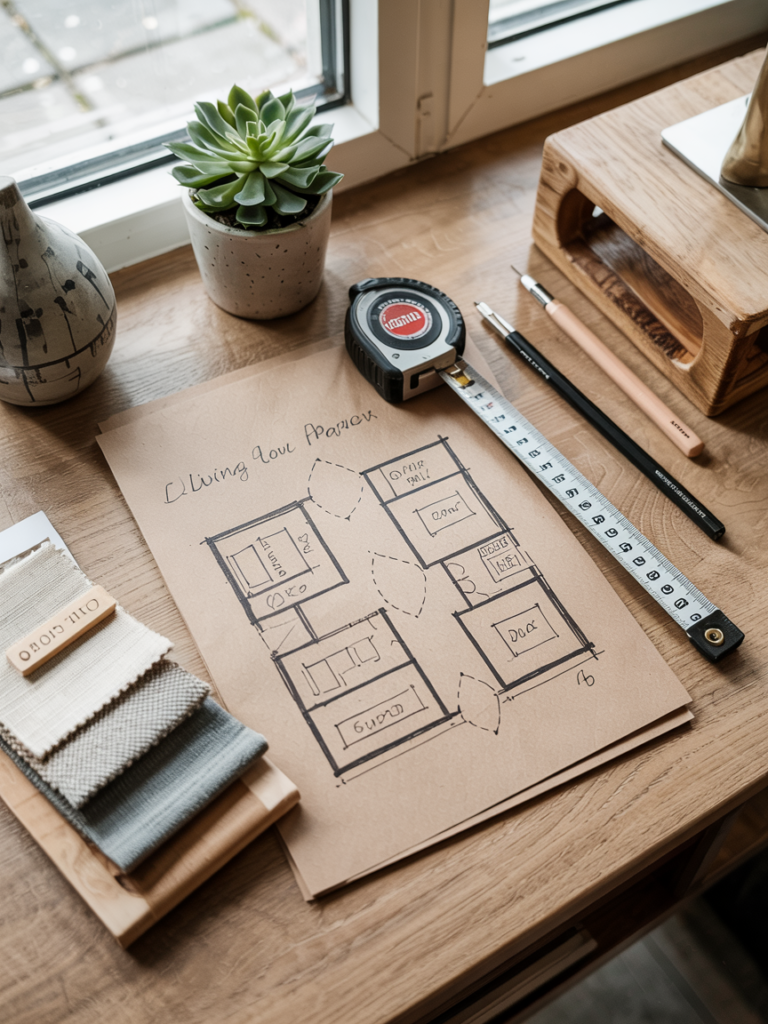
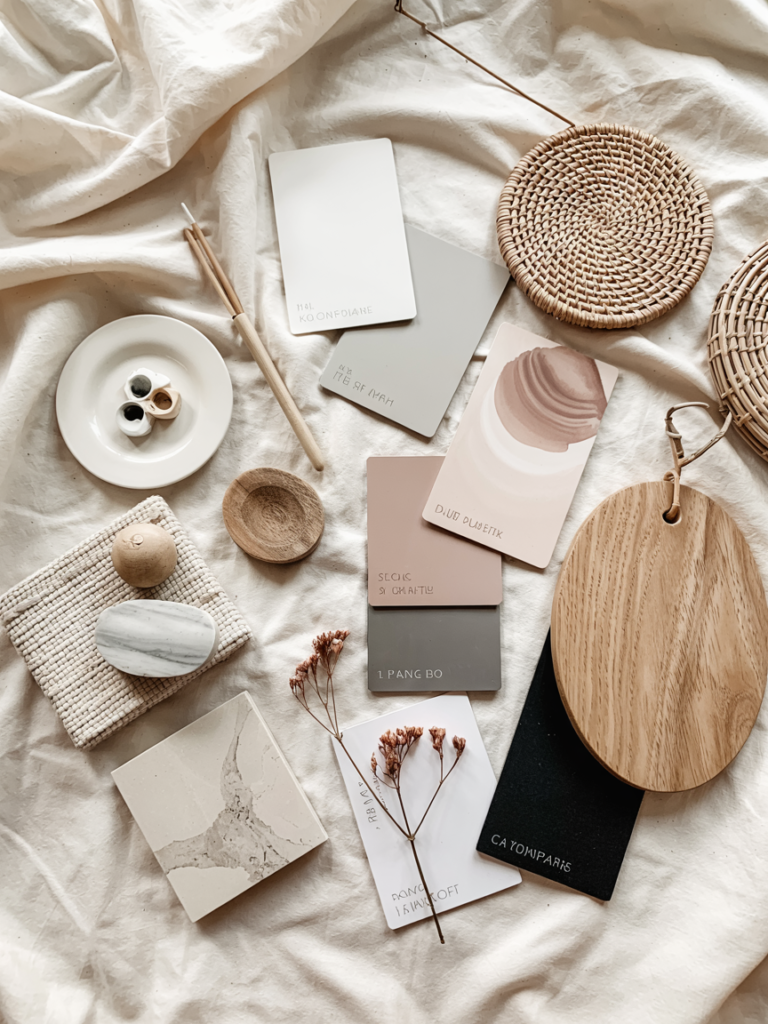
Open Pinterest right now and search “modern living room 2024.” Notice anything? The rooms that keep appearing — the ones that get hundreds of thousands of saves — share a color language. Warm whites, soft putty, dusty sage, terracotta, and deep earthy greens are everywhere, often layered against natural wood tones and matte black or brushed brass hardware.
This palette works for a few reasons. First, warm neutrals photograph beautifully in natural light, which matters whether you’re shooting for Pinterest or just trying to enjoy your morning coffee. Second, these colors hold up over time — unlike trendy jewel tones that can feel dated in three years, a warm greige (that perfect grey-beige crossover) or a muted sage stays fresh and adaptable.
For US readers: if you’re working with drywall and standard eight-foot ceilings, warm whites like Benjamin Moore’s White Dove or Sherwin-Williams Accessible Beige will make the room feel taller and more open. For UK readers dealing with older plaster walls, Farrow & Ball’s Elephant’s Breath or Little Greene’s French Grey have that beautifully layered quality that works with period architecture.
The key to making any of these palettes feel modern rather than plain is contrast. A warm white wall hits differently when it’s paired with dark linen curtains and a walnut console table. The contrast is what gives the room its depth.
4. How to Choose a Sofa That Won’t Make You Regret Everything in Six Months
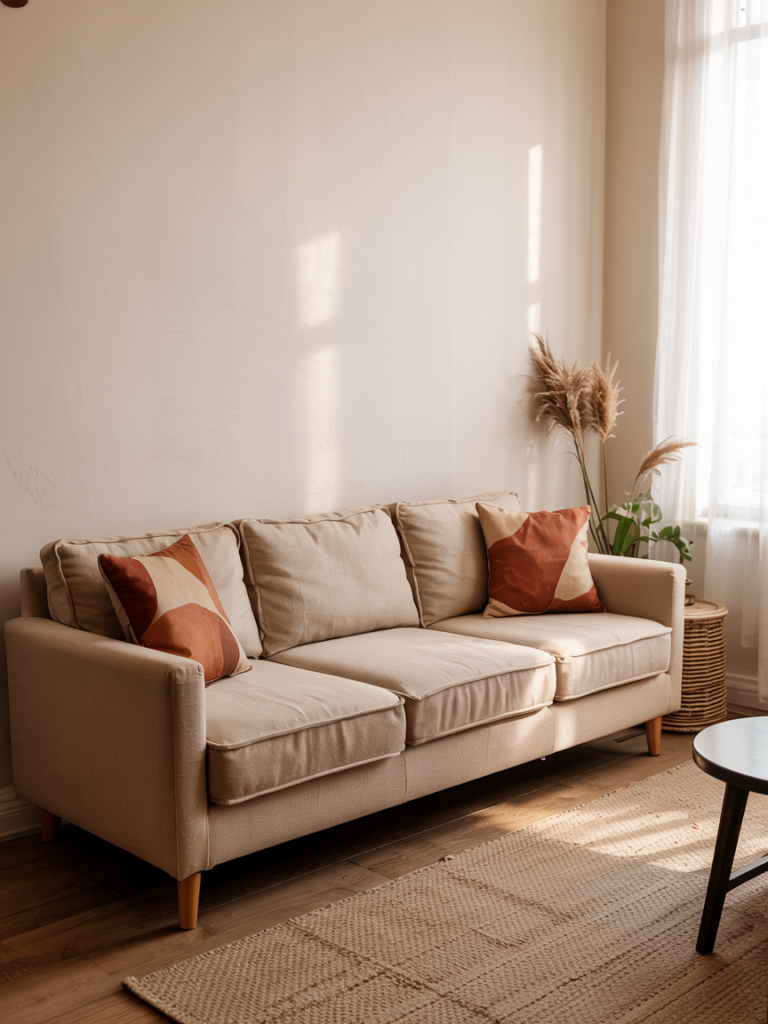
The sofa is the emotional anchor of a living room. It’s also the piece that people most commonly get wrong — either because they buy for looks alone, because they don’t account for scale, or because they choose a fabric that can’t handle real life.
For modern apartment living, a few configurations work particularly well. The two-seater plus accent chair combination gives flexibility and visual interest that a sectional can’t. A streamlined three-seater on short legs (sometimes called a “platform sofa”) keeps the visual line low and makes ceilings feel higher. If you need a sectional, look for a “small sectional” or an L-shaped sofa with a chaise — these typically run around 100 by 65 inches (254 by 165cm) and are designed for apartment proportions.
Fabric matters enormously. For families with children or pets in the US, performance fabrics like Crypton or Sunbrella-weave upholstery are worth every extra dollar. In the UK, brushed cotton velvet (from brands like MADE, John Lewis, or Heal’s) has become a go-to for modern living rooms because it has that plush, inviting look while still being more durable than it appears.
Neutral tones in your sofa give you the freedom to change everything around it seasonally — swapping cushion covers from warm terracotta in autumn to soft linen in spring — without spending a fortune.
5. The Art of Layering Textures Without Making the Room Feel Chaotic
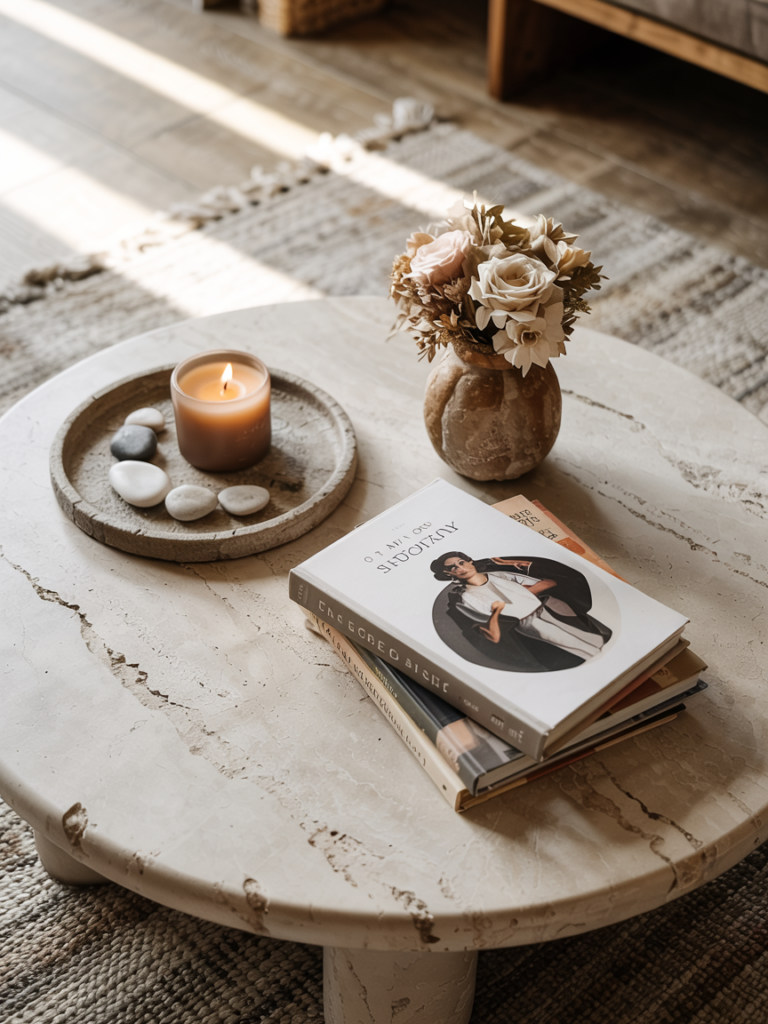
Here’s something that took me years to understand: modern living rooms don’t look good in photos because of one perfect piece. They look good because of how different textures interact with each other. It’s the way matte and sheen sit beside each other. The way rough and smooth create conversation.
“A room without texture is just furniture in a box. Texture is what makes a space breathe.”
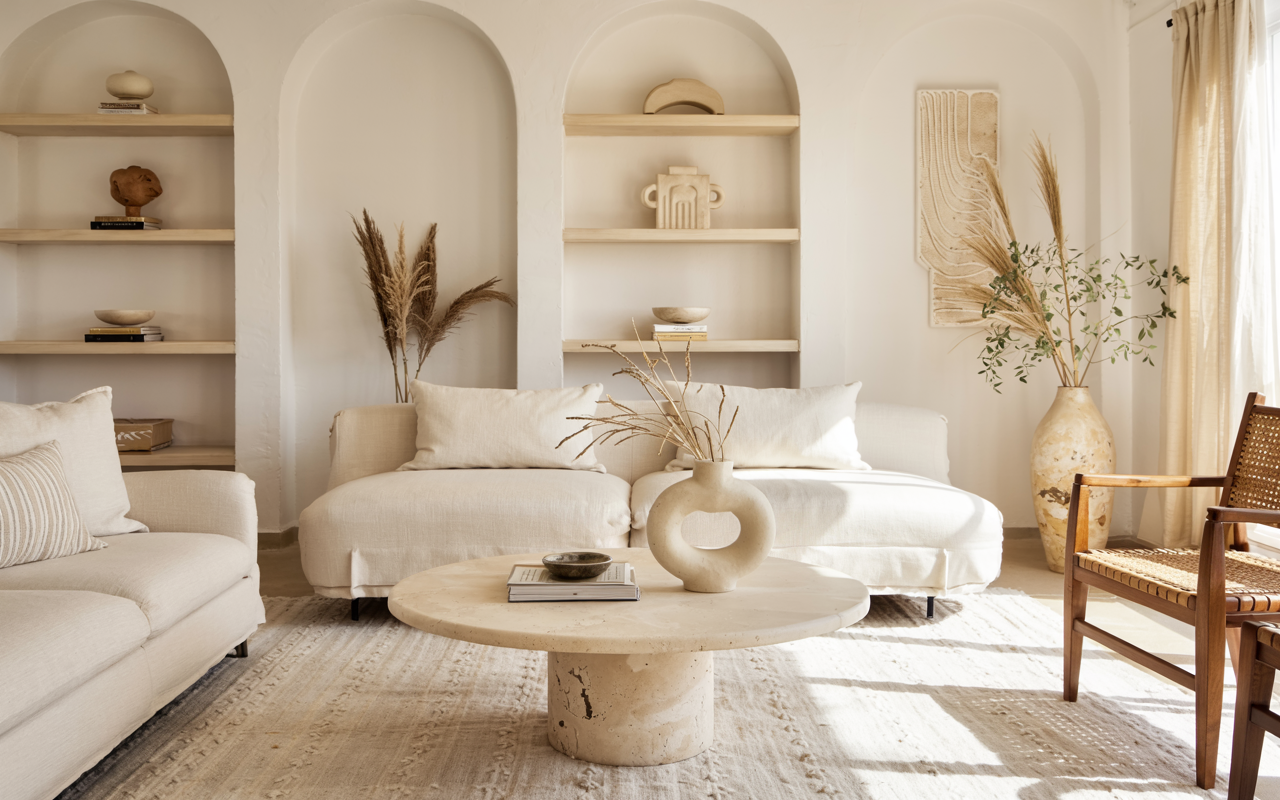
A practical formula for layering textures in a modern living room: start with your largest surface (the sofa) in one texture — say, a matte boucle or a smooth velvet. Add a throw in a contrasting weave, something chunky or woven. Introduce a smooth or reflective element — a ceramic lamp base, a lacquered tray, a small mirror. Finish with something organic — a jute rug, a rattan side table, a terracotta pot.
These four layers (matte fabric, woven textile, smooth/reflective, organic/natural) create enough variety to feel rich and layered without becoming visually noisy.
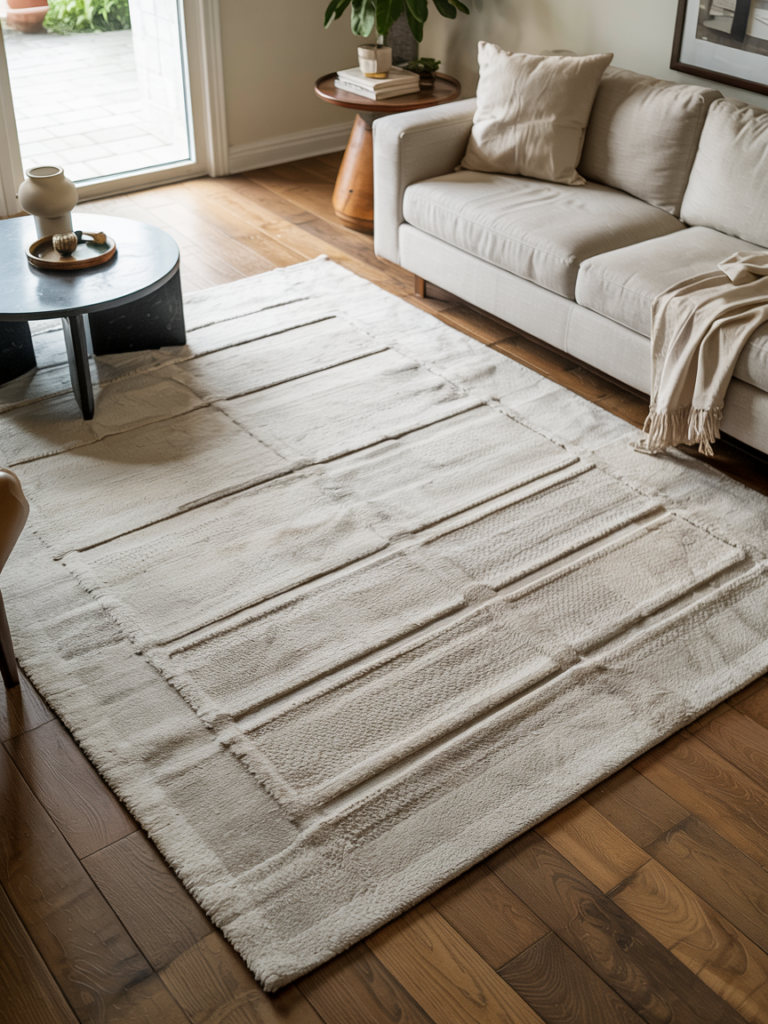
In terms of rugs — often the most underestimated element of a living room — a modern flat weave or low-pile rug in a warm neutral grounds the seating area beautifully. For a typical US apartment living room, a 8×10 foot rug is usually the minimum to anchor a full seating arrangement. In the UK, a 200 by 300cm rug does a similar job. Resist the urge to go smaller — an undersized rug is one of the most common mistakes in living room styling, and it consistently makes the space feel unfinished.
6. What Lighting Actually Does to a Modern Living Room (That Most People Never Notice)
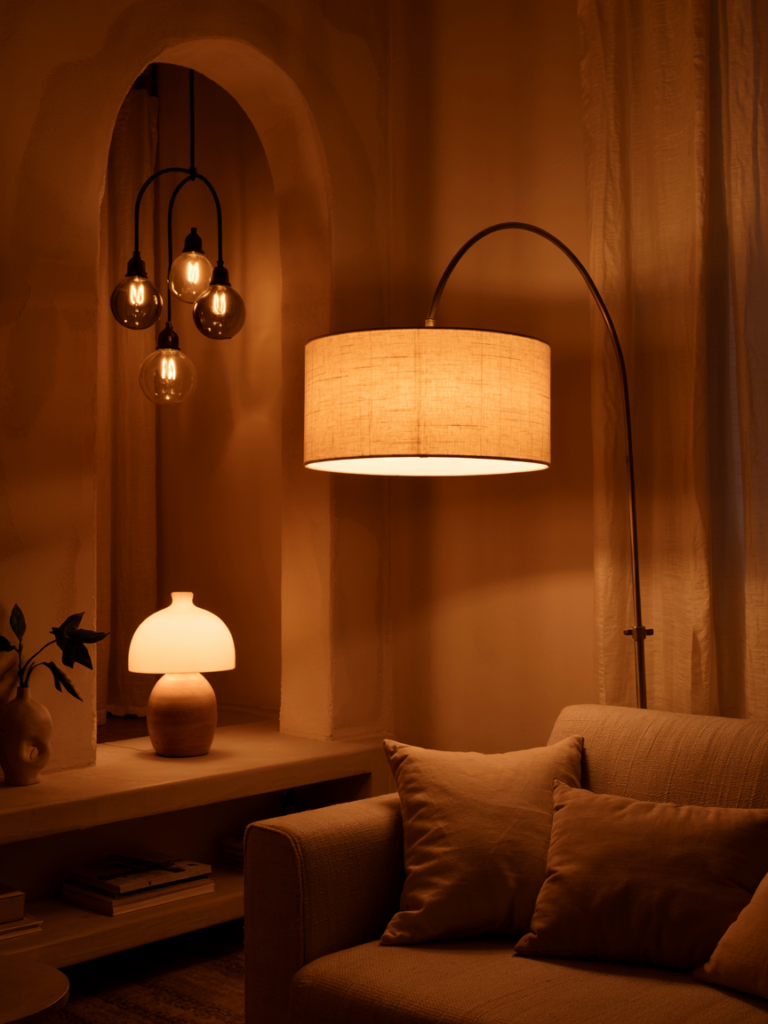
You could have the most beautifully furnished living room on your street and still have it feel completely wrong because of the lighting. Overhead lighting — particularly the single ceiling pendant or recessed can lights that come standard in most apartments — is one of the harshest and most unflattering ways to illuminate a living space.
Modern interior designers layer lighting the way they layer texture: ambient (overhead), task (reading lamps, desk lights), and accent (candles, picture lights, LED strips under shelving). For an apartment on a budget, the fastest upgrade you can make is adding floor lamps and table lamps, and switching to warm white bulbs — 2700K to 3000K color temperature — throughout.
In the US, smart bulb systems like Philips Hue or LIFX let you dim and warm your lights from your phone, which sounds like a luxury until the first time you host dinner with perfectly ambient lighting at the tap of a screen. In the UK, plug-in wall sconces have become incredibly popular as a renter-friendly alternative to hardwired wall lighting — you get the warmth and style of wall-mounted light without drilling into plaster or losing your deposit.
7. The Gallery Wall Formula That Works in Modern Interiors
Gallery walls can look cluttered and mid-2010s, or they can look like a carefully curated museum corner. The difference is almost entirely in the framing and the spacing.
For a modern living room, the formula is simple: stick to a maximum of two frame colors (usually black and natural wood, or black and white), keep consistent mat (mount) sizes across all prints, and leave at least two to three inches of wall space between each frame. The temptation is to pack them in, but generous spacing is what gives a gallery wall its modern, editorial quality.
Art itself doesn’t have to be expensive. Abstract prints from Society6 or Desenio, vintage botanical illustrations from Etsy, or even oversized black-and-white photography from local markets all work beautifully in a modern scheme. What matters more than the art itself is the consistency of presentation.
8. Plants as a Design Element — Not Just an Afterthought
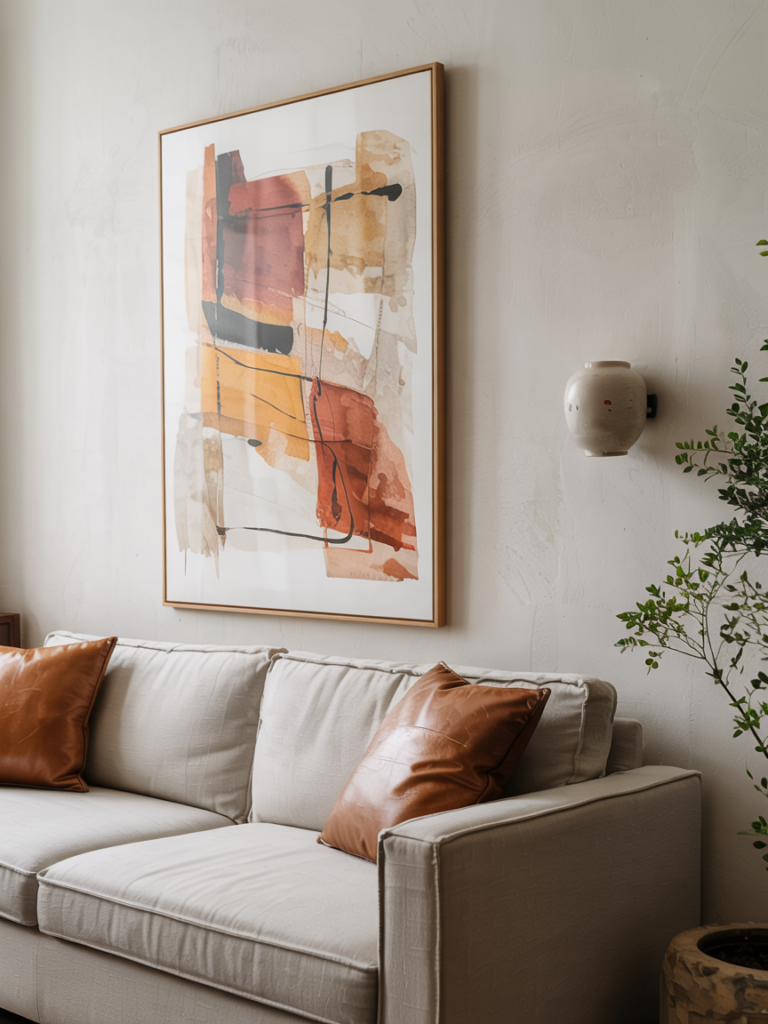
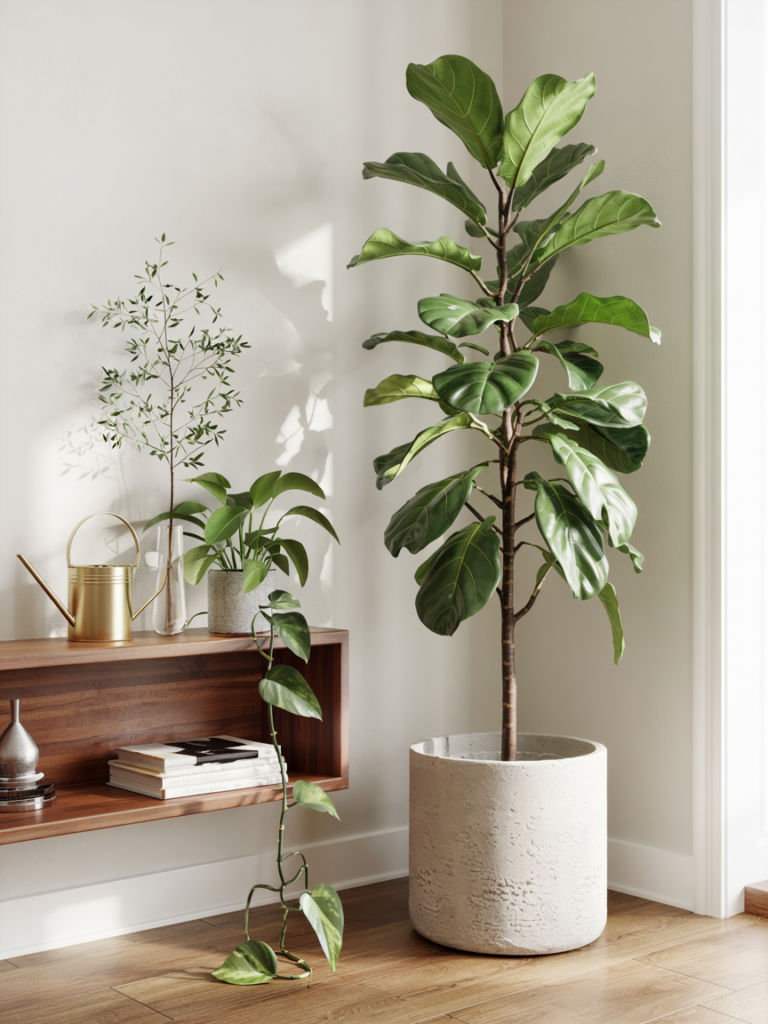
There’s a reason every modern living room on Pinterest has at least one plant, and it’s not just aesthetics (though the visual payoff is significant). Plants bring organic movement into a room full of static objects. They introduce scale without adding visual weight. And they do something that no piece of furniture can do — they grow, they change, they make the room feel alive.
For modern interiors, a few plant choices consistently work well. A large fiddle-leaf fig or monstera in a matte white or terracotta pot creates a strong vertical element. Trailing pothos on a high shelf softens any hard lines. A cluster of small succulents or a single architectural cactus on a side table adds visual interest at a smaller scale.
9. Storage Solutions That Don’t Ruin the Aesthetic
In an apartment, storage is a constant negotiation. You need it desperately, but the wrong storage will visually wreck a modern living room faster than almost anything else.
“The best storage in a modern living room is the kind you don’t notice until you need it.”
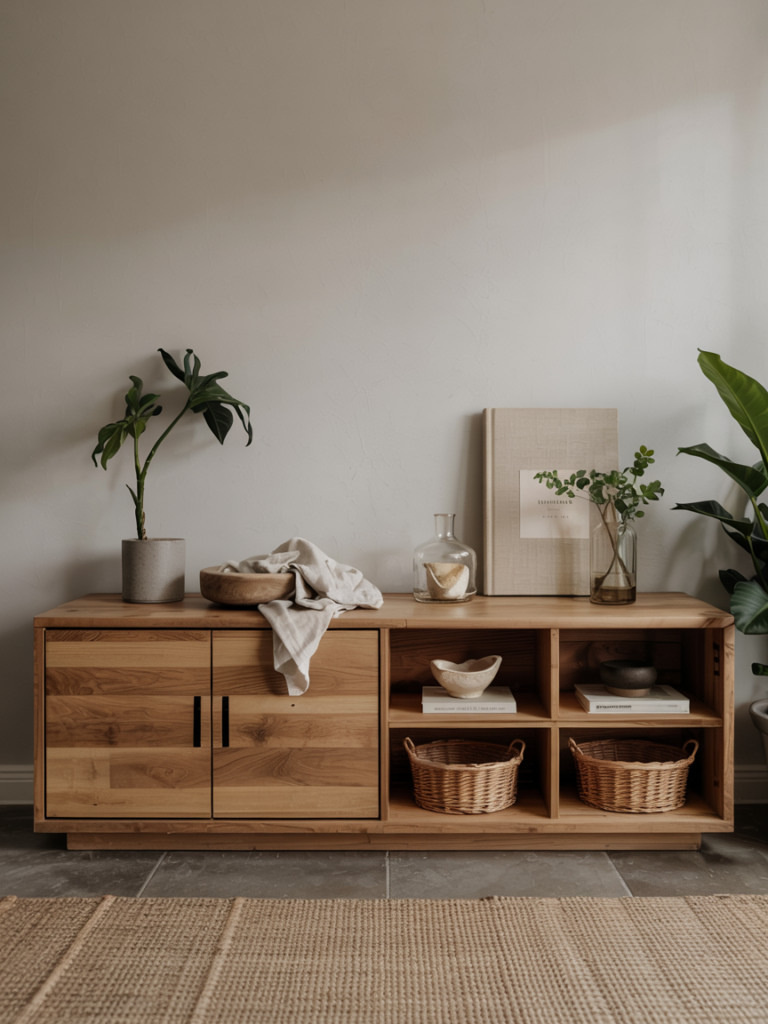
The best approach is hidden or intentional storage. Ottomans with storage inside work beautifully as coffee tables in smaller rooms — they add seating flexibility and hide everything from throws to remote controls. Built-in shelving (or freestanding units styled to look built-in, like the BILLY bookcase hack that’s been popular on both sides of the Atlantic) creates a statement wall that’s also deeply functional. Media units with closed cabinets keep the room’s visual noise low by hiding cables, routers, and the accumulated chaos of modern life.
10. The Small Details That Separate a Pinterest-Worthy Room From an Ordinary One
This is where style actually happens — not in the big furniture decisions, but in the details. The stack of three books on the coffee table with a small candle on top. The single sculptural vase with one dried stem. The tray that corrals everything on your console table into something intentional.
These aren’t decorating tricks — they’re visual editing. The same instinct that makes a great photographer crop out the distractions in a scene is what makes a living room feel styled rather than just furnished.
11. Renter-Friendly Modern Updates That Work in the US and UK
Not everyone can paint their walls or install new lighting fixtures — and in the UK especially, where rental agreements are strict and deposit protection is serious, making changes can feel impossible. But there’s more flexibility than most renters realize.
Removable wallpaper (sometimes called peel-and-stick or renter-friendly wallpaper) has improved dramatically in quality. Brands like Tempaper in the US and Sian Zeng in the UK offer designs that look genuinely luxurious and remove cleanly. Command strips and adhesive hooks support surprisingly heavy frames and mirrors. Plug-in sconces and portable table lamps replace hardwired lighting entirely. And large area rugs can transform a living room over an impersonal beige carpet without leaving a mark.
12. How to Make Your Modern Living Room Feel Like You, Not a Showroom
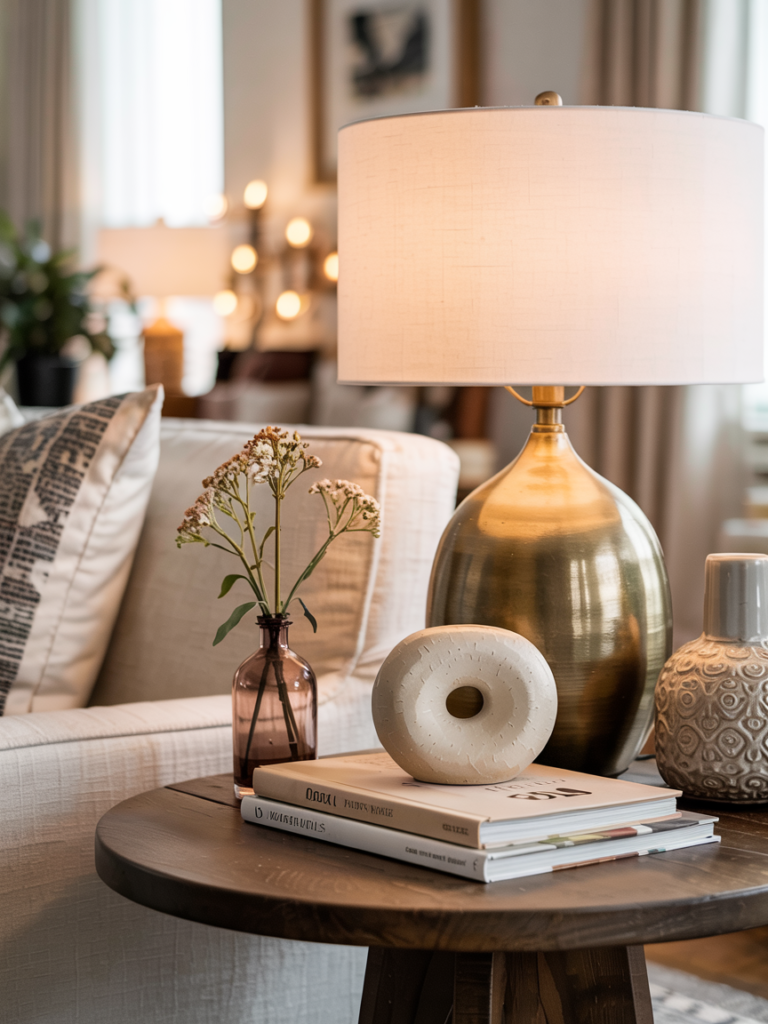
The final piece — and in many ways the most important — is personality. The living rooms that stop people mid-scroll on Pinterest aren’t the ones that look most expensive or most perfectly matched. They’re the ones that feel like someone’s real life, elevated.
That means bringing in the things that matter to you, even if they don’t fit the “rules.” The vintage lamp from your grandmother’s flat in Glasgow. The art print you bought at a market in New Orleans. The paperbacks stacked imperfectly on the coffee table because you’re actually reading them. Modern design is the framework, not the cage.
The framework gives the room its calm, its proportion, its visual quiet. What you layer into that framework is what makes it yours.
—
🌿 How to Take Care of Your Modern Living Room
A beautiful space needs a little maintenance to stay that way — but it doesn’t need to be complicated.
First, edit seasonally. Every three months, walk through your living room and remove five things. Put them in a box. If you don’t miss them in a month, donate them. This keeps the space from accumulating visual noise over time.
Second, clean your textiles regularly. Cushion covers, throws, and curtains hold dust in a way that affects both air quality and how fresh the room looks. Most modern fabric items are machine washable — check the label and do it every six to eight weeks.
Third, rotate your plants. Turning them a quarter turn every week keeps them growing evenly and reminds you to check on their water needs, which prevents the sad, drooping plants that undermine an otherwise beautiful room.
Fourth, tend to your lighting. Dust lampshades, replace bulbs before they blow (rather than after), and check that all your ambient and accent lighting is working together rather than competing.
Fifth, invest in one new thing each season, rather than ten things all at once. One new cushion, one new candle, one new piece of art — this keeps the room evolving without requiring a complete overhaul every year.
—
❓ FAQ
Q: What’s the best color for a modern living room in a small apartment? A: Warm whites and soft neutrals — think putty, greige, or pale sage — are consistently the best choice for small modern living rooms because they reflect light, make the room feel larger, and work with almost any furniture color. Avoid cool or bright white if you want the room to feel inviting rather than clinical.
Q: How do I make my rented apartment living room look modern without losing my deposit? A: Focus on the elements you can control without making permanent changes: rugs, throws, cushions, plants, removable wallpaper, plug-in lighting, and freestanding furniture. These four categories alone can completely transform the feel of a living room without touching the walls or fixtures.
Q: How do I mix modern furniture with older or more traditional pieces I already own? A: The trick is unifying contrast rather than forcing a match. Choose one consistent element — a color that appears in both pieces, or a similar hardware finish — and let that thread carry through the room. A traditional armchair in a warm neutral reupholstery sits beautifully in a modern scheme. A vintage side table in natural wood works beside a contemporary sofa. It’s about editing thoughtfully, not starting from scratch.
—
💭 Final Thought
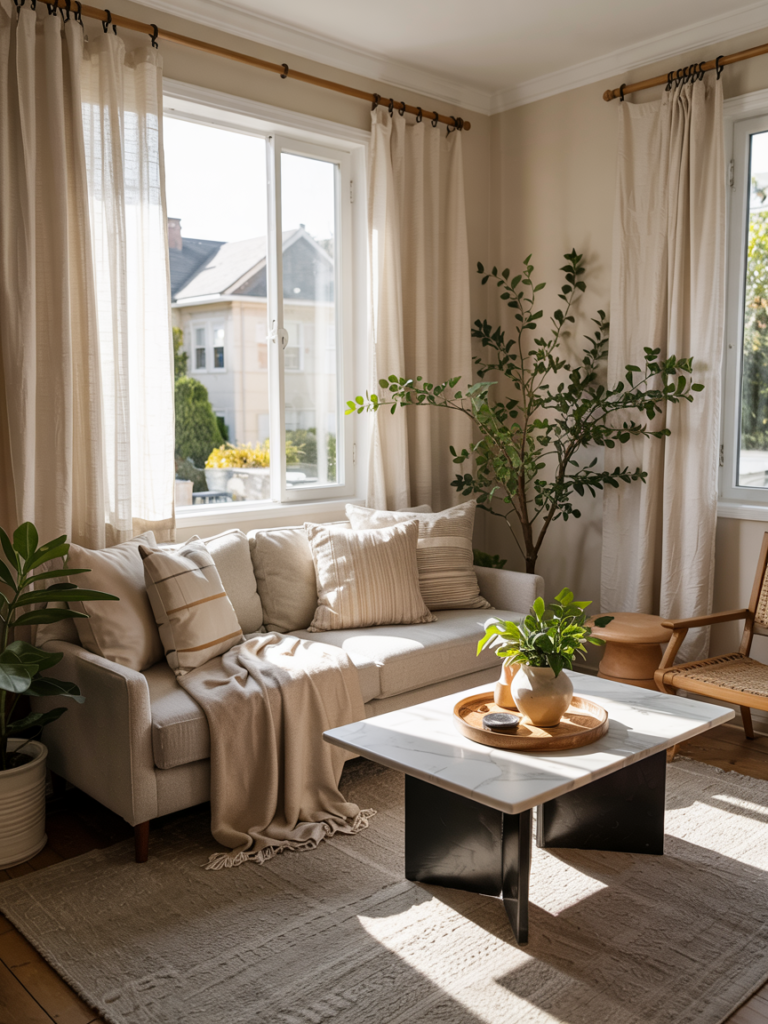
Your living room is the room where your life actually happens — where you rest, connect, think, and exhale at the end of a long day. Modern interior design, at its best, isn’t about creating something that looks good in a photograph. It’s about creating a space that feels right when you’re in it, that gives you back something when you need it most.
The beautiful thing about designing your living room with intention is that it doesn’t require a renovation budget or a designer’s eye. It requires only the willingness to slow down, look honestly at what you have, and ask what each piece is really giving the room — and what it might be taking away.
So tell me — if you could change just one thing about your living room today, what would it be?