The Forest Cabin Interior That Makes You Want to Disappear Into the Woods Forever
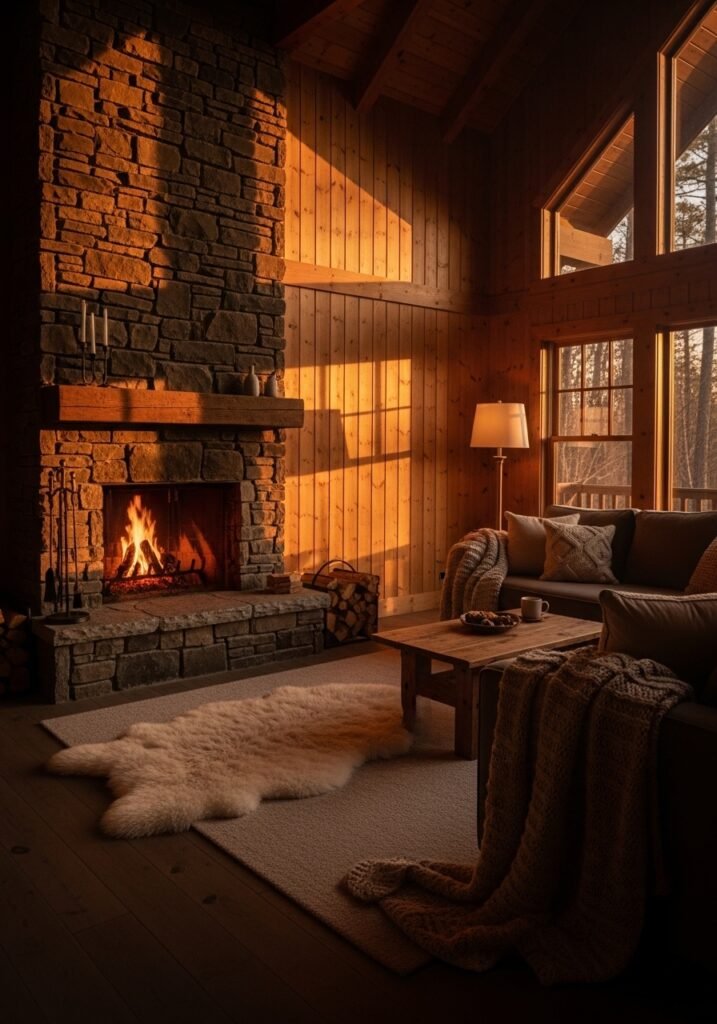
There is something about a forest cabin interior that reaches straight into your chest and squeezes — gently, warmly, like a hug from someone who has known you for years. Maybe it is the raw wood, the smell of pine, or the way firelight moves across stone walls at dusk. Whatever the alchemy, it works. And if you have been dreaming of creating that feeling in your own space, you are exactly where you need to be.
—
1. Why Forest Cabin Interiors Feel Like Emotional Medicine Right Now
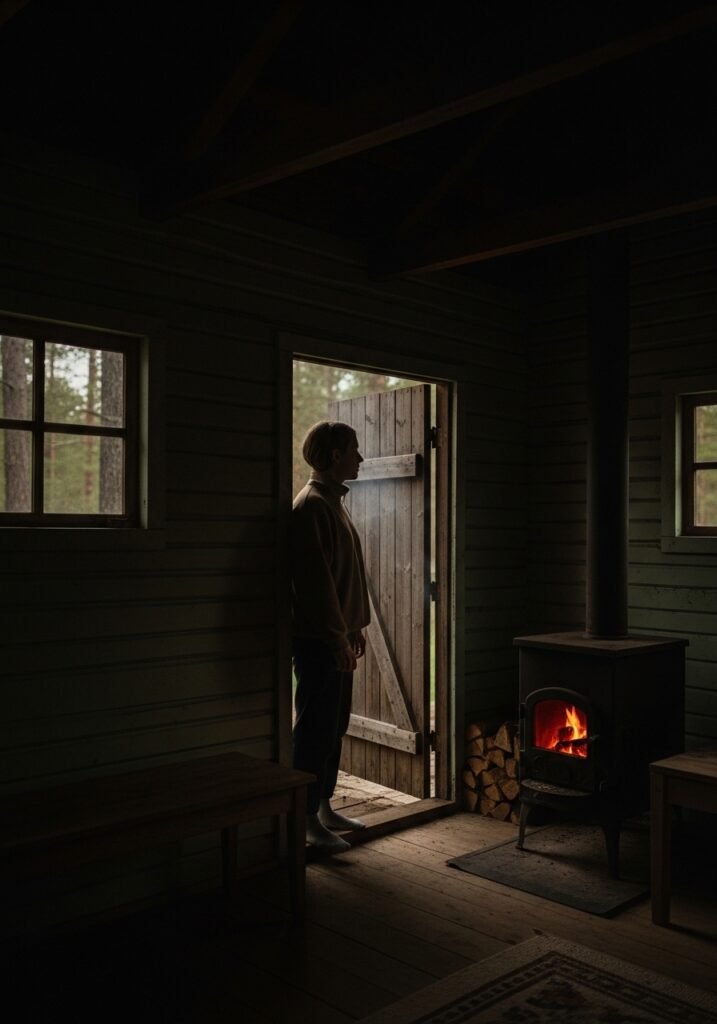
We are living in an age of overstimulation. Screens flicker at us from every corner, notifications pull us in seventeen directions at once, and somewhere along the way, we forgot what silence feels like. Forest cabin interiors have surged in popularity not merely because they are aesthetically beautiful — though they undeniably are — but because they represent something we are collectively starving for: stillness.
The design language of a forest cabin interior speaks in textures and shadows rather than in sharp lines and glossy surfaces. It whispers instead of shouts. When people search for this aesthetic on Pinterest, they are not just looking for decorating ideas. They are looking for permission to slow down. The interior design itself becomes a kind of therapy — one that does not require a prescription or a plane ticket into the wilderness.
“The most powerful thing a room can do is make you exhale the moment you walk into it.”
Understanding this emotional core is the foundation of everything we will explore. Every design choice in a true forest cabin interior is rooted in the desire to reconnect — with nature, with quiet, and with yourself.
2. The Color Palette That Feels Like Walking Into the Woods at Dawn

Color is the first language a room speaks. In a forest cabin interior, the palette is drawn directly from the natural world outside the window — earthy, grounded, and layered like the forest floor itself. Think deep mossy greens, bark browns, warm ochres, slate grays, and the soft ivory of birch bark. These are not trendy colors. They are timeless.
Walls painted in a warm, muted sage or a deep forest green create the immediate sensation of being surrounded by trees. Complementing this with natural wood tones on floors and ceilings pulls the outside in without a single botanical print in sight. For those working with a lighter space, warm white walls with rich brown accents — exposed wooden beams, a walnut coffee table, woven jute rugs — strike the same emotional chord.
What you want to avoid is the trap of going too cool or too stark. A forest cabin palette should always feel warm, even in its darkest shades. Think of the way the last light of evening filters through pine branches — golden, amber, alive. That warmth is your guide.
3. Natural Wood: The Non-Negotiable Soul of Every Cabin Interior
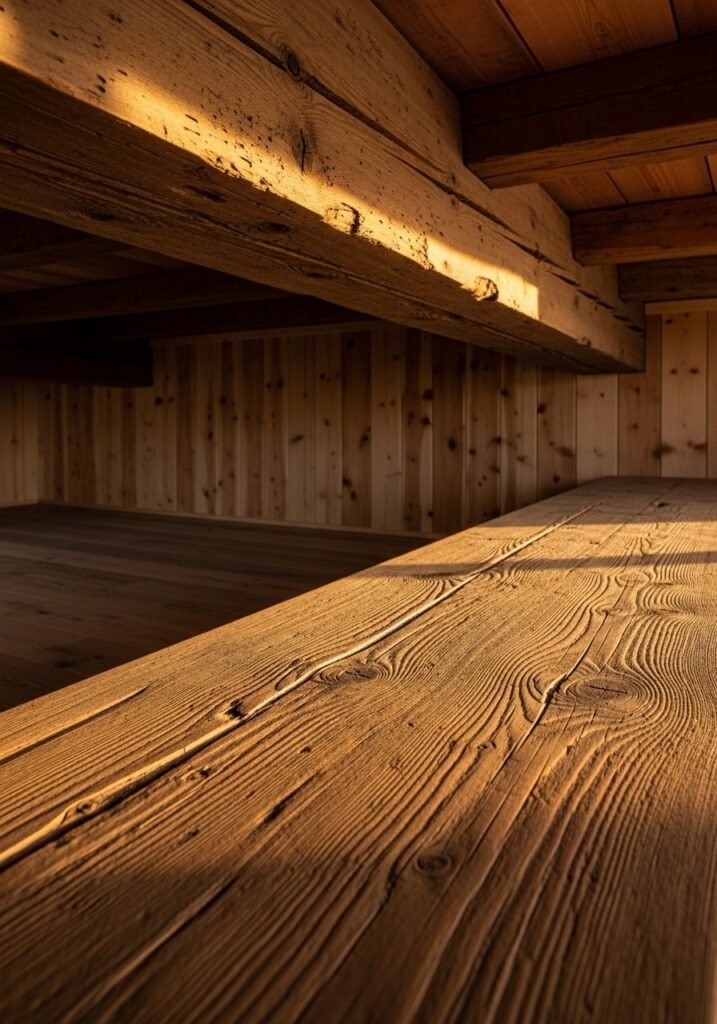
If there is one material that defines the forest cabin interior above all others, it is wood. Not the engineered, laminate, perfectly uniform kind — but real, honest, characterful wood with knots and grain and a story written into every plank.
Exposed ceiling beams are perhaps the single most transformative architectural element you can introduce into a cabin-style space. They immediately lower the psychological ceiling, making a room feel more intimate and sheltered — the way a forest canopy makes you feel held. Reclaimed wood is ideal here, not just for its visual character but for its sustainability and the conversation-starting history it carries.
Wide-plank hardwood floors in a warm oak or chestnut tone anchor every room. Walls clad partially in shiplap, tongue-and-groove pine paneling, or even a single accent wall of raw timber bring the outdoors in with quiet authority. The layering of different wood tones — dark beams, medium floors, lighter paneling — creates visual depth that feels organic rather than designed.
Run your hand across a rough-hewn wooden mantelpiece and you will understand immediately why no synthetic material can replace it. That texture is irreplaceable.
4. Stone, Brick, and the Ancient Comfort of a Real Fireplace
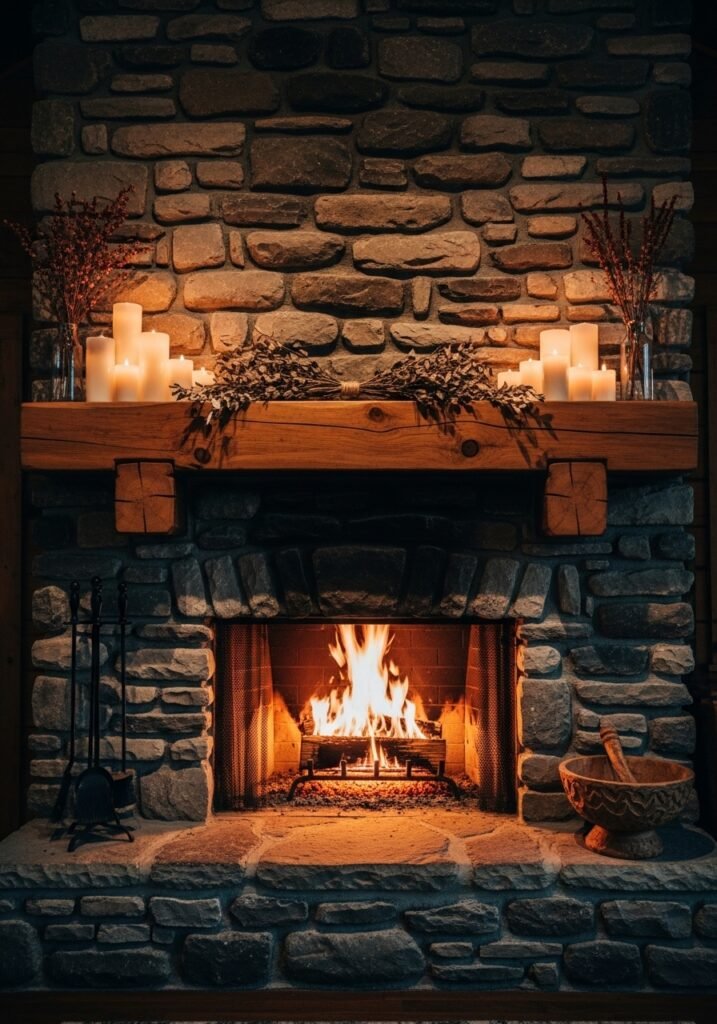
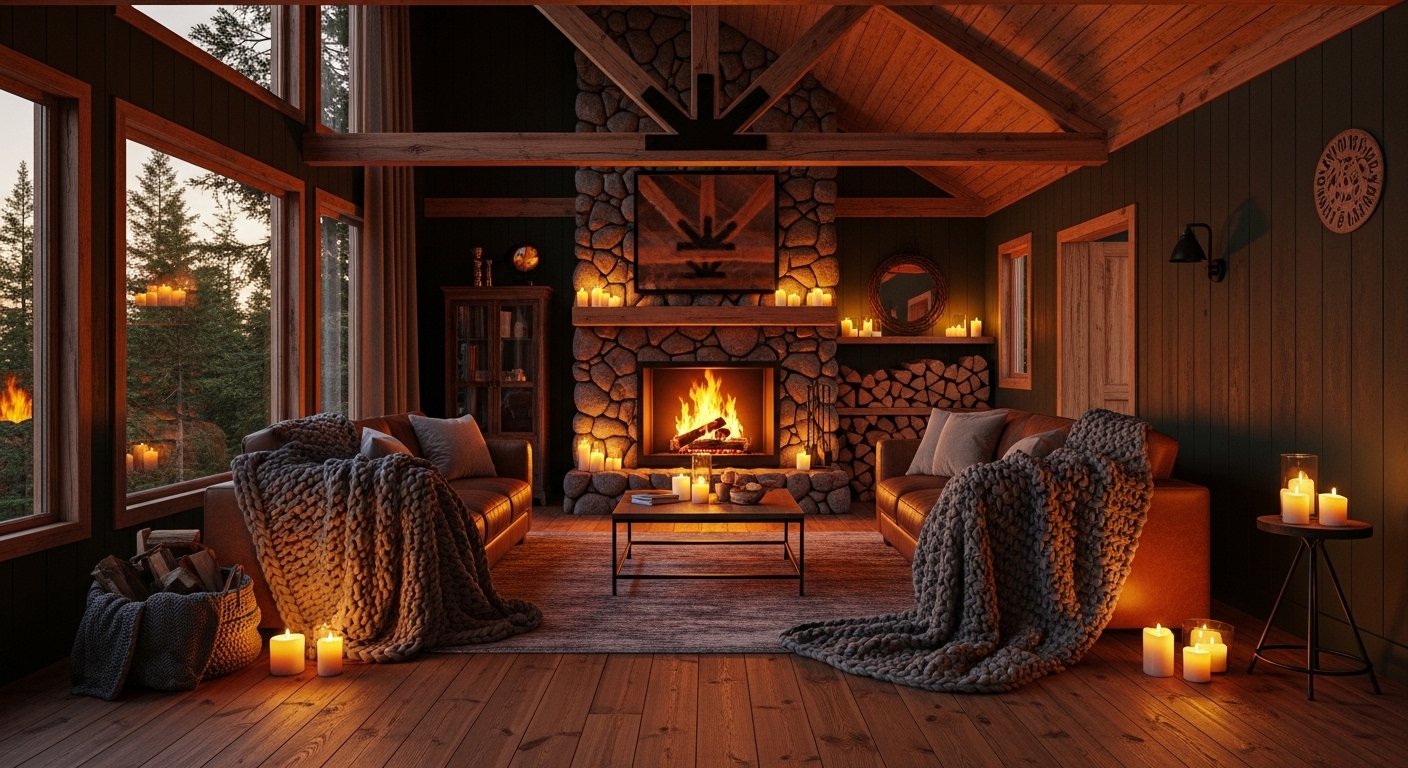
A forest cabin without a fireplace — or at least the suggestion of one — is like a story without an ending. The fireplace is the emotional center of the entire space. Everything in a well-designed cabin interior is oriented around it, drawn toward it like moths to a flame. Because we are, quite literally, wired that way.
Archaeologists tell us that humans have been gathering around fires for hundreds of thousands of years. Our brains associate flickering flame with safety, community, and warmth at a level far deeper than conscious thought. This is why even an ethanol fireplace or a realistic electric insert can shift the entire feeling of a room. The fire matters.
The surround matters just as much. Natural stone — whether stacked fieldstone, irregular slate, or smooth river rock — creates the most authentic cabin aesthetic. Floor-to-ceiling stone fireplaces make a dramatic statement in larger rooms. For smaller spaces, a modest brick surround with a thick wooden mantel strikes the same emotional note without overwhelming the room.
Style the mantelpiece with intention: a cluster of pillar candles in varying heights, a carved wooden bowl, a few sprigs of dried botanicals, or a single piece of art that looks like it could have been painted in the woods nearby.
5. Textiles That Beg You to Reach Out and Touch Them
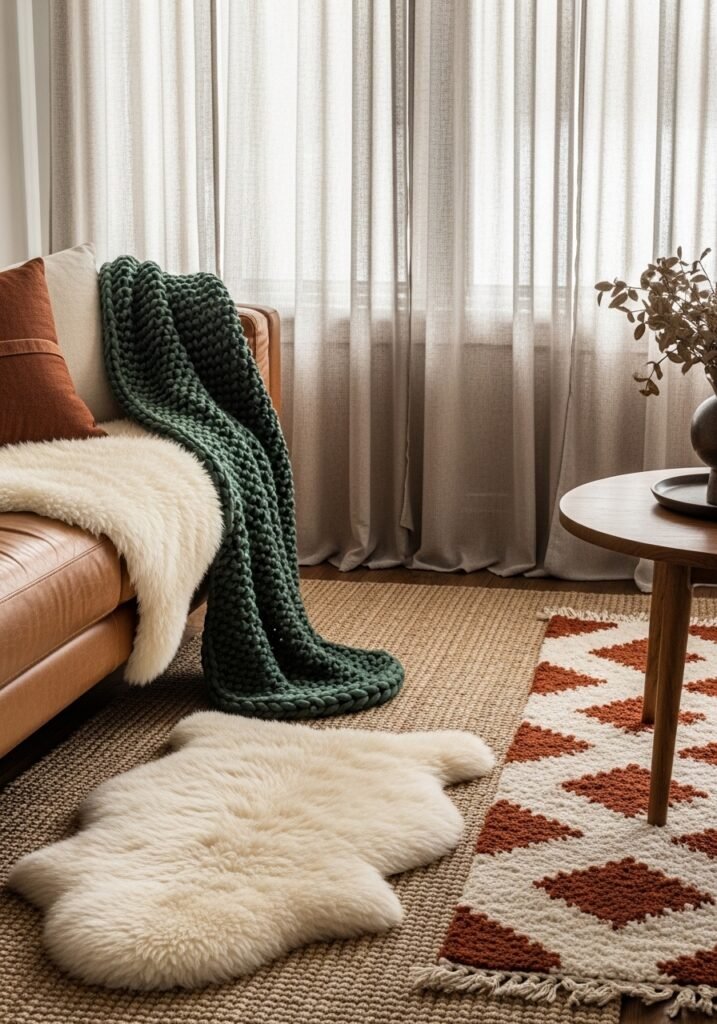
If wood and stone are the bones of a forest cabin interior, textiles are its warmth — the soft layer between you and the structural world. The right textiles do not just look cozy; they make you physically want to crawl inside the room and stay.
Think chunky knit throws draped over the arm of a leather sofa. Linen curtains in an oatmeal or soft sage that diffuse light rather than block it. Wool area rugs with geometric patterns in rust, cream, and forest green. Sheepskin throws tossed over a rocking chair near the fire. Every surface that can be softened should be softened.
Layering is key. A bare wooden floor is beautiful, but a wide jute rug with a sheepskin layered on top becomes a destination — the spot in the room where you drop to the floor with a book and a mug of tea and simply disappear for an hour.
“Layering textures in a room is the design equivalent of wrapping yourself in something warm — it works from the inside out.”
Natural fibers — cotton, linen, wool, jute, leather — are the materials of choice here. Avoid synthetics where possible. Not just for aesthetic reasons, but because natural materials breathe, age beautifully, and feel different under your hands in a way that matters more than most people realize until they experience it.
6. Furniture That Looks Like It Has Always Been There
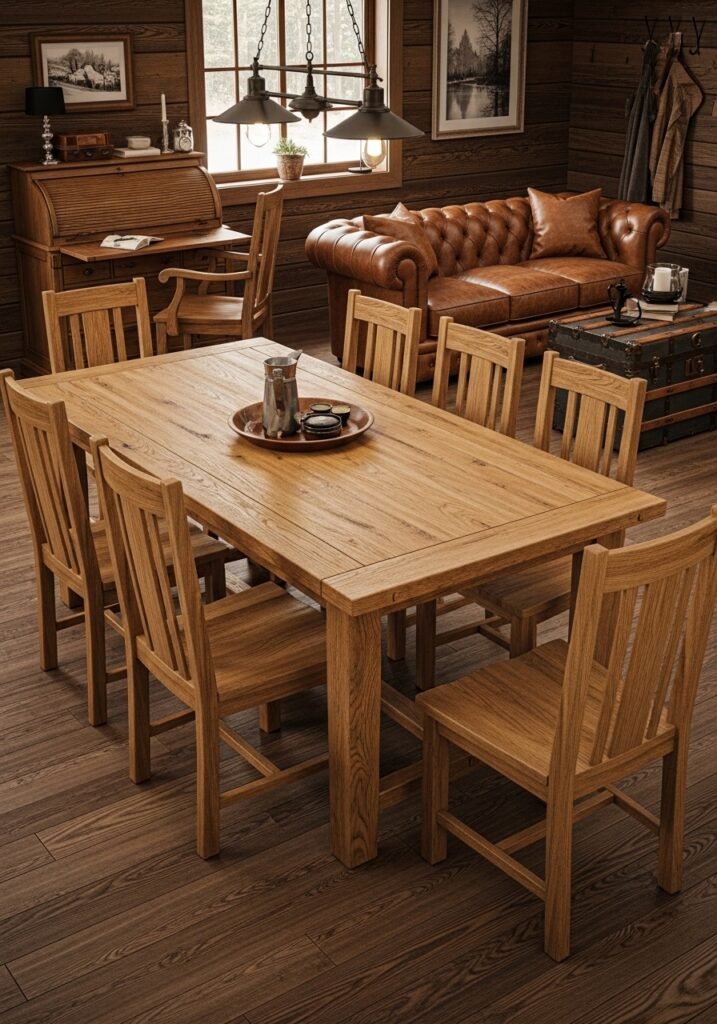
The furniture of a forest cabin interior should never look like it just arrived from a showroom. It should look — and feel — as though it has lived in that room for generations. This is the aesthetic of permanence, of rootedness, of things that were built to last rather than to trend.
Solid wood furniture with visible joinery and sturdy proportions sets the right tone. A farmhouse dining table that seats eight. A wide leather Chesterfield sofa in cognac brown. A chunky wooden bedframe with a high, upholstered headboard. An antique writing desk tucked into a corner by the window. These are the pieces that anchor a room in time.
Shopping vintage and secondhand is not just budget-friendly in this context — it is ideologically aligned with the whole philosophy of cabin living. Things that have already lived a life carry an energy that new objects cannot replicate. A cast-iron bench found at a salvage yard, or an old wooden trunk repurposed as a coffee table, speaks the exact language of a forest cabin interior fluently.
7. The Magic of Low, Warm Lighting After Dark
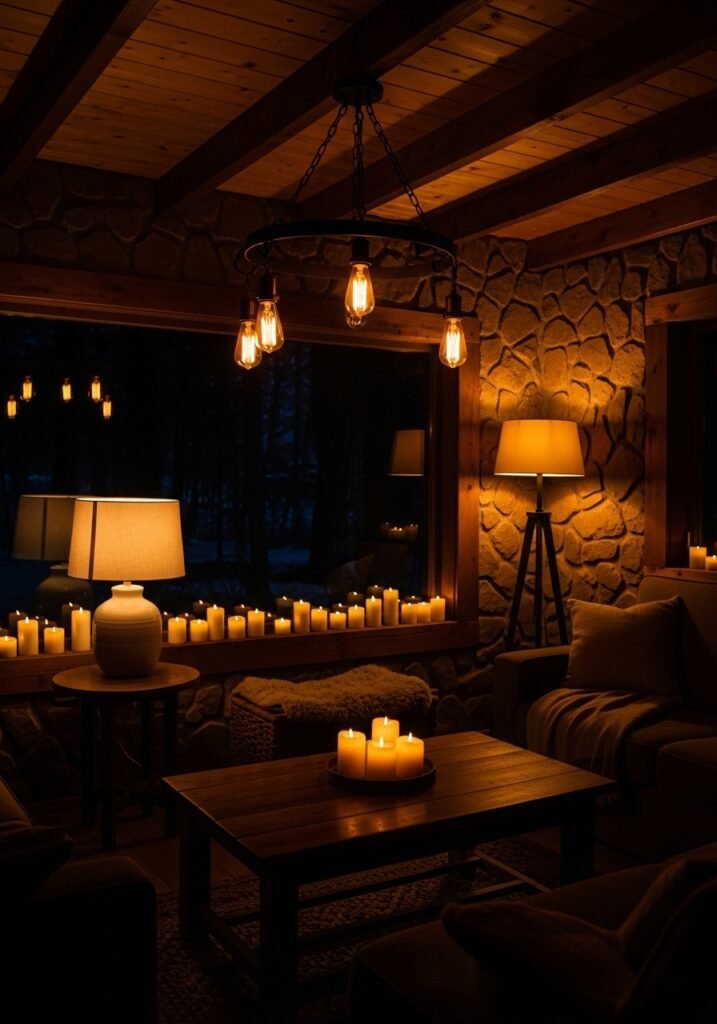
Nothing — and this is not an exaggeration — nothing transforms a space quite as dramatically as lighting. And in a forest cabin interior, the goal is to replicate the quality of firelight and candlelight as closely as possible. This means warm-toned bulbs, low-hung fixtures, and layered light sources at varying heights.
Flush ceiling fixtures are largely enemies of cozy. Instead, look to pendant lights in wrought iron or hammered copper, table lamps with linen shades, floor lamps positioned in corners to push warm light up the walls, and — crucially — candles. Lots of them. Grouped on the coffee table, lined along the window ledge, clustered on the mantel.
Edison bulbs with a warm 2700K or lower color temperature cast light that looks genuinely candlelit. Dimmer switches are not a luxury in this context — they are a necessity. The ability to bring the light down as the evening deepens is one of the single greatest contributors to that feeling of deep cabin coziness.
8. Bringing the Forest Inside: Plants, Branches, and Natural Decor
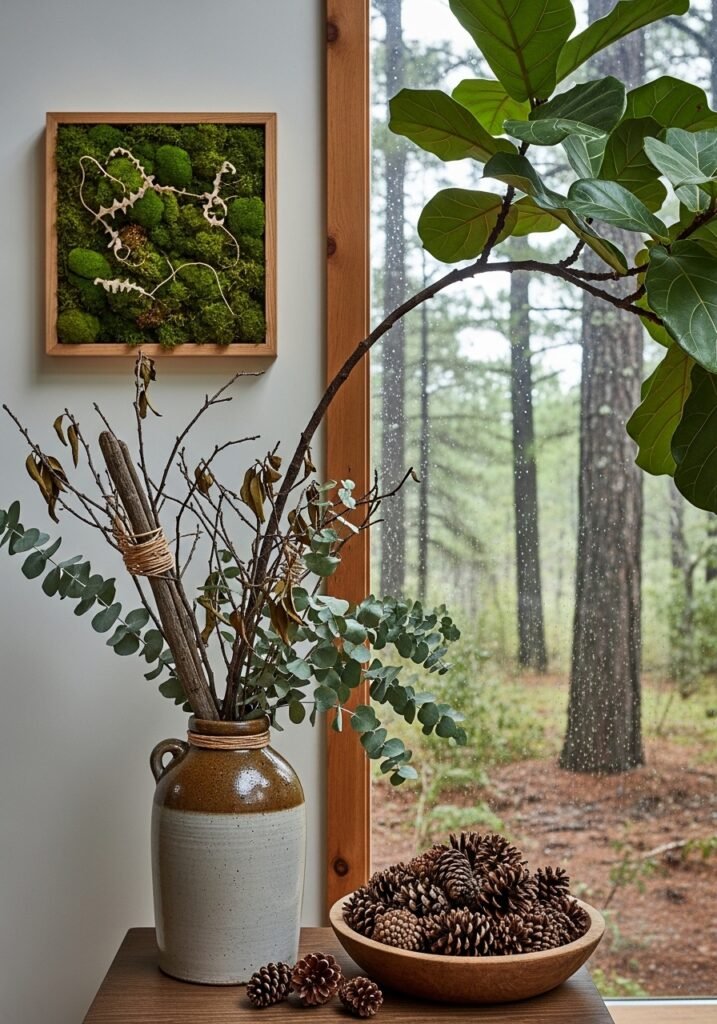
A forest cabin interior does not just reference nature in its palette and materials — it literally brings nature indoors. And this is one of the most joyful parts of the whole decorating process.
Large, architectural plants like fiddle-leaf figs, olive trees, or monstera varieties bridge the gap between interior and exterior in the most organic way. But beyond potted plants, consider branches — dried or fresh — arranged in a tall stoneware vase. Pinecones gathered in a wooden bowl. A bundle of dried lavender or eucalyptus tied with twine and hung from a beam. Moss preserved in a simple frame on the wall.
Foraged decor costs almost nothing and carries an authenticity that no store-bought item can match. A walk through the woods with a bag in hand can yield the most beautiful decorative objects you will ever own — weathered bark, interestingly shaped stones, seed pods, feathers. These small, organic details are what give a cabin interior its soul.
9. The Art of Creating Cozy Corners Within the Room
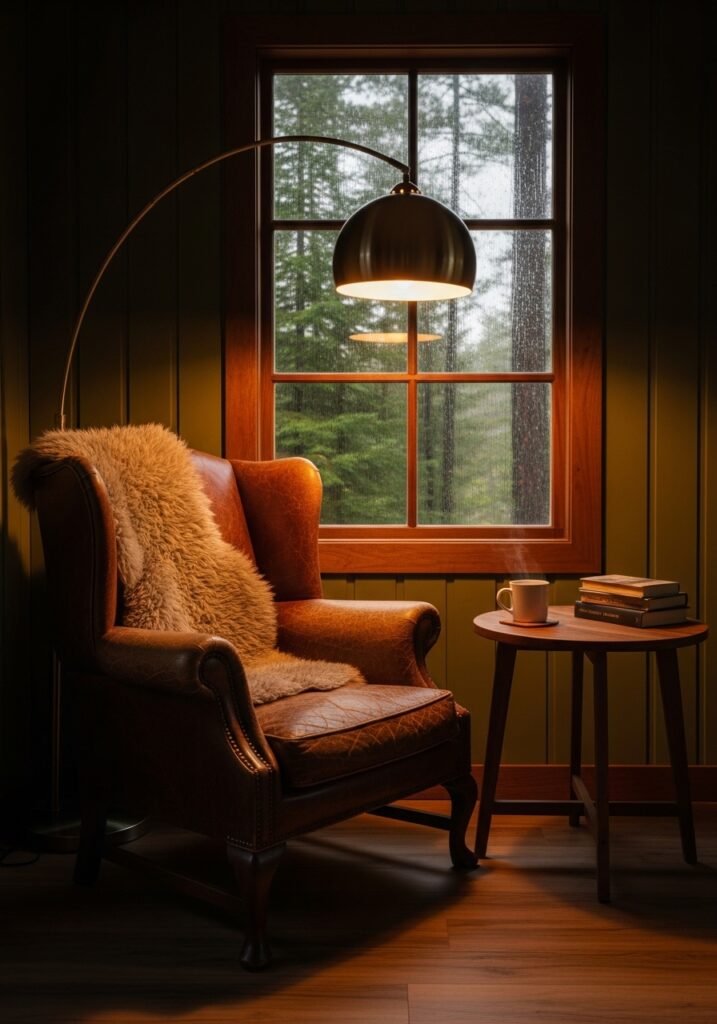
One of the most characteristic features of a well-designed forest cabin interior is the presence of what designers call “cozy corners” — small, defined spaces within a larger room that feel intimate and purposeful. These are the places where life actually happens: where you read, where you write in your journal, where you drink your first coffee of the morning.
Creating a cozy corner requires little more than intention. A wingback chair angled toward a window, a small side table within arm’s reach, a floor lamp curving overhead, and a stack of books on the floor beside it. That is all it takes to create a destination within a destination.
Window seats with thick cushions and a scatter of pillows are perhaps the most beloved version of this concept. Built-in benches tucked into an alcove, or a low daybed positioned beneath the eaves in an attic room — these deliberate nooks invite occupation. They say, without words: come, sit, stay awhile.
“Every home needs at least one spot that feels like it was made specifically for you — where the world gets smaller and quieter and easier to bear.”
10. Kitchen Design in a Forest Cabin: Where Warmth Becomes Functional
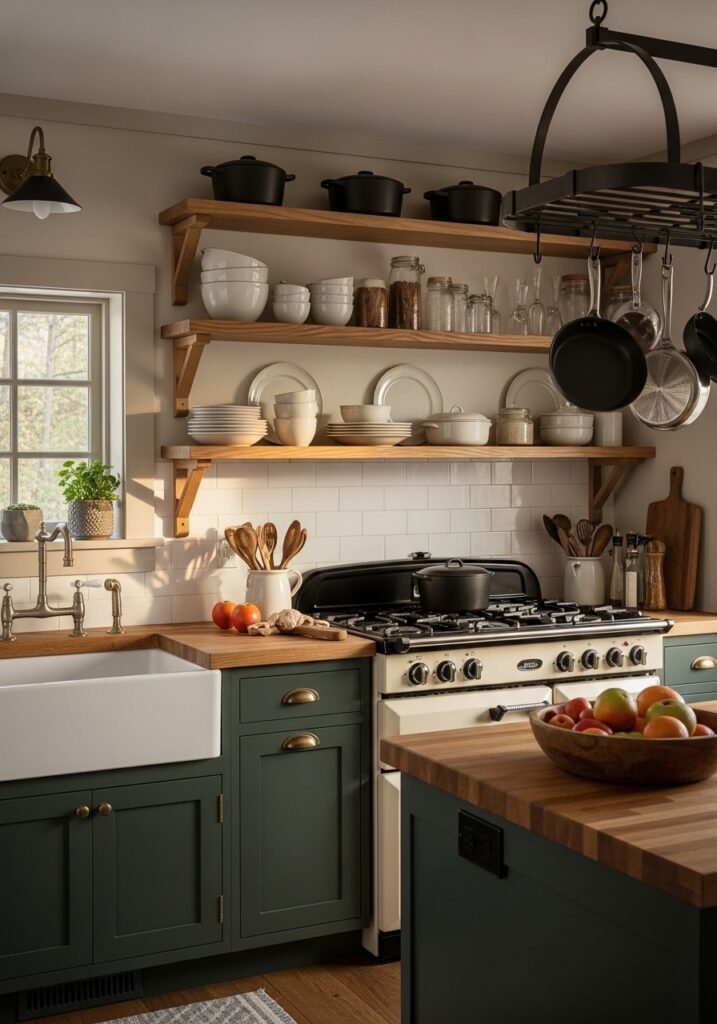
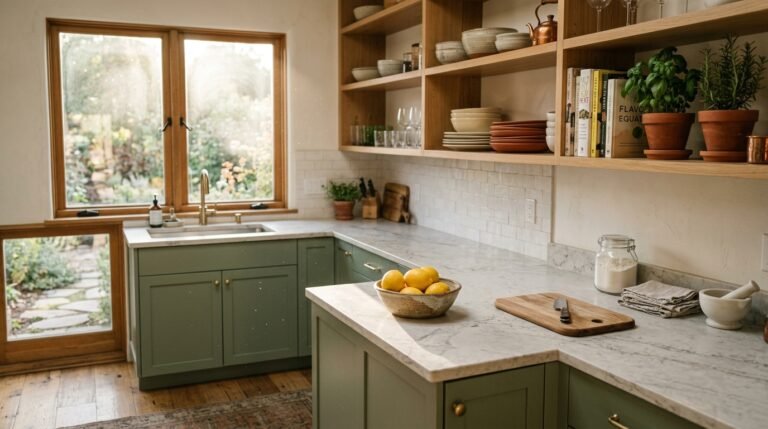
The kitchen of a forest cabin interior deserves special attention, because it is simultaneously one of the most functional rooms in the home and one of the most emotionally resonant. This is where bread gets baked on Sunday mornings, where soup simmers for hours filling the whole cabin with warmth, where family gathers around the island while dinner comes together slowly and lovingly.
Open shelving in natural wood replaces upper cabinets, putting handsome stoneware, vintage cast-iron cookware, and glass jars of dried goods on full, beautiful display. Lower cabinets in a deep forest green or a warm charcoal with aged brass hardware feel deeply cabin-appropriate without sacrificing practicality.
A farmhouse sink in white fireclay, a butcher-block countertop, a vintage-style range in cream or black — these are the elements of a kitchen that functions beautifully and tells a story at the same time. Hang a simple pot rack above the island. Keep a wooden bowl of seasonal fruit on the counter. Let the kitchen look lived in, because a kitchen that looks too perfect is a kitchen that invites no one.
11. Bedroom Design for Sleeping Like You’re Surrounded by Trees
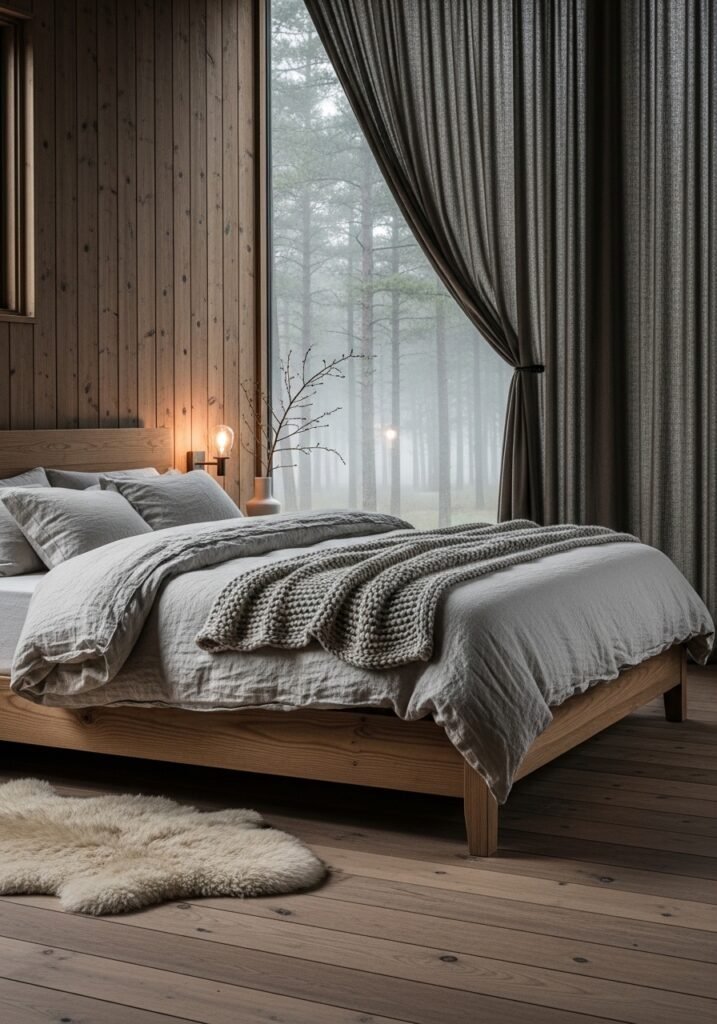
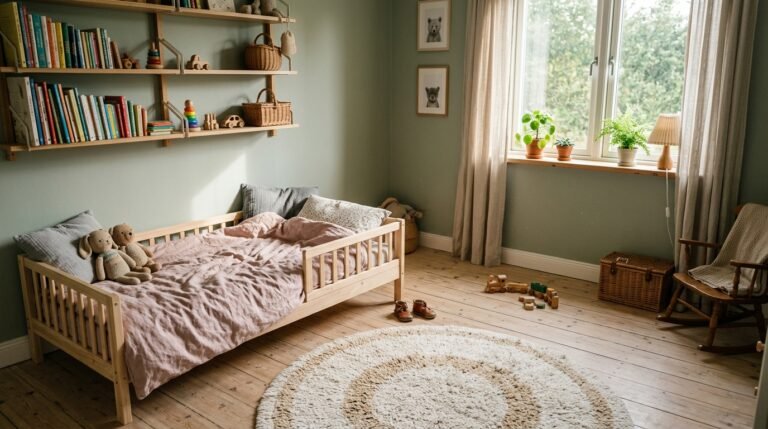
Sleep is different in the forest. Anyone who has ever spent a night in a real cabin knows this — the quality of rest, the depth of dreams, the way you wake up slowly and with something closer to peace than you feel most mornings at home. A forest cabin bedroom is designed to recreate this experience, night after night.
The bed is everything. A solid wooden frame — preferably with some height and a sense of substance — dressed in layers of linen bedding in natural, undyed tones. A chunky knit blanket folded at the foot. A sheepskin rug on the floor beside it for the moment your feet touch the ground each morning. Blackout curtains in a heavy linen that block light without sacrificing texture.
Keep the bedroom simple. Fewer objects, more breathing room. A single bedside lamp. A stack of books. A small vase with one perfect branch. The bedroom of a forest cabin interior is not a place for clutter — it is a sanctuary, and sanctuaries require space to be what they are.
12. Decorating the Cabin Exterior: Because First Impressions Are Everything
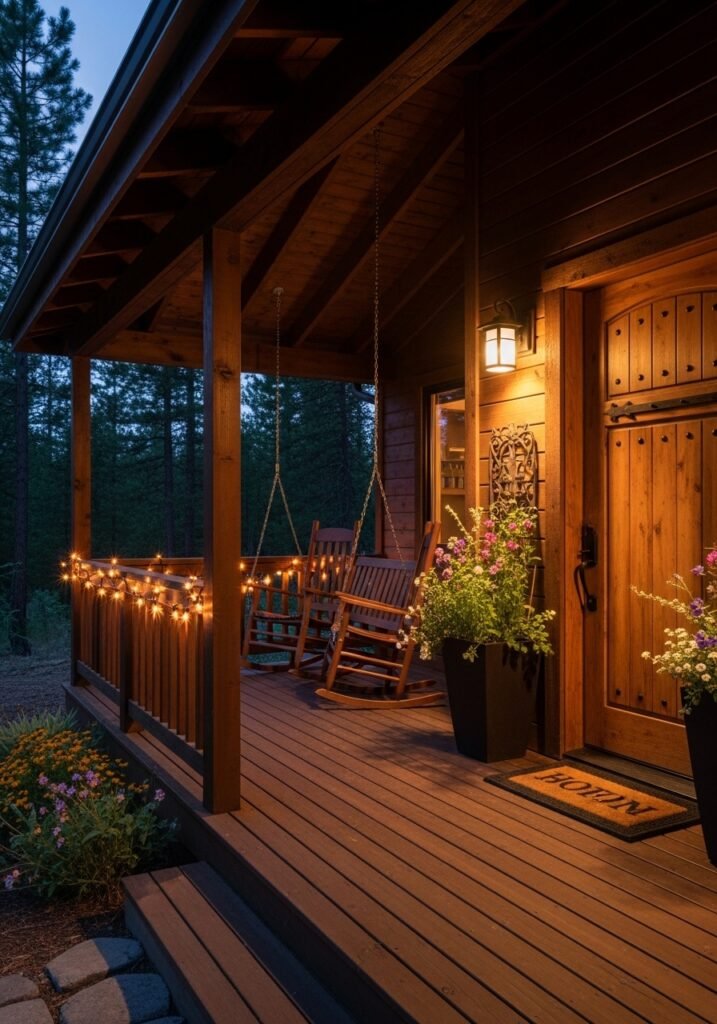
The transition from the forest path to the cabin door is part of the experience — and a well-considered exterior brings the whole vision full circle. A forest cabin exterior should feel like an extension of the interior world it contains: rooted, natural, welcoming.
A covered porch with a hanging swing or a pair of rocking chairs is the most classic and beloved cabin exterior feature for good reason. It creates an in-between space — not quite inside, not quite outside — where you can drink your evening tea while watching the trees. String lights threaded along the porch railing extend the evening hours.
Planters overflowing with native plants and wildflowers beside the front door, a simple wooden house number, a hand-forged iron door handle, a boot scraper by the threshold — these details are small and their impact is enormous. They signal the kind of home this is before a single door has been opened.
—
🌿 How to Create Your Own Forest Cabin Interior
Creating this aesthetic is more approachable than it might seem — even if you are working with a suburban apartment rather than an actual cabin in the woods. Start with these grounded, practical steps:
Begin with your palette. Paint one wall in a deep sage or warm mushroom tone and observe how the room changes. Color is the fastest, most affordable transformation available to you — and in this aesthetic, a single moody wall can shift everything.
Invest in one piece of real wood furniture. Not particle board, not veneer — actual solid wood. A coffee table, a bookcase, a dining bench. Let it be the anchor around which everything else builds.
Layer your textiles deliberately. Add a jute rug, then a sheepskin on top. Add a chunky throw to your sofa. Swap out synthetic pillow covers for linen ones. Do this gradually and you will feel the room warming around you in real time.
Switch your bulbs to warm-toned LED equivalents of 2700K or below, add a dimmer switch to your main light, and introduce candles. Do this on a winter evening and notice what happens to your nervous system when you sit in that light.
Finally, bring something from outside in. A branch. A stone. A handful of pinecones in a bowl. It sounds almost too simple — but this one gesture, more than almost any other, closes the distance between you and the forest.
—
❓ FAQ
Q: What are the key elements of a forest cabin interior? A: The foundation rests on natural wood, stone or brick accents, warm earthy color palettes, layered textiles in natural fibers, and low ambient lighting that mimics firelight. Beyond materials, the spirit of a cabin interior is defined by its intentionality — every object chosen for comfort, function, or meaning rather than trend.
Q: Can I achieve a forest cabin aesthetic in a small apartment? A: Absolutely. The cabin aesthetic is actually well-suited to smaller spaces because it leans into coziness rather than fighting it. Focus on warm paint tones, wood accents through furniture or shelving, layered textiles, plants, and candlelight. A single corner styled with a wooden chair, a lamp, and a sheepskin can carry the entire feeling of a cabin retreat.
Q: What is the difference between a forest cabin interior and rustic farmhouse style? A: Both share a love of natural materials and warmth, but forest cabin interiors tend to be darker, moodier, and more deeply rooted in the woodland environment — think deep greens, heavier woods, stone fireplaces, and foraged decor. Farmhouse style leans lighter, airier, and more open, with white walls, shiplap, and a more polished version of rustic living.
—
💭 Final Thought
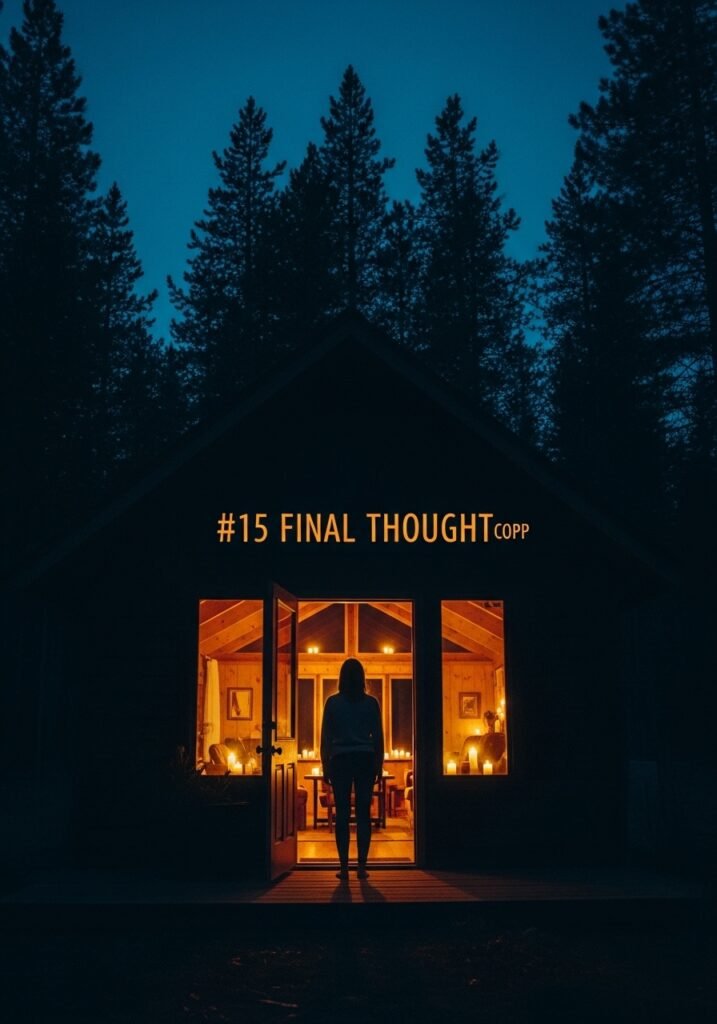
A forest cabin interior is not just a design style — it is a philosophy about how a home should feel and what a home should do for the person living inside it. It is a commitment to slowness, to warmth, to the kind of beauty that does not demand your attention but simply holds it, gently, for as long as you are willing to stay.
You do not need a cabin in the woods to live this way. You just need intention.
And so, the question worth sitting with: what would change in your daily life if the room you came home to every evening felt, from the first moment you walked through the door, like the most peaceful place on earth?