
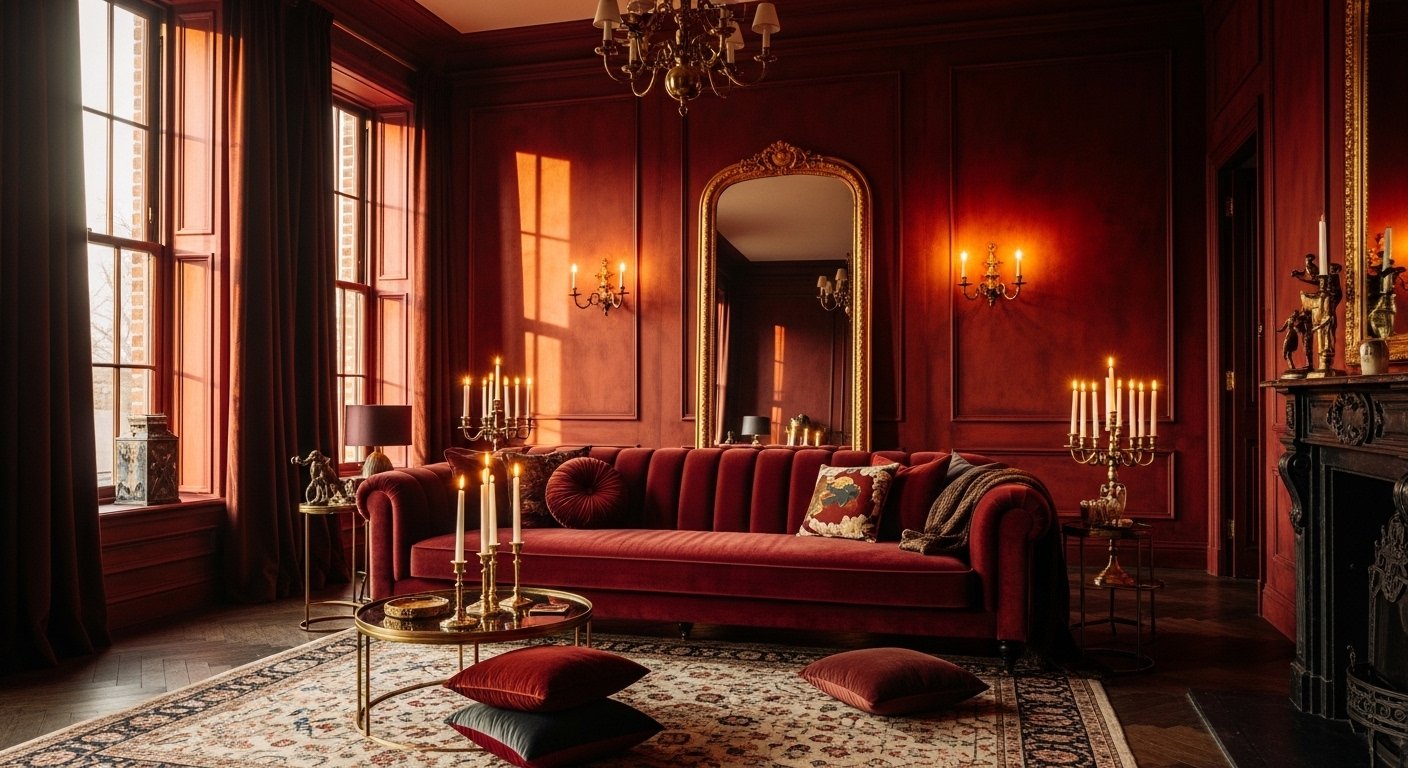
The Red Carpet Interior: How to Bring Luxury, Drama, and Warmth Into Every Room You Call Home
There’s a moment — you’ve probably felt it — when you walk into a room and something shifts inside you. The air feels different. The colors speak before anyone does. That’s what a red carpet interior does: it makes you feel like the main character the second you cross the threshold.
—
1. What “Red Carpet Interior” Actually Means (It’s Not What You Think)
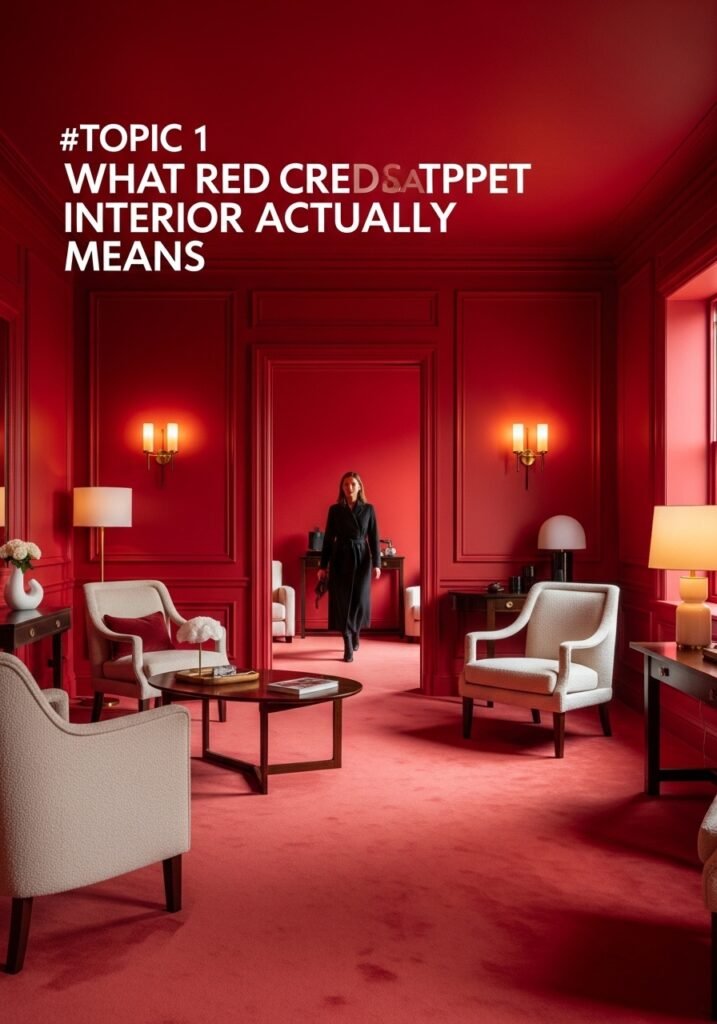
Most people hear “red carpet interior” and immediately picture Hollywood premieres, velvet ropes, and gold Oscar statuettes. But inside the world of interior design, the phrase means something far more intimate and achievable than that.
A red carpet interior is about creating a space that commands attention — not through excess, but through intention. It’s the deliberate use of rich, saturated color, luxurious texture, and bold design choices that make a room feel elevated, dramatic, and deeply livable all at once. It’s the kind of space where guests pause in the doorway because the room earns that pause.
“A truly great room doesn’t ask for attention — it commands it quietly, confidently, the way a well-dressed person walks into a party.”
The color red, in interior design psychology, is one of the most emotionally complex and powerful tones available to any decorator. It stimulates conversation, raises energy levels, increases heart rate slightly, and — when used with sophistication — wraps a room in an unmistakable warmth that no neutral palette can replicate. Red carpet interiors aren’t loud for the sake of being loud. They’re bold because the people who live there have decided their home deserves to be remembered.
—
2. The Psychology of Red: Why This Color Does Something to Us
Before you commit to a single swatch or furniture piece, it helps to understand what red is actually doing to your nervous system — because it does quite a lot.
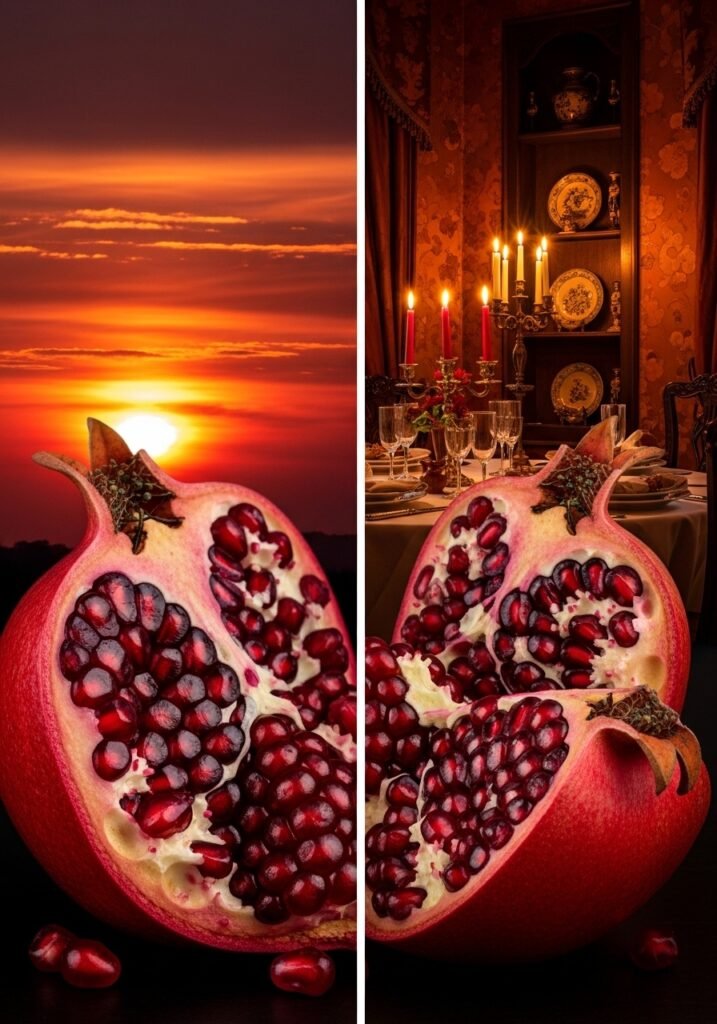
Red is the color of fire, of pomegranates split open, of the warmest corner of a sunset. Psychologically, it’s associated with passion, warmth, appetite, and urgency. That’s why restaurants have used it for decades — it literally makes people feel hungrier and more social. In a home setting, deep reds (think burgundy, crimson, oxblood, and mahogany) translate those same energies into feelings of comfort, indulgence, and safety.
Lighter reds — raspberry, coral, and tomato — bring playfulness and brightness into a space. Darker reds anchor a room, giving it gravitas and a sense of permanence. Neither is better than the other. What matters is matching the psychological effect you want to the room’s purpose. A dining room in deep oxblood feels like a private supper club. A reading nook in dusty raspberry feels like a hug you’ve been waiting for all week.
—
3. The Rooms Where Red Carpet Interiors Shine Brightest
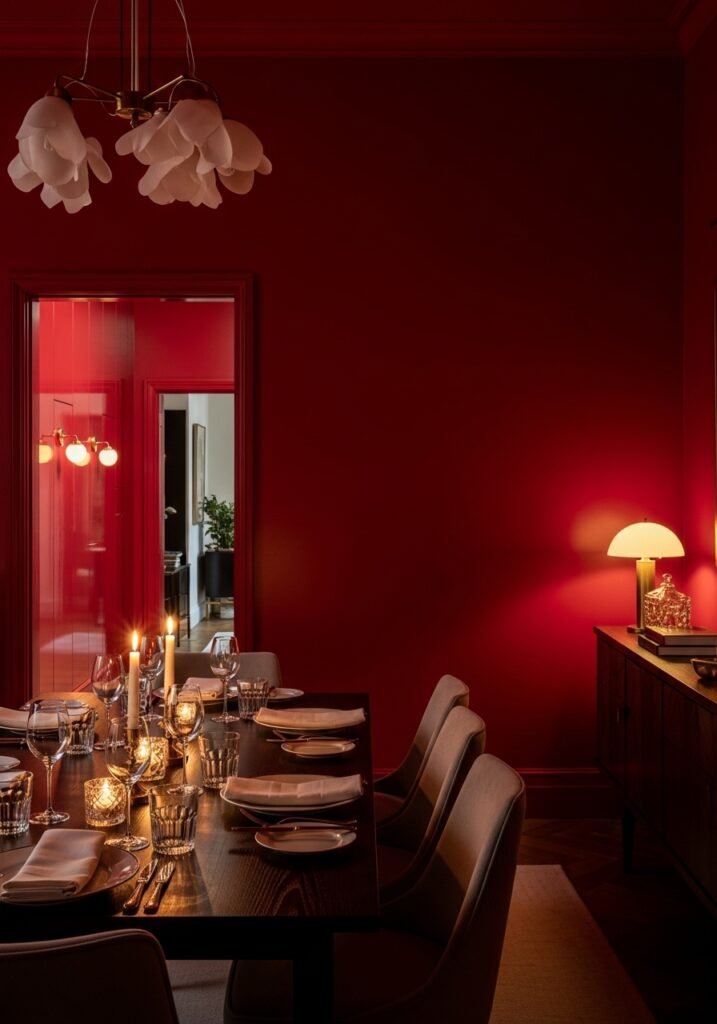
Not every room in your home needs to go full red carpet — and actually, restraint is part of what makes this style work so beautifully. Strategic placement of red-influenced design creates a sense of flow and surprise throughout a home, like chapters in a story that keeps getting better.
Living rooms are one of the most natural settings for this approach. A deep crimson accent wall behind a sofa anchors the room and creates a focal point that draws every eye. Dining rooms are perhaps the most dramatic canvas for red — a room you only occupy for an hour or two at a time can afford to be intensely atmospheric. Entryways and hallways are genuinely underrated: a glossy red wall in a narrow corridor creates the feeling of walking through something — of arriving somewhere that matters.
Bedrooms deserve a special mention here. Many people are afraid to bring red into the bedroom, worried it’s “too intense.” But a bedroom done in muted, dusty red tones — layered with soft linen, warm wood, and candlelight — is one of the most romantic and deeply restful spaces imaginable. It’s not about stimulation. It’s about richness.
—
4. Choosing the Right Shade of Red for Your Space
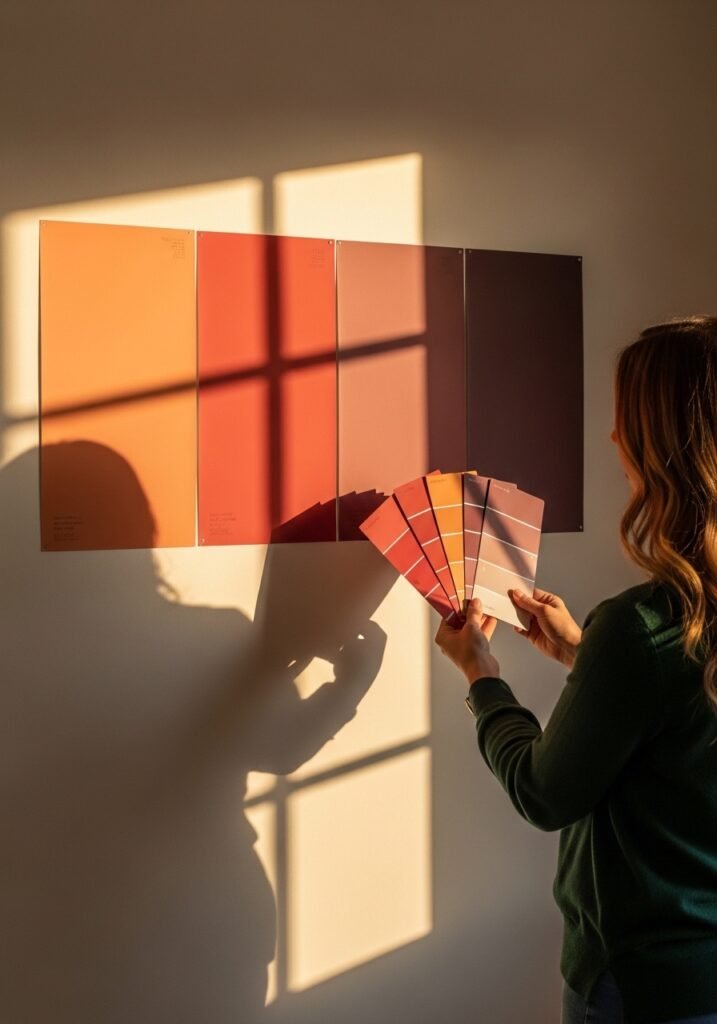
This is where a lot of well-meaning decorators stumble. They fall in love with a paint chip under a fluorescent store light, bring it home, and watch it transform into something completely unexpected on their walls. Red, more than almost any other color, is extraordinarily sensitive to light.
Warm-toned reds — those with orange or brown undertones, like terracotta red, rust, and brick — perform beautifully in rooms with plenty of natural light. They feel earthy and grounded, connecting the indoors to the landscape outside. Cool-toned reds — berry, crimson, deep burgundy — work magnificently in rooms with controlled or low lighting, where they glow like embers.
The paint finish matters just as much as the shade. Matte and eggshell finishes absorb light and create depth, making a room feel like a painting you’ve stepped inside. Satin and semi-gloss finishes reflect light, adding glamour and visual movement — ideal for dining rooms and entryways where you want drama. Never rush this decision. Paint three or four large swatches directly on your wall and live with them for at least 48 hours before committing.
“The right shade of red doesn’t shout. It whispers something you can’t quite ignore.”
—
5. Texture Is Everything: The Fabrics That Make Red Carpet Interiors Feel Alive
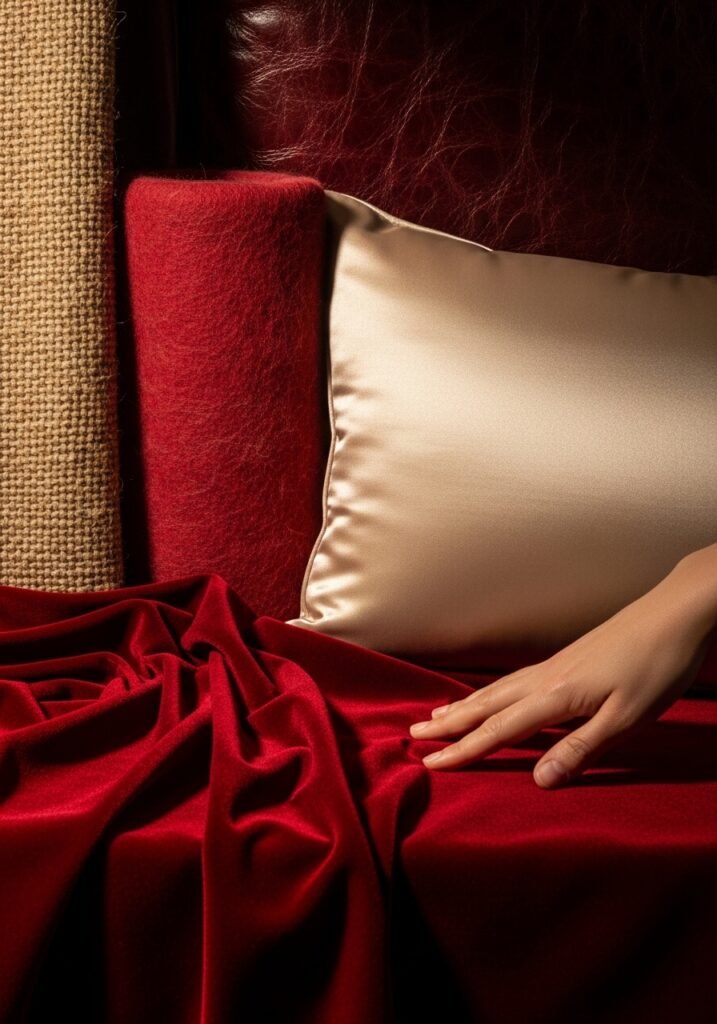
Color alone doesn’t make a red carpet interior. Texture is the silent partner that transforms a room from flat and predictable into something that makes you want to reach out and touch everything.
Velvet is, without question, the crown jewel of red carpet fabric. A deep red velvet sofa is one of the most enduringly beautiful pieces of furniture you can own — it absorbs light, changes color depending on the angle, and feels impossibly luxurious underfoot. Pair it with a rougher texture like linen or jute to prevent the room from feeling too precious.
Silk throw pillows catch light and add a gentle shimmer. Wool rugs in deep cranberry or burgundy anchor a seating area and add warmth underfoot during colder months. Leather — particularly aged or distressed leather in oxblood tones — brings a masculine, studied elegance to libraries, offices, and sitting rooms. Layering these textures together is what separates a room that looks designed from one that looks merely decorated.
—
6. The Art of Pairing: What Colors Actually Work With Red
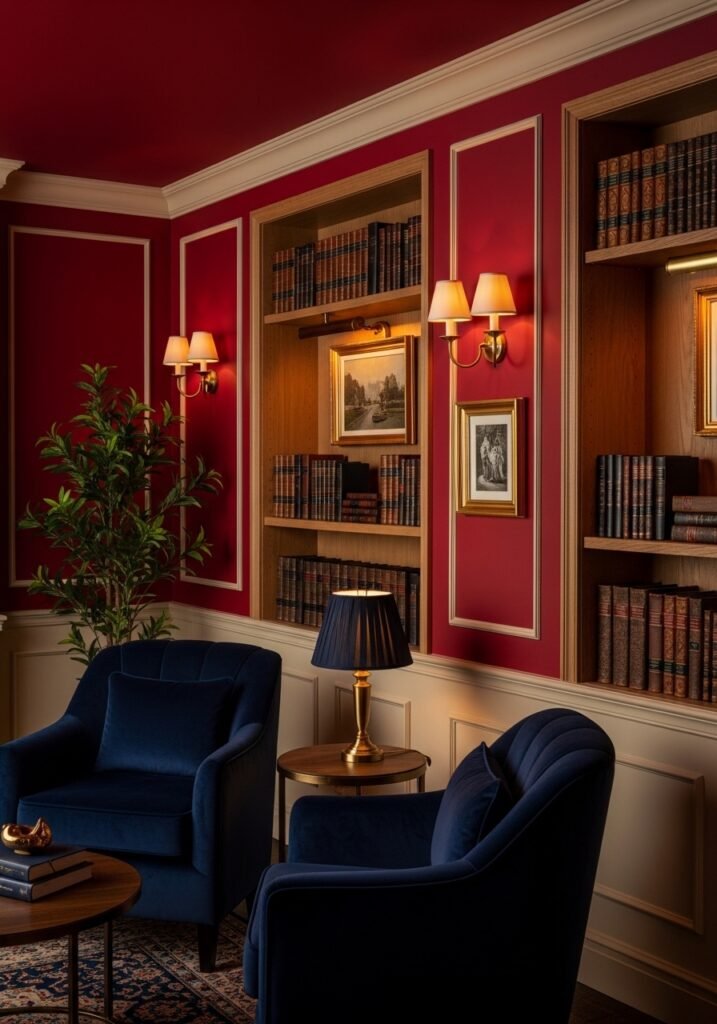
One of the most common fears about red interiors is: what do I pair it with? The answer is more generous than most people expect.
Gold is red’s natural companion — this pairing has centuries of history in palaces, opera houses, and grand hotels for good reason. Together, they read as regal without feeling costume-y, especially when the gold appears in warm brass fixtures, gilded frames, or honey-toned wood rather than shiny chrome. Navy blue and deep red create a combination that feels deeply classic and nautical in the best possible way — think of an English gentleman’s library.
Cream and ivory soften red beautifully, preventing it from overwhelming a space. Black makes red more dramatic and modern — a red room with black trim, dark floors, and black furniture is extraordinarily striking. Forest green and red, while associated with the holiday season, can be used year-round in muted, sophisticated tones that read more like a botanical garden than a Christmas card.
White, interestingly, is red’s most complex partner. Bright white can make red feel harsh and stark. But warm white — slightly cream or linen-toned — creates a balance that feels both fresh and deeply welcoming.
—
7. Lighting a Red Room: The Secret Most Decorators Don’t Tell You
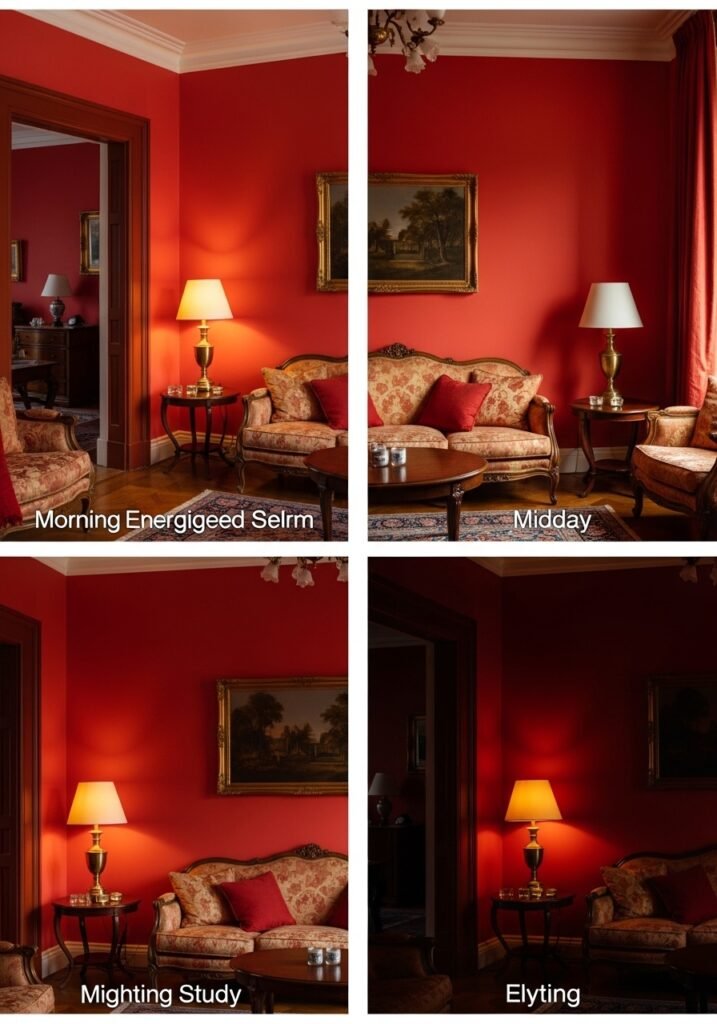
Here’s something that changes everything: red interiors are only as good as the light that falls on them. And most people overlook this completely.
Natural daylight affects red dramatically throughout the day. Morning light makes red feel energized and warm. Midday light can flatten it slightly. Late afternoon golden light turns a red room into something almost magical — the walls seem to glow from within, as if the room itself is alive. This is the best argument for positioning your primary seating area to catch late afternoon sun if at all possible.
For artificial lighting, warm-toned bulbs (2700K-3000K) are non-negotiable in a red interior. Cool white or daylight bulbs will drain the warmth from your carefully chosen red and leave the room feeling clinical and strange. Layer your lighting with purpose: overhead fixtures for ambient light, table lamps and floor lamps for warmth and intimacy, and — whenever possible — candles. Nothing flatters a red room like candlelight. It’s the oldest lighting trick in the world and it still works better than anything electricity has invented.
—
8. Red Carpet Furniture: Pieces That Anchor the Whole Look
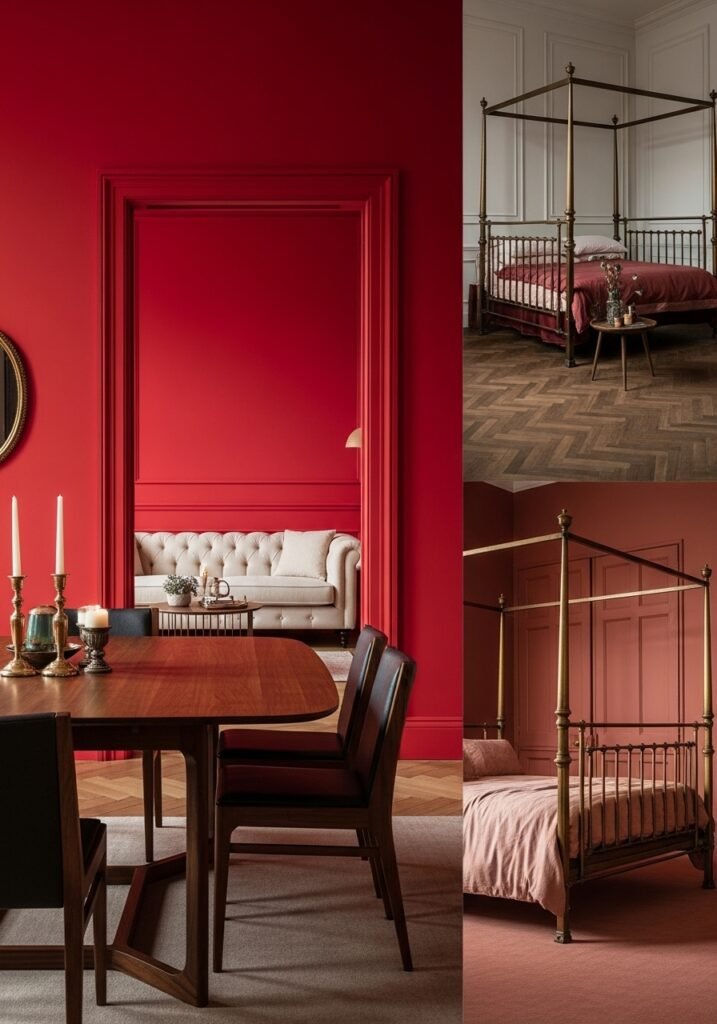
The furniture in a red carpet interior isn’t an afterthought — it’s a co-star. The room’s color story and the furniture have to be in conversation with each other, not talking over one another.
The anchor piece — your sofa, your dining table, your bed — should either commit to the red palette or offer a deliberate, beautiful contrast. A deep walnut dining table against red walls feels like stepping into a renaissance painting. A cream tufted sofa against a red accent wall is timeless and balanced. An antique brass four-poster bed in a dusty rose-red bedroom feels cinematic and deeply personal.
“Luxury isn’t about price tags — it’s about choosing every piece as though it matters. Because in a home you love, it does.”
Avoid furniture that feels too casual or disposable in a red carpet interior. Clean lines and quality materials are essential. This doesn’t mean expensive — it means intentional. A beautifully shaped mid-century chair reupholstered in deep crimson velvet costs far less than a department store sofa and tells a far better story.
—
9. Art, Mirrors, and Accessories: The Finishing Touches That Pull It Together
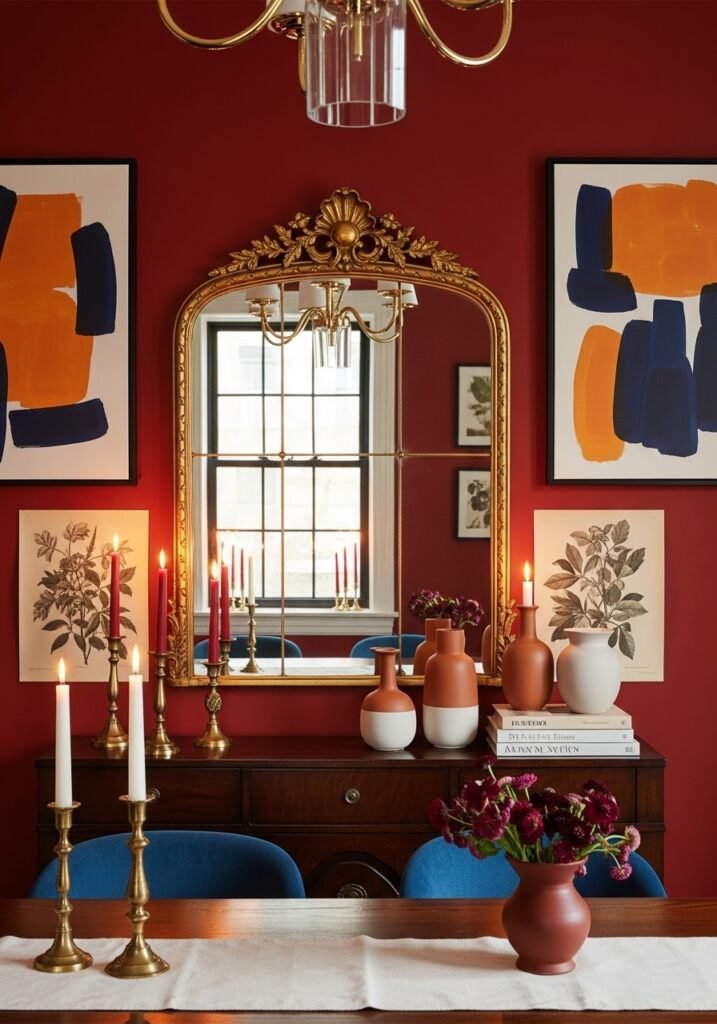
Once your walls, floors, and furniture are in place, the accessories are what make a red carpet interior feel curated rather than assembled.
Art in a red room should be chosen carefully. Abstract work with bold brushstrokes and warm tones — gold, ochre, cream, deep navy — complements the richness of the walls without competing. Large-scale photography in black and white creates a sophisticated, gallery-like contrast. Vintage botanical prints bring a softer, more organic element that prevents the room from feeling too formal.
Mirrors deserve special attention here. In a red room, a mirror doesn’t just add light — it multiplies the warmth and depth of the color, essentially doubling the impact of your design. A large, ornate gold-framed mirror in a red dining room is one of the most glamorous design choices you can make. Position it to reflect either a window or a light source, and watch what happens at dinner time.
Accessories — books with beautiful spines, ceramic vases in warm neutrals, fresh flowers in deep burgundy or blush, brass candlesticks — should be gathered slowly and chosen with genuine affection. A red carpet interior isn’t built overnight. It’s assembled over time, piece by piece, like a story being written.
—
10. Small Space Solutions: Red Carpet Style Without Overwhelming a Room
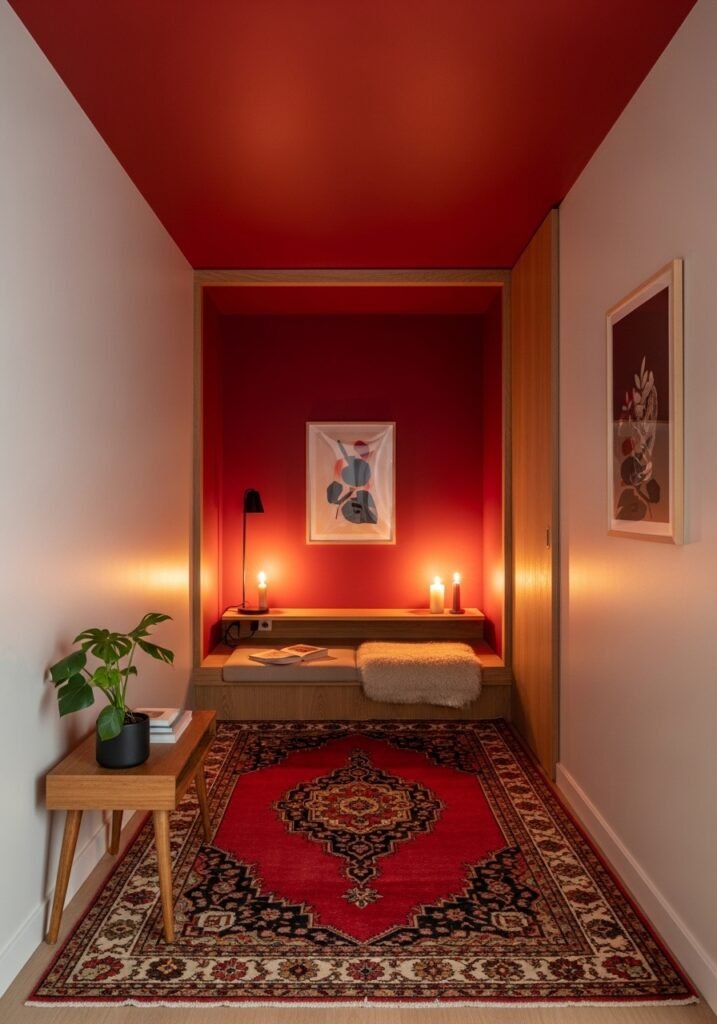
If you live in a studio apartment, a compact townhouse, or simply have a room that feels too small for bold choices, this is where many people give up on the red carpet dream entirely. They shouldn’t.
Small spaces benefit from strategic red application more than almost any other style. A single red accent wall in a small living room creates the illusion of depth — the eye is drawn to it, making the room feel longer and more intentional. Red accessories — a throw blanket, a pair of cushions, a vintage rug — add warmth and character without overwhelming the square footage.
In truly tiny spaces, consider painting the ceiling in a deep red while keeping the walls neutral. This “tent” effect creates a sense of drama and intimacy without shrinking the room visually. It’s unexpected, it’s gorgeous, and it photographs beautifully — which matters if you’re creating content for Pinterest.
—
11. The Red Carpet Kitchen: Where Cooking Becomes a Ceremony
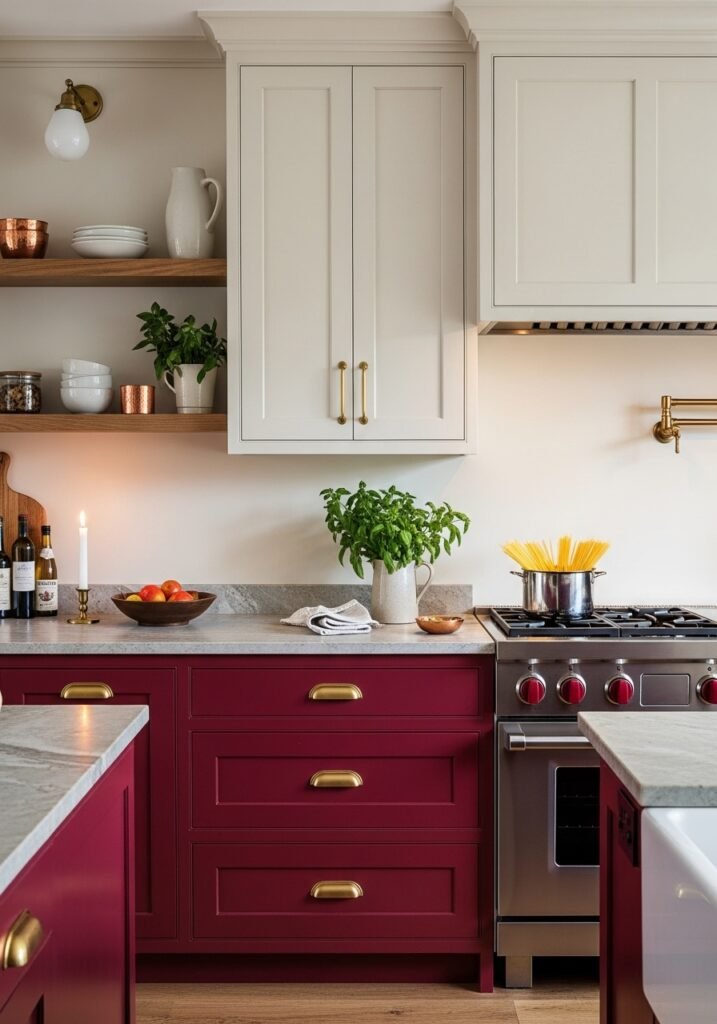
The kitchen is one of the most underexplored rooms for red carpet design — and arguably one of the most rewarding. A kitchen with deep red cabinetry, warm brass hardware, and natural stone countertops doesn’t just look extraordinary. It changes the way cooking feels.
When your kitchen is beautiful — when it feels like a room you’ve designed rather than inherited — you cook differently. You slow down. You light a candle while the pasta water heats. You arrange herbs in a small vase next to the stove. The kitchen stops being a utility room and becomes a place where something worth savoring happens every single day.
Red lower cabinets paired with cream or white upper cabinets is a combination that never ages. It brings warmth and personality to the most functional room in your home while keeping the space feeling open and breathable above eye level. Add open shelving with copper or brass accents, and the result is the kind of kitchen people pause in the doorway of — for exactly the right reasons.
—
12. Making It Yours: The Personal Details That Transform a Room Into a Home
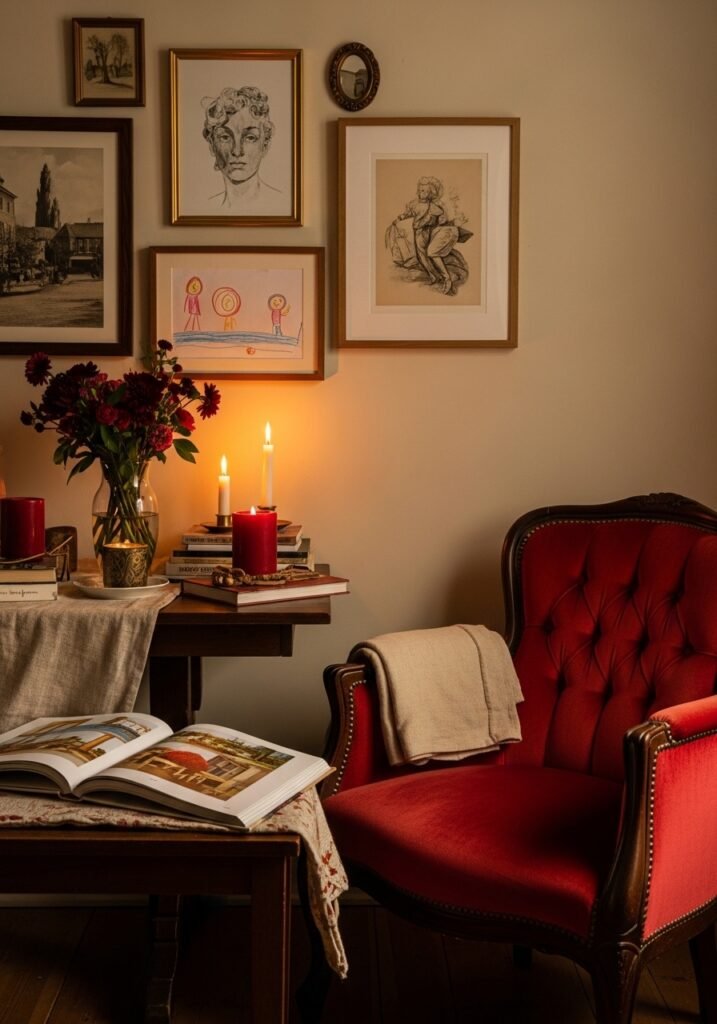
The most important thing about a red carpet interior — the thing that separates a beautiful room from a truly meaningful one — is the evidence of real life within it.
The well-loved cookbook left open on the counter. The gallery wall that includes a child’s drawing framed alongside a fine art print. The slightly worn edge of the velvet chair that gets sat in every single evening. These details are not flaws. They are the proof that a home is actually lived in, and they are what makes any interior — however beautifully designed — feel genuinely human.
A red carpet interior at its best is not a showroom. It’s a space where the design choices you’ve made with care and intention create the backdrop for a life you love living. The drama of the color, the richness of the texture, the warmth of the light — these aren’t decorative flourishes. They’re daily invitations to feel that your ordinary moments are worthy of something beautiful.
—
🌿 How to Take Care of a Red Carpet Interior
Maintaining the richness and warmth of a red carpet interior doesn’t require a professional — it requires consistency and a gentle approach.
Start with your walls. Red paint, especially in high-traffic areas, can show scuff marks more visibly than neutral tones. Touch-up painting every year or two keeps walls looking fresh. Always keep a small container of your original paint color stored properly for this purpose.
For velvet and upholstered fabrics, brush regularly in the direction of the nap using a soft velvet brush. Treat spills immediately with a clean, dry cloth — never rub, always blot. Steam cleaning annually restores velvet’s natural sheen and removes embedded dust.
Wooden furniture in warm tones should be polished with a natural beeswax or oil-based product two to three times a year. This deepens the color, protects the grain, and adds a subtle warmth that synthetic polishes simply can’t replicate.
Keep your lighting maintained — replace warm-toned bulbs as soon as they burn out rather than mixing color temperatures. One cool-white bulb in a red room will undermine the entire atmosphere, even in a large space.
Finally, reassess your accessories seasonally. A red carpet interior can shift beautifully with the time of year — heavier textiles, deeper tones, and more candlelight in winter; lighter linens, fresh botanicals, and open windows in summer. Let the room breathe and evolve, and it will never feel static.
—
❓ FAQ
Q: Is red carpet interior design only suitable for large, formal rooms? A: Not at all. Red works beautifully in rooms of every size and formality level. In smaller spaces, use red in focused ways — an accent wall, a statement rug, or a single piece of upholstered furniture — to add warmth and personality without overwhelming the room. The key is intention, not square footage.
Q: What’s the best shade of red for a beginner who’s nervous about committing? A: Start with terracotta red or dusty brick — these are red-adjacent tones that carry warmth without the full drama of a true red. They work with almost any existing furniture palette and feel universally welcoming. Once you’re comfortable with the warmth these tones bring to a room, you’ll find it much easier to commit to deeper, richer reds.
Q: Can red carpet interiors feel modern, or do they always look traditional? A: Red carpet interiors can absolutely feel modern and contemporary. The key is in the pairing: combine deep reds with clean-lined furniture, matte black accents, minimal accessories, and abstract art for a space that feels luxurious and thoroughly current. The red anchors the room in warmth; the modern elements keep it fresh.
—
💭 Final Thought
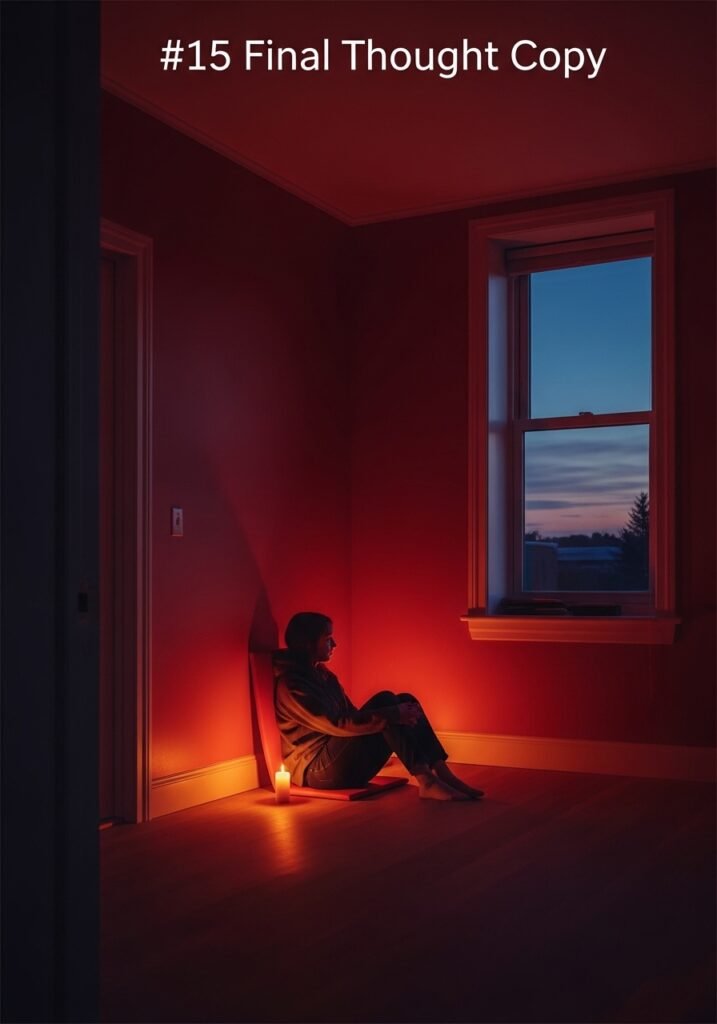
A red carpet interior is, at its heart, an act of confidence — a declaration that your home deserves to be as beautiful, as bold, and as deeply felt as the life you’re building inside it. It asks you to stop playing it safe with beige and begin trusting what moves you.
So here’s the question worth sitting with tonight: what would your home feel like if you designed it not around what’s safe, but around what makes you feel most alive?