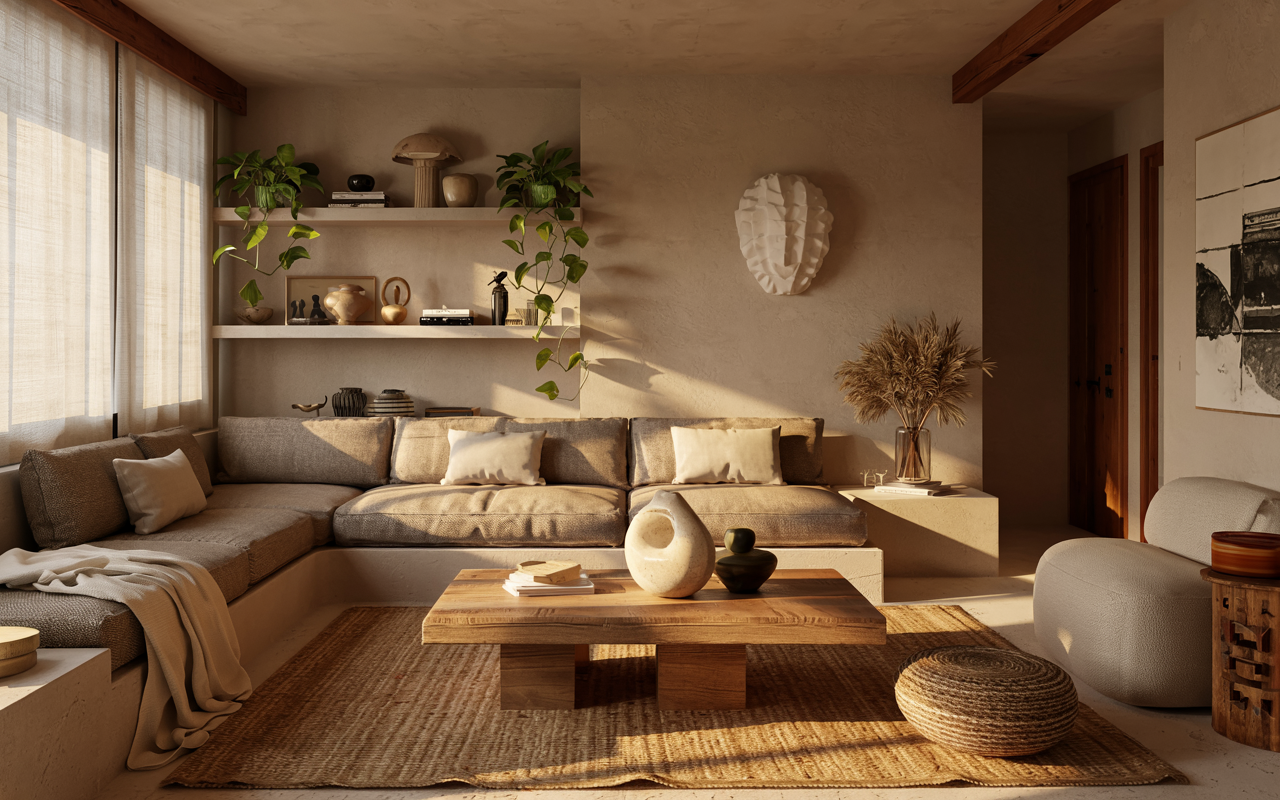
The Modern Cozy Living Room Formula That Actually Works in a Small Apartment
You know that moment when you walk into someone’s apartment and immediately want to stay? The light is low, the cushions look slept-in, and somehow the whole thing feels both carefully designed and completely effortless. That’s not luck. That’s a formula — and once you see it, you can’t unsee it.
—
1. Why “Modern Cozy” Is the Hardest Aesthetic to Get Right (And How to Stop Overthinking It)

Here’s the problem with modern cozy: both words are doing a lot of work, and they seem to want opposite things. Modern pulls toward clean lines, restraint, negative space. Cozy pulls toward softness, layering, abundance. Most people pick a side and wonder why their living room feels either sterile or chaotic.
The secret is that modern cozy isn’t a compromise — it’s a conversation between structure and warmth. You need the architecture of modern design holding everything up, and then you layer warmth over the top like a blanket thrown over a perfectly tailored sofa.
Think of it this way: the bones of the room stay clean. Sharp angles on the sofa. A coffee table that sits low and deliberate. Maybe one statement piece of furniture that says I know exactly what I’m doing. And then — then — you start adding the warm stuff. Thick-knit throws. A rug that’s slightly too big for the space (more on that later). Candles clustered on a tray. Books stacked spine-out because the spines are actually beautiful.
In an apartment specifically, the stakes are higher because every square foot counts. You don’t have the luxury of a room you never use. Every inch of your living room is doing real daily work, which means every choice needs to be both beautiful and functional. That tension is actually what creates the best interiors.
“The bones stay clean. The warmth goes on top. That’s the whole formula.”
2. The Sofa Color That Most People Get Wrong (And What to Choose Instead)
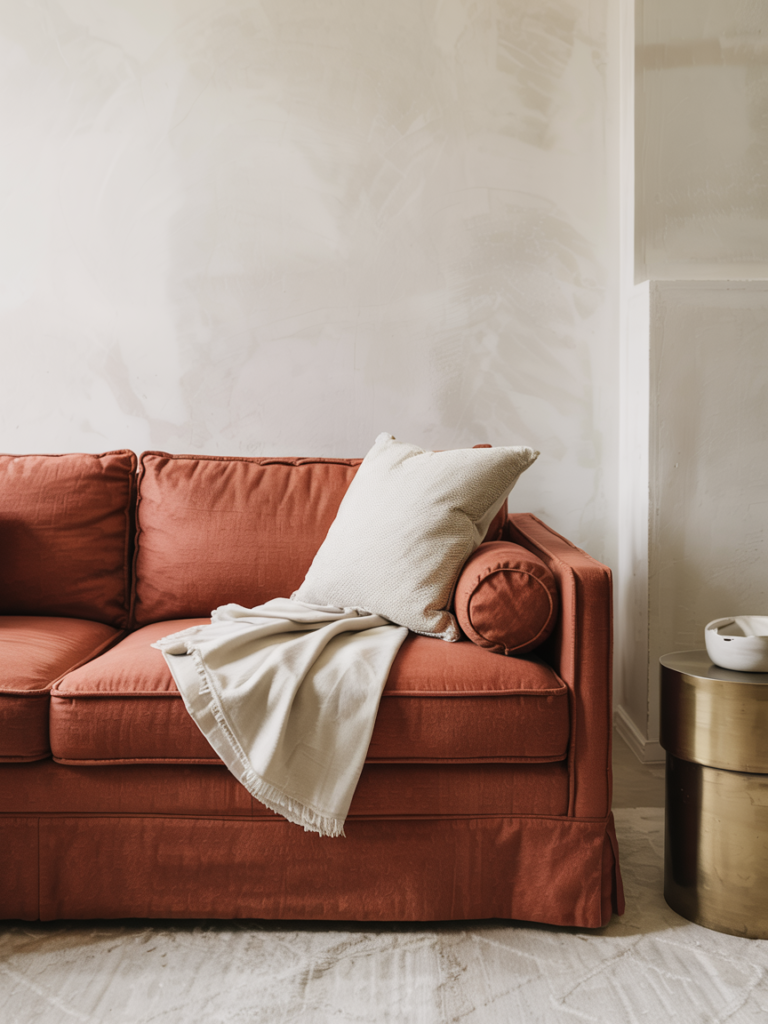
Gray sofas had their moment. It was a long moment. It’s over.
The apartments that feel genuinely cozy right now have sofas in warm neutrals — oatmeal, warm cream, camel, deep mushroom. These tones interact with natural light in a way that gray simply doesn’t. When afternoon sun hits an oatmeal linen sofa, the whole room shifts. It becomes golden. Gray under the same light just looks… gray.
If you’re in the UK, you’re likely working with less natural light than your American counterparts — north-facing windows, overcast skies, rooms that face onto terraced streets. Warm-toned upholstery is doing even more work for you. It’s holding warmth in the room even when the weather outside is doing its worst.
For Americans in apartments — particularly if you’re in a city with good light but limited square footage — that warm neutral sofa becomes your anchor piece. Everything else in the room gets to be a little more interesting because the sofa is grounded and calm.
If you already have a gray sofa and you love it, don’t panic. Warm-toned throw pillows in terracotta, rust, or deep camel can do a surprising amount of the work. Textures help too — boucle, chunky knit, velvet in a warm shade. The goal is to pull the eye toward warmth so the gray reads as a neutral rather than a cool note.
One more thing: stop covering sofas in throw pillows you bought in a set. Mix your pillow sizes, textures, and even eras. One vintage textile, one solid linen, one textured knit. That randomness is exactly what makes it look intentional.
3. The Rug Size Rule Everyone Ignores (Until Their Room Finally Feels Right)
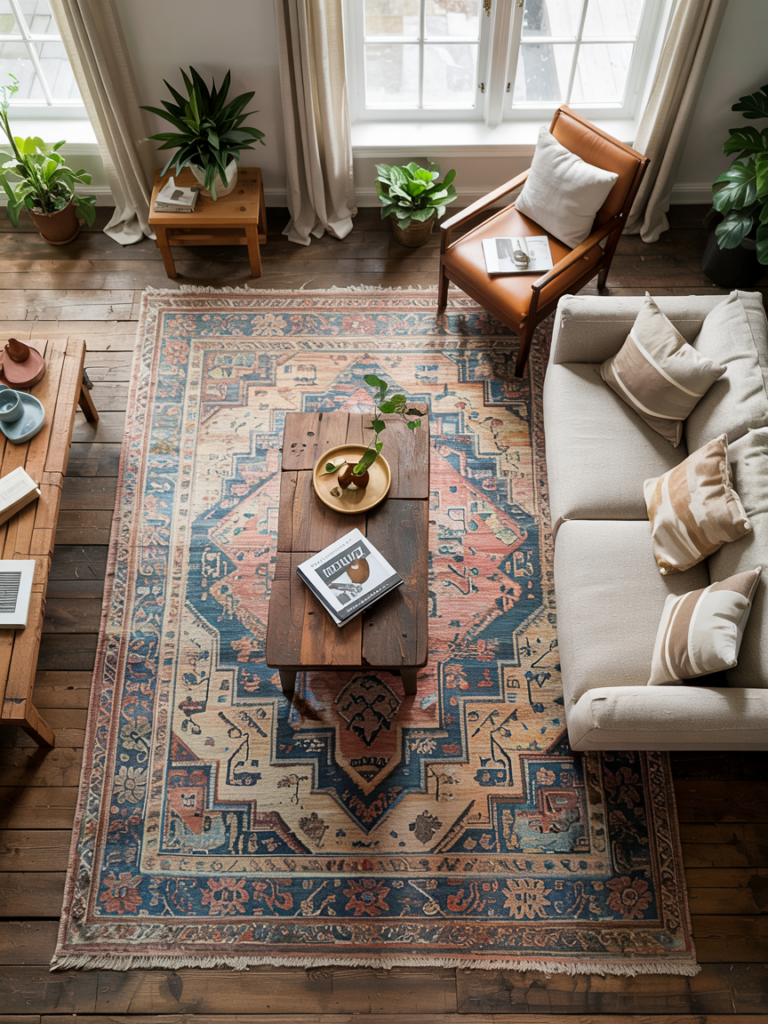
Go bigger. Every single time, go bigger.
The most common mistake in apartment living rooms is a rug that’s too small. A small rug floats in the middle of the room like a forgotten afterthought. It doesn’t anchor anything. It doesn’t create the sense of a defined, cozy zone that makes a living room feel like a real room.
The rule is simple: at minimum, the front legs of every piece of seating should sit on the rug. Ideally, all four legs of everything. In a smaller apartment, a large rug that extends past the furniture creates an optical illusion — it makes the room read as larger while simultaneously making it feel more intimate.
For texture: flatweave rugs are practical and modern, but if you want cozy, look at low-pile wool rugs with a bit of texture or pattern. Moroccan-inspired designs work brilliantly in modern cozy spaces. So do muted Persian-style rugs in faded, dusty tones — they bring history and warmth without pulling the eye too hard.
In the UK, jute and sisal are perennial favourites — they’re textured, natural, and they age beautifully. Layer a smaller, softer rug over a jute base layer for a look that’s both practical and genuinely warm.
One unexpected tip: if you’re renting and have laminate floors, a large warm-toned rug will do more for your living room’s atmosphere than almost any other single purchase.
4. What the Best-Looking Apartment Living Rooms All Have in Common (It’s Not the Furniture)
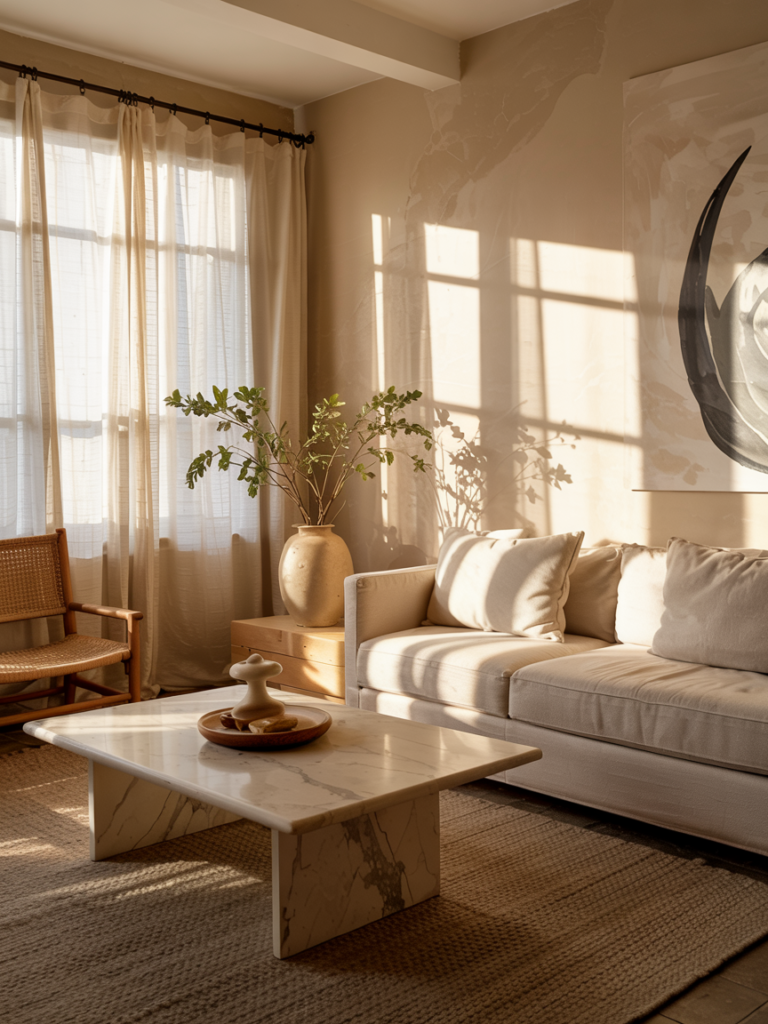
It’s the light.
Specifically, it’s the decision to ditch overhead lighting as the primary light source. The overhead light in most apartments is doing no one any favors. It’s flat, it’s harsh, it floods the room from one angle, and it has the atmosphere of a dentist’s waiting room.
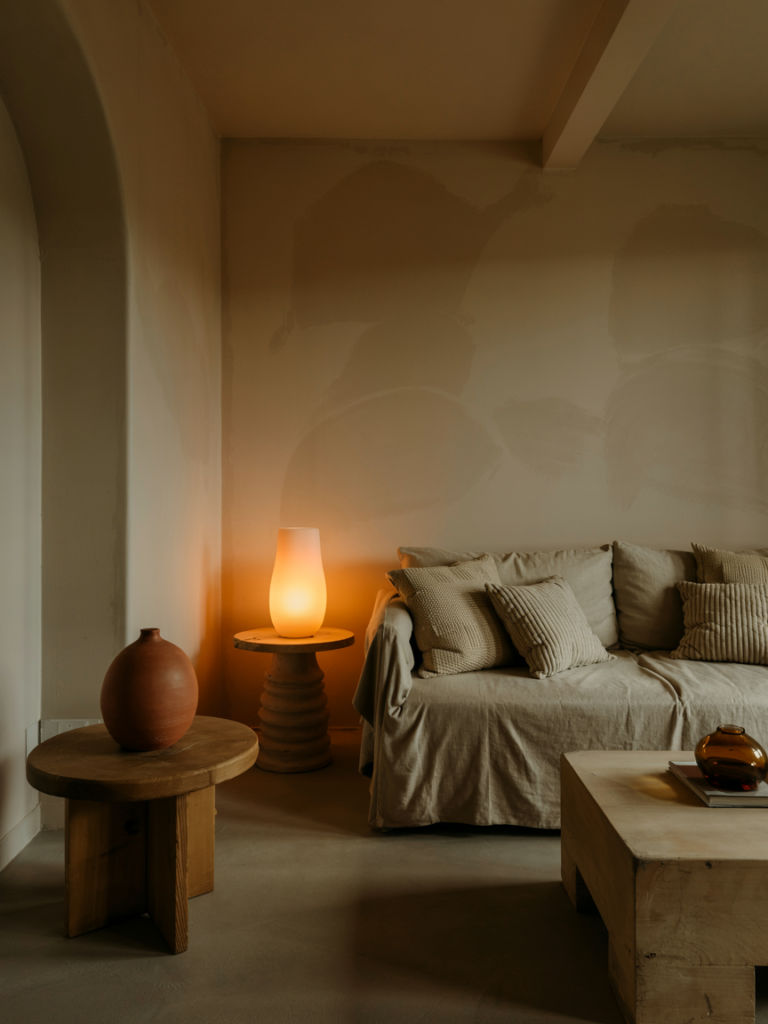
The living rooms that stop you mid-scroll on Pinterest are lit from multiple low points: floor lamps in corners, table lamps on side tables, clusters of candles on surfaces, maybe a small lamp on a bookshelf. The light comes from different heights and different directions, which creates depth and shadow — and shadow is what makes a room feel cozy.
The amber glow of an Edison bulb at 7pm is doing more for your living room than any piece of furniture.
For Americans: floor lamps with warm-white bulbs (2700K is the sweet spot) in corners create that layered effect instantly. A torchiere that washes light up the wall rather than down into the room adds instant drama.
For UK readers: many older British flats have limited plug sockets, which makes floor lamp placement a real puzzle. Battery-operated LED candles and wireless table lamps have genuinely gotten good enough to use seriously. Don’t dismiss them.
“Ditch the overhead light after 5pm. That one decision changes everything.”
5. The Gallery Wall Formula That Doesn’t Look Like Everyone Else’s Gallery Wall
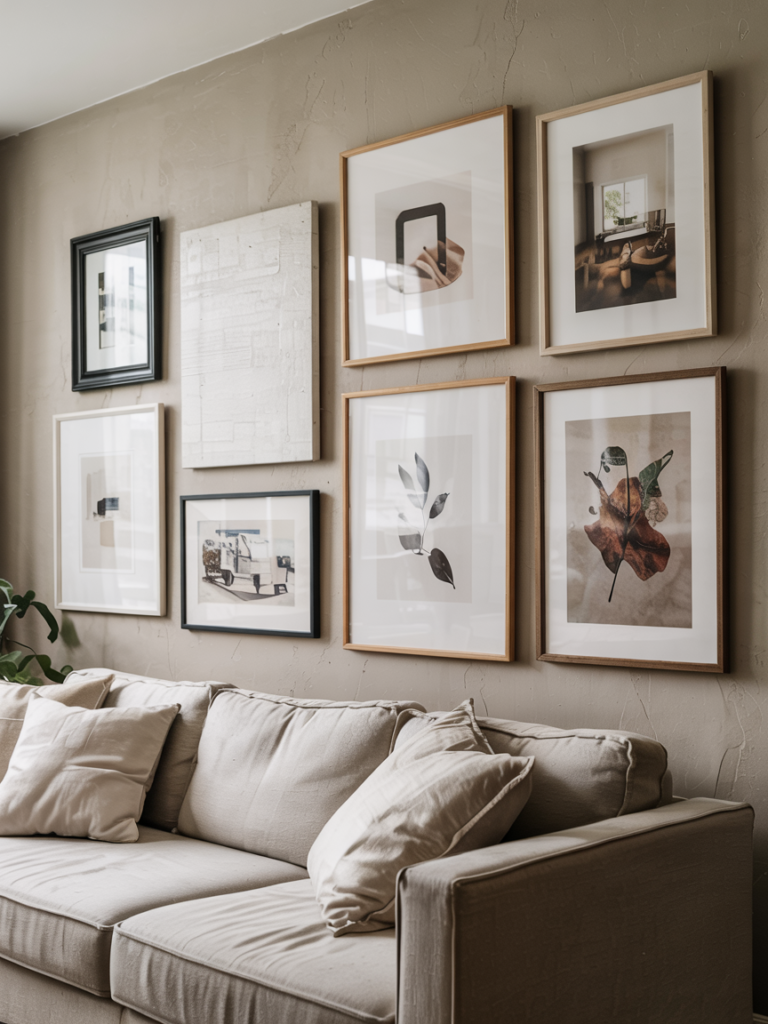
Gallery walls peaked, got oversaturated, and then became a visual cliché. But done with intention, they remain one of the most powerful ways to bring personality into an apartment living room — especially if you’re renting and can’t paint.
Here’s what makes a gallery wall feel modern and cozy rather than generic: restraint and a point of view.
Instead of filling every inch of wall space with frames, pick one wall — the one behind the sofa is almost always the right choice — and create a tighter, more deliberate grouping. Fewer, larger pieces land harder than many small ones scrambling for attention. Three large frames in a horizontal line reads as modern. A mix of sizes anchored by one large central piece reads as collected.
The content matters. Mix art with personal photographs, but print the photographs in black and white on matte paper to give them the same visual weight as proper art. Include something unexpected: a small mirror, a dried botanical pressed under glass, a vintage postcard in a thin frame. These unexpected pieces are what make people lean in when they’re standing in your living room.
Stick to one or two frame colors — matte black and natural wood work together better than almost any other combination. And leave breathing room between frames. White wall between pieces is not wasted space; it’s what lets each piece actually be seen.
6. The Plant Placement Strategy That Makes a Living Room Feel Like It’s Been Curated for Years
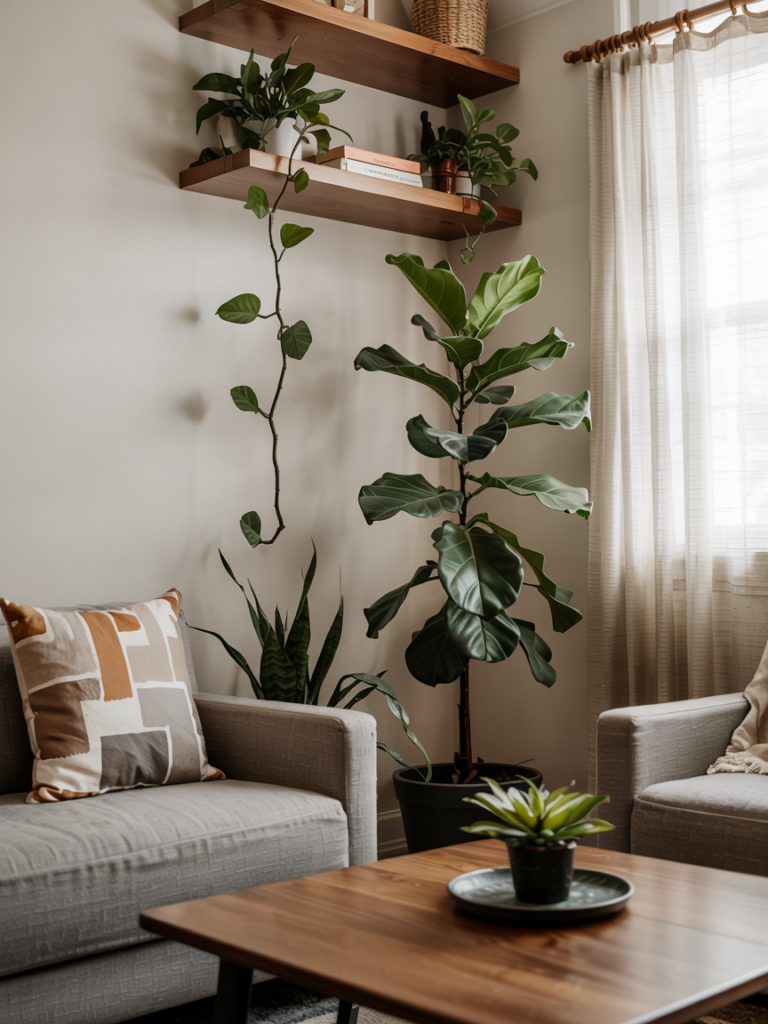
A single large plant in a corner changes a room. Three plants scattered randomly across surfaces cancels that effect entirely.
The rooms that feel genuinely alive — and in a warm, intentional way rather than an overgrown way — have plants grouped and placed with the same deliberateness as furniture. One substantial statement plant (a fiddle-leaf fig, a large monstera, a tall snake plant) anchored in a corner or beside the sofa creates a sense of scale and life that nothing else quite replicates.
From there, smaller plants work best when they’re grouped on a single surface rather than spread out. A cluster of three different plants on a windowsill or shelf reads as an intentional vignette. The same three plants on three different surfaces just looks like you keep buying plants and don’t know where to put them.
For British apartments: low-light plants are your friends. Pothos, ZZ plants, and cast-iron plants (aptly named) will thrive in a north-facing room. For American apartments with good light: the rubber plant is having a genuine moment and it’s not slowing down. The deep burgundy leaves against an oatmeal sofa are genuinely beautiful.
Pot choice matters as much as the plant itself. Terracotta ages beautifully and keeps things warm. Matte ceramic in off-white or earthy tones works. Shiny, colorful pots almost never do.
7. Shelves as Architecture: The Way to Style Them So They Don’t Look Like a Shop Display
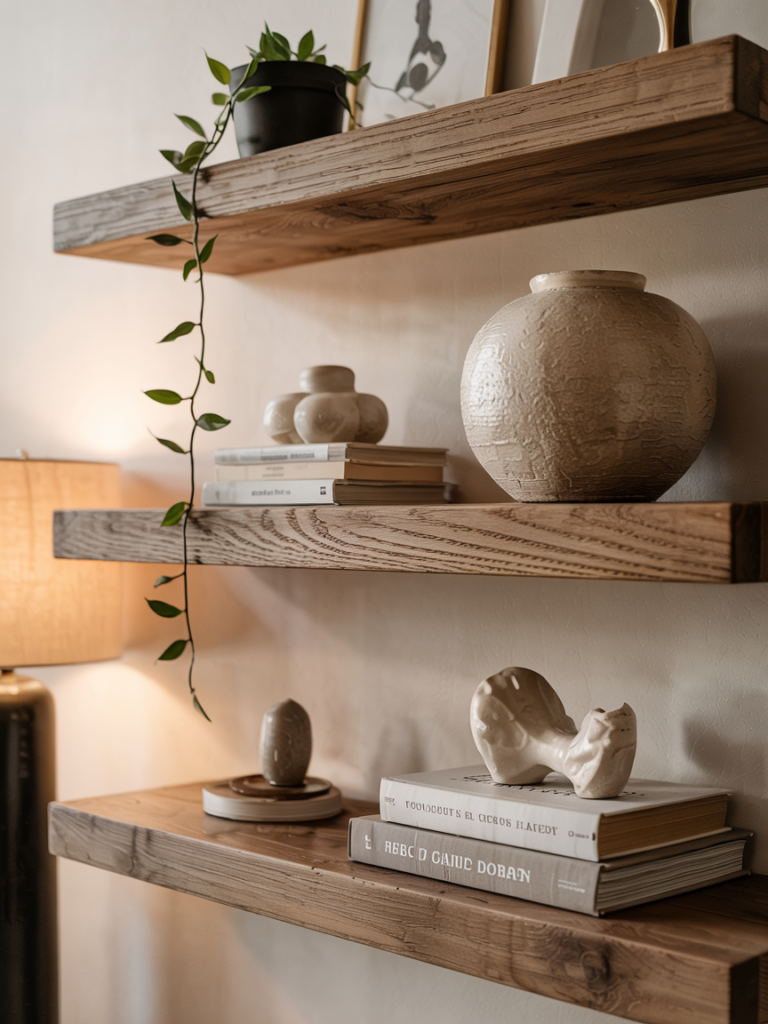
Most people approach bookshelf styling as a storage problem. The rooms that look genuinely beautiful treat it as a design element.
The key is varying density — some sections of the shelf densely packed with books, others more open with just one or two objects. That rhythm of full and empty creates visual interest in the same way a well-composed photograph does.
Books should be mixed in their arrangement: some vertical, some stacked horizontally with a small object placed on top. Facing a few books spine-in (pages out, spines facing the wall) creates a calm, creamy texture that’s become a recognizable styling move for good reason. It reads as considered rather than chaotic.
What to put between the books: small ceramics, a single candle, a trailing plant that spills slightly over the shelf edge, a framed photo or small piece of art leaning against the books rather than hung on the shelf. Natural objects — a beautiful stone, a dried seed head, a piece of driftwood — add texture and a sense of the outside world brought in.
“A shelf that looks effortless took someone about forty-five minutes to arrange. That’s not cheating. That’s design.”
8. The One Piece of Furniture That Does More Work Than Anything Else in a Small Living Room
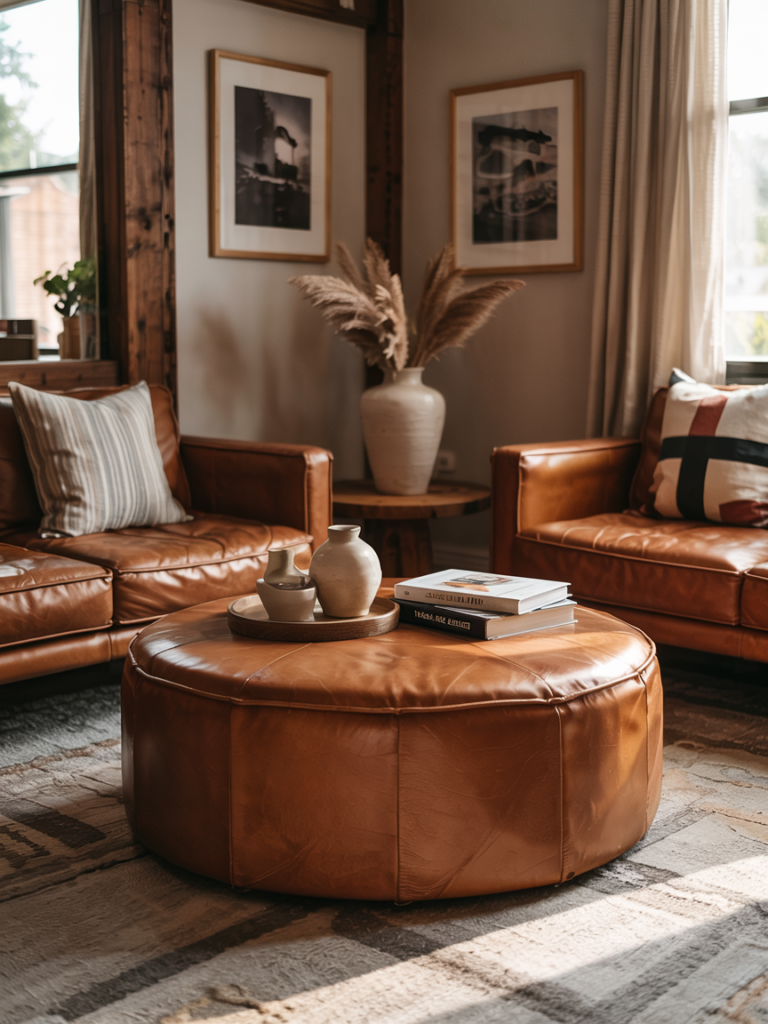
The ottoman. Specifically, the large, upholstered, multitasking ottoman.
Replace your coffee table with a large round or rectangular ottoman in a warm neutral — oatmeal boucle, aged leather, soft velvet — and watch what happens to your living room. It becomes instantly softer. It creates a place to put your feet, a surface for a tray of drinks and candles, an extra seat when you need it, and sometimes additional storage.
A tray on an ottoman is what makes it function as a coffee table without losing any of the softness. Use a wooden tray or a woven rattan tray — never glass, which reads too cold — and style it with a small stack of books, a candle or two, and maybe a small object that means something to you.
For smaller apartments, the ottoman with hidden storage inside is one of those genuinely useful inventions. The living room is often the room that takes on everything — spare blankets, games, chargers, all of it — and having a piece of furniture that absorbs some of that without showing it is not compromise, it’s intelligent design.
9. The Color Palette Mistake That Makes Modern Apartments Feel Cold Rather Than Calm
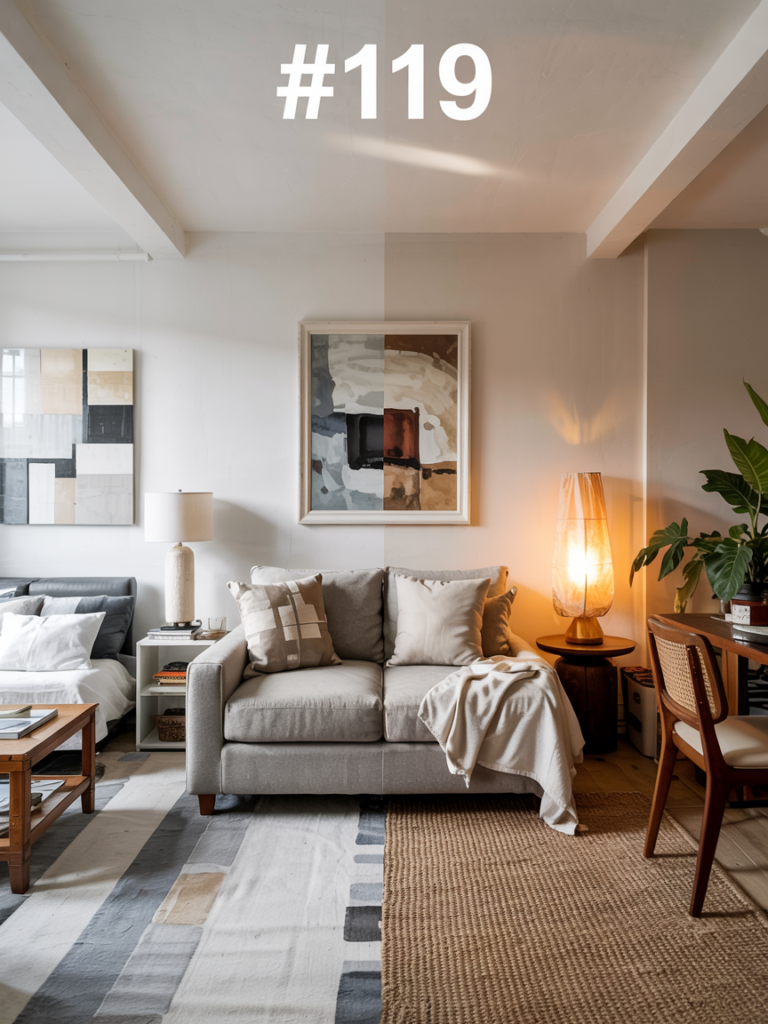
Modern design’s attachment to white — bright, cool, stark white — is understandable. It photographs well, it makes rooms look bigger, and it’s easy. But in a living space where you actually want to feel comfortable, cool white walls are working against you.
Warm off-whites and barely-there greige tones are doing what cool whites cannot: they’re making the light in the room feel warmer, the furniture feel softer, and the overall atmosphere feel like somewhere you’d choose to be on a Sunday morning.
For UK renters who can’t paint: warm-toned curtains, especially floor-to-ceiling linen curtains in an oatmeal or warm white, will shift the color temperature of the room significantly. They also make the ceiling feel higher and the windows feel larger, which is a double win.
For American apartment dwellers who can paint: Benjamin Moore’s White Dove and Sherwin-Williams’ Alabaster are considered the industry standard warm whites for good reason. They’re not beige. They’re not yellow. They’re just warm enough to make the room breathe.
Accent colors in the modern cozy palette lean toward terracotta, rust, deep olive, warm camel, and the occasional deep teal or inky blue used sparingly. These are colors that age well with you and your space.
10. Why the Space Beside Your Sofa Might Be the Most Underused Real Estate in Your Apartment
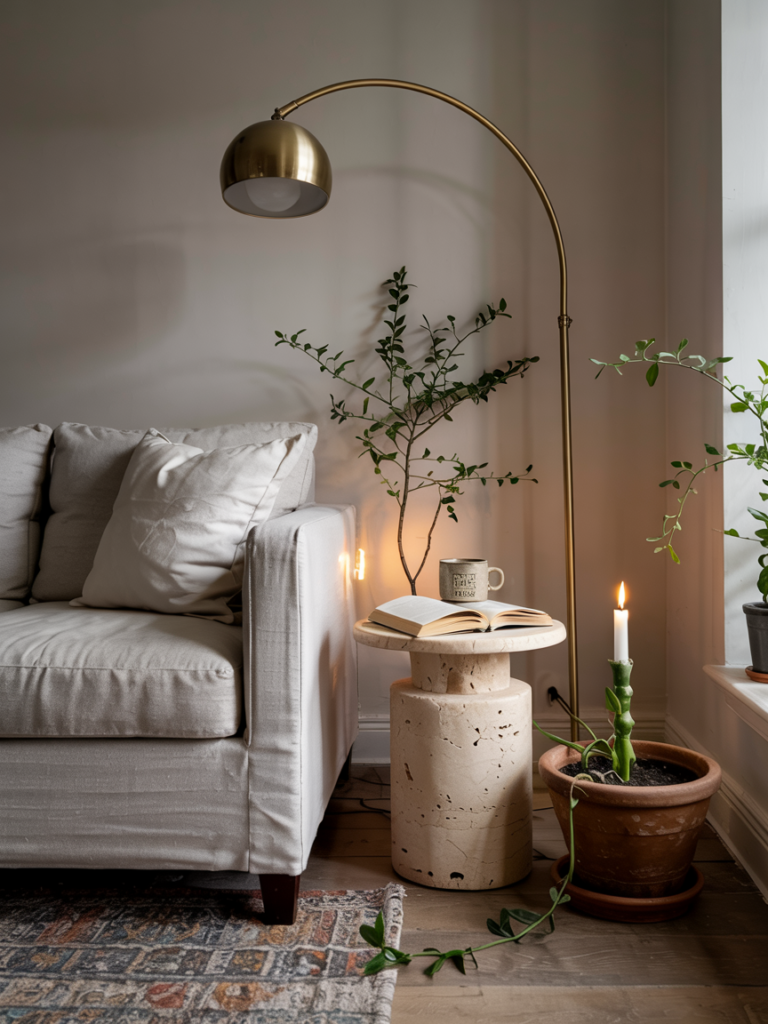
The side table beside a sofa is where a living room either becomes cozy or stays just fine.
A lamp. A small tray or dish. A book, face-down, like someone was just reading it. Maybe a glass of water or a candle. This is the vignette that says someone lives here and loves it.
People agonize over large furniture choices and then leave the side table completely bare or covered in charging cables and random objects. The side table should look like a still-life painting — composed, specific, deliberately imperfect.
In terms of the side table itself: mixing materials between your coffee table (or ottoman) and your side tables adds depth. If the coffee area is wood, consider a metal-legged side table or a stone-topped one. The slight contrast keeps the room from looking like it was purchased as a collection.
Height matters too. The side table should be roughly the same height as the arm of your sofa, so the lamp sitting on it lights the space at the right level — casting light across the sofa and down into the sitting area rather than up into the ceiling.
11. The Curtain Trick That Interior Designers Use in Every Small Apartment They Style
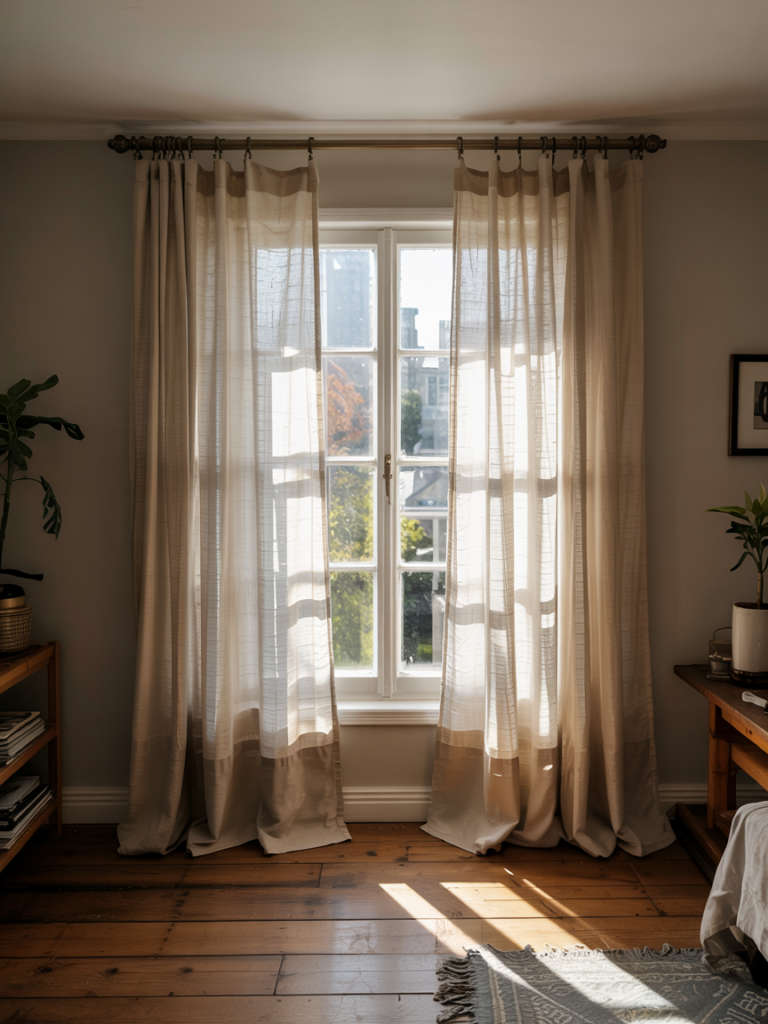
Hang them higher. Hang them wider.
This is not a secret in design circles, but it seems not to have reached enough people yet: curtains hung at ceiling height, extending well beyond the window frame on either side, perform two illusions simultaneously. The room looks taller. The window looks larger.
In an apartment where you can’t knock down walls or add windows, this is close to magic.
For the modern cozy aesthetic specifically, linen curtains in warm white, oatmeal, or a soft sage green are doing the most work right now. They’re light-filtering without blocking light entirely, they move beautifully, and they photograph in a way that makes a room look infinitely more expensive than it was.
Floor-to-ceiling length is non-negotiable. Curtains that stop at the windowsill are a visual full stop on the wall. Curtains that puddle slightly on the floor are romantic and warm, especially in a bedroom — but in a living room, just grazing the floor is the most modern approach.
UK note: if your flat has sash windows with beautiful original architrave, don’t cover the woodwork with your curtain track. Mount it on the wall just inside the architrave and as high as possible toward the ceiling. You keep the period detail and still get the benefit of the height.
12. The Finishing Touches That Signal You Actually Live Here (And Love It)
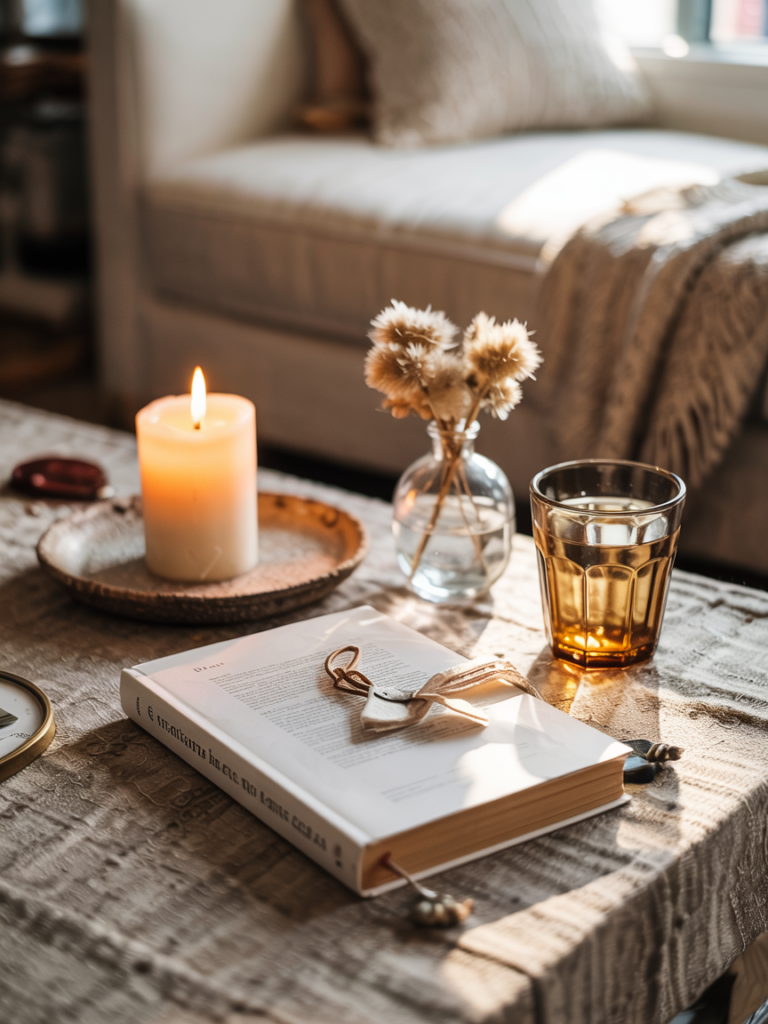
The rooms that feel most alive aren’t the ones that look most finished. They’re the ones that look most lived-in.
A throw blanket draped over the arm of the sofa — not folded neatly, not arranged in a Pinterest knot, just draped like you pulled it over yourself last night and left it there. A coffee table book left open at a page that interested you. A candle that’s been burned down to the halfway mark because you actually use it.
These are the signals of a room that’s genuinely occupied by someone with a life and a point of view. And they’re not accidents — you have to choose to leave them.
Small personal objects make a living room irreplaceable. Not generic decorative objects, but things that actually came from somewhere: a ceramic bowl from a market you visited, a photograph from a trip, a book with a cracked spine that you’ve read three times. These things cannot be sourced from a shop, which is exactly why they matter.
Fresh flowers or a branch of something seasonal — eucalyptus, pussy willow, dried pampas — in a simple vase on the coffee table. Not a large formal arrangement, just something living and impermanent that reminds you of the world outside your four walls.
That’s the secret, really. Modern cozy isn’t a product category. It’s a practice.
—
🌿 Quick Tips
Swap your overhead bulb for a warm-white LED at 2700K tonight — you’ll immediately see why lighting people talk about color temperature constantly.
A rattan or woven basket beside the sofa is the fastest way to make blanket storage look like a design choice rather than clutter.
If your apartment has one awkward corner that you don’t know what to do with, a large floor lamp plus a medium plant solves about 80% of corner problems.
Layer two rugs — a large flat jute underneath and a smaller, softer rug on top — for a look that adds texture, warmth, and definition to the seating area simultaneously.
Avoid buying decorative objects in complete sets. One candle from this shop, one ceramic from a different place, one object with a real story — that mix is what makes a shelf look curated rather than purchased.
—
❓ FAQ
Q: How do I make my rental apartment living room feel cozy without painting the walls? A: Warm-toned soft furnishings do most of the work — an oatmeal sofa, terracotta cushions, and a large wool rug will shift the feel of the room more than wall color will. Floor-to-ceiling linen curtains in warm white also change the color temperature of the light in the room, which makes even a magnolia-painted rental feel intentionally warm rather than blandly neutral.
Q: What’s the best layout for a modern cozy living room in a small apartment? A: Resist pushing all the furniture against the walls — it’s counterintuitive, but floating your sofa even slightly away from the wall creates a more defined, intimate seating zone. Anchor everything with a large rug, keep a clear path to the main entry point, and make sure your main light source (your floor lamp) is in a corner, not the center of the room.
Q: Can I mix modern furniture with vintage or antique pieces and still have it look cohesive? A: Not only can you — you should. One or two older pieces in an otherwise modern room give it the layered, collected quality that makes spaces feel personal rather than showroom-ready. The key is keeping the scale proportional and letting the vintage piece be genuinely different rather than trying to blend it in invisibly.
—
💭 Final Thought
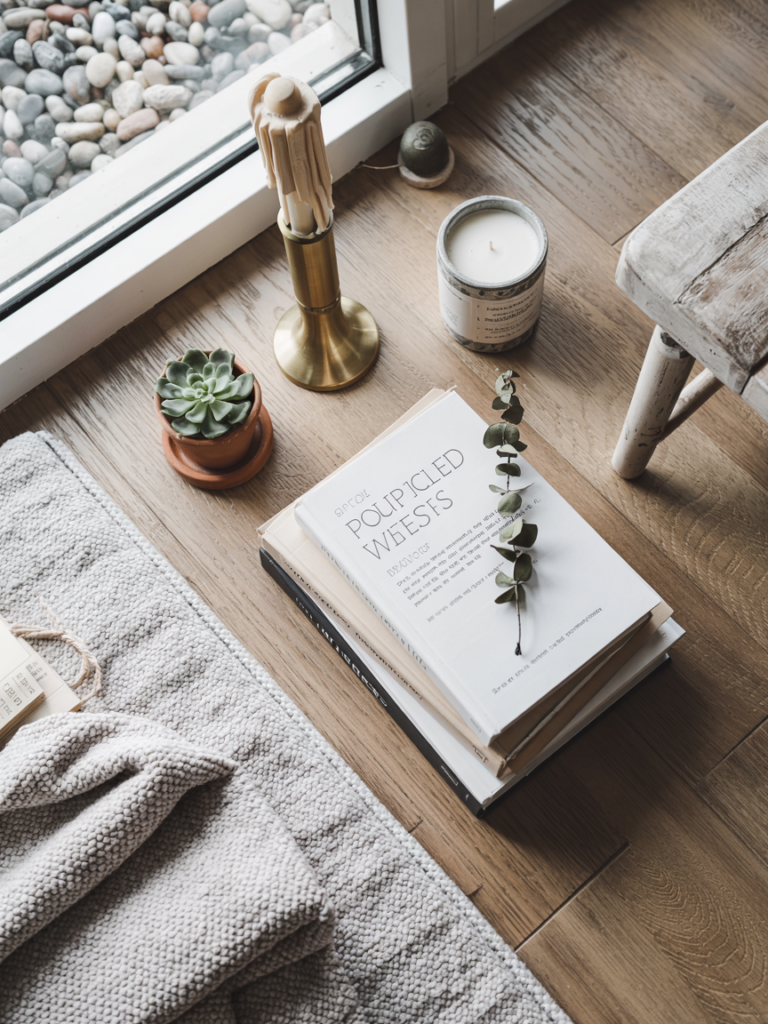
The living room in an apartment isn’t just a design project — it’s the room where you actually live. Where you decompress at the end of a long day, host people you love, and spend a slow Sunday morning with something good to drink. Getting it right isn’t about following a trend or nailing an aesthetic. It’s about figuring out what makes you want to be in the room.
Which part of your living room are you most ready to change?