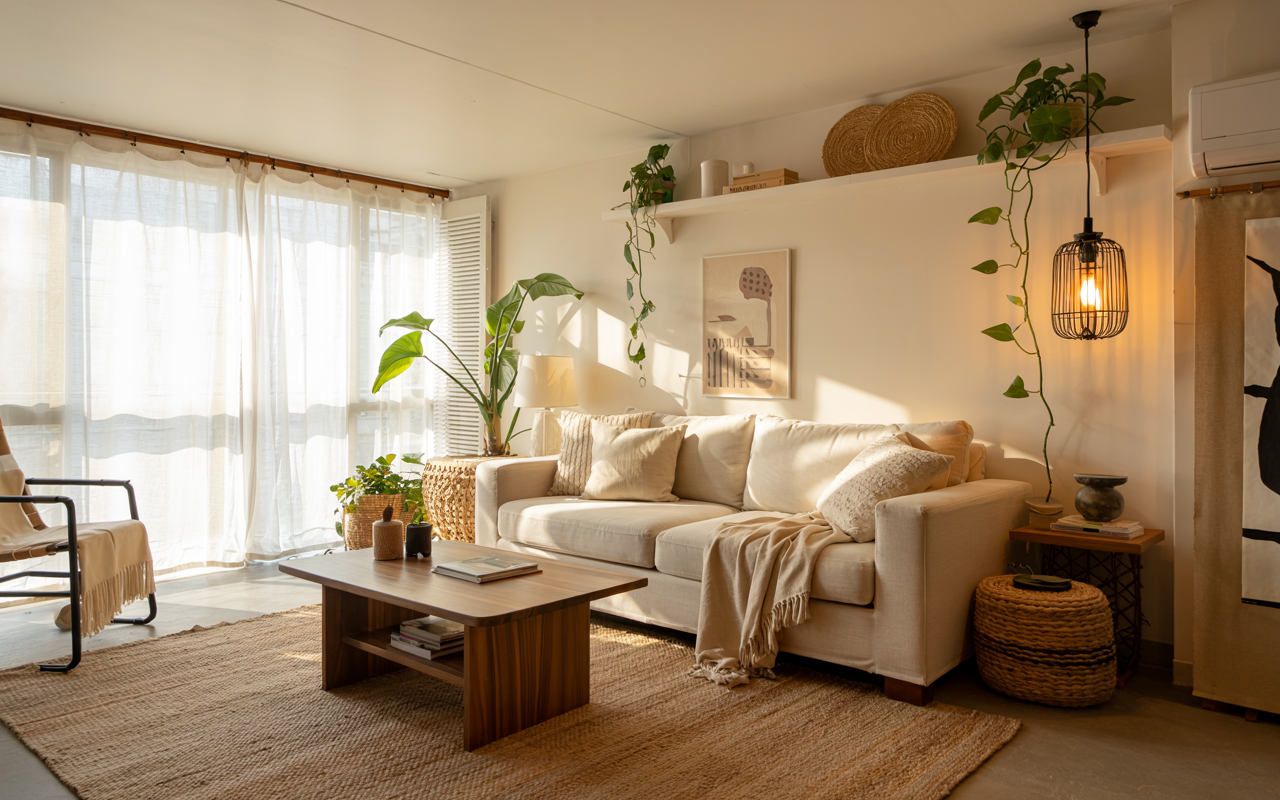
The Small Living Room Glow-Up Nobody Told You Was This Achievable
You moved in, stood in the middle of the room, and thought: this is it? Maybe the ceilings felt lower than the listing photos suggested. Maybe the whole space could fit inside a master bedroom you once rented. But here’s the thing — some of the most beautiful living rooms on the internet are also some of the smallest.
They just know something most people don’t.
—
1. The Myth That’s Making Your Small Living Room Feel Even Smaller
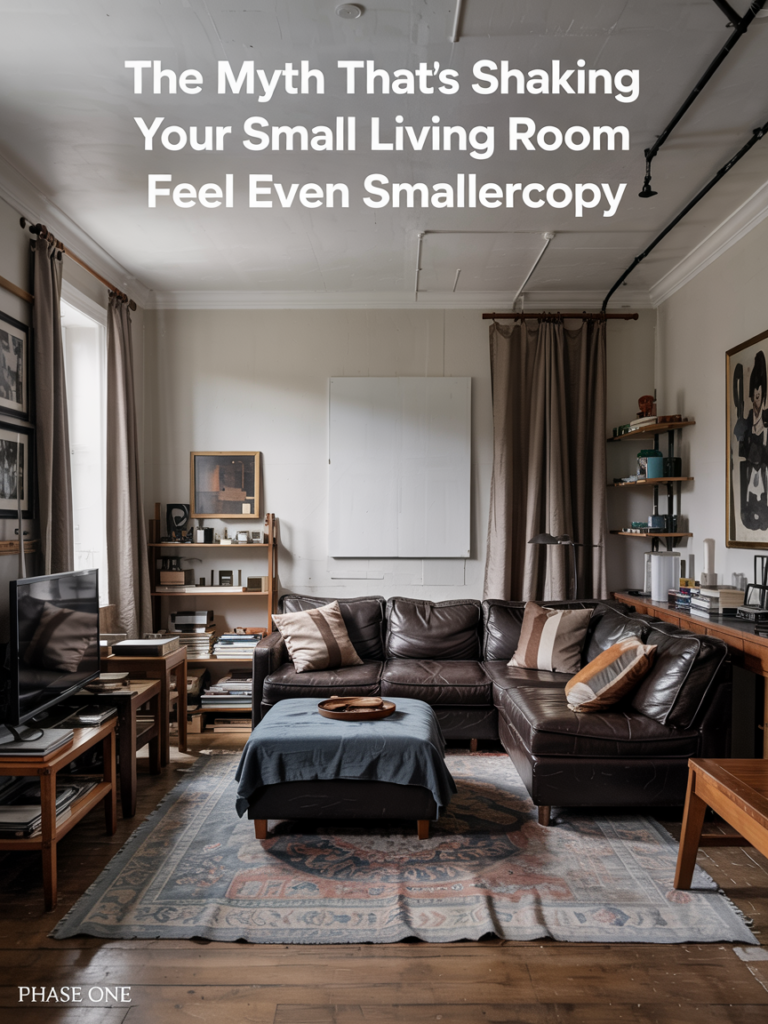
Let’s start by dismantling the most common piece of advice people get about small spaces: push everything against the walls. It sounds logical. It makes floor space. It is, almost without exception, a mistake.
When all your furniture lines the perimeter of a room like passengers waiting at a bus stop, the center of the room becomes this awkward void — and the eye has nowhere to rest. The furniture looks stranded. The room feels cold, even when the radiator’s blazing.
The fix is counterintuitive. Pull things in. Float your sofa away from the wall by even just six or eight inches. Angle your armchair slightly. Bring a small ottoman to the center. Suddenly you have zones — and zones make a small room feel organized rather than cramped. There’s a psychological difference between “not much space” and “everything in its place,” and furniture placement is almost entirely responsible for which side of that line you land on. This is the single change I’ve seen make the biggest visual difference in small living rooms, every single time.
“A room where furniture floats feels curated. A room where everything’s pushed to the walls feels like a waiting room.”
2. The Color That Keeps Showing Up in Every Stunning Tiny Living Room Right Now
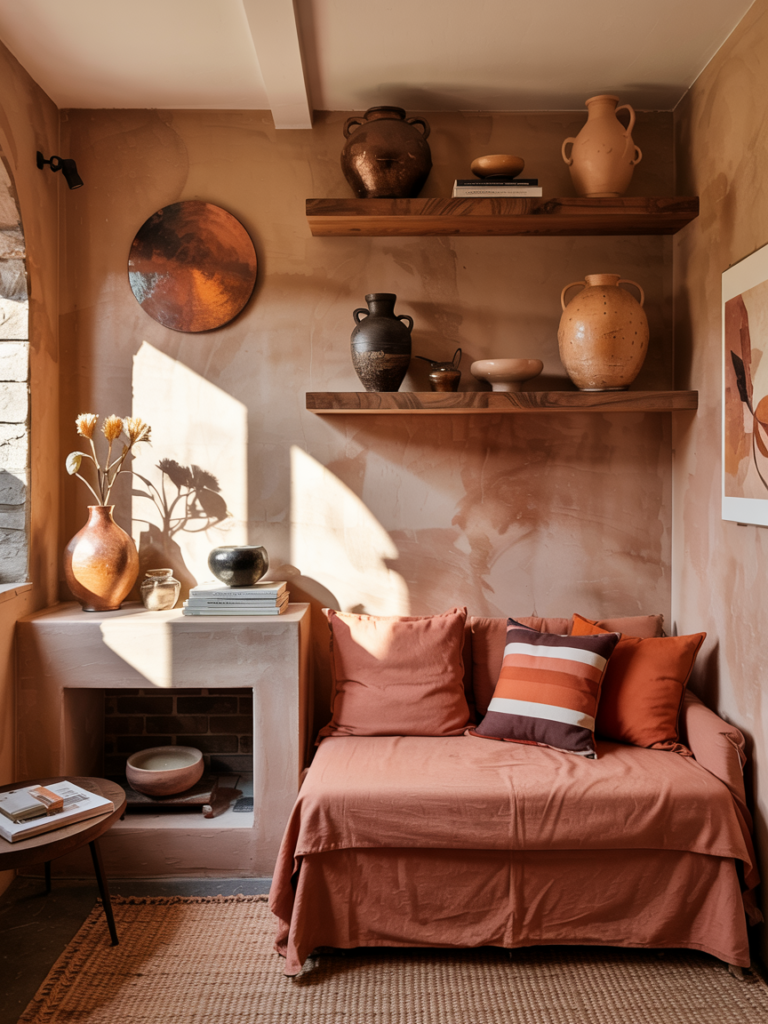
It’s not white. It’s not a greige so timid it barely registers. It’s a deep, committed hue — an inky forest green, a dusty terracotta, a blue-black that absorbs light and gives the room a sense of depth you’d never achieve by playing it safe.
Dark walls in small rooms feel revolutionary the first time you try them. The logic is sound: when the walls recede, when you can’t quite see where the room ends, the space stops feeling small and starts feeling intimate. There’s a difference between those two words and it’s everything.
In American and British homes alike, the rooms that stop people mid-scroll are the ones that committed to a color. Not dabbled in it — committed. Benjamin Moore’s Black Forest Green, Farrow & Ball’s Hague Blue, or Sherwin-Williams’ Urbane Bronze all do something remarkable in a small room: they stop the walls from being something you notice and turn them into something you feel. Paint your trim the same color as the walls and watch the whole room expand. No gaps. No interruptions. Just one continuous, considered decision.
3. Why Your Sofa Might Be the Biggest Problem in the Room (and How to Fix It Without Buying a New One)
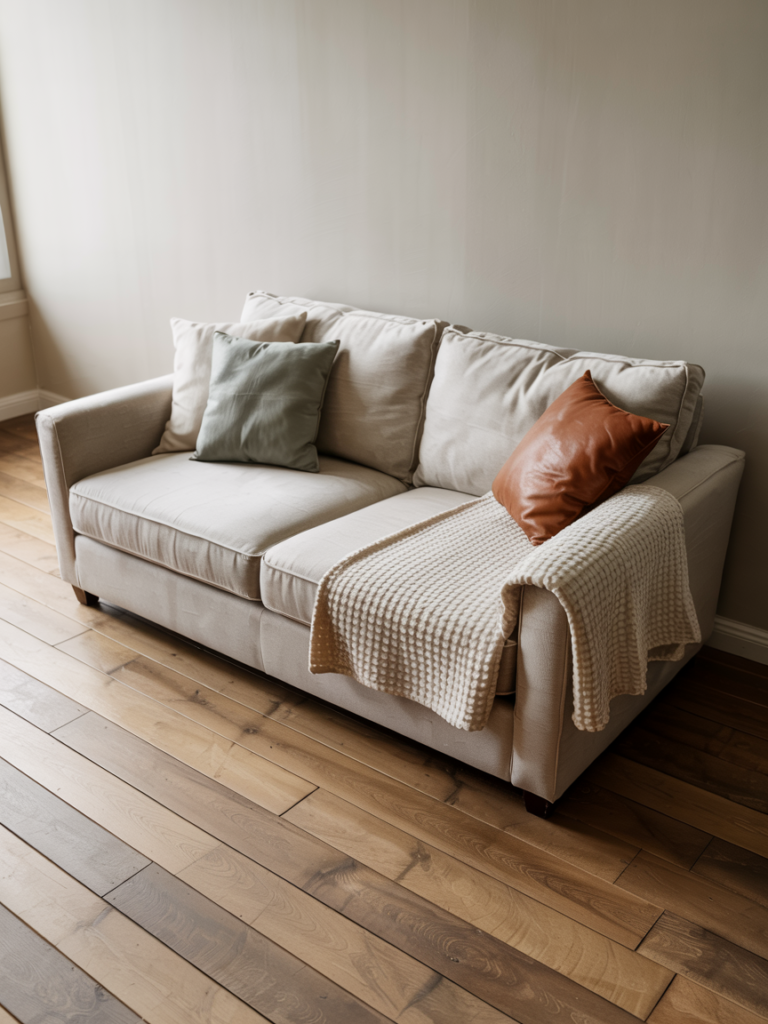
A sofa that’s too big for a small living room is not a furniture problem. It’s a perspective problem. And sometimes it really is just a big sofa that needs to go — but often, the fix is softer than that.
First, look at the legs. If your sofa sits flush to the floor, it’s taking up visual space that doesn’t belong to it. Swap the legs out for ones that raise it three or four inches off the ground and the sightline opens up. You’ll see floor underneath it, and the room breathes.
Second, consider the arm height. Low, streamlined arms on a sofa read as less bulky than rolled, padded, high-arm versions — even if the actual square footage of the piece is identical. Visual weight matters as much as physical weight in these spaces. Third, and this one takes courage: if the sofa is beige or cream and the room is also beige or cream, they blur into one indistinct mass. Give the sofa a slipcover or new cushions in a contrasting tone and suddenly there’s definition. Suddenly you can see where the room begins and the furniture ends.
4. The One Rule That Makes Any Tiny Living Room Feel Intentional
One large piece of art. Not three medium ones. Not a gallery wall of twenty frames. One large piece, hung boldly, that earns its place on the wall.
This is not a rule about aesthetic preference. It’s a rule about scale and confidence. Small rooms that feel cluttered almost always suffer from too many small decisions competing for attention — little frames, little shelves, little trinkets, all well-intentioned and none of them landing. The eye doesn’t know where to go, so it gives up.
One large piece of art says: here. It anchors the room. It gives the eye a destination. And it creates the impression of space because the rest of the wall is uncluttered, clean, present. The art can be affordable — a poster from a museum shop, a print from Etsy, a piece you found in a charity shop and had professionally framed. The frame matters more than the price. A wide, substantial frame on a large print becomes furniture for the wall. It sets a tone. It makes a small room feel like someone lives there with intention, not just necessity.
“One great decision in a small room does more than ten mediocre ones.”
5. The Magic of Lighting Layers (Or: Why Your Overhead Light Is Quietly Ruining Everything)
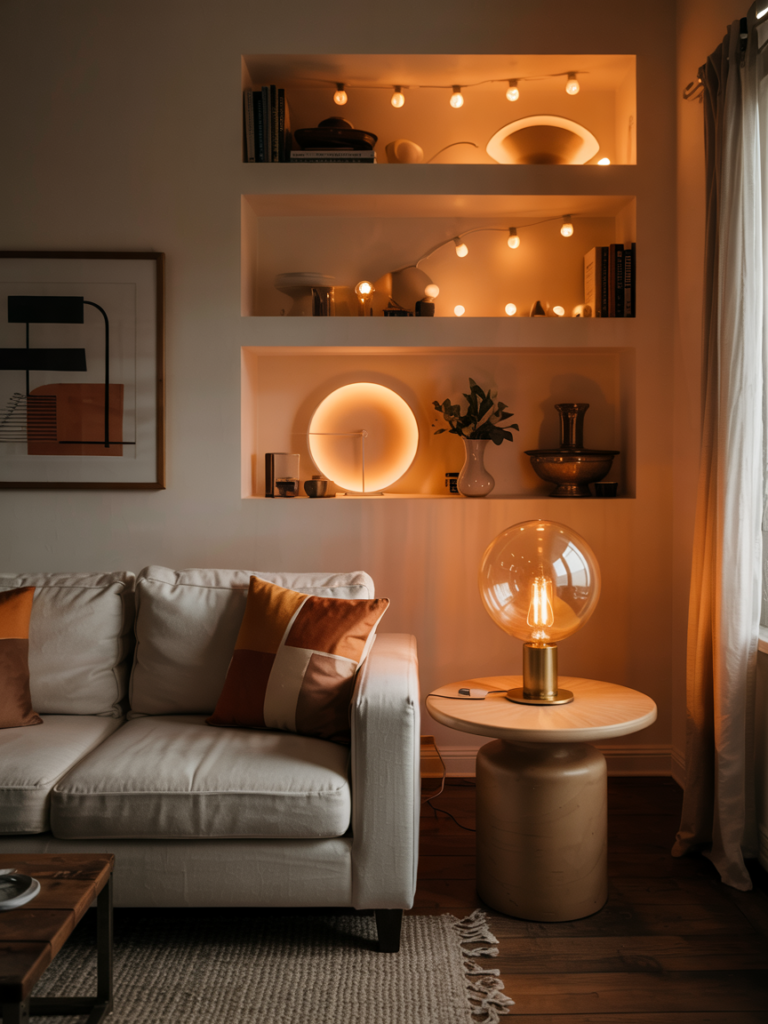
If you’re relying on a single overhead light to illuminate your small living room, that’s the conversation we need to have.
Overhead light flattens a room. It removes shadows, which sounds like a good thing until you realize that shadows are what create the sense of depth and dimension. A room lit entirely from above looks like a passport photo of itself — accurate, but somehow lifeless.
The answer is layers. A floor lamp in the corner with a warm Edison bulb — the amber kind that glows like honey at 7pm. A table lamp on a side table at seated eye level, throwing light upward and outward. A small battery-powered lamp tucked onto a bookshelf. Maybe candles in the fireplace in summer when it’s not in use, or grouped on the coffee table when the evening calls for it.
Each light source carves out a little world within the room. The corner becomes cozy. The reading chair becomes a destination. Suddenly a 300-square-foot flat feels like a place you actually want to stay in, rather than a space you’re making the best of. None of this is expensive. Floor lamps from IKEA, TJ Maxx, or a secondhand shop can do everything a designer piece does, as long as the bulb temperature is right. Warm white. Always warm white.
6. How Curtains Are Doing All the Heavy Lifting Your Furniture Can’t
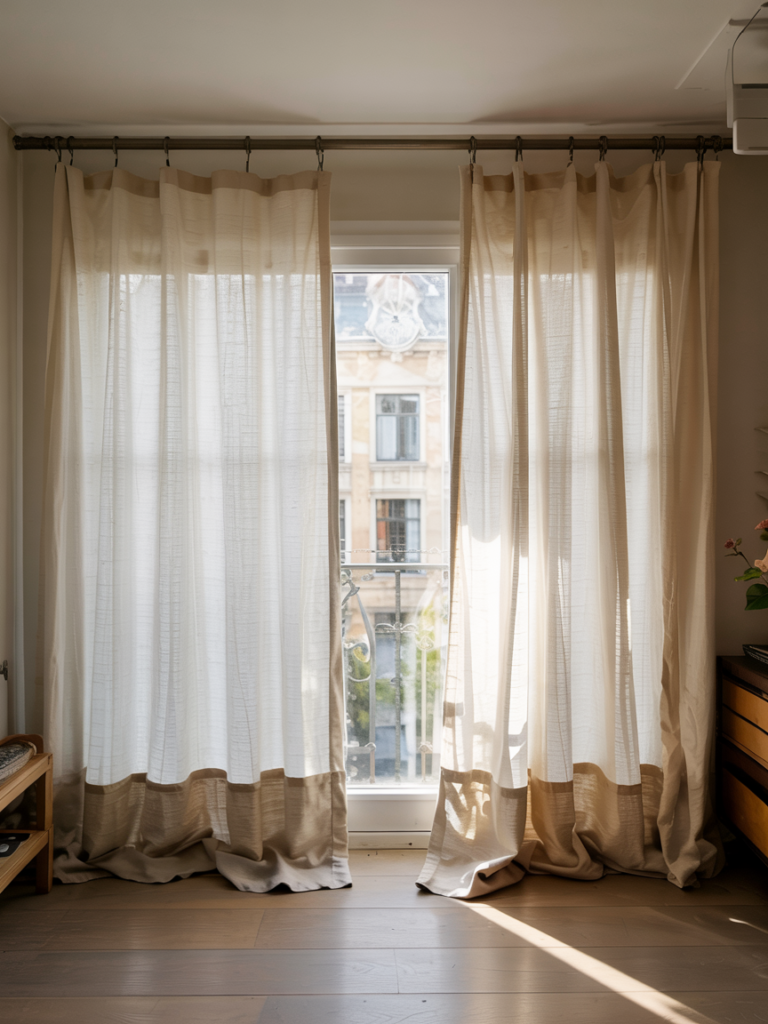
Here is a piece of advice that costs almost nothing to implement and changes everything: hang your curtains high and wide.
Not at the window frame. Above it — close to the ceiling. And not just to the edges of the window — beyond them, six to twelve inches on each side. When the curtains are closed, they look like the wall itself is draped. When they’re open, the window looks enormous. The ceiling looks taller. The whole room stretches.
Floor-length curtains in a lightweight linen or cotton in an off-white or soft natural tone do something else too — they bring in daylight while diffusing it, which means the room glows rather than glares. In a north-facing flat or a room that doesn’t get much sun, this diffused glow is everything. It’s the difference between a room that feels grey and a room that feels soft.
In the UK especially, where Victorian and Edwardian terraced houses often have living rooms with one or two modest windows, this trick is a lifesaver. In American apartments where the windows start low and end mid-wall, the same principle applies. It’s not about what the room has. It’s about what you teach the eye to see.
7. The Rug Size Mistake Almost Everyone Makes in a Small Space
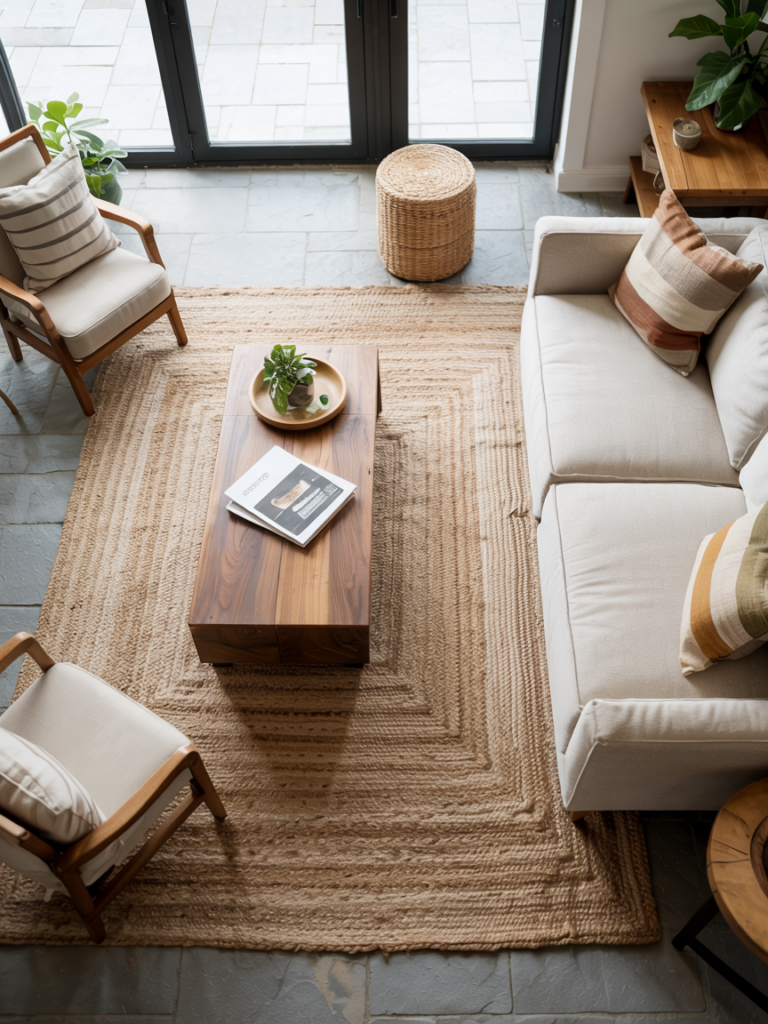
Too small. Almost always, the rug is too small.
A little rug floating in the middle of a living room looks like a bath mat that got lost on its way to the bathroom. It doesn’t anchor anything. It doesn’t define anything. It just sits there, apologizing for itself.
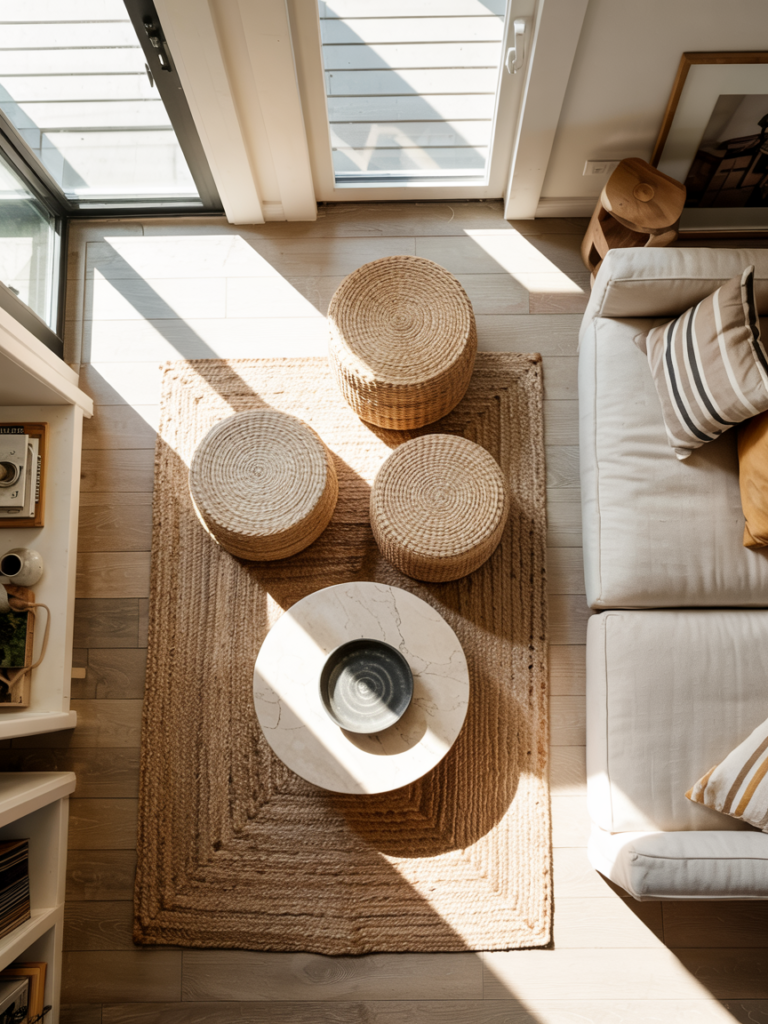
The rug should be large enough for at least the front legs of every seating piece to rest on it. Ideally, in a small living room, you want all four legs of the sofa on the rug, both feet of the armchair, all four legs of the coffee table. The rug becomes the floor of the room-within-the-room, and that sense of definition is what makes a small space feel intentional.
If a large rug is outside the budget, layer two smaller ones. A natural jute underneath with a smaller patterned rug on top creates texture and depth and, if done well, looks completely deliberate. The pattern on the top rug draws the eye down and across the floor, making the room feel wider. This is not a compromise — it’s genuinely one of the best-looking choices you can make in a small room.
“A rug that’s too small doesn’t just look wrong — it makes everything else in the room look wrong with it.”
8. What the Best Small Living Rooms You’ve Pinned Actually Have in Common
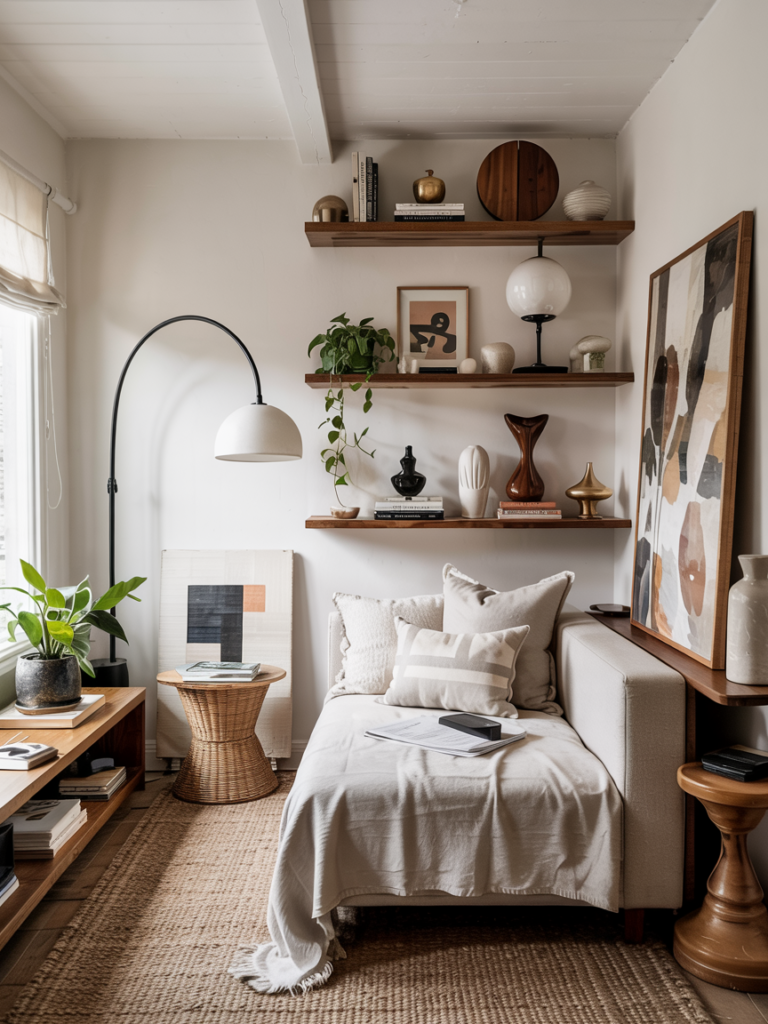
Go look at your saved pins. The small living rooms you keep coming back to. I’ll bet they all share one thing: texture.
Not pattern, necessarily. Not a specific color palette. Texture. A chunky knit throw over the back of the sofa. A woven basket holding blankets by the hearth. A velvet cushion next to a linen one next to a cotton one. A wooden coffee table with visible grain. A terracotta pot holding a trailing plant.
Texture is what makes a small room feel rich instead of sparse. When you can’t expand in square footage, you expand in sensory detail. The eye moves across the room and finds things — interesting things, varied things — and the brain interprets that richness as spaciousness. It’s not about filling the room with objects. It’s about making the objects that are there feel considered and layered and alive.
The rooms that feel cold and small are almost always monochromatic in texture, not just color. Everything smooth. Everything matte. Nothing to reach out and touch.
9. The Plant Placement That Actually Makes Small Rooms Feel Bigger
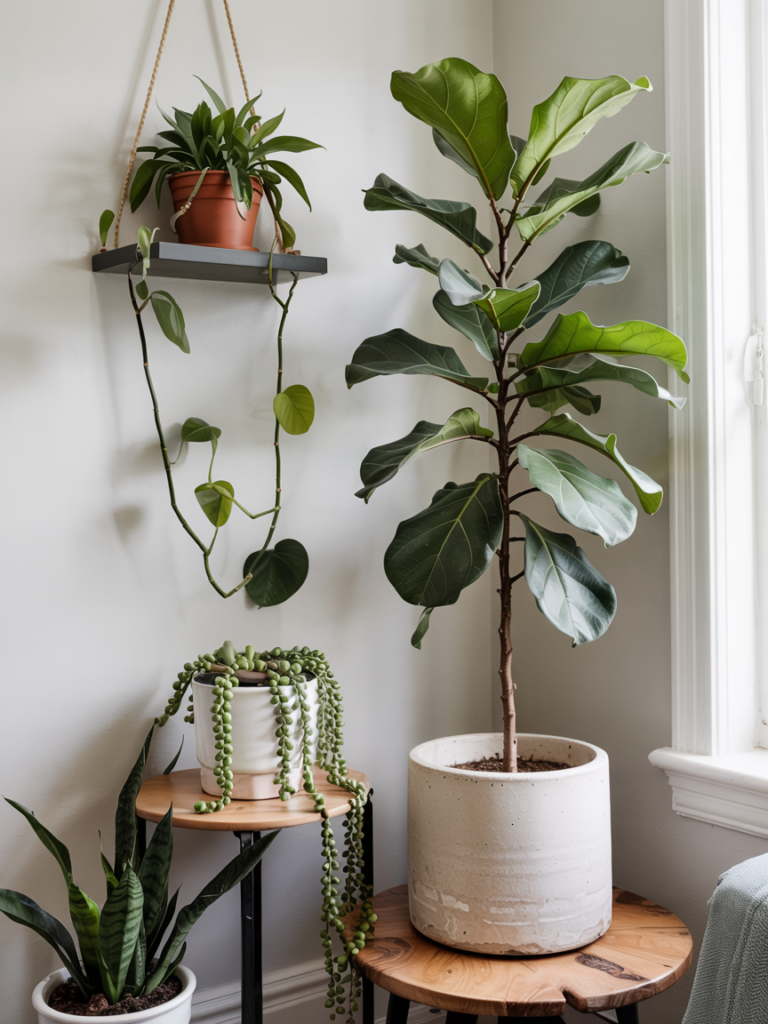
A large plant in a small room is not a bold choice — it’s a brilliant one. The mistake is filling every surface with small plants when one large plant does more.
A fiddle leaf fig, a tall olive tree, a substantial monstera in a generous pot — these draw the eye upward. They add a vertical line that the brain reads as height. They bring life and color in a way that never looks overdone because they’re living things, and living things belong in rooms.
Place a large plant in a corner — especially a dark or dead corner that currently does nothing. It fills the space purposefully. It doesn’t compete with the sofa or the coffee table for dominance; it occupies a dimension the furniture wasn’t using. And there’s something about the presence of a large, thriving plant that makes a room feel cared for in a way that no amount of styling quite replicates.
In both UK homes and US apartments, the corner plant has become an anchor piece in the same way a piece of art has — and it costs, in many cases, less than a cushion.
10. Storage That Disappears Into the Room (So the Room Can Finally Breathe)
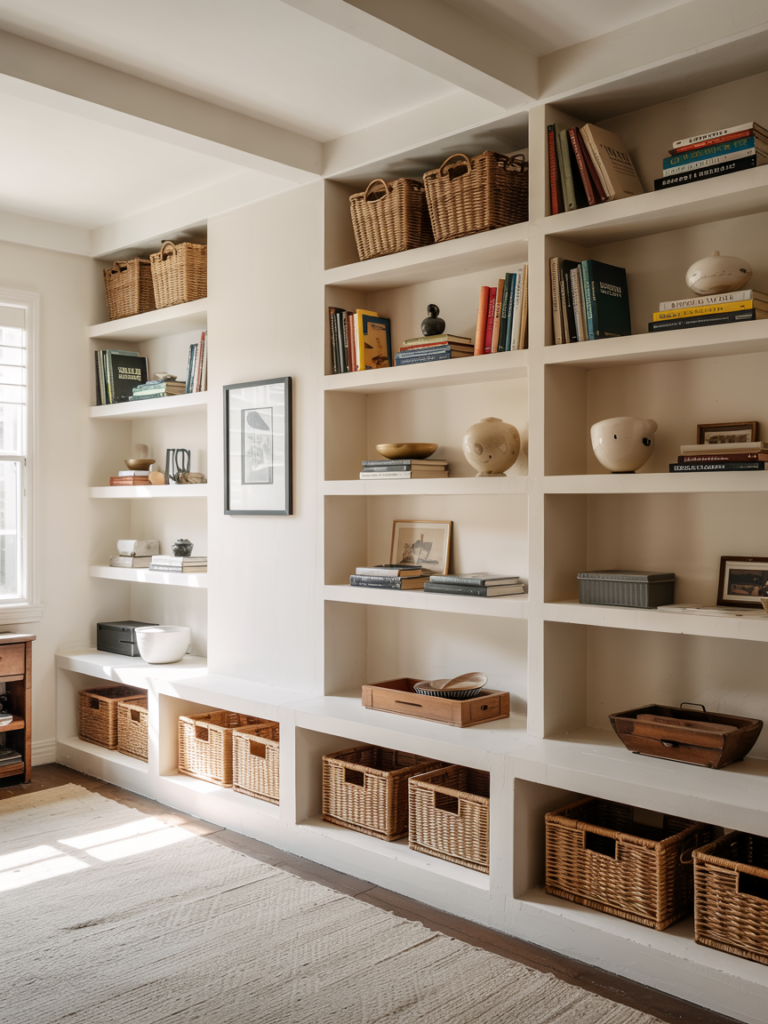
The enemy of a small living room is visible clutter. But the solution isn’t to hide everything — it’s to store things in a way that looks like a design decision.
Built-in shelving, where the budget allows, is the gold standard. Alcove shelving on either side of a chimney breast in a British terraced house — styled with books, a candle, a few plants, a piece of pottery — stops looking like storage and starts looking like architecture. In American apartments where built-ins aren’t possible, freestanding bookcases that run floor-to-ceiling achieve the same effect.
The key is restraint. Fill shelves to about 70% capacity. Leave space. Group books by color or remove their dust jackets for a cleaner look. Intersperse objects with space between them. A shelf that’s breathing is a shelf that looks styled; a shelf that’s packed is a shelf that looks chaotic, regardless of how beautiful the individual objects might be.
Closed storage — a coffee table with a lift-top, an ottoman with storage inside, a sideboard — handles the rest. Things that need to be accessible but not visible disappear. The room’s visual field clears. And when the room’s visual field clears, the room feels larger. Every time.
11. The Cozy Small Living Room Formula That Works in Any Home
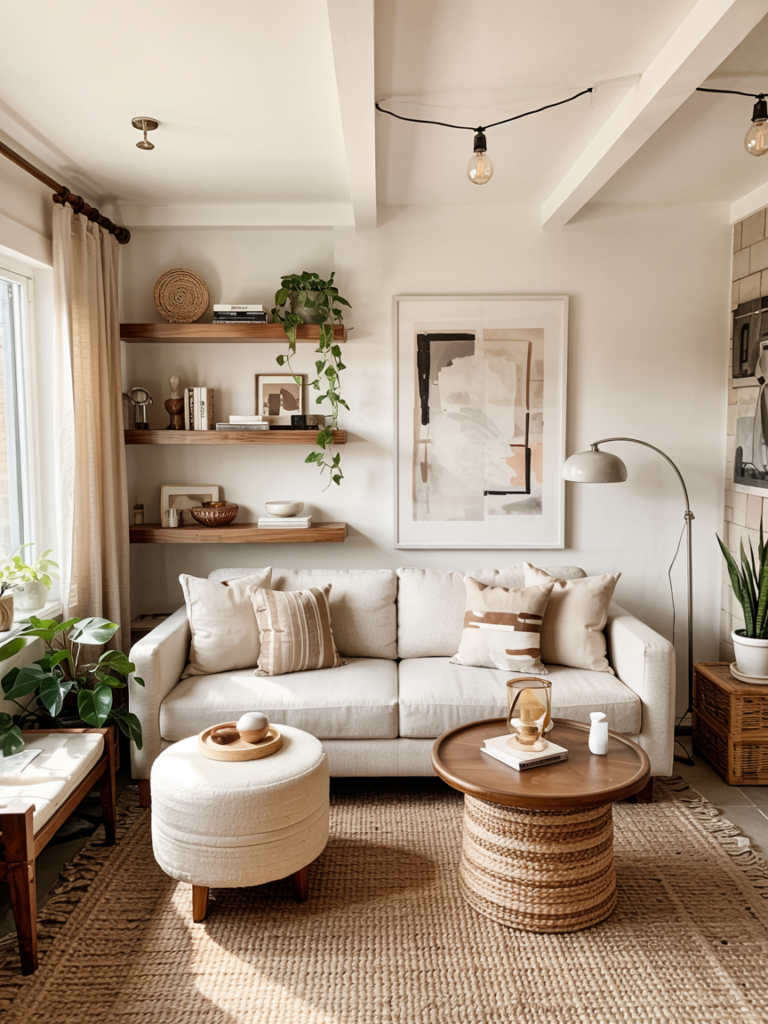
There’s a combination of elements that shows up, again and again, in the small living rooms that make people stop and save and share. It’s not a rigid formula — it’s more of a recipe, and like any good recipe, it allows for substitution.
Warm light sources at multiple heights. A rug large enough to anchor the seating. One dominant color, committed to fully. Texture in at least three different materials. One large plant. One large piece of art or a mirror that doubles the light. Storage that’s either hidden or styled. Curtains hung high and wide. A throw that looks like it was left there by accident but actually sits exactly right.
That’s it. That’s the formula. None of those elements are expensive on their own. None of them require a renovation. They require taste, patience, and the willingness to make decisions rather than hedge every choice until the room becomes an average of every safe idea you ever had.
12. The Small Change That Takes 20 Minutes and Changes How the Whole Room Feels
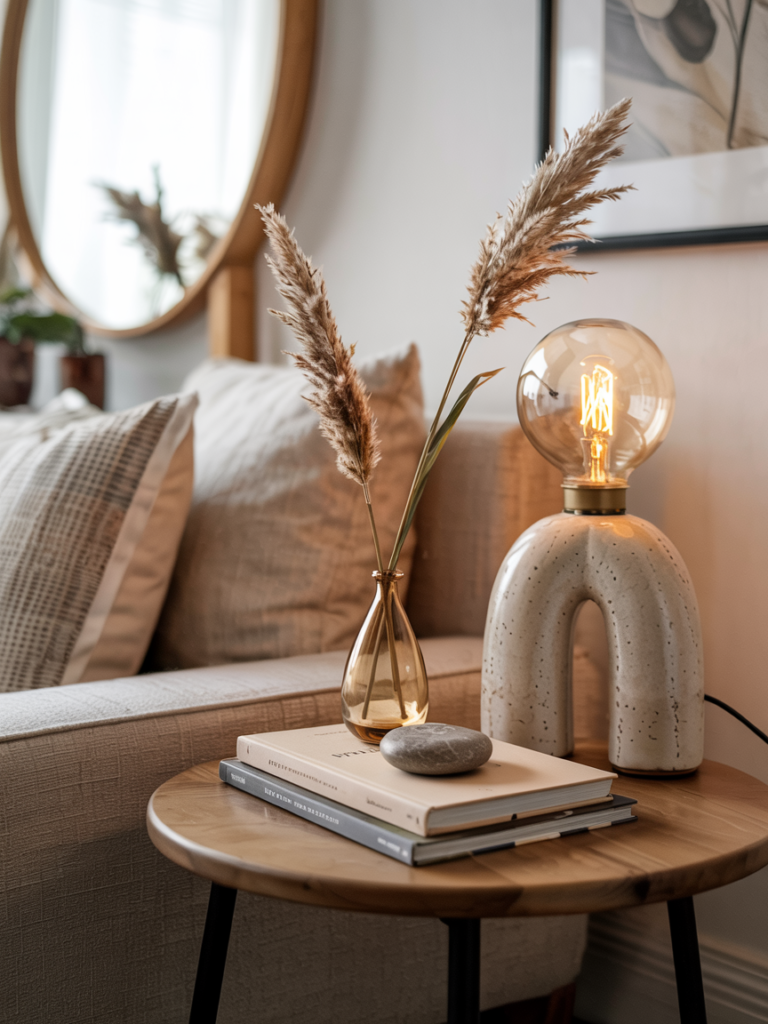
Move the coffee table.
Not permanently, necessarily. Just move it. Angle it slightly. Push it closer to the sofa. Pull it away. Try it slightly to the left. See what happens.
Most people put their coffee table exactly where it was when they moved in, or exactly where logic suggests it should go, and never revisit the decision. But the relationship between the coffee table and the sofa is the center of gravity for the whole living room — and shifting it, even a little, shifts everything around it.
While you’re at it, rotate a cushion. Move a lamp six inches to the right. Swap a candle from one surface to another. Small rooms respond dramatically to small changes because there’s less visual noise absorbing those changes. Every shift is amplified. This is actually the great gift of a small living room: you don’t need a renovation. You need a Sunday afternoon and a willingness to try.
—
🌿 Quick Tips
Mirrors should hang opposite a window or light source — not just anywhere. Placed correctly, they genuinely double the light in a room and create a sense of depth that’s almost architectural.
Don’t underestimate the power of smell in a small space. A candle burning in a tight room makes it feel warmer and more welcoming within minutes — that’s the room doing its job.
If you rent and can’t paint, use removable wallpaper on one wall. A single accent wall of a deep, rich tone does for renters exactly what dark paint does for owners.
Coffee tables with open legs — glass, hairpin, wooden spindle — take up visual space without blocking the sightline across the floor. Solid-skirted tables in small rooms feel like walls.
Edit twice a year. What felt right in autumn can feel too heavy by spring. A small living room that shifts seasonally never gets stale.
—
❓ FAQ
Q: What’s the best sofa size for a small living room? A: As a rule, a two-seater or a narrow three-seater with low arms and raised legs will serve you better than a larger modular piece — but the real answer is to measure your floor plan and leave at least 18 inches of clear walkway around the sofa. If you can do that, the sofa fits. If you can’t, it doesn’t, regardless of how much you love it.
Q: Can dark colors really work in a small living room or will it just feel like a cave? A: Dark colors absolutely work — the “cave” feeling happens when there’s inadequate lighting alongside dark walls. Layer your light sources properly, keep the ceiling a lighter shade than the walls if you’re nervous, and a dark-painted small room will feel moody and cozy rather than oppressive.
Q: How do I make a small living room look good in photos for selling or renting? A: Remove at least 30% of what’s currently in the room, open every curtain and blind, place fresh flowers or a healthy plant somewhere visible, and shoot toward a window rather than away from one. Natural light from behind the camera is the single biggest difference between a listing photo that attracts and one that doesn’t.
—
💭 Final Thought
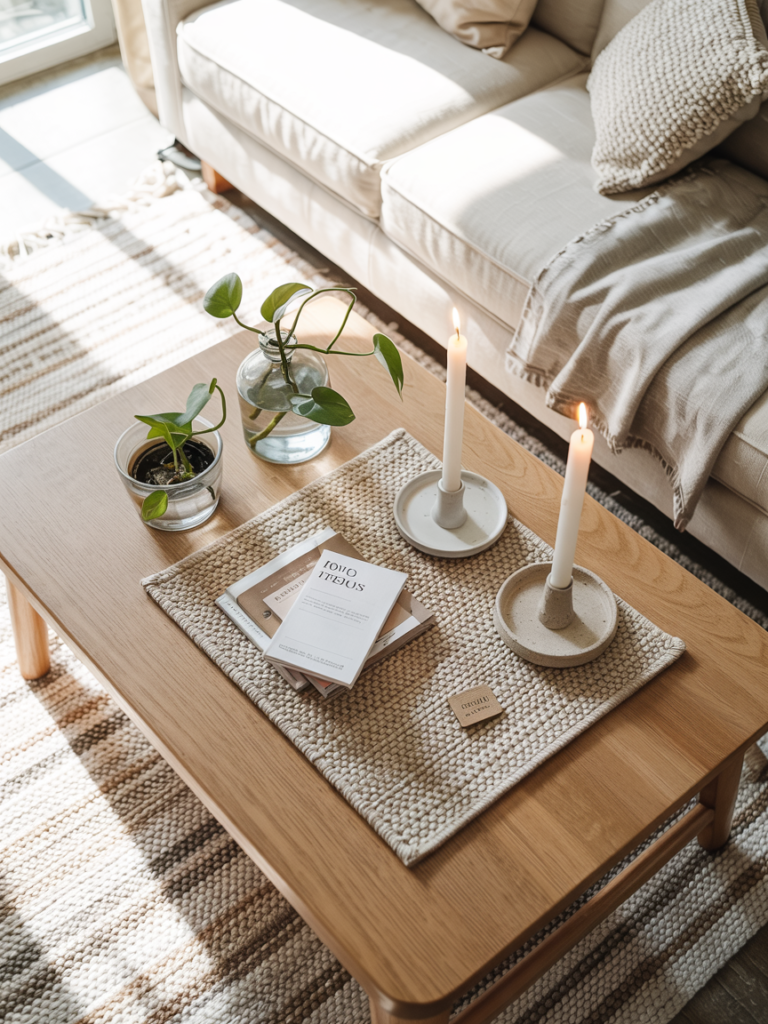
The most beautiful small living rooms aren’t beautiful despite their size — they’re beautiful because their size demanded intention. Every choice had to count, so every choice was made carefully. There’s a kind of freedom in that constraint, if you’re willing to see it that way.
What’s the one corner of your living room that’s never quite worked — and what might happen if you gave it your full attention this weekend?